The Ratcliffe Highway Murders as a Plot Point in “The Prosecution of Mr. Darcy’s Cousin” + an excerpt + another giveaway

When I began writing The Prosecution of Mr. Darcy’s Cousin: A Pride and Prejudice Mystery, I thought to use the actual Regency era case known as “The Ratcliffe Highway Murders” in the plot line for the although a suspect was identified, the man committed suicide and nothing was proved in court. P. D. James and T. A. Critchley discuss this case in great detail (and a bit of editorializing) in “The Maul and the Pear Tree.”

However, as I set up the story line for my novel, many changes needed to be made to the actual Ratcliffe mystery to fit my manuscript. Most importantly, the Ratcliffe murders occurred in December 1811. In my books, Major General Fitzwilliam (Colonel Fitzwilliam in the original Pride and Prejudice) married Miss Georgiana Darcy right after Napoleon escaped from Elba and right before the Major General returned to serve with Wellington at Waterloo. That moves my story to 1816.

The Major General and Mrs. Fitzwilliam have been married sixteen months and are the parents of a daughter. The major general resigned his commission and became a landed gentleman in Oxfordshire. Yet, doing so brings Fitzwilliam no success for 1816 was the “Year Without Summer,” when the ash from the Mount Tambora eruption spread across Europe, England and America, disturbing the weather and disrupting crops. Fitzwilliam knew much success as an Army officer, and this “failure” plays hard with his nature.

I used the concept of the mass hysteria associated with the Ratcliffe Murders in this book. What would happen if several gruesome murders occur in Wapping? What if the prime suspect is the son of an earl? Would justice prevail? Would the victims, part of the poor of London, know justice? There are bits of Jack the Ripper-like hysteria in the tale.

I did draw some on the Ratcliffe murders. My first victims are modeled after the linen draper, Timothy Marr, and his family, but that is the extent of the similarities. I created a mystery within a mystery within a mystery.

In the original Ratcliffe Highway murders, there were two households attacked by an unknown assailant. The occupants of the house were clubbed to death; seven people lost their lives, including an infant. There was an outcry by the London populace, and the government advertised a reward for information leading to the discovery of the murderer. The Times gave the crimes a position of prominence in their headlines.

No metropolitan police existed at the time. People depended upon magistrates, night watchmen, the Thames River Police, Bow Street Runners, etc. Jurisdiction was often overlooked. Crime scene investigation was nearly nonexistent. In the case of the Ratcliffe murders, hundreds of spectators tramped through the households to view the gruesome scene.

In the foreword of “The Maul and the Pear Tree,” James and Critchley say their “principal source [was] the Home Office paper (Domestic Series) now in the Public Record Office. Before the Metropolitan Police were set up, the Middlesex magistrates maintained a regular correspondence with the Home Secretary on criminal matters, and the bundles of papers for December 1811 and the early part of 1812 contain a wealth of material on the Ratcliffe Highway murders that has never before been assembled or, with the exception of a few documents referred to by Radzinowicz (Note: Sir Leon Radzinowicz was an academic criminologist and founder of the Institute of Criminology), published.” The fact that the Home Office became involved with the crimes speaks to the devastation Londoners felt. Not since the Gordon Riots was there such an outcry.

Ironically, there is no record of the resting place of the victims. The grave sites of the victims of the Ratcliffe murders were replaced with new buildings or the gravestones were removed. The bones of the accused (who committed suicide) were uncovered as part of an excavation for public utilities. Amateur criminologists claimed various bones from the site. “A scrapbook now in the rectory of St. George’s-in-the-East contains an undated entry about John Williams [the accused]. It ends: ‘His skull is at present in the possession of the owner of the Public House at the corner of Cable Street and Cannon Street Road.’” (James and Critchley, page 264)
______________________________________________

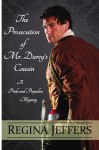
The Prosecution of Mr. Darcy’s Cousin: A Pride and Prejudice Mystery

Fitzwilliam Darcy is enjoying his marital bliss. His wife, the former Elizabeth Bennet, presented him two sons and a world of contentment. All is well until “aggravation” rears its head when Darcy receives a note of urgency from his sister Georgiana. In truth, Darcy never fully approved of Georgiana’s joining with their cousin, Major General Edward Fitzwilliam, for Darcy assumed the major general held Georgiana at arm’s length, dooming Darcy’s sister to a life of unhappiness.
Dutifully, Darcy and Elizabeth rush to Georgiana’s side when the major general leaves his wife and daughter behind, with no word of his whereabouts and no hopes of Edward’s return. Forced to seek his cousin in the slews of London’s underbelly, at length, Darcy discovers the major general and returns Fitzwilliam to his family.
Even so, the Darcys’ troubles are far from over. During the major general’s absence from home, witnesses note Fitzwilliam’s presence in the area of two horrific murders. When Edward Fitzwilliam is arrested for the crimes, Darcy must discover the real culprit before the authorities hanged his cousin and the Fitzwilliam name knew a lifetime of shame.

Kindle 
Amazon
Barnes and Noble 
Nook

____________________
Excerpt from The Prosecution of Mr. Darcy’s Cousin (Scene: Darcy rescued this cousin from a public house and brought Fitzwilliam to Darcy House. Fitzwilliam’s father, the Earl of Matlock, tracks his son to Darcy’s door.)

For the next hour, Edward offered an explanation to each of the earl’s accusations while Darcy attempted to soften the angry words spoken by both. It always was so. Matlock never recognized Edward’s strengths, only his second son’s faults.

Darcy did not approve of Edward’s self-absorption: In fact, he found the squalor into which the major general sank deplorable; however, he knew his cousin did not abandon his honor. Edward would suffer for his moments of self-pity. Darcy intervened to allay the earl’s most recent attack.

“At a minimum—all of which the major general may be accused is drinking too heavily and exercising poor judgment.”

The irony of those words would long haunt Darcy’s logical mind for as if he announced the next act of a Shakespearian tragedy, a second knock upon his door changed the room’s tenor.

He looked up to find Thomas Cowan framed by the open door, a painful expression upon the man’s features. Behind him, two cleanly dressed men created a formidable wall.

“Cowan?” Darcy remarked in curiosity. “What brings you and your acquaintances to Darcy House? I thought upon this day you were to search for a certain lady’s lover. I did not realize you meant another social call upon my household.”

Recognizing Cowan’s wariness, Darcy waved away his servants.

“It was my purpose, but Mr. Richards and Mr. Parker,” Cowan gestured to the men behind him, “called upon me this morning. It seems word of our visit to Wapping reached the ears of those of Bow Street via the Thames Police.”

A sharp unease settled in the pit of Darcy’s stomach; he realized Cowan symbolically placed himself between the Runners and the major general.

“Why would the Thames Police have a care for my cousin’s presence in Wapping?”

Darcy’s first thought was of a report of Edward’s altercation upon the docks, but Cowan’s expression cautioned of more shocking news.

Extending his arm in Darcy’s direction, Cowan handed over a folded newsprint.

“What is amiss, Darcy?” the earl demanded.

Darcy unfolded the paper and scanned the page for something of significance, which would affect his cousin, but nothing unusual jumped from the page to draw his attention.

“I fear I do not understand, Cowan.”

His friend pointed to the lead line: “Murder Most Foul.”

“Murder? A murder in Wapping?” Darcy whispered into the silent room.

His nerves remained tense.

“Murder?” the earl expelled in exasperation. “What murder? This is ridiculous. What could a murder in Wapping have to do with an earl’s son?”

The earl was on his feet and storming toward Cowan when Darcy stepped between the irascible Matlock and the former Runner.

“We should listen to what Mr. Cowan has to say, Sir,” Darcy cautioned.

Falling into the familiarity of their military roles, Edward asked, “What is the issue, Sergeant?”

Cowan smiled with the major general’s slip.

“During the past sennight, Sir, two gruesome murders occurred. All of London is astir with fear. Saunders Welch sent Mr. Richards and Mr. Parker to escort you to No. 4 Bow Street.”

Matlock blustered, the earl’s face turning red with anger.

“You think my son holds knowledge of this murder simply because he had too much to drink one night. With that type of logic, half of London should be under suspicion!”

“The innkeeper at the Sephora testified that Fitzwilliam stayed with him for more than a week, and the innkeeper has yet to observe the major general sober,” Cowan explained.

“The innkeeper also provided a statement that the major general returned to the Sephora covered in blood on the night of the first murder.”

Darcy attempted to reason with the Runners sent by Mr. Welch.

“We spoke to a dock overseer of an altercation involving my cousin and several crew serving on the ship Towson. The sailors meant to impress the major general into service. You were with me, Cowan, when the harbormaster, Mr. Belker, described the incident.”

“I gave Mr. Welch my statement, Darcy,” Cowan assured, “but as the Towson set sail, it will be difficult to question the ship’s captain or his men.”

“Even those in the infirmary?” Darcy asked.

“Even those in the infirmary,” Cowan confirmed. “They sailed with another ship to rejoin the Towson in Dover.”

“What proof then?” Matlock demanded. “If you, Darcy, and this Belker fellow describe a fight, what proof would draw a shadow across my son’s name?”

“Could you produce your sword, Sir? The one from your uniform,” Richards asked.

While the others argued, Darcy scanned the news story for details that might be connected to the major general.

“It says here a man, his wife and child were killed by a military-style sword. Their throats slit, even the child’s.”

Edward glanced to Cowan and Darcy.

“I have no idea of the sword’s whereabouts. It was not among my things when I awoke this morning. I assumed either Darcy or Cowan retrieved it when they carried me from the inn.”

“We gathered your purse, the watch Uncle presented you upon your enlistment, your gloves, and the Queen Anne pistol you carried,” Darcy admitted, but I took no notice of your sword Did you, Cowan?”

“No, Sir, but we hurried our perusal of the room because the carriage would not wait more than a quarter hour. We could have overlooked it.”

“This is preposterous!” Matlock exclaimed, appearing black with rage. “My son spent more than a decade in the King’s service in both America and upon the Continent. For God’s sake, he was with Wellington at Waterloo! Fitzwilliam received his latest commission at the hand of the Prince Regent!”

“You possess little choice, Sir,” Cowan cautioned. “Mr. Welch means to question any suspect. Concerned with the outcry, the Home Office offered a reward in the case. It would be best to make your statement.”

“Did the major general wear a uniform when you rescued him?” Mr. Parker asked.
Cowan answered before Darcy had time to form a response.

“Why would the major general’s clothing be of interest?”

Darcy recognized what Cowan wished him to know: Edward’s uniform could be used as evidence against the major general.

“I ordered it burned,” Darcy swore, although he knew his household staff washed his cousin’s filthy clothing. “Fleas and lice polluted the garment. I would not risk the life of my servants or of my infant children with the prospect of typhus or worst. We destroyed my cousin’s items as quickly as we could remove them from his back.”

“Was there evidence of blood upon the items?” Parker asked.

Darcy did not wish to lie, but he knew that even in a drunken state Edward could not commit willful murder. The deaths of war haunted his cousin, but Fitzwilliam would not lash out at an innocent family as part of his anguish.

“I cannot say for certain. My cousin’s clothes were caked with mud and dried dirt and human feces. I did not recognize blood as part of the stains.”

“We should depart,” Cowan suggested in a tone of false calmness. Edward shot a look of panic to Darcy.


“Surely there is another means for the major general to respond without creating a public spectacle,” Darcy concluded.

“I will escort my son to Bow Street,” Matlock declared with authority. “Fitzwilliam and I will follow you in my coach.”

Richards and Parker looked to Cowan for assistance.

“If you hold no objections, Sir, Richards and Parker will follow you. They have very strict orders,” Cowan explained.

“I mean to go with you also,” Darcy assured Edward. “We will clarify any misconceptions, and then you will return to Darcy House to reunite with Mrs. Fitzwilliam and the countess later today.”

“My God!” Edward exclaimed as his anguish returned. “What will Georgiana and mother think of this shame?”

GIVEAWAY: LEAVE A COMMENT BELOW TO BE ENTERED IN A GIVEAWAY OF 2 eBOOK COPIES OF “THE PROSECUTION OF MR. DARCY’S COUSIN.” THE GIVEAWAY ENDS ON FRIDAY MIDNIGHT EDST ON JULY 10, 2015.
_______________________________________
Regina Jeffers is an award-winning author of Austenesque, Regency, and contemporary novels. She is a retired English teacher and an often sought after consultant for media literacy and language arts.

Posted in British history, Great Britain, Jane Austen, Living in the Regency, real life tales, Regency era | Tagged , , , , , , , | 2 Comments

More Winners of “The Prosecution of Mr. Darcy’s Cousin”

winners_areCongratulations to Suzan and to Euridice, the latest winners of an eBook copy of The Prosecution of Mr. Darcy’s Cousin: A Pride and Prejudice Mystery

Posted in Austen Authors, British history, giveaway, Great Britain, Jane Austen, Living in the Regency, Regency era | Tagged , , , | 1 Comment

Another Set of Winners of “The Prosecution of Mr. Darcy’s Cousin”

winner-is-badgeCongratulations go out to drcopeland7294 and ladysusanpdx. These ladies will receive an eBook copy of The Prosecution of Mr. Darcy’s Cousin: A Pride and Prejudice Mystery

There are still eBooks copies available this week at 

2 copies at More Agreeably Engaged (ends Thursday, July 2)

2 copies at My Jane Austen Book Club  (ends Wednesday, July 1)

2 copies at For Love of Austen    (ends, Friday, July 3)

Beginning Wednesday, July 1 at Diary of an Eccentric.


Posted in British history, Great Britain, Jane Austen, Living in the Regency, Regency era | Tagged , , , , , , | 1 Comment

Procedure for a Trial in the House of Lords

Procedure for a Trial in the House of Lords

When I first began to write The Prosecution of Mr. Darcy’s Cousin, I set myself the task of learning more of the legal procedures practiced during the Regency Period. The trial in the book is for Major General Fitzwilliam (Colonel Fitzwilliam in the original Pride and Prejudice). We know from Austen’s book that Fitzwilliam is the second son of an earl. Because Major General Fitzwilliam does not sit in the House of Lords, his trial would take place in the court system of the time. But what if it were his father, the earl, who was accused of the crime? What might occur during such a trial?

Beyond its legislative function, the House of Lords may act as judge against one of its own. It served as a court of first instance in trials involving peers, for impeachment cases, and as a court of last result in the case of appeals. [Note: Trials for peers were abolished in 1948 and impeachment cases in 1806.]

A case coming before the House of Lords during the Regency and early Victorian era would practice its form of pomp, as such…

A Grand Jury would indict the peer, with the case appearing before the Court of King’s Bench. The Court judges could not accept a plea except that the crime in question was previously pardoned. If pardon was not pled, then the House of Lords issued a writ of certiorari, which commanded the King’s Bench Court to send the case up to the House of Lords The Lord High Steward presided, but all the members of the House of Lords could argue procedural disputes and vote upon his honour.

**The Lord Chancellor would enter the House in his robes. He would be preceded by the Sergeant, who carried the official mace. A statue passed during the reign of Henry VIII confirmed that the Lord Chancellor could preside over the House of Lords even if not a Lord himself. The Lord Chancellor also served as one of the King’s ministers; he attended the Royal Court. If he were a bishop, the Lord Chancellor received a writ of summons; if an ecclesiastic of a lower degree or a layman, he attended without summons.
John Scott, 1st Earl of Eldon served in the role of Lord Chancellor from 1801-1806; Thomas Erskine, 1st Baron Erskine from 1806-1807; Eldon again served from 1907-1827; John Copley, 1st Barron Lyndhurst finished out the reign of George IV from 1827-1830.
**Black Rod would carry the Lord High Steward’s staff and Garter with his sceptre. The Gentleman Usher of the Black Rod was at the time a retired senior officer of the Royal Navy or the British Army. He is an officer of the English Order of the Garter. His deputy is the Yeoman Usher of the Black Rod.
From 1765 – 1812: Sir Francis Molyneux, 7th Baronet served as Black Rod; From 1812 until 25 July 1832 Sir Thomas Tyrwhitt held the post.
**The Lord Chancellor would assume his seat on the Woolsack as Lord Speaker. In the 1300s, Edward III commanded his Lord Chancellor to sit upon a wool bale to symbolize the importance of wool to the economy of England during the Middle Ages. The Woolsack is a large wool-stuffed seat covered with a red cloth. It has no back or arms. The Lords’ Mace is placed on the rear of the Woolsack.
The House of Lords has two maces dating from the time of King Charles II and from William III. The maces are carried in and out of the two Chambers of Parliament at the beginning and the end of each day.
**Prayers would follow.
**Then the Clerk Assistant would go through a roll call of the peers, beginning with the junior Baron.
**The Clerk of the Crown in Chancery [who prepares royal warrants, letters patent, etc., under the direction of the Lord Chancellor] and the Deputy Clerk of the Crown [who has the custody of the Great Seal of the Realm] make three reverences.
**The Clerk of the Crown kneels and presents the commission to the Lord Speaker.
**The Lord Speaker gives the commission to the Deputy Clerk of the Crown, who is also upon bended knee.
**The two clerks retire with like reverences to the table.
**A call for silence follows.
**The Lord Speaker asks that the King’s commission be read. All persons in attendance must rise and be uncovered as the commission is read by the Deputy Clerk of the Crown.
**The Gentleman Usher of the Black Rod and the Garter Principal King of Arms make their reverences, cross to the woolsack, and sit upon the right hand of the Lord High Steward. Both hold the white staff and present it to the Lord Speaker while on their knees.
**The Lord Speaker would rise, make his reverences to the throne, and assume his seat on the upper step near the throne.
**He would deliver his staff to the Gentleman Usher of the Black Rod.
**The Sergeant-at-Arms would call for silence again.
**The Deputy Clerk of the Crown in the King’s Bench would read the writ of certiorari to remove the indictment and the record of the indictment.
**The Sergeant-at-Arms would make a proclamation for the Yeoman Usher to escort the defendant to the bar.
**The defendant would make three reverences upon approaching the bar and kneel until directed by the Lord High Steward to stand.
**The defendant would then make three reverences: to the Lord High Steward, the peers on the right and those on the left. They would return the reverence.
**The defendant was then directed to a stool upon which he sat. The stool was within the bar and near the defendant’s counsel.
**The Lord High Steward would read the charges against the man.
**The Deputy Clerk of the Crown asked the defendant how he pleaded: guilty or not guilty?
**The Deputy Clerk of the Crown asked the defendant “How will your lordship be tried?” to which the defendant would respond “By my peers.”
**The counsel for the prosecution and the counsel for the defense were announced.
**A proclamation was made for all persons who are to give evidence to appear.
**The court would permit His Grace the Lord High Steward to remove to the table. He was preceded by Garter and Black Rod.
**Black Rod sat on a stool at the corner of the table on the Lord High Steward’s right. Black Rod held the white staff.
**Garter sat on a stool on Black Rod’s right.
**The Sergeant sat at the lower end of the table on the same side.
**The counsel for the prosecution laid out the charges against the defendant.
**Then the trial would proceed, but not necessarily as we think of modern trials with first the prosecution and then the defense speaking. The prosecution would examine the evidence, but generally the defendant was responsible for his countering of the evidence, with points of law addressed as necessary.
**At the end, the counsel were directed to withdraw.
**Witnesses and observers of the proceedings would be directed to withdraw.
**The defendant retired to the custody of the Yeoman Usher.
**The Lord High Steward would return to his chair, if necessary.
**A protestation occurred by the Archbishop of Canterbury for himself and the other bishops in attendance, leaving before the judgment was announced.
**The Lord High Steward explains the methods of proof.
**The HOL is instructed to give their opinion of the guilt for the indictment.
**Observers were permitted into the chambers to view the final outcome.
**A proclamation for silence was again invoked.
**The Lord High Steward would stand and by list call every peer [beginning with the junior baron] to pronounce guilt or innocence.
**The peer would stand [uncovered], place his right hand upon his heart, and give his vote.
**The last to vote was the Lord High Steward.
**The prisoner would be returned to the bar by the Yeoman Usher.
**Sentence was pronounced.
**The defendant then retires.
**A proclamation was made to dissolve the commission.
**The Gentleman Usher of the Black Rod delivers the white staff to the Lord High Steward.
**The Lord High Steward stands uncovered. He holds the staff in both hands, breaks it in two pieces, and declares the commission dissolved.

Much of the procedural information of this post comes from “The Trial of James Thomas Earl of Cardigan Before the Right Honourable The House of Peers, In Full Parliament, For Felony, On Tuesday the 16th of February 1841” from ULAN Press.

____________________________

PoMDC Cover-2-2The Prosecution of Mr. Darcy’s Cousin: A Pride and Prejudice Mystery

Fitzwilliam Darcy is enjoying his marital bliss. His wife, the former Elizabeth Bennet, presented him two sons and a world of contentment. All is well until “aggravation” rears its head when Darcy receives a note of urgency from his sister Georgiana. In truth, Darcy never fully approved of Georgiana’s joining with their cousin, Major General Edward Fitzwilliam, for Darcy assumed the major general held Georgiana at arm’s length, dooming Darcy’s sister to a life of unhappiness.

Dutifully, Darcy and Elizabeth rush to Georgiana’s side when the major general leaves his wife and daughter behind, with no word of his whereabouts and no hopes of Edward’s return. Forced to seek his cousin in the slews of London’s underbelly, at length, Darcy discovers the major general and returns Fitzwilliam to his family.

Even so, the Darcys’ troubles are far from over. During the major general’s absence from home, witnesses note Fitzwilliam’s presence in the area of two horrific murders. When Edward Fitzwilliam is arrested for the crimes, Darcy must discover the real culprit before the authorities hanged his cousin and the Fitzwilliam name knew a lifetime of shame.

Kindle 
Amazon 
Barnes and Noble 
Nook 

Regina Jeffers’ Website 

Leave a comment to be part of a giveaway of an eBook copy of “The Prosecution of Mr. Darcy’s Cousin.” 

Posted in British history, Great Britain, Jane Austen, Living in the Regency, real life tales, Regency era | Tagged , , , , , , | 8 Comments

Winners of an Autographed Copy of “The Prosecution of Mr. Darcy’s Cousin: A Pride and Prejudice Mystery”

winner-is-badgeCongratulations to TaNeshia Jones and Fran Rossbach, who will receive an autographed copy of my latest released, The Prosecution of Mr. Darcy’s Cousin: A Pride and Prejudice Mystery. More winners to come over the next couple of weeks. 

Posted in Uncategorized | 1 Comment

The Setting for “The Prosecution of Mr. Darcy’s Cousin” + an Excerpt + Giveaway

Wapping - Wikipedia, the free encyclopedia en.wikipedia.org Though Execution Dock is long gone, this gibbet is still maintained on the Thames foreshore by the Prospect of Whitby public house.

Wapping – Wikipedia, the free encyclopedia
en.wikipedia.org
Though Execution Dock is long gone, this gibbet is still maintained on the Thames foreshore by the Prospect of Whitby public house.

Much of the action of my newest Austen-inspired novel, The Prosecution of Mr. Darcy’s Cousin, is set in Wapping. But what do we know of the area?

Wapping is a district in East London, in the Borough of Tower Hamlets. The north bank of the River Thames and the Highway (formerly called the Ratcliffe Highway) border the area. The Nazi bombings of England during World War II destroyed many of the original buildings.

The Saxons were the area’s first settlers. The settlement came together between the River Thames and Wapping Marsh. The people held a strong maritime history. Boat makers, sailors, and seafarer trades were those who thrived in the area. Construction and repair of ships became the source of employment.

Hangings of pirates and thieves were common in the area. Only after the gallows were moved farther down river did the area develop for many thought the ghosts of those killed upon the gallows haunted the land. Tower Hamlets lies east of the ancient walled City of London. During the 19th Century the population grew, made up of the poor and of immigrants. Villages clustered about London proper and along the main roads. Other areas of note are Shadwell, Poplar, Limehouse, and Ratcliffe. They all receive mention in the book.

The streets often twisted in upon themselves. Pelican Stairs, King James’s Stairs, Wapping Stairs, and New Stairs led down to the shoreline. The Thames served as the south border. The river brought the world to London’s doors: tea, muslin, spices, sugar, rum, coffee, cocoa, tobacco, etc. Sailors of all nationalities filled the streets of Wapping and the adjoining areas. More than 13,000 vessels claimed the docks of London. Before 1805, there were no such moorings, and the ships were subject to thieves. The losses during those early years were estimated as 500,000 pounds a year.

The smell was notable: the filth of so many living in close quarters and the filth of the Thames made the area not for the faint of heart. Inhabitants included rope makers, candle makers, marine storekeepers, rat catchers, seamstresses, brothel keepers, stevedores, sailors, bakers, butchers, keepers of public houses, lodging owners, boat builders, instrument makers, pawnbrokers, pirates, and publicans. Sailors lodged in cheap houses near the river, often 4-5 to a room. They all came to the greatest city on earth at that time seeking their fortunes.

___________________________________
PoMDC Cover-2-2The Prosecution of Mr. Darcy’s Cousin: A Pride and Prejudice Mystery
Fitzwilliam Darcy is enjoying his marital bliss. His wife, the former Elizabeth Bennet, presented him two sons and a world of contentment. All is well until “aggravation” rears its head when Darcy receives a note of urgency from his sister Georgiana. In truth, Darcy never fully approved of Georgiana’s joining with their cousin, Major General Edward Fitzwilliam, for Darcy assumed the major general held Georgiana at arm’s length, dooming Darcy’s sister to a life of unhappiness.

Dutifully, Darcy and Elizabeth rush to Georgiana’s side when the major general leaves his wife and daughter behind, with no word of his whereabouts and no hopes of Edward’s return. Forced to seek his cousin in the slews of London’s underbelly, at length, Darcy discovers the major general and returns Fitzwilliam to his family.

Even so, the Darcys’ troubles are far from over. During the major general’s absence from home, witnesses note Fitzwilliam’s presence in the area of two horrific murders. When Edward Fitzwilliam is arrested for the crimes, Darcy must discover the real culprit before the authorities hanged his cousin and the Fitzwilliam name knew a lifetime of shame.

LEAVE A COMMENT BELOW TO BE PART OF A GIVEAWAY OF 2 eBOOK COPIES OF “THE PROSECUTION OF MR. DARCY’S COUSIN.” The giveaway ends at midnight EDST on 28 June 2015. 

——————————————————–

Excerpt from The Prosecution of Mr. Darcy’s Cousin: A Pride and Prejudice Mystery

Darcy stared hard at the building where the women resided. In hindsight, he wondered if he should have accompanied Cowan. At the time, Darcy thought his friend meant for Darcy to prevent an escape from the shop’s front, but on second thought, that idea made little sense.

He doubted anyone with murder, as his intent, would risk meeting a locked shop door in his retreat. More likely, Cowan considered Darcy’s divided allegiance a detriment. He could not blame his friend: All Darcy wanted was to hold Elizabeth in his embrace and never permit her from his sight again.

The “theatre” surrounding his extended family exhausted Darcy. As unreasonable as it was to think, he wished all involved to Hades, as he cursed the sense of duty instilled in him from the time he was a wee lad.

“I should be seeking my wife and sister rather than staring into the dark pit of London,” he murmured in quelling accents.

He scowled with sudden keen-eyed interest when a noise from further up the street caught his attention. Shaken, Darcy slunk into the shadows, keeping his presence hidden. His heart lurched with anticipation–the noise was that of footsteps. Decisive, but muffled footsteps.

A night watchman, Darcy’s mind announced, but there was something different about the man who strode along the wooden walkway. Moving fluidly. Younger. And almost wary. Most who assumed the civic position were in their later years, Darcy thought.

As the man drew nearer, Darcy pressed his back to the building’s side. His heart stuttered to a halt when the cloaked figure paused before the small shop to survey the area. Where life teemed on the street upon which he and Cowan left their horses behind, Darcy realized how quiet this one appeared. Other than the man across from him, no one could be noted.

Without conscious thought, Darcy filled his lungs with the stagnant air as he studied the figure.

There was something very familiar about the man’s stance: commanding, in control, broad shoulders and a recognizable physical stature. The stranger turned his head to scan the area a second time, as a hundred questions filled Darcy’s mind: Was this their murderer? The East Side Slayer?

Had this enigma used the guise of a night watchman to gain entry into the other homes? Darcy wished he possessed a closer look at the stranger’s countenance—to look upon evil, but the cloak served its purpose in disguising the man’s features.

Why a cloak? True, it was a cool night as it was the first of November, but not so cold that a long cloak would be required.

The spider’s web of deceit associated with Fitzwilliam’s arrest began to make the necessary connections. Threats they overlooked. The violence of the attacks. Darcy’s mind spun with the possibilities. Nothing made sense; yet, his logical nature shunned the impracticality of not discovering a solution.

Fitzwilliam’s enemies followed his cousin to England’s shores, and until this very moment, Darcy held no indication of who they might be. Yet, one thing was for certain, the major general’s enemies did not deal in small deaths.

As if floating above the ground, the stranger swept his cloak about him and turned into the alleyway into which Cowan disappeared earlier. Even so, Darcy’s feet would not respond to his mind’s call for action, and so, Darcy asked his heart, “Should I follow? Is Cowan waiting in the narrow passage?”

However, Darcy heard no sounds of a struggle bursting forth from the noiseless street. Had the stranger subdued his friend? Should Darcy send up a warning? Could Cowan be lying in the alley’s dregs, the former Runner’s throat sliced from ear to ear? Or did the night watchman note Darcy’s presence and now waited for Darcy to follow in order to quash his curiosity?

Darcy’s fingertips dug into the building’s soft wood, as he attempted to quiet the rising panic claiming his breathing. No one tutored him in such wickedness: He remained a novice in the stratagems Thomas Cowan embraced.

Fear rolled through Darcy’s limbs, which hardened, inch-by-inch, securing his body to the wall. He could not move—could not make a sound. Could not swallow.
Even so, his eyes never left the place where the cloaked stranger entered the alley. He searched for any sign of activity.

“Move!” his mind ordered, but Darcy’s body would not respond. Dread held him impaled by its grasp. Yet, the sound of broken glass and a shriek of surprise freed his feet and set them into motion.

Posted in British history, Great Britain, Jane Austen, Living in the Regency, Regency era | Tagged , , , , , , , , , | 21 Comments

The Development of the English Language During the Anglo-Norman Period (1066-1350)

 Essential Norman Conquest - An interactive day-by-day retelling of ... www.essentialnormanconquest.com


Essential Norman Conquest – An interactive day-by-day retelling of …
http://www.essentialnormanconquest.com

French influence upon England came about with the Norman conquest in 1066. In the beginning, the Norman conquerors spoke nothing but French, actually holding the Anglo-Saxon language in contempt. What we now refer to as Norman French was used for the governing of England: spoken at court and in all public documents. Earl William of Normandy refused to impose his language, and so for a century, the Norman conquerors and the Anglo-Saxons populace avoided interactions.

Because of this divide, the old English language became a “cottage” language, practiced by artisans and peasants. The language lost some of its distinctive forms and minor inflections. Latin and Norman French dominated court interactions, but as the Normans were few and the English many, some mingling occurred by necessity of everyday life. The English people and the language prevailed. 

After the Norman Conquest, four languages were found in England: (1) the Northern section of England used Northumbrian; (2) the Midlands used Mercian; (3) the Southern section used West Saxon; and (4) the English Court used Norman French. 

The Norman Conquest www.bl.uk In 1066, the Normans invaded England. It was an event that was to transform the English language forever.

The Norman Conquest
http://www.bl.uk
In 1066, the Normans invaded England. It was an event that was to transform the English language forever.

The West Saxon tongue was replaced by Norman French in literary circles, and the question arose as to which language would become the literary standard. Needless to say, the English were not about to accept Norman French, so Mercian became the standard for several reasons.

(1) The Midland contained London, the capital city, the University of Oxford, and the royal court.

(2) The Midland area was accessible by those from both the northern and southern sections of the country. An understandable language used by both was a benefit to trade, etc.

(3) The Mercian language ushered in romantic tales of love and adventure to replace the somberness found in Anglo Saxon poetry. 

(4) The Teutonic inflections of Anglo Saxon speech disappeared from usage. 

(5) The Mercian language saw the introduction of Metrical Romances (tales in verse).  This tales included…

*** Tales centering on Charlemagne and his peers, chief of which is the Chanson de Roland 

*** Tales centering on Alexander and the Fall of Troy

Jonathan Jones : Europe u-knighted: King Arthur proves how European the British are www.pro-europa.eu Arthur of the Britons, defender of Albion against the invading hordes

Jonathan Jones : Europe u-knighted: King Arthur proves how European the British are
http://www.pro-europa.eu
Arthur of the Britons, defender of Albion against the invading hordes

*** Tales of heroes such as King Arthur and the Knights of the Round Table

Posted in Anglo-Normans, Anglo-Saxons, British history, Great Britain | Tagged , , , , , , , , , | 1 Comment

Do You Know These Words and Phrases?

I was reading a period piece recently and came across the words and phrases below. How many of these do you use?

Verge – British: A grass edging such as that by the side of a road or path

Embarazo – Spanish: an embarrassment, an impediment, or obstacle

Plain as a Pikestaff – British: Very obvious; Ordinary or unattractive in appearance.
[a Late 16th Century word: Alterative of as plain as a packstaff, the staff being that of a peddler, on which he rested his pack of wares]

Doing It Too Brown – [thought to be a creation of Georgette Heyer]

DO UP BROWN – 1. To swindle, victimize, trounce, or defeat (someone) thoroughly. 1824 in Partridge. He is said to be “cooked,” or “done brown” and “dished.” 2. To do (something) thoroughly, excellently, or perfectly. 1843 in G. W. Harris “High Times” 29: Those are places where things are done up brown! From “Random House Historical Dictionary of American Slang, Volume 1, A-G” by J.E. Lighter, Random House, New York, 1994.

DO IT UP BROWN“Do something well; do it to one’s satisfaction. In England the phrase has had the meaning of deceive or take in. Either way, it carries the implication of doing something thoroughly and probably comes from the roasting of meat, yielding a brown color that is the result of thorough cooking. One can see the term in the making in ‘Liber Cure Cocorum’ (1430)” ‘Lay hur (the goose) to frye and rost hyr browne.'” From the “Dictionary of Cliches” by James Rogers (Ballantine Books, New York, 1985).

http://www.phrases.org.uk/bulletin_board/12/messages/668.html

James Belcher - Wikipedia, the free encyclopedia en.wikipedia.org

James Belcher – Wikipedia, the free encyclopedia
en.wikipedia.org

A Belcher Handkerchief[from Slang and Its Analogues Past and Present: A Dictionary Historical and Comparative of the Heterodox Speech of All Classes of Society for More Than Three Hundred Years With Synonyms in English, French, German, Italian, Etc. ~ Anonymous] – A neckerchief named after Jim Belcher, a noted pugilist. The ground is blue, with large white spots having a dark-blue spot or eye in the centre of each. Hence any handkerchief of a parti-colour round the neck. 

1812. Examiner, 21 Sept., 607, 1. The traverser…tied a belcher handkerchief round his neck. 

1825. Lister, Granby, xxxix. 261. Instead of the Belcher he has a loose black handkerchief round his neck. 

Truckle Bed [also known as a Trunkle Bed] – a low bed on casters, usu. pushed under another bed when not in use. Also called truckle bed. [1535–45]; (Furniture) a low bed on wheels, stored under a larger bed, used esp formerly by a servant

Measured for a Cerecloth – a “cerecloth” is a cloth coated with wax, formerly used for wrapping the dead. – (Textiles) waxed waterproof cloth of a kind formerly used as a shroud (1400-1450)

[from the American Journal of the Medical Sciences, Volume 58] “15. Antiseptic Cere-cloth for covering Wounds. – Mr. Edward Lund brought to the notice of the Surgical Section of the British Medical Association, at its late meeting, a material which he says he has ‘lately used with great advantage for covering wounds, and which I have called antiseptic cerecloth. It is, as the name implies, cloth or thin calico saturated with waxy matter in the form of solid paraffin, to which are added a little oil and was, with carbolic acid in certain proportions. It possesses this double property, that, when placed over a wound, ulcer, or the opening of an abscess, it not only serves to exclude the air as an impervious dressing to the part, but it constantly emits from its surface the vapor of carbolic acid, as it is disengaged by the heat of the body, and so forms an antiseptic atmosphere around the wound.”

Done to a Cow’s Thumb – done exactly. [Definition taken from The 1811 Dictionary of the Vulgar Tongue, originally by Francis Grose.]

Fig Him Out – [not “figure him out” as we women often bemoan] search for or deck one out in proper clothes 

Look Blue by a Mouth – a “mouth” was a term to denote the acting/ speaking “lord” or high society master of title. Its connotation is that he could only talk or command in words and could not physically or personally “do” much of anything; being a doer, not a thinker

As Queer as Dick’s Hatband – [The following entry comes from World Wide Words.]

0e7486e“In truth, nobody has quite got to the bottom of this one. It was once commonly encountered in phrases like as tight as Dick’s hatband or as queer as Dick’s hatband. It means that something is absurd, perverse, or peculiar.
“Its earliest appearance in print is in the 1796 edition of Francis Grose’s Dictionary of the Vulgar Tongue. From references in various dialect and local glossaries, it seems to have been widely known in the early nineteenth century. This, for example, turns up in The History and Antiquities of Boston (the original, in your grandmother’s home country of Lincolnshire) by the wonderfully named Pishey Thompson, published in 1856:
“’As queer as Dick’s hatband.’ Mr. Wilbraham, in his “Cheshire Glossary,” has, “as fine as Dick’s hatband,” and says, that the phrase is very local; but an allusion to Dick’s hatband seems to have reached across the island.
“It had by then long since been taken across the Atlantic, since it is referred to in 1848 in A Dictionary of Americanisms, by John Russell Bartlett:
DICK’S HATBAND. This very singular expression I have often heard in Rhode Island. Mr. Hartshorne calls it “one of those phrases which set philologists and antiquarians at defiance.” It is in general use throughout Shropshire, where it is applied as a comparison for what is obstinate and perverse. Ex. “As curst as Dick’s hatband, which will come nineteen times round and won’t tie at last;” “As contrary as Dick’s hatband;” “As false as Dick’s hatband;” “As cruikit as Dick’s hatband;” “As twisted as Dick’s hatband;” “All across, like Dick’s hatband;” “As queer as Dick’s hatband.”
I’ve also found as plain as Dick’s hatband and older than Dick’s hatband in later American works. Clearly an all-purpose expression — it adds emphasis to any occasion.
All well and good, you may agree, but none of this suggests where it comes from. There is a story that it refers to Richard Cromwell, the son of Oliver Cromwell, who briefly took over as Lord Protector of England in 1658 after his father’s death. Alas, he was not the man his father was. He was too amiable, thrust into a position of responsibility at a time of national crisis, and he was unable to reconcile the various factions in the military and Parliament. He was deposed after eight months. The hatband was supposed to be a reference to the crown of England, something he found too tight to wear with comfort.
“Nice story, but if true, we would expect to find an example of its use popping up well before Francis Grose mentioned it in 1796. Also, to be strictly correct about it (read pedantic if it makes you happier), Richard Cromwell never had the title of king, which was anathema to the Puritans of the time, and he certainly never wore a crown.
To judge from the evidence, it’s actually of lateish eighteenth-century origin. But where it comes from, and who Dick was, if he was ever a real person, we have no clear idea. An intriguing suggestion I’ve seen is that Dick here was originally Nick, a reference to the devil.”

Posted in British history, Great Britain, Jane Austen, Living in the Regency, Regency era, Victorian era, word play | Tagged , , , , , , , , , , , , | 19 Comments

Celebrating the Release of “The Prosecution of Mr. Darcy’s Cousin” with an Excerpt + a Giveaway

My latest Austenesque cozy mystery is now available. It contains lots of history and so many twists and turns, you will be scratching your head. PoMDC Cover-2-2

Fitzwilliam Darcy is enjoying his marital bliss. His wife, the former Elizabeth Bennet, presented him two sons and a world of contentment. All is well until “aggravation” rears its head when Darcy receives a note of urgency from his sister Georgiana. In truth, Darcy never fully approved of Georgiana’s joining with their cousin, Major General Edward Fitzwilliam, for Darcy assumed the major general held Georgiana at arm’s length, dooming Darcy’s sister to a life of unhappiness.

Dutifully, Darcy and Elizabeth rush to Georgiana’s side when the major general leaves his wife and daughter behind, with no word of his whereabouts and no hopes of Edward’s return. Forced to seek his cousin in the slews of London’s underbelly, at length, Darcy discovers the major general and returns Fitzwilliam to his family.

Even so, the Darcys’ troubles are far from over. During the major general’s absence from home, witnesses note Fitzwilliam’s presence in the area of two horrific murders. When Edward Fitzwilliam is arrested for the crimes, Darcy must discover the real culprit before his cousin is hanged for the crimes and the Fitzwilliam name marked with shame.

Kindle 
Amazon 
Barnes and Noble
Nook 

Excerpt:

“What is our destination?” Darcy asked as he followed Cowan into a let hack.

 The investigator arrived on Darcy’s threshold a few minutes before eight with a demand to speak to Darcy. Six and thirty hours passed since they parted, and Darcy knew relief with a possible lead to his cousin’s whereabouts.

“Wapping.”

Darcy did not bother to hide his surprise.

“Wapping? Surely you do not think my cousin is in Wapping.” Darcy shook his head in disbelief. As one of the three roads entering and exiting London ran through the Wapping streets teeming with the poor, Darcy often rode through the area; but none of the beau monde visited the shops lining the road. It was not an area for the faint of heart.

The roads built by the Romans bordered the bluff above Wapping Marsh. In the 1500s, early Englishmen founded a harbor along the red cliff. Now, filth and tenements crowded the road, frequented by sailors, prostitutes, pawnbrokers, rat catchers, carpenters, and the like.

Wapping once served as the place where pirates knew public hangings. The broken buildings followed, reaching to Limehouse, Poplar, Radcliff, and Shadwell. The streets twisted in upon themselves, often coming to unexpected dead ends—unsavory hovels. The steps of Pelican Stairs, Wapping New Stairs, and King James’s Stairs led to the River Thames, which brought both life and death. The residents catered to the desires of the sailors, who swarmed the cheap boarding houses and the businesses like the Biblical plague of locust.

“I possess a good accounting of a man fitting the major general’s description at an inn near Wapping. Rather than employing your Town carriage, I thought the let one more desirable for this task.”

Darcy glanced out the window to the sprawl beyond central London. “How did Edward fall so far? I never thought it possible.”

“War eats at a man, Mr. Darcy,” Cowan offered in explanation. “The major general saw more than his fair share of death in both America and upon the Continent. So much devastation rips a man’s heart to shreds.”

“I do appreciate your repeated cautions, but I experience difficulty in comprehending how the major general suffered without any of his dear family being aware.”

“Is it your failure to recognize the major general’s pain or Fitzwilliam’s plunge into remorse that you question?” Cowan challenged.

Darcy would dearly love to ignore Cowan’s question, but he was not one to shun his responsibilities. Even so, Darcy’s insides twisted in a stranglehold upon his heart.

“I am not certain. Perhaps a bit of both.”

“At least you did not deny the possibility of your being equally at fault in this matter,” Cowan observed.

“Nevertheless,” Darcy asserted, “the responsibility for seeking assistance for what ails him falls upon the major general’s shoulders.”

Noting Cowan’s scowl of disapproval, Darcy attempted to soften his disdain.

“In truth, what I do not understand is my cousin’s abandonment of his wife and child.”

The Runner offered no conjectures. Perhaps there were none. Mayhap only an acceptance of the madness would resolve the issue. At length, the let hack entered St George’s-in-the-East parish, where the smell of fish, sweat, the river, smoke, urine, and businesses intermingled, and Darcy snarled his nose in response.

“Quite pungent,” Cowan remarked, “but not as repulsive as the smell of blood upon a once-sturdy companion. That particular smell stays with a man long after they bury the body. I can close my eyes and relive the odors, the sights, and the sounds.”

“I understand.” Darcy swallowed hard. “I will attempt to temper my criticisms.”

The coach rolled to a halt before a row of public houses. Cowan disembarked to give the driver instructions to wait.

“Four times your usual fare.”

The driver looked about in apprehension.

“No more than a quarter hour, Sir. Not safe to remain a standing target.”

“A quarter hour and not one second less,” Cowan warned. “Come, Darcy. We must hurry.”
Darcy tailed Cowan along a busy street to turn into a four-walled alley. Cowan pointed to a once brightly painted sign.

“The Sephora.”

Darcy shook his head in incredulity, but he followed close on Cowan’s heels as they entered the dim foyer.

“Yes, Sir?” a woman in a low-cut dress greeted them. “Do ye gentlemen require me services?”

Her smile showed several missing teeth. Cowan ignored the woman’s offer, pushing past her to mount the stairs, while Darcy dodged the female’s grasp to follow.

“How did you know to look for the major general here?” he whispered when Cowan stopped before the third door along the hall.

“The Runners are a corps d’elite, guarding the main roads leading to London. One of my former associates overheard a watchman speaking of a gentleman taking housing at the Sephora. I asked questions of the innkeeper before I sought you out.”

Darcy nodded his appreciation.

“Do we knock?” he gestured to the door.

Cowan dug into his inside pocket.

“No need. I have the key.”

“I shan’t ask how that particular fact came about.” Darcy chuckled.

Cowan slid the key into the lock.

“If the innkeeper speaks the truth, the man within is rather inebriated. If it is the major general, we must carry him from here; if it is another, we will leave him to his devices.”

With that, Cowan released the lock and opened the door on silent hinges. Grabbing a rush candle from a small table, the former Runner struck a flint and set the long tube on fire. Leading the way into the room, Cowan held the rush high.

The room was empty except for the bed, a small table, two straight- backed chairs, and a shaving bowl with an ewer. The stench of vomit and urine filled the air as Darcy’s eyes searched the darkness for a sign of his cousin. At length, a loud snort announced that the room’s occupant stirred.

“Who’s there?” the man slurred. “Leave me be.” He rolled to his stomach to bury his face in the single pillow upon the bed.

But Darcy and Cowan ignored the man’s objections.

“My God, Fitzwilliam! What have you done?”

Even with the poor lighting, Darcy could see that blood covered the bedding. He rushed to turn his cousin to his back.

“Where are you injured?”

Darcy tore at his cousin’s bloody clothes.

“We cannot remain, Darcy,” Cowan coaxed. “We must remove the major general before he draws more attention.”

“But he is injured!” Darcy objected.

“The blood is dried,” Cowan corrected, “and a competent surgeon is not to be found in the area.”

The investigator placed the quickly burning paper tube in a high vase.

“Assist me in lifting Fitzwilliam to his feet. The coach is waiting.” Darcy did not agree, but he bowed to Cowan’s expertise in such matters. Together, they each grabbed an arm and pulled Edward Fitzwilliam first to a seated position and then to his feet.

“Grab his purse and pistol from the table,” Darcy instructed.

Edward’s knees buckled under his weight, and Darcy scrambled to wrap his cousin’s arm about his shoulder. Cowan did the same, and between them, they managed to drag the major general to the room door.

“How do we maneuver him down the stairs?”

“Release him and permit Fitzwilliam to roll down them.” Cowan smiled with sardonic amusement.

As they struggled to pull his cousin through the door, Darcy grunted, “It is a tempting idea.”

To Darcy’s amazement, Edward did not stir until they reached the main street and the coach. As they departed the Sephora, Darcy noted that Cowan slipped several coins and the room key into the innkeeper’s hand.

Irritated by the indignity of chasing his cousin to a run-down establishment, without ceremony, Darcy dumped Edward into the floor’s muck, squeezing his cousin’s long legs into a curled position.

The scene would make an excellent burlesque if the situation were not so serious. He and Cowan crawled over Edward’s form to assume a crowded seat.

“We should take my cousin through the mews. I do not wish the neighbors to observe our entrance.”

A wary expression crossed Cowan’s features.

“Agreed.”

Darcy sighed with resignation as the coach rolled forward.

“Look at him.”

He toed his cousin’s drunken form.

“Behold the second son of the Earl of Matlock,” Darcy said with contempt. “No better than a common vagrant lying in the filth.”

“The major general succumbed to the pain that never leaves a man: The fear that failure haunts his steps.”

Bridled with resentment, Darcy frowned.

“You speak of a man I do not know. Over the years, Edward Fitzwilliam was my most constant companion. How do I justify this man’s infirmary with the gentleman who claimed my sister’s heart.”

Darcy studied the dirt and dried blood, which marred his cousin’s classically handsome features.

“I am glad Georgiana will not see him thusly. It would kill her to know her husband sought to destroy himself.”

Except for the snore of an intoxicated man, they finished the journey in silence.

Arriving at Darcy House, Darcy ordered several of his footmen to carry the major general to one of the guest rooms before ordering a bath.

“I will not have that stench filling Mrs. Darcy’s home,” he told Cowan.

Darcy dispatched a footman to Lockland Hall for fresh clothes while two of Darcy’s men bathed his cousin. Edward used every curse word concocted by man until Cowan assumed the role of commanding officer and demanded the major general act the part of a gentleman.

Darcy’s housekeeper delivered coffee, which the major general consumed in silence, and slowly, a sense of order arrived.

“Where am I?” Edward asked as his conscious mind fought with his unconscious one.

“Darcy House.”

Fitzwilliam opened one eye to behold Darcy’s uninterrupted scowl.

“I thought I recognized your voice.” He closed his eyes again. “Please tell me my wife is not here.”

“My sister and Elizabeth remain at Yadkin Hall.”

His cousin blocked the light with his forearm. “It is best Georgiana not observe the failure I have become.”

“Bloody hell, Edward! I never heard anything so absurd! Mrs. Fitzwilliam loves you, and you treat her poorly!”

Darcy gestured to Edward’s nude body draped with the counterpane.

“You abuse all which you profess to hold most dear.”

“You do not understand.” A pang of guilt filled Edward’s voice.

“Then explain it to me. Better yet, permit me to send for Georgiana, and you can explain it to her. She is the one you must trust with your secrets.”

“Georgiana must hate me,” Edward moaned.

Darcy recognized his cousin’s plea for empathy as an empty promise. Edward’s continual self-pity frustrated Darcy.

“We will discuss this in more detail later. You should rest now.”

“Do not send for Georgie. I beg you, Darcy,” his cousin implored.

“I will not send for Mrs. Fitzwilliam, but I do mean to send word that you are safe. Neither Mrs. Darcy nor my sister deserves to spend another hour in worry over your actions.”

Darcy could not control speaking in disappointment.

“I thought better of you, Fitzwilliam.”
_______________________________
And now for the Giveaway! I have two autographed copies of the book up for grabs. Leave a comment below to be part of the giveaway. The Giveaway will end next Friday, June 26, at midnight EDST.

Posted in British history, Jane Austen, Living in the Regency, real life tales, Regency era | Tagged , , , , , | 44 Comments

Lessons Learned from the Publishing World

The Real Costs of Self-Publishing a Book | Mediashift | PBS www.pbs.org

The Real Costs of Self-Publishing a Book | Mediashift | PBS
http://www.pbs.org

With the changing world of the publishing business, authors must learn new lessons or be left by the wayside. Over the past year, I experienced more than one “lesson” as I moved forward in my career.

Since late 2008, I published my novels with Ulysses Press, named five times as one of Publishers Weekly’s ten “fastest-growing small publishers.” My time with Ulysses was wonderful in the aspect they took a complete unknown and presented her multiple contracts. They financed many of my public appearances, including one at the Smithsonian, and I would be happy to remain with them, but they made a business decision no longer to publish fiction. As such, we parted ways in 2014.

That left me with the choice to either self-publish or look for a new publisher. I am not opposed to self publishing, having released a number of titles on my own, most prominently, the later part of the “Realm” series after Ulysses decided not to continue with the books, but I wished to prove to myself that I could locate another publisher willing to contract my work. I realize it was a bit egotistical, but I knew I had nothing to lose. I am not overly agitated when someone tells me “no.” I cut my losses and move on.

All that being said, in my search for a new publisher, I discovered some cautionary tales that I would like to share.

1) Many of the larger publishers now have “side” POD (print on demand) presses that they use for those who they think will require a bit more work to bring to the table. These subsidiary POD presses charge the author for editing, cover design, interior design, etc. Be aware as a beginning author that you know the parameters of what is being offered before you sign anything.
2) Most publishers are converting files to POD to eliminate the cost of books setting in a warehouse. This affects the contract and the possibility of the author purchasing the hard file for the book when the contract expires.
3) Many of the contracts for a book are now only for 2 – 3 years rather than the traditional seven years.
4) The author is expected to generate outlets to publicize his/her book. Smaller presses, but large ones, as well, have cut their staffs ,and there is no one to assist with publicity. Generally speaking, I find most publishers are willing to assist, but the responsibility for generating the ideas often must come from the author.
These are some of the questions I was asked as part of several different marketing surveys sent to me by potential publishers:

*What is it that makes your book compelling, special or unique?
*What is the author’s backstory? What makes you uniquely qualified to tell your story?
*What inspired you to write the book? How will your story inspire readers?
*Do you expect your book to be financially profitable for you? Do you understand how royalties work? What are your financial expectations regarding your work?
*Do you have a plan for marketing your book? If so, please elaborate on your plan?
*Do you have a budget for marketing your book? Have you set money aside for this purpose? Are you prepared to purchase no less than fifty copies of your book for personal marketing?
*Have you determined the primary market for your book? Is so, please describe your ideal reader. Is there a secondary market? How will you reach these readers?
*What is the age demographic? Gender? Culture? Political? Professional? Describe your ideal reader in those terms.
*Does your book have a “built-in” demographic? Students? Schools? Employees? Professional Organizations? Social Networks? Book Clubs?
*Do you have any background at public speaking? If so, please detail experience.
*Do you have any background at marketing? If so, please detail experience.
*Do you have any background at running a business? If so, please detail experience.
*Do you have any media connections? Newspapers? Magazines? Television? Film?
*Detail an experience in your life in which you have demonstrated tenacity and ingenuity.
*Can you demonstrate how many books your title will sell within the first ninety days of publication?
*On what date will you be ready to begin marketing your book?

[If you have not thought about some of these questions, perhaps you should. They are the way of the future.]

5) Many publishers expect the author to purchase large quantities of books for giveaways, other promo items, etc. They are sold to the author at a reduced price, but some demand the author purchase as many as 1000 copies. This goes beyond the customary purchases. I do LOTS of book festivals, author events, etc., and regularly purchase copies for those book signing opportunities and for giveaways, but I balk at the idea that I must purchase 1000 copies of a book before the publisher will consider me as an author. It is the blending of the POD presses and the traditional publishers that is creating such issues.

6) Several publishers do not offer complete copy editing. They will edit only the first 50-75 pages and then send the author a “summary” of the type of mistakes he/she regularly commits. I spent years and years in an English classroom, but I do not catch ALL my errors. We all know we read what we think is on the page. If the author wishes for another to edit the full book, then the POD business model kicks in again, with a charge for the services.

7) Up front royalty payments are becoming a thing of the past being replaced by a higher percentage of the sale, with no holding funds for returns, etc.

8) Many presses will no longer accept returns, which makes bookstores hesitant about ordering the book. This affects the choices readers experience at a bookstore. Fewer “new” authors are showing up there. Only tried and true authors appear on the shelf.

I have a few more horror stories to share from my search, but I will save those for another day. I did find two new publishers, and the books will soon be released, but I made concessions based on MY needs. Not every format works for every author. We are individuals and must discover what works best for each of us. Happy Writing!
Released April 13, 2015

UnknownElizabeth Bennet’s Deception: A Pride and Prejudice Vagary

What if Fitzwilliam Darcy refused to approach Elizabeth Bennet when he observes her upon the grounds of Pemberley? What if Elizabeth permits Mr. Darcy to think her the one ruined by Mr. Wickham? What if love is not enough to bring two souls together?

FITZWILLIAM DARCY’s pride makes the natural leap to ELIZABETH BENNET’s ruination when the lady appears, without notice, upon Pemberley’s threshold to plead for Darcy’s assistance in locating his long-time enemy, George Wickham. Initially, Darcy cannot look beyond the pain of lost hopes, but when Charles Bingley demands that Darcy act with honor, Darcy assumes the task. Even so, the idea of delivering Miss Elizabeth into the hand of Mr. Wickham leaves Darcy raw with anguish.

Yet, Darcy loves Elizabeth Bennet too much to see her brought low. He sets his heartbreak aside to save the woman he loves, but it is not long before Darcy realizes Elizabeth practices a deception, one Darcy permits so he might remain at her side long enough to convince the lady only in each other can they find happiness. Their adventure takes more twists and turns than does the original “Pride and Prejudice,” but the reader will enjoy the devotion displayed by Darcy and Elizabeth as they bring Wickham to the line in Lydia Bennnet’s defense, as well as their working their way through multiple misconstructions and vulnerabilities. Darcy’s final wooing of Elizabeth brings two very private individuals to a very public declaration of their love.

——————————————
Released April 16, 2015

Unknown-2Mr. Darcy’s Fault: A Pride and Prejudice Vagary Novella

What if an accident prevents Elizabeth Bennet from reading Mr. Darcy’s letter of apology? What if said letter goes missing and ends up in the hands of George Wickham? What if Mr. Wickham plans to use the evidence of both Georgiana Darcy’s ruination and Darcy’s disdain for the Bennets to his benefit? How will Darcy counter Wickham’s plans and claim happiness with Elizabeth Bennet?

When he notices his long-time enemy in the vicinity of Hunsford Cottage, FITZWILLIAM DARCY means to put an end to an assignation between ELIZABETH BENNET and Mr. Wickham, but Darcy is not prepared for the scene which greets him in Rosings Woods. Elizabeth lies injured and crumpled beneath one of trees, and in order to save her, by Society’s standards, Darcy must compromise Elizabeth. Needless to say, Darcy does not mind claiming Elizabeth to wife, but what of the lady’s affections? Can Darcy tolerate Elizabeth’s emotions being engaged elsewhere?

Compelled into an engagement she least desires, Elizabeth Bennet thinks it impossible she could ever care for the arrogant Mr. Darcy, but the man proves more irresistible than Elizabeth first assumes. Yet, just when Elizabeth begins to believe happiness is within their grasps, Mr. Wickham reappears in her life with a “proposal” Elizabeth cannot refuse, and it is all Mr. Darcy’s fault.
—————————————
Released May 12, 2015

Unknown-1His Irish Eve
When the Earl of Greenwall demands his only son, Viscount Stafford, retrieve the viscount’s by-blow, everything in ADAM LAWRENCE’s life of dissipation changes. Six years prior, Lawrence released his mistress, Cathleen Donnell, from his protection, only to learn in hindsight that Cathleen was with child. Stafford arrives in Cheshire to discover not only a son, but also two daughters, along with a strong-minded woman, who fascinates Stafford from the moment of their first encounter.

AOIFE KENNICE, the children’s cousin and caregiver, appears impervious to Stafford’s masculine charms, as one of England’s most infamous rakes. In truth, Aoife is not immune as she pretends; rather she cannot imagine herself as the object of more than a flirtation on the part of the viscount. On balance, they are worlds apart: Aoife is the daughter of a minor Irish baron and the opposite of her beautiful cousin Cathleen, who possessed all the skills to lure in a handsome viscount. To make matters worst, Aoife maintains the family’s sheep farm to support Stafford’s family. A “lady” Aoife is not.

Set against the backdrop of the Peterloo Massacre, a battle begins: A fight Adam must win-a fight for the heart of a woman worth knowing, his Irish “Eve.”
——————————————-
Released May 27, 2015

HAHSHis American Heartsong

LAWRENCE LOWERY, Lord Hellsman, has been the dutiful elder son his whole life, but when his father Baron Blakehell arranges a marriage with the insipid Annalee Dryburgh, Lowery must choose between his responsibility to his future estate and the one woman who makes sense in his life. By Society’s standards, MISS ARABELLA TILNEY is completely wrong to be the future baroness–she is an American hoyden, who demands that Lowery do the impossible: Be the man he always dreamed of being. (A Companion Novel from the Realm Series)
———————————————-
Arriving June 16, 2015

PoMDC Cover-2-2The Prosecution of Mr. Darcy’s Cousin: A Pride and Prejudice Mystery

Fitzwilliam Darcy is enjoying his marital bliss. His wife, the former Elizabeth Bennet, presented him two sons and a world of contentment. All is well until “aggravation” rears its head when Darcy receives a note of urgency from his sister Georgiana. In truth, Darcy never fully approved of Georgiana’s joining with their cousin, Major General Edward Fitzwilliam, for Darcy assumed the major general held Georgiana at arm’s length, dooming Darcy’s sister to a life of unhappiness.

Dutifully, Darcy and Elizabeth rush to Georgiana’s side when the major general leaves his wife and daughter behind, with no word of his whereabouts and no hopes of Edward’s return. Forced to seek his cousin in the slews of London’s underbelly, at length, Darcy discovers the major general and returns Fitzwilliam to his family.

Even so, the Darcys’ troubles are far from over. During the major general’s absence from home, witnesses note Fitzwilliam’s presence in the area of two horrific murders. When Edward Fitzwilliam is arrested for the crimes, Darcy must discover the real culprit before his cousin is hanged for the crimes and the Fitzwilliam name marked with shame.
——————————————-
Regina-270x300Regina Jeffers is the award-winning author of 25 novels. She writes cozy mysteries, Austenesque pieces, and Regency romance. Join her  on … 
Facebook 
Twitter 
Website 

Posted in Jane Austen, Living in the Regency, publishing, real life tales, Regency era | Tagged , , , , , , , | 2 Comments