
Today, I welcome a fellow Beau Monder, Elf Ahearn to “Every Woman Dreams.” This is her first visit with us, and I hope you will show her the kindness you customarily show me. What can I tell you about Elf’s writing? Her tag line says it all: “Regency Romance with a Gothic Twist.”
Elf brings us a fabulous story of the real-life horse upon which she based her inspiration for Manifesto, the horse in her release of A Rogue in Sheep’s Clothing: The Albright Sisters, Book 1. You will discover real inspiration in this tale!
Elf says: Reading annotated novels is cool. I adore knowing that Lewis Carroll created the Mad Hatter in Alice in Wonderland because hat makers used mercury to cure felt and went insane from it, and that the Mock Turtle’s song parodied a famous poem whose first stanza read, “Will you walk into my parlour? Said the spider to the fly.” So I thought I’d do a little annotating myself.
A Rogue in Sheep’s Clothing, which is currently on sale for a mere .99 cents at Amazon.com, features a dabble-gray stallion named Manifesto, and he was inspired by Snowman, a horse I worshipped as an equine-crazed tween.
In 1956 Snowman was a plow horse in Pennsylvania’s Amish country, and his eventual owner, Harry E. de Leyer was the owner of a riding school on Long Island. For whatever reason, Snowman’s Amish master put the white and speckled horse up for auction. As is still the case at these events, any animal not sold by the time the gavel makes its final knock, is loaded into a truck and hauled off to the slaughterhouse.
Harry, hoping to buy a few cheap school horses, was late to the auction, but in time to watch eight-year-old Snowman take his final steps up the truck’s ramp.
Now when I was a kid, I could swear I read this, but I have no proof it’s true; when Harry spied Snowman in the livestock trailer, he saw “a look of eagles” in the horse’s eyes. “A look of eagles;” I love that. So Harry motioned to the driver to lead Snowman back out, and he handed the guy $80 for his troubles.
A few months passed, and Harry used Snowman as a school horse, but being a shrewd business man, sold the animal to a neighbor for twice what he paid. Snowman would have none of it, though. Upon being turned out in the neighbor’s paddock, Snowman popped the five-foot fence between the two properties and galloped back to Harry. The humans tried again, but the $80 plow horse thwarted their efforts by leaping every obstacle they put in front of him. The eagle would not land.

Snowman
Recognizing Snowman’s extraordinary ability, Harry bought him back. Two years later his $80 investment won so many shows, he was named the U.S. Equestrian Federation’s Horse of the Year, the Professional Horseman’s champion, and the champion of Madison Square Garden’s Diamond Jubilee. In 1959, Snowman became the first horse to win the Open Jumper Championship at Madison Square Garden two years in a row.
Snowman was dubbed the “Cinderella horse,” and LIFE magazine called his reversal of fortune a “nags to riches” story. In addition, a book was written about him titled “The Eighty-Dollar Champion,” and there’s even a documentary called “Harry & Snowman.”
 Manifesto, the stallion in A Rogue in Sheep’s Clothing, shares Snowman’s color and jumping ability, but my fictional horse is so spirited only Ellie can ride him. Snowman, however, was so gentle there’s a famous picture of Harry’s six kids riding him bareback. Even Johnny Carson once mounted him on national TV. But like Snowman, Manifesto is a champion, and Ellie, like Henry, considers her horse her best friend. And last, but most important, both horses share that look of eagles.
 A Rogue in Sheep’s Clothing
In Lord Hugh Davenport’s opinion, women of the ton perpetually hide behind a mask of deception. That’s hard for Ellie Albright, the daughter of an earl, to swallow—especially since she’s disguised herself as a stable hand to get back the prized stallion her father sold to Hugh to pay a debt. If Hugh learns her true identity she’ll lose the horse and her family will go bankrupt. Somehow, though, losing Hugh’s affection is beginning to seem even worse.
Already only a step away from being snagged in her own web of lies, Ellie’s deceit threatens to spin out of control when Hugh’s mother invites Ellie and her sisters to a house party. Now Ellie has to scramble to keep Hugh from knowing she’s the stable girl he wants to marry, while simultaneously trying to win his trust as herself. Can she keep her costumes straight long enough to save her family? And even if she does, will it be worth losing his love?
This is a new release of a previously published edition.
Available on Amazon for 99 cents.
Excerpt from A Rogue in Sheep’s Clothing
Ellie eyed the splattered front of her gown. “Now look what you’ve done. I’m a mess.”
The beast yanked a crumpled handkerchief from his pocket. “Use this,” he said, accidentally brushing her breast.
Ellie shied from his touch. “My Heavens, sir, cease and desist! Now, give me your handkerchief, slowly.” As she took the linen square, her hand halted in midair. The sour look she intended for her assailant melted. La, what a handsome man. And then she realized she’d seen him before, but where? Dark eyes, nearly black, met her own, a hooked curl bisected his forehead, meeting the edge of a scar that crossed the ruddy crest of his right cheek.
I’m staring. Quickly she pretended to swab a spot of wine at her waist. Her breath went shallow and her thoughts scattered, but a smile tipped the corners of her lips. She’d had the great good fortune to be trod upon by one of Devon’s most elusive bachelors, Hugh Davenport, Earl of Bruxburton – one of the few gentlemen who’d failed to call at Fairland. A pulse of pain reminded her of her foot. “I … I think I need to sit down,” she told him.
“Ah yes…” said Hugh, looking for an empty chair.
Putting the tiniest bit of weight down, Ellie received a powerful jolt. “I’m afraid I’ll not be dancing again this evening.”
Hugh’s back straightened and a hard look seeped into his eyes. Is he annoyed? she wondered.
“Well, there must be a chair here somewhere.” He moved off on the hunt.
Ellie took a few limping steps after him. “I’ll need your assistance.” He came back and eyed her suspiciously. “Your arm, in fact,” she told him.
His lips hardened, but he looped her arm through his. As they passed a row of seated grande dams, every eye watched with envy.
At an alcove, Hugh stopped to let her pass. “In here,” he said.
“I can’t go in there alone with you.”
“Did you see a free chair on the floor?” he said. “Because what I saw was a row of plump sugar plums, and none of them likely to abandon her seat.”
“People will say I’ve been compromised.”
“Nonsense. I couldn’t possibly compromise anyone in an alcove shielded by a simple palm tree. A young lady compromised in such a manner either wants to be or wants to pretend she was. Which one are you?”
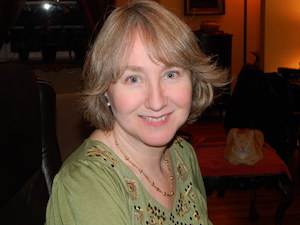 Meet Elf Ahearn: Elf Ahearn, yes that is her real name – lives in New York with her wonderful husband and a pesky cat who believes she’s the inspiration for all of Elf’s books, yet is really a charming distraction from writing. Learn more about Elf at elfahearn.com or on Facebook. Learn more about the cat by subscribing to The Writer’s Cat—a very infrequent newsletter about the feline in apricot fur.
Author contact information:
Blog: Sign up for The Writer’s Cat – my very infrequent newsletter – by emailing me
Social Media Links: Facebook friend me at Elf Ahearn

 In larger towns, the scenes were set up upon wagons, called “pageants.” The wagons would be stationed at street corners or before a shop where the shopkeeper paid the performers a fee for the privilege. The pageants were arranged so horses (or apprentices) could drag the wagon to the next station.

 Reynolds knew his first “great success” with the introduction of Prince Albert smoking tobacco in 1907.
  The image of the camel used on the package came about with the serendipitous arrival of the Barnum and Bailey Circus in Winston-Salem. An Arabian dromedary called “Old Joe” was one of the featured animals of the circus. It helped in gaining permission to take a picture of the camel that Reynolds had closed the factory and permitted his employe
 Ironically, in North Carolina we have replaced one vice with another. Many of the former tobacco farms have been converted into vineyards. I used that idea as a key point in my contemporary Pride and Prejudice novel, Honor and Hope, in which the hero saves the heroine by purchasing the tobacco farm owned by her family. He adds the land to his vineyard.
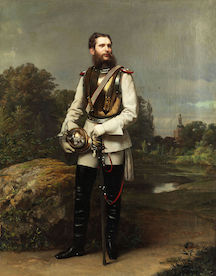
 “Fritz,” as Prince Frederick William was known, and Princess Victoria met first when Prince Albert and his secretary Baron Stockmar concocted a plan to invite the Prussian royals to London for Albert’s Grand Exhibition of 1851. Fritz was 20 at the time, and Victoria was but 10. The queen permitted Victoria to join the royal families, on the guise as a companion for Fritz’s younger sister. Princess Victoria’s German was fluent and she proved herself the perfect guide for her father’s exhibition. She was vivacious and made a good first impression. The two were permitted great access to one another (a fact which would not have occurred if she were older) over the two weeks the Prussians remained in London. If she had been older perhaps she might have noted the reticence and the alarm with which Frederick William noted the familiarity practiced openly by the British royal family. Life in Prussia would not be the same as life in London.
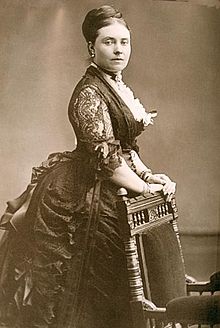 In the years of waiting, Prince Albert “trained” his daughter in how to be an excellent queen consort. Albert spent two hours daily in this manner. Unfortunately, the Princess Royal was not as adaptable as her father. Victoria’s life in Prussia would never be what she wished. Where in England, the princess’s life held a certain informality, in Berlin she encountered strict court etiquette. Moreover, the Prussia that Fritz would govern would be a military-controlled state. The ruling House of Hohenzollern practiced a state-instilled monarchy. Fritz and Vicky were married in January 1858.
 Education in England has roots deep in the Anglo-Saxon period. Latin was the main subject at these early schools and the instruction was directed toward the sons of “aristocracy” of the age. The church saw a need to train additional priests, as well as a need for someone to read the Bible and related documents to others. Both Oxford and Cambridge were founded as a means to train the clergy. It was during the reign of Edward VI that a reformed system of “free grammar schools.”
  “Robert Raikes initiated the Sunday School Movement, having inherited a publishing business from his father and become proprietor of the Gloucester Journal in 1757. The movement started with a school for boys in the slums. Raikes had been involved with those incarcerated at the county Poor Law (part of the jail at that time); he believed that “vice” would be better prevented than cured, with schooling as the best intervention. The best available time was Sunday, as the boys were often working in the factories the other six days. The best available teachers were lay people. The textbook was the Bible. The original curriculum started with teaching children to read and then having them learn the catechism, reasoning that a student who could read and understand the Bible could do the same with any other book.” (Power, John Carroll (1863). The Rise and Progress of Sunday Schools: A Biograhy of Robert Raikes and William Fox. New York: Sheldon & Company.)
 Many of the minor plot lines in my latest Regency romantic suspense concern who could inherit a title? There is the matter of the Marquess of Malvern’s losing his memory. Should the Duke of Devilfoard declare his eldest son incompetent and petition for his second son to assume control of the dukedom? Was such even legal? And what of the missing Earl of Sandahl? The original earl falls overboard on his “honeymoon” and cannot be found. Should he be declared dead? If so, who inherits? The logical answer is the second son, but that solution is not what it seems.

 Angel Comes to the Devil’s Keep

 On 7 April 1853, Queen Victoria delivered her fourth son and eighth child. Prince Leopold George Duncan Albert was the first of the queen’s children to be delivered with the aid of chloroform, a controversial procedure at the time. The belief by many in the medical field and the theological circles was that God meant women to “suffer” during childbirth so a symbol of Eve’s betrayal in the Garden of Eden. The queen’s use of the drug created quite a debate. It was also argued that a painful delivery assured that mother’s would wish to protect the children for whom they had suffered. The press thought the procedure too dangerous to the queen’s health. It was Victoria’s approval of the procedure that finally broke this archaic “male” perspective of women’s health.
 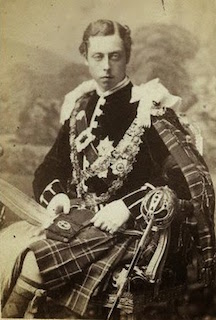 The diagnosis of hemophilia was not met well by either Victoria or Albert. “Blame” for the condition was denied by both the queen and her consort. So, who can be a hemophilia carrier? “A daughter gets an X chromosome from her mother and an X chromosome from her father. Suppose the X chromosome from her mother has the gene for normal blood clotting. Suppose the X chromosome from her father has the gene for hemophilia. The daughter will not have hemophilia since the normal blood clotting gene from her mother is dominant. It won’t allow the instructions from the hemophilia gene to be sent.
 Eventually, Leopold won his mother’s permission to marry. However, his medical condition prevented many eligible princesses from accepting an offer. “Princess Helen of Waldeck-Pyrmont agreed to marry him. The couple tied the knot in 1882. Although when they married they barely knew each other, they soon grew to love, and became very devoted to, each other. The following year, Helen gave birth to a child, Alice. Unfortunately, Leopold didn’t get to spend a lot of time with his beloved family. In March 1884, he went, alone (his wife was pregnant and couldn’t travel) to the south of France, something he always did to escape the cold English winters. While there, he slipped, bruising his knee and hitting his head. That night, he died. The cause is unclear, but the most likely explanation is that he suffered a cerebral hemorrhage. Four months later, Helen gave birth to their second child, a boy named Charles Edward.”
 “About 7 o’clock on the evening of Monday, the 3rd of November, at 42 weeks and 3 days gestation, the membranes spontaneously ruptured and labor pains soon followed. The contractions were coming every 8 to 10 minutes and were very mild. Examination of the cervix at that time revealed the tip of the cervix to be about a half penny dilated. On Tuesday morning, around 3 a.m., the 4th of November, Princess Charlotte had a violent vomiting spell and Dr. Croft thinking that delivery was eminent, sent for the officers of the state and Dr. Matthew Baillie. The Archbishop of Canterbury, the Bishop of London, The Lord Chancellor, the Home Secretary, the Secretary of war and Dr. Baillie, all arrived in their coaches and four before 8:00 a.m. But alas, the Princess was only three centimeters dilated at this time.


 Every Woman Dreams...