 As of yesterday, twenty-five (25) of my titles are on sale. The sale will continue through Sunday, May 14, Mother’s Day. Fill up your eReaders!!!! There are Austen-inspired titles, romantic suspense, a Regency series, and contemporary choices. ALL TITLES ARE $2.50 OR LESS. Here are the 13 Regency and Contemporary Titles Available.
 A Touch of Scandal: Book 1 of the Realm Series [historical fiction; Regency romance; romantic suspense]
2011 Write Touch Readers’ Award, 2nd Place, Historical Romance
(Disclaimer: This book was originally published under the title The Scandal of Lady Eleanor.)
The men of the REALM have served their country, while ignoring their responsibilities to home and love, but now Bonaparte is defeated, they each mean to claim their portion of a new and prosperous England. However, their long-time enemy Shaheed Mir has other plans. The warlord believes one of the Realm has stolen a fist-sized emerald, and the Baloch intends to have its return or his revenge.
JAMES KERRINGTON, the future Earl of Linworth left his title and his infant son behind after the death of his beloved Elizabeth, but he has returned to England to tend his ailing father and to establish his roots. With Daniel as his heir, Kerrington has no need to marry, but when Eleanor Fowler stumbles and falls into his arms, Kerrington’s world is turned upon its head. He will do anything to claim her.
LADY ELEANOR FOWLER has hidden from Society, knowing her father’s notorious reputation for debauchery has tainted any hopes she might have of a happy marriage. And yet, despite her fears, her brother’s closest friend, James Kerrington, has rekindled her hopes, but when Sir Louis Levering appears with proof of Eleanor’s participation in her father’s wickedness, she is drawn into a world of depravity, and only Kerrington’s love can save her.
The first fully original series from Austen pastiche author Jeffers is a knockout. – Publishers Weekly
Jeffers’s characters stay in the reader’s heart and mind long after the last page has been turned. – Favored Elegance
Kindle Kobo Nook
********************************************************************
 A Touch of Velvet: Book 2 of the Realm Series [historical fiction; Regency romance; romantic suspense; adventure; mystery]
After years away from England, members of the Realm return home to claim the titles and the lives they once abandoned. Each man holds on to the fleeting dream of finally knowing love. For now, all any of them can hope is the resolutions of their previous difficulties before Shaheed Mir, their old enemy, finds them and exacts his revenge. Mir seeks a mysterious emerald, and he believes one of the Realm has it.
No one finds his soul mate when she is twelve and he seventeen, but BRANTLEY FOWLER, the Duke of Thornhill, always thought he had found his. The memory of Velvet Aldridge’s face was the only thing that kept him alive all those years he remained estranged from his family. Now, he has returned to Kent to claim his title and the woman he loves, but first he must obliterate the memory of his infamous father, while staving off numerous attacks from Mir’s associates.
MISS VELVET ALDRIDGE always believed in “happily ever after.” Yet, when Brantley Fowler returns home, he has a daughter and his wife’s memory to accompany him. He promised her eight years prior that he would return to make her his wife, but Thornhill only offers her a Season and a dowry. How can she make him love her? Make him her “knight in shining armor”? Regency England has never been hotter or more dangerous.
Kindle Kobo Nook
********************************************************************
 A Touch of Cashémere: Book 3 of the Realm Series [historical fiction; Regency romance; romantic suspense/adventure/mystery]
MARCUS WELLSTON never expected to inherit his father’s title. After all, he is the youngest of three sons. However, his oldest brother Trevor is judged incapable of meeting the title’s responsibilities, and his second brother Myles has lost his life in an freak accident; therefore, Marcus has returned to Tweed Hall and the earldom. Having departed Northumberland years prior to escape his guilt in his sister’s death, Marcus has spent the previous six years with the Realm, a covert governmental group, in atonement. Now, all he requires is a biddable wife with a pleasing personality. Neither of those phrases describes Cashémere Aldridge.
MISS CASHEMERE ALDRIDGE thought her opinions were absolutes and her world perfectly ordered, but when her eldest sister Velvet is kidnapped, Cashé becomes a part of the intrigue. She quickly discovers nothing she knew before is etched in stone. Leading her through these changes is a man who considers her a “spoiled brat.” A man who prefers her twin Satiné to Cashémere. A man whose approval she desperately requires: Marcus Wellston, the Earl of Berwick. Toss in an irate Baloch warlord, a missing emerald, a double kidnapping, a blackmail attempt, and an explosion in a glass cone, and the Realm has its hands full. The Regency era has never been hotter, nor more dangerous.
Kindle Kobo Nook
********************************************************************
 A Touch of Grace: Book 4 of the Realm Series [historical fiction; Regency romance; adventure; romantic suspense/mystery]
SOLA’s Seventh Annual Dixie Kane Memorial Awards, 3rd Place, Historical Romance
“Jeffers’s close look at the dark secrets of Regency society instills a sense of realism.” – Publishers Weekly
After years away from England, members of the Realm return home to claim the titles and the lives they had previously abandoned. Each man holds onto the fleeting dream of finally know love and home. For now, all any of them can hope is the resolution of his earlier difficulties before Shaheed Mir, their old enemy, finds them and exacts his revenge. Mir seeks a mysterious emerald, and he believes one of the Realm has it.
GABRIEL CROWDEN, the Marquis of Godown, can easily recall the night that he made a vow to know love before he met his Maker. Of course, that was before Lady Gardenia Templeton’s duplicity had driven Godown from his home and before his father’s will had changed everything. Godown requires a wife to meet the unusual demands of the former marquis’s stipulations. Preferably one either already carrying his child or one who would tolerate his constant attentions to secure the Crowden line before the deadline.
MISS GRACE NELSON dreams of family died with her brother’s ascension to the title. Yet, when she meets the injured Marquis of Godown at a Scottish inn, her dreams have a new name. However, hope never has an easy path. Grace is but a lowly governess with ordinary features. She believes she can never earn the regard of the “Adonis” known as Gabriel Crowden. Besides, the man has a well-earned skepticism when it comes to the women in his life. How can she prove that she is the one woman who will never betray him? The Regency era has never been hotter.
Kindle Kobo Nook
********************************************************************
 A Touch of Mercy: Book 5 of the Realm Series [historical fiction; Regency romance; adventure; romantic suspense; mystery]
Members of the Realm have retuned to England to claim the titles they left behind. Each holds to the fleeting dream of finally knowing love, but first he must face his old enemy Shaheed Mir, a Baloch warlord, who believes one of the group has stolen a fist-sized emerald. Mir will have the emerald’s return or will exact his bloody revenge.
A devastating injury has robbed AIDAN KIMBOLT, Viscount Lexford, of part of his memory, but surely not of the reality that lovely Mercy Nelson is his father’s by-blow. Aidan is intrigued by his “sister’s” vivacity and how easily she ushers life into Lexington Arms, a house plagued by Death’s secrets–secrets of his wife’s ghost, of his brother’s untimely passing, and of his parents’ marriage: Secrets Aidan must banish to finally know happiness.
Fate has delivered Miss MERCY NELSON to Lord Lexford’s door, where she quickly discovers appearances are deceiving. Not only does Mercy practice a bit of her own duplicity, so do all within Lexington Arms. Yet, dangerous intrigue cannot squash the burgeoning passion consuming her and Viscount Lexford, as the boundaries of their relationship are sorely tested. How can they find true love if they must begin a life peppered with lies?
Kindle Kobo Nook
********************************************************************
 A Touch of Love: Book 6 of the Realm Series [historical fiction; Regency romance; adventure; romantic suspense; mystery]
The REALM has returned to England to claim the titles they left behind. Each man holds to the fleeting dream of finally knowing love and home, but first he must face his old enemy Shaheed Mir, a Baloch warlord, who believes one of the group has stolen a fist-sized emerald. Mir will have the emerald’s return or will exact his bloody revenge.. Aristotle Pennington has groomed
SIR CARTER LOWERY as his successor as the Realm’s leader, and Sir Carter has thought of little else for years. He has handcrafted his life, filled it with duties and responsibilities, and eventually, he will choose a marriage of convenience to bolster his career; yet, Lucinda Warren is a temptation he cannot resist. Every time he touches her, he recognizes his mistake because his desire for her is not easily quenched. To complicate matters, it was Mrs. Warren’s father, Colonel Roderick Rightnour, whom Sir Carter replaced at the Battle of Waterloo, an action which had named Sir Carter a national hero and her father a failure as a military strategist.
LUCINDA WARREN’s late husband has left her to tend to a child belonging to another woman and has drowned her in multiple scandals. Her only hope to discover the boy’s true parentage and to remove her name from the lips of the ton’s censors is Sir Carter Lowery, a man who causes her body to course with awareness, as if he had etched his name upon her soul. Cruel twists of Fate have thrown them together three times, and Lucinda prays to hold off her cry for completion long enough to deny her heart and to release Sir Carter to his future: A future to which she will never belong.
Kindle Kobo Nook
********************************************************************
 A Touch of Honor: Book 7 of the Realm Series [historical fiction; Regency romance; romantic suspense/adventure/mystery]
For two years, BARON JOHN SWENTON has thought of little else other than making Satiné Aldridge his wife; so when he discovers her reputation in tatters, Swenton acts honorably: He puts forward a marriage of convenience that will save her from ruination and provide him the one woman he believes will bring joy to his life. However, the moment he utters his proposal, Swenton’s instincts scream he has made a mistake: Unfortunately, a man of honor makes the best of even the most horrendous of situations.
MISS SATINE ALDRIDGE has fallen for a man she can never possess and has accepted a man she finds only mildly tolerable. What will she do to extricate herself from Baron Swenton’s life and claim the elusive Prince Henrí? Obviously, more than anyone would ever expect.
MISS ISOLDE NEVILLE has been hired to serve as Satiné Aldridge’s companion, but her loyalty rests purely with the lady’s husband. With regret, she watches the baron struggle against the impossible situation in which Miss Aldridge has placed him, while her heart desires to claim the man as her own. Yet, Isolde is as honorable as the baron. She means to see him happy, even if that requires her to aid him in his quest to earn Miss Satiné’s affections.
Sacrifice and honor, betrayal and redemption, all make for an exceptionally satisfying romance. A Touch of Honor is a mesmerizing story of extraordinary love realized against impossible odds. – Collette Cameron, Award-Winning Author
Kindle Kobo Nook
********************************************************************
 A Touch of Emerald: The Conclusion of the Realm Series (Fiction/Historical; Historical Romance/Mystery/Adventure; Regency)
Four crazy Balochs. A Gypsy band. An Indian maiden. A cave with a maze of passages. A hero, not yet tested. And a missing emerald.
For nearly two decades, the Realm thwarted the efforts of all Shaheed Mir sent their way, but now the Baloch warlord is in England, and the tribal leader means to reclaim the fist-sized emerald he believes one of the Realm stole during their rescue of a girl upon whom Mir turned his men. Mir means to take his revenge on the Realm and the Indian girl’s child, LADY SONALI FOWLER.
DANIEL KERRINGTON, Viscount Worthing, has loved Lady Sonalí since they were but children. Yet, when his father, the Earl of Linworth, objects to Sonalí’s bloodlines, Worthing thinks never to claim her. However, when danger arrives in the form of the Realm’s old enemy, Kerrington ignores all caution for the woman he loves.
Kindle Nook Kobo
********************************************************************
 His American Heartsong: A Companion Novel of the Realm Series (Regency romance, Historical romance, Series, The Realm)
The Deepest Love is Always Unexpected.
LAWRENCE LOWERY, Lord Hellsman, has served as the dutiful son since childhood, but when his father Baron Blakehell arranges a marriage with the insipid Annalee Dryburgh, Lowery must choose between his responsibilities to his future title and the one woman who makes sense in his life.
Although her mother was once a lady in waiting to the Queen, by Society’s standards, MISS ARABELLA TILNEY is completely unfit to be the future baroness: Bella is an American hoyden who demands that Lowery do the impossible: Be the man he always dreamed of being.
Kindle Nook Kobo
********************************************************************
 His Irish Eve (Fiction/Historical Fiction; Romance; Regency Romance/Adventure)
When the Earl of Greenwall demands his only son, ADAM LAWRENCE, Viscount Stafford, retrieve the viscount’s by-blow, everything in Lawrence’s life changes. Six years prior, Stafford released his mistress, Cathleen Donnell, from his protection; now, he discovers from Greenwall that Cathleen was with child when she returned to her family. Stafford arrives in Cheshire to discover not only the son of which Greenwall spoke, but also two daughters, as well as a strong-willed woman, in the form of AOIFE KENNICE, who fascinates Stafford from the moment of their first encounter.
Set against the backdrop of the early radicalism of the Industrial Revolution and the Peterloo Massacre, a battle begins: A fight Lawrence must win: a fight for a woman worth knowing, his Irish Eve.
Kindle Nook Kobo
********************************************************************
 The First Wives’ Club: Book 1 of the First Wives’ Trilogy (Regency romance, historical romance, trilogy, series, mystery, family relationships)
SOLA’s Seventh Annual Dixie Kane Memorial Awards, Honorable Mention, Historical Romance
NATHANIEL EPPERLY, the Earl of Eggleston, has married the woman his father has chosen for him, but the marriage has been everything but comfortable. Nathaniel’s wife, Lady Charlotte, came to the marriage bed with a wanton’s experience. She dutifully provides Eggleston his heir, but within a fortnight, she deserts father and son for Baron Remington Craddock. In the eyes of the ton, Lady Charlotte has cuckolded Epperly.
ROSELLEN WARREN, longs for love and adventure. Unfortunately, she’s likely to find neither. As a squire’s daughter, Rosellen holds no sway in Society; but she’s a true diamond in the rough. Yet, when she meets Epperly’s grandmother, the Dowager Countess Eggleston creates a “story” for the girl, claiming if Rosellen is presented to the ton as a war widow with a small dowry, that the girl will find a suitable match.
BARON REMINGTON CRADDOCK remains a thorn in Eggleston’s side, but when Craddock makes Mrs. Warren a pawn in his crazy game of control, Eggleston offers the woman his protection. However, the earl has never faced a man who holds no strength of title, but who wields great power; and he finds himself always a step behind the enigmatic baron. When someone frames Epperly for Lady Charlotte’s sudden disappearance, Nathaniel must quickly learn the baron’s secrets or face a death sentence.
Kindle Kobo Nook
********************************************************************
 Second Chances: The Courtship Wars (Contemporary Romance, Psychology, Sexology, Reality TV, Downs Syndrome, Eccentric Hermits)
Rushing through the concourse to make her way to the conference stage, GILLIAN CORNELL comes face-to-face with the one man she finds most contemptible, but suddenly her world tilts. His gaze tells stories she wants desperately to hear. As he undresses her with his eyes, Gillian finds all she can do is stumble through her opening remarks. The all-too-attractive cad challenges both her sensibility and her reputation as a competent sexologist.
DR. LUCIAN DAMRON never allows any woman to capture his interest for long. He uses them to boost his career and for his pleasure. Yet, Lucian cannot resist Gillian’s stubborn independence, her startling intelligence, and her surprising sensuality. Sinfully handsome, Lucian hides a badly wounded heart and a life of personal rejection.
Thrown together as the medical staff on “Second Chances,” a new reality TV show designed to reunite previously married couples, Lucian and Gillian soon pique the interest of the American viewing public, who tune in each week, fascinated by the passionate electricity coursing between them. Thus begins an all-consuming courtship war, plagued by potential relationship-ending secrets and misunderstandings and played out scandalously on a national stage.
Kindle Nook Kobo
********************************************************************
 One Minute Past Christmas: Tale of an Appalachian Christmas Miracle [short story, Appalachia, holidays, Christmas, family relationships, legends]
One Minute Past Christmas is the story of a Greenbrier County, West Virginia, family in which a grandfather and his granddaughter share a special ability — they call it a “gift”– that enables them to briefly witness each year a miraculous gathering in the sky. What they see begins at precisely one minute past Christmas and fills them with as much relief as it does wonder. But they worry that the “gift” — which they cannot reveal to anyone else — will die with them because it has been passed to no other relative for forty-four years.
Nook Kindle Kobo
******************************************************************
I do not own the rights to this book, which means I do not control the price and sales, but Black Opal Books, the publisher, has placed a reasonable price on this eBook. Book 2 of the Twins’ Trilogy, The Earl Claims His Comfort, will have an Autumn arrival. Read Book 1 now!
 Angel Comes to the Devil’s Keep: Book 1 of the Twins’ Trilogy [romantic suspense; Regency romance; historical fiction; mystery; twins]
SOLA’s Eighth Annual Dixie Kane Memorial Awards, 3rd Place, Historical Romance
Huntington McLaughlin, the Marquess of Malvern, wakes in a farmhouse, after a head injury, being tended by an ethereal “angel,” who claims to be his wife. However, reality is often deceptive, and Angelica Lovelace is far from innocent in Hunt’s difficulties. Yet, there is something about the woman that calls to him as no other ever has. When she attends his mother’s annual summer house party, their lives are intertwined in a series of mistaken identities, assaults, kidnappings, overlapping relations, and murders, which will either bring them together forever or tear them irretrievably apart. As Hunt attempts to right his world from problems caused by the head injury that has robbed him of parts of his memory, his best friend, the Earl of Remmington, makes it clear that he intends to claim Angelica as his wife. Hunt must decide whether to permit her to align herself with the earldom or claim the only woman who stirs his heart–and if he does the latter, can he still serve the dukedom with a hoydenish American heiress at his side?
The story is charming, with interesting and realistic characters, a complex plot with plenty of surprises, and a sweet romance woven through it all. The author has a good command of what it was like to be a woman in nineteenth-century England–almost as if she had been there. She really did her research for this one. – Taylor Jones
Angel Comes to Devil’s Keep is a well-written tale of courage and sacrifice and what women went through in order to marry well in Regency England. The author did her homework and it shows in an authenticity that we don’t often see in Regency romances. – Regan Murphy
Nook Kobo Smashwords Kindle
iTunes Regency Reader

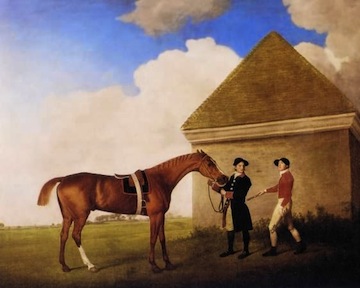 Yet I write Regencies, and in Regency times, gentlemen were as obsessed with their horses as today’s men are with their cars or motorbikes. In fact, in two of my books, including the latest release, the hero breeds horses for sale.
  If you wanted to sell, or to buy, a horse, you might go to a local horse fair. Or, if you lived in London, you’d drop down to Tattersall’s on Hyde Park Corner. It had been founded in 1766 by a former groom of the Duke of Kingston, and held auctions every Monday and on Thursdays during the Season. Tatersall’s charged a small commission on each sale, but also charged both buyers and sellers for stabling.
 My hero in A Raging Madness had been a cavalry officer. Britain had no formal studs for breeding war horses. Instead, they bought their horses from civilian breeders. This meant the British cavalry rode horses bred to be hunters, race horses, and carriage horses—usually thoroughbreds or thoroughbred crosses. Each colonel bought the horses for his own regiment. In 1795, the regulations established a budget of thirty pounds for a light mount and forty for a heavy mount. This budget didn’t change for the rest of the war with France, despite wartime shortages.
 A Raging Madness: Book 2 of The Golden Redepennings
  Meet the Author Jude Knight
 When Viscount Avery comes to see an invalid chair maker, he does not expect to find Min Bradshaw, the woman who rejected him 3 years earlier. Or did she? He wonders if there is more to the story. For 3 years, Min Bradshaw has remembered the handsome guardsman who courted her for her fortune. She didn’t expect to see him in her workshop, and she certainly doesn’t intend to let him fool her again.
 Lieutenant Rick Redepenning has been saving his admiral’s intrepid daughter from danger since their formative years, but today, he faces the gravest of threats–the damage she might do to his heart. How can he convince her to see him as a suitor, not just a childhood friend?
  Rede, the Earl of Chirbury wants the beautiful widow, Anne Forsythe, from the moment he first sees her. Not that he has time for dalliance, or that the virtuous widow would be available if he did. Or perhaps not so virtuous? She lives rent-free in a cottage belonging to the estate, courtesy of his predecessor and cousin, George. And her daughter’s distinctive eyes mark the little girl as George’s child. But it isn’t just the mystery that surrounds her that keeps drawing him to her side.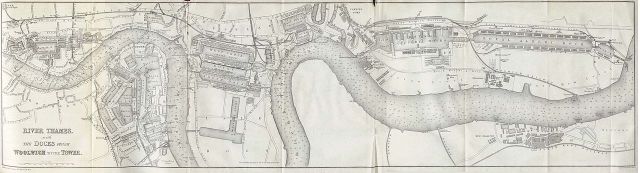
 The London Docks, located at Wapping, were the second dock system to be built in London. A large range of items were traded at the London Docks, including: tobacco, marble, bark, rubber, whalebones, iodine, mercury, wool, wax, paper, hemp, coir yarn, rattans, jute, skins, coconuts, sausage skins, rice, fruit, olive oil, fish oil, nuts, sugar, coffee, cocoa, spices, chutney, brandy, wine, rum, and sherry.
 In my newest cozy mystery, The Prosecution of Mr. Darcy’s Cousin, the character of Thomas Cowan makes a repeat performance. Readers met Cowan as a friend of and former sergeant serving under Colonel Fitzwilliam during the Spanish campaign of the Napoleonic Wars in The Mysterious Death of Mr. Darcy.
 Unfortunately, by the 1820s their reputation stood in disarray. Many individuals within the organization associated with common thief takers and were known to look the other way when a crime was not of notice. The government disbanded them in 1839. [J.M. Beattie, The First English Detectives: The Bow Street Runners and the Policing of London, 1750-1840 (Oxford: Oxford University Press, 2012)
 The Prosecution of Mr. Darcy’s Cousin: A Pride and Prejudice Mystery





 Vampire Darcy’s Desire: A Pride and Prejudice Paranormal Adventure
  Mr. Darcy’s Fault: A Pride and Prejudice Vagary
 Elizabeth Bennet’s Excellent Adventure: A Pride and Prejudice Vagary
  Elizabeth Bennet’s Deception: A Pride and Prejudice Vagary
  Mr. Darcy’s Present: A Pride and Prejudice Vagary
 Mr. Darcy’s Bargain: A Pride and Prejudice Vagary
 The Road to Understanding: A Pride and Prejudice Vagary

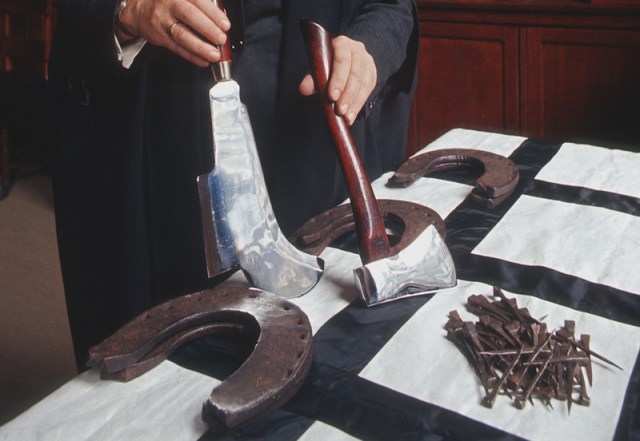
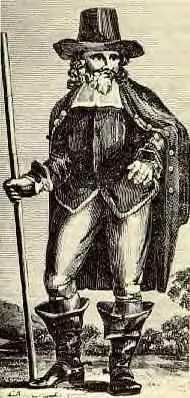 Matthew Hopkins was born in Wenham Magna, Suffolk, England. He was a Folk Figure, becoming England’s notorious “Witchfinder General,” active during the English Civil War. He was said to have exploited the fear and unrest of the times for his personal gain. Little is known of his early life and his birthdate (1619) is only approximate. He was the son of a Puritan clergyman, James Hopkins, and had knowledge of the law, but there is no evidence to support the story that he was a failed attorney, practicing in Essex.
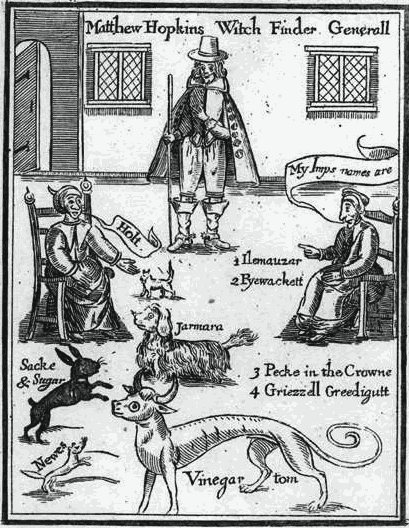 We know little of Hopkins until his reign of terror began in 1644. In March 1644, having read a book on witchcraft, he brought accusations against six people in Manningtree, calling them “witches” who had attempted to kill him. He thereupon became a “Witch Finder Generall,” going about Essex, Suffolk, Norfolk, and Huntingdon getting villagers and townspeople to hire him and his two assistants (for a fee) to search out witches, force their confessions, and have them hanged by the authorities. Throughout his reign of terror 1644-1647, Hopkins acquired a feared and evil reputation as a ‘fingerman’ (informer), paid by local authorities to commit perjury. Together with his henchman and fellow ‘Witch-Pricker’ John Sterne, in just 14 months, Hopkins was responsible for the condemnations and executions of some 230 alleged witches, more than all the other witch-hunters that proliferated during the 160-year peak of the country’s witchcraft hysteria. The hapless victims even included a few Anglican clergymen.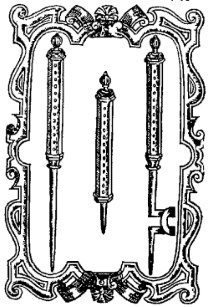


 The original brand name was “Hannon’s Best Chocolate.” The business prospered. In 1777, Hannon advertised his product with a money-back satisfaction guarantee. However, in 1779, Hannon set out for the West Indies to purchase cocoa beans. He never reached his destination. Although no one knows for certain, he was presumed to be lost at sea. The name of the product was changed in 1780 after Hannon’s wife, Elizabeth Gore Hannon, sold her husband’s share of the company to Baker in 1780, after Hannon never returned. At the time, it was rumored that Hannon intended to leave his wife, and thus deserted her.
 It was also Walter who gave the company its official trademark. He chose La Belle Chocolatiere to represent his company. “The young lady named “La Belle Chocolatiere” that still appears on packages is a representation of the original painting that hangs in the Dresden Gallery in Germany. La Belle Chocolatiere has graced the Baker’s Chocolate package since 1877, making her the oldest product trademark in America. Her story dates back to 1745 when Prince Dietrichstein, an Austrian nobleman, went to a chocolate shop to try the new drink everyone was talking about – hot chocolate. His waitress was Anna Baltauf, and the prince was so taken by the young lady that he soon asked her to marry him, making her a princess. Prince Dietrichstein commissioned a portrait of his wife by the famous Swiss painter Jean Etienne Liotard as a wedding gift. The artist suggested that she pose in her chocolate server’s costume, commemorating what brought them together. Some time prior to 1883, when the image was registered as a U.S. trademark, Henry L. Pierce, then president of Walter Baker & Company, saw the painting and decided it would be the perfect image for his packaged chocolate.” (


 Every Woman Dreams...