
 Pre-Elizabethan drama moved from miracle plays to morality plays to folk plays to interludes. Interludes were the last to develop. Initially, “interludes” were closed identified with morality plays, especially in subject matter.
Precursors to Elizabethan Drama summarizes the development from Morality plays to interludes. “A separate class of drama, called the morality play, also became popular in medieval England. Morality plays, like the later developed Renaissance masques, may seem a little strange to us, as they were more allegorical in nature. That is to say, the characters were not individuals, but rather abstract concepts. For example, in the most famous morality play, Everyman, some of the characters include Death, Knowledge, Strength and Discretion. The purpose of the plays was, generally speaking, to illustrate the conflict between good and evil.
“Here again, we must not believe that such a genre could ever possibly survive were it to be all humorless instruction. The important, and very popular, development of the English morality play was the introduction of a fatuous character called Vice, to which the Elizabethan authors refer repeatedly. Vice, the tempter of man, served the Devil, but his main role seemed to be to “torment and tease” his master, to the guaranteed delight of the audience.
“Another type of play, called the interlude, developed in the 16th century. Its great practitioner was John Heywood. An interlude was brief play of a non-religious nature (we must note, however, that the terms interlude and morality play overlap, and it may not be easy, nor is it usually necessary, to absolutely categorize a given play as one type or another); for example, in Heywood’s The Play of the Weather, the god Jupiter has to determine what kind of weather to provide England, and a debate ensues between two Millers, a Gentleman and a Ranger about what kind of weather is most desirable. Again, we see that we have characters that are not developed individuals, but rather character-types.”

The First Stage ~ Miracles, Moralities and Interludes, Everyman/Hickscorne/Magnyfycence/The Play of the Sacrament/Pride of Life/The Castell of Perseverance/Mary Magdalene/Mind, Will & Understanding/Fulgens & Lucres/Mundus et Infans
Moralities continued to be heavy in lessons in ethics. They were designed for the lower classes and presented before large audiences. The moralities denied the idea that physical pleasure and intelligent speculation against the superstitions of the day could be enjoyed without eternal damnation. These plays purported the life everlasting.
Meanwhile, by 1500, interludes separated themselves from what were termed as morality plays. First, they were shorter. Secondly, the audience changed. They were accepted by a more aristocratic viewer. Finally, they lost their moral emphasis. The interludes spoke of the values found in the world. Condemnation for enjoying some of life’s pleasures was not the subject matter.
 Interludes were performed at colleges or at the homes of the wealthy. They were often staged between the courses of a supper. The dialogue was very lively and contemporary (politics, new scientific discoveries, the secular elements of religion, etc.). Interludes spoke of the ruling group, changing from emphasis on Protestants to Catholics, and back again. Sometimes they went so far as to “attack” a person or a cause. They might, for example, defend a personage. In John Skelton’s Magnificence, the plot satirized Thomas Wolsey, a cardinal in the Roman Catholic Church.
John Heywood, who was mentioned above, was likely the best known writer of interludes. In his early days, Heywood served as Master of Revels at court, meaning he was to provide pleasant entertainment for those the Court hosted. Heywood studied the works of Chaucer and Boccaccio. He borrowed some of their favorite characters for his plays: friars, poticaries, peddlers, wives, husbands, pardoners, priests, etc.). He used them in situations which were also similar to the early tales. In The English Drama 900-1642 (W. W. Norton, 1963), editors Edd Winfield Parks and Richmond Croom Beatty tell us, “He [Heywood] was fortunate in appearing before the regular drama had had opportunity to develop. After him the men who wrote Interludes were mostly uninspired versifiers who found the new and lusty national drama too vigorous a form for their taste. They returned to the stock devices of early writers, they were lacking in humor and resourcefulness, and as a result their achievement is, by comparison, dull Writers of genuine talent had turned to the regular drama.”


 33.
33.  34.
34.  35.
35.  36.
36.  37.
37.  38.
38.  39.
39.  40.
40.  41.
41.  42.
42.  43.
43.  44.
44.  45. Donald J. Trump (June 14, 1946 — ???} Republican. Trump is an American businessman, politician, and television personality. He is President of the U.S. as of today. His legacy, like Obama’s, is yet to be defined. Trump won the general election on November 8, 2016, gaining a majority of electoral college votes, while receiving a smaller share of the popular vote nationwide than Democratic rival Hillary Clinton. At age 70, Trump will become the oldest and the wealthiest person to assume the presidency, and the first without prior military and the first without either prior military or governmental service.
 Okay, over Christmas I gave and received several jigsaw puzzles. I do puzzles on my Kindle Fire every evening. The presents I gave were those personalized puzzles where a person receives a puzzle of his or her hometown or community based on Google maps. I received a 3D one of London. With over 1200 pieces, it will take me a good long while…at least, I hope so.
  All this got me thinking of John Spilsbury (1739 – 3 April 1769), a British mapmaker and engraver, who is credited as the inventor of the jigsaw puzzle.


 Thomas Cook was a 32-year old cabinet maker by trade and a strong proponent of the temperance movement. One day in June 1841, he walked from his home in Market Harborough to the nearby town of Leicester to attend a “dry” meeting. A former Baptist preacher, Thomas Cook was a religious man who believed that most Victorian social problems were related to alcohol and that the lives of working people would be greatly improved if they drank less and became better educated. On the way, he passed a billboard poster announcing that the Midlands County Railway had opened a rail extension between Loughborough and Leicester. Thomas concocted an idea that the steam engine could be profitably harnessed to the temperance cause; therefore, he persuaded the railroad company to reduce the fare in return to his guarantee of 500 passengers to travel the newly opened rail extension, which customarily served only one-tenth that number.


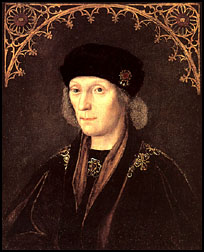 During Henry’s reign, the king was served by some 200 councillors from both the Lancastrian and Yorkist facets. His advisors included noblemen, men of law, men of religion, and those of the gentry. They gathered with the King in the Court of the Star Chamber at Westminster Palace. The men Henry VII had gathered dispatched cases of law involving those with specific grievances against one of the nobility. Sessions known as Requests were also conducted there. In these, the poor could pursue their grievances.
 John Reginald Halliday Christie, known to his family and friends as Reg Christie, was an English serial killer active during the 1940s and early 1950s and is the subject a new film based upon his life of crime. Personally, the 1971 film with Richard Attenborough was creepy enough for me. I do not wish to relive the experience. That being said, what do we know of Reginald Christie?
 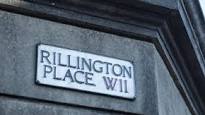 During a search of 10 Rillington Place on December 2, 1949, the police found the bodies of Beryl and Geraldine Evans hidden in the wash house in the back garden. Both had been strangled. When Evans was shown the clothing taken from the bodies of his wife and child, he was also asked whether he was responsible for their deaths. This was, according to Evans’ statement, the first occasion in which he was informed that his baby daughter had been killed. Evans, (according to Kennedy) said ‘yes, yes’. He then confessed to having strangled Beryl during an argument over debts and strangling Geraldine two days later, after which he left for Wales.




 Every Woman Dreams...