
This is a lovely guest post from my friend Jennifer Petkus about Jane Austen, frugality, and being a bit eccentric. Enjoy!
I am frugal (cheap), but like many frugal (cheap) people I’m not always aware of the high cost of being frugal (cheap). For instance, it didn’t occur to me until too late that cobbling together a dust extraction system for my workshop using bathroom exhaust fans and dryer hose is ultimately a lot more expensive than just buying one a proper system off the shelf at my local home improvement store. Of course, I had a lot of fun designing my ultimately useless dust extraction system, but I sometimes wish I had those fruitless hours back and could apply them actually to building furniture.
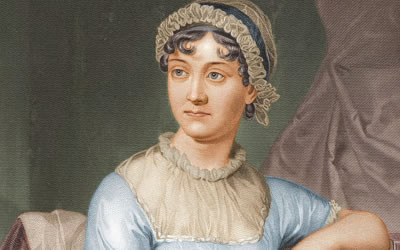
Jane Austen, however, was probably actually frugal and was not just cheap. We know she essentially had no income of her own until she published her first novel in her mid thirties. So I’m sure she would have practiced economy in everything, from those little bits of ivory on which she wrote to the recipe she used to make her own ink for her pen. In fact, she probably had to make many things by herself for her use or the use of her family. I know she recopied musical scores and re-purposed her clothing, modifying old dresses to make them seem new with ribbons. In fact her novels mention quite a few practical considerations that make her and her characters seem quite industrious.

Frank Churchill lends a hand in Emma in repairing the rivet in Mrs. Bates’ spectacles and Lydia Bennet shows a practical side in Pride and Prejudice when she buys an ugly bonnet with the idea of taking it home and improving it with satin. I know many of us read that line with an idea of Lydia’s spendthrift ways, but I view her purchase as a frugal (cheap) person. The ugly bonnet was probably cheap because it was ugly and Lydia thought she could make it tolerable with the purchase of some pretty trim. And even the vain Sir Walter Elliot is persuaded to practice vulgar economy when he lets out Kellynch Hall to Admiral Croft, the baronet mistakenly thinking he could save money by staying in Bath, as if that arithmetic makes any sense at all.
I think these examples are indicative of the little economies Austen must have practiced or observed, and I like to think she would have understood my motivations to self publish. After all, she basically self published her first book and was involved in the design and typography of it. What she didn’t get to do, of course, was to design a book cover. I like to wonder what sort of book covers she might have designed had she the opportunity.
(A little aside here: In Austen’s day books were usually printed unbound and often with the folded pages (or signatures) still uncut. Upon purchase of a book, you’d have it bound in leather, replacing the paper boards that acted as a temporary cover. Then you’d slice open the pages with a knife, often resulting in a ragged edge. In Austen’s time, there were no dust jackets and no opportunity for a fancy book cover. Thus in the miniature book I’ve made you can see the ragged or deckled paper edges.)
Today her books are mostly printed by publishers who either want to take advantage of her public domain status (thrift editions), or as scholarly works with forewords by illustrious Janeites and copious footnotes. The dust jackets or book covers are usually pretty elegant, featuring Regency paintings or photographs of stately homes. Frankly, these covers are a little stuffy and highbrow.
If Austen were designing (or at least art directing) her own covers now, would she follow (perhaps on the advice of others) to follow some of the conventions of romantic fiction covers? Would she go the bared bosom route, the clasped hands or the running up the stairs clichés of modern romance fiction, or would she prefer the picturesque aspect of a stately home, the crash of waves against a breakwater or the rocks and mountains of Derbyshire? Would she just search Google thusly: “English seaside site: wikimedia.org” and then use the search tools to specify usage rights as “labeled for reuse.” Or would she just ask Cassandra for another drawing and have done with it, keeping it in the family and keeping down costs. (I also imagine a modern-day Henry Austen being an amateur photographer with some pretensions of talent.)
Whatever direction Austen might take, I like to think she would approve of my decision to design the cover for my latest book without paying for images (like stock photos of clasped hands and bared bosoms). My plan, you see, is to create a still life of the items on the desk of one of my characters. The items will be taken from the story, but being of a somewhat esoteric nature, I couldn’t collect them all without considerable expense—at least not at 1:1 scale. (I think of the items on the desk being like the cabinet of curiosities Mr. Knightley collects to entertain Mr. Woodhouse while the others are collecting strawberries at Donwell Abbey.)
So instead I’m making models of all the items at dollhouse scale—about 1/12th scale. Of course I could have bought some of the items I needed, but dollhouse furniture is expensive and usually doesn’t quite have the level of detail I want for my book cover, and so I’m building everything using my modeling skills.
I’ve been a scale modeler for years, but I usually work at much smaller scales, from 1/48th (World War II airplanes), 1/72nd (modern jet fighters) to 1/350th scale (aircraft carriers and starships) to 1/1400th scale (really big starships). So working at 1/12th scale is huge to me and consequently a lot of fun. I’ve made a plain, deal desk using basswood and even a quill pen from paper-thin sheet styrene. Scissors are made from the metal handle that comes on Chinese takeout boxes. The blade of the knife handle is from a aluminum Chipotle takeout lid. My only expense in this is about $5 for the basswood I bought at my local hobby shop. (Yes, I also spent an additional $30 buying other modeling supplies, but that’s neither here nor there.)
 This might seem mind-boggling tedious to many, but I think Austen would have appreciated the exercise. I understand her stitching and embroidery were quite good and I think she must have had some experience with the very tedious rolled paper craft or quilling for she mentions it in Sense and Sensibility.
Of course a present-day Austen might roll her eyes and wonder why I don’t pay for some stock photography and I might have to confess that ultimately, I’m going through this process because it’s so much darn fun. You might have to be a scale modeler to understand and appreciate my motivation and before you roll your eyes, I’ll bet many of you have spent hours at some hobby that most of the rest of the world considers quite mad. Whatever my excuse, this little exercise illustrates how much joy Jane Austen and writing Jane Austen-related fiction has brought into my life. Because I find the Georgian period so fascinating, I now read a lot of histories of the period and it’s even spread to reading American history. Thanks to Jane Austen, I even understand some of the jokes and references from Hamilton, the Musical, or Sleepy Hollow or even Pirates of the Caribbean. I am just so grateful for the experience of reading and writing about Jane Austen and her times and the opportunity to write these posts for Austen Authors.
And now you’ll excuse me because I just thought of another use for those all bathroom exhaust fans I’ve bought over the years.

 DEMON RISING
 About the Author
 According to
  The Road to Understanding: A Pride and Prejudice Vagary
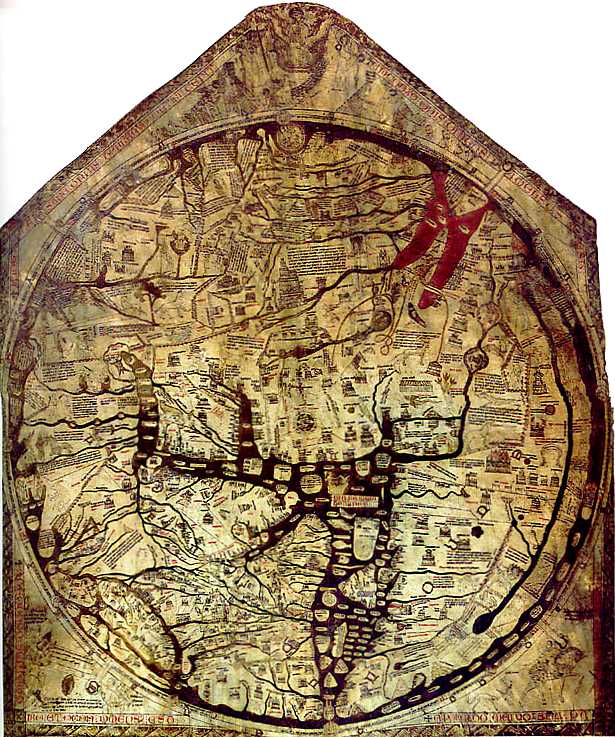 Housed in the Hereford Cathedreal, the Mappa Mundi is believed to the be the world’s largest medieval map. England specialized in world maps of the Middle Ages. They were drawn upon cloth or walls or animal skins.


 Austen tries to make us understand how Anne would have allowed herself to be persuaded: she was young– only nineteen– she honestly thought that it was better for Captain Wentworth not to be burdened with a wife when he was still poor and only beginning his career, and she trusted Lady Russell’s judgement. Anne doesn’t even feel bitterness towards Lady Russell for Lady Russell’s role in breaking off her romance. But she has also clearly spent the past eight years replaying everything that happened over and over again in her head and wishing that she had made a different choice.
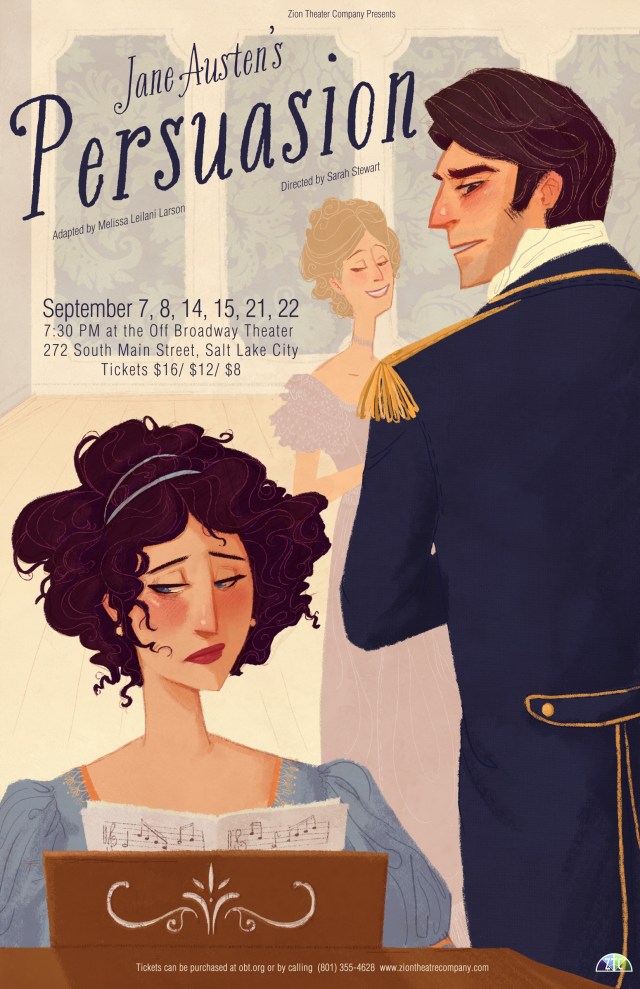 When he returns, Captain Wentworth is still angry with Anne for listening to Lady Russel– and I’ve never blamed him.
 Sir Walter Scott wrote in his diary of the Shetland Sword Dance on 7 August 1814. “At Scalloway my curiosity was gratified by an account of the sword-dance, now almost lost, but still practiced in the Island of Papa…. There were eight performers, seven of whom represent the Seven Champions of Christendom, who enter one by one with their swords drawn, and are presented to the eighth personage, who is not named. Some rude couplets are spoken (in English, not Norse), containing a sort of panegyric upon each champion as he is presented. They then dance a sort of cotillion going through a number of evolutions with their swords.”
  Originally, the sword dance was a mimetic representation of war, but in The Medieval Stage (I, 203), E. K. Chambers tells us, “It belongs to the cult of Mars, not as war-god, but in his more primitive quality of a fertilization spirit.” Using swords suggest a symbolical sacrifice, as a prayer in agricultural worship for fertility. Therefore, some believe the play was a symbolized the death of winter. The play is most assuredly meant as a form of worship. In its later form it became a real, but questionable, influence on drama.


 the future Marquess of Lansdowne and Prime Minister of the United Kingdom. The club came to be known after the head waiter, Edward Boodle. (One has to wonder how that came about.) I have never written Mr. Darcy as a member of this club, for I could not picture him telling his staff that he was “off to Boodles.”


 We know little of John Heywood’s life, other than the year of his birth, which was 1497. Likely, he was once served as a choir boy in the Chapel Royale and then studied at Oxford as a King’s Scholar. He was a ‘playwright whose short dramatic interludes helped put English drama on the road to the fully developed stage comedy of the Elizabethans. He replaced biblical allegory and the instruction of the morality play with a comedy of contemporary personal types that illustrate everyday life and manners. From 1519, Heywood was active at the court of Henry VIII as a singer and ‘player of the virginals,’ and later as master of an acting group of boy singers. He received periodic grants that indicate that he was in favour at court under Edward VI and Mary.” (
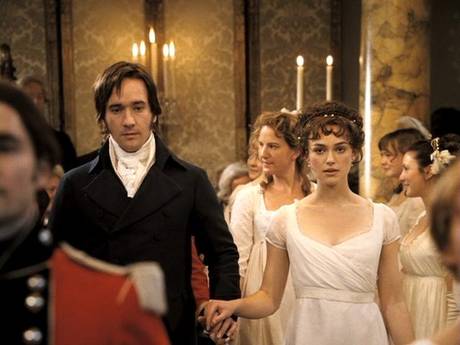 Fitzwilliam Darcy is a major, but minor, character in Jane Austen’s Pride and Prejudice. Although he plays a major role in the story’s outcome, after all, Mr. Darcy is the romantic hero of the piece, he is not in every scene. The story is told from Elizabeth Bennet’s perspective, and Darcy is absent throughout extended periods of the book. However, he is far from being “out of sight…out of mind.” Darcy’s presence overshadows all of Elizabeth’s interactions with other characters, even though Miss Elizabeth would never admit an interest in the man.
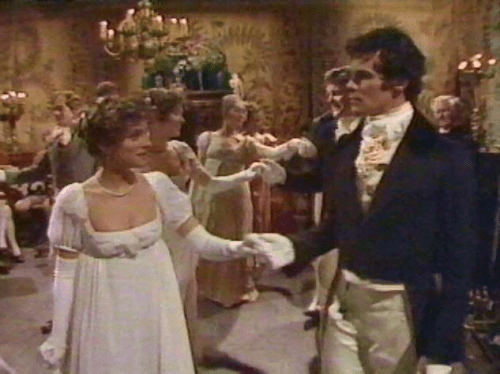 Elizabeth is a strong, sympathetic, and independent character, and the two men with whom she associates romantically must be equally intricate. Despite Mrs. Reynolds’s explanation of Darcy’s “bumbling social manners” being the result of his shyness, there remains plenty of proof of his excessive pride. Yet, we do learn much of the man’s “softer” side through his interactions with Charles Bingley. Darcy serves as Bingley’s mentor, and he accepts the role with good-natured diligence.
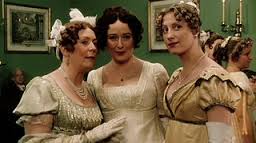 As a Cit and the “new rich,” Bingley lacks a proper ticket into Society. Darcy is willing to lead the man through the stages of setting up a proper estate, the nuances of proper behavior, etc. I have always wished to know how Bingley and Darcy became friends. Would it not be delightful if Austen had provided her readers a glimpse of how the friendship began?
 Elizabeth’s disdain for Darcy’s earliest snubs captivates the man. He recognizes the “danger of paying Elizabeth too much attention,” but Darcy cannot resist her charms. After he reluctantly leaves Elizabeth after the Netherfield Ball, Darcy is not seen again until she meets him at Hunsford Cottage; yet, the man if rarely from her thoughts, especially as Mr. Wickham spends the intervening months in speaking poorly of his former friend.
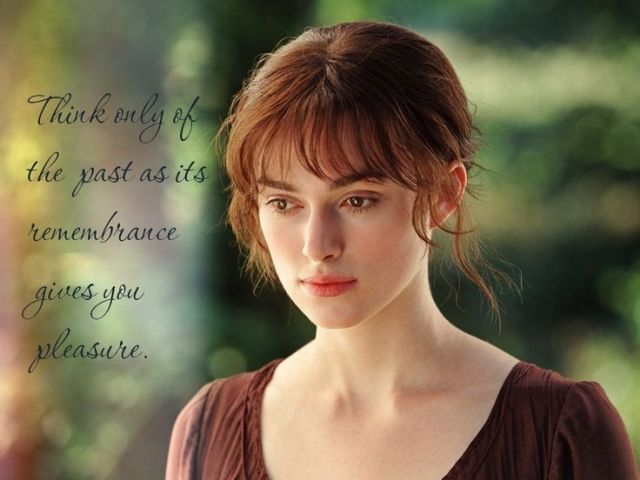 Mrs. Gardiner had seen Pemberley and known the late Mr. Darcy by character perfectly well. Here, consequently, was an inexhaustible subject of discourse. In comparing her recollection of Pemberley with the minute description which Wickham could give, and in bestowing her tribute of praise on the character of its late possessor she was delighting both him and herself. On being made acquainted with the present Mr. Darcy’s treatment of him, she tried to remember something of that gentleman’s reputed disposition, when quite a lad, which might agree with it, and was confident, at last, that she recollected having heard Mr. Fitzwilliam Darcy formerly spoken of as a very proud, ill-natured boy. (Chapter 25)
 With Elizabeth’s refusal, Darcy is humbled. After his letter explaining his interference in Bingley’s and Jane Bennet’s life and his dealings with Mr. Wickham, Darcy again disappears from the story. Elizabeth does not encounter Darcy again for four months. By the time she meets him again at Pemberley, Elizabeth’s harsh opinion of Darcy has softened, and when he behaves heroically by rushing off to save Lydia’s reputation (as well as her own and her sisters), Elizabeth recognizes Darcy is the man who would most completed her.
 Have you ever heard of the War of Jenkins’s Ear? If not, you are not alone.
  The conflict was not limited to land as shipping lanes were interrupted by acts of piracy by both the English and the Spanish. The conflict hit a high point, or perhaps a low point, when in 1731, a Spanish privateer boarded the British ship Rebecca and cut off the ear of British Captain Robert Jenkins as punishment for raiding Spanish ships. Jenkins countered by pickling the ear in a jar and presenting said ear to Parliament upon his return to England. According to


 Every Woman Dreams...