The Tradition of Gift Giving

Follow The Light: How Did The Wise Men Know What The Star Meant ... www.follow-the-light.org

Follow The Light: How Did The Wise Men Know What The Star Meant …
http://www.follow-the-light.org

“Then they opened their treasures and presented him the gifts of gold and of incense and of myrrh.”

In Biblical times, the gift of gold indicated the receiver stood in high standing, but giving gold to a child would have been unheard of during those times – that is unless the child was of royal blood.

“Familiar by name, yet otherwise perfectly obscure – this much fabled Arabian tree has been as famous as it has been elusive since long before the birth of Christ, when the three wise men from the East brought it as a gift to that humble stable in Bethlehem. We do not know how far the use of Frankincense goes back in time, but we do know that it already scented the Egyptian Temples to honour Ra and Horus and it is said that Queen Sheba brought a great number of Frankincense trees as a special gift for King Solomon. Unfortunately those trees were destined to die as Frankincense trees only grow in a very limited geographic range and very arid conditions. Nevertheless, it’s the thought that counts and bringing all these trees was indeed a very strong sign of honour and respect. In the ancient world incense trees fuelled the economy of the Arab world as oil does today. Trading cities positioned at important points of the spice or incense routes prospered considerably thanks to the thoroughfare business. At one time Frankincense was more valuable than gold – needless to say, a situation much relished by the traders who only benefited from the obscurity and remoteness of the trees. Legend had it that the trees only grew in the most inhospitable mountainous places, guarded by dragon-like creatures that would readily strike out at any intruder. Obviously such stories were invented to scare off any attempts of enterprising and adventurous young men who otherwise perhaps might have ventured in search of the trees to do a little harvesting themselves. But, scare tactics aside, the long journey across the desert was no amble down the garden path – it was fraught with peril and as potentially dangerous as it was lucrative.” [Sacred Death]

“It was offered on a specialized incense altar in the time when the Tabernacle was located in the First and Second Jerusalem Temples. The ketoret was an important component of the Temple service in Jerusalem. It is mentioned in the Hebrew Bible book of Exodus 30:34, where it is named levonah (lebonah in the Biblical Hebrew), meaning “white” in Hebrew. It was one of the ingredients in the perfume of the sanctuary (Exodus 30:34), and was used as an accompaniment of the meal-offering (Leviticus 2:1, 2:16, 6:15, 24:7). When burnt it emitted a fragrant odour, and the incense was a symbol of the Divine name (Malachi 1:11 ; Song of Solomon 1:3) and an emblem of prayer (Psalm 141:2 ; Luke 1:10 ; Revelation 5:8, 8:3). It was often associated with myrrh (Song of Solomon 3:6, 4:6) and with it was made an offering to the infant Jesus (Matthew 2:11). A specially “pure” kind, lebhonah zakkah, was presented with the shewbread (Leviticus 24:7).” [Wikipedia]

Myrrh was used by the ancient Egyptians, along with natron, for the embalming of mummies.

According to the Encyclopedia of Islamic Herbal Medicine, “The Messenger of Allah stated, ‘Fumigate your houses with al-shih, murr, and sa’tar.’” The author claims that this use of the word “murr” refers specifically to Commiphora myrrha.

“Myrrh and frankincense have had spiritual significance since ancient times and they also were adopted as medicines for physical ailments. When referring to this pair of herbs, Westerners might immediately think of their historic importance in religion. The herbs are best known through the story of the Three Wise Men (Magi) delivering gold, frankincense, and myrrh for the baby Jesus; myrrh was also used to anoint Jesus’ body after the crucifixion. These herbs, valued like gold, were mentioned repeatedly in the Old Testament, in instructions to Moses about making incense and anointing oil, and in the Song of Solomon, where, among other references, are these:

“Who is this coming up from the wilderness
Like palm-trees of smoke,
Perfumed with myrrh and frankincense,
From every powder of the merchant?”

“Till the day doth break forth,
And the shadows have fled away,
I will get me unto the mountain of myrrh,
And unto the hill of frankincense.” [Institute for Traditional Medicine]

According to the book of Matthew 2:11, gold, frankincense and myrrh were among the gifts to Jesus by the Biblical Magi “from the East.”Because of its mention in New Testament, myrrh is an incense offered during Christian liturgical celebrations. Liquid myrrh is sometimes added to egg tempera in the making of ikons.

Myrrh is mixed with frankincense and sometimes more scents and is used in almost every service of the Eastern Orthodox, Oriental Orthodox, traditional Roman Catholic and Anglican/Episcopal Churches.

Most people today think of these three gifts as being the original “Christmas presents.” However, we must recall that during the Roman ritual, known as Saturnalia, gifts were exchanged. The pagan rituals said generosity would be rewarded with good fortune in the coming year. During the early stages of Christianity, most Christian converts still celebrated their old Roman holidays. When Christmas became an official date on the calendar (approximately the 4th Century A.D.), it was natural to carry over the tradition of giving presents, especially as “Christmas” and “Saturnalia” were celebrated at about the same time of the year. However, that being said, gift giving and the Christmas spirit did not come so easily to each other.

Gift Giving on New Year’s Day was a common practice during the Roman rule. This tradition began in the Dark Ages and continued in Britain through Queen Victoria’s reign. To this gifting tradition, we might add the legend of St. Nicholas, the bishop of Myra (beginning in the 4th Century). This St. Nicholas legend says the the priest bestowed gifts upon the poor throughout Asia Minor. The images of “Santa Claus” and of “Christmas stockings” can be traced to St. Nicholas’s life’s work. The anniversary of St. Nicholas’s death (December 6) was often marked during the Middle Ages with the bestowing of gifts on children.

 Who is good king Wenceslas? | Examiner.com www.examiner.com


Who is good king Wenceslas? | Examiner.com
http://www.examiner.com

 Unfortunately, not all who knew of St. Nicholas kept his teaching sacred. Some European rulers demanded gifts of their subjects rather than to spread their wealth around. In the 10th Century, King Wenceslas (a Bohemian duke) began the practice of gift giving in the nature of St. Nicholas. He distributed firewood, food, and clothing to his subjects.

On December 25, 1067, William the Conqueror donated a large sum of money to the pope. This act planted the seed for change in Eastern Europe and later England and America. In Germany, many chose to give gifts to friends and neighbors anonymously. The Dutch did something similar, but they made it into a “treasure hunt” with written clues to where the gifts were located. The Danes were the first to wrap presents. They would put a small box into a larger one and then another one, etc., etc.

England at this time was under Puritan rule, and gift giving and all things Christmas were banned. The Puritans thought God did not want Jesus’s birthday to be a time of giving to others. Christmas was a day of solemn reflection. That being said, the upper class still gave gifts at New Year’s (a leftover tradition from Roman times). Some families also presented gifts to children on January 6 (old calendar January 17), which is “Twelfth Night” – a symbol of the day when the wise men gave gifts to the baby Jesus, twelve days after the Christ child’s birth.

615100pn0-L._SY402_BO1,204,203,200_Clement Moore’s poem “The Night Before Christmas” was an 1820s sensation, and the idea of Christmas gifts became more accepted. Charles Dickens’s A Christmas Carol emphasized the idea of gift giving, especially giving to the needy. Merchants took the idea to the next level. After the American Civil War, America was the center of “gift giving.” In the 1880s, Christmas gifts became commonplace in England, and by the early 1900s, Christmas had replaced the New Year’s tradition for gifts.

Catalogs, large department stores, dependable mail service, etc., all contributed to the gift giving frenzy known as Christmas. In the U.S., the average person spends $750-1000 on Christmas gifts.

Posted in Anglo-Normans, Anglo-Saxons | Tagged , , , , , , , | 6 Comments

The British Royal Navy and Jane Austen

naval_battle_3In referring to the cult-like following of those who extolled all things involving Admiral Horatio Nelson, Jane Austen once wrote, “I am sick of Nelson.” Yet, the author always appreciated the lives of men in the Royal Navy. Two of her brothers served thusly. The British Navy at the time of the Napoleonic War was divided into “ships of the line,” those carrying between 60 and 100 guns, and “cruisers,” which were frigates, sloops, and brigs with fewer guns. In 1810, British naval strength was estimated to be 150+ ships of the line and near 400 cruisers. Documents on the naval history sites say that the Navy employed 800+captains, 600+ commanders, and nearly 3300 lieutenants.

During the Napoleonic Wars, the size of the British fleet was greater than all the other sea-faring nations put together.

The British Isles remained safe behind the “Wooden Walls” of the Royal Navy, and Britain was able to continue its world trade and empire building. They controlled English Channel and trading routes with size of their fleet, but Britain also actively sent its vessels out to attack enemy warships. With its strength in numbers and its developing naval industry, Britain could risk losing a ship or two to protect the British people.

In 1797, 1801, and 1807, the British navy sailed to destroy the neutral or French-allied vessels of Holland and Denmark. At Camperdown in 1797, Admiral Duncan pitted his 16 ships against 16 Dutch warships under Admiral de Winter and destroyed the enemy fleet – capturing seven Dutchmen and allowing the rest to flee.

In April 1801, the Admirality sent an expedition against Denmark to break up a northern European agreement, the Armed Neutrality of the North, that threatened British trade and shipbuilding materiel – wood, rope, grain and tar – in the Baltic Sea.

The naval Battle of Copenhagen was a British victory that saw 12 of 18 Danish vessels captured and ended the threat to its trade. In 1807, Britain again moved against Denmark when it became known there was a French move to grab the Danish fleet. Admiral Gambier took 20 ships of the line and an infantry force of some 20,000 men – including Arthur Wellesley (yes, that is the Duke of Wellington) – to prevent the vessels falling into French hands. A two-week siege began and a Danish military move to break the blockade was ended by Wellesley’s infantry. The bombardment of the capital by the Royal Navy forced neutral Denmark to hand over its 18 ships to London.

Sir Charles Austen

Sir Charles Austen

Jane Austen’s brothers entered the navy at the age of 12 and first went to sea at age 15. Naval life was a hard one, and many believed it necessary “to toughen up the boys.” Unlike in the army, naval commissions could not be bought. It was necessary to succeed in a naval career to have the patronage of an influential personage. If one recalls Admiral Crawford in Mansfield Park, this makes more sense. A man earned his future in prize money. Do we not recall Captains Wentworth, Benwick, and Harville in Persuasion? The captain would receive one-fourth of the value of the captured ship. His officers would receive graduated proportions, and ordinary seamen divided the final quarter among themselves. In Persuasion, Wentworth has earned 20,000 pounds in his eight years of service. Men learned to look forward to another war so they might continue their winning ways.”

Excerpt from Jane Austen’s Persuasion (upon letting Sir Walter’s estate, Mr. Shepherd, who is Sir Walter’s man of business, ventures a suggestion:

images-1“If a rich Admiral were to come in our way. . . “

“He would be a very lucky man, Shepherd,” replied Sir Walter. “That’s all I have to remark.”

“I presume to observe, Sir Walter, that, in the way of business, gentlemen of the navy are very well to deal with. . .I am free to confess that they have very liberal notions and are as likely to make desirable tenants as any set of people one should meet with.”

Sir Walter only nodded. But soon afterwards, rising and pacing the room, he observed sarcastically, “There are few among the gentlemen of the navy, I imagine, who would not be surprised to find themselves in a house of this description.”

Here Sir Walter’s daughter Anne spoke, “The navy, I think, who have done so much for us, have at least an equal claim with any other set of men, for all the comforts and all the privileges which any home can give. Sailors work hard enough for their comforts, we must all allow.”

“Very true, very true. What Miss Anne says, is very true,’ was Mr. Shepherd’s rejoinder, and “Oh! certainly,” was his daughter’s; but Sir Walter’s remark was, soon afterwards. “The profession has its utility, but I should be sorry to see any friend of mine belonging to it.”

“Indeed!” was the reply, and with a look of surprise.

Admiral and Mrs Croft 1995.jpeg “Yes; it is in two points offensive to me; I have two strong grounds of objection to it. First, as being the means of bringing persons of obscure birth into undue distinction, and raising men to honours which their fathers and grandfathers never dreamt of; and secondly, as it cuts up a man’s youth and vigour most horribly; a sailor grows old sooner than any other man; I have observed it all my life. A man is in greater danger in the navy of being insulted by the rise of one whose father, his father might have distained to speak to, and of becoming prematurely an object of disgust himself, than in any other line. One day last spring, in town, I was in company with two men, striking instances of what I am talking of, Lord St. Ives, whose father we all know to have been a country curate, without bread to eat; I was to give place to Lord St. Ives, and a certain Admiral Baldwin, the most deplorable looking personage you can imagine, his face the colour of mahogany, rough and rugged to the last degree, all lines and wrinkles, nine grey hairs of a side, and nothing but a dab of powder at top.– ‘Inthe name of heaven, who is that old fellow?’ said I, to a friend of mine who was standing near (Sir Basil Morley). ‘Old fellow!’ cried Sir Basil, ‘it is Admiral Baldwin. What do you take his age to be?’ ‘Sixty,’ said I, ‘or perhaps sixty-two.’ ‘Forty,’ replied Sir Basil, ‘forty, and no more.’ Picture to yourselves my amazement; I shall not easily forget Admiral Baldwin. I never saw quite so wretched an example of what a sea-faring life can do; but to a degree, I know it is the same with them all: they are all knocked about, and exposed to every climate, and every weather, till they are not fit to be seen. It is a pity they are not knocked on the head at once, before they reach Admiral Baldwin’s age.”

It seemed as if Mr. Shepherd, in this anxiety to bespeak Sir Walter’s goodwill towards a naval officer as tenant had been gifted with foresight; for the very first application was from an Admiral Croft. . .

“And who is Admiral Croft?” was Sir Walter’s cold suspicious enquiry.

Mr. Shepherd answered for his being of a gentleman’s family, and mentioned a place; and Anne, after the little pause that followed, added, “He is rear admiral of the white. He was in the Trafalgar action, and has been in the East Indies since; he has been stationed there, I believe, several years.”

“Then I take it for granted,” observed Sir Walter, “that his face is about as orange as the cuffs and capes of my livery.”

Resource: 

Jane Austen’s Sailor Brothers: Francis and Charles in Life and Art

Gilman, Daniel; Thurston, H. T.; Colby, F. M., eds. (1905). New International Encyclopedia (1st ed.). New York: Dodd, Mead.

Posted in British history, Great Britain, Jane Austen, Living in the Regency, Regency era | Tagged , , | 8 Comments

Thomas More’s Life and Literature and Being a Reformation Martyr

images.jpg I am continued my journey through my undergraduate degree by looking at English literature through the ages. Today we have Sir Thomas More.

Thomas More was born on Milk Street, London on February 7, 1478, son of Sir John More, a prominent judge. He was educated at St Anthony’s School in London.He attended St. Anthony’s School in London, one of the best schools of his day. As a youth he served as a page in the household of John Morton, Archbishop of Canterbury and chancellor of England. More went on to study at Oxford under Thomas Linacre [humanist scholar and physician] and William Grocyn [an English scholar and a friend of Erasmus]. During this time, Thomas wrote comedies and studied Greek and Latin literature. One of his first works was an English translation of a Latin biography of the Italian humanist Pico della Mirandola. It was printed by Wynkyn de Worde in 1510.

Around 1494, More returned to London to study law, was admitted to Lincoln’s Inn in 1496, and became a barrister in 1501. Yet More did not automatically follow in his father’s footsteps. He was torn between a monastic calling and a life of civil service. More managed to keep up with his literary and spiritual interests while practicing law, and he read devotedly from both Holy Scripture and the classics. Also around this time, More became close friends with Desiderius Erasmus during the latter’s first visit to England. It was the beginning of a lifelong friendship and professional relationship, for they corresponded often regarding their ideas, and the pair worked on Latin translations of Lucian’s works during Erasmus’ second visit. These were printed in Paris in 1506. On Erasmus’ third visit, in 1509, he stayed in More’s home and wrote Encomium Moriae [or] Praise of Folly, dedicating it to More.

While at Lincoln’s Inn, he determined to become a monk and moved into a monastery outside of London and subjected himself to the discipline of the Carthusians, living at a nearby monastery and taking part of the monastic life. The prayer, fasting, and penance habits stayed with him for the rest of his life, as would the practice of wearing a hair shirt. More’s desire for monasticism was finally overcome by his sense of duty to serve his country in the field of politics. He entered Parliament in 1504, and married for the first time in 1504 or 1505, to Jane Colt. They had four children: Margaret, Elizabeth, Cicely, and John.

More is thought to have written History of King Richard III (in Latin and in English) between 1513 and 1518. The work is considered the first masterpiece of English historiography (the study of history, or the study of a particular historical subject), and, despite remaining unfinished, influenced subsequent historians, including William Shakespeare.

In 1504 More was elected to Parliament to represent Great Yarmouth, and in 1510 began representing London. One of More’s first acts in Parliament had been to urge a decrease in a proposed appropriation for King Henry VII. In revenge, the King had imprisoned More’s father and not released him until a fine was paid and More himself had withdrawn from public life. After the death of the King Henry VII in 1509, More became active once more. In 1510, he was appointed one of the two under-sheriffs of London. In this capacity, he gained a reputation for being impartial, and a patron to the poor. In 1511, More’s first wife died in childbirth. More soon married again, to Alice Middleton. They did not have children.

During the next decade, More attracted the attention of King Henry VIII. In 1514, he became Master of Requests (The Court of Requests was a minor equity court in England and Wales.). In 1515 he accompanied a delegation to Flanders to help clear disputes about the wool trade. His most famous work, Utopia, opens with a reference to this very delegation. More was also instrumental in quelling a 1517 London uprising against foreigners, portrayed in the play Sir Thomas More, possibly by Shakespeare. More accompanied the King and court to the Field of the Cloth of Gold.  In 1518 he became a member of the Privy Council. After undertaking a diplomatic mission to the Holy Roman Emperor, Charles V, accompanying Thomas Wolsey, Cardinal Archbishop of York, to Calasis and Bruges, More was knighted and made under-treasurer of the Exchequer in 1521.

More helped Henry VIII in writing his Defence of the Seven Sacraments, a repudiation of Luther, and wrote an answer to Luther’s reply under a pseudonym. More had garnered Henry’s favor, and was made Speaker of the House of Commons in 1523 and Chancellor of the Duchy of Lancaster in 1525. As Speaker, More helped establish the parliamentary privilege of free speech. However, he refused to endorse King Henry VIII’s plan to divorce Katherine of Aragón (1527). Nevertheless, after the fall of Thomas Wolsey in 1529, More became Lord Chancellor, the first layman yet to hold the post.

 While his work in the law courts was exemplary, his fall came quickly. More’s fate would begin to turn when, in the summer of 1527, King Henry tried to use the Bible to prove to More that Henry’s marriage to Catherine of Aragon, who had failed to produce a male heir, was void. More tried to share the king’s viewpoint, but it was in vain, and More could not sign off on Henry’s plan for divorce. He resigned in 1532, citing ill health, but the reason was probably his disapproval of Henry’s stance toward the church. He refused to attend the coronation of Anne Boleyn in June 1533, a matter which did not escape the King’s notice, and his vengeance was imminent. This amounted to More essentially refusing to accept the king as head of the Church of England, which More believed would disparage the power of the pope. In 1534 he was one of the people accused of complicity with Elizabeth Barton, the nun of Kent who opposed Henry’s break with Rome, but was not attainted due to protection from the Lords who refused to pass the bill until More’s name was off the list of names.

In April, 1534, More refused to swear to the Act of Succession and the Oath of Supremacy, and was committed to the Tower of London on April 17.  More was found guilty of treason and was beheaded alongside Bishop Fisher on July 6, 1535. More’s final words on the scaffold were: “The King’s good servant, but God’s First.” More was beatified in 1886 and canonized by the Catholic Church as a saint by Pope Pius XI in 1935.

In 1516, More published Utopia, a work of fiction primarily depicting a pagan and communist island on which social and political customs are entirely governed by reason. The description of the island of Utopia comes from a mysterious traveler to support his position that communism is the only cure for the egoism found in both private and public life—a direct jab at Christian Europe, which was seen by More as divided by self-interest and greed.

Utopia covered such far-reaching topics as theories of punishment, state-controlled education, multi-religion societies, divorce, euthanasia and women’s rights, and the resulting display of learning and skill established More as a foremost humanist. Utopia also became the forerunner of a new literary genre: the utopian romance.

Summary of Book 1 of Utopia: The author/narrator meets Raphaell Htholdaye. He brings him to the house of a friend in Antwerp where they discourse on the economic and social abuses prevalent in contemporary England. They lament the prevalence of crime, declaring that it cannot be checked by the methods of punishment then practiced. They are opposed to capital punishment for thieving, branding it as unjust in consideration of the fact that thieving has its source in poverty. Especially likely to become thieves were those parasitical retainers who lost their means of subsistence when their lords went bankrupt. Accustomed to live in pampered luxury, they are not able to work for a living when work proves necessary. Another cause of poverty was the law enforcing the enclosure of sheep lands and general morality was at a very low state anyhow. 

The remedy for these conditions was to be found in Perisia. Here evil-doers would be segregated in places provided by money collected from alms or taxes. These evil-doers would be free except from a certain amount of daily labor. They would have to wear a special form of dress. Anyone who would inspire these people to rebel would be punished by death. 

In these conversations on the state of England, it is further suggested that kings should be allowed a limited amount of money, since it was more important that the people be wealthy than that the king be wealthy. If, furthermore, wealth is to be distributed with greater equality, it would be necessary to abolish property. Under the present system, the poor are getting poorer and the rich richer. 

Analysis of Thomas More’s Tale: Utopia is a special treatise. If falls into the class of literature, which today is generally known as Utopian. Thomas More, a man with social conscience, looked upon the England of his day as a land governed with much inefficiency. He saw no reason for the sufferings, which the common people had to endure in the struggle for existence. Even more, he believed he had the remedy for these sufferings. He conceived a land in a far-away spot that was governed much as he believed contemporary England could be. This system of government he has painted in Utopia. From this work shines forth the author’s humanitarianism and hatred of war. Thomas More wanted people to be happy, hence the people of his imaginary land are happy. Further, he presents those constituents of government and life which would make people happy. Most important to the happiness of people was work. Second, as recreation from labor, innocent recreations were provided. Nor does he write as an impractical idealist. He was perfectly well aware that human nature is such that it often comes into conflict with beautiful ideals. Hence, a certain amount of force is also used in this ideal land to compel cooperation from the inhabitants. As an artist, More gives us his ideal picture with enough concrete detail to make his imaginary land live as working reality. As a whole he writes dispassionately, but with deep love for humanity. From the passage on punishment especially it can be seen how far ahead of his times More was in his social thinking. 

Resources: 

Biography 

Gabrieli, Vittorio. Melchiori, Giorgio, editors Introduction. Munday, Anthony. And others. Sir Thomas More. Manchester University Press.

History of English Literature (Part I – Early Saxon Through Milton). Hymarx Outline Series. Student Outlines Company Publishers, Boston, MA, pp. 95-96.

Luminarium 

Magnusson (ed.) Chambers Biographical Dictionary (1990) p. 1039.

Wikipedia 

Posted in British history, Great Britain, history, kings and queens, religion, research, Tudor, Tudors | Tagged , , , , , , | 3 Comments

Benedictine, the Exquisite French Liqueur

Year Founded: 1863
Distillery Location: Fécamp, France

BÉNÉDICTINE ESSENTIAL FACTS

  • In 1510, the Benedictine monk Don Bernardo Vincelli created the recipe for this French liqueur, which calls for 27 plants and spices. The three main ingredients are Angelica, Hyssop and Lemon Balm.
  • There are only three people on earth who know the complete recipe for making the spirit.
  • Benedictine is aged for up to 17 months before bottling.
  • The brand was first imported to the United States in 1888.
Posted in business, Edward III, Guest Blog | Tagged , , , , | 4 Comments

“And the Best Supporting Role” Blog Hop Continues!

Please follow a fab blog hop that celebrates the favorite supporting characters of some authors you love already and some of have yet to meet. Personally, I am on Friday, December 9, but I encourage you to visit the authors’ posts listed below to learn more of the best of the best. Each post will appear on Helen Hollick’s “Of History and Kings” Blog. 

15390951_1352922801385443_9050855439897278516_n.jpg

We all know the protagonist is the hero (or anti-hero!) of a novel. He or she usually has a companion main character, often the ‘love interest’ or maybe the stalwart side-kick, but what about that next rank down: the supporting role guy or gal? You know, the one who doesn’t get Best Actor, but Best Supporting Actor at the Oscars. I thought it time that some of these supporting cast characters had a chance to step from the shadows of novels and have a turn in the limelight.

PLUS! something for the intrepid author to answer. Each author can invite six fictional characters (not their own!) to Christmas Dinner – who will they invite? 

Here are our participating authors – but who will be their Supporting Role Characters? Join us each day!

Here is the schedule: 

December 6 ~  Inge H Borg and the Supporting Character Post is found HERE
December 7 ~ Matthew Harffy and the Supporting Character Post is found HERE
December 8 ~ Alison Morton and the Supporting Character Post is found HERE
December 9 ~ Regina Jeffers and the Supporting Character Post is found HERE
December 10 ~ Anna Belfrage and the Supporting Character Post is found HERE
December 11 ~ Christoph Fischer and the Supporting Character Post is found HERE
December 12 ~ Pauline Barclay and the Supporting Character Post is found HERE
December 13 ~ Antoine Vanner and the Supporting Character Post is found HERE
December 14 ~ Annie Whitehead and the Supporting Character Post is found HERE
December 15 ~ Derek Birks and the Supporting Character Post is found HERE
December 16 ~ Carolyn Hughes and the Supporting Character Post is found HERE
December 17 ~ Helen Hollick and the Supporting Character Post is found HERE


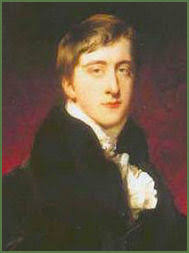
I will be featuring one of my favorite characters, Adam Lawrence, Viscount Stafford, who has made an appearance in nearly a dozen of my books: The Phantom of Pemberley, His American Heartsong, A Touch of Velvet, A Touch of Grace, A Touch of Mercy, A Touch of Love, A Touch of Honor, and Mr. Darcy’s Bargain. Adam received his own book in His Irish Eve. He is something of a scoundrel, but I am certain you will learn to love him as much as I do. 

41slfuffldl-_sx322_bo1204203200_

Posted in blog hop, book release, books, British Navy, mystery, Napoleonic Wars, paranormal, Peterloo Massacre, reading, real life tales, Realm series, Regency era, Regency romance, romance, Tudors, Victorian era, War of 1812 | Tagged , , , , , , , , , , , , , | 2 Comments

Queen Victoria’s Grief at Losing Her Beloved Albert

Prince_Albert_1848.jpgOn December 14, 1861, Prince Albert succumbed to what was believed to be typhoid fever, although a recent book Magnificent Obsession by historian Helen Rappenport suggest the prince suffered from Crohn’s disease. (The Daily Mail). Queen Victoria’s grief over the loss of her husband, Prince Albert, came to define her entire reign. The extent of Queen Victoria’s despair was laid bare in a previously unseen letter, in which she expressed the hope that she would go to an early grave. The remarkably candid letter, which has been acquired by London auctioneers Argyll Etkin, is thought to be the first in the public domain in which the Queen yearns for her own death, so she can be reunited with her husband. Victoria wrote the ‘astonishing’ letter in March 1863, some 15 months after Albert’s death, to 82-year-old Viscount Gough. In writing to her daughter Vicky, the queen lamented “Why may not the earth not swallow me up?”

Albert’s loss was the removal of her other half for they shared an identity. They were Victoria and Albert. Complicating the queen’s grieving period was the extraordinary circumstances of her life. After all, she was the most powerful monarch in the world at the time. European royalty depended on the stability of the British crown. Victoria has so come to depend upon Albert, more so than even her prime ministers, that after his death, she was rightly “at a loss.” Albert had served as more than her prince consort and father of her children. 

Within a year of her mother’s death, Victoria now grieved her husband’s death. She would never recover from Albert’s passing. Victoria again turned to Princess Alice for support. Alice had nursed her father through his illness and became Victoria’s life line following Albert’s passing. Victoria’s dependence upon her daughter had Louis IV, Grand Duke of Hesse and by Rhine, Alice’s betrothed, questioning whether the princess would make him a suitable grand duchess. 

It took more than a few weeks for Victoria to manage her emotions and to lay out a plan for the remainder of her reign. She made the decision to treat all of Albert’s opinions as if they were an unwritten constitution. Victoria made slight alterations in Albert’s dictates, but she never abandoned the essence of her husband’s wisdom. The problem was that Victoria did not possess Albert’s intellectual capacity to learn from his mistakes and to change his mind. Victoria became downright unmovable from 1861 to her own death in 1901. 

vic1800

Queen Victoria with Princesses Alice and Louise and a portrait of her late husband, Albert, in 1863. (Credit: Getty Images via History Extra)

She turned the many family residents into mausoleums dedicated to Albert’s memory. All of his private rooms were treated as shrines to her husband. Nothing was removed. His clothes were set out each day. Valets prepared for his morning ablutions with fresh towels and water. The last offices of Prince Albert grew more exacting in Victoria’s life. She observed his passing in unrelenting details. She expected every mention or reference to Albert to be pious in nature. Her children were never to mention their father unless they did so with great deference. 

Jerrold M. Packard (Victoria’s Daughters, St. Martin’s, New York, ©1998, pp. 94-95) explains, “Though Victoria’s position in a constitutional monarchy largely circumscribed her actions and authority to figurehead status – the physical embodiment of a state in which parliamentarians governed – the monarch’s desire to monitor and advise her government’s actions was to an amazing extent acceded to by her ministers, men who permitted her to review and comment on their deliberations and decisions to any degree she chose. Her participation was, in the main, always treated with near-religious respect, and her views granted as much deference as possible. 

“Victoria regarded her role as a trust requiring her own unequivocal seriousness, immutable labor, and faithworthy probity; and she strove to fulfill that trust over any interest in personal gain or what would make life more comfortable for herself. Her entire existence reflected that outlook, whether it took the form of seemingly bizarre relations with her children or the demands she unflinchingly placed on her ministers. As for her official capacities, her closest adviser…was her husband, an adviser whose term was furthermore not fettered by any electorate. In the last years of their marriage, the prince consort spoke openly for the monarch whose grasp of national affairs came nowhere near matching his own, and who to her credit recognized her shortcomings and her husband’s concomitant strengths. Lord Granville would write of the sovereign after her loss: ‘Having given up [for] 20 years, every year more, the habit of ever deciding anything, either great or small, on her own judgment…who has she upon whom she can [now] lean?’ Gone was what one biographer called ‘an ever open encyclopedia on the desk beside her.’ When Albert died, not only did the normal physical and emotional love that passes between spouses vanish with him, but so did the one person over whom this queen did not want to reign.” 

From History Extra tells us, “When Prince Albert breathed his last at 10.50pm on the night of Saturday 14 December 1861 at Windsor, a telegraph message was sent within the hour to the lord mayor that the great bell of St Paul’s Cathedral should toll out the news across London. Everyone knew that this sound signified one of two things: the death of a monarch or a moment of extreme national crisis such as war.

“People living in the vicinity of the cathedral who had already gone to their beds that night were woken by the doleful sound; many of them dressed and began gathering outside St Paul’s to share the news with shock and incredulity. Only the previous morning the latest bulletin from Windsor had informed them that the prince, who had been unwell for the last two weeks, had rallied during the night of the 13th. The whole nation had settled down for the evening reassured, hopeful that the worst was now over.

“Most of the Sunday morning papers for the 15th had already gone to press and did not carry the news, although in London one or two special broadsheets were rushed out and sold at a premium. For most ordinary British people the news of Prince Albert’s death came with the mournful sound of bells, as the message was relayed from village to village and city to city across the country’s churches.

“Many still did not realise the significance until, when it came to the prayers for the royal family during morning service, the prince’s name was omitted. But it was still hard to believe. The official bulletins from Windsor had suggested only a ‘low fever’ – which in Victorian parlance could be anything from a chill to something more sinister like typhoid fever. The royal doctors had been extremely circumspect in saying what exactly was wrong, not just to the public but also Albert’s highly strung wife, and very few had any inkling of how ill he was. How could this have happened, people asked themselves; how could a vigorous man of only 42 have died without warning?

“The impact of Prince Albert’s death, coming as unexpectedly as it did, was dramatic and unprecedented. The last time the nation had mourned the loss of a member of the royal family in similar circumstances had been back in 1817 when Princess Charlotte, daughter of the Prince Regent – and heir to the throne failing the birth of any legitimate male heirs – had died shortly after giving birth to a still-born baby boy. Public grief at this tragedy had been enormous, and it was no less with the death of Albert.”

Posted in British history, customs and tradiitons, history, kings and queens, Living in the UK, marriage, Victorian era | Tagged , , , , , , | 2 Comments

Happy December Birthday to Some of Our Favorite “Austen” Actors

Happy Birthday Wishes, Quotes, Messages, Greetings, Cards, SMS, Images www.happybirthdaywishes-quotes.com

Happy Birthday Wishes, Quotes, Messages, Greetings, Cards, SMS, Images
http://www.happybirthdaywishes-quotes.com

We wish to say a very HAPPY BIRTHDAY to these actors who brought some of our favorite Austen characters to life. 


jeremy-northam-5December 1 – Jeremy Northam, who portrayed Mr. Knightley in the 1996 film version of Emmajones_3

December 4 – Gemma Jones, who portrayed Mrs. Dashwood in 1995’s Sense and Sensibility, as well as playing Bridget’s Mum in the “Bridget Jones” franchise.


Jack-Huston.jpgDecember 7 – Jack Huston, who portrayed Mr. Wickham in Pride and Prejudice and Zombies 


Judi-Dencjs-fantastic-cropDecember 9 – Judi Dench, who portrayed Lady Catherine De Bourgh in 2005’s Pride and Prejudice


MV5BMjY2MzE1NzYxNV5BMl5BanBnXkFtZTgwMDYyMjc0ODE@._V1_UY317_CR19,0,214,317_AL_.jpgDecember 10 – Xavier Samuel, who portrayed Reginald DeCourcy in Love and Friendship

peo_wilkinson_0218


December 12 – Tom Wilkinson, who portrayed Mr. Dashwood in 1995’s Sense and Sensibility


PP3.76Perdita Weeks Scarlet Marlowe5December 14 – Barbara Leigh Hunt, who portrayed Lady Catherine De Bourgh in 1995’s Pride and Prejudice 


December 25 – Perdita Weeks, who portrayed Lydia Bennet in Lost in Austen


sands1971_marianne1wDecember 27 – Ciaran Madden, who portrayed Marianne Dashwood in 1971’s Sense and Sensmaggie-smith-becoming-janeibility 


December 28 – Maggie Smith, who portrayed Lady Gresham in Becoming Jane


JenniferDecember 29 – Jennifer Ehle, who portrayed Elizabeth Bennet in 1995’s Pride and Prejudice 

Posted in Jane Austen, real life tales | Tagged , , , , , , , , , , | 6 Comments

Jane Austen’s Publishing Options, or Being a Female Writer in the Regency Era

Publishing Options for Women During Jane Austen’s Lifetime

I thought it time to revisit this post for several people of late have asked me of Austen and self-publishing.

“Novels” during the early Regency were geared toward the female reader; therefore, the door opened, if only a crack for the female writer to step through. The female writers of the time assisted Jane Austen in several ways, among them the influence on her writing and building an audience for Austen’s early works.

The early female authors faced something that Austen did not. They faced public criticism, as women of the time, especially those of genteel birth, did not seek employment of any kind. Women were not to pursue fame and a career. They were discouraged by their husbands and families from publishing their works. Austen was fortunate to have a family who encouraged her writing, but even she published anonymously. Austen’s father, the Reverend Austen, approached a publisher for Jane when she was but two and twenty. Later, Jane’s brother acted as her representative with the publisher under which she served.

18th Century Literature Analysis from Dr. Octavia Cox ~

JANE AUSTEN & MARY WOLLSTONECRAFT | Sense and Sensibility & A Vindication of the Rights of Woman

Women of the period had limited means at their disposal under which they might see their works come to fruition:

(1) Publishing by subscription – Subscribers signed up to purchase a novel. When enough subscriptions were guaranteed, then the publisher released the book.

(2) Publishing by profit sharing – The publisher released the book at his expense. Copies were sold until a profit was made. Only then did the author received a fee for his work. If no profit was made, the author received nothing, but the pleasure of seeing her name in print.

(3) Publishing by selling the copyright – The author took a chance in selling her copyright to the publisher. She would receive a fee for the sale, but nothing beyond that. If the book  made a profit, only the publisher benefited.

(4) Publishing on commission – For this venture, the author paid all the costs for the book’s publication. The publisher acted as the author’s distributor. In the sales, the publisher would earn a 10% fee from the profits. If the book saw no profits, the loss rested on the author’s shoulders alone. This was the method Jane Austen used for her releases. Jane Austen published her first book at the age of four and thirty.

First Edition title page of Austen’s “Sense and Sensibility,” published in 1811

First Edition title page of Austen’s “Sense and Sensibility,” published in 1811

Austen’s Publishing History:

I thought we might take a quick look at the process of having Austen’s works published. Most of her story lines went through several revisions before the lady knew fruition. She reportedly made extensive changes in both “Sense and Sensibility” and “Pride and Prejudice.”

Sense and Sensibility was completed in 1795, but it did not know publication until 1811. (That is a sixteen year span. For authors who think they will write the next best seller and have it immediately caught up by an agent and publisher, this is a very sobering fact.)

Mansfield Park was finished in 1812 and was published two years later in 1814. (With this novel, Austen attempted sentimentality. Unfortunately, “Mansfield Park” does not enjoy the same level of popularity as Austen’s other novels.)

Pride and Prejudice knew a similar fate. Austen wrote the original manuscript in 1796. It was published in 1813. (Seventeen years of rejection. It makes me admire Austen more.)

Austen  began Northanger Abbey in 1798; however, the book was published posthumously in 1817.  (Nearly two decades passed between the novel’s inception and the final publication.)

Emma was finished in 1814 and published in 1815. Obviously, the success of Sense and Sensibility and Pride and Prejudice aided Austen in this process.

Finally, Persuasion was completed in 1815 and published posthumously in 1817. We know as Austen readers that this particular novel had a major revision along the way.

Jane Austen  620.jpg

Posted in British history, food, George IV, Georgian England, Great Britain, historical fiction, Industry News/Publishing, Jane Austen, literature, Living in the Regency, publishing, reading, reading habits, real life tales, Regency era, Regency personalities, romance | Tagged , , , , , , , , , , | 13 Comments

Recent Winners of Giveaways from the Bluestocking Belles and Regina Jeffers

giveawaytime.jpg

51M4ZXalWlL.jpg The Bluestocking Belles are happy to announce the winner of their holiday collection, Holly and Hopeful HeartsCongratulations to Vesper!!! The Belles will be in touch to determine which format you prefer for the book delivery. Thanks again to the Bluestocking Belles for their generosity. 

+++++++++++++++++++++++++++++++++++++++++++

51S9Dyhz5ML._SX326_BO1,204,203,200_.jpg Below are Recent Winners of Mr. Darcy’s Bargain from Regina Jeffers. The giveaway announcements have been made, and the eBooks delivered to each of those listed. 

from JustJane1813 ~ November 15

Ria     and      Darcyluvr

******************

from Austen Authors ~ November 16

Jj Rine     and       Anita P

*******************

from My Jane Austen Book Club ~ November 17

anadarcy     and    Pam Hunter

*********************

from Babblings of a Bookworm ~ November 17

Sophia Rose 

**********************

from Every Woman Dreams ~ November 18

Vesper    and       Ginna

**********************

from Darcyholic Diversions ~ November 19

Laurie May Allen

***********************

from Every Woman Dreams ~ November 22

Becky C.    and     Anji

************************

from Every Woman Dreams – November 29

Vikki Vaught 

**************************

from Every Woman Dreams – December 5

Glynis and Danielle

Posted in Uncategorized | 1 Comment

From Where Does the Name “Cutty Sark Scotch Whisky” Come?

CS-advert-for-wool-2.jpgWith the news of the anniversary of the Cutty Sark ship this past week, I thought to renew this post. First a bit on the clipper ship: On 22 November, Cutty Sark celebrates the 146th anniversary of her launch. Originally designed to last just 30 years, Cutty Sark has survived nearly five times her life expectancy thanks to her world-wide success, fame and beauty. Commissioned by Scottish shipowner John Willis, Cutty Sark was built in Dumbarton in 1869 by Scott & Linton. She is a clipper ship – a ship designed for speed – and Willis had high aspirations that his new vessel would earn him handsome profits as the fastest of the clippers serving the China tea trade.  Unfortunately for Cutty Sark, the Suez Canal opened the same week she was launched and steamers soon entered and dominated the trade.  After just eight voyages to China, Cutty Sark was forced to seek alternative cargoes. [Read more at http://www.rmg.co.uk/discover/behind-the-scenes/blog/146th-anniversary-cutty-sark%E2%80%99s-launch#6hLLS4KLDSsAzubX.99]

Now to the Whisky:

cutty-sark-logo“Cutty Sark is a range of blended Scotch whisky produced by Edrington plc of Glasgow, whose main office is less than 10 miles from the birthplace of the famous clipper ship of the same name. The whisky was created as a product of Berry Brothers & Rudd, with the home of the blend considered to be at The Glenrothes distillery in the Speyside region of Scotland. The name comes from the River Clyde–built clipper ship Cutty Sark, whose name came from the Scots language term “cutty-sark”, the short shirt [skirt] prominently mentioned in the famous poem by Robert Burns, “Tam o’ Shanter”. The drawing of the clipper ship Cutty Sark on the label of the whisky bottles is a work of the Swedish artist Carl Georg August Wallin. He was a mariner painter, and this is probably his most famous ship painting. This drawing has been on the whisky bottles since 1955. The Tall Ships’ Races for large sailing ships were originally known as The Cutty Sark Tall Ships’ Races, under the terms of sponsorship by the whisky brand.” (Wikipedia)

Before & After: Cutty Sark — The Dieline - Package Design Resource www.thedieline.com

Before & After: Cutty Sark — The Dieline – Package Design Resource
http://www.thedieline.com

Other stories say that Berry Bros. & Rudd, Ltd. opened Berry’s Coffee Mill at No. 3 James Street in London, England. Patrons such as Beau Brummel, Napoleon III, and Lord Byron drank the fine Scotch whisky served there. At the times, it was simply called Berry Bros. Scotch Whisky.

However, in the 1870s, an unknown participant at a luncheon in the Old Establishment make the suggestion for a more distinctive name. One of the guests at the luncheon won a heavy purse on a race among clipper ships set to deliver tea to London. This was not a one time race, but one which occurred regularly among the ships bringing the season’s first cargo of tea to London’s docks. The Cutty Sark won that particular match, and thus the name. An artist in attendance took a sheet of yellow paper from his waistcoat and drew the image still used today. 

Gavin D. Smith on Whisky-Pages says, “The Cutty Sark blend of Scotch whisky with its distinctive green glass bottle and yellow label is familiar to most drinkers, but not everyone is aware of the fascinating heritage behind the brand. Cutty Sark was created on 20th March 1923 when the partners of Britain’s oldest surviving wine and spirits merchants, Berry Bros & Rudd, met to discuss developing their own blended Scotch whisky. Remarkably, Berry Bros & Rudd can trace its origins back to 1698, when the ‘Widow Bourne’ established a shop opposite St James’ Palace in London, where the business is still based today, remaining in the hands of members of the Berry and Rudd families.”

Meanwhile, The Whisky Exchange says, “The partners had invited James McBey, a well known Scottish artist, to a luncheon that day to discuss the launch. It was he who suggested the name and designed the label for the new whisky. The whisky is named after the 19th century tea clipper, which was the fastest sailing ship of her day.
At the time, the tea clipper of that name was being brought back from Portugal to be docked in London. It was the big story of the day. She was named after a young witch who was dressed in a ‘Cutty Sark’ or ‘short shirt’ and who ran as fast as the wind in a Robert Burns’ poem (Tam O’Shanter).”

There are similarities in the stories and some distinct differences. The name is the stuff of which great tales are made. 

Posted in British history, Great Britain, Living in the Regency, real life tales, Regency era, Scotland, Victorian era | Tagged , , , , | 4 Comments