
In 2011, the Brighton Pavillion had a display of Regency fashion as part of their annual Jane Austen celebration. It was magnificent. One of the items on display was a quilted chintz banyan, what a gentleman might wear in the evening hours before going to bed.
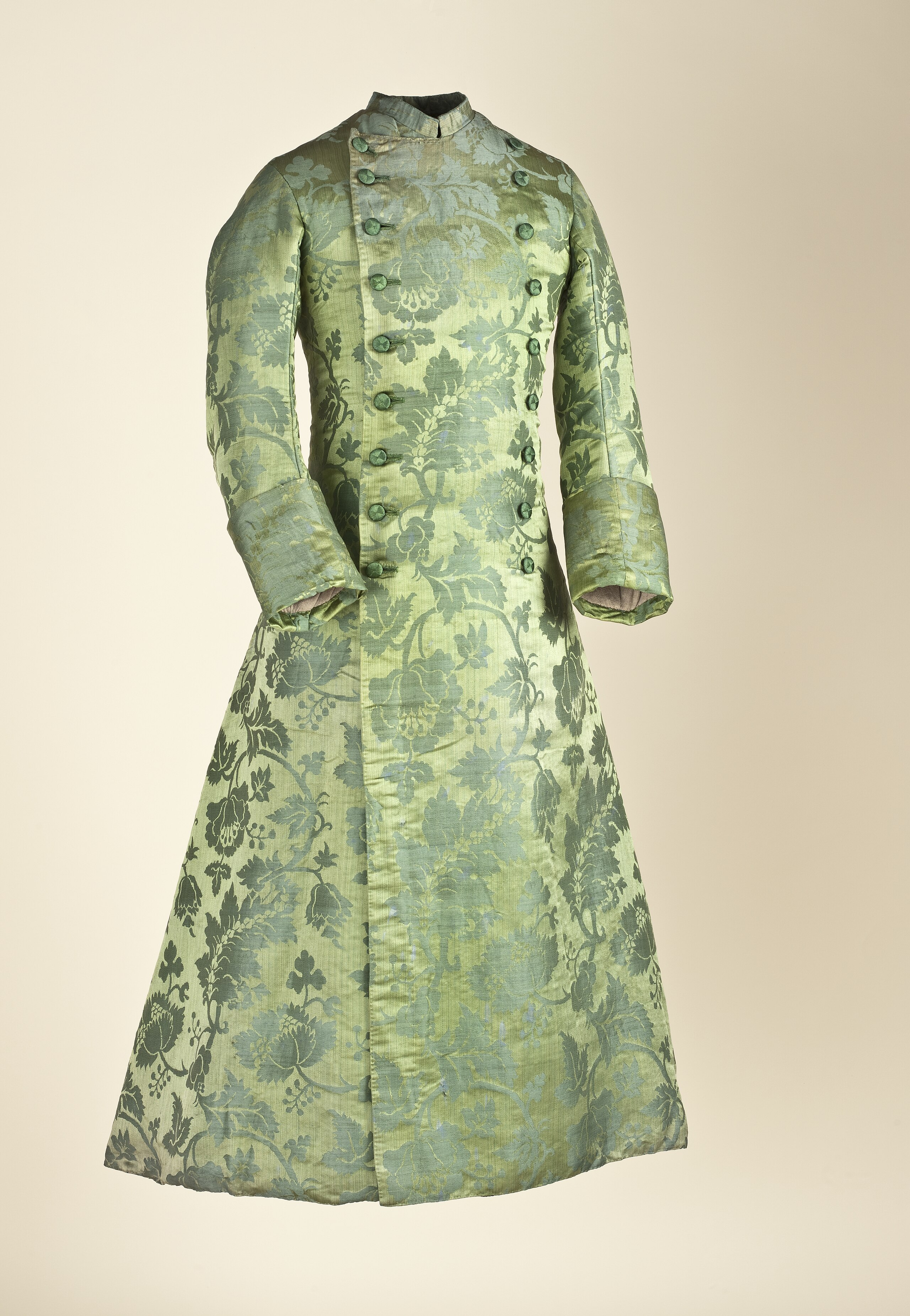
The word comes through Portuguese banian and Arabic بنيان, banyān, from the Gujarati વાણિયો, vāṇiyo, meaning “merchant”.
European women wore banyans in the 18th century as dressing gowns in the morning, before robing for the day, or in the evening before bed over undergarments, as described by the Victoria and Albert Museum in London, England. Despite the name “nightgown”, the banyan was not worn for sleeping. [“Banyan – Victoria & Albert Museum – Search the Collections”]
Also called a morning gown, wrapper, robe de chambre or nightgown, the banyan was a loose, T-shaped gown or kimono-like garment, made of cotton, linen, or silk and worn at home as a sort of dressing gown or informal coat over the shirt and breeches. The typical banyan was cut en chemise, with the sleeves and body cut as one piece. It was usually paired with a soft, turban-like cap worn in place of the formal periwig. An alternative style of banyan was cut like a coat, fitted, with set-in sleeves, and was closed with buttons and buttonholes. [Waugh, Norah (1987). The Cut of Men’s Clothes, 1600–1900. New York: Routledge.]


