
Part of my story has the heroine hiding out in a hunting lodge in Buckinghamshire. At this point, I shan’t tell you why. You must read the book to learn something of her motives and mine. LOL! However, as she journeys to this place of hopeful safety, she passes through the villages of Whaddon, Bletchley, and Milton Keyes. I thought I might share a bit about each so you would have a lovely picture in your mind of the places she saw.
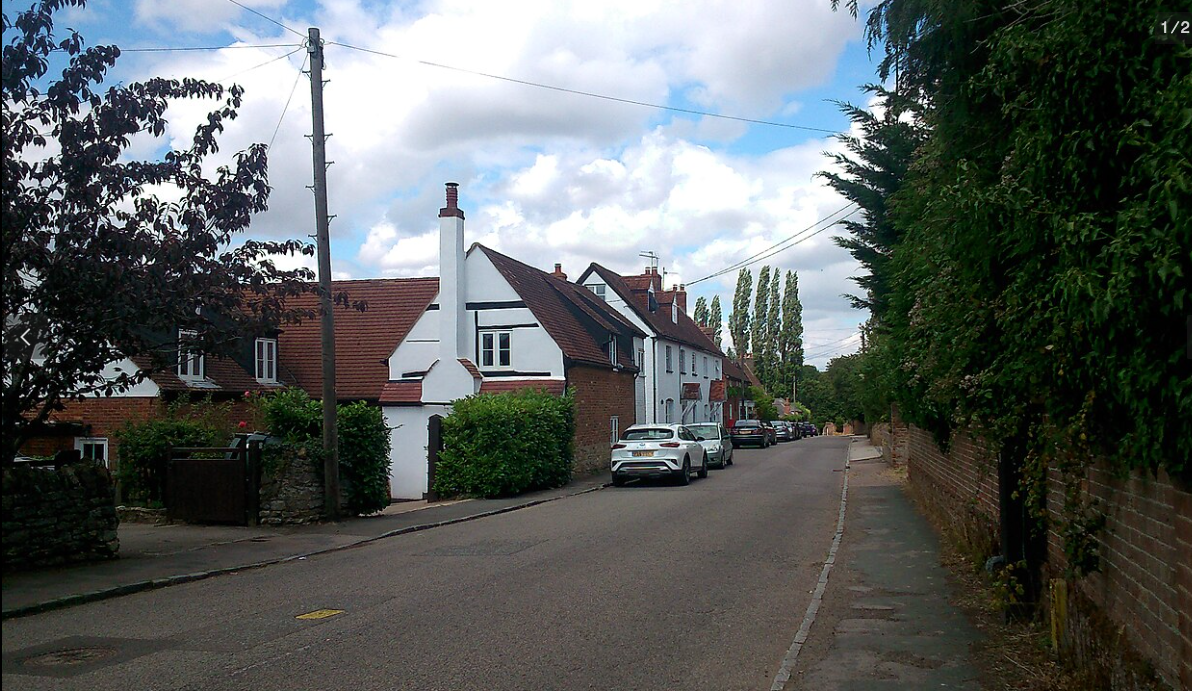
Whaddon is a village in Buckinghamshire, England. It sits just outside of Bletchley, which is a constituent town of Milton Keynes. This connection is the reason I mention all three in the tale. The name “Whaddon” is Anglo Saxon in origin and means “hill where wheat is grown.” The village is referred to several times in the Anglo-Saxon Chronicle generally in the form of Hwætædun.
The village is at the centre of the ancient Whaddon Chase, which is a Royal hunting forest. Whaddon Chase is designated an area of ‘Special Landscape Interest’.

Bletchley is a constituent town of Milton Keynes, in the south-west of the city, split between the civil parishes of Bletchley and Fenny Stratford and West Bletchley, which in 2011 had a combined population of 37,114.

Bletchley is best known for Bletchley Park, the headquarters of Britain’s World War II codebreaking organization, and now a major tourist attraction. The National Museum of Computing is also located on the Park.
“The town name is Anglo-Saxon and means Blæcca’s clearing. [“Key to English place names: Bletchley”. Institute for Name-Studies, the University of Nottingham.] It was first recorded in manorial rolls in the 12th century as Bicchelai, then later as Blechelegh (13th century) and Blecheley (14th–16th centuries). Just to the south of Fenny Stratford, there was Romano-British town, MAGIOVINIUM on either side of Watling Street, a Roman road.
“Bletchley was originally a minor village on the outskirts of Fenny Stratford, of lesser importance than Water Eaton. [“Parishes : Bletchley with Fenny Stratford and Water Eaton”. A History of the County of Buckingham: Volume 4. Victoria History of the Counties of England. 1927. p. 274–283.] Fenny Stratford fell into decline from the English Civil War (17C) onwards. The arrival of the London and Birmingham Railway (now part of the West Coast Main Line) from 1838, and particularly of the branch lines to Bedford (1846) and Buckingham (1850) (that together subsequently became the Oxford – Cambridge “Varsity Line”), made the station at Bletchley a substantial one. Bletchley grew to eclipse both its antecedents.”

Milton Keynes is a city in Buckinghamshire, England, about 50 miles (80 km) north-west of London. The River Great Ouse forms the northern boundary of the urban area; a tributary, the River Ouzel, meanders through its linear parks and balancing lakes. The area that was to become Milton Keynes was relatively rich: the Milton Keynes Hoard is one of the largest (by weight, 2.2 kg or 4.9 lb) hoard of Bronze Age jewellery ever found in Britain: the British Museum described it as ‘one of the biggest concentrations of Bronze Age gold known from Britain and seems to flaunt wealth’. [“The Milton Keynes hoard”. British Museum/Google Cultural Institute.] It was discovered in September 2000 at Monkston (near Milton Keynes village) and consists of two Bronze Age gold torcs and three gold bracelets in a datable clay pot.
“Most of the eighteen medieval villages in Milton Keynes are still extant and are at the heart of their respective districts. But some, such as Old Wolverton, remain only as field patterns marking a deserted village. The desertion of Old Wolverton was due to enclosure of the large strip cultivation fields into small ‘closes’ by the local landlords, the Longville family, who turned arable land over to pasture. By 1654, the family had completely enclosed the parish. With the end of the feudal system, the peasants had lost their land and tillage/grazing rights and were forced to find other work or starve. Thus Old Wolverton was reduced from about thirty peasant families in the mid 16th century to almost none, within the space of a century. There are also deserted village sites in Tattenhoe and Westbury (Shenley Wood).” [History of Milton Keynes]

Short Excerpt from Chapter Eight:
She glanced to where Lord Beaufort stirred. He slowly opened his eyes and smiled at her. As she had noted previously, the man was quite a handsome young man with dark blonde hair that shone with bits of copper highlights. His large brown eyes widened beneath darkly arched brows. “We are nearly to Whaddon,” he said as he looked around to know his bearings. “You should not have permitted me to sleep so long,” he chastised as he pushed himself up in the seat.
“You obviously required your rest,” she remarked.
One could easily view his Norman ancestors in the man’s features. He was taller than Lord Orson, by whom Emma had come to judge others. When had that happened? She could not say with any confidence, but it was true.
Even after riding for hours in a cramped carriage, Lord Beaufort could walk into any house in Mayfair and not be shunned for his untidiness. He wore a rust-colored jacket with dark brown lapels and a white cravat and a dark green waistcoat.
The carriage turned onto an access road. “What should I expect from this ‘lodge’?” she asked.
“It is not as rustic as you may have imagined,” he said in honest tones. “Not too small nor too large. Imagine a farm house with a half dozen bed chambers, a small kitchen and morning room, and a few sitting rooms. I employ more than a handful of staff to maintain it. A woman will come in each day to cook and two others to clean. Its main advantage is it sits upon a hillside so it will be difficult for anyone to approach without our knowledge.”
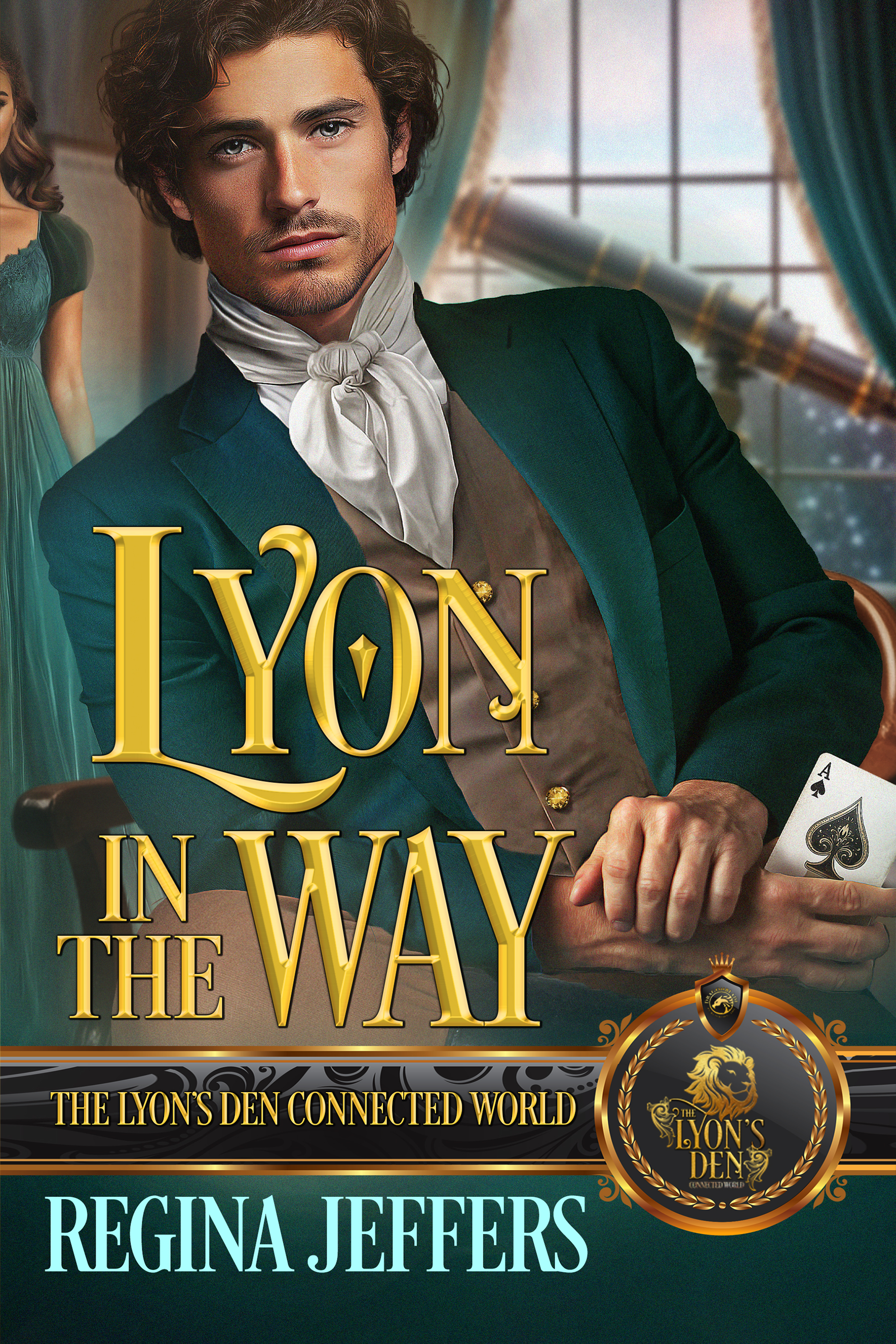
One man wants her dead. Another may love her forever.
For over a year, Lord Richard Orson has been quietly captivated by the unconventional Lady Emma Donoghue. Headstrong, brilliant, and unapologetically involved in causes that rattle Society’s comfort, Emma is nothing like the debutantes he’s expected to court.
But when he finds her bruised, confused, and alone in Covent Garden after midnight, Richard is thrust into a far more dangerous game.
Someone wants Emma silenced. And now, Richard has only moments to uncover the truth, protect her from harm, and keep her out of scandal’s reach. But staying focused is harder than he imagined—especially when every glance, every accidental touch, reminds him how perfectly she fits in his arms.
Tropes you’ll love: Protective hero / damsel in distress (with a twist) Bluestocking heroine Rescue & recovery romance Unlikely match / opposites attract Slow burn with rising suspense One bed (forced proximity) Hero falls first
As danger closes in and secrets are revealed, Richard must decide whether he’s willing to risk his life—and his heart—for a woman who’s always been worth the fight.
A suspenseful, slow-burn Regency romance where danger ignites desire, and love must outpace the clock.
Read in Kindle Unlimited!
Enjoy book one in a new series within The Lyon’s Den Connected world by Regina Jeffers.
Book 1 – Lyon in the Way
Book 2 – Lyon’s Obsession
Book 3 – Lyon in Disguise
Book 4 – Lost in the Lyon’s Garden
Book 5 – Lyon on the Inside


 Every Woman Dreams...


