When writing British Regencies and other historicals set in the 1700s and 1800s, one must know something of inheritance laws, as well as how Parliament operated during those times. Below, you will find a mishmash of facts I have learned, especially as an American who is writing about British history. Hopefully, it will help someone else not make the same mistakes as I did.
According to this site (https://en.wikipedia.org/wiki/House_of_Lords), in 2014 the House of Lords passed a Reform Act which allowed peers to retire or resign from the chamber. Prior to this act, only hereditary peers could disclaim their peerages, which implies they could in the Regency era. I do not know the process but I am confident someone else does and will point the way just as I am pointing out the tidbits I have picked up over the years..
Question: In 1818, could a peer ever resign his seat in the House of Lords? What would that entail if so? If not, could he refuse to attend Parliament when summoned for the annual session? I’m sure illness, etc., prevented some peers from attending.
Answer: No, he could not resign. However, he need not accept it when he first succeeds to the title, just as Maurice Berkeley did when he was named Earl of Berkeley. The earldom remained dormant during his life.

Lord Byron left the country and just never returned so never answered his writ of summons and never took the oath again so he could not name a proxy.
Catholics, minors, females and the deranged could not attend, but others were supposed to go for a time or two to take the oath at the beginning of a new parliament (after an election).
Once they came in and took the oath, they could name a proxy and give him permission to vote for him. Usually the man then retired to the country. That was done due to illness of the man or to circumstances at home or various such legitimate excuses. It was considered an obligation of peerage to go to parliament at least to take the oath so that a party member could be given the proxy. Quite a few stayed away unless an important vote was pending. At that time “whippers in” would go out to corral all they could to attend and vote.
Even when a peerage was disclaimed, the heir was still the heir. The heir could not inherit until the holder died. The usual reason for disclaiming a peerage was to stay in the House of Commons. A bill was passed to allow the heir who sat in the House of Commons to continue to do so when he succeeded to the peerage. If this occurred, usually the man was PM or had some other important position in the House.
The proxy to vote could not be given to the son (heir), because he is not entitled to sit in the House of Lords until he succeeds to the title and is summoned to Parliament. The proxy can only be given to someone who is already sitting in the House of Lords.
During the Regency, many viscounts served in the House of Commons, especially ones with Irish titles.
In Scotland, there was not such a big hoopla of a child being legitimate or not based on the date of marriage. A Scot was considered legitimate by the subsequent marriage of his parents in Scotland, but under English law, he was not heir to any English property or titles and honors. Only a child born after his parents married could inherit English property and titles.
All the Irish and Scottish peers were not given seats in the House of Lords. Only a representative number of each were elected by other peers to attend the House of Lords. The Irish peers were elected for life while the Scottish peers were elected for the parliament (from one general election to the next).
The Irish peers who were not elected as representative peers could sit in the House of Commons. Scottish peers could not. These were peers without English titles. Of course, because there are often no absolutes in these matters, by the Regency Period, those with English titles were entitled to a seat in the House of Lords.
Those Irish peers who did sit in the House of Commons lost privileges of Peerage, but did have privilege of Parliament. It is hard to know, offhand, whether a viscount was a peer or an heir.
Here are some book recommendations for learning more on this process:
The Unreformed House of Commons by Edward and Anne Porritt. Two separate volumes. Available on Amazon and Google Books.

It’s an incredibly detailed resource that’s available online. I am going to link you to the chapter on the physical houses of Parliament since some of you were looking for a floor plan (there isn’t one, but there’s quite a lot about the buildings):
And here’s the Table of Contents which is pretty detailed and mostly hyperlinked on Google Books.
I suspect that Part 4, The House and Its Usages, will be most useful for you. 🙂 Obviously it is not a floor plan of which I have had several requests, but if you have not seen it, here is a great picture of the main chamber of the House of Commons: https://commons.wikimedia.org/wiki/File:The_House_of_Commons_-_Microcosm_of_London_%281808-1811%29,_21_-_BL.jpg
And here is a partial timeline on construction and renovations on the Houses of Parliament before they burned down in 1834:
http://www.parliament.uk/about/living-heritage/building/palace/estatehistory/reformation-1834/
If your hero is a Tory and member of the government’s party, I recommend The Governing of Britain, 1688-1848: The Executive, Parliament and the People, by Peter Jupp. Detailed explanation of the workings of Parliament, cabinet, the monarchy, etc. It is a huge book but it is separated by time period so you should not be required to read the whole thing to find the relevant information.
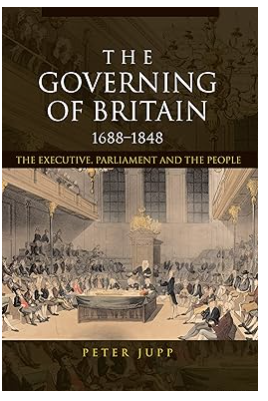
Divided into two parts, bisected by the accession of George III in 1760, this study:
examines the changes to the framework and function of executive government
presents an analysis of its achievements, the composition and functions of Parliament, explores Parliament’s role in government
looks at the interaction between the executive, Parliament and the public.
Providing new insights into the formulation of notions and traditions of legislation, the public sphere and popular politics, The Governing of Britain is an essential guide to a formative era in political life.
If your character is a Whig and member of the Opposition, I would choose The Whigs in Opposition: 1815-1830, by Austin Mitchell. It contains very detailed explorations of the inner workings of the Whig party, with discussions of specific bills and votes in Parliament.

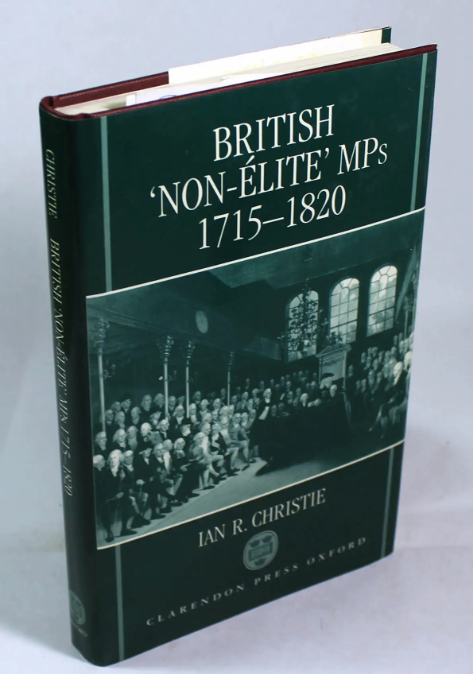
If he is not part of the aristocracy, check out British ‘Non-Elite’ MPs: 1715-1820, by Ian R. Christie. I have not actually read this book; yet, but it looks awesome!
Here are some other books I might also recommend to the serious writer.
The Great Reform Act of 1832, by Eric J. Evans. Very short and concise, with an excellent section on the Unreformed system.
Regency England: the Age of Lord Liverpool, by John Plowright. Another short one, a great overview of the political currents of the time and major issues, politicians and legislation.
The English Town 1680-1840: Government, Society, and Culture, by Rosemary Sweet. Invaluable for writing provincial England, with a good section on local politics.
Hansard’s Parliamentary Debates 1803-2005
Government and Community in the English Provinces, 1700-1870, by David Eastwood.
The Scandalous Affair That Nearly Ended a Monarchy: The Trial of Queen Caroline, by Jane Robin.


 Every Woman Dreams...
