Today, we have a celebration of Veterans’ Day, a day originally called Armistice Day.
The Department of Veterans Affairs Website tells us, “In November 1919, President Wilson proclaimed November 11 as the first commemoration of Armistice Day with the following words: “To us in America, the reflections of Armistice Day will be filled with solemn pride in the heroism of those who died in the country’s service and with gratitude for the victory, both because of the thing from which it has freed us and because of the opportunity it has given America to show her sympathy with peace and justice in the councils of the nations…”
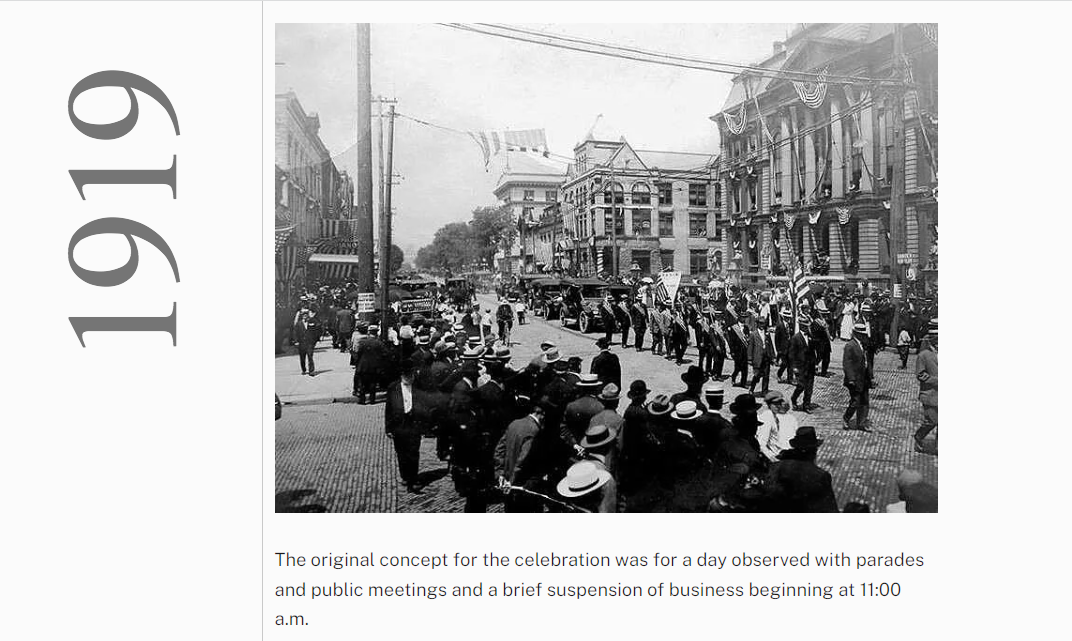
“World War I – known at the time as ‘The Great War’ – officially ended when the Treaty of Versailles was signed on June 28, 1919, in the Palace of Versailles outside the town of Versailles, France. However, fighting ceased seven months earlier when an armistice, or temporary cessation of hostilities, between the Allied nations and Germany went into effect on the eleventh hour of the eleventh day of the eleventh month. For that reason, November 11, 1918, is generally regarded as the end of ‘the war to end all wars.’”
Though I am as patriotic as one might expect of someone from my generation, this post is not on Veterans Day, but rather about the man known as The March King. If you have ever been a part of a marching band or the military, you will recognize John Philip Sousa’s influence on the tradition.
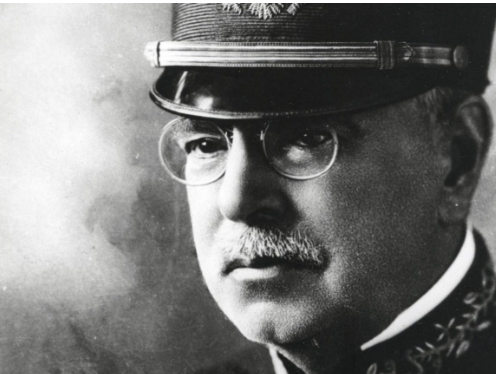
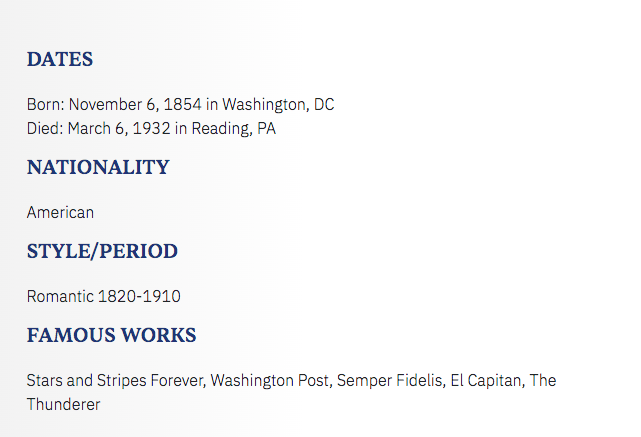
John Philip Sousa was born 6 November 1854 in Washington, DC, near the Marine Barracks at that time, for his father Antonio was a musician in the Marine Band. After grammar school, he enrolled in a private conservatory of music. There, he studied piano and orchestral instruments, but the violin was his favorite. His father later insisted that John enlist as an apprentice musician with the Marine Band. He was 13 at the time, and he stayed with the band until he was 20.
In addition to his musical training in the Marine Band, he studied music theory and composition with George Felix Benkert, a noted Washington orchestra leader and teacher.
After being discharged from the Marine Corps, he toured with several traveling orchestras. During that time he also worked as a composer, arranger, and proofreader for publishing houses. He wrote the incidental music and the march for the musical “Our Flirtation” and toured with the company. While on tour in St. Louis, he received a telegram offering him the leadership of the Marine Band in Washington. He accepted and reported for duty on Oct. 1, 1880, becoming the band’s 17th Leader.
His time with the Marine Band was unlike any other leaders before him. “He replaced much of the music in the library with symphonic transcriptions and changed the instrumentation to meet his needs. Rehearsals became exceptionally strict, and he shaped his musicians into the country’s premier military band. Marine Band concerts began to attract discriminating audiences, and the band’s reputation began to spread widely.
“Sousa first received acclaim in military band circles with the writing of his march “The Gladiator” in 1886. From that time on he received ever-increasing attention and respect as a composer. In 1888, he wrote “Semper Fidelis.” Dedicated to “the officers and men of the Marine Corps,” it is traditionally known as the “official” march of the Marine Corps.
“In 1889, Sousa wrote the “Washington Post” march to promote an essay contest sponsored by the newspaper; the march was soon adapted and identified with the new dance called the two-step. The ‘Washington Post” became the most popular tune in America and Europe, and critical response was overwhelming. A British band journalist remarked that since Johann Strauss, Jr., was called the “Waltz King” that American bandmaster Sousa should be called the ‘March King.’ With this, Sousa’s regal title was coined and has remained ever since.” [Marines]
Some of my favorite Sousa marches:


