In the singular form the lexicon of a particular subject is all the terms associated with it. The lexicon of a person or group is all the words they commonly use. As a plural noun, a lexicon is an alphabetical list of the words in a language or the words associated with a particular subject. To distinguish lexicon from a dictionary, it is an alphabetical list of the words in a language or the words associated with a particular subject.
These examples are a mix of what one might hear upon the lips of the aristocracy, as well as examples of Cant used upon London’s streets and those terms used by farmers and like in the country.

s. – the abbreviation for shilling (a shilling is a English silver coin worth twelvepence; 20 shillings = one pound)
Sabbatarians – VERY strict observers of the Sabbath
sack – a dry white wine from Spain
St. Giles – a notorious London slum with a large Irish and Jewish population; a center for prostitution

theroyalresidences/
stjamesspalace/
stjamesspalace.aspx
St. James Palace – the official residence (until 1837 when Queen Victoria moved the royal residence to Buckingham Palace); St. James’s Palace is the senior Palace of the Sovereign, with a long history as a Royal residence. As the home of several members of the Royal Family and their household offices, it is often in use for official functions and is not open to the public.
“Saint Jane” myth (not necessarily a Regency term, but important to the era) – When Henry Austen wrote his biography of his sister Jane, he presented a “saint” to the world, which is in sharp contrast to the Jane Austen we meet in her letters.
saloon or salon – a large room, such as a drawing room, used for receiving and entertaining guests; this room often doubled as a picture gallery in a fine house

salver – a silver tray which held calling cards; either placed on a table in the hallway or delivered by the head servant to his master/mistress; also used by servants to passing around biscuits during social gatherings
sal volatile – smelling salt (made with ammonium carbonate)
sandals – used by ladies in the early part of the century; slipperlike shoes that fastened over the instep with a strap
sash – worn by little girls as a complement to the muslin frock
sawbones – originally referred to army surgeon who were often called upon to saw off bones; as more and more soldiers returned home the term came to be applied to all doctors and surgeons
schoolroom – where children received their lessons in a wealthier home; large enough for dancing lessons and to accommodate games indoors; “in the schoolroom” meant a young lady had not made her “Come Out”
scout – a man servant at Oxford
Scottish reel – a folk dance with gliding steps and jumps; a quick-stepping dance
scullery – place where dishes were washed and stored
scullery maid – the lowest ranking household servant (also referred to as “scullion”); one assigned to wash the dishes, as well as other unpleasant duties in the kitchen

XEP/A-US/SFL/Pages/
1765-1820/USC-1765.htm
sealing wax or sealing wafer – a drop of wax (dropped wet over the fold of a letter and allowed to dry) or a sealing wafer (a thin disk of dried paste used to seal a document) was used to seal a letter (There were NO envelopes.); a signet ring or seal pressed into the wax secured the paper seal; usually made of beeswax; red wax was used only for business; other colors for social correspondence; black wax indicated mourning
seals – small ornament on a watch chain, including a seal to set the wax on a letter; it contained an emblem or the initials cut into the metal surface, which was called “itaglio’; the image was pressed into the metal wax so a raised imprint remained; the image was specific to a particular family name, business, or official title; the seal might also be inset in a signet ring or it could be available it a “stamp” format for a house’s butler to frank letters or the housekeeper to carry one on a chatelaine or fob to mark orders being requesting for the household
sealing wax – a mixture of shellac and turpentine or even beeswax that was melted and used to seal envelopes and/or stamp official documents; the standard was to use red for business, black for mourning, and another color of one’s choice for social letters
sedan Chair – a rickshaw-like enclosed chair with two poles, carried by two men, one at the front of the poles, another at the back of the chair holding the rear poles; the men were called “bearers”; a sedan chair might also be called a “Palanquin”

Season – meaning the social “Season” which began in early spring after Easter, and lasted until the end of June (basically when Parliament was in session). The original idea was to provide amusements and gathering for the families of the members of those in the House of Lords and the House of Commons, but soon it was required for young ladies to be presented to society and to socialize regularly, which was not easily done when in the country’s shires
seedcake – a sweet cake usually made with caraway seeds
sell up – selling all of a person’s worldly goods to settle his debts
seminary – the most fashionable, educational, and expensive institution for young ladies; girls learned sewing (“work”), reading, writing, mathematics, French, and history, along with dancing, music (instrument and singing), and art (although these fine arts often cost extra)
senior wrangler – in Cambridge’s math honors exams, the top students were called “wranglers”; the highest ranked student was the “senior wrangler”
sennight – a contraction of “seven nights” = one week
sent down – expelled from a university
servants’ hall – a special room where the servants of a household ate and socialized
servants’ quarters – servants (both male and female) had their bedrooms in the manor house’s attic, basement, or a separate wing of the house (The lady’s maid often had a room near her mistress.)
set – the name given to a group of dancers in a dance, as well as the series of dances they perform
settee – an indoor chair on which two people could sit

Columbus Avenue Hall Settle c.1902 Collection of Crab Tree Farm
settle – a wooden bench with a high back on which several people could sit; usually found in taverns and rustic homes; often faced the fireplace
settlement – the legal arrangement of property; marriage settlements involved ensuring that a woman would receive pin money, a jointure and portions for her future children; strict settlements ensured that a landed estate remained entailed against the possibility of a male heir selling or mortgaging it; settlement under the Poor Law meant a person could not receive financial relief in a parish without being born in the parish, been apprenticed in the parish, or being married to a parish resident
Seven Deadly Sins – pride, greed, lust, anger, gluttony, envy, sloth
Seven Dials– an infamous criminal district in London; it was the seven streets that converged upon St. Giles (see above)
sexton – the man who rang the bells and dug the graves at a churchyard
shaking hands – was a sign of real friendship, not generally part of an introduction as it is in current times; occurred less frequently between members of the opposite sex; was considered improper
shawl – worn by women throughout the century
sheriff – in previous centuries the High Sheriff was the king’s representative in the shire (i.e., the Sheriff of Nottingham); by the 1800s, the “sheriff” was a country gentleman who entertained the assize justices when they made their judicial circuit; in some areas, the sheriff also carried out official county business
shift– a long kind of nightgown type of material which women wore as underwear, along with the corset (“drawers” did not become popular until the 1860s); “shift” replaced the word “smock”; eventually, “shift” was replaced by the word “chemise”
shilling number – a monthly installment of a serialized novel (very popular in the mid and later part of the 19th century-more of a Victorian term, rather than a Regency one)
shilly-shallying – taking too long to complete a task; wasting time
ship-of-the-line – a warship usually of 60+ guns; one that could take its place in the “line” of battle
shire – unit of regional government run by the earl and the sheriff (shire reeve) in the monarch’s name; the Normans substituted the word “county” for “shire”; “The shires” in foxhunting groups referred to the Midland shires, including Rutland, Northamptonshire, and Leicestershire
shivaree – a noisy mock serenade (made by banging pans and kettles) to a newly married couple (also referred to as belling, charivari, chivaree, callathump, and callithump in regional areas of the US and UK)
shorts – knee breeches
shuttlecocks and battledores – the forerunner of badminton; popular outdoor game for both sexes; it was played with small racquets (battledores) and netted shuttlecocks
shove-halfpenny– a children’s game similar to shuffleboard, but played on a table and with coins
sideboard – dining room furniture that held extra dishes; later, it became a storage place for plate, silverware, etc.
silhouettes – tracing a person’s profile with the help of a shadow; a popular art form during the reign of George III; it was named after a French artist who perfected the form, Etienne de Silhouette

Sir – the title by which baronets and knights are addressed
sitting room – used for morning activities (reading, letter writing, cards, painting, sewing, etc.); in smaller manor houses the husband would have his study at one end while the wife had her sitting room
sizar – scholarship students at Cambridge
skittles – similar to bowling (nine pens or skittles)
small clothes – knee breeches; A gentleman wearing shirt and breeches (only) is considered to be undressed. Though modestly covered by modern standards, by 18th Century standards he is considered to be in his ‘small clothes’ – his underwear.
smock frock – an outer garment worn by the agricultural working poor
snob – meant someone of no social standing, the opposite of a “nob”
snuff – an often scented powdered tobacco sniffed into the nose; carried in a decorated snuffbox
snuff rasp – used to grind tight bundles of tobacco leaves into fresh snuff; small to fit into a pocket, made of a variety of materials and often ornate; could be stored with the leaves in a separate snuff box

snuffers – scissor-like instruments used to trim the wicks of tallow candles
Social Season – London’s fashionable high life; ran from February to June and September to pre-Christmas
solicitor – a lawyer or attorney (not usually a gentleman by birth) who dealt in wills, contracts, deeds, settlements, and estate issues; they could not appear in court; therefore, solicitors would hire a barrister to represent his client in court matters; they took a portion of the gratuity for their fee; considered part of the working class, though they could become quite wealthy depending on who they represented; they might only be accepted by the gentry if they were “part of the family,” as was Mr. Philips to the Bennet family in Pride and Prejudice by Jane Austen.
Somerset House– housed various government offices, most notably the tax office (Board of Inland Revenue); located on the Strand in London
Southwark – the “Borough”; located across the Thames south of London
sovereign – a gold coin worth a pound (first came into circulation in 1817)
Spanish coin – false flattery
spatterdashes – long gaithers to protect the legs from water and mud
special license – call only be obtained from the Archbishop of Canterbury; presents a man and woman to marry at any time or place (home, church, etc.); issued for a three months’ time limit; it could not be left blank, names of the man and woman must appear on the document; only those of the aristocracy and those with great “influence” could obtain a special license
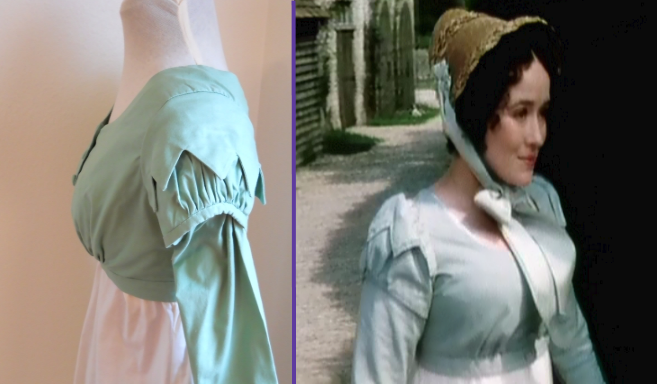
patterns.com/blog/?p=1175
spencer – a short jacket worn by ladies of the day; for men, a spencer was an overcoat without tails
sponging house – a house run by a sheriff’s officer where debtors were housed while they repaid their debts
Sprezzatura – Though dating from the Renaissance, Castiglione’s sprezzatura remained in place during the Regency. Taught from childhood, “gracefulness” became a way of life. A member of the gentry should speak and act with modest confidence; maintain emotional control; use proper language; and be well educated in literature, the arts, history, and dancing.
squire – a term of courtesy for a member of the gentry whose family lved for generations in an area and who had tenants on his property; often served as the justice of the peace in the area
stagecoach – public transportation, generally for the lower classes; the Royal Mail coaches were quicker and more expensive than the regular stagecoaches (Note: Jane Austen’s house in Chawton was located beside a main stagecoach route; therefore, the noise of the carriages was commonplace for Austen in those days.)
stair rod – metal rods clamped along the base of a riser to hold the carpet in place
stall – metonymy at work; a position a prebendary held (i.e., Dr. Grant in Austen’s “Mansfield Park” succeeds to a stall in Westminster.)
stand up – to dance with someone

com/caa_content.asp?PageType=Dept&Key=
15&MCat=9
stanhope – a light carriage with no top; could have 2 or 4 wheels; named for the Honourable and Reverend Fitzroy Stanhope (1784-1864)
Statute of Wills – passed by Henry VIII in 1540, the statute allowed a person to leave his property to anyone he wanted, provided he had stated his desires in a will; unfortunately, Parliament had not abolished the “Statute of Uses” from 1536, which supported the concept of primogeniture, so primogeniture remained the preferred inheritance method
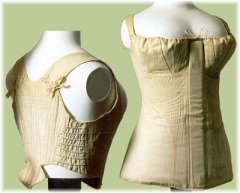
stay – one of the two halves of a corset; used to hold in the waist and lift the bosom; made of a sturdy canvas cloth, which was faced with silk; they could be tightened by laces in the back; reinforced with whalebone (which had a bit of give in it and not be so stiff)
staylace – one of the laces used to tighten a corset
steeplechase – a horseback ride or race across country; originally the gentlemen raced toward a distant steeple; therefore, it was a straight course, but that did not mean the race lacked obstacles
steward – managed the estate for the owner so that the owner did not have to deal directly with tenant farmers; the steward would oversee the estate’s accounts, settle tenant squabbles, purchase seed and animals, etc.
stile – a set of three or four wooden steps built to help people over a wall or fence constructed in a field to keep animals enclosed
stillroom – where preserves and wine were kept in a house; also where coffee and tea was made
stock – a tight, stiff collar worn by men, especially soldiers; it was also the black shirtfront over which the white bit of collar was fastened for clerical dress
stone – a measurement of weight = 14 pounds
strand – shore of a river or ocean
stuck his spoon in the wall – died
stud – horses raised for breeding or racing
stuff – name for different kinds of fabrics, but generally applied to those commonly made of wool
sugarloaf- the hard, crusty form in which sugar was available; usually shaped like a cone
sugarplum – a round piece of flavored candy made chiefly of sugar
surgeon – a man who tended to external injuries (broken bones, wounds, etc.) “Physicians” never bloodied their hands. Physicians were addressed as “doctor,” whereas surgeons were referred to as “mister.”
surtout – a man’s overcoat, very much like a frock coat
swallowtail coat – a man’s coat, which had long tails that tapered down the gentleman’s back
sweetbread – the thymus gland or pancreas of a young animal, especially a calf or lamb, used for food
sweetmeat – a candy, such as a candied fruit
swing glass – a mirror similar to a cheval glass
If Interested, Check Out These Other Resources:
Other Sources:


 Every Woman Dreams...
Regina, after reading Elizabeth Hoyt’s Maiden Lane series, I wanted to know more about St. Giles and did some research which resulted in posting an article on my blog.
Share the link, Carol. I would like to read it.