Female Inheritance Laws + an Excerpt from MR. DARCY’S BRIDEs

Under English law, women were subordinate to their husbands. It was expected that she was under the “protection and influence of her husband, her baron, or lord.” The law stated the old adage of “two shall become one.” She was her husband’s “feme covert.” Any property she owned—real or personal—came under his control. A married woman could not draft a will or dispose of any property without her husband’s consent.

Women rarely inherited property. She could inherit “personal” belongings such as, furniture, jewelry, clothing, moveable goods, etc. But that does not mean that a woman could NOT inherit real property (meaning land, or what we now call “real estate”). The practice of primogeniture under English law presented the oldest son with the real property upon the death of the father. [Note: Matrilineal primogeniture, or female-preference uterine primogeniture, is a form of succession practiced in some societies in which the eldest female child inherits the throne, to the total exclusion of males. The order of succession to the position of the Rain Queen is an example in an African culture of matrilineal primogeniture: not only is dynastic descent reckoned through the female line, but only females are eligible to inherit.] Daughters could only inherit in the absence of a male heir. The law of intestate primogeniture remained on the statue books in Britain until the 1925 property legislation simplified and updated England’s archaic law of real property.

Aware of their daughters’ unfortunate situation, fathers often provided them with dowries or worked into a prenuptial agreement pin money, the estate which the wife was to possess for her sole and separate use not subject to the control of her husband, to provide her with an income separate from his.

In contrast to wives, women who never married or who were widowed maintained control over their property and inheritance, owned land and controlled property disposal, since by law any unmarried adult female was considered to be a feme sole. Some of the peeresses, in their own right had property, as well as the title which the husband couldn’t touch. Still, inheritance through the female of a peerage by patent was  extremely rare and usually only  put into the patent while the 1st peer was alive. Usually, the patents didn’t allow for female inheritance. It was rare for a woman to be able to inherit a peerage created by patent. The Duke of Marlborough had his patent changed when it was obvious he would not have a son, but that was a rare occurrence. Most females succeeded to a lesser peerage created by writ. Once married, the only way that women could reclaim property was through widowhood.

The dissolution of a marriage, whether initiated by the husband or wife, usually left the divorced females impoverished, as the law offered them no rights to marital property. The 1836 Caroline Norton court case highlighted the injustice of English property laws, and generated enough support that eventually resulted in the Married Women’s Property Act.

Lately, England has considered what is cleverly known as the “Downton Abbey” law. The Bill is so called after the anomaly of female succession at the heart of ITV’s Downton Abbey, in which the character of Lady Mary, the eldest daughter of the drama’s fictional earl, was unable to inherit the family seat because it had to pass to a male heir. The bill adds the rank of “baronets” to those titles in which females can inherit.

Like many in the JAFF community, I often write how Anne De Bourgh can inherit Rosings Park. I do so again in my latest novel, MR. DARCY’S BRIDEs. But how is that possible? As mentioned above, Anne can inherit if she does not marry. By English law, she could inherit when she reaches her majority at age 21. I customarily add something in Sir Lewis’s will that has her wait until she is 25. [Mayhap, Sir Lewis anticipated Lady Catherine’s “unwillingness” to be removed from the reins of Rosings Park, and provided Anne a bit of time to find a strong husband who would depose her ladyship, or some such story line.] Yet, in reality, it is also possible for Anne to inherit because her father’s title is one of baronet. The rank of “baronet” was created by James I, who founded the hereditary Order of Baronets in England in 1611 to be conferred on 200 gentlemen with large, profitable estates on the condition they funded the salaries of 30 soldiers for the war with Ireland. In these early baronetcies, it was written into the letters patent from the monarch when the titles were created that women could inherit if there was no male heir. The last baronetess, Dame Anne Maxwell Macdonald, whose ancestors became baronets in 1628, died in 2011 aged 104. Therefore, Anne De Bourgh could be the next baronetess of Rosings Park.

MDF eBook Cover Introducing MR. DARCY’S BRIDE…

I much prefer the sharpest criticism of a single intelligent man to the thoughtless approval of the masses.

ELIZABETH BENNET is determined that she will put a stop to her mother’s plans to marry off the eldest Bennet daughter to Mr. Collins, the Longbourn heir, but a man that Mr. Bennet considers an annoying dimwit. Hence, Elizabeth disguises herself as Jane and repeats her vows to the supercilious rector as if she is her sister, thereby voiding the nuptials and saving Jane from a life of drudgery. Yet, even the “best laid plans” can often go awry.

FITZWILLIAM DARCY is desperate to find a woman who will assist him in leading his sister back to Society after Georgiana’s failed elopement with Darcy’s old enemy George Wickham. He is so desperate that he agrees to Lady Catherine De Bourgh’s suggestion that Darcy marry her ladyship’s “sickly” daughter Anne. Unfortunately, as he waits for his bride to join him at the altar, he realizes he has made a terrible error in judgement, but there is no means to right the wrong without ruining his cousin’s reputation. Yet, even as he weighs his options, the touch of “Anne’s” hand upon his sends an unusual “zing” of awareness shooting up Darcy’s arm. It is only when he realizes the “zing” has arrived at the hand of a stranger, who has disrupted his nuptials, that he breathes both a sigh of relief and a groan of frustration, for the question remains: Is Darcy’s marriage to the woman legal?

What if Fitzwilliam Darcy and Elizabeth Bennet met under different circumstances than those we know from Jane Austen’s classic tale: Circumstances that did not include the voices of vanity and pride and prejudice and doubt that we find in the original story? Their road to happily ever after may not, even then, be an easy one, but with the expectations of others removed from their relationship, can they learn to trust each other long enough to carve out a path to true happiness?

EXCERPT from MR. DARCY’S BRIDEs (Chapter 18): This scene is Darcy’s threat to Lady Catherine when his aunt insists that he cannot back out of his marriage to Anne. [Trust me. Even with Darcy’s commanding tone in this excerpt, Lady Catherine is not easily put off.]

“Lady Catherine, sir.” His servant barely had time to open the door before his aunt strode into the room.

“Mr. Nathan, have my bags placed in my usual room,” his aunt instructed without so much as a by-your-leave.

Darcy’s ire grew quickly. He despised such presumptuousness. “Mr. Nathan, you will leave her ladyship’s bags upon her coach. And instruct my aunt’s coachman to remain nearby with her carriage. Lady Catherine will not be staying at Pemberley.”

Mr. Nathan nodded his understanding and rushed from the room, closing the door behind him.

“So this is the welcome I am to receive,” her ladyship harumphed. “Your mother would be ashamed of you, Darcy.” She sat heavily in an armed chair.

Darcy remained standing beside his desk. He spoke in clipped tones. “I was considering something similar as to Lady Anne’s reaction to your poor manners, Aunt. I can guarantee that George Darcy would never have tolerated your ordering his servants about, and neither will I. This is Pemberley, madam, not Rosings Park. I am the master here.”

His aunt snarled, “I see your insolence continues.”

“And I see you still think that the world will bend to your whims,” he countered.

Rather than to fuel their standoff with more inflammatory accusations, Lady Catherine switched tactics, a devise he had observed her employ previously. Darcy had always thought her doing so was an intelligent means for a woman to earn agreement over business matters in a man’s world, but her diversion would not work on him. “Is that girl in this house?” she demanded.

Darcy propped a hip on the corner of his desk and attempted to appear casual when he responded, “I fear Georgiana is not at home at this time. My sister will be sorry to have missed your call.”

Lady Catherine’s chin rose in stubbornness. “So that is the way you wish to discuss this matter. Very well. Then I shall be more direct. Did you bring Miss Elizabeth Bennet to Pemberley when you left Matthew Allard’s estate in Scotland?”

Darcy schooled his features. Someone would pay dearly for sharing his business with Lady Catherine. “I am not in the habit of discussing my personal life with anyone, and you of all people should realize I am more Darcy than Fitzwilliam. Your line of questions will not win you my favor.”

“I see you mean to protect this upstart! Are you so enthralled with the woman’s arts and allurements that you cannot see reason? If you fancy her, Darcy, then make her your mistress. Anne will ignore your indiscretions. I will instruct my daughter in the ways of men. Anne can be your wife while this strumpet can suffer your lust.”

His aunt’s description of aristocratic life sickened Darcy. “I have no intention of marrying Anne. You may beg. You may threaten. You may cajole. You may bargain. But I will never change my mind. I permitted you to use the memory of my dear mother to coerce me into agreeing to marry Anne, but Fate had other ideas. Anne was late, and I spoke my vows to another.”

“We both know those vows are not legal,” she drawled in warning tones.

Darcy had heard from his solicitor regarding those first vows exchanged with Elizabeth, and as expected, his first marriage to the woman had proved void. Mr. Jaffray had filed the papers to have the ceremony declared null. “Such knowledge does not change my resolve. I will not marry Anne.”

“Would you prefer that I instruct Anne in suing Miss Bennet for criminal conversation?” she challenged.

“Although neither Anne nor I could officially testify in such a suit, the truth would win out. A skilled barrister can make certain all the facts are relayed to the judge. The lady in question could not have claimed my affections away from your daughter, for beyond a fondness between cousins, I never loved Anne.” He would not say that Elizabeth Bennet held his heart in her delicate hands. “Moreover, as I did not hold the lady’s acquaintance until several hours after that morning at St. George, it would be impossible for her to draw me away with her arts and allurements. All such a suit would do would be to bring ruin upon Anne’s head and mar my family name, as well as yours. I doubt your brother Matlock will be most pleased with your choice. You would have your vengeance and little else to keep you warm in the winter. No man would ever claim Anne after such a public display, but I suppose that is what you wish. You wish Anne forever to remain under your control.”

“Anne’s dowry of thirty thousand pounds can cover any flaw you name,” Lady Catherine argued.

“Yes, I suppose her dowry and the promise of Rosings Park can conceal all but one of my cousin’s failings: that of possessing an overbearing and controlling mother. Only the most desperate of men would consider aligning his name with Sir Lewis’s daughter. You would be willing to turn over Anne’s future to a man of no principles. That fact should surprise me, but it does not,” he said in sad tones. “Such a man would run through every penny of Anne’s inheritance, leaving you and your daughter as Matlock’s poor relations. I suppose that must be my justice.”

“You think me so cold-hearted?” his aunt demanded. “Everything I do, I do for Anne.”

“You may tell yourself these lies,” Darcy cautioned, “but your family and soon society will recognize you as a bitter, vindictive woman.” He sighed heavily. “If you persist in this madness, I will sue Anne for breach of promise. Her fortune will be greatly reduced, for I will win my suit. There were at least two dozen witnesses that can swear to the fact that she left me at the altar. If not for the false exchange of vows, I would have been long gone from the church by the time Anne arrived. You, too, would have been gone, likely looking for your wayward daughter to strangle her, as you attempted to do when she did arrive. Are you willing to tarnish your daughter’s name twice in the court of public notice? Poor Anne who has never had a Season. Who has never been permitted the freedom to form a friendship. Who is poorly educated beyond what her governess provided her. That Anne will be irretrievably ruined.” His tone held the warning of winter’s embrace. “I do not wish to see Anne suffer, but I will not permit you to injure an innocent just to puff up your consequence.”

“An innocent?” his aunt accused in her most implacable voice. “The woman traveled with you to Scotland where she passed herself off as Mrs. Darcy. You see, Mr. and Mrs. Allard were quite pleased to tell my man of your indiscretions. Allard was most displeased that you withdrew your financial support of his latest venture.”

Allard’s financial future would be nonexistent when Darcy finished with the man. He would permit no one to bandy about Elizabeth’s name in a vile manner. “We could debate this matter all afternoon,” he announced as he stood. “I believe somewhere within your hard resolve you want what is best for Anne, and I am flattered you think me a suitable match for my cousin, but I wish to marry in affection, and my feelings for Anne are more brotherly than those of a potential husband.” A profound sadness crept into his tone when Darcy spoke of his cousin’s situation. He should have executed more to assist Anne before things had reached this turning point. Like most in the family, he had thought all would change when Anne inherited Sir Lewis’s properties and fortune. He had never considered the fact that Lady Catherine would do all she could to shove Anne out Rosings Park’s door in order to maintain control of all of Sir Lewis’s holdings. “Do you not wish something more for your daughter and your dearest sister’s only son than a marriage of convenience?”

“I wish to see Anne well settled,” she declared in undisguised contempt.

Darcy hesitated briefly before accepting the gauntlet. His aunt would force him to be ruthless. “Then you leave me no choice, madam. If you force me to marry Anne, I will leave you with little more than a humble cottage and a pair of servants to tend you for the remainder of your days. Anne will be five and twenty in two months. I will postpone the wedding until your daughter inherits Rosings Park per Sir Lewis’s will. All of it will belong to her, and as the estate and the fortune are entailed upon the female line, when we marry, as Anne’s husband, I will have control of it all. I have no intention of bringing Anne to child, so your many manipulations will be for naught. As you say, I will take my lust elsewhere. At Anne’s death, I will sell Rosings Park and all it holds piece-by piece, until nothing remains of Sir Lewis De Bourgh’s legacy. All you hold most dear will be scattered among the households of those with the funds to purchase it. I will destroy everything you have ever loved: Rosings Park and Anne. And each day of your miserable life you will know that I did these things in retribution for your foolish sense of consequence.” Needing to be away from his aunt, Darcy started for the door. “Good day, your ladyship. I will have Mr. Nathan see you out.” With that, he was gone, never looking back to view the look of astonishment upon his aunt’s features.

Posted in book excerpts, book release, estates, excerpt, giveaway, Inheritance, Jane Austen, Living in the Regency, marriage, marriage customs, marriage licenses, Pride and Prejudice, primogenture, publishing, Vagary, writing | Tagged , , , , , , , , , , | 16 Comments

Windows in Jane Austen’s Stories, a Guest Post from Eliza Shearer

We, Janeites, know that windows are a thing in Jane Austen’s novels. One of Mr Collins’ most memorable scenes in Pride and Prejudice takes place when he and his wife are on the way to visit the formidable Lady Catherine de Bourgh alongside their visitor, Miss Elizabeth Bennet. This is what happens as they approach Rosings:

 Every park has its beauty and its prospects; and Elizabeth saw much to be pleased with, though she could not be in such raptures as Mr. Collins expected the scene to inspire, and was but slightly affected by his enumeration of the windows in front of the house, and his relation of what the glazing altogether had originally cost Sir Lewis de Bourgh.

Chapter 29, Pride and Prejudice

In Georgian times glass was expensive, and therefore, the more windows a building had, the more handsome the income of its owners. In other words, Mr Collins’ awe of the number of windows is in fact, admiration for the wealth of his patroness. 

Windows as an Expression of Wealth

Windows were so inextricably linked to riches that the end of the 17th century saw the introduction of a new tax based on their number in any given property. It was effectively a levy on light and air, but a privileged few did not care.

In Mansfield Park, Austen alludes to the tax when describing the visit to Sutherton, the family estate of rich Mr Rushworth: 

Having visited many more rooms than could be supposed to be of any other use than to contribute to the window-tax, and find employment for housemaids, “Now,” said Mrs. Rushworth, “we are coming to the chapel, which properly we ought to enter from above, and look down upon; but as we are quite among friends, I will take you in this way, if you will excuse me”. 

Chapter 9, Mansfield Park

Of course, many Georgians did mind about their window tax contributions, and bricking up the openings of a property became a way to minimise its tax burden.

In Edinburgh, where I live, the impact of the tax is still visible in many streets of the New Town, built between the late 18th and the mid 19th centuries. Here is an example of a building I often walk past on my way to the city centre:

Bricked-up windows in Dundas Street, Edinburgh
A Georgian building with bricked-up windows in Dundas Street, Edinburgh

Expectations and Reality

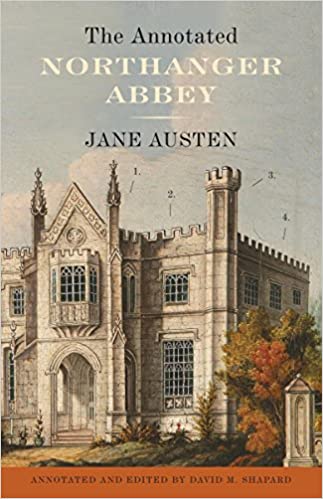
But windows in Austen’s novels communicate a great deal more than the wealth of their owners. For example, in Northanger Abbey windows illustrate Catherine Morland’s disappointment upon arriving in the Tilney family home. Her vivid imagination had pictured the Abbey to be gruesome and deliciously scary, but its windows announce it’s anything but:

The windows, to which she looked with peculiar dependence, from having heard the general talk of his preserving them in their Gothic form with reverential care, were yet less what her fancy had portrayed. To be sure, the pointed arch was preserved—the form of them was Gothic—they might be even casements—but every pane was so large, so clear, so light! To an imagination which had hoped for the smallest divisions, and the heaviest stone-work, for painted glass, dirt, and cobwebs, the difference was very distressing.

Chapter 20, Northanger Abbey

Poor Catherine, who finds shiny window panes instead of dusty, neglected and broken wall openings in the house she is visiting!

The Sash vs Casement Windows Issue

A conversation with a fellow member of the Scottish branch of the Jane Austen Scottish Society late last year also drew my attention to another windows-related fact in Austen.  You may remember that, in Emma, Mrs and Miss Bates occupy very modest dwellings in a brick house in Highbury. This is what Austen tells us about the place they call home: 

The house belonged to people in business. Mrs. and Miss Bates occupied the drawing-room floor; and there, in the very moderately-sized apartment, which was everything to them, the visitors were most cordially and even gratefully welcomed. 

Chapter 1, Emma

Later, in the letter from Frank Churchill to Mrs Weston, we read that the house has “sashed windows below, and casements above.” That is, sash windows on the ground floor and casements on the first floor, where the Bates ladies live. It’s an unremarkable mention, until you understand the context of windows during the Regency period.

A Tiny Detail, a Lot of Information

Sash windows consist of one or more panels assisted by weights, springs and pulleys hidden in the window frame that slide vertically to create openings. An innovation linked to improved glass manufacturing methods, the elegant proportions of sash windows were the perfect architectural feature for the new tastes of the Georgian era.

Such windows also provided better light levels and improved ventilation and were much easier to use. As a result, sash windows became very fashionable and replaced the older casement windows in most buildings. And therein lies the tiny detail that speaks of the Bates’ precarious financial situation.

Tamsin Greig, 2009

With just a few words, Austen informs us that the “people in business” that own the building have upgraded the ground-floor windows, but have not bothered to replace the windows on the floor above.

Perhaps they thought the investment wasn’t worth it, as they would never be able to recoup the money given the limited means of their tenants. In other words, the impoverished Bates ladies have to make do with the old, drafty and much more cumbersome iron casements, with lead latticework across the glass.  

It is quite wonderful: the more I read Austen, the more I marvel at her attention to detail and ability to make even the tiniest fragment of information a story upon itself. 

What are your thoughts on the topic of windows and Jane Austen? Are there any other situations in Austen’s works where windows, or any other apparently irrelevant detail, are in fact a lot more important than they seem at first sight? 

Sharing is Caring!

Posted in architecture, Austen Authors, British history, buildings and structures, Emma, Georgian Era, Guest Post, Jane Austen, Living in the Regency, Mansfield Park, Northanger Abbey, Pride and Prejudice, reading habits, Regency era | Tagged , , , , , , , , , , , , | Comments Off on Windows in Jane Austen’s Stories, a Guest Post from Eliza Shearer

A Crisis of Conflict Reflected in Austen’s Novels

From Amazon: The Origins of the English Novel, 1600-1740, combines historical analysis and readings of extraordinarily diverse texts to re-conceive the foundations of the dominant genre of the modern era. Now, on the fifteenth anniversary of its initial publication, The Origins of the English Novel stands as essential reading. The anniversary edition features a new introduction in which the author reflects on the considerable response and commentary the book has attracted since its publication by describing dialectical method and by applying it to early modern notions of gender.
Challenging prevailing theories that tie the origins of the novel to the ascendancy of “realism” and the “middle class,” McKeon argues that this new genre arose in response to the profound instability of literary and social categories. Between 1600 and 1740, momentous changes took place in European attitudes toward truth in narrative and toward virtue in the individual and the social order. The novel emerged, McKeon contends, as a cultural instrument designed to engage the epistemological and social crises of the age.

In the book, The Origins of the English Novel, 1600-1740, Michael McKeon purports the idea that the “new” novel form emerging in the mid 1700s displays a Progressive Ideology and the Transvaluation of Honor (150-151). He states, “Evidence on many fronts suggests that the early modern period marked a critical turning point in the efficacy not only of romance but also of the social institutions with which we are likely to associate it, a point at which they began systematically to attest not to the concord but to the discord of internals and externals, of virtue, status, wealth, and power. Indeed, the very life span of some of these social institutions suggests that they are to be seen not aa the traditional tools of stability but as signs of a crisis of confidence.”

Unprecedented new wealth brought on the rapid change of land ownership. A slew of new titles were bestowed during the reigns of James I and Charles I. Each brought more riches for the Crown and each served as a “balance” in an unbalanced society. Some even believe that James’s excessive sale of honors was the basis for the rebellion against the monarchy, but I am not an expert on that time and do not pretend to support the idea. However, history will show the “dispensing of Honours” and the large number of new titles created brought many, without merit or family connections or fortunes, into the aristocracy. The controversy had Sir Edward Walker, who served Charles I and Charles II, most loyally, saying, the inflation of honours “took off from the Respect due to Nobility and introduced a parity in Conversation . . . the Curtain being drawn they were discovered to be Men that heretofore were reverenced as Angels.”

We view this concept to a lesser extent in many of Jane Austen’s novels. She speaks of it in Sense and Sensibility in the whole Colonel Brandon/Willoughby fiasco, but it becomes painfully clear in her satire of the Gothic novel, Northanger Abbey. Those of us who love Jane Austen’s works and have studied her writings, combing through every small detail, know Austen spoke to such important topics as social class, a woman’s role in society, the role of the clergy, inheritance, primogeniture, imperialism, and gender relationships and responsibilities.

Austen was able to take the “romance” novel and have it speak not only of romance but of the underlying issues of a society in transition.

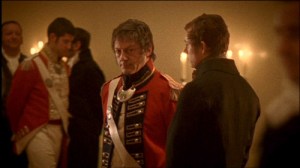
In Austen’s Northanger Abbey, General Tilney is the perfect Gothic villain. He is an evil, patriarchal man. Whereas the novels that proceeded Austen’s works connected goodness and virtue to those of the aristocracy, Austen and those that closely followed her in developing a new novel form did not. Austen placed “honor” and “respect” in the person, not the title/rank. For example, Captain Frederick Wentworth is Persuasion displays much more honor than does Sir Walter Elliot.

Because Catherine Morland has been brought to think this long-established virtues are associated with wealth and patrilineage, she assumes General Tilney must possess honor and sense and caring. Essentially, General Tilney must be a good man. Austen describes the general as:

Soon after their reaching the bottom of the set, Catherine perceived herself to be earnestly regarded by a gentleman who stood among the lookers-on, immediately behind her partner. He was a very handsome man, of a commanding aspect, past the bloom, but not past the vigour of life; and with his eye still directed towards her, she saw him presently address Mr. Tilney in a familiar whisper. Confused by his notice, and blushing from the fear of its being excited by something wrong in her appearance, she turned away her head. But while she did so, the gentleman retreated, and her partner, coming nearer, said, “I see that you guess what I have just been asked. That gentleman knows your name, and you have a right to know his. It is General Tilney, my father.”

Catherine’s answer was only “Oh!”–but it was an “Oh!” expressing everything needful: attention to his words, and perfect reliance on their truth. With real interest and strong admiration did her eye now follow the general, as he moved through the crowd, and “How handsome a family they are!” was her secret remark.

Catherine does not understand when she is treated poorly by the Tilneys:

Catherine’s expectations of pleasure from her visit in Milsom Street were so very high that disappointment was inevitable; and accordingly, though she was most politely received by General Tilney, and kindly welcomed by his daughter, though Henry was at home, and no one else of the party, she found, on her return, without spending many hours in the examination of her feelings, that she had gone to her appointment preparing for happiness which it had not afforded. Instead of finding herself improved in acquaintance with Miss Tilney, from the intercourse of the day, she seemed hardly so intimate with her as before; instead of seeing Henry Tilney to greater advantage than ever, in the ease of a family party, he had never said so little, nor been so little agreeable; and, in spite of their father’s great civilities to her–in spite of his thanks, invitations, and compliments–it had been a release to get away from him. It puzzled her to account for all this. It could not be General Tilney’s fault. That he was perfectly agreeable and good-natured, and altogether a very charming man, did not admit of a doubt, for he was tall and handsome, and Henry’s father. He could not be accountable for his children’s want of spirits, or for her want of enjoyment in his company. The former she hoped at last might have been accidental, and the latter she could only attribute to her own stupidity. Isabella, on hearing the particulars of the visit, gave a different explanation: “It was all pride, pride, insufferable haughtiness and pride! She had long suspected the family to be very high, and this made it certain. Such insolence of behaviour as Miss Tilney’s she had never heard of in her life! Not to do the honours of her house with common good breeding! To behave to her guest with such superciliousness! Hardly even to speak to her!”

Catherine Morland first opinion of General Tilney is based on his position in Society. He must be a man of honor, for he is a man holding a respected position of authority. Instead, he proves to be less than virtuous and his reason for accepting Catherine is his misunderstanding of your family’s wealth. She is the perfect match for Henry Tilney until she proves not to possess a rich dowry, which will enhance the Tilney family’s coffers. Even when the General shows his true colors and sends her away, she finds his actions incomprehensible of a man of honour—of a well-bred gentleman.

I leave it to my reader’s sagacity to determine how much of all this it was possible for Henry to communicate at this time to Catherine, how much of it he could have learnt from his father, in what points his own conjectures might assist him, and what portion must yet remain to be told in a letter from James. I have united for their ease what they must divide for mine. Catherine, at any rate, heard enough to feel that in suspecting General Tilney of either murdering or shutting up his wife, she had scarcely sinned against his character, or magnified his cruelty.

Henry, in having such things to relate of his father, was almost as pitiable as in their first avowal to himself. He blushed for the narrow-minded counsel which he was obliged to expose. The conversation between them at Northanger had been of the most unfriendly kind. Henry’s indignation on hearing how Catherine had been treated, on comprehending his father’s views, and being ordered to acquiesce in them, had been open and bold. The general, accustomed on every ordinary occasion to give the law in his family, prepared for no reluctance but of feeling, no opposing desire that should dare to clothe itself in words, could ill brook the opposition of his son, steady as the sanction of reason and the dictate of conscience could make it. But, in such a cause, his anger, though it must shock, could not intimidate Henry, who was sustained in his purpose by a conviction of its justice. He felt himself bound as much in honour as in affection to Miss Morland, and believing that heart to be his own which he had been directed to gain, no unworthy retraction of a tacit consent, no reversing decree of unjustifiable anger, could shake his fidelity, or influence the resolutions it prompted.

Posted in Austen actors, book excerpts, British history, excerpt, film, film adaptations, Georgian England, Georgian Era, historical fiction, Jane Austen, Living in the Regency, marriage customs, Northanger Abbey, reading habits, Regency era | Tagged , , , , , , , | Comments Off on A Crisis of Conflict Reflected in Austen’s Novels

The Royal Academy of Arts + an Excerpt from “A Lively Companion,” a Guest Post from Corrie Garrett

This post first appeared on the Austen Authors’ blog on 3 September 2020.

From your Regency readings, you may be familiar with Somerset House and the Summer Exhibition, a lavish and popular yearly art show. A catalog (and therefore entry) could be had for a shilling, and everyone who’s anyone in London would have gone to see the exhibition at some point!

While I haven’t used it as a location yet, I have used the Royal Academy of Arts, which was the group who put on the art show. (The original Somerset House was where Queen Charlotte was supposed to live if George III died before her. Instead, she was vested with Buckingham House, and they gave the new North Wing to the Royal Academy of Arts.)

Courtauld Gallery Staircase

Anyway, it was an art exhibition to which anyone could submit a painting. In fact, the founding group of the Royal Academy of Arts included two women, Angelica Kauffman and Mary Moser! Which is pretty cool.

Self-portrait, J.M.W. Turner

However, more to the point for my story purposes, not everyone who joined the Academy and received the honor of displaying work in the Summer Exhibition was aristocratic. Joseph Mallord William Turner (abbreviated J.M.W. Turner) is a great example. (In fact, it was a post here on Austen Authors that introduced me to him when I was researching my last series!) Turner was from a middle class family in Covent Gardens, burdened with a Cockney accent but remarkable talent. He was admitted to the Academy when he was fourteen, and displayed his first work at Somerset at fifteen!

I practically rubbed my hands together and cackled like a villain. What’s this I see before me? A middle/lower-class man who gained success and (could have) interacted with the highest families through his skill with painting and portraiture? Yes, please! (William Turner even received a snuff box from the King Louis Phillipe I!) I wanted to put Darcy through the wringer with Georgiana’s romance, and this fit the bill perfectly. Acclaimed painters were received everywhere, particularly portraitists… but at the same time, they definitely weren’t members of the “Upper Ten Thousand.” How would Darcy handle it if Georgiana fell in love with a such an “accepted outsider?”

Eruption of Vesuvius, J.M.W. Turner

I only used the barest idea of J.M.W. Turner for my story (and his last name, since it is fairly common), but his actual life story is also quite interesting. After his mother went to a mental institution, he was sent to live with a maternal uncle (rather like Fanny Price), and it was there that he was able to make his first forays into painting. His father would proudly display his son’s sketches in his barber shop window.

Eventually he traveled and gained more acclaim, particularly for his seascapes and other dramatic paintings. A huge volcano erupted in Indonesia in 1815 (making 1816 the “Year with No Summer”) and Turner painted the incredible sunsets caused by the ash in the upper atmosphere. He witnessed the burning of Parliament in 1834 and made watercolors of it. Turner’s experiments with color and light would become precursors of impressionist and abstract painting.

Although he grew reclusive in

Venice, J.M.W. Turner

later life, he did (re?)gain a close relationship with his father, and lived with him for 30 years until his father’s death.

So with that as background, here is a short excerpt from A Lively Companion, when Georgiana and Lizzy meet a young, up-and-coming painter…


Lizzy watched the little boy, in his ruffled shirt and small jacket, squirm upon the picturesque lounge. The painter seemed inured to that sort of thing, and also to being discussed as if he were not present.

“My mother’s portrait was done by Sir Thomas Lawrence,” Anne told them proudly.

Lady Catherine was just returning to them with her friend Mrs. Winkleigh. “Indeed, it was. Unfortunately Sir Thomas is off painting generals and such on the continent now. It would have been as well for him if he had stayed; I should have strongly counseled him to stay. I must have Anne’s portrait taken soon.”

Mrs. Winkleigh performed the introduction to the painter while his subject took a break for refreshment.

Mr. John Wesley Turner was a youngish man, not very tall or handsome, Lizzy thought, but with an intelligent, good-humored look to his eyes and forehead. He showed his smudged hands and apologized for being unable to properly greet them. He joked with Mrs. Winkleigh about painting her son on a stallion someday and was “deeply honored” to be considered by Lady Catherine and so on.

As they were leaving, he asked Miss Darcy whether she was satisfied with the expression and shadows of the child’s face.

“Oh, yes,” Miss Darcy said, “I’ve attempted my cousin’s children and never captured so much character. Not that I mean to compare… You are a professional…”

He smiled quizzically. “You look rather familiar to me, Miss Darcy. I’ve never painted you before; I think I would remember that, but perhaps we’ve met?”

Georgiana paled. “You are, perhaps, thinking of Miss Climping’s School for Girls in Bath. I believe we met in passing there.”

“Of course!” he said. “The arts mistress is my aunt. She had me judge some of the schoolgirls’ pieces or some such thing before the summer term. I believe you won.”

“You must have an uncommonly good memory,” Miss Darcy said. “Only a week’s visit for you, I believe.”

He laughed. “I’m afraid I don’t remember your artwork, except that it was clearly superior to the rest and made my decision quite easy.”


That’s it for now!

So, do you enjoy these kinds of dramatic, impressionistic paintings? Or do you prefer more realistic?

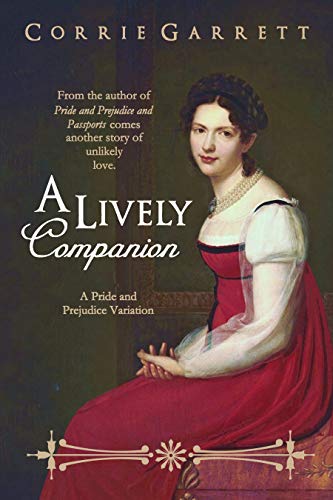
41v2pPoPN1L.jpg  A Lively Companion: A Pride and Prejudice Variation

from Corrie Garrett

Lizzy Bennet is more insulted than flattered when Lady Catherine asks her to be a temporary companion to Miss de Bourgh. Yes, a visit to Tunbridge Wells would be an interesting diversion, but at what cost?

When her father unexpectedly supports the plan, wanting Lizzy to gain a wider acquaintance and knowing it won’t get easier than this, Lizzy reluctantly submits. Thus begins a springtime trip of misunderstandings, revelations, and unexpected proposals.

When Mr. Darcy realizes Lizzy is not going home as planned, he feels foolish for nearly proposing due to an arbitrary deadline. Determined to make up his mind one way or another, he accompanies the party to the Wells.

While Miss de Bourgh takes the famed waters, Lizzy stumbles feet first into a friendship with Darcy’s sister and cousins. Indeed, she enjoys nearly all Darcy’s friends and family. She almost likes him, when he’s around them.

But that only makes it more painful when she must resolutely reject the proud head of the family…

A Lively Companion is a traditional variation on Pride and Prejudice, celebrating the humor, poignancy, and surprising inconsistency of life.

Posted in art, Austen Authors, book excerpts, British history, buildings and structures, Georgian England, Georgian Era, Guest Post, heroines, historical fiction, Jane Austen, Living in the Regency, Pride and Prejudice, Vagary, writing | Tagged , , , , , , , , , , , | Comments Off on The Royal Academy of Arts + an Excerpt from “A Lively Companion,” a Guest Post from Corrie Garrett

Preview of My Next JAFF: “The Mistress of Rosings Park”


Basis of the Tale: The story begins in late June 1813. Darcy and Elizabeth have not yet met. No Bingley, yet. Mr. Collins did propose to Elizabeth, but ended up marrying Charlotte. Elizabeth is making her first visit to Hunsford Cottage. Darcy has married Anne, but she only survived 7 months before passing. As Anne theoretically inherited Rosings Park at her majority, as her husband, Darcy inherits the estate (a legal precedence of the time period), and he means to have Lady Catherine removed as its mistress. 

KEEP IN MIND, THE ENTIRE STORY IS TOLD FROM ELIZABETH’S POINT OF VIEW. 

NOTE! The novel has not yet entered into the editing process. Overlook any typos, spacing errors, etc. 

Chapter One

Late June, 1813

“That dreadful man will arrive tomorrow,” Lady Catherine de Bourgh bemoaned. “And I have had no opportunity to remove to the dower house.”

“There. There,” Mr. Collins commiserated. “Mrs. Collins and I will assist you. Your situation, if I may be so bold to say, is a true travesty, my lady. A travesty indeed.”

From her position in a chair in the corner of the room, Elizabeth Bennet watched in mild amusement as her father’s cousin attempted to calm the latest round of hysterics displayed by the grand dame of Rosings Park. Mr. Collins, who continually genuflected before his patroness, was a comical creature without even attempting to be so. Elizabeth said a silent prayer of blessing that the man had not become her husband; yet, she again pitied her long-time friend, Charlotte Lucas, who had readily accepted the man’s proposal out of fear of becoming a burden to her family.

In truth, Elizabeth had been surprised to receive an invitation for a visit to Kent from the Collinses. She suspected Mr. Collins had agreed in order to prove to Elizabeth she had made a mistake in refusing the man. The situation had been poorly played by all, and her relationship with Charlotte had suffered greatly. Their bond had been badly shaken by her friend’s acceptance of Mr. Collins’s hand, a man who had proposed to Elizabeth and been rejected less than two hours prior to his proposal to Charlotte.

The scene of the man’s insolent superiority played through Elizabeth’s head as she watched Mr. Collins attempt to soothe Lady Catherine’s vexations.

“I am not now to learn,” replied Mr. Collins with a formal wave of his hand, “that it is usual with young ladies to reject the addresses of the man whom they secretly mean to accept, when he first applies for their favor; and that sometimes the refusal is repeated a second or even a third time. I am, therefore, by no means discouraged by what you have just said, and shall hope to lead you to the altar ere long.”

“Upon my word, sir,” Elizabeth had cried, “your hope is rather an extraordinary one after my declaration. I do assure you that I am not one of those young ladies, if such young ladies there are, who are so daring as to risk their happiness on the chance of being asked a second time. I am perfectly serious in my refusal. You could not make me happy, and I am convinced that I am the last woman in the world to make you so. Nay, were your friend, Lady Catherine, to know me, I am perfectly persuaded she would find me in every respect ill-qualified for the situation.”

Elizabeth had been correct. At home it was Jane and Mary who tended to their mother’s “nerves.” Elizabeth would certainly not be as solicitous to Lady Catherine’s vapors as were the Collinses. She was more likely to tell the woman to “buck up.” Even so, she understood the Collinses’ position in this melodrama. Earlier, Charlotte had explained that Rosings Park had passed to Lady Catherine’s daughter when the young woman reached her majority, although it appeared to Elizabeth as if her ladyship had continued to run the estate. Miss Anne de Bourgh had married and had  to her husband’s estate. Reportedly, Miss de Bourgh had passed within months of her marriage, and the property now belonged to the lady’s husband. However, Lady Catherine had yet to abdicate her rule over the estate, which was none of Elizabeth’s business, but, if anyone had been foolish enough to ask, she would agree the estate could use a different hand on the helm. Despite the manor house being a true showcase, on her short walk of the grounds yesterday after services, she had noted how the parkland and the formal gardens did not reflect the proper care.

Elizabeth instinctively glanced to the window which overlooked the undulating lawn. She would love to claim a long walk in the park, but, if Mr. Collins meant to tend to Lady Catherine’s hysterics, the possibility of doing so was slim. It was not as if she could simply pardon herself and leave for a stroll about the grounds while her cousin was thus engaged. She realized this was an important moment in Mr. Collins’s life, for, if Lady Catherine was no longer in control of Rosings Park, what became of Mr. Collins’s living? And what became of Charlotte’s future? Elizabeth would remain to see if she might be of service to her friend and mend the gap that had split their friendship nearly a year prior.

Her thoughts were so engaged on what she might do to assist Charlotte beyond taking over some of her friend’s duties at Hunsford Cottage when the “play” before her shifted with the entrance of new character.

“The Earl of Matlock, my lady,” the butler announced unexpectedly.

Along with the Collinses, Elizabeth scrambled to her feet to curtsey. She had never been presented to an earl, and the idea pleased her for she thought both her father and her sister Jane would find Elizabeth’s recollection of the encounter amusing. As the earl crossed the room, totally ignoring anyone but Lady Catherine, both Mr. Collins and Charlotte slowly and silently drifted toward the corner of the room which Elizabeth occupied. The earl’s ample figure filled the room with its stoutness and with the gentleman’s obvious importance. In Elizabeth’s opinion, there was a strong likeness between his lordship and Lady Catherine. They both had the same aristocratic features, the cut of their noses and jawlines more attractive on the gentleman than they were on her ladyship.

“What the deuce are you doing, Catherine?” he demanded of his sister without even an acknowledgement of Elizabeth’s or the Collinses’ presence in the room.

The invisible servant, Elizabeth thought. She had often heard her father say those words in a derisive manner when observing others’ treatment of the working class. Now, she fully understood his contempt. The earl completely ignored her presence in the room, marking her place in his esteem.

“I expected to discover you removed to the dower house,” the earl continued. “Never thought you would take it upon yourself to set up such an uproar.”

“I have not had enough time to make my move,” Lady Catherine protested.

“Nonsense,” the earl countered. “Anne, rest her soul, passed some fourteen months prior. Darcy has provided you more than enough time to vacate the manor house. Sir Lewis left everything to Anne. This house and estate has been your daughter’s, not yours, for some seven years. Rosings Park does not belong to you. It never has. From the day Anne met her majority, Rosings no longer was yours to oversee. You must come to terms with this situation. My God, you are a Fitzwilliam. We do not condone such hysterics. In her kindness, Anne erred in allowing you to remain in the role of the Mistress of Rosings Park, but, you must understand, legally, you cannot remain at the manor house. Darcy has the right to demand your withdrawal. If you do not comply, he can have the magistrate force you from your home. Save your dignity, Catherine, and do what is necessary. Such would be our father’s expectations for his eldest daughter.”

“Darcy,” Lady Catherine hissed. “I am certain I have learned to detest that name! How can it be lawful for him to claim everything simply because he was Anne’s husband? I am Anne’s mother. Should I not have some rights to a home I have nourished and cherished since my wedding day? Darcy has only visited Rosings when it was necessary. He holds no allegiance to the estate.”

“It was your wish for Darcy to marry your daughter,” the earl reminded his sister in cold tones. “You cannot deny that it was so. Darcy’s father denied the connection when he was still alive, but with George Darcy’s death, you again began to badger the boy into marrying Anne. You knew Darcy would never make Rosings Park his home seat when his ancestral home is in Derbyshire. You wanted Rosings for yourself. And that is exactly who you must blame for this fiasco.”

“He carried Anne off to Derbyshire, without even as much as a by your leave,” her ladyship argued. “Darcy was to protect her, not kill her. You know he poisoned Anne.”

Elizabeth could not disguise her gasp of surprise. However, before anyone took notice of her presence in the room, Charlotte caught Elizabeth’s hand and tugged her further along the passageway.

“You are to forget what you just heard,” Charlotte warned. “This is none of your concern. None of mine or Mr. Collins’s concern beyond our duty to Lady Catherine as her tenants. We owe my husband’s living to her ladyship.”

Although Elizabeth would not soon forget the remark, she understood the unspoken words: Mr. Collins’s living depended upon what occurred between Lady Catherine and the unknown gentleman by the name of Darcy. “Certainly, Charlotte,” she whispered. “You are correct. I shall do nothing to jeopardize your position in the neighborhood.”

“Mr. Collins and I will be expected to assist her ladyship,” Charlotte reiterated. “It grieves me not to be in a position to entertain you properly.”

Elizabeth dutifully said, “I shall be content to walk the park and to learn something of the Kentish countryside.”

Charlotte nodded sharply. “It shan’t be a total solitary endeavor. My brother John has been presented leave from his duties with the Dover militia. He thought to return to Hertfordshire, but I convinced him to visit with me instead. I hope you will not mind that I have asked him to spend time with us at Hunsford Cottage.”

Elizabeth prayed Charlotte did not mean to push for an alliance between Elizabeth and John. She knew her mother and Lady Lucas often connived to place Elizabeth in John Lucas’s way. She adored the young man, but only in a “brotherly” manner. She had not set her cap for him.

“Devilish rum business,” Lord Matlock’s voice reached them again before Elizabeth could respond. “But Darcy has his rights. You chose to force his hand, and, now, you must live with your manipulation. Our nephew married Anne. It is not his fault your daughter died in a little over half a year of pronouncing her vows. Even though they held nothing more than familial affection for each other, who is to say they might have made the best of it for the remainder of their days—mayhap they would have had a half dozen children. That might have satisfied you to have grandchildren about you. Might have softened your nature. However, I do not think such a marriage would have made either Darcy or Anne happy. Like it or not, Catherine, they did not suit. Darcy adored his parents, and, whether you wish to recognize it or keep fooling yourself, George Darcy and our younger sister Anne were happy together. They loved each other deeply. Your belief that he should have chosen you instead of Anne is what drove you to force Darcy and your daughter together. You made your bed, now, you must lie in it.”

“Why did you not say all this beforehand—before my Anne’s marriage?” Lady Catherine demanded.

“I did say it, as did Lady Matlock, and my sons. You simply chose not to listen because you wished to be mistress of Rosings Park and use your courtesy title of ‘Lady Catherine’ from your reign as the daughter of an earl, rather than become the Dowager Lady de Bourgh,” the earl clarified. “Demme it, Catherine, with Anne’s passing, you did not even need to take on that dreaded stigma of ‘dowager.’ You could have simply been ‘Lady de Bourgh,’ a baronetess in your own right.” A long silence followed before Lord Matlock asked with a hint of sympathy, an emotion missing earlier from his voice. “Darcy is not the vindictive type. The boy says he has plans for Rosings Park that will provide you additional funds as part of your widow’s pension for the remainder of your days. Permit Darcy to tend the estate. It is admirable how you have handled Sir Lewis’s holdings for so long, but the political environment has placed even the wisest of land owners in this great kingdom at a disadvantage. If you heard half of what I do in the House of Lords, you would gladly step back from this charge. Permit Darcy to shoulder the responsibility. Accept the use of the dower house and enjoy your days without all these duties hanging over your head. Better yet, choose Bourgh Hall and join Society in London. There was a time you enjoyed the Season and all it brings. Allow the boy to do the work and claim what is your due. You served your husband well. No one can say otherwise.”

“Do I possess a choice?” her ladyship grumbled in what sounded of sarcasm.

“None whatsoever,” Lord Matlock pronounced in cold tone. His lordship clapped his hands together as if the business was finished. “Should I summon your butler and your maid to assist in your removal to Bourgh House.”

“As yet, I have not one foot in the grave. I am capable of removing to the dower house without your supervision. My staff is quite efficient. Moreover Mr. and Mrs. Collins will make certain my orders are completed in a timely manner.”

“Mr. Collins?” the earl asked.

Charlotte shoved her husband toward the still open door just as Lady Catherine declared, “Mr. Collins.” As if she suddenly recalled their presence in the room, the mistress of Rosings Park called out, “Mr. Collins? Where are you?”

“Here, my lady.” Collins bowed deeply as he stepped into the framed doorway.

“Tell his lordship you mean to assist me in this ugly business,” Lady Catherine ordered.

Elizabeth watched in amusement as Mr. Collins swallowed hard. He bowed again, nearly falling over in his obeisance. “Mrs. Collins and my cousin Miss Bennet will consider it not only our Christian duty, but, also, our pleasure to be of assistance to Lady Catherine in whatever manner necessary.” Mr. Collins motioned Charlotte and Elizabeth to join him in the doorway.

Elizabeth was just in time to note how the earl rolled his eyes when Mr. Collins bowed a third time in less than a minute. Dutifully, Elizabeth followed Charlotte in a curtsey.

Having recovered some of her renown bravado, Lady Catherine said, “I have only been notified this very day that the necessary cleaning and painting at Bourgh House has been completed. As Darcy initially indicated I might remove at my leisure, I did not press the workers in their task.”

Elizabeth thought this a foolish stance to assume, but she made no comment where her opinion would not be welcomed.

Lord Matlock shook his head in a disapproving manner, however, confirming Elizabeth’s opinion without it being voiced.

Lady Catherine quickly added in excuse, “I have not heard from Darcy for nearly a month.”

Lord Matlock overrode her objection by saying, “I dare say Darcy means to be in Kent by tomorrow, and I doubt you are not aware of his arrival. The boy has not one spontaneous bone in his body. We both know Darcy is not the type to appear without notice. You were informed, but chose to ignore the message. You have wasted your time, your ladyship. You have acted in denial of the inevitable.”

“Yet, there is no means for me to leave Rosings for, at least, another week.”

“You cannot demand that Darcy stay at the local inn. It would be little minded to demand he do so. You will make everyone in the family uncomfortable, including you. Making them to choose sides will not be a wise choice if you cherish your dignity.” He returned his gloves to his hands. “Yet, I doubt you much care for the opinion of others. You never did. Therefore, as I am not required in this matter, I will return to London.”

“Will you not, at least, stay for tea?” her ladyship countered.

“My countess has a supper planned this evening. If I press my horses, I could be there in time for the first course.”

Lady Catherine drew herself up in obvious indignation. “Then you held no intention to be of service to me.”

“I would have stayed if you were not so headstrong, but I do not care to argue with you. You cannot be swayed. As to the supper, Lindale promised to assist his mother, but you know the nature of my eldest son.” With that, the earl brushed past Elizabeth and the Collinses without even a nod of his head in recognition. A quick glance to Lady Catherine noted a crestfallen expression for the briefest of moments, which was quickly replaced by aristocratic arrogance.

A pregnant moment passed before Charlotte found her voice and moved forward to curtsey again to Lady Catherine. “With your permission, your ladyship, I shall ring for tea, and we will assess how best to proceed in solving your dilemma.”

“Yes . . . yes,” her ladyship stammered. “You are very kind, Mrs. Collins. It appears even my own brother means to see me removed from the house that has been my home for nearly thirty years.”

Although she found Lady Catherine’s manners abhorrent, Elizabeth did not think it fair of this “Darcy” fellow to drive Lady Catherine from her home any more than it would be for her Cousin Collins and Charlotte to drive Elizabeth’s mother, Mrs. Bennet, and any remaining unmarried sisters from Longbourn when Mr. Bennet passed. Yet, she had no doubt Mr. Collins would arrive in Hertfordshire at break neck speed when Elizabeth’s dear “Papa” took his leave of this earthly life. At least, Mr. Darcy had allowed Lady Catherine a year to move to another house upon the estate. Mrs. Bennet would not be accounted any such dignity.

* * *

She had made herself as useful as she could be in an unfamiliar house with an unfamiliar staff. While Charlotte and Mr. Collins tended to Lady Catherine’s complaints and mild hysterics, Elizabeth had accompanied her ladyship’s maid to the dower house to gauge its readiness and to determine what should be done immediately and what could wait for a few days.

“It might be best to open a few windows to air out the rooms,” Elizabeth suggested. “I do not imagine Lady Catherine would appreciate the hint of fresh paint lingering in the air.”

“You would be correct, miss,” Mrs. Fischer said. “Her ladyship is quite particular on how things are done.”

Elizabeth surveyed the spacious rooms. She would be happy to live in such quarters for the remainder of her days. From her place along the entrance hall, the house appeared to have received a thorough cleaning, but she would examine the other rooms before she departed Bourgh House, for there was much disorder in its presentation. She suggested, “Although it is not my decision, it appears to me her ladyship should choose which rooms to address first. As it is my understanding that Mr. Darcy is to arrive by late afternoon tomorrow, it would be best to name the rooms essential to Lady Catherine’s immediate comfort.”

“Her ladyship’s quarters, obviously,” Mrs. Fischer said.

“Absolutely,” Elizabeth concurred. “A drawing room.”

“The morning room”

“The kitchen,” Elizabeth added. “That appears a large enough challenge for day one.”

“Even that will be daunting,” Mrs. Fischer agreed. “But anything less will further upset Lady Catherine.”

“Afterwards, at least one room per day until the house is set to right,” Elizabeth instructed. “Has it been decided which members of the Rosings Park’s staff will accompany her ladyship to Bourgh House? I am assuming there has been no new hires to be in service to Bourgh House. Am I correct?”

“Not to my knowledge on either issue of staff,” Mrs. Fischer confessed.

Elizabeth thought those decisions should have been made long before this day arrived. Mr. Darcy should not be made to hire a new cook and butler and housekeeper simply because Lady Catherine preferred to ignore her future and live in the past. “It is likely best if we make a quick inventory of what furniture is available, then we should return to the manor house and determine what pieces hold sentimental value to Lady Catherine and make arrangements for them to be transferred here. I shall ask Mr. and Mrs. Collins to temper her ladyship’s reluctance to participate in this process.”

“Do you suppose Mr. Darcy will deny Lady Catherine her choice of staff and furnishings?” Mrs. Fischer inquired.

Elizabeth chose her words carefully. It would upset the Collinses if Elizabeth’s opinions offended her ladyship. “I possess no means of knowing whether such discussions have passed between the gentleman and your mistress, but, from what little I know of the situation, I doubt such has occurred. While women believe a room should be filled with memories, men prefer to think of a room’s structural usage foremost.”

“I expect you are correct, miss. Even though I suspect this transition will cause a rift in the family, I pray otherwise.”  

Elizabeth suspected a rift in the family already existed: Did not Lady Catherine accuse her son in marriage of murder?

Posted in Austen Authors, book release, British history, excerpt, Georgian England, Georgian Era, heroines, Jane Austen, Pride and Prejudice, publishing, reading, Regency era, romance, Vagary, writing | Tagged , , , , , , , , , , | Comments Off on Preview of My Next JAFF: “The Mistress of Rosings Park”

Regency Militia, a Guest Post from Jann Rowland

This post originally appeared on the Austen Authors’ blog on 24 June 2020. Enjoy! 

Last month I alluded to an upcoming work which will drive the topics I intend to talk about over the next few posts. That topic was the various levels of Regency gentlemen and how they interacted with other classes. For this post, I wanted to talk about another subject of which we hear so much, but most of us (raises hand) don’t know as much as we think we did: Regency militias.

Militias in Regency times were not part of a standing fighting force—in fact, they were raised in times of war or need, and their primary purpose was to defend the homeland, act as a policing force, and maintain order. Each shire was responsible for raising their own militia, and the companies were posted in other counties. This was to avoid any conflict within the company, for if they were required to put down unrest, it was possible they would sympathize with those to whom they were to bring order.

The men of the militia were not the caliber of those of the regulars. The militia was strictly a home force. There was not possibility of a militia company being sent overseas. As a result, their training was sparse, though the men were responsible for being familiar with their weapons and training was mandated.

Men between the ages of 18 and 45 were required to make themselves available for service, but in practice, many had no wish to dedicate 5 to 7 years of their life to the militia. If a man did not wish to serve, he had the option of paying another to serve in his place. As this would cost the man £25 or more, which was a significant portion of what a man could make in a year, few could afford it.

As for the officers, they were not commissioned as were the officers of the regulars. Instead, a man had to own land of a certain value to qualify for a certain rank, or his father had to own the land, though usually if the man’s father owned the land, the value of the land had to be double what the man owned himself. For example, if a man wished to be a lieutenant, he had to possess land worth at least £50 a year, or his father needed to own land worth £100 per year.

In practice, it was often quite difficult to find enough men to fill the officers’ ranks, especially at the lower levels. This is why George Wickham, a man who possessed nothing more than the clothes on his back, was able to become a lieutenant, as the requirements were often ignored.

Generally speaking, the Lydia and Kitty Bennets of the world aside, the militia often possessed a difficult relationship with the surrounding populace. Not only were the populace required to host them in barracks and see to the financial needs of hosting a company, but they were often resentful of the militia’s tendency to leave without paying debts, not to mention the behavior of the men in their towns. The situation George Wickham left in Meryton when the militia regiment departed for Brighton was not uncommon.

It is little wonder that the officers often found themselves involved with mischief, for they were considered gentlemen, and engaged in local society as a result. Life in the militia was not an adventure, for there was little to do but drill, and most had little interest in such activities. The officers often spent their days in frivolity and society, flirting, gambling, and other unserious pursuits. Given these circumstances, it is little wonder girls such as Lydia Bennet found themselves infatuated with these so-called gallant men, who were at leisure to project whatever image they wished.

It would also be unsurprising if the militia companies got up to even greater mischief, for as the saying goes, “an idle mind is the devil’s playground.” Perhaps I am giving a little away, but we shall see more than simple flirtation and debts.


Posted in Austen Authors, British history, George Wickham, Georgian England, Georgian Era, Guest Post, history, Jane Austen, Living in the Regency, military, Regency era | Tagged , , , , , , , , , | Comments Off on Regency Militia, a Guest Post from Jann Rowland

Jacob Rey (aka John King), a Jewish Money Lender in George III’s England

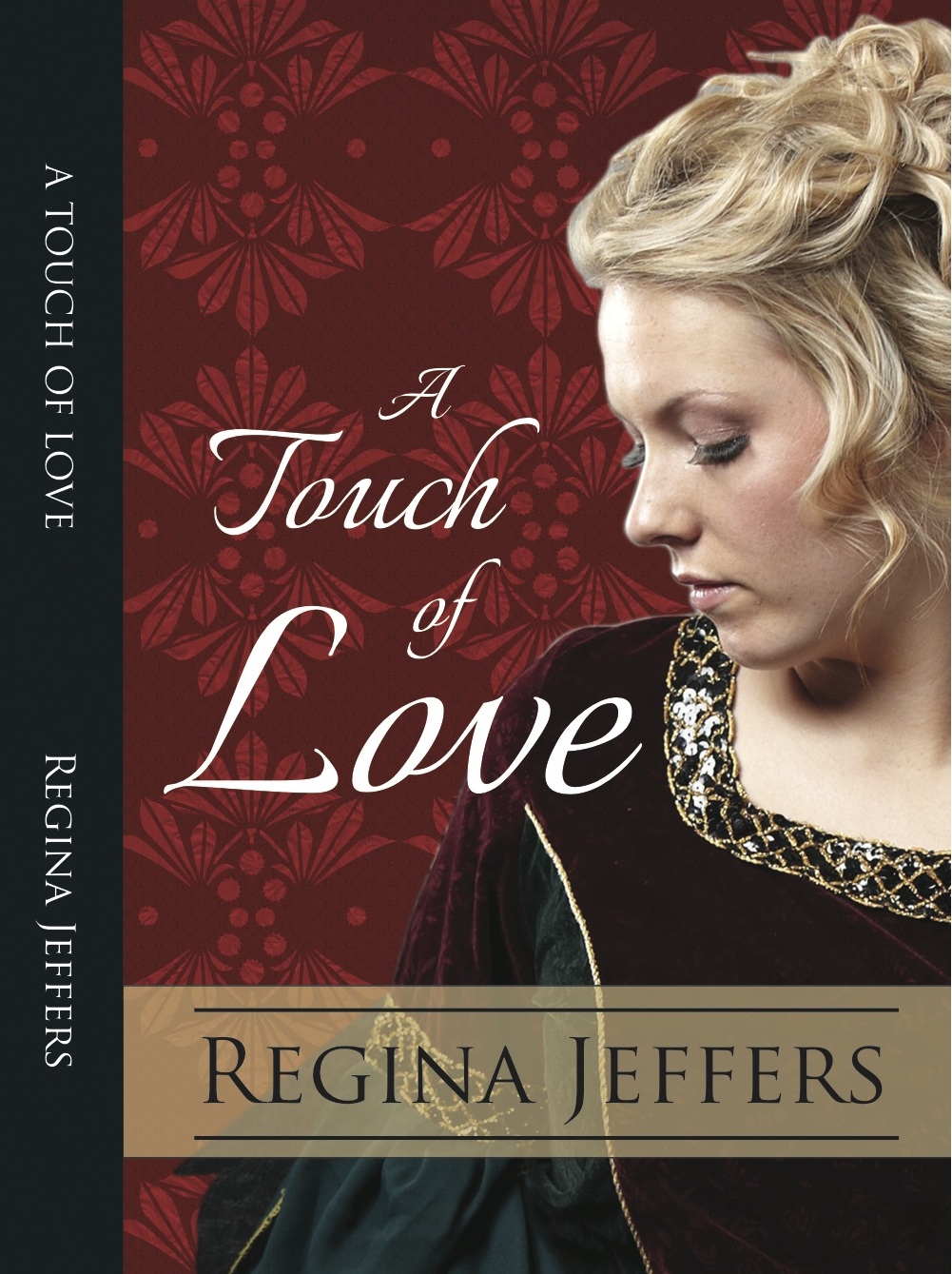
In A Touch of Love, book 6 in my highly popular Realm series, I  ventured into territory many Regency era writers avoid: the question of religious practices during the Regency. Georgette Heyer’s portrayal of Jews during the reign of George III has often been met with criticism as perpetuating stereotypes. [Note! This piece originally appeared on English Historical Fiction Authors in 2013.]

Over the years, the “backlash” regarding Georgette Heyer’s depiction of the Jewish faith in Regency England has become better known (See http://vacuousminx.wordpress.com/2011/08/23/jewish-stereotypes-in-georgette-heyers-novels/

and

http://vacuousminx.wordpress.com/2011/08/03/authorial-intrusion-and-reader-response-my-georgette-heyer-experience/ for examples of the reported offending passages and the changes the current publisher of Heyer’s works has made to those passages).

As I considered adding several Jewish characters to this book, I wished for a more honest portrait of not only the prejudice practiced against the Jewish race, but also the prejudice existing between the two “nations” occupying Georgian England. I sought the assistance of many of my Jewish friends and acquaintances for accurate portrayals of the Jewish experience. My novel addresses the question of conversion to the Church of England’s tenets.

250px-BoD_Master_Logo_CMYK.jpg That said, today, I mean to speak of the Jewish “influence” I avoided in this latest novel: the life of Jacob Rey, the “Jew King” and those like him. “Jewish money lenders” were the source of the criticism directed upon Heyer.
In 1800, London was the most populated city (900,000 people) in Europe. It offered an exceptional opportunity for the advancement of motivated Jews who had shed the limitations of traditional Judaism. At the time, there were few legal barriers to success in both the social and economic realms. London’s complex and largely unfettered patterns of municipal life permitted those ambitious enough to succeed a step up. There was a certain mutability present among those of various groups in the arena of social interactions. The wealthy landowners’ self-indulgent moral values resting in pleasure and entertainment made London a sanctuary for those who knew how to satisfy patrician needs and manipulate their weaknesses.

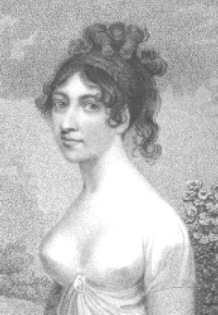
Jacob Rey (later known as John King, 1753-1824), a moneylender and radical writer well known in London society,  flourished as a non-interventionist moneylender during late-Georgian London. Although he was far from being a leader of the Jewish community, Rey was one of the more well-known Jews of the period (1780-1820). Truthfully, I do not think of King’s career as being representative of the period, but I do see his “maneuverings” as indicative of the culture perpetuated by English society.

Rey’s father, Moses, was a self-effacing street merchant. According to several sources, Moses referred to himself as “Sultan” and dressed in “Turkish” garb, leading to the assumption he was of North African ancestry. Other sources claim the elder Rey misspent his fortune and was forced to peddle “bawdy” wares across the English countryside. Unlike many of his fellow tradesmen, however, Moses continued to see to Jacob’s education, an advantage, which assisted Jacob’s efforts to move within English Society.

In 1764, Jacob entered the Spanish and Portuguese Jewish charity school. This Sephardic school offered its students instruction in both religious and secular subjects. English, for example, was taught and many of the traditional Hebrew writings were translated into English. When Jacob departed the school in 1771, the wardens of the charity paid a premium of five pounds to apprentice him as a clerk in a Jewish house in the City. Within a few years, Rey anglicized his name, going by John King. Such name changes were not usual business among the Jews of Georgian England, which indicates Rey meant to leave behind both his Jewish and his Spanish ancestries.

Following his clerkship, King became articled to an attorney for a short period. Attorneys were “men of business.” They were not attorneys in the modern sense in the U.S. They drew up wills, bills of exchange, mortgages, etc. They also operated an informal credit system, which brought creditors and debtors together. Remember there were no well-developed credit and investment institutions present at the time. King learned his lessons well with in apprenticeship.

By the age of one and twenty, King was a very active moneylender. In Profiles in Diversity: Jews in a Changing Europe 1750 – 1870, Todd Endelmann writes, “The association of Jews with money-lending was hoary, dating back to the High Middle Ages, when it was the single most important pursuit in the Jewish communities of England, northern France and Germany. Long after money-lending had ceased to play a critical role in the Ashkenazic economy, the myth of the Jew as grasping and usurious, hard-hearted and hard-dealing, remained alive. Even in so commercially sophisticated a society as Georgian England, critics of Jews continued to view them en bloc as usurers, sometimes literally but more often in the sense that they transferred the standards of usury to other trades in which they had become active.”

Whatever the “stigma,” King rose quickly as one of the Jewish communities most identifiable citizens. In 1775, he sent a donation of 100 pounds to the Sephardic charity school in appreciation for his education. In 1776, he married Sara, daughter of Benjamin Nunes Lara and sister of Moses Nunes Lara, future patron of the Sephardic synagogue.

One must understand lending money to aristocrats was a dangerous and very risky business. Gentlemen of the ton thought speaking and handling money matters quite disdainful. They also thought nothing of abandoning their commitments. Therefore, King contracted debts in an atmosphere which encouraged both borrower and lender to take advantage of each other’s weaknesses. We know little of King’s business practices other than the accounts of some of his “borrowers.” Charles James Fox, the Prince of Wales, the third Earl of Orford and the fourth Earl of Sandwich were among the well-known clients of Jewish money-lenders.

King frequently functioned as a money broker, rather than as a lender. Those with money to lend often wished a higher than legal interest rate (above 5%) in their transactions. King served as a middle man, who bargained loans for others, taking a fee for himself. To be successful in the role, King aggressively developed the social contact of members of the haut ton. He entertained copiously and regularly. King also had made a meticulous analysis of the peerage. He learned the names and connections of each family, the value of the associated properties, the mortgaged estates, and the impediments on the title.

King also operated money-lending offices and even advertised his business in the London newspapers, all under assumed “Christian” names, for example, Messrs John Dear and Company, an office in Three Kings Court.

King acquired a despicable reputation early on and was never able to shake it. He was known to take advantage of certain clients. He became entangled in numerous lawsuits stemming from his business ventures; his name appeared frequently in newspapers and journals, usually in an unflattering context. On two occasions, once in 1784 and again in 1802, he fled the country to avoid imprisonment. 

On Christmas Day 1790, The Times described King, with heavy-handed sarcasm, as “without any matter of doubt one of the most respectable characters in this country, and until the later attack on him, the breath of infamy never blew on his reputation. In all his dealings with mankind he has been the strict, upright, honest man. He never took advantage of the distresses of a fellow creature , in order to rob him of his property – he never extracted exorbitant interest for discounting a bill – he was justly paid every debt he contracted to the uttermost farthing; and in a domestic line of life has proved himself a fond – faithful – loving husband – a tender affectionate and praiseworthy parent, and a feeling steady and sincere friend. Chaste in all his actions – virtuous in every sentiment – and unsullied in his reputation as a Man, a Money Lender, a Jew, and a Christian.”

Although an unsavory reputation clung to King, he never suffered from a lack of clients. Gentlemen and ladies of the beau monde clamored for his services. Surprisingly, King’s Jewish background played little in his public persona. His ancestry was not held accountable for his wickedness. “Similarly, attacks on King did not degenerate into condemnations of Anglo-Jewry as a whole, nor did they call for the imposition of special laws to restrain Jews as a body, as had happened earlier in the century. Of course, King’s carryings-on reinforced the popular image of the Jew as untrustworthy in money matters, but they did not provoke generalized discussions of Jewish avarice or misanthropy. This may have been due, in part, to the relatively high degree of tolerance already enjoyed by English Jews, at least in comparison to conditions on the Continent, and, in part, to the absence of a rigorous code of commercial ethics at many levels of society. In short, King may have been thought of as a rogue among many, his Jewishness as incidental to his shortcomings, or, at least, as not responsible for them.”

CharlotteDacre.jpg

Note! King’s daughter, Charlotte Dacre, was an English author of Gothic novels, who first wrote under the pseudonym Rosa Matilda. Her father divorced her mother, Sara, née Lara, under Jewish law in 1784 before setting up home with the Dowager Countess of Lanesborough. 

~~~~~~~~~~~~
 The Realm has returned to England to claim the titles they left behind. Each man holds to the fleeting dream of finally knowing love and home, but first he must face his old enemy Shaheed Mir, a Baloch warlord, who believes one of the group has stolen a fist-sized emerald. Mir will have the emerald’s return or will exact his bloody revenge..

Aristotle Pennington has groomed SIR CARTER LOWERY as his successor as the Realm’s leader, and Carter has thought of little else for years. He has handcrafted his life, filled it with duties and responsibilities, and eventually, he will choose a marriage of convenience to bolster his career; yet, Lucinda Warren is a temptation he cannot resist. Every time he touches her, he recognizes his mistake because his desire for her is not easily quenched. To complicate matters, it was Mrs. Warren’s father, Colonel Roderick Rightnour, whom Sir Carter replaced at the Battle of Waterloo, an action which had named Carter a national hero and her father a failure as a military strategist.

LUCINDA WARREN’s late husband has left her to tend to a child belonging to another woman and has drowned her in multiple scandals. Her only hope to discover the boy’s true parentage and to remove her name from the lips of the ton’s censors is Sir Carter Lowery, a man who causes her body to course with awareness, as if he had etched his name upon her soul. A cruel twist of Fate has thrown them together three times, and Lucinda prays to hold off her cry for completion long enough to deny her heart and to release Sir Carter to his future: A future to which she will never belong.

“The first fully original series from Austen pastiche author Jeffers is a knockout.”

Publishers Weekly

Posted in British history, business, Georgian England, Great Britain, history, Living in the Regency, Living in the UK, real life tales, Regency era, Regency romance, Uncategorized | Tagged , , , , , | 6 Comments

Jews in King George’s England, a Plot Point in my “Realm” Romance, “A Touch of Love”

Over the years, the “backlash” regarding Georgette Heyer’s depiction of the Jewish faith in Regency England has become better known (See http://vacuousminx.wordpress.com/2011/08/23/jewish-stereotypes-in-georgette-heyers-novels/

and

http://vacuousminx.wordpress.com/2011/08/03/authorial-intrusion-and-reader-response-my-georgette-heyer-experience/ for examples of the reported offending passages and the changes the current publisher of Heyer’s works has made to those passages).

That being said, when I began writing Book 6 of my highly popular and award-winning Realm series, I was most sensitive to the need to portray the Jewish characters in my book with realism. In A TOUCH OF LOVE, the heroine, Lucinda Warren, discovers her late husband had married another before he spoke his vows to her. Captain Warren had hidden his Judaeo-Germanic background, his family having converted from the Ashkenazim sect to the Church of England, but his situation became more complicated when he marries a Sephardic Jew from Portugal during the Peninsular War. A TOUCH OF LOVE speaks to the prejudice within England, upon the Continent, and between these two nations within the Jewish race, as well as speaking of the general prejudice found among many of the haut ton.

So, what was it like to be a Jew during the reign of King George III? In 1760, in imitation of the Deputies appointed to protect the civil rights of Protestant Dissenters, the Spanish and Portuguese Jewish population nominated deputados to oversee political developments of special interest to their well being and to approach the government on the group’s behalf when necessary. A standing committee was also appointed to express homage and devotion to the new sovereign.
However, the Ashkenazi faction presented a formal protest, claiming neglect. The Ashkenzami group nominated their own German Secret Committee for Public Affairs to act on their behalf. The administration refused to deal with two separate groups, saying they would communicate only to the Committee of the Dutch Jews’ Synagogues and the two factions must find a means to communicate. These deputados represented 6000-8000 Jews, the majority of which lived in London. Approximately 25% of the population belonged to the more anglicized Spanish and Portuguese element. The Ashkenazim, though more numerous, were less assimilated and, generally, belonged to a lower social stratum.

“But, on every section, the alembic of English tolerance was working with remarkable speed and with an efficacy which, from the sectarian point of view, was only too complete. Not only was this the case with the native-born upper class, in whom the process was more notorious, but with their more modest association as well. An immigrant from Silesia, who at the outset of his career corresponded with his parents in Judaeo German and was anxious for the welfare of the religious institutions of his birthplace, could develop within twenty years into a staid British merchant, with his sons married to English girls – one a sea-captain and another in the colonial service, and Destined to be buried in Bath Abbey. So, too, the sons of a London synagogue functionary, all born in Germany, could lose touch with their co-religionists and enter English life as playwrights, authors, physicians, and even naval officers. This process was partially compensated by a modest though unmistakable trickle of proselytization, strenuously combated by the nervous communal leaders, which was to culminate most embarrassingly, notwithstanding their opposition, in the preposterous episode of the conversion to Judaism of the erstwhile Protestant champion, Lord George Gordon in 1787.”

511aX0I+kaL._SX368_BO1,204,203,200_.jpg (For a complete look at Jews During King George III’s Reign, please visit this Google Book, History and Antiquities of the Jews in England). One thing that really struck a chord with me while doing my research for this book was the fact Jews were permitted their rights to practice their religion, where I, a woman who was born a Pentacost, became a Baptist, practiced Existentialism for many years, and married a Catholic, would not have been given the same opportunity. For example, another plot point in this series can be found in Book 7, A Touch of Honor. In it, John Swenton is an English baron. He falls in love with the daughter of an Irish Catholic baron. To marry, they must first marry in the Church of England in order for their children to be recognized as Lord Swenton’s heirs. Then they can marry in the Catholic church to meet her family’s obligations. There are all types of prejudice in the world.

Book Blurb
The Realm has returned to England to claim the titles they left behind. Each man holds to the fleeting dream of finally knowing love and home, but first he must face his old enemy Shaheed Mir, a Baloch warlord, who believes one of the group has stolen a fist-sized emerald. Mir will have the emerald’s return or will exact his bloody revenge..

Aristotle Pennington has groomed SIR CARTER LOWERY as his successor as the Realm’s leader, and Carter has thought of little else for years. He has handcrafted his life, filled it with duties and responsibilities, and eventually, he will choose a marriage of convenience to bolster his career; yet, Lucinda Warren is a temptation he cannot resist. Every time he touches her, he recognizes his mistake because his desire for her is not easily quenched. To complicate matters, it was Mrs. Warren’s father, Colonel Roderick Rightnour, whom Sir Carter replaced at the Battle of Waterloo, an action which had named Carter a national hero and her father a failure as a military strategist.

LUCINDA WARREN’s late husband has left her to tend to a child belonging to another woman and has drowned her in multiple scandals. Her only hope to discover the boy’s true parentage and to remove her name from the lips of the ton’s censors is Sir Carter Lowery, a man who causes her body to course with awareness, as if he had etched his name upon her soul. A cruel twist of Fate has thrown them together three times, and Lucinda prays to hold off her cry for completion long enough to deny her heart and to release Sir Carter to his future: A future to which she will never belong.

And now for a short excerpt from A Touch of Love, Book 6 in the Realm Series
Lucinda had stood on the busy street corner for a quarter hour, attempting to shore up her nerves. She had carefully read the social register for the past few weeks, waiting for the return of the Duke of Thornhill to his London house. A single line of type had reported Brantley Fowler’s presence at Briar House, and Lucinda had wasted no time in sending a note around, requesting an audience with the duke. Thornhill had responded immediately, setting the date and time.

Self-consciously, she checked Matthew’s pocket watch for the time. She regularly carried her late husband’s watch in her reticule. It was one of the few items she had kept to mark her days as Matthew Warren’s wife. “Time,” she murmured. Matthew never found the time to speak the truth, Lucinda thought bitterly. As she set her shoulders to cross the street, she wondered how Thornhill would take to her report of his old friend. “I have no choice,” she assured her rapid pulse.

She sidestepped a fresh pile of horse dung while dodging a young gentleman’s poorly driven curricle to step upon the curb before Briar House. It was a magnificent house: plenty of windows to permit the light and warmth of even a weak sun, as well as beautiful columns giving the exterior the look of a Roman theatre. Briar House spoke to the Fowlers’ place in Society. Her breath hitched, and Lucinda chastised herself for the very feminine desire to break into tears again. Her eyes swept the townhouse’s façade. Splendor she would never know.

With a deep steadying breath, she entered the gate and ascended the few steps to release the knocker. In less than a minute, the door swung wide to reveal the duke’s very proper butler. “Yes, Miss?”

Lucinda swallowed hard to clear his throat. “I am Mrs. Warren. His Grace is expecting me.”

The butler’s eyebrow rose as he peered behind her to look for her maid, but it had been more than a year since Lucinda could afford help of any kind. She pretended not to notice the servant’s disapproval. “This way, Mrs. Warren,” the butler said diplomatically.

Lucinda politely followed the man up the stairs and along an elaborately decorated passage. She had attended the Come Out ball for Thornhill’s sister, Lady Eleanor Fowler, and his cousin, Miss Velvet Aldridge. Now, Miss Aldridge was Brantley Fowler’s duchess, and by all accounts the man’s one true love. Yet, on that one evening, Lucinda had received the duke’s attentions, and although she had been a bit uncomfortable with Thornhill’s sudden adoration, the evening remained one of Lucinda’s favorite memories. A man of worth had revered her intelligence and her good sense. A man had found her attractive, something Matthew had never done.

The butler tapped on an already open door. “Your Grace. Mrs. Warren to speak to you.” The man stepped aside, and Lucinda entered a very masculine study. Dark wood panels spoke of a strong mind and an unqualified determination, both of which could easily describe the Duke of Thornhill.

The duke rose to greet her. His light brown hair was peppered with strands of gold. It was unstylishly long and tied back with a leather strap. Eyes of darkest chocolate glittered with genuine welcome, and Lucinda breathed a bit easier. “Thank you, Mr. Horace. If you will ask Cook to send in tea.”

“Of course, Your Grace.”

The death of Pedro Velarde y Santillán during the defence of the Monteleon Artillery Barracks. ~ Wikimedia Commons

Brantley Fowler caught Lucinda’s hand and brought it to his lips. “I was pleased to hear from you,” he said easily, “but I admit you have piqued my interest.” Lucinda had always liked the young lord. The future duke had spent but two months in the same company as had Lucinda’s late husband, and during the brief interval, Fowler and Matthew had renewed their university friendship. She was proud to say the young lord had always treated her with respect. She was the daughter of the second son of an earl, and the future duke accepted her as his equal socially. In fact, once when Matthew had found fault with the meal she had managed on the few supplies available, it had been Brantley Fowler who had taken up her defense.

“I appreciate your seeing me on such short notice, Your Grace.” The duke led her to a nearby settee before assuming the seat across from where Lucinda sat. “I beg your forgiveness for my bold gesture.”

The duke frowned. “I would hope you would view me as an ally, Lucinda.” His ready familiarity eased her tension.

The butler returned with the tray. “Mrs. Warren will serve, Horace.”

“As you wish, Your Grace.” The butler closed the door upon his exit.

Lucinda dutifully took up the service. This cup would be a treat for her. Her meager funds did not stretch to expensive tea. The duke must have read her mind for he said, “My sister Eleanor’s husband, Lord Worthing, declares he spent seven years of service to his country without a decent cup of tea.”

Lucinda nodded her understanding. “Even on English soil,” she said as a means to define her purpose in coming to Briar House, “many cannot afford the weak mix with which we suffered on the Continent. The military’s idea of tea is less than inspiring, but it would be welcomed in many English households.”

A long pause kept Thornhill silent. The air was thick with nerves and unspoken truths. Finally, the duke asked, “Are you among those who cannot afford such luxuries?”

Lucinda had always prided herself on her frankness. She had come to beg Thornhill for his support, and the duke deserved the truth, as she knew it. “I am, Your Grace,” she said more calmly than she felt.

Setting his cup aside, the duke sat forward bracing his arms along his thighs. He cocked his head as if seeing her for the first time, and Lucinda fought the urge not to squirm under the man’s close scrutiny. He said with concern, “When last we met, you spoke of a small settlement from your mother and, of course, your widow’s pension. Had I known…”

Lucinda cut off the duke’s offer. “I am not your responsibility, Your Grace, and a pity call was not my purpose this day.”

He jammed his knuckles into the side of his leg. The duke held a reputation for rescuing “damsels in distress.” It was one of the reasons Lucinda had sought his assistance. “But what of your parents? Or of the Warrens?”

She cleared her throat and hoped her voice did not betray the chaos rushing through her veins. “My mother passed some five months after my marriage to Matthew. The Colonel lost his life in Belgium.” She could not hide the grief, which tugged heavily at her heart. Losing her father had come close to sending her over the edge, both figuratively and literally. “I would prefer not to seek the assistance of the Earl of Charleton. The Colonel and Uncle William were often at odds. I would not wish to claim the role of poor dependent.” Lucinda did not think her father’s oldest brother would take kindly to the situation in which she now found herself.

“And the Warrens?” the duke prompted. His words caused her heart to stutter. Every time she thought of Matthew’s betrayal she wanted to curse the heavens.

Lucinda schooled her expression. Matthew’s parents had turned from her after their son’s death. At the time, she had not understood the reasons the Warrens had placed distance between them. Matthew’s parents had pledged their only child to Lucinda when they were but babes, and the Thornbys had gloried in the connection. She felt the shame for her parents’ hopes. Although she could not say she had loved Matthew Warren, she had always held her husband in great affection; they had been friends for as long as she could recall. “Father Warren has indicated I am no longer welcome at Coltman Hall.”

The duke’s mouth formed a thin line of disapproval. “I had once thought Matthew’s parents perfect in every way,” he confessed.

Lucinda thought, Perfect in their outward displays, but greatly lacking in essentials. “If you hold no objections, Your Grace, I would care to speak to the reasons for my calling upon you.”

“By all means.” The duke leaned back into the chair’s cushions. “I am your servant.”

The nerves she had earlier tamped down had roared to life again. A thousand frightening scenarios flitted through her brain. Purposefully, Lucinda took another sip of the tea. It really was quite lovely to taste the bitter leaves. Setting the cup on the tray, she caught Fowler’s gaze and held it. “Some three months past, I was presented a most difficult situation. I opened the door to my let rooms to find a small boy sitting upon the threshold. There were no adults about and upon investigation, no one knew of how the child came to be waiting outside my quarters.”

“Was there no identification?” Thornhill inquired earnestly.

Lucinda set her shoulders in a stiff slant. She dreaded what was to come, but the duke would accept nothing less than the absolute facts. “Only a note pinned to the child’s jacket.” When the duke did not respond, she continued. “The note announced the child to be Matthew’s. By his wife, a woman he had married in ’09, some two years before he returned to Devon for the pronouncing of our vows.” Lucinda kept part of the truth as her own special torment. She did not tell him the complete facts of the child’s mother, that the woman was a Jewess.

The duke appeared perplexed. “How may that be so? You are telling me, Matthew Warren took another without his parents’ knowledge?”

Lucinda had asked herself that very question repeatedly. “I would hope the Warrens did not knowingly foist a sham of a marriage upon me.” She forced the tremble from her words.

The duke was up and pacing. “I have heard of such perfidy, but I would never place Matthew Warren among those who would practice such duplicity. The extent of this falsehood is of the gravest debasement.”

Lucinda said softly, “The boy was conceived after our joining.” She would not permit the duke to observe how the thought of her husband with another woman had ripped her heart from her chest; yet, she had cried her last tear for the soul of a dishonest man.

Thornhill dejectedly returned to his seat. “This is all too much.” With a heavy sigh, he asked, “Where is the child now?”

Lucinda glanced to the sun streaming through one of the windows. There was only one small window in her rooms, and she sorely missed the air upon her countenance. Too many years of following the drum, she thought. “Today, young Simon is with my landlady. The child is staying with me.” Again, she withheld an important fact that would likely color everything with a black stroke.

The duke set forward again. “You have taken it upon yourself to care for the offspring of your husband’s betrayal?” he asked incredulously. “You must realize, Mrs. Warren, how your raising this child within your home will bring you nothing but ostracism. You are opening yourself up to public humiliation when this situation becomes common knowledge.”

Lucinda fought back the tears stinging her lashes. “The child has the right to know the touch of love. I could not turn the boy out on the streets, but it is Simon’s presence, which has brought me to your door. The child has complicated my life in ways I could not anticipate. If Matthew married another before speaking his vows to me, I am not his widow, and my only source of income for the boy and me has vanished into a foggy London sky. I require someone to discover the truth of the note’s claim. I can easily voice a myriad of questions, but I possess no resources to discover the answers.”

Other Books in the Realm Series:

A Touch of Scandal (aka The Scandal of Lady Eleanor): Book 1 of the Realm Series

A Touch of Velvet: Book 2 of the Realm Series 

A Touch of Cashémere: Book 3 of the Realm Series

A Touch of Grace: Book 4 of the Realm Series

A Touch of Mercy: Book 5 of the Realm Series

A Touch of Love: Book 6 of the Realm Series

A Touch of Honor: Book 7 of the Realm Series

A Touch of Emerald: The Conclusion of the Realm Series

His American Heartsong: A Companion Book to the Realm Series 

Find more these and all my novels at my new Website. 

Posted in British history, Church of England, excerpt, George IV, Georgian Era, gothic and paranormal, Great Britain, heroines, historical fiction, Living in the Regency, marriage, military, Napoleonic Wars, political stance, real life tales, Realm series, Regency era, Regency personalities, Regency romance, religion, romance | Tagged , , , , , , , , , | 5 Comments

Jane Austen and the Tudors (plus one Stuart), a Guest Post from Eliza Shearer

This post originally appeared on the Austen Authors’ blog on July 21, 2020. Enjoy! 

Aged 15 or 16, Jane Austen wrote a very amusing History of England in the style of a mock textbook. The short text, illustrated by Austen’s sister Cassandra, is most definitely worth a read.

The title page (below) sets the tone: Austen describes herself as “a partial, prejudiced & ignorant historian” and promises that “there will be very few Dates in this history”.

What is not to like?

Jane Austen History of England Juvenilia
Jane Austen’s History of England (part of her Juvenilia)

The booklet shows that, even at a young age, Jane Austen had heaps of talent and a wicked sense of humour.

She also had strong opinions, and none more so than on the topic of the Tudor monarchs.

Here is what she thought of them… 

Henry VII and Henry VIII

Austen was not much impressed by the first two Tudors. Of Henry VII, he says little other than the fact that his right to the throne was inferior to his wife’s, “tho’ he pretended to the contrary”.

With regards to Henry VIII, Henry VII’s formidable son (see Cassandra’s portrait below), she writes the following:

“It would be an affront to my Readers, were I to suppose that they were not as well acquainted with the particulars of this king’s reign as I am myself. I will therefore be saving THEM the task of reading again what they have read before, and MYSELF the trouble of writing what I do not perfectly recollect, by giving only a slight sketch of the principal Events which marked his reign.”

If you have read any of Austen’s letters, I am sure you recognise the style of writing…

According to young Jane, Henry VIII’s “crimes and cruelties (…) were too numerous to be mentioned and nothing can be said in his vindication but that his abolishing Religious Houses (…) has been of infinite use to the landscape of England”.

Isn’t this a perfect example of the famous Austen sense of humour?

She adds that Henry VIII’s “only merit was his not being quite so bad as his daughter Elizabeth.”

And that is because, as we shall see, Elizabeth I is very much the villain in this story…

Henry VIII’s Wives

Catherine of Aragon was Henry VIII’s queen for over two decades and infamously divorced by her husband,  but Austen does not mention her at all in her History of England.

Instead, the young author jumps straight into a passionate (and very modern) defence of Anne Boleyn (“Anna Bullen”): 

“(…) This amiable Woman was entirely innocent of the Crimes with which she was accused, and of which her Beauty, her Elegance and her Sprightliness were sufficient proofs, not to mention her solemn Protestations of Innocence, the weakness of the Charges against her, and the King’s Character…”

Jane then skips over Henry VIII’s third and fourth wives to say that Katherine Howard, Henry’s fifth wife, cannot have “led an abandoned life before her Marriage” because “she was a relation of that noble Duke of Norfolk”.

Huh?

Don’t worry, it will all make sense later…

Edward VI, Jane Grey and Mary I

Poor Edward VI barely gets a remark. However, Austen spends some time talking about his cousin Jane Grey, whom she calls “an amiable young woman”, “famous for reading Greek while other people were hunting” (a skill she undoubtedly admires).

In Austen’s opinion, Grey, who was famously executed after the briefest of reigns, had “superior pretensions, merit and beauty” than his cousin and immediate successor, Mary I (looking like a late XVIII-century matron, right) – called “Bloody Mary” by her protestant enemies on account of the over 280 religious dissenters she had burnt at the stake. 

But let other pens dwell on guilt and misery. In typical Austen fashion, young Jane skims over the nastiest bits of history to say that “many were the people who fell martyrs to the protestant Religion during her reign; I suppose not fewer than a dozen.” 

Austen also insists that England fully deserved “the misfortunes they experienced during her Reign” because Mary’s childlessness meant that she was succeeded by “that pest of society, Elizabeth.”

(Did I mention that Austen really did not like Elizabeth at all?) 

Elizabeth I, The Evil Queen

As far as teenage Jane is concerned, Elizabeth I is “a disgrace to humanity”, “the destroyer of all comfort”, “the deceitful Betrayer of trust reposed in her”. (To be fair, she also accuses her ministers, “vile and abandoned men”, of encouraging her worst instincts).  

Cassandra’s portrait of Elizabeth I (see left) perfectly reflects her sister’s thoughts on the matter. Does Elizabeth I not look like the quintessential fairytale baddie? Or better still, like Lady Catherine de Bourgh, or an older Fanny Dashwood? I particularly like the feathered headpiece. 

But why did Austen so despise Elizabeth I, a monarch who succeeded in turning England into a naval power? Surely, young Jane should have been impressed by a single woman who yielded so much influence at a time when females were thought inferior and had to marry to avoid destitution

Well, in Jane’s view, Elizabeth I committed the ultimate sin: she ordered the execution of her cousin Mary, Queen of Scots. And, as we shall see, Austen was a bit of a Mary Stuart fangirl…  

Austen’s Admiration for Mary Stuart

Austen considers Mary, Queen of Scots as “one of the first characters in the world”, an “amiable Woman” who is brought to an “untimely, unmerited, and scandalous Death.” In Cassandra’s portrait (below, wearing white and blue), Mary Stuart could be mistaken for the Virgin Mary. 

Mary Queen of Scots by Cassandra AustenAusten’s devotion for Mary is such that anyone positively associated with her gets a pass – hence the earlier mention of “that Noble Duke of Norfolk”: in his duplicitous manner, Norfolk took Mary Stuart’s side and was executed for treason. 
Austen’s admiration for the Scottish queen is touching. Granted, Mary, Queen of Scots, had a magnetic personality and a tempestuous life full of romance and adventure – surely a hit with an impressionable girl of 15 or 16. 

Yet, at the same time, Mary Stuart was Scottish, Catholic and brought up in France, whereas Austen was an English Protestant with an ingrained suspicion of anything French. On the surface, they do not seem to have much in common. 

Perhaps Austen, even at that age, understood that Mary, Queen of Scots was destined to become an iconic monarch. In any case, little could young Jane imagine that she would join her as one of the most recognised and remarkable British women of all times. 


Have you read Austen’s Juvenilia? What did you think of it? And, if you are familiar with Tudor history, what do you think of her portrayal of Tudor monarchs?


Images: Jane Austen’s “History of England”, illustrated with coloured vignettes by Jane Austen” s sister Cassandra, in “Volume the Second” of her Juvenilia. ‘The British Library, Shelfmark MS 59874]. Accessible here: https://www.bl.uk/collection-items/history-of-england-austen-juvenilia 


Posted in Austen Authors, British history, England, Guest Post, history, Jane Austen | Tagged , , , , , , , , | Comments Off on Jane Austen and the Tudors (plus one Stuart), a Guest Post from Eliza Shearer

Pride and Pantiles: A Jaunt to Tunbridge Wells, a Guest Post from Corrie Garrett

This post first appeared on the Austen Authors’ blog on August 6, 2020. Enjoy! 

So, one of my favorite things about writing JAFF is researching new places for my characters to visit (new to me, that is.) I have only been to the UK once, when I was thirteen, and sadly I hadn’t yet fallen in love with Jane Austen. My older sister was doing watercolors of cottages and ecstatically pointing out literary connections to every location, and I… just didn’t quite get it. (It was before I discovered Austen and Heyer and so on.) We had a great time nonetheless–probably making every quintessential tourist mistake–but I hope to go back with more appreciation someday and make all those mistakes for myself!

The Pantiles, Royal Tunbridge Wells

Anyway, recently I was kicking off a story from Rosings Park during Lizzy’s stay with Charlotte, and I began to examine Kent for options. The whole area is full of connections to Jane Austen and to her stories, but one town that doesn’t appear much in the literature is Tunbridge Wells. Jane Austen’s brother Henry, her sometimes editor and frequent promoter, was buried there. The town is glancingly mentioned in Northanger Abbey, but only for vain Miss Thorpe to compare its balls to Bath’s. So, while I’d read a lot about Jane’s life in Tonbridge, here was a charming little town nearby ready to host some beloved characters.

Tunbridge Wells would be getting just a bit fusty by the Regency period. The seaside resorts were more popular, but Lady Catherine, in my opinion, is just the sort of person to appreciate the faded glory of Tunbridge Wells. Its prime was back in the mid-1700s when Beau Nash, by then a well-known older man, took over with the same ruthless but effective management he’d brought to Bath years before. Lady Catherine’s father could very well have been a contemporary of Nash, on the younger side, and I suspect that what her father admired she considered quality for the rest of her life.

Furthermore, Anne de Bourgh was never in good health, and where better to let Anne “take the waters” than Tunbridge Wells? A mere 16 or 17 miles from Rosings Park (which was “near Westerham”), high class, and probably full of Lady Catherine’s contemporaries. And when better to go than when she might reasonably demand Darcy’s escort to the spa town?

And now I had a wonderful location for my story. For walks along the Pantiles, a columned, Georgian walk still popular today, where an old friend might ignorantly conclude that the pretty girl on Darcy’s arm was the reclusive cousin he was finally marrying. The perfect town for lounges where the gentry sipped cool, iron-rich water in the morning and Georgiana might meet a portraitist making the rounds of society after making a hit at Somerset House. The perfect town for rides to nearby ruins, where Lizzy might have a moment alone to clarify a few things with Darcy.

I also allowed Darcy to know Sir John Shelley-Sydney (Percy Byshe Shelley’s uncle) who was restoring an historic estate called Penshurst only about six miles away. A chance for Darcy to see Lizzy treated the same way he treated her sisters and to feel all the feelings we want him to have!

In short, I love allowing the settings to organically influence what these great characters might do. One tidbit which caught me off guard was that the original pantiles—the square clay tiles baked in a pan—were mostly replaced by plain flagstones in 1792! Alas for my pantiles. Not all research makes it into the story of course, but I decided that was a bit of lost romanticism that Lizzy would notice.

Excerpt from A Lively Companion

Queen Anne, and William, Duke of Gloucester. When he slipped on the slippery wet clay of the Upper Walk, she donated 100 pounds for it to be paved.

“I’ve heard of the Pantiles of Tunbridge,” Lizzy said, wanting to set the conversation firmly on neutral ground, “but I wasn’t sure this morning which tiles I should be admiring. I’m afraid all the paving stones look like plain rock to me.”

“The pantiles were almost all replaced,” Mr. Darcy explained, “about ten years ago. Perhaps fifteen. But there are still a few about. I’ll try to find a few to point out to you.”

“Please do! I know the story about Queen Anne, of course, paying for it to be paved after her son tripped and fell, but I need to see a few so that I can make the story at least partly about myself when I repeat it in Hertfordshire. That is the fun of sight-seeing, is it not?”

If you’d like a longer trip to Tunbridge Wells, check out my first Austen Ensemble novel, A Lively Companion. And let me know in the comments if you’ve ever been there!

Check out A Lively Companion (An Austen Ensemble, Book 1)  by Corrie Garrett

A Pride and Prejudice Variation

Lizzy Bennet is more insulted than flattered when Lady Catherine asks her to be a temporary companion to Miss de Bourgh. Yes, a visit to Tunbridge Wells would be an interesting diversion, but at what cost?

When her father unexpectedly supports the plan, wanting Lizzy to gain a wider acquaintance and knowing it won’t get easier than this, Lizzy reluctantly submits. Thus begins a springtime trip of misunderstandings, revelations, and unexpected proposals.

When Mr. Darcy realizes Lizzy is not going home as planned, he feels foolish for nearly proposing due to an arbitrary deadline. Determined to make up his mind one way or another, he accompanies the party to the Wells.

While Miss de Bourgh takes the famed waters, Lizzy stumbles feet first into a friendship with Darcy’s sister and cousins. Indeed, she enjoys nearly all Darcy’s friends and family. She almost likes him, when he’s around them.

But that only makes it more painful when she must resolutely reject the proud head of the family…

A Lively Companion is a traditional variation on Pride and Prejudice, celebrating the humor, poignancy, and surprising inconsistency of life.

Posted in Austen Authors, book excerpts, British history, Georgian England, Georgian Era, Guest Post, Jane Austen, Living in the Regency, Northanger Abbey, Pride and Prejudice, real life tales, Regency era, Vagary | 2 Comments