Reporting Scandals in the Regency Era

Of late, I have read several Regency era romances that speak of the most recent scandal being published in the newsprints of the day. One even made reference to an entire newspaper that was devoted to the latest on dit.

Okay, I do not pretend to be an expert. Journalism was one of my minors in school, and during my long teaching career, I was often called upon to teach the journalism classes. I do not recall ever reading of scandal sheets during the time period we call “the Regency era.” As we moved into the latter part of the Georgian era, meaning relatively, the reign of George IV, there were more “titillating” stories found in the news prints. I have been privileged to read digital copies of the Times, the Morning Post, and the Morning Chronicle during the Regency era. There was the occasional mention of so-and-so that might be considered as gossip, but nothing of the line of what I have come to see of late in a few of the newer Regency romances.

I did once come across an earlier copy of The Morning Post, cannot recall the date for it, but around 1800 that had a column some might consider to be a “gossip column,” but, in truth, I did not have that feeling when I first read it. 

The Morning Chronicle possessed a column about the doings of the royals and the fashionable sect. Mainly, it spoke of  who had arrived in Town and who had left, along with whom was entertaining with a dinner or a ball, etc. The Morning Herald supposedly was an early form of a “scandal sheet,” but I have never viewed a copy of that particular newspaper to determine if it were so or not.

 One source of written gossip was the detailed prints of the Criminal Conversation cases (Crim.con), meaning adultery, and the Parliamentary divorces that were reported along with other legal  news. However, I know of no true tabloid written during the time period. To the best of my knowledge, these stories of the public break up of a marriage and the naming of those involved were printed as pamphlets, but snippets of the tale were, upon occasion, included in the newspapers of the day. I suppose the importance of the persons involved played a role in that decision.

Caricatures were often displayed in print shop windows rather than printed, initially, in the newspapers. 

One must remember that there were hundreds of known newspapers, and, so, absolutes were impossible.  

There were scandals sheet in the earlier part of the 1700s; therefore, some may transfer those ideas to the Regency era. Those in London during the first part of the 18th Century would visit their favorite coffee house to read periodicals full of the latest scandals.

Zoe Archer at Unusual Historicals tells us: “Newspapers were a relatively recent phenomenon, and expensive. Not many could afford to have them delivered to their homes. To catch up on the latest gossip, men went to public coffee houses and gaming clubs, and women visited India Houses (tea shops with a considerable amount [number of] female customers), and there, over revivifying beverages, they could chat with friends and read about the scandalous events amongst London’s elite.

“Just like today, when we have a huge range of tabloids to choose from, the Londoner in search of scandal had a range of rags and broadsheets, including The Tatler [sic], The Flying PostThe British ApolloThe Observator, and The Female Tatler. Some were published for years. Others folded within weeks or months. The periodicals were themselves the subject of scandal, such as The Female Tatler, whose authorship by ‘Mrs. Crackenthorpe’ was debated, and, for a time, there were two Female Tatlers, each claiming to be real.”

We must not assume that the early 1800s were identical to the early 1700s. Anyone with a sense of the differences in the novels of the time can determine that the morals and the way they saw themselves in the world changed. The late 17th, early 18th century (1689–1750) in English literature is known as the Augustan Age. Writers at this time “greatly admired their Roman counterparts, imitated their works and frequently drew parallels between” contemporary world and the age of the Roman emperor Augustus (27 AD – BC 14). The Union of the Parliaments of Scotland and England in 1707 to form a single Kingdom of Great Britain and the creation of a joint state by the Acts of Union had little impact on the literature of England nor on national consciousness among English writers. The situation in Scotland was different: the desire to maintain a cultural identity while partaking of the advantages offered by the English literary market and English literary standard language led to what has been described as the “invention of British literature” by Scottish writers. English writers, if they considered Britain at all, tended to assume it was merely England writ large; Scottish writers were more clearly aware of the new state as a “cultural amalgam comprising more than just England”. [Crawford, Robert (1992). Devolving English Literature. Oxford: Clarendon Press.]

Meanwhile, the Regency was influenced by the birth of Romanticism. We know Jane Austen, the most prominent author of the period, was highly influenced by the novels she read as a young woman. The sentimental novel or the novel of sensibility is a genre which developed during the second half of the 18th century. Novels of manners were also developed in this time period. An interest in ancient English poetic forms and folk poetry blossomed.

Wikipedia and the Norton Anthology of English Literature tells us: “Romanticism was an artistic, literary, and intellectual movement that originated in Europe toward the end of the 18th century. Various dates are given for the Romantic period in British literature, but here the publishing of Lyrical Ballads in 1798 is taken as the beginning, and the crowning of Queen Victoria in 1837 as its end, even though, for example, William Wordsworth lived until 1850 and William Blake published before 1798. The writers of this period, however, ‘did not think of themselves as ‘Romantics’, and the term was first used by critics of the Victorian period.

“The Romantic period was one of major social change in England, because of the depopulation of the countryside and the rapid development of overcrowded industrial cities, that took place in the period roughly between 1785 and 1830. The movement of so many people in England was the result of two forces: the Agricultural Revolution, that involved the enclosure of the land, drove workers off the land, and the Industrial Revolution which provided them employment ‘in the factories and mills, operated by machines driven by steam-power’. Indeed, Romanticism may be seen in part as a reaction to the Industrial Revolution, though it was also a revolt against aristocratic social and political norms of the Age of Enlightenment, as well a reaction against the scientific rationalisation of nature. The French Revolution was an especially important influence on the political thinking of many of the Romantic poets.”

What I am saying about the Regency was the overall idea of “politeness” would keep a true scandal sheet from appearing. It was not the fact that the beau monde did not love repeating a scandal, but, rather, they preferred to “whisper” it than to “shout about” it. 

Entire newspapers devoted to gossip during the Regency period? From my reading of Roger Wilkes’ SCANDAL: A SCURRILOUS HISTORY OF GOSSIP, it seems newspapers focused only on reporting gossip and scandal did not begin to appear until the 1820s. The term “scandal sheet” did not come into the language until the 1890s. Pamphlets, yes. Columns in newspapers, yes. Broadsheets, yes, But entire newspapers, no.

Book Blurb: Newspaper and magazine gossip is a potent and sulphurous brew – much derided and much devoured – that long ago became part of the daily diet of millions. The raw ingredients are scandal, rumour, glamour and scurrility, and the best is shot through with (preferably illicit) sex, disclosure and danger. How and why has this happened, and where will this obsession lead us? “Scandal!” takes us from Regency London, where muck-raking scandal sheets were hawked in the streets, to the modern free-for-all where tabloid and internet gossip rule. From the madness of King George to the madness of Bill Clinton’s affair with Monica, this book goes behind the scenes to look at the mechanisms that disseminate gossip and the power and influence that it continues to exert.

 

Posted in British history, Georgian England, Georgian Era, history, Industrial Revolution, Living in the Regency, reading habits, real life tales, Regency era, Regency romance, Uncategorized | Tagged , , , , , , | 2 Comments

Lead Mining In Derbyshire, a Guest Post from Amanda Kai

This post originally appeared on the Austen Authors’ blog on 23 July 2021. Enjoy!

We often hear about Mr. Darcy’s fortune of “ten-thousand a year.”  But where did all that money come from?  In doing research for my current work in progress, I have been exploring what industries the Darcy family might have built their fortune from.  

While the Darcy family certainly owned plenty of land in Derbyshire and would have reaped a share of the profits from the tenant farmers that worked it, I began to wonder if their fortune might have also come from another major industry in Derbyshire: lead mining.

Magpie Lead mine near Sheldon in Derbyshire https://en.wikipedia.org/wiki/Magpie_Mine#/media/File:Magpie_Lead_Mine_near_Sheldon.jpg

Since the 1200s, and possibly even dating back to Roman times, the Derbyshire region has been home to some of the world’s oldest and most profitable lead mines. In the Regency era, lead was used for everything from roofs, to water storage and pipes to the glazing on windows (remember Rosings Park and its expensive glazing? Probably made of lead!). All of the ammunition used by the army and navy was made from lead as well, so you can see why it was one of the largest industries in the country.

Most of the mineral rights in Derbyshire belonged to the Crown under the Duchy of Lancaster, and the land was subject to a “free mining” arrangement.  

“Any man who could demonstrate to the barmaster that he had discovered a significant amount of ore was allowed to open a mine and retain the title to it as long as he continued to work it, and, secondly, mining took precedence over land ownership.” [1]

Land owners could not prevent miners from working mines on their land, as long as the mineral rights were part of this free-mining region controlled by the duchy. This allowed many poor families to prosper through lead mining and rise up into the middle classes. They paid royalties to the Crown for the minerals they mined, but were able to sell the rest at a profit. 

But not all the mineral rights were subject to the Crown and to this act. The Gell family had purchased Griffe Grange near Brassington from the Crown Commissioners during the time of Henry VIII, and they collected the dues for all the lead that was mined on their land, instead of it belonging to the Duchy of Lancaster..  Also, the Manners and the Cavendish families, two of the largest landowners in the county, held a claim over the mineral rights and ownership of the region known as the High Peak. While the Manners family employed labourers to work in their mines, the Cavendish families eventually adopted the same rules as the Gells and allowed free miners to work the land in exchange for dues.

Chatsworth House, home of the Cavendish Family https://en.wikipedia.org/wiki/Chatsworth_House#/media/File:Chatsworth_Bridge.jpg

You might recognize the name Cavendish.  It’s the same family that owns Chatsworth House near Bakewell, in Derbyshire.  Chatsworth is believed to be one of the great houses that Jane Austen took as her inspiration for Pemberley [2], and in fact, Chatsworth was used as the filming location for Pemberley in the 2005 Pride and Prejudice film. While Mr. Darcy may have a noble title like the head of the Cavendish family, who holds the title The Duke of Devonshire, when you consider the Cavendish family’s prominence in Derbyshire and their vast land ownership and mining rights, it’s not too big of a stretch to suppose that the Cavendish family might have influenced Jane’s creation of the Darcy family.

Lead mining could certainly have contributed to the Darcy family’s vast annual income if they owned the mineral rights to any ore-rich land in their holdings, whether the Darcy family would have allowed free miners to open mines on their land and pay dues like the Gell and Cavendish families, or whether they owned the mines themselves and employed miners like the Manners family.

So what do you think?  Could Mr. Darcy’s income have been augmented by lead mining?  What other industries do you suppose the Darcy family might have built their wealth from?  Leave me your thoughts in the comments!

References:

  1. https://en.wikipedia.org/wiki/Derbyshire_lead_mining_history
  2. https://www.liveforthehills.com/toursblog/chatsworth-house-a-real-life-pemberley

Media credits: Wikimedia Commons

Posted in Austen Authors, British history, estates, Georgian England, Georgian Era, Guest Post, history, Industrial Revolution, Jane Austen, Living in the Regency, real life tales, Regency era | Tagged , , , , , , , , , | 4 Comments

Early History of the Oxford English Dictionary

Several times per week, I am looking at the OED (Oxford English Dictionary) for word origins or synonyms or a variety of other searches. Yet, until recently, I had not thought much about this fabulous resource’s beginnings.

It took from 1857 when members of the Philosophical Society of London called for a more “complete” dictionary of the English language to 1879, when an agreement with the Oxford University Press was agreed upon, to begin work on a New English Dictionary, as it was to be called at the time. One of the key people who initiated the idea of such a dictionary was one Frederick Furnivall, a founder of the Early English Text Society, and one of the originators of the concept for and assistance in the preparation of A New English Dictionary on Historical Principles, now the Oxford English Dictionary. Furnivall called the dictionary a “National Gallery of the race of English words.” Furnivall estimated it would take four years to complete. The first edition did not arrive until 1928.

James A. H. Murray was another of those whose vision created what we now know as the OED. “His membership in the British Philological Society and his book on Scottish dialects, published in 1868, allowed him to make many important scholarly contacts. In 1879 he was invited by Oxford University Press to edit the new English dictionary which had been proposed by the Philological Society. Despite some initial disagreements between Murray and the Press over editorial guidelines, Murray agreed to begin formal work on the project soon afterwards.

“Working in a specially constructed workroom called the ‘Scriptorium’, in which were kept two tons of source quotations that the Philological Society had collected, Murray proceeded with the project. Finding some errors and oversights in the Society’s materials, he established a ‘reading programme’, through which he gathered more quotations for the Dictionary. A reading programme similar to Murray’s is still used today as a principal method of assembling material for revising the Dictionary.” [Dictionary Directors]

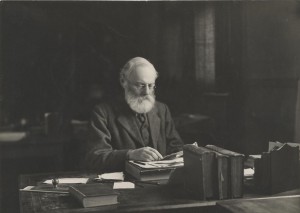
The second editor of the OED was one Henry Bradley, a lexicographer and philologist. He was very much self-educated in philosophy, European and classical languages, and even Hebrew. He was known to write book reviews to assist in supporting his family. His review of the first part of the New English Dictionary had Murray consulting Bradley on etymological issues.

Henry Bradley

“In 1886, Bradley was employed by the Delegates of Oxford University Press to assist with the letter B, and in January 1888 he was appointed as the Dictionary’s second editor…. Bradley’s forty years’ work on the Dictionary encompassed the letters E-GL-MS-Sh (a section which included the longest entry ‘set’), St, and part of W.”

Other editors may be found HERE.

The Oxford English Dictionary contains over 600,000 English words and more than 2.5 million quotes to support the words. As one might expect, William Shakespeare is the most “quotable” contributor. The dictionary is constantly being updated.

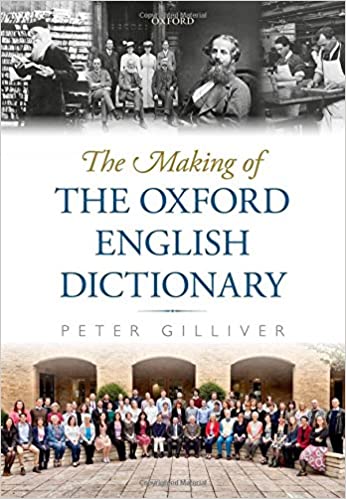
If one is interested, I might suggest “The Marking of the Oxford English Dictionary” by Peter Gilliver. This is Amazon’s description of the book: “This book tells the history of the Oxford English Dictionary from its beginnings in the middle of the nineteenth century to the present. The author, uniquely among historians of the OED, is also a practising lexicographer with nearly thirty years’ experience of working on the Dictionary. He
has drawn on a wide range of sources–including previously unexamined archival material and eyewitness testimony–to create a detailed history of the project. The book explores the cultural background from which the idea of a comprehensive historical dictionary of English emerged, the lengthy struggles to bring this concept to fruition, and the development of the book from the appearance of the first printed fascicle in 1884 to the launching of the Dictionary as an online database in 2000 and beyond. It also examines the evolution of the lexicographers’ working methods, and provides much
information about the people–many of them remarkable individuals–who have contributed to the project over the last century and a half.”

Warning: The complete set is very pricey; yet, if one deals with words constantly, it might be worth the investment.

Posted in British history, word origins, word play | Tagged , , , , | Comments Off on Early History of the Oxford English Dictionary

“Happy Birthday” is Not a Regency Thing, but It is Mine

This week I marked another birthday. I am very much my astrological sign of VIRGO.

Horoscope.com tells us these Virgo Facts

Smart, sophisticated, and kind, Virgo gets the job done without complaining. Virgos are amazing friends, always there to lend a hand and also lend advice. Practical Virgos are incredibly adept at big picture thinking, and planning out their life, their vacations, and what they’re going to do today isn’t a drag it makes them feel in control and secure.

Virgos have a rich inner life and can sometimes seem shy at first meeting. A Virgo will not spill secrets right away, and it is important to earn a Virgo’s trust. But once you do, that Virgo will be a friend for life. 

Virgos expect perfection from themselves, and they may project those high standards on the other people in their lives. A Virgo hates when someone lets him or her down, even if the indiscretion is minor and unavoidable, like a last-minute cancellation. Virgos never want to disappoint the people in their lives, so they may spread themselves too thin and put themselves last.

Intelligent and a lifelong learner, Virgos loves trying new things, reading books, and learning about the world. They will happily sign up for an adult-education course, and they consider an afternoon in bed with a book pretty much ideal. A Virgo prefers an evening with good friends to a huge party and values downtime just as much as socializing. This sign does not need to fill their calendar to be content.

All this talk of birthdays got me thinking about the lack of birthday celebrations in Austen’s novels. It is quite disheartening to have others forget one’s birthday, but it was not so for Jane Austen and her family. We know Christmas had not the “glorious significance” as it does these days, but what of birthdays? Quite simply, as Anglicans, such humoring of a person, would have been frowned upon.

Sense-and-Sensibility-007

Can you think of one person in Austen’s books who even mentions a birthday? The only one which springs to mind to me is Harriet Smith in Emma. Harriet speaks of hers and Robert Martin’s birthdays occurring within a fortnight, and those birthdays were separated only by one day.

As readers we know many of the characters’ ages. Lydia Bennet is but fifteen when we first meet her, but she is sixteen when she marries George Wickham. Marianne Dashwood is seventeen at the beginning of Sense and Sensibility and is nineteen when she marries Colonel Brandon. Fanny Price is a child when she first comes to Mansfield Park; yet, never once are her birthdays mentioned as a passing of time. Jane Fairfax is approaching one and twenty and the prospect of becoming a governess. Charlotte Lucas at seven and twenty has “become a burden to her family.” Elizabeth Elliot is nearly thirty and not married, and Anne Elliot is seven and twenty when Captain Wentworth returns to claim her. Catherine Morland turns eighteen just before Henry Tilney claims her as his wife. Even Elizabeth Bennet must have had a birthday somewhere in the year she had taken Mr. Darcy’s acquaintance. But when? There is no mention of her chronological aging, only her emotional aging. The closest we come to knowing something of Elizabeth’s age is when she admits to being twenty to Lady Catherine. But we do not know if she was nineteen when the book began and turned twenty some time between November when she dance with Mr. Darcy at the Netherfield Ball, or whether, like me, she is a September baby, turning one and twenty after she encounters Darcy again at Pemberley. Is such true for all of Austen’s characters? Austen wrote from her life experiences. If she did not “celebrate” such milestones, why would her characters? Tell me what you think. Am I being bizarre or is there some truth in this assumption?

Birthdays don’t play a prominent role in Austen’s novels, but they do in her few surviving letters. I like that because it shows a wonderful emotional connectedness to her family and to the life going on around her. 

We all know her sister Cassandra destroyed the vast majority of Austen’s letters, but a few survived – letters to nieces and other family members. In these, she displays her incomparable wit – even writing one backwards – and a true interest in everyone’s life. And she talks about birthdays – royal birthdays, neighbor birthdays, family birthdays and even dates one letter “Chawton, Sunday, June 23rd, Uncle Charles’s birthday.”

Strictly Jane Austen tells us, “Austen’s correspondence with her sister offers some insight into how birthdays were noted and celebrated by families from the gentry. In a letter from Steventon, dated January 8 1799, she writes, ” I wish you joy of your birthday twenty times over.”  Much later, regarding her own birthday, she wrote: “My dearest Cassandra, I will keep this celebrated birthday by writing to you.”  This letter then details a drive with her brother Edward, assemblies and other amusements, but not an official birthday celebration.

“For most families in Georgian times, birthday celebrations were unsurprisingly rather less lavish, especially in comparison to modern times. Yet a young boy from a wealthy family in Regency Britain would often have his fifth birthday marked with a ‘breeching ceremony’; this was a grand occasion with relatives visiting to bestow gifts. For girls, their sixteenth birthday was considered the day they reached marriageable age and they were often given gifts such as fine jewellery, a trinket box, an enamel fan or fabric for a new gown in recognition of their social debut.”  [How Did the Georgians Celebrate Birthdays]

Meanwhile, enjoy this list of September birthdays celebrated by some of our favorite Austen Actors. 


Happy September Birthday to these Fabulous Austen-Inspired Actors…

 September 1 – Aisling Loftus, who portrayed Charlotte Lucas in Pride and Prejudice and Zombies

Unknown-3
henry

September 7 – Christopher Villers, who portrayed Tom Bertram in 1983 Mansfield Park

September 7 – Henry Maguire, who portrayed Jack Wickam in 2003’s Pride and Prejudice: A Latter Day Comedy

Unknown-4
Unknown-5

September 9 – Hugh Grant, who portrayed Edward Ferrars in 1995’s Sense and Sensibility

September 9 – Julia Sawalha, who portrayed Lydia Bennet in 1995’s Pride and Prejudice

Unknown-3
Unknown-4

September 10 – Colin Firth, who portrayed Fitzwilliam Darcy in 1995’s Pride and Prejudice 

September 11 – Alan Badel, who portrayed Fitzwilliam Darcy in 1958’s Pride and Prejudice (11 September 1923 to 19 March 1982)

images-2
Unknown-5

September 15 – Sabina Franklyn, who portrayed Jane Bennet in 1980’s Pride and Prejudice 

September 16 – Alexis Bledel, who portrayed Georgiana Darcy in Bride and Prejudice

images
Unknown-3

September 19 – David Bamber, who portrayed Mr. Collins in 1995’s Pride and Prejudice 

September 22 – Billie Piper, who portrayed Fanny Price in 2007’s Mansfield Park

Unknown-4
Unknown-6

September 22 – Rupert Penry Jones, who portrayed Captain Frederick Wentworth in 2007’s Persuasion

September 23 – Crispin Bonham Carter, who portrayed Charles Bingley in 1995’s Pride and Prejudice

2b03d4f0

September 23 – Peter Settelen, who portrayed George Wickham
in 1980’s Pride and Prejudice 

September 24 – Ryan Paevey, who portrayed Donovan Darcy in Unleashing Mr. Darcy, as well as Marrying Mr. Darcy

 September 26 – Talulah Riley, who portrayed Mary Bennet in 2005’s Pride and Prejudice

2202857,tjUBdj3LNXhm0qAuo3TLB1ygUfTrZOGQXAeMS1OawmjRfXEvlZLprOD9Mx5Ha3GHNTcYybJh04GQPbBKSvfyoQ==
Unknown-3

September 26 – Edmund Gwenn, who portrayed Mr. Bennet in 1940’s Pride and Prejudice (26 September 1877 to 6 September 1959)

September 27 – Gweyneth Paltrow, who portrayed Emma Woodhouse in 1996’s film version of Emma

Unknown-4

September 29 – Greer Garson, who portrayed Elizabeth Bennet in 1940’s Pride and Prejudice (29 September 1904 to 6 April 1996)

Posted in Austen actors, Austen Authors, birthdays, British history, Georgian England, Georgian Era | Tagged , , , , , , | 8 Comments

Primogeniture and Inheritance and the Need for a Widow’s Pension in Jane Austen’s Novels

By Jane Austen’s time, primogeniture was no longer the law of the land, but it remained a strongly entrenched custom of inheritance proceedings. Breaking apart large landholdings were frowned upon. An impoverished aristocracy, whose wealth rested in the agricultural realm, would lead to total chaos in the countryside or so it was assumed. The practice of primogeniture, with the family’s holdings going to the the eldest son, made paupers of younger sons or forced them to seek gainful employment in a handful of occupations: the army, the navy, the church, or law. (Medicine was not as well accepted as were the other four, but a some “gentlemen” chose the occupation.) 

mrbennet.gif But what occurred if there were no sons to inherit, as in the case of Mr. Bennet in Austen’s Pride and Prejudice and Sir Walter Elliot in Persuasion? Under English law, women were subordinate to their husbands. It was expected that she was under the “protection and influence of her husband, her baron, or lord.” The law stated the old adage of “two shall become one.” She was her husband’s “feme covert.” Any property she owned—real or personal—came under his control. A married woman could not draft a will or dispose of any property without her husband’s consent.

Women rarely inherited property (land). They could inherit “personal” belongings such as, furniture, jewelry, clothing, moveable goods, etc. But that does not mean that a woman could NOT inherit real property (meaning land, or what we now call “real estate”). The practice of primogeniture under English law presented the oldest son with the real property upon the death of the father. A “fee tail male” was the legal means to present the “entail” through the male line. It was possible for a father and his son to join forces to eliminate the entail. This would give the current owner something called “fee simple,” meaning ownership could be bequeathed without restrictions. In Austen’s Sense and Sensibility, a “fee tail male” agreement results in the Dashwood ladies’ displacement from their family home. Mr. Dashwood’s estate goes to the son of his first marriage. A “fee tail male” agreement also affects Mr. Bennet’s situation. Bennet is the life tenant of the Longbourn estate. Whichever of his ancestors created the fee tail male agreement is never identified. The entail that controls the Bennet estate (better known legally as “the remainder”) expires upon his death if he had no male heirs. The reader is told in Pride and Prejudice that Mr. Bennet had hoped to have a son [who could have joined with Bennet in terminating the fee tail male arrangement]. Unless Mrs. Bennet predeceasing her husband, and Bennet remarries and produces a son, the remainder [the property] would go his closest male relative: Mr. Collins. 

Daughters could only inherit in the absence of a male heir. The law of intestate primogeniture remained on the statue books in Britain until the 1925 property legislation simplified and updated England’s archaic law of real property. Aware of their daughters’ unfortunate situation, fathers often provided them with dowries or worked into a prenuptial agreement pin money, the estate which the wife was to possess for her sole and separate use not subject to the control of her husband, to provide her with an income separate from his.

prideandprejudice_126-e1431533593682.jpg In Mrs. Bennet’s case, her “nerves” make her both a comic and a sympathetic character. In reality, her ranting against the establishment was the lady’s only means to express her frustration. With the passing of her husband, she and any daughters that are not married will be out of their home. She will have no income other that the money settled upon her at her marriage. Locating suitable housing for a woman of her station with five dependents would be difficult. Her £4000 would likely yield only £200 to £250 yearly. Her situation would be more dire than the Dashwoods.
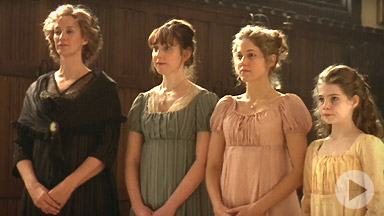
bts_poster_costumes.jpg “For example, in Sense and Sensibility, the widowed Mrs. Dashwood and her three daughters do not inherit the great Dashwood estate, Norland, because the owner, Uncle Dashwood, suddenly changes his will and leaves it to his grandnephew. He does this for two reasons: The grandnephew is cute, and he will carry on the Dashwood surname, keeping Norland in Dashwood hands. So the four Dashwood women now must live on £500 annually (SS 1:2). Now while this does not put them on the street, this sum doesn’t give them the life they lived at Norland Park, a beautiful and spacious gentry estate with a large house attached to it. They must move to a cottage with moderate rent. And their social life is limited to where their feet can take them because they can’t afford a carriage and horse. A visit to London is out of the question financially, unless a friend covers their expenses. And their chances of landing a financially stable marriage are lessened by the daughters each having a dowry of only £1,000, their Uncle having given each girl that amount (and their inability to get out often to meet people)….The Dashwood ladies have a cottage at a very moderate rent; they have two maids and a man servant, whose pay would have been quite low; they have neither carriage nor horse; the four Dashwoods probably have limited wardrobes; and they appear to get quite a bit of food from Sir John Middleton, on whose estate they live. This amount would allow them to live in a minimally genteel way.” [Ray, Joan Klingel. Jane Austen for Dummies. Hoboken, NJ: Wiley, 2006. 133-34.]

mrs-norris-1983-anna-massey

Mrs. Norris 1983 Anna Massey

From Jane Stabler [Explanatory Notes. Mansfield Park by Jane Austen. Oxford’s World Classics. Oxford: Oxford University Press. 2003, 396-397.], we learn, “In Austen’s day, £600 a year is a comfortable income for someone who is careful with his money (and there is no doubt Aunt Norris’s extreme caution in this respect). Austen’s pinpointing of Aunt Norris’s income makes it clear that she can afford to employ three servants to help with the running of the White house so her exploitation of Fanny is mean, as well as cruel.”

In contrast to wives, women who never married or who were widowed maintained control over their property and inheritance, owned land and controlled property disposal, since by law any unmarried adult female was considered to be a feme soleSome of the peeresses, in their own right had property, as well as the title which the husband couldn’t touch. Still, inheritance through the female of a peerage by patent was  extremely rare and usually only put into the patent while the 1st peer was alive. Usually, the patents didn’t allow for female inheritance. It was rare for a woman to be able to inherit a peerage created by patent. The Duke of Marlborough had his patent changed when it was obvious he would not have a son, but that was a rare occurrence. Most females succeeded to a lesser peerage created by writ. Once married, the only way that women could reclaim property was through widowhood.

I have completed a series of articles on Primogeniture for this blog if you wish to know more. You will find them at the links below: 

The Effects of Primogeniture and Family Dynamics https://reginajeffers.blog/2017/06/15/the-effects-of-primogeniture-on-family-dynamics/

Female Inheritance Laws   https://reginajeffers.blog/2017/08/31/female-inheritance-laws-an-excerpt-giveaway-from-mr-darcys-brides/

Gavelkind, Inheritance in Opposition to Primogeniture https://reginajeffers.blog/2016/08/22/gavelkind-inheritance-in-opposition-to-primogeniture/

The Popularity of Primogeniture During the Regency Period https://reginajeffers.blog/2016/10/21/the-operation-of-primogeniture-in-regency-england/

Primogeniture and the 19th Century Entail https://reginajeffers.blog/2015/05/28/primogenture-and-the-19th-century-entail/

Primogeniture? Collateral Relatives? The First Laws of Inheritance…   https://reginajeffers.blog/2014/07/24/primogeniture-collateral-relatives-the-first-laws-of-inheritance/

The Roots of Primogeniture and Entails https://reginajeffers.blog/2017/07/10/the-roots-of-primogeniture-and-entailments/

Statue of Wills, Henry VII’s Answer to Primogeniture https://reginajeffers.blog/2016/09/05/statute-of-wills-henry-viiis-answer-to-primogeniture/


Posted in Austen Authors, British history, customs and tradiitons, estates, family, Georgian England, Inheritance, Jane Austen, Living in the Regency, Pride and Prejudice, primogenture, real life tales, Regency era | Tagged , , , , , , , | Comments Off on Primogeniture and Inheritance and the Need for a Widow’s Pension in Jane Austen’s Novels

Today’s Happy Release of “Lord Radcliffe’s Best Friend” + a Giveaway

I am releasing “Lord Radcliffe’s Best Friend” TODAY!!! I particularly liked this story because the idea behind it is not simply the “boy gets girl, boy loses girl, boy gets girl again,” which we see in many romances. There is something more elemental between Hendrake Barrymore, Earl of Radcliffe, and Miss Adelaide Shaw’s relationship, for they grew up together on neighboring estates and were, at one time, each other’s best friend.

Now, we all know the experience of losing a “best friend,” especially one from one’s childhood. I have lost several, and I still feel the void in my life from their absence; yet, I am fortunate one of those childhood friends is still a part of my life, even though we live several hundred miles apart. Such does not mean all went well for the two of us over the last seven decades (Yes, I will be 74 years of age next Friday, so it has been nearly seven decades since she and I met in second grade.). We experienced our tiffs. We had our moments of “not speaking to each other.” Yet, trumping such stubbornness, more importantly, we have “history” together. We share a common knowledge of the world. 

Having a “best friend” means perfection is not required, and is that particular fact not a relief in itself? A good friendship requires “mutuality.” A good friend is not only one’s supporter, but also a “reality tester.” Good friends are the people who, for better or for worse, get under our skin, and they are the ones in whom we choose to invest. Because of that, they bring a certain stability and normality to our lives. The loss of a friend, whether permanently or temporarily, is life-changing. We do not always understand the emotions tied to this loss.

In the case of Drake and Addy, their separation stirs up complex emotions. Some anger. Lots of frustration. Sadness. Confusion. Regret. It has also left them with more than a few unanswered questions, especially as the “loss” did not come from a death, but rather from a choice the friend made which caused the relationship to crumble. Yet, who is at fault?

Hendrake Barrymore, Lord Radcliffe, is a typical male, a bit daff when it comes to the ways of women, especially the ways of one particular woman, Miss Adelaide Shaw, his childhood companion, a girl who plays a part in every pleasant memory Drake holds.

Yet, since he failed to deliver Addy’s first kiss on her fifteenth birthday, his former “friend” has struck him from her life just at a time when Radcliffe has come to the conclusion Adelaide is the one woman who best suits him.

This tale is more than a familiar story of friends to lovers for it presents the old maxim an unusual twist.

Excerpt from second half of Chapter One: 

[You can read part one of Chapter One HERE.]

When news had arrived at the manor of Sultan not be located, Adelaide knew exactly where the horse had gone. She had quickly changed into her riding habit and set out for the border between her father’s property and the land belonging to Lord Radcliffe. Addy suspected Sultan’s natural instinct to mate might be the needle’s prick in the continuing estrangement between the earl and her family. 

She reached a gloved hand down to pat her gelding’s neck. “Might as well face the Devil while the sun is up,” she murmured. She motioned to the grooms, who had accompanied her, to fetch Sultan. “Take him home. I will speak to Radcliffe and discover what restitution will be required. Do not mention any of this to my father. I shall discuss the matter with the baron upon my return. Also, send men out to repair our side of the fence. It appears someone has removed the rails we set atop of the brick wall. For what purpose, I have no idea. Yet, the removal permitted Sultan an easy jump.” 

“Yes, miss,” the men chorused. 

Looking to the opposing ridge, she spotted Radcliffe studying her. Without even a nod of her head in greeting, she nudged her horse forward. Quietly, she questioned, “Why must the man be the handsomest man of my acquaintance?”

Alcon shook his head as if in response. 

“I know,” she said softly. “I should ask the opinion of another female. Perhaps the mare below has taken note of his lordship’s appearance. Mayhap she holds an opinion of her owner which could prove mine in error.” 

She made her approach as Radcliffe had descended his side of the ridge to meet her in the middle. If only they could again find a similar “middle territory” in their relationship, then, she could, perhaps, go on with her life. Yet, Adelaide knew it would take more than this brief meeting to make her whole again. Bringing Alcon to a halt, she schooled her expression before greeting the earl. “Your lordship.” 

“Miss Shaw.” Why did the sound of his voice do odd things to her composure? It had been six years since she had displaced him from her world, and so much had changed within both their lives which should have made a difference, but hadn’t. However, anytime her eyes fell upon the man or someone mentioned his name or her father complained about the expense of having a well dug to use for the stock and the crops, she was right back where she always had been: in love with Hendrake Barrymore. 

If she could discover another man she could tolerate for more than an hour, maybe, then, she could marry and move away to her husband’s home. Distance, she had reasoned often, would aid in forgetting the ease which once had existed between her and the young man who had been her best friend when they were children. 

“I apologize for Sultan, my lord,” she said through tight lips. “I shall speak to my father regarding restitution to Lord—”

“Shelton,” he supplied. 

“To Lord Shelton,” she continued. “I realize Sultan’s actions cost you the sale of the foal, and in these trying times, such business can assist in maintaining the land.” 

“Your father requires the fee, as well,” he said, keeping his steady gaze upon her and making Addy want to fidget. 

“I assure you, my lord, Sultan’s presence here today was not purposeful,” she argued, completely ignoring his gesture of goodwill. 

“Beyond nature and what God designed for him, I did not think the stallion’s actions purposeful,” he corrected. A frown marked his brow. “But certainly inconvenient.” 

She made to concentrate on the task at hand, rather than the bluest eyes she had ever beheld. “It appears someone has removed the wooden rails my father had placed on the brick wall marking the border between our properties. Sultan can easily clear the brick one without the railing.” 

His lordship eyed the wall suspiciously. “Like you, I would not name what remains of the wooden barrier a detriment to a horse of Sultan’s stature.” 

Addy kept her gaze upon the sad state of the wall. Such was safer where interactions with Radcliffe were concerned. From where she sat, the wall was in worse shape than she had originally thought. “It appears someone required . . . required the wood . . . to warm their cottages.” 

He dismounted, crossed to where she sat and lifted his hands to her to assist her to dismount. Obviously, he meant to make more of this encounter than was necessary. The fact she could not dismount or remount, for that matter, without his assistance, was something she was reluctant to admit, even to herself, for she did not want to consider the exquisite warmth of his hands upon her, for if he was to touch her, she would not be responsible for her actions. Despite his having betrayed her, even after six years, the man still held a power over her. 

“May I assist you down?” he questioned, but he did not step away from her.

Reluctantly, she nodded her agreement. “Step back so I might release my foot from the stirrup.”

“With your permission, I will do it,” he suggested with a slight lift of his brows, as if he meant to challenge her, something he had always done—something she desperately missed from having him in her life. 

Biting her bottom lip in frustration, she nodded her agreement. 

The subtle warmth of his hand on her leg above her half boots did crazy things to her most private place; yet, she swallowed her desire by reminding herself of his betrayal. Instead, she carefully shifted her weight to lift her right leg from around the pommel without exposing more of her person to him or tumbling off the saddle into his arms. A woman without the experience upon a horse she held would have not been able to release her leg and swivel in the seat without a spill. 

Both legs free, she leaned forward to place her hands on his broad shoulders and permitted him to assist her to the ground. The process was quite awkward, not the way one reads of it in the novels she adored, but possible, nonetheless.

At length, he set her before him, catching her hand in his. “We will inspect the wall together.” 

Using his hand for support, she bent to catch the loop on the skirt of her riding habit to avoid tripping upon it and to provide herself a few extra seconds to control the sudden racing tempo of her heart. “Such is not necessary, my lord,” she said tartly as she rose. It was important for her to keep her resentment in place, for she was too susceptible to this man. 

“I insist,” he said, setting her hand upon his arm.

Addy reluctantly fell into step beside him. “I assure you, my lord, my father is capable of seeing to the repair without your input.” 

He stopped suddenly, causing Addy to stumble. His hand again caught her about the waist to prevent her from falling, and Adelaide felt her heart jump with the same pleasant surprise she had known when he had been her best friend in the world and thought to share something with her. 

“Why is it you continue to despise me, Adelaide? I made a foolish mistake. Have you never erred in your judgement?”

The fact her body still touched his in two places—her hand rested upon his arm and his hand rested upon her waist—made it difficult for her to concentrate fully. She purposely stepped back to break their connection in order to clear her thinking. She retorted, “Most assuredly I have erred in my estimation of more than one ‘so-called’ gentleman.” 

“I refuse to apologize for my actions of six years past,” he growled. “I am not the same callow youth I was then.” 

“If I recall correctly, you refused to apologize then, as well. You offered your excuses, but no honest apology,” she countered. 

“This is ridiculous, Addy. We are wasting our lives arguing over something which cannot be changed,” he insisted. 

“As you say, my lord.” She walked away toward the wall. Purposely, studying it, she said, “Evidently, my father must ask Mr. Bowden to design a better barrier.” She fingered the two boards left behind. “This is unacceptable. Someone will take up the task in the morning. You have my word on the matter, my lord.” Without waiting for his opinions, she returned to where Alcon stood munching on the grass. Knowing she could not mount without Radcliffe’s assistance, she caught the animal’s reins to lead it home. “Come, Alcon.” She gave a little tug. “We must return to the manor.” 

Radcliffe stood where she had left him by the wall. From the corner of her eye she noted how he shook his head in what appeared to be disbelief. “You are the most stubborn woman of my acquaintance!”

She kept walking, slowly climbing the hill. It was a good mile to the house, but it would not be her first time walking that distance, nor would it likely be her last, although, she would admit, if only to herself, she wished she had worn more comfortable boots. Yet, she would never voice that particular complaint aloud. 

“You do not mean to allow me to assist you to the saddle?” he called. “Be reasonable, Addy!”

“Miss Shaw!” she declared without looking back to judge his reaction. “I am Miss Shaw.” She hid the pain such a declaration caused her. “My father will be in touch, my lord.” 

“Hendrake!” He stormed toward her, but thankfully did not attempt to prevent her retreat. “I am Hendrake! Drake! Not ‘my lord’ or ‘your lordship,’ not even ‘Radcliffe’! Say my name, Adelaide,” he demanded. 

Tears filled her eyes; yet, she did not slow her pace, nor did she look back to him. Instead, she stiffened her resolve, pulling her posture straighter and lifting her chin. She had a mile to allow herself another good cry. She had had plenty of them in the last six years, and, each time, she prayed it would be the last tears she shed over a man who had allowed his friends to attempt to deliver the kiss he had promised her—who had not thought to protect her from such manhandling—who had not even noticed the redness marking her cheek from where Lord French had slapped her when she had used a fireplace poker to fend off the man’s advances—who had only thought of the kiss she had denied him from a mere maid when Addy had been prepared to present him her whole heart. 

GIVEAWAY: I have 3 eBook copies of “Lord Radcliffe’s Best Friend” to share with readers. To enter, tell me something about your best friend. No names are necessary, unless you wish to share. Perhaps it could be about someone no longer in your life. Or about someone you recently claimed to friend. What is it about your friendship that is so special? The giveaway ends at midnight EST, Tuesday, September 14. The winners will be announced on Sunday, September 19, 2021. GOOD LUCK!!!

Purchase Links:

Kindle   https://www.amazon.com/dp/B09D8YJ5NG?ref_=pe_3052080_276849420

Kindle Unlimited  https://www.amazon.com/kindle-dbs/hz/subscribe/ku?_encoding=UTF8&passThroughAsin=B09D8YJ5NG

Posted in book excerpts, book release, eBooks, excerpt, Georgian England, Georgian Era, giveaway, heroines, historical fiction, publishing, reading, reading habits, real life tales, Regency era, writing | Tagged , , , , , , , , , , , | 4 Comments

“Lord Radcliffe’s Best Friend” Releasing This Friday, September 10 + a Giveaway

One of the plot points of my latest release, “Lord Radcliffe’s Best Friend” revolves around the Enclosure Acts. What were they?  

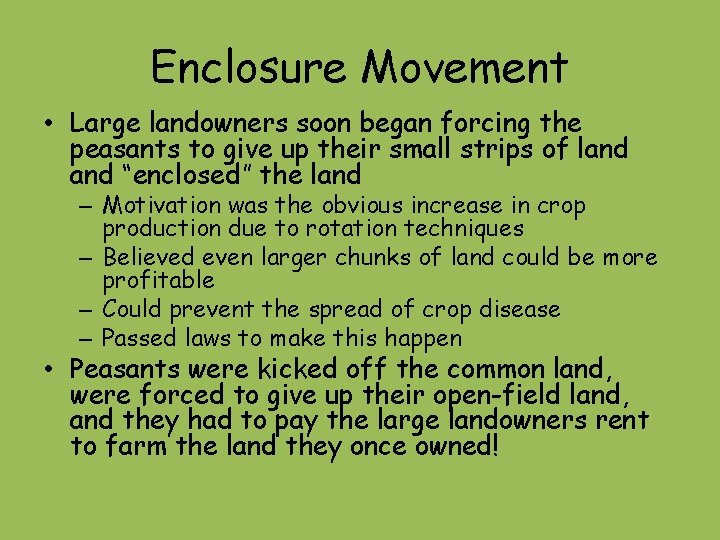
In England and Wales from the 12th Century forward enclosure (or inclosure) was a common practice. Before enclosure, much of the land was only used during the growing season. Once the harvest took place, the was at the disposal of the community. People grazed their livestock freely upon the land. They also found other uses for it. Enclosure occurred when someone, usually the manorial lord, put up a fence or a hedgerow to separate open land and the land the lord chose to claim. This prevented common grazing rights. 

The article on enclosure on Wikipedia says, “Enclosure (sometimes inclosure) was the legal process in England of enclosing a number of small landholdings to create one larger farm. Once enclosed, use of the land became restricted to the owner, and it ceased to be common land for communal use. In England and Wales, the term is also used for the process that ended the ancient system of arable farming in open fields. Under enclosure, such land is fenced (enclosed) and deeded or entitled to one or more owners. The process of enclosure began to be a widespread feature of the English agricultural landscape during the 16th century. By the 19th century, unenclosed commons had become largely restricted to rough pasture in mountainous areas and to relatively small parts of the lowlands.

[For a more thorough explanation of the Enclosure Act, please visit The Practice of Enclosure on this blog.]

In my latest tale, “Lord Radcliffe’s Best Friend,” Hendrake Barrymore believes one of the barriers between him and Miss Adelaide Shaw is his father’s use of the Enclosure Act to secure water rights once shared with Adelaide’s father. Yet, he is soon to find more “personal” barriers lie between them.

Hendrake Barrymore, Lord Radcliffe, is a typical male, a bit daff when it comes to the ways of women, especially the ways of one particular woman, Miss Adelaide Shaw, his childhood companion, a girl who plays a part in every pleasant memory Drake holds. 

Yet, since he failed to deliver Addy’s first kiss on her fifteenth birthday, his former “friend” has struck him from her life just at a time when Radcliffe has come to the conclusion Adelaide is the one woman who best suits him. 

This tale is more than a familiar story of friends to lovers for it presents the old maxim an unusual twist.

Excerpt from first part of Chapter One:

Tuesday, 14 September 1819, Kent, England

“I am going to kill him!” Hendrake Barrymore, Lord Radcliffe, growled as he looked down upon where his neighbor’s stallion was doing his best to bring another of Drake’s prized mares to foal.

“Dost ye mean to kill the horse or its owner?” Jack McGuyer asked with a grin. 

Drake required no prompting from his steward to bring forth an image of Lord Bernard Shaw nor of the baron’s daughter, Adelaide. Drake had never understood his attraction to the woman. As an earl, he could have his pick of the crop of beauties making their Come Outs for the Season, but none of them could hold a candle to Adelaide. She had inherited the best of both her maternal and paternal ancestors. Her hair was a chestnut brown, rich with hints of gold, and her eyes were a coppery-brown, sparking with fire. She was tall enough not to appear petite when standing beside him, which she rarely did these days unless they both exited the Sunday services at the same time. Then she would acknowledge him before excusing herself to speak to anyone but him. 

There had been a time when they were inseparable, roaming the hills and valleys making up their fathers’ estates. Then he had been sent off to school and had returned home full of himself—too concerned with arrogance at being the future earl to find time to spend with the one person he had always considered as important to his self-worth as were his parents. It was only later that he suspected he did not seek her out because he did not want to hear what she would say regarding the road he had been traveling, and Drake held no doubts, Adelaide Shaw would have had an opinion—she always did, and it would be one he did not want to hear. 

Yet, soon, everything changed for both of them. It had been her fifteenth birthday. He, or rather, he should say, his mother, had presented Adelaide with two song birds in a cage, a gift from his family, and Addy had seemed so pleased to have them. She kept giving him looks, that, at the time, he did not understand, but would be thrilled to receive today. Then he had made a colossal error. Drake could remember the moment as if it had occurred yesterday. His friends Lord Randolph French and Mr. Charles Scott had accompanied him to Cliffe House, and, unlike his previous holidays at the manor, he had ignored Adelaide completely until the evening of the celebration of her birthday. 

His friends had teased him, egging Drake on until he maneuvered one of Lord Shaw’s maids into what he thought was an empty room so he might steal a kiss. He had never treated a servant of his father’s house or Shaw’s as such, but French and Scott had kept saying it was all a “lark” and expected of young lords. As the maid quickly agreed, Drake had foolishly thought them correct. Stealing a kiss from a female servant was part of proving one was a man. 

Unfortunately, Addy was in the room he had chosen. It was not until days later that he had wondered why she had been lurking in the shadows of her family’s library. Had she planned an assignation of her own? The idea bothered him more than he would care to admit at the time, but not enough to consider his pursuit of the maid as being any more than proof he could seduce a willing miss. He meant to demonstrate to his friends his “way” with willing women. 

He had just tugged the maid into the room behind him and closed the door, positioning the girl along the wall, when Adelaide showed herself. “What do you think you are doing?” she demanded in sharp tones, which she had rarely used with him in the past. 

He had searched for an explanation, but none came to him readily enough to satisfy Adelaide. Angry, she had struck him then—not a simple slap, but rather a solid punch to his side. If the blow had not made him wince, Drake would have known pride: He had taught her how to punch so as to deliver a powerful blow while not breaking her thumb or any of her fingers. “You derelict!” she charged. “I thought you above such manipulations, but you are no better than those two coxcombs who accompanied you to my father’s house this evening!”

“Now, Addy,” he began, finally finding his voice. 

She punched him a second time, this one landing against his bicep. “Do not ‘Addy’ me, Hendrake Barrymore! I am ‘Miss Shaw’ to you, as you are ‘Lord Chadwick’ to me.” She turned her venomous tone on the maid. “If I were you, Iris, I would return to my ‘assigned’ duties and pray my mistress has a poor memory.” The girl curtseyed and scampered quickly from the room. 

He and Adelaide stood in silence for a few brief moments, eyeing each other in a manner he had never thought to consider. When had Adelaide Shaw become such a fetching female? She stood there, chest heaving in anger, and he felt his manhood come to life. Regrettably, Addy did not appear to know the same awareness of him as he had experienced for her. “You do not mean to offer me an excuse for your behavior?” she demanded. 

Although Drake was not proud of his intentions, he was not about to admit himself in the wrong, especially to her. She was not his parent. It was not necessary for him to answer to her. “It was only to be a simple kiss, Miss Shaw,” he said with a hint of authority, after all, he was the son of the Earl of Radcliffe. 

“For you, perhaps, it was a simple kiss,” Adelaide had countered. “However, your actions have likely cost Iris her position in my father’s house. Her regrets will fall on my mother’s deaf ears, for the baroness does not tolerate such foolishness from her household staff. It will be considered by both Lady Shaw and Iris as more than a simple kiss before this evening knows an end.” 

Drake had not considered the ramifications of his actions in those terms; he had only thought of proving his manhood to his friends. “What do you wish of me, Adelaide? I have apologized. If you wish me to speak to your mother in Iris’s behalf, I will. I do not wish Iris to lose her position because of me.” 

“What do I wish from you?” she repeated in what sounded of frustration. 

“Yes,” he answered in equal dismay. 

“I shall tell you what I want, my lord,” she accented each of her words by poking him in the chest with her index finger. “I want the return of my friend—the young man who was good and kind and thoughtful. I want that man to return to his sensibilities. I do not much care for the man you are becoming. I fear the earldom is doomed if this is the type of man you have designed for yourself.” 

He caught her finger and forcibly held her hand against his chest. He said softly, “I am the same Hendrake Barrymore you have always known, Adelaide. I promise.” 

“No, you are not,” she said as tears filled her eyes. “The Hendrake Barrymore I know would have recalled what he promised me on my twelfth birthday.” 

Drake searched his memory as to what she referred. At length, it dawned on him. “On your twelfth birthday, when you attempted to kiss me, I told you we would share your first kiss when you were fifteen.” He would not have minded that kiss, for she was, in his estimation, suddenly very desirable. “You wished a kiss when you were twelve and I was sixteen, but I told you you must be closer to becoming a woman to appreciate fully such a kiss.” Belatedly, he realized he had always been fascinated by Adelaide Shaw: She had been more than a valuable friend; she was his truest companion, the one who provided his life the perfect balance. The one who kept him on the straight and narrow. The one who wanted only the best for him. “I would still be willing to share your first kiss, Addy.” His breathing hitched higher, anticipating the possibilities. 

She shoved away from him then. “I fear you are too late, my lord. My first kiss, or should I say, the echo of one, occurred in this very room not ten minutes prior. I found it quite dissatisfying! As to my second kiss, I would prefer it came from a man who held the same values as I. Enjoy your pursuits, my lord, wherever they may take you.” Then, she walked from the room and, essentially, from his life. Afterward, he had made multiple overtures to return to what they once had shared, but six years later, they were no closer than they had been when she left him standing alone in a dark room and regretting his choices. The one woman he wished to court—the one woman he thought might bring satisfaction to his world—despised him. 

His late father had complicated the situation by enacting his Inclosure rights when after two years of wet summers, they had experienced one of the driest springs and summers in the history of the area. The previous earl, who had gladly shared a stream on Radcliffe land with his neighbors, had chosen, first, to place a fence around the open area where others had watered their livestock and, then, diverted the water to save his own crops. It had been a hard decision for Drake’s father to make, but one with which Drake had essentially agreed. Their first responsibility had been to the hundred and twenty families who depended directly upon the estate. 

Consequently, the move had infuriated many, especially Lord Bernard Shaw, Adelaide’s father. The move had laid the grounds for a rift between Drake’s and Addy’s families: A move for the survival of the earl’s estate and Drake’s foolish attempts to prove himself a man.

“What do you wish me to do about the mare?” McGuyer asked. 

“Move her back to the small pasture behind the barn. Keep all the mares there until I can settle this with Lord Shaw. Contact Lord Shelton and inform his lordship we must wait before we match his stallion with our Everlee. Ask Shelton if he wishes to choose a different mare or to wait. Offer his lordship our deepest apologies.”

“Shelton shan’t be happy. Everlee’s blood lines were what interested the viscount.” McGuyer cautioned. “He wanted to purchase the foal for his own line of horses.” 

Drake shook his head in acknowledgement of the truth. “I will make amends to Shelton. Meanwhile, send some of our men out to repair the fence. Evidently, Shaw’s people did a slipshod job. It appears part of it is down. Likely how Shaw’s horse crossed into my pasture.” 

“Aye, sir,” McGuyer said as he took up the reins again to chase down the mare. Before the steward rode away, though, he nodded to the opposing hillside. “Trouble approaching, sir.” 

Drake looked up to view Addy Shaw looking down upon the horses below. Other women would have been embarrassed by the scene of nature taking its expected course, but not Adelaide. Instead, she motioned the two grooms who accompanied her to fetch the stallion, before setting her horse on a slow, ambling descent to the valley below. Although she had presented him no form of acknowledgement nor a request for him to join her, Drake recognized her intent and gently nudged his gelding into motion. A long overdue confrontation awaited him. 

Visit again on Friday to read the second half of the chapter and for another chance to win a copy of the book.

GIVEAWAY: I have 3 eBook copies of “Lord Radcliffe’s Best Friend” available to those who comment below. The giveaway will end at midnight Tuesday, September 14, 2021. Winners will be notified shortly afterwards. GOOD LUCK!

Purchase Links:

Kindle   https://www.amazon.com/dp/B09D8YJ5NG?ref_=pe_3052080_276849420

Kindle Unlimited  https://www.amazon.com/kindle-dbs/hz/subscribe/ku?_encoding=UTF8&passThroughAsin=B09D8YJ5NG

Posted in book excerpts, book release, British history, eBooks, estates, excerpt, Georgian England, Georgian Era, giveaway, history, publishing, reading, reading habits, Regency era, Regency romance, romance, writing | Tagged , , , , , , , , , | 6 Comments

Agriculture and Other Business, a Guest Post from Colin Rowland

This post originally appeared on the Austen Authors blog on 29 June 2021. Enjoy!

It seems to be a common assumption that Mr. Bennet was not well off. His daughters’ dowries were small and Ms Austen left me with the impression he was just scraping by, but are these widely held beliefs correct? Let’s take a look at the facts:

http://passionforthepast.blogspot.com/2011/08/early-farming-tools-from-days-gone-by.html

While we are never informed of the size of Longbourn, it is possible to make some educated guesses, based on his annual income of £2,000. This would probably have come from more than the rent derived from the tenants crop production, although that would have been growing due to changes in land management that greatly increased yields and the quality of the harvest. The introduction of equipment such as the seed drill, invented by Jethro Tull (minus the flute, although he was ‘Living in the Past’, and it is a great song, lol. I tried, but couldn’t find a way to insert a reference to ‘Locomotive Breath’, so I’ll settle for this), enabled higher crop yields due to straighter, more uniformly planted crop rows, and precise seed placement. Gone were the days of the tenant sowing crops by flinging the seeds to germinate wherever they landed. Mr. Tull was also a proponent of using the mechanical hoe, which meant that tenant farmers could protect their higher yields with a machine that killed the weeds threatening their crops.

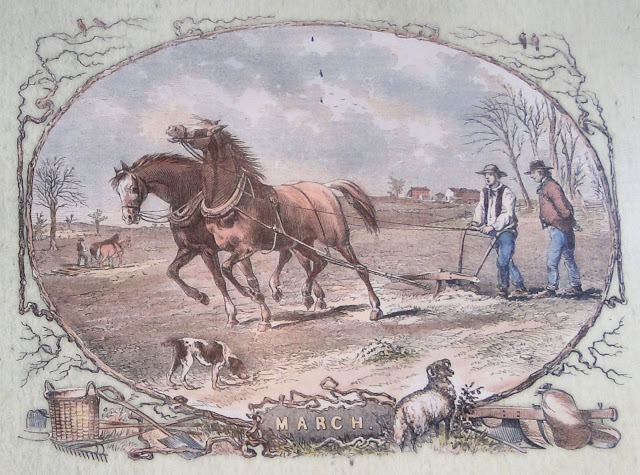
Beginning in the sixteenth century, the estate owners enclosed their tenants’ plots with hedges, or fences of stone or wood. The practice was initially opposed by the poorer farmers because it interfered with the way things had been done for generations, and negatively affected their income. For the estate owners there were numerous advantages, chief among them being the protection barriers gave against weed infestations from neighboring plots, and keeping livestock or other intruders out of the planted fields.

Crop rotation was introduced, which meant that fields didn’t need to lay fallow every second year to regenerate. With proper cycling, what was depleted by one crop could be replaced by the next year’s planting, and so on down the line. This again increased yields, which had the added benefit of higher tenant earnings. It was not uncommon to have a tenant’s sons and daughters well educated, which in turn increased their standard of living. When the tenant passed away or retired, his son would commonly take over the farming of the lease, having inherited it from his father.

A note of clarification, in case anyone misinterpreted my previous sentence. A tenant’s sons could not inherit the land their father farmed, but they could inherit the lease on the land. The practice was beneficial for both the estate owner and the tenant. The master of the estate had continuity in the management of his fields, and the families had the security of knowing they would not be thrown out on their ear should the father or husband pass away.

Livestock was another area that saw higher yields. With better land management and bigger harvests, land could be set aside for pasture, meaning estates were able to increase the size of their herds. As different crops were planted, the livestock could be turned out onto the harvested fields to graze.  Animal husbandry, when it came to cattle, also progressed as the estates kept more animals. The larger herds enabled another source of income as pork, and beef especially, was offered for sale at lower prices and in greater commodities.

Timber harvesting and selling, as well as mining, was another source of revenue. Even though railroads were a few years in the future, a growing system of canals aided in shipping commodities to cities and markets a good distance away.

With all of these income sources, was Mr. Bennet poor, barely scraping by on his meager £2,000? According to the 1801 census, the top 6000 esquires, which is the class Mr. Bennet belonged to, averaged £1,500 per year, so his income was actually above average! Methinks (far-be-it from me to avoid an esoteric reference to Shakespeare. I have some class, although how much is debatable) the lack of dowries and other financial constraints alluded to in the book were a result of poor planning on his part, which he makes reference to in discussing the lack of dowries, or Mrs. Bennet’s mismanagement of her pin money and constant harping at her husband for more. She strikes me as the type of person who would spend like a drunken sailor as soon as the money hit her hand, and he seems to be a man who might have a difficult time reigning in his wife’s bad habits.

So to answer my original question, was Mr. Bennet a poor man? In my opinion, any poverty he and his family might have suffered was probably self-induced.

Slides from The Agricultural Revolution European Expansion 1650-1850 Chapter One https://slidetodoc.com/the-agricultural-revolution-european-expansion-1650-1850-chapter/

Posted in Uncategorized | Comments Off on Agriculture and Other Business, a Guest Post from Colin Rowland

The Provisions of Oxford

Most people know something of Oxford, England, through Oxford University, the home of England’s first university.

However, Oxford is also known for the “Provisions of Oxford,” which in 1258 placed the king under a Council of Fifteen. All this began in 1167 with the rebellious Archbishop Thomas à Becket’s escape to France. King Henry II irritation with his archbishop translated into his ordering all English students who were studying in France to return to England. Naturally, many began to set up halls of learning at Oxford, for Oxford had been considered a place of scholarly debate since the days of Alfred the Great. University College was founded by William of Durham in 1249.

Angered by Henry III’s costly foreign commitments, Simon de Montfort and other nobles holding baronies met at Oxford in 1258 to discuss what was to be done. The Provisions of Oxford were written, affirming and refining the Magna Carta’s doctrines. Basically, the document formally stripped the King of his “absolute” power — to accept a new form of government.

The King was placed under the authority of a Council of Fifteen, to be chosen from twelve nominees from the King and twelve nominees recommended by the so-called “reformers.” King Henry was required to consult the Council of Fifteen for permission to handle “the business of the King and of the Realm.” The group was to meet several times a year at a Great Council, essentially forming what is now know as the Parliament in the United Kingdom.

The sheriffs of the counties in England received written confirmation of this action to share with their constituents.

The chief ministers, the Justiciar and Chancellor were to be chosen by and responsible to the Council of Fifteen, and ultimately to the community of the realm at regular parliaments to be held three times a year. This was revolutionary. It was the most radical scheme of reform undertaken before the arrest and execution of King Charles I in the 1640s. In addition to controlling the central government, the reformers, urged on by swelling discontent among the lesser aristocracy, townsmen, merchants and freemen in the localities, began an investigation into abuses of local officials and a reform of local government. These reforms show the growing power of social groups beyond the major barons, who though still leading the reform, evidently felt they could not ignore popular discontent. In this regard they introduced reforms that were even harmful to their own local interests. [UK Parliament]

Unfortunately, Henry ignored these demands, which led to war between the King and his barons.

In response, Simon de Montford summoned the barons of the land, many knights of the shires, and some burgesses to meet at Westminster to decide upon their response to the King. This was the world’s first representative government or Parliament.

The Provisions of Oxford also claimed the “fame” of being written in several languages, so all the citizens might understand: English, French, and Latin.

Check out The Provisions of Oxford Lesson on You Tube

Other Sources:

The Magna Carta, the Great Courts, and the Provisions of Oxford

Provisions of Oxford

The Provisions of Oxford 1258

The Provisions of Oxford, 1258

The Provisions of Oxford – 1258

Responses to the Provisions of Oxford

Posted in British history, England, Great Britain, history, kings and queens, medieval, political stance, real life tales, world history | Tagged , , , , , , , , | 3 Comments

The Importance of Being Charlotte, a Guest Post from Elaine Owen

This post originally appeared on the Austen Authors’ blog on 20 May 2021. Enjoy!

I think Charlotte Lucas is underrated. Do you agree? Readers of Pride and Prejudice tend to overlook Charlotte as a minor character who serves little purpose but in my opinion this is a mistake. Charlotte is a strong character in her own right, and she also serves as a warning and as a plot device. Simply put, without Charlotte Lucas there would be no Pride and Prejudice! Let’s take a closer look at this secondary but crucial character.

First, Charlotte is set up almost as an anti-heroine to Elizabeth. She is rather plain in appearance and she is twenty seven years old, so she’s an old maid in regency terms, unlike Elizabeth, who is both attractive and young. Charlotte’s father is a bit of a name dropper and social climber, so her continuing singlehood is probably somewhat disappointing. Unless something changes, all she can look forward to is a lifetime of being a burden on her family. 

Charlotte is a keen observer of her surroundings and a good judge of character. She notices Darcy’s interest in Elizabeth long before Elizabeth does, while they are still in Meryton, and she suspects it again at Hunsford. She is also the one who realizes that Jane is not doing enough to encourage Bingley and predicts that her reticence may have dire consequences. 

Despite the friendship between Elizabeth and Charlotte they look at love and marriage entirely differently. Elizabeth is still young and idealistic, and she insists that she will only marry someone she is in love with. But Charlotte, being older and more cynical, knows that love might never happen. Her unmarried state has driven her to extreme practicality, so she will accept any husband who is respectable and can provide a decent living, even if she doesn’t care for the man personally. In this way Charlotte serves as a warning. She is the woman in the mirror, the image of who Elizabeth  may become if she does not find someone who meets her high standards.

But Charlotte is also critical to the entire plot of Pride and Prejudice! Think about what would change in the story if Charlotte did not exist: 

  • We would have very little idea that Darcy admires Lizzy in Meryton. We might wonder what he is thinking, but without Charlotte’s astute observations we would be as clueless as Elizabeth.
  • Mr. Collins would still propose to Elizabeth, and she would still turn him down. But then, in all likelihood, Collins would propose to Mary. The Bennet’s financial worries would be over!
  • With no married friend to visit, Elizabeth would never go to Hunsford. She and Darcy would likely never see each other again. 

Most importantly, without Charlotte there would be no window into what life looks like when one marries respectably but without affection. One of the main themes in the novel is the idea of marrying for love versus marrying for more practical considerations. In Charlotte’s marriage we see that the ideal marriage should unite both.

What do you think of Charlotte? Did anything written here make you think differently about her? Please tell me below!

Posted in Austen Authors, Guest Post, Jane Austen, Pride and Prejudice, reading, writing | Tagged , , , , , | 4 Comments