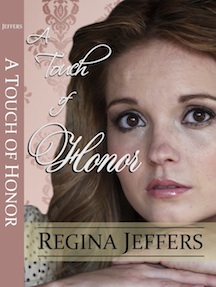
Celebrating “Regency Missives and Mischief,” our latest Dreamstone Publishing Christmas Anthology Releasing Today!!!

Today is the release date for Regency Missives and Mischief. This year’s anthology plots center around how an “innocent” bit of correspondence – a letter perhaps or a misplaced note – can change the events in a story (and in someone’s life).

Seven delightful Regency Christmas stories from best selling and award winning authors.
Each one of these stories involves, in some way, a letter – letters which set in train a series of events that lead to unexpected adventures and, of course, eventually to love and Happy Ever Afters!

Seven delightful Regency Christmas stories from best selling and award winning authors.
Each one of these stories involves, in some way, a letter – letters which set in train a series of events that lead to unexpected adventures and, of course, eventually to love and Happy Ever Afters!

This anthology contains

Lady Augusta’s Letters by Arietta Richmond
A letter misplaced, a ship wrecked on foreign shores, a love thought lost, a journey through terrible hardship, faith rewarded by love regained.
When letters written are not always delivered as they should be, fate can intervene in the best and worst of ways.

His Christmas Violet by Regina Jeffers
They have loved each other since they were children, but how does Sir Frederick Nolan convince Lady Violet Graham to marry him, when she is most determined never again to permit any man dominion over her person?

Heartache and Holly by Summer Hanford
For seven years, Roslyn has carried on a secret engagement with the love of her life, William, with only the letters they exchange to sustain her. Now, William is back on English soil but the letters have stopped. With their time to be together at hand, has he suddenly changed his mind?

The Letter by Janis Susan May
Two correspondences intercepted and diverted, ten years apart, create a tangle which destroys lives. Can Antonia’s well intentioned intervention save them all, or will it make the situation worse?

A Letter for Miss Brixton by Emma Kaye
Miss Brixton has fallen in love. There is just one small difficulty standing between her and happiness. The entire courtship has been carried out through letters – and both she and her love have, from the start used pseudonyms. And to make matters worse, his letters have stopped coming…. How can she find him? Is there no hope for their love? Or has there been a secret plan behind it all, from the start?

Miss Remington’s Steely Resolve by Ebony Oaten
Ladies of the quality do not engage in anything approaching trade. Well, unless they have the camouflage of a widowed aunt to be the face of an enterprise, and grant it respectability. Amelia believes that she will continue as she has been, helping others find the perfect match, and never marrying herself. It is a belief which is sorely challenged by a most unusual customer, and a series of events which begin to unravel everything she has built for herself. Can she trust the solution she is offered? Or is love too much to risk?

The Marquess’ Christmas Match by Olivia Marwood
Becoming a governess seems the best way to save her family from penury, and allow her sisters a Season, as well as allowing Georgiana to avoid the unwanted advances of the cousin who inherited her father’s title. Except… the unpleasant new title holder continues his pursuit. Can the Marquess whose sisters she cares for help her unravel the puzzle, and win her heart? Or will ruin come to everything she cares for?

If you love Regency Romance, and Christmas, then this is the holiday read for you!

My contribution to this year’s Christmas anthology is a tale called “His Christmas Violet.” It involves a “more mature” couple, who missed their chance for love when they were still quite young. Now, a world of possibilities exist. Their spouses have been buried for a respectful time of grieving, plus a few extra years. They reside in the same county and neighborhood. They have known each other since they were children. What more could they ask?

Therefore, Sir Frederick Nolan is bound and determined to make Lady Violet Graham his wife. They had been denied a chance at happiness when he was a young man. Violet, on the other hand, is not so certain she wishes to be tied to any man ever again. Her marriage to Lord Giles Graham had been anything but comfortable. Lord Graham never raised his hand to her, but her late husband had his ways of manipulating and controlling her every move. Now, she is a widow, and she possesses rights her married friends do not. Violet is not willing to give up her jointure rights and other privileges she has “earned” as Lord Graham’s widow.

Short Excerpt from Chapter One:

Sir Frederick stopped before her, removed his hat and bowed. “Good afternoon, my lady. Mrs. Bowers,” he said politely. “Might I join you?”

Emily responded before Violet could gather her wits about her. “Please do, sir.” Violet noted Emily’s use of coquettish tones, and she turned to her friend to present her a “how dare you” glare, but Emily was too busy batting her eyelashes at Sir Frederick to take note of Violet’s disapproval. Thankfully, Frederick had yet to present Emily more than a cursory glance. Instead, his attention had landed fully on Violet, and she resisted the urge to squirm. 

He adjusted his chair and sat between her and Emily before motioning the owner to deliver a fresh pot of tea. “And what are you ladies doing in town?”

Violet said, “I was just about to ask the same of you.” 

He smiled at her. “I came to speak to my man of business and thought I might also call in at the stable. You see, my lady, I am seriously considering in acquiring both a new horse and a new wife. I wish to make certain both, but especially the lady will be provided for properly.” 

His news was a shock for Violet, but, before she could compose her thoughts, Emily asked, “You have already chosen a new mate?” Her friend appeared quite dumbfounded by the possibility. 

“I have, ma’am,” he said simply. 

“Have you made an offer of your hand?” Emily continued to question him. 

He glanced to Violet, but appeared quite satisfied in answering Emily’s inquiries. “I have yet to win the lady’s permission to court her, but I pray she will agree. She is the only woman I might consider marrying.” 

“I . . . I see,” Emily stammered, as she gathered her belongings. “Then . . . then I wish you success, sir.” She turned to Violet. “I despise leaving so suddenly. I just took note of the time and realized I promised Mrs. Williams I would call upon her today about the charity’s need to assist the poor.” 

Violet knew Emily had already called upon the vicar’s wife on this day, but she assumed her friend knew a bit of mortification for flirting with a man who meant to marry another. “I am sorry you must leave so soon. I shall send a note around later in the week, and we may continue our conversation then.” 

Emily nodded her agreement and rose quickly. Frederick also rose to bid her a ‘“Farewell,” and within seconds Emily was gone. 

“That was odd,” Sir Frederick said as he resumed his seat. “Was it something I said which offended her?” 

Violet frowned again. “Emily is at sixes and sevens since her widowhood. The Williamses provide her counsel, and she finds the church’s charities worthy of her time.” 

Frederick tilted his head in serious consideration. “Then she was truly flittering with me? I assumed so, but I did not want to appear presumptuous.” 

“Some women are lost without a man’s guidance,” Violet observed. 

The tea arrived, and their conversation paused until they were alone again. 

“I assume you are not one of those women,” he observed with a lift of his brows. 

“If you are asking if I ever see myself remarrying, I would be remiss if I did not dissuade you or anyone else foolish enough to ask. Lord Giles Graham was a good man, but you and I are both aware my late husband was also a very regimented man, who despised any sort of spontaneity or disorder. You have known me since I was a child and will likely realize ‘perfect order’ was often difficult for me. Therefore, I do not wish to place myself under the rule of another man.”

Feeling a bit uncomfortable with her statement, Violet sipped her tea before saying, “Now, tell me, who is the fortunate woman on the receiving end of your affection?”

He chuckled easily. The sound of his laughter rumbling about in his chest brought a shiver of awareness to Violet’s spine. “After your most eloquent speech, I should likely be silent on the subject, but, as I know how ‘spontaneity’ is part of your nature, you will recognize a certain plainspoken tendency as part of mine.”

“I do,” she murmured, waiting with anticipation for his pronouncement. 

“Then you will hear my honesty when I say, I have no wish to remarry unless my next bride is you, Lady Violet.” 

The deep timbre of his voice and his closeness set her heart racing. 

It was her turn to be dumbfounded, but she had no opportunity to respond, for he stood suddenly. “Think upon it, Violet.” With that, he turned and placed several coins in the hand of the proprietor, before exiting the shop. 

All Violet could do was stare at the door through which he had departed. Sir Frederick Nolan wished to marry her? Her? She shook her head in denial. Even for the most compelling gentleman of her acquaintance, and Sir Frederick definitely fit those words perfectly, Violet was not about to abandon her well-earned freedom. Setting her shoulders in renewed resolve, she rose also, gathered her belongings, thanked the proprietor for his service and returned to her carefully constructed life. It would be a cold day in purgatory before she placed her life in the hands of another man, no matter how deliciously handsome her pursuer might be.

PURCHASE LINK:

On Kindle for only $0.99 for the anthology https://www.amazon.com/dp/B09JWV49JK?fbclid=IwAR2Hpb-147G4xCVdLcRUzyDjb10AIkZsbto8Z8H7JCaEoBu-ArCBNO7TTFg

Posted in anthology, book excerpts, book release, Dreamstone Publishing, eBooks, excerpt, historical fiction, holidays, Living in the Regency, reading habits, Regency era, Regency romance, romance, writing | Tagged , , , , , , , , , , , | 2 Comments

A Widow’s Rights Play a Large Role in my “His Christmas Violet” Release – What Was English Law on the Matter?

In my tale, His Christmas Violet, part of Regency Missives and Mischief, the heroine, Lady Violet Graham, is a widow. Being a widow at the time, particularly, women in the aristocracy or gentry class, provided a woman more freedom than she ever could expect in remarrying. She would customarily receive some sort of allowance to live on. Often, she would have access to the dower house. Lady Violet believes she has “earned” those rights, and, so, when Sir Frederick Nolan announces his intentions to make her his new wife, Violet wants NONE of the matter, even though, she has privately loved Sir Frederick since she was a young girl. Yet, our Violet worries Sir Frederick will be as high-handed as was her late husband, Lord Giles Graham.

Therefore, a basic understanding of a woman’s rights after her husband passes is required to move the story along. Here are some of the key points.

English Common Law provided a widow a life interest in one-third of the freehold lands her husband owned at the time of their marriage. She could not be denied these rights unless she was found guilty of treason, felony, or adultery. The law of dower gave a wife one-third of any property a man held on his death. That excluded entailed property, for the most part. However, the husband could defeat dower by leaving his wife as little as £50. The Court of Chancery did rectify such lapses if the widow had the resources or the  friends to help her bring suit and there was any property or money to be had. The court looked to the amount of the dowry and the position the widow had held as wife. Obviously, the court would see that a countess was provided for better than the widow of a vicar. Unfortunately in this cases, the countess had had a father or guardian who made sure iron-clad settlements were drawn up, whereas the vicar’s wife might not have been so lucky.

Even if the father did not bother to arrange the marriage settlements before the actual marriage (i.e., an elopement), and the husband did not leave his widow anything in his will, she was, as previously explained, supposedly entitled to one-third of his own estate. This is called her dower. She was to ask the sheriff to see that this was arranged properly. However, quite often the husband had no property he owned outright, as it was all entailed. Then, she would have to petition the Court of Chancery for a sum upon which to live.

It was difficult for a husband to set up a trust for his wife during his lifetime, other than in a will, if doing so was not accomplished before the marriage. Because a husband and wife, under law, were considered one, he could not legally give himself his own money. There were cases where a husband did give the wife money and wrote it out that this money was to be hers to do with as she would. However, in such one case where the woman took that money and purchased houses, she lost the property without recompense when her husband died, and the heir sued to have the houses declared part of the estate. Other situations that were deemed illegal included where the husband gave his wife money in a trust and then raided the trust, presented her property and then sold it for his profit, etc.

The Oxford Reference defines the Statue of Uses as, “The use was a legal device whereby property could be held by one person for the benefit of another, e.g. when a landowner was absent on crusade. But, by extension, it might be employed to evade or avoid obligations, defraud creditors, or escape legislation against mortmain. Henry VIII pressed strongly that uses should be restricted, arguing that his revenue was affected, but the Parliament of 1532 was unwilling to legislate and was told sharply ‘not to contend with me’. In 1535 Parliament accepted 27 Hen. VIII c. 10, which complained of ‘subtle inventions and practices’ and restored obligations to the beneficiary.” The “jointure” came into practice with the Statue of Uses. It was a settlement on a bride by her future husband of a freehold piece of property to be used to secure her widowhood. The bride was required to surrender her dower (not her “dowry,” although the terms can be confusing). 

Later in the 19th Century, wives lost their right to inherit, meaning in the 1830s, if the woman had no jointure rights recorded in her husband’s will, the widow could be left without anything upon which to survive. She could also lose the right to the property if she remarried. It would automatically revert back to his heir. 

Jointures were usually payable be the heir of the estate as an annual payment, which was equal to one-tenth of the dowry she brought to the marriage. This number was established because it was assumed that the wife would outlive her husband by ten years, for that was often the difference in their ages when they married. She would receive this payment for the remaining days of her lifetime. Thereafter, the principle would be allotted to her children. Providing the widow one-tenth of what she brought into the marriage meant she received back her dowry. The percentages were per year. The amounts were generally paid quarterly. The formula generally followed this plan: pin money was 2% of the dowry, while jointure was 10%.

As stated above, the jointure is usually set forth in the marriage settlements, which is a prenuptial or ante nuptial agreement. These funds are supposed to come to the widow without let or hindrance. However, it is often set up to be the income from some piece of land. If there is no income from said land, she is out of luck.

Yet, if the husband had not set up a jointure (her annual annuity), but, rather, left her a small sum in his will, that was all she would receive. Or if the heir was not her son, and the estate was encumbered by a mortgage, she might have a problem receiving either the jointure or the dower.

She was supposed to receive a sum large enough to allow her to live decently according to her rank, but not all knew equality under the law. There were even cases where the man left most of his cash to a grandson of a child by his first wife. In a few such cases, the courts felt the widow should have the return of most of her dowry, if nothing else.

PURCHASE LINKS:

PreOrder on Kindle. $0.99 is the cost for the anthology https://www.amazon.com/dp/B09JWV49JK?fbclid=IwAR2Hpb-147G4xCVdLcRUzyDjb10AIkZsbto8Z8H7JCaEoBu-ArCBNO7TTFg

It will also be available on Kindle Unlimited on November 5.

Posted in anthology, book release, British history, Christmas, Dreamstone Publishing, Georgian England, Georgian Era, heroines, historical fiction, publishing, real life tales, Regency romance, research, writing | Tagged , , , , , , , , , , , , , , , | Comments Off on A Widow’s Rights Play a Large Role in my “His Christmas Violet” Release – What Was English Law on the Matter?

Happy Early 47th Birthday, Matthew Macfadyen!!!

I am being a bit self-indulgent with this post. I adore Matthew Macfadyen’s work, and, as I am tied up this week with other things. Moreover, what is wrong with a revisit of a previous post? Sometimes LIFE interferes. Matthew Macfadyen will be 47 on Sunday. My how time flies! I have been following his work since long before he was “Mr. Darcy” in the 2005 Pride and Prejudice. Actually, I began following him in 1998, when I looked upon a scene in Wuthering Heights and he smiled. He possesses a captivating smile and LOTS of talent.

This bio comes from imdb.

Birth Name: David Matthew Macfadyen

Birthdate: 17 October 1974, Great Yarmouth, Norfolk, England, UK

Height: 6’3″ (1.91 m)

Matthew Macfadyen may have been born in Norfolk, but as the son of an oil worker he spent at least part of his childhood in Indonesia before finishing his education back in England and winning a place at RADA in 1992.

He won critical acclaim in the UK with his work with the stage company Cheek By Jowl in the 1990s and was well established as a stage actor when he made his first TV appearance in Wuthering Heights  (1998) (TV). A couple more TV roles followed, but it was his role as Tom Quinn, head of Section D, in the hit BBC series “Spooks” (2004) that really made his name at home. And, indeed, established his home – he met his wife, Keeley Hawes, while working on the show.

A steady stream of TV and film work followed, with his performance as Mr Darcy in Pride and Prejudice (2005) firmly establishing his name worldwide.


images-2.jpg images.jpg

Matthew-Macfadyen-Henry-IV-matthew-macfadyen-15004528-616-477.jpg Matthew-Macfadyen-Henry-IV-matthew-macfadyen-15004526-313-405.jpg 

imgres.jpgimages-1.jpg 

Posted in acting, Jane Austen, real life tales | Tagged , , , , , | 16 Comments

Reduced to a Tweet. The Lost Art of the Social Call, a Guest Post from Diana J Oaks

Social connection. It’s the pulse of civilization, the foundation of community, and a deeply held human need.  You might have guessed that I’m not necessarily talking about networking with influential people here. I’m talking about friendship, camaraderie, recognition, love, and belonging.  Jane Austen was particularly adept at infusing the relationships in her novels with an undercurrent vibrant with the nuances of social connection. Even the letters, though not face-to-face interaction, are deeply personal, written by the hand of the communicator. The texts, tweets and Facebook posts that are primary forms of interaction today are far removed from their ancient predecessor, the social call.

My thoughts have turned frequently over the past year and a half of social distancing to the once-common tradition of calling on one’s neighbors, friends, and acquaintances in their homes. Social calls were the glue that held Georgian, Regency, and Victorian societies together–at least for the gentry and upper classes. It’s how they tapped into the grapevine, networked, ministered to the poor and sick, navigated new, and nurtured existing relationships.

Consider that In Pride and Prejudice, Mrs. Bennet was highly attuned to social opportunities that might benefit her daughter’s marriage prospects, and so too, was Mr. Bennet. In that society, an introduction was required for ladies to form an acquaintance, but gentlemen could call on other gentlemen without the benefit of an introduction. In this scene, Mrs. Bennet is lamenting that Mrs. Long has been able to visit Netherfield, but she has not.

Mr. Bennet was among the earliest of those who waited on Mr. Bingley. He had always intended to visit him, though to the last always assuring his wife that he should not go; and till the evening after the visit was paid she had no knowledge of it.

… (fill in here with Mr. Bennet teasing his wife and daughters.)

“While Mary is adjusting her ideas,” he continued, “let us return to Mr. Bingley.”

“I am sick of Mr. Bingley,” cried his wife.

“I am sorry to hear that; but why did not you tell me so before? If I had known as much this morning I certainly would not have called on him. It is very unlucky; but as I have actually paid the visit, we cannot escape the acquaintance now.”

Mrs. Bennet exults when she learns that Mr. Bennet has called on Mr. Bingley.

In Northanger Abbey, we experience with Catherine the pattern of making a social call: Presenting a card at the door to a servant and waiting to learn whether you will be admitted. After being tricked into a social blunder the previous day, she fears she has offended Miss Tilney. Anxious to make it right, she is eager to call.

“Mrs. Allen,” said Catherine the next morning, “will there be any harm in my calling on Miss Tilney today? I shall not be easy till I have explained everything.”

“Go, by all means, my dear; only put on a white gown; Miss Tilney always wears white.”

Catherine cheerfully complied, and being properly equipped, was more impatient than ever to be at the pump–room, that she might inform herself of General Tilneys lodgings, for though she believed they were in Milsom Street, she was not certain of the house, and Mrs. Allen’s wavering convictions only made it more doubtful. To Milsom Street she was directed, and having made herself perfect in the number, hastened away with eager steps and a beating heart to pay her visit, explain her conduct, and be forgiven; tripping lightly through the church–yard, and resolutely turning away her eyes, that she might not be obliged to see her beloved Isabella and her dear family, who, she had reason to believe, were in a shop hard by. She reached the house without any impediment, looked at the number, knocked at the door, and inquired for Miss Tilney. The man believed Miss Tilney to be at home, but was not quite certain. Would she be pleased to send up her name? She gave her card. In a few minutes the servant returned, and with a look which did not quite confirm his words, said he had been mistaken, for that Miss Tilney was walked out. Catherine, with a blush of mortification, left the house. She felt almost persuaded that Miss Tilney was at home, and too much offended to admit her; and as she retired down the street, could not withhold one glance at the drawing–room windows, in expectation of seeing her there, but no one appeared at them. At the bottom of the street, however, she looked back again, and then, not at a window, but issuing from the door, she saw Miss Tilney herself. She was followed by a gentleman, whom Catherine believed to be her father, and they turned up towards Edgar’s Buildings. Catherine, in deep mortification, proceeded on her way. She could almost be angry herself at such angry incivility; but she checked the resentful sensation; she remembered her own ignorance. She knew not how such an offence as hers might be classed by the laws of worldly politeness, to what a degree of unforgivingness it might with propriety lead, nor to what rigours of rudeness in return it might justly make her amenable.

This passage makes it evident that much was riding on the crucial question of admittance by the person being visited.  If you’d like to learn more about all the nuances of social signals in the formal call, this article on calling card etiquette is excellent.

The Allens call on the Morelands to invite Catherine to go to Bath with them.

If you think through Austen’s novels, you’ll certainly come up with many references to calls made, since they are full of them. Darcy and Fitzwilliam calling at Hunsford, Lady Catherine doing the same, but for different reasons. Anne Elliot calling at Uppercross, and on her friend, Mrs. Smith in Bath. Emma calling on Harriet, Miss Weston, Miss Bates, and Jane Fairfax, etc. Emma coaching Harriet on the etiquette of paying a call to the Martins. Some of these visits feature what Austen called “cold civility,” while others show warmth and affection. In any case, I think a social call beats a tweet any day, although nowadays if you plan to pay a call, be sure to place a call to make sure it’s a good time. None of my friends have a butler to perform that service.

Anne Elliott calls on her friend Mrs. Smith, an act her father resents because she is expected to call on her titled relations instead.
Harriet pays a call to the Martins.

I would love to hear your thoughts and experiences. Have you paid a social call in the past five years or so? Have you ever left a personalized “calling card” that isn’t a business card? Do you appreciate people stopping by to visit? What do you consider proper etiquette for a social call in 2021?

Posted in Austen Authors, Georgian England, Georgian Era, Guest Post, Jane Austen, Living in the Regency, real life tales, Regency era | Tagged , , , | 1 Comment

Of Lace and Finery: Coded Language in Austen’s Novels, a Guest Post from Diana J Oaks

This post originally appeared on Austen Authors on July 26, 2021. Enjoy!

Jane Austen continues to astonish me. We turn again toward her use of clothing to inform her characters, this time focusing on the handful of references to lace and/or finery in her novels. Lace appears to be, in Austen-speak, a euphemism for empty-headed, trivial, vain, self-centered, and even vulgar. Perhaps this is due to the nature of lace; characterized by empty spaces and fragility in spite of the inherent beauty. In the context of the time period, machine-made lace was cheaper to produce than the time-consuming needlework or bobbin lace, rendering it an affordable luxury compared to the price of costly hand-made lace. Machine lace was the “cheap knock-off” of the Regency era. Connoisseurs of lace could detect the difference. Those who crafted it by hand even subtly changed the appearance so the machine lace didn’t replicate their work exactly. The sudden availability of affordable lace might also have influenced Austen’s use of this textile as a symbolic element in her characterizations.

In Pride and Prejudice, Mrs. Bennet’s enthusiasm for Mr. Bingley is nearly matched by her enthusiasm for lace.

“Oh! my dear,” continued Mrs. Bennet, “I am quite delighted with him. He is so excessively handsome! and his sisters are charming women. I never in my life saw any thing more elegant than their dresses. I dare say the lace upon Mrs. Hurst’s gown — ”

Here she was interrupted again. Mr. Bennet protested against any description of finery.

Mr. Bennet’s complaint against such speech is contrasted by what we learn of Mr. Hurst in the next chapter: that he was a man of more fashion than fortune.

Another Austen character who is known for her displays of finery, is Mrs. Elton, in Emma. Austen devoted no less than three passages from three points of view illuminating how ridiculous Mrs. Elton made herself by her mode of dress. The first to express disdain is Emma herself:

“Insufferable woman!” was her immediate exclamation. “Worse than I had supposed. Absolutely insufferable! Knightley! I could not have believed it. Knightley! never seen him in her life before, and call him Knightley! and discover that he is a gentleman! A little upstart, vulgar being, with her Mr. E., and her caro sposo, and her resources, and all her airs of pert pretension and under-bred finery. Actually to discover that Mr. Knightley is a gentleman! I doubt whether he will return the compliment, and discover her to be a lady.

Our next observer is just that. While the narrator details the scene, the thoughts are attributed to Emma’s brother-in-law, John Knightley.

 The day came, the party were punctually assembled, and Mr. John Knightley seemed early to devote himself to the business of being agreeable. Instead of drawing his brother off to a window while they waited for dinner, he was talking to Miss Fairfax. Mrs. Elton, as elegant as lace and pearls could make her, he looked at in silence — wanting only to observe enough for Isabella’s information…

In our last example, we view Mrs. Elton through the lens of Miss Bates, who, like Mrs. Bennet, personifies a bit of the ridiculous herself. Unlike Emma and John Knightley who were unimpressed with Mrs. Elton’s show of finery, Miss Bates’s impoverished status lends a naivete to her exclamations of awe over Mrs. Elton’s lace.

Stop, stop, let us stand a little back, Mrs. Elton is going; dear Mrs. Elton, how elegant she looks! Beautiful lace! Now we all follow in her train. Quite the queen of the evening!

In perfect Austen style, she flips the viewpoint in the final paragraph of the novel, and it is through a lack of sufficient lace that Mrs. Elton perceives herself as better than Emma in an act of lace-lorn snobbery.

The wedding was very much like other weddings, where the parties have no taste for finery or parade; and Mrs. Elton, from the particulars detailed by her husband, thought it all extremely shabby, and very inferior to her own. “Very little white satin, very few lace veils; a most pitiful business! Selina would stare when she heard of it.”

One more, and I will say, “point made” for this post. This is from Northanger Abbey. The thought forms in the mind of Mrs. Allen, so before we look at her thought, let’s find out how Austen has described her:

Mrs. Allen was one of that numerous class of females, whose society can raise no other emotion than surprise at there being any men in the world who could like them well enough to marry them. She had neither beauty, genius, accomplishment, nor manner. The air of a gentlewoman, a great deal of quiet, inactive good temper, and a trifling turn of mind were all that could account for her being the choice of a sensible, intelligent man like Mr. Allen. In one respect she was admirably fitted to introduce a young lady into public, being as fond of going everywhere and seeing everything herself as any young lady could be. Dress was her passion. She had a most harmless delight in being fine; and our heroine’s entree into life could not take place till after three or four days had been spent in learning what was mostly worn, and her chaperone was provided with a dress of the newest fashion.

And this is the lady, who, when she runs into a former acquaintance can only triumph at the superiority of her lace.

Mrs. Allen had no similar information to give, no similar triumphs to press on the unwilling and unbelieving ear of her friend, and was forced to sit and appear to listen to all these maternal effusions, consoling herself, however, with the discovery, which her keen eye soon made, that the lace on Mrs. Thorpe’s pelisse was not half so handsome as that on her own.

Had you made this connection in your reading or viewing of Austen adaptations? Can you think of any equivalencies in our day? We’d love to hear your thoughts!

Posted in Austen Authors, fashion, Georgian England, Georgian Era, Guest Post, Jane Austen, Regency era | Tagged , , , , , , | 1 Comment

The “British Aliens” in America During the War of 1812

While writing “Captain Stanwick’s Bride,” I spent a great deal of time researching personal papers, diaries, journals, and the like of people who lived during this second war between American and Great Britain. Many “Americans,” at the time, still claimed British citizenship, and, therefore, they were looked upon as the “enemy.” The year 2022 will be the 210th anniversary of that war.

One of the names which kept coming up during my research was that of Peter Curtenius. I mention Mr. Curtenius briefly in my tale, for during the War of 1812, he was the U.S. Marshal for the District of New York. He had been appointed to his position by Thomas Jefferson in 1806.

Much of Curtenis’s tenure involved overseeing British citizens living in New York. Curtenis left behind numerous letters between him and James Monroe, then with the Department of State. Monroe’s responses provided specific instructions on what Curtenis was to do about “British aliens.”

For example, in one of Peter Curtenius’s letters from Monroe, the future President of the United States, tells Curtenius to secure the nine British officers living in New York City, at the time, and see they were removed. “You are requested to order the officers to retire forthwith into the country, to such place, not less than forty miles distant from the city, as General Armstrong may designate. Should they refuse or decline to obey this order, you will take them into custody as prisoners of war. To the conduct of all other alien enemies, it is expected that you will pay a very strict attention.”

The idea of being an “alien” in the United States plays throughout much of my novel, for not only is Captain Myles Stanwick a recently “retired” British Army officer when he races across several states to reach Miss Beatrice Spurlock before the British launch an all-out attack against the Americans at Fort McHenry, near Baltimore, but the loyalty of Beatrice herself, who is a Powhatan Indian princess, and her father, a Scottish-born surgeon, who settled in America to be near the woman he loves, is also in question. Spurlock has been ordered to leave his thriving practice in Richmond, Virginia, and serve the American Army during the war. Like the British citizens under Curtenius’s care, the Spurlocks have few rights, no matter how long they have proved to be productive citizens of the United States. They are not even “naturalized” and are, therefore the enemy.

What did this “very strict attention” entail? As marshals, Curtenius and his successor, John Smith, were to keep record of the whereabouts of some 1500 British citizens living in New York, most of which lived in New York City itself. As long as the person had not applied for naturalization (no matter how many years they had been in the United States), they were required to report to the marshal.

“One British resident, a 58-year-old man who was a weaver by trade, had lived in the United States for 35 years when he reported to Curtenius in September 1812. These registers, located in the Peter Curtenius Papers and the New-York Historical Society’s other War of 1812 manuscript collections, are rich in sociological information, as they list the names of the British ‘aliens,’ their age, occupation, place of residence, length of time in the United States, their family/marital status, and whether they had applied for naturalization.”

Sources:

Aliens in America

The British View of the War of 1812

The Nation Braces for War

Two Wars for Independence

Captain Stanwick’s Bride: Tragic Characters in Classic Lit Series Novel

“Happiness consists more in conveniences of pleasure that occur everyday than in great pieces of good fortune that happen but seldom.” – Benjamin Franklin

Captain Whittaker Stanwick has a successful military career and a respectable home farm in Lancashire. What he does not have in his life is felicity. Therefore, when the opportunity arrives, following his wife’s death, Stanwick sets out to know a bit of happiness, at last—finally to claim a woman who stirs his soul. Yet, he foolishly commits himself to one woman only weeks before he has found a woman, though shunned by her people and his, who touches his heart. Will he deny the strictures placed upon him by society in order learn the secret of happiness is freedom: Freedom to love and freedom to know courage?

Loosely based on Henry Wadsworth Longfellow’s “The Courtship of Miles Standish” and set against the final battles of the War of 1812, this tale shows the length a man will go to in order to claim a remarkable woman as his.

Kindle      https://www.amazon.com/dp/B08W9GW1M8

Kindle Unlimited https://www.amazon.com/kindle-dbs/hz/subscribe/ku?passThroughAsin=B08W9GW1M8&_encoding=UTF8&shoppingPortalEnabled=true

Amazon https://www.amazon.com/dp/B08W7JV2RR

.

Posted in American History, book release, books, British history, Georgian England, Georgian Era, historical fiction, history, Living in the Regency, marriage, reading habits, real life tales, Regency era, Regency romance, writing | Tagged , , , , , , | Comments Off on The “British Aliens” in America During the War of 1812

Reporting Scandals in the Regency Era

Of late, I have read several Regency era romances that speak of the most recent scandal being published in the newsprints of the day. One even made reference to an entire newspaper that was devoted to the latest on dit.

Okay, I do not pretend to be an expert. Journalism was one of my minors in school, and during my long teaching career, I was often called upon to teach the journalism classes. I do not recall ever reading of scandal sheets during the time period we call “the Regency era.” As we moved into the latter part of the Georgian era, meaning relatively, the reign of George IV, there were more “titillating” stories found in the news prints. I have been privileged to read digital copies of the Times, the Morning Post, and the Morning Chronicle during the Regency era. There was the occasional mention of so-and-so that might be considered as gossip, but nothing of the line of what I have come to see of late in a few of the newer Regency romances.

I did once come across an earlier copy of The Morning Post, cannot recall the date for it, but around 1800 that had a column some might consider to be a “gossip column,” but, in truth, I did not have that feeling when I first read it. 

The Morning Chronicle possessed a column about the doings of the royals and the fashionable sect. Mainly, it spoke of  who had arrived in Town and who had left, along with whom was entertaining with a dinner or a ball, etc. The Morning Herald supposedly was an early form of a “scandal sheet,” but I have never viewed a copy of that particular newspaper to determine if it were so or not.

 One source of written gossip was the detailed prints of the Criminal Conversation cases (Crim.con), meaning adultery, and the Parliamentary divorces that were reported along with other legal  news. However, I know of no true tabloid written during the time period. To the best of my knowledge, these stories of the public break up of a marriage and the naming of those involved were printed as pamphlets, but snippets of the tale were, upon occasion, included in the newspapers of the day. I suppose the importance of the persons involved played a role in that decision.

Caricatures were often displayed in print shop windows rather than printed, initially, in the newspapers. 

One must remember that there were hundreds of known newspapers, and, so, absolutes were impossible.  

There were scandals sheet in the earlier part of the 1700s; therefore, some may transfer those ideas to the Regency era. Those in London during the first part of the 18th Century would visit their favorite coffee house to read periodicals full of the latest scandals.

Zoe Archer at Unusual Historicals tells us: “Newspapers were a relatively recent phenomenon, and expensive. Not many could afford to have them delivered to their homes. To catch up on the latest gossip, men went to public coffee houses and gaming clubs, and women visited India Houses (tea shops with a considerable amount [number of] female customers), and there, over revivifying beverages, they could chat with friends and read about the scandalous events amongst London’s elite.

“Just like today, when we have a huge range of tabloids to choose from, the Londoner in search of scandal had a range of rags and broadsheets, including The Tatler [sic], The Flying PostThe British ApolloThe Observator, and The Female Tatler. Some were published for years. Others folded within weeks or months. The periodicals were themselves the subject of scandal, such as The Female Tatler, whose authorship by ‘Mrs. Crackenthorpe’ was debated, and, for a time, there were two Female Tatlers, each claiming to be real.”

We must not assume that the early 1800s were identical to the early 1700s. Anyone with a sense of the differences in the novels of the time can determine that the morals and the way they saw themselves in the world changed. The late 17th, early 18th century (1689–1750) in English literature is known as the Augustan Age. Writers at this time “greatly admired their Roman counterparts, imitated their works and frequently drew parallels between” contemporary world and the age of the Roman emperor Augustus (27 AD – BC 14). The Union of the Parliaments of Scotland and England in 1707 to form a single Kingdom of Great Britain and the creation of a joint state by the Acts of Union had little impact on the literature of England nor on national consciousness among English writers. The situation in Scotland was different: the desire to maintain a cultural identity while partaking of the advantages offered by the English literary market and English literary standard language led to what has been described as the “invention of British literature” by Scottish writers. English writers, if they considered Britain at all, tended to assume it was merely England writ large; Scottish writers were more clearly aware of the new state as a “cultural amalgam comprising more than just England”. [Crawford, Robert (1992). Devolving English Literature. Oxford: Clarendon Press.]

Meanwhile, the Regency was influenced by the birth of Romanticism. We know Jane Austen, the most prominent author of the period, was highly influenced by the novels she read as a young woman. The sentimental novel or the novel of sensibility is a genre which developed during the second half of the 18th century. Novels of manners were also developed in this time period. An interest in ancient English poetic forms and folk poetry blossomed.

Wikipedia and the Norton Anthology of English Literature tells us: “Romanticism was an artistic, literary, and intellectual movement that originated in Europe toward the end of the 18th century. Various dates are given for the Romantic period in British literature, but here the publishing of Lyrical Ballads in 1798 is taken as the beginning, and the crowning of Queen Victoria in 1837 as its end, even though, for example, William Wordsworth lived until 1850 and William Blake published before 1798. The writers of this period, however, ‘did not think of themselves as ‘Romantics’, and the term was first used by critics of the Victorian period.

“The Romantic period was one of major social change in England, because of the depopulation of the countryside and the rapid development of overcrowded industrial cities, that took place in the period roughly between 1785 and 1830. The movement of so many people in England was the result of two forces: the Agricultural Revolution, that involved the enclosure of the land, drove workers off the land, and the Industrial Revolution which provided them employment ‘in the factories and mills, operated by machines driven by steam-power’. Indeed, Romanticism may be seen in part as a reaction to the Industrial Revolution, though it was also a revolt against aristocratic social and political norms of the Age of Enlightenment, as well a reaction against the scientific rationalisation of nature. The French Revolution was an especially important influence on the political thinking of many of the Romantic poets.”

What I am saying about the Regency was the overall idea of “politeness” would keep a true scandal sheet from appearing. It was not the fact that the beau monde did not love repeating a scandal, but, rather, they preferred to “whisper” it than to “shout about” it. 

Entire newspapers devoted to gossip during the Regency period? From my reading of Roger Wilkes’ SCANDAL: A SCURRILOUS HISTORY OF GOSSIP, it seems newspapers focused only on reporting gossip and scandal did not begin to appear until the 1820s. The term “scandal sheet” did not come into the language until the 1890s. Pamphlets, yes. Columns in newspapers, yes. Broadsheets, yes, But entire newspapers, no.

Book Blurb: Newspaper and magazine gossip is a potent and sulphurous brew – much derided and much devoured – that long ago became part of the daily diet of millions. The raw ingredients are scandal, rumour, glamour and scurrility, and the best is shot through with (preferably illicit) sex, disclosure and danger. How and why has this happened, and where will this obsession lead us? “Scandal!” takes us from Regency London, where muck-raking scandal sheets were hawked in the streets, to the modern free-for-all where tabloid and internet gossip rule. From the madness of King George to the madness of Bill Clinton’s affair with Monica, this book goes behind the scenes to look at the mechanisms that disseminate gossip and the power and influence that it continues to exert.


Posted in British history, Georgian England, Georgian Era, history, Industrial Revolution, Living in the Regency, reading habits, real life tales, Regency era, Regency romance, Uncategorized | Tagged , , , , , , | 2 Comments

Lead Mining In Derbyshire, a Guest Post from Amanda Kai

This post originally appeared on the Austen Authors’ blog on 23 July 2021. Enjoy!

We often hear about Mr. Darcy’s fortune of “ten-thousand a year.”  But where did all that money come from?  In doing research for my current work in progress, I have been exploring what industries the Darcy family might have built their fortune from.  

While the Darcy family certainly owned plenty of land in Derbyshire and would have reaped a share of the profits from the tenant farmers that worked it, I began to wonder if their fortune might have also come from another major industry in Derbyshire: lead mining.

Magpie Lead mine near Sheldon in Derbyshire https://en.wikipedia.org/wiki/Magpie_Mine#/media/File:Magpie_Lead_Mine_near_Sheldon.jpg

Since the 1200s, and possibly even dating back to Roman times, the Derbyshire region has been home to some of the world’s oldest and most profitable lead mines. In the Regency era, lead was used for everything from roofs, to water storage and pipes to the glazing on windows (remember Rosings Park and its expensive glazing? Probably made of lead!). All of the ammunition used by the army and navy was made from lead as well, so you can see why it was one of the largest industries in the country.

Most of the mineral rights in Derbyshire belonged to the Crown under the Duchy of Lancaster, and the land was subject to a “free mining” arrangement.  

“Any man who could demonstrate to the barmaster that he had discovered a significant amount of ore was allowed to open a mine and retain the title to it as long as he continued to work it, and, secondly, mining took precedence over land ownership.” [1]

Land owners could not prevent miners from working mines on their land, as long as the mineral rights were part of this free-mining region controlled by the duchy. This allowed many poor families to prosper through lead mining and rise up into the middle classes. They paid royalties to the Crown for the minerals they mined, but were able to sell the rest at a profit. 

But not all the mineral rights were subject to the Crown and to this act. The Gell family had purchased Griffe Grange near Brassington from the Crown Commissioners during the time of Henry VIII, and they collected the dues for all the lead that was mined on their land, instead of it belonging to the Duchy of Lancaster..  Also, the Manners and the Cavendish families, two of the largest landowners in the county, held a claim over the mineral rights and ownership of the region known as the High Peak. While the Manners family employed labourers to work in their mines, the Cavendish families eventually adopted the same rules as the Gells and allowed free miners to work the land in exchange for dues.

Chatsworth House, home of the Cavendish Family https://en.wikipedia.org/wiki/Chatsworth_House#/media/File:Chatsworth_Bridge.jpg

You might recognize the name Cavendish.  It’s the same family that owns Chatsworth House near Bakewell, in Derbyshire.  Chatsworth is believed to be one of the great houses that Jane Austen took as her inspiration for Pemberley [2], and in fact, Chatsworth was used as the filming location for Pemberley in the 2005 Pride and Prejudice film. While Mr. Darcy may have a noble title like the head of the Cavendish family, who holds the title The Duke of Devonshire, when you consider the Cavendish family’s prominence in Derbyshire and their vast land ownership and mining rights, it’s not too big of a stretch to suppose that the Cavendish family might have influenced Jane’s creation of the Darcy family.

Lead mining could certainly have contributed to the Darcy family’s vast annual income if they owned the mineral rights to any ore-rich land in their holdings, whether the Darcy family would have allowed free miners to open mines on their land and pay dues like the Gell and Cavendish families, or whether they owned the mines themselves and employed miners like the Manners family.

So what do you think?  Could Mr. Darcy’s income have been augmented by lead mining?  What other industries do you suppose the Darcy family might have built their wealth from?  Leave me your thoughts in the comments!

References:

  1. https://en.wikipedia.org/wiki/Derbyshire_lead_mining_history
  2. https://www.liveforthehills.com/toursblog/chatsworth-house-a-real-life-pemberley

Media credits: Wikimedia Commons

Posted in Austen Authors, British history, estates, Georgian England, Georgian Era, Guest Post, history, Industrial Revolution, Jane Austen, Living in the Regency, real life tales, Regency era | Tagged , , , , , , , , , | 4 Comments

Early History of the Oxford English Dictionary

Several times per week, I am looking at the OED (Oxford English Dictionary) for word origins or synonyms or a variety of other searches. Yet, until recently, I had not thought much about this fabulous resource’s beginnings.

It took from 1857 when members of the Philosophical Society of London called for a more “complete” dictionary of the English language to 1879, when an agreement with the Oxford University Press was agreed upon, to begin work on a New English Dictionary, as it was to be called at the time. One of the key people who initiated the idea of such a dictionary was one Frederick Furnivall, a founder of the Early English Text Society, and one of the originators of the concept for and assistance in the preparation of A New English Dictionary on Historical Principles, now the Oxford English Dictionary. Furnivall called the dictionary a “National Gallery of the race of English words.” Furnivall estimated it would take four years to complete. The first edition did not arrive until 1928.

James A. H. Murray was another of those whose vision created what we now know as the OED. “His membership in the British Philological Society and his book on Scottish dialects, published in 1868, allowed him to make many important scholarly contacts. In 1879 he was invited by Oxford University Press to edit the new English dictionary which had been proposed by the Philological Society. Despite some initial disagreements between Murray and the Press over editorial guidelines, Murray agreed to begin formal work on the project soon afterwards.

“Working in a specially constructed workroom called the ‘Scriptorium’, in which were kept two tons of source quotations that the Philological Society had collected, Murray proceeded with the project. Finding some errors and oversights in the Society’s materials, he established a ‘reading programme’, through which he gathered more quotations for the Dictionary. A reading programme similar to Murray’s is still used today as a principal method of assembling material for revising the Dictionary.” [Dictionary Directors]

The second editor of the OED was one Henry Bradley, a lexicographer and philologist. He was very much self-educated in philosophy, European and classical languages, and even Hebrew. He was known to write book reviews to assist in supporting his family. His review of the first part of the New English Dictionary had Murray consulting Bradley on etymological issues.

Henry Bradley

“In 1886, Bradley was employed by the Delegates of Oxford University Press to assist with the letter B, and in January 1888 he was appointed as the Dictionary’s second editor…. Bradley’s forty years’ work on the Dictionary encompassed the letters E-GL-MS-Sh (a section which included the longest entry ‘set’), St, and part of W.”

Other editors may be found HERE.

The Oxford English Dictionary contains over 600,000 English words and more than 2.5 million quotes to support the words. As one might expect, William Shakespeare is the most “quotable” contributor. The dictionary is constantly being updated.

If one is interested, I might suggest “The Marking of the Oxford English Dictionary” by Peter Gilliver. This is Amazon’s description of the book: “This book tells the history of the Oxford English Dictionary from its beginnings in the middle of the nineteenth century to the present. The author, uniquely among historians of the OED, is also a practising lexicographer with nearly thirty years’ experience of working on the Dictionary. He
has drawn on a wide range of sources–including previously unexamined archival material and eyewitness testimony–to create a detailed history of the project. The book explores the cultural background from which the idea of a comprehensive historical dictionary of English emerged, the lengthy struggles to bring this concept to fruition, and the development of the book from the appearance of the first printed fascicle in 1884 to the launching of the Dictionary as an online database in 2000 and beyond. It also examines the evolution of the lexicographers’ working methods, and provides much
information about the people–many of them remarkable individuals–who have contributed to the project over the last century and a half.”

Warning: The complete set is very pricey; yet, if one deals with words constantly, it might be worth the investment.

Posted in British history, word origins, word play | Tagged , , , , | Comments Off on Early History of the Oxford English Dictionary

“Happy Birthday” is Not a Regency Thing, but It is Mine

This week I marked another birthday. I am very much my astrological sign of VIRGO.

Horoscope.com tells us these Virgo Facts

Smart, sophisticated, and kind, Virgo gets the job done without complaining. Virgos are amazing friends, always there to lend a hand and also lend advice. Practical Virgos are incredibly adept at big picture thinking, and planning out their life, their vacations, and what they’re going to do today isn’t a drag it makes them feel in control and secure.

Virgos have a rich inner life and can sometimes seem shy at first meeting. A Virgo will not spill secrets right away, and it is important to earn a Virgo’s trust. But once you do, that Virgo will be a friend for life. 

Virgos expect perfection from themselves, and they may project those high standards on the other people in their lives. A Virgo hates when someone lets him or her down, even if the indiscretion is minor and unavoidable, like a last-minute cancellation. Virgos never want to disappoint the people in their lives, so they may spread themselves too thin and put themselves last.

Intelligent and a lifelong learner, Virgos loves trying new things, reading books, and learning about the world. They will happily sign up for an adult-education course, and they consider an afternoon in bed with a book pretty much ideal. A Virgo prefers an evening with good friends to a huge party and values downtime just as much as socializing. This sign does not need to fill their calendar to be content.

All this talk of birthdays got me thinking about the lack of birthday celebrations in Austen’s novels. It is quite disheartening to have others forget one’s birthday, but it was not so for Jane Austen and her family. We know Christmas had not the “glorious significance” as it does these days, but what of birthdays? Quite simply, as Anglicans, such humoring of a person, would have been frowned upon.

Sense-and-Sensibility-007

Can you think of one person in Austen’s books who even mentions a birthday? The only one which springs to mind to me is Harriet Smith in Emma. Harriet speaks of hers and Robert Martin’s birthdays occurring within a fortnight, and those birthdays were separated only by one day.

As readers we know many of the characters’ ages. Lydia Bennet is but fifteen when we first meet her, but she is sixteen when she marries George Wickham. Marianne Dashwood is seventeen at the beginning of Sense and Sensibility and is nineteen when she marries Colonel Brandon. Fanny Price is a child when she first comes to Mansfield Park; yet, never once are her birthdays mentioned as a passing of time. Jane Fairfax is approaching one and twenty and the prospect of becoming a governess. Charlotte Lucas at seven and twenty has “become a burden to her family.” Elizabeth Elliot is nearly thirty and not married, and Anne Elliot is seven and twenty when Captain Wentworth returns to claim her. Catherine Morland turns eighteen just before Henry Tilney claims her as his wife. Even Elizabeth Bennet must have had a birthday somewhere in the year she had taken Mr. Darcy’s acquaintance. But when? There is no mention of her chronological aging, only her emotional aging. The closest we come to knowing something of Elizabeth’s age is when she admits to being twenty to Lady Catherine. But we do not know if she was nineteen when the book began and turned twenty some time between November when she dance with Mr. Darcy at the Netherfield Ball, or whether, like me, she is a September baby, turning one and twenty after she encounters Darcy again at Pemberley. Is such true for all of Austen’s characters? Austen wrote from her life experiences. If she did not “celebrate” such milestones, why would her characters? Tell me what you think. Am I being bizarre or is there some truth in this assumption?

Birthdays don’t play a prominent role in Austen’s novels, but they do in her few surviving letters. I like that because it shows a wonderful emotional connectedness to her family and to the life going on around her. 

We all know her sister Cassandra destroyed the vast majority of Austen’s letters, but a few survived – letters to nieces and other family members. In these, she displays her incomparable wit – even writing one backwards – and a true interest in everyone’s life. And she talks about birthdays – royal birthdays, neighbor birthdays, family birthdays and even dates one letter “Chawton, Sunday, June 23rd, Uncle Charles’s birthday.”

Strictly Jane Austen tells us, “Austen’s correspondence with her sister offers some insight into how birthdays were noted and celebrated by families from the gentry. In a letter from Steventon, dated January 8 1799, she writes, ” I wish you joy of your birthday twenty times over.”  Much later, regarding her own birthday, she wrote: “My dearest Cassandra, I will keep this celebrated birthday by writing to you.”  This letter then details a drive with her brother Edward, assemblies and other amusements, but not an official birthday celebration.

“For most families in Georgian times, birthday celebrations were unsurprisingly rather less lavish, especially in comparison to modern times. Yet a young boy from a wealthy family in Regency Britain would often have his fifth birthday marked with a ‘breeching ceremony’; this was a grand occasion with relatives visiting to bestow gifts. For girls, their sixteenth birthday was considered the day they reached marriageable age and they were often given gifts such as fine jewellery, a trinket box, an enamel fan or fabric for a new gown in recognition of their social debut.”  [How Did the Georgians Celebrate Birthdays]

Meanwhile, enjoy this list of September birthdays celebrated by some of our favorite Austen Actors. 


Happy September Birthday to these Fabulous Austen-Inspired Actors…

 September 1 – Aisling Loftus, who portrayed Charlotte Lucas in Pride and Prejudice and Zombies

Unknown-3
henry

September 7 – Christopher Villers, who portrayed Tom Bertram in 1983 Mansfield Park

September 7 – Henry Maguire, who portrayed Jack Wickam in 2003’s Pride and Prejudice: A Latter Day Comedy

Unknown-4
Unknown-5

September 9 – Hugh Grant, who portrayed Edward Ferrars in 1995’s Sense and Sensibility

September 9 – Julia Sawalha, who portrayed Lydia Bennet in 1995’s Pride and Prejudice

Unknown-3
Unknown-4

September 10 – Colin Firth, who portrayed Fitzwilliam Darcy in 1995’s Pride and Prejudice 

September 11 – Alan Badel, who portrayed Fitzwilliam Darcy in 1958’s Pride and Prejudice (11 September 1923 to 19 March 1982)

images-2
Unknown-5

September 15 – Sabina Franklyn, who portrayed Jane Bennet in 1980’s Pride and Prejudice 

September 16 – Alexis Bledel, who portrayed Georgiana Darcy in Bride and Prejudice

images
Unknown-3

September 19 – David Bamber, who portrayed Mr. Collins in 1995’s Pride and Prejudice 

September 22 – Billie Piper, who portrayed Fanny Price in 2007’s Mansfield Park

Unknown-4
Unknown-6

September 22 – Rupert Penry Jones, who portrayed Captain Frederick Wentworth in 2007’s Persuasion

September 23 – Crispin Bonham Carter, who portrayed Charles Bingley in 1995’s Pride and Prejudice

2b03d4f0

September 23 – Peter Settelen, who portrayed George Wickham
in 1980’s Pride and Prejudice 

September 24 – Ryan Paevey, who portrayed Donovan Darcy in Unleashing Mr. Darcy, as well as Marrying Mr. Darcy

 September 26 – Talulah Riley, who portrayed Mary Bennet in 2005’s Pride and Prejudice

2202857,tjUBdj3LNXhm0qAuo3TLB1ygUfTrZOGQXAeMS1OawmjRfXEvlZLprOD9Mx5Ha3GHNTcYybJh04GQPbBKSvfyoQ==
Unknown-3

September 26 – Edmund Gwenn, who portrayed Mr. Bennet in 1940’s Pride and Prejudice (26 September 1877 to 6 September 1959)

September 27 – Gweyneth Paltrow, who portrayed Emma Woodhouse in 1996’s film version of Emma

Unknown-4

September 29 – Greer Garson, who portrayed Elizabeth Bennet in 1940’s Pride and Prejudice (29 September 1904 to 6 April 1996)

Posted in Austen actors, Austen Authors, birthdays, British history, Georgian England, Georgian Era | Tagged , , , , , , | 8 Comments