The Collegiate Church of St Peter at Westminster is a large Gothic abbey church in the City of Westminster, London, England, situated to the west of the Palace of Westminster. It was a Benedictine monastic church until the monastery was dissolved in 1539. Between 1540 and 1556, the “abbey” was referred to a “cathedral.” However, since 1560, the building is no longer an abbey or a cathedral, instead, Westminster Abbey, as it is so called today, holds the status of a Church of England “Royal Peculiar,” an honor bestowed upon the site by Elizabeth I, meaning a church directly responsible to the sovereign. [A “peculiar” is applied to those ecclesiastical districts, parishes, chapels or churches that are outside the jurisdiction of the bishop and archdeacon of the diocese in which they are situated.] Beginning in 1066, with the coronation of William the Conqueror, all coronations of English and British monarchs have been held at Westminster Abbey. Since 1100, there have also been 16 royal weddings conducted within its walls.
According to a tradition first reported by Sulcard in 1080, a church was founded at the site, known as Thorn Ey, in the 7th century, when Mellitus was a Bishop of London. King Henry III gave the orders for the construction of the present church. The recorded origins of the Abbey date to the 960s or early 970s, when Saint Dunstan, Bishop of London and later Archbishop of Canterbury, and King Edgar of England installed a community of Benedictine monks on the site.
One of the legends of the church has to do with its origin. It stands on Thorn Ey, or Thorn Island. The “island” is about two miles to the west of the old Roman city of London. It is where two branches of the River Tyburn come together. Some believe, pagan King Saberht (c. 604 – c. 616) of the East Saxons found religion and had a hand in the building of a episcopal church in London. In 604, the Gaulish churchman Mellitus was consecrated by Augustine as bishop in the province of the East Saxons, which had a capital at London, making him the first Bishop of London. Bede tells that Sæberht converted to Christianity in 604 and was baptised by Mellitus, while his sons remained pagan. Sæberht then allowed the bishopric to be established. (Saberht of Essex)
A long-standing tradition says that “St Peter appeared to a young fisherman and demanded that a church dedicated to him be constructed on Thorney Island – and it was. Another story had St Peter appearing to Mellitus on the day when Sebert’s church was consecrated and conducting the ceremony himself. In later centuries, Thames fishermen regularly gave gifts of salmon to the abbey on St Peter’s Day, June 29th, and the Fishmongers’ Company still presents a salmon to Westminster Abbey every year.” (History.com)
When Edward the Confessor was crowned King of England in 1042, a Benedictine community resided upon Thorny Island. After 1013, Edward had spent much of his early days in Normandy because England had been taken over by the Danes under Sweyn Forkbeard and then Cnut. Invited back by the last Danish king, who was his half-brother, Edward succeeded peacefully to the English throne in 1042.
While in Normandy, Edward had made a vow to go on pilgrimage to St Peter’s in Rome to give thanks for his restoration to the English throne, but was released by his vow by Pope Leo IX on condition that Edward build or restore a monastery and dedicate it to St Peter. Edward was a deeply pious man and he accepted the obligation with exemplary thoroughness. He chose the Benedictine monastery on Thorney Island and to make sure things were done properly he installed himself in a palace close to the abbey, between the river bank and what is now the street called Whitehall. The monks and lay brothers had diligently cleared Thorney Island of its thorns and made it a more habitable place. Edward now appointed a new abbot, brought in more monks and decided to build a far grander abbey church in the Norman style of the day. It was there that he intended to be buried.
The church was formally consecrated on 28 December 1065. Edward did not live to enjoy the fruits of his efforts. He died on 5 January 1066. Even so, he was buried in front of the high altar. After the Battle of Hastings, William the Conqueror had himself crowned and anointed King of England, the ceremony taking place on Christmas Day 1066 in Westminster Abbey, as a symbol to all that he was Edward the Confessor’s legitimate successor.
“Edward the Confessor was canonised as a saint in 1161. In 1245 his fervent admirer, Henry III, began a massive programme of rebuilding and enlarging the Confessor’s church. He spent a fortune on it and it was Henry who gave Westminster Abbey its lasting architectural character. In 1269 he helped to carry the Confessor’s remains to a special chapel behind the high altar where they have remained through all the centuries since. When he died in 1272, Henry was buried in St Edward’s chapel.” (The Consecration of Westminster Abbey)
Yesterday, December 26, twenty-seven of my non-JAFF titles went on sale for my annual Twelfth Night Sale! The sale runs from December 26, 2021, to January 5, 2022. Fill up your eReaders!!!! All books will be $0.99. These books are historical romantic suspense, Regencies, and a couple of contemporary choices. Moreover, many are available to read for FREE on Kindle Unlimited. MERRY CHRISTMAS!!!!! [For Jane Austen Fan Fiction titles, see Friday’s post, December 24, 2021.]
(Disclaimer: This book is the self-published version of The Scandal of Lady Eleanor.)
The men of the REALM have served their country, while ignoring their responsibilities to home and love, but now Bonaparte is defeated, they each mean to claim their portion of a new and prosperous England. However, their long-time enemy Shaheed Mir has other plans. The warlord believes one of the Realm has stolen a fist-sized emerald, and the Baloch intends to have its return or his revenge.
JAMES KERRINGTON, the future Earl of Linworth left his title and his infant son behind after the death of his beloved Elizabeth, but he has returned to England to tend his ailing father and to establish his roots. With Daniel as his heir, Kerrington has no need to marry, but when Eleanor Fowler stumbles and falls into his arms, Kerrington’s world is turned upon its head. He will do anything to claim her.
LADY ELEANOR FOWLER has hidden from Society, knowing her father’s notorious reputation for debauchery has tainted any hopes she might have of a happy marriage. And yet, despite her fears, her brother’s closest friend, James Kerrington, has rekindled her hopes, but when Sir Louis Levering appears with proof of Eleanor’s participation in her father’s wickedness, she is drawn into a world of depravity, and only Kerrington’s love can save her.
The first fully original series from Austen pastiche author Jeffers is a knockout. – Publishers Weekly
Jeffers’s characters stay in the reader’s heart and mind long after the last page has been turned. – Favored Elegance
After years away from England, members of the Realm return home to claim the titles and the lives they once abandoned. Each man holds on to the fleeting dream of finally knowing love. For now, all any of them can hope is the resolutions of their previous difficulties before Shaheed Mir, their old enemy, finds them and exacts his revenge. Mir seeks a mysterious emerald, and he believes one of the Realm has it.
No one finds his soul mate when she is twelve and he seventeen, but BRANTLEY FOWLER, the Duke of Thornhill, always thought he had found his. The memory of Velvet Aldridge’s face was the only thing that kept him alive all those years he remained estranged from his family. Now, he has returned to Kent to claim his title and the woman he loves, but first he must obliterate the memory of his infamous father, while staving off numerous attacks from Mir’s associates.
MISS VELVET ALDRIDGE always believed in “happily ever after.” Yet, when Brantley Fowler returns home, he has a daughter and his wife’s memory to accompany him. He promised her eight years prior that he would return to make her his wife, but Thornhill only offers her a Season and a dowry. How can she make him love her? Make him her “knight in shining armor”? Regency England has never been hotter or more dangerous.
MARCUS WELLSTON never expected to inherit his father’s title. After all, he is the youngest of three sons. However, his oldest brother Trevor is judged incapable of meeting the title’s responsibilities, and his second brother Myles has lost his life in an freak accident; therefore, Marcus has returned to Tweed Hall and the earldom. Having departed Northumberland years prior to escape his guilt in his sister’s death, Marcus has spent the previous six years with the Realm, a covert governmental group, in atonement. Now, all he requires is a biddable wife with a pleasing personality. Neither of those phrases describes Cashémere Aldridge.
MISS CASHEMERE ALDRIDGE thought her opinions were absolutes and her world perfectly ordered, but when her eldest sister Velvet is kidnapped, Cashé becomes a part of the intrigue. She quickly discovers nothing she knew before is etched in stone. Leading her through these changes is a man who considers her a “spoiled brat.” A man who prefers her twin Satiné to Cashémere. A man whose approval she desperately requires: Marcus Wellston, the Earl of Berwick. Toss in an irate Baloch warlord, a missing emerald, a double kidnapping, a blackmail attempt, and an explosion in a glass cone, and the Realm has its hands full. The Regency era has never been hotter, nor more dangerous.
SOLA’s Seventh Annual Dixie Kane Memorial Awards, 3rd Place, Historical Romance
“Jeffers’s close look at the dark secrets of Regency society instills a sense of realism.” – Publishers Weekly
After years away from England, members of the Realm return home to claim the titles and the lives they had previously abandoned. Each man holds onto the fleeting dream of finally know love and home. For now, all any of them can hope is the resolution of his earlier difficulties before Shaheed Mir, their old enemy, finds them and exacts his revenge. Mir seeks a mysterious emerald, and he believes one of the Realm has it.
GABRIEL CROWDEN, the Marquis of Godown, can easily recall the night that he made a vow to know love before he met his Maker. Of course, that was before Lady Gardenia Templeton’s duplicity had driven Godown from his home and before his father’s will had changed everything. Godown requires a wife to meet the unusual demands of the former marquis’s stipulations. Preferably one either already carrying his child or one who would tolerate his constant attentions to secure the Crowden line before the deadline.
MISS GRACE NELSON dreams of family died with her brother’s ascension to the title. Yet, when she meets the injured Marquis of Godown at a Scottish inn, her dreams have a new name. However, hope never has an easy path. Grace is but a lowly governess with ordinary features. She believes she can never earn the regard of the “Adonis” known as Gabriel Crowden. Besides, the man has a well-earned skepticism when it comes to the women in his life. How can she prove that she is the one woman who will never betray him? The Regency era has never been hotter.
Members of the Realm have retuned to England to claim the titles they left behind. Each holds to the fleeting dream of finally knowing love, but first he must face his old enemy Shaheed Mir, a Baloch warlord, who believes one of the group has stolen a fist-sized emerald. Mir will have the emerald’s return or will exact his bloody revenge.
A devastating injury has robbed AIDAN KIMBOLT, Viscount Lexford, of part of his memory, but surely not of the reality that lovely Mercy Nelson is his father’s by-blow. Aidan is intrigued by his “sister’s” vivacity and how easily she ushers life into Lexington Arms, a house plagued by Death’s secrets–secrets of his wife’s ghost, of his brother’s untimely passing, and of his parents’ marriage: Secrets Aidan must banish to finally know happiness.
Fate has delivered Miss MERCY NELSON to Lord Lexford’s door, where she quickly discovers appearances are deceiving. Not only does Mercy practice a bit of her own duplicity, so do all within Lexington Arms. Yet, dangerous intrigue cannot squash the burgeoning passion consuming her and Viscount Lexford, as the boundaries of their relationship are sorely tested. How can they find true love if they must begin a life peppered with lies?
The REALM has returned to England to claim the titles they left behind. Each man holds to the fleeting dream of finally knowing love and home, but first he must face his old enemy Shaheed Mir, a Baloch warlord, who believes one of the group has stolen a fist-sized emerald. Mir will have the emerald’s return or will exact his bloody revenge.. Aristotle Pennington has groomed
SIR CARTER LOWERY as his successor as the Realm’s leader, and Sir Carter has thought of little else for years. He has handcrafted his life, filled it with duties and responsibilities, and eventually, he will choose a marriage of convenience to bolster his career; yet, Lucinda Warren is a temptation he cannot resist. Every time he touches her, he recognizes his mistake because his desire for her is not easily quenched. To complicate matters, it was Mrs. Warren’s father, Colonel Roderick Rightnour, whom Sir Carter replaced at the Battle of Waterloo, an action which had named Sir Carter a national hero and her father a failure as a military strategist.
LUCINDA WARREN’s late husband has left her to tend to a child belonging to another woman and has drowned her in multiple scandals. Her only hope to discover the boy’s true parentage and to remove her name from the lips of the ton’s censors is Sir Carter Lowery, a man who causes her body to course with awareness, as if he had etched his name upon her soul. Cruel twists of Fate have thrown them together three times, and Lucinda prays to hold off her cry for completion long enough to deny her heart and to release Sir Carter to his future: A future to which she will never belong.
For two years, BARON JOHN SWENTON has thought of little else other than making Satiné Aldridge his wife; so when he discovers her reputation in tatters, Swenton acts honorably: He puts forward a marriage of convenience that will save her from ruination and provide him the one woman he believes will bring joy to his life. However, the moment he utters his proposal, Swenton’s instincts scream he has made a mistake: Unfortunately, a man of honor makes the best of even the most horrendous of situations.
MISS SATINE ALDRIDGE has fallen for a man she can never possess and has accepted a man she finds only mildly tolerable. What will she do to extricate herself from Baron Swenton’s life and claim the elusive Prince Henrí? Obviously, more than anyone would ever expect.
MISS ISOLDE NEVILLE has been hired to serve as Satiné Aldridge’s companion, but her loyalty rests purely with the lady’s husband. With regret, she watches the baron struggle against the impossible situation in which Miss Aldridge has placed him, while her heart desires to claim the man as her own. Yet, Isolde is as honorable as the baron. She means to see him happy, even if that requires her to aid him in his quest to earn Miss Satiné’s affections.
Sacrifice and honor, betrayal and redemption, all make for an exceptionally satisfying romance. A Touch of Honor is a mesmerizing story of extraordinary love realized against impossible odds. – Collette Cameron, Award-Winning Author
A Touch of Emerald: The Conclusion of the Realm Series
Four crazy Balochs. A Gypsy band. An Indian maiden. A cave with a maze of passages. A hero, not yet tested. And a missing emerald.
For nearly two decades, the Realm thwarted the efforts of all Shaheed Mir sent their way, but now the Baloch warlord is in England, and the tribal leader means to reclaim the fist-sized emerald he believes one of the Realm stole during their rescue of a girl upon whom Mir turned his men. Mir means to take his revenge on the Realm and the Indian girl’s child, LADY SONALI FOWLER.
DANIEL KERRINGTON, Viscount Worthing, has loved Lady Sonalí since they were but children. Yet, when his father, the Earl of Linworth, objects to Sonalí’s bloodlines, Worthing thinks never to claim her. However, when danger arrives in the form of the Realm’s old enemy, Kerrington ignores all caution for the woman he loves.
His American Heartsong: A Companion Novel of the Realm Series
The Deepest Love is Always Unexpected.
LAWRENCE LOWERY, Lord Hellsman, has served as the dutiful son since childhood, but when his father Baron Blakehell arranges a marriage with the insipid Annalee Dryburgh, Lowery must choose between his responsibilities to his future title and the one woman who makes sense in his life.
Although her mother was once a lady in waiting to the Queen, by Society’s standards, MISS ARABELLA TILNEY is completely unfit to be the future baroness: Bella is an American hoyden who demands that Lowery do the impossible: Be the man he always dreamed of being.
When the Earl of Greenwall demands his only son, ADAM LAWRENCE, Viscount Stafford, retrieve the viscount’s by-blow, everything in Lawrence’s life changes. Six years prior, Stafford released his mistress, Cathleen Donnell, from his protection; now, he discovers from Greenwall that Cathleen was with child when she returned to her family. Stafford arrives in Cheshire to discover not only the son of which Greenwall spoke, but also two daughters, as well as a strong-willed woman, in the form of AOIFE KENNICE, who fascinates Stafford from the moment of their first encounter.
Set against the backdrop of the early radicalism of the Industrial Revolution and the Peterloo Massacre, a battle begins: A fight Lawrence must win: a fight for a woman worth knowing, his Irish Eve.
Lady Joy and the Earl: A Regency Christmas Romance
Award-Winning Finalist in the Fiction: Novella category of the 2019 International Book Awards
They have loved each other since childhood, but life has not been kind to either of them. James Highcliffe’s arranged marriage had been everything but loving, and Lady Joy’s late husband believed a woman’s spirit was meant to be broken. Therefore, convincing Lady Jocelyn Lathrop to abandon her freedom and consider marriage to him after twenty plus years apart may be more than the Earl of Hough can manage. Only the spirit of Christmas can bring these two together when secrets mean to keep them apart.
Second Place in Short Historical Category ~ 2019 International Digital Awards
She is the woman whose letters to another man kept Simon alive during the war. He is the English officer her late husband claimed to be incomparable. In her, his heart whispers of finally being “home.” In him, she discovers a man who truly stirs her soul. Unfortunately for both, the lady fears no longer being invisible to the world and assuming a place at his side. Can Major Lord Simon Lanford claim Mrs. Faith Lamont as his wife or will his rise to the earldom and his family’s expectations keep them apart? “This was both a heart-breaking and heart-warming second chance love story, made all the more satisfying by the Christmas setting.” – Calico Hearts Review
She is the woman whose letters to another man kept Simon alive during the war. He is the English officer her late Scottish husband praised as being incomparable. Even without the spirit of Christmas, she stirs his soul; in her, his heart whispers of being “home.” However, the lady wishes to remain invisible and in her place as her cousin’s companion. Can Major Lord Simon Lanford claim Mrs. Faith Lamont as his wife or will his rise to the earldom and his family’s expectations keep them apart?
“Lady Joy and the Earl”
They have loved each other since childhood, but life has not been kind to either of them. James Highcliffe’s arranged marriage had been everything but loving, and Lady Joy’s late husband believed a woman’s spirit was meant to be broken. Therefore, convincing Lady Jocelyn Lathrop to abandon her freedom and consider marriage to him after twenty plus years apart may be more than the Earl of Hough can manage.
Bonus Story: “One Minute Past Christmas” (from George T. Arnold and Regina Jeffers) An Appalachian grandfather and his granddaughter are blessed with a special ability—a gift that enables them briefly to witness a miraculous gathering in the sky each year at exactly one minute past Christmas. The experience fills them with wonder, but they worry their secret “gift” will end with them because, in forty-four years, no other relative has displayed an inclination to carry it on to a new generation.
Courting Lord Whitmire: A Regency May-December Romance
At the bend of the path, an unexpected meeting.
She is all May. He is December.
But loves knows not time.
Colonel Lord Andrew Whitmire has returned to England after spending fifteen years in service to his country. In truth, he would prefer to be anywhere but home. Before he departed England, his late wife, from an arranged marriage, had cuckolded him in a scandal that had set Society’s tongues wagging. His daughter, Matilda, who was reared by his father, enjoys calling him “Father” in the most annoying ways. Unfortunately, his future is the viscountcy, and Andrew knows his duty to both the title and his child. He imagines himself the last of his line until he encounters Miss Verity Coopersmith, the niece of his dearest friend, the man who had saved Andrew’s life at Waterloo. Miss Coopersmith sets Whitmire’s world spinning out of control. She is truly everything he did not know he required in his life. However, she is twenty-two years his junior, young enough to be his daughter, but all he can think is she is absolute perfection.
JACKSON SHAW, the Marquess of Rivens, never considered the “gypsy blessing” presented to his family during the time of Henry VIII truly a blessing. He viewed it more as a curse. According to the “blessing,” in his thirtieth year, at the Christmas ball hosted by his family, he was to choose a wife among the women attending. The catch was he possessed no choice in the matter. His wife was to be the one who proved herself to be his perfect match, according to the gypsy’s provisions: a woman who would bring prosperity to his land by her love of nature and her generous heart. In his opinion, none of the women vying for his hand appeared to care for anything but themselves.
EVELYN HAWTHORNE comes to River’s End to serve as the companion to the Marchioness of Rivens, his lordship’s grandmother. However, Lady Rivens has more than companionship in mind when she employs the girl, whose late father was a renown horticulturalist. The marchioness means to gather Gerald Hawthorne’s rare specimens to prevent those with less scrupulous ideas from purchasing Hawthorne’s conservatory, and, thereby, stealing away what little choice her grandson has in naming a wife, for all the potential brides must present the Rivenses with a rare flower to demonstrate the lady’s love of nature. Little does the marchioness know Hawthorne’s daughter might not only know something of nature, but be the person to fulfill the gypsy’s blessing.
Courting Lord Whitmire: A Regency May-December Romance
At the bend of the path, an unexpected meeting.
She is all May.
He is December. But loves knows not time.
Colonel Lord Andrew Whitmire has returned to England after spending fifteen years in service to his country. In truth, he would prefer to be anywhere but home. Before he departed England, his late wife, from an arranged marriage, had cuckolded him in a scandal that had set Society’s tongues wagging. His daughter, Matilda, who was reared by his father, enjoys calling him “Father” in the most annoying ways. Unfortunately, his future is the viscountcy, and Andrew knows his duty to both the title and his child. He imagines himself the last of his line until he encounters Miss Verity Coopersmith, the niece of his dearest friend, the man who had saved Andrew’s life at Waterloo. Miss Coopersmith sets Whitmire’s world spinning out of control. She is truly everything he did not know he required in his life. However, she is twenty-two years his junior, young enough to be his daughter, but all he can think is she is absolute perfection.
Last Woman Standing: A Clean Regency Romance
She is simply his grandmother’s companion.
However, when the Christmas ball ends, the last woman standing wins the marquess.
JACKSON SHAW, the Marquess of Rivens, never considered the “gypsy blessing” presented to his family during the time of Henry VIII truly a blessing. He viewed it more as a curse. According to the “blessing,” in his thirtieth year, at the Christmas ball hosted by his family, he was to choose a wife among the women attending. The catch was he possessed no choice in the matter. His wife was to be the one who proved herself to be his perfect match, according to the gypsy’s provisions: a woman who would bring prosperity to his land by her love of nature and her generous heart. In his opinion, none of the women vying for his hand appeared to care for anything but themselves.
EVELYN HAWTHORNE comes to River’s End to serve as the companion to the Marchioness of Rivens, his lordship’s grandmother. However, Lady Rivens has more than companionship in mind when she employs the girl, whose late father was a renown horticulturalist. The marchioness means to gather Gerald Hawthorne’s rare specimens to prevent those with less scrupulous ideas from purchasing Hawthorne’s conservatory, and, thereby, stealing away what little choice her grandson has in naming a wife, for all the potential brides must present the Rivenses with a rare flower to demonstrate the lady’s love of nature. Little does the marchioness know Hawthorne’s daughter might not only know something of nature, but be the person to fulfill the gypsy’s blessing.
Angel Comes to the Devil’s Keep: Book 1 of the Twins’ Trilogy
2013 SOLA’s Eighth Annual Dixie Kane Memorial Awards, 3rd Place, Historical Romance
2017 finalist in the Daphne du Maurier Award for Excellence in Mystery/Suspense
2017 finalist Derby Award for Fiction
Huntington McLaughlin, the Marquess of Malvern, wakes in a farmhouse, after a head injury, being tended by an ethereal “angel,” who claims to be his wife. However, reality is often deceptive, and Angelica Lovelace is far from innocent in Hunt’s difficulties. Yet, there is something about the woman that calls to him as no other ever has. When she attends his mother’s annual summer house party, their lives are intertwined in a series of mistaken identities, assaults, kidnappings, overlapping relations, and murders, which will either bring them together forever or tear them irretrievably apart. As Hunt attempts to right his world from problems caused by the head injury that has robbed him of parts of his memory, his best friend, the Earl of Remmington, makes it clear that he intends to claim Angelica as his wife. Hunt must decide whether to permit her to align herself with the earldom or claim the only woman who stirs his heart–and if he does the latter, can he still serve the dukedom with a hoydenish American heiress at his side?
The Earl Claims His Comfort: Book 2 of the Twins’ Trilogy
2016 Hot Prospects Award Finalist, Romantic Suspense
Hurrying home to Tegen Castle from the Continent to assume guardianship of a child not his, but one who holds his countenance, Levison Davids, Earl of Remmington, is shot on the road and left to die. The incident has Remmington chasing after a man who remains one step ahead and who claims a distinct similarity—a man who wishes to replace Remmington as the rightful earl. Rem must solve the mystery of how Frederick Troutman’s life parallels his while protecting his title, the child, and the woman he loves.
Comfort Neville has escorted Deirdre Kavanaugh from Ireland to England, in hopes that the Earl of Remmington will prove a better guardian for the girl than did the child’s father. When she discovers the earl’s body upon road backing the castle, it is she who nurses him to health. As the daughter of a minor son of an Irish baron, Comfort is impossibly removed from the earl’s sphere, but the man claims her affections. She will do anything for him, including confronting his enemies. When she is kidnapped as part of a plot for revenge against the earl, she must protect Rem’s life, while guarding her heart.
Lady Chandler’s Sister: Book 3 of the Twins’ Trilogy
Award-Winning Finalist in the Fiction: Romance category of the 2019 International Book Awards
Sir Alexander Chandler knows his place in the world. As the head of one of the divisions of the Home Office, he has his hand on the nation’s pulse. However, a carriage accident on a deserted Scottish road six months earlier has Sir Alexander questioning his every choice. He has no memory of what happened before he woke up in an Edinburgh hospital, and the unknown frightens him more than any enemy he ever met on a field of battle. One thing is for certain: He knows he did not marry Miss Alana Pottinger’s sister in an “over the anvil” type of ceremony in Scotland.
Miss Alana Pottinger has come to London, with Sir Alexander’s son in tow, to claim the life the baronet promised the boy when he married Sorcha, some eighteen months prior. She understands his responsibilities to King and Crown, but this particular fiery, Scottish miss refuses to permit Sir Alexander to deny his duty to his son. Nothing will keep her from securing the child’s future as heir to the baronetcy and restoring Sir Alexander’s memory of the love he shared with Sorcha: Nothing, that is, except the beginning of the Rockite Rebellion in Ireland and the kidnapping of said child for nefarious reasons.
An impressive ending to the beautifully crafted Twins’ Trilogy – Starr’s ***** Romance Reviews
Love. Power. Intrigue. Betrayal. All play their parts in this fitting conclusion to a captivating, romantic suspense trio. – Bella Graves, Author & Reviewer
STERLING BAXTER, the Earl of Merritt, has married the woman his father has chosen for him, but the marriage has been everything but comfortable. Sterling’s wife, Lady Claire, came to the marriage bed with a wanton’s experience. She dutifully provides Merritt his heir, but within a fortnight, she deserts father and son for a baron, Lord Lyall Sutherland. In the eyes of the ton, Lady Claire has cuckolded Merritt.
EBBA MAYER, longs for love and adventure. Unfortunately, she’s likely to find neither. As a squire’s daughter, Ebba holds no sway in Society; but she’s a true diamond of the first water. Yet, when she meets Merritt’s grandmother, the Dowager Countess of Merritt creates a “story” for the girl, claiming if Ebba is presented to the ton as a war widow with a small dowry, the girl will find a suitable match.
LORD LYALL SUTHERLAND remains a thorn in Merritt’s side, but when the baron makes Mrs. Mayer a pawn in his crazy game of control, Merritt offers the woman his protection. However, the earl has never faced a man who holds little strength of title, but who wields great power; and he finds himself always a step behind the enigmatic baron. When someone frames Merritt for Lady Claire’s sudden disappearance, Merritt must quickly learn the baron’s secrets or face a death sentence.
What happens when a lady falls in love, not with her betrothed, but rather with his cousin?
Miss Priscilla Keenan has been promised to the Marquess of Blackhurst since her birth. The problem is: She has never laid eyes upon the man. So, when Blackhurst sends his cousin to York to assist Priscilla in readying Blackhurst’s home estate for the marquess’s return from his service in India, it is only natural for Priscilla to ask Mr. Alden something of the marquess’s disposition. Yet, those conversations lead Cilla onto a different path, one where she presents her heart to the wrong gentleman. How can she and Alden find happiness together when the world means to keep them apart? Inspired by Henry Wadsworth Longfellow’s “The Courtship of Miles Standish,” this tale wants for nothing, especially not a happy ending, which it has, but that ending is not what the reader anticipates.
Hendrake Barrymore, Lord Radcliffe, is a typical male, a bit daff when it comes to the ways of women, especially the ways of one particular woman, Miss Adelaide Shaw, his childhood companion, a girl who plays a part in every pleasant memory Drake holds.
Yet, since he failed to deliver Addy’s first kiss on her fifteenth birthday, his former “friend” has struck him from her life just at a time when Radcliffe has come to the conclusion Adelaide is the one woman who best suits him.
This tale is more than a familiar story of friends to lovers for it presents the old maxim an unusual twist.
I Shot the Sheriff: A Tragic Characters in Classic Lit Series Novel
How does one reform the infamous Sheriff of Nottingham? Easy. With Patience.
William de Wendenal, the notorious Sheriff of Nottingham, has come to London, finally having wormed his way back into the good graces of the Royal family. Yet, not all of Society is prepared to forgive his former “supposed” transgressions, especially the Earl of Sherwood.
However, when de Wendenal is wounded in an attempt to protect Prince George from an assassin, he becomes caught up in a plot involving stolen artwork, kidnapping, murder, and seduction that brings him to Cheshire where he must willingly face a gun pointed directly at his chest and held by the one woman who stirs his soul, Miss Patience Busnick, the daughter of a man de Wendenal once escorted to prison.
I Shot the Sheriff is based on the classic tales of Robin Hood, but it is given a twist and brought into the early 19th Century’s Regency era. Can even de Wendenal achieve a Happily Ever After? If anyone can have the reader cheering for the Sheriff of Nottingham’s happiness, it is award-winning author Regina Jeffers.
Captain Stanwick’s Bride: A Tragic Characters in Classic Lit Series Novel
“Happiness consists more in conveniences of pleasure that occur everyday than in great pieces of good fortune that happen but seldom.” – Benjamin Franklin
Captain Whittaker Stanwick has a successful military career and a respectable home farm in Lancashire. What he does not have in his life is felicity. Therefore, when the opportunity arrives, following his wife’s death, Stanwick sets out to know a bit of happiness, at last—finally to claim a woman who stirs his soul. Yet, he foolishly commits himself to one woman only weeks before he has found a woman, though shunned by her people and his, who touches his heart. Will he deny the strictures placed upon him by society in order learn the secret of happiness is freedom: Freedom to love and freedom to know courage?
Loosely based on Henry Wadsworth Longfellow’s “The Courtship of Miles Standish” and set against the final battles of the War of 1812, this tale shows the length a man will go to in order to claim a remarkable woman as his.
Seven stories of Regency heroines and heroes finding love in the face of obstructions: mayhem, malice, and mischief.
Varying heat levels, both in the text and during the English summertime. Seven best-selling and award-winning authors team up to delight your summer holiday reading.
A Maiden for a Marquess by Arietta Richmond
A scandal, and interfering grandmother, an unavoidable marriage, dark family secrets revealed, an ever-present threat, a love that thrives despite it all.
Saracen’s Gift by Janis Susan May
An American heiress fulfilling her father’s last wish, Miss Clarissa Wentworth wasn’t sure what to expect of his childhood home, and her grandfather. The reality was beyond anything she might have imagined – in the worst possible way. Now, she finds herself a prisoner, trapped in her grandfather’s schemes. Can one kind neighbour, and the most magnificent horse she has ever seen, save her? Will she find love, or despair?
Seaside Summer by Victoria Hinshaw
Miss Veronica Montgomery desperately wishes to avoid the aristocratic suitor that her mother thrusts upon her. But when the family summer holiday brings her to Weymouth, and the returned soldier who manages the hotel, her perspective on everything changes. Can they overcome the difference in their stations and the machinations of others, to find love?
The Jewel Thief and the Earl by Regina Jeffers
The daughter of a renowned thief, Miss Everley lives quietly, funding charity – oh, and occasionally plying some unique skills on behalf of the government. But when the search for a lost necklace forces her to work closely with the man she has long admired, they both find far more than the missing jewels.
Wildflowers and Wiles by Summer Hanford
Miss Ellie Ellsworth only wanted to help her sister… but somehow, a small deception became a larger one, and now, she is trapped. The man she loves believes her someone else… and it appears that he is not who she thought him to be, either. Can they untangle the truth from the lies, before families and lives are ruined, not to mention their love?
The Journey by Becca St. John
The love of childhood has been pushed aside, and Lady Katherine has resigned herself to watching the man she adores marry someone else. Until a plot gone wrong puts them in an accidental compromise. Now, married to him, and off on a ship to save another, she is most unhappy – and then the murders start. Can the threat be unravelled? Will saving his life also save their love?
Weekend at Baron E’s by Ebony Oaten
Miss Jane Bartholomew, innocent and dutiful, has just been married to a Baron more than three times her age. A Baron with grown children who resent her existence, and the threat to their inheritance she represents. She knows that she needs to bear him an heir as soon as possible, even if that looks to be challenging to achieve. But when the Baron expires at the worst possible moment, Jane, with the help of the most handsome footman she has ever seen, must take desperate measures to keep the truth from the rapacious relatives, lest she, and all of the staff, end up cast out, penniless. Will desperation lead to love? or disaster?
If you love regency romance, and stories where love triumphs, despite the interference of everyone else, then you’ll love these!
Seven delightful Regency Christmas stories from best selling and award winning authors.
Each one of these stories involves, in some way, a letter – letters which set in train a series of events that lead to unexpected adventures and, of course, eventually to love and Happy Ever Afters!
Seven delightful Regency Christmas stories from best selling and award winning authors.
Each one of these stories involves, in some way, a letter – letters which set in train a series of events that lead to unexpected adventures and, of course, eventually to love and Happy Ever Afters!
This anthology contains
Lady Augusta’s Letters by Arietta Richmond
A letter misplaced, a ship wrecked on foreign shores, a love thought lost, a journey through terrible hardship, faith rewarded by love regained.
When letters written are not always delivered as they should be, fate can intervene in the best and worst of ways.
His Christmas Violet by Regina Jeffers
They have loved each other since they were children, but how does Sir Frederick Nolan convince Lady Violet Graham to marry him, when she is most determined never again to permit any man dominion over her person?
Heartache and Holly by Summer Hanford
For seven years, Roslyn has carried on a secret engagement with the love of her life, William, with only the letters they exchange to sustain her. Now, William is back on English soil but the letters have stopped. With their time to be together at hand, has he suddenly changed his mind?
The Letter by Janis Susan May
Two correspondences intercepted and diverted, ten years apart, create a tangle which destroys lives. Can Antonia’s well intentioned intervention save them all, or will it make the situation worse?
A Letter for Miss Brixton by Emma Kaye
Miss Brixton has fallen in love. There is just one small difficulty standing between her and happiness. The entire courtship has been carried out through letters – and both she and her love have, from the start used pseudonyms. And to make matters worse, his letters have stopped coming…. How can she find him? Is there no hope for their love? Or has there been a secret plan behind it all, from the start?
Miss Remington’s Steely Resolve by Ebony Oaten
Ladies of the quality do not engage in anything approaching trade. Well, unless they have the camouflage of a widowed aunt to be the face of an enterprise, and grant it respectability. Amelia believes that she will continue as she has been, helping others find the perfect match, and never marrying herself. It is a belief which is sorely challenged by a most unusual customer, and a series of events which begin to unravel everything she has built for herself. Can she trust the solution she is offered? Or is love too much to risk?
The Marquess’ Christmas Match by Olivia Marwood
Becoming a governess seems the best way to save her family from penury, and allow her sisters a Season, as well as allowing Georgiana to avoid the unwanted advances of the cousin who inherited her father’s title. Except… the unpleasant new title holder continues his pursuit. Can the Marquess whose sisters she cares for help her unravel the puzzle, and win her heart? Or will ruin come to everything she cares for?
If you love Regency Romance, and Christmas, then this is the holiday read for you!
Second Chances: The Courtship Wars(Contemporary Romance, Psychology, Sexology, Reality TV, Downs Syndrome, Eccentric Hermits)
Rushing through the concourse to make her way to the conference stage, GILLIAN CORNELL comes face-to-face with the one man she finds most contemptible, but suddenly her world tilts. His gaze tells stories she wants desperately to hear. As he undresses her with his eyes, Gillian finds all she can do is stumble through her opening remarks. The all-too-attractive cad challenges both her sensibility and her reputation as a competent sexologist.
DR. LUCIAN DAMRON never allows any woman to capture his interest for long. He uses them to boost his career and for his pleasure. Yet, Lucian cannot resist Gillian’s stubborn independence, her startling intelligence, and her surprising sensuality. Sinfully handsome, Lucian hides a badly wounded heart and a life of personal rejection.
Thrown together as the medical staff on “Second Chances,” a new reality TV show designed to reunite previously married couples, Lucian and Gillian soon pique the interest of the American viewing public, who tune in each week, fascinated by the passionate electricity coursing between them. Thus begins an all-consuming courtship war, plagued by potential relationship-ending secrets and misunderstandings and played out scandalously on a national stage.
One Minute Past Christmas: Tale of an Appalachian Christmas Miracle [short story, Appalachia, holidays, Christmas, family relationships, legends]
One Minute Past Christmas is the story of a Greenbrier County, West Virginia, family in which a grandfather and his granddaughter share a special ability — they call it a “gift”– that enables them to briefly witness each year a miraculous gathering in the sky. What they see begins at precisely one minute past Christmas and fills them with as much relief as it does wonder. But they worry that the “gift” — which they cannot reveal to anyone else — will die with them because it has been passed to no other relative for forty-four years.
I came to this story late in the aspect that the nucleus of it was written by my former journalism professor. When I read it, I liked it, but I had the feeling that something was missing. Even so, I kept my mouth shut on the subject for some two years. When he decided to add a new cover and post the story on other seller sites (other than Amazon), I suggested that we work on the story together. That is how it came about.
When George Arnold originally wrote the story, it involved a grandfather telling his granddaughter the family secret. I changed the story so said granddaughter is now a grandmother herself and sharing that same secret with her granddaughter. We kept all of George’s scenes, making them flashbacks. By doing so we had a three-dimensional story: Layers on layers, but all tied together by this special “secret.”
The story is a contemporary one, set in West Virginia, as both George and I are West Virginia natives. It is set around his hometown of Beckley, a town set on two interstates: Interstate 64, going east and west, and Interstate 77, going north and south. The family in the story owns a tree farm, one which has been in the family for multiple generations.
If you are looking for a quick, easy read that will restore your faith in the spirit of Christmas, this is the story for you. It is a novella of some 20,000 words.
Introducing One Minute Past Christmas
One Minute Past Christmas is the story of a Greenbrier County, West Virginia, family in which a grandfather and his granddaughter share a special ability — they call it a gift — that enables them to briefly witness each year a miraculous gathering in the sky. What they see begins at precisely one minute past Christmas and fills them with as much relief as it does wonder. But they worry that the “gift” — which they cannot reveal to anyone else—will die with them because it has been passed to no other relative for forty-four years.
Enjoy this excerpt from “One Minute Past Christmas”
She climbed the steps to the attic a bit more slowly than she did previously. Jessica claimed her sixty-fifth birthday in September, and even though both the Nicholas and Lawrence families traditionally lived well into their late seventies and early eighties, Jessica could not shake the idea that her days were shorter than she hoped.
“Where to look?” she murmured as she pulled the chain to turn on the bare overhead bulb to illuminate the space once used as a drying room, but which now held the family “treasures.”
Hanna joined Jessica to look around in bewilderment.
“I did not realize there were so many boxes.”
“Several lifetimes chronicled here,” Jessica said as she scanned the markings on the side of many of the boxes.
She turned slowly to inspect the many configurations.
“You used to like to play among all the boxes,” Jessica reminded her granddaughter. “We made castles for you to crawl through.”
“Really?” Hanna asked in surprise, and Jessica could not disguise her scowl of disapproval.
“I don’t wish to think upon the values you lost by movin’ away from your family home,” she pronounced in chastisement. “Yes, your father found a viable position, but your family abandoned so much more.”
“Oh, Gram, don’t be going there again. Papa is accounted one of the best mechanics in the area. He has fifteen men working for him.”
“Financial success doesn’t keep a person warm in the same way as one’s memories do,” Jessica countered.
Her granddaughter rolled her eyes in the way of all young people who think they know everything.
Discarding her frustration with what she could not change, Jessica gestured toward several rows of boxes against the far wall.
“You look over there. I’ll take this side. The boxes are labeled, but it wouldn’t hurt to take a peek into each to make sure the contents match the labels.”
“Do you think there are mice in here?” Hanna asked tentatively.
Her granddaughter lifted a box from the top of the stack to investigate the inside.
“You know nothin’ of livin’ in the country,” Jessica remarked as she adjusted her glasses upon her nose so she could read through the bifocals.
“Your grandfather and I have three of the best mousers in the county. Nothing gets past those cats.”
“I thought you kept the cats because they were treasured pets,” Hanna said in distraction before searching through the first box.
Jessica thought, Not likely, but she said, “No. The cats earn their keep.” Like everyone on this farm.
Silence fell between them as they searched. Hanna made quicker work of the task than Jessica. Reminiscing over one of Jeremy’s toy trucks or a favorite picture frame belonging to her mother required time. Recollections required time. Her grandfather Jared Nicholas taught Jessica that time only bent for those God granted a miracle. When Hanna was born, Jessica thought to teach her granddaughter something of the magic, but Jeremy and Molly snatched the child away from Jessica before she could show the girl what made the child one of God’s chosen beings.
“Any luck?” Hanna called out.
“Not yet,” Jessica murmured as she caressed each of the precious items before returning them to the box.
Hanna stood to scan the stacks.
“Do you recall anything of how the dress was put away?” the girl asked.
Jessica watched Hanna work her way behind what appeared to be an artificial Christmas tree box along the wall.
A smile of recognition claimed Jessica’s lips.
“I recall now,” she said before crossing the small space to spin the box meant for a fake tree around where she could tear away the tape holding it closed.
“There is no need for an artificial tree on a Christmas tree farm,” she declared. “My mother thought it a good joke to store a family heirloom in a hoax of a box.”
Stripping the masking tape away, Jessica placed the box upon the floor and opened the flaps.
“Ah, here it is.”
Jessica lifted the garment bag, which was closed at the bottom with more tape to keep moisture and air from ruining the dress.
“There are mothballs in the box,” she said with a laugh. “We may need to air the dress out.”
Jessica slowly unzipped the bag.
“I imagine my mother covered the hanger before returning the dress to it. My mama, bless her soul, was most particular about the gown. It was the most expensive dress anyone in the family ever owned. I think her cautions and her protestations nearly persuaded your mama not to marry our Jeremy.”
“Will you be as crazy with my wearing it?” Hanna asked half in a tease and half in fear.
“Count on it,” Jessica said smartly as she lifted the dress from the bag.
Beneath the heavy garment carrier was a dry cleaning bag covering the gown and its layers of soft lace.
“Thanks for the warning,” Hanna retorted in what sounded like cynicism.
The girl reached for the bottom of the bag and lifted the plastic to reveal a dress with all the glamour of the 1920s.
“It is like something right out of The Great Gatsby,” Hanna gasped. “It is perfect. We can do the wedding as if it’s high tea in the Hamptons.”
Jessica was more practical.
“We must check all the seams. The lace has yellowed a bit, but not enough to hurt the look of the dress. We may need to find some replacement lace for the sleeves, but matching it shouldn’t be too difficult. It’s a common rose-and-ivy pattern. I do not want you to think of making this a flapper look. My mama and my grandmother would roll over in their graves. Grandma Lily ordered this dress special, based on a picture of her mother’s wedding dress in the old country. Grandpa Jared spent his last penny to please Lily Hardwick. During their first few years of marriage they had nothing to live on but love, but that was enough. Even later, during the Great Depression, they never considered selling the dress or the lace.”
“I promise I’ll treat it properly,” Hanna swore, crossing her heart with her index finger.
“I’ll return the dress to the bag, and we’ll take it downstairs for a closer look. Later, we’ll go into town for lace and whatever else we might need.”
Jessica reached for the box.
“Help me set the empty carton from the way.”
“Yes, Ma’am.”
Jessica thought it ironic that the prospects of wearing her great-great-grandmother’s dress brought a return of Hanna’s manners.
“What’s that?” Hanna asked as she lifted the box to hear a thud hit the floor a second time.
“Best we find out.”
Jessica draped the bagged dress over the back of a chest of drawers, which should be donated to one of the shelters, before she knelt to dig into the bottom of the tree box.
“Well, I’ll be,” Jessica swore with a chuckle. “I haven’t seen these since before Grandpa Jared passed. I thought them long gone. I wonder who put them in this box.”
“You must have put whatever it is there, Gram,” Hanna said with a bit of impatience, common of young people dealing with the older generation.
Jessica’s frown lines met.
“You are assuming I am suffering from early ‘old timer’s’ disease, but it’s not true. I thought these were long gone.”
She withdrew two composition notebooks with hard covers.
“Love poems written to Grandpa Bob?” Hanna teased with a raised eyebrow.
Jessica clutched the two books to her chest as she stood.
“No, they contain a story my Papaw Jared thought should be kept alive to be shared sometime after our deaths.. He was in his eighties when he asked me to record his tale, a story I shared with him. Although he could read and write, Papaw Jared was not much for his letters. He worried too much about correct spelling and such. His teacher was quite strict, striking his hands many times for his poor penmanship, and I often helped with legal papers and the such as I grew older. Eventually, Papaw told his tale into an old tape recorder, and I transcribed it for him.”
Jessica shot a quick glance at her granddaughter, and hope lodged in Jessica’s heart. She long regretted not knowing for certain whether Hanna could be the answer to a family mystery. With the absence of Jeremy’s family during t0hose years when the girl might show herself, Jessica remained uncertain about how to approach the subject.
“I’d like very much to share the story with you,” she said tentatively. “There’s a bit about you in it.”
Hanna’s nose twitched in what appeared to be disapproval, but she said, “As you’re willing to help me with the dress, it’s the least I can do.”
Jessica knew that was likely the best she would earn from her granddaughter. Since her son’s family took “Reading and Writing and Route 23” to the North, there was a chasm of misconstructions between them.
My story, “The Courtship of Lord Blackhurst,” is heavily influenced by Henry Wadsworth Longfellow’s “The Courtship of Miles Standish.” Many of the characters names, for example, derive from the poem. However, in Longfellow’s narrative, John Alden speaks to Priscilla Mullins because his friend, Miles Standish, wishes to marry Priscilla. In the Longfellow poem, Standish simply wishes to marry Priscilla because his wife, Ruth, has died, and, obviously, at the Plymouth Colony, few English women were available. Yet, it is John Alden who loves Priscilla, and, astutely, she loves John in return.
I did not want my story to follow Longfellow’s tale too closely, just to be influenced by it. Why? You may ask. The reason this tale has captured my attention all over again is John Alden, the Assistant Governor of Plymouth Colony, is my 10th Great Grandfather on my maternal side through Alden’s daughter Rebecca.
Alden was born in approximately 1599, most likely in Harwich, Essex, England. Although there are several other possibilities for his heritage, the Aldens of Harwick were related by marriage to the Mayflower‘s master Christopher Jones. Alden would have been about 21 years of age when he hired to be the cooper (barrel-maker) for the voyage. Once those aboard the Mayflower reached America, Alden chose to remain rather than to return to England. Priscilla Mullins, the woman he eventually married was from Dorking, Surrey, England. Her parents, William and Alice Mullins, and her brother Joseph, all died during their first winter at Plymouth.
As members of the original voyage, both Alden and Priscilla held shares in the company financing the establishment of Plymouth Colony. Priscilla’s shares were many due to the deaths of her family members. John Alden was elected an assistant to the Colony’s governor in 1631. “He was one of the men who purchased the joint-stock company from its English shareholders in 1626, and was involved in the company’s trading on the Kennebec River. [In 1626, the colony’s financial backers in London, known as the Merchant Adventurers, disbanded. This left the colonists in a quandary as to how to settle their significant debts to those who had funded the effort. Eight of the Plymouth colonists, including John Alden, agreed to collectively assume, or undertake, the debt in exchange for a monopoly on the fur trade from the colony. These men who averted financial ruin for the colony became known as the ‘Undertakers.’ The fact Alden was among them is indicative of his growing stature in the colony.] John Alden, along with Myles Standish and several other Plymouth Colonists, founded the town of Duxbury to the north of Plymouth. Evidence suggests the men began constructing their houses as early as 1629.
About 1653, he, along with his son Captain Jonathan Alden,built the Alden House, which is still standing and is maintained by the Alden Kindred of America. By the 1660s, John and Priscilla Alden had a growing family of ten children [Elizabeth, John, Joseph, Priscilla, Jonathan, Sarah, Ruth, Mary, Rebecca, and David]. Combined with his numerous public service duties (which were mostly unpaid positions) he was left in fairly low means. He petitioned and received from the Plymouth Court various land grants, which he distributed to his children throughout the 1670s. He died in 1687 at the age of 89, one of the last surviving Mayflower passengers.” (Mayflower History)
What happens when a lady falls in love, not with her betrothed, but rather with his cousin?
Miss Priscilla Keenan has been promised to the Marquess of Blackhurst since her birth. The problem is: She has never laid eyes upon the man. So, when Blackhurst sends his cousin to York to assist Priscilla in readying Blackhurst’s home estate for the marquess’s return from his service in India, it is only natural for Priscilla to ask Mr. Alden something of the marquess’s disposition. Yet, those conversations lead Cilla onto a different path, one where she presents her heart to the wrong gentleman. How can she and Alden find happiness together when the world means to keep them apart? Inspired by Henry Wadsworth Longfellow’s “The Courtship of Miles Standish,” this tale wants for nothing, especially not a happy ending, which it has, but that ending is not what the reader anticipates.
Cilla knocked on the door to her father’s study. “You sent for me, Papa?” She knew quite well what the subject of today’s meeting was to be, for she had observed the marquess’s mark on the express delivered a half hour removed to her father on a silver salver. Ironically, she had been raised with a strong sense of independence, but, today, she was to be maneuvered into accepting a man she had never met—to be the pawn in a chess match where everyone would win, but her.
“Come in, Priscilla. I have additional news from Lord Blackhurst.”
She swallowed her sigh of resignation as she made herself do as her dear Papa said; yet, she was not pleased with the situation. Until Lord Blackhurst had shocked her by sending word to her father that he was prepared to meet the arrangements between the marquess’s family and hers and marry her, Cilla had only heard mention of the man and his family because one of the marquessate’s many properties marched along with her father’s main estate.
Most assuredly, she had heard more than a few tales of the previous Marquess of Blackhurst. Lord Robert Keyes had been her father’s most loyal chum growing up in this part of Yorkshire, and Lord Edward Keenan had often sung the man’s praises. Since learning of the arrangement between her father and Robert, 10th Marquess of Blackhurst, Cilla had often thought if her prospective groom had been the father, instead of the son, she would have held no qualms about marrying the man. Even if only half of her father’s tales were true, there was much to admire in the former marquess.
His son, however, possessed quite a different reputation. Unbending. Sanctimonious. Harsh. Empty of humor. Being forced to marry a man she could not respect was beyond the pale. “Has his lordship changed his mind about taking a complete stranger to wife?”
Her father looked up from the letter resting upon his desk and frowned. “Do you realize how fortunate you are? You are a mere ‘miss,’ the daughter of a baron. His lordship’s agreement to marry you is a rare opportunity for one of your station. Customarily, a duke or a marquess would court daughters of earls—women who are addressed as ‘Lady So-and-So,’ not ‘Miss Keenan.’ Your marriage to Blackhurst will make you a marchioness, one of the leaders of English society.”
She rarely spoke disrespectfully to her father, who had turned his life upside down to raise his five children properly after the loss of his beloved wife. However, in this matter, Cilla could not agree. “What good will it be to become a marchioness if Lord Blackhurst means to clip my wings? I shall not be allowed my own thoughts on anything more important than the color of a pillow in my favorite drawing room.” She worried if she would be allowed to continue to compose music once she married. She had already sold two pieces to Mr. McFadden in London, and she hoped the fugue she was writing would be the third such piece to know authorship.
“Such nonsense,” her father grumbled. “Blackhurst is not an ogre.”
Her brow crinkled in objection. “In the newsprints, he is depicted as a man with a stick down his trousers and not in the front,” she declared in bold tones.
“Priscilla Rebecca Elizabeth Keenan, I will not tolerate such language in this house! Do you understand me?” her father chastised in sharp tones.
She wished to remind him it was she who oversaw the horse breeding upon the estate and knew something of the nature of stubborn stallions and resistant mares, and she was well aware of what the caricatures meant, but, instead, she bowed her head in submission and said, “Yes, Papa. I beg your forgiveness.” Cilla paused before daring to ask, “When was the last time you laid eyes upon his lordship? Perhaps the man you knew is not the man who has returned to London after years in India.”
Her father’s frown lines deepened in concentration. “Blackhurst was perhaps twelve or thirteen. The last few years of Robert Keyes’s life, the family lived on the property belonging to the late Lady Blackhurst through her marriage settlements. Her ladyship preferred Devon to the wilds of Yorkshire, and Lord Blackhurst adored his wife as much as I did your mother. He allowed her to determine his home seat, but the abbey is Blackhurst’s traditional home.”
“More than seventeen years,” she said triumphantly. “Since reaching his majority and leaving university, the current Lord Blackhurst has spent his years in India. For all we know, he would still be there if his father had not passed. And, might I remind you, that was nearly two years removed. His lordship made no effort to rush home to claim this peerage. We know nothing of the type of man he has become other than the tales found in the newsprints of his years of service to the East India Company, most of which are quite unflattering. I cannot believe you mean to send off your only daughter on the arm of a man who is a complete stranger.”
Turbulent emotions reflected upon his countenance, and Cilla realized he was not as pleased with this arrangement between her family and that of the marquess, as she once thought. Her father sighed heavily. “A contract exists between our families. Would you have me know dishonor? Or ruin? I could not afford a large penalty for breaking the agreement. I have your four brothers to consider.”
“I would have you also consider your only daughter,” she said defiantly.
I began this story in response to readers’ requests to know more of Adam Lawrence, Viscount Stafford, the heir to the Earl of Greenwall and the hero of this novel. Stafford is a like-able rake about Town: Women flock to his masculine charms, and men know envy in his presence.
Adam Lawrence has made an appearance in many of my story lines. He is the character who ties several of my stories together for he is the constant. For example, Viscount Stafford meets Brantley Fowler and Velvet Aldridge at the infamous Vauxhall Gardens in A Touch of Velvet. In A Touch of Grace, Gabriel Crowden, the Marquis of Godown, despises Stafford’s rakish ways, and although Godown knows Lady Anthony as one of his conquests, the marquis objects to the woman also keeping company with Stafford. They often vie for the attentions of the same women in London, and it smarts for Godown to lose to Stafford. In A Touch of Mercy, Adam Lawrence assists Aidan Kimbolt, Viscount Lexford, rescue Miss Mercy Nelson, and he provides Baron John Swenton some much needed advice in A Touch of Honor, regarding Swenton’s war with priority and his desire to claim the woman he loves. Stafford also makes an appearance in His American Heartsong, the companion novel to the Realm series. He visits a house party hosted by Lawrence Lowery, Sir Carter’s older brother. In the book, he assists in disguising Lowery’s indiscretion that would destroy the reputation of Arabella Tilney, a respectable, but a bit hoydenish American, who serves as the heroine of the tale.
In each of these “walk through” roles, my readers’ interest in Adam Lawrence piqued. Therefore, the viscount became a major character in my Austenesque novel, The Phantom of Pemberley. A cozy mystery set as a sequel to Jane Austen’s Pride and Prejudice, Phantom brings Adam Lawrence and his mistress Cathleen Donnel to the steps of Pemberley.
When a blizzard blankets Derbyshire, Fitzwilliam Darcy reluctantly provides the couple shelter. Lawrence’s presence proves an asset in the Darcys in solving a most unusual mystery. At the end of the novel, Viscount Stafford generously releases Cathleen from his protection. Cathleen travels alone to Cheshire to support her family following the passing of her uncle. Yet, the connection between Adam Lawrence and Cathleen Donnel is not complete. Phantom takes place in 1813, while His Irish Eve is set against the radicalism of 1819. For six years, the life-changing events at Pemberley have haunted Adam Lawrence’s steps. Loneliness dogs Stafford while the viscount searches for the one thing in his life, which will fill him with contentment. Little does Adam Lawrence know what Fate has in store for him.
Blurb:
When the Earl of Greenwall demands his only son, Viscount Stafford, retrieve the viscount’s by-blow, everything in ADAM LAWRENCE’s life changes. Six years prior, Lawrence had released his former mistress Cathleen Donnell from his protection, only to learn in hindsight that Cathleen was with child. Stafford arrives in Cheshire to discover not only a son, but also two daughters, along with a strong-minded woman, who fascinates him from the moment of their first encounter.
AOIFE KENNICE, the children’s cousin and caregiver, appears impervious to Stafford’s masculine charms, as one of England’s most infamous rakes. In truth, Aoife is not as immune as she pretends, but she cannot imagine herself as the object of more than a flirtation on the part of the viscount, and Aoife cannot lose her pride, as well as her heart. On balance, they are world’s apart: Aoife is daughter of a minor Irish baron and the opposite of her beautiful cousin Cathleen, who possessed all the skills to lure in a handsome viscount. To make matters worst, Aoife maintains the family’s sheep farm to support Stafford’s family. A “lady,” Aoife is not.
Set against the backdrop of the radicalism of the Industrial Revolution and the devastation of the Peterloo Massacre, a battle begins: A fight Adam must win–a fight for the heart of a woman worth knowing, his Irish “Eve.”
Excerpt:
Chapter 1 “Respect was invented to cover the empty place where love should be.” – Leo Tolstoy
Late May 1819–Cheshire
“Bloody hell!”
Adam Lawrence cursed as his horse bucked again, each ripple of thunder sending the skittish stallion turning in circles. The skies opened unexpectedly in mid-morning, and Lawrence traveled in the rain for nearly an hour. He rode into the storm, the weather following along the God-forsaken emptiness of Cheshire. He knew little of the area except of the Cheshire cheese he often consumed at some of London’s best parties and of the Trent and Mersey Canal, which connected rural Cheshire to the industrial Midlands. Now, as he passed what appeared to be abandoned farmlands, Lawrence took pleasure in noting the aristocracy’s end, at least, the aristocracy his father preached.
In fact, it was his father who sent him out in this torrential downpour. When the Earl of Greenwall summoned his son to Leicestershire, Adam thought he would receive the usual lecture on financial responsibility. Instead, Robert Lawrence delivered a different edict.
“You will bring the boy to me.” The earl narrowed his gaze to rest censoriously on Adam.
Adam stiffened with the unspoken threat. His father’s tone was hardly encouraging.
“Plan to replace me, Father?”
In matters of his father, Adam always expected the worst. Cynicism cloaked Adam’s shoulders so long that no trust remained in his repertoire. Greenwall’s expression signaled his father’s frustration with their renewed confrontational state.
“You leave me no choice.”
Adam heard what sounded of a hint of regret in his father’s tone. It bothered Adam that his lifestyle brought disdain to Greenwall, but Adam would never admit as such.
“You disregarded your obligation to the title, Adam,” His father spoke with cold indifference. “What am I to do? Turn everything over to your cousin? Atticus Duncan will ruin Greenwall with his taste for extravagance.”
“Worst than mine, Your Lordship?” Adam challenged.
Ignoring his finely tailored clothes, he flopped in a chair.
The earl ignored Adam’s provocations. He shuffled through a stack of papers. “I will not give credence to a debate on your and Atticus’s reputations.” His father extended a letter for Adam’s perusal. “This is from your own man of business. Mr. Jennings corresponded with the young lady who demands the money from you.”
Adam studied the page. His first thought was the letter wreaked of blackmail. “How are we to prove this woman even knows Cathleen Donnel? My God! I have not seen or heard from Cathleen for over six years–not since I put her on a public coach to Cheshire. I released my mistress to her family. Even gave her a generous settlement.” Adam’s eyes searched Jennings’s letter for details. “Where in bloody hell is Mobberley?”
“It is south of Manchester, some fifteen miles,” his father supplied.
Adam asked the question he avoided from the beginning.
“What will you do with the boy? How do we explain the sudden appearance of my son? Of your grandson? A child of whom we held no knowledge? A by-blow cannot inherit an entailment, Father.”
“It will be my concern.” The earl closed the conversation. “All you must do is confirm that the boy is yours and then bring the child to Greene Hall. I will see to the arrangements.” With that, his father stood, picked up his gloves, and prepared to take his leave. “A bank draft is available for the woman–repay her for her kindness toward the child.”
“Pay the lady for her silence, you mean,” Adam snarled.
Greenwall’s brow rose in contention.
“Believe what you wish, Adam. All I ask of you in the matter is to provide the child safe passage. Then you may return to whatever entertainment is your latest avocation.”
It was typical of his father’s orders: They spoke of disappointment. No matter what Adam did, he never pleased the earl. Somewhere along the way, Adam quit trying. It spoke profusely of their relationship that his father would welcome an illegitimate child into his home in hopes of salvaging the title. “As you wish, Sir.” Adam leisurely stood. “Incidentally, I may require an advance on my next quarter’s allowance.”
The earl’s eyes narrowed in disapproval.
“Bring the boy, Adam, and we will discuss it.”
Deep in thoughts of Greenwall’s purpose in this madness, Adam did not react fast enough to prevent the disaster about to beset him. From the mud, an apparition rose to appear before his rain-blinded eyes It eerily spread its wings, opening first one appendage and then another before sending Adam’s mount pawing the air to fight off the attack. Before Adam could react to the manifestation’s appearance, he found himself sliding rear first from the saddle to land unceremoniously in a river of brown ooze. Somewhere in the recesses of his mind, he heard a shriek of surprise, but Adam could not tell whether it came from him or from the dark specter.
* * *
A sudden summer thunderstorm caught everyone in the village unawares, but now only Aoife Kennice fought Mother Nature. She hurried along the muddy road from Mobberley to the small cottage she shared with her late cousin’s three children. The cousin passed from pneumonia two years prior, and since that time, Aoife cared for the children, who were all born on the wrong side of the blanket. That fact might mean something to London aristocrats, but to Aoife the babes were simply the mac and iníons of her col ceathrar–the son and daughters of her cousin.
Although Aoife’s family departed Ireland when she was seven, Aoife often thought and spoke her parents’ native language: Another characteristic, which Aoife shared with her cousin Cathleen. Dear Cathleen, who left home at twenty to join a light opera company. Years later, when Cathleen Donnel passed, Aoife discovered her beloved cousin had, in reality, lost her way and became the mistress of one rich aristocrat after another. When Cathleen returned home briefly following the passing of Aoife’s father, Cathleen brought a tale of a marriage and a husband in the British military. It was only after Cathleen’s untimely demise that Aoife learned the truth. Cathleen’s illness and her trust in the wrong people left nothing for the care of the children, nothing but a few personal belongings; and when no one else stepped forward to care for them, Aoife did not hesitate when the call for assistance went out. She sent for Daniel, Aileen, and Elaine right away.
Today, Aoife made the trek to Mobberley in hopes that the solicitor she contacted in London finally sent word. She desperately needed to locate the children’s father. Realizing the small nest egg her parents left her nearly gone, Aoife abandoned her pride and made a plea for financial assistance. Three growing children could go through clothes and food at an astounding rate. When Aoife contacted the solicitor, Louis Jennings, a man whose name she found in her cousin’s papers, Aoife prayed for a monthly stipend from Cathleen’s former protector, anything to make their lives easier.
In addition to seeking word from Mr. Jennings, among her other errands on this particular day, Aoife dutifully mailed a teaching application to a girls’ school near Newcastle, where her brother was a village vicar.
Now, as the mud practically sucked her worn half boots from her feet, she rued her decision to walk to the village. Not a stitch of her clothing remained dry, and her serviceable bonnet drooped on all sides, permitting a steady stream of water to run down Aoife’s back and between her breasts. A deep rumble of thunder did not threaten her any more than the rain, but knowing Elaine’s fear of storms, Aoife quickened her efforts to reach the cottage.
The water stood on the road, the ditches lining the hardened pathway overflowing. Light-brown ooze filled every nook and crevice as Aoife trudged toward the cottage. As miserable as she every remembered being, she made herself say her daily prayers of thanksgiving, hoping praise would replace the curses fighting to escape. When her foot sank several inches into yet another mud hole, Aoife did not anticipate being slammed face first into the mud and the gook.
Spitting muck and wiping sludge from her eyes, Aoife did not see the stranger before she staggered to her feet, but by then it was too late. All Aoife could do was shield her face with her arms as the animal clawed the air about her head. Impending doom circled about her head. Without thinking, she screamed at the top of her lungs.
Frozen in place, waiting for the worse to happen, Aoife’s mind, initially, did not register the sound of the man hitting the ground. A guttural grunt announced the impact, which knocked the air from his lungs. The curse followed, as his ankle popped, when his weight came down on it at an odd angle.
* * *
Adam struggled momentarily for a coherent thought and a complete breath before realizing the muddy ghost was actually a woman wrapped in a dark cloak.
“Bloody Bedlam,” he yelled over the pounding rain. “Do you plan to stand there like a damn statue or will you offer me your assistance?”
As Adam sprawled on the ground, the woman lowered her arms and stared at him. He grappled with bringing himself upright. Two heartbeats later, she was by his side.
“I beg your pardon, Sir.” She reached for him, realizing too late that mud covered her hands. “What may I do to assist you?”
With the storm swirling around them, the woman spoke close to Adam’s ear, and he recognized the satiny tone of her words. It made him think of silken scarves and luscious fruit spread out before him. Unfortunately, the steady drip of the water from his hat sliding down the back of his shirt carried a taste of reality Adam had no wish to claim.
Adam emitted several expletives regarding the stupidity of the locals before he shouted, “Can you bring my horse around?”
Without hesitation, the stranger nodded her agreement, but Adam watched in doubt as the girl looked up, her bonnet flopping in unladylike pursuits. Muddy trails streamed down her face and seeped slowly into her day dress’s high neckline. When she finally spotted the animal at a short distance, to his amusement, she hiked the swirls of her wet skirt around the upper part of her legs and sloshed off after it.
When the woman stepped over Adam’s outstretched leg, he took a closer look at her. Adam assumed her a farmer’s wife, but after the delectable view of her mud-spattered legs, he certainly hoped the woman belonged to no one. The legs were thin, but muscular, and although he lay on his backside in filthy mud, Adam envisioned those legs wrapped around his body. His gaze rose higher to her small waist and the soft curve of her hips as the rain plastered the woman’s clothes to her lithe form. Even though he was soaked and cold, blood rushed to Adam’s groin, and a smile turned up his mouth’s corners. The natural lilt of the girl’s voice brought his attention to her efforts.
“Easy now,” she coaxed as she slowed her progress, moving closer to the animal. “Come on, my pretty. Is minic a rinne bromach gioblach capall cumasach,” she murmured, as she reached for the reins before patting his horse’s neck. “You are magnificent,” the girl whispered close to the stallion’s ear, and Adam prayed she might say the same thing of him.
The calming effect the woman had on the skittish animal did not escape Adam’s notice. Taking a hold on the harness, she turned the stallion and led it back to where he sat in the murky mess. Although it still came steadily, the intensity of the rain slackened, but both the woman and Adam moved as if it did not exist. Completely soaked and mud-spattered, they had no reason to protect themselves from the elements.
Without instructions, the girl brought the horse along side where Adam sat. He breathed a harsh sigh as he lifted his weight to his knees.
“Hold him still,” Adam demanded before employing the horse and saddle to pull himself to one leg, avoiding putting his weight on the swelled ankle. Using his upper body to right his stance, Adam managed to first stand and then to place his injured foot into the stirrup. Using the saddle’s horn, he lifted upward. Gritting his teeth, Adam placed his weight on the injured foot as he swung the other leg over the horse’s back and settled into the seat. Releasing a steadying breath, he ordered, “Come.” Adam extended his hand to the woman. “I will take you up with me.”
* * *
The rain having washed away much of the dirt that once covered her eyes, Aoife now fully saw the man. His wide shoulders tapered to a flat stomach–a muscular back supporting his frame and strong arms and thighs, which bunched as the stranger lifted his weight into the saddle, and for a moment she wondered how it would be to know such a man, a man of strength. Deep in thought of masculine arms, it took several heartbeats before the stranger’s words penetrated Aoife’s conscious mind. When she looked up to see his outstretched hand, she backed from him.
“I cannot, Sir,” she pleaded for his understanding. “We know not each other. Moreove, I am covered in mud. It would ruin your fine clothes.”
The absurdity of her contention amused him, and the gentleman offered his best seductive smile.
“I am Adam Lawrence. If you provide me your name, we will know each other, and as far as my clothes, my valet will wish to burn these when he sees them.”
Aoife found herself staring into steel gray eyes, mesmerizing orbs beneath dark brows. As handsome as the devil, she thought. Just looking at him sent her heart pounding uncontrollably in her chest.
“You are…you are Viscount Stafford?” she stammered.
A crooked smile indicated the man’s appreciation, but he retracted his outstretched hand. He chuckled as he stared down at her.
“I realize I hold somewhat of a reputation, but I did not think my fame spread to Cheshire.” He leaned down, crossing his arms over the saddle horn. “However, I will learn more of this vicious gossip later; for now, I wish to be from the rain, and I wish to tend my ankle. However, as a peer and a gentleman, I cannot leave you to tramp through this prank of nature.”
The man gestured to the stream of mud flowing down the road’s center.
“You will come with me, my unknown lady of the sludge; my gentleman’s consequence requires I see you safely to your residence.” Again, Lord Stafford pointedly offered Aoife his hand.
“I thought you said your reputation already poor, Sir?” she challenged. “I would not wish to contribute to your societal renown.”
Aoife watched as his eyes narrowed in disapproval.
“Miss Sludge, you will ride with me of your own free will, or I will take you up without your permission,” the viscount snapped.
Aoife’s chin rose in defiance.
“A threat lacks a choice, Sir.”
Noticeably frustrated with the dampness seeping into his bones and with the logic Aoife threw back at him, the viscount edged the horse forward and caught her upper arm. With a gargantuan effort, he lifted her first beside the horse where he took a better hold, and then Lord Stafford jerked Aoife to his lap, sitting Aoife decidedly before him before touching the horse’s flanks with his heels.
“That is better.” The man caught her around the waist and sat her upon his right thigh. “Now tell me your name, Miss Sludge, or would you prefer my endearments.” Lord Stafford whispered close to Aoife’s ear, permitting his lips to brush across her lobe.
Aoife sputtered from the viscount’s forwardness, but she managed to sit tall, very prim and proper before answering, “Aoife Kennice,” she said waspishly.
Apparently amused by his own consequence, the future earl only half listened. “Pardon me,” he said huskily. With his forefinger, he turned her chin in his direction.
“Did the mud affect your hearing, my lord?” Aoife answered with a smirk. “My name is spelled A-O-I-F-E. It is Irish for ‘Eve’ or for ‘Life.’ It is pronounced ‘Ee-Fa.’ My surname is Kennice, which means ‘Beautiful.’”
The viscount’s smile broke his mouth’s line, and Aoife thought if he smiled at every woman as such he must possess a sheik’s harem.
“Beautiful life. I like that much better than Miss Sludge.” Lord Stafford pulled her closer, where her left shoulder lined his chest’s muscular wall and her hips rested above his manhood. “I am Adam, and you may be my Irish Eve.”
Last Woman Standing first made its appearance in October 2019 as part of the Christmas anthology, A Regency Christmas Proposal. It is now a stand alone short romance available on Kindle and Kindle Unlimited.
JACKSON SHAW, the Marquess of Rivens, never considered the “gypsy blessing” presented to his family during the time of Henry VIII truly a blessing. He viewed it more as a curse. According to the “blessing,” in his thirtieth year, at the Christmas ball hosted by his family, he was to choose a wife among the women attending. The catch was he possessed no choice in the matter. His wife was to be the one who proved herself to be his perfect match, according to the gypsy’s provisions: a woman who would bring prosperity to his land by her love of nature and her generous heart. In his opinion, none of the women vying for his hand appeared to care for anything but themselves.
EVELYN HAWTHORNE comes to River’s End to serve as the companion to the Marchioness of Rivens, his lordship’s grandmother. However, Lady Rivens has more than companionship in mind when she employs the girl, whose late father was a renown horticulturalist. The marchioness means to gather Gerald Hawthorne’s rare specimens to prevent those with less scrupulous ideas from purchasing Hawthorne’s conservatory, and, thereby, stealing away what little choice her grandson has in naming a wife, for all the potential brides must present the Rivenses with a rare flower to demonstrate the lady’s love of nature. Little does the marchioness know Hawthorne’s daughter might not only know something of nature, but be the person to fulfill the gypsy’s blessing.
Excerpt from “Last Woman Standing”
Prologue
Battle of Guinegate
16 August 1513
“What shall it be, my Lord Rivens?” His Majesty King Henry VIII asked. “My gift of an earldom or the blessing offered by this gypsy hag?”
Hollister Rivens knew he should claim the earldom and forget the promises of the gypsy witch, but he had witnessed firsthand the apparent power the gypsy held, for it had been the Roma who had instructed the English to build five bridges overnight over the river Lys, thus allowing the English army free passage to the other side. With the bridges in place, Henry had moved his camp to Guinegate on 14 August, displacing a company of French horsemen who guarded the Tower of Guinegate, which led to the English victory at Guinegate. “May I not claim both, my King?” Rivens bravely asked.
Thankfully, Henry found the humor in Hollister’s bravado. “You are an odd one, Rivens, but I am thankful you have served me well today.” Hollister had been part of the Earl of Essex’s forces when Essex ordered the English men-at-arms and the heavy cavalry to charge. They had caught the French just as French army thought to execute a retreat, sending them into disorder. Hollister’s men had held the town of Thérouanne by driving off the French with cannon fire. “You will be from this day forward known as the Earl of Rivens, and you may choose to listen to the gypsy’s tale of woe.”
“Of blessing, my king,” Rivens said. “The gypsy promised me a blessing.”
“A blessing, then, it is, Rivens. Go hear what the hag has to offer you.”
Hollister quickly made his bows and crossed to the small hut where the gypsy had been given refuge. She bade him enter at his knock.
“I see a new man before me,” she said cryptically.
“I have been presented a new title by the King,” he explained.
“More land?” she asked in a mix of heavily-accented English and French.
“I did not ask. I am satisfied with the lands I hold,” he explained, “but a barony does not hold the same power as an earldom.”
“A man of reason,” she said. “Most men want both.”
“I chose both,” Hollister explained. “I chose the earldom and your blessing.”
She smiled then, and Hollister knew she understood his reason for coming. “You wish to know your fate.”
“I wish to know my fate and that of my descendants,” he corrected.
“An ambitious man, but one looking forward, not to the rear.”
“You can tell me this?”
“I can tell you what I see,” she cautioned. “I cannot tell you what to do with the message.”
“How do we go about this? Cards? Gold coins?” he asked in excitement.
“Just stand and close your eyes. I shall circle about you and tell you what I see.”
Feeling a bit foolish, Hollister closed his eyes tightly and stood in place. He could hear her steps drawing closer. She hummed an enchanting tune, one he had not heard previously. Finally, she began to speak. “Another step will be taken when the time comes, but it shall not be yours to take, but, rather, the steps of the relations of your great-greatson.”
“Then I will have an heir?” He asked opening his eyes.
She did not answer. Instead, she kept circling him and humming that delightful tune until he closed his eyes again. At length, she spoke again. “To know the blessings of love and prosperity, choose among those who nourish the earth to scent the air—find one who manipulates the light to comfort the planted seed and who blesses the sweet, soft rain that washes clean a troubled spirit, turning it into the blue of heaven.
“Blessings also come from those minding the cattle and the sheep and all the creatures of the earth. Blessings fall upon the roof and the chimney tall and the hearth blazing within. Blessings come from the one who is kind to both friend and foe, who opens wide the door to strangers and kin.
“Lying beside such a person brings a man dreams, possibilities, and promises at dawn and shelter to calm his soul at night. Love guides a person when his steps stray from the path.”
He heard her walk away from where he stood. Slowly opening his eyes, Hollister asked, “What does all that mean? Is Lady Rosalind my future or not?”
The gypsy smiled in amusement. “The only way to know for certain is to ask Lady Rosalind to bring you a flower.”
WILL THE GYPSY’S WORDS PROVE TO BE A BLESSING OR A CURSE FOR THOSE CALLED “LORD RIVENS”?
Today, I celebrate one of my favorite Christmas tales,”Lady Joy and the Earl.” It does not have the typical hero and heroine found in historical romances, for James Highcliffe, Earl of Hough, and Lady Jocelyn (Powell) Lathrop are middle aged. James and Jocelyn have known each other all their lives, for his family estate and hers march along together on one side. She was the pesky younger sister when James and her brother Emerson roamed the countryside as youths. However, by the time James was nineteen and Jocelyn, or “Joy” as her family calls her, was sixteen, they were in love. Unfortunately, when his father learned of the situation, Robert Highcliffe informed James he was betrothed to Lady Louisa Connick from the time of her birth. Joycelyn’s father then bargains her away to Lord Harrison Lathrop to pay his gaming debts. Lathrop, a viscount, wanted her substantial dowry and the connection to Lord Powell’s marquessate, but he never cared for her as a person.
When the story opens, James’s wife, Louisa, has been dead for some eighteen months, and Lathrop for a decade. Both James and Jocelyn have grown children and a boat load of misery to bring to the table. The question is whether their being forced to join their families together at his estate and the spirit of Christmas can finally place them where they always belonged: AS HUSBAND AND WIFE.
The story is set near Aberford, Yorkshire, in December 1815, some six months after the Battle of Waterloo. I chose Aberford because it was about halfway between London and Edinburgh on the Great North Road, and it was situated close to the town of Leeds. In the story, the hero, James Highcliffe, is attempting to demonstrate to Lady Jocelyn how they share many memories. He asks her to assist him in giving his family a real Christmas celebration, for his household has been in mourning for several years. They consider the “wassail bob,” “vessel maids,” and “Cristes Maesse.”
The service, known as “Christ’s Mass,” eventually became a description for celebrations of Jesus’ birth throughout the world. The word Christmas has its origin from the old English term Cristes Maesse, meaning “Christ’s Mass.” (Celebrating Holidays)
Traditional Customs and Ceremonies tells us, “The demise of this custom shows how easily common traditions can be lost. So popular was the custom that it had a place in the 11th edition of Encyclopedia Britannica:
“What is popularly known as wassailing was the custom of trimming with ribbons and sprigs of rosemary a bowl which was carried round the streets by young girls singing carols at Christmas and the New Year. This ancient custom still survives here and there, especially in Yorkshire, where the bowl is known as `the vessel cup,’ and is made of holly and evergreens, inside which are placed one or two dolls trimmed with ribbons. The cup is borne on a stick by children who go from house to house singing Christmas carols.”
“In the 1800s up to around 1920s, local children around the midlands and northern England, County Durham, Lancashire, and particularly Yorkshire, would enact a curious custom like a mix between carol singing and May Dolls. The custom had many names, often localised Wesley Bob, a Wassail Bob, a Vessel Cup, a Pretty Box or a Milly Box. When the custom was done varied. Visitation days recorded in accounts in Yorkshire emphasize this variation, for example, in Thorpe Hesley it began at Christmas Eve and went on for two to three days. Whereas, Hoyland Common practiced it only on Christmas day morning. In West Melton and Hemingfield, it was Boxing Day, and in Rawmarsh, it was New Year’s Day. Generally though the tradition would begin at Advent or more often St. Thomas’s Day, although in some areas it was November, suggesting there is nothing new in the early celebration of Christmas!
“How the custom was organized differed from place to place. Sometimes it was a private form of begging and at others organized by the church. The basic approach was as follows: two girls would be the ‘vessel maids’ and they carried a box, decorated with evergreens and often fruit and spices, covered in a white cloth. At the people’s homes, the girls would sing a carol and solicit the homeowner for some money, usually a penny, to reveal what was under the sheet. This was a scene of the Holy Family.
Clement Miles in his Christmas in Ritual and Tradition notes that:
“At Gilmorton, Leicestershire, a friend of the present writer remembers that the children used to carry round what they called a “Christmas Vase,” an open box without lid in which lay three dolls side by side, with oranges and sprigs of evergreen. Some people regarded these as images of the Virgin the Christ Child and Joseph.”
“Lady Joy and the Earl: A Regency Christmas Novella”
They have loved each other since childhood, but life has not been kind to either of them. James Highcliffe’s arranged marriage had been everything but loving, and Lady Joy’s late husband believed a woman’s spirit was meant to be broken. Therefore, convincing Lady Jocelyn Lathrop to abandon her freedom and consider marriage to him after twenty plus years apart may be more than the Earl of Hough can manage. Only the spirit of Christmas can bring these two together when secrets mean to keep them apart.
The story is available on Kindle and Kindle Unlimited.
This is how the use of these traditions play out in the story:
He had spotted her in the upper gardens on his return to Hough House, and at that moment, James was thankful young Lathrop had insisted on examining the new mill James and Lord Powell had built together across the river separating their lands. Mr. Locke, James’s steward, had agreed to provide the Lathrop brothers a tour after the young lord began asking questions on the operation.
Dismounting, James left Sultan to munch the grass along the hedgerow and entered the garden off the nature trail to cross to where she studied one of the fountains.
“Good day, Joy,” he called as he came near.
“Oh, Lord Hough.” She jumped as if he had frightened her.
“Woolgathering, my dear?” he said with a smile.
“Simply considering something Lady Hough and your aunt mentioned earlier.”
“And what might that be?” An odd shot of desire crawled up James’s spine. Every time he looked upon Jocelyn, a primal demand overcame his good sense, and it was all he could do not to catch her up in his embrace and kiss her senseless.
“They spoke of your wife’s illness and of her slow death,” she confessed.
James frowned. “They should not have bothered you with the particulars of Louisa’s decline.”
As was typical for Jocelyn, she ignored his warning tones. Instead, she said, “I was astonished to learn of Lady Louisa’s propensity to—”
“To what?” he demanded.
Jocelyn hesitated, her gaze landing hard upon his countenance. “I have spoken from form. Your relationship with the late Lady Hough is none of my concern.”
James swallowed the retort rushing to his lips. If he expected to learn what occurred in her marriage, he must be more forthright in discussing his. He made himself respond in even tones. “I have nothing to hide. Louisa and I never fit. Despite what some may tell you, at least, in the beginning, I came to like her; she is the mother of my children, and for that fact, I owe her my kind regard. That being said, my wife and I held little in common. We were of the nature of distant cousins, each holding on to a relationship forced upon us and attempting to make the best of what we had been handed. I said earlier ‘in the beginning’ when I spoke of my caring for my countess. As time passed, we drifted further apart. Our attempts to make the best of our situation vanished. We differed on every point. If Meredith fell in the mud and soiled her dress, I would find my daughter’s actions amusing, praising her for her strong imagination and willingness to fight the dragon as fiercely as did her brother, whereas Louisa would look on the incident and my reaction with abhorrence.”
“Lathrop would have also found Lady Meredith’s actions repugnant,” she disclosed. “Poor Michael knew his father’s strap more than one time for returning home with muddy boots.”
James attempted to disguise his interest in Lathrop’s high-handedness. “Then Michael favors you in more than just his features,” he said cautiously, watching for Jocelyn’s reaction. “I recall your crossing muddy fields, chasing after Emerson or simply enjoying the day, your skirt tail three inches deep in mud.”
She laughed lightly. “My poor maid. Always scrubbing my petticoats. And, yes, Michael favors my temperament.” She looked past his shoulder as if expecting to see someone behind him. “Where are my sons?”
“I pointed out the new mill your brother and I had built at the mouth of the river. Mr. Locke rode out with us this morning, and he agreed to provide Andrew and Michael a tour of the facility. I believe young Lathrop hopes to borrow some of his uncle’s ideas for the Kent estate.”
She sighed heavily. “I am pleased Andrew seeks both your and Emerson’s advice, but I wish he would occasionally place his responsibilities for his title aside and simply enjoy a few days of family. Both of my sons, but Andrew, in particular, have difficulty separating Harrison’s exacting ways from those of the rest of the world.”
James wished to know more, but he had learned not to push Jocelyn for answers. She related more details each time they spoke, and he must practice patience. Instead, he used the opportunity to put forward his plan to bring her family and his together. “Then perhaps we can join forces to indulge our families, for I have promised Sebastian and Meredith a proper Christmastide celebration. Louisa’s long illness and eventual demise kept my household dark for four years. My children requested we celebrate in the manner of their youth, and I mean to see it done. Sebastian has recently met his majority, and Meredith is already asking for a Season. Soon they will claim their own families. I would have them carry happy memories of Hough House with them when they are elsewhere, not the ones of their mother wishing her life away. Please say you will seriously consider being a part of my plan. Surely you wish the same for Andrew and Michael.”
She eyed him suspiciously. “What did you have in mind?”
“The typical things: holly and mistletoe and a yule log, plus Yorkshire pudding and a turkey, as well as the annual hunt. All the things we had growing up here.” He spread his arms wide. “Anything we care to imagine. Tell me, Joy, what are some of your favorite memories of Christmastide at Powell Manor?”
She sighed dreamily. “Spiced cider and charades and visiting neighbors and children singing carols and a proper Yorkshire Christmas pie and the Wassail bob and ‘Cristes Maesse.’ Oh, I am certain some of these are no longer practiced; after all, I have been gone away for two decades, but you understand, do you not?”
James laughed conspiratorially. “I doubt if the new vicar would approve of vessel maids calling upon households and asking each party to pay a penny to view her unwrapping one of the cloth-covered figures of the nativity. Although I do understand the tradition is still accepted over near Haworth, the good people of Leeds and the surrounding area long ago abandoned the practice, despite the good fortune it is said to bring to the households which participate.”
“But you hold no objections to the others?” she insisted.
James’s expression softened when he looked upon her. “My dearest Jocelyn, if you wished for Lathrop and Michael to view the Wassail bob, I would hire a whole troop of vessel maids to entertain them.” He wagged his eyebrows at her. “Nothing is too lavish for such honored guests.”
Her frown lines deepened. “Do not be foolish, James. What kind of mother parades vessel maids before her sons?”
“None that I know personally,” he teased. “Although, I did hear of a most outrageous mother when I was still at university. The chaps spoke of her often. Some opera dancer who married a baron. DeLong, I believe the name was.”
“You are outrageous, my lord.” She laughed prettily. It was a sound James had longed to hear since they had become reacquainted. Her laughter was a sound that reminded him of all the things he missed about her.
“Then you promise to aid me in my quest?” he implored.
“You truly wish my assistance?” she inquired.
“Naturally, my mother will volunteer, but, I fear, even with Aunt Mary’s assistance, Lady Hough cannot handle all the preparations. She contracted consumption some four years removed. Although she thankfully recovered, my mother still tires easily.”
“Why do we not each create a list of favorites and then compare them? Certainly, the young people will also have favorites. We should not ignore their suggestions.”
James caught her hand and placed it on his arm. “It is chilly, and I believe my mother will have ordered tea by now. Let us go in and consult with Lady Hough. She will be thrilled with your involvement. And, of course, your mother will arrive later today. We will make a jolly group, will we not?”
My newest JAFF book, Pemberley’s Christmas Governess, released onNovember 29, it is currently on sale for $0.99. Grab yours before the price goes up! The past couple of months have been hectic for me, and I have been planning ahead — doing my blogs in advance, etc., (actually writing this one on September), but mostly I have been cleaning out closets, shelves, etc., for I am closing on a new house sometime during the last two weeks of December. I am moving into a single story ranch style home after spending the last 18 years in this two-story home and the previous 22 in a bi-level. NO MORE STAIRS to climb!!! The idea delights me greatly, as I recently turned 74 years young, but my knees think I am 74 years old. So, if you follow me on social media, and I disappear for days at a time, I am either packing or writing. I have a Regency book entitled “An Escape to Love” arriving in January 2022 and a Regency historical fiction entitled “Obsession” coming out in March 2022 (which is not exactly a romance, but I will explain more on that later), and I am some 18 chapters into a new JAFF title, tentatively called “Mr. Darcy’s Inadvertent Bride.” It, too, will release in 2022, in all probability in June.
But, for now, you likely, are just wondering something about Pemberley’s Christmas Governess, which is my 28th JAFF title. Can you believe it? [You can find all my Austen-inspired titles HERE.) In this tale, Mr. Bennet has died while Elizabeth has been away visiting with Charlotte and Mr. Collins. Mrs. Bennet’s prediction of their all “being driven into the hedgerows” has come true faster than any of them could have considered. Mrs. Bennet blames Elizabeth for refusing Collins’s offer of marriage. Bingley has not taken Netherfield, so there is not Jane and Bingley. Elizabeth, therefore, has never met Fitzwilliam Darcy. To ease her family’s obligations, Elizabeth has taken a position as a governess, one she has held for 5 years, meaning she is nearly 25 and Darcy is approximately 33 years of age when they first meet.
Darcy has succumbed to the family’s wishes and married Anne de Bourgh, but Anne has died during child birth. He has mourned properly for his wife, a wife he had never truly loved, and he has decided as a means to moving back into society, he will host a house party for Christmastide. Lady Matlock is serving as his hostess. I should warn you Georgiana is not so sickening sweet in this tale as she was in Pride and Prejudice. After all, she is five years older, anxious to reach her majority and claim a husband. She has had to observe the mourning period for Mrs Anne Darcy and is glad to claim the society circumstances have previously kept from her. Miss Bingley is also getting a “little long in the tooth” and is more desperate than ever finally to claim Darcy to husband.
In the tale, Colonel Fitzwilliam has escorted Elizabeth to Pemberley in hopes either his mother or Darcy will provide her a good reference after she was accused of something terrible by one of his officers, which the colonel knew to be false. Obviously, when the colonel sends word he is bringing a young lady with him of whom he hopes both Darcy and Lady Matlock will approve, well . . . you can guess all the assumptions being made to twist the tale. Meanwhile, Elizabeth thinks she must prove herself “worthy,” and she assists in the nursery with Louisa Hurst’s two sons and Darcy’s daughter, Cassandra.
Pemberley’s Christmas Governess: A Holiday Pride and Prejudice Vagary
Two hearts. One kiss.
Following his wife’s death in childbirth, Fitzwilliam Darcy hopes to ease his way back into society by hosting a house party during Christmastide. He is thrilled when his cousin Colonel Fitzwilliam sends a message saying not only will he attend, but the colonel is bringing a young woman with him of whom he hopes both Darcy and the colonel’s mother, Lady Matlock, will approve. Unfortunately, upon first sight, Darcy falls for the woman: He suspects beneath Miss Elizabeth Bennet’s conservative veneer lies a soul which will match his in every way; yet, she is soon to be the colonel’s wife.
Elizabeth Bennet lost her position as a governess when Lady Newland accuses Elizabeth of leading her son on. It is Christmastide, and she has no place to go and little money to hold her over until after Twelfth Night; therefore, when Lieutenant Newland’s commanding officer offers her a place at his cousin’s household for the holy days, she accepts in hopes someone at the house party can provide her a lead on a new position. Having endured personal challenges which could easily have embittered a lesser woman, Elizabeth proves herself brave, intelligent, educated in the fine arts of society, and deeply honorable. Unfortunately, she is also vulnerable to the Master of Pemberley, who kindness renews her spirits and whose young daughter steals her heart. The problem is she must leave Pemberley after the holidays, and she does not know if a “memory” of Fitzwilliam Darcy will be enough to sustain her.
So, here is a “taste” of Pemberley’s Christmas Governess to whet your appetite for more of the tale. In this scene from Chapter Six, Darcy cannot seem to keep away from Elizabeth, even though he thinks she is promised to Fitzwilliam.
Finding no one about, Darcy had asked after his cousin only to learn Fitzwilliam was in the school room with Miss Bennet.
Darcy knew he frowned, but he could not quite quash the idea his cousin and the lady might be enjoying some privacy, while settling things between them. His heart sighed in continued disappointment, but he managed to say, “I will not interrupt them, for now. Where might I find the countess?”
Mr. Nathan also frowned, but, obviously, for a different reason. “I beg your pardon, sir. From what I understand, most of your houseguests are in the nursery. That is, all except Mr. and Mrs. Hurst and Miss Bingley.”
Darcy heard his butler’s unspoken criticism: All except those who should be there. “And what is so fascinating about Pemberley’s nursery?” Darcy asked with a lift of his eyebrows.
“I believe Miss Bennet, sir, convinced Colonel Fitzwilliam and Captain Stewart to reenact several of the battles to which they personally stood witness. Initially, Miss Darcy and the other young ladies accompanied the colonel, but I have learned from Mrs. Reynolds that Mr. Bingley and the other two gentlemen soon followed, as did Lady Matlock.”
Darcy’s lips twitched in amusement. Apparently, Mr. Nathan did not know whether to approve of this turn of events or not. “As I possess a legitimate excuse to call upon the nursery, I believe I will follow the others.”
“As is reasonable,” Mr. Nathan said as he bowed.
Darcy smiled. “If the party is interrupting Cassandra’s nap, I will be sending them down for tea. You might warn Cook.”
“Immediately, sir.”
With anticipation, Darcy quickly climbed the steps to the nursery. He paused briefly at the door to survey the room. The colonel and Captain Stewart were describing the evening of the Duchess of Richmond’s ball in Brussels. As if they had rehearsed it, the young gentlemen in the room claimed the hand of one of the ladies, including Mrs. Anderson, and began to waltz their partners about in small circles, for the room was too cramped to move about freely. Even Hursts’ sons danced around with Megs.
It was only then he realized the gentlemen ignored Miss Bennet’s presence in the room. The lady was framed by the window, and she was dancing, only Miss Bennet was dancing with his young daughter. Without considering his actions, Darcy slipped into the room and was standing before her when she turned around. A large smile, likely intended for his daughter or the exercise graced her lips, but he did not hesitate: Darcy placed both the woman and his child in a loose embrace and turned them in a slow circle. “Good afternoon, pumpkin,” he said as he bent his head to kiss the top of his daughter’s head, but his eyes never left Miss Bennet’s shocked gaze.
“Mr. Darcy,” she began in apology, attempting to step from his arms, but he tightened his hold just enough to dissuade her. As the rest of the room hummed the music, Darcy said softly, “I am dancing with my daughter and the most—”
However, at that moment, Colonel Fitzwilliam called out. “That is the moment when Wellington received the message of Bonaparte’s advance. We departed the ball, many of us still wearing our evening shoes and trousers. Partners were left upon the dance floor, some women receiving a brief kiss in parting.” Although Darcy had yet to move, he knew from the sound of giggles behind him, many women in the room received a chaste kiss on their foreheads or their hands.
Such was not what Darcy wished to kiss: Miss Bennet’s lips were so tempting, for the briefest of seconds, the rest of those within the room disappeared.
Then a laughing Mrs. Anderson appeared at his side to reach for Darcy’s daughter. “It’ll be impossible to convince Miss Cassandra to sleep now she has waltzed with her father. Even so, permit me to take her, Miss Bennet.”
Darcy reluctantly released his hold on Miss Bennet and his daughter. He scooped the child from Miss Bennet’s hold and lifted Cassandra into the air, teasing another giggle from his daughter’s lips before he deposited her into Mrs. Anderson’s waiting arms.
He knew Miss Bennet took several steps backward, retreating to the window, just as he turned to the rest of the room.
“Darcy!” his cousin called. “When did you join us?”
“Only a few moments ago,” he said with a well-placed smile. “I came to inform each of you I ordered tea to be delivered to the blue sitting room. However, I did not wish to disturb your tale or the effects of the duchess’s ball on everyone.” He glanced to Cassandra. “I stole a moment to dance with my daughter and enjoy her smile.”
Bingley said, “I thought Miss Bennet entertained Miss Cassandra.”
With difficulty, Darcy kept the scowl from his features, along with the desire to slap his friend across the back of Bingley’s head. He could not understand why none of the gentlemen in the room would think to partner Miss Bennet. If Mrs. Anderson and Megs deserved partners, why did not a gentleman’s daughter—a woman with impeccable manners and a delightful personality. Moreover, if Miss Bennet was Fitzwilliam’s betrothed, why was his cousin dancing with Georgiana? Obviously, the reason the colonel had agreed to this venture was to please Miss Bennet. “She did,” Darcy said with more calm than he felt. “I imposed on the lady to hold Cassandra while Miss Bennet and I took a few turns together. Cassandra did not appear to want to leave the good lady’s care, even to dance with her father.”
Georgiana lifted her chin in a gesture Darcy had never viewed her using previously and one of which he did not approve. It was very reminiscent of a gesture Miss Bingley often employed when criticizing others. “The tea will become cold; therefore, we should go below. I, for one, have had enough of the war for one day. Countess, might you lead?”
Darcy noted the countess’s dismay. “Will you join us, Darcy?”
“I will follow in a few minutes. I wish to spend a bit of time with Cassandra before she falls asleep,” he said in encouragement.
The group nodded their acceptance and departed two-by-two, leaving only the boys, Megs, Mrs. Anderson, Cassandra, and Miss Bennet behind.
Darcy waited until the sound of their voices died away before he turned to Miss Bennet. “Will you not join us, ma’am?”
“I think not,” she said softly. “I believe I will rest for a bit, that is, if Mrs. Anderson and Megs can oversee the nursery.”
“You are not employed by Pemberley,” he reminded her. “You are a guest.”
“I prefer to be of use to the household,” she argued.
“It is not necessary,” he corrected, “but I shan’t chastise you.”
With a quick nod of farewell, the lady made her exit. Darcy again reached for his daughter. “Were you having a good time with Miss Bennet?” he asked as he settled his child in his arms. Cassandra patted his cheeks in that adorable way of all small children.
“Miss Bennet has a way with both Miss Cassandra and Mr. Hurst’s sons,” Mrs. Anderson declared. “It be a shame she be in her situation, for she’d make some man a good wife and a mother for his children.”
Darcy agreed, but he would not be that man, and that particular idea displeased him more than he would ever admit to another. He stifled a groan of despair when he realized that when Colonel Fitzwilliam married Miss Bennet, they would often be in company together. He did not know whether he could tolerate the situation or not. Of course, if Fitzwilliam married, his cousin would likely move into the estate that would be his inheritance, which was located in Oxfordshire. Perhaps distance would provide Darcy time to control his jealousy.
After playing with Cassandra for a quarter hour, Darcy turned his steps toward where his guests were congregated, but as he crossed the passageway leading past Miss Bennet’s quarters, he stopped to consider what must be a strong case of insanity. Had the gentlemen ignored the lady because of her dowdy attire? Had they not noticed her splendid personality because it was hidden behind the “dull curtain” she presented for all to look upon? What would be the result if she made an appearance in something more appropriate? Without taking a full account of the consequences, he paused outside her door and knocked.
Within seconds, the lady opened the door. “Mr. Darcy? Is something amiss, sir?”
For the briefest of moments, he thought to push past her and spend time alone with her in her room, but, instead, he assured, “Nothing unusual. It simply occurred to me that perhaps you might feel from place when we gather.” He paused in awkwardness. Without a doubt, he should have thought over his actions before knocking. “I assure you, ma’am, I do not wish to sound condescending, but I thought you might have use of a few of my late wife’s gowns. You are shorter than was Anne,” he rushed to say, “and . . .” He glanced to her figure and willed the blush away. “If you are handy with a needle, I am certain you could find a use for several of the dresses.”
“I could not think to impose—” she began her protest.
“The gowns will be presented to a rag man when he calls upon the estate after the new year begins,” he declared. “Surely you could find a better use for any number of them. The late Mrs. Darcy was quite modest; therefore, the newer ones should serve you well. You would have new things for your new life.” The idea of her wearing something he had provided her pleased him. Even if she was to marry Fitzwilliam, she would think of him when she wore the gowns. It was the best he could do for now.
“I do not know what to say, Mr. Darcy. You have already been more than kind to me,” she declared.
“Nonsense,” he insisted. “I will ask Mrs. Reynolds to choose several among Anne’s gowns and assist you with your fittings.”
The woman reached out to catch his hand. Wrapping her two smaller ones around his, she said with tears misting her eyes, “When the colonel suggested I join him at Pemberley, I did not believe anyone would be as open in his welcome as you have proven to be. Your generosity has renewed my soul.” She brought the back of his hand to her lips to plant a gentle kiss on it. Heat raced up Darcy’s arm, and his breath caught in his chest. Yet, before he could react, she stepped back. “No one would ever believe my good fortune in taking Colonel Fitzwilliam’s acquaintance. Bless you, sir.” With that, the lady closed the door to her quarters, leaving Darcy in the empty passageway and wanting more.
Mr. Darcy’s Present grew out of a trip down memory lane. I was attempting to go through photographs found in a box among my late mother’s belongings. I was adding the ones of people I recognized to a photo album, and among the pictures were several which chronicled two different occasions in my childhood. The first group were of the Christmas I remember most clearly of all those from my childhood. Among the few gifts my mother presented me was a book that contained these wonderful illustrations of some of my favorite stories to read. The cover was gold embossed, and I thought it the most perfect gift in the world. The other box held a locket made of what we called “pink gold.” According to my mother, the locket belonged to my grandmother, a woman I never knew because she passed from cancer when my mother was but seventeen. Inside the locket, there was a picture of me and one of my grandmother.
Now some of you might think this sounds a bit too sentimental to have really happened. Yet, if you knew my family — one side of staunch German blood and the other of high-strung Scottish and Irish roots — you would know how much family and traditions mean to me. We spent many evenings sitting around with the “old folks” and enjoyed tales of days gone by. I am 74 now. I lived in a time when families still sat about the supper table and talked and young ones at the table listened to their elders.
The other set of pictures came from the Easter that I received three Easter baskets. My parents separated when I was young, and in a day when women did not go off to work, it was difficult for my mother to scrap enough money together for an Easter basket, but that particular year, I received three: the modest one my mother purchased for me, a bit larger one from my grandfather, and a super-sized one from our neighbors, who had no children of their own. The thing was my mother put all three in hiding until the big day, but my mother’s cousin who was not so well educated dropped the cards on each, and when she put them back, the cards got mixed up, having me thanking the wrong people for each basket, until my mother became wise to what had occurred.
From these memories, an idea hatched for Mr. Darcy’s Present. What if, in his misery and wishing he had the right to call upon Elizabeth Bennet again, Darcy purchased a gift for her he never meant to share with her? What if a run-in with a coal cart has him laid up for several weeks, and he employs Bingley to add a message to a calling card for each present? What if Anne de Bourgh receives Georgiana’s present; his sister Georgiana, the one meant for Elizabeth; Darcy’s long time “friend” and confidant, the one meant for his cousin, Anne; and Elizabeth, the one meant for his “friend”? How much chaos can ensue? What if Darcy’s gift of a simple book of poetry and a ruby stick pin are the perfect gifts to win Elizabeth’s heart?
The Greatest Present He Would Ever Receive is the Gift of Her Love…
What if Mr. Darcy purchased a gift for Elizabeth Bennet to acknowledge the festive days even though he knows he will never present it to her? What if the gift is posted to the lady by his servants and without his knowledge? What if the enclosed card was meant for another and is more suggestive than a gentleman should share with an unmarried lady? Join Darcy and Elizabeth for a holiday romp, loaded with delightful twists and turns no one expects, but one in which our favorite couple take a very different path in thwarting George Wickham and Lydia Bennet’s elopement. Can a simple book of poetry be Darcy’s means to win Elizabeth’s love? When we care more for another than ourselves, the seeds of love have an opportunity to blossom.
Words of Praise for Mr. Darcy’s Present…
Jeffers takes a familiar story and reinvigorates it with humor, warmth, and wisdom. – Roses and Lilacs Reviews
Excerpt from Chapter 1 of Mr. Darcy’s Present... ENJOY!
Chapter One
“It is not her,” he murmured in self-chastisement.
Nearly a month had passed since he last looked upon her countenance, and although Elizabeth Bennet had adamantly refused the offer of his hand, every time he turned his head to scan the crowds scampering along the walkways lining Bond Street, Darcy expected to encounter her. It was as if he thought his constant desire for her would manifest itself in her actual appearance. You remain as foolish as ever.
With a sigh of resignation he did what was required. Christmastide would arrive within the week, and he held obligations. There were the traditional “gifts” to be arranged for his staff at Pemberley and at Darcy House, as well as for his tenants, and there were the more elaborate presentations expected by his dear family. He despised the necessity of purchasing the expected. Darcy preferred to surprise those for whom he cared with tokens of his affection throughout the year, rather than to break with the religious tone of Christmas Day, but society seized every opportunity to claim another reward to assuage its pride.
“You have the list, Sheffield?” he asked his valet. Because Darcy’s secretary had taken ill, Sheffield volunteered to retrieve the items for Darcy’s family and the senior servants.
“Yes, Mr. Darcy.”
“Although I consider this business all of a piece, have the selections delivered to Darcy House. Make certain the merchants know some items will be returned as inappropriate for the recipient.” He had previously viewed all the items on his list, but Darcy had yet to make a decision.
“I understand, sir.”
Darcy gripped his cane tighter. Since his last encounter with Miss Elizabeth, he often felt off kilter, as if he expected his familiar world to tilt. “I will call upon Mr. Hess regarding the adjustments to Miss Darcy’s dowry and see you again at Darcy House later.”
“I shan’t be long, sir,” the valet assured him.
“Speed is not compulsory,” he instructed. “I wish you to conduct business in my name.” Glancing toward the bookstore across the busy street, he said in distraction, “Add a book of poetry to the list. Cowper, Scott, Coleridge, Prior, or something in that range and mayhap a simple pin a lady could wear upon a bonnet or to secure a shawl in place. Nothing ostentatious. Just a jewel to mark a gentleman’s regard.”
He knew Sheffield studied him carefully, but Darcy could not abandon his maudlin. He would never present Elizabeth Bennet with the fairing, but he would place the items away in the drawer with the multiple letters he had written to her, but never posted. “Anything else, sir?” his servant asked in a tone that sounded of concern.
Darcy shook his head in the negative. “That will be all, Sheffield.” Still deep in his regrets, he turned to bump into a young buck up to London on holiday. Darcy opened his mouth to extend his apologies, but the young man took instant offense at having his cravat knocked askew. The dandy shoved hard against Darcy’s chest, sending him windmilling backwards into the busy street. He noted how Sheffield shoved past the youth to reach for Darcy, but it was too late. A coal cart pulled by a donkey plowed into his side, knocking him to the ground. A loud groan of wood against wood announced the driver’s load shifted, and the coal covered him completely.
* * *
Darcy could hear the rumble of voices nearby, but he refused to release the dream, for it was one of his favorites. He had claimed Elizabeth Bennet’s hand at the Netherfield Ball. Obviously, he would have preferred a waltz where he might hold her close, but it was strangely satisfying to grasp her gloved hand in his, even for a few brief seconds when they came together. Surely the lady must understand their connection was singular. Surely she experienced the same zing of a knot inside her chest that wished to be set free. Which wished to know him as much as he wished to know her. Which wished to bind them together. Never had Darcy known a woman who made his heart feel lighter.
“It is your turn to say something now, Mr. Darcy. I talked about the dance, and you ought to make some kind of remark on the size of the room or the number of couples.”
He smiled as he circled her. “Whatever you wish me to say will be said.”
A familiar playful taunt claimed her tone. No female had ever flirted with him by matching wits. Darcy enjoyed the twist of her lips as she said, “Very well. That reply will do for the present. Perhaps, by and by, I may observe that private balls are much pleasanter than public ones, but now we may be silent.”
They bantered in a like manner until they claimed the opposing corners in the form. It was then he made a serious misstep, one worse than claiming her toes. “Do you and your sisters very often walk to Meryton?” he asked to keep the conversation easy between them. He was so consumed by the joy of studying Miss Elizabeth’s beauty he did not realize Mr. Wickham’s lies would foul the air surrounding them.
“When you met us there the other day, we had just been forming a new acquaintance.”
Despite his best efforts, a deeper shade of hauteur overspread his features, and during a long pause he searched for words to warn her from his former friend. At length, he responded in a constrained tone, “Mr. Wickham is blessed with such happy manners as may insure his making friends. Whether he may be equally capable of retaining them is less certain.”
The lady replied with emphasis, “He has been so unlucky as to lose your friendship and in a manner which he is likely to suffer from all his life.”
Matters between them were worsened by the appearance of Sir William Lucas, who made it clear that the neighborhood expected Bingley to propose to Miss Bennet. Sir William’s statement had Darcy rethinking his fascination with Miss Elizabeth. How could he permit Mrs. Bennet’s connection to trade to tarnish his family’s name? And a gentleman does not play with a lady’s reputation with misplaced flirtations, he reminded himself.
Her words penetrated his half-hearted responses. “I remember hearing you once say, Mr. Darcy, you hardly ever forgave–that your resentment, once created, was unappeasable. You are very cautious, I suppose, as to its being created?”
“I am,” he replied in a firm voice.
“And never allow yourself to be blinded by prejudice.”
“I hope not.”
“It is particularly incumbent on those who never change their opinion to be secure of judging properly at first.”
Her words had him second-guessing his opinion of only a few moments earlier.
“May I ask to what these questions tend?” His tone knew suspicion.
“Merely to the illustration of your character.”
Hischaracter? His roots were impeccable! His was a noble lineage!
“I am attempting to make it out.”
Disguising his piqued interest, he asked, “And what is your success.”
She shook her head as if she held her doubts. “I do not get on at all. I hear such different accounts of you as to puzzle me exceedingly.”
For a brief second Darcy wondered if he proposed, would she realize his finer qualities? “I can readily believe,” he replied gravely, “that reports may vary greatly with respect to me, and I could wish, Miss Elizabeth, that you were not to sketch my character at this moment.” He was once again from countenance with her. “As there is reason to fear the performance would reflect no credit on either.”
“But if I do not take your likeness now, I may never have another opportunity.”
Did she wish to know him better? A marriage would bring them together on every level. A tolerably powerful need for her remained even when his head declared the emotion insensible. “I would by no means suspend any pleasure of yours,” he said through husky tones.
“Darcy? Darcy? Can you hear me?” It was Georgiana and she sounded frightened. “Please, William. Open your eyes.”
He did not wish to leave Elizabeth’s image behind. There was still much he wished to say to her. It was imperative he convince her to accept his hand, but he held a duty to Georgiana. And so he lifted his heavy lids to welcome the worried features of his sister.
“Oh, William.” Her sob of relief had her bottom lip trembling. “I feared we had lost you. I could not bear it.”
He wished to take her in his arms to comfort her, but try as he might, Darcy could not lift his arms.
Bingley nudged Georgiana from her place. “You gave us quite a scare, Old Chap,” his friend said with a reassuring smile. “Do not worry if you cannot yet move about. Doctor Nott and Mr. Harvon could not agree upon your treatment, but it was decided they would tie your arms to the bed frame. Broke you right wrist and suffered a blow to your head, as well as multiple cuts and bruises. Neither Harvon nor Nott wished you to bolt up unexpectedly and do more injury to yourself.”
Darcy made himself form the word “Water.” His mouth was excessively dry.
“Miss Darcy, fetch your brother some water,” Bingley ordered. His friend remained sitting with one hip on the edge of the bed. At length, Georgiana handed Bingley the glass. Darcy could feel her worried eyes upon him, and so he made the effort to appear alert. “I shan’t attempt to brace you. Let us use this spoon.” Bingley held up the utensil before spooning the water into Darcy’s mouth. “A coal cart toppled over on you,” Bingley explained as he tended to Darcy. “You will be quite stiff for a few days, but Harvon says your wrist is the worst of it. Once the laudanum wears away, Harvon will untie your arms. Miss Darcy says the opiate provides you nightmares, and no one wished you thrashing about in the bed.”
Darcy thought of his dream of Elizabeth. It was far from perfect, but certainly not a nightmare. “Thank you,” he said as he refused another spoonful of the water. “Sheffield?”
“Your man is fine. He took Lord Joyner’s son to task for the youth’s lack of forethought. His lordship was less than pleased with Sheffield’s tongue lashing of his son until he realized young Mr. Joyner had struck Mr. Fitzwilliam Darcy.” Bingley winked at him. “Lord Joyner prays you will not withdraw your investment in the canal in which he holds the primary interest.”
Darcy pronounced through stiff lips, “Would be foolish.”
“My sentiments exactly,” Bingley said as he sat the glass of water and the spoon aside. “When you are well enough to consider the situation, the magistrate awaits your decision as to addressing a complaint against the his lordship’s heir. But there is no need for you to place your mind to it at this time. Just rest. It will do young Joyner good to wait a few more days until he learns whether he faces charges of assault. I heard he has known great anguish at considering a charge of murder if you died. The wait will make him appreciate the privileges his father’s barony provides him. As to Sheffield, he tended you for the last two days. I sent him to his bed for some much required rest.”
“Two days?” Darcy asked weakly.
“The reason for your sister’s distress,” Bingley replied. “Miss Darcy and I have fended off all those more curious than sincere. You have nothing of which to worry. The Matlocks and I will tend to Miss Darcy. For now, just rest.”
Darcy attempted to nod his gratitude, but the movement sent a wincing pain shooting through his head. He squeezed his eyes shut to quell the piercing ache between his eyes. “I am in your debt,” he murmured through gritted teeth.
“None of that,” Bingley insisted. “No soul can claim a truer friend.”
Bingley’s words had Darcy wondering if he had betrayed his friend’s trust by permitting Miss Bingley to separate Bingley from Miss Bennet. Was I protecting myself rather than my friend? he wondered. If Bingley claimed Miss Bennet, I will lose a friend, for I cannot bear to be in Miss Elizabeth’s presence and view her choose another. With that doubt planted firmly in his mind, he drifted to sleep only to return to the Netherfield ball and the disaster which marked his rejection.
Even though throughout the evening, he had held reservations regarding his own sanity in considering marriage to Elizabeth, as the ball at Netherfield wound down, his unconscious mind again sought her. Surprisingly, he discovered her hiding behind a pillar upon the terrace. Although she was not in the first tier of fashion, Elizabeth’s exuberance for life had him considering her more than just a handsome face. He looked upon her and could see his future in her eyes. And so, despite the world whispering in his ear for him to be rational, he asked, “Would you walk with me, Miss Elizabeth?”
Her spirits appeared inclined to refuse, but she nodded her agreement and placed her hand upon his proffered arm. He directed their steps first on a circular tour of the terrace and then down the steps to the garden. As foolish as it would be to speak the words aloud, his fate was marked. He held no plans to propose on this evening, but he knew he would do so. As they walked, Darcy attempted to organize the words he wished her to know. “It is a beautiful evening, especially for November,” he said in distraction. “If we were in Derbyshire, we would be thinking of snow.”
“I understand the southern shires are more temperate,” she responded.
At length, he brought her to a halt under a rose arbor that no longer held its blooms. They stood in silence for several minutes before he mustered the nerve to speak his heart. “In vain have I struggled. It will not do. My feelings will not be repressed. You must allow me to tell you how ardently I admire and love you.”
Elizabeth, obviously, had not expected him to speak so soon of his regard for her. After all, they had known each other only some six weeks. But he thought she must understand how often he showed her his preferences above all others in their company. She stared and colored, but remained silent. Such was sufficient encouragement for him. Foolishly, he spoke his avowals of all he felt for her. Even as the scene replayed through his laudanum-induced mind, Darcy knew a certain pride in how well he spoke. It was only when he detailed the qualms he held regarding her connections that things turned sour. In hindsight, he should have omitted his sense of her inferiority, of its being a degradation, and of the family obstacles which judgment had always opposed to inclination from his recital. If he had known his words would incite her waspish tongue, he would have held his.
He might have taken her unawares, but her response destroyed him.“In such cases as this, it is, I believe, the established mode is to express a sense of obligation for the sentiments avowed, however unequally they may be returned. It is natural that obligation should be felt, and if I could feel gratitude, I would now thank you. But I cannot. I have never desired your good opinion, and you have certainly bestowed it most unwillingly. I am sorry to have occasioned pain to anyone. It has been most unconsciously done, however, and, I hope, will be of short duration. The feelings which you tell me have prevented the acknowledgement of your regard can have little difficulty in overcoming it after this explanation.”
He knew he paled with anger for he felt the blood rush from his heart, and the disturbance of his mind had to be obvious to her, and unfortunately, he could not disguise the tight line of his features as he sought control. He struggled for the appearance of composure. He refused to open his mouth until he believed he could speak without the alarm ringing in his head. “And this is all the reply which I am to have the honor of expecting? I might, perhaps, wish to be informed why, with so little endeavor at civility, I am thus rejected. But it is of small importance.”
“I might as well inquire,” replied she, “why with so evident a desire of offending and insulting me, you chose to tell me that you liked me against your will, against your reason, and even against your character? Was not this some excuse for incivility, if I was uncivil? But I have other provocations. You know I have. Had not my own feelings been decided against you, had they been indifferent, or had they even been favorable, do you think that any consideration would tempt me to accept a man who would act against the happiness of a most beloved sister?”
His color changed, but the emotion was short lived. He reined in his anger, but before he could respond, she continued, “I have every reason in the world to think ill of you. You speak of the faults and follies of my family as if they are the unwashed. You deny a childhood friend a means to better himself, but the worst of your sins is how you plot with Miss Bingley to divide her brother from Miss Bennet. After our dance, I overheard you speaking to the lady. Miss Bingley spoke of Sir William’s assumption of a marriage between Jane and Mr. Bingley.”
“I did not encourage Miss Bingley’s aspirations,” he said in defense.
“Yet you made no move to curtail her derogatory comments,” she accused. “In fact, you agreed with Miss Bingley, even going so far as to suggest she discover a means to keep her brother in London when he departs upon business this week. You have joined forces with Miss Bingley to expose your friend and Jane to the censure of the world for caprice and instability and to the derision for disappointed hopes, involving them both in misery of the acutest kind.”
He wished to deny all of her accusations, but how could he? He had listened to Miss Bingley’s litany of offenses against the Bennets, and although he never considered either Elizabeth or Miss Bennet inferior, Darcy held his doubts regarding the others in her family, the same doubts he had expressed earlier in his proposal. Moreover, as a guest in Bingley’s household and as a gentleman, he could not dissuade Miss Bingley, for the lady served as Netherfield’s hostess.
“Can you deny you have done this?” she demanded.
With assumed tranquility, he replied, “I have no wish of denying I offered my opinion to Miss Bingley, may she rejoice in her success. Toward Bingley I have been kinder than toward myself.” He presented her a curt bow. “I would offer you escort to the house, but I do not wish to hear another refusal from you lips.” He looked upon her with dashed hopes. “I perfectly comprehend your feelings and have now only to be ashamed of what my own have been. Forgive me for having taken up so much of your time. Please accept my best wishes for your health and happiness.”
That was the last time he had seen her. Bingley departed for London on the Monday morning following the ball. He and Miss Bingley had followed two days later, and there was not a second that had passed in the three weeks since that Darcy had not regretted his actions on that night, but not because of his profession of love, but because the outcome had not been what he wished.
* * *
It was another two days before his physician permitted him from his bed. His wrist hummed with pain, but Darcy willed it away rather than permit Nott to continue dispensing more laudanum. He would accept the opiate only when he could no longer tolerate the pain and, even then, only in small doses. There had been a variety of nightmares with the dose Nott prescribed—some were full of the fires of Hell, but none of them touched his soul as did reliving Elizabeth Bennet’s refusal of his hand.
“Do you require anything more, Mr. Darcy?” Sheffield said as he placed a lap rug over Darcy’s knees. “Mayhap some tea. Cook has baked a fresh batch of cakes.”
Darcy attempted to disguise the frown claiming his forehead, but Sheffield took note, and so he offered, “Nothing against Cook’s preparations, but I am not in the mood for celebrating the festive days.”
Sheffield claimed the poker and stirred the fire. “It has been difficult for you and Miss Darcy since your father’s passing,” his long-time servant remarked. Some would object to advice from one in service, but Darcy did not. His valet had been with him since Darcy was ten years of age. It was Sheffield who had talked Darcy through the birth of Georgiana and the eventual loss of Lady Anne Darcy. Sheffield was the one who spoke of rejoicing in Miss Darcy’s birth rather than the misery involved in the leave-taking of their mother. And it was his valet who delivered the devastating news of Mr. George Darcy’s passing in his sleep. “I know Mrs. Reynolds would prefer your return to Pemberley for the Twelfth Night celebrations.”
Darcy held up his casted wrist. “Traveling does not appear in my future—certainly not for the number of days and hours required to reach Pemberley.”
Sheffield glanced over his shoulder as he added more coal to the fire. “Considering a one-armed groom taught you how to use the ribbons, I doubt your wrist could keep you from a curricle or from Pemberley, if such was your desire, sir.”
Darcy paused to formulate his response. “I just do not understand why some people put so much stock into a Christmas wish. It is dashed foolishness.”
Sheffield stood to wipe his fingers on a handkerchief. “I recall a fresh-faced lad who set up late into the night, waiting for the appearance of the Christmas star to make his wish.”
Darcy recalled those days, as well. He had wished for a large family, one to fill Pemberley with laughter. He had been an only child at the time, and he felt robbed of the joy of family his school chums experienced. Little did he know, he would lose his mother, and his father would lose the woman he cherished. Often he wondered if his wish had been something less personal if God would have granted it and his family would have known happiness. “And what good did it do that boy?” Darcy argued. “When Lady Anne Darcy passed, life—pure life—disappeared from Pemberley.” He would never admit to anyone he held dreams of Miss Elizabeth restoring those childhood dreams of his estate. He often imagined her sitting upon the floor of the nursery with their children surrounding her. “Just larks in the brain.”
Sheffield’s expression said the valet did not believe Darcy’s protestations. “Then I suppose you do not care to view the items the shops sent over for your inspection.”
“You managed the list, after all?” he asked in surprise.
“I did not wish to disappoint,” Sheffield admitted. “Moreover, I assumed you would wish me to execute your charge no matter the unusual situation. It was my duty to see your wishes completed. The items are in the library, but I could have them moved in here, sir.”
Darcy sighed in acknowledgment. “The days before the celebration grow short, so it is best I meet my obligations. Even though I care not for the festivities, others will think me a poor nephew or brother or cousin if I do not recognize those who claim me as part of their lives.”
Today, my 28th Jane Austen-inspired tale goes live. I hope you have your copy waiting for you in your inbox. I pray you will enjoy this tale. It is a bit different from my usual fare, where I stay close to canon. Even so, I did not stray too far from Austen’s beloved tale.
Here are a few of the differences:
The tale begins five years after Austen’s tale. Elizabeth is nearly 25 years of age and Darcy is 33.
Elizabeth has become a governess after her father’s sudden death. Her mother blames Elizabeth for their penury for Elizabeth has refused Mr. Collins’s offer of his hand. Elizabeth, Jane, and Mary were sent to live with the Gardiners. Elizabeth immediately took a position as a governess to relieve the Gardiners of the financial burden. Mrs. Bennet, Lydia, and Kitty are in Meryton with Mr. and Mrs. Phillips. Bingley never came to Netherfield, so Elizabeth did not meet Darcy, but she has met Mr. Wickham.
Exhausted by the need to find a suitable wife, Darcy has fallen to family pressure and married Anne de Bourgh. He thought if he could remove his cousin from Lady Catherine’s care Anne might blossom. She does not. She dies in childbirth, leaving behind their infant daughter Cassandra Anne. After a proper period of mourning, Darcy is resigned to returning to the marriage mart. At the beginning of the book, he has agreed to host a Christmas party as a means to a return to Society. Lady Matlock will serve as his hostess.
Pemberley’s Christmas Governess: A Holiday Pride and Prejudice Vagary
Two hearts. One kiss.
Following his wife’s death in childbirth, Fitzwilliam Darcy hopes to ease his way back into society by hosting a house party during Christmastide. He is thrilled when his cousin Colonel Fitzwilliam sends a message saying not only will he attend, but the colonel is bringing a young woman with him of whom he hopes both Darcy and the colonel’s mother, Lady Matlock, will approve. Unfortunately, upon first sight, Darcy falls for the woman: He suspects beneath Miss Elizabeth Bennet’s conservative veneer lies a soul which will match his in every way; yet, she is soon to be the colonel’s wife.
Elizabeth Bennet lost her position as a governess when Lady Newland accuses Elizabeth of leading her son on. It is Christmastide, and she has no place to go and little money to hold her over until after Twelfth Night; therefore, when Lieutenant Newland’s commanding officer offers her a place at his cousin’s household for the holy days, she accepts in hopes someone at the house party can provide her a lead on a new position. Having endured personal challenges which could easily have embittered a lesser woman, Elizabeth proves herself brave, intelligent, educated in the fine arts of society, and deeply honorable. Unfortunately, she is also vulnerable to the Master of Pemberley, who kindness renews her spirits and whose young daughter steals her heart. The problem is she must leave Pemberley after the holidays, and she does not know if a “memory” of Fitzwilliam Darcy will be enough to sustain her.
Enjoy this short excerpt: Also check out the one on today’s Austen Authors Post. Follow me on my blog tour for more excerpts – some insights into the story – and the giveaways.
Mid-December 1818 – Gloucestershire
“I said to unhand me, sir,” Elizabeth Bennet ordered, as she shoved young Mr. Newland’s hands from her person. Ever since the man had returned home, he had dogged her every step. She had been serving as the governess for his two younger sisters for six months now, but this was the first time the lieutenant had been home since her arrival at his parents’ home.
“I just be luckin’ for a bit of fun,” Mr. Newland slurred as he attempted to kiss her ear, but all she received was a wet lash of his tongue across her cheek. He reeked of alcohol.
Elizabeth wished she had been more careful when she left her room a few minutes earlier, but she had briefly forgotten how the lieutenant seemed always to be around where she least expected it. She had thought him below stairs with his friends, both of whom had been excessively respectful to her. She shoved hard against his chest sending him tumbling backward to land soundly upon his backside. “If it is fun you require,” she hissed, “join your friends in the billiard room!” Elizabeth side-stepped the man as he reached for her.
Lieutenant Newland attempted to turn over so he might stand, but he was too inebriated to put his hands flat for balance and to rotate his hips. “I don’t be requirin’ that kind of fun,” he grumbled.
Elizabeth edged closer to the steps. She hoped to escape before Lady Newland discovered her with a torn sleeve and the woman’s rascal son doing a poor version of standing on his own. “You must find your ‘fun’ elsewhere, sir. I am not that type of woman.”
She had been a governess for nearly five years—five years since her dearest “Papa” had died suddenly from a heart attack—five years since her mother, Kitty, and Lydia had moved in with Aunt Phillips in Meryton, and Jane and Mary had moved in with Uncle Gardiner. Elizabeth, too, had been sent to London with Jane and Mary, but it had been so crowded at her uncle’s town house, she immediately took a position as the governess to Mr. and Mrs. Gregory Sample’s daughters, Livia and Sylvia. She had remained with the Samples, who were a wealthy middle-class gentry family and friends of her Uncle Gardiner, for a little over two years before the Samples brought the girls out into society and married them off.
In Elizabeth’s estimation, Livia, at age fifteen, was too young for marriage, but the girl appeared happy with her choice of a husband. Sylvia, at seventeen, had been more reluctant to wed, but the girl had followed her parents’ wishes. Few women had the freedom to choose their husbands, even in the lower classes, and certainly not in the gentry.
Elizabeth had spent another two years with another wealthy, but untitled, family, preparing their daughter for an elite school for young women on the Continent. In mid-May, she had answered an advert with an agency to join the Newland household. Although she had often thought Lady Newland was too pretentious, Elizabeth had enjoyed the enthusiasm of her young charges: She had considered them to be very much of the nature of her sisters Mary and Lydia. Pamela wished desperately to please her parents, but to no avail, while Julia was as boisterous and as adventurous as had been Lydia.
Elizabeth desperately missed her family, but, essentially, she knew their current situation was her fault. Such was the reason she had sacrificed herself by going out on her own—removing the responsibility for her care from her family’s hands—one less mouth to feed and to clothe.
Jarred from her musings by Lieutenant Newland’s lunge for her legs, Elizabeth squealed and scampered down the steps before the man could catch her. However, the lieutenant’s momentum sent him tumbling down the stairs with a yelp of surprise—heels over head—to land spread-eagle on the floor, except one of his legs had been turned at an odd angle. A loud moan of pain escaped to echo through the hall.
The sound of running feet filled the open hallway. Immediately, Elizabeth dropped to her knees to examine the lieutenant’s leg. “Permit me a look at your leg, sir,” she told the man as she swatted away his hands, still attempting to grope her. “Lay back!” she instructed.
Immediately one of the lieutenant’s fellow officers was beside her. “Lay back, Lieutenant,” he ordered in a strong voice of authority. “Permit the lady to examine your leg.” The colonel looked to her, and Elizabeth mouthed, “Bad break.”
After that, the colonel took charge. “Mr. Scott, send someone for a surgeon.” The butler rushed away. “You two, find some sturdy blankets and a board—a door, perhaps, so we might move Lieutenant Newland to his room.”
“Yes, sir,” the footmen scrambled to do the colonel’s bidding.
Before Elizabeth could extricate herself from the scene, she looked up to view Lady Newland’s worried countenance. It was all Elizabeth could do not to groan aloud. There was no hope that her ladyship would take Elizabeth’s side in the matter. “Nigel! Nigel, darling!” Lady Newland screeched as she knelt beside her son. “What has happened?” She shoved Elizabeth from the way.
Colonel Fitzwilliam explained, “I have sent for a surgeon and a means to move Newland to his room.”
Lady Newland nodded her understanding as she caught her son’s hand to offer comfort. Unfortunately, for Elizabeth, the lieutenant rolled his eyes up to meet hers. “I’m thorry, Miss Bennet.”
Lady Newland cast a gimlet eye on Elizabeth. “Sorry for what, Miss Bennet?” she aked in accusing tones.
Even though she knew such would cost her the position she held in the household, Elizabeth refused to tell a lie. “For the lieutenant’s attempt to take liberties where they were not welcomed, your ladyship.”
Lady Newland stood to confront Elizabeth. “Evidently, you thought one day to take my place as viscountess.”
The colonel stood also. “I believe you are mistaken, ma’am. Both Captain Stewart and I have warned the lieutenant that it is inappropriate for a gentleman to take favors with the hired help. Your son’s ‘infatuation’ has been quite evident to all who chose not to turn a blind eye to his thoughts of privilege.”
Lady Newland pulled herself up royally. “I shall not listen to anyone defame Nigel’s character. I realize you are my son’s commanding officer, but I am the mistress of this house, and I say who is and is not welcome under my roof. I would appreciate it if you removed yourself from my home by tomorrow.”
Captain Stewart joined them then. “Your ladyship, surely you realize the colonel is the son of the Earl of Matlock,” he cautioned.
For the briefest of seconds, Lady Newland’s resolve faltered, but she looked again upon Elizabeth’s torn sleeve and stiffened in outrage. “You may stay, Colonel, if you wish to condemn the real culprit in this matter.”
The colonel’s features hardened. “Although it provides me no pleasure to say so, for the British Army holds a standard for its officers, even those of a junior rank, but I have named the culprit, ma’am.” He bowed stiffly. “I thank you for your prior hospitality. I, for one, will depart in the morning after I learn something of your son’s prospects for recovery so I might properly report the surgeon’s prognosis to my superiors. Captain Stewart may choose to stay or depart on his own.” With that, he extended an arm to Elizabeth. “Permit me to escort you to your quarters, Miss Bennet.”
Though in the eyes of Lady Newland, Elizabeth’s doing so was likely another mark against her character, she gladly accepted the gentleman’s arm, for she did not think her legs would support her without his assistance. She was without a position and had no place to go.
“Are you well, ma’am,” the colonel whispered.
“There is no way Lady Newland will provide me a letter of character. The chances of my securing another position without a recommendation are next to impossible. I shall be fortunate if her ladyship agrees to pay me the wages due to me.”
The colonel responded in tones of obvious disapproval. “I will speak to Lord Newland regarding your wages.”
Elizabeth attempted to keep the tears from her eyes. Until now, no one had cared that she was alone in the world. “You are very kind, sir.”
“Not kind enough,” he corrected. “Otherwise, I would have kept a tighter rein on Lieutenant Newland’s actions.”
“You are the lieutenant’s commanding officer in military situations. You cannot also expect to be his conscience within the halls of his home,” she argued. “Even if you had squashed his desires on this journey, you could not guarantee the lieutenant would not return alone some time in the near future. The encounter was inevitable.”
“Your calmness amazes me, Miss Bennet,” he declared.
“I am far from calm, sir,” she said when they paused before the door to her quarters. “My insides are of the nature of a duck’s legs under water. On the surface the duck appears serene, but his legs are beating out a tattoo.”
The colonel chuckled. “Tell me you have a place that will take you in, at least until you can claim another position.”
Elizabeth wished she could provide the gentleman the reassurances he required, but, at present, she had no idea where to turn. “Perhaps my aunt and uncle in Cheapside—”
“Once you have considered your choices,” he said softly, “I would consider it an honor to assist you to your destination, if you will permit it.”
Oddly, Elizabeth did not consider the man or his offer a threat to her person, as she had felt from the beginning with all Lieutenant Newland offered. “I thank you kindly, but I am not your responsibility, Colonel.”
“My mother would argue otherwise. If she discovered I had abandoned you, there would be the Devil to pay for my lack of compassion. Do not tell her ladyship this, Miss Bennet, but I would rather return to the Continent and face the French a second time than to incur my mother’s wrath,” he said with an easy smile.
Elizabeth, too, smiled largely. “Your secret is safe with me, sir. Now, go to the lieutenant. I am certain he is in great pain, and a voice of reason must prevail in his care.”
Now, for the giveaway. I have two eBook copies of Pemberley’s Christmas Governess to present to two lucky winners who comment below. The giveaway will end Friday, December 3 at midnight, EST. I will contact winners by email.






 Introducing


 I began this story in response to readers’ requests to know more of Adam Lawrence, Viscount Stafford, the heir to the Earl of Greenwall and the hero of this novel. Stafford is a like-able rake about Town: Women flock to his masculine charms, and men know envy in his presence.
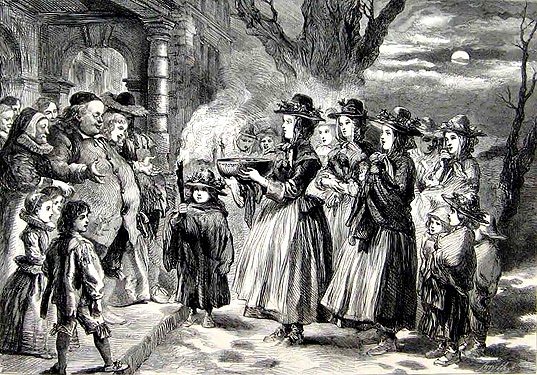



 Mr. Darcy’s Present: A Pride and Prejudice Vagary
  Excerpt from Chapter 1 of


 Every Woman Dreams...

