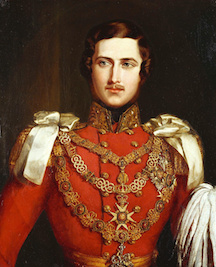
Prince Albert, Queen Victoria’s “Visionary”

Prince_Albert_-_Partridge_1840

via Wikipedia

To really understand Prince Albert’s role in British history, one must know more of his early life. Albert Francis Charles Augustus Emmanuel of Saxe-Coburg-Gotha was born on 26 August 1819 at Schloss Rosenau, in Bavaria, the younger son of the duke of Saxe-Coburg-Gotha. Albert’s roots were planted in a small European duchy, which held little influence in the great scheme of international politics until Prince Leopold married George IV’s only child, Princess Charlotte of Wales. Later, Leopold’s sister Victorie married another of George III’s sons, the Duke of Kent. Saxe-Coburg-Gotha’s “insignificance” added to Albert’s growing vision of a relationship between those who govern and those who are governed. 

When Albert was four, his mother, Duchess Louise, chose to no longer tolerate her husband’s infidelity. She sought solace in the arms of a young officer in Coburg’s army. Duchess Louise abandoned Albert and his older brother Ernest. When he was seven, Albert’s father, Duke Ernest divorced his mother in absentia on grounds of adultery, and she was sent to live in Switzerland and forbidden to see her children ever again. Duchess Louise died eight years later (1831). The duke remarried, and Albert and his brother developed a healthy relationship with their new stepmother, Princess Marie of Württemberg, who was their cousin. 

Albert was an excellent student, possessing an intelligence that proved more ordered than his future wife, Queen Victoria. He was musically talented. He studied ancient and modern history, French, Latin, natural sciences, English, mathematics, etc. He practiced an unvaried schedule throughout his life, but as a youth 6 – 8 A.M. daily was set aside for his deeper studies. Albert was educated at Bonn University.

As Queen Victoria’s consort, Albert “adopted” England’s so-called enlightenment, which was obviously nothing like the enlightenment now practiced within the United Kingdom. Albert openly purported the idea a fair-minded monarch (who did not endorse party politics) should preside over Parliament. As devious as this might sound in light of today’s political posturing on both sides of the ocean, Albert saw his daughters as a means to spread his ideas to the thrones of other countries into which they would marry. His sons’ destinies were prescribed as the children of the queen and the British rule. 

NSBqIymY_400x400Queen Victoria came to appreciate Albert’s many talents and abilities. He began by overseeing the queen’s domestic affairs of their two households. However, during her lying in and delivery of their first child, Victoria permitted Albert to act in her stead on “official” business. She pressed Albert to write memos and instructions to her various ministers, an act Lord Melbourne referred to as “The Prince’s observations.” Albert’s efforts earned him new respect from those involved in the Queen’s business. With his keen insights, Albert managed to place his wife’s position on policies and laws in a kinder light than would likely have been achieved by Victoria herself. 

In Victoria’s Daughters (Jerrold M. Packard, St Martin’s, 1998) we learn, “Victoria’s premarital fondness for and dependence on her first prime minister, Lord Melbourne, had been thought a dangerous thing, leading to serious difficulties between the sovereign and Melbourne’s successor when Melbourne lost office. It was Albert who diplomatically, and with unarguable logic, taught his wife that the breaking of ties to any minister had to be faced to prevent constitutional injury to the monarchy. In keeping with the passionate nature of her personality, Victoria soon thereafter came under the almost complete tutelage of her prince. One official would write of Albert as ‘in fact, tho’ not in name, Her Majesty’s Private Secretary.’ Another minister went further, stating that the queen had turned Albert into a virtual ‘King-Consort,’ which had, ironically, been the title she suggested for him when the marriage negotiations first got underway.” 

From BBC History, we discover, “Albert’s role as advisor to his wife came into full force after the death of Lord Melbourne, the prime minister, who had exerted a strong paternal influence over Victoria, and Albert began to act as the queen’s private secretary. He encouraged in his wife a greater interest in social welfare and invited Lord Shaftesbury, the driving force behind successive factory acts, to Buckingham Palace to discuss the matter of child labour. His constitutional position was a difficult one, and although he exercised his influence with tact and intelligence, he never enjoyed great public popularity during Victoria’s reign. It wasn’t until 1857 that he was formally recognised by the nation and awarded the title ‘prince consort’.

0119cc4901ff51b148018caa8308abb3d4bbb31d

Prince Albert, 1854 http://www.bbc.co.uk/ history/historic_figures /albert_prince.shtml

“Albert took an active interest in the arts, science, trade and industry. He masterminded the Great Exhibition of 1851, with a view to celebrating the great advances of the British industrial age and the expansion of the empire. He used the profits to help to establish the South Kensington museums complex in London.

“In the autumn of 1861, Albert intervened in a diplomatic row between Britain and the United States and his influence probably helped to avert war between the two countries. When he died suddenly of typhoid on 14 December, Victoria was overwhelmed by grief and remained in mourning until the end of her life. She commissioned a number of monuments in his honour, including the Royal Albert Memorial in Kensington Gardens completed in 1876.”

Posted in Act of Parliament, British history, Great Britain, titles of aristocracy, Victorian era | Tagged , , , | 6 Comments

Turmoil in Europe and Queen Victoria’s England

Mourning was one of the great constants in Queen Victoria’s life. The Queen and her beloved Albert lost his maternal step grandmother, Princess Karoline Amalie of Hesse-Kassel, in February 1848. In her journal, Queen Victoria wrote, “My poor Albert is quite broken down … and sad it breaks my heart.” Since early childhood, Karoline Amalie was betrothed to her double first-cousin Prince Frederik of Hesse; however, the engagement was dissolved in 1799 after the apparent affair between her and chamberlain Count Ludwig von Taube, who ended when Landgrave William I dismissed him from his service and expelled from court. In the summer of 1801 Karoline Amalie met Hereditary Prince Augustus of Saxe-Gotha-Altenburg when he visited the Kassel court. In January of 1802 Duke Ernest II of Saxe-Gotha-Altenburg, in the name of his son, asked the hand of the princess in marriage. The wedding ceremony took place in her homeland, Kassel, on 24 April of that year. Prince Albert (youngest son of Karoline Amalie’s stepdaughter Louise) was the favorite step-grandson of the Dowager Duchess. From 1822 to 1835, he and his brother Ernest spent several weeks every year in the care of Karoline Amalie in the Winter Palace. Until her death, Albert maintained with her an active correspondence, where he always called her “Beloved Grandmother” and addressed his letters with the signature “Your faithful grandson Albert”. [Charles Grey, The youth of Prince Albert of Saxe-Coburg-Gotha, Gotha, 1868.]

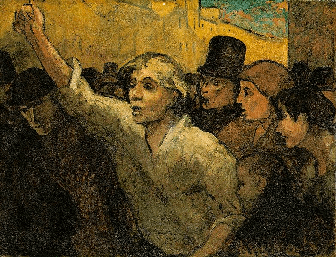
the_uprising

The Uprising, by Daumier http://www.fsmitha.com/h3/h36-48.html

The Year of Revolutions, as it was called by many, had already brought anguish to Victoria’s throne. She feared her own upheaval. The Chartists appeared for a time to have the power to displace the monarchy in favor of a republic. The European continent was in turmoil. The Revolutions of 1848, known in some countries as the Spring of Nations, People’s Spring, Springtime of the Peoples, or the Year of Revolution, were a series of political upheavals throughout Europe in 1848. The revolutions were essentially  democratic in nature, with the aim of removing the old feudal structures and creating independent national states. The revolutionary wave began in France in February, and immediately spread to most of Europe and parts of Latin America. Over 50 countries were affected, but with no coordination or cooperation between their respective revolutionaries. Six factors were involved: widespread dissatisfaction with political leadership; demands for more participation in government and democracy; demands for freedom of press; the demands of the working classes; the upsurge of nationalism; and finally, the regrouping of the reactionary forces based on the royalty, the aristocracy, the army, the church and the peasants. [Merriman, John. A History of Modern Europe: From the French Revolution to the Present, 1996, page 715] 

So three days after the passing of Albert’s beloved grandmother, revolution erupted in Paris. The “February Revolution” in France was sparked by the suppression of the campagne des banquets. This revolution was driven by nationalist and republican ideals among the French general public, who believed the people should rule themselves. It ended the constitutional monarchy of Louis-Philippe, [known as the “Citizen King,” a self-styled liberal] and led to the creation of the French Second Republic. The French objected to the disreputable rule of the Orléans monarchy. Louis-Philippe managed to escape the rabble by dressing as a woman and retreating through a servants’ door to freedom. 

Bruxelles_à_travers_les_âges_(1884)_(14740791186)

A depiction of Leopold I of Belgium’s symbolic offer to resign the crown if the people demanded it. via Wikipedia

Albert’s Uncle Leopold had similar problems in Belgium. The uprisings  in Belgium were local and concentrated in the sillon industriel industrial region of the provinces of Liège and Hainaut. The most serious threat of the 1848 revolutions in Belgium was posed by Belgian émigré groups. Shortly after the revolution in France, Belgian migrant workers living in Paris were encouraged to return to Belgium to overthrow the monarchy and establish a republic. Karl Marx was expelled from Brussels in early March on accusations of having used part of his inheritance to arm Belgian revolutionaries. Around 6,000 armed émigrés of the ” Belgian Legion” attempted to cross the Belgian frontier. The first group, traveling by train, were stopped and quickly disarmed at Quiévrain on 26 March 1848. The second group was defeated three days later. Belgian border troops tightened their hold on the country. [Chastain, James. “Belgium in 1848.” Encyclopedia of 1848 Revolutions. Ohio University]

When the French royal family arrived on English shores and seeking asylum, Victoria became so agitated that Prince Albert feared she might lose the child she carried [Princess Louise Caroline Alberta was born on 18 March 1848]. It is said that Prince Albert collected clothes for the displaced royal family. Trade disruptions in Europe caused high unemployment. That was magnified by the Whig party’s move to increase the militia to settle the unrest rather than to address the problem at hand. The populace became angry at the social inequities that existed in England. 

As Princess Louise came into the world, news arrived of the uproar in Germany. Mobs in Berlin had attacked those involved in Prussian king’s government. The mob had more success in the south and the west of Germany, with large popular assemblies and mass demonstrations. Led by well-educated students and intellectuals, they demanded German national unity, freedom of the press, and freedom of assembly. The uprisings were not well coordinated, but had in common a rejection of traditional, autocratic political structures in the 39 independent states of the German Confederation. The middle-class and working-class components of the Revolution split, and in the end, the conservative aristocracy defeated it, forcing many liberals into exile.

At the beginning of April, word arrived that the Chartists planned a mass demonstration at Kennington Common. According to Jerrold M. Packard in Victoria’s Daughters [St. Martin’s, 1998, pages 36-37], “The protestors meant their actions to be law-biding, but the first real specter of any substantive lower-class challenge to the establishment terrified those who believed that to have been born at the top of the social order was an act of divine planning. Ostensibly representing a mass plea for parliamentary reform – votes for all adult males, abolition of property qualifications for the vote, secret ballot, equal electoral districts – the Chartists fatally stirred their ideas with the stick of socialism, the philosophy still damp from the blood of the guillotine and anathema to the queen and the higher orders at whose head she symbolically stood. 

“Buoyed by the events across the Channel, the Chartists claimed to have gathered 6 million signatures – a figure that would have represented a stunningly high proportion of Britain’s male population. The actual chart weighed 584 pounds and was ferried to the House of Commons spread over three cabs. Though most of those who signed would not have supported the tiny minority of revolutionaries advocating actual violence to achieve their objectives, the government was nonetheless sufficiently frightened to enlist 70,000 special constables charged with maintaining “social order.” In the end, parliamentary officials would dismiss the Chartists with the sneer that they had turned in “only” 2 million signatures. [In fact, the chart turned out to have contained 23,000 signatures.] Though the upper classes viewed all this through the prism of a Europe that was in many places really on fire, soon the prevailing mentality said that Britain’s immutable institutions survived because they were superior to those of their foreign counterparts.”

Resources: 

The European Revolutions of 1848 

The German-American Corner: The Revolution of 1848 

Princess Karoline Amalie of Hesse-Kassel 

Revolutions of 1848 

Revolutions of 1848 

Posted in Act of Parliament, British history, commerce, Great Britain, history, real life tales, Victorian era | Tagged , , , , , | 2 Comments

The Story of the Botanics’ Sabal Palm Tree, a Living Vestige of the Regency, a Guest Post from Eliza Shearer

This post originally appeared on the Austen Authors’ blog on October 12, 2020. Enjoy!

I am a proud Edinburgh resident. As such, I’m spoilt for choice when it comes to reminders of the Regency, from windows and house doors to family portraits in museums and art galleries.

However, only a few days ago, one of such reminders disappeared forever. It was a living being, one already in existence when Jane Austen was alive.

The Sabal Palm Tree, A West Indies Native

I am talking of a Sabal palm tree, native to Bermuda, that arrived from the West Indies to the Port of Leith just outside Edinburgh in 1810. It was a long journey, one which the plant made in a Wardian case – essentially a terrarium, or mini-greenhouse (see picture at the top of the page).

In the early 19th century, the Royal Botanic Garden (also known as the “Physick Garden”) was to the west of Leith Walk, and that’s where the palm tree went. It was a little thing at the time: it took 40 years for it to grow a trunk, and another 80 for it to flower for the first time.

A Living Link to the Regency

I find it mind-blowing to think that the palm tree was planted in 1810, the same year that King George III was declared insane and Sense and Sensibility was accepted for publication. Jane Austen was very much alive, and possibly thinking about Mansfield Park.

Image source: Historia naturalis palmarum by Carol. Frid. Phil de Martius at Biodiversity LIbrary

By the way, I can quite imagine Sir Thomas admiring Sabal palm trees during his time overseas, and arranging for one to be transported back to his estate. In Miss Price’s Decision, I gave him (as well as his niece Susan) an interest in botany, which I thought suited a man with his responsibilities.

Following the Pineapple Trail

Conservatories and glasshouses as we know them today wouldn’t come until a few years after Jane Austen’s death. However, around that time, many grand houses had south-facing spaces with large windows and pitched glass roofs aimed at maximising light and warmth to grow plants.

As well as citrus, many fruits and vegetables grew in the so-called orangeries. By the Regency, heating was introduced through different means to enable the growth of exotic pineapples, which had very much taken centre stage.

The End of an Era at the Royal Botanic Gardens

But back to our palm tree. In 1821 they moved it to the present Royal Botanic Gardens site in Inverleith. They housed it in Stove House, kept warm with coal-fired boilers, until the majestic Tropical Palm House opened in 1858. It’s there that I saw the palm tree for the last time, all 60ft (18 metre) of it.

The Victorian Palm House at the Royal Botanic Gardens, empty of all specimens

The Royal Botanic Garden is undergoing an ambitious renovation, which includes stripping back the glasshouses and thoroughly repairing them. But while moving the plants to enable the work, it became apparent that the Sabal palm was way too large to make it outside of the glasshouse. With the glass being removed, it couldn’t say in the building either.

Long story short, they fell the Sabal palm two weeks ago today. It breaks my heart to think of it. Apparently, Sabal palms have a lifespan of around 200 years, so the Edinburgh one was coming to the end of its life.

It’s a sad ending for a majestic vestige of the Regency, but I will always remember it, proud and tall, as the centrepiece of the most beautiful of glasshouses.

Plants are silent beings, but also highly evocative. Have you come across any that have made an impression on you?

Posted in Austen Authors, Georgian England, Georgian Era, Guest Post, Jane Austen, Living in the Regency, Mansfield Park, real life tales, Regency era, research | Tagged , , , , , , , | Comments Off on The Story of the Botanics’ Sabal Palm Tree, a Living Vestige of the Regency, a Guest Post from Eliza Shearer

The Tolpuddle Martyrs, Changing the Face of Employment Rights in Victorian England

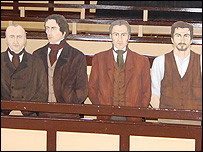
 6f2ea1a2a8619dede777fe35f0c8806fd06f3baa.jpg This year is the 181st anniversary of when six Dorset farm labourers were sent to an Australian penal colony, but their ‘crimes’ helped change the face of employment rights for generations to come – and it all began in the small village of Tolpuddle.

Tolpuddle is a village near Dorchester in Dorset. During the years leading up to the arrest of the six offenders, a great wave of trade union activity took place and a lodge of the Friendly Society of Agricultural Labourers was established. Entry into the union involved payment of a shilling (5p) and swearing before a picture of a skeleton never to tell anyone the union’s secrets. The average wage for a farm labourer at the time was 10 shillings per week, but the Tolpuddle men had seen their wages dropped to 7 shillings (with threats of future cuts). The fact that the men sword an oath made their actions illegal. Therefore, the men were arrested. Their employers feared possible unrest, for the British populations had not forgotten the French uprisings. 

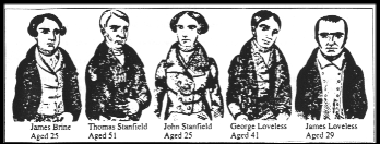
 tolpud.gif On 24 February 1834, George Loveless and five fellow workers – his brother James, James Hammett, James Brine, Thomas Standfield and Thomas’s son John – were charged with having taken an illegal oath. But their real crime in the eyes of the establishment was to have formed a trade union to protest about their meagre pay. The jury was made up of 12 farmers, the exact same type of men the labourers had been accused of offending. 

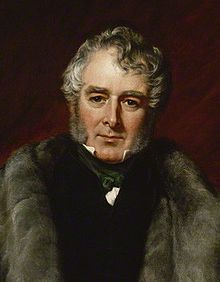
2nd_V_Melbourne.jpg Lord Melbourne, the British Prime Minister at this time, openly opposed the Trade Union Movement, so when six English farm labourers were sentenced in March 1834 to 7 years transportation to a penal colony in Australia for trade union activities, Lord Melbourne did not dispute the sentence. The Whig government had become alarmed at the working class discontent in the country at this time. The government and the landowners, led by James Frampton, were determined to squash the union and to control increasing outbreaks of dissent.

According to the BBC Home, “They were tried before an all-male 12 jury. The jury men were farmers, and the employers of the labourers under trial. The farmers themselves rented their land from the gentry – but it was the gentry who had opposed the idea of the labourers uniting. The men on trial stuck to their view. Their leader was George Loveless, and in addressing the judge and jury, he wrote: ‘My lord, if we had violated any law it was not done intentionally. We were uniting together to save ourselves, our wives and families from starvation.’ Even so, after a two day trial, Judge Baron Williams found them guilty: ‘The safety of the country was at stake,’ he said. They were sentenced to seven years in a penal colony in Australia, where they would have been sold on as slaves. It was the maximum sentence they could have had. They had been made an example of.”

The offenders were to be transported to a penal colony in Australia. After the trial many public protest meetings were held and there was uproar throughout the country at this sentence, so the prisoners were hastily transported to Australia without delay. The working class rose up in response to this sentencing A massive demonstration of 30,000 marched down Whitehall through London in support of the labourers, and an 800,000-strong petition was delivered to Parliament protesting about their sentence.

After three years, during which the trade union movement sustained the Martyrs’ families by collecting voluntary donations, the government relented and the men returned home with free pardons and as heroes.

When finally home and free, some of the ‘martyrs’ settled on farms in England and four emigrated to Canada.

Unfortunately, for two years running, the annual festival commemorating this event has been online because of COVID restrictions, however, dates for the July 2022 celebration have been set. You may find more information HERE

Tolpuddle_martyrs_museum

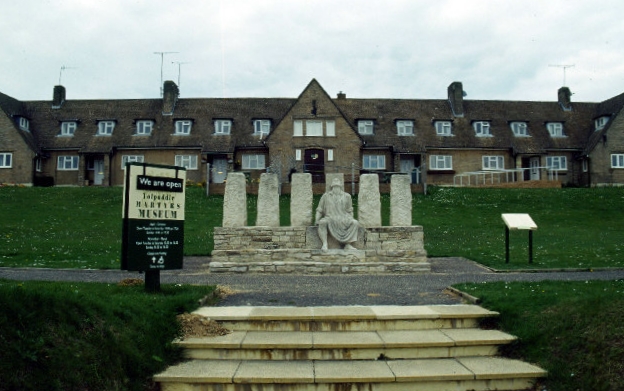
Stephen McKay w:Tolpuddle Martyrs’ Museum. A museum commemorating the Tolpuddle martyrs is housed in this group of cottages at the west end of Tolpuddle village., Dorset, UK. ~ via Wikipedia

Resources:

Meet the Martyrs 

The Story: Tolpuddle Martyrs

Tolpuddle Martyrs (The Dorset Page)

Tolpuddle Martyrs (Historic UK)

Tolpuddle Martyrs (Wikipedia)

Tolpuddle Martyrs, 1834 (History Home)

Posted in British history, commerce, Dorset, history, Victorian era | Tagged , , , , , , | 6 Comments

Princess Caroline, Jane Austen, and “The Regency Valentine,” a Guest Post from C. D. Gerard

In my “Sense and Sensibility” sequel “The Daughters of Delaford,”  Marianne and the Colonel’s daughter Allegra, and Elinor and Edward’s daughter Grace, become important players in the historic events surrounding Princess Caroline of Brunswick, Princess of Wales, and estranged wife of the Prince Regent.    After George III died in 1820, and the Prince Regent was ascending to the crown, Princess Caroline, who had been living in exile in Italy, returned to claim her throne as Queen of England.  Grace and Allegra support and befriend the very popular princess, who was hated by her husband and loved by the British people, who sympathized with her and disliked the new king for his immoral behavior.   

Who was this woman, who was loved by the public, but hated by the Prince Regent? Caroline Amelia Elizabeth of Brunswick-Wolfenbüttel was the daughter of Charles William, Duke of Brunswick-Wolfenbüttel of Germany, and her mother, Princess Augusta, who was the sister of George III. In 1794, Caroline became engaged to her first-cousin and George III’s eldest son and heir George, Prince of Wales, although they had never met and George was already married to Maria Fitzherbert. Since his marriage to Maria violated the Royal Marriages Act of 1772, which said no member of the royal family could marry without the permission of the reigning monarch, the marriage was considered null and void.  Not to mention that the Prince Regent was a gambler and a careless spender, and his father refused to pay his debts unless he wed Caroline.   The Prince, who despised his wife, saying she smelled bad and that he was repulsed by her, claimed they only had relations three times, but it was enough to bring their daughter, Princess Charlotte, into the world on January 7, 1796.   

George and Caroline’s marriage difficulties were played out in the British press on a daily basis.  George was hated for his bad habits while Caroline was lauded as a wronged wife.  In 1797, the couple separated and Caroline moved to Montagu House in Blackheath.  No longer constrained by her marital vows, the Princess had flirtations and relationships with several men. 

After that, her life was filled with scandals, including one concerning the legitimacy of a boy she adopted, who many said was actually her illegitimate child.  When a commission was formed to look into this, it was found that while her conduct with gentlemen friends was improper, there was no foundation for the charges against her.  Her husband continued to discredit her and forbid her from seeing her daughter.  George’s attempts to keep Charlotte away from her mother failed, and the girl ran way to her mother’s home, and had to be persuaded to return to her father. 

Caroline left England in 1814.  During her time in Europe, Caroline had a notorious affair with one Bartolomeo Pergami, one of her servants.  This became the talk of Europe.  Meanwhile, the Prince Regent continued to make attempts to divorce Caroline on the grounds of adultery, which was unsuccessful.   

When she returned to England in 1820 after the death of George III, riots broke out in her support, and she became the symbol of a movement that opposed the unpopular king.  Parliament then introduced a bill called the Pains and Penalties bill, who sought to strip Caroline of her title as queen and dissolve her marriage, due to her affair with a “lowborn” man.  The House of Lords passed the bill, but it did not pass in the House of Commons; many saying that indeed Caroline had committed adultery at least once; that being with the husband of Mrs. Fitzherbert – the king.

Everyone seemed to have an opinion about Caroline, including Jane Austen.   Here’s her letter to Martha Lloyd written on February 16, 1813: 

“I suppose all the world is sitting in judgement upon the Princess of Wale’s letter.  Poor woman; I shall support her as long as I can, because she is a woman and because I hate her husband.  But I can hardly forgive her for calling herself “attached and affectionate” to a man whom she must detest, and the intimacy said to subsist between her and Lady Oxford is bad.  I do not know what to do about it, but if I must give up the Princess, I am resolved at least always to think that she would have been respectable, if the Prince had behaved only tolerably by her at first.” 

This letter that Jane is probably referring to was published in the Morning Chronicle on February 8, 1813.  The letter from Caroline to George was written on January 14, 1813.  It came to be known as “The Regent’s Valentine,” and  it is easy to see why this letter pulled on Austen’s heartstrings, as Caroline begs the Prince Regent to end the forced separation between herself and her daughter: “The separation which every succeeding month making wider between mother and daughter,” she writes, “Gives a great deal to the deep wounds which so cruel an arrangement inflicts upon my feelings, cutting me off from one of the very few domestic enjoyments left to me…the society of my child.”  She begs George to release Charlotte from her imprisonment at Windsor, since “she enjoys none of those advantages of society.” 

Caroline continues in the letter to discuss the attacks on her reputation: 

“There is a point beyond which guiltless woman cannot with safety carry her forbearance.  If her honour is invaded, the defence of her reputation is no long a matter of choice, and it signifies not whether the attack be made openly, manfully, and directly, or by secret insinuation, and by holding such conduct towards her as countenances all the suspicions the malice can suggest.” 

The letter, dubbed “The Regency Valentine,” by the press, made sympathy for Caroline ever greater than before with the English public.  It is clear Jane Austen agreed with those sympathies, and despite Caroline’s questionable morals, that like many, Austen blamed the prince for, saying they were caused by the prince’s cruelty, neglect and his lack of a moral compass.  As for Austen’s mention of Jane Hartley, Lady Oxford, she was part of Caroline’s court.  She was a woman who had many lovers with whom she had several children.  One of those lovers was the famous Romantic poet Lord George Byron.  One could assume Austen objected to such a woman being part of the royal court.    Concerning the part about Austen objecting to Caroline’s comment in the letter about her being “attached and affectionate” to the Prince, it is clear the Princess was begging not only for herself, but for her daughter as well.  It might have been hard for Austen to understand, not being a mother herself, what lengths a mother will go through to protect her child, which is clearly the main theme of the correspondence. 

In the end, Caroline took an offer of £50,000 a year; a contract that had no preconditions.  Despite this, she still tried to attend the coronation of the king, and was refused entrance.  Soon after, she passed away from what the doctor thought was an intestinal obstruction. 

As for Grace and Allegra in “The Daughters of Delaford,” to find out what happened to them, you’ll have to read the book.  Now you know the story of Princess Caroline, I hope you will be intrigued! 

Posted in Austen Authors, George IV, Georgian England, Georgian Era, Guest Post, history, Regency era, Regency personalities, research, Sense & Sensibility, writing | Tagged , , , , , , , , | Comments Off on Princess Caroline, Jane Austen, and “The Regency Valentine,” a Guest Post from C. D. Gerard

A Suspicious Royal Birth, a Guest Post from Carole Penfield

On a frosty, winter night, there is nothing more comforting than climbing into a warm cosy bed heated by an electric blanket, or even a hot water bottle. These conveniences were not available in drafty 17th century palaces. Instead, the Royals had long-handled, copper bed-warming pans filled with hot coals or embers, placed between the sheets by a servant to remove the chill. Extremely welcome in the winter, but hardly called for in the heat of summer.

Bed Warming Pan

Which causes one to wonder why Queen Mary Beatrice, wife to King James II, insisted on having one brought to her royal bed whilst she was in labour on a sweltering day in June 1688.  In plain view of the courtiers who were there to observe the royal birth, the Queen insisted the heavy bed curtains be closed and called for a warming pan. The only eyewitnesses to the alleged birth of a male heir were the midwives, and much speculation arose from the secrets behind those bed curtains. Had an infant been smuggled in?

Queen Mary Beatrice

Lucina’s Destiny (Book Two of The Midwife Chronicles series)

When I was writing Lucina’s Destiny, about a highly skilled Huguenot midwife and her daughter who had recently fled from Normandy to England, I tried to imagine how they might have been involved in the scandal surrounding the birth of the purported Royal heir, which gave rise to the Glorious Revolution. The following excerpt from Chapter 22 introduces Mr. Rupert Walker, optician to the Lady Anne, who overheard his royal patient gossip about the Queen’s “fake” pregnancy. He willingly relates that conversation to the guests at a garden tea party.

Chapter 22 (excerpt)

All eyes were upon the widower when he arrived at Barton Park. A tall thin man, Mr. Walker wore a chestnut brown periwig and despite the warm weather he was properly attired in breeches, velvet waistcoat, and embroidered skirted coat. His manner was pleasing, and he willingly shared information he had gleaned during his visits to the Lady Anne’s chambers. The princess was miffed she had missed viewing the royal birth in June. Suspected her stepmother, Queen Mary Beatrice, had purposely lied to her—said her confinement would take not take place until July and insisted the Princess spend June in Bath for the sake of her health.

“I’m grieved to hear the Royal Princess was ill. I hope it was not serious,” said Lady Barton, interrupting him. 

“I went to adjust a loose screw in Lady Anne’s spectacles before she left for Bath, and she did not appear unwell to me. I overheard her complain to her ladies-in-waiting that when she reached for the Queen’s belly to feel the child quicken, the Queen slapped her hand away. After the child was born, Lady Anne was convinced the pregnancy was a sham. A pillow stuffed beneath the Queen’s petticoats, she claimed, to give the appearance of being with child.”

“Weren’t there witnesses present?”

“Yes, Lady Barton. According to protocol, there were forty courtiers crowded together in the stifling hot birthing chamber to observe the royal birth. I heard a most unusual thing occurred. Queen Mary Beatrice insisted the bedcurtains be drawn tight for privacy and soon a maidservant scurried in, carrying a long-handled bed warming pan. Imagine, during the heat of summer! An hour later, a tiny squalling infant was presented to the courtiers as the new male heir to the English throne. Some of those witnesses now claim a live babe, an imposter, must have been smuggled inside that warming pan.”

 “Oh, juicy gossip indeed!” Lady Barton looked across the lawn where she spotted Clare conversing with Samuel under the spreading chestnut tree. “Mr. Walker let me introduce you to Madame Dupres. She is an experienced midwife and would know if such a scandalous suggestion was possible.” The matriarch beckoned Clare and Samuel to join them.

*  *  *

Clare was delighted to be introduced to the optician, especially when she learned his daughter was governess to the Montjardin girls. Although Clare was anxious for news about her cherished friend Lady Louise, Lady Barton would not be interrupted until she extracted every detail from Mr. Walker about the royal birth scandal. Clare felt particularly uncomfortable about the subject under discussion, having been secretly involved with Madame Cellier during the Queen’s confinement, a matter she did not feel free to reveal. Instead, she studied her hands and simply listened to the rumours.

“It’s obvious to me the pregnancy was a fabrication,” scoffed Samuel, even though he had not observed the birth. “Things have not been going well for King James, especially since the seven Bishops he arrested for refusing to read his deceptive Declaration of Indulgence were acquitted in May. He probably arranged this cunning artifice, to save his throne.” 

~ ~ ~

Mr. Walker, who insisted on being called Rupert, said, “I tend to agree our King is in trouble. I’ve heard his son-in-law, William of Orange, has been invited to invade England and take over the throne,”

“Nothing would please me more than to see William’s wife Mary ascend the English throne,” said Samuel. “She is the rightful heir, as daughter to Charles II and a staunch Protestant to boot. I’m not thrilled her husband is a foreigner, but at least he is not a Papist. Do you think James will try to quell the invasion?” 

“I imagine so, although loyalties do shift at times like this. Events of the past show many men, even a King’s closest allies, are quick to change sides in times of turmoil. Now with a purported male Papist heir to the throne, I fear outbreak of war in England.”

Clare shivered involuntarily at the thought of soldiers fighting in her new country. Memories of the Dragonnades were still raw in her mind. She dreaded the thought that battles could break out in England, in Kent, perhaps even in Tunbridge, and wondered whether she would once more be forced to flee her home to keep her children safe. Suddenly she felt Lucina tugging on her arm and realised Lady Barton was asking Clare’s opinion on something.

“I’m sorry, Lady Barton. Could you repeat your question please? I was momentarily distracted by the thought of war.”

“We were discussing the royal birth—perchance the Queen was not really carrying a child and an imposter infant was smuggled into the birthing chamber.”

Clare knew for certain the pregnancy was real—she hoped Lucina would be discreet, and not blurt out any hint of her Maman’s involvement in saving the Queen from miscarrying. It was safer to focus attention on the impossibility of fitting a child in a bed warming pan.

“Lady Barton,” she said, “please be so kind as to send a servant to fetch one from your kitchen so your guests may examine the size.” When the pan was carried out and set on the table for all to inspect, Clare declared her opinion that no child could fit inside. Nonetheless, those who wished to believe the new prince was a changeling continued to insist if not in a warming pan, a substitute baby must have been smuggled in another way before the bedcurtains had been reopened. “James Francis Edward Stuart is a pretender to the English throne,” they chimed in self-righteous consternation. “Another Papist plot!”

Lucina ran her finger around the opening of the copper warming pan, absolutely convinced no human infant could fit inside. Her thoughts drifted back to the time Maman spent in London immediately before and after the royal birth. Had a live child been substituted for a dead prince in the days following the birth? Returning home, Clare had rushed directly to her bedchamber, carrying her birthing bag. “Ask me no questions,” she had cautioned Lucina, who was taken aback by Maman’s mysterious, nervous demeanor. Later, she heard Maman scribbling in her journal and saw her place a folded scarlet cape into her locking box. “If Maman is writing about treachery at the palace, the truth of the royal birth will be recorded for all time in her journal,” she thought. “I hope it never falls into the wrong hands.”

Pages 149-51

*  *  *

About Carole Penfield

I am a retired attorney, turned novelist. I live in Northern Arizona with my husband Perry Krowne and two overly friendly cats. The Midwife Chronicles series was released last month (December 2021); all three books are available on Amazon in paperback and eBook format. https://www.amazon.com/dp/https://www.amazon.com/dp/1737807926   

Book One, Midwife of Normandy ASIN B09MRDS212 is an exciting, past faced adventure about Clare Dupres, a Huguenot midwife. The novel is filled with historic details meshed with memorable characters. 

Book Two, Lucina’s Destiny ASINB09MV6BVTL is the sequel; Clare and her daughter Lucina are befriended by the Austen family in Tonbridge, Kent. 

The close friendship between Lucina Dupres and Jane Austens’ great-grandmother Eliza forms the subject of Book Three, Austens of Broadford ASIN B09KW3NNKD.

To learn more about The Midwife Chronicles series, please visit my website https://www.carolepenfield.com  

Posted in book excerpts, book release, books, England, excerpt, Georgian Era, Guest Post, historical fiction, history, Jane Austen, publishing, reading, research, royalty, world history, writing | Tagged , , , , , , , , , , , , , , | 2 Comments

The Paston Letters, the Earliest Known Archive of Private Correspondence in English

The Paston Letters is a remarkable collection of letters between different members of the Paston family, their staff and their friends. In truth, the collection might better be referred to as the Paston Archive, as the medieval section contains many more types of document than just letters – though it is the letters that give us insight into the daily life and troubles of an ambitious family. [You can learn more of the Paston Letters and Caister Castle in my Wednesday post.]

https://www.thisispaston.co.uk/index.php?_m=PAGE&ref=PLETTER&letter=181

“One of Fastolf’s servants, William Worcester, collected material for personal historical research as well as evidence for several lawsuits involving Fastolf. The Pastons involved in the letters include William (d. 1444), who became a justice of the Court of Common Pleas; his son John I (d. 1466), a London lawyer; John’s two sons, John II (d. 1479) and John III (d. 1503), both of whom were knighted; and their respective wives and children. The collection of more than 1,000 items contains legal records, local and national news, and gossip; through all this, the characters of the writers emerge vividly.” [Paston Letters]

There are some 1000 letters passed along by the members of the Paston family. They provide an intimate insight into the social and domestic life of a family living during medieval times. What makes the Pastons so remarkable is their meteoritic rise from the life as peasants to landowning aristocrats in a time marked by both the Black Death and the Wars of the Roses.

The story begins with Clement Paston, a yeoman farmer in the village of Paston, northeast of Norfolk. During the chaos of the Black Death’s plague upon the land, Clement quietly annexed the properties of those who died. He then, quite smartly, used what money he had made to send his son William to become a lawyer. Ironically, this was at a time when society was turning to the law to handle disputes rather than to take up weapons to settle disputes. William Paston married an heiress by the name of Agnes Berry, thus, assuming control of the Oxnead manor house and land.

William’s eldest son John, who is mentioned in the article on Caister Castle, also became a lawyer. Beyond his friendship with Sir John Falstolf, John Paston also made an advantageous marriage, taking Margaret Mauteby to wife. She brought more land and wealth to the family coffers. John Paston was made the recipient of Sir John’s property, Caister Castle, when Sir John passed with issue to inherit.

Without a doubt, the Falstolf branch of the family tree contested this inheritance. This suit against the Pastons plays out in the letters, especially those written between John Paston’s two sons, who took possession of the castle upon their father’s death, and their mother Margaret, who was residing at Oxnead, at the time.

Note! Keep in mind the father is John Paston. The two sons are John Paston, the Elder, and John Paston, the Younger. This can become more than a bit confusing to those scanning the letters.

In 1466, the Duke of Norfolk, a distant relation of Sir John Falstolf, seized Caister Castle, by force. For the next 11 years, this issue was waged in the court of law. Think about what I just said. Before the Black Death and the Wars of the Roses, no “commoner” would dare take issue with a duke’s actions and present that issue in court.

To support their case, the Pastons fought on Henry VI’s side at the Battle of Barnet (1471), when Henry set himself against the Duke of Norfolk. Norfolk died in 1476. John the Elder pleaded for King Henry’s benevolence and the King gave Caister Castle back to the Pastons.

After only three generations, the Pastons has moved from yeomen farmer to courtiers and landed gentry. Eventually, they were even presented with an earldom, becoming the Earls of Yarmouth. They ruled over Caister Castle for 200 years.

“How the Paston Letters were kept from the 15th to the 18th century is unknown, but in 1735 Francis Blomefield explored the muniment room at Oxnead, the Paston family seat in Norfolk. He preserved letters judged “of good consequence in history,” these eventually being acquired by the Bodleian Library, Oxford, and the British Museum. John Fenn of East Dereham, Norfolk, edited four volumes of Original Letters (1787–89); a fifth volume, completed by William Frere, was published posthumously in 1823. The collection was reedited by James Gairdner as The Paston Letters, 1422–1509 in six volumes in 1904.” [Paston Letters]

Other Sources:

Corpus of Middle English Prose and Verse

This is the Paston Portal

You might also enjoy some of these books available on the subject:

The Paston Women: Selected Letters

The Paston letters form one of only two surviving collections of fifteenth-century correspondence, in their case especially rich in letters from the women of the family. Clandestine love affairs, secret marriages, violent family rows, bickering with neighbours, battles and sieges, threats of murder and kidnapping, fears of plague: these are just some of the topics discussed in the letters of the Paston women.
Diane Watt’s introduction seeks to place these letters in the context of medieval women’s writing and and medieval letter writing. Her interpretive essay reconstructs the lives of these women by examining what the letters reveal about women’s literacy and education, lifein the medieval household, religion and piety, health and medicine, and love, marriage, family relationships, and female friendships in the middle ages.

The Paston Treasure: Microcosm of the World

The Paston Treasure, a spectacular painting from the 1660s now held at Norwich Castle Museum, depicts a wealth of objects from the collection of a local landed family. This deeply researched volume uses the painting as a portal to the history of the collection, exploring the objects, their context, and the wider world they occupied.  Drawing on an impressive range of fields, including history of art and collections, technical art history, musicology, history of science, and the social and cultural history of the 17th century, the book weaves together narratives of the family and their possessions, as well as the institutions that eventually acquired them.  Essays, vignettes, and catalogue entries comprise this multidisciplinary exposition, uniting objects depicted in the painting for the first time in nearly 300 years.

(or) 

Posted in British history, family, history, literature, medieval | Tagged , , , | Comments Off on The Paston Letters, the Earliest Known Archive of Private Correspondence in English

Caister Castle, Only English Example of a “Wasserburg-Style Moated Castle”

A 90-foot tower is all that remains of Caister Castle, which was originally commissioned in 1432 by Sir John Fastolf, who served bravely during the 100 Year War. However, from the tower, visitors can view the castle ruins and the surrounding area. Caister Castle is one of the earliest buildings of importance in England to employ bricks as the main construction material. It is a 15th Century moated castle some 5 km north of the town of Great Yarmouth in Norfolk.

The castle was built between 1432 and 1446. It suffered severe damage in 1568 when the Duke of Norfolk led a campaign to seize it. A new house was built nearby in about 1600. After that, the castle and its tower was left to ruin.

On a side note, Sir John Fastolf, along with Sir John Oldcastle, supposedly served as inspiration for Wlliam Shakespeare’s Falstaff.

Sir John intended the castle to be converted into a chantry, to pray for his soul and those of his family. After his passing, a detailed inventory was made of all his personal belongings.

The castle’s later claim to fame, so to speak comes from the legal battles between Sir John’s relations and those of John Paston, who served as Sir John’s lawyer. In his will, Sir John left Caister Castle to Paston. The bulk of Sir John’s actual money went to endow Magdalen College in Oxford. Paston was sued by the other factions of Sir John Fastolf’s family, mainly the Yelvertons and the Howeses. Eventually, the Yelverton and Howes factions sold their rights to the castle to the Duke of Norfolk. Norfolk attempted to seize the castle in 1469.

We know what occurred during this siege because Margaret Paston and her two sons exchanged a series of letters documenting the siege. They provided graphic testimony to the violence practiced by Norfolk’s men. They are the first record of private correspondence to survive in Britain and are not housed in the British Museum.

“In the ‘Paston Letters’ is a unique collection of family correspondence covering the period of the Wars of the Roses, documenting the Paston family’s struggles to climb and maintain position on the English social ladder. Sir John died childless, and intestate; the castle was one of many properties in his estate. Some years later, the castle was ultimately returned to the Paston family’s ownership. In 1659 the Pastons sold it to William Crow (d.1688), an upholsterer and money lender of the City of London, whose inscribed mural monument survives in Holy Trinity Church, Caister-on-Sea, although the fine marble sculpted bust of Crowe was stolen from it in 2014. Later the Castle descended by marriage to the Bedingfield family. The Castle later suffered from neglect and the robbing of stonework and other fittings, including in about 1776 when Rev. David Collyer removed a newell staircase with 122 stone steps from the tower and incorporated in into his house at Wroxham. The inner moat was filled in between 1842 and 1893 and a lake was created by the widening of the south-eastern side. In 1952 the owner of the castle was Charles Hamblen-Thomas.” [“Caister Castle, West Caister – 1287573 | Historic England”.]

Caister Castle was a 15th-century moated castle situated in the parish of West Caister, some 5 km north of the town of Great Yarmouth in the English county of Norfolk (grid reference TG504123). ~ https://en.wikipedia.org/wiki/Caister_Castle#/media/File:Caister_Castle.jpg
Posted in Age of Chaucer, British history, buildings and structures | Tagged , , , , , | 6 Comments

Celebrating the Release of “An Escape to Love” with an Excerpt and a Giveaway

An Escape to Love combines two of my most recent novellas into one volume. On Friday, I shared an excerpt from “The Courtship of Lord Blackhurst.” Today, I bring you “Lord Radcliffe’s Best Friend.”

Lord Radcliffe’s Best Friend 

Hendrake Barrymore, Lord Radcliffe, is a typical male, a bit daff when it comes to the ways of women, especially the ways of one particular woman, Miss Adelaide Shaw, his childhood companion, a girl who plays a part in every pleasant memory Drake holds. 

Yet, since he failed to deliver Addy’s first kiss on her fifteenth birthday, his former “friend” has struck him from her life just at a time when Radcliffe has come to the conclusion Adelaide is the one woman who best suits him. 

This tale is more than a familiar story of friends to lovers for it presents the old maxim an unusual twist.

Excerpt:

Tuesday, 14 September 1819, Kent, England

“I am going to kill him!” Hendrake Barrymore, Lord Radcliffe, growled as he looked down upon where his neighbor’s stallion was doing his best to bring another of Drake’s prized mares to foal.

“Dost ye mean to kill the horse or its owner?” Jack McGuyer asked with a grin. 

Drake required no prompting from his steward to bring forth an image of Lord Bernard Shaw nor of the baron’s daughter, Adelaide. Drake had never understood his attraction to the woman. As an earl, he could have his pick of the crop of beauties making their Come Outs for the Season, but none of them could hold a candle to Adelaide. She had inherited the best of both her maternal and paternal ancestors. Her hair was a chestnut brown, rich with hints of gold, and her eyes were a coppery-brown, sparking with fire. She was tall enough not to appear petite when standing beside him, which she rarely did these days unless they both exited the Sunday services at the same time. Then she would acknowledge him before excusing herself to speak to anyone but him. 

There had been a time when they were inseparable, roaming the hills and valleys making up their fathers’ estates. Then he had been sent off to school and had returned home full of himself—too concerned with arrogance at being the future earl to find time to spend with the one person he had always considered as important to his self-worth as were his parents. It was only later that he suspected he did not seek her out because he did not want to hear what she would say regarding the road he had been traveling, and Drake held no doubts, Adelaide Shaw would have had an opinion—she always did, and it would be one he did not want to hear. 

Yet, soon, everything changed for both of them. It had been her fifteenth birthday. He, or rather, he should say, his mother, had presented Adelaide with two song birds in a cage, a gift from his family, and Addy had seemed so pleased to have them. She kept giving him looks, that, at the time, he did not understand, but would be thrilled to receive today. Then he had made a colossal error. Drake could remember the moment as if it had occurred yesterday. His friends Lord Randolph French and Mr. Charles Scott had accompanied him to Cliffe House, and, unlike his previous holidays at the manor, he had ignored Adelaide completely until the evening of the celebration of her birthday. 

His friends had teased him, egging Drake on until he maneuvered one of Lord Shaw’s maids into what he thought was an empty room so he might steal a kiss. He had never treated a servant of his father’s house or Shaw’s as such, but French and Scott had kept saying it was all a “lark” and expected of young lords. As the maid quickly agreed, Drake had foolishly thought them correct. Stealing a kiss from a female servant was part of proving one was a man. 

Unfortunately, Addy was in the room he had chosen. It was not until days later that he had wondered why she had been lurking in the shadows of her family’s library. Had she planned an assignation of her own? The idea bothered him more than he would care to admit at the time, but not enough to consider his pursuit of the maid as being any more than proof he could seduce a willing miss. He meant to demonstrate to his friends his “way” with willing women. 

He had just tugged the maid into the room behind him and closed the door, positioning the girl along the wall, when Adelaide showed herself. “What do you think you are doing?” she demanded in sharp tones, which she had rarely used with him in the past. 

He had searched for an explanation, but none came to him readily enough to satisfy Adelaide. Angry, she had struck him then—not a simple slap, but rather a solid punch to his side. If the blow had not made him wince, Drake would have known pride: He had taught her how to punch so as to deliver a powerful blow while not breaking her thumb or any of her fingers. “You derelict!” she charged. “I thought you above such manipulations, but you are no better than those two coxcombs who accompanied you to my father’s house this evening!”

“Now, Addy,” he began, finally finding his voice. 

She punched him a second time, this one landing against his bicep. “Do not ‘Addy’ me, Hendrake Barrymore! I am ‘Miss Shaw’ to you, as you are ‘Lord Chadwick’ to me.” She turned her venomous tone on the maid. “If I were you, Iris, I would return to my ‘assigned’ duties and pray my mistress has a poor memory.” The girl curtseyed and scampered quickly from the room. 

He and Adelaide stood in silence for a few brief moments, eyeing each other in a manner he had never thought to consider. When had Adelaide Shaw become such a fetching female? She stood there, chest heaving in anger, and he felt his manhood come to life. Regrettably, Addy did not appear to know the same awareness of him as he had experienced for her. “You do not mean to offer me an excuse for your behavior?” she demanded. 

Although Drake was not proud of his intentions, he was not about to admit himself in the wrong, especially to her. She was not his parent. It was not necessary for him to answer to her. “It was only to be a simple kiss, Miss Shaw,” he said with a hint of authority, after all, he was the son of the Earl of Radcliffe. 

“For you, perhaps, it was a simple kiss,” Adelaide had countered. “However, your actions have likely cost Iris her position in my father’s house. Her regrets will fall on my mother’s deaf ears, for the baroness does not tolerate such foolishness from her household staff. It will be considered by both Lady Shaw and Iris as more than a simple kiss before this evening knows an end.” 

Drake had not considered the ramifications of his actions in those terms; he had only thought of proving his manhood to his friends. “What do you wish of me, Adelaide? I have apologized. If you wish me to speak to your mother in Iris’s behalf, I will. I do not wish Iris to lose her position because of me.” 

“What do I wish from you?” she repeated in what sounded of frustration. 

“Yes,” he answered in equal dismay. 

“I shall tell you what I want, my lord,” she accented each of her words by poking him in the chest with her index finger. “I want the return of my friend—the young man who was good and kind and thoughtful. I want that man to return to his sensibilities. I do not much care for the man you are becoming. I fear the earldom is doomed if this is the type of man you have designed for yourself.” 

He caught her finger and forcibly held her hand against his chest. He said softly, “I am the same Hendrake Barrymore you have always known, Adelaide. I promise.” 

“No, you are not,” she said as tears filled her eyes. “The Hendrake Barrymore I know would have recalled what he promised me on my twelfth birthday.” 

Drake searched his memory as to what she referred. At length, it dawned on him. “On your twelfth birthday, when you attempted to kiss me, I told you we would share your first kiss when you were fifteen.” He would not have minded that kiss, for she was, in his estimation, suddenly very desirable. “You wished a kiss when you were twelve and I was sixteen, but I told you you must be closer to becoming a woman to appreciate fully such a kiss.” Belatedly, he realized he had always been fascinated by Adelaide Shaw: She had been more than a valuable friend; she was his truest companion, the one who provided his life the perfect balance. The one who kept him on the straight and narrow. The one who wanted only the best for him. “I would still be willing to share your first kiss, Addy.” His breathing hitched higher, anticipating the possibilities. 

She shoved away from him then. “I fear you are too late, my lord. My first kiss, or should I say, the echo of one, occurred in this very room not ten minutes prior. I found it quite dissatisfying! As to my second kiss, I would prefer it came from a man who held the same values as I. Enjoy your pursuits, my lord, wherever they may take you.” Then, she walked from the room and, essentially, from his life. Afterward, he had made multiple overtures to return to what they once had shared, but six years later, they were no closer than they had been when she left him standing alone in a dark room and regretting his choices. The one woman he wished to court—the one woman he thought might bring satisfaction to his world—despised him. 

His late father had complicated the situation by enacting his Inclosure rights when after two years of wet summers, they had experienced one of the driest springs and summers in the history of the area. The previous earl, who had gladly shared a stream on Radcliffe land with his neighbors, had chosen, first, to place a fence around the open area where others had watered their livestock and, then, diverted the water to save his own crops. It had been a hard decision for Drake’s father to make, but one with which Drake had essentially agreed. Their first responsibility had been to the hundred and twenty families who depended directly upon the estate. 

Consequently, the move had infuriated many, especially Lord Bernard Shaw, Adelaide’s father. The move had laid the grounds for a rift between Drake’s and Addy’s families: A move for the survival of the earl’s estate and Drake’s foolish attempts to prove himself a man.

“What do you wish me to do about the mare?” McGuyer asked. 

“Move her back to the small pasture behind the barn. Keep all the mares there until I can settle this with Lord Shaw. Contact Lord Shelton and inform his lordship we must wait before we match his stallion with our Everlee. Ask Shelton if he wishes to choose a different mare or to wait. Offer his lordship our deepest apologies.”

“Shelton shan’t be happy. Everlee’s blood lines were what interested the viscount.” McGuyer cautioned. “He wanted to purchase the foal for his own line of horses.” 

Drake shook his head in acknowledgement of the truth. “I will make amends to Shelton. Meanwhile, send some of our men out to repair the fence. Evidently, Shaw’s people did a slipshod job. It appears part of it is down. Likely how Shaw’s horse crossed into my pasture.” 

“Aye, sir,” McGuyer said as he took up the reins again to chase down the mare. Before the steward rode away, though, he nodded to the opposing hillside. “Trouble approaching, sir.” 

Drake looked up to view Addy Shaw looking down upon the horses below. Other women would have been embarrassed by the scene of nature taking its expected course, but not Adelaide. Instead, she motioned the two grooms who accompanied her to fetch the stallion, before setting her horse on a slow, ambling descent to the valley below. Although she had presented him no form of acknowledgement nor a request for him to join her, Drake recognized her intent and gently nudged his gelding into motion. A long overdue confrontation awaited him. 

<<<>>>

When news had arrived at the manor of Sultan not be located, Adelaide knew exactly where the horse had gone. She had quickly changed into her riding habit and set out for the border between her father’s property and the land belonging to Lord Radcliffe. Addy suspected Sultan’s natural instinct to mate might be the needle’s prick in the continuing estrangement between the earl and her family. 

She reached a gloved hand down to pat her gelding’s neck. “Might as well face the Devil while the sun is up,” she murmured. She motioned to the grooms, who had accompanied her, to fetch Sultan. “Take him home. I will speak to Radcliffe and discover what restitution will be required. Do not mention any of this to my father. I shall discuss the matter with the baron upon my return. Also, send men out to repair our side of the fence. It appears someone has removed the rails we set atop of the brick wall. For what purpose, I have no idea. Yet, the removal permitted Sultan an easy jump.” 

“Yes, miss,” the men chorused. 

Looking to the opposing ridge, she spotted Radcliffe studying her. Without even a nod of her head in greeting, she nudged her horse forward. Quietly, she questioned, “Why must the man be the handsomest man of my acquaintance?”

Alcon shook his head as if in response. 

“I know,” she said softly. “I should ask the opinion of another female. Perhaps the mare below has taken note of his lordship’s appearance. Mayhap she holds an opinion of her owner which could prove mine in error.” 

She made her approach as Radcliffe had descended his side of the ridge to meet her in the middle. If only they could again find a similar “middle territory” in their relationship, then, she could, perhaps, go on with her life. Yet, Adelaide knew it would take more than this brief meeting to make her whole again. Bringing Alcon to a halt, she schooled her expression before greeting the earl. “Your lordship.” 

“Miss Shaw.” Why did the sound of his voice do odd things to her composure? It had been six years since she had displaced him from her world, and so much had changed within both their lives which should have made a difference, but hadn’t. However, anytime her eyes fell upon the man or someone mentioned his name or her father complained about the expense of having a well dug to use for the stock and the crops, she was right back where she always had been: in love with Hendrake Barrymore. 

If she could discover another man she could tolerate for more than an hour, maybe, then, she could marry and move away to her husband’s home. Distance, she had reasoned often, would aid in forgetting the ease which once had existed between her and the young man who had been her best friend when they were children. 

“I apologize for Sultan, my lord,” she said through tight lips. “I shall speak to my father regarding restitution to Lord—”

“Shelton,” he supplied. 

“To Lord Shelton,” she continued. “I realize Sultan’s actions cost you the sale of the foal, and in these trying times, such business can assist in maintaining the land.” 

“Your father requires the fee, as well,” he said, keeping his steady gaze upon her and making Addy want to fidget. 

“I assure you, my lord, Sultan’s presence here today was not purposeful,” she argued, completely ignoring his gesture of goodwill. 

“Beyond nature and what God designed for him, I did not think the stallion’s actions purposeful,” he corrected. A frown marked his brow. “But certainly inconvenient.” 

She made to concentrate on the task at hand, rather than the bluest eyes she had ever beheld. “It appears someone has removed the wooden rails my father had placed on the brick wall marking the border between our properties. Sultan can easily clear the brick one without the railing.” 

His lordship eyed the wall suspiciously. “Like you, I would not name what remains of the wooden barrier a detriment to a horse of Sultan’s stature.” 

Addy kept her gaze upon the sad state of the wall. Such was safer where interactions with Radcliffe were concerned. From where she sat, the wall was in worse shape than she had originally thought. “It appears someone required . . . required the wood . . . to warm their cottages.” 

He dismounted, crossed to where she sat and lifted his hands to her to assist her to dismount. Obviously, he meant to make more of this encounter than was necessary. The fact she could not dismount or remount, for that matter, without his assistance, was something she was reluctant to admit, even to herself, for she did not want to consider the exquisite warmth of his hands upon her, for if he was to touch her, she would not be responsible for her actions. Despite his having betrayed her, even after six years, the man still held a power over her. 

“May I assist you down?” he questioned, but he did not step away from her.

Reluctantly, she nodded her agreement. “Step back so I might release my foot from the stirrup.”

“With your permission, I will do it,” he suggested with a slight lift of his brows, as if he meant to challenge her, something he had always done—something she desperately missed from having him in her life. 

Biting her bottom lip in frustration, she nodded her agreement. 

The subtle warmth of his hand on her leg above her half boots did crazy things to her most private place; yet, she swallowed her desire by reminding herself of his betrayal. Instead, she carefully shifted her weight to lift her right leg from around the pommel without exposing more of her person to him or tumbling off the saddle into his arms. A woman without the experience upon a horse she held would have not been able to release her leg and swivel in the seat without a spill. 

Both legs free, she leaned forward to place her hands on his broad shoulders and permitted him to assist her to the ground. The process was quite awkward, not the way one reads of it in the novels she adored, but possible, nonetheless.

At length, he set her before him, catching her hand in his. “We will inspect the wall together.” 

Using his hand for support, she bent to catch the loop on the skirt of her riding habit to avoid tripping upon it and to provide herself a few extra seconds to control the sudden racing tempo of her heart. “Such is not necessary, my lord,” she said tartly as she rose. It was important for her to keep her resentment in place, for she was too susceptible to this man. 

“I insist,” he said, setting her hand upon his arm.

Addy reluctantly fell into step beside him. “I assure you, my lord, my father is capable of seeing to the repair without your input.” 

He stopped suddenly, causing Addy to stumble. His hand again caught her about the waist to prevent her from falling, and Adelaide felt her heart jump with the same pleasant surprise she had known when he had been her best friend in the world and thought to share something with her. 

“Why is it you continue to despise me, Adelaide? I made a foolish mistake. Have you never erred in your judgement?”

The fact her body still touched his in two places—her hand rested upon his arm and his hand rested upon her waist—made it difficult for her to concentrate fully. She purposely stepped back to break their connection in order to clear her thinking. She retorted, “Most assuredly I have erred in my estimation of more than one ‘so-called’ gentleman.” 

“I refuse to apologize for my actions of six years past,” he growled. “I am not the same callow youth I was then.” 

“If I recall correctly, you refused to apologize then, as well. You offered your excuses, but no honest apology,” she countered. 

“This is ridiculous, Addy. We are wasting our lives arguing over something which cannot be changed,” he insisted. 

“As you say, my lord.” She walked away toward the wall. Purposely, studying it, she said, “Evidently, my father must ask Mr. Bowden to design a better barrier.” She fingered the two boards left behind. “This is unacceptable. Someone will take up the task in the morning. You have my word on the matter, my lord.” Without waiting for his opinions, she returned to where Alcon stood munching on the grass. Knowing she could not mount without Radcliffe’s assistance, she caught the animal’s reins to lead it home. “Come, Alcon.” She gave a little tug. “We must return to the manor.” 

Radcliffe stood where she had left him by the wall. From the corner of her eye she noted how he shook his head in what appeared to be disbelief. “You are the most stubborn woman of my acquaintance!”

She kept walking, slowly climbing the hill. It was a good mile to the house, but it would not be her first time walking that distance, nor would it likely be her last, although, she would admit, if only to herself, she wished she had worn more comfortable boots. Yet, she would never voice that particular complaint aloud. 

“You do not mean to allow me to assist you to the saddle?” he called. “Be reasonable, Addy!”

“Miss Shaw!” she declared without looking back to judge his reaction. “I am Miss Shaw.” She hid the pain such a declaration caused her. “My father will be in touch, my lord.” 

“Hendrake!” He stormed toward her, but thankfully did not attempt to prevent her retreat. “I am Hendrake! Drake! Not ‘my lord’ or ‘your lordship,’ not even ‘Radcliffe’! Say my name, Adelaide,” he demanded. 

Tears filled her eyes; yet, she did not slow her pace, nor did she look back to him. Instead, she stiffened her resolve, pulling her posture straighter and lifting her chin. She had a mile to allow herself another good cry. She had had plenty of them in the last six years, and, each time, she prayed it would be the last tears she shed over a man who had allowed his friends to attempt to deliver the kiss he had promised her—who had not thought to protect her from such manhandling—who had not even noticed the redness marking her cheek from where Lord French had slapped her when she had used a fireplace poker to fend off the man’s advances—who had only thought of the kiss she had denied him from a mere maid when Addy had been prepared to present him her whole heart. 

Now for the giveaway. I have THREE eBook copies of An Escape to Love available to those who comment below. The giveaway will end at midnight EST on Thursday, February 10, 2022. I will contact the winners through email.

Posted in book excerpts, book release, excerpt, Georgian England, Georgian Era, giveaway, historical fiction, publishing, reading habits, Regency era, Regency romance, writing | Tagged , , , , , , , , , , , , | 3 Comments

Celebrating the Release of “An Escape to Love” + a Giveaway

An Escape to Love brings together two of my most recent novellas: “The Courtship of Lord Blackhurst” and “Lord Radcliffe’s Best Friend.”

Today, we will take a look at “The Courtship of Lord Blackhurst.”

The Courtship of Lord Blackhurst 

What happens when a lady falls in love, not with her betrothed, but rather with his cousin?

Miss Priscilla Keenan has been promised to the Marquess of Blackhurst since her birth. The problem is: She has never laid eyes upon the man. So, when Blackhurst sends his cousin to York to assist Priscilla in readying Blackhurst’s home estate for the marquess’s return from his service in India, it is only natural for Priscilla to ask Mr. Alden something of the marquess’s disposition. Yet, those conversations lead Cilla onto a different path, one where she presents her heart to the wrong gentleman. How can she and Alden find happiness together when the world means to keep them apart? Inspired by Henry Wadsworth Longfellow’s “The Courtship of Miles Standish,” this tale wants for nothing, especially not a happy ending, which it has, but that ending is not what the reader anticipates.

Excerpt conveying their first meeting:

For more than a week, Cilla had called daily upon the abbey, no longer waiting for either of the Sterlings to assist her. She also no longer wore her better day dresses, for she often assisted the maids—girls from the village she knew either from church or by sight— taking down dusty drapes or rolling up carpets to be beaten. Some items she had chosen to replace, while others only required a thorough cleaning. Each day, she spent time reorganizing her various lists, prioritizing what should be addressed first. 

“After you have had your midday meal,” she told Audrey, Ellis, and Janie, the three maids hired to assist her, “we will take a survey of this music room.” If it had been Cilla’s choice, once she had viewed the spectacular pianoforte located in the music room, she would have started her survey of that particular room first, for music was what touched her soul. Everything else was secondary in her life. However, it was on the third day before she had recalled the room near the rear of the house. 

When she was younger, she would sometimes sneak into the abbey just to have a look around. There were so many wonderful pieces of art and sculptures thereabouts, and Cilla loved simply to curl up on one of the dust-covered chairs and study the artwork, while she made notations of melodies to accompany each piece. The works served as her inspiration. It was perhaps on her third or fourth visit to the abbey that she had discovered the music room. Her hands had itched to play the pianoforte, but she had resisted the urge to do so, knowing someone might hear her and demand to know why she had entered the Blackhurst property without permission. Little did she know, at the time, this would be her future home. She was glad today that she would have a legitimate excuse to view the ornate instrument, perhaps even taking a few moments to play a short composition she had rolling around in her head. 

“Shall I bring you a tray, miss?” Janie asked. 

Cilla’s eyes remained on the instrument. Distractedly, she responded, “Bring it when you return. I am in no hurry.” 

“Yes, miss. Enjoy your time to rest for a few minutes. You’ve worked most diligently,” Audrey added. 

Cilla smiled at the girls. “I plan to test out Lord Blackhurst’s pianoforte.” 

“You play, miss?”

“My late mother loved music as dearly as she loved my father. She made certain each of her children could play an instrument.” Cilla did not say the words aloud, but she thought, As I pray I will be allowed to do so with my own children. Catching the ache of loneliness seeping into her chest, she shooed the maids from the room so she might explore the space alone. 

With the maids’ exit, Cilla made her way about the room, admiring the carved frame of a harp, which had two broken strings, but she strummed the remaining ones, picking out a simple tune. “Even without all its strings, the instrument is excellent, or perhaps it is the room that speaks of perfection,” she murmured. She could imagine herself spending countless hours within. “At least, this is something I can love about the future marriage to which I have been committed.” 

Leaving the harp behind, she began a more complete examination of the room, which she had belatedly realized had been specifically designed to create a musical experience. The room’s location, near the rear of the house, would prevent the noise of a busy household from interfering with a musical performance. Draperies not only hung at the windows, but also covered one of the walls. Persian rugs of various sizes were scattered about the floor, sometimes layered with rugs made of wool supporting an instrument, while several large plants and upholstered chairs and settees dotted the rim of the room. 

One corner held a bookshelf, containing books of various sizes. A floral printed wallpaper covered the wall surrounding the arched entrance, and a fabric-covered folded screen sat opposite the book shelf in another corner. 

“Someone certainly knew what he was doing,” she said as she crossed to one of the windows to draw back the drapes to allow light into the space. A smattering of dust filled the air about her, and she batted away the dust motes floating before her eyes. She turned for a second look at the room, now draped in sunlight. “I could spend my days practicing and not be disturbed.” 

With a sigh of satisfaction she had yet to know since assuming the task of arranging his lordship’s household, Cilla sat at the instrument and positioned her fingers upon the keys. Although the pianoforte, like the harp, could do with a good tuning, within minutes, she was lost in the music, swaying on the bench, allowing the melody to carry her to another place—a place only she knew. Soon she was switching from a piece by Mozart to one she had been working on for several months—one with which she had yet to know fulfillment. 

Over and over again, she played the prelude, changing the phrasing—adding a different chord here and there—dropping a half note she once thought essential. 

So engrossed with the process, she failed to hear the faint sound of a footfall behind her. When she finally realized she was no longer alone in the room, it was too late not to gasp, as she spun around to gape at the handsomest man her eyes had ever beheld. 

“Oh, botheration!” She clapped a hand over her mouth, as she blushed thoroughly. “You startled me, sir! I did not hear you come in. May I assist you?”

What could only be called an arrogant lift of his eyebrow rose in obvious disapproval. “Perhaps it is I who should assist you,” he said in exacting tones. 

Her eyes could not deny her private desire to take in the change in the man’s countenance. Eyes, the color of the vault of the heavens, assessed her appearance, and Cilla instinctively reached for her riot of curls, many of which had worked free of the pins supposedly holding them in place. For all her customary bravado, she found herself stammering, “Although . . . although I appreciate your offer, you are not dressed as a servant. The house maids shall return shortly. Then, we will see to the room. I am certain Lord Blackhurst would object to your varying from whatever occupation you have been employed to do.” 

The gentleman’s lack of a smile validated his disapproval. “Despite being impressed by your aptitude upon the instrument,” he chastised, “I doubt Lord Blackhurst would provide his consent for a maid to take it upon herself to use his family’s pianoforte for her own pleasure.” 

“A maid?” Cilla inclined her head in an equally unfavorable gesture. “You think I am one of his lordship’s maids? You think I play no better than one without any training? I am more than just a bit offended, sir.” 

Just as she stood from the bench, he stepped closer. Although he was the most intriguing man she had ever encountered, she suddenly wondered if he had simply wandered in, without anyone knowing. Was he supposed to be in the abbey? Brazenly, she lifted her chin and spoke in her best “lady of the manor” voice. “Mayhap you should explain your purpose in being in Lord Blackhurst’s home, sir.” 

He matched her cynical look with his own cynical amusement. “I am prepared to ask the same of you,” he said in even tones. 

She cursed herself for discovering she enjoyed his smile, ironic though it may be. The man before her, in spite of being dressed as a country gentleman, rather than a Town dandy, was clearly a man of means. His posture and his manner of speaking suggested he was aware of his consequence. Yet, it was the way his coat stretched taut across his shoulders that had her heart beating out an unfamiliar tattoo. 

“I am waiting,” he said in stern tones that drew her from her musings. 

Cilla presented him her best scowl, crossing her arms across her chest and lifting her chin a notch higher. To emphasize her frustration, she tapped her foot as she said, “As am I.” 

A slight chuckle escaped the gentleman’s lips before his scowl deepened. “Ladies first.” 

However, neither of them had a chance to know an end to their standoff, for the maids had returned with Audrey leading the way and carrying the tray she promised Cilla. “Oh, miss,” Audrey said as she spotted the gentleman while managing an awkward curtsey. “I’d no idea you’d company. Would you prefer us to fetch another cup for tea?”

The gentleman looked suspiciously to the maids and then to her. “Perhaps you might provide me the lady’s identity,” he instructed. 

Cilla motioned Audrey to place the tray on a nearby table before responding, for the girl appeared quite intimidated by the gentleman. She turned to the man. “Such shall not be necessary. I am capable of answering for myself,” she said in a waspish manner that seemed to seep from her when she was near this particular man. 

“Finally,” the man growled under his breath. 

Standing stiffly, her shoulders taut with irritation, Cilla reprimanded, “A lady should not be expected to introduce herself to a true gentleman. Yet, if you insist, I am Miss Keenan. I have been asked by the marquess to ready the abbey for his return. I have a perfectly legitimate reason to be in any room I choose in the manor.” 

Surprisingly, instead of frowning at her again, the man executed a proper bow. “Miss . . . Miss Keenan?” he spoke in what could only be called a lack of composure, one matching her earlier befuddlement. “I did not expect—” He paused as if he thought better of what he was saying. “Lord Blackhurst would not desire his intended actually to go to battle with the dust that has occupied the family estate in his absence.” 

She had no idea of what he spoke until a quick glance to the maids, who each pointed to a different part of her own body, warned Cilla the dust from earlier had landed on her hair, shoulders, and forehead, respectively. Defensively, she said, “How else might I examine the quality of the drapes and other furnishings?” She made herself not reach for the dust to remove it from her person. “Now, might you provide me your identity in return?”

The gentleman regained his composure. With an aristocratic nod, he said, “I am . . . I am . . .” Again, he paused awkwardly to gather his thoughts, and she wondered if this was a characteristic of which he was unaware or was it purposeful? “Mr. Alden. Mr. Johnathan Alden, at your service, miss.” 

“Mr. Alden?” she questioned. Cilla’s first assessment of the man standing before her said he was too top-lofty to be a simple man of all works, and his Christian name was too “ordinary” for a man of his consequence; after all, even in her limited circle of acquaintances, she knew nearly two dozen men called “John.” In her opinion, the man required the name of one of the gods or something along the lines of “Valentine” or “Zepher.” Yet, she swallowed the words rushing to her lips. “I did not expect you until tomorrow.”

“The roads proved better than what I anticipated,” he explained. He glanced about the room before motioning her to the gathering of furniture where the tray rested. “Perhaps we could share your tea while the maids take up their tasks.” To Audrey, he said, “Might I prevail upon you to bring the lady and I another cup, as you suggested?” The maids quickly bowed from the room, leaving Cilla and the gentleman alone.

Cilla knew she frowned, but she nodded her agreement. As she crossed to the seating group, she attempted to brush away the dust from her person. Once they were seated, and she had poured tea for the gentleman, she set herself the task of asking the question that had bounced about in her head since her father had announced she was to assist in restoring the abbey? However, before she could rearrange the words in her head, she felt she must first understand the status of the man sharing her settee. “Are you intimate with his lordship? Have you held a long-standing relationship?”

The gentleman appeared shocked by her forwardness; however, he responded, nonetheless. “I have known his lordship since he was but a child,” he assured. “Actually, since he was in his crib, but no man recalls such details of his youth.” 

“I see. That is good then,” she mumbled, making to organize her thoughts. She knew her frown remained, but there was little she could do but to be honest. “I know this might sound off-putting and ungrateful, and I do not mean for it to be so. Yet, I have no one else to which to speak my thoughts. Would you indulge me in this matter?”

His brows lifted in question, but he nodded his willingness. 

“Right then.” She shrugged her shoulders to shore up her courage. “Could you speak to Lord Blackhurst’s character? I do not understand how this marriage agreement has reared its head so quickly, nor do I understand why his lordship would agree so readily. I mean, if Lord Blackhurst intends to accept the agreement between his father and mine, without question, I would like to hear something of his lordship’s nature. Has he no prospects beyond a country miss? I would think his title would permit him to claim any woman of the ton; yet, he has agreed to marry the likes of me. It simply does not make sense. We are expected to marry, and, in reality, we have never met. I am to set up a home for a man of which I know little beyond the customary rumors. Does the marquess prefer bold colors or more subtle ones? Does his lordship possess an interest in history or science or horticulture? Anything you care to share would be greatly appreciated.”

Mr. Alden wrinkled his nose in what was obviously indecision, but he waited until Audrey quietly placed down a second cup and saucer upon the tray and then disappeared from the room before he responded. “I am certain Lord Blackhurst would be happy with whatever you chose,” he said diplomatically. 

“However, I do not wish my future husband simply to be ‘happy’ with what I choose,” she argued. “I would prefer his approval, but, more importantly, I would wish we shared some of the responsibilities of bringing Blackfriars Abbey back to its previous greatness. If we are to know felicity in marriage, should we not possess common goals?”

“I seriously doubt Blackhurst much cares whether the drawing rooms are all the same color or different shades,” Mr. Alden confessed. “I have never heard him express an interest in such matters.” 

Agitated by his response, Cilla busied her hands, rearranging the items on the tray. She was half-tempted to dump the remaining tea in the pot over his head, but doing so would only prove her another recalcitrant female, a report surely to travel to Blackhurst’s ears. This whole situation was absurd—absolutely absurd. Even as she admitted this to herself, she realized she would require a different approach. Therefore, she placed a smile upon her lips and suggested, “Perhaps I could ask a few questions, and you could share what you know of the marquess.” 

A brow quirked, but the gentleman again nodded his agreement. 

Cilla knotted her fingers together and rested them in her lap. “Mayhap we could begin with Lord Blackhurst’s appearance. I imagine him dark of head. Is that true?”

“I have heard some describe his lordship’s hair as ‘chestnut’ or ‘russet,” the gentleman shared. 

“Darker than yours, then?” she remarked. 

He shook off the idea. “Not much difference.”

She swallowed the sigh of exasperation rushing to her lips. “And his eyes? Are they brown also?”

“Silver or grey.”

“Something of your shade,” Realizing she was grasping at straws, she said nervously, “I understand one might term me as being too bold, but your Saxon ancestors are present in your features. Am I to assume, such is so for his lordship? Can you speak to his height?”

“Permit me to save you a few questions,” he said calmly. “As Lord Blackhurst and I are related, you will find we are of a similar stature and countenance.” 

Cilla allowed herself a breath of relief. Although Lord Blackhurst was not old in years, she had known men of his ilk who were well worn from drink and hard living before they married. At least, her future husband would be relatively pleasing to the eye.

“Then, am I to assume you were in the East with his lordship? I noticed your skin is quite brown from the sun,” she stated. 

Mr. Alden directed a smile at her. “You would assume correctly. I would say quite confidently that where Lord Blackhurst can be found, so can I. We are quite inseparable in that manner.” 

“You will be residing at the abbey also?” she asked. 

“I have no doubt.” 

Cilla nodded her acceptance as her eyes again skimmed the gentleman’s features: Square jaw. Closely shaven. Dark skin on his face and neck, indicating he had spent time in the sun of late. Broad shoulders. Up close, his shoulders appeared wider than she had expected. Deep chested. Obviously, Mr. Alden was accustomed to fine manners. The way he held his teacup was proof he had often spent time in Society’s drawing rooms.

He was hardly old, but she wondered if he was the elder or whether that would be Lord Blackhurst, and, if so, by how many years?

She realized Mr. Alden was speaking to her. With a blush of embarrassment, she said, “Pardon, Mr. Alden, I fear I was woolgathering. Might you repeat what you were saying?”

He presented her a long, slow look. “I was suggesting you might wish to write to his lordship. Direct your questions to Blackhurst himself.” 

Cilla stared at him dubiously. “Would Lord Blackhurst accept a correspondence with me? Is it not too presumptuous on my part to think so? Would not his lordship be too occupied with business in London to be carrying on an exchange of letters with me?” She knew her brow wrinkled in a frown. “Would we even be permitted to write to each other? We have never beheld each other.” 

Mr. Alden returned her stare with an unusual expression—whether it was amusement or serious consideration, she could not tell. “You do have a great many questions, Miss Keenan, but, I assure you, his lordship considers the agreement between your fathers a warrant of his honor. Therefore, a correspondence between you two should be considered one between those intending to marry. I can honestly say, I believe Blackhurst would welcome the opportunity to learn more of you before your wedding.” 

Much struck by the notion, Cilla shook her head absently in the affirmative, all the while wondering if Mr. Alden could be correct. Was this a means to learn more of the man she was to marry?

Now, for the giveaway. Comment below to be in the mix for one of THREE eBook copies of An Escape to Love. The giveaway will end at midnight EST on February 10, 2022. I will contact the winners by email.

Posted in book excerpts, book release, excerpt, Georgian England, Georgian Era, giveaway, heroines, historical fiction, publishing, reading habits, Regency era, Regency romance, romance, writing | Tagged , , , , , , , , , , , | 7 Comments