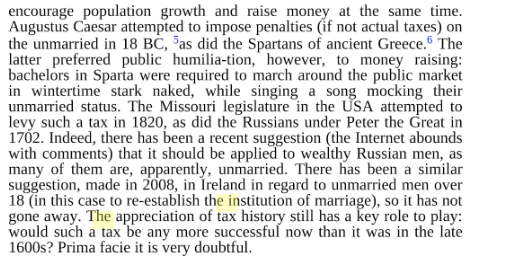
“Commissions” for an Officer Engineer or Artilleryman in the Regency Era

I recently had another writer send me a message to ask about the process for a man of the gentry or the aristocracy to purchase a commission as an officer engineer or artilleryman. First, permit me to say I am far from an expert on this subject, but the way I understand it, commissions for these positions were not sold. However, I will tell you, dear readers, if you ask me this same question later, I may have a different response. It seems there were no “absolutes” regarding these positions.

A person could only purchase a commission in a cavalry or infantry regiment. For any other regiment, such as the Royal Engineers or Royal Artillery, the young man had to attend the Royal Military Academy at Woolwich in order to receive a commission. Promotions there were based on length of service and experience.

I have read numerous accounts where cadets entered the Royal Military Academy at age fourteen, but other accounts have the person entering at age twenty. What I can say with some certainty is there was an entrance exam, which required more than a simple working knowledge of both regular math and geometry. When the person graduated is a whole other story. The fourteen year old graduated at age 18, while the twenty year old graduated at age twenty-five. This leads me to believe the courses required for this type of commission took four years to complete.

This information would naturally lead one to assume it would take four years to “graduate,” but I have read of instances where the officer passed back and forth between the artillery and engineers, so I am truly not certain that the Ordinance Department made any distinction between the two.

I think it is safe to say no officer was commissioned under the age of sixteen and, more likely, most were eighteen or older. We must remember those who attended the Academy had also to pass an exit exam. If one failed, he returned to the classroom for more instruction.

“Captain Wentworth, with five-and-twenty thousand pounds, and as high in his profession as merit and activity could place him, was no longer nobody. He was now esteemed quite worthy to address the daughter of a foolish, spendthrift baronet, who had not principle or sense enough to maintain himself in the situation in which Providence had placed him ...” [Chapter 24, Persuasion, by Jane Austen]

The Navy proved to be a popular trade/occupation for the sons of the gentry, but less so for sons of the aristocracy. A boy as young as ten could “volunteer” for a seafaring apprenticeship, one attached to the Captain of a particular ship. This position was unpaid, and the boy’s parents footed the bill for his food and clothes. He could become a midshipman when he reached 14.

The other means to become a midshipman was through the Royal Naval Academy at Portsmouth. Two of Jane Austen’s brothers attended the academy. It taught seamanship along with the standard educational subjects. Obviously, mathematics was emphasized because the use of the subject in navigation. It took two years (funded by the young man’s parents) onboard a ship for the fellow to become a Midshipman.

The Gunner and His Crew in Aubrey’s Royal Navy ~
https://thedearsurprise.com/the-gunner-and-his-crew-in-aubreys-royal-navy/

Naval History and Military Command provides us this excellent breakdown of duties:

OF GUNNERS, GUNNERS’ MATES, GUNNERS’ YEOMEN, AND QUARTER GUNNERS.

GUNNER of a ship of war, (cannonier de vaisseau, Fr.) an officer appointed to take charge of the artillery and ammunition aboard; to observe that the former are always kept in order, and properly fitted with tackles and other furniture, and to teach the sailors the exercise of the cannon.

The GUNNER’S Mate is to assist the gunner in every part of his business; he is an officer who should be as well acquainted with gunnery, and every thing respecting the ordnance and military stores, as the gunner himself: his particular business under the gunner is to have every thing ready for action in a moment’s warning; he should never be as a loss to know where to lay his hands upon any article belonging to the gunner’s department; he should be expert in preparing port and false fires, match stuff, grenadoes, and every sort of combustible used in war; and in a word, in doing every part of a gunner’s duty on board a ship of war.

The GUNNER’S Yeoman’s particular business is the stowage of the magazine, filling the store-rooms, &c. account, care, and distribution of all the stores of that department, under the gunner’s orders.

Quarter– GUNNER, an inferior officer under the direction of a ship of war, whom he is to assist in every branch of his duty; as keeping the guns and carriages in proper order, and duly furnished with whatever is necessary; filling the powder into cartridges, scaling the guns, and keeping them always in a condition for service. The number of quarter-gunners in any ship is always in proportion to the number of her artillery, one quarter-gunner being allowed to every four cannon.

OF MASTERS AT ARMS AND CORPORALS

MASTER at arms, an officer appointed by warrant from the board of admiralty, to teach the officers and crew of a ship of war the exercise of small arms; to confine and plant centinels over the prisoners, and superintend whatever relates to them during their confinement. He is also, as soon as the evening gun shall be fired, to see all the fires and lights extinguished, except such as shall be permitted by proper authority, or under the inspection of centinels. It is likewise his duty to attend the gangway, when any boats arrive aboard, and search them carefully, together with their rowers, that no spirituous liquors may be conveyed into the ship, unless by permission of the commanding officer. He is to see that the small arms be kept in proper order. He is to visit all vessels coming to or going from the ship, and prevent the crew from going from the ship without leave. He is also to acquaint the officer of the watch with all irregularities in the ship which shall come to his knowledge. In these several duties he is assisted with proper attendants, called his corporals, who also relieve the centinels, and one another, at proper periods.

CORPORAL of a ship of war, an officer under the master at arms, employed to teach the sailors the exercise of small arms, or musketry; to attend at the gang-way, or entering-ports, and observe that no spirituous liquors are brought into the ship, unless by particular leave from the officers. He is also to extinguish the fire and candles at eight o’clock in winter, and nine in summer, when the evening gun is fired; and to walk frequently down into the lower decks in his watch, to see that there are no lights but such as are under the charge of proper centinels, which he is to see placed, &c.

Forgive me for I have again digressed. For a very long time, there was no artillery or engineer manual. Each student created his own in the Academy from the courses he took, and he had to present that “manual” to the Academy teachers for approval as part of his graduation requirements.

Another source I particularly enjoyed was a “Service” magazine, for it held several accounts after the war from a variety of artillery officers. One I particularly enjoyed was “Shots from an Old Six Pounder.” You can find the information on Google Books on clicking the link. (The United Service Magazine, Volume 57, Page 2)

Other Sources:

Gentlemen’s Occupations

The Gunner and His Crew

Posted in British history, British Navy, Georgian England, Georgian Era, historical fiction, history, Jane Austen, military, Persuasion, real life tales, Regency era, research | Tagged , , , , , , , , | Comments Off on “Commissions” for an Officer Engineer or Artilleryman in the Regency Era

The East India Company, the World’s Most Powerful Cooperation, a Guest Post from Eliza Shearer

This post first appeared on the Austen Authors’ blog on November 12, 2019. Enjoy!

“Do you understand muslins, sir?”

“Particularly well; I always buy my own cravats, and am allowed to be an excellent judge; and my sister has often trusted me in the choice of a gown. I bought one for her the other day, and it was pronounced to be a prodigious bargain by every lady who saw it. I gave but five shillings a yard for it, and a true Indian muslin.”

Jane Austen’s Northanger Abbey, Chapter 3

I have been reading a great deal about the East India Company (EIC) of late because one of the characters in Miss Price’s Decision works for it. Four centuries before Walmart, Volkswagen or Amazon, the EIC was the original multinational corporation, employing thousands, yielding more power than many countries and enjoying unimaginable freedom to operate. 

A Profitable Multinational Operation 

The EIC, famously known as The Company, was founded in 1600 to foster trade with the so-called East Indies. By the Regency, the products in its portfolio included cotton muslins like the one bought by Tilney, as well as silk, spices, tea, salt, porcelain, opium and many more.  

At the same time, The Company did much more than overseeing commercial transactions between England and Asia. The EIC was involved in politics as much as in trade, and it effectively controlled a large territory and a population of millions, setting the foundation of what would become the British Empire. 

The EIC even had its own army, with 260,000 soldiers by 1803 (that’s twice the size of the British Army at the time). They enforced the execution of trade and taxation agreements and ensured that Indian labourers did as they were told. They were also known for ruthless looting of local riches.

(The EIC may have been Honourable on paper, but on the ground, it was anything but!)  

The Professionalisation of The Company

The men who worked as administrators for the EIC traditionally achieved their roles by patronage. By the Regency, patronage was still key in the recruitment process, but the EIC controlled such a vast territory that there was a pressing need for competently trained administrators, known as ‘writers’. 

EIC writers were clerical workers in charge of recording all the transactions overseen by the organisation, from minutes of meetings to accounting books to stock logs. Their importance to keep the EIC machinery running smoothly was such that the EIC (you guessed it!) founded its own college to train them up. 

The East India College, known as Haileybury, was established in 1806 in Hailey, Hertfordshire. The College, which was a short distance north of London, had the specific purpose of educating the young men destined to serve as EIC administrators in the colonies. 

A Very Peculiar College

Haileybury was a private institution quite unlike anything else. The curriculum was very ambitious. As well as political economy, philosophy, history, mathematics, law, and the classics, students were taught languages they would need once in their positions abroad, such as Arabic, Urdu, Bengali, Sanskrit or Persian. 

Admission to the programme was complex and required candidates to be backed by rich and powerful patrons. The College was not a cheap operation. The tutors were paid handsomely, some as much as 500 pounds a year, and with a reason, because they were amongst the most brilliant scholars of their time, many having previously taught at Oxford and Cambridge. 

By the mid-nineteenth century, many viewed the East India Company with suspicion, and in 1855, a Parliament act was passed “to relieve the East India Company from the obligation to maintain the College at Haileybury.” The Indian Civil Service would take its place, but the halo of Haileybury would remain for decades afterwards. 

Haileybury College in Miss Price’s Decision

I found the story of Haileybury too fascinating to ignore, so I weaved it into Miss Price’s Decision, which tells the story of Fanny Price’s sister Susan. Here is an excerpt discussing it:

“Miss Price! Another pleasant coincidence!”

Holding the dirty cloth in my hand, I looked up. Jamie Gartner was standing in front of me, beaming. His smile turned into a frown when he saw my tea-stained dress. 

“Can I be of any assistance?”

I blushed, shook my head and mumbled something. His gaze was burning my skin. To hide my embarrassment, I introduced Jamie to my companions, and to my relief, Mr Allen began to ask him a great many questions. Their conversation immediately touched upon Jamie’s occupation. Jamie, it turned out, had studied at the prestigious Haileybury College and had subsequently acquired a clerking post at the East India Company.

“Do you happen to know a Mr Payne? He has a post in the main registry.”

“It is my pleasure to work alongside him, sir.”

“Do you really? It is a small world, indeed. And do you plan to remain in the London office or are you destined to go abroad?”

“I have applied for a post in Calcutta. It is an important port and offers great opportunities for a writer like me as the company grows.”

Mr Allen appeared impressed, and invited Jamie, who confessed he was on his own, to join our little party. He readily accepted, to the delight of Mrs Allen and Miss Morland, who had been clinging to his every word. (…)

Mrs Allen’s fan tapped my arm.

“Have you known Mr Gartner long, then?”

“We grew up together,” I replied, trying to sound more animated than I felt. (…)

“He appears to have done very well for himself. A son of my cousin’s attended the East India College in Hertfordshire a few years ago, and his mother likes to go on about how only the most talented manage to secure a place, and how well he speaks all manners of strange languages, and how good he is with numbers.”  

“He was always a very bright boy,” I replied with a smile. 

“He must have very good patrons, too. My cousin tells me that, in order to be accepted into that fancy college, students need to be recommended by people in high places. They are also expected to pay hefty fees, although to be fair, their studies set them up for life. Do they not, Mr Allen?”

“My understanding is that posts abroad offer excellent prospects,” replied Mr Allen, stroking his chin. “Mr Gartner is not married, is he?”

“No, I do not think so,” I replied. 

“Well, if he is to travel to the East Indies, he will be in a hurry to find himself a wife,” said he. “There are very few Englishwomen in those lands.” 

Mrs Allen let out a cry of delight.

Eliza Shearer’s Miss Price’s Decision, Chapter 9

How familiar are you with the East India Company and what do you think of the curriculum at Haileybury College? 

Posted in Austen Authors, book excerpts, book release, British history, excerpt, Georgian England, Georgian Era, Great Britain, Guest Post, historical fiction, history, Living in the Regency, Mansfield Park, political stance, publishing, real life tales, Regency era | Tagged , , , , , , , , , , , , , | Comments Off on The East India Company, the World’s Most Powerful Cooperation, a Guest Post from Eliza Shearer

Jane Austen and the East India Company – a Guest Post from Elaine Owen

This post originally appeared on Austen Authors on June 21, 2019. Enjoy!  If you missed it, you can read part one HERE

In 1752 a young English woman traveled from the land of her birth to the continent of India for the express purpose of finding a husband. She had been an orphan from the age of six and had only a handful of younger siblings and more distant relatives to claim as her own. With no fortune and no family connections to attract possible suitors, this was probably her best shot at making a profitable marriage.

The young lady, just twenty two at the time, was named Philadelphia (“Phila”) Austen, and she had a younger brother named George. Many years in the future she would become an aunt to the newborn Jane Austen. But at the time all she knew was that she was supposed to become a bride for someone who worked for the East India Company.

Philadelphia Austen Hancock

In my last post I talked about the East India Company and mentioned that Jane Austen was connected to the company in some surprising ways. Today I would like to explore that connection in some detail.

On the six month passage to India Phila made friends with another husband-seeking woman named Margaret Maskelyne. When they arrived in India Phila became quickly engaged to Tysoe Saul Hancock, who worked for the East India Company as a surgeon but also earned money by trading Indian products such as salt and cloth. Phila’s friend Margaret married another East India man by the name of Robert Clive. Eventually these two couples also became close friends with another East India couple, Warren and Marian Hastings. The relationships between these three couples would have a profound influence on the life of Jane Austen.

Hastings and Clive were not mere tradesmen. They both rose through the ranks of the East India Company to the very highest positions of leadership. Robert Clive became one of the military leaders of the East India Company and brought India, modern day Pakistan and modern day Bangladesh into the British Empire. He did this by overthrowing the rightful heir to the Bengal throne and installing a puppet leader instead. His official title eventually became Commander in Chief of British India. Clive is known in history as a competent but corrupt leader for removing wealth from the Indian people, condoning atrocities, and implementing land policies that caused one of the worst famines in modern times.

Warren Hastings worked under Clive and helped him implement his programs. While Clive managed the military side of things, Hastings handled the administrative end, eventually becoming the first Governor General of India. To his credit Hastings saw the corruption and abuses of the British rule in India and he often tried to negotiate between the two sides. But he was an East India man and he was bound to enforce even rules he did not personally agree with.

We know that the Phila and her husband maintained close ties with both of these families, especially the Hastings. For a short time all three couples lived in the Clive’s home in India. Phila’s marriage to Hancock seems not to have been a happy one, and there was widespread speculation that Hastings, not Hancock, was the father of Phila’s only child (Eliza). Whether that is true or not we do know that when Hastings sent his young son George to live in England, the child lived with Phila’s relatives, the Austen family. George died of diphtheria while in the Austen’s care, but the warm association between the Hastings and Austen families continued unabated. Many years later, when Hastings was on trial in England for corruption, the Austen family followed every detail of the proceedings and staunchly supported their long time friend. And Hastings eventually gave Eliza Hancock, his godchild and possible natural daughter, an enormous fortune of ten thousand pounds.

Tysoe Saul Hancock, Clarinda, Eliza, and Philadelphia

So, was Jane Austen aware of the less than savory actions of the East India Company? Did she know that her own family was so closely connected to them? She must have. In her lifetime there was such widespread criticism of the East India Company that Parliament passed a series of laws curtailing its powers and bringing it more directly under the control of the British government. Hastings himself was investigated for corruption for an astonishing seven years. (He was ultimately acquitted.) It’s easy to imagine Jane and her family sitting at the dinner table or writing letters to each other, discussing the latest corruption charges against Hastings and wondering how their aunt Phila and cousin Eliza would be affected.,

Jane leaves no direct statements criticizing her family’s powerful friends. We can surmise that the author who crafted such fair minded, morally strong characters as Fanny Price and Anne Elliott was offended by the excesses and abuses of the British government in other parts of the world. But she was a woman, a daughter of the house, and hardly in a position to challenge the status quo. My best guess is that Jane probably felt conflicted at times, as we all do when people close to us are tied to movements or causes we find objectionable. Most likely she tried not to think about it too much.

There is, however, a bare hint of this conflict in Mansfield Park. I suspect that this passage is the closest Jane ever came to publicly expressing her thoughts about the darker side of British colonial policy.

[Edmund to Fanny] “Your uncle is disposed to be pleased with you in every respect; and I only wish you would talk to him more. – You are one of those who are too silent in the evening circle.”

[Fanny] “But I do talk to him more that I used. I am sure I do. Did not you hear me ask him about the slave trade last night?”

“I did – and was in hopes the question would be followed up by others. It would have pleased your uncle to be inquired of farther.”

“And I longed to do it – but there was such a dead silence! And while my cousins were sitting by without speaking a word, or seeming at all interested in the subject, I did not like – I thought it would appear as if I wanted to set myself off at their expense, by shewing a curiosity and pleasure in his information which he must wish his own daughters to feel.”

The “dead silence” comment is interesting, for it exactly describes how Jane treated the subject of British abuses in general in her novels. Fanny Price was speaking of slavery in Barbados, but she could just as easily have been speaking of atrocities in India.

The East India Company eventually collapsed under its own weight. The Indian Rebellion of 1857 was harshly put down, but the crown had finally had enough of the business enterprise that had ruled large parts of the British empire on behalf of the crown for so long. It nationalized the East India Company and took over all of its holdings, its finances, and especially its armed forces. In 1874 the company was disbanded entirely.

There is at least one writer out there who believes that we can thank the East India Company, at least in part, for having Jane Austen’s novels available to us today. As I mentioned before, Warren Hastings gave Eliza Hancock, Phila’s daughter, a massive inheritance of 10,000 pounds in the form of a trust fund. Eliza married a French duke who was killed in the revolution. Then, as a widow, she married Jane’s brother Henry, which meant that Henry had control of the inheritance from Hastings–an inheritance that came from Hastings’ work for the East India Company. Henry is the family member who negotiated with publishers on Jane’s behalf, signed contracts in her name, and promoted her works after her death. Without Henry Austen we might not have heard of Jane Austen. In my opinion this is a very tenuous connection, but it certainly gives one pause.

What do you think? Should Jane have addressed this difficult sort of topic in her novels? Should she have openly criticized the British government and East India Company, or was she right to stay silent on the subject? I know these are tricky questions but I would really like to hear your thoughts!

Posted in British history, Georgian England, Georgian Era, Guest Post, history, Jane Austen, Mansfield Park, marriage, marriage customs, political stance, reading, real life tales, Regency era, research, writing | Tagged , , , , , , , , | 1 Comment

The Phaeton, a Regency Carriage with Wide Appeal – and a Dangerous Side, a Guest Post by Eliza Shearer

Towards the end of Pride and Prejudice, in a letter explaining Mr Darcy‘s role in securing Lydia’s marriage to Mr Wickham, Mrs Gardiner writes to her niece Elizabeth, whom she suspects the master of Pemberley admires very much:

“I shall never be quite happy till I have been all round the (Pemberley) park. A low phaeton, with a nice little pair of ponies, would be the very thing”

Chapter 52, Pride & Prejudice

All Mrs Gardiner wants to explore the Pemberley estate is a phaeton. But what were these carriages like, and what was their big attraction?

The Draw of Phaetons as Carriages

Phaetons were light four-wheeled, open and doorless carriages with one or two seats. They typically had a folding top to shelter their users from the sun or light rain, but they otherwise offered little protection from the elements.

One of their defining characteristics was that they offered no outside driver’s seat for a coachman. In other words, phaeton owners were expected to drive their carriages. This may have well accounted for their popularity during the Regency and beyond.

A Fashionable Means of Transport

A Gentleman driving a Lady in a Phaeton George Stubbs National Gallery
A Gentleman driving a Lady in a Phaeton, George Stubbs (1787)
National Gallery, London

It’s no wonder that Mrs Gardiner dreams of a handsome phaeton: it must have made for a rather exhilarating means of transport, particularly for those used to being driven around. Note, however, that she specifies that she would like it to be a low one (this is relevant, as we shall see in a minute).

Another Austen lady who is partial to a sporty phaeton is – you’ll never guess it! – Anne de Bourgh. While Elizabeth is staying with Charlotte and Mr Collins, there are several instances of Miss de Bourgh driving by or stopping by “in her little phaeton and ponies.” (This little tidbit of information, often overlooked, suggests a more intriguing character than the doormat we are used to seeing in Austen adaptations, wouldn’t you say?)

The Wide Appeal of Phaetons

Phaetons could be decidedly pretty: in Austen’s The Three Sisters: A Novel, part of her juvenilia, a young lady expresses her wish to own one that is “cream coloured with a wreath of silver flowers round it.” But as well as the low sort favoured by ladies, some phaetons featured a very high perch. So high, in fact, that they sometimes required a ladder to reach the seats.

The elevated centre of gravity of the light phaetons made for very fast vehicles, ideal for speed-loving young men. In Northanger Abbey, cool-as-a-cucumber Mr Tinley drives “a phaeton with bright chestnuts” with his sister, making Mr Thorpe a very jealous fellow (he has to make do with a more basic one-horsed gig, a carriage with two wheels only, and a second-hand one at that).

Phaeton son of Helios engraving
Benjamin Green, Phaeton, (1777).
The Metropolitan Museum of Art, New York.

A Dangers Means of Transportation

High-perched phaetons were, unsurprisingly, very unstable vehicles, especially when driven around a bend at high speed. Accidents would have been common, almost expected for certain types of riders.

It is no wonder that in Love and Freindship, another Austen’s juvenilia story, the heroine and her friend witness the overturning of “a fashionably high phaeton” driven by “two gentlemen most elegantly attired.” (they turn out to be their husbands, but that, reader, is another story).

The Cautionary Tale of Phaeton, Son of Helios

The carriages were named after Phaeton, son of the Greek god Helios. Phaeton asked his father, who drove the chariot of the sun across the heavens every day, to prove his affection by granting him a wish. The god gave his word without realising that what the boy wanted was to drive his chariot, so he couldn’t say no when he realised his son’s folly.

Soon after setting off, Phaeton quickly lost control of the horses of the sun chariot and scorched a large expanse of the Earth which we now call the Sahara desert. Zeus, alarmed, had no choice but to strike the boy down with one of his mythical thunderbolts to stop the carnage, sending him to his death.

The story makes me think that perhaps no vehicle has ever been as suitably named.

Do you fancy the idea of riding a phaeton? Have you ever ridden a similar carriage?

Posted in Austen Authors, British history, Georgian England, Georgian Era, Guest Post, Jane Austen, Living in the Regency, Pride and Prejudice, Regency era, travel | Tagged , , , , , , , , , | Comments Off on The Phaeton, a Regency Carriage with Wide Appeal – and a Dangerous Side, a Guest Post by Eliza Shearer

Capability Brown, England’s Greatest Landscape Artist: “This site has great capabilities.”

capability_brown_cosway_about_us.jpgLancelot ‘Capability’ Brown changed the face of eighteenth century England, designing country estates and mansions, moving hills and making flowing lakes and serpentine rivers, a magical world of green. (About Capability Brown)

The fifth child of William Brown, the land agent for Sir William Loraine, who held the Kirkharle Hall estate in Northumberland, Lancelot Brown was educated at a school in nearby Cambo until age 16. His first position was as an apprentice to the head gardener on Sir William’s estate, mainly in charge of the kitchen garden. There he remained until age 23. In 1739, he traveled to Boston, a port in Lincolnshire, where he remained for awhile. Later, he took his landscape commission for a new lake in the park at Kiddington Hall, Oxfordshire. Next, he moved to Wotton Underwood House, Buckinghamshire, the seat of Sir Richard Greenville. 

1741 saw him in the position of undergardener for Lord Cobham at Stowe, Buckinghamshire. William Kent, one of the founders of the “new” English style of landscaped garden of the 18th Century, was the head gardener. At Stowe, Brown executed both the architectural and landscaping works in the famous garden. He also met his future wife there, marrying Bridget Wayet, with whom he had nine children, in 1744. “At the age of 26 he was officially appointed as the Head Gardener in 1742, earning £25 year and residing at the western Boycott Pavilion. Brown was the head gardener at Stowe from 1742 to 1750. He made the Grecian Valley at Stowe, which, despite its name, is an abstract composition of landform and woodland. Lord Cobham allowed Brown to take freelance commission work from his aristocratic friends, thus making Brown well known as a landscape gardener. As a proponent of the new English style, Brown became immensely sought after by the owners of landed estates. 

While at Stowe, Brown also began working as an independent designer and contractor and in autumn 1751, he was able to move with his family to the Mall, Hammersmith, the market garden area of London.

“By the 1760s, he was earning on average £6,000 a year, usually £500 for one commission. As an accomplished rider he was able to work fast, taking only an hour or so on horseback to survey an estate and rough out an entire design. In 1764, Brown was appointed King George III’s Master Gardener at Hampton Court Palace, succeeding John Greening and residing at the Wilderness House. In 1767 he bought an estate for himself at Fenstanton in Huntingdonshire from the Earl of Northampton and was appointed High Sheriff of Cambridgeshire and Huntingdonshire for 1770, although his son Lance carried out most of the duties.” (Capability Brown) 

The CapabilityBrown.org site tells us, “Brown’s style derived from the two practical principles of comfort and elegance. On the one hand, there was a determination that everything should work, and that a landscape should provide for every need of the great house. On the other, his landscapes had to cohere and look elegant.

gardens-of-capability-brown-prior-park-90190358_da2ff24e22_o-2

Prior Park: There are three lakes in the gardens along with a serpentine lake, a stunning Palladian bridge and a Gothic temple feature. http://www.aboutbritain.com/articles/gardens-of-capability-brown.asp

“While his designs have great variety, they also appear seamless owing to his use of the sunk fence or ‘ha-ha’ to confuse the eye into believing that different pieces of parkland, though managed and stocked quite differently, were one. His expansive lakes, at different levels and apparently unconnected, formed a single body of water as if a river through the landscape, that like the parkland itself, ran on indefinitely.

“This effortless coherence is taken for granted today in a way that was predicted in his obituary: ‘where he is the happiest man he will be least remembered, so closely did he copy nature his works will be mistaken’. His nickname of ‘Capability’ is though to have come from his describing landscapes as having ‘great capabilities’.”

Brown’s nickname came from his habit of saying: “This site has great capabilities.” Brown preferred to “perfect nature.” His lawns were smooth and undulating, intentionally leading the eye away from the manor house and toward stands of trees, hills, and lakes. He had abandoned the formal French style founded at Versailles, and Brown was sometimes criticized for his efforts, but he was a proponent of “English designs,” not French. In his lifetime, he is said to have laid out some 170 gardens. Some of England’s finest—those at Bowood, Burghley, Longleat, Stowe, Petworth, Althorp, and Blenheim are considered his masterpieces.

gardens-of-capability-brown-blenheim-palace-park-lake-6092929443_458e152185_o-1

The landscaped parkland and gardens include water terraces, a magnificent lake and architectural eye-catchers such as the Grand Bridge designed by Vanbrugh and the Column of Victory. http://www.aboutbritain.com/articles/gardens-of-capability-brown.asp

When I think of Brown, I think of Jane Austen’s description of Pemberley in Pride and Prejudice. “They gradually ascended for half a mile, and then found themselves at the top of a considerable eminence, where the wood ceased, and the eye was instantly caught by Pemberley House, situated on the opposite side of a valley, into which the road with some abruptness wound. It was a large, handsome, stone building, standing well on rising ground, and backed by a ridge of high woody hills;—and in front, a stream of some natural importance was swelled into greater, but without any artificial appearance. Its banks were neither formal, nor falsely adorned. Elizabeth was delighted. She had never seen a place where nature had done more, or where natural beauty had been so little counteracted by an awkward taste. They were all of them warm in their admiration; and at that moment she felt that to be mistress of Pemberley might be something!

Brown died at Fenstanton in 1783. 

Blenheim_Palace_Grand_Bridge

At Blenheim Palace, Oxfordshire, Brown dammed the paltry stream flowing under Vanbrugh’s Grand Bridge, drowning half the structure with improved results. https://en.wikipedia.org/wiki/Capability_Brown#/media/File:Blenheim_Palace_Grand_Bridge.jpg ~ Public Domain

Posted in British history, business, estates, Georgian England, Georgian Era, Jane Austen, Pride and Prejudice, real life tales, research | Tagged , , , , , , , | 3 Comments

“Rule of Thumb”: The Wife as Property in the Regency Era, Part I

I have written several scenes in my 55+ books in which the wife is abused by her husband, sometimes mentally and sometimes physically. During the Regency there was no laws against such abuse. The wife held no rights. In fact, if we take a closer look at the actual laws on the books in the Regency, we discover a woman was only an extension of her husband—not a person in her own right.

Women, for example, were not permitted to buy property, write a will, make contracts, own her own carriage, or even have custody of her children. In Darcy’s Temptation, which will rerelease toward the end of this calendar year, Elizabeth fears Darcy will send her away after she delivers his heir.

Back in 1765, English jurist, judge, and Tory politician, William Blackstone published the first of four volumes of Commentaries on the Laws of England, considered his magnum opus; the completed work earned Blackstone £14,000 (£1,990,000 in 2022 terms). Blackstone’s four-volume Commentaries were designed to provide a complete overview of English law and to provide it some consistency.

Of women’s legal rights in marriage and without, he explained . . .

By marriage, the husband and wife are one person in law: that is, the very being or legal existence of the woman is suspended during the marriage, or, at least, is incorporated and consolidated into that of the husband… and her condition during her marriage is called her coverture.

… For this reason, a man cannot grant anything to his wife, or enter into covenant with her: for the grant would be to suppose her separate existence; and to covenant with her, would be only to covenant with himself: … a husband may also bequeath anything to his wife by will; for that cannot take effect till the coverture is determined by his death.

… the chief legal effects of marriage during the coverture; upon which we may observe, that even the disabilities which the wife lies under are for the most part intended for her protection and benefit: so great a favourite is the female sex of the laws of England.

What this meant was a woman could NOT make contracts, purchase property, write a will, perform the duties of a business partner, sign bills of exchange, own the money she made in performance of a job, or even claim custody of her children.

A single woman or a widow possessed more rights than did a married one. In my tale, “His Christmas Violet,” the main character Lady Violet Graham is a widow, and she refuses Sir Frederick Nolan’s offer of marriage, for she does not want again to place her life in the hands of a man.

It was not until the Married Women’s Property Act of 1884 that married women enjoyed the same legal rights as unmarried women.

In my tale, “Lady Joy and the Earl,” Lady Jocelyn “Joy” Lathrop has married a man who takes great “pleasure” in beating her. When he dies, she declares she will never again place her life in the hands of any man, not even the hands of James Highcliffe, 10th Earl Hough, who she has loved since childhood. I received some “criticism” for including this reality in the tale, but I wished to make a point regarding the lack of rights women possessed during the Regency. She was safer as a widow than she would have been in placing her life in the hands of another. In the 1970s, the “rule of thumb,” so to speak, was a man could not beat his wife with a limb that was larger around than his thumb. Whether this was true in the Regency, I cannot say with any certainty, but the thumb has long been used a unit of measurement. The old English “ynche” was defined as the breadth of a man’s thumb at the base of the nail. Yet, I digress.

According to Wikipedia, “A modern folk etymology holds that the phrase is derived from the maximum width of a stick allowed for wife-beating under English common law, but no such law ever existed. This belief may have originated in a rumored statement by 18th-century judge Sir Francis Buller that a man may beat his wife with a stick no wider than his thumb. The rumor produced numerous jokes and satirical cartoons at Buller’s expense, but there is no record that he made such a statement.

“English jurist Sir William Blackstone (yes, Blackstone again) wrote in his Commentaries on the Laws of England of an “old law” that once allowed “moderate” beatings by husbands, but he did not mention thumbs or any specific implements. Wife-beating has been officially outlawed for centuries in England (and the rest of the United Kingdom) and the United States, but continued in practice; several 19th-century American court rulings referred to an ‘ancient doctrine’ that the judges believed had allowed husbands to physically punish their wives using implements no thicker than their thumbs.”

According to Blackstone (1765)

The husband also, by the old law, might give his wife moderate correction. For, as he is to answer for her misbehaviour, the law thought it reasonable to intrust him with this power of restraining her, by domestic chastisement, in the same moderation that a man is allowed to correct his apprentices or children; for whom the master or parent is also liable in some cases to answer.

Posted in British history, Church of England, family, Georgian England, Georgian Era, history, Living in the Regency, Living in the UK, marriage, real life tales, Regency era | Tagged , , , , , , , | 2 Comments

June 20 ~ West Virginia Day ~ “Country Roads Take Me Home…”

West Virginia Day – June 20

June 20 celebrates the birth of my home state. West Virginia was founded in 1863. I just returned from WV on Sunday. I love driving the mountain roads, but I’m sure many others do not. They are intimidated by the curves. When I come out of the tunnel at Bluefield, the one which separates West Virginia from Virginia, my heart always says “home.”

On June 20, 1863, West Virginia became the thirty-fifth state in the Union. The land that formed the new state formerly constituted part of Virginia. The two areas had diverged culturally from their first years of European settlement, as small farmers generally settled the western portion of the state, including the counties that later formed West Virginia, while the eastern portion was dominated by a powerful minority class of wealthy slaveholders. There were proposals for the trans-Allegheny west to separate from Virginia as early as 1769. When Virginia seceded from the Union in 1861, the residents of a number of contiguous western counties, where there were few slaves, decided to remain in the Union. Congress accepted these counties as the state of West Virginia on condition that its slaves be freed. “Montani semper liberi,” “mountaineers always freemen,” became the new state’s motto.

Personally, I love driving the mountain roads, but I’m certain many others do not. Many are intimidated by the sharp curves. When I exit the tunnel at Bluefield on Interstate 77, the one which separates West Virginia from Virginia, my heart always says “home.”

Here are some fun facts shared by the Harper’s Ferry Adventure Center:

  • West Virginia formed after breaking away from Virginia during the Civil War. It was admitted to the Union on June 20, 1863 under a proclamation issued by President Abraham Lincoln. West Virginia is the only state to be admitted under presidential proclamation.
  • Mother’s Day was first observed as a holiday at Andrews Church in Grafton on May 10, 1908. It became a national holiday in 1914.
  • The New River Gorge Bridge is the longest steel arch bridge in the Western Hemisphere. It spans a length of 1,700 feet. Every October on Bridge Day, the bridge is closed to traffic while individuals parachute and bungee jump 876 feet off the bridge.
  • One of the world’s first suspension bridges was built in Wheeling in November of1849.
  • Organ Cave is the largest natural cave in West Virginia and the third largest cave in the United States
  • Camping in WV is fun to do because there is no shortage of places to go. Nearly 75 percent of the state is covered by forests.
  • West Virginia produces 15 percent of the total coal used nationwide. It is home to Coal House, the world’s only residence built entirely of coal. Coal House is in White Sulphur Springs and was occupied on June 1, 1961.
  • West Virginia became the first state to have a sales tax. The tax went into effect on July 1, 1921.
  • Golden Delicious, a variety of yellow apples, are native to West Virginia. The first golden apple tree originated in Clay County in 1775.

gristmill-text

Babcock State Park, Glade Creek Grist Mill

images

Here are some more fun facts you likely did not know about West Virginia. These come from the West Virginia Tourism site. https://wvtourism.com/almost-heaven-fun-facts-2/

West Virginia is known for its scenic mountain beauty, unmatched outdoor recreation opportunities and the friendliest folks in the country. But did you know that nearly 80% of the state is covered by forests? Or that the state’s youngest & oldest governor are the same person? Here are 20 facts you may not have known about this slice of heaven:

  1. Let’s start with the fact that it almost wasn’t named West Virginia. The state was originally going to be named “Kanawha” to honor a Native American tribe; however,  after its succession from the Commonwealth of Virginia, officials still wanted Virginia to be part of its name.
  2. West Virginia is the only state completely within the Appalachian Mountain range, aptly given the nickname the Mountain State.
  3. North America’s largest alluvial diamond was found in Peterstown. It is known as the Punch Jones Diamond after William “Punch” Jones and his father Grover found the diamond in 1928.
  4. Outdoor advertising got its start in Wheeling when the Bloch Brothers Tobacco Company painted bridges and barns with “Treat Yourself to the Best, Chew Mail Pouch.”
  5. The first rural free delivery mail service took place in 1896 in Charles Town through the Post Office Department’s pilot program to determine the feasibility for rural delivery for the rest of the country.
  6. Harrisville is home to America’s oldest dime store, Berdine’s Five and Dime, which has been continuously operating since 1908.
  7. Cecil Underwood made history in 1956 when he became the state’s youngest governor at 34 – then again in 1996 when he became the state’s oldest governor after being reelected at 74.
  8. West Virginia is the third most forested state. In fact, the Monongahela National Forest covers nearly a million acres of land and spans across 10 counties.
  9. West Virginia is comparable in size to both Latvia and Lithuania.
  10. Contrary to its name, the New River is actually one of the oldest in the world and unusually flows south to north because it was formed before the mountains.
  11. Standing tall at 292 feet, the State Capitol dome is higher than the dome at the nation’s capital.
  12. West Virginia is located within a day’s drive from 75% of the U.S. population, yet remains an untouched gem among outdoor enthusiasts.
  13. The Golden Delicious Apple originated in Clay County in 1905.
  14. The USS West Virginia was hit during the attack on Pearl Harbor on December 7, 1941 – a date which will live in infamy. The mast from the ship now lives on West Virginia University’s campus, in front of Oglebay Hall.
  15. The first brick street in the world was laid in Charleston on Summers Street.
  16. The Trans Allegheny Lunatic Asylum, a National Historic Landmark, is the largest hand-cut stone masonry building in North America and second in the world to the Kremlin.
  17. The largest sycamore tree in the world was located in Webster Springs until it fell in 2010 when it was estimated to be over 500 years old!
  18. The Phil G. McDonald Bridge in Beckley is the highest truss bridge in the world at 700 feet tall, although it’s often overshadowed by the famous New River Gorge Bridge.
  19. West Virginia was home to the first land battle of the Civil War at the Battle of Philippi in 1861.
  20. You don’t have to travel far to see the world – West Virginia holds the record for having the most towns named after cities in other countries, including Athens, Berlin, Cairo, Calcutta, Geneva and Shanghai.

images

The beauty of a WV highway

“In 1963, West Virginia Day was the highpoint of a year-long celebration of the state centennial, with President John F. Kennedy speaking from the steps of the state capitol. The state enjoyed its grandest birthday party that day, beginning with a breakfast restricted to people born on June 20 and culminating with evening fireworks. A 35-layer cake was served at noon, and Kennedy’s speech was followed by a 35-gun salute.

“In addition to official observances, West Virginians celebrate their state’s birthday with a variety of tavern toasts, family cookouts, and other unofficial acknowledgments. Long-standing customs include the creation of a special glass-work by Blenko Glass of Cabell County. Issued in a number equal to the state’s age, the limited-edition piece is sold in Charleston to first-comers on the morning of West Virginia Day.” [e-WV: The West Virginia Encyclopedia “West Virginia Day.” e-WV: The West Virginia Encyclopedia. 20 June 2014. Web. 22 May 2018.]

images-2

my hometown

huntington-arcade

fine shops found in the Arcade in downtown Huntington

Downtown_Huntington-WV

busy downtown streets in Huntington

Posted in Uncategorized, West Virginia | Tagged , , , | 4 Comments

Reporting Deaths in the Aftermath of Waterloo

 One of my favorite Regency series comes from Mary Balogh. In the Bedwyns Saga’s book 5, entitled Slightly Sinful, Lord Alleyne Bedwyn is wounded at Waterloo. A woman who is stripping the bodies of their clothing in order to sell them finds him. His injury causes him what we who write romances call “romance amnesia.” Therefore, his death is reported to his family, when he is still alive. So, over the years since reading Ms. Balogh’s book, I have been more than curious regarding the procedure to inform the families. What happened to the dead after the Battle of Waterloo? 

BNPS.co.uk (01202 558833)
Pic: Bonhams/BNPS
*Please use full byline*
117 Lady Butler Scotland Forever.
A soldier’s first hand account of the most decisive moment at the Battle of Waterloo which left the British swords ‘reeking with French blood’ has been unearthed after 200 years.
Corporal Richard Coulter described the ‘glorious’ charge of the household ‘heavy’ brigade that involved 2,000 British cavalryman attacking Napoleon’s troops who had been gaining the upper-hand in the battle.
The letter has now emerged for sale at Bonhams in London.

If the deceased was a member of Wellington’s staff, or a senior officer, the family may have gotten a personal letter from Wellington within days. Wellington wrote many on June 19, four days after the battle. Likewise, the most reliable news often came to the family from officers and soldiers serving with a soldier who was killed or wounded and there are many examples of such letters being written to families and loved ones of the fallen on the 19th and 20th of June. 

Otherwise, lists of dead and wounded were published in the London Gazette. However, not all lists were made out and sent at the same time, i.e., different regiments. News dribbled in. In some cases, it took a week before missing officers/soldiers were found, either wounded or dead. It was chaos. The senior officers of the regiments themselves were not certain who had been killed and who survived for many hours, if not a few days, after the battle. 

Add to that the fact that many mistakes were made in those initial lists. There are numerous examples of various soldiers named Jackson, Smith, Brown, etc., being confused with each other at first. 

There were no dog tags. Many of the dead, on both sides, were plundered of their belongings and clothes on the battlefield. By the time the burying parties came around, there was no way to identify many of the bodies, which were placed in communal graves. Therefore, it could take anywhere from a week to a month before all returns were in and published. 

As the first official journal of record and the newspaper of the Crown, The Gazette became an authoritative and reliable source of news, and this served the purposes of both the Crown and the Executive well.

The state already held incomparable sources of information from overseas: during peacetime, the various British embassies could be relied on to relay strategic and political news back home and, in times of war, the dispatches of the British generals served a similar purpose – both sources acting effectively as the foreign correspondents of their day.

These varying dispatches continued to be used to good effect as The Gazette developed its profile. Indeed, when the newly launched Times newspaper halted its presses to carry the report of Wellington’s 1815 victory over Napoleon at Waterloo, it was merely to reproduce in full the dispatch which had already been previously published as a ‘Gazette Extraordinary’ (Gazette issue 17028).

The Gazette was also the bearer of official War Office and Ministry of Defence events, including listing those ‘Mentioned in dispatches’ (MIDs), where notable individuals are recognised for their activities in the theatre of war. 

The Gazette even ultimately produced its own terminology for those appearing in its reports: whether when they were appointed to a new military post, or for committing acts of particular gallantry, an individual was said to have been “gazetted” when their name reached the pages of The Gazette.

An easing of publishing restrictions, and the general success of The Gazette in providing reliable official information, led to the creation of two further journals, enabling a more detailed focus on material of particular relevance to Scotland and Ireland.

More on The Gazette below. And you’ll see by following this link that Wellington’s Waterloo Dispatch wasn’t published until June 22nd. www.thegazette.co.uk/London/issue/17028/page/1213

All senior officers had their own staff, usually paid out of their own pockets. Wellington had a butler, a cook, a valet,  two grooms, a guy in charge of his pack of hunting dogs and a washerwoman, in addition to his Aide-De-Camps.

It would not have taken long for a senior officer’s effects to be returned to England. There was a dedicated supply route from England to Ostend and Ghent, then on to Paris and Brussels. The Royal Navy had ships standing by at Ostend and Ghent to facilitate movements of the army, also to transport the walking wounded, as well as French prisoners. 

After Alexander Gordon died, Wellington wrote to his brother, Lord Aberdeen, to tell him of the death. The PS of that letter is heartbreaking – “I have your brother’s horse here with me and will keep it until you let me know what is to be done with it.” So, personal effects, trunks, horses could all be sent to England with no problem or loss of time. Such is one of the plot points of my upcoming story “Courting Lord Whitmire.” 

If you care to read more of these tragic events, try these two books: 

The Duke of Wellington’s victory over Napoleon in 1815 at Waterloo ensured British dominance for the rest of the nineteenth century. It took three days and two hours for word to travel from Belgium in a form that people could rely upon. 

This is a tragi-comic midsummer’s tale that begins amidst terrible carnage and weaves through a world of politics and military convention, enterprise and roguery, frustration, doubt and jealousy, to end spectacularly in the heart of Regency society at a grand soiree in St James’s Square after feverish journeys by coach and horseback, a Channel crossing delayed by falling tides and a flat calm, and a final dash by coach and four from Dover to London.

At least five men were involved in bringing the news or parts of it to London, and their stories are fascinating. Brian Cathcart, a brilliant storyteller and historian, has visited the battlefield, travelled the messengers’ routes, and traced untapped British, French and Belgian records. This is a strikingly original perspective on a key moment in British history.

Waterloo is probably the most famous battle in military history. Thousands of books have been written on the subject but mysteries remain and controversy abounds.

By presenting more than 200 previously unpublished accounts by Allied officers who fought at the battle, this collection goes right back to the primary source material. In the letters the Allied officers recount where they were and what they saw. Gareth Glover has provided historical background information but lets the officers speak for themselves as they reveal exactly what happened in June 1815.

Originally sent to, and at the request of, Captain W Siborne, then in the process of building his famous model of the battle, these letters have remained unread in the Siborne papers in the British Library. A small selection was published in Waterloo Letters in 1891 but much of vast historical significance did not see the light then and has remained inaccessible until now. Glover now presents this remarkable collection which includes letters here by Major Baring, George Bowles, Edward Whinyates, John Gurwood and Edward Cotton as well as letters by Hanoverian and King’s German Legion officers.

This is a veritable treasure trove of material on the battle and one which will mean that every historian’s view of the battle will need correcting.

****************************************

In case you are interested in the book I mentioned above, here is the book blurb. Trust me. Read the series from beginning to end. You will not be disappointed. Slightly Married, Book 1; Slightly Wicked, Book 2; Slightly Scandalous, Book 3; Slightly Tempted, Book 4; Slightly Sinful, Book 5; and Slightly Dangerous, Book 6. [Note! Part of Slightly Tempted deals with Alleyne’s sister Morgan’s desperate search for him in Belgium after Waterloo. You might also find those insights interesting.] Not all deal directly with the war, but all are worth the read. 

Meet the Bedwyns—six brothers and sisters—men and women of passion and privilege, daring and sensuality….Enter their dazzling world of high society and breathtaking seduction…where each will seek love, fight temptation, and court scandal…and where Alleyne Bedwyn, the passionate middle son, is cut off from his past—only to find his future with a sinfully beautiful woman he will risk everything to love.

As the fires of war raged around him, Lord Alleyne Bedwyn was thrown from his horse and left for dead—only to awaken in the bedchamber of a ladies’ brothel. Suddenly the dark, handsome diplomat has no memory of who he is or how he got there—yet of one thing he is certain: The angel who nurses him back to health is the woman he vows to make his own. But like him, Rachel York is not who she seems. A lovely young woman caught up in a desperate circumstance, she must devise a scheme to regain her stolen fortune. The dashing soldier she rescued from near-death could be her savior in disguise. There is just one condition: she must pose as his wife—a masquerade that will embroil them in a sinful scandal, where a man and a woman court impropriety with each daring step…with every taboo kiss that can turn passionate strangers into the truest of lovers.

Posted in British history, Georgian England, Georgian Era, history, Living in the Regency, military, Napoleonic Wars, real life tales, Regency era, Regency romance, research, war, weather | Tagged , , , , , , , | 2 Comments

The Duchess of Richmond’s Ball and the Battle of Waterloo, a Guest Post from Jann Rowland

On June 15, 1815, perhaps the most famous (or infamous) ball in history was held. The Duchess of Richmond’s ball is generally regarded as the event in which Arthur Wellesley, Duke of Wellington, was informed of the advance of French forces into the kingdom of the Netherlands. This is somewhat accurate.

In March of 1815, Napoleon Bonaparte escaped Elba and landed in France, quickly assuming control of the Empire of France from Louis XVIII, setting off the Hundred Days campaign. The nations of Europe, quickly mobilized against him, with the British and the Prussians fielding armies in the Netherlands, while the Russians, Austrians, and several Germanic Princedoms marched to support them. Thus, outnumbered and facing enemies on potentially three sides, Napoleon knew his only chance was to defeat the coalition armies separately before they could assemble against him.

The allies had set the date of their invasion of France for July 1, but it was considered possible (perhaps even likely, given the reputation of the French Emperor) the French would attack first. The Duchess of Richmond, whose husband was the commander of British forces defending Brussels, had planned some weeks earlier to host a ball. When rumors of French advances began to run through the city, she asked Wellington if the ball should be canceled his response was: “Duchess, you may give your ball with the greatest safety, without fear of interruption.” Thus, the ball was held as scheduled, the most likely location being a coach house attached to the house the Lennox family was leasing in Brussels.

When the first circles of Brussels society gathered that night, the main topic of discussion was, of course, the rumored impending invasion. Even with so desperate a subject on the tongues of those who attended, however, by all accounts the ball proceeded smoothly. Wellington and his commanders arrived at about 11 PM that evening, and it was said that “with the exception of three generals, every officer high in [Wellington’s] army was there to be seen.”

But Wellington had allowed the ball to go on that evening in an attempt to confirm that all was well and proceeding as planned. In reality, he had received word earlier that day that the French army had crossed the Belgian frontier and was engaging the British allies, the Prussian army, to the east. Wellington put the entire British army on alert. But he was still unaware of the speed of the French advance and the location of the attack and did not order his army to mass just yet.

Just before dinner, a dispatch arrived for William, Prince of Orange, commander of the Dutch-Belgian army. The prince handed Wellington the missive, who put it in his pocket and continued on as if nothing had happened. When he read the note twenty minutes later, he ordered William back to his command post and went into supper. To his surprise, William returned only a short time later with word that the French had pushed much further than expected.

By now rumors were flying through the ballroom. Wellington orders both William and the Duke or Brunswick back to their command posts, though he, himself stayed for another twenty minutes. Then he announced his intention to retire. Before he left the room, however, he whispered in Duke of Richmond’s ear, asking if he had a good map. The two men left the room, going to Richmond’s study, where Wellington surveyed the potential battlefields. The French had pushed far enough into the Belgian countryside that they now threatened Quatre Bras, and Wellington, knowing he would not be able to mobilize his army in time to stop them there, exclaimed: “Napoleon has humbugged me, by God; he has gained twenty-four hours’ march on me.” As he surveyed the map, he fixed his gaze on Waterloo and allowed his finger to fall in the name as the place where the British would stop the French.

1268354; out of copyright

By now the ball was all but over. Officers were pulled from the ballroom and given orders to return to their units, and many did so without even changing back into their uniforms, fighting in their suits and dancing shoes. Those who bade them farewell weeping with fear for those who were going into danger, knowing not all of them would return. The city soon became a bustle of movement as the regiments departed for the front and the battle against the invading French.

The next day, both the Battle of Quatre Bras and the Battle of Liege were fought. Quatre Bras was a victory for the British as they denied Napoleon the crossroads and his strategic objective of driving a wedge between the two allied armies. Liege was a victory for Napoleon, but he was not able to destroy the Prussians. The British, by Wellington’s design, fell back to Waterloo and linked up with the Prussian army. Two days later, the final battle of the Napoleonic wars was fought at Waterloo, and the French were defeated, ending Napoleon’s power forever.

Posted in Uncategorized | Comments Off on The Duchess of Richmond’s Ball and the Battle of Waterloo, a Guest Post from Jann Rowland

The Battle of Waterloo: Did the Weather Change History?


French cuirassiers charging a British infantry square at the Battle of Waterloo, 1815 (1906). From Cassell’s Illustrated History of England, Vol. V. (Cassell and Company, Limited, London, Paris, New York & Melbourne, 1906). Artist P Jazet.(Photo by The Print Collector/Getty Images)


The Battle of Waterloo: Did the Weather Change History?  Background: The Battle of Waterloo was fought thirteen kilometers south of Brussels between the French, under the command of Napoleon Bonaparte, and the Allied armies commanded by the Duke of Wellington from Britain and the 72-year-old General Blücher from Prussia. The French defeat at Waterloo drew to a close 23 years of war beginning with the French Revolutionary wars in 1792 and continuing through the Napoleonic Wars. There was a brief eleven-month respite when Napoleon was forced to abdicate, exiled to the island of Elba. However, the unpopularity of Louis XVIII and the economic and social instability of France motivated Napoleon’s return to Paris in March 1815. The Allies soon declared war once again. Napoleon’s defeat at Waterloo marked the end of the Emperor’s final bid for power, the so-called ‘100 Days,’ and the final chapter in his remarkable career.

Why did Napoleon lose? Wellington described his victory as a ‘damned near-run thing.’ The battle was closely fought, and either side could have won, but mistakes in communication, leadership, and judgment led, ultimately, to the French defeat.

Communication was key. The fastest way to communicate was by sending messages with horseback riders, but this created a delay in instructions being carried out, and there was a high chance of the messages being intercepted and never arriving. Given the numbers of troops involved and the distances involved, potentially fatal results could easily occur if communications failed, and Napoleon did not have any system in place to ensure that the orders had been received.

In his choice of leaders, Napoleon’s judgment was poor. Marshal Grouchy was said to be a great General, but he was out of his depth in this battle. He showed little initiative and was tardy in his pursuit of the Prussians, giving them time to regroup. Ney also proved unreliable as a leader, failing to take advantage of his situation in the precursory battle at Quatre-Bras and then in leading the cavalry, unsupported by infantry and artillery, at Waterloo.

The Battle of Waterloo took the lives of 47,000 soldiers and occurred in an area as small as 6.5 km by 3.5 km.

For an hour by hour breakdown of the battle’s events, visit BBC History (http://www.bbc.co.uk/history/british/empire_seapower/battle_waterloo_01.shtml). And, of course, the Waterloo 1815 website has magnificent details (http://www.napoleon-battles.com/).

Napoleon Bonaparte flees the field of Waterloo, June 18, 1815.


One of the elements outside Napoleon’s direct control, but one that brought about many of his woes was the weather from June 16-18, 1815. Both the French and the Allies experienced the same conditions, and the blame for the loss most likely can be attributed to the fact that Napoleon’s arrogance and inflated self-confidence stood in the way of reason.

The area around Waterloo experienced heavy rains on June 17 and the morning of the 18th. Some military strategists suggest that the soaked ground might have delayed the battle and would have given the Prussian army the time to join forces with Wellington. One must remember that even Victor Hugo spoke of the influence of weather on the battle’s outcome. In chapter 3 of Les Misérables, the commentator says, “If it had not rained in the night between the 17th and the 18th of June, 1815, the fate of Europe would have been different. A few drops of water, more or less, decided the downfall of Napoleon. All that Providence required in order to make Waterloo the end of Austerlitz was a little more rain, and a cloud traversing the sky out of season sufficed to make a world crumble.”

Dennis Wheeler and Gaston Demarée’s article, “The weather of the Waterloo campaign 16 to 18 1815,” cites several passages from those who experienced the battle firsthand.

From the letters of Private William Wheeler of the 51st Kings Infantry comes this excerpt, “…[a]nd as it began to rain the road soon became very heavy…the rain increased, the thunder and lightning approached nearer, and with it came the enemy…the rain beating with violence, the guns roaring, repeated bright flashes of lightning attended with tremendous volleys of Thunder that shook the very earth…”

And Private John Lewis of the 95th Rifles wrote home to say, “…[t]he rain fell so hard that the oldest soldiers there never saw the like…”

Napoleon planned to attack at 8 A.M., but some experts estimate that it was closer to eleven before he struck. Besides the soft ground slowing the progress of Napoleon’s heavy artillery, one must take into consideration the concept that cannon shot was designed to fall short of the target and then skip along the ground for the most damage. In muddy conditions, the weapon’s effectiveness was compromised. The cavalry could not move forward easily. Captain Cotter of the South Lincolnshire regiment wrote of, “…[m]ud through which we sank more than ankle deep….” The cavalry charge was reduced from a gallop to a canter. A damp mist rose and mixed with the guns’ smoke. However, the winds did not carry away the “veritable fog of war.”

Finally, the French infantry advancing towards the Anglo-Dutch lines reportedly crossed through fields of wet rye. Muskets and rifles loaded prior to the march would likely misfire because of damp powder. Napoleon’s assault would have suffered more than would have Wellington’s defensive lines under such conditions.

An article in the Evening Standard suggests that a volcanic eruption in Indonesia changed the climate and provided Wellington the advantage. We know the year 1816 was called “The Year Without Summer.” 

A volcanic eruption in Indonesia contributed to Napoleon Bonaparte’s downfall at the Battle of Waterloo, scientists have claimed. New evidence suggests electrically-charged volcanic ash altered the Earth’s weather in 1815, causing a June downpour of heavy rain across Europe. The wet and muddy conditions played a key role in the French emperor’s defeat at Waterloo, an event that changed the course of European history. Two months before the battle, the volcano Mount Tambora erupted on the Indonesian island of Sumbawa, killing 100,000 people and sending huge amounts of ash 62 miles into the atmosphere. Electrified ash “short circuited” the ionosphere, the upper atmospheric layer responsible for cloud formation, the new research has shown. The resulting “pulse” of cloud formation led to heavy rain across Europe, according to lead scientist Dr Matthew Genge, from Imperial College London . . .”

Dr Genge said: “Victor Hugo in the novel Les Miserables said of the Battle of Waterloo: ‘an unseasonably clouded sky sufficed to bring about the collapse of a world’.

Great Historical Events That Were Significantly Affected by the Weather. Part 11: Meteorological Aspects of the Battle of Waterloo

The American Meteorological Society tells us, “The weather had important effects on the battles. On the 16th, in a battle between part of the French army and part of the Prussian army, at the village of Ligny, about 40 km south-southeast of Brussels, thunderstorms connected with the passage of the aforementioned warm front made the use of muskets impracticable.

“However, the most important weather effects developed on the 17th and during the night from the 17th to the 18th. Violent thunderstorms occurred early in the afternoon of the 17th close to Ligny, while Napoleon was in the process of attacking the Anglo–Dutch force at Quatre Bras. The rains turned the ground into a quagmire, making it impossible for the French artillery and cavalry, and even for the infantry, to move across the fields in extended order, as required by the emperor. The French advance was so greatly slowed down that Wellington was able to withdraw his lighter force to a better position near Waterloo. Thus, the Anglo–Dutch force was almost completely preserved for the decisive battle of the next day.

“The rain showers of the 17th and the night from the 17th to the 18th softened the ground to an extent that, on the morning of the 18th, Napoleon and his artillery experts judged that the battle—the Battle of Waterloo—could not be started before a late hour of the forenoon [1130 local standard time (LST)]. Until the arrival of the Prussian force, about 1600 LST and later, the battle tended to go in favor of the French, but the Prussians turned the tide of the fighting.

“The paper quotes judgments of military historians on the significant effects of the weather. Some historians believe that, had Napoleon been able to begin the attack earlier on the 18th, the battle would have ended in a French victory.”

An engraved vintage illustration image of the Duke of Wellington with his army at the Battle of Waterloo, from a Victorian book dated 1886 that is no longer in copyright
Posted in British history, Georgian England, Georgian Era, history, Living in the Regency, military, Napoleonic Wars, real life tales, Regency era, world history | Tagged , , , , , , , , , | 7 Comments