St. Agnes Eve, a Plot Point in “A Dance with Mr. Darcy” + Excerpt

A major turning point in my latest Austen-inspired vagary, A Dance with Mr. Darcy, comes when Lydia convinces Elizabeth to join in the St  Agnes Eve festivities.

 But who was St Agnes? And why would we still celebrate her? Meredith Ringel in a 2004 piece says, “The Theme of ‘The Eve of St. Agnes’ in the Pre-Raphaelite Movement,” explains, “On the twenty-first of January in what is customarily believed to be the year 304 A.D., a thirteen-year-old Christian girl, Agnes of Rome, was martyred when she refused to sacrifice to the pagan gods and lose her virginity by rape. She was tortured, and though several men offered themselves to her in marriage, either in lust or in pity, she still refused to surrender her virginity, claiming that Christ was her only husband. She was either beheaded and burned or stabbed (sources vary), and buried beside the Via Nomentata in Rome. She became the patron saint of virgins, betrothed couples, and chastity in general, and iconographers almost always represent her with a lamb, which signifies her virginity. The eve of her feast day, January 20th, became in European folklore a day when girls could practice certain divinatory rituals before they went to bed in order to see their future husbands in their dreams. Fifteen hundred years after her death, St. Agnes’ Eve would translate itself into one of the richest and most vivid literary and artistic themes in historys.

“Of all the works, artistic or literary, that use the subject of St. Agnes’ Eve as its basis, John Keats’s narrative poem ‘The Eve of St. Agnes’ written in 1819 is undoubtedly the most famous. There appears to be only one other poem that also uses this theme, which is Alfred Lord Tennyson’s much shorter ‘St. Agnes’ Eve,’ first published in 1837. Within the realm of painting however, six well-known Victorian artists chose to depict scenes from the poems, and five illustrated versions of Keats’s poem have been published using the drawings of five different illustrators, who, again, lived in the Victorian era or the early twentieth century. Of the paintings, two were painted by members of the Pre-Raphaelite Brotherhood, from  William Holman Hunt and John Everett Millais, and one by a Pre-Raphaelite Associate, Arthur Hughes.” 

The Catholic version of the St Agnes’s tale varies somewhat. “When she was 12 or 13, the beautiful Agnes of Rome became the object of a rich young man’s devotions. His parents — his father being the prefect of Rome — offered her riches if she would make a match with their son, but Agnes had already decided to consecrate herself to Jesus. The Golden Legend, written in A.D. 1275 by Jacobus de Voragine, Archbishop of Genoa, attributes to her these beautiful words:

Go from me thou fardel of sin, nourishing of evils and morsel of death, and depart, and know thou that I am prevented and am loved of another Lover, Which hath given to me many better jewels, Which hath fianced me by His faith, and is much more noble of lineage than thou art, and of estate. He hath clad me with precious stones and with jewels of gold, He hath set in my visage a sign that I receive none other espouse but Him, and hath showed me over-great treasures which He must give me if I abide with Him.

“I will have none other spouse but Him, I will seek none other. In no manner may I leave Him, with Him am I firm and fastened in love, which is more noble, more puissant and fairer than any other, Whose love is much sweet and gracious, of Whom the chamber is now for to receive me where the virgins sing merrily. I am now embraced of Him of Whom the mother is a virgin, and His father knew never woman, to Whom the angels serve. The sun and the moon marvel them of His beauty, Whose works never fail, Whose riches never minish, by Whose odour dead men rise again to life, by Whose touching the sick men be comforted, Whose love is chastity.

“To Him I have given my faith, to Him I have commanded my heart; when I love Him then am I chaste, and when I touch Him then am I pure and clean, and when I take Him then am I a virgin. This is the love of my God.

She was threatened to be exposed as a Christian, but still refused, whereupon she was, indeed exposed and ordered to choose between sacrificing to pagan gods or being thrown into a brothel. She refused to be taken to a Roman temple to Minerva (Athena), so was stripped naked and thrown into the brothel, where the men who visited were stricken in their hearts and couldn’t bear to look upon her. All, it is said, but one man — the prefect’s son. He mocked the more sensitive men, pushed his way into the brothel, and was struck blind when he tried to look at her. In any case, her modesty was kept intact by her long hair (legendary accounts have it that an angel came to bring her a white robe to cover herself).

“The Golden Legend says that the prefect heard what happened to his son and ran to the brothel, accusing Agnes of cruelty and enchantment, whereupon she raised the young man from the dead. He then wanted to let Agnes go, but fearing being banished, put a lieutenant in his place who first tried to kill Agnes by a fire which didn’t harm her, and then ended up killing her with a sword.

“No matter the exact circumstances of her death, her remains were laid in a tomb on the Via Nomentana, and Constantine built a basilica there at the insistence of his daughter, Constantina, who was buried next to her in a separate mausoleum in A.D. 354 (Pope Honorius — A.D. 625-638 — later remodelled the shrine). It is said in the Golden Legend that when her parents and friends were visiting her tomb one night,

“They saw a great multitude of virgins clad in vestments of gold and silver, and a great light shone tofore them, and on the right side was a lamb more white than snow, and saw also St. Agnes among the virgins which said to her parents: Take heed and see that ye bewail me no more as dead, but be ye joyful with me, for with all these virgins Jesu Christ hath given me most brightest habitation and dwelling, and am with him joined in heaven whom in earth I loved with all my thought. And this was the eighth day after her passion.

It is surprising that the medieval Catholic fast on the eve of her feast, and prayers seeking her intercession, should survive, even in a mangled form, into Protestant England. But in Derbyshire, Yorkshire and Durham, little rites, such as the herbs in shoes continued to be acted out, well into the late 19th century.

***

Now that you know more of St Agnes, enjoy this scene from A Dance with Mr. Darcy: A Pride and Prejudice Vagary.

A Dance With Mr Darcy copy.jpgA Dance with Mr. Darcy: A Pride and Prejudice Vagary 

The reason fairy tales end with a wedding is no one wishes to view what happens next.

Five years earlier, Darcy had raced to Hertfordshire to soothe Elizabeth Bennet’s qualms after Lady Catherine’s venomous attack, but a devastating carriage accident left him near death for months and cost him his chance at happiness with the lady. Now, they meet again upon the Scottish side of the border, but can they forgive all that has transpired in those years? They are widow and widower; however, that does not mean they can take up where they left off. They are damaged people, and healing is not an easy path. To know happiness they must fall in love with the same person all over again.

***

“I cannot believe you convinced me that this is wise,” Elizabeth grumbled as Lydia tugged her along the dark path. “I should be in my bed. Resting. Tomorrow will be another busy day.”

“I think it is exciting,” Lydia professed, as she half skipped along the path like some school girl. “Why did we never participate in something this adventurous when we were in Hertfordshire?”

Elizabeth rolled her eyes in amusement. “Likely because Vicar Williamson would first have an apoplexy and then have shown up to drive us to our homes with a switch in one hand and a silver cross in the other.”

“Mr. Williamson might not have approved, but I imagine Mama would have,” Lydia countered.

Elizabeth laughed, the first time she had done so since Mr. Darcy’s withdrawal. “I hold no doubt Mrs. Bennet would have turned this ritual into a grand affair.”

The path widened, and she was surprised to find more than a dozen girls waiting along the edge of a roughly turned field. “My goodness,” she whispered to Lydia. “I did not expect so many would participate.”

Clara clung close to Elizabeth’s side. “Not be enough men in the area, ma’am, that not be spoken for. We’s got to do what we kin.”

“I suppose,” Elizabeth allowed. Looking about her, she recognized many women she encountered on a regular basis: the daughters of shopkeepers and farmers, widows, and spinsters.

“It is almost midnight,” Mrs. Schiff called. “If you did not bring grain with you, Mr. Keener left a sack sitting by the elm tree. Claim what you need and join me at the field’s edge. Hurry, ladies.”

Despite her earlier feeling of acting the role of fool, Elizabeth could not help but to be caught up in the enthusiasm. It felt wonderful to be away from the responsibilities of the inn for a few minutes. Mr. Darcy had purchased Mr. Charles’s services for a month, and so she knew the inn would not suffer in her absences. As Mr. Darcy had provided the man a half year’s wages, Mr. Charles made the effort to please.

She scrambled to claim two fistfuls of grain to wrap in a handkerchief she carried specifically for that particular purpose. Laughing, she jostled with two of the village girls before the bag. With her share wrapped tightly in the cloth, she joined the other women.

Mrs. Schiff instructed, “Line up at arm’s length apart. Leave your lanterns here to guide your return.”

Elizabeth took up a position beside the Widow Schiff, who was likely fifty in years. When Lydia had insisted that Elizabeth attend tonight, she had assumed she would be the eldest in the group, but there was a mix of young girls just coming into their womanhood and women in full bloom. The others women followed Mrs. Schiff’s orders. Elizabeth noted that Lydia was further along the line, as were Clara and the other two girls employed by the inn.

Mrs. Schiff’s voice silenced the chatter. “Do not permit the grain to fall too quickly from your fingers. We are planting the roots of love. One handful of the seeds to cross the field and the one handful on our return to these spots. Everyone knows the chant?”

Elizabeth did not, but she was a quick learner. With giddy anticipation, she gathered a handful of the grain. Mr. Keener’s field would receive an early planting.

“Drop the seed before you step upon it to drive it into the loose dirt,” Mrs. Schiff instructed. “We must plant the seeds on St. Agnes Eve, which means by midnight. Only then can the blessed saint send us the men we deserve. That being said, we should begin.” The Widow Schiff squared her shoulders and stepped forward.

Elizabeth followed, concentrating on dropping the seeds. Around her a chorus of voices took up the required chant:

Agnes sweet and Agnes fair,

hither, hither, now repair;

Bonny Agnes, let me see

the lad who is to marry me.

Elizabeth smiled at the chant’s simplicity, but soon she too was saying the lines as she dropped the seeds and firmly stepped on each. Reaching the other side of the field, she turned to match her steps to those of Mrs. Schiff and girl upon her left. She could hear Lydia giggling, but Elizabeth ignored the urge to join her sister’s merriment; instead, she embraced the idea that a young Christian girl from 4th century Rome could be the answer to her prayers. She knew she would absolutely dream of Mr. Darcy, as she had done every night since she realized he was the man who would most suit her in temperament. With each step, she became more convinced that this girlish ritual was God’s way of telling her what she already knew: Happiness is not finding the right person, but being the right person. Her life had not ended with her marriage to Forde McCaffney, but rather she had found completeness. She had fulfilled her purpose, which was to save her family. Although she did not require Mr. Darcy to complete her, she desired the man above all others. In Genesis the scriptures said, Therefore shall a man leave his father and his mother and shall cleave unto his wife: and they shall be one flesh. But the halves did not equal the whole, which is what Mr. Darcy meant in his speech regarding his half life. If a person enters a marriage as a “half,” then the marriage will be doomed.

Upon their return to the inn after the planting of “seeds of love,” Clara reminded their group, “Do not forget to add a sprig of rosemary to yer shoes and place them on either side of the head of yer bed.”

Lydia still danced along the road ahead of them. “I left rosemary on the kitchen table for each of us,” she announced with glee.

Elizabeth caught her sister’s hand and tugged Lydia closer. “So long as you did not also leave dumb cake upon the table for us to consume, I will be happy to claim my warm bed marked by rosemary-filled shoes,” she teased.

Lydia shivered in disgust. “Even to know my true love, I would not eat dumb cake.”

Elizabeth slid her arm around her sister’s shoulders. “It is excellent that Mrs. Bennet knew nothing of dumb cake, or she would have fed it to us yearly.” Her words were laced with amusement.

“Oooh!” Lydia pretended to gag. “We should send her the receipt. Perhaps Kitty requires a bit of St. Agnes’s kindness to know a gentleman’s regard.”

“If you tell Mama to bake a cake of equal parts flour, salt, and Kitty’s bodily waste, our sister will walk from Hertfordshire to Scotland, if need be, to exact her revenge.”

Lydia sobered in reflection. “It might be worth the trouble just to see Kitty again. I sorely miss her and Jane and Papa and Mama, and even Mary.”

Elizabeth understood perfectly. “It is a shame we have yet to view Jane’s children or to take the acquaintance of Mary’s young man. There was a time I thought never to leave Longbourn, and now we have been gone some five years. It would be wonderful to return to those innocent days when the worst to happen to us was a spat with another sister over a ribbon.”

Lydia slid her arm about Elizabeth’s waist so they could more easily match their strides. “I would like to be aware of my choices if we could return to the past. I cannot help but think that if I had waited, God would have crossed my path with that of Sir Robert. The gentleman is not so handsome as was Mr. Wickham, but he is ten times the man my husband proved to be.”

Although Elizabeth did not speak the words aloud, she wondered if either of them would ever know happiness. Only a quarter hour earlier, she had thought the planting of seeds symbolic of the blossoming of a great love, but now she was not so certain. More than likely, both she and Lydia would again know disappointment.

Resources:

Fish Eaters    

The Victorian Web    

If you wish to read all of John Keats’s “The Eve of St. Agnes,” you may do so HERE.

Posted in book excerpts, book release, books, customs and tradiitons, eBooks, historical fiction, history, Jane Austen, legends, legends and myths, medieval, Pride and Prejudice, publishing, research, Scotland, Vagary | Tagged , , , , , , , , , | 37 Comments

Georgian Era Lexicon – We Continue Where We Left Off With “Ch”

In the singular form the lexicon of a particular subject is all the terms associated with it. The lexicon of a person or group is all the words they commonly use. As a plural noun, a lexicon is an alphabetical list of the words in a language or the words associated with a particular subject. To distinguish lexicon from a dictionary, it is an alphabetical list of the words in a language or the words associated with a particular subject.

These examples are a mix of what one might hear upon the lips of the aristocracy, as well as examples of Cant used upon London’s streets and those terms used by farmers and like in the country.

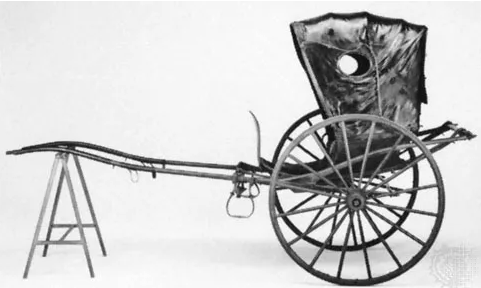
chair – a light and agile, as well as inexpensive, one-horse carriage (not be confused with the sedan chair, which was a rickshaw-like vehicle)

champagne – From: http://www.intowine.com/champagne.html#history From the Eight Ages of Justerini’s ~ In their still forms Sillery and Champagne had been much esteemed in England from the time of Henry VIII and …the sparkling wines of Marne and Montagne de Rheims met with ever growing demand. “Yet strange as it may seem to us today, the great bulk of these wines were shipped in cask and bottled here ( England) , with the result that they were not truly sparkling but merely effervescent … a law made early in the reign of George II which forbade the import of wine in cases, flasks or bottles; the object of the law being to check the smuggling of wine in small parcels that were easy to handle… It was not until 1802 that Champagne was allowed to be imported direct from France in bottles.

English law prohibited importation of wine in bottles until a law passed about 1802– at the time of the treaty of Ameins. It is reasonable that still wines would be smuggled. Movement hurts sparkling wines. As you say, the French bottles had a tendency to explode and also took up much more space.

Chancellor of the Exchequer – the highest post after the Prime Minister; controlled the treasury

Chancery – the court of equity law; generally sat at Westminster Hall

chandler – a man who dealt in candles

Change – an abbreviation of the Royal Exchange often used in speech

changing one’s name – Was it possible for someone to change his name during the Regency? I have a book An Index to Changes of Names under Authority of Act of parliament or Or Royal Licence and Including Irregular Changes from 1 George III to 64 Victoria 1760-1901.

One was not supposed to change the first name so casually because it was given at the sacrament of Baptism and confirmed at confirmation. The bishop sometimes changed baptismal names at confirmation if he found them displeasing. One could change the surname at any time and as informally as one wished as long as it wasn’t done to cheat creditors or commit bigamy, or the like. If it was a permanent change one would put a notice in the Times. The official changes were listed in the Gazette.

chap – a fellow; usually, referring to a strange fellow

chaperone – the cicisbeo, or gentleman usher to a lady, comes to us from the French language

Charabanc – a large carriage with two seats facing forward; lightweight and speedy

charades – If you are writing, do not be tricked by this one. There are several puzzle verses that were called Charades and the acting out game supposedly didn’t exist until around 1840. The game of Charades originated in France and became popular in England in the second half of the 19th century. The Brothers Mayhew published a guide to the new game in 1850 – Acting Charades or Deeds not Words – A Christmas game to make a long evening short.

charities – Here is a partial list of charity names. It is long, but this may give you some ideas of what charitable organizations at the time were called, and help you to craft a name. Some Charity Names:

The Society for Organising Charitable Relief and Repressing Mendicity, aka Charity Organisation Society or COS (this one took the position that most charities were being “hoodwinked by the cunning poor,” BTW p. 5)

Manchester and Salford District Provident Society (DPS)

Liverpool Central Relief Society

Brightelmston Provident Institution

Brighton Provident and District Society

Liverpool Provident District Society

Central Relief SocietySociety for the Relief of Distressed Travellers and Others (1814)

Oxford Charity Organisation Committee

Anti-Mendicity Society

Oxford Anti-Mendicity and Charity Organisation Association

Society for the Relief of Distress (1860)

 Invalid Children’s Aid Associaton (1888)

 Salvation Army (seen by the COS as “hopelessly sentimental” with their “open-handed and undiscriminating charity cutting at the root of all teachings and endeavors of twenty years” p. 62)

 Barnardo Evangelical Trustees

 Manchester and Salford Provident Dispensary Association

 Edgbaston Mendicity Society

 Brighton, Hove and Preston Charity Organisation Society

 Leamington Charity Organisation and Relief Society

 Vigilance Association (noted to be unpopular)

Birkhead Provident and Benevolent Society, later became the Birkhead Association for Organising Charitable Relief and Repressing Mendicity

Ladies’ Sanitary Society- goal to promote habits of cleanliness among the working classes (Um, could I have something to feed my children instead???)

[City Name] Relief Fund

Toxteth Relief Society

Brighton Jubilee and Accident Fund

Provident Dispensary Association

Oxford Working Women’s Benefit Society- basically a pool, women paid a small amount weekly and could claim benefits if they became sick.

Croydon Charitable Society

Reading Destitute Children Aid Committee- provided footwear with insistence on weekly repayments

Sick Relief Fund

Penny Savings Bank

London Ethical Society

Lock Hospital

Foundling Hospital

General Lying-In Hospital (also British Lying-In Hospital, Lying-In Charity, etc.)

Marine Society

Philanthropic Society

Magdalen House

St. Thomas’s Hospita

Asylum for Orphaned Girls (also Asylum for the Reception of Orphaned Girls at Lambeth)

London Hospital

Society for the Discharge and Relief of Persons Imprisoned for Small Debts

Salters Guild

Smallpox Hospital

Society for Improving the Comfort and Bettering the Conditions of the Poor

Middlesex Hospital

Ladies Society for Employing the Female Poor

London Female Penitentiary

Lambeth Refuge for the Destitute

Dorking Provident Institution

The Church of England Waifs and Strays Society

Crutch & Kindness League (for ‘cripples’)

Metropolitan Association for Befriending Young Servants

Church Missionary Society

Society for Promoting the Religious Instruction of Youth

Female Friendly Society for the Relief of Poor, Infirm, Aged Widows and Single Women of Good Character, Who Have Seen Better Days

chariot – a four-horse vehicle; the two seats both faced front; lighter than a chaise

charlotte – Late Georgian (1750–1790 C.E.). Woman’s wide, tightly gathered hat on brim with wide flounce. Named for Queen Charlotte of United Kingdom.

Chase and Four – a closed carriage used for traveling; pulled by four horses

chatterbox – one whose tongue runs four score to a dozen; hard to get a word in for their chattering

chatts – lice, perhaps an abbreviation of chattels, with lice being the chief live stock of beggars, gypsies, the canting crew, etc.

chaunt – a song

chaunter culls – grub street writers, who compose songs, carrols etc., for ballad singers

chaw bacon – country fellow

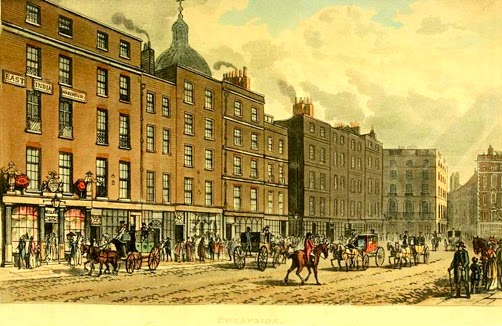
Cheapside – a street in eastern London close to the river Thames; a non-fashionable side of London

cheats – sham sleeves to put over a dirty shirt or shift or to cover frayed edges; Restoration (1660–1700 C.E.). Men’s waistcoats with front made from elaborate fabric and back from cheap fabric. 2. Romantic (1815–1840 C.E.). Man’s shirt with collar attached already.

On a side note: Check out the complete Costume Dictionary HERE.

cheese it – be silent; be quiet; do not take action

chemise – a woman’s long undergarment; much in the form of a nightgown

chemise à la Reine: Late Georgian (1750–1790 C.E.). France. Popularized by Marie Antoinette, a loose, unfitted gown with deep décolletage worn sashed at waist

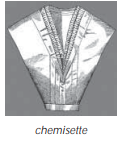
chemisette – a partial shirt worn tucked into a very low-cut gown; 1. Early Georgian
(1700–1750 C.E.) to Late Georgian (1750–1790 C.E.). Prussia. Cuirassier’s waistcoat. 2. Romantic (1815–1840 C.E.). White muslin or cambric wrap to fill décolletage
of gown.

Cheshire cat – who who shows his teeth and gums when laughing; the connotation that the person who is grinning is in possession of knowledge that the beholder is not aware of

chicken nabob – one returned from the East Indies with but a moderate fortune of 50 to 60 thousand pounds, a diminutive nabob: a term borrowed from the chicken turtle

chimneypiece – a mantelpiece or decorative moulding about the chimney

climbing boy – the child who would climb up into the chimney to clean it

Cheney silks – made by the firm of Cheney brothers, which first began manufacturing silks immediately after the bursting of the great mulberry tree bubble in 1838. At that time it was though practicable to grow mulberry trees and raise silk worms in Great Britain, but England’s climate was too much for the endeavor. The Cheney Brothers have 75 years of experience in the manufacturing of silks. Cheney’s grosgrains were very popular.

Another side note: Check out Cheney Silks: A Glossary of Silk Terms HERE.

cherryderry: Early Georgian (1700–1750 C.E.) to Late Georgian (1750–1790 C.E.). India. Cotton fabric similar to gingham.

Gown
1770 – 1780 (weaving), 1775 – 1780 (sewing), 1870 – 1910 (altered)
ARTIST/MAKER
A woman’s gown, of cream silk warp and cotton weft, with vertical stripes of yellow, brown, green and pink (possibly the Indian export fabric known as cherryderry). The gown is in the English (tight-back) style, open at the front with elbow-length sleeves. The bodice meets at the centre front. ~ https://collections.vam.ac.uk/item/O350640/gown-unknown/

cheyney: Romantic (1815–1840 C.E.). Worsted or woolen fabric with pattern printed on prior to weaving, creating shadow design.

chignon flottant: Late Georgian (1750–1790 C.E.). Woman’s hairstyle incorporating ringlets or curls hanging over back of neck

https://glaminati.com/chignon-hairstyles/?utm_source=Pinterest&utm_medium=Social&utm_campaign=AUTO-21ChignonHairstylesToEmphasizeYourF&utm_content=balayage-braid-rose-textured


chignon strap: Band that loops beneath hair in back to hold woman’s hat in place.

Chinese green: Romantic (1815–1840 C.E.). United Kingdom. Malachite green

chip hat: Late Georgian (1750–1790 C.E.). Woman’s hat woven from thin wooden strips. The Ryde Social Heritage Group provides additional information:

“• wood or Cuban palm leaf split into slips, or straw plaited in a special manner, for making hats or bonnets.
• a thin strip of wood or straw used for making woven hats, baskets, etc. Wood, palm leaves, straw, or similar material cut and dried for weaving.

“We even found a classic literature link: ‘With the money that I get from the sale of these eggs I’ll buy myself a new dimity frock and a chip hat; and when I go to market, won’t all the young men come up and speak to me?’ (extract from Aesop’s Fables)”

The image on the left is from the June 1794 Issue of ‘The Gallery of Fashion.’ It shows a two chip hats one a “Straw-coloured gipsy hat, trimmed with lilac riband” and the other is a “Plain chip hat, trimmed with purple ribands.”

The image on the right is from the August 1794 Issue of ‘The Gallery of Fashion.’ It shows a lady in half-mourning – Head-dress: white chip hat bound with black, and trimmed with a piece of black silk; two black feathers placed on the right side, near the front. The toupee combed straight, and the hair behind in ringlets.”

Sources:
Isle of Wight Times 10 June 1880;  dictionary.die.net;  thefreedictionary.com

chirping merry – exhilarated with liquor

chit – an infant or baby

chitterlings: Restoration (1660–1700 C.E.) to Directoire and First Empire (1790–1815 C.E.). United Kingdom. Linen or lace frills on front of men’s shirts.

chiveret: Elizabethan (1550–1625 C.E.) to Late Georgian (1750–1790 C.E.). Popular woolen fabric

chivey – a hearty scolding

choak away, the churchyard’s near – a jocular saying to a person taken with a violent cough

to give chocolate without sugar – a military term for to reprove

chop churches – simoniacal dealers in livings or other ecclesiastical preferences

to chouse – to cheat or trick

Christmas – It was Christ’s Mass at first and was a Quarter day. It was celebrated except during the rule of the Puritans.

Christmas day was a day for church. The 12 days of Christmas started the next day. In Britain, the Holy Days and Fasting Days Act of 1551 (which has not yet been repealed by the Regency era) stated that every citizen must attend a Christian church service on Christmas Day and must not use any kind of vehicle to get to the service.

chub – a foolish fellow, easily imposed on

chum – a chamber-fellow, particularly at the universities or prisons

chummage – money paid by the richer sort of prisoners in Fleet and King’s Bench, to the poorer, for their share of the room. When prisons are full, which is too often, particularly on the eve of an insolvent act, two or three persons are obliged to sleep in a room. A prisoner who can pay for being alone, chooses two poor chums, who for a stipulated price, called “chummage,” give up their share of the room and sleep on the stairs, etc.

church courts – The church courts controlled the behavior of clergyman. The bishop of each diocese had to approve anyone who was given a living. The bishops had to ordain all clergymen. They were the judges dealing with all aspects of marriage. They probated wills. The bishop or his representative was supposed to visit the churches in his diocese to hear complaints of defamation, scold, blasphemy, and sacrilege and other offenses for which there was no legal remedy. This was popularly called the bawdy court. All the bishop could do was shame the person in church or have them excommunicated. Most of the power was over the churches and the clergymen.

churching – In Christian tradition the churching of women, also known as thanksgiving for the birth or adoption of a child, is the ceremony wherein a blessing is given to mothers after recovery from childbirth. The ceremony includes thanksgiving for the woman’s survival of childbirth, and is performed even when the child is stillborn, or has died unbaptized.

churl – rude, surly, boorish fellow

Posted in Uncategorized | Comments Off on Georgian Era Lexicon – We Continue Where We Left Off With “Ch”

The Beginning of the Turnpike Roads in Georgian England

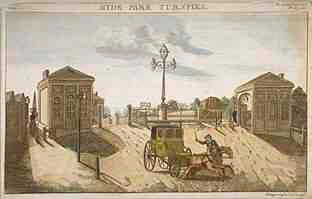
Hyde_park_turnpike_toll_gate

The Hyde Park Gate in London, erected by the Kensington Turnpike Trust. This was the first toll point encountered along the Bath Road, upon leaving London. ~ Public Domain ~ https://en.wikipedia.org/wiki/ Turnpike_trusts#/media/ File:Hyde_park_turnpike_toll_ gate.jpg

 The roads leading into London were placed under the control of individual turnpike trusts during the first 30 years of the 1700s in England. My mid century, cross-routes were added to the list under turnpike trusts. The roads, especially those leading toward Wales and the northwestern shires were turnpiked, many roads placed under the same trust authority. Roads, for example in the southern sections of Wales were grouped by counties under a single trust for each. The 1770s saw connecting roads, those over bridges, and those leading to growing industrial areas, as well as the roads in Scotland brought under the auspices of trust authorities. More than 1000 turnpike trusts were created during the 1800s. According to E. Pawson’s (1977) Transport and Economy: the turnpike roads of eighteenth century England, “About 150 trusts were established by 1750; by 1772 a further 400 were established and, in 1800, there were over 700 trusts. In 1825 about 1,000 trusts controlled 18,000 miles (29,000 km) of road in England and Wales.”

Taxing the people who used the roads seemed the fairest means of improving them so new trusts and renewals of older legislation took root in 18th Century England. Overseeing the upkeep and administration of turnpikes was left to each individual parish. The parish exacted a toll on the users of the road, hopefully in proportion to the “wear and tear” upon the road’s surface. We must recall that at this time the roads were often in poor shape: deep ruts, icy in winter, poor drainage during a rainstorm, dry and cracked in the summer heat, etc. 

Parliament expected each trust authority to raise loans for road repair, erect milestones it indicate directions and mileage to the next town or parish, erect gates and tollhouses. “Rules of the Road” grew out of common and courteous practice. One drove on the left, for example. The turnpike trusts could change the charge based on weather conditions. They might charge a bit more to wet down the roads during the summer to keep dust at a minimum. General Turnpike Acts dealt with the administration of the trusts and restrictions on the width of wheels – narrow wheels were said to cause a disproportionate amount of damage to the road.

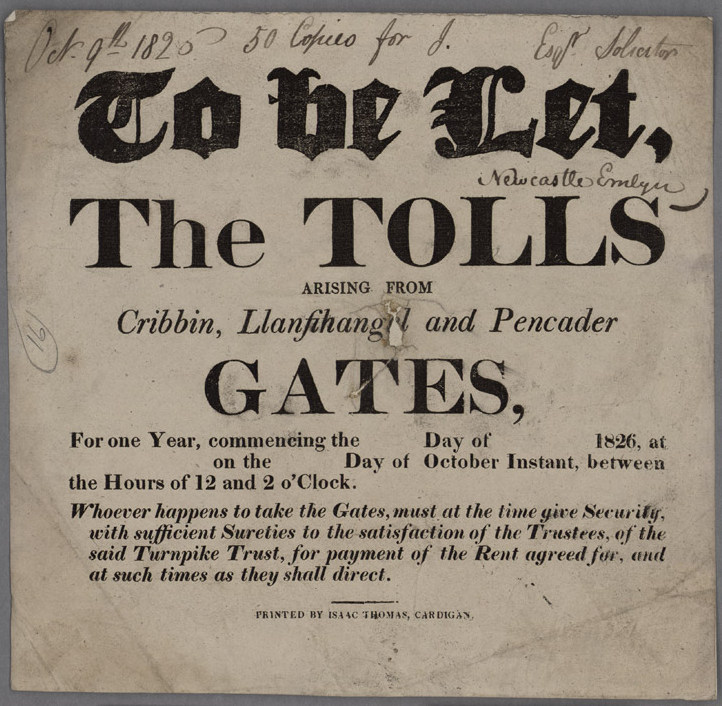
To_Be_Let_The_Tolls_Cribbin,_Llanfihangel_and_Pencader_Gates_1826

Poster advertising the letting of tolls, 1826. Unknown – National Library of Wales ~ Public Domain ~ https://en.wikipedia.org/wiki/Turnpike_trusts#/media/ File:To_Be_Let_The_Tolls_Cribbin,_ Llanfihangel_and_ Pencader_Gates_1826.jpg

Each trust authority employed a local lawyer/solicitor as clerk, a treasurer and a surveyor. When the road passed a particular estate or cut across a gentleman’s land, the landowner had a say in the road’s condition. 

Not everyone paid the same toll to cross the turnpike: The size of the vehicle and the number of horses drawing it determined the amount of the toll. The weight of the load also affected the toll exacted at some tollhouses. Some tollhouses used a weighing machine to determine the weight of the wagon and its load. If so, a ticket was produced so the driver could present it to each of the subsequent tollhouses he encountered upon his journey. 

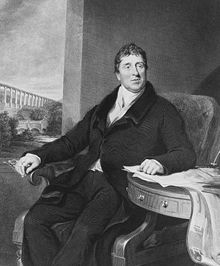
220px-ThomasTelford.jpg By the early 19th Century turnpike trusts had made major highway improvements. Thomas Telford reorganized the existing trusts along the London to Holyhead Road and oversaw the construction of large sections of new road. Telford was a Scottish civil engineer, architect and stonemason, and a noted road, bridge and canal builder. After establishing himself as an engineer of road and canal projects in Shropshire, he designed numerous infrastructure projects in his native Scotland, as well as harbors and tunnels. Such was his reputation as a prolific designer of highways and related bridges, he was dubbed The Colossus of Roads (a pun on the Colossus of Rhodes), and, reflecting his command of all types of civil engineering in the early 19th century, he was elected as the first President of the Institution of Civil Engineers, a post he retained for 14 years until his death.
“By 1838 the turnpike trusts in England were collecting £1.5 million p.a. from leasing the collection of tolls but had a cumulative debt of £7 million, mainly as mortgages. Even at its greatest extent, the turnpike system only administered a fifth of the roads in Britain; the majority being maintained by the parishes. A trust would typically be responsible for about 20 miles (32 km) of highway, although exceptions such as the Exeter Turnpike Trust controlled 147 miles (237 km) of roads radiating from the city. On the Bath Road for instance, a traveller from London to the head of the Thames Valley in Wiltshire would pass through the jurisdiction of seven trusts, paying a toll at the gates of each. Although a few trusts built new bridges (e.g. at Shillingford over the Thames), most bridges remained a county responsibility. A few bridges were built with private funds and tolls taken at these (e.g., the present Swinford Toll Bridge over the Thames).” (Turnpike Trusts)

Coaching routes followed the main roads, those that were better maintained, but only a small portion of the roads under the authority of the various trusts were overseen with care…only about 12%. Packhorses were the only means to transport goods along the roads and pathways not part of the turnpike system. Tollhouses were generally situated at cross roads where the toll keeper had a good view of the gates, the roads, and the traffic. Unfortunately for many travelers, the toll keeper was not always available: away from his post, asleep, inebriated, or off taking care of his own business. As they were only paid an average of 9s per week, one can imagine they were not always as diligent as they should have been. According to the Regency Collection, “This changed in the 1770’s when the operation of the turnpikes was “farmed” out to the highest bidder at auction (an early example of privatisation). This meant that the “farmer” paid annual rent to the trust, but kept the tolls collected. He would either run the tollgate himself or appoint a gate-keeper.”

Daniel Defoe commented as such on the subject of toll gates in the early years of the 18th Century:
“…Turn pikes or toll bars have been set up on the several great roads of England, beginning at London and proceeding thro’ almost all those dirty deep roads in the Midland Counties especially; at which, turn pikes all carriages, droves or cattle and travellers on horseback are oblig’d to pay an easy toll; that is to say, a horse a penny, a coach three pence, a cart fourpence, at some six to eight pence, a wagon six pence, in some a shilling. Cattle pay by the score, or by the herd, in some places more. But in no place is it thought a burthen that ever I met with, the benefit of a good road abundantly making amends for the little charge the travellers are put to at the turn pikes…”.

List of Turnpike Trusts with details of their size and income collected in a table can be found HERE.

Tollgates_London_1801

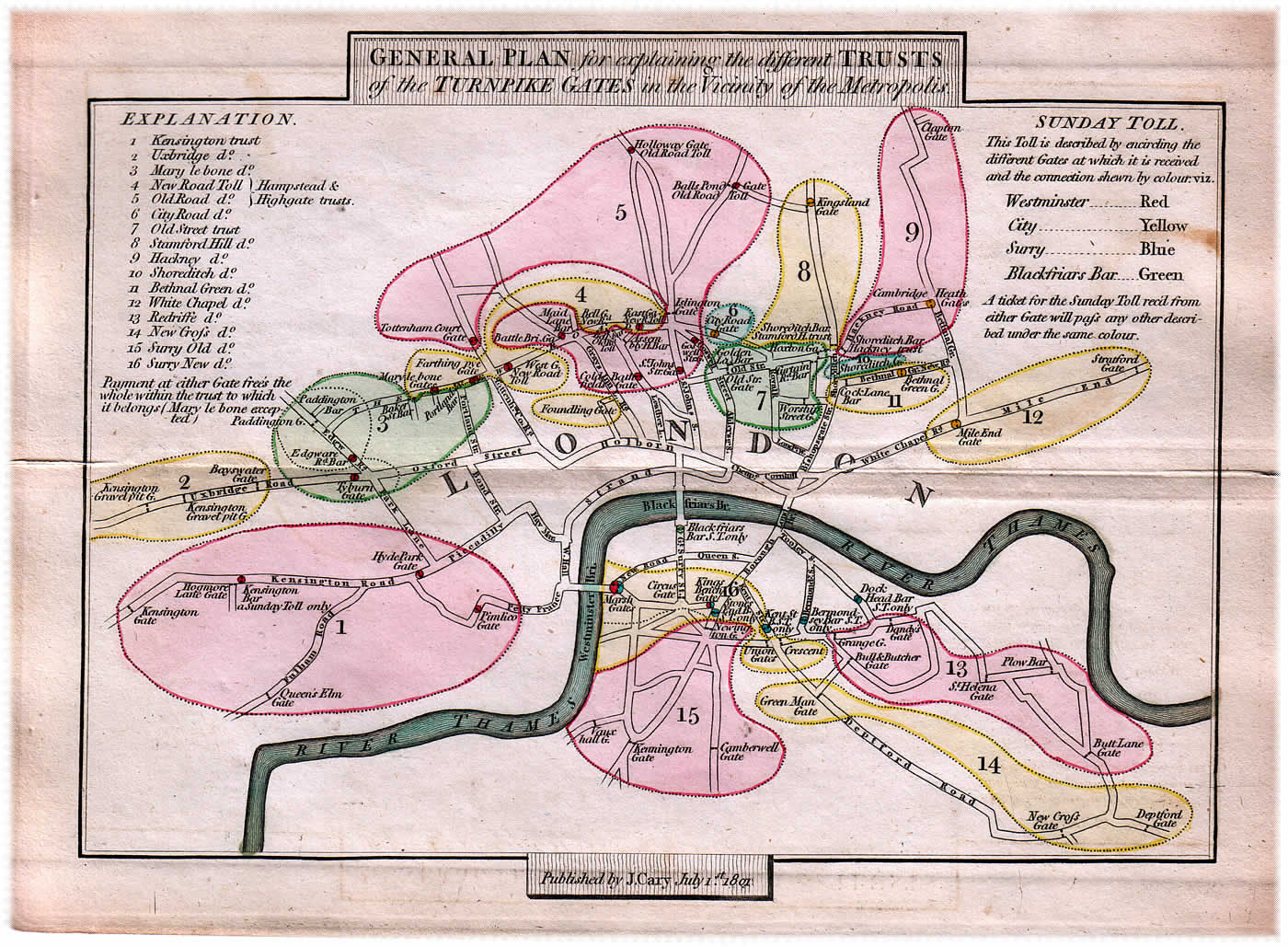
Map of the Turnpike Tollgates in London 1801. ~ J. Cary – Old London Maps at http://www.oldlondonmaps.com/viewspages/0462.html ~ Public Domain ~ via Wikipedia https://upload.wikimedia.org/wikipedia/commons/b/b8/Tollgates_London_1801.jpg

References: 

Bogart, Dan. “Turnpike Trusts and the transportation revolution in the 18th Century” 

“Roads 1750-1900,” The History Learning Site 

“Turnpike Trusts,” Schools History 

“Turnpikes and Toll,” UK Parliament

Posted in British history, buildings and structures, commerce, Georgian England, Industrial Revolution, Living in the UK, Scotland, travel | Tagged , , , , , | 2 Comments

“Affection” in Austen’s Pride and Prejudice

When writing my Regency-based novels, I sometimes find it difficult to express the emotions felt by my characters, while keeping in mind the “restraint” those of the era practiced. Previously, I took a look at how often and in what context the word “love” is used in Jane Austen’s Pride and Prejudice. In that situation, Austen used “love” to mean romantic devotion, as an endearment, and as a strong “liking” for an activity or preference. My six-year-old granddaughter “loves” everything, meaning she prefers one doll over another or she “loves” chicken, but not turkey.

Today, I mean to take this process a step further. Today, we will search out the word “affection,” which often served as a substitute for “love,” but does Austen use the word as such?

charlotteIn Chapter 6, Charlotte Lucas warns Elizabeth that Jane’s shyness around Mr Bingley could be construed as indifference. “If a woman conceals her affection with the same skill from the object of it, she may lose the opportunity of fixing him; and it will then be but poor consolation to believe the world equally in the dark.” This one has romantic elements.

In Chapter 7, Elizabeth attempts to like Mr Bingley’s sisters. “When breakfast was over, they were joined by the sisters, and Elizabeth began to like them herself, when she saw how much affection and solicitude they showed for Jane.” Elizabeth refers to the “preference” the Bingley sisters show Jane. 

In Chapter 8, when the Bingley sisters criticize Elizabeth for walking three miles across the muddy fields to Netherfield to tend Jane, Mr. Bingley says of Elizabeth, “”It shews an affection for her sister that is very pleasing.” This one is familial “love,” not romantic desire. 

In Chapter 9, Mrs Bennet describes a man who was in love with a 15-year-old Jane and from whom they expected a proposal of marriage. Elizabeth attempts to make light of the situation when she says, “And so ended his affection. There has been many a one, I fancy, overcome in the same way. I wonder who first discovered the efficacy of poetry in driving away love!” This one could be construed as a preference for Jane over others or a romantic involvement.

janeaustensworld.wordpress.com

janeaustensworld.wordpress.com

In Chapter 9, Lydia and Kitty boldly ask Mr Bingley to host a ball, while Mrs Bennet looks on with pride. “Lydia was a stout, well-grown girl of fifteen, with a fine complexion and good-humoured countenance; a favourite with her mother, whose affection had brought her into public at an early age.”

In Chapter 10, Elizabeth and Darcy argue over Mr Bingley’s tendency to be influenced easily by his friends. ”You appear to me, Mr. Darcy, to allow nothing for the influence of friendship and affection. A regard for the requester would often make one readily yield to a request, without waiting for arguments to reason one into it.” This one reflects a preference in one’s friends.

In Chapter 12, Miss Bingley questions any “affection” she felt for Jane, when Mr Bingley insists that both Jane and Elizabeth stay one more day at Netherfield. “Miss Bingley was then sorry that she had proposed the delay, for her jealousy and dislike of one sister much exceeded her affection for the other.” Again, this is a preference in one friend over another.

george-wickham-lost-in-austenIn Chapter 16, Mr Wickham continues his tale of woe against Mr Darcy by telling Elizabeth, “He has also brotherly pride, which with some brotherly affection, makes him a very kind and careful guardian of his sister; and you will hear him generally cried up as the most attentive and best of brothers.”
In Chapter 18, Elizabeth watches Jane and Bingley at the Netherfield ball. Elizabeth believes Jane holds a romantic attachment to Bingley. “She saw her, in idea, settled in that very house, in all the felicity which a marriage of true affection could bestow; and she felt capable, under such circumstances,of endeavoring to like Bingley’s two sisters.”

imagesIn Chapter 19, as part of Mr Collins’ proposal, he says, “And now nothing remains for me but to assure you in the most animated language of the violence of my affection. To fortune I am perfectly indifferent, and shall make no demand of that nature on your father, since I am well aware that it could not be complied with; and that one thousand pounds in the four-percents, which will not be yours till your mother’s decease, is all that you may ever be entitled to.” Collins expresses his devotion to Elizabeth, but he does not truly love her. 

In Chapter 26, we find advice from Mrs Gardiner to Elizabeth regarding Mr Wickham. “Do not involve yourself, or endeavour to involve him in an affection which the want of fortune would make so very imprudent. I have nothing to say against him; he is a most interesting young man; and if he had the fortune he ought to have, I should think you could not do better.” Elizabeth’s aunt speaks of romantic connections.

prideprejudice_92In Chapter 33, Elizabeth learns from Colonel Fitzwilliam something of Darcy’s part in separating Bingley and Jane. “‘I do not see what right Mr Darcy had to decide on the propriety of his friend’s inclination: or why, upon his own judgment alone, he was to determine and direct what manner that friend was to be happy. But,’ she continued, recollecting herself, ‘as we know none of the particulars, it is not fair to condemn him. It is not to be supposed that there was much affection in the case.’”

The Top 5 Rain Dances | Kinetico San Antonio kineticosa.com

The Top 5 Rain Dances | Kinetico San Antonio
kineticosa.com

In Chapter 34, Elizabeth holds some pity for the need to reject Darcy’s proposal. “In spite of her deeply rooted dislike, she could not be insensible to the compliment of such a man’s affection, and though her intentions did not vary for an instant, she was at first sorry for the pain he was to receive; till, roused to resentment by his subsequent language, she lost all compassion in anger.”

In Chapter 35, Darcy writes of how he came to join forces with Miss Bingley to separate his friend from Miss Bennet. “He had before believed her to return his affection with sincere, if not with equal, regard. But Bingley has great natural modesty, with a stronger dependence on my judgment that on his own. To convince him, therefore, that he had deceived himself was no very difficult point.” Even though his friend often expressed notions of romantic love, Darcy points out that Bingley rarely held a preference for any female for long.

In Chapter 37, after Darcy’s departure from Rosings Park, his letter proved something of Bingley’s fault in the desertion of Jane. “His affection was proved to have been sincere, and his conduct cleared of all blame, unless any could attach to the implicitness of his confidence in his friend.” Elizabeth realizes Bingley loves Jane. 

200_sIn Chapter 40, after returning to Longbourn from Kent, Elizabeth observes Jane. “She still cherished a very tender affection for Bingley. Having never even fancied herself in love before, her regard had all the warmth of first attachment, and, from her age and disposition, greater steadiness than first attachments often boast; and so fervently did she value his remembrance, and prefer him to every other man, that all her good sense and all her attention to the feelings of her friends were requisite to check the indulgence of those regrets which must have been injurious to her own health and their tranquility.”

In Chapter 42, Elizabeth realizes that she has been blind to the impropriety of her father’s actions toward Mrs Bennet. “Her father, captivated by youth and beauty, and that appearance of good humor which your and beauty generally give, had married a woman whose weak understanding and illiberal mind had, very early in their marriage, put an end to all real affection for her.” 

MV5BODA1NzQ4ODg0Nl5BMl5BanBnXkFtZTcwMDg2MjI1NA@@._V1_SX640_SY720_

In Chapter 46, Elizabeth reflects on the foolishness of Lydia’s elopement, as well as the loss of Mr Darcy’s interest. “Her affections had been continually fluctuating, but never without an object. The mischief of neglect and mistaken indulgence toward such a girl – oh, how acutely she did now feel it!”

46_after_darcy_leaves_Pride_and_Prejudice

Also in Chapter 46, after Mr Darcy’s exit from the Lambton inn, Elizabeth reflects on the loss of his regard. She is saddened by the loss of “what might have been” romantically. “If gratitude and esteem are good foundations of affection, Elizabeth’s change of sentiment will be neither improbable nor faulty. But if otherwise – if the regard springing from such sources is unreasonable or unnatural, in comparison of what is so often described as arising on a first interview with its object, and even before two words have been exchanged – nothing can be said in her defense, except that she had given somewhat of a trial to the latter method, in her partiality for Wickham, and that its ill-success might, perhaps, authorize her to see the other less interesting mode of attachment.”

In Chapter 47, Elizabeth responds to Mr Gardiner’s question of no one nothing Lydia’s connection to Wickham when they all retreated to Brighton. “I can remember no symptom of affection on either side; and had any thing of the kind been perceptible, you must be aware that ours is not a family on which it could be thrown away.”

In Chapter 48, Mr Collins offers Mr Bennet advice regarding Lydia’s untimely elopement. “Let me advise you then, my dear Sir, to console yourself as much as possible, to throw off your unworthy child from your affection for ever, and leave her to reap the fruits of her own heinous offense.”

In Chapter 49, as is typical of her sister’s personality, Jane finds goodness in the prospect of Wickham and Lydia’s marriage. “Their mutual affection will steady them; and I flatter myself they will settle so quietly, and live in so rational a manner, as may in time make their past imprudence forgotten.”

Picture of Pride and Prejudice www.listal.com

Picture of Pride and Prejudice
http://www.listal.com

In Chapter 50, Mr Bennet declares he will not accept Lydia and Wickham at Longbourn. “He protested that she should receive from him no mark of affection whatever on the occasion. Mrs Bennet could harpy comprehend it.” This time the word is used as “recognition” or “approval.”

In Chapter 51, Elizabeth observes the happy couple when Lydia and Wickham return to Longbourn before leaving for Newcastle. “Wickham’s affection for Lydia was just what Elizabeth had expected to find it; not equal to Lydia’s for him. She had scarcely needed her present observation to be satisfied, from the reason of things, that their elopement had been brought on by the strength of her love rather than by his; and she would have wondered why, without violent caring for her, he chose to elope with her at all, had she not felt certain that his flight was rendered necessary by distress of circumstances; and if that were the case, he was not the young man to resist an opportunity of having a companion.”

In Chapter 52, after learning of Mr Darcy’s involvement in bringing Wickham and Lydia together, Elizabeth is confused as to why he acted with such honor. She wishes for the return of his “violently loving” her. “But it was a hope shortly checked by other considerations, and she soon felt that even her vanity was insufficient, when required to depend on his affection for her, for a woman who had already refused him, as able to overcome so natural as abhorrence against relationship with Wickham.”

Pride-and-Prejudice-Mr-Darcy-and-Mr-BingleyIn Chapter 53, Elizabeth is amazed that Mr Darcy comes to Longbourn with Bingley. “The color which had been driven from her face returned for half a minute with an additional glow, and a smile of delight added luster to her eyes, as she thought for that space of time that his affection and wishes must still be unshaken. But she would not be secure.”

In Chapter 54, after Bingley and Darcy dine at Longbourn, Jane still protests that no future lies between her and Bingley. “Lizzy, you must not do so – you must not suspect me: it mortifies me. I am perfectly satisfied, from what his manners now are, that he never had any design of engaging my affection. It is only that he is blessed with greater sweetness if address and a stronger desire of generally pleasing, than any other man.”

Pride and Prejudice 1995 - Jane Austen Photo (13601705) - Fanpop www.fanpop.com

Pride and Prejudice 1995 – Jane Austen Photo (13601705) – Fanpop
http://www.fanpop.com

In Chapter 55, after proposing to Jane and receiving Mr Bennet’s permission, Bingley expresses his happiness to Elizabeth. “He then shut the door, and, coming up to her, claimed the good wishes and affection of a sister. Elizabeth honestly and heartily expressed her delight in the prospect of their relationship.” Again, this is familial connections. 

PP3.76

In Chapter 57, after the confrontation with Lady Catherine, Elizabeth believes her hopes of a return of Mr Darcy’s love are dashed. “She knew not the exact degree of his affection for his aunt, or his dependence on her judgment, but it was natural to suppose that he thought much higher of Her Ladyship than she could do: and it was certain that, in enumerating the miseries of a marriage with one whose immediate connections were so unequal to his own, his aunt would address him on his weakest side.” This is a familial connection. It is different from the “affection” Elizabeth holds for Mr Darcy. 

In Chapter 59, Jane has difficulty believing that Elizabeth loves Mr Darcy. Jane warns, “And do you really love him quite well enough? Oh, Lizzy! do any thing rather than marry without affection. Are you quite sure that you feel what you ought to do?”

In Chapter 61, we encounter a mention of “affection” in the context of parental care: “Mr Bennet missed his second daughter exceedingly; his affection for her drew him oftener from home than any thing else could do. He delighted in going to Pemberley, especially when he was least expected.”

Posted in British history, Great Britain, Jane Austen, Living in the Regency, real life tales, Regency era | Tagged , , , , | 2 Comments

Performing as an Officer and a Gentleman While Being Broke

Of late, I have been reading of a phenomenon going on, specifically during the Napoleonic Wars, that I am certain many of my readers are unaware. Officers often “fronted” the cost of the men serving under them and returned home completely broke, with only the glory of the victory over Napoleon with which to pay their bills.

As we often read that many of the officers in these campaigns were second sons or minor sons, and they would require a wife with a sizable dowry to survive, this issue is even more problematic.

First, I do not pretend to be an expert on the subject. My knowledge is just bits and pieces I have pulled together from a variety of sources; yet, the way I understand it, the British government ignored pleas from these men to be reimbursed, for the practice was one carried over from the previous century. In the 1700s, the officers were all of the aristocratic class. Serving one’s country was viewed to be one’s “patriotic duty” to support one’s family members in the field, meaning the aristocratic family paid all the officer’s debts. This idea was carried forward into the Napoleonic era. Naturally, doing so saved the government money. One of the issues was funds required to maintain a regiment were under the auspices of the regimental agent who acted as the officer’s/regiment’s banker.

One must understand that an officer obtained money in the field from several sources. First, he received pay and stipends for mounts, batmen, or prize money. Unfortunately, these funds were not seen on a regular basis. Therefore, the officer would continue to put out money for each without knowing when or IF he would be repaid. Pay should have been received quarterly. However, we know that several regiments were away being paid for the first time in over a year, when the French surprised those still in camp at what is known as the Combat at Côa. On July 24, 1810, Brigadier General Robert Craufurd’s Light Division with 4,200 infantry, 800 cavalry, and six guns, was surprised by the sight of 20,000 troops under Marshal Michel Ney. Rather than retreat and cross the river as ordered by Wellington, Craufurd chose to engage the French, narrowly avoiding disaster.

Officers could receive needed funds from their family members, but this was a slow and laborious process. The money was usually in the form of a bank draft or promissory note sent to the regimental agent before the officer saw a penny of the money sent.

An officer could also borrow money from a fellow officer.

In addition, officers could borrow funds against future quarterly payments from the British government. These “loans” came from the regimental agent. The most that could be extended was equal to the payment of one quarter.

Many officers took to “selling” the spoils of war. For example, the officer might take the horse of a fallen fellow officer and sell it as if it belonged to a French officer.

On rare occasion, an officer might borrow from a regular “loan shark,” but as their “life expectancy” could not be guaranteed, then those loans were hard to come by.

After the war, many officers returned home without money and did not receive their back pay for months or even years afterwards.

You might be interested in these books to learn more of the situation. The book blurb comes from Amazon.

A Light Infantryman with Wellington

This series of letters was written by a light infantry officer on campaign, as a lieutenant with the 52nd Foot in Spain and a captain with the 69th Foot in Belgium and France. George Ulrich Barlow saw action at Ciudad Rodrigo, Badajoz, Vitoria, San Sebastian, Nivelle, Nive and Orthez. He transferred to the 69th Foot as a captain and served with them in Belgium at the battles of Quatre Bras and Waterloo and then remained with the Army of Occupation in France until 1818. His involvement in the fighting and his honest views of some of the famous characters he met during his service are enlightening, including his first audience with Wellington at Freineda in Portugal. There are also interesting asides in his correspondence including his father’s difficulties over his governorship of Madras and his brother’s involvement in a major mutiny at the Royal Military College.

Journals of Robert Rogers of the Rangers

My orders were to raise this company as quick as possible, to enlist none but such as were used to travelling and hunting, and in whose courage and fidelity I could confide: they were, moreover, to be subject to military discipline and the articles of war.

From 1755 to 1760, Major Robert Rogers fought in the French and Indian War for the British. He and his troops were given a mandate “to use my best endeavours to distress the French and their allies, by sacking, burning; and destroying their houses, barns, barracks, canoes, bateaux, &c., and by killing their cattle of every kind; and at all times to endeavour to waylay, attack, and destroy their convoys of provisions by land and water, in any part of the country where I could find them.”

This is Rogers’ fascinating year by year account of that time.

Covering the battles on snowshoes and numerous raids against the French camps it provides an insight into the ruthless guerrilla warfare of Rogers’ Rangers.

Rogers’ strategy throughout the war was innovative and he explains in detail the techniques that he and his Rangers used and how he trained his men. Included in his journal is his now famous military twenty-eight point guide, the “Rules of Ranging”, which still form the basis of the “Standing Orders” taught to U.S. Army Rangers today.

As well as material drawn from Rogers’ journals, the inclusion of letters provide further details on the Rangers’ role in the wider war.

The Journals of Robert Rogers of the Rangers are a unique history of eighteenth century warfare that was developed during the French and Indian War.

After this conflict Rogers was involved in combating Pontiac’s Rebellion and then became a royal governor. Suspected of having British sympathies he was never given command of in the Continental Army and even assisted in the capture of Nathan Hale. After struggling with money problems and alcoholism he died in debt and obscurity in London in 1795. His journals were published in England in 1765.

The Scum of the Earth: What Happened to the Real British Heroes of Waterloo?

Debunking popular myths, this is a cold, hard look at the infamous battle itself and its aftermath—just in time for the 200th anniversary of the battleThis book follows the men Wellington called just that from victory at Waterloo to a Regency Britain at war with itself, and explodes some of the myths on the way; such as that the defeat of Napoleon ended the threat of revolution spreading from France. Did the victorious soldiers return to a land fit for heroes? They did not. There was the first of the Corn Laws in the same year as the battle, there was famine, and chronic unemployment. In 1819, the Peterloo massacre saw 15 killed and at least 500 injured when cavalry sabred a crowd demanding parliamentary reform. Peace in Europe perhaps for 50 years—but at home, repression and revolution in the air. And at the same time, the sheer exuberance of the Regency period, with new buildings, new art, even 17 new colonies more or less accidentally acquired. By 1848 the whole of Europe was once more set for complete upheaval. The 200th anniversary of the battle is on June 18, 2015.

Posted in British history, England, Georgian England, Georgian Era, Great Britain, history, Living in the Regency, military, Napoleonic Wars | Tagged , , , , , , , | 2 Comments

Georgian Era Lexicon – The Letter “C” ~ We Begin with “Ca”

A Regency Era Lexicon – “A” and “B” Are Followed By “C,” specifically for this post by “Ca.” 

In the singular form the lexicon of a particular subject is all the terms associated with it. The lexicon of a person or group is all the words they commonly use. As a plural noun, a lexicon is an alphabetical list of the words in a language or the words associated with a particular subject. To distinguish lexicon from a dictionary, it is an alphabetical list of the words in a language or the words associated with a particular subject.

These examples are a mix of what one might hear upon the lips of the aristocracy, as well as examples of Cant used upon London’s streets and those terms used by farmers and like in the country.

cadet – the youngest son or branch of a family

cadge – to beg, i.e., “cadge the swells” being “beg of the gentleman” 

cag (to be cagged) – to be sulky or out of humour

to cagg – a military term used by the private soldier, signifying a solemn vow or resolution not to get drunk for a certain time; or, as the term is, “till their cagg is out”

cake – a foolish fellow

called to the bar – authorized to practice law as a barrister

The chemise of the mid 1800s varied a great deal. Most were fairly shapeless, short sleeved, hanging straight from the shoulders, perhaps all the way to the knees, commonly made of linen,

Calves Head Club – The Calves Head Club was purportedly established to ridicule the memory of Charles I of England. Toward the end of the seventeenth century, rumors began circulating in print about the club and its annual meeting held on 30 January, the anniversary of the execution of Charles I by decapitation. Supposedly, the club was instituted by the Independents and Presbyterians. Their chief fare was calves heads, and they drank their wine and ale out of calves skulls. 

cambrade – a chamber fellow; a Spanish military term, for soldiers in that country were divided into chambers, five men making a chamber, when it was generally used to signify companionship

camisole – a woman’s undershirt worn between the dress and the corset

camp candlestick – a soldier’s bayonet

Candlemas – a church festival celebrated on February 2; celebrates the purification of the Virgin Mary and Jesus’s presentation in the Temple

cant – a kind of gibberish used by thieves and gypsies, called likewise pedlar’s French, slang, etc.

canticle – a parish clerk; a hymn or chant, typically with a Biblical text, forming a regular part of a church service

canting – preaching with a whining, affected tone, perhaps a corruption of the word “chaunting”; some derive it from Andrew Cant, a famous Scottish preacher, who used that whining manner of expression

Jamesone, George; Andrew Cant (1584/1590-1663); University of Aberdeen; http://www.artuk.org/artworks/andrew-cant-158415901663-104917 ~ Public Domain via Wikipedia

cap – a woman who endeavors to attract the notice of a particular gentleman is said to set her cap for him (think Miss Bingley in Pride and Prejudice)

to cap – to take off one’s hat or cap. To cap the quadrangle is a lesson of humility, or rather servility, taught to undergraduates at the university, where they are obliged to cross the area of the college cap in hand in reverence to the fellows who sometimes walk there

cap acquaintance – persons only slightly acquainted or only so far as mutually to salute with the hat on meeting

cap à la Charlotte Corday: Directoire and First Empire (1790–1815 C.E.). France. Woman’s soft cap with frill around face and worn tied with ribbon at neck. Named for Charlotte Corday. NOTE: On 17 July 1793, four days after Marat was killed, Corday was executed by the guillotine in the Place de Grève wearing the red overblouse denoting a condemned traitor who had assassinated a representative of the people.

capping – to follow up with something better in a conversation (Think Darcy and Elizabeth to understand this concept.)

capping verses – repeating Latin verses in turn, beginning with the letter with which the last speaker left off

led captain – led captain; a humble dependent in a great family, who for a precarious subsistence and the distant hopes of deferment, suffers every kind of indignity, and is the butt of every species of joke or ill humour. The label comes from the small provision made for officers of the army and navy in time of peace. Their lack of funds obliges many in both services to occupy this wretched station in life. The idea of the appellation is taken from a “led horse,” many of which for magnificence appear in the retinues of great personages on solemn occasions, such as processions, etc.

Captain Cooperthorne’s Crew – a group or team without a stated hierarchy, where everyone concerned wishes to lead

Staying with “Captains,” Window Through Time, provides us several other “terms” found in Francis Grose’s Dictionary of the Vulgar Tongue:

“Here are a motley collection of Captains culled from Francis Grose’s A Classical Dictionary of the Vulgar Tongue (1785).

Captain Tom was “the leader of the mob; also the mob itself”, to be differentiated from Captain Copperthorne’s crew, where everyone is an officer. “A saying of a company”, says Grose, “where everyone strives to rule”. I have met a few of those in my time, as well as Captain Hackums, blustering fools”.

“A Captain Sharp was “a cheating bully or one in a set of gamblers, whose office is to bully any pigeon, who, suspecting roguery, refuses to pay what he has lost”.

“If you fancied a bit of meat for your supper, be wary of  Captain Lieutenant, “a meat between veal and beef, flesh of an old calf”. Grose claims that it is a military term, used to describe someone who has the rank of a Captain but the rank of a Lieutenant, being betwixt and between the two.

“My favourite captain is Captain Queernabs, “a shabby, ill-dressed fellow”.

Captain Podd was “a celebrated master of a puppet-show, in Ben Jonson’s time, whose name became a common one to signify any of that fraternity”. It is fascinating to see how professions became synonymous with a famous personage who excelled in the field.”

carbuncle face – a red face; full of pimples

cardinal – a short cloak, fashionable from about 1760 to the 1790s

https://www.deviantart.com/fashionablefrolick/art/cardinal-wool-broadcloth-short-cloak-1760-1790-426755089

carking – to worry someone

carouse – to drink freely and deeply; Sixteenth-century English revelers toasting each other’s health sometimes drank a brimming mug of booze straight to the bottom—drinking an “all-out,” they called it. German tipplers did the same and used the German expression for “all out”—gar aus. The French adopted the German term as carous, using the adverb in their expression boire carous (“to drink all out”). That phrase, with its idiomatic sense of “to empty the cup,” led to carrousse, a French noun meaning “a large draft of liquor.” And that’s where English speakers picked up carouse in the 1500s, using it first as a direct borrowing of the French noun, which later took on the sense of a general “drunken revel,” and then as a verb meaning “to drink freely.” 

carrion hunter – an undertaker; also referred to as a cold cook or death hunter

carrotty-pated – ginger-hackled; red-haired

carry witchet – a sort of conundrum, puzzle wit, or riddle

carter – the driver of a cart or wagon

casting up one’s accounts – vomiting

castor – a hat; “to prig a castor” meant to steal a hat

to live under the cat’s foot – being henpecked

cat of nine tails – a scourge composed of nine strings of whipcord, each string having nine knots

Cat o’nine tails, whip-cord with wooden handle, reputedly British Navy, 1700-1850. Plan view. Pale grey background.

The Science Museum Group Collection tells us: “Cat o’nine tails, whip-cord with wooden handle, reputedly British Navy, 1700-1850

“A cat-o-nine tails is a whip. It consists of nine pieces of cord each tied with a series of knots. The device traditionally punished sailors in the British Royal Navy by whipping their bare backs. It is thought the cat-o-nine tails got its name from the ‘scratches’ it left on a man’s back. Ship captains could only order up to 24 whips of the cat-o-nine tails. The device was suspended by the Royal Navy in 1879 but it had fallen out of use long before this date.

“The cat-o-nine tails created some English expressions: “Not enough room to swing a cat” referred to the whip; “Letting the cat out of the bag” refers to the device being kept in a special bag on board.”

catarrh – mucus fills up the head, nose, and throat

catch fart – a footboy; so called from such servants commonly following close behind their masters or mistresses

caterpillar – a nickname for a soldier and comes from this tale: In the year 1745, a soldier quartered at a house near Derby was desired by his landlord to call upon him. Whenever he came that way, the landlord claimed the man a “pillar of the nation.” The rebellion being finished, it happened the same regiment was quartered in Derbyshire. The soldier again resoled to accept his landlord’s invitation and, accordingly, obtained leave to go to him. However, he was surprised to find a very cold reception this time. The soldier reminded his landlord of the man calling the military “the pillar of the nation,” to which the landlord responded, “If I did, I meant caterpillars.”

caudge-pawed – left-handed

cauliflower – a large white wig, such as is commonly worn by the dignified clergy and formerly by physicians

caveats for inheriting money – If a man leaves his widow any sum whatsoever in his will or otherwise, the sum would her from receiving her dower, which is one third of his estate. The thing to remember is that if the contingency to inherit broke the law or went against public policy, or was immoral, or impossible to achieve, the contingency could and most likely would be challenged and be set aside.

caw-handed or caw-pawed – awkward, not dextrous or nimble

caxon – an old weather-beaten wig

Other Sources: 

Candice Hern

Donna Hatch

18th Century Vocabulary 

Georgette-Heyer: Regency Cant and Expressions 

Jane Austen Organization

Kathleen Baldwin

Messy Nessy Chic

Regency Reader

Sara Ramsey

Sharon Lathan

Posted in British history, Great Britain, Living in the Regency, Regency era | 6 Comments

“King v. Curll,” Prosecuting an Infamous Publisher

As a former journalism teacher, I was familiar with the term “curlicisms,” but until I was working on a piece on criminal conversation last week, I had forgotten the source of the word was one Edmund [sometimes called “Edward”] Curll. 

The name Edmund Curll, thanks to the attacks of Alexander Pope, became synonymous with unscrupulous publications and unnecessary publicity. Curll “rose from poverty to wealth through his publishing, and he did this by approaching book printing in a mercenary and unscrupulous manner. By cashing in on scandals, publishing pornography, offering up patent medicine, using all publicity as good publicity, he managed a small empire of printing houses. He would publish high and low quality writing alike, so long as it sold. He was born in the West Country, late and incomplete recollections (in The Curliad) say that his father was a tradesman. He was an apprentice to a London bookseller in 1698 when he began his career.” (“Edmund Curll“)

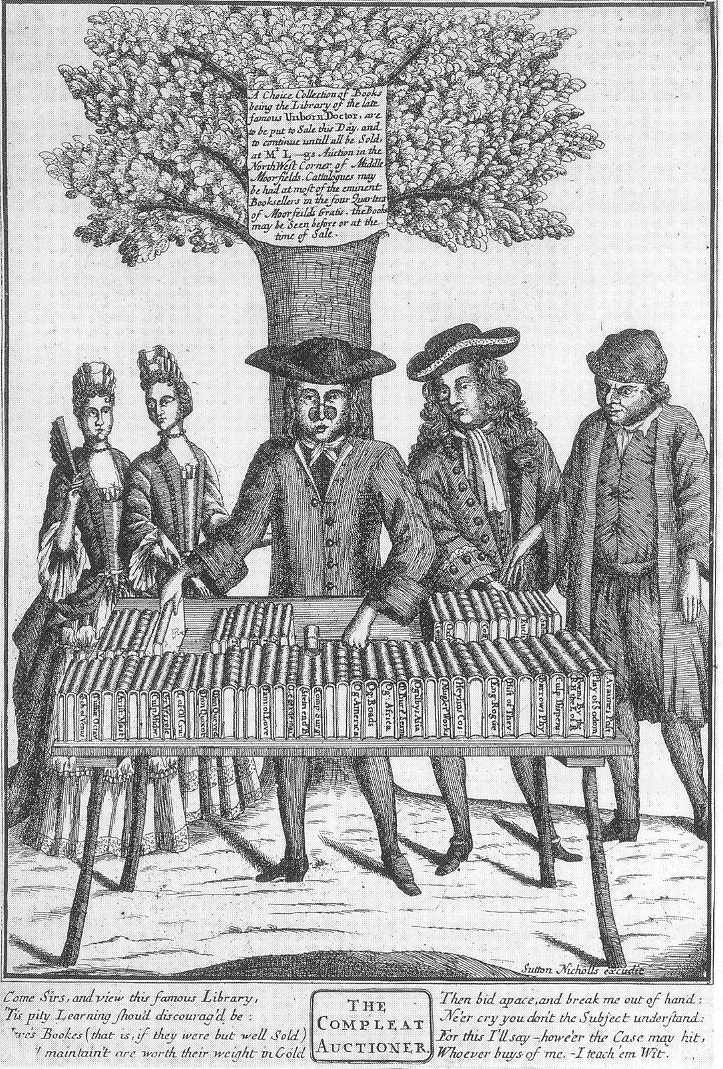
Book-auctioneer.pngAn auctioneer selling books from a hanged man, circa 1700. Curll got his start doing this kind of work in 1708 ~ via Wikipedia ~ Public Domain

Curll worked as an apprentice to Richard Smith, and when Smith went bankrupt, Crull took over the business. He worked with other publishers to write, publish, and sell pamphlets and books. Curll took it one step further: He drummed up business by inciting arguments and crowd displeasure. 

“For example, in 1712 the witch trial of Jane Wenham had the public’s interest, and one partner wrote a pamphlet exonerating her, while another condemned her, and both pamphlets were sold at all three shops. He also manufactured a set group of newspaper quarrels between the various “authors” for and against Mrs. Wenham to get free advertising.”

Curll was known to publish inexpensive books made of poor quality paper and ink. The books sold for one or two shillings, making them readily accessible to the working populace. One could purchase a Curll book on religion and another with a more obscene slant or another on the latest medical advances. Whig political tracts were also a particular favorite for publication.

“One of his earliest productions was John Dunton’s The Athenian Spy, but he also had titles like The Way of a Man with a Maid and The Devout Christian’s Companion. Curll also sold medical cures themselves, and he was unscrupulous in promoting them. In 1708, he published The Charitable Surgeon,a feigned book of medical advice on syphilis cures from a pretended physician of public spirit. It explained that one John Spinke’s cure of mercury was devoid of worth and that the only efficacious cure came from Edmund Curll’s own shop. Dr. Spinke wrote a pamphlet in reply, and characteristically Curll wrote a reply to that and, to create a scandal, made the outlandish claim that Spinke was ignorant and offered five pounds if Spinke could come to Curll’s shop and translate five lines of Latin. Spinke did so and used the money to buy some of Curll’s “cure,” which he had analyzed. In the end, Curll’s “cure” was also mercury. Curll kept publishing his Charitable Surgeon, however, and expanded it with A new method of curing, without internal medicines, that degree of the venereal disease, called a gonorrhea, or clap.” (“Edmund Curll“)

The law first punished an obscene publication in 1727 in the case of King v. Curll. Leading up to this case was Curll ongoing feud with nearly all of London. In 1708, rival publishers complained about his “fake” medical treatise on venereal disease. It was called Charitable Surgeon. Then came the feud with Alexander Pope in which Curll published several unauthorized poems of Pope’s. The Lord Chancellor reprimanded Curll for an unauthorized accounting of the proceedings in the House of Lords. Curll was “forcibly undressed and birched like a schoolboy in the Dean’s Yard” as punishment for printing another unauthorized piece, a funeral oration from the head of Westminster School. 

In 18th Century England, piracy, plagiarism, fraud, and false claims were common in the publishing world. Copyright had not yet made its mark. Daniel Defoe, the author of Robinson Crusoe labelled Curll as “debauched” and “odious.” It was Defoe who coined the word “Curlicism” to indicate literary indecency. Even in the mix of the accusations of debauchery and fraud, one must remember that Edmund Curll also published legitimate literature. If he thought it would sell, Curll published the material. 

In 1724, Curll came to public notice in a way he would have preferred to avoid. In that same year, Curll published Venus in the Cloister or the Nun in Her Smock, an English translation of a French anti-Catholic tract written around 1682. The piece includes some 50 sexual acts among the nuns and the monks of the abbey. The publication caused him to be indicted, and in 1725, he appeared before the King’s Bench at Westminster Hall. His defense argued that earlier works of obscenity were not punishable under common law. The Lord Chief Justice delayed a ruling until a conclusion could be reached. Curll was released with bail. 

“Finally, in 1727, the court returned its judgment. The three justices were divided. Justice Fortescue voted to reaffirm Read [a 1708 case in which James Read was charged in the first obscenity prosecution for publishing The Fifteen Plagues of a Maiden-Head], concluding that although the publication of Venus in the Cloister ‘is a great offense,” there is no law ‘by which we can punish it.’ Justice Reynolds disagreed. He concluded that ‘there may be many instances where acts of immorality are of spiritual cognizance only,’ but argued that this was not one of them. In his view Curll’s act was ‘sorely worse’ than Sedley’s, for Sedley had ‘only exposed himself to the people present, who might choose whether they would look upon him or not; whereas this book goes all over the kingdom.’ [See my Monday, August 21, post on “English Drama and Censorship” to learn more of Sir Charles Sedley.] The deciding vote was cast by Justice Probyn, who opined that Curll’s publication was ‘punishable at common law, as an offense against the peace, in tending to weaken the bonds of civil society, virtue, and morality.’ Upon his conviction, Curll was sentenced, fined, and ordered to stand one hour in the pillory.

“Although Curll marked the first time in an English court had sustained a conviction for obscenity, the prosecution was due less to the sexual nature of the material than to Curll’s ‘long-running battle with the authorities’ and his recent publication of several politically libelous works that had infuriated public officials. Indeed, the only penalty meted out to Curll for publishing Venus in the Cloister was a modest fine. The much more severe penalty of an hour in the pillory was the consequence of his contemporaneous conviction for publishing the politically libelous Memoirs of John Ker. Standing alone, it is likely than even Venus in the Cloister would have triggered a prosecution merely for its sexual content.” [Nussbaum, Martha C., and Alison L. Lacroix, eds. Subversion and Sympathy: Gender, Law and the British Novel. New York, NY: Oxford University Press, 2013, pages 74-75]           

Posted in British history, publishing, religion, writing | Tagged , , , , , , , | Comments Off on “King v. Curll,” Prosecuting an Infamous Publisher

A Georgian Era Lexicon – Finish Off the Letter “B”

In the singular form the lexicon of a particular subject is all the terms associated with it. The lexicon of a person or group is all the words they commonly use. As a plural noun, a lexicon is an alphabetical list of the words in a language or the words associated with a particular subject. To distinguish lexicon from a dictionary, it is an alphabetical list of the words in a language or the words associated with a particular subject.

These examples are a mix of what one might hear upon the lips of the aristocracy, as well as examples of Cant used upon London’s streets and those terms used by farmers and like in the country.

bub – strong beer [As a side note, check out the story of Bub’s beer in the U.S. “The beer that made it fun to be thirsty.“]

bubber – a drinking bowl [cant: a thief that steals plate from public houses]

to bubble – to cheat

bubble and squeak – a British dish consisting of usually leftover potatoes, greens (such as cabbage), and sometimes meat fried together; generally beef and cabbage fried together, so called because of the “bubbling” and “squeaking” sounds made during boiling

Bubble and squeak is a fried British dish made with potatoes and cabbage. It’s quite similar to the Irish colcannon. Bubble and squeak, which often contains meat such as ham or bacon, is traditionally made on Monday with the leftovers from Sunday’s dinner or on Boxing Day with leftovers from the Christmas feast.

to run a buck – to poll a bad vote at an election (Irish term)

buckeen – a bully

bucket – to die, as in “to kick the bucket”

Buckinger’s Boot – Matthias Buchinger (June 2, 1674 – January 17, 1740), sometimes called Matthew Buckinger in English, was a German artist, magician, calligrapher, and performer who was born without hands or feet and was 2’5″ (74 cm.) tall. Buchinger was especially noted for his micrography, in which illustrations consist of very small text.

public domain ~ https://en.wikipedia.org/wiki/Matthias_Buchinger#/media/File:Matthewbuchinger.jpg

He travelled to England trying to get a court appointment with King George I; unsuccessful, he then moved to Ireland where he gave public demonstrations, in Dublin in 1720 and in Belfast in 1722. He also is rumored to have had children by as many as 70 mistresses. Buchinger’s fame was so widespread that in the 1780s the term “Buckinger’s boot” existed in England as a euphemism for the vagina (because the only “limb” he had was his penis). Buchinger died in Cork, Ireland.

The detailed writing embedded in the engraving

Despite his having small, finlike appendages for hands, his engravings were incredibly detailed. One such engraving, a self-portrait, was so detailed that a close examination of the curls of his hair revealed that they were in fact seven biblical psalms and the Lord’s Prayer, inscribed in miniature letters.

Despite his handicap Buchinger was an accomplished magician, causing balls to disappear from under cups and birds to appear from nowhere. It also was said that he was unbeatable at cards and would dazzle audiences with his amazing displays of marksmanship. Buchinger liked to build ships in a bottle. He had tremendous dexterity, in spite of his disability. Buchinger’s musical skills included the ability to play a half-dozen musical instruments including the dulcimer, hautboy, trumpet, and flute and several of his own invention. Buchinger was married four times and had at least 14 children. These fourteen children were birthed by eight women.

buckles – fetters (Cant)

budge or a sneaking budge – one who slips into houses in the dark to steal cloaks and other clothing

bufe – a dog

bufe nabber – is, naturally, someone who steals a dog

to stand buff – to withstand an attack

buffer – one that steals horses and dogs for their skins

buffer – one who takes an oath; generally applied to Jew bail

buffle-headed – confused, stupid

Bug – nickname given by the Irish to Englishmen; i.e., bugs, as it is said, having been introduced into Ireland by Englishmen

to bug – a cant word among journeymen hatters, signifying the exchange of fur from the best animal fur of which a quality hat is made for those of less value; Hats are composed of the furs and wool of diver animals, among which a small portion are beavers’ fur.

to bug the writ – when bailiffs delays serving a writ by taking a monetary bribe

bugger – a blackguard, a rascal, a term of reproach

buggy – a one-horse chaise

bull – An Exchange Alley term for one who buys stock on speculation for time, as in “it’s a Bull market”

bulldog – assistants to the proctors at Oxford and Cambridge; they helped to discipline rule-breaking undergraduates.

buttons – Women’s dresses did have some buttons but nothing like the ones used for men’s coats . They sued few metal, wood or bone buttons. Men had buttons on their breeches, pantaloons, trousers, waistcoats, and coats . They had them on the sleeves of their coats as well. Women’s clothes mostly tied on or used straight pins.  Women weren’t supposed to be so active that they needed  someway to keep clothes on when working. The women who worked had clothes that were sturdy and wrapped, tied, and laced.

Some illustrations show  a garment with small buttons at the nape of the neck in women’s clothes or at the small of the back. Some replaced pins on an apron like front with small buttons. 

buying a commission – After 1795, while the wealthy still raised regiments, they were not given a colonel’s rank because under the new requirements, most did not have military experience.  Thomas Graham ran into this issue and remained a ‘temporary Lt. Colonel of the regiment he raised, having no seniority in the army for eight years until General Moore’s dying request to grant him the full army rank.

Only a third of the commissions were purchased between 1792-1815.  More were purchased early in the wars, fewer later, more were Ensign and Lieutenant rank than captain, major or Lt. Colonel. More guards and cavalry officers were purchased. The rank of colonel could not be purchased.  In general, the attitudes and expectations of a Napoleonic British officer had little in common with the expectations of a modern officer, whether British or US.

Other Sources: 

Candice Hern

Donna Hatch

18th Century Vocabulary 

Georgette-Heyer: Regency Cant and Expressions 

Jane Austen Organization

Kathleen Baldwin

Messy Nessy Chic

Regency Reader

Sara Ramsey

Sharon Lathan

Posted in Uncategorized | Comments Off on A Georgian Era Lexicon – Finish Off the Letter “B”

Annulments, Divorces, Criminal Conversation in the Regency

Crim. Con. Actions and Trials and Other Proceedings Relating ... www.lawbookexchange. com

Crim. Con. Actions and Trials and Other Proceedings Relating …
http://www.lawbookexchange.
com

First, permit me to say that in the Regency period, divorces were few. They were expensive. The Church of England opposed divorce as vehemently as did the Roman Catholic church. The Church of England only permitted a “legal separation,” which was termed a “divorce,” a fact that blows the mind of the modern reader. To claim a divorce (the right to marry another), the man first had to seek the “legal separation” on the ground of adultery on the part of his wife. He also had to sue the wife’s lover for “criminal conversation” (alienation of affection) in a different court. The “lover” would be found guilty of “illegal intercourse,” and the court would award the husband damages. The next step would be to petition Parliament to end his marriage. Testimony would be taken regarding the circumstances. This testimony would be published in the newspapers, which meant a quiet end to a marriage was not possible. At length, the bill/petition would be agreed upon, and the couple were free to marry others. 

CRIMINAL CONVERSATION -- [Trials for Adultery: or, the History of Divorces. London: S. Bladon, 1780.] | Books & Manuscripts Auction | Books & Manuscripts, printed books | Christie's www.christies.com CRIMINAL CONVERSATION -- [Trials for Adultery: or, the History of Divorces. London: S. Bladon, 1780.]

CRIMINAL CONVERSATION — [Trials for Adultery: or, the History of Divorces. London: S. Bladon, 1780.] | Books & Manuscripts Auction | Books & Manuscripts, printed books | Christie’s
http://www.christies.com
CRIMINAL CONVERSATION — [Trials for Adultery: or, the History of Divorces. London: S. Bladon, 1780.]

Less than a handful of women earned successful divorces during the period. Those who achieved a divorce did so my claiming the husband committed adultery with the wife’s sister. In Scotland, however, both husbands and wives could sue for a divorce. Two conditions existed for such a divorce: The couple had to reside in Scotland for a minimum of six weeks, and the adultery had to be committed in Scotland proper. Henry William Paget, 1st Marquess of Anglesey (Lord Paget) originally married Lady Caroline Elizabeth Villiers (by whom he fathered 8 children), but in 1809, he eloped to Scotland with Lady Charlotte Cadogan Wellesley, the wife of Lord Henry Wellesley. Paget’s wife divorced him in late 1810. Afterwards, he married Lady Charlotte, with whom he sired 10 children. (See my post on Scandalous Marriage)

Generally annulments were hard to obtain, and, more than likely, involved either the court system or the House of Lords, if one was a peer. The exception would be a void marriage. For example, a minor who married by special license without the guardian’s permission or a marriage through an elopement to Scotland that was not consummated would not require an annulment, but rather be declared “void.” Even so, the courts could potentially become involved, especially if one required “legal proof” of the marriage’s end. [I used a variation of this situation in freeing Lydia Bennet from Mr. Wickham in my Pride and Prejudice vagary, A Dance with Mr. Darcy.]

marriage.jpg sharonlathanauthor.com

marriage.jpg
sharonlathanauthor.com

A common plot in Regency based novels is a temporary marriage between the hero and heroine, with the assumption of an annulment based on non-consummation of the marriage after six months to a year. The issue is that not consummating the marriage was not grounds for an annulment in this historical period. Consummation could strengthen a claim of marriage in Scotland and could throw doubt in a claim of being forced into marriage, but non consummation was not grounds to annul a marriage. The church always assumed that the couple would get around to it sooner or later if able. 

Now impotence and real frigidity were grounds, as was a physical incapacity due to some deformity of the parts, for an annulment. An impenetrable hymen was also grounds though that could be fixed by a surgeon. However, few men would submit to such an examination, one designed to prove they could not consummate the marriage. If a person were insane at the time of the marriage that could earn the spouse an annulment. Also, an annulment would be granted if there was proof of a living spouse or proof of a blood relationship to the spouse (father, mother, or sibling of the spouse) or a marriage connection such as was addressed in my post on voidable marriages (in laws, etc.) Collins Hemingway in “Brotherly Love,” tells us, “Therefore, the marriage of Jane’s brother Charles to Harriet Palmer after the death of his first wife was “voidable” because Harriet was Fanny’s sister. As explained in Martha Bailey’s article in The Marriage Law of Jane Austen’s World (Persuasions, Winter 2015), this sisterhood created a prohibition by ‘affinity’ (marriage) as strong as one by blood. The logic was: Because Fanny and Harriet were related by blood, and because husband and wife became one flesh upon consummation, then Charles would also be related to Harriet by blood. This thinking applied equally for a woman who married the brother of her dead husband.

“‘Voidable’ in Charles’ case did not necessarily mean ‘voided.’ Someone—most likely a relative seeking to grab an inheritance—would have to sue to have the marriage voided and any children declared illegitimate. Charles never had enough money for anyone to bother trying to disinherit his four children by Harriet.”

Also, in the Regency period an annulment based on fraud was customarily found in the question of parental permission.

Number One London. Join us as we explore Regency, Georgian and ... onelondonone.blogspot. com ~ Fleet Prison Marriages

Number One London. Join us as we explore Regency, Georgian and …
onelondonone.blogspot.
com ~ Fleet Prison Marriages

Permit me to stray a bit from the Regency period, but to address “annulment” and “fraud” across the board. “The history of the law involving annulments based on fraud is instructive. Even going quite far back in…history, annulment laws… have generally included “fraud” as one of the available grounds. But not every proven case of deception results in a decree of annulment. Courts have often refused to nullify marriages for fraud if the innocent party was willfully blind to the truth or too easily fooled by statements made during courtship.

“Courts also require that the fraud induce the marriage: The duped spouse had to show that he or she genuinely relied on the misrepresentation in deciding to go through with the marriage. An appellate court in Missouri denied an annulment in Blair v. Blair in 2004, even though the wife fraudulently misrepresented to her husband, before he agreed to marry her, that he was the father of her child. The court concluded that he had other reasons for marrying her and thus did not rely on the misrepresentation in making his decision.

“Even when a solid case of fraud is proven, courts might decide that it is outweighed by countervailing factors. A long marriage is harder to annul than a short one; a consummated marriage is harder to annul than an unconsummated one; and a marriage that has produced children was harder to annul than one with an empty nest.

“Perhaps the most important limitation built in to the traditional approach to fraud-based annulments is the requirement that the misrepresentation relate to an essential aspect of marriage. Courts did not, for the most part, apply traditional contract principles when defining fraud in the marriage context. (Those principles would allow rescission of a contract for fraud that is material — i.e., an intentional misstatement but for which the defrauded party would have refused to enter into the agreement.) But “fraud” in the annulment context was generally construed more strictly, to include only those misrepresentations that went to the heart of marriage – and not just the particular marriage in question, but any marriage.” (FindLawLying about circumstances was not fraud.  

Annulments were not granted simply for someone claiming he/she was forced into the marriage. At first force was considered only as more than a reasonable man could withstand. Over the period of time the laws acknowledged that women were weaker and less force was necessary. The court did not take into consideration such things as a threats. There was no “shotgun weddings.” Being drunk at the wedding was not a reason for an annulment, as long as one knew one what one was doing.

bannsInsanity, an accepted reason for an annulment, had to be present previous to the wedding. Simplemindedness came under that category as well.  The age at which a person could consent to a marriage was 12, but there were instances of children married at 7. However, when the girl reached age 12 she could get out of it. The boy do the same at age 14. Marriages could be annulled if the spouse was a previous in law or if one was impotent. Invalid marriages were those by minors by license without proper permission or was bigamous. Also not conducted  in proper form.

“Examples in which annulments were granted by the Anglican Church included being under age, having committed fraud, using force, and lunacy.” (Nyanglish) Even so, the fraud, force, or lunacy had to have occurred during the wedding ceremony (or before, if it pertained to the permission granted to a minor), not after the couple were lawfully wed.  Even wealthy peers were stuck with a spouse if problems arose after the ceremony. For example, both the 11th Duke of Norfolk and the 4th Earl of Sandwich were stuck in  unfortunate marriages when their wives went insane. In the Duke of Norfolk’s case, his wife was locked up before giving him an heir, so that the dukedom eventually passed to his cousin.

English law did not require consummation. Scottish law used it as proof in clandestine marriages, but only if the other forms were not followed. The Consistory court of the Church of England handled annulments. This was located in London. The Courts within Doctors Commons were very much associated in the public mind with the making and unmaking of marriage from the 17th Centuries.

Gradually, the London Consistory Court assumed a virtual monopoly in matrimonial suits and became the most important matrimonial court for the whole of the country. It became the court of first instance for most matrimonial cases  http://www.origins.net/help/aboutbo-churchcourts.aspx

Most people who had void marriage but who appeared as married for sometime or who had a public wedding went through the court system to have the marriage declared officially void.

From a basic litigant perspective, it probably does not matter if the petitioner is a peer or not, but one had to possess money to complete the process. It was expensive. It required an investigation, Canon lawyers, etc. Annulments did not come cheap if the cases were complicated.

What of marriage at sea? As of 1894, according to the Encyclopedia Britannica, Captains of British ships DID NOT have the right to marry people at sea. People have always been able to marry at sea on an English ship if an Anglican clergyman was aboard. After civil marriages and certificates were introduced, one of the officers of the ship, who might be a captain, could be appointed a marriage officer with the authority to conduct a civil marriage ceremony. Passengers and crew on the high seas in a ship under another flag could marry according to the rules of that country’s flag.

Nor could a marriage be annulled after one of the pair passed. [This was the variation I mentioned above as part of the plot for A Dance with Mr. Darcy.] The only grounds for annulment or declaring a marriage void, even after a person has died, is when the marriage was never valid in the first place. This  usually comes up after the death of the man when heirs presumptive want to declare the supposed son illegitimate and unable to inherit. If the ground on which they  planned to claim an annulment was valid, they were not ever legally married.

Many of these issues play out in the Plot of “The Heartless Earl” 

The Heartless Earl: A Common Elements Romance Project Novel 

STERLING BAXTER, the Earl of Merritt, has married the woman his father has chosen for him, but the marriage has been everything but comfortable. Sterling’s wife, Lady Claire, came to the marriage bed with a wanton’s experience. She dutifully provides Merritt his heir, but within a fortnight, she deserts father and son for a baron, Lord Lyall Sutherland. In the eyes of the ton, Lady Claire has cuckolded Merritt.

EBBA MAYER, longs for love and adventure. Unfortunately, she’s likely to find neither. As a squire’s daughter, Ebba holds no sway in Society; but she’s a true diamond of the first water. Yet, when she meets Merritt’s grandmother, the Dowager Countess of Merritt creates a “story” for the girl, claiming if Ebba is presented to the ton as a war widow with a small dowry, the girl will find a suitable match.

LORD LYALL SUTHERLAND remains a thorn in Merritt’s side, but when the baron makes Mrs. Mayer a pawn in his crazy game of control, Merritt offers the woman his protection. However, the earl has never faced a man who holds little strength of title, but who wields great power; and he finds himself always a step behind the enigmatic baron. When someone frames Merritt for Lady Claire’s sudden disappearance, Merritt must quickly learn the baron’s secrets or face a death sentence.

The Common Elements Romance Project includes a variety of authors and genres, as well as settings, each including the same FIVE elements hidden within their novels. Those elements (in no particular order) are…

a Lightning Storm

a Set of Lost Keys

a Haunted House (or the Rumor of Its Being Haunted)

a Stack of Thick Books

a Character Called “Max”

Kindle    https://www.amazon.com/Heartless-Earl-Regina-Jeffers-ebook/dp/B08NCW1GHW/ref=sr_1_1?dchild=1&keywords=the+heartless+earl&qid=1605707306&sr=8-1

Kindle Unlimited     https://www.amazon.com/kindle-dbs/hz/subscribe/ku?passThroughAsin=B08NCW1GHW&_encoding=UTF8&shoppingPortalEnabled=true

Amazon https://www.amazon.com/Heartless-Earl-Regina-Jeffers/dp/B09DMXT831/ref=tmm_pap_swatch_0?_encoding=UTF8&qid=1605707306&sr=8-1

Excerpt: (Sterling and his wife appear at the same social function.)

Sterling stood at the portal leading to the card room. He had watched closely as Mr. Reed had claimed Mrs. Mayer’s hand for the opening set, and how Brayton had obviously claimed more of her time. Sterling would have enjoyed escorting the lady through, at least, one of the evening’s sets. He could not remember the last time he had danced—likely before he had courted Claire.

Yet, he had remained in the shadows, naming himself the coward. He had purposely remained in the country these past two years, only returning to Town when Parliament required his influence or his vote on key issues. Often he had wondered on the sanity of permitting Claire free rein, but his only alternative would be a very public divorce. “Perhaps after Gram passes,” he had told himself on more than one occasion. “Then, only I would know the controversy.”

However, since accepting Mrs. Mayer into his household, Sterling had considered a different life from the one he had constructed after Claire’s desertion. “I deserve a wife and other children,” he had said to his father’s portrait in the gallery only yesterday afternoon. When in residence at Baxter Hall, he had often held “discussions” with his late father’s image. “I am not saying Mrs. Mayer would make the perfect mate.” He recognized his father’s likely disapproval of the widow. “Yet, I would enjoy a relationship with the woman I have married, and I want Jamie to know the attentions of a generous heart.”

Now, as he continued to watch, Mrs. Mayer good-naturedly laughed her way through a raucous country-dance with Mr. Reed before summoning a stately attitude to match the gentleman during the minuet. Sterling had marveled at her ability to adapt to any situation. As he watched her from his place beside a large palm, a smile crept across his face. She brought life to those about her.

“Do not sulk in the shadows,” his grandmother ordered.

“Who says I am sulking?”

“If you allow that woman to ruin this evening for Ebba and for yourself,” she charged, “I shall disinherit you.”

Sterling laughed softly. “I do not require your money, Gram. I am a rich man.”

“Even a rich man requires more in life than his fortune and his own company. I grow weary of seeing you alone, Sterling James.”

Her use of his full name Sterling James Baxter told him she meant her words. “Would you have me take a mistress, your ladyship?”

She stepped before him. “I would have you free yourself from that common tart. You are a good man, Sterling. Seize the opportunity—no matter what the cost.”

He kept his eyes on the dance floor, ashamed to meet the eyes of the woman who had raised him. “A divorce is an unprecedented move. It would drown the family name in scandal.”

“Do you think at my age a bit of scandal would ruffle my feathers?” The countess took a step closer to him. “You are what matters, Sterling. You were always what was important in my life.”

However, before he could respond, his face reddened with anger. “What does he want?” he hissed.

The countess turned to see Sutherland bowing before Ebba. “Stop him,” she ordered. “Claire is behind this.”

Posted in Act of Parliament, American History, British history, Great Britain, Living in the Regency, real life tales, Regency era, Uncategorized | Tagged , , , , , , , , , , , , , , , , | 18 Comments

Georgian Era Lexicon – Continuing with the Letter B – “Bo” to “Br”

In the singular form the lexicon of a particular subject is all the terms associated with it. The lexicon of a person or group is all the words they commonly use. As a plural noun, a lexicon is an alphabetical list of the words in a language or the words associated with a particular subject. To distinguish lexicon from a dictionary, it is an alphabetical list of the words in a language or the words associated with a particular subject.

These examples are a mix of what one might hear upon the lips of the aristocracy, as well as examples of Cant used upon London’s streets and those terms used by farmers and like in the country.

Boatswain – a warrant officer between ordinary seamen and commissioned officers; he oversaw the sails and rigging upon a ship

Boatswain of the Royal Navy, c. 1820 ~ Wikipedia ~ Public Domain ~ Unknown Artist

boarding school – street name for a prison or house of corrections, especially when referring to Bridewell or Newgate

bob – slang for a shilling; The insulting term ‘two-bob’ means someone who is worthless, as in ‘Worth Two-Bob’

bob – a shoplifter’s assistant; one who receives and carries off stolen goods

bobeche – usually glass collar on a candle socket to catch drippings or on a candlestick or chandelier to hold suspended glass prisms.

bobbish – smart or clever

bog house – the necessary house; and outhouse; the use of the word ‘bog’ to refer to the toilet dates back to 1789, when it took the form ‘boghouse’. Bog house comes from the British slang meaning to defecate, so when you go the bog, you really are being quite literal!

bog lander – slang for an Irishman, for Ireland is famous for its large number of bogs

Bond Street – a fashionable shopping area in London’s West End

bones – dice

boosey – drunk

boot – where luggage was placed in coach

boot catcher – the servant at an inn who business it is to clean the boots of the guests

bootjack – a device used to remove boots

boots – the youngest officer in a regimental mess, whose duty it is to skink, that is, to stir the fire, snuff the candles, and ring the bell

borachio – a skin holding wine, commonly a goat’s; also a nickname for a drunkard

bordello – a bawdy house

bore – a tedious and tiresome person who bores his listeners with uninteresting tales

bothered (or both-eared) – being talked to by different persons at the same time

bottle-headed – devoid of wit

boung – a slang word for a purse; formerly purses were worn at the girdle; therefore, a boung nipper was the thief who cut the string to steal the purse

bowsprit- the nose, from its being the most projecting part of the human face, as the bowsprit is of a ship

Bow Street Runners – created by the novelist Henry Fielding and his brother John in 1750, the Runners served as detectives; they received fees and rewards for their work – “The Bow Street Runners were the first professional police force, organised in London by magistrate and author Henry Fielding in 1749. The group would end up successfully solving and preventing crimes until 1839 when the force was disbanded in favour of the Metropolitan Police, leaving behind a legacy for modern-day policing.”

Brace – The Brace tavern; a room in the southeast corner of the King’s Bench, for the convenience of the prisoners residing thereabouts. Beer purchased sold for a halfpenny per pot in advance. It was kept by two brothers with the surname of Partridge.

https://historicinterpreter.wordpress.com/2015/12/27/beverages-in-the-georgian-era-part-2/

bracket-faced – ugly; hard-featured

bragget – mead and ale sweetened with honey

braggadocia – a vain-glorious fellow

bran-faced – freckled, as in he was christened by a baker who sprinkled bran over him

brandy-faced – red-faced, as in drinking too much brandy; just as “wine” is Greek slang for “fish,” “brandy” is Latin for “goose,” likely because most drank a dram of brandy to settle his stomach after eating goose, which easily caused someone to burp after eating it

bray – so called after the vicar of Bray for one who frequently changes his principles; a satirical 18th-century song, “The Vicar of Bray“, recounts the career of a vicar of Bray, Berkshire, towards the end of this period and his contortions of principle in order to retain his ecclesiastic office despite the changes through the course of several monarchs from Charles II to George I.

The generally known form of the song appears to have been based on an earlier version, “The Religious Turncoat; Or, the Trimming Parson”. The melody is taken from the 17th-century folk melody “Country Gardens” which in turn was used in The Quaker’s Opera, first printed in London in 1728, a three-act farce based on the story of Jack Sheppard which was performed at Bartholomew Fair. A parody of this parody song, “The American Vicar of Bray”, with the same chorus, was published in the 30 June 1779 edition of Rivington’s Royal Gazette, mocking the shifting loyalties of some American colonists during the American Revolutionary War. “The Vicar of Bray” is also referenced in the song “Parlour Songs” in the Stephen Sondheim musical, Sweeney Todd, although the song has been removed from more recent performances of that musical.

https://en.wikipedia.org/wiki/The_Vicar_of_Bray_(song)

brazen-faced – bold; shameless; impudent

bread and butter fashion – one slice upon the other, as in John and his maid were caught lying bread and butter fashion; to argue or act agains one’s own interest; to know upon which side one’s bread is buttered, as in to know what is best; not having an interest in the matter or will not intermeddle, as in its no bread and butter of mine

bread – slang for “employment,” as in “I’m out of bread.”

bread basket – the stomach, a term used by boxers

break teeth words – hard words to pronounce

Breast Fleet – refers to Roman Catholics; a n appellation derived from their custom of beating their breasts in the confession of their sins

breeches – gentlemen’s pants or slang for a woman who governs over her husband; “By the turn of the 19th century, breeches, pantaloons and trousers worn by all men were sewn with a flap in front called a fall front. This flap was universally held in place by two or three buttons at the top. No belts were worn. Instead, breeches, pantaloons and trousers were held up by tight-fitting waists, which were adjusted by gusset ties in back of the waist. Seats were baggy to allow a man to rise comfortably from a sitting position. As waists rose to the belly button after 1810, suspenders were used to hold the garment up.”

Breeches Bible – an edition of the Bible printed in 1598, wherein Adam and Eve sewed fig leaves together and made themselves “breeches” to wear

“The Geneva Bible is one of the most historically significant translations of the Bible into English, preceding the King James Version by 51 years. It was the primary Bible of 16th century English Protestantism and was used by William Shakespeare, Oliver Cromwell, John Knox, John Donne and others. It was one of the Bibles taken to America on the Mayflower. The Geneva Bible was used by many English Dissenters, and it was still respected by Oliver Cromwell’s soldiers at the time of the English Civil War, in the booklet The Souldiers Pocket Bible. [Note: Does this not explain why we consider extreme modesty to be “Puritanical”?]

“This version of the Bible is significant because, for the first time, a mechanically printed, mass-produced Bible was made available directly to the general public which came with a variety of scriptural study guides and aids (collectively called an apparatus), which included verse citations that allow the reader to cross-reference one verse with numerous relevant verses in the rest of the Bible, introductions to each book of the Bible that acted to summarize all of the material that each book would cover, maps, tables, woodcut illustrations and indices.

“Because the language of the Geneva Bible was more forceful and vigorous, most readers strongly preferred this version to the Great Bible of 1539.

“The Geneva Bible received the nickname “Breeches Bible,” based on its unique translation of Genesis Chapter 3, Verse 7. The text reads: “Then the eies of them both were opened, and they knew that they were naked, and they sewed figge tree leaves together, and made themselves breeches.” Previous English Bibles, such as the 1530 Pentateuch translation of William Tyndale, the 1535 Coverdale Bible, and the 1539 Great Bible, used the word apurns/aprons in this place. In the King James Version of 1611, “breeches” was changed to “aprons”.

“Here are both the Geneva, Tyndale and the King James versions of Genesis 3:7 with spellings as in their originals (not modernized):

Title page of a Geneva Bible printed in 1589 by Christopher Barker, official printer to Queen Elizabeth I. ~ CC BY-SA 4.0 ~ https://en.wikipedia.org/wiki/Geneva_Bible#/media/File:Geneva_Bible_Title_Page_1589.jpg

Bridewell – St. Bridget’s Well in London; a house of correction

Brighton – a seaside resort in East Sussex

Other Sources: 

Candice Hern

Donna Hatch

18th Century Vocabulary 

Georgette-Heyer: Regency Cant and Expressions 

Jane Austen Organization

Kathleen Baldwin

Messy Nessy Chic

Regency Reader

Sara Ramsey

Sharon Lathan

Posted in British history, etymology, Georgian England, Georgian Era, history, language choices, Regency era, research, terminology, word choices, word origins, word play | Tagged , , , , , , , , , | Comments Off on Georgian Era Lexicon – Continuing with the Letter B – “Bo” to “Br”