Whuppity Scoorie and Whoopy Do


by Regina Jeffers

So what is Whuppity Scoorie? It is a unique celebration of spring taking place in Lanark (on the east bank of the River Clyde), Scotland. On March 1, youngsters take part in the ancient custom of “Whuppity Scoorie.” They gather in early evening outside St. Nicholas’s church. Then as the bells ring out, they run around the church waving balls of paper around their heads. Years ago, it was a race, but now the celebration is a bit more structured. At the end, the children scramble for coins thrown by community members.
The celebration’s origin is vague. Many say it is a remembrance of days when miscreants were whipped around the cross, which was then “scoored” in the Clyde. It is supposed to reflect the spring’s light replacing the dark winter nights. Whatever its origins, generations of children have taken part and have made sure that this part of Lanark’s past endures. (www.thecapitalscot.com/pastfeatures/whuppity.html)
By the way, “a plaque on a stone plinth set in an unpromising gap between two buildings facing across to St. Nicholas’s church states, ‘Here stood the house of William Wallace who in Lanark in 1297 first drew his sword to free his native land.’”
And what is “Whoopy Do,” you may ask? It is what I utter as I do a little computer dance. The first book in my  Regency romance series on the Realm, a covert governmental group, has taken second place in historical romance in the Write Touch Readers’ Awards, and I am shouting “Whoopy!” The Scandal of Lady Eleanor (originally entitled A Touch of Gold)  is the first book in the “Realm” series. Book 2, A Touch of Velvet, and Book 3, A Touch of Cashémere, are currently available. I finished book 4, A Touch of Grace, this past week. It will be available soon.
Posted in Uncategorized | Tagged , , , , , , | Comments Off on Whuppity Scoorie and Whoopy Do

In Remembrance of My Mother, Peggie Jeffers

This is a picture of my beautiful mother, Peggie Jeffers. She raised me as a single parent when divorce and dysfunctional families were not the norm. She carried me up and down stairs when I had rheumatic fever. She made me Halloween costumes. She taught me to love reading and dance and literature and art. She tolerated indignities so that I might succeed. She was a woman both ahead and behind her time. I lost her in 2002, but she remains with me forever. With every breath I exhale, her essence is released into the world.

Posted in Uncategorized | 1 Comment

Starling Murmurations in Somerset, UK


One of the most spectacular examples of British wildlife are Starling Murmurations. Thousands of starlings flocking together to form swirling balls can be found in Somerset each year from early autumn to February. The birds form the flying spheres before swooping down and roosting in the trees.

One of the best places to see this visual feast is the Somerset’s Wildlife Trust’s Westhay Moor National Nature Reserve, Natural England’s Shapwick Heath National Nature Reserve, and RSPB Ham Wall Reserve, all on the Somerset Levels, close to Glastonbury, Street and Wedmore.
To find out exactly where the starlings are at any given time, one can ring the Avalon Marshes Starling Hotline on 07866 554 142 or emailhttp://www.blogger.com/starlings@rspb.org.uk.
A fabulous site, loaded with lots of pictures of the murmurations ishttp://visitsomerset.co.uk/site/explore-somerset/countryside/starling-murmurations.
Posted in Uncategorized | 1 Comment

Jane Austen’s “Literary” Brothers

Many of those around her influenced Jane Austen, but Henry’s and James’s influences were profound. Most of Austen’s biographers believe that Henry was Austen’s favorite brother and James her least favorite.

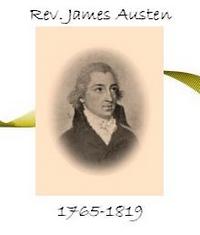
James Austen was the first born. He was reportedly a quick scholar with an aptitude for the classics. At age 14, James matriculated at Oxford, where he remained for eleven years.  James was known within his family and among his friends for his efforts in writing poetry. During Jane’s early years (1782-1788), the family produced a series of amateur theatricals, of which we have documented proof.  James composed metrical prologues and epilogues for these “family” plays – likely modeling for the youthful Jane the thrill of having her family’s adulation for her writing efforts.

Although he was six years James’s junior, Henry joined James at Oxford in 1788. In 1789, the brothers began producing a weekly periodical, which contained a series of fashionable essays, called The Loiterer. In fact, James and his friends provided the majority of the essays; however, Henry became quite adept at the occasional piece of fiction, which was included in the weekly issued. He used “stock” characters and situations – those commonly found in the fiction of the day. They continued their efforts for 60 consecutive weeks – quite an undertaking for the time.

Some biographers even suggest that Jane wrote one of the letters published in The Loiterer, which expressed an objection to the lack of a female perspective in the articles published in the weekly periodical. It was signed “Sophia Sentiment.” It is said that the issue containing the letter supposedly written by Jane Austen (issue 9) was the only one to be advertised for sale in North Hampshire, where the Austen’s lived. The other issues were for sale at Oxford and in London. In the Cambridge University Press collection of Austen’s Juvenilia, Peter Sabor suggests that the letter may have been inspired by Jane’s voice in her brothers’ ears rather than her actually writing the letter.

James’s poetry efforts dwindled as he settled into the life of a country clergyman. As the heir to his wealthy, childless uncle, James Leigh Perrot, James Austen’s future was solid. After leaving Oxford, James became Rector of Steventon (rather than his father’s curate at Deane). He married twice – the second marriage bringing him two children, but gave him a wife with whom he was generally thought to be disappointed. We have no records of James’s poetry from 1789 to 1805.

Henry is well known among Austen scholars as Jane’s “man of business,” acting as her agent in arranging the publication of Austen’s novels. He managed to convince Thomas Egerton, who coincidentally had published the Austen brothers’ efforts with The Loiterer,  to take a chance on a piece of fiction. Egerton specialized in pieces of military history, so this was a different track for the publisher. In 1811, Egerton published Sense and Sensibility, by a Lady. Henry likely advanced the £180 upfront fees for printing and advertising for the novel.

Posted in Uncategorized | Tagged , , | Comments Off on Jane Austen’s “Literary” Brothers

Pride & Prejudice Retelling – Darcy Attempts to Forget Elizabeth Bennet – Part 2

“So, Darcy, where do you go from here?”

The words choked him, but he managed to say, “I know my duty; the Darcy name and Pemberley must survive. I must forget Elizabeth Bennet and find a suitable match. I am a rich man, and I will settle upon an appropriate woman as soon as I am tempted by her charms. I am ready to marry with all speed; I have a heart ready to accept the ready of the first pleasing woman to come my way.” Excepting Elizabeth Bennet. This was his only secret exception to his declarations. “A woman with a little beauty and some words of flattery will have me as her own, whether she be fifteen or thirty or somewhere in between. I am perfectly ready to make a foolish match.”

“Then you mean to have our cousin Anne?” Edward questioned.

“As much as I respect and admire Anne,” Darcy said seriously, “she is not the woman I envision as the mistress of Pemberley. Despite Lady Catherine’s wishes, Anne will not be the object of my search. Even with Miss Elizabeth’s refusal,” he added hastily. “The woman I want will possess a handsome countenance, a lilt figure, and a quickness of mind. I must find a woman who can assist me in the running of Pemberley. Her character must be an adventurous one; she must not be easily intimated. I may choose to settle for something a bit less, but I will not compromise my standards; I have thought on this for a long time.”

Later, Darcy found Georgiana in the music room. She was listlessly stroking the keys of the pianoforte. His sister sprang to her feet when he entered the room. Darcy purposely strode toward her, took her hand, and said, “Come with me, Georgiana; we must speak honestly.”

Darcy hated how she tentatively followed him across the room to a settee. He despised how his actions of late had affected her. Even after they were well settled, he did not release her hand. Apparently fearing his disappointment, she sat with eyes downcast; yet, he would have none of it. Darcy cupped her chin gently with his fingers and lifted it to where he might look lovingly upon her countenance. “Georgiana, my girl,” he said softly. “I have dealt you a disservice, and I beg your forgiveness. You did not deserve the treatment you have received at my hand of late.”

Uncontrollably, the tears rolled down his sister’s cheeks, and Darcy reached up to gently brush them away; she caught his hand to kiss his palm. “Fitzwilliam, you have never forgiven any fault of your own while you have forgiven many of those around you, especially me.” He started to protest, but she shushed him with a touch of her finger to his lips. “Please, allow me to finish. You have always been available when I required your attention. You have accepted my sorrow and made it your own. Edward spoke of your hopes and your loss. It would do me proud to offer you my support in your time of need.”

He protested, “I could not impose on your sensibilities. Our father left you in my care.”

“No, Fitzwilliam,” she contradicted him. “Our father left you as my guardian, but we are to care for each other. How can you know pain without my feeling it?” Darcy could not comprehend his sister’s transformation; she was still the shy, innocent girl he had always cherished, but she had developed an emotional strength of which he was not aware before now. He could never think of George Wickham’s betrayal without loathing, but his sister had added a new sense of maturity because of the experience. Regrettably, Georgiana had known the rebukes of love. “Our parents were of superior birth,” she continued. “We learned to be proud of being a Darcy, but we have not learned to acknowledge the true worth of others. Mrs. Annesley has given me a ‘mother’s’ view of the world. Oh, Fitzwilliam, there are so many who require our generosity; aiding the poor in Derbyshire is persuading me to care more for myself. If we do not love ourselves, my Brother, how may we expect others to love us?”

“When did you become so wise?” he whispered hoarsely and stroked her hair from her countenance.

“You taught me these things, Fitzwilliam. You simply never listened to your own lessons,” she giggled.

“Today, you are the instructor and I, the student.” He pulled her to him in a tight embrace. “And I welcome more of your teachings.”

Attempting to forget Elizabeth Bennet and Hertfordshire, Darcy threw himself into London’s society. He became a regular at his gentleman’s club; he escorted Georgiana to concerts and the theatre; he dined with old acquaintances and made new ones. Yet, try as he may, it was too soon for him to forget Miss Elizabeth. Darcy acknowledged, if only to himself, that he could truly love none but her. She could not be replaced in his mind as the woman he was meant to love; he would never find her equal. Unconsciously, he vowed to remain constant to Elizabeth Bennet. He had meant to forget her, and he had honestly believed it possible. He had told himself that he held no preference, but, as the days passed, he accepted the fact that she had wounded his pride. That he was only angry. Angry at her for refusing him and at himself for making a cake of the Darcy name. Elizabeth Bennet’s character became fixed in his mind as perfection itself; at Hertfordshire, he had learnt to do her justice, and at Hunsford, he had begun to understand himself.

In his attempts, attempts of angry pride, to attach himself to another, he had felt it to be impossible. He could not forget the perfect excellence of Elizabeth Bennet’s mind or the way she possessed him. From her, he had learned the steadiness of principle, and Darcy had to admit to admiring the way she had withstood his arguments in her defense of George Wickham.

“Of course, I would prefer that the lady had not placed her trust in Mr. Wickham, but I understand that if I had opened myself to her prior to when I thought to propose, mayhap, Mr. Wickham’s perfidy would not have taken root in Miss Elizabeth’s sensibility,” he had shared with his image in his dressing room mirror. “I would like to believe a different outcome possible if I had come to this knowledge sooner.”

Reluctantly, Darcy admitted to himself that his desire to protect Bingley had not really been for altruistic reasons. “If I had truly cared for Bingley’s future, I would not have abandoned my objections to the Bennet family’s connections in order to secure my own happiness,” he said to the darkness encompassing his chambers. “It is difficult to acknowledge that my motives were quite selfish. If I could not attain Miss Elizabeth’s affections, I had to make a choice, and I chose to keep Bingley’s friendship. Because, in reality, I could never remain Bingley’s friend if he married Miss Bennet. Seeing their happiness would remind me too much of what I had lost.” It was a sobering realization for a man who prided himself on his earnest regard for Charles Bingley.

“The problem lies in what is my duty to my family line,” he grumbled over his solitary breakfast. “If I yield to what most declare to be my duty, and I marry a woman who is indifferent, all risk would be incurred and all duty violated.”

Unable to place his heart in the pursuit of a proper companion, Darcy abandoned the farce and prepared for an early retreat to Pemberley. Both he and Georgiana accepted the need for solitude. Darcy would care for his estate and wait for acceptance to come; Georgiana would continue the journey upon which she had recently set her feet. She would find a means to know contentment through selfless acts. Together, they would safeguard each other’s love.

A few evenings prior to their departure, Edward returned to assess Darcy’s progress. While Georgiana and Mrs. Annesley prepared to entertain them in the music room, Darcy and the colonel lingered in the dining room.

“Am I to understand you have been to Kent?” Darcy asked as he poured them both a brandy.

“Yes, and our aunt was most insistent that I relay her anxiousness for your return to Rosings Park,” Edward explained.

“I will not be fulfilling our aunt’s wishes,” Darcy said dismally. “When I marry, our cousin Anne will not be my choice for mistress of Pemberley.”

“Lady Catherine will not take your obstinate refusal easily,” Edward said.

“Hopefully, the family will support my decision,” Darcy said uneasily. Family meant Edward’s father, the Earl of Matlock, and his older cousin, Edward’s brother Roland.

“The Earl knows how best to handle our aunt’s contentious ways,” Edward assured. They sat in companionable silence for several minutes, before the colonel ventured. “I do bring news from Kent, but I dare not speak of Mrs. Collins’s friend.”

Hoping to belie his interest in the subject, Darcy fixed his countenance. “Edward, you may speak Elizabeth Bennet’s name; I cannot avoid the lady forever; my most excellent friend lets an estate in Hertfordshire; her best friend is married to Lady Catherine’s cleric; I must harden myself to Miss Elizabeth’s memory and to my former feelings.” When the colonel continued to delay, Darcy sighed heavily, “Out with it, Man!”

With a shrug of his shoulders, Edward said, “Anne shared some news of Miss Elizabeth that she had learned from her companion, Mrs. Jenkinson. One afternoon, our cousin and I were having our own amusement at Mr. Collins’s expense.” Darcy rolled his eyes at the mention of Mr. Collins. The man was a complete nincompoop. “Did you know, Fitz, that prior to marrying Miss Lucas that Mr. Collins proposed to Miss Elizabeth? Evidently, that was the day after Mr. Bingley’s ball at Netherfield.” Just the mention of the ball brought exquisite memories; holding Miss Elizabeth’s hand and staring into her eyes were some of his fondest memories of the woman. “Miss Elizabeth’s mother demanded that the lady save the family estate by marrying Collins; Mr. Bennet refused to force his daughter into the marriage. The Bennet estate is entailed upon Mr. Collins. We wondered how Collins had come to marry Miss Lucas. It makes so much sense in hindsight. Can you imagine Miss Elizabeth’s vitality in the hands of a superfluous ass such as Collins?”

He attempted to downplay his reaction, but the thought of Collins kissing Elizabeth and taking husbandly privileges with her caused Darcy to redden with abhorrence. A shudder of disdain shook him to his core. He had not taken more than one drink since the night he had confessed everything to his cousin, but he did not think all the brandy in his cellars would deaden the distaste filling his soul. With irony, he said, “It does not make me happy to know that the lady places me in company with our aunt’s clergyman. She has refused two proposals of marriage. That is quite incomparable.”

“One would think that Miss Elizabeth’s lack of a dowry would have the lady accepting any appropriate offer,” Edward reason. “Refusing Mr. Collins is understandable. The man would smother Miss Elizabeth’s spirit. But to refuse a man of your standing, Darcy, is not to be reasoned.”

Darcy swallowed hard. “The lady wishes a love match,” he said softly.

Georgiana’s musical interlude was as superb as ever, but all Darcy could see were Elizabeth’s eyes and her smile and how the images faded whenever he reached for them.

(The scene is an adaptation from chapter 10 of Darcy’s Passions: Pride and Prejudice Retold Through His Eyes. I am pleased to announce that Ulysses Press has sent Darcy’s Passions for a second printing.)

Posted in Uncategorized | Tagged , , , , , , , | 3 Comments

Jane Austen and Feminism

by Regina Jeffers


In 1968, the Women’s Liberation Movement staged a demonstration at the annual Miss America Beauty pageant in Atlantic City, New Jersey. They protested the idea that the most important thing about a woman is how she looks.Women’s liberation attacked “male chauvinism, commercialization of beauty, racism and oppression symbolized by the Pageant.”(JoFreeman.com) I am a product of that particular generation. I was a teen in the 1960s and a young woman in 1970s. Generally, I was raised in the Southern states, and I thoroughly understand the “good ole boys” system. Recently, at my retirement recognition gathering at the high school where I taught for many years, instead of praising me for my dedication to my academic area or to my students, my principal stood up and said, “If you have ever served on a committee with Regina, you know that she has no problem in speaking her mind.” Well, that is something, but, obviously, not how one would like to be remembered after 40 years in the classroom. In other words, I had “ruffled his feathers” on more than one occasion by not always conforming to how he thought a woman should act. I have never been subservient to a male. That was my mother. I am a daughter of the women’s movement. So, like Jane Austen, while I write about romance and tradition and virtue, I still place my female characters in roles where they “defy” the never ending patriarchal society in which they live.

In 18th Century England, certain educated women began to question why men did not see women as rational creatures. Among those were Mary Astell and Catherine Macaulay, who discussed such issues as the lack of a female educational system and the absolute authority of males in the family unit. One must wonder if these ideas influenced a young Jane Austen. In each of Austen’s six main novels, the concept of marriage is told from a female perspective. Is Jane telling us that the male view is obsolete?
It would be difficult to call Austen a feminist because her point of view is very subtle. Yet, her message has been read by millions of women around the world, and I openly admit that it influenced me. But who influenced Jane? We shall never know for sure, but it is likely that one of those could have been Mary Wollstonecraft. In 1792 (when Jane was but an impressionable 16-year-old), Wollstonecraft released A Vindication of the Rights of Woman. As an English teacher, this was one of my favorite pieces to bring to my students for it has strong parallels to modern times. Wollstonecraft openly stated that both men and women have the potential to conduct themselves as reasonable and rational human beings. One sex did not have dominance over the other. Wollstonecraft also attacked earlier writers, especially John Milton and Rosseau, for advocating the subordinate position of women in a man’s life. The author’s idea that the 18th Century English educated their women only in how to attract (or “trap”) a man into marriage, but did nothing to equip them with the skills to be good wives and mothers was quite controversial. With Vindication’s release, new doors opened for women writers.
However, Wollstonecraft soon lost her life to childbirth. (BTW, her daughter was Mary Godwin, who eventually became the wife of Percy Shelley and the author of Frankenstein.) Afterwards, Wollstonecraft’s husband, William Godwin, wrote a sometimes embellished Memoir of his wife’s life. He told the world of the love affair that produced an illegitimate child and of her suicide attempts and of her rejection of Christianity. Wollstonecraft was labeled an atheist and a “whore.” Critics held a new weapon in discrediting her work, and indirectly, the writings of all women.
Unfortunately, Mary’s downfall brought close scrutiny on those who followed. A female writer could not be seen as advocating the overthrow of marriage rituals. In 1798, the Reverend Richard Polwhele published an anti-feminist satirical poem entitled “The Unsex’d Females.” In it, Polwhele  argued that the “sparkle of confident intelligence” was proof that female writers were immodest and that it was a sign of the “corrupt”  times that anyone would go so far to consider a woman’s work on the same level as a man’s. Please remember that it was that same year (1798) when the publisher Cadell refused Rev. Austen’s offer of his daughter Jane’s First Impressions manuscript.
Jane Austen does one thing better than any other female writer. She writes dominate female characters with spotless reputations. In each novel, one finds the seduced-and-abandoned plot embedded in the main story line, but Austen’s subject is not courtship. Kathryn B. Stockton of the University of Utah says, “Austen’s works are about ‘marriageship: the cautious investigation of a field of eligible males, the delicate maneuvering to meet them, the refined outpacing of rivals, the subtle circumventing of parental power and the careful management, which turns the idle flirtation into a firm offer of marriage with a good settlement for life. All this must be carried on in a way that the heroine maintains her self-respect, her moral dignity, and her character as daughter, sister, friend, and neighbor.’” For myself, I am more inclined to agree with G. K. Chesterton, who said, “Jane Austen could do one thing neither Charlotte Bronte or George Eliot could do: She could cooly and sensibly describe a man.”
In Persuasion, Austen wrote, “But let me observe that all histories are against you, all stories, prose and verse. If I had such a memory as Benwick, I could bring you fifty quotations in a moment on my side the argument, and I do not think I ever opened a book in my life, which had not something to say upon woman’s inconstancy. Songs and proverbs, all talk of woman’s fickleness. But perhaps you will say, these were all written by men.”
“…Men have had every advantage of us in telling their story. Education has been theirs in so much higher a degree; the pen has been in their hands. I will not allow books to prove any thing.”
After Wollstonecraft’s “downfall,” women writers, even those who did not express views of “female philosophers,” had difficulty finding a market for their writing and gaining respect for their talents in a male-dominated occupation. They had to stress the virtue of ladylike qualities and respectable lives. Rights for women could not be their focus.
Posted in Uncategorized | Tagged , | 4 Comments

Jane Austen is Ingrained on My Psyche

In writing my guest post for Barbara Tiller Cole’s “Darcyholic Diversions,” I looked at the parts of Pride and Prejudice, which spoke to me early on in my life-long love of Jane Austen’s works. Then I began to think of the other Austen phrases, which have been a part of my makeup for so many years that I have lost count. I would like to share some of my favorites and, hopefully, you will add your own to the mix.

From Marianne Dashwood in Sense and Sensibility: “It is not time or opportunity that is to determine intimacy; it is disposition alone. Seven years would be insufficient to make some people acquainted with each other, and seven days are more than enough for others.” (I married my husband after a three weeks’ acquaintance. We remained married for twenty-five years.)

From Emma Woodhouse in Emma: “If a woman doubts as to whether she should accept a man or not, she certainly ought to refuse him. If she can hesitate as to ‘Yes,’ she ought to say ‘No’ directly. It is not a state to be safely entered into with doubtful feelings, with half a heart.” (We have all had that friend like Charlotte Lucas who marries simply for the idea of being married. I always thought Ms. Woodhouse’s advice very sound.)

From Mr. Darcy in Pride and Prejudice: “I cannot fix on the hour, or the spot, or the look, or the words, which laid the foundation. It is too long ago. I was in the middle before I knew that I had begun.” (How often are we in a relationship and have lost our heart before we even realize that we are interested in the person?)

From Emma in The Watsons: “To be bent on marriage–to pursue a man merely for the sake of situation–is a sort of thing that shocks me; I cannot understand it. Poverty is a great evil, but to a woman of education and feeling it ought not, it cannot be the greatest. I would rather be a teacher at a school (and I can think of nothing worse) than marry a man I did not like.” [Ironically, I read The Watsons some five to six years into my career as a teacher. This quote struck a sour chord. I spent 39 years in the public classrooms of three different states.]

From Mr. Weston in Emma: “One cannot have too large a party.” (The best thing about an excessively large party is the ability to be absolutely alone in the crowd.)

The narrator speaks of Caroline Bingley in Pride and Prejudice: “Angry people are not always wise.” (I doubt any of us could counter this statement. I have lost my temper and acted in haste on more than one occasion.)

From Fanny Price in Mansfield Park: “We have all a better guide in ourselves, if we would attend to it, than any other person can be.” (Pleasing others serves no purpose other than to fan our vanity.)

From Anne Elliot in Persuasion: “My idea of good company is the company of clever, well-informed people who have a great deal of conversation; that is what I call good company.” (Men should learn this fact about the women in their lives.)

From Mary Bennet in Pride and Prejudice: “Vanity and pride are different things, though the words are often used synonymously. A person may be proud without being vain. Pride relates more to our opinion of ourselves; vanity, to what we would have others think of us.” (Simply said: A person may be proud of his accomplishments without being vain.)

From Henry Tilney in Northanger Abbey: “The person, be it gentleman or lady, who has not pleasure in a good novel, must be intolerably stupid.” (Does nonfiction count in this instance???)

From Mrs. Grant in Mansfield Park: “There will be little rubs and disappointments everywhere, and we are all apt to expect too much; but then, if one scheme of happiness fails, human nature turns to another; if the first calculation is wrong, we make a second better: we find comfort somewhere.” (Sometimes turning away is difficult to do.)

The Narrator speaks of Lady Denham in Sandition: “Every neighborhood should have a great lady.” (I always wanted to be that woman. LOL!!!)

From Lady Susan Vernon in Lady Susan: “I like this man; pray heaven no harm come of it!” (Finding Mr. Right can be impossible.)


Now, dear Readers, what might you add to my list?


Shackled in the dungeon of a macabre castle with no recollection of her past, a young woman finds herself falling in love with her captor – the estate’s master. Yet, placing her trust in him before she regains her memory and unravels the castle’s wicked truths would be a catastrophe.

Far away at Pemberley, the Darcys happily gather to celebrate the marriage of Kitty Bennet. But a dark cloud sweeps through the festivities: Georgiana Darcy has disappeared without a trace. Upon receiving word of his sister’s likely demise, Darcy and wife, Elizabeth, set off across the English countryside, seeking answers in the unfamiliar and menacing Scottish moors.

How can Darcy keep his sister safe from the most sinister threat she has ever faced when he doesn’t even know if she’s alive? True to Austen’s style and rife with malicious villains, dramatic revelations and heroic gestures, this suspense-packed mystery places Darcy and Elizabeth in the most harrowing situation they have ever faced – finding Georgiana before it is too late.


Posted in Uncategorized | Tagged , , , , , , , , , , , | Comments Off on Jane Austen is Ingrained on My Psyche

Sense and Sensibility 1995, Part 2 of Movie Discussion – Rewriting Jane Austen’s Heroes

by Regina Jeffers

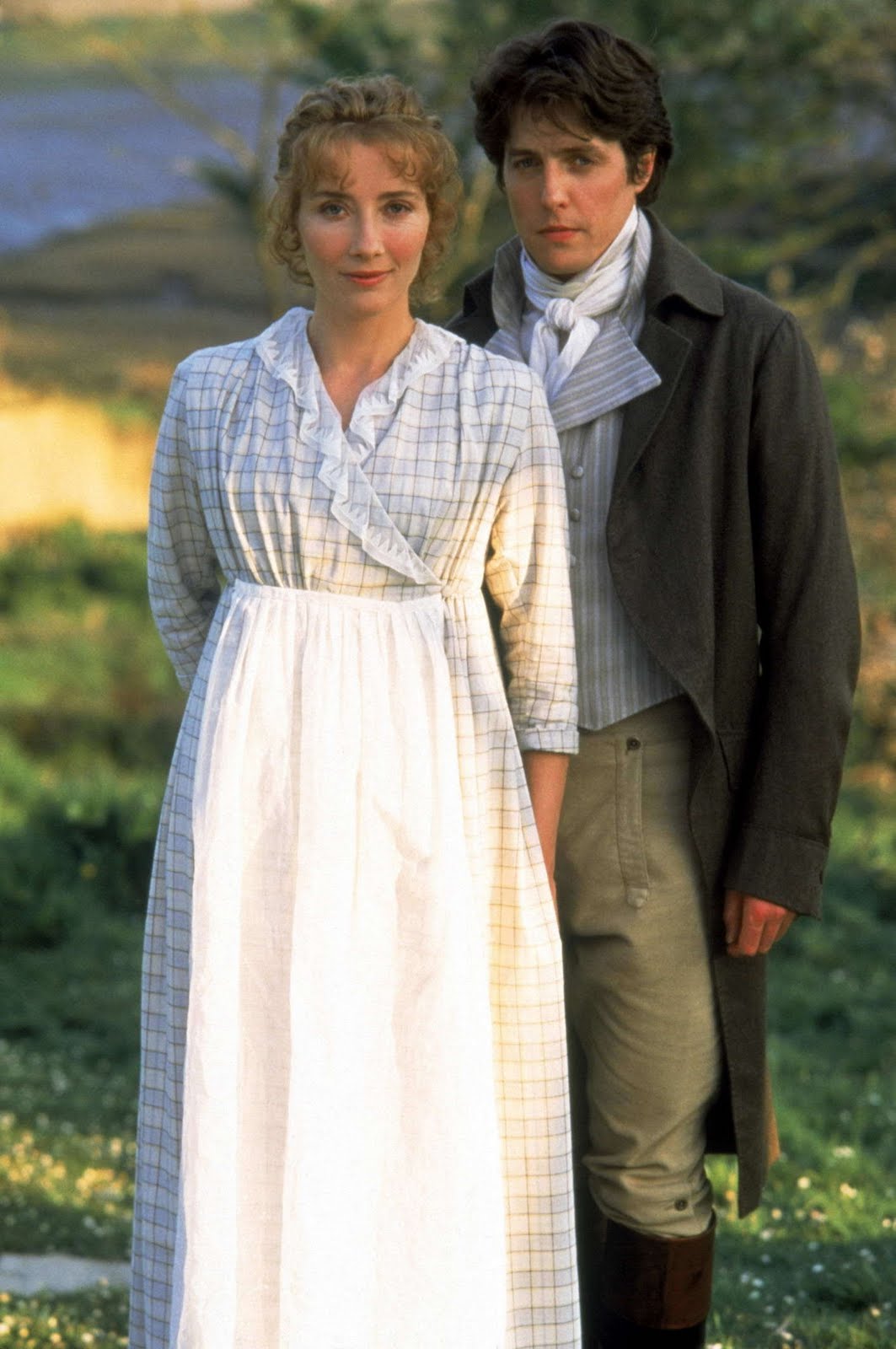
In December 1995, Columbia/Mirage Pictures released Sense and Sensibilityto U.S. theatres. Based on Emma Thompson’s (who won the 1996 Academy Award for Best Screenplay Based on Material from Another Medium) screenplay, this adaptation goes a long way in creating heroes out of what are sometimes seen as bland characters. Last month, we took our first look at the changes made by Thompson. This month, we shall look at those specifically made for Edward and Colonel Brandon. By changing scenes from the novel to portray more sensitive and caring males, Thompson appeals to modern viewers by recasting the novel’s heroes. Let us begin with the “sculpting” of Edward Ferras.

First, Edward displays his paternal side with Margaret, who has just lost her father. In the Norland library, it is Edward who engages Elinor in a lively geography lesson to entice an emotional Margaret from her hiding place under the table. Next, we see Edward sword fighting with Margaret. This is another of Thompson’s fabricated scenes. It is used to demonstrate Edward’s playful nature, his self-effacing personality, and his potential as a loving father. Throughout the next few scenes, Edward makes numerous references to the time he has spent playing pirate with Margaret. His estimation grows before our eyes. We learn to like a man, who indulges children rather than ignoring them.
Additional dialogue and scenes are added by Thompson in which Edward makes an attempt to express his love and devotion to Elinor. In these created scenes he stumbles over his words when they are together in the barn, in the scene where Lucy is in the room with Elinor, and when Elinor speaks of Brandon’s offer of a living. Edward asks for forgiveness but never explains why Elinor should extend it. His lack of speech actually says more than elongated professions of his love. Edward’s emotional discomposure is easily interpreted by the viewer. However, neither the attempts nor Edward’s unexpressed words are found in the novel. Thompson has created an emotionally sensitive hero.
The atlas from the library scene keeps Edward in the audience’s mind even when he does not make the scheduled appearance at Barton Cottage. Therefore, it is disappointing to the viewer when the book arrives in the mail. However, this device helps Thompson tell the story. Elinor can question Edward’s previous attentions to her, and his absence can make Lucy’s story more believable. Thompson speaks of Edward’s betrayal through Lucy’s display of a handkerchief exactly like the one to which Elinor has attached her hopes. In the novel, Edward never gives Elinor any such gift, even in passing. Like the atlas, the handkerchief is a metonymic device to establish Elinor’s emotional turmoil. Remember that Elinor is supposed to represent “good sense.” Emotions attached to the handkerchief or any other gift are not found in the novel.


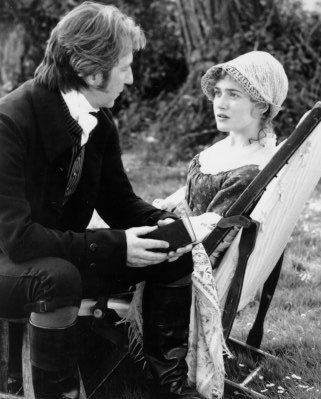
Likewise, Thompson allows Alan Rickman’s portrayal of Colonel Brandon to express true emotion. The viewer’s introduction to Brandon displays a man mesmerized by Marianne’s performance on the pianoforte. He loves the music and her voice; therefore, we know instantly that he feels passionately about her. In contrast, the novel refers to Brandon as “an absolute old bachelor.” He has spent the evening with the Dashwoods at the Middletons. In fact, the novel says that Brandon “heard her without being in raptures.” Austen’s words are quite different from the scene we know. Add the music scene from the film’s end where Brandon sends Marianne a pianoforte of her own, and we have physical signs of love. Ironically, in the novel, it is Willoughby who shares Marianne’s love of music.


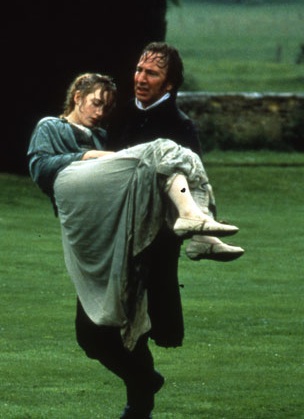
Brandon mimics Willoughby’s pursuit of Marianne. Both men carry Marianne home in the rain. This is a way of transferring Willoughby’s natural, open wildness to Brandon. His tender administrations on Marianne’s behalf makes him a believable substitute for Willoughby.  As with Edward, objects keep Brandon in the viewer’s mind: a lawnbowling ball, a knife to cut the reeds, flowers, a book of verse, and a pianoforte. Willoughby gives wildflowers and Brandon hot house roses; Willoughby quotes Shakespeare, and Brandon reads from Spenser. Willoughby and Brandon are no longer polar opposites.


Brandon says, “For there is nothing lost, but may be found, if sought.” We seek a romantic hero and find him in this portrayal. Like Marianne, we are possessed by an emotionally sensitive man that we can love. Austen does not give us the same emotional enhancements. Modern audiences demand the “Cinderella” ending, and, in this film, we lose some of Austen’s cautionary tale of the pitfalls of too much or too little sense and sensibility. Emotional sensitivity becomes a substitute for social restraint. With Brandon’s heroic ride and plea for something to do “or I will run mad,” Thompson eliminates the need for Willoughby’s emotional rehabilitation.
Through the minor characters, we learn the local gossip and the developing drama. This device keeps these characters from “disappearing,” as they did in the novel. Characters who fade into the background on the written page help tell the story in the film. Of the two portrayals, I found Alan Rickman’s the superior one. His subtle manner of displaying Brandon’s feelings for Marianne shows how a mask of reticence can hide one’s true emotions. Hugh Grant’s portrayal, on the other hand, was reminiscent of his 1994′s Four Weddings and a Funeral. He still continued to stammer, but Grant does so with less charm this time around. By the film’s end, I wanted to see the classically awkward and a bit-self absorbed Edward with Marianne, and the passionate, long-suffering, and honorable Brandon with Elinor.
Posted in Uncategorized | Tagged , , | 2 Comments

“Sense & Sensibility” 1995 (or) Rewriting Jane Austen – A Movie Discussion

by Regina Jeffers

As part of JASNA’s salute to Jane Austen’s Sense and Sensibility in 2011, this will be a two-part look of the 1995 film adaptation. Next month, we will examine the “making” of Edward Ferras and Colonel Brandon. This month, however, I wanted to explore the many non-Austen “creations” added to this film. I do not do so as criticism, but more out of the awareness that, for many people, film adaptations are all they know of the story line. This piece will also point out how Emma Thompson, as the screenwriter, added “bits” to introduce the modern audience to the dire situation in which women of Austen’s time often found themselves.

Prior to the 1995 production, there were three other film versions of Sense and Sensibility. On June 4, 1950, Philco Television Playhouse produced a one-hour adaptation starring Madge Evans as Elinor and Cloris Leachman as Marianne. In 1971, Ciaran Madden (Marianne), Robin Ellis (Edward), and Joanna David (Elinor) were seen in four 50-minute episodes on the BBC (January 3, 10, 17, 24). That screen play was written by Denis Constanduros, who used much of it again for the 1981 version, which was seen on the BBC in seven 30-minute episodes from February 1 through March 14, 1981. This version, starring Irene Richards as Elinor and Tracey Childs as Marianne, had one advantage over the 1971 adaptation. It was shot on location rather than on studio sets.
  • One of the most obvious “twists” to the original Austen is the way that the film creates “sensitive” male characters. This is not a new phenomenon. Film adaptations of Austen’s males often project qualities on the characters, which are not found in the text. For example, Colonel Brandon is excessively attentive to his adoptive daughter Eliza. He also expresses his compassion in dealing with Marianne’s impulsive nature and with the Dashwoods’ situation.
  • Edward is seen as being a sensitive male. He refuses Margaret’s room; he plays games with Margaret.
  • The film also highlights a greater disparity between the male characters from the novels. We have repeatedly seen the strong, dependable male (Darcy, Wentworth, etc.) vs. the sociable, but very unreliable male (Wickham, Mr. Elliot, etc.). Brandon and Willoughby continue that cinematic storytelling. In fact, Brandon is actually given some of qualities that Austen bestowed upon Willoughby. In the novel, Willoughby comes to Cleveland while Marianne is ill. He eloquently expresses his regrets to Elinor. We never see this in the film, which allows Alan Rickman’s Brandon to become a more acceptable mate for Marianne, especially to a modern audience who might otherwise object to the differences in their ages.
  • By the way, did you notice that Willoughby rides a white horse, and Brandon rides a black one? What happened to the tried and true signals for viewers to know a man’s personality by the horse he rides?
  • In the novel’s end, Marianne appears subdued and malleable. Whereas, the film maintains the concept of “equality” in Brandon’s and Marianne’s relationship.
  • Brandon does the same thing as Willoughby – just not as well. This helps with the transfer of the audience’s affections to Colonel Brandon. For example, Willoughby carries Marianne to Barton Cottage; Brandon carries her to Cleveland.  Both men give her flowers, but Willoughby has chosen wild flowers to those which are cultivated. Willoughby recites poetry to Marianne. Brandon reads to her from “The Faerie Queene.” In the novel, Willoughby shares Marianne’s interest in music; Brandon possesses that quality in the film.
  • The role of Margaret is expanded greatly from Austen’s description of the child as a “good-humored, well-disposed girl.” Margaret Dashwood is given the “freedoms” that her sisters can never have. She speaks her mind. She chooses a future of her own (a pirate). Margaret is the device by which Edward is revealed to the viewer. Her character is also the source of much of the film’s humor.
  • The happiness of the wedding scene reminded me of Emma Thompson’s ex-husband’s staging of the ending of Much Ado About Nothing. The coins tossed into the air are much like the procession and flower petals of the Shakespeare remake.
  • The characters of Lady Middleton and her children are omitted from the film, as well as Lucy’s sister Nancy. The latter plays a pivotal role in the novel because it is she who “spills the beans” about Lucy’s engagement to Edward. Of course, Lucy whispering that secret to Fanny in the film leads to a most hilarious scene, so maybe Nancy was not necessary.
  • Instead of visiting Barton Cottage (per the novel), Edward sends Margaret the atlas and an apologetic letter.
  • In the novel, Lucy and Robert’s marriage comes as a complete surprise, but the movie previews their joining when Robert shows his preference for her at the London ball.
  • The movie omits the scene from the novel where Marianne says that Elinor cannot understand the anguish of losing someone because Elinor has Edward’s love.
  • Brandon sends Marianne a pianoforte. In the book, she already has one.
  • In the novel, Edward never hints of his engagement, but, in the film, he tries to tell Elinor in the scene taking place in the stable.
  • Explanatory scenes are required for a modern audience; therefore, we see Elinor telling Margaret why John and Fanny now own Norland. We see the promise that John made to Henry Dashwood to “do something” for his sisters. We see John and Fanny “reduce” what the Dashwoods should receive. Austen would have no need to tell her readers these central facts. Elinor tells Edward, “Except you will inherit your fortune. We cannot even earn ours.” That line is a reminder to modern viewers of a woman’s fate. Unfortunately, it is lessened by Edward’s reference to playing pirate with Margaret. “Piracy is our only option.”
  • Probably the most glaring change to Austen’s novel is Marianne’s walk in the  rain to view Combe Magna, which was supposedly 30 miles from Cleveland. In the book, Marianne becomes ill despite her refusing to go out in the rain.

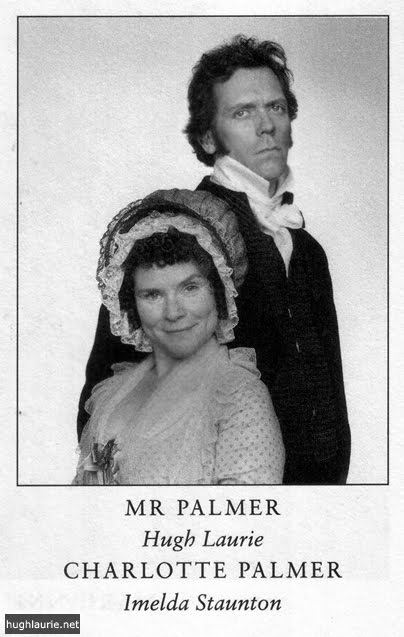
  • Hugh Laurie’s character of Mr. Palmer is also greatly expanded. His dry humor reminds one of his current character of “House,” but Laurie is well known for other comedic stints. Mr. Palmer, of the film, is not just the censorious man we meet in the book. The film shows him as kind and considerate. He carries Marianne upstairs after Brandon brings her to Cleveland. He is upset that he must leave the Dashwoods to fend for themselves during Marianne’s illness. The film also displays how mismatched the Palmers are in marriage.
Austen’s film adaptations tend to focus on contemporary post feminist ideas. Period dramas, as a genre, invite the viewers to take on the rich features of the novel. Yet, no film can reproduce the nuances and exquisite details of the text. For 135 minutes, Sense and Sensibility allows us to explore Jane Austen’s first novel in a visual format. Does it have its strengths? Absolutely! Are there weaknesses? Profoundly so. Tell me what you think, Austen addicts. I will check in periodically to respond to your comments.
Posted in Uncategorized | Tagged , , , , , , , , , | 4 Comments

Pride & Prejudice Retelling – Darcy Attempts to Forget Elizabeth Bennet – Part One

(Note: In my versions of Pride and Prejudice, I give Colonel Fitzwilliam the name “Edward,” my father’s name.)

“I am pleased you have come so quickly, Edward,” Georgiana said as she served his tea.

“Your note said it was important,” he said with a bemused smirk. The colonel could not remember a time that his cousin had ever thought to consult with him on matters concerning her brother’s state of mind. His Georgiana had known her own tribulations. George Wickham, a man Edward Fitzwilliam had never liked, had attempted to seduce the innocent Georgiana and to arrange an elopement. Thankfully, Darcy had arrived in time to thwart the scoundrel’s plans. However, for many months following that incident, Georgiana had suffered from a lack of confidence, but her demand that he call upon her perhaps signaled a turn for the better.

“I pray I did not interfere with your duties or your personal life,” she said contritely, but her countenance spoke of an emotion he could not identify.

Edward sipped the tea. “I am at your disposal, Cousin. Mayhap you should explain your concerns and then allow me to draw my own conclusions.”

Georgiana squared her shoulders. She bit her bottom lip in hesitation, but she said, “I likely am making a mistake, but I must know whether the foul mood that has consumed Fitzwilliam of late has something to do with my earlier indiscretion. I could not bear it if my brother had not forgiven me.”

Edward’s frown crinkled his forehead. “I am certain that Darcy would never believe what happened between you and Mr. Wickham to be of your doing.” Even saying the miscreant’s name left a foul taste in Edward’s mouth. “Would you explain what changes you have noted in my cousin’s demeanor that brings on your alarm?”

Georgiana sighed heavily. Her voice broke ever so slightly, a poignant, telling little break. “I pray you estimation of Fitzwilliam’s melancholy proves true. My brother often locks himself into his study, even sleeping on the chaise in the room. During those long hours, he only opens the door to Mr. Norton, who serves Fitzwilliam a decanter of brandy. He ignores estate business, and I cannot remember the last time we spent time together.” Warmth burned a path across her cheekbones.

A protective urge swept through him: He caught the pain underscoring her words. “What you describe is most unusual. Darcy is normally most conscientious. I cannot imagine my cousin acting thusly.” Edward had his own suspicions. “Has Darcy spoken of problems at Pemberley?”

“No, nothing,” she assured. “I have hinted to my brother’s steward and to his man of business, and they both assure me that Pemberley thrives under Fitzwilliam’s hand.”

It was Edward’s turn to hesitate. “Perhaps I should stay to supper. It would provide me the opportunity to observe my cousin.”

Her hold on the teacup relaxed. “Thank you, Edward.”

Darcy’s haggard looks shocked Edward, and Darcy’s reserve, even with his relatives, spoke chapters. “Fitz,” Edward began tentatively. “I thought you might want to know that Miss Elizabeth is in town.” Edward had noted Darcy’s animation whenever they encountered the lovely Miss Elizabeth Bennet at Hunsford. He suspected that his cousin had formed a tender for the woman.

Edward watched as Darcy’s whole being reflected his discomposure. “Miss Elizabeth, you say? Pray tell where you encountered the lady in London.”

He did not need to read his cousin’s expression. He could hear the feigned nonchalance in Darcy’s voice. “I did not speak to her directly. She, Miss Lucas, another young lady fair of countenance, and an older couple were in a drapers shop in Pall Mall, near Harding and Howell, Tuesday last. I had just completed another round of training for some new recruits and was not presentable to greet her party properly. I assumed, Cousin, that you would know of Miss Bennet’s itinerary.”

“I am not one of Miss Elizabeth’s intimates,” Darcy snapped. They sat in silence for several minutes. Darcy downed a large glass of brandy. “The mercantile district, you say?” His cousin’s voice had softened.

“From the window, I observed that the lady had chosen a fine lace, even returning to it several times, but Miss Elizabeth did not purchase the item.” Edward shared conspiratorially. “I thought you might be interested.”

“Miss Elizabeth is of no consequence to me,” Darcy announced as he stood. “Edward, I have some estate matters to address. If you will excuse me, I will retire to my study. Please enjoy Georgiana’s company. She deserves someone more cordial than I have been of late.” With that, his cousin strode from the room.

Pausing long enough for Darcy’s footsteps to announce his retreat, Georgiana whispered, “Miss Elizabeth Bennet? The one from Hertfordshire?”

Edward nodded his affirmation. “I believe your brother has a broken heart,” he shared privately.

“Oh, my!” Georgiana gasped. “I would never have suspected as such. Fitzwilliam has shunned the advances of so many women among the ton. I never thought he might prefer a country miss.”

Edward smiled knowingly, “I doubt that Fitz had any knowledge of his own vulnerability.” He assisted Georgiana to her feet. They turned their steps toward the drawing room. “The problem lies in the fact that Miss Elizabeth does not welcome your brother’s attentions.”

Georgiana shook her head. “How is that possible? Cannot Miss Elizabeth see that Fitzwilliam is the most honorable of men?”

He considered the problem for a moment. Edward explained, “Darcy’s stubborn nature and his heightened need for privacy can often be misinterpreted. Miss Elizabeth’s exuberance is a sharp contrast to Darcy’s silence. I doubt if the lady realizes that your brother could be a counterweight to her impulsivity.”

“Are matters of the heart always so convoluted?” she asked innocently. “If so, I may consider a nunnery.”

Edward caught her hand and brought it to his lips. “That would be a crime against nature. Some day, you will find the perfect match, and I will toast the match.”

Several hours later, Edward knocked lightly at Darcy’s study door, but no response came from within. He rapped louder the second time before he opened the door to peer in. His eyes fell to the papers resting on the floor; then he spied Darcy slumped over his desk, the remnants of a glass of brandy clutched tightly in his cousin’s hand. Edward eased the door closed behind him. “Just as I suspected,” he said under his breath. The smell of stale cigar smoke and spilled alcohol filled the space. The colonel had assisted more than one of his military acquaintances in similar situations, but to discover Darcy as such was disconcerting. He could not recall a time when Fitzwilliam Darcy allowed himself to lose control. “Come Cousin.” He slid an arm under Darcy’s to lift his cousin to his feet. “Allow me to assist you to your chambers.”

“Ah, Edward.” Darcy swayed as he stood. “My good cousin. Have I ever told you how jealous I am of you?” Darcy slurred his words.

“Why, Darcy?” Edward positioned his cousin’s arm around his shoulder. “You have so much more than I.”

“You could have had Miss Elizabeth,” Darcy declared. Slouching, Darcy’s whole composure crumbled. “The lady enjoyed your company so much more than mine.”

Edward assisted Darcy to a nearby chair. At Rosings Park, the colonel had witnessed Darcy’s vying for Elizabeth Bennet’s attentions, but even he remained uncertain as to the extent of Darcy’s feelings. Earlier, he had told Georgiana that Darcy’s heart was engaged; yet, he had said so for Georgiana’s sake. In truth, he had wondered if his cousin had simply wished a seduction rather than a commitment. Despite her affability, one part of the colonel thought Darcy deserved better than Miss Elizabeth, a woman with little to offer a man of Darcy’s stature. Therefore, he tested Darcy’s purpose. “Miss Elizabeth has her charms, but, as you kindly noted, her connections are low. I cannot imagine anyone of our acquaintance aligning himself with the likes of Miss Bennet. The lady possesses no qualities to deem her a suitable match.”

Although he was deeply intoxicated, Darcy still had taken the bait. Edward’s words incensed his cousin. Darcy pulled himself up straight and spoke with indignation. “Sir, I will beg you not to speak so of Miss Elizabeth. Your censure is most unwelcome.”

Edward’s smile went unnoticed by Darcy as the man collapsed into the colonel’s arms. “I apologize, Cousin,” he began. “Allow me to call for some coffee. Then perhaps you can tell me of Miss Elizabeth’s many allurements.”

Clinging to Edward, Darcy lurched forward. Reaching for the chair’s arm, he fell heavily into the seat. “Elizabeth Bennet is an incomparable woman, and I am the last man in the world she could be prevailed upon to marry.” Thus said, Darcy passed out from the effort. Interest piqued, Edward set himself the task of discovering the depth of Darcy’s interest in the woman.


It had taken more coffee and more time than he had anticipated, but Edward managed to bring Darcy around to some semblance of his former self. Darcy sat with his head in his hands and elbows propped upon his knees. It was very late, but Edward pressed on. “Cousin, we should speak earnestly. You have become a shadow of the person you once were; you withdraw from Georgiana and from your acquaintances; your work remains untouched on your desk; and you made a reference to Miss Elizabeth that we should address.”

Darcy sat up and looked vaguely about him. “I suppose I owe you some sort of an explanation, but I am certain I can speak the words.”

“It is Georgiana to whom you owe an explanation. Have you not noticed that your sister blames herself for your current misery? She believes she disappoints you.”

“How is that so?” his cousin began, but the realization crossed Darcy’s countenance.

“You have given Elizabeth Bennet your heart?” Edward accused.

Darcy said reluctantly, “Am I that obvious?”

“Fitz, we have been more cousins. You are more of a brother to me than is Roland.” Darcy chuckled as he acknowledged Edward’s words. “I realized before we journeyed to Rosings that you held an interest in Elizabeth Bennet. When the great Fitzwilliam Darcy mentions a woman twice, I notice. When he mentions her repeatedly, I know something is amiss.”

“Miss Elizabeth holds me in contempt; she said as much when I offered her everything I had,” Darcy confessed.

“Elizabeth Bennet refused you? This cannot be.” He thought to give Darcy hope for a resolution. “You are perfect for each other. The woman makes you laugh, Fitz; no one has ever made you laugh.” Darcy smiled easily. His cousin, obviously, enjoyed the image. “Darcy, you must tell me what happened.”

“Mr. Wickham poisoned the lady’s mind to me. I am lost to Miss Elizabeth,” Darcy moaned. “Plus, in my pomposity, I injured Miss Elizabeth by hurting her sister.”

“How could you have offered the elder Miss Bennet an offense?”

“Do you recall my bragging about separating Bingley from an inappropriate connection?”

“Not Miss Elizabeth’s sister!”

“Unfortunately,” Darcy confessed.

The muscles along his jaw twitched. “Darcy, I fear Miss Elizabeth heard of your perfidy from my lips. No wonder the lady suddenly took ill that day in the park.”

“Do not concern yourself, Cousin. I realized from whom Miss Elizabeth heard the news before we took our leave of her at Rosings. Miss Elizabeth would have discovered my deceit sooner or later; she is a clever woman. Miss Elizabeth settled against me before I convinced Bingley to leave Netherfield; I treated her poorly, and then professed my love for her; my duplicity only encouraged her scorn.”

“Then I am to assume that you actually offered Miss Elizabeth you hand in marriage?”

Darcy hesitated. “I did request Miss Elizabeth’s assent, but I fear I did not articulate my intentions well. I planned what I wished to say, but in the lady’s presence, my mind could not recall the words I wished her to know.”

Edward chuckled, “What, may I ask, did you say?”

“I explained the torment of my decision, my qualms about her lack of connections, and the impropriety shown by her family…”

Edward laughed loudly as he refilled his cousin’s cup. “Only you, Cousin, would tell a woman that you loved her by telling her how repugnant you found her family. Is it not surprising that Miss Elizabeth did not find this endearing?”

A sough escaped Darcy’s throat, and he buried his face in his hands. “It appears,” he said at last, “I have been a simpleton when it come to Elizabeth Bennet; my folly does not speak well of my intentions, does it?”

“Men, in love, are often foolhardy,” Edward added quietly. “Let us finish this tomorrow. Do you think you can make it to your chambers?”

Darcy nodded his compliance. The colonel rand for Henry’s assistance, and together they managed to maneuver Darcy safely to his bed. Henry departed to prepare a room for Edward. Thinking that Darcy’s labored breathing indicated that his cousin had found sleep, Edward moved quietly to the door. However, a muffled call from Darcy stayed Edward’s retreat. “Cousin, which shop in the mercantile district did Miss Elizabeth frequent?”

“Concern not yourself,” Edward assured as he took several steps forward. “I will send a servant around tomorrow for the lace. Some day you will present it to Miss Elizabeth as a symbol of your regard for her.” Darcy’s arm waved his acceptance of Edward’s suggestion, and the colonel slipped from the room.


(This excerpt is an adaptation of a similar incident from chapter 10 of Darcy’s Passions, which was my first Austen-inspired novel. I am pleased to say that Ulysses Press has recently sent Darcy’s Passions for a second print run.)

Posted in Uncategorized | Tagged , , , , | 2 Comments