Life Beyond Bath (or) Regency Era Watering Holes

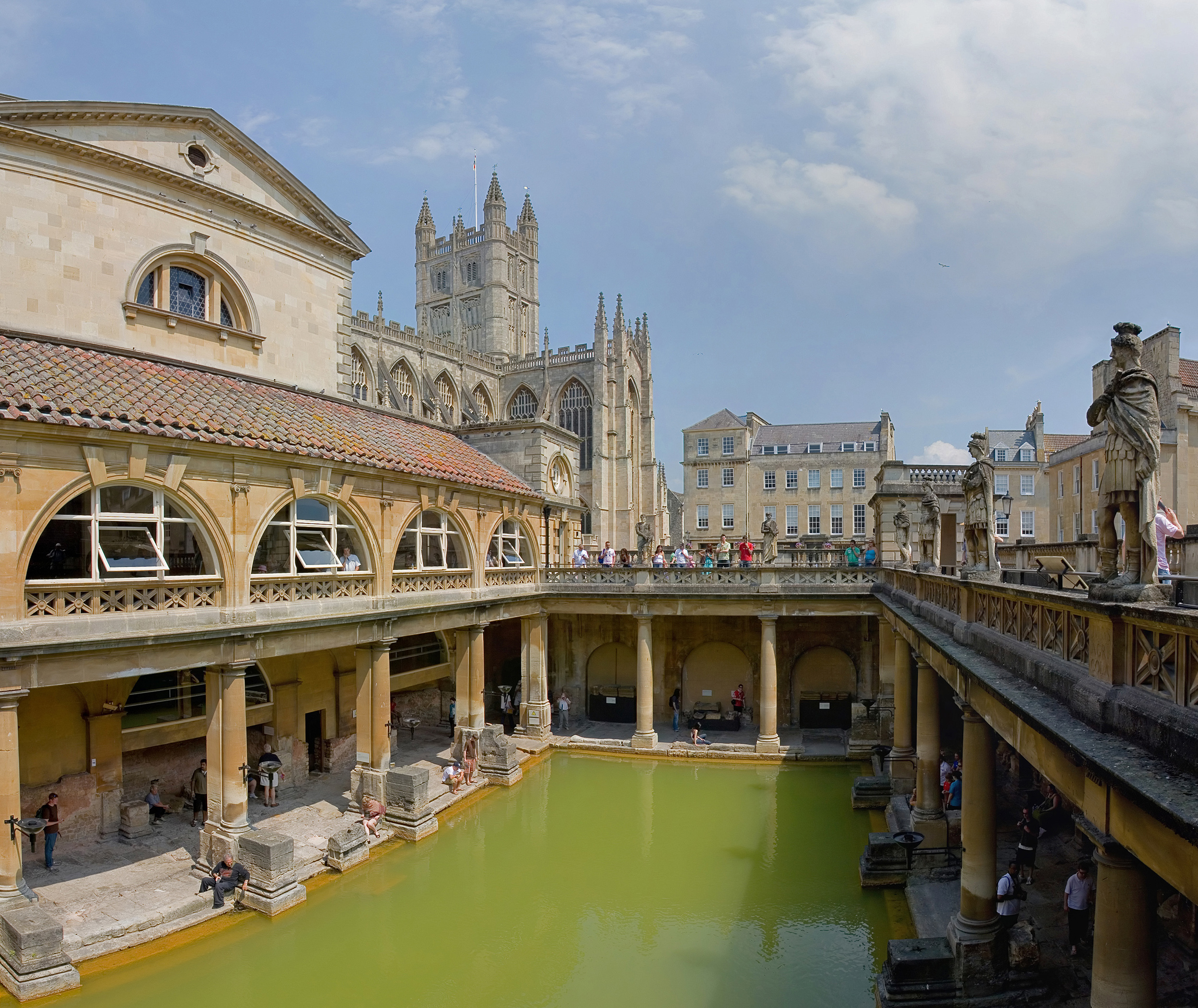
“Watering Holes” were part of the lifestyle of those of the haut ton during the Regency Era and beyond. At Bath and Brighton and Margate and Ramsgate, etc., people returned annually to drink the healing waters, attend the assemblies, and to  take dips in the sea water. At Cheltenham, Tunbridge Wells, and Harrogate, inland spas, healing springs brought in the crowd.

What entertainments drew the crowds to these English resorts? Dances and card parties and promenading along the boardwalks were headliners for the very social members of the ton. It was the old adage of seeing and being seen. Yet, surprisingly, there was the draw of the public libraries, which served their customers tea and coffee to drink while partaking of the latest newspapers and magazines, as well as many novels.

Books of bound caricatures and prints were available to review on site or even be loaned out to customers. At Sidmouth, educational toys and children’s books were housed in the collection. In the 1800s, the library system in England grew by leaps and bounds. For example, The Athenaeum in Liverpool, which opened in 1799, housed 6000 books. Subscribers of The Athenaeum paid 2 guineas per year for the services. Fancourts in London housed more than 40,000 choices.

In addition to the libraries, other “cultural” elements became popular in the resort areas. Circuses and magic shows, as well as “fair” performers made the watering holes their homes during part of the year. Concerts and puppet shows took place in public parks. The best of London’s productions made appearances on tour. For example, the Italian opera and Drury Lane repertory companies made regular stops in the many resorts as part of their summer tours.

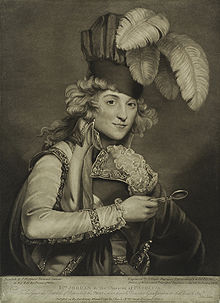
220px-Dorothy_JordanIn Mrs Jordan’s Profession from Claire Tomalin, the author speaks of the tours of Mrs Dorothea Jordan. Dorothea Jordan (21 November 1761 – 5 July 1816) was an Anglo-Irish actress, courtesan, and the mistress and companion of the future King William IV, for 20 years while he was Duke of Clarence. Together they had ten illegitimate children, all of whom took the surname FitzClarence. Mrs Jordan wowed audiences inExeter, Portsmouth, Gosport, Southampton, Salisbury, Margate, Ramsgate, Deal, Canterbury, and Brighton. The royal family attended her performance in The Merry Wives of Windsor at Cheltenham. She packed houses in Leicester, Chester, York, and Liverpool. Mrs Jordan starred at the Theatre Royal in Bath for several seasons. 

By the beginning of the 19th Century, new realizations had come to the citizenry of Bath: Communal baths were probably not the most sanitary. It was customary for anyone to have access to the water, meaning those with contagious diseases bathed in the same water as those with arthritic pain. In the King’s Bath, a tank of warm water, the patients sat side by side, with no distinguishing of either sex or disease. Men were dressed in special brown linen suits and women in off white linen suits of a similar style. Copper bowls of scented oils floated on the water to purify the air. In the Queen’s Bath, cold water was used. Even if one chose simply to drink the waters, he often drank from a glass used previously by another (without being washed in between users).

At the Pump Room in Bath, the orchestra played music throughout the day. Dancing began daily (except Sunday) at noon, with formal balls twice per week. “Starting at 6:00 in the evening…The programme was inviolable: minuets only for the first two hours. The country dances, which were much more fun and more energetic, started at 8:00. (The eighteenth-century rules specified that ‘No Lady dance country-dances in a hoop of any kind and those who choose to pull their hoops off will be assisted by proper servants in an apartment for that purpose.’ By the time of the Regency, of course, only the most old-fashioned dowagers would have appeared in public in a hoop, so the ban was irrelevant.) At 9:00 the company adjourned to the Tea Room for refreshments and the evening ended at 11:00 sharp. It is not surprising that the Prince Regent and his friends preferred the free and easy life of Brighton.” (From An Elegant Madness, pp 126-127)Roman_Baths_in_Bath_Spa,_England_-_July_2006_edit3

The Royal Crescent in Bath, UK

Posted in British history, Georgian Era, Jane Austen, Living in the Regency, Regency era, Uncategorized, Victorian era | Tagged , , , , | 5 Comments

No Longer a Bumpy Ride! The 1762 Westminster Paving Act…

MaltonCHIn doing research for my newest release, THE MYSTERIIOUS DEATH OF MR. DARCY, which is set in Dorset, I came across the Purbek marble, a fossiliferous limestone found on the Isle of Purbeck, a peninsula in southeast Dorset, England. That discovery led to one thing and then another, and finally, I came across the Westminster Paving Act of 1762, a dramatic step forward on behalf of London’s dwellers.


The Westminster Paving Act removed the responsibility of paving the streets from the individuals to a governmental type commission. Before the act, occupants were responsible for paving and cleaning a specified area before their residences.

From John Wood’s Description of Bath (1749), we discover:

But previous to the Duty of these Officers, every Housekeeper, inhabiting and residing within the City, Liberties, and Precincts thereof, is enjoined, Thrice in every Week at the least, that is to say, on Tuesday, Thursday, and Saturday, to sweep and cleanse, or cause to be swept and cleansed, all the Streets, Lanes, Alleys, and Public Places, before their respective Houses, Buildings, and Walls, and all other Public Places, to the End that the Filth, Ashes, Dirt, Dust, Rubble, and Rubbish may be ready to be carried away by the Scavengers, upon Pain to forfeit Three Shillings and Four-Pence for every Offence and Neglect. They are moreover Prohibited from throwing, casting, or laying; or from permitting any Person to throw, cast, or lay, any Ashes, Filth, Duff, Dirt, Rubbish, Dung, or other Annoyances, in any open Street, Lane, or Alley, within the said City, Liberties, Precincts, or Places aforesaid, before his or their own Dwelling-House, Buildings, or other Public Places within the said City; but, on the Contrary, are Required to keep, or cause the fame to be kept, in their respective Houses, Yards, or Backsides, until such Time as the Scavenger shall come by to receive and take the fame entirely away, under the Penalty of Five Shillings for every Offense.

Again, if any person or persons shall have any Straw or Hay, brought and thrown down for the Use or any Inn, or any other House, in any of the Streets, Lanes, Alleys, and other Public Places, within the said City, the Liberties, and Precincts thereof, and shall not carry the same into their Yards, Backsides, or Stables, sweep and clean the Place where such Straw or Hay was thrown down, and carry away the Rubbish occasioned thereby, within one Hour after such Straw or Hay shall be unloaded, he or they so neglecting is to forfeit Five Shillings for every Offense, to be levied by Distress and Sale of the Offender’s Goods, by Warrant, under the Hands of Two or more of the said Commissioners.

Now as to the Paving of the Streets, Lanes, Alleys, and Public Places of the City, every Occupier or Owner of any House, Houses, or Lands, next adjoining to such Street, Lane, Alley, or Public Place within the said City, Liberties or Precincts thereof, is Required, from Time to Time, within ten Days next after Notice given by the Surveyor, or Surveyors, to be appointed as above, well and sufficiently to pitch or pave, or cause to be pitched and paved, the Street, Alley, or Lane before his or their Houses, Habitations, Lands, and Public Places respectively, into the Middle of the Street, Lane, or Alley, except in the Market Place, and there only eight Feet in Width, under the Penalty of Ten Shillings for each Perch not so pitched; and so in Proportion for any greater or lesser Quantity or Space of Ground; and under the like Penalty for every Month, ‘till the same shall be pitched or paved; which Penalty is to be levied by Distress and Sale of the Offender’s Goods, and to be applied towards Maintaining one or more of the Scavengers to be appointed as aforesaid.

In London, the responsibility of paving and cleaning the streets was normally written into the building lease/sale. The problem with the London streets in the early 18th Century was the lack of consistency. The paving stones were round and fit to walk upon, but in a carriage the ride was quite rough. The wide flat stones, which were perfect underfoot, created a bumpy ride for they were raised above the flat of the road.

The 1762 Act specified that Purbeck stone should replace the previous stone. The act also called for the replacement of the drainage kennel, which was normally placed in the street’s middle, with kerbside gutters. This standard of the Purbeck stone remained in place throughout the late Georgian Period. Eventually, gravel was added between the stones to level out the road.

The act also required a system of street cleaning. As a side benefit of working as a Scavenger (those paid to clean the street by at a parish rate) grew, the streets became cleaner. For example, discarded ashes were collected to be sold to manufactures of inferior place bricks. Eventually, carts carrying water (barrels pierced with holes) kept the dust down on the road.

In the early 19th Century, the occupant was responsible for sweeping the pavement before his house. The parish scavenger removed the dirt from the street and that on the carriageway.

Unfortunately, all the laws of the land could not force those who occupied single rooms in lodge houses or those who frequented houses of ill repute or beer houses. There were some who simply did not care for the condition of the streets upon which they walked or rode.

Posted in British history, Georgian Era, Jane Austen, Living in the Regency, Regency era | Tagged , , , , | 1 Comment

Major Changes in the Traditional Publishing Market

This teaser comes from a February 5, 2013 article on NPR, entitled “Why Traditional Publishing is Really in ‘A Golden Age.'” To read the complete article, please visit http://www.npr.org/2013/02/05/171164095/why-traditional-publishing-is-really-in-a-golden-age?ft=1&f=1008

How healthy is the traditional publishing industry? Not very, says Mark Coker, founder of the self-published book distributor Smashwords. On Monday, Coker told NPR’s Audie Cornish that “over the next few years, traditional publishers are going to become more and more irrelevant.”

But Michael Pietsch, soon-to-be CEO of the traditional publisher Hachette Book Group, disagrees. “I think we’re in a golden age for books — reading, writing and publishing,” he tells Cornish. “And the ways that publishers can work to connect readers with writers now are the kinds of things that publishers have dreamt of doing since Gutenberg first put down a line of type.”

Pietsch joins Cornish to discuss how marketing sets a publishing deal apart from the self-publishing model.

Posted in Industry News/Publishing | Comments Off on Major Changes in the Traditional Publishing Market

My Good Opinion Once Lost is Lost For Ever

Fitzwilliam Darcy is a major, but minor, character in Jane Austen’s “Pride and Prejudice.” Although he plays a major role in the story’s outcome, after all, Darcy is the romantic hero of the piece, he is not in every scene. The story is told from Elizabeth Bennet’s perspective, and Darcy is absent throughout extended periods of the book. However, he is far from being “out of sight…out of mind.” Darcy’s presence overshadows all of Elizabeth’s interactions with other characters, even though Miss Elizabeth would never admit an interest in the man.

Elizabeth is a strong, sympathetic, and independent character, and the two men with whom she associates romantically must be equally intricate. Despite Mrs. Reynolds explanation of Darcy’s “bumbling social manners” being the result of his shyness, there remains plenty of proof of his excessive pride. Yet, we do learn much of the man’s “softer” side through his interactions with Charles Bingley. Darcy serves as Bingley’s mentor, and he accepts the role with good-natured diligence.

As a Cit and the “new rich,” Bingley lacks a proper ticket into Society. Darcy is willing to lead the man through the stages of setting up a proper estate, the nuances of proper behavior, etc. I have always wished to know how Bingley and Darcy became friends. Would it not be delightful if Austen had provided her readers a glimpse of how the friendship began?

Elizabeth’s disdain for Darcy’s earliest snubs captivates the man. He recognizes the “danger of paying Elizabeth too much attention,” but Darcy cannot resist her charms. After he reluctantly leaves Elizabeth after the Netherfield Ball, Darcy is not seen again until she meets him at Hunsford Cottage; yet, the man if rarely from her thoughts, especially as Mr. Wickham spends the intervening months in speaking poorly of his former friend.

When Elizabeth meets Darcy at Rosings Park, she is full of the tales Wickham has shared. In Elizabeth’s estimation, Wickham’s half-truths are proof of Darcy’s true character. She cannot comprehend his repeated calls upon Mr. Collins’s household nor his unexpected proposal. “Elizabeth’s astonishment was beyond expression. She stared, coloured, doubted, and was silent. This he considered sufficient encouragement, and the avowal of all that he felt and had long felt for her immediately followed. He spoke well, but there were feelings besides those of the heart to be detailed, and he was not more eloquent on the subject of tenderness than of pride. His sense of her inferiority—of its being a degradation—of the family obstacles which judgment had always opposed to inclination, were dwelt on with a warmth which seemed due to the consequence he was wounding, but was very unlikely to recommend his suit.”

With Elizabeth’s refusal, Darcy is humbled. After his letter explaining his interference in Bingley’s and Jane Bennet’s life and his dealings with Mr. Wickham, Darcy again disappears from the story. Elizabeth does not encounter Darcy again for four months. By the time she meets him again at Pemberley, Elizabeth’s harsh opinion of Darcy has softened, and when he behaves heroically by rushing off to save Lydia’s reputation (as well as her own and her sisters), Elizabeth recognizes is Darcy is the man who would most completed her.

Darcy and Elizabeth’s relationship is the perfect nucleus for Austen’s theme of “First Impressions,” which are often flawed impressions. Elizabeth’s early disdain comes from how Darcy’s “tolerable” remark had pricked her pride. And despite what we assume in hindsight was her early interest in Darcy, she overemphasizes his pride in order to protect her bruised heart. With George Wickham, she ignores her earlier doubts about his being “too perfect.” Wickham’s lies about Darcy only serve to prove her opinions of Pemberley’s master was correct. Elizabeth accepts Wickham’s story because she does not want to face her buried interest in Fitzwilliam Darcy. However, she is easily disillusioned by Mr. Wickham because, in reality, he is not a man worth knowing. Elizabeth’s myopic view of the world lies not in her lack of eyesight but in her protection of her own pride.

Posted in Jane Austen, Living in the Regency, Regency era | Tagged , , , , , | 2 Comments

Regency Courtesan: Harriette Wilson

Harriette_Wilson00A celebrated British Regency courtesan, Harriette Wilson was one of fifteen children of a Swiss clockmaker, John James Dubouchet, a Mayfair shopkeeper. She became the mistress of William Craven, 1st Earl of Craven, when she was but fifteen years of age. Among her lovers, one finds the Arthur Wellesley, the 1st Duke of Wellington, and four future Prime Ministers.

Sexy and quite avaricious, Harriette was known to change lovers often. One must recall that mistresses negotiated hefty contracts with their protectors. If exclusive rights were in question, the man and his mistress followed a particular protocol in forming an alliance. Friends were employed to negotiate the terms rather than the principal participants. In J. Lees-Milne’s The Bachelor Duke: William Spencer Cavendish, Sixth Duke of Devonshire, Walter Scott supposedly said of Harriette, “She was far from beautiful, but a smart saucy girl with good eyes and dark hair, and the manners of a wild school-boy.”

The Duke of Devonshire set Harriette up in a London house in Dorset Square, presented her with a second home in Brighton, gave her an allowance of £1600 a year, carriages, jewelry, furs, etc., including an aviary. However, Harriette Wilson had few kind words for her benefactor.

Harriette kept several lovers competing for her favors. The most consistent of her followers were the Marquess of Lorne, son and heir of the Duke of Argyll; the Marquess of Worcester, son and heir of the Duke of Beaufort; Lord Frederick Bentinck, son of the Duke of Portland; and Frederick Lamb, son of Lord Melbourne.

As much as Harriette loved the attentions of young men, older ones had more money. Recall that Scott called her “a smart saucy girl.” She chose the older Duke of Leinster over his younger cousin, the Marquess of Worcester. Harriette was known to keep company with Henry Brougham, a Liberal MP, and Wilson Croker, the politican and diarist. She had an on again, off again, affair with the Duke of Wellington, while also plying her trade with the Duke of Argyll.

A mistress kept a box at the opera and at Drury Lane, where men – married or not – made an appearance in her box. Opera nights at Covent Garden provided the women with an opportunity to be seen by potential customers. Unlike a wife, a mistress had control of her own money. Harriet was educated; she read French and took an interest in the political tenor of the country. She regularly read Voltaire and Roman history.

The Duke of Beaufort “bought off” Harriette in order to save his heir, the Marquess of Worcester from the woman. In writing, Worcester had begged Harriette to marry him. On advice of her solicitor, Harriette was told the letters would be worth £20,000 in a breach of promise suit. The Duke refused her request, and Harriette turned to Henry Brougham, a celebrated lawyer of the time (and one of her ex-lovers). The Duke managed to convince Harriette to retire to Paris, with a promise of £500 per year for life. In Paris, many of her former lovers visited her on a regular basis.

When Worcester married, the Duke reneged on his promise and stopped paying Harriette’s allowance. Harriette retaliated by selling her memoirs for publication. If Beaufort thought to keep his son’s foolish infatuation secret, Harriet’s book, Publish and be Damn’d: The Memoirs of Harriette Wilson brought those hopes to an end. The book was an instantaneous bestseller.

An uproar ensued. Surprisingly, Harriette offered each of her former lovers the opportunity to be omitted from the book – that is for a hefty price. Each refused to be blackmailed. Her memories proved inaccurate in places and a bit vindictive against her former lovers for refusing to pay her blackmail. She gossiped about each of the men in her life. Her insights into the most popular men of the time made great fodder for the gossips.

Harriette complained of the violence with which Frederick Lamb made love, and in sharp contrast she describes the boredom she felt with Lord Craven. She described Devonshire as stingy. Harriette and her fellow courtesans knew the price of love was high.

BBC Radio 4 series Classic Serial by Ellen Dryden adapted Harriette’s memories for broadcast in June 2012.

Posted in British history, Jane Austen, Living in the Regency, real life tales, Regency era, Victorian era | Tagged , , , , , | 11 Comments

Self Published Books to Be Highlighted by Apple

This article comes from the February 24, 2013 edition of the New York Times. To read the complete article, please visit http://mediadecoder.blogs.nytimes.com/2013/02/05/apple-to-highlight-self-published-books/

Yet another sign that self-publishing is making inroads into the traditional houses: On Tuesday Apple will include a feature that organizes a group of popular self-published e-books together and then gives them prominent display on iBookstore.

The feature will appear under a banner titled “Breakout Books” and remain on the iBookstore’s main page for at least two weeks. This kind of display, known as “front-of –the store” attention, is greatly coveted by publishers because it helps books get discovered, driving sales. After two weeks, “Breakout Books” will remain a permanent feature on the site, though not always with such high-profile display.

Apple, which has long carried self-published e-books and displayed the most popular among them, has incentive to give self-published authors a boost, partly because of price.

Posted in Industry News/Publishing | Comments Off on Self Published Books to Be Highlighted by Apple

The Legend of Castle Eilean Donan, a Scottish Icon

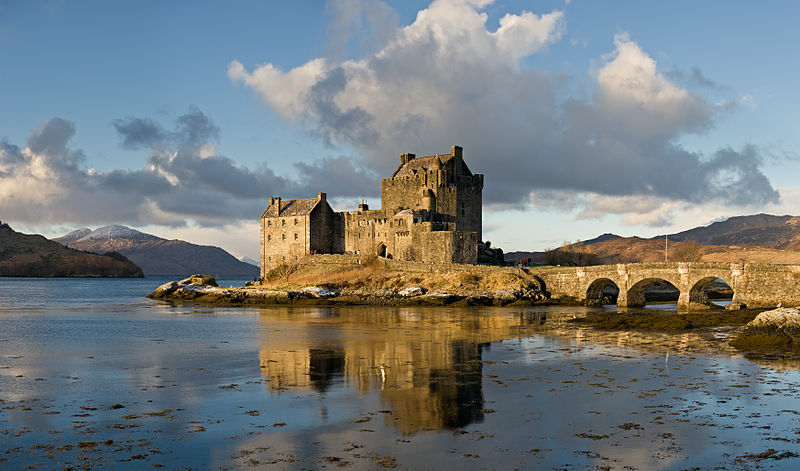
800px-Eilean_Donan_Castle,_Scotland_-_Jan_2011In the earlier thirteenth century, during the reign of Alexander II  (ruled 1214–1249), a large curtain-wall castle (wall of enciente) was constructed, enclosing much of the island. At this time the area was at the boundary of the Norse-Celtic Lordship of the Isles and the Earldom of Ross: Eilean Donan provided a strong defensive position against Norse expeditions.

Eilean Donan Castle is likely the most icon image of Scotland beloved castles. It is situated on the islet at the point where three sea lochs meet. The castle was built in the mid 13th Century, during the reign of Alexander II (1215-1250) to serve as a stronghold against Norway.


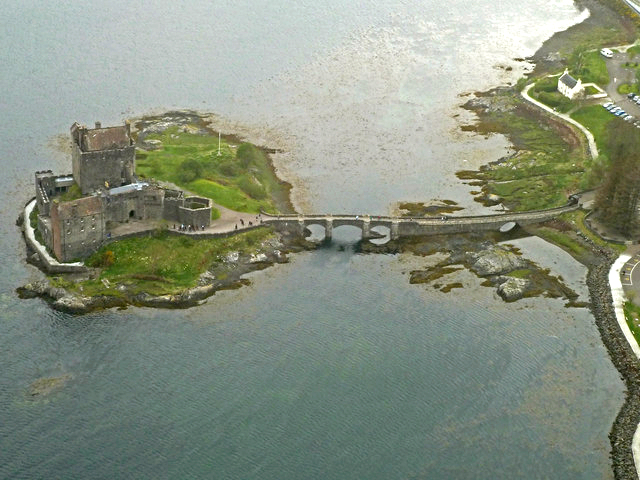
Eilean Donan (Scottish Gaelic: Eilean Donnain) is a small island in Loch Duich in the western Highland of Scotland. It lies about 1 kilometre (0.62 mi) from the village of Dornie. Eilean Donan is part of the Kintail National Scenic Area. In 2001, the island had a recorded population of just one person.

Eilean Donan (which means simply “island of Donnán”) is named after Donnán of Eigg, a Celtic saint martyred in 617. Donnán is said to have established a church on the island, though no trace of this remains. The castle was founded in the thirteenth century, and became a stronghold of the Clan Mackenzie and their allies the Clan Macrae.


The Macraes became Constables of the Castle in 1599, which they defended for over 200 years. In the early eighteenth century the Mackenzies were involved in the Jacobite rebellions, which led to the castle’s destruction by government ships in 1719. The Jacobites supported James VII, the Old Pretender, and Spanish supporters of the Jacobite cause were quartered in Eilean Donan. The English sent a small fleet to bring the rebellion under control. Outnumbered by the English troops, the Spaniards surrendered, and the building was left in ruins thanks to the English artillery rounds.

The present buildings are the result of twentieth-century reconstruction of the ruins by Lieutenant-Colonel John Macrae-Gilstrap.

A founding legend relates that the son of a chief of the Mathesons acquired the power of communicating with the birds. As a result, and after many adventures overseas, he gained wealth, power, and the respect of Alexander II, who asked him to build the castle to defend his realm.

A chief of Kintail reportedly dismissed the lower classes as superstitious fools. To show himself as superior, he set out to prove the ancient legend that said if a child drank its first drink from a skull of a raven, the child would develop powers beyond those of normal humans. From the beginning, the chief’s young son came to understand the language of birds and conversed with them.

The boy’s relationship with his self-imposing father suffered when the child grew into adulthood. The father asked his son what the starlings chattered of outside the chief’s window. However, when the young man said the starlings spoke of a day when the chief would wait upon the son, the vain chief drove his son from the family lands.

The chief’s son eventually arrived in France. The King’s peace had been greatly disturbed by a flock of sparrows. The young man offered his services to the King. The man discovered there was a feud between several species. He negotiated a peace, which silenced the angry screeching the King had experience and replaced the screeches with melodic chirruping. The King gave the young man a ship and crew.

The young man continued his journeys and was rewarded time and time again for his ability to speak to the birds. He collected gifts most wondrous. Finally, the young man arrives in a kingdom plagued by rats. The birds could not solve the kingdom’s problems, but a gift of a cat set the palace aright. The king reward the young man with a casket of gold.

Finally, the young man sets a course for Scotland and his home. He sailed into Loch Alsh with a cargo of riches. The pompous older chief offered hospitality to what he thought was a rich lord from another land. And as the starlings had prophesied years prior, the chief served his own son at table. When the young man revealed his true identity, the chief was almost struck dumb with shock.

The chief’s son had learned much in his travelers. He could speak different languages and knew the intricacies of foreign cultures. He was recognized as a great man by one and all. As such, King Alexander gave the chief’s son the honor of being the one to oversee the building of Eilean Donan’s castle, a castle to defend Kintail lands beyond from Norse attack.

aerial view

aerial view

At a later date it became a stronghold of the Mackenzies  of Kintail, originally vassals of Uilleam, Earl of Ross.  At this early stage, the castle is said to have been garrisoned by Macraes and Maclennans, both clans which were later closely associated with the Mackenzies. Traditional Mackenzie clan histories relate that Earl William sought advantage from the Treaty of Perth of 1266, by which King Magnus VI of Norway ceded the Hebrides to Scotland, and demanded that his kinsman Kenneth Mackenzie return the castle to allow his expansion into the islands; Mackenzie refused, and Earl William led an assault against Eilean Donan which was repulsed by the Mackenzies and their allies.

Posted in British history, castles, legends and myths, real life tales, Scotland | Tagged , , | 1 Comment

The Fortune Hunter: A German Prince in Regency England, Hermann, Fürst von Pückler-Muskau

453px-Pückler-Muskau

Prince Hermann Ludwig Heinrich von Puckler-Muskau (born as Count Pückler, from 1822 Prince) (30 October 1785 – 4 February 1871) was a German  nobleman, who was an excellent artist in landscape gardening and wrote widely appreciated books, mostly about his travels in Europe and Northern Africa, published under the pen name of “Semilasso.”

He was born at Muskau Castle in Upper Lusatia,  then ruled by the Electorate of Saxony. He served for some time in a cavalry regiment at Dresden, and afterwards travelled through France and Italy,  often by foot. In 1811, after the death of his father, he inherited the big Standesherrschaft (barony) of Muskau. Joining the war of liberation against Napoleon I of France, he left Muskau under the General Inspectorate of his friend, the writer and composer Leopold Schefer.  As an officer under the Duke of Saxe-Weimar he distinguished himself in the field and was made military and civil governor of  Bruges.

After the war, he retired from the army and visited England, where he remained about a year, visiting Covent Garden and Drury Lane, where he admired Eliza O’Neill (an Irish actress and later baroness), studying parks and the High Society, being himself a member of it. In 1822, in compensation for certain privileges which he resigned, he was raised to the rank of “Fürst” by King Frederick William III of Prussia.

In 1817 he had married the Dowager Countess Lucie von Pappenheim, née von Hardenberg, daughter of Prussian statesman Prince Karl August von Hardenberg; the marriage was legally dissolved after nine years, in 1826, though the parties did not separate and remained on amicable terms.

Machbuba,_eine_zeitgenössische_Abbildung_um_1840

Again he visited England, where he spent nearly two years in search of a wealthy second wife capable of funding his ambitious gardening schemes and became something of a celebrity in London society. On his return home he published a not entirely frank account of his time in England. The book was an enormous success in Germany, and also caused a great stir when it appeared in English as Tour of a German Prince (1831-32). Being a daring character, he subsequently travelled in Algeria, Tunisia, Egypt, and Sudan and explored ancient Nubia. He is documented as of having visiting the site of Naqa in modern day Sudan in 1837. At the slave market of Cairo he was enchanted by an Ethopian girl in her early teens whom he promptly bought and named Mahbuba (“the beloved”). Together they continued a romantic voyage in Asia Minor and Greece. In Vienna, he introduced Mahbuba to the European high scociety, but the girl developed tuberculosis and died in Muskau in 1840. Later he would write that she was “the being I loved most of all the world.”

He then lived at Berlin and Muskau, where he spent much time in cultivating and improving the still existing Muskau Park.  In 1845 he sold this estate, and, although he afterwards lived from time to time at various places in Germany and Italy, his principal residence became Schloss Branitz near Cottbus, where he laid out another splendid park.

Politically he was a liberal, supporting the Prussian reforms of  Freiherr vom Stein. This, together with his pantheism and his extravagant lifestyle, made him slightly suspect in the society of the Biedermeier period.

In 1863 he was made an hereditary member of the Prussian House of Lords, and in 1866 he attended — by then an octogenarian — the Prussian general staff in the Austro-Prussian War. In 1871 he died at Branitz, and, in accordance with instructions in his will, his body was cremated.

As a landscape gardener, he is considered to be an outstanding artist on a European level.

As a writer of books of travel he holds a high position, his powers of observation being keen and his style lucid, animated and witty. This is most evident in his first workBriefe eines Verstorbenen (4 vols, 1830–1831), in which he expresses many independent judgments about England and other countries he visited in the late 1820s and about prominent people he met. Among his later books of travel are Semilassos vorletzter Weltgang (3 vols, 1835), Semilasso in Afrika (5 vols, 1836), Aus Mehemed Ali’s Reich (3 vols, 1844) and Die Rückkehr (3 vols, 1846–1848). He is also the author of the still famous Andeutungen über Landschaftsgärtnerei (1834, “Remarks on landscape gardening”), the only book he published under his own name.

There are as well drawings and caricatures by his hand, but he did not publish them.

His name is still remembered in German cookery through a sweet called Fürst-Pückler-Eis (Prince Pückler ice-cream), very similar to Neapolitan ice cream – not invented by him, but named in his honour.

Excerpt from Pukler-Muskau’s “Letters”

Holyhead, August 9th,—Evening

I have had a bad night, a high fever, bad weather, and rough roads. The latter misery I incurred by choosing to visit the celebrated ‘Paris mines’ in the Isle of Anglesea. This island is the complete reverse of Wales; almost entirely flat—no trees, not even a thicket or hedge—only field after field. The copper-mines on the coast are, however, interesting. My arrival having been announced by Colonel H——, I was received with firing of cannon, which resounded wildly from the caves beneath. I collected several beautiful specimens of the splendid and many-coloured ore: the lumps are broken small, thrown into heaps, and set on fire like alum ore, and these heaps left to burn for nine months: the smoke is in part caught, and forms sulphur. It is curious to the uninitiated, that during this nine months’ burning, which expels all the sulphur by the force of the chemical affinity created by the fire, the pure copper, which had before been distributed over the whole mass, is concentrated, and forms a little compact lump in the middle, like a kernel in a nutshell. After the burning, the copper, like alum again, is washed; and the water used for the purpose is caught in little pools: the deposit in these, contains from twenty-five to forty per cent. of copper; and the remaining water is still so strongly impregnated, that an iron key held in it, in a few seconds assumes a brilliant copper colour.

The ore is then repeatedly smelted, and at last refined; after which it is formed into square blocks, of a hundred pounds weight, for sale; or pressed by mills into sheets for sheathing vessels. The ore is then repeatedly smelted, and at last refined; after which it is formed into square blocks, of a hundred pounds weight, for sale; or pressed by mills into sheets for sheathing vessels. A singular

circumstance is observable at the founding, which is a pretty sight. The whole mass flows into a sand-bed or matrix, divided into eight or ten compartments, like an eating-trough for several animals: the divisions do not quite reach the height of the exterior edge; so that the liquid copper, which flows in at one end, as soon as the plug is drawn out must fill the first compartment before it reaches the second, and so on. Now the strange thing is, that all the pure copper which was contained in the furnace remains in this first compartment,—the others are filled with slag, which is only used for making roads. The reason is this;—the copper ore contains a portion of iron, which is magnetically affected: this holds the copper together, and forces it to flow out first. Now as they know pretty accurately, by experience, what proportion of pure copper any given mass of ore will contain, the size of these compartments is regulated so as exactly to contain it. The manager, a clever man, who spoke half Welsh half English, told me that he had first invented this manner of founding, which spared much trouble, and that he had taken out a patent for it. The advantages which arise from it are obvious; since without these divisions or compartments, the copper, even if it flowed out first, must afterwards have spread itself over the whole mass. The Russians, who in matters of trade and manufacture suffer nothing to pass neglected, soon sent a traveller hither to make himself master of the process. It was not in the slightest degree concealed from him;—indeed it is but justice to say that the masters of all commercial and manufacturing establishments in England are generally very liberal.

While I was yet standing by the furnace, an officer made his appearance, and in the name of the brother of Colonel H——, who is likewise a colonel, and commands a Hussar regiment in this neighbourhood, invited me to dine and spend the night. I was, however, too tired and unwell to venture on the exploit of a mess-dinner in England; where, in the provinces at least, the wine is dealt out in right old English measure. I wished too to sail by the packet of to-night; and therefore gratefully declined the invitation, and took the road to Holyhead, where I arrived at ten o’clock.

My usual ill luck at sea did not permit me to sail,—the night was so rough that the packet went off without passengers. I staid behind, not very unwillingly, to take another day’s rest in a comfortable inn.

Posted in British history, Living in the Regency, real life tales, Regency era, White Soup Press | Tagged | Comments Off on The Fortune Hunter: A German Prince in Regency England, Hermann, Fürst von Pückler-Muskau

The Scottish Legend of True Thomas

Thomas Learmonth (c. 1220 – c. 1298), better known as Thomas the Rhymer or True Thomas, was a 13th century Scottish laird and reputed prophet from Earlston (then called “Erceldoune”), which is situated on the Scottish border, not far from the towns of Galashiels and Melrose. He is also the protagonist of the ballad “Thomas the Rhymer” (Child Ballad number 37). He is also the probable source of the legend of Tam Lin. Thomas is said to have lived in various parts of the country. According to the most famous legend associated with Learmont, the man was not born with the power of prophesy, but acquired it after visiting the queen of the fairies.

Sir Thomas was born in Erceldoune (also spelled Ercildoune – presently Earlston), Berwickshire, sometime in the 13th century, and has a reputation as the author of many prophetic verses. Little is known for certain of his life but two charters from 1260–80 and 1294 mention him, the latter referring to “Thomas de Ercildounson son and heir of Thome Rymour de Ercildoun.”

Popular esteem of Thomas lived on for centuries after his death, to the extent that  fabricated prophecies have been attributed to Thomas in order to further the cause of Scottish independence. His reputation for supernatural powers for a time rivalled that of Merlin.  Thomas became known as “True Thomas,” supposedly because he could not tell a lie. Popular lore recounts how he prophesied many great events in Scottish history, including the death of Alexander III of Scotland.  

Thomas’ gift of prophecy is linked to his poetic ability. It is not clear if the name Rhymer was his actual surname or merely a soubriquet. He is often cited as the author of the English Sir Tristrem, a version of the Tristram legend, and some lines in  Robert Mannyng’s Chonicle may be the source of this association.

According to the legend, Thomas had been walking in the Eildon Hills and stopped to rest by Huntly Water under the shade of the Eildon Tree. While he dozed, a woman dressed in green silk and velvet and riding a white horse appeared nearby. The lady introduced herself as the Queen of Elfland. The fairy queen dared Thomas to kiss her, which he gladly took up the challenge. The queen said she would take Thomas to Elfland, where he would serve the fairy queen for 7 years.

Along the way, the queen offered to show Thomas three different wonders: three roads each going a different direction. The queen pointed to a road overgrown with briars and thorns. She explained few men chose to travel upon the Road to Righteousness. The second road was smooth and lined with sweet smelling lilies. It was the Road to Hell disguised as the Road to Heaven. The final road the one to Elfland. The queen warned that if Thomas spoke when they were in Elfland, he would never be able to return home. He must keep a vow of silence.

They traveled for many hours, even crossing the river which drains away all the blood shed upon the earth. They also visited a garden ladened with ripe fruit. The queen fed Thomas an apple, saying after he had eaten it, he would forever speak the truth.

His years of service passed quickly, and Thomas returned to his homeland, where he became a great prophet. Eventually, the Fairy Queen returned for Thomas. A villager reported seeing a white hart and a white kind coming from the nearby forest, and the people asked Thomas to predict what the signs meant. However, Thomas said nothing more than a fond farewell. He walked away with the two creatures, never to be seen again.

Prophecies attributed to Thomas:

  • “On the morrow, afore noon, shall blow the greatest wind that ever was heard before in Scotland.”
This prophecy predicted the death of Alexander III; the exact nature of the blow became apparent only with the king’s death the next day.
  • “As long as the Thorn Tree stands
Ercildourne shall keep its lands.”
Of this prophecy, Barbara Ker Wilson writes: In the year the Thorn Tree did fall, all the merchants of Ercildourne became bankrupt, and shortly afterwards the last fragment of its common land was alienated.
  • “When the Cows of o’ Gowrie come to land
The Judgement Day is near at hand”
The Cows of Gowrie, two boulders near Invergowrie protruding from the Firth of Tay, are said to approach the land at the rate of an inch a year.
  • “York was, London is, and Edinburgh shall be
The biggest and bonniest o’ the three”
  • “At Eildon Tree, if yon shall be, a brig ower Tweed yon there may see.”
  • “Fyvie, Fyvie thou’ll never thrive,
As long as there’s in thee stones three;
There’s one in the oldest tower,
There’s one in the lady’s bower,
There’s one in the water-gate,
And these three stones you’ll never get.”
To this day, only one of the stones has been found. Since 1885 no eldest son has lived to succeed his father
Posted in British history, legends and myths, real life tales, Scotland | Tagged , , , | Comments Off on The Scottish Legend of True Thomas

Regency Scandal Most Sensational

In the spring of 1809, Lady Charlotte Wellesley eloped with Lord Paget. Lady Charlotte was the sister-in-law of the Duke of Wellington and the mother of four children. Lord Paget was the heir to the Earl of Uxbridge and a cavalry officer. Unfortunately, Paget was still married to Lady Caroline Villiers, the daughter of Lady Jersey, the Prince Regent’s ex-mistress. London could speak of nothing else.

Field Marshal Henry William Paget, 1st Marquess of Anglesey, was a British military leader and politician, who lead the charge of the heavy cavalry during the Battle of Waterloo. Born in London, as Henry Bayly, Paget was the eldest son of Henry Paget, 1st Earl of Uxbridge. Paget served well during the Peninsular War, but after his liaison with Lady Charlotte, the wife of Henry Wellesley, his service with Wellington, Wellesley’s brother, became problematic.

In 1810, his wife, Lady Caroline, sought a divorce in Scotland (where such matters were easier to do).

Prior to the divorce, Paget and Lady Charlotte were gossip fodder. In Hary-O: The Letters of Lady Harriet Cavendish, 1796-1809, Harriet Granville (the former Lady Harriet Cavendish, daughter of William Cavendish, 5th Duke of Devonshire and Lady Georgiana Spencer) wrote of the spectacle: “London is full of impenetrable fog and horror at Lady Paget’s elopement – he went off the day before yesterday with Lady Charlotte Wellesley. It is in every way shocking and unaccountable. He has left his beautiful wife and 8 or 9 children and she a husband whom she married about five years ago, for love, and who is quite a Hero de Romance in person and manner, with 4 poor little children.”

To fuel the fire of the scandal, Paget left behind  letter in which he praised his wife, but said, “[H]e could not resist taking the step he had done.” Paget’s family blamed Lady Charlotte, calling the woman a maudite sorciéré. 

In An Elegant Madness, it says, “The Duke of Wellington felt that Lady Charlotte’s brother, Lord Cadogan, should have been able to stop her living ‘and performing’ with a divorced man, and concluded that ‘poor Henry will again be dragged through the Mire & will marry this blooming Virgin as soon as she will have been delivered of the consequences of her little amusements.'”

When it became known Lady Paget was also having an affair – hers with the Duke of Argyll – a double divorce and two weddings resolved the scandal.

Marriages and children

Lord Anglesey was first married on 5 July 1795 in London to Lady Caroline Elizabeth Villiers (16 December 1774 – 16 June 1835), daughter of George Villiers, 4th Earl of Jersey and Frances Villers, Countess of Jersey. They had eight children:

  • Lady Caroline Paget (6 June 1796-12 March 1874). Married Charles Gordon-Lennox, 5th Duke of Richmond. 
  • Henry Paget, 2nd Marquess of Anglesey (6 July 1797- 7 February 1869). Married Eleanora Campbell, granddaughter of  John Campbell, 5th Duke of Argyll. 
  • Lady Jane Paget (13 October 1798-28 January 1876). Married Francis Conyngham, 2nd Marquess Conyngham.  
  • Lady Georgina Paget (29 August 1800- 9 November 1875). Married Edward Crofton, 2nd Baron Crofton. 
  • Lady Augusta Paget (26 January 1802- 6 June 1872). Married Arthur Chichester, 1st Baron Templemore.  
  • Captain Lord William Paget RN ( 1 March 1803-17 May 1873). Married Frances de Rottenburg, a daughter of Francis de Rottenburg. 
  • Lady Agnes Paget (11 February 1804- 9 October 1845). Married George Byng, 2nd Earl of Strafford. They were parents to George Byng, 3rd Earl of Strafford, Henry Byng, 4th Earl of Strafford and Francis Byng, 5th Earl of Strafford. 
  • Lord Arthur Paget (31 January 1805-28 December 1825).

Lord Anglesey and Lady Caroline were divorced on 29 November 1810. The same year, he married secondly to Lady Charlotte Cadogan (born 12 July 1781), former wife of Lord Henry Wellesley and daughter of  Charles Sloane Cadogan, 1st Earl Cadogan and Mary Churchill. Mary was a granddaughter of Lady Maria Walpole, an illegitimate daughter of  Robert Walpole and Maria Skerret. They had ten children, of whom six survived infancy:

  • Lady Emily Paget (4 March 1810 – 6 March 1893). Married John Townshend, 1st Earl Sydney. 
  • Lord Clarence Paget (17 June 1811 – 22 March 1895). Married Martha Stuart, the youngest daughter of Admiral Sir Robert Waller Otway. 
  • Lady Mary Paget (16 June 1812 – 20 February 1859). Married John Montagu, 7th Earl of Sandwich. They were parents of Edward Montagu, 8th Earl of Sandwich.  
  • Lord Alfred Paget (29 June 1816 – 24 August 1888).
  • Lord George Paget (16 March 1818 – 30 June 1880). A Brigadier General of the British Army. 
  • Lady Adelaide Paget (Jan, 1820 – 21 August 1890). Married Frederick William Cadogan, a son of George Cadogan, 3rd Earl Cadogan and his wife Honoria Louisa Blake.
  • Lord Albert Paget (Dec 1821-Apr 1822)
  • Lord Albert Paget (29 May 1823-d. an infant)
  • Lady Eleanor Paget (21 May 1825-d. an infant)

Lady Anglesey died on 8 July 1853, aged 71. Lord Anglesey survived her by less than a year and died on 29 April 1854, aged 85. He was succeeded by his eldest son from his first marriage, Henry.

Regency Tidbit: When Paget’s daughter married the Duke of Richmond, Jane Austen privately criticized the union. “What can be expected from a Paget, born and brought up in the centre of conjugal infidelity & Divorces?”

Posted in British history, Jane Austen, Living in the Regency, real life tales, Regency era | Tagged , , , , , , | 2 Comments