(This interview was originally posted on Teatime Romance on March 16, 2013.)
How long have you been writing, and how did you decide this was a career you wanted to pursue?
I began my writing career in the later part of 2008. At the time, I was an English teacher at Porter Ridge High School in Indian Trail, North Carolina.
In my Advanced Placement English Language and Composition class, I was prepping my students for a study of the Romantic Period. Unlike the AP English Literature class, the Language class does not focus on literature of a particular period. Instead, students are expected to analyze and interpret writing samples and to explain the author’s use of rhetorical strategies and techniques. They also must analyze sentence structures, including appropriate use of subordination and coordination; the use of repetition, transitions, and emphasis; the effective use of rhetoric, controlled tone, voice, and appropriate emphasis through diction and sentence structure. Whatever the students read was done so to become aware of stylistic effects and writers’ linguistic choices.
 Being an Austen girl, I had chosen a study of excerpts from Jane Austen’s works so we might study the lady’s style choices, syntax, and rhetoric. I was complaining about a particular piece of Jane Austen Fan Fiction (JAFF), which had turned Fitzwilliam Darcy into a sniveling blob, loaded with Angst, with a capital “A.” Most of the students in the class had had me as their 10th Grade Honors English teacher, and we were not beyond a bit of teasing. Therefore, Will D. challenged me to “put up” or “shut up,” so to speak. Whenever my students complained, I would always tell them to be a Nike commercial and “Just Do It.” Will turned the tables: He suggested I write my own version of Pride and Prejudice. So, in the evenings, I rewrote Austen’s classic from Mr. Darcy’s point of view. When I finished chapters, I brought them to class, and students examined the writing for syntax, tone, audience, etc. They became my editors.
I took on the challenge because I felt it was important to “show” my students what was required rather than to “lecture” on the techniques. At times, I purposely made errors to see if they could decipher the mistakes and write their own analysis of the chapters. To make the experience real, I self published Darcy’s Passions, even had one of my students design the cover for the book. Then I went about my business. At the time, I was two years away from retirement, and there were more young minds to mold. Darcy’s Passions went to #8 on the Amazon sales list, and Ulysses Press contacted me about publishing the book. I am one of those freaks of nature who has not gone through multiple drafts and hundreds of rejection letters. This month I released my ninth title with Ulysses.
Tell us about your new release.
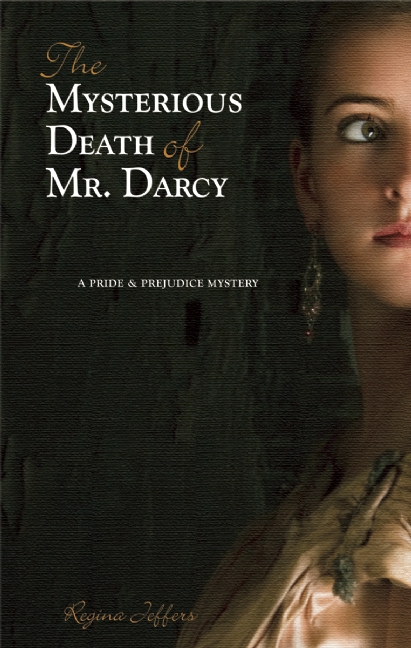
The Mysterious Death of Mr. Darcy was officially released on March 12. It is a Jane Austen-inspired cozy mystery. My Austen titles include two retellings (Darcy’s Passions and Captain Wentworth’s Persuasion), three sequels (Darcy’s Temptation, Vampire Darcy’s Desire, and Christmas at Pemberley) and three cozy mysteries (The Phantom of Pemberley, The Disappearance of Georgiana Darcy, and The Mysterious Death of Mr. Darcy).
Cozy mysteries are quite popular with intelligent women looking for a “fun read.” The defining characteristics of a “cozy” include the crime solver being a woman who is very intuitive. The setting is usually a small town or village. Many are not set in a time when CSI techniques were available, but in modern tales, the heroine is NOT a police officer or medical examiner. There is no graphic violence or profanity or explicit sex. The crime generally takes place “off stage” and death is quick. Sex happens behind closed doors. There are several twists and turns, which help to build the suspense. The emphasis of the book is placed on plot and character development.
The Mysterious Death of Mr. Darcy
 A thrilling story of murder and betrayal filled with the scandal, wit and intrigue characteristic of Austen’s classic novels
Fitzwilliam Darcy is devastated. The joy of his recent wedding has been cut short by the news of the sudden death of his father’s beloved cousin, Samuel Darcy. Elizabeth and Darcy travel to Dorset, a popular Regency resort area, to pay their respects to the well-traveled and eccentric Samuel. But this is no summer holiday. Danger bubbles beneath Dorset’s peaceful surface as strange and foreboding events begin to occur. Several of Samuel’s ancient treasures go missing, and then his body itself disappears. As Darcy and Elizabeth investigate this mystery and unravel its tangled ties to the haunting legends of Dark Dorset, the legendary couple’s love is put to the test when sinister forces strike close to home. Some secrets should remain secrets, but Darcy will do all he can to find answers—even if it means meeting his own end in the damp depths of a newly dug grave.
With malicious villains, dramatic revelations and heroic gestures, The Mysterious Death of Mr. Darcy will keep Austen fans turning the pages right up until its dramatic conclusion.
You have written in paranormal, historical romance, and Austen-inspired fiction. Is your approach different for each genre, in the manner you write, plot the book, or brainstorm ideas?
My technique remains essentially the same for each. All my novels (but two) are set in the Regency. Therefore, I concentrate on what would be realistic for that period. The book begins with research, research, and more research. That is followed by additional research during the actual writing. I look at language choices (AP English, again), historical facts, and character development. So, when I penned my Regency based vampiric novel, I started with research into the origins of vampire tales. After all, Dracula did not appear until 1897. My book was set in 1812. I could not bring in the Victorian fear of “invasion.” I used traditional tales of the Baobhan Sith, female Scottish vampires, and a Scottish folk song to tie the story together. Sometimes I spend a dozen hours researching facts, which are less than a paragraph in the finished book, but the diligence is important.
Are you more of a plotter or a pantser, or does it change from book to book?
I am very much a Pantser. I begin with a list/outline of the major events, which will lead me to the conclusion, but how I move the story along from point A to point B is often a surprise to me. The characters take on distinctiveness I did not anticipate, and changes are necessary. I use what I call the umbrella effect, with each spoke of the umbrella as a separate point in the story.
That being said, in my Regency romance series (the Realm), I have been forced to design overlapping plots. After years away from England, members of the Realm return home to claim the titles and the lives they once abandoned. Each man holds on to the fleeting dream of finally knowing love. For now, all any of them can hope is the resolutions of their previous difficulties before Shaheed Mir, their old enemy, finds them and exacts his revenge. Mir seeks a mysterious emerald, and he believes one of the Realm has it. Each book in the series centers on one of the members of the group, but the reader meets the other members playing secondary roles. Readers become invested in the group. There is more overlap in books 1 and 2, The Scandal of Lady Eleanor and A Touch of Velvet, respectively, because one never knows when a reader will join the series, but the others are unique to the individual characters. Each book ends with a “teaser” for the next in the series. Book 5, A Touch of Mercy, will be released in early May 2013.
What do you see as the challenges and successes of being traditionally published? Being self-published?
One of the issues with traditional publishing is the preconceived idea of acquisition editors as to what will sell and will not sell. It does not matter if you have written War and Peace if the editor does not think an epic, which delineates in graphic detail events surrounding the French invasion of Russia, and the impact of the Napoleonic era on Tsarist society, as seen through the eyes of five Russian aristocratic families, will sell. So, a writer should expect LOTS of rejection letters. There is also the issue of querying an agent and waiting a year or two for the book’s publication. Small presses generally release the book faster than a large press, but a self-published author has more control of the price.
Sometimes, the traditional press does not promote the book as well as the author would wish. Each press specializes in particular genres. If the book is outside of those specialties, the press’s staff does not always have the wherewithal to promote the title properly. Agents holding a title, as well as the endless rounds of editing, including the non-contractual revisions, easily frustrate authors. Often agents cannot categorize a title or decide if there is a market for it.
If one self publishes his book, the marketing falls into the author’s lap. As a self-published author, one has control over the cover art, etc. If a person is not concerned with the “validation,” which comes with the traditionally published moniker, self-publishing is great. It can play to those with an entrepreneurial streak or a marketing background. One who self publishes keeps a bigger share of the profits. Traditional publishers tend to pay a 6-15% royalty, where a self-published author can keep up to 70% of the profits.
Whether one self-publishes or traditionally publishes, the primary responsibility for promoting the book lies in the hands of the author. Even if one self publishes, it is important to seek out professional editors, book designers, etc. I freaked out when I reached the end of a poorly edited eBook to find the author’s BETA readers’ comments in the last 10 pages. Not every opportunity is open to self-published authors. Recently, fellow Austen Author Abigail Reynolds and I were added to the program at the Decatur Book Festival because we were traditionally published. The Jane Austen group from Georgia hosted 15 Austen authors that day. Many of the others could not participate in the panel discussion because they were self-published. Whatever the author chooses – self-publishing, small press, or big six publishers – one must remember the need is to write, write, and write some more. It is not the dream of the big contract.
Can you tell us a bit about your upcoming projects?
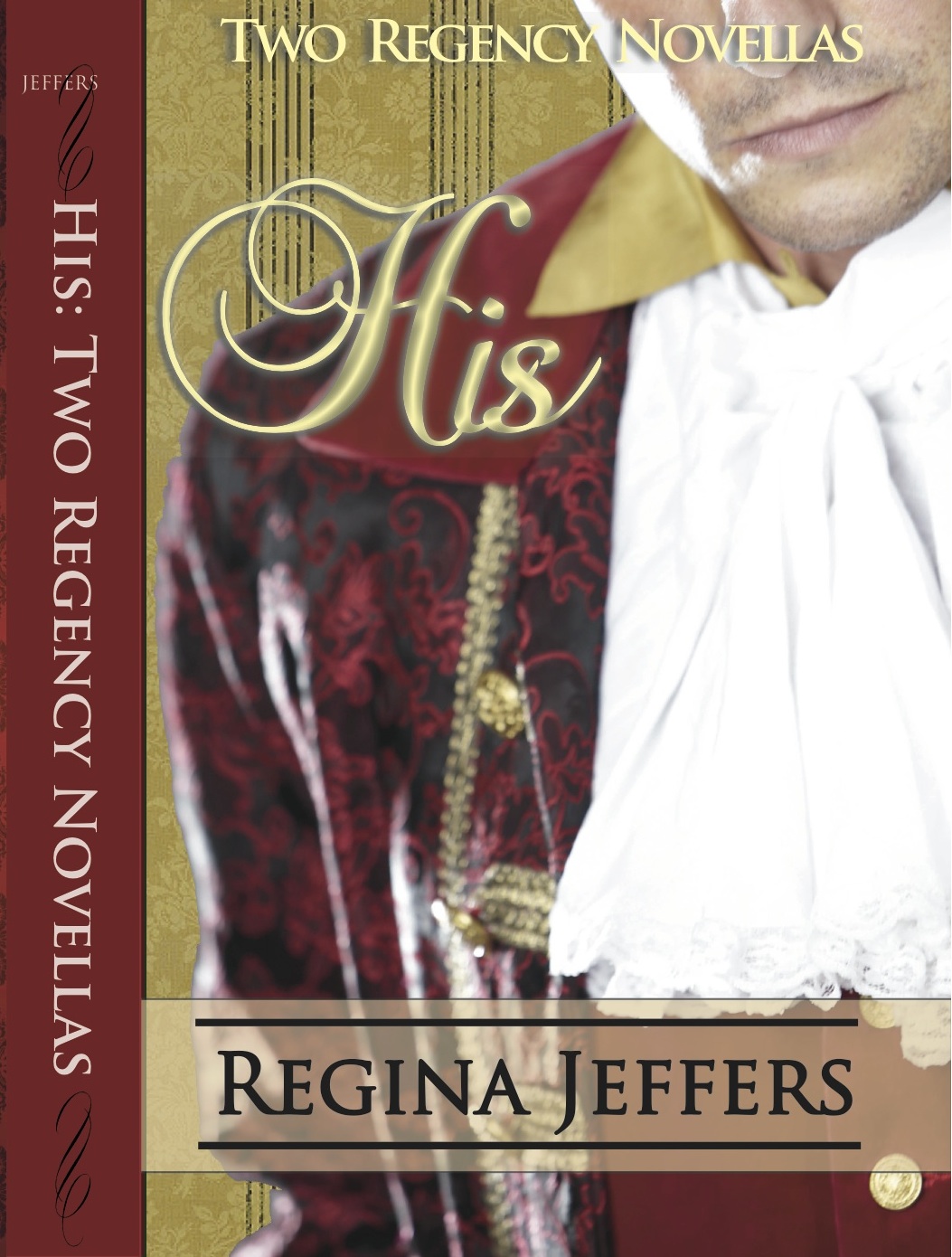
I am working on book 5 of the Realm series. It is entitled A Touch of Mercy. I hope for an early May release. That book will be followed by book 6, A Touch of Love in November/December. The series will end with a collection of two novellas in February 2014. This past February, I released His: Two Regency Novellas. That collection dealt with two of the minor characters from the Realm series. Lawrence Lowery and Adam Lawrence earned their own stories. The “Hers” collection scheduled for next February will give readers John Swenton’s story (the last of the Realm members) and a novella, which shares the truth of the missing emerald.
In addition, Ulysses Press and I have agreed to another Austen title for early 2014. We are still playing with ideas.
As we are about tea, what is your favorite tea(s) to drink?
First, I must say I am a big tea drinker. In fact, in my 65 years, I have had a total of two cups of coffee. I drink decaf tea all day. I brew my choices with the proper leaves and my trusty infuser. Generally, I drink green tea, licorice tea, or ginger tea.
Have you ever hated something you have written? A character who did not live up to your expectations?
For book 3 of the Realm series, I planned to deal with the Aldridge twins. The teaser at the end of A Touch of Velvet set up the story lines for Cashémere Aldridge and her twin Satiné. Cashé was to end up with Marcus Wellston in Book 3, which she did, and Satiné with Aidan Kimbolt in Book 4. However, by the time I had finished A Touch of Cashémere, I was no longer so keen on matching Satiné with Kimbolt, a viscount I dearly loved as a character. Satiné lacked the backbone found in her twin, and I began to feel she needed a dose of reality before she could be a heroine. (Yes, I know I created her without the gumption to face the hard facts of life. Yet, I am of the persuasion that sometimes a character needs to step forward and carve out a story line for himself/herself.) So, after considering killing Satiné off, I sent the girl to the European continent to recover from the scandal she faced. Miss Satiné will reappear in the series finale, but I am still not sold on her as a mate for any of the Realm members.
 On the other hand, Adam Lawrence, the future earl of Greenwall, has grown on me. Lawrence is that character who plays the role of a “walk through” character, the one who ties the stories together. He has appeared in such roles in A Touch of Velvet, A Touch of Grace, His American Heartsong, etc. He was a major character in my Austen-inspired cozy, The Phantom of Pemberley, assisting Fitzwilliam Darcy in solving the mystery plaguing his estate. At the end of that book, readers wanted to know what happened next between Adam and his mistress, Christine Donnell. Therefore, I gave Lawrence his own HEA in His Irish Eve, one of the two novellas in my February 2013 release of HIS.
How do you get past writer’s block or distractions like the Internet? Truthfully, I despise how much time I spend on the Internet because it takes me away from enjoying my time working in my yard or playing with my grandson, but Social Media is a necessary evil in promoting one’s books and keeping a public presence. In this Internet Age, readers want closer connections to their favorite authors. I answer a variety of questions from readers on a daily basis: When will the next Realm book be out? Are you really killing Mr. Darcy? Etc. If I did not take the time to respond, then I can “kiss” that reader goodbye.
As far as working my way through writer’s block, I simply allow the book to sit. Until I receive inspiration (usually in the middle of the night), I work on other projects: maintaining my personal blog or adding posts to two group blogs in which I participate; outlining upcoming projects; gathering receipts for tax purpose; or simply enjoying pleasure reading. The longest I have ever had to wait for a “glimmer” of an idea to make an appearance was 10 days.
What was your favorite book from childhood?
I cannot recall any specific titles from my childhood. My mother placed books before me when I was but a babe. I was in school at age three, graduated from high school at age 15. I have always been a reader. I first read Pride and Prejudice at age 12; however, when I think back on those days, I can recall how enthralled I was with Around the World in Eighty Days. I loved how Jules Verne provided Phileas Fogg with a believable means to win the race. I reread it several times. It was when I became aware of how science fiction could easily become science fact.
 Author Bio:
Regina Jeffers, a public classroom teacher for thirty-nine years, considers herself a Jane Austen enthusiast. She is the author of several Austen-inspired novels, including Darcy’s Passions, Darcy’s Temptation, Vampire Darcy’s Desire, Captain Wentworth’s Persuasion, The Phantom of Pemberley, Christmas at Pemberley, The Disappearance of Georgiana Darcy, Honor and Hope, and The Mysterious Death of Mr. Darcy. She also writes Regency romances: The Scandal of Lady Eleanor, A Touch of Velvet, A Touch of Cashémere, A Touch of Grace, and The First Wives’ Club. A Smithsonian Presenter, Time Warner Star Teacher, and Martha Holden Jennings Scholar, Jeffers often serves as a consultant in language arts and media literacy. Currently living outside Charlotte, North Carolina, she spends her time with her writing, gardening, and her adorable grandson.
www.rjeffers.com
https://reginajeffers.wordpress.com
http://austenauthors.net
Twitter – @reginajeffers https://twitter.com/reginajeffers
Facebook – Regina Jeffers https://www.facebook.com/regina.jeffers.9
(Books available from Amazon, Barnes & Noble, Books-a-Million, Joseph Beth, and Ulysses Press.)
Awards:
The Phantom of Pemberley – SOLA’s Fifth Annual Dixie Kane Memorial Awards – 3rd Place – Romantic Suspense
Darcy’s Temptation – 2009 Booksellers’ Best Award Finalist – Long Historical
The Scandal of Lady Eleanor – Write Touch Readers’ Award – 2nd Place – Historical Romance
A Touch of Grace – SOLA’s Seventh Annual Dixie Kane Memorial Awards – 3rd Place – Historical Romance; 2012 Orpheus Award, 2nd Place in Historical Fiction
The First Wives’ Club – SOLA’s Seventh Annual Dixie Kane Memorial Awards – Honorable Mention – Historical Romance
Christmas at Pemberley – 2011 Booksellers’ Best Award Finalist – Inspirational Romance; Runner-Up in General Fiction for the New England Book Festival