On the 7th Day of Christmas (Jane Austen Style)

I have included this tale in the past, but it’s back for a repeat…

images-6
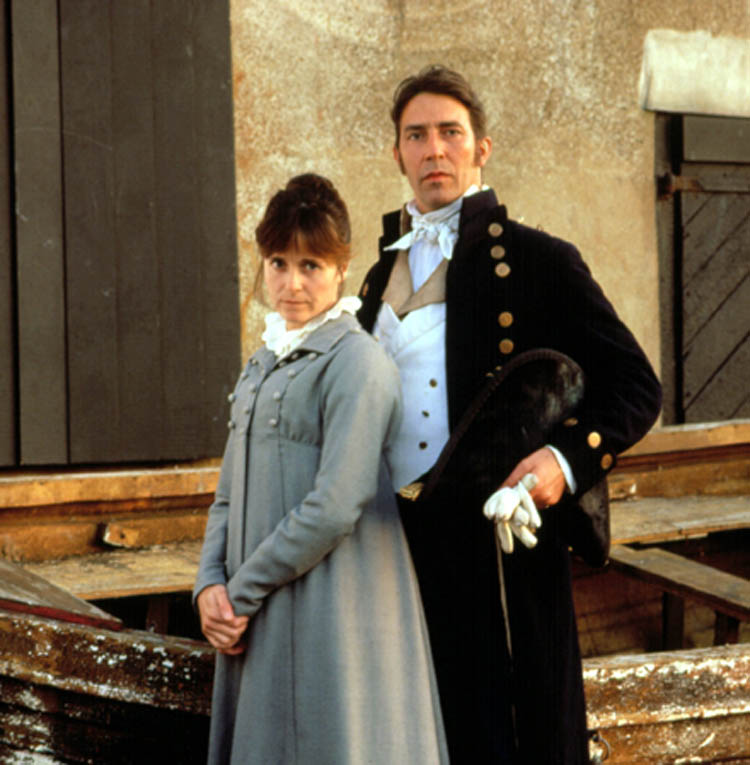
On the seventh day of Christmas, Jane Austen gave to me,
Seven Austen Siblings

Six Classic Novels
F-i-v-e Bennet Sisters
Four Abbey Tilneys
Three Sailing Captains
Two Dashing Colonels
And a love for Mr. Dar…cy

Posted in holidays, Jane Austen, Uncategorized | Tagged | Comments Off on On the 7th Day of Christmas (Jane Austen Style)

The Border Wars Between England and Scotland

400px-watharden The political struggle that has dominated much of England/Scotland’s history was often a result of the border wars. In Elizabethan times the Anglo-Scottish border counties, especially Northumberland, were the home of lawless clans who spent their lives raiding and marauding. The Border Reivers were not necessarily men of lower class. In fact, many were members of the Realm. They were excellent fighters and knew how to survive in a desolate land.

From BBC Home, we find that “Reiv” means to steal. The Reiver period is roughly categorised as 1450 – 1610. The movement came to its height in the late 1500′s and ended around 1610. The Reiver history is a mixture of fact and folklore. The English crown destroyed almost all of the documentation relating to Reiver life and so the Reiver’s story has passed down through oral history and folk traditions, rather than formal documentation. As a result, it is hard to untangle the mythological from the material when describing the Reiver movement.”

Following the Cheviot Hills, a bleak line of ridges and valleys that forms the border between England and Scotland, was the land upon which much blood was shed. Hadrian’s Wall, built by the Romans from Solway Firth to Berwick, never successfully kept either nation apart. The Chevoits sport peat bogs, broad rivers, hidden valley, salt marshes, and wooded areas. Raiding was an important way of life for those who lived on the borders. Neither treaties nor truces could prevent the continual struggle to survive in this desolate area. The purveyor of the strongest sword ruled the land.

220px-black_middens_bastle_-_geograph-org-uk_-_1224658 The Borders were not the romantic lands often portrayed in many current novels. It was a cruel, brutal land. The times were peppered with feuds between families. Clan loyalties were stronger than allegiance to either crown. Intermarriages brought about new alliances, but what really tied the area together was the geography, the belief in independence, and the society in which this people lived. English fought Scots, but they also fought Englishmen. The same held true for the Scotsmen. This created a dual nationality among men who lived along the Cheviot Hills. Not spoken of openly, it would not be unusual for the English to share “the spoils” with their Scottish brothers, or vice versa.

Autumn brought an increase in activity for the reivers. These families were often nomads, of sorts. The houses were of the type that they could be moved at a moment’s notice. We must remember that these people were violent, aggressive, and often ruthless, but they had a “sense of honor.” They consider reiving a way of life, but murder was looked down upon (even during a raid) unless there was no other option. A reiver’s object was to make a quick strike, plunder his enemy’s land, and return with his loot in tact – all this without loss of life, if possible.

400px-hermitage_castle_062 Using a series of beacons as warning signals, the retreat was the most risky part of a reiver’s foray. If he managed to avoid the local watches, the warden’s troopers, the paid militia, the broad rivers and mossy bogs, he might fall victim to the Hot Trod, the legal pursuit of the reivers, who were loaded down from their loot and by driving stolen cattle and sheep to their own keeps. During the Hot Trod, all male neighbors, between the ages of 16 and 60 of the victim, were required by law to join in the pursuit of the attackers. The posse also had the legal right to recruit others along the way. If a person refused to aid in the pursuit, he could be considered a traitor and put to death.

David Simpson of The Roots of the Region website says, ”George M Trevelyan the great British historian, (a Northumbrian) superbly summed up the nature of the Border Reivers and their ballads when he wrote;

400px-reivers_raid_on_gilnockie_tower‘They were cruel,coarse savages, slaying each other like the beasts of the forest; and yet they were also poets who could express in the grand style the inexorable fate of the individual man and woman, the infinite pity for all cruel things which they none the less inflicted upon one another. It was not one ballad- maker alone but the whole cut throat population who felt this magnanimous sorrow, and the consoling charms of the highest poetry.’ Many of the Border Ballads still survive today, due to the avid collecting of the famous Border poet, Sir Walter Scott (1771-1832), himself the descendant of a famous border clan.”

Border Clans included the Armstrongs, Bells, Cecils, Croziers, Dodds, Douglases, Elliotts, Fenwicks, Forsters, Grahams, Homes, Howards, Irvines, Johnstones, Kerrs, Maxwells, Nixons, Robsons, Scotts, Storeys, and Taits.

A superb source that summarizes and explains many of the key issues of the Border Wars is The Border Reivers.

JeffersDofGDThe remnants of the reiver huts that were used as part of the “escape routes” became part of my Austenesque novel, The Disappearance of Georgiana Darcy, which was released in March 2012. In researching these border wars for this novel, I became quite enthralled with the story lines.

ATOCcropI also used the “border wars” as part of the backdrop for the rescue of Cashémere Aldridge by the Earl of Berwick in book 3 of my highly popular Realm series, A Touch of Cashémere. Berwick’s estate was once part of Scotland, but now sits on the English side of the border.

Posted in British history, buildings and structures, castles, Great Britain, legends and myths, political stance, real life tales, religion, royalty, Scotland | Tagged , , , , , | 2 Comments

On the 6th Day of Christmas (Jane Austen Style)

I have posted this rhyme previously, but it’s back for a repeat…
images-6
(Sung to the tune of “The Twelve Days of Christmas”)

On the sixth day of Christams, Jane Austen gave to me

Six Classic Novels
F-i-v-e Bennet Sisters
Four Abbey Tilneys
Three Sailing Captains
Two Dashing Colonels
And a love for Mr. Dar…cy.

Posted in holidays, Jane Austen | Tagged | Comments Off on On the 6th Day of Christmas (Jane Austen Style)

On the 5th Day of Christmas (Jane Austen Style)

I have posted this rhyme previously, but it’s back by popular demand.
images-6

(Sung to the tune of “The Twelve Days of Christmas”)

On the fifth day of Christmas, Jane Austen gave to me,
F-i-v-e … Bennet Sisters
Four Abbey Tilneys
Three Sailing Captains
Two Dashing Colonels
And a love for Mr. Dar…cy.

Posted in holidays, Jane Austen | Tagged , | Comments Off on On the 5th Day of Christmas (Jane Austen Style)

On the 4th Day of Christmas (Jane Austen Style)

I have posted this rhyme previously, but many have asked for it again.

images-6

(Sung to the tune of “The Twelve Days of Christmas”)

On the fourth day of Christmas, Jane Austen gave to me,
Four Abbey Tilneys
Three Sailing Captains
Two Dashing Colonels
And a love for Mr. Dar…cy.

Posted in holidays, Jane Austen | Tagged , | 2 Comments

UK Regions: Penrith, Cumbria

In my upcoming release, A Touch of Honor (Book 7 in the Realm Series), John Swenton travels to Penrith to meet with John Loudon McAdam (see December 19, 2013 post). I have discovered many interesting details of the area, and I thought to share them with you.

Penrith Castle 1772

Penrith Castle 1772

Penrith is a market town and in the county of Cumbria, England. Penrith lies less than 3 miles (5 km) outside the boundaries of the Lake District National Park. Historically a part of Cumberland, the local authority is Eden District Council, which is based in the town. Penrith was formerly the seat of both Penrith Urban and Rural District Councils. Penrith has no town council of its own, and is an unparished area.

It is in the Eden Valley, just north of the River Eamont. Other local rivers bounding the town are the River Lowther and the River Petteril. A partially man-made watercourse, known as Thacka Beck, flowing through the centre of the town, connects the Rivers Petteril and Eamont. For many centuries, the Beck provided the town with its main water supply. Thacka Beck nature reserve provides flood storage which protects homes and businesses in Penrith.

History
Toponymy
It is generally accepted that the name Penrith is of Cumbric origin, though the exact etymology of the name has been debated.

Several toponymists favour a derivation from the local equivalents to the Welsh or Cumbric pen ‘head, chief’ (both noun and adjective) + Cumbric ‘rid’, Welsh rhyd ‘ford’. On this basis, the name would therefore mean ‘chief ford,’ ‘hill ford’ or Whaley’s suggestion: ‘the head of the ford’ or ‘headland by the ford.’

Objections to this theory have been raised on the grounds that the present town of Penrith lies around 1 mile from the nearest crossing point on the River Eamont at Eamont Bridge. An alternative has been suggested consisting of the same pen element meaning ‘hill’ + the equivalent of Welsh rhudd ‘red.’ The name ‘red hill’ may refer to the large Beacon Hill to the north east of the current town. There is also a place called ‘Redhills’ to the south west near the M6 motorway.

Archaeology
Excavation of a section of the Roman road from Manchester to Carlisle in advance of an extension to Penrith Cemetery showed that the road survived better at the edges of the field. The cobble and gravel surfaces appeared to have been entirely ploughed out at the centre. The road was constructed by excavating a wide, shallow trench below the level of subsoil. Large cobbles were probably obtained from nearby, as they did not appear frequently within the subsoil in the excavated area. The cobbles were added to the excavated subsoil, and this was dumped back into the cut to form a stable foundation, which was raised in the centre of the road to form a camber.

Divisions and Suburbs
Castletown

Castletown is the area to the west of the railway line and includes the Gilwilly Industrial Estate and part of the Penrith or Myers Industrial Estate. The area – which was originally built to house workers on the railway line – mostly consists of late 19th and early 20th century housing (mainly terraced) including some council housing but in recent years modern housing developments such as Greystoke Park, Castletown Drive and Castle Park have sprung up.

There was until March 2010 a pub in the suburb, The Castle Inn and in previous years there was a sub-postoffice, Co-op store and other shops all now closed. Until the 1970s Castletown had its own church, St Saviour’s in Brougham Street which acted as a chapel of ease to Penrith’s parish church of St Andrew.

The suburb has a community centre on the recreation ground at Gilwilly and did until recently hold an annual gala day and parade throughout Penrith. At one time in the mid 20th century elections were held amongst regulars at the Castle pub to find a Mayor of Castletown. There is a long standing rivalry between the Castletown and Townhead districts.

Townhead
Townhead is the general name for the northern area of the town, which also includes the Fair Hill district and the Voreda Park or Anchor housing estate.

The main part of area is built along both sides of the A6 road heading up the hill in the direction of Carlisle. The road is streetnamed as Stricklandgate and Scotland Road but on maps dating before the mid 19th century was just marked as Town Head.

Town Head was one of the 7 townships or constablewicks that the ancient parish of Penrith was divided into the others were Middlegate, Burrowgate, Dockray and Netherend within the town proper and Plumpton Head and Carleton outside the town.

New Streets
The New Streets is a name for the area between Townhead and Scaws on the side of the Beacon Hill (or Fell) which consists of steep streets of some terraced housing but mainly large detached and semi detached houses mostly laid out in the late 19th century going up the hill. The streets are – from north to south – Graham Street, Wordsworth Street, Lowther Street, and Arthur Street. The term is sometimes extended to include Fell Lane (which is actually the ancient east road from Penrith town centre leading to Langwathby), and Croft Avenue and Croft Terrace (dating from c.1930). However, the late date of the development of the latter streets place them outwith the traditional definition of the term. At the foot of the streets is Drovers Lane which is sub-divided along its entire length into Wordsworth Terrace, Lowther Terrace, Bath Terrace, Arthur Terrace, Lonsdale Terrace and finally Meeting House Lane. Running along the top of the streets is Beacon Edge from which spectacular views can be seen over the town and towards the Lake District. Until about the turn of the 20th century, Beacon Edge was known as Beacon Road. As well as the streets going up the fellside there are some that connect the streets such as Beacon Street and smaller housing developments in the gaps between the individual streets. The fellside is known to have been used as a burial ground for victims of the many attacks of plague which struck Penrith down the centuries, and there are also areas which still bear the names of the farming which took place in the area. For example, a now wooded enclosed area on Fell Lane is still known as ‘the Pinfold’ (or Pinny) and was used to house stray animals until their owner paid a fine to release them. Also, a lane off Beacon Edge is still known as ‘Intack Lane’ (that is, the lane to farmed land). Most of the land that formed the “intack” itself was used to form Penrith Cemetery.

Scaws
The Scaws Estate was first built by Penrith Urban District Council almost immediately after World War II on land previously known as The Flatt Field and Scaws Farm which formed part of the Lowther Estates. Scaws Farm is now known as Coldsprings Farm. The name was changed following a murder which took place at the farm.

In later years some private housing was built on the higher parts of the estate.
Beaconside Infants and Junior Schools are located in the centre of the estate and there were at one time 3 corner shops and a launderette in the area.

Adjoining Scaws are the privately owned Barcohill and Meadow Croft housing estates.

Carleton
Carleton, once a separate settlement, is the area of Penrith that has seen the most growth of housing in the past 30 years.

Carleton Village itself is a small line of houses along one side of the A686 road that forms part of the boundary of the town’s built up area; at the junction of the A686 and Carleton Road (formerly the A66 road) is the Cross Keys Inn.

On the other side of the road and to the east of Carleton Road is the large High Carleton housing estate which was started in the 1960s and is still growing. The estate is subdivided into the Frenchfield Way/Gardens area, the original High Carleton area, Carleton Park or Parklands, Carleton Meadows and Carleton Heights most of the streets in this area are named after trees or other plants e.g.: Oak Road, Sycamore Drive, Juniper Way. A small stream runs through the estate. Oak Road connects Carleton with Meadow Croft and Scaws. To the west of High Carleton is Winters Park where Penrith Rugby Union Football Club has its ground and the Carleton Hall Gardens estate.

Carleton Hall is the headquarters of the Cumbria Constabulary.

At Frenchfield just south of Carleton Village towards Brougham Castle is the Hunter Hall Preparatory School and new Eden District Council-owned sports pitches.

Pategill
Adjoining Carleton is the Pategill Housing Estate which started as a council estate on land that once formed part of the Carleton Hall estate in the 1960s and is still mostly owned by housing associations. Two streets on the estate namely Prince Charles Close and Jubilee Close were opened by HRH The Prince of Wales in 1977.

The centre of the estate is accessible by foot only and there was until 2012 a small convenience store here.

Several properties are run as sheltered accommodation for the elderly.

Wetheriggs
The Wetheriggs, Skirsgill and Castle Hill or Tyne Close areas were first developed in the 1920s by the Penrith UDC on land formerly known as Scumscaw and the first private housing to be developed was Holme Riggs Avenue and Skirsgill Gardens just prior to World War II.

Further development did not start until the 1960s and 1970s when land between Wetheriggs Lane and Ullswater Road was built on though it was not until the late 1980s that the two roads were connected after the building of the Clifford Road extension which saw the Skirsgill area developed.

Within the area are three schools: Ullswater Community College. North Lakes Junior and Queen Elizabeth Grammar School (QEGS). The Crescent on Clifford Road is a block of elderly sheltered accommodation. There was formerly a shop at the junction of Huntley Avenue and Clifford Road next to North Lakes School.

The large North Lakes Hotel and Spa stands at the junction of Clifford and Ullswater Roads overlooking the Skirsgill Junction 40 Interchange of the M6 motorway, A66 and A592 roads.

Landmarks

The Giant's Grave in 8135

The Giant’s Grave in 8135

The main church is St. Andrew’s, built from 1720 to 1722 in an imposing Grecian style, abutting an earlier 13th-century tower. The churchyard has some ancient crosses and hogback tombstones in it known now as “Giant’s Grave,” and “Giant’s Thumb” which is the remains of a Norse cross dated to 920 AD.

The ruins of Penrith Castle (14th-16th centuries) can be seen from the adjacent railway station. The castle is run as a visitor attraction by English Heritage. To the south-east of the town are the more substantial ruins of Brougham Castle, also under the protection of English Heritage.

The ruins of Penrith Castle in 2008

The ruins of Penrith Castle in 2008

To the south of the town are the ancient henge sites known as Mayburgh Henge and King Arthur’s Round Table. Both are under the protection of English Heritage.

In the centre of the town is the Clock Tower, erected in 1861 to commemorate Philip Musgrave of Edenhall. Hutton Hall, on Folly Lane, preserves a 14th-century pele tower at the rear, attached to an 18th-century building. The Gloucester Arms public house, formerly known as Dockray Hall, is said to date from c1470 and may incorporate the remains of another pele tower.

Dockray Hall

Dockray Hall

Penrith has been noted for the number of wells in and around the town, and well-dressing ceremonies were commonplace on certain days in the month of May. Three miles south-east of the town, on the River Eamont are the “Giants’ caves,” where the well was dedicated to St. Ninian. The caves are enlarged out of Lower Permian sandstones and their associated breccias and purple shales.

Just to the north of the town is the wooded signal-beacon hill, naturally named Beacon Hill, but originally called Penrith Fell. It last use was probably in 1804 in the war against Napoleon. Traditionally, the Beacon Pike was used to warn of approaching danger from Scotland. Today, although surrounded by a commercial woodland owned by Lowther Estates, the hill still contains some natural woodlands and is a popular local and tourist attraction. On a clear day the majority of the Eden Valley, the local fells, Pennines and parts of the North Lakes can be seen. It is almost certain that the Beacon Hill gave Penrith its name – in Celtic – of “red hill.”

A fibreglass 550 cm (18 ft)-tall statue of King Kongonce stood in the market, it is now at the market place on the outskirts of Penrith.

Notable People
Penrith was the home town of William Wordsworth’s mother, and the poet spent some of his childhood in the town, attending the local school with Mary Hutchinson his later wife.

George Leo Haydock (1774–1849), noted for his annotated edition of the Catholic Douay Bible, served as pastor of the Catholic Church here from 1839 until his death in 1849.

The MP and social reformer Samuel Plimsoll spent part of his childhood living at Page Hall in Foster Street. The row of houses at Townhead called Plimsoll Close is named after him.

Mary, the wife of Prime Minister Harold Wilson, lived in Penrith for part of her life whilst her father was minister at the Congregational Church in Duke Street.

The Victorian writer Frances Trollope, (Anthony Trollope’s mother) lived for a while at a house called Carleton Hill (not be confused with Carleton Hall) just outside the town on the Alston road.

The Scottish road-builder and engineer John Loudon Macadam the inventor of “Macadamized” roads (not Tarmacadam as that came later) lived for a while at Cockell House in Townhead. Close by Cockell House today are the streets Macadam Way and Macadam Gardens.

The feature film Withnail and I features the real Penrith very briefly, but most of the filming locations were actually in and around nearby Shap. The “Penrith Tea Rooms” scene was filmed in Stony Stratford (Milton Keynes).

Charlie Hunnam, British actor, attended Queen Elizabeth Grammar School, Penrith (QEGS) and lived locally in the area during his teenage years. He is known for his roles as Nathan Maloney in the Channel 4 drama Queer as Folk, Lloyd Haythe in the Fox comedy series Undeclared, Pete Dunham in the film Green Street, Jackson “Jax” Teller in the FX series Sons of Anarchy, and Raleigh Becket in the film Pacific Rim. 220px-Charlie_Hunnam_by_Gage_Skidmore_3

Oliver Turvey, Racing Driver, attended Queen Elizabeth Grammar School, Penrith(QEGS) and lives locally.

Angela Lonsdale was born in Penrith. She is perhaps best known for playing policewoman Emma Taylor in Coronation Street and is currently starring as DI Eva Moore in the BBC soap, Doctors.

Paul Nixon, Leicestershire wicket keeper and current England cricket international was born in Carlisle but grew up in the Penrith area.

Penrith is the birthplace of the footballer Stephen Hindmarch.

Will Addison, professional rugby union player currently representing Sale Sharks rugby union club attended Queen Elizabeth Grammar School, Penrith, making his début in the Aviva Premiership on 8 April 2011 against Gloucester Rugby union club at only 18 years of age.

Lewis Brett Guy (born 22 August 1985 in Penrith, Cumbria) is an English footballer who plays as a forward. He is currently playing for Milton Keynes Dons.

John Taylor (1 November 1808 – 25 July 1887), third President of the Church of Jesus Christ of Latter-day Saints, lived in Penrith as a young man, until he emigrated to Canada in the early 1830s.

Posted in acting, British history, buildings and structures, castles, Great Britain, Living in the Regency, Regency era, Regency personalities | Tagged , , , | Comments Off on UK Regions: Penrith, Cumbria

On the 3rd Day of Christmas (Jane Austen Style)

I have added this post previously, but it’s making a return appearance for the holidays.

images-6

(Sung to the tune of “The Twelve Days of Christmas”)

On the third day of Christmas, Jane Austen gave to me,
Three sailing Captains
Two dashing Colonels
And a love for Mr. Dar…cy.

Posted in holidays, Jane Austen | Tagged , | Comments Off on On the 3rd Day of Christmas (Jane Austen Style)

On the 2nd Day of Christmas (Jane Austen Style)

I have posted this rhyme previously, but it’s back for a return appearance.

images-6

(Sung to the tune of “The Twelve Days of Christmas”)

On the second day of Christmas, Jane Austen gave to me
Two dashing colonels
And a love for Mr. Dar…cy.

(Come back tomorrow for Day 3.)

Posted in holidays, Jane Austen | Tagged , | Comments Off on On the 2nd Day of Christmas (Jane Austen Style)

On the 1st Day of Christmas (Jane Austen Style)

This has been posted previously, but it’s back by popular demand.

images-6

The “twelve days” of Christmas comes after the celebration of the religious holiday and leads to the Epiphany on January 6.

(Sung to the tune of “The Twelve Days of Christmas”)

On the first day of Christmas, Jane Austen gave to me
A love for Mr. Dar…cy.

(Come back tomorrow for Day 2.)

Posted in holidays, Jane Austen | Tagged , | Comments Off on On the 1st Day of Christmas (Jane Austen Style)

Origins of the Tradition of Christmas Gift Giving

“Then they opened their treasures and presented him the gifts of gold and of incense and of myrrh.”

In Biblical times, the gift of gold indicated the receiver stood in high standing, but giving gold to a child would have been unheard of during those times – that is unless the child was of royal blood.

Frankincense has been traded on the Arabian Peninsula and in North Africa for more than 5000 years. A mural depicting sacks of frankincense traded from the Land of Punt adorns the walls of the temple of ancient Egyptian Queen Hatshepsut, who died circa 1458 BC. The charred remains of frankincense, called kohl, was crushed and used to make the distinctive eyeliner seen on ancient Egyptians.

250px-Frankincense_2005-12-31 Frankincense was one of the consecrated incenses (HaKetoret) described in the Hebrew Bible and Talmud used in Ketoret ceremonies. The frankincense of the Jews, as well as of the Greeks and Romans, is also called Olibanum (from the Arabic al-lubbān). Old Testament references report it in trade from Sheba (Isaiah 60:6 ; Jeremiah 6:20). Frankincense is mentioned in the Song of Solomon (Song of Solomon 4:14).

It was offered on a specialized incense altar in the time when the Tabernacle was located in the First and Second Jerusalem Temples. The ketoret was an important component of the Temple service in Jerusalem. It is mentioned in the Hebrew Bible book of Exodus 30:34, where it is named levonah (lebonah in the Biblical Hebrew), meaning “white” in Hebrew. It was one of the ingredients in the perfume of the sanctuary (Exodus 30:34), and was used as an accompaniment of the meal-offering (Leviticus 2:1, 2:16, 6:15, 24:7). When burnt it emitted a fragrant odour, and the incense was a symbol of the Divine name (Malachi 1:11 ; Song of Solomon 1:3) and an emblem of prayer (Psalm 141:2 ; Luke 1:10 ; Revelation 5:8, 8:3). It was often associated with myrrh (Song of Solomon 3:6, 4:6) and with it was made an offering to the infant Jesus (Matthew 2:11). A specially “pure” kind, lebhonah zakkah, was presented with the shewbread (Leviticus 24:7).

Myrrh was used by the ancient Egyptians, along with natron, for the embalming of mummies.

According to the Encyclopedia of Islamic Herbal Medicine, “The Messenger of Allah stated, ‘Fumigate your houses with al-shih, murr, and sa’tar.'” The author claims that this use of the word “murr” refers specifically to Commiphora myrrha.

Myrrh was an ingredient of Ketoret, the consecrated incense used in the First and Second Temples at Jerusalem, as described in the Hebrew Bible and Talmud. An offering was made of the Ketoret on a special incense altar, and was an important component of the Temple service. Myrrh is also listed as an ingredient in the holy anointing oil used to anoint the Tabernacle, high priests and kings.

Myrrh was traded by camel caravans overland from areas of production in southern Arabia by the Nabataeans to their capital city of Petra, from which it was distributed throughout the Mediterranean region.

According to the book of Matthew 2:11, gold, frankincense and myrrh were among the gifts to Jesus by the Biblical Magi “from the East.”Because of its mention in New Testament, myrrh is an incense offered during Christian liturgical celebrations. Liquid myrrh is sometimes added to egg tempera in the making of ikons.

Myrrh is mixed with frankincense and sometimes more scents and is used in almost every service of the Eastern Orthodox, Oriental Orthodox, traditional Roman Catholic and Anglican/Episcopal Churches.

Most people today think of these three gifts as being the original “Christmas presents.” However, we must recall that during the Roman ritual, known as Saturnalia, gifts were exchanged. The pagan rituals said “generosity would be rewarded with good fortune in the coming year.” During the early stages of Christianity, most Christian convert still celebrated their old Roman holidays. When Christmas became an official date on the calendar (approximately the 4th Century A.D.), it was natural to carry over the tradition of giving presents, especially as “Christmas” and “Saturnalia” were celebrated at about the same time of the year. However, that being said, gift giving and the Christmas spirit did not come so easily to each other.

Unknown-1Gift giving on New Year’s Day was a common practice during the Roman rule. This tradition began in the Dark Ages and continued in Britain through Queen Victoria’s reign. To this gifting tradition, we might add the legend of St. Nicholas, the bishop of Myra (beginning in the 4th Century). This St. Nicholas legend says the the priest bestowed gifts upon the poor throughout Asia Minor. The images of “Santa Claus” and of “Christmas stockings” can be traced to St. Nicholas’s life’s work. The anniversary of St. Nicholas’s death (December 6) was often marked during the Middle Ages with the bestowing of gifts on children.

Unknown Unfortunately, not all who knew of St. Nicholas kept his teaching sacred. Some European rulers demanded gifts of their subjects rather than to spread their wealth around. In the 10th Century, King Wenceslas (a Bohemian duke) began the practice of gift giving in the nature of St. Nicholas. He distributed firewood, food, and clothing to his subjects.

On December 25, 1067, William the Conqueror donated a large sum of money to the pope. This act planted the seed for change in Eastern Europe and later England and America. In Germany, many chose to give gifts to friends and neighbors anonymously. The Dutch did something similar, but they made it into a “treasure hunt” with written clues to where the gifts were located. The Danes were the first to wrap presents. They would put a small box into a larger one and then another one, etc., etc.

England at this time was under Puritan rule, and gift giving and all things Christmas were banned. The Puritans thought God did not want Jesus’s birthday to be a time of giving to others. Christmas was a day of solemn reflection. That being said, the upper class still gave gifts at New Year’s (a leftover tradition from Roman times). Some families also presented gifts to children on January 6 (old calendar January 17), which is “Twelfth Night” – a symbol of the day when the wise men gave gifts to the baby Jesus, twelve days after the Christ child’s birth.

Clement Moore’s poem “The Night Before Christmas” was an 1820s sensation, and the idea of Christmas gifts became more accepted. Charles Dickens’s A Christmas Carol emphasized the idea of gift giving, especially giving to the needy. Merchants took the idea to the next level. After the American Civil War, America was the center of “gift giving.” In the 1880s, Christmas gifts became commonplace in England, and by the early 1900s, Christmas had replaced the New Year’s tradition for gifts.

Catlogs, large department stores, dependable mail service, etc., all contributed to the gift giving frenzy known as Christmas. In the U.S., the average person spends $750-1000 on Christmas gifts. images


Posted in holidays | 2 Comments