Exquisite Excerpt from “Vampire Darcy’s Desire”

Excerpt from Regina Jeffers’ “Vampire Darcy Desire”

Vampire Darcy’s Desire presents Jane Austen’s Pride and Prejudice as a heart pounding vampire romance filled with passion and danger. Tormented by a 200-year-old curse and his fate as a half-human/half-damphir, Fitzwilliam Darcy vows to live forever alone rather than to inflict the horrors of life as a vampire on an innocent wife. However, when he comes to Netherfield Park, he meets the captivating Elizabeth Bennet.

As a man, Darcy yearns for Elizabeth, but as a damphyre, he is also driven to possess her. Uncontrollably drawn to each other, Darcy and Elizabeth are forced to confront a “pride and prejudice” never before imagined – while wrestling with the seductive power of forbidden love. Meanwhile, dark forces are at work all around them. Most ominous is the threat from George Wickham, the purveyor of the vampiric curse, a demon who has vowed to destroy each generation of Darcys.

JeffersVDD
[This excerpt comes from the end of Chapter 25 of my 2009 novel, Vampire Darcy’s Desire. In this novel, Darcy carries the “curse” of vampirism, but he has made a pledge for the plague on his family to end with him. Mr. Wickham, who is the vampire in this novel, has taken Lydia Bennet in retaliation against Darcy and Elizabeth. Therefore, Darcy has confronted Wickham, and in the process has been taken prisoner. Elizabeth and Colonel Fitzwilliam have set out to save Darcy from his enemy. Darcy’s cousin, Damon Fitzwilliam, has learned of where to find Wickham. He will investigate before placing Elizabeth in danger.

A quarter hour later, he stood before the church’s graveyard. Everything appeared quiet, but after the past hour of listening to two grown men excitedly share what they knew of the grave sites looming before him, Damon Fitzwilliam had to steel his nerves before proceeding. As rambunctious children, he and Darcy had often played soldiers, hiding behind family headstones in a pretend battle; and in the military, he had spent more time than he cared to remember with the dead. Yet this was different, and the colonel sensed it. In this cemetery, death lived.

The colonel chastised himself for his fear and quickly crossed the mounds to exit through the shrubbery outlining the graves. A glance over his shoulder showed him a low, creeping fog spreading across the granite memorials.

His drunken informants had told him that the house was behind the cemetery; they had forgotten to mention the hill and the wooded field. Luckily, light streamed from the house’s windows, serving as a beacon for him as he took unsteady steps on the hill, and the colonel made his way stealthily through the forested area to exit where the steps led to the kitchen. In the back of his mind, Damon reasoned how country homes would never be lit up as such at that time of night, but this was no ordinary household. Armed with cloves of garlic and a crucifix purchased in one of the small villages through which he and Elizabeth had passed, he edged the kitchen door open and slipped into a perfectly clean room. At first, its pristine appearance shocked him, but then he remembered that Elizabeth had told him that Wickham never ate regular food. The pots and pans and kettle were purely for show–Wickham’s playing at being the master of his small estate.

Leaving the kitchen behind, Damon followed a staircase leading to the private living quarters, but again these offered no insights into how to defeat Wickham, because they stood unused–sparsely furnished–a mausoleum to an unemployed life. Only one room was locked, and although he wished to force his way into it and see what it might hold, a pulsating cadence caused him to curtail his search and find his way towards the center of the house. Drawn by the unusual sound, he crept on all fours. Damon edged forward to where the upper floors overhung the center hall. He glued himself to the wall, crouched so that he might respond if necessary, and looked upon what he could not explain. The sound increased as he peered between the slats of the railing to the room below. He feared that his presence might affect the show, but nothing stopped the accentuated movements as one after another shadowy eidolon entered a spiritual gambol. They turned and twisted and oscillated to an undulating rhythm. Periodically, one pasty form would hazard a challenge to another, and the room would fill with squeals of despair and of yearning before returning to the murmured chants.

Then a creature as pale as the colonel had ever rose from his grotesquely adorned chair. He held out his hand to a pretty sort of girl with curls pinned tightly to her head. Then, horror of horrors, the image the colonel assumed to be George Wickham looked on in infinite sadness as the girl slid into his embrace. Wickham brought her closer still, swaying with her in a primitive invitation to passion. His hands searched her body, and then wordless voices rose in exultation as Wickham lowered his head and drank the girl’s blood. Damon bit back a cry of dark, piercingly pure contempt for the display. He shuddered in anguish at his inability to change what was happening to the girl. With a despairing gesture, he withdrew to the servants’ stairs. He must escape before the surging call of the coven sucked him into their fold.

Slipping cautiously along the passageway, he rested a split second with his fingers on a door’s handle, before a muffled sound on the other side sent his heart racing. Frozen with fear, Damon prayed that what was on the other side would not find him. He pressed his ear to the door, listening with all his senses, but he heard only a soft wind. A mysterious presence moved through the closed portal, and the colonel could feel it so exactly, it was as if he had seen through the door. He knew the moment it moved on, and he eased the handle to the right, sliding the door aside only far enough to fit his body through before silently resettling it.

Clinging to the wall, Damon stepped softly, trying to escape his fear and what had happened in this house. On the battlefield, he knew death danced all around him, but he had never felt it before, never knew it to fill his lungs like acrid smoke, never smelled the stench of decay so clearly. He felt totally unprepared for this battle.

A door stood ajar on the other side of the hearth–a door not open previously, and despite his desperate need to flee the room and the house, Damon made his feet step to where he could peer into the space. Before him, Wickham paced to and fro, and then he stepped to the side, and the colonel had to stifle every impulse to rush forward to save his cousin. Darcy slumped against the wall, held in place by attached chains. Darcy was alive! Damon’s first instinct had been to storm the scene and fight Wickham to the death, but how did one kill something already dead? From a distance, he heard the murmuring increase, but Damon continued to watch as Wickham bent to taunt Darcy. The tension rose between the two, and for a moment, Damon thought that Wickham would attack Darcy also, but then he realized, The fiend had just fed; Wickham would not feed again so soon. And despite the number of vampires dancing ceremoniously in the main hall, Damon realized that Darcy’s enemy would allow no other to touch his cousin. Wickham would want to destroy Darcy himself. If he had wanted Darcy dead, Damon’s cousin would no longer be breathing.

Assured that he could do nothing at the moment, Damon let himself from the kitchen’s perceived security. If what his drinking consorts said had been true, he was still not safe. Damon slipped the crucifix from his pocket and lifted his sword in readiness for any attack. He wove his way among the trees and climbed the hill, but when he reached the cemetery, Damon circled the hedgerow on the outside. Loudly repeating every prayer he could remember, he vigilantly watched as the fog he thought to be part of the countryside congregated solely in the church’s cemetery. From it, specters formed and disintegrated before his eyes. Some challenged his progress, but all retreated from the raised silver weapon he carried and from the sign of the Lord’s forgiveness.

Reaching the road to the inn, Damon followed the embankment; the mist trailed him, but the spectral provocations–strange, unheard presences–kept their distance. He congratulated himself for having left the horses at the inn. A nervous mount would serve no master. Damon kept up his litany of invocations and refused to look about to see what might await him. He figured the prayers would not hurt, and they definitely made him feel safer.

When he arrived at the inn, Peter let him through the locked door. Damon had set the man on guard when he had departed for Wickford Manor, and he was thankful for his foresight. He handed the garlic and the crucifix to Peter. “Keep them close,” he warned.

“I saw what followed you, Colonel. If these keep that evil away, ye won’t be able to pry them from me.” The coachman bolted the door. “Will they not try to enter these premises?” He listened closely to the night’s howls.

“This is so more than for which we bargained, Peter, but those creatures must be invited in by someone who lives within. No one will act so foolishly.” Damon leaned against the door to steady his nerves.

Fearing someone might hear, the servant leaned closer. “Did ye find him, Colonel? The Master? He be alive?”

Damon gave a curt nod. “Now I must devise a plan to rescue Mr. Darcy from that hellhole.”

“Bless you, Sir.” Peter started for the pallet upon which he would sleep that night. “When ye be ready, I be ready, Sir. The Master be a good man.”

“That he is, Peter.” Damon moved towards the inn’s stairs. “I must speak to Mrs. Darcy. To tell her what I have discovered.”

“The Mistress will certainly be glad to hear it.” The servant settled onto the straw-stuffed mattress.

Damon allowed his gaze to travel up the stairs, resting it on Elizabeth’s door. “Mrs. Darcy is an exceptional woman. Good night, Peter.” He knew she would be awake, waiting for his news. Slowly, he climbed the steps; they had a daunting task ahead of them. What if we cannot save Darcy?

* * *

 “Someone looks for you, Darcy.” Wickham had paced the room, agitated by the intrusion into his home.

Darcy attempted not to react; he forced his breathing to remain even, but the joy of knowing another knew of his capture played havoc with his composure. He kept his eyes closed, fearing that Wickham could read his countenance.

Wickham leaned down, his face only inches from Darcy’s. “Do you want to know who it was?”

Darcy opened his eyes slowly and smiled. “As you appear intent on telling me, I see no reason to waste my energy with guessing.”

Wickham walked away casually, although he knew apprehension. “It was your beautiful wife, Mrs. Darcy.” Wickham straddled a straight-backed chair, turning it to where he could watch Darcy’s reaction.

For a split second, Darcy’s heart skipped a beat. He did not want Elizabeth to place herself in danger for him, but then the truth flashed in Wickham’s eyes. “You are quite amusing, Mr. Wickham, but the thought of my wife being here is ludicrous. I told you from the beginning, with your seduction of her sister, Elizabeth has severed her ties with me. However, if I did not speak the truth, and my wife had been here, you would not have enough ghouls in your congregation to hold me in these chains, for she would not stop until I was free. Trust me, Mr. Wickham, there is no way that you could defeat her. She is more than either of us can manage.”

Wickham sat in complete silence; Darcy chose to ignore him and closed his eyes again. Finally, Wickham barked out a forced laugh. “You have me there, Darcy. Your rescuer was a man. Maybe you would have been better off with your wife; at least, she would not turn tail and run.” He stood with that statement. “The man favored you in many ways, Darcy–not quite as tall, however. Should I send for reinforcements?”

“Probably a stranger enticed by tales of the unknown.” Darcy hoped to convince his enemy to ignore the incursion.

“I can smell human blood.” Wickham looked off, as if no longer seeing Darcy. “Did you know that? I smell it as easily as I once smelled a rose. It is metallic and bittersweet. Have you ever tasted it, Darcy? It is addictive.”

At first the words were offensive, but then Darcy’s pity replaced his anger; and despite his personal loathing of Wickham’s baseness, he suddenly experienced empathy for what once must have been a proud and handsome man–a man who had loved a woman too well and lost everything because of it. “I have not tasted it,” Darcy spoke softly, not wishing to break the understanding between them.

Wickham laughed lightly at his own show of weakness. “That was a foolish question, was it not? Of course, you never succumbed to the noxious hunger that consumes me. You are too honorable to allow the poison to cross your lips.”

Darcy shook his head, a deep sadness overcoming him. “I simply want it to end, Mr. Wickham. It is not honor which drives me; it is the fear that my child–my son–could know suchdespondency–could live an inconsolable life. I would not term that honorable–it is pure cowardice.”

Wickham watched as Darcy once more took up his resigned vigil against the wall. An understanding had passed between them; he imagined that in another lifetime, he and Darcy might even have been friends, but circumstances prevented that ever becoming true. Wickham respected Darcy as much as he abhorred him. “Never fear, Darcy,” he said as a way of parting. “I may yet do the honorable thing and fight you to the death, so to speak.”

Darcy forcibly relaxed the pain in his shoulders and arms. Wickham had imprisoned him twenty-four hours prior, and other than the occasional break he had negotiated to meet his personal needs, Darcy had remained restrained by the shackles. Wickham, as he expected, had brought him no food or drink; he was to die of starvation, and Darcy accepted it. “You will inform me when you make the choice, will you not, Wickham?” he mumbled as he closed his eyes and welcomed sleep. He heard the door before him close and knew when the bolt slid into the latch, but Darcy remained in repose. Images of Elizabeth filled his mind; remembrances of their time together overspread his thoughts as sleep found him.

Posted in gothic and paranormal, holidays, Industry News/Publishing, Ulysses Press | Tagged , , , , , , | Comments Off on Exquisite Excerpt from “Vampire Darcy’s Desire”

The Hound of Hergest Court, Inspiration for Sir Arthur Conan Doyle’s “Hound”

hergest-court Hergest Court, found in Kington, Herefordshire, was once a fine home, but it is but a “shadow” of its former greatness. However, its decline appears appropriate when one considers the history of the building and of its owner.

Many people believe the building haunted. Sir Thomas Vaughan (see Friday’s post) came to reside at Hergest Court in the late 1400s. At that time (Think “War of the Roses” and its aftermath.), the house was a grand one. Unlike the image we had of Vaughan in the previous post, Haunted Britain says he was known as the Black Squire or Black Vaughan.

We do know that Vaughan switched his allegiance to the Crown from the Lancastrians to the Yorkist leaders. As reported in Friday’s post, Vaughan was decapitated by Richard III. Others believe he fell at the Battle of Banbury in 1469. The decapitation tale is the one that leads us to stories of ghosts and bloody hounds.

The tale goes that when Vaughan lost his head, his faithful black bloodhound set up a great howl before scooping up the head and run off to Hergest Court with it. Thomas Vaughan’s body was buried in the family vault at Kington’s church. However, without his head, Vaughan’s ghost transformed into a black bull that roamed the district, accompanied by the bloodhound.

Because of the times, many feared the ghost enough to refuse to go about their daily business; therefore, twelve priests were summoned to conduct an exorcism.(Keep a straight face during this next explanation!) The priests managed to reduce the ‘Black’ spirit to the size of a blow fly. They then imprisoned the spirit in a snuff box, before burying it under a heavy stone slab on the bed of the lake at Hergest Court.

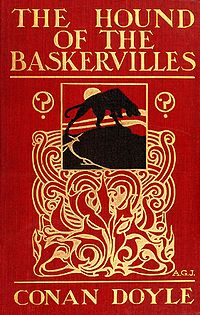
Whoops! The priests forgot about the black hound. The Black Dog began to find its way into the local folklore. What made the tale hang on was the fate of the Vaughan family, which finally died out in the 19th Century. According to those who have too much time to think on these things, Sir Arthur Conan Doyle once was a guest at Hergest Court. Instead of fearing the tale, the genius of Conan Doyle brought the tale to Devon, making the tale of the Black Dog into one of his most famous tales “The Hound of the Baskervilles.”200px-Cover_(Hound_of_Baskervilles,_1902)

Posted in British history, buildings and structures, gothic and paranormal, Great Britain, legends and myths, Living in the UK, mystery | Tagged , , , | 4 Comments

Sir Thomas Vaughan, a Patriot and a Traitor to Kings

Thomas Vaughan. Born: c. 1410. Died: June 25, 1483. Pontefract, West Yorkshire, England (Age c. 73) - http://www.shakespeareandhistory.com/thomas-vaughan.php

Thomas Vaughan. Born: c. 1410. Died: June 25, 1483. Pontefract, West Yorkshire, England (Age c. 73) – http://www.shakespeareandhistory.com/thomas-vaughan.php

Sir Thomas Vaughan (c. 1410 – June 1483) was a Welsh statesman and diplomat, who rose to prominence before and during the Wars of the Roses. He began as an adherent of Jasper Tudor and King Henry VI of England and was appointed to several offices by Henry. He was nonetheless a Yorkist by inclination, as were many Welshmen of the time. After the Yorkist victory in 1461 he became a loyal and important servant of King Edward IV. In 1483, he was executed by Richard III as part of his seizure of the throne.

Life
Vaughan was the son of Robert and Margaret Vaughan of Monmouth. In 1446 he was appointed to the offices of Steward, Receiver, and Master of the Game in Herefordshire and Ewyas, and Steward, Constable, Porter, and Receiver of Abergavenny. In 1450, he became Master of the Ordnance. He entered Parliament in 1455 as MP for Marlborough.

Despite his early association with Jasper Tudor, Earl of Pembroke, Vaughan was accused of plotting against King Henry VI of England as early as 1459. Somehow he regained the king’s favour, and in 1460 was appointed Keeper of Henry VI’s “great Wardrobe.”

After Henry’s defeat at Saint Albans in 1461, Vaughan, along with Philip Malpas and William Hatclyf, sailed for Ireland with Henry’s treasury, but were captured by French pirates. Edward IV, surprisingly, ransomed Vaughan from the pirates, for which Vaughan was forever afterwards loyal. Edward soon came to trust Vaughan and placed him in high offices.

Vaughan was appointed Sheriff of Surrey and Sussex for 1464. In 1465 Edward made him Treasurer of the King’s Chamber and Master of the King’s Jewels.

Edward also sent Vaughan as ambassador to the courts of Burgundy and France. He helped negotiate the marriage of Edward’s sister, Margaret, to the Duke of Burgundy in 1468.

In 1475, on the same day that Edward’s eldest son, the future Edward V, was invested as Prince of Wales, Vaughan was knighted, having acted for some years as Chamberlain to the young prince.

In 1478, he was elected to parliament as knight of the shire for Cornwall.

According to the website Haunted Britain,”Towards the end of the 15th century Sir Thomas Vaughan resided at Hergest Court in the days when it was a much grander and more heavily fortified property than the farmhouse that greets visitors today. Vaughan was the very embodiment of the archetype wicked squire, and was known in the district simply as so ’Black Vaughan.’”

After Edward IV died in 1483, Vaughan was accompanying Edward V from Ludlow to London when the party was intercepted by the future King Richard III, then Duke of Gloucester. Richard had Vaughan arrested and executed. The execution is believed to have taken place some time between 13 and 25 June at Pontefract Castle in West Yorkshire.

Painting of Pontefract Castle in the early 17th century by Alexander Keirincx - circa 1620 Pontefract Castle in Pontefract, West Yorkshire (England)

Painting of Pontefract Castle in the early 17th century by Alexander Keirincx – circa 1620
Pontefract Castle in Pontefract, West Yorkshire (England)

Vaughan was the second husband of Eleanor Arundel, widow of Sir Thomas Browne, who had likewise been executed in 1460.

In Shakespeare’s Richard III, Vaughan’s ghost appears to the King on the eve of the Battle of Bosworth.

Posted in British history, Elizabethan drama, gothic and paranormal, Great Britain, legends and myths, Living in the UK, mystery | Tagged , , , , | 1 Comment

“Memento mori,” or “Remember to Die”

Memento mori (Latin ‘remember (that you have) to die’), or also memento mortis, “remember death”, is the Latin medieval designation of the theory and practice of the reflection on mortality, especially as a means of considering the vanity of earthly life and the transient nature of all earthly goods and pursuits. It is related to the ars moriendi or “Art of Dying” and related literature. Memento mori has been an important part of ascetic disciplines as a means of perfecting the character, by cultivating detachment and other virtues, and turning the attention towards the immortality of the soul and the afterlife.

Memling Vanity and Salvation~Public Domain Hans Memling (circa 1433–1494) - http://www.kfki.hu/~arthp/html/m/memling/3mature4/index.html Earthly Vanity and Divine Salvation by Hans Memling. This triptych contrasts earthly beauty and luxury with the prospect of death and hell.

Memling Vanity and Salvation~Public Domain
Hans Memling (circa 1433–1494) – http://www.kfki.hu/~arthp/html/m/memling/3mature4/index.html
Earthly Vanity and Divine Salvation by Hans Memling. This triptych contrasts earthly beauty and luxury with the prospect of death and hell.

For art historians, memento mori refers to specific artistic or symbolic reminders of the above. In the European Christian art context, “the expression… developed with the growth of Christianity, which emphasized Heaven, Hell, and salvation of the soul in the afterlife.”[Memento Mori, Museum of Art and Archaeology, University of Missouri.]

Historic Usage
Classical

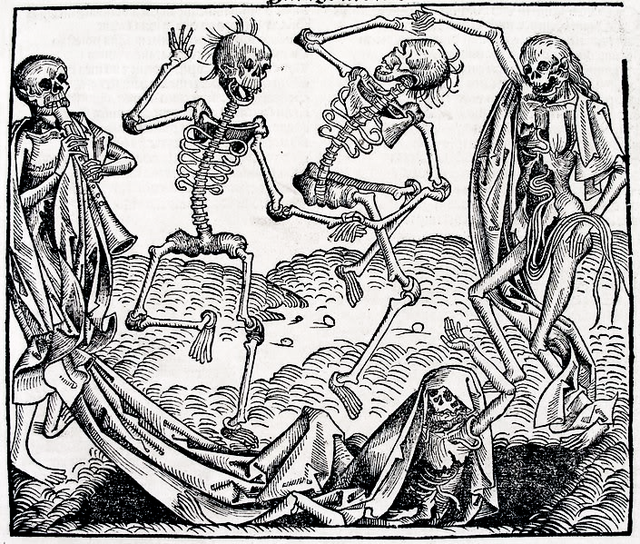
Dance of Death (1493) by Michael Wolgemut, from the Liber chronicarum by Hartmann Schedel

Dance of Death (1493) by Michael Wolgemut, from the Liber chronicarum by Hartmann Schedel

Plato’s Phaedo, where the death of Socrates is recounted, introduces the idea that the proper practice of philosophy is “about nothing else but dying and being dead.” The Stoics were particularly prominent in their use of this discipline, and Seneca’s letters are full of injunctions to meditate on death.

Popular belief says the phrase originated in ancient Rome: as a Roman general was parading through the streets during a victory triumph, standing behind him was his slave, tasked with reminding the general that, although at his peak today, tomorrow he could fall, or — more likely — be brought down. The servant is thought to have conveyed this with the warning, “Memento mori.”

It is further possible that the servant may have instead advised, “Respice post te! Hominem te esse memento! Memento mori!”: “Look behind you! Remember that you are a man! Remember that you’ll die!”, as noted by Tertullian in his Apologeticus.

Europe — Medieval through Victorian
The thought came into its own with Christianity, whose strong emphasis on divine judgment, Heaven, Hell, and the salvation of the soul brought death to the forefront of consciousness. Many memento mori works are products of Christian art, although there are equivalents in Buddhist art. In the Christian context, the memento mori acquires a moralizing purpose quite opposed to the Nunc est bibendum (now is the time to drink) theme of Classical antiquity. To the Christian, the prospect of death serves to emphasize the emptiness and fleetingness of earthly pleasures, luxuries, and achievements, and thus also as an invitation to focus one’s thoughts on the prospect of the afterlife. A Biblical injunction often associated with the memento mori in this context is In omnibus operibus tuis memorare novissima tua, et in aeternum non peccabis (the Vulgate’s Latin rendering of Ecclesiasticus 7:40, “in all thy works be mindful of thy last end and thou wilt never sin.”) This finds ritual expression in the rites of Ash Wednesday, when ashes are placed upon the worshipers’ heads with the words “Remember Man that you are dust and unto dust you shall return.”

The most obvious places to look for memento mori meditations are in funeral art and architecture. Perhaps the most striking to contemporary minds is the transi, or cadaver tomb, a tomb that depicts the decayed corpse of the deceased. This became a fashion in the tombs of the wealthy in the fifteenth century, and surviving examples still create a stark reminder of the vanity of earthly riches. Later, Puritan tomb stones in the colonial United States frequently depicted winged skulls, skeletons, or angels snuffing out candles. These are among the numerous themes associated with skull imagery.

Another example of memento mori is provided by the chapels of bones, such as the Capela dos Ossos in Évora or the Capuchin Crypt in Rome. These are chapels where the walls are totally or partially covered by human remains, mostly bones. The entrance to the former has the sentence “We bones, lying here bare, await for yours.”

The famous danse macabre, with its dancing depiction of the Grim Reaper carrying off rich and poor alike, is another well-known example of the memento mori theme. This and similar depictions of Death decorated many European churches. Danse Macabre, Op. 40, is a tone poem for orchestra, written in 1874 by French composer Camille Saint-Saëns.

Timepieces were formerly an apt reminder that one’s time on Earth grows shorter with each passing minute. Public clocks would be decorated with mottos such as ultima forsan (“perhaps the last” [hour]) or vulnerant omnes, ultima necat (“they all wound, and the last kills”). Even today, clocks often carry the motto tempus fugit, “time flees.” Old striking clocks often sported automata who would appear and strike the hour; some of the celebrated automaton clocks from Augsburg, Germany, had Death striking the hour. The several computerized “death clocks” revive this old idea. Private people carried smaller reminders of their own mortality. Mary, Queen of Scots, owned a large watch carved in the form of a silver skull, embellished with the lines of Horace.

A version of the theme in the artistic genre of still life is more often referred to as a vanitas, Latin for “vanity.” These include symbols of mortality, whether obvious ones like skulls, or more subtle ones, like a flower losing its petals.

After the invention of photography, many people had photographs taken of recently dead family members.

Frans Hals (1582/1583–1666) - Web Gallery of Art:    Frans Hals, Youth with a Skull, c. 1626-1628

Frans Hals (1582/1583–1666) – Web Gallery of Art:
Frans Hals, Youth with a Skull, c. 1626-1628

Memento mori was also an important literary theme. Well-known literary meditations on death in English prose include Sir Thomas Browne’s Hydriotaphia, Urn Burial and Jeremy Taylor’s Holy Living and Holy Dying. These works were part of a Jacobean cult of melancholia that marked the end of the Elizabethan era. In the late eighteenth century, literary elegies were a common genre; Thomas Gray’s Elegy Written in a Country Churchyard and Edward Young’s Night Thoughts are typical members of the genre.

Apart from the genre of requiem and funeral music, there is also a rich tradition of memento mori in the Early Music of Europe. Especially those facing the ever-present death during the recurring bubonic plague pandemics from the 1340s onward tried to toughen themselves by anticipating the inevitable in chants, from the simple Geisslerlieder of the Flagellant movement to the more refined cloistral or courtly songs. The lyrics often looked at life as a necessary and god-given vale of tears with death as a ransom and reminded people to lead sinless lives to stand a chance at Judgement Day. Two stanzas typical of memento mori in mediaeval music are from the virelai ad mortem festinamus of the Catalan Llibre Vermell de Montserrat from 1399:

Vita brevis breviter in brevi finietur,
Mors venit velociter quae neminem veretur,
Omnia mors perimit et nulli miseretur.
Ad mortem festinamus peccare desistamus.

Life is short, and shortly it will end;
Death comes quickly and respects no one,
Death destroys everything and takes pity on no one.
To death we are hastening, let us refrain from sinning.

Ni conversus fueris et sicut puer factus
Et vitam mutaveris in meliores actus,
Intrare non poteris regnum Dei beatus.
Ad mortem festinamus peccare desistamus.

If you do not turn back and become like a child,
And change your life for the better,
You will not be able to enter, blessed, the Kingdom of God.
To death we are hastening, let us refrain from sinning.

In the late 16th and through the 17th century Memento mori rings were made.

Puritan America
Colonial American art saw a large number of memento mori images due to Puritan influence. The Puritan community in 17th-century North America looked down upon art, because they believed it drew the faithful away from God, and if away from God, then it could only lead to the devil. However, portraits were considered historical records, and as such they were allowed. Thomas Smith, a 17th-century Puritan, fought in many naval battles and also painted. In his self-portrait, we see a typical puritan memento mori with a skull, suggesting his imminent death.

Thomas Smith painted this art, Self-Portrait, in 1680, in colonial America. The Copyright has expired; the author died over 300 years ago. It is in the public domain, for public use.

Thomas Smith painted this art, Self-Portrait, in 1680, in colonial America. The Copyright has expired; the author died over 300 years ago. It is in the public domain, for public use.

The poem under the skull emphasizes Smith’s acceptance of death:

Why why should I the World be minding, Therein a World of Evils Finding. Then Farwell World: Farwell thy jarres, thy Joies thy Toies thy Wiles thy Warrs. Truth Sounds Retreat: I am not sorye. The Eternall Drawes to him my heart, By Faith (which can thy Force Subvert) To Crowne me (after Grace) with Glory.

Posted in British history, customs and tradiitons, Elizabethan drama, gothic and paranormal, Great Britain, legends and myths, medieval, mystery, real life tales, religion | Tagged , , , | 2 Comments

UK Mystery: Stanton Drew Stone Circles

Location: near Stanton Drew and Bristol

Region: Somerset, England

Coordinates: 51.367797°N 2.575257°WCoordinates: 51.367797°N 2.575257°W

© Copyright Rosalind Mitchell and licensed for reuse under this Creative Commons Licence.

© Copyright Rosalind Mitchell and licensed for reuse under this Creative Commons Licence.

Type: Henge monument

Condition: intact

The Stanton Drew stone circles are just outside the village of Stanton Drew in the English county of Somerset. The largest stone circle is the Great Circle, 113 metres (371 ft) in diameter and the second largest stone circle in Britain (after Avebury); it is considered to be one of the largest Neolithic monuments to have been built. The date of construction is not known but is thought to be between 3000 and 2000 BCE, which places it in the Late Neolithic to Early Bronze Age. It was made a scheduled monument in 1982.

The Great Circle was surrounded by a ditch and is accompanied by smaller stone circles to the north east and south west. There is also a group of three stones, known as The Cove, in the garden of the local pub. Slightly further from the Great Circle is a single stone, known as Hautville’s Quoit. Some of the stones are still vertical, but the majority are now recumbent and some are no longer present.

The stone circles have been studied since John Aubrey’s visit in 1664 with some excavations of the site in the 18th century. In the late 20th and early 21st centuries geophysical surveys have confirmed the size of the stone circles and identified additional pits and postholes. The Cove has been shown to be around one thousand years older than the stone circles. A variety of myths and legends about the stone circles have been recorded, including one about dancers at a celebration who have been turned to stone.

Monument

The Great Circle is 113 metres (371 ft) in diameter and probably consisted of 30 stones, of which 27 survive today. It was recorded by both John Aubrey in 1664 and William Stukeley in 1776. The Great Circle probably was surrounded by the ditch (approximately 135 metres (443 ft) outer diameter — now filled in) of a henge. The North East Circle is 30 metres (98 ft) in diameter and probably consisted of 10 or more stones, of which 8 survive today. The South West Circle is 43 metres (141 ft) in diameter and has 12 stones surviving today. An avenue extends to the northeast of the Great Circle towards the River Chew and a second avenue meets it from the north eastern stone circle.

A (now recumbent) standing stone called Hautville’s Quoit lies across the river to the north on an alignment with the centres of the Great Circle and the southern circle. It is a large stone close to Hautville Quoit Farm, recumbent since at least the mid 17th century but assumed to have originally been upright. Described by Stukeley in 1723 as being 13 feet (4.0 m) long, it is now about half that length, Grinsell suggesting that fragments have occasionally been broken off for mending the roads. Stukeley also referred to the presence of a second stone.

Further to the west is a cove of two standing stones with a recumbent slab between them, which can be found in the garden of the Druid’s Arms public house. All are of different heights, the stone to the north east being 4.4 metres (14 ft) the south western 3.1 metres (10 ft), and the north eastern 1.4 metres (4 ft 7 in).[14] The stones of The Cove are mineralogically different from those in the nearby stone circles. A long barrow burial chamber has been found under the stones of The Cove. It is thought that this predates the erection of the stones by approximately a thousand years.

Excavations

Aerial video of the south west circle at Stanton Drew stone circles
In 1740 the site was surveyed and mapped by John Wood, the Elder, who noted the different stones used. He suggested the layout was based on the Pythagorean planetary system, and thought it was used as the Druid’s “University.”

When one of the stones fell in the mid 17th century, some human bones were discovered accompanied by an object described as a “round bell, like a large horse-bell”. The burial date and the purpose of the bell-like object are unknown.

Geophysical Survey

The Great Circle
Geophysical work by English Heritage in 1997 revealed a surrounding ditch and nine concentric rings of postholes within the stone circle. More than four hundred pits, 1 metre (3 ft 3 in) across and at 2.5 metres (8 ft 2 in) intervals, stood in rings at the site.[4] The ditch is 135 metres (443 ft) in diameter and about 7 metres (23 ft) wide. A 40 metres (130 ft) wide entrance was visible on the north east side. No surrounding bank has been identified although the site awaits excavation.

The geophysical work transformed the traditional view of Stanton Drew as being a surface monument and the Great Circle is now seen as being one of the largest and most impressive Neolithic monuments to have been built. Analogous with the circles of postholes at sites at Woodhenge, Durrington Walls and The Sanctuary, it is thought that the pits would have held posts which would have either been freestanding or lintelled as they could not have supported a roof at that size. The postholes in nine concentric rings held posts up to 1 metre (3.3 ft) in diameter.

Nearby and to the north east is a smaller ring of eight stones in the centre of which the geophysical work identified four further pits. A third ring of twelve stones, measuring 43 metres (141 ft) wide, stands to the south west.

The Cove

A fluxgate gradiometer survey in July 2009 investigated standing stones in the garden of the Druids Arms public house known as The Cove, which showed that the stones date from nearly a thousand years before the stone circles. The conclusion from the study was that these upright stones are likely to have been the portals or façade of a chambered tomb.

In 2010, a further survey was carried out by Bath and Camerton Archaeological Society and the Bath and North East Somerset Archaeological Officer. This involved high data density magnetometer, resistance pseudosection profiles and photographic surveys showed a new henge entrance and further detail of post holes.

Myths about Stanton Drew

Being a henge and stone circle site, astronomical alignments are a common theory to explain the positioning of the stones at Stanton Drew. Similarly, there are less well evidenced theories relating to ley lines.

Theories suggest the site was dedicated to funerary ritual. There are several local traditional stories about the megalithic complex. The best known tells how a wedding party was turned to stone: the party was held throughout Saturday, but a man clothed in black (the Devil in disguise) came and started to play his violin for the merrymakers after midnight, continuing into holy Sunday morning. When dawn broke, everybody had been turned to stone by the Demon: so the stone circles are the dancers, the avenues are the fiddlers and The Cove is the bride and the groom with the drunken churchman at their feet. They are still awaiting the Devil who promised to come back someday and play again for them.

Wade and Wade (Somerset by Wade, G.W. & Wade, J.H. at Project Gutenberg) in their 1929 book “Somerset” suggest:

One of the curiosities of the place is Hautville’s Quoit, which, to save time, should also be looked for on approaching the village. (Enter iron gate on L. a few hundred yards before reaching tollhouse, and search backwards along the hedge bordering road.) It is a large stone, which legend says was hurled by Sir J. Hautville (whose effigy is in Chew Magna Church) from the top of Maes Knoll. The famous “druidical remains” will be found near the church. About 50 yards from the entrance to the churchyard take a lane to the L. leading to an orchard: the stones will be observed in the field beyond (admission free, but field closed on Sundays). The “remains” consist of three contiguous circles. The first is of considerable area, and is marked out by twelve large stones, only three of which remain upright; a smaller circle of eight stones lies just beyond; and a third circle of eight will be found farther away in an orchard on the R. The two larger circles have each a few scattered stones thrown off as a kind of avenue. Standing apart from the circles is a curious group of three stones huddled together in a garden abutting on the churchyard, from which they can be easily seen by looking over the W. boundary wall. These mystic rings probably had the same origin (whatever that may have been) as that of the more famous circle at Avebury in Wiltshire, with which they should be compared. The proximity of Maes Knoll is comparable with that of Silbury Hill. A ridiculous theory suggests that the monoliths were erected as a trophy after one of Arthur’s victories. Arthur is connected to the site because a site in the nearby village of Camerley is reputed to be the location of Camelot in an oral tradition. The stones are of a reddish hue similar to that described in the Arthurian legend as connected to Camelot and to a sword that was seen in a stone near to Camelot. The country story is that a local wedding once took place on a Sunday, when the frivolous guests would insist on winding up with a dance. The penalty for a “Sabbath” thus “profaned” was the prompt transformation of the bridal party into stone. Hence the local appellation of “The fiddlers and the maids.stantondrew-2011pano

Posted in British history, buildings and structures, Great Britain, legends and myths, Living in the UK, mystery | Tagged , , , , , , | 5 Comments

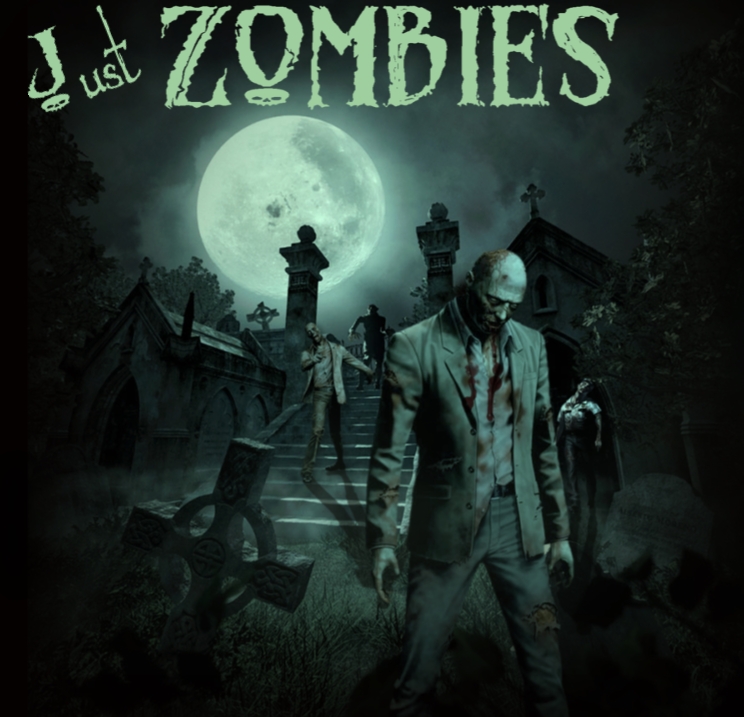
Mashups ~ Jane Austen and Zombies

MashUps: Jane Austen and Zombies


Why are Zombies being mixed with my Jane Austen?
Most people seem to agree that zombies and other monsters are an open testament to a troubled time. Zombies found their peak in George Romero movies, and they reflect whatever we might fear. These monster stories cover everything from pure horror to campy humor. Bela Lugosi appeared in 1932’s White Zombie, based upon traditional Caribbean voodoo, which was followed in 1943 by I Walked with a Zombie, also a Caribbean voodoo story line. Zombie stories were very popular during the Great Depression. So what does this hodge podge of information say about “Zombies”?
It says that zombies and similar monsters represent different things in different times. Zombie stories in the 1950s symbolized the Cold War; in the 1980s, they represented pollution. Beth Accomando in “Zombies Invade NPR,” says, “Zombies are the blank canvas to reflect whatever scares us, be it racism, disease, or the end of the world.” She goes on to say, zombies “reflect the fact that people are currently in crisis mode.”
Unlike vampire stories, which have been found in literature for hundreds of years, zombie stories are a relatively new phenomena. Haitian folklore involving the raising of the dead by a voodoo master appears to be the basis of zombie stories; and, like the folklore, troubled times seem to raise the dead. Nowadays, zombies symbolize the global economic recession and a world in turmoil. Where vampire story lines touch on “divisive” issues, zombies satirize the demise of contemporary culture. 1994′s Interview with a Vampire reflected our country’s varied opinions on AIDS; 1968’sNight of the Living Dead demonstrated our angst during the Vietnam era, even going so far as to dehumanize the combatants. The Vietnamese were “a faceless people, who wished to do us harm” – such as portrayed by the zombies.

Currently, we are being bombarded by countless zombie stories: Breathers: A Zombie’s Lament, which is a novel turned into a movie and being produced by Diablo Cody of Junofame; Zombieland, which starred Woody Harrelson and Abigail Breslin; World War Z, a novel by Max Brooks, which has been turned into a movie by Marc Foster, director of Quantum of SolaceResident Evil 5, a zombie video game, and Michael Jackson’s “Thriller,” which is being made into a Broadway show. Zombies plus subgenre combinations seem to be the way of publishers. For example, Star Wars: Death Troopers is a mix of zombies and science fiction. In fact, a romance anthology, entitled My Zombie Valentine, exists.

One of the ideas, which I found very unique, came from Illogic Tree, which purports that American politics set the trends for zombie and vampire films. Quite simply, zombies are popular when a Republican is in office because “Republicans fear the revolt of the masses.” And likewise, vampire films are popular with a Democrat in office because “Democrats are often fearful of upper-class America and believe the rich are bleeding the country dry.” Illogic Tree even using statistics to prove their point that vampires are “blue” and zombies are “red.” According to the article, 183 zombie films were produced in the seven years that Bush was in office (beginning in 2000). During Clinton’s era, we saw Bram Stoker’s Dracula, Interview with a VampireBlade, and Dracula: Dead and Loving It, as well as many other less popular offerings. Who knows whether this idea is true, but is it not just fascinating?
Again, how do zombies fit in with my Jane Austen?Lev Grossman in “Zombies are the New Vampires” says, “Apparently no one is safe from the shambling, newly marketable armies of the dead — not even Jane Austen. The author of Pride and Prejudice and Zombies, Seth Grahame-Smith, tells a tale about a strangely familiar English family called the Bennets, who are struggling to marry off five daughters, while at the same time fighting off wave after wave of relentless, remorseless undead — since, as the novel’s classic first line tells us, ‘It is a truth universally acknowledged that a zombie in possession of brains must be in want of more brains.’”

Grossman continues, “It is surprising how easily Austen’s novel succumbs to the conventions of a zombie flick. Much of Austen’s work is about using wit and charm and good manners to avoid talking about ugly realities like sex and money. In Grahame-Smith’s version, zombies are just another one of those ugly realities. ‘What was so fun about the book is the politeness of it all,’ says Grahame-Smith. ‘They don’t even like to say the word zombie, even though their country is besieged by zombies. They’re everywhere, and people are literally being torn apart before their very eyes, and other than the very few, like Elizabeth Bennet, who face this problem head on, they would almost rather not talk about it.’”

Grossman goes on to say, “If there’s something new about today’s zombie, it’s his relatability. Sure, he’s an abomination and a crime against all that is good and holy. But he exemplifies some real American values too. He’s plucky and tenacious — you can cut off his limbs and he’ll keep on coming atcha. And he’s humble. You won’t find zombies swanning around and putting on airs like some other monsters. They’re monsters of the people. So, down with vampires. Long live (or is it die?) the zombie: the official monster of the recession.”
Posted in gothic and paranormal, Industry News/Publishing, Jane Austen | Tagged , , , | Comments Off on Mashups ~ Jane Austen and Zombies

The Red Book of Hergest, Welsh Medieval Manuscript

This is one of three posts I have scheduled related to Hergest Court. We will also have a look at Sir Thomas Vaughan (October 24) and his trials with four English kings and, in celebration of all things haunted, the mystery of Hergest Court (October 27).

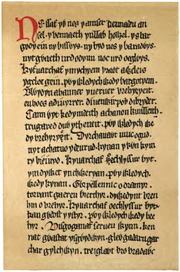
Facsimile of part of column 579 from the Red Book of Hergest

Facsimile of part of column 579 from the Red Book of Hergest

The Red Book of Hergest (Welsh: Llyfr Coch Hergest) is a large vellum manuscript written shortly after 1382, which ranks as one of the most important medieval manuscripts written in the Welsh language. It preserves a collection of Welsh prose and poetry, notably the tales of the Mabinogion, Gogynfeirdd poetry. The manuscript derives its name from the colour of its leather binding and from its association with Hergest Court between the late 15th and early 17th century.

Compilation
The manuscript was written between about 1382 and 1410. One of the several copyists responsible for the manuscript has been identified as Hywel Fychan fab Hywel Goch of Buellt. He is known to have worked for Hopcyn ap Tomas ab Einion (c. 1330 – after 1403) of Ynysforgan, Swansea, and it is possible that the manuscript was compiled for Hopcyn.

According to scholar Daniel Huws (Cited in “Oxford Jesus College 111: An Electronic Edition”, Welsh Prose 1350-1425), it is “by far the heaviest of the medieval books in Welsh, the largest in its dimensions […] and the thickest.”

History

Llyfr Coch Hergest 240-241~ Hywel Fychan fab Hywel Goch of Buellt - The Red Book of Hergest (1375 - 1425)

Llyfr Coch Hergest 240-241~
Hywel Fychan fab Hywel Goch of Buellt – The Red Book of Hergest (1375 – 1425)

The manuscript appears to have been retained by Hopcyn’s family until the end of the 15th century, when Hopcyn’s grandson Hopcyn ap Rhys was held complicit in the rebellion against King Edward IV and consequently saw much of his property forfeited. The Vaughans of Tretower (Tretŵr), then in Breconshire, obtained it, probably in 1465 on receiving Hopcyn’s forfeited possessions. Ownership is suggested by two odes (awdlau) dedicated to Sir Thomas Vaughan (d. 1483) and his sons, which were written into the manuscript by Welsh poet Lewys Glyn Cothi at Tretower. The Red Book soon passed into the possession of the Vaughans of Hergest Court, near Kington in the Welsh Marches. Sir John Price of Brecon reports to have seen the manuscript in 1550, presumably at Hergest. In the late 1560s, William Salesbury found the manuscript in the possession of Sir Henry Sidney at Ludlow, when Siancyn Gwyn of Llanidloes held it on loan from him.

By the early 17th century, the Red Book had passed to the Mansels of Margam, hence back in Glamorgan. It was possibly brought into the marriage between Henry’s granddaughter Catherine Sidney and Sir Lewis Mansel, who is reported to have owned it in 1634. The manuscript is later found in the collection of Thomas Wilkins (d. 1699), a Welsh clergyman and antiquarian, who may have borrowed it from the Mansels without ever returning it. In 1697, Wilkins was visited by Edward Lhuyd, who spent some time copying a manuscript which might well have been the Red Book. In 1701, two years after Wilkin’s death, his son Thomas Wilkins the Younger donated the manuscript to Jesus College, Oxford. Internal evidence, a note by the latter Wilkins, suggests that Edward Lhuyd then held the manuscript on loan, but that the college was able to retrieve it only 13 years later, after Lhuyd’s death. It is now kept at the Bodleian Library on behalf of Jesus College, Oxford, and catalogued as MS 111.

Content

The first part of the manuscript contains prose, including the Mabinogion, for which this is one of the manuscript sources (the other principal source being the White book of Rhydderch), other tales, historical texts (including a Welsh translation of Geoffrey of Monmouth’s Historia Regum Britanniae), and various other texts including a series of Triads. The rest of the manuscript contains poetry, especially from the period of court poetry known as Poetry of the Princes (Welsh:Gogynfeirdd or Beirdd y Tywysogion).

The manuscript also contains a collection of herbal remedies associated with Rhiwallon Feddyg, founder of a medical dynasty that lasted over 500 years – ‘The Physicians of Myddfai’ from the village of Myddfai just outside Llandovery.

Influence
J. R. R. Tolkien borrowed the title for the Red Book of Westmarch, the imagined legendary source of Tolkien’s tales.

Posted in British history, Great Britain, Wales, writing | Tagged , , , | 1 Comment

A Taste of Blood ~ Exquisite Excerpts from “Vampire Darcy’s Desire”

A Taste of Blood…

JeffersVDDBelow you will find an excerpt from Vampire Darcy’s DesireVDD presents Jane Austen’s Pride and Prejudice as a heart-pounding vampire romance filled with passion and danger. Tormented by a 200-year-old curse and his fate as a half-human/half-vampire (dhampir), Mr. Darcy vows to live forever alone rather than to inflict the horrors of his life under a vampire’s curse on an innocent wife. But when he comes to Netherfield Park, he meets the captivating Elizabeth Bennet. As a man, Darcy yearns for Elizabeth, but as a dhampir, he is also driven to possess her. Uncontrollably drawn to each other, they are forced to confront a “pride and prejudice” never before imagined – while wrestling with the seductive power of forbidden love. Meanwhile dark forces are at work all around them. Most ominous is the threat from George Wickham, the purveyor of the curse, a demon who vows to destroy each generation of Darcys.(In this scene, Wickham has become aware of Darcy’s growing desire for Elizabeth Bennet. He, therefore, attempts to destroy Darcy by taking away the one thing that his enemy loves.)

Assured that Darcy had seen her coming before he had dropped into the tree line, Elizabeth skirted the stile on the far-off hedgerow and plunged into the woods. She had seen him turn towards Netherfield, leading her away from Longbourn. Impetuously, she had called to him, but he had not answered; instead, he simply moved further into the wooded area.

Elizabeth quickened her pace, but he remained a focal point, not a reality. No matter how fast she chased after him, Darcy seemed to continue on at an equal distance from her. She called out again, but once more he had not heard her. So Elizabeth simply followed, doing the only thing she could do—keep him in sight. When he turned suddenly toward the manor house, she smiled. “To our secret play,” she said to herself. “Mr. Darcy relishes the idea of my following him. Just because he appeared on the outskirts of my father’s property. Men are so predictable,” she mused aloud. She knew she played to his vanity with her actions, but his teasing had always intrigued her.

At the door, he turned to look back at her. Elizabeth saw his mouth’s corners turn up in a smile, and then he slipped inside. Moments later, Elizabeth crossed the threshold. “Fitzwilliam!” she called. “Fitzwilliam! Where are you?” She rushed forward into the room, and then—then time stopped—her heartbeat ceased when she saw what stood before her. A whimper escaped her lips, but no other sound was heard in the empty house. Leaning casually against the mantle of the cold hearth, George Wickham nodded his head in acknowledgment. “I fear your precious Fitzwilliam is not here, Miss Elizabeth.” His voice sounded to her ears like that of the snake in the Garden of Eden.

She swallowed hard and wondered whether, if she broke into a run, if she could clear the deserted path before he caught her. She realized Wickham read her every thought. “Do not consider it, my Dear; you will never make it,” he warned. Neither of them moved as he continued his taunt. “Obviously, your Mr. Darcy never told you I possess unique abilities. How easily you were deceived into thinking I was your lover!”

“Mr. Darcy and I are not lovers!” she protested, while she attempted to formulate a plan for escape.

“What do you call this rendezvous, Miss Elizabeth? There are remnants of a picnic lunch and a blanket in the other room. You call the man by his given name, my Dear. What does that sound like to you?” He dropped his arms to his sides and edged forward as he spoke.

Feeling the sudden stillness of the room, Elizabeth gingerly stepped back, but she never removed her eyes from Wickham’s countenance. “Mr. Darcy gave me riding lessons; that was all there was between us.”

“If you say so, Miss Elizabeth.” He eyed her mockingly. “Yet you provide me with a unique opportunity, and I exist for such prospects. Whether you return his feelings or not, your Mr. Darcy has never shown a partiality for any woman until you. I make it my business to know Darcy’s weaknesses. Other than his sister, Darcy cares for no one; he has never allowed himself such a pleasure. Then, all at once, he—by your own admission—is giving you riding lessons, waltzing with you on a private balcony, kissing your tempting lips, and rescuing you from unknown terrors. You did like how I staged that one, did you not?” he taunted. “I am certain Darcy was the one who placed the wreaths and the iron ornaments about your home. They only served to confirm my earlier suspicions.” Elizabeth furtively reached for the jeweled crucifix she wore at her neck. Wickham took note of the slight shift in her stance. “Did your lover give you the Christian symbol to protect you from me?” Again, he inched closer to her, while Elizabeth countered his movement with a retreat of her own.

I purchased this crucifix,” she asserted, dredging up a vestige of resistance.

“Do not attempt to mislead me, Miss Elizabeth. I am not so easily deceived. I have observed  Miss Darcy has worn a similar one after my special evening with her, so I am aware of the source of your enchantment. Mr. Darcy hopes to protect you.” By now, Wickham was near enough to reach her if he so wished; yet, his hands remained at his sides; Elizabeth stayed alert for his attack. “It will be a pleasure to take you from Darcy. It will be a revenge like no other; he is the first of his family to dare challenge me, and I do not like to lose, Miss Elizabeth.”

She shivered. “Mr. Darcy has departed.” She hoped her words might stop his plan or, at least, give her a chance to convince Wickham to release her. “In fact, everyone at Netherfield has fled your carnage.”

“My carnage?” Wickham sounded amused. “Two females hardly rates as carnage, Miss Elizabeth.” He finally reached out to her, lightly tracing a line along her jaw to her mouth. He shook his head, and Elizabeth noted the amused, self-mocking smile that twisted his mouth. I must congratulate you, Miss Elizabeth; Darcy has grown stronger with you by his side. That display last evening at Netherfield would never have been possible six months ago. So, you see, my Dear, I must stop your power over Darcy. It will kill him to know that he abandoned you to me. The fact will eat away at him. Plus, eliminating you will keep his powers in check. Whether he is here to witness your demise or not will make little difference. I will make certain that he learns of your tragic end.”

Elizabeth knew that she must do something or die at his hands. A flash of humor crossed his expression as she broke away from him, shoving furniture into his path as she attempted an escape. Just as she reached the door, grabbing it to pull it open, Wickham appeared behind her. An iron grip took hold of her arm as his left hand shoved the door closed. He pulled her back into him, breathing into Elizabeth’s hair. “Good,” he hissed, “I was afraid you might not fight me. I prefer my followers to be spirited.” Elizabeth struggled and flailed, trying to dislodge his hold on her, but Wickham’s grip simply tightened around her waist. “My, you are a spit-fire,” he said and laughed. “It is no wonder Darcy prefers you.”

She screamed as he half lifted, half dragged her toward the stairs. Elizabeth scratched at him and fought him, but her efforts were futile. Wickham easily overpowered her. Halfway up the stairs, he halted suddenly and violently pulled her face to within inches of his. “I would give anything to see Darcy’s face when he discovers I took you in the bedroom of the manor house at Netherfield. It will be a delightful revenge.” Wickham pulled her mouth to his and kissed her with such force that he bruised her lips.

Elizabeth’s stomach turned. She strained against him, releasing her mouth from his unwelcome assault. Disgusted by his closeness, Elizabeth spit in Wickham’s face. For a brief moment, her countenance displayed a gratified smile as Wickham wiped the moisture from his cheek, but then a backhand slap forced her head to the side and split her lip. Blood seeped from the opening.

“The first course?” His hand turned her chin roughly, and he licked the blood from her mouth. “Thank you, my Dear.” Wickham started forward again, dragging her behind him.

* * *

Darcy rode low in the saddle, consumed by his need to reach Elizabeth in time. His heightened senses said she was in dire straits. He once again reproached himself for leaving her behind, while he alternated between praying for God to protect her and cursing the Fates, which had placed her in danger. The horse was lathered with foam by the time he drew up upon the reins before the old manor house upon Bingley’s property. Darcy slid from the saddle to assault the stairs leading to the main foyer.

Bursting through the main door, he bellowed, “Elizabeth!” He continued to call to her as he dashed from room to room. In the ballroom, he found the practice rapier beside the empty picnic basket, left behind after their afternoon together only yesterday. Claiming it, he reentered the main passageway to listen to the house. Closing his eyes, he searched the rooms above for any sound of her.

After several elongated seconds, a thump – a muffled sound from above – announced he had not been mistaken. His heart leapt with dread as he bolted up the stairs, taking them two and three at a time. He hit the door of the first of the bedchambers, sending it banging against the wall, but the terrible tableau playing out before him cut Darcy to his knees. Elizabeth’s arms and legs were bound to the four poster. She had been stripped down to her chemise, and her countenance spoke of the terror she had known at Wickham’s hands. Her shining eyes, misted with tears, flooded his heart with anguish. Beside the bed, Wickham lounged in a wing chair. He caressed Elizabeth’s arm lightly with his fingertips.

“Darcy? You have returned.” Wickham’s smile increased by the moment; the changing scenario pleased him. “It is as I have told Miss Elizabeth: Mr. Darcy cares deeply for you.”

Tears steamed from Elizabeth’s eyes. “I am sorry, Fitzwilliam.” A slight shake of his head hopefully told her she had nothing of which to know regret: The blame rested purely upon his shoulders.

“Leave her be, Wickham. Your battle lies with me.” He stalled, searching the room for a means of Elizabeth’s escape, but none other than defeating Wickham showed itself.

Wickham stood casually. He purposely taunted Darcy by running a fingertip along the rise of Elizabeth’s breasts. “Certainly my hatred is firmly directed to you, Darcy, but even so, I find I have become very fond of Miss Elizabeth. Almost as fond as you, perhaps.” He turned to face Darcy fully. “I am of the persuasion that you would gladly die in her stead, but that fact is the real problem: You would gladly die. In fact, you wish to die – to end this battle between us. Yet, I wish you a long life. For when I kill the woman you love, you will spend more than a dozen lifetimes grieving for what might have been.”

Posted in book excerpts, British history, excerpt, gothic and paranormal, Great Britain, Jane Austen, Regency era, Ulysses Press | Tagged , , , , , , | 4 Comments

The Bloody Assizes and the Demon Judge, George Jeffreys

The Bloody Assizes and the Demon Judge, George Jeffreys

Historical Context

King Charles II

King Charles II

With the death of Oliver Cromwell in 1658, the newly-elected Parliament “restored” Charles II to the throne of England. Charles II’s reign (1660-1685) was marked by political unrest. The ruling class split into two parties: the Whigs and the Tories. The Whigs supported Charles’s brother, James, the Catholic heir to the throne. They believed in constitutional monarchism and opposed absolute rule. The Whigs played a central role in 1688’s Glorious Revolution and were the standing enemies of the Stuart kings and pretenders, who were Roman Catholic. They took full control of England’s government in 1715 and remained in control until King George II came to the throne in 1760. The Whigs were reliant on parliamentary power and distrustful of the Catholic Church.

James II

James II

The Tories, on the other hand, remained sympathetic to royal power and the reestablishment of the Anglican Church. They were hostile to Protestant “dissenters,” such as the Baptists, the Quakers, and the Presbyterians.

Each side tried to outmaneuver the other in its power struggle. Unfortunately, the Whigs tried one too many manipulations when they encouraged Titus Oates to lodge conspiracy and treason charges against James and other governmental officials of Catholic sympathies. “God, King, and Country”

Charles II disbelieved Oates’s conspiracy theories, but he dared not to confront Oates openly. In 1681, he was able to dissolve a Whig parliament and rule directly, with the support of the Tories. Charles II’s reign saw the outbreak of the Second Anglo-Dutch War in 1665, as well as the Great Plague in the same year and the Great Fire of London in 1666.

Charles II died in 1685 after being received into the Roman Catholic Church on his deathbed, and his brother James II came to the throne. Although he was a known Catholic, James II did not impose his beliefs upon his people, but most Whigs did not believe him. Therefore, a Whig faction supported a revolt by Charles II’s illegitimate son, the Duke of Monmouth. The revolt was quickly dispensed, and James sent Judge George Jeffreys to deal out his “revenge.” The result was what is known as The Bloody Assizes.

Full of confidence, James II dismissed Parliament (1685) and appointed Catholic officials, even going so far as to ally himself with the much-despised Louis XIV of France. In 1686, James took measures to restore Catholicism in England and to set up a standing army of 13,000 troops. A like army was supported in Ireland, which created large pockets of distrust among the English. The execution of the Duke of Monmouth united James’s Whig opposition behind the only remaining Protestant claimant to the throne, William of Orange, husband to Mary, James’s daughter. In 1688, Whigs and disenchanted Tories invited William to England to restore English liberties and to drive James from the throne. In 1688, James abdicated and fled to exile in France.

The Bloody Assizes were a series of trials, which began on August 25, 1685, in the aftermath of the Battle of Sedgemoor, which ended the Monmouth Rebellion. There were five judges: Sir William Montague (Lord Chief Baron of the Exchequer); Sir Robert Wright; Sir Francis Wythens (Justice of the King’s Bench); Sir Creswell Levinz (Justice of the Common Pleas), and Sir Henry Polexfen. The group was under the direction of Dorset’s Demon Judge, Lord Chief Justice George Jeffreys.

James Scott, the first Duke of Monmouth

James Scott, the first Duke of Monmouth

In June 1685, James Scott, the first Duke of Monmouth, the illegitimate son of King Charles II, landed at Lyme Regis in Dorset, bringing with him a bloody swatch of rebellion. In the days that followed, horror filled the hearts and minds of those living in the area. Monmouth brought some eighty trained soldiers with him. When King Charles II died, his Catholic brother, James, the Duke of York, who became King James II, succeeded him. However, Monmouth, a Protestant, made a bloody bid for the throne.

Landing in Lyme Regis, Monmouth marched across the West Country towards Taunton, into Somerset, Devon, and back to Dorset, gathering support for his bid. The revolt soon became known as The Pitchfork Rebellion. When word reached James II of his “nephew’s” efforts to claim the throne, James II sent an army, commanded by Lord Faversham, to crush the revolt.

On July 6, the two armies clashed at the Battle of Sedgemoor, where Monmouth’s army, along with the Duke, fled. The following morning, disguised as a farm laborer and hiding in a ditch at a spot now known as Monmouth’s Ash, the Duke was captured near Horton Heath, about 8 miles south of the hamlet of Woodyates. Escorted immediately to London, Monmouth was tried for treason and, eventually, beheaded on Tower Hill on July 15, 1685.

George Jeffreys

George Jeffreys

As part of his revenge on those who stood with Monmouth, King James II sent his most ruthless judge, George Jeffreys, the First Baron Jeffreys of Wem, to deal with the rebels. Jeffreys held a reputation for swift justice and merciless sentences; he, eventually, rose to the position of Lord Chancellor, and occasionally served as Lord High Steward. Some 1400 prisoners were brought before Jeffreys at the courts of Winchester, Taunton, and Dorchester. The court hearings were given the title of The Bloody Assizes, for some 300 men were put to death during the proceedings. Those found guilty by Jeffreys were hanged or drawn and quartered. Rotting bodies hung from makeshift gallows peppered the main highways and towns in the area. These gruesome sights were a clear warning to those who might force the king’s hand. Another 800 men were sentenced for transportation.

From his Prescript to the Sheriff of Dorset, Jeffreys leaves these orders: “These are, therefore, to will and require of you, immediately on sight hereof, to erect a gallows in the most public place to hand the said traytors on, and that you provide halters to hang them with, a sufficient number of faggots to burn the bowels, and a furnace or cauldron to boil their heads and quarters, and salt to boil them with, half a bushel to each traytor, and tar to tar them with, and a sufficient number of spears and poles to fix and place their heads and quarters; and that you warn the owners of four oxen to be ready with dray and wain, and the said four oxen, at the time hereafter mentioned for execution, and you yourselves together with a guard of forty able men at the least, to be present by eight o’clock of the morning to be aiding and assisting me or my deputy to see the said rebels executed. You are also to provide an axe and a cleaver for the quartering of the said rebels.”

Judge Jeffreys opened the Bloody Assizes at Dorchester on 5 September 1685 at the Antelope Hotel in the “Oak Room.” During his stay in Dorchester, Jeffreys stayed at a house in High West Street, a building, which is still known as his lodgings, and made his way to the courtroom by a secret passage in order to avoid the angry crowds. In one of his more infamous manipulations, Jeffreys convinced a young girl to spend the night in his bed in exchange for her brother’s freedom. When the girl woke the next morning, she peered out the window to see her brother hanging from the neck by a Bridport Dagger. (The town of Bridport was known for the production of netting and rope for the fishing industry and for use by the British navy. Bridport was also known for the production of the hangman’s rope. It was customary to say that those who were hanged were “stabbed by a Bridport Dagger.”) By the time, Jeffreys moved on to Lyme Regis, he had sentenced 74 men to death, sent another 175 to transportation, had 9 whipped, and pardoned 55.

On 11 September 1685, the Bloody Assizes opened at Lyme Regis. On the 12th of September, twelve men were executed on the beach west of the Cobb, and their body parts were displayed on spikes along the railings around the church. Two of the men’s heads were impaled on the iron gates of Chatham House. Jeffreys had dined at the great house on Broad Street the evening before the executions. Since that time, Jeffreys’ ghost is said to carry a bloody bone through the house.

This ghost tale is circumspect at best. After all, in reality, Jeffreys died some four years after the Bloody Assizes ended. During the Glorious Revolution, Jeffreys stayed in London when James II fled However, when William III’s troops marched into the city, Jeffreys disguised himself as a sailor and made his escape. He was captured at a public house in Wapping (now named The Town of Ramsgate). Fearing the public outcry for his “crimes,” Jeffreys begged for protection. On 18 April 1689, he died of kidney failure while in custody in the Tower of London.

Posted in British history, Great Britain, Living in the UK, political stance, real life tales, religion, royalty | Tagged , , , , | 2 Comments

Adder Stones? Hag Stones? Witch Stones? Magical Powers or False Hopes?

Adder Stones, Hag Stones, Witch Stones…Do You Know These?

35536284529987812_flgujylm_bAdder stones are usually glass stones with a naturally occurring stone in them. Archaeologists have found them in both Britain and Egypt. In Britain, they stones are also called hag stones, witch stones, serpent’s eggs, or snake’s eggs. In Wales, they are called glain neidr, while in Cornwall, adderstanes is the word of choice. The southern provinces of Scotland terms them as Gloine nan Druidh (“Druids’ glass).

Believed to have magical powers, the stones have been used to cure eye diseases, preventing nightmares, curing whooping cough, as well as snakebites. Superstition says they can aid the holder by giving a person the ability to see through a fairy’s or a witch’a disguise.220px-feuerstein_mit_loch-huehnergott

152066924888350309_ndmskacm_bThere are many legends that define the origin of the stones. Among the most popular include: (1) the stones are the hardened saliva of large numbers of serpents massing together; (2) the stones are from the head of a serpent or are made by the sting of an adder; and (3) the stones can be any rock with a hole bored through the middle by water.

imagesDruids highly esteemed Adder stones. There is a passage in Pliny’s Natural History, book xix, minutely describing the nature and the properties of a particular amulet. The following is a translation of it:images-11

“There is a sort of egg in great repute among the Gauls, of which the Greek writers have made no mention. A vast number of serpents are twisted together in summer, and coiled up in an artificial knot by their saliva and slime; and this is called “the serpent’s egg”. The druids say that it is tossed in the air with hissings and must be caught in a cloak before it touches the earth. The person who thus intercepts it, flies on horseback; for the serpents will pursue him until prevented by intervening water. This egg, though bound in gold will swim against the stream. And the magi are cunning to conceal their frauds, they give out that this egg must be obtained at a certain age of the moon. I have seen that egg as large and as round as a common sized apple, in a chequered cartilaginous cover, and worn by the Druids. It is wonderfully extolled for gaining lawsuits, and access to kings. It is a badge which is worn with such ostentation, that I knew a Roman knight, a Vocontian, who was slain by the stupid Emperor Claudius, merely because he wore it in his breast when a lawsuit was pending.”OLYMPUS DIGITAL CAMERA

Posted in British history, customs and tradiitons, gothic and paranormal, legends and myths, Living in the UK | Tagged , , , , , | 4 Comments