Do You Know These Words and Phrases?

I was reading a period piece recently and came across the words and phrases below. How many of these do you use?

Verge – British: A grass edging such as that by the side of a road or path

Embarazo – Spanish: an embarrassment, an impediment, or obstacle

Plain as a Pikestaff – British: Very obvious; Ordinary or unattractive in appearance.
[a Late 16th Century word: Alterative of as plain as a packstaff, the staff being that of a peddler, on which he rested his pack of wares]

Doing It Too Brown – [thought to be a creation of Georgette Heyer]

DO UP BROWN – 1. To swindle, victimize, trounce, or defeat (someone) thoroughly. 1824 in Partridge. He is said to be “cooked,” or “done brown” and “dished.” 2. To do (something) thoroughly, excellently, or perfectly. 1843 in G. W. Harris “High Times” 29: Those are places where things are done up brown! From “Random House Historical Dictionary of American Slang, Volume 1, A-G” by J.E. Lighter, Random House, New York, 1994.

DO IT UP BROWN“Do something well; do it to one’s satisfaction. In England the phrase has had the meaning of deceive or take in. Either way, it carries the implication of doing something thoroughly and probably comes from the roasting of meat, yielding a brown color that is the result of thorough cooking. One can see the term in the making in ‘Liber Cure Cocorum’ (1430)” ‘Lay hur (the goose) to frye and rost hyr browne.'” From the “Dictionary of Cliches” by James Rogers (Ballantine Books, New York, 1985).

http://www.phrases.org.uk/bulletin_board/12/messages/668.html

James Belcher - Wikipedia, the free encyclopedia en.wikipedia.org

James Belcher – Wikipedia, the free encyclopedia
en.wikipedia.org

A Belcher Handkerchief[from Slang and Its Analogues Past and Present: A Dictionary Historical and Comparative of the Heterodox Speech of All Classes of Society for More Than Three Hundred Years With Synonyms in English, French, German, Italian, Etc. ~ Anonymous] – A neckerchief named after Jim Belcher, a noted pugilist. The ground is blue, with large white spots having a dark-blue spot or eye in the centre of each. Hence any handkerchief of a parti-colour round the neck. 

1812. Examiner, 21 Sept., 607, 1. The traverser…tied a belcher handkerchief round his neck. 

1825. Lister, Granby, xxxix. 261. Instead of the Belcher he has a loose black handkerchief round his neck. 

Truckle Bed [also known as a Trunkle Bed] – a low bed on casters, usu. pushed under another bed when not in use. Also called truckle bed. [1535–45]; (Furniture) a low bed on wheels, stored under a larger bed, used esp formerly by a servant

Measured for a Cerecloth – a “cerecloth” is a cloth coated with wax, formerly used for wrapping the dead. – (Textiles) waxed waterproof cloth of a kind formerly used as a shroud (1400-1450)

[from the American Journal of the Medical Sciences, Volume 58] “15. Antiseptic Cere-cloth for covering Wounds. – Mr. Edward Lund brought to the notice of the Surgical Section of the British Medical Association, at its late meeting, a material which he says he has ‘lately used with great advantage for covering wounds, and which I have called antiseptic cerecloth. It is, as the name implies, cloth or thin calico saturated with waxy matter in the form of solid paraffin, to which are added a little oil and was, with carbolic acid in certain proportions. It possesses this double property, that, when placed over a wound, ulcer, or the opening of an abscess, it not only serves to exclude the air as an impervious dressing to the part, but it constantly emits from its surface the vapor of carbolic acid, as it is disengaged by the heat of the body, and so forms an antiseptic atmosphere around the wound.”

Done to a Cow’s Thumb – done exactly. [Definition taken from The 1811 Dictionary of the Vulgar Tongue, originally by Francis Grose.]

Fig Him Out – [not “figure him out” as we women often bemoan] search for or deck one out in proper clothes 

Look Blue by a Mouth – a “mouth” was a term to denote the acting/ speaking “lord” or high society master of title. Its connotation is that he could only talk or command in words and could not physically or personally “do” much of anything; being a doer, not a thinker

As Queer as Dick’s Hatband – [The following entry comes from World Wide Words.]

0e7486e“In truth, nobody has quite got to the bottom of this one. It was once commonly encountered in phrases like as tight as Dick’s hatband or as queer as Dick’s hatband. It means that something is absurd, perverse, or peculiar.
“Its earliest appearance in print is in the 1796 edition of Francis Grose’s Dictionary of the Vulgar Tongue. From references in various dialect and local glossaries, it seems to have been widely known in the early nineteenth century. This, for example, turns up in The History and Antiquities of Boston (the original, in your grandmother’s home country of Lincolnshire) by the wonderfully named Pishey Thompson, published in 1856:
“’As queer as Dick’s hatband.’ Mr. Wilbraham, in his “Cheshire Glossary,” has, “as fine as Dick’s hatband,” and says, that the phrase is very local; but an allusion to Dick’s hatband seems to have reached across the island.
“It had by then long since been taken across the Atlantic, since it is referred to in 1848 in A Dictionary of Americanisms, by John Russell Bartlett:
DICK’S HATBAND. This very singular expression I have often heard in Rhode Island. Mr. Hartshorne calls it “one of those phrases which set philologists and antiquarians at defiance.” It is in general use throughout Shropshire, where it is applied as a comparison for what is obstinate and perverse. Ex. “As curst as Dick’s hatband, which will come nineteen times round and won’t tie at last;” “As contrary as Dick’s hatband;” “As false as Dick’s hatband;” “As cruikit as Dick’s hatband;” “As twisted as Dick’s hatband;” “All across, like Dick’s hatband;” “As queer as Dick’s hatband.”
I’ve also found as plain as Dick’s hatband and older than Dick’s hatband in later American works. Clearly an all-purpose expression — it adds emphasis to any occasion.
All well and good, you may agree, but none of this suggests where it comes from. There is a story that it refers to Richard Cromwell, the son of Oliver Cromwell, who briefly took over as Lord Protector of England in 1658 after his father’s death. Alas, he was not the man his father was. He was too amiable, thrust into a position of responsibility at a time of national crisis, and he was unable to reconcile the various factions in the military and Parliament. He was deposed after eight months. The hatband was supposed to be a reference to the crown of England, something he found too tight to wear with comfort.
“Nice story, but if true, we would expect to find an example of its use popping up well before Francis Grose mentioned it in 1796. Also, to be strictly correct about it (read pedantic if it makes you happier), Richard Cromwell never had the title of king, which was anathema to the Puritans of the time, and he certainly never wore a crown.
To judge from the evidence, it’s actually of lateish eighteenth-century origin. But where it comes from, and who Dick was, if he was ever a real person, we have no clear idea. An intriguing suggestion I’ve seen is that Dick here was originally Nick, a reference to the devil.”

Posted in British history, Great Britain, Jane Austen, Living in the Regency, Regency era, Victorian era, word play | Tagged , , , , , , , , , , , , | 19 Comments

Celebrating the Release of “The Prosecution of Mr. Darcy’s Cousin” with an Excerpt + a Giveaway

My latest Austenesque cozy mystery is now available. It contains lots of history and so many twists and turns, you will be scratching your head. PoMDC Cover-2-2

Fitzwilliam Darcy is enjoying his marital bliss. His wife, the former Elizabeth Bennet, presented him two sons and a world of contentment. All is well until “aggravation” rears its head when Darcy receives a note of urgency from his sister Georgiana. In truth, Darcy never fully approved of Georgiana’s joining with their cousin, Major General Edward Fitzwilliam, for Darcy assumed the major general held Georgiana at arm’s length, dooming Darcy’s sister to a life of unhappiness.

Dutifully, Darcy and Elizabeth rush to Georgiana’s side when the major general leaves his wife and daughter behind, with no word of his whereabouts and no hopes of Edward’s return. Forced to seek his cousin in the slews of London’s underbelly, at length, Darcy discovers the major general and returns Fitzwilliam to his family.

Even so, the Darcys’ troubles are far from over. During the major general’s absence from home, witnesses note Fitzwilliam’s presence in the area of two horrific murders. When Edward Fitzwilliam is arrested for the crimes, Darcy must discover the real culprit before his cousin is hanged for the crimes and the Fitzwilliam name marked with shame.

Kindle 
Amazon 
Barnes and Noble
Nook 

Excerpt:

“What is our destination?” Darcy asked as he followed Cowan into a let hack.

 The investigator arrived on Darcy’s threshold a few minutes before eight with a demand to speak to Darcy. Six and thirty hours passed since they parted, and Darcy knew relief with a possible lead to his cousin’s whereabouts.

“Wapping.”

Darcy did not bother to hide his surprise.

“Wapping? Surely you do not think my cousin is in Wapping.” Darcy shook his head in disbelief. As one of the three roads entering and exiting London ran through the Wapping streets teeming with the poor, Darcy often rode through the area; but none of the beau monde visited the shops lining the road. It was not an area for the faint of heart.

The roads built by the Romans bordered the bluff above Wapping Marsh. In the 1500s, early Englishmen founded a harbor along the red cliff. Now, filth and tenements crowded the road, frequented by sailors, prostitutes, pawnbrokers, rat catchers, carpenters, and the like.

Wapping once served as the place where pirates knew public hangings. The broken buildings followed, reaching to Limehouse, Poplar, Radcliff, and Shadwell. The streets twisted in upon themselves, often coming to unexpected dead ends—unsavory hovels. The steps of Pelican Stairs, Wapping New Stairs, and King James’s Stairs led to the River Thames, which brought both life and death. The residents catered to the desires of the sailors, who swarmed the cheap boarding houses and the businesses like the Biblical plague of locust.

“I possess a good accounting of a man fitting the major general’s description at an inn near Wapping. Rather than employing your Town carriage, I thought the let one more desirable for this task.”

Darcy glanced out the window to the sprawl beyond central London. “How did Edward fall so far? I never thought it possible.”

“War eats at a man, Mr. Darcy,” Cowan offered in explanation. “The major general saw more than his fair share of death in both America and upon the Continent. So much devastation rips a man’s heart to shreds.”

“I do appreciate your repeated cautions, but I experience difficulty in comprehending how the major general suffered without any of his dear family being aware.”

“Is it your failure to recognize the major general’s pain or Fitzwilliam’s plunge into remorse that you question?” Cowan challenged.

Darcy would dearly love to ignore Cowan’s question, but he was not one to shun his responsibilities. Even so, Darcy’s insides twisted in a stranglehold upon his heart.

“I am not certain. Perhaps a bit of both.”

“At least you did not deny the possibility of your being equally at fault in this matter,” Cowan observed.

“Nevertheless,” Darcy asserted, “the responsibility for seeking assistance for what ails him falls upon the major general’s shoulders.”

Noting Cowan’s scowl of disapproval, Darcy attempted to soften his disdain.

“In truth, what I do not understand is my cousin’s abandonment of his wife and child.”

The Runner offered no conjectures. Perhaps there were none. Mayhap only an acceptance of the madness would resolve the issue. At length, the let hack entered St George’s-in-the-East parish, where the smell of fish, sweat, the river, smoke, urine, and businesses intermingled, and Darcy snarled his nose in response.

“Quite pungent,” Cowan remarked, “but not as repulsive as the smell of blood upon a once-sturdy companion. That particular smell stays with a man long after they bury the body. I can close my eyes and relive the odors, the sights, and the sounds.”

“I understand.” Darcy swallowed hard. “I will attempt to temper my criticisms.”

The coach rolled to a halt before a row of public houses. Cowan disembarked to give the driver instructions to wait.

“Four times your usual fare.”

The driver looked about in apprehension.

“No more than a quarter hour, Sir. Not safe to remain a standing target.”

“A quarter hour and not one second less,” Cowan warned. “Come, Darcy. We must hurry.”
Darcy tailed Cowan along a busy street to turn into a four-walled alley. Cowan pointed to a once brightly painted sign.

“The Sephora.”

Darcy shook his head in incredulity, but he followed close on Cowan’s heels as they entered the dim foyer.

“Yes, Sir?” a woman in a low-cut dress greeted them. “Do ye gentlemen require me services?”

Her smile showed several missing teeth. Cowan ignored the woman’s offer, pushing past her to mount the stairs, while Darcy dodged the female’s grasp to follow.

“How did you know to look for the major general here?” he whispered when Cowan stopped before the third door along the hall.

“The Runners are a corps d’elite, guarding the main roads leading to London. One of my former associates overheard a watchman speaking of a gentleman taking housing at the Sephora. I asked questions of the innkeeper before I sought you out.”

Darcy nodded his appreciation.

“Do we knock?” he gestured to the door.

Cowan dug into his inside pocket.

“No need. I have the key.”

“I shan’t ask how that particular fact came about.” Darcy chuckled.

Cowan slid the key into the lock.

“If the innkeeper speaks the truth, the man within is rather inebriated. If it is the major general, we must carry him from here; if it is another, we will leave him to his devices.”

With that, Cowan released the lock and opened the door on silent hinges. Grabbing a rush candle from a small table, the former Runner struck a flint and set the long tube on fire. Leading the way into the room, Cowan held the rush high.

The room was empty except for the bed, a small table, two straight- backed chairs, and a shaving bowl with an ewer. The stench of vomit and urine filled the air as Darcy’s eyes searched the darkness for a sign of his cousin. At length, a loud snort announced that the room’s occupant stirred.

“Who’s there?” the man slurred. “Leave me be.” He rolled to his stomach to bury his face in the single pillow upon the bed.

But Darcy and Cowan ignored the man’s objections.

“My God, Fitzwilliam! What have you done?”

Even with the poor lighting, Darcy could see that blood covered the bedding. He rushed to turn his cousin to his back.

“Where are you injured?”

Darcy tore at his cousin’s bloody clothes.

“We cannot remain, Darcy,” Cowan coaxed. “We must remove the major general before he draws more attention.”

“But he is injured!” Darcy objected.

“The blood is dried,” Cowan corrected, “and a competent surgeon is not to be found in the area.”

The investigator placed the quickly burning paper tube in a high vase.

“Assist me in lifting Fitzwilliam to his feet. The coach is waiting.” Darcy did not agree, but he bowed to Cowan’s expertise in such matters. Together, they each grabbed an arm and pulled Edward Fitzwilliam first to a seated position and then to his feet.

“Grab his purse and pistol from the table,” Darcy instructed.

Edward’s knees buckled under his weight, and Darcy scrambled to wrap his cousin’s arm about his shoulder. Cowan did the same, and between them, they managed to drag the major general to the room door.

“How do we maneuver him down the stairs?”

“Release him and permit Fitzwilliam to roll down them.” Cowan smiled with sardonic amusement.

As they struggled to pull his cousin through the door, Darcy grunted, “It is a tempting idea.”

To Darcy’s amazement, Edward did not stir until they reached the main street and the coach. As they departed the Sephora, Darcy noted that Cowan slipped several coins and the room key into the innkeeper’s hand.

Irritated by the indignity of chasing his cousin to a run-down establishment, without ceremony, Darcy dumped Edward into the floor’s muck, squeezing his cousin’s long legs into a curled position.

The scene would make an excellent burlesque if the situation were not so serious. He and Cowan crawled over Edward’s form to assume a crowded seat.

“We should take my cousin through the mews. I do not wish the neighbors to observe our entrance.”

A wary expression crossed Cowan’s features.

“Agreed.”

Darcy sighed with resignation as the coach rolled forward.

“Look at him.”

He toed his cousin’s drunken form.

“Behold the second son of the Earl of Matlock,” Darcy said with contempt. “No better than a common vagrant lying in the filth.”

“The major general succumbed to the pain that never leaves a man: The fear that failure haunts his steps.”

Bridled with resentment, Darcy frowned.

“You speak of a man I do not know. Over the years, Edward Fitzwilliam was my most constant companion. How do I justify this man’s infirmary with the gentleman who claimed my sister’s heart.”

Darcy studied the dirt and dried blood, which marred his cousin’s classically handsome features.

“I am glad Georgiana will not see him thusly. It would kill her to know her husband sought to destroy himself.”

Except for the snore of an intoxicated man, they finished the journey in silence.

Arriving at Darcy House, Darcy ordered several of his footmen to carry the major general to one of the guest rooms before ordering a bath.

“I will not have that stench filling Mrs. Darcy’s home,” he told Cowan.

Darcy dispatched a footman to Lockland Hall for fresh clothes while two of Darcy’s men bathed his cousin. Edward used every curse word concocted by man until Cowan assumed the role of commanding officer and demanded the major general act the part of a gentleman.

Darcy’s housekeeper delivered coffee, which the major general consumed in silence, and slowly, a sense of order arrived.

“Where am I?” Edward asked as his conscious mind fought with his unconscious one.

“Darcy House.”

Fitzwilliam opened one eye to behold Darcy’s uninterrupted scowl.

“I thought I recognized your voice.” He closed his eyes again. “Please tell me my wife is not here.”

“My sister and Elizabeth remain at Yadkin Hall.”

His cousin blocked the light with his forearm. “It is best Georgiana not observe the failure I have become.”

“Bloody hell, Edward! I never heard anything so absurd! Mrs. Fitzwilliam loves you, and you treat her poorly!”

Darcy gestured to Edward’s nude body draped with the counterpane.

“You abuse all which you profess to hold most dear.”

“You do not understand.” A pang of guilt filled Edward’s voice.

“Then explain it to me. Better yet, permit me to send for Georgiana, and you can explain it to her. She is the one you must trust with your secrets.”

“Georgiana must hate me,” Edward moaned.

Darcy recognized his cousin’s plea for empathy as an empty promise. Edward’s continual self-pity frustrated Darcy.

“We will discuss this in more detail later. You should rest now.”

“Do not send for Georgie. I beg you, Darcy,” his cousin implored.

“I will not send for Mrs. Fitzwilliam, but I do mean to send word that you are safe. Neither Mrs. Darcy nor my sister deserves to spend another hour in worry over your actions.”

Darcy could not control speaking in disappointment.

“I thought better of you, Fitzwilliam.”
_______________________________
And now for the Giveaway! I have two autographed copies of the book up for grabs. Leave a comment below to be part of the giveaway. The Giveaway will end next Friday, June 26, at midnight EDST.

Posted in British history, Jane Austen, Living in the Regency, real life tales, Regency era | Tagged , , , , , | 44 Comments

Lessons Learned from the Publishing World

The Real Costs of Self-Publishing a Book | Mediashift | PBS www.pbs.org

The Real Costs of Self-Publishing a Book | Mediashift | PBS
http://www.pbs.org

With the changing world of the publishing business, authors must learn new lessons or be left by the wayside. Over the past year, I experienced more than one “lesson” as I moved forward in my career.

Since late 2008, I published my novels with Ulysses Press, named five times as one of Publishers Weekly’s ten “fastest-growing small publishers.” My time with Ulysses was wonderful in the aspect they took a complete unknown and presented her multiple contracts. They financed many of my public appearances, including one at the Smithsonian, and I would be happy to remain with them, but they made a business decision no longer to publish fiction. As such, we parted ways in 2014.

That left me with the choice to either self-publish or look for a new publisher. I am not opposed to self publishing, having released a number of titles on my own, most prominently, the later part of the “Realm” series after Ulysses decided not to continue with the books, but I wished to prove to myself that I could locate another publisher willing to contract my work. I realize it was a bit egotistical, but I knew I had nothing to lose. I am not overly agitated when someone tells me “no.” I cut my losses and move on.

All that being said, in my search for a new publisher, I discovered some cautionary tales that I would like to share.

1) Many of the larger publishers now have “side” POD (print on demand) presses that they use for those who they think will require a bit more work to bring to the table. These subsidiary POD presses charge the author for editing, cover design, interior design, etc. Be aware as a beginning author that you know the parameters of what is being offered before you sign anything.
2) Most publishers are converting files to POD to eliminate the cost of books setting in a warehouse. This affects the contract and the possibility of the author purchasing the hard file for the book when the contract expires.
3) Many of the contracts for a book are now only for 2 – 3 years rather than the traditional seven years.
4) The author is expected to generate outlets to publicize his/her book. Smaller presses, but large ones, as well, have cut their staffs ,and there is no one to assist with publicity. Generally speaking, I find most publishers are willing to assist, but the responsibility for generating the ideas often must come from the author.
These are some of the questions I was asked as part of several different marketing surveys sent to me by potential publishers:

*What is it that makes your book compelling, special or unique?
*What is the author’s backstory? What makes you uniquely qualified to tell your story?
*What inspired you to write the book? How will your story inspire readers?
*Do you expect your book to be financially profitable for you? Do you understand how royalties work? What are your financial expectations regarding your work?
*Do you have a plan for marketing your book? If so, please elaborate on your plan?
*Do you have a budget for marketing your book? Have you set money aside for this purpose? Are you prepared to purchase no less than fifty copies of your book for personal marketing?
*Have you determined the primary market for your book? Is so, please describe your ideal reader. Is there a secondary market? How will you reach these readers?
*What is the age demographic? Gender? Culture? Political? Professional? Describe your ideal reader in those terms.
*Does your book have a “built-in” demographic? Students? Schools? Employees? Professional Organizations? Social Networks? Book Clubs?
*Do you have any background at public speaking? If so, please detail experience.
*Do you have any background at marketing? If so, please detail experience.
*Do you have any background at running a business? If so, please detail experience.
*Do you have any media connections? Newspapers? Magazines? Television? Film?
*Detail an experience in your life in which you have demonstrated tenacity and ingenuity.
*Can you demonstrate how many books your title will sell within the first ninety days of publication?
*On what date will you be ready to begin marketing your book?

[If you have not thought about some of these questions, perhaps you should. They are the way of the future.]

5) Many publishers expect the author to purchase large quantities of books for giveaways, other promo items, etc. They are sold to the author at a reduced price, but some demand the author purchase as many as 1000 copies. This goes beyond the customary purchases. I do LOTS of book festivals, author events, etc., and regularly purchase copies for those book signing opportunities and for giveaways, but I balk at the idea that I must purchase 1000 copies of a book before the publisher will consider me as an author. It is the blending of the POD presses and the traditional publishers that is creating such issues.

6) Several publishers do not offer complete copy editing. They will edit only the first 50-75 pages and then send the author a “summary” of the type of mistakes he/she regularly commits. I spent years and years in an English classroom, but I do not catch ALL my errors. We all know we read what we think is on the page. If the author wishes for another to edit the full book, then the POD business model kicks in again, with a charge for the services.

7) Up front royalty payments are becoming a thing of the past being replaced by a higher percentage of the sale, with no holding funds for returns, etc.

8) Many presses will no longer accept returns, which makes bookstores hesitant about ordering the book. This affects the choices readers experience at a bookstore. Fewer “new” authors are showing up there. Only tried and true authors appear on the shelf.

I have a few more horror stories to share from my search, but I will save those for another day. I did find two new publishers, and the books will soon be released, but I made concessions based on MY needs. Not every format works for every author. We are individuals and must discover what works best for each of us. Happy Writing!
Released April 13, 2015

UnknownElizabeth Bennet’s Deception: A Pride and Prejudice Vagary

What if Fitzwilliam Darcy refused to approach Elizabeth Bennet when he observes her upon the grounds of Pemberley? What if Elizabeth permits Mr. Darcy to think her the one ruined by Mr. Wickham? What if love is not enough to bring two souls together?

FITZWILLIAM DARCY’s pride makes the natural leap to ELIZABETH BENNET’s ruination when the lady appears, without notice, upon Pemberley’s threshold to plead for Darcy’s assistance in locating his long-time enemy, George Wickham. Initially, Darcy cannot look beyond the pain of lost hopes, but when Charles Bingley demands that Darcy act with honor, Darcy assumes the task. Even so, the idea of delivering Miss Elizabeth into the hand of Mr. Wickham leaves Darcy raw with anguish.

Yet, Darcy loves Elizabeth Bennet too much to see her brought low. He sets his heartbreak aside to save the woman he loves, but it is not long before Darcy realizes Elizabeth practices a deception, one Darcy permits so he might remain at her side long enough to convince the lady only in each other can they find happiness. Their adventure takes more twists and turns than does the original “Pride and Prejudice,” but the reader will enjoy the devotion displayed by Darcy and Elizabeth as they bring Wickham to the line in Lydia Bennnet’s defense, as well as their working their way through multiple misconstructions and vulnerabilities. Darcy’s final wooing of Elizabeth brings two very private individuals to a very public declaration of their love.

——————————————
Released April 16, 2015

Unknown-2Mr. Darcy’s Fault: A Pride and Prejudice Vagary Novella

What if an accident prevents Elizabeth Bennet from reading Mr. Darcy’s letter of apology? What if said letter goes missing and ends up in the hands of George Wickham? What if Mr. Wickham plans to use the evidence of both Georgiana Darcy’s ruination and Darcy’s disdain for the Bennets to his benefit? How will Darcy counter Wickham’s plans and claim happiness with Elizabeth Bennet?

When he notices his long-time enemy in the vicinity of Hunsford Cottage, FITZWILLIAM DARCY means to put an end to an assignation between ELIZABETH BENNET and Mr. Wickham, but Darcy is not prepared for the scene which greets him in Rosings Woods. Elizabeth lies injured and crumpled beneath one of trees, and in order to save her, by Society’s standards, Darcy must compromise Elizabeth. Needless to say, Darcy does not mind claiming Elizabeth to wife, but what of the lady’s affections? Can Darcy tolerate Elizabeth’s emotions being engaged elsewhere?

Compelled into an engagement she least desires, Elizabeth Bennet thinks it impossible she could ever care for the arrogant Mr. Darcy, but the man proves more irresistible than Elizabeth first assumes. Yet, just when Elizabeth begins to believe happiness is within their grasps, Mr. Wickham reappears in her life with a “proposal” Elizabeth cannot refuse, and it is all Mr. Darcy’s fault.
—————————————
Released May 12, 2015

Unknown-1His Irish Eve
When the Earl of Greenwall demands his only son, Viscount Stafford, retrieve the viscount’s by-blow, everything in ADAM LAWRENCE’s life of dissipation changes. Six years prior, Lawrence released his mistress, Cathleen Donnell, from his protection, only to learn in hindsight that Cathleen was with child. Stafford arrives in Cheshire to discover not only a son, but also two daughters, along with a strong-minded woman, who fascinates Stafford from the moment of their first encounter.

AOIFE KENNICE, the children’s cousin and caregiver, appears impervious to Stafford’s masculine charms, as one of England’s most infamous rakes. In truth, Aoife is not immune as she pretends; rather she cannot imagine herself as the object of more than a flirtation on the part of the viscount. On balance, they are worlds apart: Aoife is the daughter of a minor Irish baron and the opposite of her beautiful cousin Cathleen, who possessed all the skills to lure in a handsome viscount. To make matters worst, Aoife maintains the family’s sheep farm to support Stafford’s family. A “lady” Aoife is not.

Set against the backdrop of the Peterloo Massacre, a battle begins: A fight Adam must win-a fight for the heart of a woman worth knowing, his Irish “Eve.”
——————————————-
Released May 27, 2015

HAHSHis American Heartsong

LAWRENCE LOWERY, Lord Hellsman, has been the dutiful elder son his whole life, but when his father Baron Blakehell arranges a marriage with the insipid Annalee Dryburgh, Lowery must choose between his responsibility to his future estate and the one woman who makes sense in his life. By Society’s standards, MISS ARABELLA TILNEY is completely wrong to be the future baroness–she is an American hoyden, who demands that Lowery do the impossible: Be the man he always dreamed of being. (A Companion Novel from the Realm Series)
———————————————-
Arriving June 16, 2015

PoMDC Cover-2-2The Prosecution of Mr. Darcy’s Cousin: A Pride and Prejudice Mystery

Fitzwilliam Darcy is enjoying his marital bliss. His wife, the former Elizabeth Bennet, presented him two sons and a world of contentment. All is well until “aggravation” rears its head when Darcy receives a note of urgency from his sister Georgiana. In truth, Darcy never fully approved of Georgiana’s joining with their cousin, Major General Edward Fitzwilliam, for Darcy assumed the major general held Georgiana at arm’s length, dooming Darcy’s sister to a life of unhappiness.

Dutifully, Darcy and Elizabeth rush to Georgiana’s side when the major general leaves his wife and daughter behind, with no word of his whereabouts and no hopes of Edward’s return. Forced to seek his cousin in the slews of London’s underbelly, at length, Darcy discovers the major general and returns Fitzwilliam to his family.

Even so, the Darcys’ troubles are far from over. During the major general’s absence from home, witnesses note Fitzwilliam’s presence in the area of two horrific murders. When Edward Fitzwilliam is arrested for the crimes, Darcy must discover the real culprit before his cousin is hanged for the crimes and the Fitzwilliam name marked with shame.
——————————————-
Regina-270x300Regina Jeffers is the award-winning author of 25 novels. She writes cozy mysteries, Austenesque pieces, and Regency romance. Join her  on … 
Facebook 
Twitter 
Website 

Posted in Jane Austen, Living in the Regency, publishing, real life tales, Regency era | Tagged , , , , , , , | 2 Comments

Chemical Warfare During the Napoleonic Wars

Admiral Thomas Cochrane, 10th Earl of Dundonald.  Photograph Source: Public Domain ~ http://militaryhistory.about.com/od/naval/p/Napoleonic-Wars-Admiral-Lord-Thomas-Cochrane.htm

Admiral Thomas Cochrane, 10th Earl of Dundonald. Photograph Source: Public Domain ~ http://militaryhistory.about.com/od/naval/p/Napoleonic-Wars-Admiral-Lord-Thomas-Cochrane.htm

In 1812, Prince George received a plan outlining the use of “unusual” methods to defeat Napoleon Bonaparte. The plan came to the future George IV from Captain Sir Thomas, Lord Cochrane. At the time, Wellesley’s successes in Spain were sporadic, and the Royal Navy struggled with the blockades of French ports. Cochrane’s plan offered hopes of a quick victory over the French.

Cochrane quickly rose through the naval ranks from midshipman to lieutenancy (earned in three short years) and later received command of his own ship, the HMS Speedy. Although the Speedy was but a 14 cannon sloop, Cochrane managed to capture the Spanish frigate Gamo, for which he earned praise. Cochrane possessed strategic cunning, which should have served him well in his position, but he also possessed the uncanny ability to “insult” his superiors by pointing out their shortcomings.

Fortunately for Cochrane, Henry Dundas, first Viscount Melville, arrived in London in 1804 as First Lord of the Admiralty. Melville presented Cochrane with the command of the frigate Pallas and permission to patrol the North Atlantic waters. Within two months, Cochrane earned 75,000 pounds sterling in prize money. Napoleon marked Cochrane with the name “The Sea Wolf.” [le loupe des mers]

Needless to say a person with such charisma cannot sustain the favor of the Crown for long. Part of Cochrane’s woes came via the court martial trial of Admiral James Gambier after the action at Aix Roads in 1809. Cochrane managed to drive all but two of the French ships ashore during the battle. The battle lasted for three days, but it failed to destroy the French fleet. Cochrane blamed Gambier’s inaction for the English failure. Cochrane proved a poor public speaker during the trial, and public humiliation followed with Gambier’s exoneration. He also earned numerous political foes in Parliament for his reform tendencies. It was during his time as a MP for Honiton that Cochrane proposed his plan to Prince George.

The first weapon Cochrane suggested was the “sulphur ship” or “stink vessel.” Cochrane used a similar device at Aix Roads and knew some success. Cochrane sent three ships loaded with 1500 barrels of gunpowder and shell into the 11 ships of the line of the French fleet. These floating “explosion ships” were set off by fuses.

Cochrane suggested a hulk rigged with explosives. The English would remove the decks and reinforced the hull with timbers. A layer of clay would be spread and topped with scraps of metal. A thick layer of gunpowder would follow. At length, rows of shells and of carcasses of dead animals would top the gunpowder.

The explosion ship would be towed into place and anchored. The explosion would send the animal carcasses and metal scraps arcing in a shower upon the enemy.

Cochrane proposed a follow-up attack upon land fortifications. Abandoned hulls would again be used. Clay would cover the hull, but layers of charcoal and sulphur would be spread upon the upper decks. The hull would be situated close to land so the stick would carry inward once the British lit the charcoal. Cochrane thought the fumes would send the enemy running away, permitting the British to land and push the enemy back.

The Prince Regent sought the advice of Sir William Congreve, Frederick Augustus (the Duke of York), George, Lord Keith, and Lord Exmouth. Although the prince’s advisors saw the potential for a quick victory by using these devices, they also feared like reprisals upon England from the French. Prinny rejected Cochrane’s proposal. Cochrane refused to share the plans again with others. Cochrane was charged with illegal financial manipulations in 1814 during the London Stock Exchange scandal. He was imprisoned, dismissed from the Royal Navy, and forfeited his knighthood.

SOURCES USED TO WRITE THIS PIECE:
Royal Museum Greenwich 

History Net 

Westminster Abbey 

Military History 
The scheme described in this blog post is a plot point in my retelling of Jane Austen’s “Persuasion,” as Captain Frederick Wentworth becomes involved with the subterfuge of those who plan to break Cochrane from jail.
————————————————

CFWP Crop2Captain Frederick Wentworth’s Persuasion: Jane Austen’s Classic Retold Through His Eyes
The love affair behind Jane Austen’s classic, Persuasion, rests at the heart of this retelling from Captain Frederick Wentworth’s point of view.

He loved her from the moment their eyes met some eight years prior, but Frederick Wentworth is determined to prove to Anne Elliot that she made a mistake by refusing him. Persuaded by her family and friends of his lack of fortune, Anne sent him away, but now he is back with a fortune earned in the war, and it is Anne, whose circumstance have brought her low. Wentworth means to name another to replace her, but whenever he looks upon Anne’s perfect countenance, his resolve wavers, and he finds himself lost once again to his desire for her. Return to the Regency and Austen’s most compelling and mature love story.
_________________________________________

And to keep things interesting in the Austenesque world, the former Colonel Fitzwilliam (from Pride and Prejudice) joins Wentworth in the pursuit of smugglers and insurgents in my upcoming cozy mystery,

PoMDC Cover-2-2The Prosecution of Mr. Darcy’s Cousin: A Pride and Prejudice Mystery (arriving June 16)

Fitzwilliam Darcy is enjoying his marital bliss. His wife, the former Elizabeth Bennet, presented him two sons and a world of contentment. All is well until “aggravation” rears its head when Darcy receives a note of urgency from his sister Georgiana. In truth, Darcy never fully approved of Georgiana’s joining with their cousin, Major General Edward Fitzwilliam, for Darcy assumed the major general held Georgiana at arm’s length, dooming Darcy’s sister to a life of unhappiness.
Dutifully, Darcy and Elizabeth rush to Georgiana’s side when the major general leaves his wife and daughter behind, with no word of his whereabouts and no hopes of Edward’s return. Forced to seek his cousin in the slews of London’s underbelly, at length, Darcy discovers the major general and returns Fitzwilliam to his family.
Even so, the Darcys’ troubles are far from over. During the major general’s absence from home, witnesses note Fitzwilliam’s presence in the area of two horrific murders. When Edward Fitzwilliam is arrested for the crimes, Darcy must discover the real culprit before his cousin is hanged for the crimes and the Fitzwilliam name marked with shame.

Posted in British history, Great Britain, Jane Austen, Living in the Regency, Regency era | Tagged , , , , | 1 Comment

The Brilliance of an “Unequal” Marriage as a Plot Point in Austen’s Pride and Prejudice

Dressing for the Netherfield Ball in Pride and Prejudice: Regency ... janeaustensworld.wordpress.com

Dressing for the Netherfield Ball in Pride and Prejudice: Regency …
janeaustensworld.wordpress.com

In Pride and Prejudice, Jane Austen presents the reader  with three very eligible bachelors: the sharp-tongued, prideful Darcy, the amiable and handsome Bingley, and the smooth-talking military officer of Wickham. Analysis of these characters is plentiful, but I hope to open up a dialogue on the our favorite villain, Mr. George Wickham, as well as to look at the brilliance of an “unequal” marriage as a plot point. 

A more histrionic author than was Jane Austen would likely portray Mr. Wickham as the illegitimate half brother to Darcy, making Wickham’s intense hatred for his childhood friend more logical. Instead, the reader is left to guess at Wickham’s motives in his manipulations of Darcy. Where is the gratitude for old Darcy’s support of his godson? Does Wickham seriously think he has the right to challenge Darcy’s claim to Pemberley? 

Needless to say, if Wickham were Darcy’s half-brother, then the light Austen shines on the Darcys and the Fitzwilliams would diminish greatly. “Hear me in silence. My daughter and my nephew are formed for each other. They are descended, on the material side, from the same noble line; and, on the father’s, from respectable, honorable, and ancient, though untitled, families.” (Lady Catherine to Elizabeth Bennet, Chapter 56 of Pride and Prejudice

Picture of Pride and Prejudice www.listal.com

Picture of Pride and Prejudice
http://www.listal.com

If Wickham was old Mr. Darcy’s by-blow, then Lydia’s marriage to Wickham would representative parallel to that of Elizabeth’s to Darcy. Yet, our dearest Jane does not lead her readers along those lines: Wickham proves his motives as punitive, and the de Bourghs  become the symbol of the aristocracy’s degeneration, a high-born example of bad manners and ill breeding. Although in the quote above, Lady Catherine claims both Darcy and Anne de Bourgh as “formed for each other,” Austen tells us of Elizabeth’s first impression of the deBourghs: “When, after examining the mother, in whose countenance and deportment she soon found some resemblance of Mr. Darcy, she turned her eyes on the daughter, she could almost have joined in Maria’s astonishment at her being so thin, and so small. There was neither in figure nor face any likeness between the ladies. Miss De Bourgh was pale and sickly; her features, though not plain, were insignificant; and she spoke very little, except in a low voice to Mrs. Jenkinson, in whose appearance there was nothing remarkable, and who was entirely engaged in listening to what she said, and placing a screen in the proper direction before her eyes.”

As we all know, Elizabeth vehemently rejects Darcy’s first proposal. 

“But is not merely this affair,” she continued, “on which my dislike is founded. Long before it had taken place my opinion of you was decided. Your character was unfolded in the recital which I received many months ago from Mr. Wickham. On this subject what can you have to say? In what imaginary act of friendship can you here defend yourself? or under what misrepresentation can you here impose upon others?”

And later, Elizabeth adds the deepest cut: 

“You are mistaken, Mr. Darcy, if you suppose that the mode of your declaration affected me in any other way than as it spared me the concern which I might have felt in refusing you, had you behaved in a more gentleman-like manner.”

What Elizabeth is essentially saving is “if you [Darcy] were half the gentleman as Mr. Wickham.” 


Pride and Prejudice (2005) - Visual Parables www.readthespirit.com Mr. Darcy and Elizabeth Bennet start off on the wrong foot at a ball. (c) 2005 Focus Features

Pride and Prejudice (2005) – Visual Parables
http://www.readthespirit.com
Mr. Darcy and Elizabeth Bennet start off on the wrong foot at a ball. (c) 2005 Focus Features

Darcy’s letter then proves to Elizabeth and the reader that he is not the ill-bred male version of his Aunt Catherine. He is not prideful. Just a prig. Women love this moment because innately we think we can mold the man we love into a better person. A woman would think it possible to lead Darcy into more comfort in Society, but no woman in her right mind would attempt to change a prideful, prejudiced man. It is at this point in the novel that the reader changes his/her opinion of Darcy. 

Austen displays her Tory upbringing in the confrontation between Elizabeth and Lady Catherine. “He is a gentleman; I am a gentleman’s daughter; so far we are equal.”

Needless to say, Lady Catherine does not take well to Elizabeth’s temerity. She attempts to place warn Elizabeth not to stretch Elizabeth’s social sphere. “True. You are a gentleman’s daughter. But who was your mother? Who are your uncles and aunts? Do not imagine me ignorant of their condition.” In other words, Mr. Bennet might marry below him, but Lady Catherine’s family would NEVER consider such an alignment. 

Elizabeth’s Tory background as the daughter of a country squire shows her to be made of sterner stuff, a characteristic Pemberley will require if it is to survive the demise of the great estates and the Industrial Revolution. It goes back to the exogamous marriage vs. the endogamous marriage we discussed previously. The inbreeding of the endogamous relationship is creating a vacuum. Elizabeth Bennet will be the shot of new blood that Darcy and Pemberley require to survive. The marriage’s success lies in the fact that it is unequal – a give-and-take that brings new life to Pemberley. 

What do you think? Do you have any insights into the ideas presented in this piece? Agree? Disagree? Join in the conversation. 

For more on Austen’s role as a Tory daughter, I suggest reading Patrick Parrinder’s Nation & Novel: The English Novel from its Origin to the Present Day (Oxford University Press, 2006).


Posted in British history, Great Britain, Jane Austen, Living in the Regency, Regency era | Tagged , , , , , , , , , , | 6 Comments

A Writ of Error as a Plot Point in “The Prosecution of Mr. Darcy’s Cousin”

For my latest cozy mystery, part of the action is a trial set in 1816. Many of the tenets of court law we now accept as commonplace were not part of the court system during the Regency Period. For example, the defendant would be expected to argue his own case. A barrister could provide the defendant advice on points of law, but the proof of innocence rested purely on the defendant’s shoulders. Neither were witnesses for the defendant “required” to attend the trial’s proceedings. Needless to say, a writ of error could send the outcome of the case to a court of appeals, especially in the case of a wealthier defendant, who could afford the expense.

In The Prosecution of Mr. Darcy’s Cousin, Fitzwilliam Darcy’s cousin, Major General Fitzwilliam (Colonel Fitzwilliam in Jane Austen’s Pride and Prejudice) is accused of a series of crimes of which he has no memory for he is suffering from what we would now call “PTSD.” (There was no official name for the stress of war at the time.)

Darcy must use every bit of cunning he possesses to prove his cousin innocent for it would be a great victory for the “unwashed masses” to convict the second son of an earl for the crimes. All of London is set against the major general. If Darcy does not know success at the trial, then his only hope would be a writ of error. But how does a writ of error become a point of appellation in the British legal system? And what role would the House of Lords play in this process? For those of us in the States, many facets of the English legal system is as foreign as the statute of limitations in juvenile cases. So, let us explore some of the differences.

“The Sixth Amendment to the United States Constitution guarantees an accused the right to representation by counsel in serious criminal prosecutions. The responsibility for appointing counsel in federal criminal proceedings for those unable to bear the cost of representation has historically rested in the federal judiciary. Before the enactment of the Criminal Justice Act in 1964 (CJA), there was no authority to compensate appointed counsel for their services or litigation expenses, and federal judges depended on the professional obligation of lawyers to provide pro bono publico representation to defendants unable to retain counsel.“ (United States Courts Services and Forms)

However, for many centuries in England, the law permitted appeals to the House of Lords. The HOL also served as the final Court of Appeals for Scotland and Ireland. The Appellate Jurisdiction Act of 1876 continued the appellate jurisdiction of the House, as well as to provide the suitor a statutory right of appeal to the House of Lords. The 3rd Section of that Act says an appeal from any order or judgment of her Majesty’s Court of Appeal in England lies to the House of Lords.

In Ireland, the Irish Judicature Act of 1877 gives the right of appeal to the House of Lords in all decisions, judgments, decrees or orders from the Irish Court of Appeal that were previously appealable to the House of Lords or to the Privy Council. The right of appeal by way of writ of error from the decision of the Queen’s Bench Division of the Irish High Court of Justice is also preserved in this Irish Judicature Act.

The Scots made no alteration in the right of appeal. The Appellate Jurisdiction Act of 1876 provided Scotland the right of appeal to the House of Lords from any order or judgment of any court of Scotland from which error or an appeal lay to the House of Lords by common law or by statue at the time of passing the act.

An appeal of a civil case in the English courts must be sent up by the Supreme Court of Judicature in England (Her Majesty’s Court of Appeal).The only judicial proceedings by which matters of a criminal nature could formerly be brought before the House of Lords was by writ of error.

A writ of error is the only means a judicial proceeding in a criminal matter may be brought before the House of Lords. From ancient times, a writ of error could be brought in England at common law, both in civil and criminal proceedings from inferior Courts of Record to the Court of Queen’s Bench and from thence direct to the House of Lords. Numerous statutes define the means by which a writ of error was brought to the attention of the House of Lords. The writ must first come before the judges or barons of the other two courts in the Exchequer Chamber before coming to the House of Lords.

Time limitations for a writ of error in a civil case originally was set at twenty years. The Common Law Procedure Act of 1852 abolished writs of error in civil cases, but they remained in criminal cases. Such was true until the Judicature Acts of 1873 and 1875. The acts abolished writs of error in bills of exception and proceedings in civil cases, but nothing in the acts affect the practice and procedure in criminal proceedings.
_________________

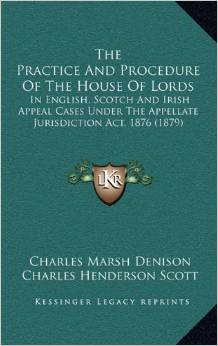
Unknown-3For more information on the legal system, I would recommend Charles Marsh Denison and Charles Henderson Scott’s “The Practice & Procedure of the House of Lords in English, Scotch & Irish Appeal Cases Under the Appellate Jurisdiction Act, 1876.”


__________________

PoMDC Cover-2-2The Prosecution of Mr. Darcy’s Cousin: A Pride and Prejudice Mystery from Pegasus Books

Fitzwilliam Darcy is enjoying his marital bliss. His wife, the former Elizabeth Bennet, presented him two sons and a world of contentment. All is well until “aggravation” rears its head when Darcy receives a note of urgency from his sister Georgiana. In truth, Darcy never fully approved of Georgiana’s joining with their cousin, Major General Edward Fitzwilliam, for Darcy assumed the major general held Georgiana at arm’s length, dooming Darcy’s sister to a life of unhappiness.

Dutifully, Darcy and Elizabeth rush to Georgiana’s side when the major general leaves his wife and daughter behind, with no word of his whereabouts and no hopes of Edward’s return. Forced to seek his cousin in the slews of London’s underbelly, at length, Darcy discovers the major general and returns Fitzwilliam to his family.

Even so, the Darcys’ troubles are far from over. During the major general’s absence from home, witnesses note Fitzwilliam’s presence in the area of two horrific murders. When Edward Fitzwilliam is arrested for the crimes, Darcy must discover the real culprit before the authorities hanged his cousin and the Fitzwilliam name knew a lifetime of shame.

Kindle 
Amazon 
Barnes and Noble 
Nook 

Regina Jeffers’ Website 

Austen Authors 

Posted in British history, Great Britain, Jane Austen, Living in the Regency, real life tales, Regency era | Tagged , , , , , , | 4 Comments

The Mysterious Death of Lord Darnley

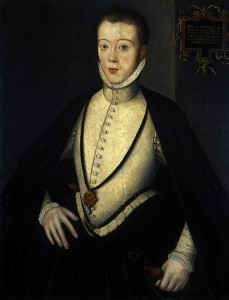
A contemporary portrait of Darnley ~ http://www.historicmysteries.com/murder-lord-darnley/

A contemporary portrait of Darnley ~ http://www.historicmysteries.com/murder-lord-darnley/

What do we know of Henry Stuart, Lord Darnley? He was the second husband of Mary, Queen of Scots. Darnley was tall enough to entice Mary, who was reportedly near six foot tall. He was a Catholic, but knew Anglicanism while attending the court of Elizabeth I. He was in line for the English throne though his mother, the Countess of Lennox. He and Mary married on 29 July 1565 in the Chapel at Holyrood Palace, Edinburgh, much to the dismay of many of Mary’s advisors. 

Supposedly, Darnley made enemies among the Scottish lords. He was arrogant and bad tempered. Even so, divorce was not possible for a Roman Catholic. 

Henry demanded the Crown Matrimonial from his wife, which would mean he would become King of Scotland if Mary died. She permitted him the title of King, but refused the legally binding Crown Matrimonial. Darnley blamed Mary’s refusal on David Rizzio, an Italian Catholic, who served as Mary’s  private secretary. Darnley, therefore, joined forced with several Protestant nobles to murder Rizzio. 

At a supper on 9 March 1566 at Holyroodhouse, Darnley and his coconspirators confronted Rizzio. Although Mary attempted to resolve the differences, Rizzio was stabbed 47 times. 

How did Darnley die? Darnley and Mary stayed at Kirk o’Field, a large church outside of Edinburgh on the evening of 9 February 1567. Conspirators secreted two barrels of gunpowder in the room below the one in which Darnley slept (the one assigned to Mary). Darnley was reportedly recovering from smallpox. [Many believe that Darnley suffered from syphilis.] At two of the morning, an explosion occurred, sending Darnley’s body hurtling some forty feet from the house. This find was part of the mystery. Should not Darnley’s body be found within the rubble of the explosion? Darnley’s body (and that of his servant found close by) displayed signs of strangulation.  (Historic Mysteries

Mary was away at a wedding upon the night of her husband’s death. 

Suspicion says Darnley learned of the plot beforehand and fled into the night and was killed then. Initially, the soldier who found the bodies was thought to be innocent, but was later arrested for the crimes, tried, and executed. Mary fled to England, only to be imprisoned by Elizabeth I and executed in 1587. 

One of the theories of the death comes to us from ScotlandsMary.com. “The man who had the most to gain from the death of Henry Stuart, was James Stuart, Earl of Moray, Mary’s half brother. He may not have physically committed the murder but he was the one behind the scenes pulling the strings and orchestrating the development of the plan.

Hugh R. Williamson wrote:
“Whoever the actual murderers were and however the crime was accomplished, and the mystery is never likely to be solved, there is no reasonable doubt that the man behind it all was Moray.

“After he was pardoned and recalled from England, he was never absent – except when it was dangerous to be present – from his sister’s side.

“He pretended to befriend both Darnley and Bothwell, playing on Darnley’s jealousy and on Bothwell’s growing affection for the queen.

“He had to accomplish an even more sensational coup before the end of that year 1567. In December, Mary would be twenty-five, and on her twenty-fifth birthday she would, by Scottish custom, have the right to annul or confirm all grants made during her minority.

“Moray knew well that at that moment his power and his wealth would be taken from him. But in any event, Mary on her twenty-fifth birthday was his prisoner in Lochleven Castle and he was Regent of Scotland, ruling in the name of the baby prince.”

Posted in British history, Great Britain, Uncategorized | Tagged , , , | Comments Off on The Mysterious Death of Lord Darnley

Cloutie Dumpling? A Recipe for Fun

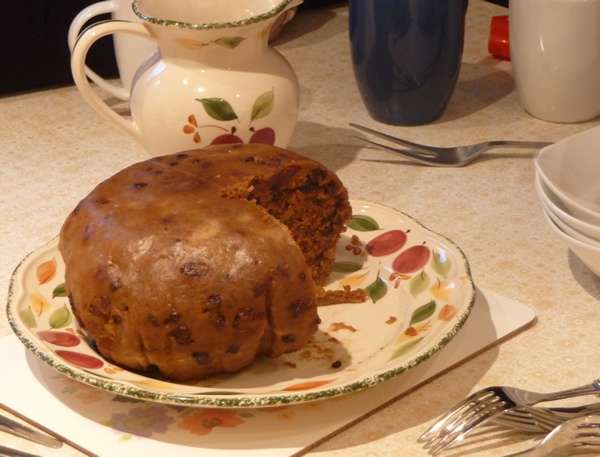
I enjoyed an afternoon of tea yesterday with some friends, one of whom served what she termed to be a traditional Cloutie Dumpling from Scotland. I am all in for traditional foods, especially those so tasty. (Yes, I have tried Haggis.)

Chicken & Dumplings Recipe women.programming4.us

Chicken & Dumplings Recipe
women.programming4.us

Now, I live in the South. When we say “dumpling,” we customarily mean a doughy bread cooked in a broth. Chicken and dumplings is quite popular. 

However, the Cloutie Dumpling is more of the nature of fruit cake. (I am one of those people who love fruit cake every Christmas [Yes, I am weird.], and I found this recipe is very much like my Christmas pudding one.)

As I understand it, Cloutie can also be seen as spelled as “Clootie,” which comes from the cloth in which the pudding is traditionally boiled. 

SiliconeMoulds.com Blog: Scottish Clootie Dumpling siliconemoulds.blogspot.com (Stupid Me! I should have taken a picture with my phone - borrowed this one from the internet.)

SiliconeMoulds.com Blog: Scottish Clootie Dumpling
siliconemoulds.blogspot.com (Stupid Me! I should have taken a picture with my phone – borrowed this one from the internet.)

Here is the recipe my friend shared:
125 g/4 oz. of suet (finely chopped)
1 tsp baking powder
200 g/ 4 oz. of currants and sultanas
1 tsp cinnamon
2 eggs
1 tsp ginger
250 g/ 8 oz of self-rising flour
75 g/ 3 oz brown sugar
1 tbsp golden syrup (maple syrup)
1 cup milk
1 tsp nutmeg
125 g/ 4 oz breadcrumbs
1 grated apple

Half fill a pot with water and bring it to a full boil.
Take a large piece of cheesecloth and scald it with boiling water.
Then dust the cloth with flour.
In a large bowl, first beat the eggs. Then mix in the syrup and about 1/4 of the milk. Gradually add in the dry ingredients and fruit – mixing well each time.
Place the mixture on the cheesecloth and secure. Allow enough room for the mixture to swell/rise.
Place an inverted plate on the bottom of the pan and put the pudding on it.
Boil for 3-4 hours.
Be careful not to let the water to drop below half the depth of the pudding.
Dip in cold water, remove the cloth and dry the pudding off in a medium oven.
Sprinkle with sugar and serve with cream or custard.

Here is a tip from Spark Recipes: *Clootie Dumpling traditionally used suet, which is raw beef or mutton fat, usually from around the loins and kidneys. Atora Suet is prepackaged and available in most supermarkets.
There is also a vegetarian version of Atora, called Atora Lite, which is obviously lowering fat. You can also ask for fresh suet from a butcher and then grate it yourself. Suggested substitutes are shortening, or very cold butter or margarine, as would be used for pastry making. However, the finished product will not hold together as well. 

Posted in British history, Scotland, tradtions | Tagged , , | 5 Comments

Readers’ Entertainment Magazine Interview with Regina Jeffers

Readers-Entertainment-Logo2This is an excerpt from an interview I did with Readers’ Entertainment News

1. First, tell us a bit about yourself. Where you’re from? Past jobs, awards, the usual bio stuff.

Born in Huntington, West Virginia, over the years, I held many positions: waitress, tax preparer, “Girl Friday” for a media mogul, Off-Broadway performer, media literacy consultant, and a public classroom teacher for forty years. I earned multiple advanced degrees from a variety of colleges and universities. I was a Martha Holden Jennings Scholar, a Time Warner Star Teacher, Columbus (OH) Educator of the Year, and a guest panelist for the Smithsonian. I have been a daughter, a wife, a mother, a grandmother, a teacher, and now an author.

2. What do you write? You’re welcome to include your latest title (shameless plug).

I began my career writing Jane Austen-inspired novels. My first, Darcy’s Passions, was a retelling of Austen’s Pride and Prejudice. That book was followed by…

Jane Austen-Inspired Novels:

Darcy’s Passions: Pride and Prejudice Retold Through His Eyes
Darcy’s Temptation: A Pride and Prejudice Sequel
Captain Wentworth’s Persuasion: Jane Austen’s Classic Retold Through His Eyes
Vampire Darcy’s Desire: A Pride and Prejudice Paranormal Adventure
The Phantom of Pemberley: A Pride and Prejudice Mystery
Christmas at Pemberley: A Pride and Prejudice Holiday Sequel
The Disappearance of Georgiana Darcy: A Pride and Prejudice Mystery                              The Mysterious Death of Mr. Darcy: A Pride and Prejudice Mystery                                      The Prosecution of Mr. Darcy’s Cousin: A Pride and Prejudice Mystery                               Elizabeth Bennet’s Deception: A Pride and Prejudice Vagary                                               Mr. Darcy’s Fault: A Pride and Prejudice Vagary Novella
“The Pemberley Ball” (a short story in The Road to Pemberley anthology)                      Honor and Hope: A Contemporary Pride and Prejudice

Regency and Contemporary Romances:

The Scandal of Lady Eleanor—Book 1 of the Realm Series (aka A Touch of Scandal)
A Touch of Velvet—Book 2 of the Realm Series
A Touch of Cashémere—Book 3 of the Realm Series                                                                      A Touch of Grace—Book 4 of the Realm Series                                                                               A Touch of Mercy—Book 5 of the Realm Series                                                                                A Touch of Love—Book 6 of the Realm Series                                                                                         A Touch of Honor—Book 7 of the Realm Series’                                                                                 His American Heartsong: A Companion Novel to the Realm Series                                           His Irish Eve                                                                                                                                            The First Wives’ Club—Book 1 of the First Wives’ Trilogy                                                      Second Chances: The Courtship Wars

Coming Soon…

Angel Comes to the Devil’s Keep
A Touch of Emeralds: The Conclusion of the Realm Series The Earl Finds His Comfort
The Earl Finds His Comfort 

Readers can preview each of my novels on my website (www.rjeffers.com).

3. Who has been the most difficult character for you to write?

In writing “extensions” of Austen’s classic tales, I am often called upon to bring to life one of her minor characters – creating a back story, a description, motivations, conflict, etc., for characters which Austen offered few details: Caroline Bingley, Colonel Fitzwilliam, Charlotte Collins, Sir Walter Elliot, Captain Harville. An audience of avid Austen fans who hold preconceived ideas of how the character looks and acts because of various film adaptations of Austen’s works compounds the problem. A writer must create Georgiana Darcy to resemble Emilia Fox from the 1995 adaptation of Pride and Prejudice, and Mr. Collins must hold a strong resemblance to Tom Hollander from the 2005 film.

Of all Austen’s minor characters, I want Anne De Bourgh to know a different life. I attempted three possible scenarios for Anne’s future, and although I am more comfortable with the rendering wrote in my Christmas at Pemberley, I am not totally satisfied with the depth of Anne’s characterization. I want to know more of Lady Catherine De Bourgh’s “sickly” daughter.

4. What characters are lying on your “office floor”? Why didn’t they come to life on the page and do you think they ever will? Or why not?

When I wrote A Touch of Velvet, I expected it to lead to two stories – one for each of Velvet Aldridge’s twin sisters, Cashémere and Satiné Aldridge. Needless to say, if I thought about it, I would know better. A Touch of Velvet was to be book one of the Realm series, but four chapters into writing the story of Brantley Fowler and Velvet Aldridge, I abandoned their story line. Brantley’s sister, Lady Eleanor Fowler, and Fowler’s commanding officer, James Kerrington, were “screaming” at me to tell their story first. Book 3 was to be the story of Marcus Wellston’s discovering Cashémere Aldridge was everything he never knew he needed.

Aidan Kimbolt and Satiné Aldridge were to come to a similar realization in Book 4. Yet, as I wrote A Touch of Cashémere, I found myself growing disillusioned by Satiné’s “woe is me” attitude. (Yes, I do realize that I gave the character those qualities I came to despise, but in my opinion, Satiné was not the appropriate match for Aidan Kimbolt, a character of whom I was quite fond.) Kimbolt deserved better. At the end of book 3, Satiné is in Europe.

Instead, book 4 became Gabriel Crowden’s and Grace Nelson’s joining. Kimbolt’s story is the center of Book 5, A Touch of Mercy. At length, I brought Satiné back into the series in book 7, Baron John Swenton’s story. Swenton developed an interest in Satiné in book 3, but I was still not so happy with her. You must read A Touch of Honor to discover her fate.

5. How much time does it take you to write a book?

I can finish a book in four months, but I would prefer a minimum of five. I hand write the first draft. I realize to many this appears counterproductive, but I find I am completing two steps at once. Because my cursive writing is slower than my typing, I have time to read aloud what I am writing. This provides me a good sense of how the story “sounds.” If I need a rewrite of a scene, I recognize it immediately and fix it, or I can make a notation to revisit it after the book is complete. Then I word process the piece. Again, I read the story aloud in my head. This serves as my second draft. Eventually, I correct one chapter per day the last month prior to my deadline. Although some revision does occur, this final check is more for editing. Surprisingly, my editorial changes are minimal because of the multiple checks prior to the final copy.

6. It seems there has always been an intense love of all things Jane Austen. I know many of your books are “Austen-related.” Why do you think there is this never-ending fascination with Austen, her writing, and the Regency period?

Austen’s appeal rests in the universality of her subject matter. She focuses on themes as old as time: marriage, the generation gap, and societal pressure. Jane Austen’s stories inspire self-reflection: what we never admit to ourselves, and what we will not permit others to know. In Austen, we discover the use of the family as the building block of society. Her stories take us back to a time “when things were simpler.” Her works are a mirror to our own society: as such, the reader is presented with a protagonist whose life and social standing is similar to his/her own. Austen’s heroines are women of sense, who exemplify rational love. Meanwhile, Austen transforms distant heroes into expressively communicative heroes. It is a magical combination.

7. Any funny “researching your book stories” to share with readers?

While writing, I regularly stop to research the use of a particular phase or a historic fact. Often, such research changes the original story line. For example, I have spoken previously of writing an exquisite scene for His American Heartsong, in which the main character, Arabella, is sprayed by a skunk. I was laughing aloud as I created a scene reminiscent of a friend’s encounter with a black and white intruder. Unfortunately, my instincts screamed with the realization that there are no skunks in England. A quick check proved my hunch true. I filed the scene in the trash and created a less enjoyable one.

8. What do you find is the hardest part of writing?

I do not write comic relief well. This statement would never surprise my family and friends. I am terrible at telling jokes – being one of those people who always anticipates the punch line. I rehearse a joke in private several times before I share it with others. It is not that I do not appreciate humor. In fact, I usually start an audience’s response during a film or live performance with my own laughter. I love juxtaposition, puns, malapropos, and reversals. I simply struggle in writing the ultimate comic mix. I hold a strong appreciation of those who master satire, parody, incongruity, and the double entendre.

Posted in Jane Austen, real life tales | Tagged , , , , , , | 5 Comments

The Anglo-Saxon World: King Alfred, William of Normandy, and the Doomsday Book

Alfred The Great Remains Found?  www.huffingtonpost.com

Alfred The Great Remains Found?
http://www.huffingtonpost.com

King Alfred is considered by many to be the wisest and greatest king.  As King of the West Saxons, Alfred (849 – 901) unified his people and constructed a victory against the Danes in 878 at Ethandum. Alfred led his people to civilization: founded schools, rebuilt cities, developed a code of laws, and set to right the justice system. Alfred was marked by his desire for learning. He commissioned the translation of the Latin works of Bede’s “Ecclesiastical History“; Orosius’s “History of the World“; Beothius’s “Consolations of Philosophy“; and Gregory’s “Pastoral Care” into the West Saxon dialect. He also directed the writing of “The Anglo-Saxon Chronicle.” 

The Anglo-Saxon Chronicle provides the reader with a history of Britain from the earliest times to 1154. The clerics who compiled the history chose the most important events of the years. The book is arranged chronologically. Most recorded events have connections to church affairs. The work records the life of the West Saxons, while speaking of personages of rank and the customs of the day. It is written in the West Saxon dialect. 

BBC - Your Paintings - William the Conqueror (1027/1028–1087) www.bbc.co.uk

BBC – Your Paintings – William the Conqueror (1027/1028–1087)
http://www.bbc.co.uk

According to History of English Literature: Part I – Early Saxon Through Milton ( page 23), “Harold II was the son of the powerful Earl Godwin, the real power in England during the preceding reign. Harold’s worthless brother Tosty leagued with King Harold of Norway (a descendant of Canute) to wrest England from its chosen ruler. At the time when William of Normandy was sailing for England. King Harold of England was forced to march into York to put down Tosty’s rebellion. At Stanfordbridge, he won a complete victory over Tosty and Harold of Norway.

“‘Meantime, Earl William (of Normandy came up from Normandy into Pevensey on the eve of St. Michael’s mass and soon constructed a castle at the port of Hastings. This was then told to King Harold; and he gathered a large force (marched two hundred miles in five days), and came to meet him at the estuary of Appledore. And there was a great slaughter made on either side.’ King Harold was slain…. William’s relationship to the House of Wessex and Edward’s promise that William should succeed him were less vlid claims than the strength of his army and his powerful position in European affairs. Edgar Atheling, the English claimant to the throne, promptly submitted: ‘On midwinter’s day Archbishop Alfred hallowed him to king at Westminster … and also swore him that he would so well govern this nation as any king before him did…. Nevertheless, he laid heavy tribute upon the men … wrought castles widely through this country, and harassed the miserable people.'”

The Domesday Book (1085) highlighted William the Conqueror’s thoroughness. It is the only survey of people of medieval England. It was another 800 years before the English people attempted another such survey. The Little Domesday book covers Norfolk, Suffolk, and Essex, while Great Domesday covers the remainder of England and Wales. No survey of London, Winchester and Durham was made for they were tax deferred areas. Cumberland and Westmoreland are not included for they had yet to be brought under control. 

The King’s men went into every shire to determine the number of units of hides (rural acreage) and what land belonged to the King. Also, the stock found upon the land was counted for tax purposes.


Posted in Anglo-Saxons, British history, Great Britain, real life tales, Uncategorized | Tagged , , , , | 2 Comments