Happy Birthday to Me!

This is the former Huntington High School. Is it not a beautiful building? We were over 1600 strong in grades 10-12, with 543 in my graduating class.

This is the former Huntington High School. Is it not a beautiful building? We were over 1600 strong in grades 10-12, with 543 in my graduating class.

We were the Pony Express.

We were the Pony Express.

This weekend, I will celebrate with my former classmates at our 50th Class Reunion. Moreover, today is my 68th Birthday! I will admit when I was 18 and looking forward to graduation, I thought 68 QUITE ANCIENT. Needless to say my perspective has changed. So, today, I mean to indulge myself with a retrospective look at my younger self. Please excuse my self-conceit. I promise it is only momentary. I’ll be back to examining all this Austen and Regency tomorrow. For now…party-clip-art-balloons-different-coloursparty-clip-art-balloons-different-colours

This is me at age 65. One of my former classmates is making a table book with many of our pictures. It will be "The Class at 65 at 65."

This is me at age 65. One of my former classmates is making a table book with many of our pictures. It will be “The Class at 65 at 65.”

My greatest accomplishment: being a mother to a wonderful son.

My greatest accomplishment: being a mother to a wonderful son.

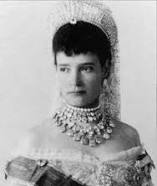
My senior picture in 1965. I was editor of the yearbook and belong to several clubs.

My senior picture in 1965. I was editor of the yearbook and belong to several clubs.

party-clip-art-balloons-different-colours

This is me in December 1970. If nothing else, this montage will prove me a true blonde.

This is me in December 1970. If nothing else, this montage will prove me a true blonde.

In the early 1970s, I taught at Buffalo High School, an experience I will forever cherish. One year, my students hired a "gorilla" to deliver me birthday balloons. How often does that happen?

In the early 1970s, I taught at Buffalo High School, an experience I will forever cherish. One year, my students hired a “gorilla” to deliver me birthday balloons. How often does that happen?

This is me dressed up in August 1957. I was 10 years old at the time.

This is me dressed up in August 1957. I was 10 years old at the time.

After losing two other children, in 1983, I carried to term (almost). My son was only 5 weeks early. I loved the "baby" Nike shoes. My Joshua is a runner even to this day.

After losing two other children, in 1983, I carried to term (almost). My son was only 5 weeks early. I loved the “baby” Nike shoes. My Joshua is a runner even to this day.

This was in rehearsal for "A Solid Gold Cadillac." I portrayed the prudish secretary, Amelia Shotgraven, to Mrs. Laura Partridge. In the film version, Judy Holliday played Mrs. Partridge. Do not worry, my prudish secretary won the heart of young office intern in the end.

This was in rehearsal for “A Solid Gold Cadillac.” I portrayed the prudish secretary, Amelia Shotgraven, to Mrs. Laura Partridge. In the film version, Judy Holliday played Mrs. Partridge. Do not worry, my prudish secretary won the heart of young office intern in the end.

I'm a second degree black belt. This is me as a green belt with a front kick. In reality, I'm holding the position so the photographer could snap the picture.

I’m a second degree black belt. This is me as a green belt with a front kick. In reality, I’m holding the position so the photographer could snap the picture.

Posted in Uncategorized | Tagged , , | 20 Comments

Interview with Black Opal Books’ Contemporary Romance Author, M. E. Gordon

Today, I’d like to introduce you to M. E. Gordon, another of the authors from Black Opal Books. Ms. Gordon is a new author to me (as well as you), as I just recently joined Black Opal Books for an upcoming Regency romance release (Angel Comes to the Devil’s Keep), so I thought an interview would serve us both well in learning more of  Ms. Gordon’s works. 

First, tell us a bit about yourself. From where do you come? Past jobs, awards, the usual bio stuff.

My name is Megan Gordon, and I hail from central Maryland. I’m a wife and mom to four kiddos under 6. Before I decided to try my hand at writing, I was a pre-school teacher. I stopped that once my husband and I decided to have horde of kids on our own. Didn’t really make sense to pay for someone to watch my kids while I watch someone else’s, so I quit, to stay at home and raise our kids.

How long have you been writing, and how did you decide this was a career you wanted to pursue?
I’ve always considered myself a writer. I journal and when I was a pre-teen I use to write my own stories and get my friends to read them. Thank God I’ve come a long way since then! At first I wrote as something to occupy my downtime, between diapers and bottles, but as I went on and finally finished my first novel Torn Hearts, I wanted to see it through all the way. My thought “Someone’s gonna want to read this.” And they did. Black Opal Books signed me after my submitting query letters to only three different publishers.

What do you write? You’re welcome to include your latest title (shameless plug).
I love writing about two people meeting, as well as their growing relationship: those first looks, funny banter, and electric charges. I live for those special experiences. I like writing this style, because I also like reading it! I love a good back and forth between characters and what might be going through their heads in those vulnerable moments. My genre is contemporary and new adult. But I have plans to explore the syfy new adult, and maybe if I ever really have the time to do research, I’d like to try historical. (Maybe when all the kids are in school…)

Tell us about your new release.
My very first book is called Torn Hearts. It’s not your typical romance in the sense that the main girl is a size 12. She’s not only dealing with love, but the realization that maybe she’s being used or taken advantage of. She has to remember to suck it in and watch the muffin top. These are things that most everyday women in the real world think and have to deal with. I wrote her as a size 12 because I was tired of reading about frail women with no back bone and who always seem to need someone to take care of them and tell them when to eat…really, who needs to be reminded to eat? It was a challenge to write for a plus size woman. For example, the girl is nervous about meeting a guy for a date, now multiply that by a million for a plus size girl. “Is he using me? Am I part of some joke? Are my rolls showing? Do I have a double chin?”

Tell us something of the genre in which you choose to write. If you write in more than one genre is your approach different for each genre, in the manner you write, plot the book, or brainstorm ideas?
With all my books (I’ll soon have three published by Black Opal Books) I find that I start with an idea and just write as if I was watching a movie in my head. I jot down ideas for plot twists (who doesn’t love a plot twist?) but don’t necessarily stick to them. I try to get into my character’s head and react to the situations as they come and just see where it takes me in the story. With Torn Hearts, I had a clear vision of what I wanted to happen, and it was a matter of hitting all the main milestones in the book. With my second book Make Me Stay, I changed the way I wrote. I decided to switch back and forth from the main girl to the main guy so the reader could get inside both the male and female head. I love writing like this. The characters end up driving the story. All I do is add in obstacles for them to navigate around.

What difficulties does writing this genre present?
So in the contemporary genre, I feel like it’s flooded with authors and books. There are so many books in the contemporary/ new adult genre it’s hard to break through and have a stand out book. It’s so difficult to make one’s book stand out from the others, but if a person has a solid story and great characters that readers can either relate to or crush on, he/she’s golden.

What do you enjoy most in the writing process? What parts of it do you really dislike?
I love writing dialogue! It’s my favorite thing about writing. I feel like when I read that I sometimes jump over the boring stuff and get straight to the dialogue. It’s what drives a book in my eyes. You can only read about what someone is thinking for so long before you get bored stiff.
As far as what I dislike about writing… it has to be editing. I know it has to be done, but sometimes I don’t even want to read my book more than ten times. My eyes start going crossed and soon I find myself trolling around the Internet just to avoid it.

How much time do you devote to writing each day?
Once I get the kids in a good schedule with school and drop off/pick up, I try to sit for at least 2-3 hours a day. Now there are times where I’m on a roll and will stay up all night, but I pay for it in the morning.

How do you choose your characters’ names?
I pick my characters’ names by how they sound together. For instance, in my book Make Me Stay is about Kane and Kitty. I like things that flow nicely off the tip of your tongue.

How do you keep all your research information and plot ideas organized and accessible?
I have a journal for each book that I write. In these I jot down everything from character description to possible quotes. I write down songs that inspire me and details about how rooms look or different places in the book.

What was your favorite chapter (or part) of your current project to write and why? 
So in Torn Hearts, my favorite part to write was the argument between Spencer Salvatore and Beth when she finally gave in not only to him, but to the feelings she was suppressing. I feel like it’s sexy and gets the reader’s blood pumping. You don’t know who to be mad at, him for making her choose, or her for running away. Plus, there’s really good dialogue, and we all know I love a good conversation or argument in this case.

How do you get past writer’s block or distractions like the Internet?
When I have writer’s block, I walk away. I put it all away and just live my life. Usually within a few days I find myself coming up with dialogue or plot ideas. I scramble for a pad of paper or jot something down on my phone if I’m out, and before I know it I’m back at it.
The Internet is another topic all together. It’s a black hole for writers, and if you’re not careful you will get sucked in.

What was your favorite book from childhood?
As a child, the story I remember the most was The Giving Tree and the Berenstain Bears books. I enjoyed all of those.

Who has been the most difficult character for you to write?
The most difficult character to write so far for me has been Spencer Salvatore from Torn Hearts. He’s a mystery to me even to this day. He’s so complicated that it’s hard to keep his personality where it needs to be in certain scenes in the book. I know so much more about his background than the reader, and it’s difficult to remember that when writing for him.

How much time does it take you to write a book?
It can take me as little as 3 months and as long as 8 months to write a book. It all depends on what my schedule looks like with the kids, because they do come first.

Can you tell us something of your upcoming projects?
I am so excited about my second book Make Me Stay. I think it’s the best book that I have written. It’s about a rock band called One Night Stand. I plan on writing a book for each one of the guys in the band. In these books, you see them start off in a small town bar where they slept around with a different woman every night to eventually them making it big. On their way to fame, they each meet their match in a feisty woman. These books are when I started switching perspectives back and forth, and I think it works really well and gives the reader a better sense of the characters and why they act the way they do.

What do you find is the hardest part of writing?
Everything has been pretty good up until it was time to promote my book. I’m not a blogger or twitter-er, nor do I have a huge following, so getting my book into people’s hands has been challenging. I keep asking for reviews, and sometimes I get nothing back. Another reason this genre is hard is people already have their favorites, and it’s hard to get people to buy one’s book when they don’t know the author or her writing style. Promoting is almost a full time job in itself. I see why some authors hire someone to help them. Hopefully, I can get there one day because navigating blogs and blitz and tweets is way, and I mean way, over my head.

What will you be working on next?
Right now I’m working on the third book in my rock band series and promoting my first book Torn Hearts. I plan on finishing the sequel to Torn Hearts soon so that it can get it to my publisher and then into readers’ hands.

Pageflex Persona [document: PRS0000040_00008]Torn Hearts from Black Opal Books:

A TALE AS OLD AS TIME – A GIRL, TALL AND WISY, HAIR THE COLOR OF THE SUN, EYES AS BLUE AS THE SKY, CAUGHT IN A LOVE TRIANGLE WITH THE NOBLEST OF MEN…

NOT IN THIS BOOK, HONEY!

My name is Elizabeth, and I’ve managed to avoid men most of my life. I wasn’t a nun by any means, but I knew what the Hot Guys wanted, and it usually wasn’t me. How I got myself involved in a love triangle with one sexy photographer and a millionaire bachelor, who has women worshipping the ground upon which he walks, is beyond me. 

Yet, here I am navigating unknown waters: figuring out which man is right for me, dealing with my family, and you guessed it, the paparazzi.

What a girl to do? Who do I trust? Who is genuine? What if both men are perfect in different ways? How does a girl choose just one? What if I choose to keep them both? 

Purchase Links:

Amazon

Barnes and Noble

Smashwords

KOBO

All Romance eBooks

Black Opal Books

Posted in Black Opal Books, Guest Post, interview | Tagged , , , , | 3 Comments

Desiring Elizabeth Bennet ~ Discussing “Pride and Prejudice” 2005

This past week, the “Devoted Friends of Pride and Prejudice 2005″ and the “Pride and Prejudice 05 Blog” highlighted this post. I thought I might repeat it here because tomorrow, September 16 is the 10 year anniversary of the release of the Joe Wright film in Europe. By the way, the P&P05 blog has a variety of events going on this month in celebration of the anniversary. Check out all the discussions going on. 

In a previous post, I discussed how Andrew Davies “created” the image of a very masculine and virile Darcy by adding scenes to the 1995 Pride and Prejudice adaptation. Some of you reading this post likely participated in “Darcy Loving Parties” at the time of this mini-series’ release.

Today, I would like to examine the visual shift of “desire” to Elizabeth Bennet in the 2005 film. Casting the beautiful Keira Knightley in the lead role changed the focus. Choosing Ms. Knightley, who established herself in Bend It Like Beckham, King Arthur, Love Actually, and The Pirates of the Caribbean, was designed to appeal to a younger and wider audience. Add Joe Wright’s emphasis on social realism to Knightley’s casting, and we have a film that grossed over $125 million worldwide.

Knightley’s casting could have backfired. Remember that Austen describes the character as, “She (Elizabeth) is tolerable, but not handsome enough to tempt me.” and “But no sooner had he made it clear to himself and his friends that she had hardly a good feature in her face ….” and “Though he had detected with a critical eye more than one failure of perfect symmetry in her form ….” Obviously, the casting of the equally lovely Rosamund Pike as Jane helped to “sell” the idea that Elizabeth’s fair face was less than her elder sister’s.

Pride-Prejudice-2005-movie-quoteIn the 2005 film, Elizabeth (Knightley) is found in EVERY scene, from the opening shot of her walking home while reading her book to the final kiss in the American version. The camera follows Elizabeth through the house. We see her world through Elizabeth’s eyes. When she walks away from Darcy at the Meryton assembly, everyone else pales, but our focus remains constant on Elizabeth. She is framed by the retreating camera lens.

When Elizabeth and Jane share secrets under the blankets, the audience is invited to join them. When she sensually traces Darcy’s belongings with her fingertips, we feel Elizabeth’s longing for a man she has allowed to slip through her fingers.

Elizabeth - Pride and Prejudice 2005 Image (10317296) - Fanpop www.fanpop.com

Elizabeth – Pride and Prejudice 2005 Image (10317296) – Fanpop
http://www.fanpop.com

Jane Austen's Pride & Prejudice' Reaches 200 Years | A.E.A. Green ashleagreen.wordpress.com

Jane Austen’s Pride & Prejudice’ Reaches 200 Years | A.E.A. Green
ashleagreen.wordpress.com

Through the camera, the viewer is always at Elizabeth’s side. We read over her shoulder in the opening scene. We enjoy the interplay between Elizabeth and Mr. Bennet regarding Mr. Collins’s pomposity. We hide behind a Netherfield column with her when her family’s actions bring humiliation. We observe Darcy’s approach through the morning mist as Elizabeth would, and we peek through the open door as she watches Darcy spin his sister around in circles.

Even when we have the occasional film seconds when Knightley is not in the framing, the scene pans to Elizabeth’s presence. It’s as if the camera leads us back to her. The maid carries items through the Bennet household and ends up in Elizabeth and Jane’s shared room. The intimate scene of Mr. and Mrs. Bennet’s bedroom guides us to another meeting between Jane and Elizabeth. Darcy’s appreciation of Georgiana’s pianoforte skills lead the viewer to Elizabeth’s accepting his invitation to Pemberley.

Knightley’s star power is “lessened” by her appearance in dingy, drab dresses and having her surrounded by a “working” home: animals, a barnyard swing, the kitchen, clothes lines, disarray. These techniques “muffle” Knightley’s beauty and allow the viewer to accept her as Austen’s most famous character. In contrast to the 1995 film, Matthew Macfadyen’s Darcy is often shot from a distance and always fully clothed (minus the American ending again). Even his open-shirt appearance in the pre-dawn hours is viewed from Elizabeth’s point of view. He’s coming to her. She waits for him. Therefore, she remains the center of attention.

▶ My Immortal- Pride & Prejudice - YouTube www.youtube.com

▶ My Immortal- Pride & Prejudice – YouTube
http://www.youtube.com

Wright’s “extra” scenes direct the desire to Elizabeth. Davies’s film showed Darcy in his bath and diving into a pond to increase Colin Firth’s role. Wright uses the near kiss from Darcy’s first proposal, the caress as Darcy assists Elizabeth to the carriage, and the seductive circling of Darcy and Elizabeth at the Netherfield Ball as part of the film’s sexual subtext. These and several other scenes amplify the desire for Elizabeth.

The queen of modern slang: Jane Austen is revealed to have coined phrases we use everyday | Daily Mail Online www.dailymail.co.uk

The queen of modern slang: Jane Austen is revealed to have coined phrases we use everyday | Daily Mail Online
http://www.dailymail.co.uk

One part of the film that has received much criticism is the way this adaptation minimizes the relationship between Elizabeth and Wickham and between Elizabeth and Colonel Fitzwilliam. Wright chose to omit Austen’s diversions because Elizabeth is the one to be desired, and Elizabeth desires Darcy. In this version, we do not consider her flirtation with either man as serious possibilities. In the 2005 film, Wickham spends more time with Lydia than he does with Elizabeth.

Okay, it is your turn. Where else in the film is Elizabeth the point of desire? How has her character been created? I have other ideas, but I am waiting for our Miss Austen’s loyal fans to add their own opinions.

Holden, Stephen. “Marrying off Those Bennet Sisters Again, but This Time Elizabeth is a Looker.” Review of Pride and Prejudice. The New York Times. 11 Nov. 2005. {http://movies2.nytimes.com/2005/11/11/movies/11prid.html?ex=1176782400&en=97912be821dd7738&ei=5070}

Posted in Austen Authors, Great Britain, Jane Austen, Living in the Regency, Regency era | Tagged , , , , | Comments Off on Desiring Elizabeth Bennet ~ Discussing “Pride and Prejudice” 2005

From Where Does That Phrase Come?

Catch Word is a word under the right-hand side of the last line on a book page that repeats the first word on the following page – circa 1736. It was commonly used in printing. The phrase has come into the language via the theatre. The last word of one actor’s speech is the cue for the next actor to speak. The second actor must “catch” the first’s to know when he is to speak.

mftyv5pudj8fz2colbnueyaA triangular plot of land is often referred to as a Heater Piece. The triangle looks like a flatiron, therefore, the name. Those who live in NYC likely have heard of the Flatiron Building, which sits upon a triangular piece of land at the intersection of Twenty-third Street and Fifth Avenue. (Dictionary of Word Origins)

A phrase often found in Regency romances is Carte Blanche, customarily referring to a gentleman of the time giving his mistress “carte blanche.” The meaning has come to refer to freedom of choice or full discretionary power. In French it is literally a “white card.” The first known use was 1751. It was the custom of the time for a man of wealth or importance to sign blank sheets of paper so a trusted subordinate might fill in the necessary order or letter of business upon his behalf.

Shiver My Timbers is an oath expressing annoyance or surprise. Most likely it is purely a literary invention rather than a piratical term. In 1834, Frederick Marryat used the oath in his Jacob Faithful: “I won’t thrash you, Tom. Shiver my timbers if I do.” Robert Louis Stevenson used the phrase three times in his 1883 Treasure Island: “Well, he [Old Pew] is dead now and under hatches; but for two years before that, shiver my timbers, the man was starving!” In 1949, in Mark My Words John B. Opdyke claimed “the expression ‘shiver my timbers’ belongs to cricket, referring to scattering or strewing wickets for which ‘timbers’ is a slang substitute.” (Heavens to Betsy, pg. 105)

cart-before-the-horsePlacing the Cart Before the Horse means exactly what it says – not putting things in the correct order. From Phrase Finder we learn, “An early reference to ‘putting the cart before the horse’ comes in George Puttenham’s The Arte of English Poesie, 1589: Ye haue another manner of disordered speach, when ye misplace your words or clauses and set that before which should be behind. We call it in English prouerbe, the cart before the horse, the Greeks call it Histeron proteron, we name it the Preposterous

He was probably referring back to, or possibly translating directly from, a work by Cicero (106 BC – 43 BC) – On Friendship: “We put the cart before the horse, and shut the stable door when the steed is stolen, in defiance of the old proverb.” A hysteron proteron is a figure of speech we inherited from the Greeks, in which the thing that should come second is put first; for example, ‘putting on one’s shoes and socks’. It isn’t surprising that, when needing an Anglicised proverb to express that notion, the English turned toward what they knew best, that is, agriculture, and in particular, horses. There are more ‘horse phrases’ in English than those referring to any other animal, including ‘man’s best friends’, dogs. The notion of things being the opposite of what they rightfully should be seems to have played on the minds of the English at the time when modern English began to be formed, that is, in the 16th century. It is a common theme in Shakespeare and The Tempest, Macbeth and A Midsummer Night’s Dream all contain ‘world turned upside down’ magical elements.”

Neither Hide Nor Hair is a cliché indicating no sign of a person or thing is to be had. The Phrase Finder says the current phrase is a corruption of one known in Chaucer’s time and meant “wholly or entirely.” Reportedly in the metrical Life of St. Cuthbert one finds: “Pai were destroyed, bath hare and hyde.” (Heavens to Betsy! Pg. 145) Josiah G. Holland used the phrase in his 1857’s The Bay-Path; a Tale of New England Colonial Life: “I haven’t seen hide nor hair of the piece ever since.” 

To Grease a Person’s Palm means to act in kindness to another in hopes of future gains or favors. In present day vernacular the phrase means to give money to someone in authority in order to persuade him to do something for you, especially something wrong. According to A Hog on Ice (page 81), “The present expression has been in vogue since the beginning of the eighteenth century, changed since the early sixteenth century only in the substitution of ‘palm’ for ‘hand.’ Our present form, however, is a direct translation of a French phrase of the Middle Ages, ‘oindre la paume á quelqu’un.’ Littré, the French philologist, tells of an ancient story about an old woman whose two cows had been seized by the provost and who then received the advice that she would have saved herself from trouble had she first ‘greased his palm.’”

A Chain is Only as Strong as Its Weakest Link comes to us via the 18th Century and Thomas Reid’s Essays on the Intellectual Powers of Man (1786):”In every chain of reasoning, the evidence of the last conclusion can be no greater than that of the weakest link of the chain, whatever may be the strength of the rest.” (Phrase Finder)

poor-richardA Watched Pot Never Boils refers to how time feels longer when one is waiting for something to happen. According to Phrase Finder, the homely comes to the language via Poor Richard’s Almanac, written by the venerable Benjamin Franklin. In a report on Franz Mesmer’s controversial theory of ‘animal magnetism,’ Franklin (1785) wrote “Finally another Breakfast is ordered. One servant runs for fresh Water, another for Coals. The Bellows are plied with a will. I was very Hungry; it was so late; “a watched pot is slow to boil.” 

Preposterous means contrary to reason or common sense. Its first known use was 1542. “Pre” is a Latin prefix indicating something at the front. “Post” is a Latin root meaning at the back. So “preposterous” should mean the front is in the front and the back in the back, but it does not. It is the reverse.

He Who Laughs Last Laughs Longest is a proverb from the times of the Tudors, but not from Shakespeare. In a play entitled “Christmas Prince,” first performed at Cambridge in 1608, we find “Laugh on laugh on my freind/Hee laugheth best that laugheth to the end.”

Posted in American History, Great Britain, real life tales, word play | Tagged , , | 5 Comments

Jane Austen’s “Literary” Brothers

Many of those around her influenced Jane Austen, but Henry’s and James’s influences were profound. Most of Austen’s biographers believe that Henry was Austen’s favorite brother and James her least favorite.

James Austen was the eldest of the Austen clan, a youth with a quick mind and a love of the classics.  Matriculating to Oxford at age 14, James remained at the school for eleven years. James enjoyed writing poetry, and the Austen family encouraged him to do so.  As entertainment, the Austen family often acted out ammeter theatricals. Reportedly, James composed metrical prologues and epilogues for these “family” plays. Many believe these efforts by the eldest Austen had a profound effect on one of the youngest, Jane. 

Henry Austen | Jane Austen's World janeaustensworld.wordpress.com

Henry Austen | Jane Austen’s World
janeaustensworld.wordpress.com

Six years James’s junior, Henry joined James at Oxford in 1788, and in 1789, the brothers began producing a weekly periodical, called The Loiterer, which contained a series of fashionable essays. James and his friends provided the majority of the essays; however, Henry became quite adept at the occasional piece of fiction. Henry used “stock” characters and situations – those commonly found in the fiction of the day. The brothers continued their efforts for 60 consecutive weeks – quite an undertaking for the time.

Some biographers suggest that Jane Austen wrote one of the letters published in The Loiterer. The letter expressed an objection to the lack of a female perspective in the articles published in the weekly periodical. It was signed “Sophia Sentiment.” It is said that the issue containing the letter supposedly written by Jane Austen (issue 9) was the only one to be advertised for sale in North Hampshire, where the Austen’s lived. The other issues were for sale at Oxford and in London. In the Cambridge University Press collection of Austen’s Juvenilia, Peter Sabor suggests that the letter may have been inspired by Jane’s voice in her brothers’ ears rather than her actually writing the letter.

Rev. James Austen ~  Jane Austen Newsletter Template www.janeausten.co.uk

Rev. James Austen ~
Jane Austen Newsletter Template
http://www.janeausten.co.uk

James’s poetry efforts dwindled as he settled into the life of a country clergyman. As the heir to his wealthy, childless uncle, James Leigh Perrot, James Austen’s future was solid. After leaving Oxford, James became Rector of Steventon (rather than his father’s curate at Deane). He married twice – the second marriage bringing him two children, but gave him a wife with whom he was generally thought to be disappointed. We have no records of James’s poetry from 1789 to 1805.

Henry is well known among Austen scholars as Jane’s “man of business,” acting as her agent in arranging the publication of Austen’s novels. He managed to convince Thomas Egerton, who coincidentally had published the Austen brothers’ efforts with The Loiterer, to take a chance on a piece of fiction. Egerton specialized in pieces of military history, so this was a different track for the publisher. In 1811, Egerton published Sense and Sensibility, by a Lady. Henry likely advanced the £180 upfront fees for printing and advertising for the novel.

Posted in British history, family, Great Britain, Jane Austen, literature, Living in the Regency, real life tales, Regency era | Tagged , , , , | 2 Comments

Anglo-Norman Literature: The Pearl Poet

Pearl, miniature from Cotton Nero A.x. The Dreamer stands on the other side of the stream from the Pearl-maiden. Unknown - http://volokh.com/sasha /london2.html http://www.oxforddnb. com/public/themes/ 94/94766-content.html ~ Public Domain

Pearl, miniature from Cotton Nero A.x. The Dreamer stands on the other side of the stream from the Pearl-maiden.
Unknown – http://volokh.com/sasha
/london2.html http://www.oxforddnb.
com/public/themes/
94/94766-content.html ~ Public Domain

The poem known as Pearl came to us in the fourteenth century, c. 1370. It is the first of four poems copied by a single scribe. Patience and Purity retell stories from the Old Testament and Sir Gawain and the Green Knight is part of the Arthurian legend. Paul Deane says, “We do not know who he is, but this author was one of the greatest English writers of the Middle Ages. But we know he exists only because of a single manuscript, containing four poems: Sir Gawain and the Green Knight, Pearl, Patience, and Purity. They appear to have been written by a single author; and of these, Sir Gawain and the Green Knight is considered to be one of the classics of English literature.

“About all we know about him is what can be gleaned from the poems. The dialect is that of the north west Midlands of England. The content reveals someone who was familiar with aristocratic life, who took both Christianity and chivalry seriously, though not without a wry sense of humor and a well-honed sense of the ridiculous. This is an author who could go against medieval prudishness and present God praising sexual love (within marriage) in his poem “Purity” and who could flout all the romantic conventions of courtly love, presenting Gawain as a knight both chivalrous and chaste (but oh, all too human.) He represents a very different kind of Englishman than we see in Chaucer’s Canterbury Tales. And though we do not know who he was, he has enriched English literature immensely. (Copyright © 1999 Paul Deane)

The fact that the author did not sign his name to these pieces was not uncommon at the time. We must recall that English was the language of “commoners,” in a time when French was the language of the educated, the cultured, and the court. Only one copy of the text in which all four poems can be found exists. The British Library holds a a vellum manuscript of the poems. Even so, the poems ranks as some of the most important pieces of English literature. 

“Pearl” is a “crossing over” tale, similar in form to Middle Ages’ dream sequences. Authorities think the poet who created “Pearl” was familiar with Dante’s Divine Comedy, William Langland’s Piers Plowman, and some of Chaucer’s works. From the Robbins Library Digital Projects, we learn “In his dream the narrator of Pearl slips into an ‘aventure,’ which means ‘marvel’ or ‘quest’ (line 64)….Pearl opens in a setting that emphasizes limits: ‘clos,’ meaning ‘set’ or ‘enclosed,’ is a key word of the second line. In its staging of a dream vision, Pearl is explicitly situated within a courtly and aristocratic world; and indeed, the poem in many aspects takes its shape and particular power from the interplay between a courtly habits, a place of money, judgment, pleasures, and rules of behavior, and the uncanny yet familiar space of the crossing-over. Beginning with a precious object, the poem also opens with attention to location and surveillance, set in motion through acts of judgment in familiar kinds of spaces. The jeweler/narrator looks at and judges gems in general; he has one in particular in a splendid setting, so ‘cleanly close’ (line 2), but it falls from him and disappears into the ground; his ‘[a]llas’ (line 9) precipitates the poem backwards into the past through a memory of loss.” (TEAMS: Middle English Test Series)

The poem uses first person narrative. It also uses the “pearl” as a metaphor, but the metaphor changes throughout the piece. The metaphoric structures intermixes with a linear narrative. TEAMS tells us “The pearl is a gem, is a two-year-old child, is a beautiful young woman, is the immortal soul, is the heavenly city, as well as a collective of the properties that inhere to each term singly. The language of Pearl is unusually rich in the double entendre, also a form of metaphor.”

Wikipedia provides us a summary of the Structure and Plot of the poem. 
“The poem may be divided into three parts: an introduction, a dialog between the two main characters in which the Pearl instructs the narrator, and a description of the New Jerusalem with the narrator’s awakening.

“Prologue
Sections I – IV (stanzas 1- 20) The narrator, distraught at the loss of his Pearl, falls asleep in an “erber grene” – a green garden – and begins to dream. In his dream he is transported to an other-worldy garden; the divine is thus set in opposition to the terrestrial, a persistent thematic concern within the poem. Wandering by the side of a beautiful stream, he becomes convinced paradise is on the other shore. As he looks for a crossing, he sees a young maid whom he identifies as his Pearl. She welcomes him.

“Dialogue
Sections V – VII (stanzas 21 – 35) When he asks whether she is the pearl he has lost, she tells him he has lost nothing, that his pearl is merely a rose which has naturally withered. He wants to cross to her side, but she says it is not so easy, that he must resign himself to the will and mercy of God. He asks about her state. She tells him that the Lamb has taken her as His queen.

“Sections VIII – XI (stanzas 36 – 60) He wonders whether she has replaced Mary as Queen of Heaven. He also objects that she was too young to merit such a high position through her works. She responds that no one envies Mary’s position as Queen of courtesy, but that all are members of the body of Christ. Adopting a homiletic discourse, she recounts as proof the Parable of the Workers in the Vineyard. He objects to the idea that God rewards every man equally, regardless of his apparent due. She responds that God gives the same gift of Christ’s redemption to all.

“Sections XII – XV (stanzas 61 – 81) She instructs him on several aspects of sin, repentance, grace and salvation. She describes the earthly and the heavenly Jerusalem, citing the Apostle John and focusing on Christ’s past sacrifice and present glory. She wears the Pearl of Great Price because she has been washed in the blood of the Lamb, and advises him to forsake all and buy this pearl.

“Epilogue
Sections XVI – XX (stanzas 82 – 101) He asks about the heavenly Jerusalem; she tells him it is the city of God. He asks to go there; she says that God forbids that, but he may see it by a special dispensation. They walk upstream, and he sees the city across the stream, which is described in a paraphrase of the Apocalypse. He also sees a procession of the blessed. Plunging into the river in his desperation to cross, he awakes from the dream back in the “erber” and resolves to fulfill the will of God.


Posted in Anglo-Normans, British history, Great Britain, literature | Tagged , , , , , | Comments Off on Anglo-Norman Literature: The Pearl Poet

A Labor Day Break from Blogging…

LABOR DAY: WHAT IT MEANS

According the U.S., Department of Labor, “Labor Day, the first Monday in September, is a creation of the labor movement and is dedicated to the social and economic achievements of American workers. It constitutes a yearly national tribute to the contributions workers have made to the strength, prosperity, and well-being of our country.” (History of Labor Day)

LABOR DAY LEGISLATION

“Through the years the nation gave increasing emphasis to Labor Day. The first governmental recognition came through municipal ordinances passed during 1885 and 1886. From these, a movement developed to secure state legislation. The first state bill was introduced into the New York legislature, but the first to become law was passed by Oregon on February 21, 1887. During the year four more states — Colorado, Massachusetts, New Jersey, and New York — created the Labor Day holiday by legislative enactment. By the end of the decade Connecticut, Nebraska, and Pennsylvania had followed suit. By 1894, 23 other states had adopted the holiday in honor of workers, and on June 28 of that year, Congress passed an act making the first Monday in September of each year a legal holiday in the District of Columbia and the territories.” (The History of Labor Day)

History of England www.slideshare.net HISTORY OF ENGLAND “Dieu et mon droit” God and my ...

History of England
http://www.slideshare.net
HISTORY OF ENGLAND “Dieu et mon droit” God and my …

So, as many of my U.S. friends are doing, I’m taking off work today. I must refuel my energies. I offer you a review of some of my most recent posts dealing with the early history of England and the development of the English literature. Enjoy your families!!!

The Development of the English Language During the Anglo-Norman Period ~
Anglo-Normans, Anglo-Saxons, British history, Great Britain, Chanson de Roland, Charlemagne, Earl William of Normandy, King Arthur, Mercian, Norman Conquest, Norman French, Northumbrian, West Saxon.
___________________________________

Anglo-Norman Literature ~
Anglo-Normans, British history, Great Britain, literature, real life tales, ballads, England, Geoffrey of Monmouth, Geraaldus of Wales, Great Britain, Layamon, literature, Wace, Walter Map. 
___________________________________

Anglo-Norman Literature: Introduction to Medieval Verse Romance ~
Anglo-Normans, British history, Great Britain, real life tales, Alexander the Great, Arthurian legends, Chansons de geste, Charlemagne, England, epic poems, literature, medieval verse romance, siege of Troy. Bookmark the permalink. Edit
_________________________________

Anglo-Norman Literature: Sir Gawain and the Green Knight ~
Anglo-Normans, British history, Great Britain, literature, Arthurian legend, literature, romance verse, Sir Gawain and the Green Knight.
_________________________________

Anglo-Norman Literature: Beyond “Sir Gawain and the Green Night” ~
Anglo-Normans, British history, literature, romantic verse, King Arthur, King Horn, Layamon’s Brut, medieval, medieval literature, Modred, romantic adventure.
———————————-
Anglo-Norman Literature: Ballads (Part 1) ~
Anglo-Normans, ballads, British history, Great Britain, Child ballads, Edward. The Douglas Tragedy, Riddles Wisely Expounded, Robin Hood and Guy of Gisborne, Robin Hood and the Monk, Robin Hood’s Death, Sir Patrick Spens, The Wife of Usher’s Well.
__________________________________

Anglo-Norman Literature: Ballads (Part 2) ~
Anglo-Normans, ballads, British history, Great Britain |Bonnie George Campbell, Bonny Barbara Allen, Johnnie Armstrong, Kemp Owyne, Sweet William’s Ghost, The Hunting of the Cheviot, The Three Ravens, The Twa Corbies, Thomas Rymer and the Queen of Elfland __________________________________

Brief History of England - Eupedia www.eupedia.com

Brief History of England – Eupedia
http://www.eupedia.com

Life in Early Britain: The Anglo-Saxons ~
Anglo-Saxons, British history, Great Britain, cultural characteristics.
__________________________________

Anglo-Saxon Literature: The Epic Poem “Beowulf” ~
Anglo-Saxons, British history, Great Britain, Beowulf, epic poem, literature.
___________________________________

Anglo-Saxon Literature: Early Epic Poems ~
Anglo-Saxons, British history, Great Britain, literature, Beowulf, epic poem, The Battle of Bruna’s Burg, The Battle of Maldon, The Finnesburg Fragment.
__________________________________

Anglo-Saxon Literature: Charms and Riddles ~
Anglo-Saxons, British history, Great Britain, literature, charms, literature, poetry, riddles.
___________________________________

Anglo-Saxon Literature: Poetry ~
Anglo-Saxons, British history, Great Britain, literature, poetry, Deor, elegy, literature, lyric, Old English, The Seafarer, Widsith.
__________________________________

Anglo-Saxon Christian Writings ~
Anglo-Saxons, British history, Bede, Caedmon, Cynewulf, religious writing
___________________________________

The Anglo-Saxon World: King Alfred, William of Normandy, and the Doomsday Book ~
Anglo-Saxons, British history, Great Britain, King Alfred, The Anglo-Saxon Chronicles, the Doomsday Book, William of Normandy.


Posted in American History, Anglo-Normans, Anglo-Saxons | Tagged , , , , , , , , | 2 Comments

UK “Real” Estate: The Isle of Portland and Nanny Diamond Faires


Isle of Portland, United Kingdom Location Guide www.weather-forecast.com

Isle of Portland, United Kingdom Location Guide
http://www.weather-forecast.com

The Isle of Portland is a limestone tied island, 6 kilometres (4 mi) long by 2.4 kilometres (1.5 mi) wide, in the English Channel. Portland is 8 kilometres (5 mi) south of the resort of Weymouth, forming the southernmost point of the county of Dorset, England. A tombolo, over which runs the A354 Road, connects it to Chesil Island and the mainland.

Portland is a central part of the Jurassic Coast, a World Heritage Site on the Dorset and east Devon coast, important for its geology and landforms. Portland stone, famous for its use in British and world architecture, including St Paul’s Cathedral and the United Nations Headquarters, continues to be quarried.

Portland Harbour, in the bay between Portland and Weymouth, is one of the largest man-made harbours in the world. Building of stone breakwaters between 1848 and 1905 formed the harbour. From its inception it was a Royal Navy base, and played prominent roles during the First and Second World Wars; ships of the Royal Navy and NATO countries exercised in its waters until 1995. The harbour is now a civilian port and popular recreation area, which will be used for the 2012 Olympic Games.

The Isle of Portland, Dorset, contains eight settlements, the largest being Fortuneswell in Underhill and Easton in Tophill. Castletown and Chiswell are the other villages in Underhill, and Weston, Southwell, Wakeham and the Grove occupy Tophill.

On the isle, near Southwell, fairies, known as “Nanny Diamonds” reportedly haunt the road. Likely, the name comes from “Nanoid,” meaning dwarf like and “Diana,” the Goddess of the Moon.

Dorset, itself, has numerous earthworks and barrows. It is believed that fairies inhabit these burial mounds. Six hillocks from the Bronze Age

The Dorset landscape would not be complete without is numerous ancient earthworks and barrows. In the past, these burial mounds were believed to be inhabited by fairies. Six hillocks, dating to the Bronze Age, can be seen from Bincombe Hill overlooking the port of Weymouth. These hills are known as the “Music Barrows.” Legend says that if one puts his ear to the top of one of the barrows at noon, he can hear the plaintive tones of fairy music.

The Isle of Portland was once a popular fairy haunt, but according to local legend; when the first church bell rang out over the island, all the fairies were seen fleeing in terror along the Chesil Beach and were said to have never returned. However, small fairies known as ‘Nanny Diamonds’ are still said to haunt Southwell, along the road that leads to Cheyne.

Fairy Tales on Pinterest | Cinderella, Sleeping Beauty and Arthur ... www.pinterest.com Frank Cheyne Papé ~ Ringfalla Bridge ~ The Diamond Fairy Book ~ c1911

Fairy Tales on Pinterest | Cinderella, Sleeping Beauty and Arthur …
http://www.pinterest.com
Frank Cheyne Papé ~ Ringfalla Bridge ~ The Diamond Fairy Book ~ c1911

They wear short white dresses and white Phrygian hats and though they seem quite cute and friendly, they are not to be trusted, for they have the power to bring the ‘Evil Eye’ upon anyone who crosses them. They offer people forbidden fruits and promises of love and riches.

However, between noon and one of the afternoon, legends say that the Nanny Diamonds can be bribed into granting wishes. One must hide a silver coin among the nooks and crannies in the dry stone walls on either side of the road.

 Ringstead Bay - Wikiwand www.wikiwand.com View of the Isle of Portland from Ringstead Bay


Ringstead Bay – Wikiwand
http://www.wikiwand.com
View of the Isle of Portland from Ringstead Bay

Parts of this post come from information found on Wikipedia and other parts on Britain Express.

Posted in British history, Great Britain, Living in the Regency | Tagged , , , , , | Comments Off on UK “Real” Estate: The Isle of Portland and Nanny Diamond Faires

Last Day of “The Kid’s Are Back in School, Time to Read” Sale ~ Purchase Now!

Today is the last day for “The Kids Are Back in School, Time to Read” Sale. So, hurry to your favorite eBook site (Kindle, Kobo, and Nook) to pick up great deals on SEVENTEEN of my best titles. All books are $2.50 or less. Each is a full-length novel (not a novella). 

First up, check out these Austen-inspired title. 

dpcover2CFWP Crop2Darcy’s Passions: Pride and Prejudice from His Point of View

Captain Frederick Wentworth’s Persuasion: Austen’s Classic from His Point of View


MDF Cover copy

EBD Cover Concept copy

Elizabeth Bennet’s Deception: A Pride and Prejudice Vagary

Mr. Darcy’s Fault: A Pride and Prejudice Vagary


Jeffers-H&H2Honor and Hope: A Contemporary Pride and Prejudice 11004710_10205865004207221_1135780387_n

[It’s not part of my sale, but check out Evie Cotton’s Specialty Soap “North Carolina Homecoming,” made especially for “Honor and Hope.” ~ See earlier post on the soap’s release.]


These Regency Romances are also part of the sale:

If you have not had the opportunity to enjoy the men of the Realm and the women they adore, NOW is the time.

The Realm is a specialized force serving the English Home Office during the Napoleonic Wars. The men of the Realm are far from being without their flaws, but you love them even more for their fallibilities. You will also admire the strong-willed women who claim their hearts. The Realm returned to England to claim their titles and a bit of happiness, but a long time enemy, Shaheed Mir, swears one of them stole a fist-size emerald, and the Baloch warlord means to have it back. The series is made of up…

ATOV eBook Cover
ATOS eBook Cover ConceptA Touch of Scandal: Book 1 of the Realm Series (aka The Scandal of Lady Eleanor) [James Kerrington, Viscount Worthing, and Lady Eleanor
Fowler’s story]

A Touch of Velvet: Book 2 of the Realm Series [Brantley Fowler, the Duke of Thornhill, and Miss Velvet Aldridge’s story]


ATOCcrop2ATOGraceCrop2A Touch of Cashémere: Book 3 of the Realm Series [Marcus Wellston, the Earl of Berwick, and Miss Cashémere Aldridge’s story]

A Touch of Grace: Book 4 of the Realm Series [Gabriel Crowden, the Marquis of Godown, and Miss Grace Nelson’s story]


ATOL4

ATOMCrop3A Touch of Mercy: Book 5 of the Realm Series [Aidan Kimbolt, Viscount Lexford, and Miss Mercy Nelson’s story]

A Touch of Love: Book 6 of the Realm Series [Sir Carter Lowery and Mrs. Lucinda Rightnour Warren’s story]


ATOHCrop2A Touch of Honor: Book 7 of the Realm Series [Baron John SwHAHSenton and Miss Lucinda Neville’s story]

His American Heartsong: A Companion Novel to the Realm Series [Lawrence Lowery, Lord Hellsman, and Miss Arabella Tilney’s story]


ATOE eBook Cover - Green TextA Touch of Emerald: The Conclusion to the Realm Series [Released August 24, 2015]

Four crazy Balochs. A Gypsy band. An Indian maiden. A cave with a maze of passages. A hero, not yet tested. And a missing emerald.

For nearly two decades, the Realm thwarted the efforts of all Shaheed Mir sent their way, but now the Baloch warlord is in England, and the tribal leader means to reclaim the fist-sized emerald he believes one of the Realm stole during their rescue of a girl upon whom Mir turned his men. Mir means to take his revenge on the Realm and the Indian girl’s child, Lady Sonalí Fowler.

Daniel Kerrington, Viscount Worthing, has loved Lady Sonalí since they were but children. Yet, when his father, the Earl of Linworth, objects to Sonalí’s bloodlines, Worthing thinks never to claim her. However, when danger arrives in the form of the Realm’s old enemy, Kerrington ignores all caution for the woman he loves.


Unknown-1FWCCoverjpgcropHis Irish Eve 

The First Wives Club: Book 1 of the First Wives’ Trilogy


In addition to Honor and Hope (listed above), my contemporary romance based on a reality TV show called “Second Chances” is also available.

SCCover2Second Chances: The Courtship Wars


Posted in publishing, writing | Tagged , , , , , , , , , , , , , , , , , , | Comments Off on Last Day of “The Kid’s Are Back in School, Time to Read” Sale ~ Purchase Now!

Late Regency/Early Victorian Era Cottages for the Working Man

The Working Man’s Cottage During the Regency

Birmingham back-to-backs, now preserved, showing the shop fronts and the entrance to the courtyard

Birmingham back-to-backs, now preserved, showing the shop fronts and the entrance to the courtyard

By the time George IV took the reins as the Prince Regent, England was the most powerful industrial nation in the world. Centres of commerce sprung up, bringing with them an increase in population. By the end of George IV’s reign, the “working class” had come into its own. These workers demanded housing within the towns they worked. 

First paperback edition, featuring a detail from a 19th century aquatint by R. D. Havell. In the background John Blenkinsop’s locomotive can be seen. (Wikipedia)

First paperback edition, featuring a detail from a 19th century aquatint by R. D. Havell. In the background John Blenkinsop’s locomotive can be seen. (Wikipedia)

New parcels of land were developed within the urban areas, especially in close proximity to the mills at which the people worked. Speculators developed the land, providing housing to the semi-poor and collecting rents.

Oversight committees predetermined dimensions of the houses, but the quality of the materials used to construct the buildings and the workmanship involved were not. Builders often skimped on the quality of the work because the cost of building materials had skyrocketed during the Napoleonic War years. However, even after the war ended, the practice continued. There were large profits to be made and no one to stop the practice.

Typical across-street washing line arrangement with pulley operated from street level in Armley, Leeds, 2004 ~19th-century houses in West Yorkshire, 2004 in Leeds, Armley (Wikipedia)

Typical across-street washing line arrangement with pulley operated from street level in Armley, Leeds, 2004 ~19th-century houses in West Yorkshire, 2004 in Leeds, Armley (Wikipedia)

A jerry built house on Amhurst Road collapses, as reported in the London Illustrated News, 1862. © Hackney Archives (via Wikipedia)

A jerry built house on Amhurst Road collapses, as reported in the London Illustrated News, 1862. © Hackney Archives (via Wikipedia)

By 1839, records show an average of six people per room and 10 per house. The mortality rate was 21.8 per thousand. (The Period House, pg. 57). Jury-Rig houses – those with careless construction and inferior materials – were common. They were known as “Jerry houses.” 

No proper streets existed for much of this housing. Poor sanitation, rubbish piles, and lack of fresh air marked the houses – sometimes more than 100 in total per acre. Older buildings within the urban areas were torn down and multiple houses replaced them larger one. In addition, many of those who came to the towns from the country had brought their livestock with them. Pigs, chickens, pigeons, etc., took up what land was available and added to the smell and filth of the city.

Working class life in Victorian Wetherby, West Yorkshire, England. Bishopgate, a former slum area in Wetherby. (Wikipedia)

Working class life in Victorian Wetherby, West Yorkshire, England.
Bishopgate, a former slum area in Wetherby. (Wikipedia)

Within what seemed a closed and rigid social structure the working classes constructed their own exclusive world, remote from the acquisitive, accumulative impulses of the Victorian economy. In part, it was an escape from the harshness of the real world, in part an attempt to create community in the anonymity of the industrial town. Ultimately, through the growth of education and democracy, improvements in living standards, working conditions, housing, food and dress, the working classes became, to a degree, participant members of society, but for most of the period covered by these writings [1820-1920] they were both excluded, and excluded themselves, from public life. Behind the great public institutions and images of the Victorian age the working classes inhabited an inner, secret life which perpetuated traditional values and patterns of behaviour, essentially of rural origin, into the new urban industrial society. In past times almost the whole of life, including work, had gone forward within the circle of the family; increasingly, as the nineteenth century progressed, though much less quickly than is commonly supposed, work became separated from the family and the home, and the new cult of work sought to erect it into the centre of human existence. The working classes, it seems, for long rejected this unpalatable and alien notion. [18-19] (The Victorian Web)

Posted in architecture, British history, Great Britain, Living in the Regency, real life tales, Regency era, Victorian era | Tagged , , , , , , | 5 Comments