Guano, “Fertile Fortune” of the 19th Century

Living in one of the Southern states in the U.S., the season when I do not “fight” the battle of bird droppings on my Buick Lacrosse does not exist. It is a fact of life that I pay for the sunshine and days of moderate temperatures. That being said, I found my recent research on Alexander von Humboldt and guano had me looking at the “gifts” from my fine feathered friends a bit differently.

471px-Leucocarbo_bougainvillii_qtl2

Guanay Cormorant (Phalacrocorax bougainvillii) in the Walsrode Bird Park, Germany. https://commons. wikimedia.org/wiki/File: Leucocarbo_bougainvillii_qtl2. jpg

What is “guano”? Guano is the excrement of sea birds (especially the Guanay cormorant, the Peruvian pelican, and the Peruvian booby) , cave-dwelling bats, pinnipeds, and birds, in general. The fertilizer created from these leavings is known for its high levels of nitrogen, phosphate, and potassium, all essential to plant growth. The guano trade rose in the 19th Century becoming a soil builder for land greatly depleted from over production.

Before Humoldt’s expeditions, the Andean indigenous population collected guano from the sea islands along the Peruvian coast. Spanish colonists documented the means to which the rulers of the Inca Empire went to restrict access to guano, even punishing offenders with death. [Cushman, Gregory T. (2013). Guano and the Opening of the Pacific World: A Global Ecological History. Cambridge and New York: Cambridge Univ. Press] The Incas reportedly divided the guano-bearing islands among the provinces within their kingdom and dictated when and where it could be harvested.

Europe learned of guano’s use as a fertilizer from Alexander von Humboldt, who brought samples back to Paris from his 1806 voyage. Humboldt investigated guano’s fertilizing properties at Callao in Peru and later wrote of the topic. He gave the samples to Pourcroy and Vanquelin of Paris, who published the results of their experiments in the “Annales de Chimie” (volume 56). The western scientific community began to replicate the experiments.

One must recall “the Year without Summer” (1816) left much of Europe, England, and the United States in a devastated state. What the Napoleonic Wars had not destroyed upon the face of Europe the volcanic ash of Tambora did. Also, the early use of a three-crop rotation in England had taken its toll on the soil.

The first practical application of guano came in 1824. The editor of American Farmer purchased two barrels of guano and gave samples of it to various people in the Baltimore area. Edward Lloyd, the ex-governor of Maryland, declared guano “the most powerful manure he had ever seen applied to corn.” (Archipelago Bat Guano)

Twenty barrels of guano were received in England in 1840. “But notwithstanding the astonishing results from its application to the soil, the fear that enormous crops realized under its stimulus exhaust the land of its productive elements, deterred the great body of farmers availing themselves of so valuable a fertilizer.” [Journal of the American Geographical and Statistical Society (1895)]. Yet, the initial fears proved fruitless, and from 1841-1857, the United Kingdom imported over two million tons of guano fertilizer.

During the guano boom years, large quantities of the bird droppings were removed from the Peruvian guano islands, the Caribbean, the Central Pacific atolls, and the islands off the coast of Namibia, Oman, Patagonia, and Baja California. Some deposits were 50 meters deep. In 1856, the United States passed the Guano Islands Act, which gave U. S. citizens exclusive rights to unclaimed island deposits. A Peruvian-Chilean alliance fought the a war against Spain from 1864-1866 over the guano deposits. Saltpeter replaced guano as a fertilizer of choice by 1870. [“Guano”] Current DNA testing has suggested that new potato varieties imported alongside Peruvian seabird guano in 1842 brought a virulent strain of potato blight that began the Irish Potato Famine. [Dwyer, Jim (10 June 2001). “June 3-9; The Root of a Famine.” The New York Times. p. 2.]

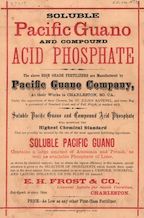
300px-Guano_advertisement_1884

1884 Advertisement for Guano http://www.wow.com

In his Presidential address of 1850, President Millard Fillmore said, “Guano has become so desirable an article to the agricultural interest of the United States that is the duty of the Government to employ all the means properly in its power for the purpose of causing that article to be imported into the country at a reasonable price. Nothing will be omitted on my part toward accomplishing this desirable end.” [Salon – When Guano Imperalists Ruled the Earth]
611a3bc0f70af99535de8cddbfaccfbdBy 1900, chemical fertilizers had replaced guano, but not before fortunes were made. Peru exported 20 million tons of guano and made a profit of $2 billion. Corporate giants such as W. R. Grace & Company, a Maryland chemical conglomerate, grew from their association with guano importation.

The Peruvian government “transferred the contract for the extraction of the guano to Anthony Gibbs & Sons” in 1855. “The firm’s profits from the guano trade were between £80,000 and £100,000 a year in the 1850s and 1860s with William [Gibbs] receiving between 50% and 70% of this until 1864, when he began to withdraw his capital. [Mark Girouard (1979). The Victorian Country House. Yale University Press.] William became the richest non-noble man in England, and remembered in the Victorian music hall ditty: “William Gibbs made his dibs, Selling the turds of foreign birds.” [James Miller (25 May 2006). Fertile Fortune – The Story of Tyntesfield. National Trust.] William Gibbs used the fortunes they earned from guano importation to build Tyntesfield Estate (Wraxall, North Somerset) and St. Michael and All Angels Church (Exeter).

51F0XHYQ+sL._SX322_BO1,204,203,200_EXCERPT: As bizarre as it may sound, I actually used “guano” in one of my Jane Austen plot lines. In Mr. Darcy’s Fault: A Pride and Prejudice Vagary, we discover how forward thinking Darcy is when he invests in “guano.” 

The day at the museum brought Darcy such joy that for a few stolen moments, he abandoned his fear of Georgiana’s ruination and his fear of Elizabeth’s eventual refusal. A man of more worldly experience than he would likely think Miss Elizabeth’s curiosity cumbersome, but Darcy found the lady’s insightful questions exhilarating. In the realm of flirtations, Darcy often stumbled. Because of his wealth, women feigned interest in what he shared, but Darcy recognized their true intents written upon their bored expressions. However, Elizabeth Bennet hung on his every observation; she challenged him and teased and was thoroughly enchanting. If his heart were not already engaged, the afternoon’s outing would secure Darcy’s regard for the woman.

“My father’s Cousin Samuel traveled with Alexander von Humboldt in the Americas,” Darcy explained as they strolled through the numerous displays. “Naturally, Cousin Samuel’s participation piqued my interest in the expeditions. I devoured von Humboldt’s earliest accounts of the journey and am anticipating the next volume. Cousin Samuel offered to introduce me to the man if this madness with Napoleon ever knows an end. Von Humboldt took residence in Paris.”

“Papa wished to read the gentleman’s findings,” Elizabeth said with a bit of awe.

Darcy drew her closer for enjoyed the warmth of her body claiming his.

“It would be my pleasure to permit Mr. Bennet to borrow the books. Pemberley’s library holds books on a variety of subjects.”

Elizabeth glanced at him, and Darcy noted the upcoming tease forming upon her features.

“Do you think to seduce me, Mr. Darcy, with an offer of free rein for my dearest parent in your renowned library?”

Seduce, Darcy thought. If only.

“Would my doing so secure your agreement to my proposal, my dear?” Darcy whispered for her ears only.

Elizabeth blushed the most enticing shade of rose.

“I shall add your promise to the list of your positive traits, Sir.”

“Is there any chance the positives might some day outweigh the negatives?”

“Perhaps.” Elizabeth gifted Darcy with a beguiling smile. “Even your innate stubbornness can be viewed with new eyes.”

Darcy barked out a laugh, which had Bingley and Miss Bennet turning to stare back at him.

“You are delightful, Elizabeth Bennet.”

Elizabeth tightened her grip upon his elbow.

“Tell me more of Mr. von Humboldt. Papa says the gentleman knows much criticism for his Romantic school of thought and for his neglecting of the human societies of the lower Americas.”

The fact Elizabeth Bennet knew something of von Humboldt’s studies did not surprise him. In the months Darcy “studied” her, he recognized Elizabeth’s potential as the mother of his children. He held no doubt Pemberley’s future would depend upon his heir possessing a fine mind for the impossible.

“On the contrary,” Darcy explained, “the gentleman dedicated sections of his works upon the poor conditions the African slaves endure each day. Von Humboldt’s disgust for the issue of slavery, as well as the inhumane conditions inflicted upon the indigenous peoples by colonial policies coat the man’s descriptions. Mr. Bennet would find the gentleman’s observations quite informative. As for me, I welcome von Humboldt’s observations on guano.”

“Guano?” Elizabeth asked with a deepening of her adorable frown lines.

Darcy’s lips turned upward.

“It is a type of fertilizer made from the leavings of seabirds, cave bats, and seals. Guano is richer in what the land requires than what we currently use. I instigated a four crop rotation upon the estate, but the land still suffers from overuse. Of late, I invested in an expedition, which will recover guano for importation into England.”

“You are always looking to the future,” Elizabeth whispered in reverence.

“I hope to secure ‘our’ future, Miss Elizabeth,” Darcy corrected.


Posted in British history, commerce, Georgian Era, Great Britain, history, Jane Austen, Living in the Regency, Living in the UK, Regency era, Vagary, Victorian era | Tagged , , , , , , , | Comments Off on Guano, “Fertile Fortune” of the 19th Century

Chistlehurst Caves and “A Touch of Emerald”

In my short seven years of writing fiction, I have written a variety of genres/settings: retellings, sequels, Regencies, paranormal, cozy mysteries, vagaries, contemporaries, and inspirational. Most of my 27 novels fall under the big “umbrella” of Regencies, and even the latest one is Georgian, but The Road to Understanding is set in the Georgian period on the American frontier after the Revolutionary War.

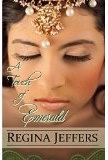
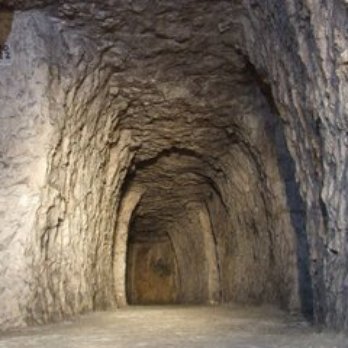
ATOE eBook Cover copy2One of my favorite writing experiences was the development of my Realm series based around 7 covert operatives during the Napoleonic Wars. The Realm is an elite group of aristocrats that serve England upon the international front. They save a girl from a tribal warlord, who accuses them of stealing a fist-sized emerald and who sends his henchmen to retrieve to England to retrieve it. The conclusion of this series, A Touch of Emerald, is set in Kent and predominantly in the Chistlehurst Caves near Bromley. These caves are a well-developed tourist attraction for the area.
348s

Chislehurst Caves – 18 Photos – Landmarks & Historic Buildings ~ http://www.yelp.co.uk

The name “caves” is a bit misleading. The caves are really man-made chalk and flint mines. They were first mentioned in literature circa 1250. They were last believed to have been worked in the 1830s. Three separate work areas encompass some 22 miles of passages.

The sections are called Saxons, Druids, and Romans based on when the workings were established. These different sections and the mileage proved an asset in setting my story within the caves.

Antiquarian, Dr William Nicholls, gave the caves their names in the Journal of the British Archaeological Association (1903). First opened to the public in the early years of the 1900s, the caves now host some 50,000 visitors each year. The chalk from the caves was used by the English to make plaster and water paint (whitewash). Flint may have been used to make tools. It is assumed many of the flintlock rifles used at the Battle of Waterloo used flints mined at Chislehurst.

OLYMPUS DIGITAL CAMERA

Visit to Chislehurst Caves ~ http://www.kenthistory forum.co.uk

The Druids section, likely dating between 5000-8000 years prior, is the oldest and most complicated system in the caves. The Druids section may have been used for human sacrifice, and there appears to be an altar with a piece cut out to receive the sacrifice’s blood. The chalk tunnels range between 40 feet and 95 feet below ground. The caves were used during both World Wars as an ammunition depot and for the protection of the populace as underground bunkers.

ATOEThumbnailA Touch of Emerald: The Conclusion to the Realm Series
Four crazy Balochs. A Gypsy band. An Indian maiden. A cave with a maze of passages. A hero, not yet tested. And a missing emerald.

For nearly two decades, the Realm has thwarted the efforts of all Shahee Mire sent their way, but now the Baloch warlord is in England, and the tribal leader means to reclaim the fist-sized emerald he believes one of the Realm stole during their rescue of a girl upon whom Mir turned his men. Mir means to take his revenge on the Realm and the Indian girl’s child, Lady Sonalí Fowler.

Daniel Kerrington, Viscount Worthing, has loved Lady Sonalí since they were but children. Yet, when his father, the Earl of Linworth, objects to Sonalí’s bloodlines, Worthing thinks never to claim her. However, when danger arrives in the form of the Realm’s old enemy, Kerrington ignores all caution for the woman he loves.

Amazon      Kindle      Nook       Kobo    

“Mother’s Day Sale” Currently Going On! (Ends This Wednesday, May 11, 2016)

TWENTY-ONE titles from Regina Jeffers are on sale as eBooks, each $2.50 or less. Titles are available on Kindle, Nook, and Kobo formats. THE SALE RUNS FROM MAY 1 – MAY 11, 2016. The titles include:

Austen-Inspired: Darcy’s Passions, Honor and Hope, Captain Frederick Wentworth’s Persuasion, Elizabeth Bennet’s Deception, Elizabeth Bennet’s Excellent Adventure, The Pemberley Ball, The Road to Understanding, and Mr. Darcy’s Fault

The REALM Series: A Touch of Scandal, A Touch of Velvet, A Touch of Cashémere, A Touch of Grace, A Touch of Mercy, A Touch of Love, A Touch of Honor, and A Touch of Emerald

Regency: His American Heartsong (a companion to the Realm Series), His Irish Eve, The First Wives Club

Contemporary: Second Chances: The Courtship Wars; “One Minute Past Christmas”

Coming Soon:

Angel Comes to the Devil’s Keep: Book 1 of The Twins Trilogy

The Earl Finds His Comfort: Book 2 of The Twins Trilogy

Mr. Darcy’s Bargain: A Pride and Prejudice Vagary

Posted in British history, buildings and structures, eBooks, Georgian England, Great Britain, historical fiction, history, Realm series, Regency era, Regency romance, Uncategorized | Tagged , , , , , , , , , | Comments Off on Chistlehurst Caves and “A Touch of Emerald”

A Brief History of The Reformation 1485 – 1580

When Henry VII came to the throne, the York-Lancaster conflict knew an end. Henry earned a monopoly over all gun-powder, which had become the new weapon of warfare. As a result, the power of the monarchy was immeasurably solidified. With the aid of the Court of Star Chamber, Henry held that power. 

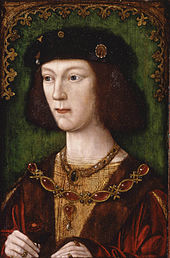
HenryVIII_1509

Henry VIII (1509) 18 years of age ~ https://en.wikipedia. org/wiki/Henry_VIII_of_ England

In 1509, Henry VIII became King, and shortly afterward Thomas Wolsey became his minister. Wolsey carried out the principles of absolutism, and established a peace with France, But Henry was not as eager for an amicable French relationship as was Wolsey, and sent a fleet to ravage the French coast. Wolsey attempted to redirect Henry’s animosity toward Spain, but with little success. 

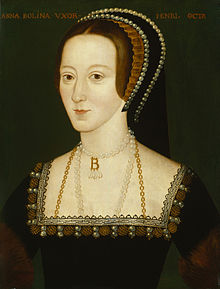
At length, when Wolsey opposed the monarch’s marriage to Anne Boleyn, Wolsey was banished. Thomas Cranmer and Thomas Cromwell now became Henry’s chief advisers. Cromwell endeavored to establish the king’s complete supremacy. Anne Boleyn was crowned queen, and Cranmer was made Archbishop of Canterbury. 

220px-Anne_boleyn

Anne Boleyn (1534) https://en.wikipedia.org /wiki/Henry_VIII_of_England

Needless to say, Henry required a divorce from his first wife before he married Anne Boleyn; yet, the Church of Rome held other thoughts. Henry then had himself made head of the Church through an Act of Supremacy. A doctrinal revolution followed. Various injunctions discouraged the practices of masses, pardons, pilgrimages, and the worship of relics. The number of sacraments were reduced, and the ideas of justification by faith and of purgatory were frowned on. The Bible was revised by Miles Coverdale and was made the cornerstone of the faith. The monasteries were pillaged, and high church officials were executed. Among these were More and Fisher. The reign of Cromwell, in short, was a reign of terror. 

Bur even Cromwell was not able to check the growing power of Parliament. The King had been forced to retract some of his former anti-Catholic policies, but Cromwell persisted in persecuting the monasteries. He eventually met his end when he opposed Henry’s latest marital project. In 1543, Cromwell was executed and replaced by Norfolk, who favored a union between Henry and the Holy Roman Emperor. Henry found it politic to fling his new minister into the Tower and to replace Norfolk with Hertford, a Protestant. He was Protector when Edward VI succeeded Henry to the throne. 

The new government began its reign with the appropriation of religious holdings. The country was wholly without religious uniformity. Agents were sent over the country to stamp out old religious practises, and to imprison those leaders who opposed the new measures. Finally, in 1549 an Act of Uniformity was passed and the Book of Common Prayer made the service for all churches. But peace did not follow. Agrarian distress combined with religious intolerance to inspire Kett’s rebellion, and a second Act of uniformity was required in 1552. A year later, Edward died and was succeeded by Mary. 

At first Mary was tolerant in her policies, but when an attempt was made to dethrone her in what is known as Wyatt’s Rebellion (1554), Mary became vengeful. A law of heresy was enacted, and those who refused to return to the Catholic faith were executed. Among those who died at her inquisition were Bishop Latimer and Cranmer. Meanwhile the war with France took a disastrous turn: Revolution would surely have followed, had not Mary died in 1558. 

220px-Darnley_stage_3

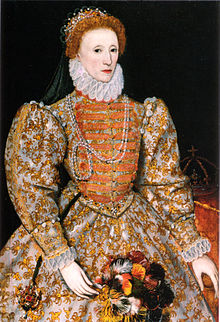
Elizabeth I ~ https://en. wikipedia.org/wiki/ Elizabeth_I_of_England

Next, Queen Elizabeth came to the throne. She practised tolerance to gain the favor of all parties. Mary Stuart had a claim to the throne, but Elizabeth disposed of her very easily. With little loss of time, the new queen had the Test Act passed and the thirty-nine articles adopted as the standard of faith. Strife gradually vanished, and the country turned to its other affairs. Commerce and manufacturing flourished, and the nation became more prosperous. In her reign, a new nationalism and literature was born. 

Resources:

Guy, John (1988). “The Tudor Age (1485–1603)”. The Oxford History of Britain: 272–273.

Lehmberg, Stanford E. (1970). The Reformation Parliament, 1529–1536. Cambridge University Press.

Posted in British history, Church of England, Great Britain, history, kings and queens, legacy | Tagged , , , , , , , | 5 Comments

Medical Advancements Leading to Real Progress in the 18th Century

Early on, the civilize world saw the study of nature as essential to the welfare of all mankind. The 16th Century saw great strides. Nicolaus Copernicus was a Renaissance mathematician and astronomer who formulated a model of the universe that placed the Sun rather than the Earth at its center. The publication of this model in his book De revolutionibus orbium coelestium (On the Revolutions of the Celestial Spheres) just before his death in 1543 is considered a major event in the history of science, triggering the Copernican Revolution and making an important contribution to the Scientific Revolution.

Galileo Galilei was an Italian physicist, mathematician, engineer, astronomer, and philosopher who played a major role in the scientific revolution during the Renaissance. His achievements include improvements to the telescope and consequent astronomical observations and support for Copernicanism. His contributions to observational astronomy include the telescopic confirmation of the phases of Venus, the discovery of the four largest satellites of Jupiter (named the Galilean moons in his honour), and the observation and analysis of sunspots. Galileo also worked in applied science and technology, inventing an improved military compass and other instruments.

441px-Vesalius_Portrait_pg_xii_-_c

1543 Source/Photographer Page xii of De humani corporis fabrica (1534 edition), showing portrait of Andreas Vesalius. wikipedia

Meanwhile, Andreas Vesalius was an anatomist, physician, and author of one of the most influential books on human anatomy, De humani corporis fabrica (On the Fabric of the Human Body). Vesalius is often referred to as the founder of modern human anatomy. He was born in Brussels, which though now part of Belgium, was then part of the Habsburg Netherlands. He was professor at the University of Padua and later became Imperial physician at the court of Emperor Charles V. One must keep in mind that Vesalius faced much prejudice from the ecclesiastical enthusiasts for his work.

In the middle of the 16th Century (1532), an Act of Parliament in England provided for the “institution of Commissions of Sewers in all parts of the Kingdom.” (Fitzgerald, John Gerald, et. al., An Introduction to the Practice of Preventive Medicine, page 653.)

The 17th Century saw the publication of “Novum Organum.” The Novum Organum, full original title Novum Organum Scientiarum (‘new instrument of science’), is a philosophical work by Francis Bacon, written in Latin and published in 1620. The title is a reference to Aristotle’s work Organon, which was his treatise on logic and syllogism. InNovum Organum, Bacon details a new system of logic he believes to be superior to the old ways of syllogism. This is now known as the Baconian method.

Houghton_EC.B1328.620ib_-_Novum_organum_scientiarum

The title page illustration of Instauratio magna Francis Bacon (author) – *EC.B1328.620ib, Houghton Library, Harvard University Houghton Library at Harvard University Location Cambridge, MA Public Domain

Also, in the 17th Century we find the accomplishments of William Harvey. Harvey (1 April 1578 – 3 June 1657) was an English physician. He was the first known to describe completely and in detail the systemic circulation and properties of blood being pumped to the brain and body by the heart, though earlier writers, such as Jacques Dubois, had provided precursors of the theory.

Even so, it was the 18th Century’s domain to develop modern preventive medicine. Richard Mead’s advice, for example, during the plague of 1663-1665 became crystalized in the legal decrees of George I, especially in the practice of quarantines.

Sir John Pringle, 1st Baronet, PRS (10 April 1707 – 18 January 1782) was a Scottish physician who has been called the “father of military medicine.” In 1742 he became physician to the Earl of Stair, then commanding the British army in Flanders. About the time of the battle of Dettingen in Bavaria in June 1743, when the British army was encamped at Aschaffenburg, Pringle, through the Earl of Stair, brought about an agreement with the Duc de Noailles, the French commander, that military hospitals on both sides be considered as neutral, immune sanctuaries for the sick and wounded, and should be mutually protected. His first book, Observations on the Nature and Cure of Hospital and Jayl Fevers, was published in 1750, and in the same year he contributed to the Philosophical Transactions of the Royal Society three papers on Experiments on Septic and Antiseptic Substances, which gained him the Copley Medal. Two years later he published his important work, Observations on the Diseases of the Army in Camp and Garrison, which entitles him to be regarded as the founder of modern military medicine. Pringle’s work “resulted in a diminution in the incidence of typhus fever and enterie disease.” (Fitzgerald, pg. 653)

James_Lind_by_Chalmers

James Lind via Wikipedia

James Lind introduced the idea of “dietetic measures” with his Treatise on Scurvy in 1753. James Lind (4 October 1716 – 13 July 1794) was a Scottish physician. He was a pioneer of naval hygiene in the Royal Navy. By conducting the first ever clinical trial,he developed the theory that citrus fruits cured scurvy. He argued for the health benefits of better ventilation aboard naval ships, the improved cleanliness of sailors’ bodies, clothing and bedding, and below-deck fumigation with sulphur and arsenic. He also proposed that fresh water could be obtained by distilling sea water. His work advanced the practice of preventive medicine and improved nutrition.

270px-Richard_Mead_2

Richard Mead via Wikipedia

Richard Mead (11 August 1673 – 16 February 1754) was an English physician. His work, A Short Discourse concerning Pestilential Contagion, and the Method to be used to prevent it (1720), was of historic importance in the understanding of transmissible diseases. Mead considered quarantine  a preventive medicine – separating the healthy from the sick – essential to suppressing the contagions of the time. 

Captain James Cook gave a notation in his many journals to the teachings of Pringle, Mead, and others during Cook’s great voyage of discovery. He received the gold medal from the Royal Society of London for his paper on the preservation of his sailors from scurvy. (Sala, G. A., and E. H. Yates, editors, Temple Bar, Volume 94, page 373.) Cook’s voyage lasted for a little over 3 years, but during that time, despite being beset with numerous difficulties, only one man out of his 118 man crew died. This was unprecedented at the time, and Cook gave credit to the application of hygienic rules and dietetic measures advocated by James Lind to his crew’s success.

6f58c02f9f57081d077c097b7d4eea46469cab8c

Edward Jenner (1749- 1823), Discoverer of vaccination. James Northcote – National Portrait Gallery – Public Domain

Next we find the work of Edward Jenner, who was an English physician and scientist who was the pioneer of smallpox vaccine, the world’s first vaccine. He is often called “the father of immunology,” and his work is said to have “saved more lives than the work of any other human.”

Posted in British history, Georgian England, Great Britain, history, Living in the UK, medicine, Uncategorized | Tagged , , , , , , | 2 Comments

The Birth of Victoria, Her Royal Highness the Princess Royal

tumblr_o1bsym3ODi1rl706do1_500

Victoria Adelaide Mary Louisa von Sachsen-Coburg and Gotha (1840-1901), Princess of Prussia and German Empress.

Only ten months after pronouncing her vows to her beloved Albert, Queen Victoria delivered forth the first of their children. The birth of Princess Victoria on 20 November 1840 was the first direct heir born to a reigning monarch in nearly 80 years. Needless to say, there were many disappointed by the birth of a princess rather than a male heir to the throne, Princess Victoria’s birth pleased the young queen and her husband. Reportedly, Queen Victoria claimed to “bear pain as well as other people” in her refusal of a sedative during the child’s birth. After learning the child was a female she is credited with saying, “Never mind, the next will be a prince.” The birth of the new princess placed more space between Queen Victoria’s and the Duke of Cumberland’s (who was the king of Hanover at the time) claims to the throne.

Dr. Charles Locock, who was later referred to as “The Great Deliverer of His Country,” served as the queen’s physician through not only this birth, but several afterward. He was paid £1000 for the successful delivery. At her christening, the new princess was given the name Victoria. She was known as “Vicky” within the family. Two months after her birth, Princess Victoria was titled as “Princess Royal.”

Albert recognized that his daughter would spend a great deal of her life in foreign courts, he set about instilling his liberal politics in the child. Even so, there was doubt that Albert truly adored his first child. Although Queen Victoria acted as women of her class did with their children, Albert’s enchantment with his first born (and the 8 children who followed her) took root early on. Victoria saw her child twice per day (at bath time and later in her dressing room when the queen dressed for dinner). Yet, queenly duties did not provide much time for “mothering” the child.

Victoria and Albert were conscious of the necessity of instilling good breeding in all their children, but also taught them something of responsibilities to those less fortunate than they. They spoke to their children of the “order” in society which placed them in the position in which they lived. Even so, they isolated their children from others for fear their positions would place them as pawns for those with untrue motives. So although the pair spoke of themselves as being “above” matters of rank, they isolated their family from many of the queen’s subjects.

While Victoria took pride in her growing brood of children, the Queen saw them as potential “agents” in doing the queen’s work. This is not to say that the Queen’s distance was returned by her children. More so, their mother’s much maligned lack of affections were displayed in her children’s adult life.

In the early days of their marriage, Albert was still trying to find his footing in his role as the Queen’s husband. He had more time for his children than did Victoria, who still did not accept his assistance with her work. He earned a reputation for interfering with the “nursery routine.” He butted heads with his wife’s former governess, Baroness Louise Lehzen, who was “head of the royal home.” Queen Victoria held an allegiance to the baroness for the woman had stood between the young Victoria and her mother’s (along with Conroy) political manipulations. The closeness between Victoria and Lehzen continued after Victoria’s rise to the throne, a situation which left Albert on the outside.

Victoria,_Princess_RoyalEven so, Albert implemented his control over the nursery. Victoria had placed him in a position to supervise their domestic arrangements at both Bukingham Palace and Windsor Castle. “But the prince’s authority was often thwarted by resentful functionaries, the palace and castle having for centuries represented the uncontested fiefdoms of a vast panoply of chamberlains, officials, stewards, high servants, and free-floating hangers-on. With Albert’s ascendancy over the monarchy’s domestic affairs, which would shortly spell the end of Lehzen’s regime, the nursery and its precious cargo was elevated into what became virtually a department of state. To oversee all those responsible for the care of his babies, Albert wrote detailed job descriptions for each staff position, including the various nurses, nursery maids, assistant nursery maids, and wet nurses [Queen Victoria most emphatically did not breast-fee her babies]. The extraordinarily stringent security arrangements that the prince devised would soon mean the introduction of convoluted hallways, secret passages, manned guardrooms blocking access to the nursery, and elaborate locks – the master keys kept, with delicious exclusivity, by Albert himself. The most fundamental rule governing this new, military structure was that the infant princess royal and her future siblings must never under any circumstances, be left alone – an irony in that the queen herself had so resented that status as a child. And as reminder that court etiquette held sway here as much as it did in the palace’s public rooms, the rules specified that the wet nurse must remain standing while feeding any royal child, obviously in recognition of the infant’s exalted station.” [Jerrold M. Packard, Victoria’s Daughters, St. Martin’s, 1998, page 20]


Posted in British history, Church of England, customs and tradiitons, family, Great Britain, history, Living in the UK, marriage, marriage customs, real life tales, Victorian era | Tagged , , , , | Comments Off on The Birth of Victoria, Her Royal Highness the Princess Royal

Happy “May” Birthdays to Some of Our Favorite “Austen” Actors

party-clip-art-balloons-different-coloursWe have a great mix of old and new in this month’s salute to those actors and actresses who have performed in Austen-inspired films. 


urlMay 4 – Anthony Calf, who portrayed Colonel Fitzwilliam in 1995’s Pride and Prejudice


Tidus for dream-celebs.comMay 8 – Christina Cole, who portrayed Miss Caroline Bingley in Lost in Austen


images-5May 8 – Janet McTeer, who portrayed Mrs. Dashwood in 2008’s Sense and Sensibility 


images-4May 8 – Kam Heskin, who portrayed Elizabeth in 2003’s Pride and Prejudice: A Latter-Day Comedy 


'NANNY MCPHEE' FILM PREMIERE, LONDON, BRITAIN - 09 OCT 2005May 8 – Phyllida Law, who portrayed Mrs. Bates in 1996’s Emma, as well as Mrs. Austen in Miss Austen Regrets


Anna+Maxwell+Martin+Philips+British+Academy+F51wgqhiruulMay 10 – Anna Maxwell Martin, who portrayed Cassandra Austen in Becoming Jane, as well as Elizabeth Bennet in Death Comes to Pemberley 


images-3May 10 – Sally Phillips, who portrayed Mrs. Bennet in Pride and Prejudice and Zombies 


MV5BMTUwNjc2MTg3N15BMl5BanBnXkFtZTcwOTQzODI3MQ@@._V1_UY317_CR9,0,214,317_AL_May 13 – Samantha Morton, who portrayed Harriet Smith in 1996’s Emma (TV version)


MV5BMTc0MzU1Mzc0Nl5BMl5BanBnXkFtZTcwNzk3MDAxMw@@._V1_UX214_CR0,0,214,317_AL_May 15 – Greg Wise, who portrayed Mr. Willoughby in 1995’s Sense and Sensibility


MV5BNzAyODA0NjQ3N15BMl5BanBnXkFtZTgwOTA2MTU2NTE@._V1_UY317_CR20,0,214,317_AL_May 16 – Rebecca Front, who portrayed Mrs. Bennet in Death Comes to Pemberley


220px-MaureenMay 17 – Maureen O’Sullivan, who portrayed Jane Bennet in 1940’s Pride and Prejudice (17 May 1911 to 23 June 1998)


tve11166-19690303-26May 19 – Bryan Marshall, who portrayed Captain Frederick Wentworth in 1971’s Persuasion 


MV5BMjQ1NzI4MTM2MF5BMl5BanBnXkFtZTcwODk2MzY3OA@@._V1_UX214_CR0,0,214,317_AL_May 19 – Eleanor Tomlinson, who portrayed Georgiana Darcy in Death Comes to Pemberley


Laurence_Olivier_-_1961_-_BostonMay 22 – Laurence Olivier, who portrayed Fitzwilliam Darcy in 1940’s Pride and Prejudice (22 May 1907 to 11 July 1989)


MV5BMTMxOTc2MDQ2Ml5BMl5BanBnXkFtZTYwNTE4NDAz._V1_UY317_CR0,0,214,317_AL_May 26 – Ben Gourley, who portrayed Charles in 2003’s Pride and Prejudice: A Latter-Day Comedy 


images-1May 26 – Laurence Fox, who played Mr. Wisley in Becoming Jane 


imgres-1May 26 – Peter Cushing, who portrayed Fitzwilliam Darcy in 1952’s Pride and Prejudice (26 May 1913 to 11 August 1994)


imgresMay 27 – Bella Heathcote, who portrayed Jane Bennet in Pride and Prejudice and Zombies


imagesMay 28 – Carey Mulligan, who portrayed Kitty Bennet in 2005’s Pride and Prejudice, as well as Isabella Thorpe in 2007’s Northanger Abbey


3a50bd63d957cd90ef4ee39eb8cbdd4fMay 30 – Tracey Childs, who portrayed Marianne Dashwood in 1981’s Sense and Sensibility 

Posted in Austen actors, film adaptations, Jane Austen, Uncategorized | Tagged , , , , , , , , , , , , , , , , , , , , , | 4 Comments

Mother’s Day Sale!!! 21 eBook Novels from Regina Jeffers, each $2.50 or Less

SaleSignFor Mother’s Day, surprise your that special woman in your life with the gift of reading. Fill up her Kindle, Nook, or Kobo with these delightful stories from award-winning author, Regina Jeffers. Hurry! The sale ends Tuesday, May 10, 2016. 

Jane Austen-inspired Titles: 

51wgW1LN-UL._AA160_Darcy’s Passions: Pride and Prejudice Retold Through His Eyes

CFWPThumbnailCaptain Frederick Wentworth’s Persuasion: Austen’s Class Retold Through His Eyes 

EBEAThumbnailElizabeth Bennet’s Excellent Adventure: A Pride and Prejudice Vagary

EBDThumbnailElizabeth Bennet’s Deception: A Pride and Prejudice Vagary

MDFThumbnailMr. Darcy’s Fault: A Pride and Prejudice Vagary

TPBThumbnailThe Pemberley Ball: A Pride and Prejudice Vagary

H&HThumbnailHonor and Hope: A Contemporary Pride and Prejudice 

TRTUThumbnailThe Road to Understanding: A Pride and Prejudice Vagary 

Regency and Contemporary Titles: 

ATOSThumbnailA Touch of Scandal: Book 1 of the Realm

ATOVThumbnailA Touch of Velvet: Book 2 of the Realm

ATOCThumbnailA Touch of Cashémere: Book 3 of the Realm

ATOGThumbnailA Touch of Grace: Book 4 of the Realm

ATOMThumbnailA Touch of Mercy: Book 5 of the Realm 

ATOLThumbnailA Touch of Love: Book 6 of the Realm 

ATOHThumbnailA Touch of Honor: Book 7 of the Realm 

ATOEThumbnailA Touch of Emerald: The Conclusion of the Realm 

HAHSThumbnailHis American Heartsong: A Companion to the Realm 

HIEThumbnailHis Irish Eve

FWCThumbnailThe First Wives’ Club 

SCThumbnailSecond Chances: The Courtship Wars

OMPCThumbnail“One Minute Past Christmas” 

Although Pegasus Books controls the price of this title, please know that the eBook version of … 

TPOMDCThumbnailThe Prosecution of Mr. Darcy’s Cousin: A Pride and Prejudice Mystery is now only $4.99. It is a 2016 Frank Yerby Award for Fiction finalist. 

These titles are available from Ulysses Press…

DTThumbnailDarcy’s Temptation: A Sequel to Pride and Prejudice

PhantomThumbnailThe Phantom of Pemberley: A Pride and Prejudice Mystery

CaPThumbnailChristmas at Pemberley: A Pride and Prejudice Holiday Sequel 

DoGDThumbnailThe Disappearance of Georgiana Darcy: A Pride and Prejudice Mystery

TMDOMDThumbnailThe Mysterious Death of Mr. Darcy: A Pride and Prejudice Mystery

VDDThumbnailVampire Darcy’s Desire: A Pride and Prejudice Paranormal 


Posted in book release, books, Christmas, contemporary romance, eBooks, Georgian Era, Great Britain, historical fiction, Jane Austen, Living in the Regency, marriage customs, Persuasion, Pride and Prejudice, Realm series, Regency era, Regency romance, vampires | Tagged , , , , , , , , , , , , , , , , , , , , , , , , , , , | 2 Comments

Release of “The Road to Understanding” with an Excerpt and a Giveaway

Back in 1984, I went into labor 5 weeks early in the middle of my Theatre/Acting class. That early delivery was the joy of my life, especially as I had lost two previous children.

TPB Cover (2) copy 2Over the April 16-17 weekend, I had another early delivery. This one was two weeks early in the form of a new release, an event often repeated in the publishing business. As we authors think of our books as our “babies,” I will admit I am delighted with the successful delivery of this latest one, but, like my son’s early appearance some 31 years prior, I was not ready (I was leaving instructions for my sub as they rolled me out the door on a stretcher.) Most authors try to space out their releases, and so I re-released The Pemberley Ball in early April, for The Road to Understanding was to be a Mother’s Day release. However, the best laid plans of mice and men often go awry.

So, permit me to introduce you to my latest “baby.” What is the premise of The Road to Understanding, you may ask? First, it is a Pride and Prejudice vagary set on the American front in the late 1780s. The characters are NOT Darcy and Elizabeth, but you will recognize them, nonetheless. They are traveling from the Roanoke, Virginia, to Jonesborough, Tennessee, on The Great Valley Road (i.e., the use of “Road” in the title).

I am not of the persuasion that Austen writes character-driven stories. Do not get me wrong: Austen’s characters are some of the most memorable ever written. However, in my opinion, Austen writes plot-driven stories. Take Pride and Prejudice, for example. Austen’s most popular story has been rewritten in the form of Bridget Jones’s Diary, You’ve Got Mail, Unleashing Mr. Darcy, etc. That is what I have done in The Road to Understanding.

We have the customary characters in this new tale: Charlie Bradford is best friend to Darius Fitzwilliam. They served in the Revolutionary War together. We have the Harris family with three daughters, Jonquil, Eliza, and Margaret. Mr. Norville is the new minister. One of Eliza’s friends is Charlotte MacCaffey. Geoffrey Shannon is the son of the man who betrayed the Fitzwilliam family. Darius has a younger sister named Grace, while Charlie’s sister is Caroline. I have combined the character of Miss King and Lydia into Miss Kimble.

________________________________

This is the “Meryton Assembly” scene from Chapter 2 of The Road to Understanding.

And so on Saturday evening, Darius stood along the wall of the main building in Wythe Court House and watched the Harris ladies and many of the locals he’d encountered on previous journeys to “civilization.” In addition to the farm with its new barn laid out some three miles from the newly minted county seat, the men had constructed a makeshift dance floor from the left over lumber. A wooden floor graced the lawn.

When he and Charlie had arrived, his friend made the proper introductions for the other Harrises. Charlie’s estimation of Miss Jonquil was accurate: The woman held the face of an angel, but Darius preferred the imperfection found in Miss Eliza’s countenance. As to many others enjoying the celebration, he viewed them as too young, mayhap not in years, but certainly in temperament.

“Come, Fitz,” Charlie declared as he saddled up beside Darius, ”you must dance. I dislike seeing you standin’ about in absolute righteousness. You’d be better off claimin’ the attentions of one of the ladies. My sister’s hold on you no longer exists.”

“I am well situated, Charlie. Enjoy the music and the activity. You know I’m not much of a dancer. Even if Miss Bradford were in attendance, I’d be happy to claim my place along the wall. Moreover, I prefer to hold a longer acquaintance with a woman before I pay court.”

Charlie’s frown lines deepened. “Opportunities to take the acquaintance of eligible young women be few, Fitz. We’ll not encounter so many fine lookin’ women in one place any time soon.”

“You’ve danced with the fairest of the brood,” Darius teased.

“Oh, she’s the most beautiful creature I ever beheld,” Charlie pronounced with enthusiasm.

It stung Darius’s pride to view Charlie staring in the direction of where Miss Eliza spoke to her sisters.

“She made no notice of my missin’ hand when I partnered her, simply placed her hand on my stump. No repulsion whatsoever,” Charlie revealed. “As if it didn’t matter.”

“I told you so for the past decade,” Darius reminded his friend.

Charlie grinned widely. “It’s not as if your opinion doesn’t make a squat, but it’s different when a fine lady treats a man with respect.”

At least Miss Eliza had treated Charlie as Darius hoped. “Then you best be at it. The music will start again soon; you don’t want another to claim your prize.”

“Are you certain you’ll not join the set?” Charlie implored. “I mean again to claim Miss Jonni as partner, but there are several other very pleasant girls among the Harrises’ acquaintances.”

“You’ll claim the prettiest girl at the party,” Darius added his encouragement. “How might I compete with your engaging conversation?”

“Miss Eliza has yet to claim a partner for the next tune?” Charlie suggested. “You could do worse.”

Darius’s heart stuttered with the possibility. What would it be to hold the woman’s hand? To claim refreshments with Miss Eliza upon his arm? To escort her into the dark and to steal a kiss?

Without considering the ramifications, he turned to look upon Miss Eliza, until, catching her eye, Darius withdrew his own. Before responding to Charlie, he paused to will the desire from his blood.

“The girl’s tolerable, but not to my nature. I’m in no humor to pay attendance upon any woman this evening, especially one that thinks herself some sort of female equal to the men she meets. Less than a week prior, I considered myself engaged to your sister. Enjoy your many partners and their smiles. You waste your time with me.”

Charlie followed Darius’s advice. Unfortunately, when Darius turned toward the refreshment table, he didn’t notice that Miss Eliza and Miss MacCaffey had moved to within hearing distance of his conversation with Charlie. Darius didn’t witness the flush of color, which claimed the lady’s cheeks, nor did he note how her shoulders stiffened with his remark.

“I’m sorry for Mr. Fitzwilliam’s unthinking remark,” Charlotte MacCaffey said in regret.

Eliza swallowed the hurt: She’d never realized how much harm words could cause. “Think nothin’ of it,” she told her newest friend.

Eliza had liked Miss MacCaffey from the moment of their first meeting. The girl was a bit older than Jonni and not of the most handsome features, but Eliza found much to admire. Miss MacCaffey was well read and held astute opinions. Eliza felt as if they’d known each other forever.

“It’s not as if I wish Mr. Fitzwilliam’s approval.”

“I suppose men of his ilk only look to a woman’s station. My father says Mr. Fitzwilliam’s father is quite wealthy–the man owns more land than fifty others combined.”

Eliza’s eyebrow rose in curiosity. “I didn’t realize.” The concept perplexed her. She’d known other wealthy farmers and tradesmen, but none who’d chosen to ignore her as if she were an indentured servant. “And what of Miss Bradford? Wasn’t Mr. Fitzwilliam to marry Mr. Bradford’s sister?”

“Oh, yes, but the lady married another. Rumors say Miss Bradford didn’t wish to live in the wilderness. As to the woman’s brother, Papa says Mr. Bradford be quite wealthy also. Not as much as the younger Mr. Fitzwilliam, but near half. The elder Bradford owned a large mercantile. Supplied much of what the troops required in the war. One of the fortunate ones. Got paid regular for his efforts.”

“A person would never know the man wealthy,” Eliza remarked as she studied her sister Jonni in close conversation with Bradford. For a moment, she wondered if Jonquil held any knowledge of Mr. Bradford’s being more than another frontiersman, but Eliza quickly rejected the idea. Jonni wasn’t the type to practice feminine deceptions. “Mr. Fitzwilliam may hold double the income of his friend, but the man isn’t so well worth listening to as be Mr. Bradford. Fortune isn’t a man’s only redeeming quality.”

ATOV CoverBack Cover:

DARIUS FITZWILLIAM’s life is planned down to who he will marry and where he will live, but life has a way of saying, “You don’t get to choose.” When his marriage to his long-time betrothed Caroline Brad

ford falls through, Darius is forced to take a step back and to look upon a woman who enflames his blood with desire, but also engenders disbelief. Eliza Harris is everything that Darius never realized he wanted.

ELIZA HARRIS is accustomed to doing as she pleases. Yet, despite being infuriated by his authoritative manner, when she meets the staunchly disciplined Captain Fitzwilliam, she wishes for more. She instinctively knows he is “home,” but Eliza possesses no skills in achieving her aspirations.

Plagued with misunderstandings, manipulations, and peril upon the Great Valley Road between eastern Virginia and western Tennessee in the years following the Revolutionary War, Darius and Eliza claim a strong allegiance before love finds its way into their hearts.

This is a faith-based tale based on Jane Austen’s Pride and Prejudice.

Purchase Links:

Kindle        Kobo         Nook      Amazon      CreateSpace   

NOW FOR THE GIVEAWAY!!! I HAVE TWO eBOOK COPIES OF “THE ROAD TO UNDERSTANDING” AVAILABLE FOR THOSE WHO COMMENT BELOW. RANDOM.ORG WILL PICK THE WINNERS.

Posted in American History, Appalachia, book excerpts, book release, historical fiction, Jane Austen, Pride and Prejudice, Vagary | Tagged , , , , , | 8 Comments

Do You Know These Words and Phrases?

These are some of the words and phrases I have encountered of late while reading. Some I knew the meaning and some I did not. Even when I knew the meaning, I was interested in the word’s origin or how it came into the language. 

From the 1913 edition of Webster’s Dictionary, we find the following for Trumpery Ring: 1. Deceit; fraud. [Obs.]; 2. Grenewey Something serving to deceive by false show or pretense; falsehood; deceit; worthless but showy matter; hence,things worn out and of no value; rubbish. Example: The trumpery in my house, go bring it hither, for state to catch these thieves. -Shakespeare (or) Example: Upon the coming of Christ, very much, though not all, of this idolatrous trumpery and superstition was driven out of the world.-from a Robert South sermon. 3. Worthless or deceptive in character. “A trumpery little ring.” -Thackeray.

Escaramuza is the Spanish word for skirmish. I was fascinated to how it has come to mean: Girl in escaramuza dress, the female counterpart to a charro. Wordnik gives us this example: As early enthusiasts became more proficient at riding, they began beefing up the speed and intricacy of their drill routines, giving rise to a new and more descriptive label for the art — escaramuza — the Spanish word for skirmish.

Abrigado also comes to us from Spanish. The Oxford Dictionary provides us with these meanings:  sheltered, as a bay sheltered or protected from the wind (un rincón abrigado del frío/de la lluvia); a sheltered spot out of the cold/the rain.

The 1811 Dictionary of the Vulgar Tongue tells us that Corkbrained means lightheaded or foolish, the Merriman Webster Dictionary says Saphead means a weak-minded or stupid person and Madcap mean marked by capriciousness, recklessness, or foolishness. 

I discovered lots of examples of the phrase Cross-and-Jostle Work, but no actual definition. Mayhap someone reading this post, might help. There is a very sexual reference on Urban Dictionary, but I refuse to believe those who wrote the following examples had vibrating buttocks in mind.

From Kasey Michaels and Alphabet Regency Romance Complete Box Set in The Somerville Farce, we find “Andy nodded vigorously. ‘Cross-and-jostle work, the fella we met called it, isn’t that right, Willie, my good friend? Yes, that was it, prime cross-and-jostle work.” 

From Exercises, Political and Others, Volume 6 by Thomas Perronet Thompson, we find a different example: “Two men will not starve when one will suffice, a highly laudable species of economy. The landlords limit the food that shall be there to eat; and because there would be no use in two thousand men agreeing to die upon half the food that can keep soul and body together, they either toss up for it or play a cross-and-jostle match and one thousand lives while the other dies.” 

Meanwhile, The English Spy: An Original Work, Characteristic, Satirical, and Humorous, Volume 2 by Charles Molloy Westmacott provides us with this example: “Optimus: What, cross-and-jostle work again? A second edition of Virginia Water? But I thought you felt assured that Cannon would not do wrong for the wealth of Windsor Castle.”

Merriman-Webster Dictionary provides these two meanings for Nabob:  a provincial governor of the Mogul empire in India; 2:  a person of great wealth or prominence. Meanwhile, The Free Dictionary gives us these three meanings for Flummery1. Meaningless or deceptive language; humbug. 2. a. Any of several soft, sweet, bland foods, such as custard. b. A sweet gelatinous pudding made by straining boiled oatmeal or flour. c. A soft dessert of stewed, thickened fruit, often mixed with a grain such as rice. I recognized the first definition, but the second. Needless to say, Dandified means greatly concerned with smartness of dress.

neckclothitania-1818.gifDid you know that Trone d’ amour is a style of cravat. The Trone d’AmourThe The trone d’Amour is the most austere after the Oriental Tie – It must be extremely well stiffened with starch. It is formed by one single horizontal dent in the middle. Colour, Yeux de fille en extase.

There are rumors that A Whole Ball of Wax is derived from workers at Madame Tussauds, but this seems a bit contrived. I have also heard that it is derived from the term the whole bailiwick. 

World Wide Words tells us, “What we do know is that the whole ball of wax is everything and so essentially means the same as other American expressions such as the whole nine yards, the whole shooting match, the whole megillah, the whole shebang and the whole enchilada. Until recently, its first appearance was in the ninth edition of Webster’s New Collegiate Dictionary of 1953 and was assumed to be of that period. It turns out to be much older.

“We can dismiss the Madame Tussaud’s connection out of hand. It’s the product of an unoriginal mind which has linked wax with waxworks and done the equivalent of making two and two equal five.

“Another story appeared in William and Mary Morris’s book The Morris Dictionary of Word and Phrase Origins. They quote an English legal text from 1620 which describes the allocation of land among the heirs to an estate by a process very much like a lottery. Each parcel of land was listed on its own piece of paper, sealed inside a small ball of wax, and placed in a hat. Each heir then pulled out one of the balls to discover which part was his. The Morrises were strangely credulous about a link between this process and the expression in view of the nearly 400-year and more than 3,000-mile gap between that description and the then first known appearance of the phrase. Whatever the origin, this isn’t it.

“A graphic artist claims he heard the following during a seminar on typography: the phrase comes from typesetting. He was told that, in the days when type was made of metal, small pieces of gold would flake off the typesetting equipment. The typesetter would collect the gold flakes in a ball of wax to later melt down and reclaim the gold. Very often, someone would make off with the whole ball of wax. However, I can’t find a reference anywhere to that method having been used to gather up flakes of waste gold.

51XPGxNbneL._SX331_BO1,204,203,200_“I did find what seemed to be a clue to its origins, in a disintegrating paperback in my library — a science-fiction novel of 1954 by Shepherd Mead, who two years before had written How To Succeed in Business Without Really Trying. Called The Big Ball of Wax, it’s a futuristic satire on business and advertising in America and contains this line from the narrator, a market research man, about the story to come: ‘Well, why don’t we go back to the beginning and roll it all up, as the fellows say, into one big ball of wax?’, that is, put everything together to make a coherent and complete whole. This sounds too much like a fuller and less elliptical early version of the saying to be a coincidence.

“However, many old newspapers have now been digitised, so that they can he readily searched electronically. This has thrown up a number of much older appearances of the phrase. The earliest found so far is from the Atlanta Constitution of 25 April 1882: ‘We notice that John Sherman & Co. have opened a real estate office in Washington. Believing in his heart of hearts that he owns this country, we will be greatly surprised if Mr. Sherman does not attempt to sell out the whole ball of wax under the hammer.’ Another a few months later was in the Indiana Democrat: ‘The Democrats can beat the ‘whole ball of wax’ this season.’ (Note the quotation marks enclosing the expression, a good sign that it was regarded as rather too recently coined or colloquial to be admitted to full membership of the language.)

“The origin has been taken back so far that it is beginning to look as though another often-told story might be the right one. It is said that whole ball of wax is a humorous modification of whole bailiwick, perhaps because of a mental association between bail and ball, and between wick and candle wax.”

Thrasonical (Pronounced /θrəˈsɒnɪkəl/) “should be put in the category of educated insults, since only those who have swallowed the dictionary or know Latin literature understand what it means. A thrasonical person is a braggart. The original was a former soldier named Thraso, a character in the play Eunuchus (The Eunuch), which was written in 161 B. C. and became the most popular of the six by the writer whom we know as Terence.

“Thrasonical started to appear in English in the sixteenth century, in time for Shakespeare to put it into the mouth of Rosalind in As you Like It. She describes Julius Caesar’s famous assertion veni, vidi, vici (“I came, I saw, I conquered”) as a thrasonical brag.

“These days, its most frequent appearances are in a widely-reproduced bit of advice to aspiring authors or public speakers: ‘Let your conversation possess a clarified conciseness, compacted comprehensibleness, coalescent consistency, and a concatenated cogency. Eschew all conglomerations of flatulent garrulity, jejune babblement, and asinine affectations. Let your extemporaneous descantings and unpremeditated expatiations have intelligibility, without rhodomontade or thrasonical bombast. Sedulously avoid all polysyllabical profundity, pompous prolixity, and ventriloquial vapidity. Shun double-entendre and prurient jocosity, whether obscure or apparent. In other words, speak truthfully, naturally, clearly, purely, but do not use large words.’ – Notes and Queries, 11 Feb. 1893.

“In an idle moment, I set out to trace this to its origin. It turns out to be a hardy perennial, which became popular on both sides of the Atlantic from the 1880s on, appearing regularly in magazines and newspapers. The earliest unearthed so far is in the Pennsylvania School Journal of 1874. It is surely older still. You may feel that both thrasonical brag and thrasonical bombast are tautological. I couldn’t possibly disagree.” (World Wide Words)

The last one for today is Shemozzle (Pronounced /ʃɪˈmɒz(ə)l) “is a state of confusion and chaos. It might simply be a muddle, or it could be a ruckus, row, quarrel or loud commotion.” Agatha Christie used it in The Mirror Crack’d from Side to Side (1962): “No end of a shemozzle there’s been there lately,” he said. “Marina Gregg’s been having hysterics most days. Said some coffee she was given was poisoned.”

World Wide Words says the word appears to be of Yiddish origin, “fitting the pattern of a group of terms that that are best known in American English through the influence of Yiddish-speaking immigrants: schlock, schlemiel, schmaltz, schlepper, schmuck, schlimazel. (Much variation exists in the way they are spelled.) However, many of these are known earlier in the speech of German immigrants to Britain.

“Shemozzle grew up as part of the slang of London’s East End more than a century ago, a creation of bookmakers and racecourse touts. Jonathon Green has found early examples of shemozzle in articles by the racing journalist Arthur Binstead, who penned ‘gloriously non-PC’ columns in the Sporting Times at the end of the nineteenth century under the pseudonym “Morris the Mohel.” (A mohel is a person who is qualified to perform the Jewish rite of circumcision.)

Shemozzle has since spread around the world: “‘The money is starting to dry up. … I’m now fighting to get anything. They are not responding to my emails. It’s been a shemozzle, a complete and utter waste of time and money.’ – Sydney Morning Herald, 15 Feb. 2010.

“Leo Rosten denied in The Joys of Yiddish that it [shemozzle] had any connection with that language, and others argue similarly that it was invented in imitation of other Yiddish words, but isn’t one.

“Some references cautiously suggest that it was loosely based on the Yiddish slim mazel, which became schlimazel in the U. S. Yiddish was originally a German dialect whose vocabulary includes lots of Hebrew words. Slim mazel is a good example: slim is old German, meaning “crooked”, while mazel is from Hebrew mazzal, a star or planet, though its main meaning is “luck”. So slim mazel may be translated as “crooked luck”, roughly the opposite of the Yiddish mazel tov, good luck. But how that changed to mean a rumpus is far from obvious.

Picture-1-300x289“Schlemiel! Schlimazel! Hasenpfeffer Incorporated!” What does this strange sentence mean? At the start of each episode, Laverne and Shirley are seen skipping down the street, arm in arm, reciting a Yiddish-American hopscotch chant: “1, 2, 3, 4, 5, 6, 7, 8 Schlemiel! Schlimazel! Hasenpfeffer Incorporated!” This then leads into the series’ theme song which is entitled “Making Our Dreams Come True” and is performed by Cyndi Grecco.

schlemiel : an inept clumsy person; a bungler; a dolt (Yiddish shlemil)

schlimazel : a chronically unlucky person (שלימזל shlimazl, from Middle High German slim ‘crooked’ and Hebrew מזל mazzāl ‘luck’) (OED)

http://en.wikipedia.org/wiki/List_of_English_words_of_Yiddish_origin

Hasenpfeffer (also spelled hasenfeffer) is a traditional German stew made from marinated rabbit or hare. Pfeffer is not only the name of a spice, but also of a dish where the animal’s blood is used as a gelling agent for the sauce.

http://en.wikipedia.org/wiki/Hasenpfeffer

Posted in language choices, vocabulary, word choices, word origins, word play | Tagged , , , | 1 Comment

Coburg’s Influence on Queen Victoria

220px-Leopold_I_of_Belgium_(2)

https://en.wikipedia.org/ wiki/Leopold_I_of_Belgium

Leopold I of Belgium exercised great influence over Queen Victoria. He replaced Victoire, the Queen’s mother, as the young queen’s confidant. “Born into the ruling family of the small German duchy of  Saxe-Coburg-Saalfeld, Leopold took a commission in the Imperial Russian Army and fought against Napoleon after French troops overran Saxe-Coburg during the Napoleonic Wars. After Napoleon’s defeat, Leopold moved to the United Kingdom where he married Princess Charlotte of Wales, the only child of the Prince Regent (the future King George IV), thus situating himself as a possible future prince consort of Great Britain. Charlotte died in 1817, although Leopold continued to enjoy considerable status in England.” (Leopold I of Belgium) Ironically, Leopold chose to remain in England after Charlotte’s death to forestall any attempts of Parliament to rescind the allowance awarded him with his marriage to Princess Charlotte. 

Initially, as the uncle to Princess Victoria, Leopold supported his sister Victoire. He served as loving uncle, and Victoria spent many happy days at his home, Claremont House, in Surrey. Yet, in 1831, Prince Leopold became Leopold I of Belgium. His exit left Princess Victoria totally under the control of Victorie, the Duchess of Kent, and the duchess’s widely-detested adviser, Sir John Conroy. 

“Her mother the Duchess of Kent,  was the sister of both Albert’s father—the Duke of Saxe-Coburg and Gotha—and King Leopold. Leopold arranged for his sister, Victoria’s mother, to invite the Duke of Saxe-Coburg and Gotha and his two sons to visit Victorie in May 1836, with the purpose of meeting Victoria. William IV, however, disapproved of any match with the Coburgs, and instead favoured the suit of Prince Alexander, second son of the Prince of Orange. Victoria was well aware of the various matrimonial plans and critically appraised a parade of eligible princes. She wrote, ‘[Albert] is extremely handsome; his hair is about the same colour as mine; his eyes are large and blue, and he has a beautiful nose and a very sweet mouth with fine teeth; but the charm of his countenance is his expression, which is most delightful.’ Alexander, on the other hand, she described as ‘very plain.’

Six years later when Victoria assumed the throne of Great Britain, she was “hell-bent” on making her own decisions. Victoria went so far as to warn Leopold that his political advice would find an empty vessel. Leopold took a different route: He became matchmaker. His nephew, Prince Albert of Coburg, was the younger son of his brother, the reigning sovereign of Coburg. At Leopold’s suggestion Albert was sent to England to woo Victoria and, more importantly, to bring Coburg’s influence to the most powerful nation in the world. 

“Victoria wrote to her uncle Leopold to thank him ‘for the prospect of great happiness you have contributed to give me, in the person of dear Albert … He possesses every quality that could be desired to render me perfectly happy.’ Although the parties did not undertake a formal engagement, both the family and their retainers widely assumed that the match would take place.” (Albert, Prince Consort)

Albert’s first journey to England came when he was still in his teens, but Victoria was too enthralled with the independence her new position provided than to think much of becoming a wife. There was a time that Victoria thought never to marry for she held no desire to subjugate herself in any manner to another. Rumors also exist that Victoria’s was not too keen on sexual intimacies, but that soon changed. 

Albert’s second journey to England came some two years later. Victoria now looked upon her cousin with a more favorable eye. They were soon “in love.” Victoria proposed to Albert on 30 October 1839 for she outranked him. The announcement of Victoria’s intention to marry was made 23 November of the same year. Albert was naturalised by an Act of Parliament, and granted the style of Royal Highness by an  Order in Council. Victoria and Albert were married on 10 February 1840 at the Chapel Royal, St James’s Palace. They were both a few months short of 21 years at the time. 

220px-Prince_Albert_-_Partridge_1840

https://en.wikipedia.org/ wiki/Albert,_Prince_Consort

Leopold insinuated that a peerage for Albert was expected, but reportedly, the House of Lords would not accept a foreigner serving among them. Anti-German sentiments and a desire to keep Albert an outsider in political matters prevailed. Lord “Melbourne led a minority government and the opposition took advantage of the marriage to weaken his position further. They opposed the ennoblement of Albert and granted him a smaller annuity than previous consorts, £30,000 instead of the usual £50,000. Albert claimed that he had no need of a British peerage; he wrote, ‘It would almost be a step downwards, for as a Duke of Saxony, I feel myself much higher than a Duke of York or Kent.'” (Albert, Prince Consort) Victoria suggested “King Consort,” but that, too, was denied Albert. For eighteen years, her husband was addressed only as “Prince Albert.” In 1858, Victoria honored him with the titular dignity of “Prince Consort.” 

“[They] would ultimately have nine children. Initially, Albert felt constrained by his position as consort, which did not confer any power or duties upon him. Over time he lent his support to many public causes, such as educational reform and the worldwide abolition of slavery, and took on the responsibilities of running the Queen’s household, estates and office. He was heavily involved with the organisation of the Great Exhibition of 1851, which was a resounding success.

“As the Queen depended more and more on his help and guidance, Albert aided in the development of Britain’s constitutional monarchy by persuading his wife to show less partisanship in her dealings with Parliament—although he actively disagreed with the interventionist foreign policy pursued during Lord Palmerston’s tenure as Foreign Secretary.” (Albert, Prince Consort)

Victoria and Albert were together for 20 years before his death at age 42. The Queen grieved for the loss of her husband for an additional 40 years until her death.


Posted in British history, customs and tradiitons, Georgian England, Georgian Era, marriage, marriage customs, Regency era, titles of aristocracy, Victorian era | Tagged , , , | 5 Comments