
 Okay, I know the calendar says September 19, but you cannot tell me you have not already seen Christmas decorations up in some of the big box stores. Years prior, I cursed the stores when they brought out Christmas items before Thanksgiving. Needless to say, no one in marketing paid any attention to my pithy complaints. Then Christmas appeared before Halloween. Now, it is here shortly after the “Back to School” sales. In truth, I gave up!!! If I cannot beat them, I will join them. I have not written a “Christmas” themed Pride and Prejudice story since Ulysses Press released Christmas at Pemberley, but today I introduce you to Mr. Darcy’s Present: A Pride and Prejudice Holiday Vagary. It officially released on September 13.
So, what is the premise behind this tale? First, it takes place a month after Darcy leaves Elizabeth behind after the Netherfield Ball. He has impulsively proposed as the ball wound down. Again, he is soundly sent packing by Elizabeth. Yet, he cannot forget her, and although he knows she will never change her mind, he purchases a small gift for her for Christmas: a book of poetry and a jeweled stick pin. He has no intention of sending the items to her, but he keeps them to feed his misery. However, he has an accident, which has others assisting him with the delivery of the presents he chose for his family and Elizabeth. Sending an unmarried woman a gift is unacceptable in Regency society, and in the hurry to assist him, the gift for Elizabeth is sent out by mistake. He must save Elizabeth’s reputation by marrying her. But will Elizabeth accept her fate as his wife? Darcy uses her youngest sister’s elopement to prove himself a better man, but not in the manner Jane Austen gave us. This story has some delightful twists and turns that will surprise you.

Excerpt:
Chapter One
“It is not her,” he murmured in self-chastisement.
Nearly a month had passed since he last looked upon her countenance, and although Elizabeth Bennet had adamantly refused the offer of his hand, every time he turned his head to scan the crowds scampering along the walkways lining Bond Street, Darcy expected to encounter her. It was as if he thought his constant desire for her would manifest itself into her actual appearance.
With a sigh of resignation he did what was required. Christmastide would arrive within the week, and he held obligations to his dear family. There were the traditional “gifts” to be arranged for his staff at Pemberley and at Darcy House, as well as for his tenants, and there were the more elaborate presentations expected by his dear family. He despised the necessity of shopping for the expected. Darcy preferred to surprise those for whom he cared with tokens of his affection throughout the year, rather than to break with the religious tone of Christmas day, but society had become quite greedy in that manner.
“You have the list, Sheffield?” he asked his valet. Because Darcy’s secretary had taken ill, Sheffield volunteered to choose items for Darcy’s family and the senior servants.
“Yes, Mr. Darcy.”
“Although I consider this business all of a piece, have your selections delivered to Darcy House. Make certain the merchants know some items will be returned as inappropriate for the recipient.”
“I understand, sir.”
Darcy gripped his cane tighter. Since his encounter with Miss Elizabeth, he often felt off kilter. “I will call upon Mr. Hess regarding the adjustments in Miss Darcy’s dowry. I will see you at Darcy House later.”
“I shan’t be long, sir,” the valet assured him.
“I would prefer careful thought to a speedy completion of your task,” he instructed. Glancing toward the bookstore across the busy street, he said in distraction, “Add a book of poetry to the list. Cowper, Scott, Coleridge, Prior, or something in that range and mayhap a simple pin a lady could wear upon a bonnet or to secure a shawl in place. Nothing ostentatious. Just a jewel to mark a gentleman’s regard.”
He knew Sheffield studied him carefully, but Darcy could not abandon his maudlin. He would never present Elizabeth Bennet with the present, but he would place the items away in the drawer with the multiple letters he had written to her, but never posted. “Anything else, sir?” his servant asked in a tone that sounded of concern.
Darcy shook his head in the negative. “That will be all, Sheffield.” Still deep in his regrets, he turned to bump into a young buck up to London on holiday. Darcy opened his mouth to extend his apologies, but the young man took instant offense at having his cravat knocked askew. The dandy shoved hard against Darcy’s chest, sending him windmilling backwards into the busy street. He saw Sheffield shove past the silly prat to reach for Darcy, but it was too late. A coal cart pulled by a donkey plowed into his side, knocking him to the ground. A loud groan of wood against wood announced the driver’s load shifted, and the coal covered him completely.
Giveaway: I have two eBook versions of this book available to those who comment below. The giveaway ends at midnight EDST, September 22, 2016.

 Manifesto, the stallion in
 A Rogue in Sheep’s Clothing
 Meet Elf Ahearn:
 In larger towns, the scenes were set up upon wagons, called “pageants.” The wagons would be stationed at street corners or before a shop where the shopkeeper paid the performers a fee for the privilege. The pageants were arranged so horses (or apprentices) could drag the wagon to the next station.

 Reynolds knew his first “great success” with the introduction of Prince Albert smoking tobacco in 1907.
  The image of the camel used on the package came about with the serendipitous arrival of the Barnum and Bailey Circus in Winston-Salem. An Arabian dromedary called “Old Joe” was one of the featured animals of the circus. It helped in gaining permission to take a picture of the camel that Reynolds had closed the factory and permitted his employe
 Ironically, in North Carolina we have replaced one vice with another. Many of the former tobacco farms have been converted into vineyards. I used that idea as a key point in my contemporary Pride and Prejudice novel, Honor and Hope, in which the hero saves the heroine by purchasing the tobacco farm owned by her family. He adds the land to his vineyard.
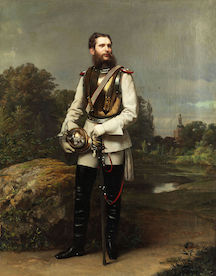
 “Fritz,” as Prince Frederick William was known, and Princess Victoria met first when Prince Albert and his secretary Baron Stockmar concocted a plan to invite the Prussian royals to London for Albert’s Grand Exhibition of 1851. Fritz was 20 at the time, and Victoria was but 10. The queen permitted Victoria to join the royal families, on the guise as a companion for Fritz’s younger sister. Princess Victoria’s German was fluent and she proved herself the perfect guide for her father’s exhibition. She was vivacious and made a good first impression. The two were permitted great access to one another (a fact which would not have occurred if she were older) over the two weeks the Prussians remained in London. If she had been older perhaps she might have noted the reticence and the alarm with which Frederick William noted the familiarity practiced openly by the British royal family. Life in Prussia would not be the same as life in London.
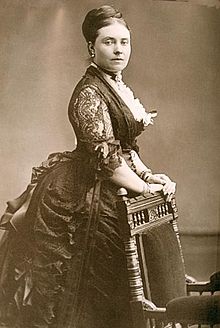 In the years of waiting, Prince Albert “trained” his daughter in how to be an excellent queen consort. Albert spent two hours daily in this manner. Unfortunately, the Princess Royal was not as adaptable as her father. Victoria’s life in Prussia would never be what she wished. Where in England, the princess’s life held a certain informality, in Berlin she encountered strict court etiquette. Moreover, the Prussia that Fritz would govern would be a military-controlled state. The ruling House of Hohenzollern practiced a state-instilled monarchy. Fritz and Vicky were married in January 1858.
 Education in England has roots deep in the Anglo-Saxon period. Latin was the main subject at these early schools and the instruction was directed toward the sons of “aristocracy” of the age. The church saw a need to train additional priests, as well as a need for someone to read the Bible and related documents to others. Both Oxford and Cambridge were founded as a means to train the clergy. It was during the reign of Edward VI that a reformed system of “free grammar schools.”
  “Robert Raikes initiated the Sunday School Movement, having inherited a publishing business from his father and become proprietor of the Gloucester Journal in 1757. The movement started with a school for boys in the slums. Raikes had been involved with those incarcerated at the county Poor Law (part of the jail at that time); he believed that “vice” would be better prevented than cured, with schooling as the best intervention. The best available time was Sunday, as the boys were often working in the factories the other six days. The best available teachers were lay people. The textbook was the Bible. The original curriculum started with teaching children to read and then having them learn the catechism, reasoning that a student who could read and understand the Bible could do the same with any other book.” (Power, John Carroll (1863). The Rise and Progress of Sunday Schools: A Biograhy of Robert Raikes and William Fox. New York: Sheldon & Company.)
 Many of the minor plot lines in my latest Regency romantic suspense concern who could inherit a title? There is the matter of the Marquess of Malvern’s losing his memory. Should the Duke of Devilfoard declare his eldest son incompetent and petition for his second son to assume control of the dukedom? Was such even legal? And what of the missing Earl of Sandahl? The original earl falls overboard on his “honeymoon” and cannot be found. Should he be declared dead? If so, who inherits? The logical answer is the second son, but that solution is not what it seems.

 Angel Comes to the Devil’s Keep

 On 7 April 1853, Queen Victoria delivered her fourth son and eighth child. Prince Leopold George Duncan Albert was the first of the queen’s children to be delivered with the aid of chloroform, a controversial procedure at the time. The belief by many in the medical field and the theological circles was that God meant women to “suffer” during childbirth so a symbol of Eve’s betrayal in the Garden of Eden. The queen’s use of the drug created quite a debate. It was also argued that a painful delivery assured that mother’s would wish to protect the children for whom they had suffered. The press thought the procedure too dangerous to the queen’s health. It was Victoria’s approval of the procedure that finally broke this archaic “male” perspective of women’s health.
 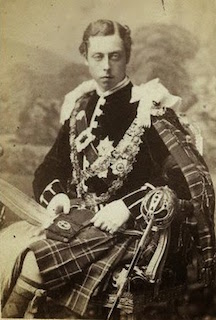 The diagnosis of hemophilia was not met well by either Victoria or Albert. “Blame” for the condition was denied by both the queen and her consort. So, who can be a hemophilia carrier? “A daughter gets an X chromosome from her mother and an X chromosome from her father. Suppose the X chromosome from her mother has the gene for normal blood clotting. Suppose the X chromosome from her father has the gene for hemophilia. The daughter will not have hemophilia since the normal blood clotting gene from her mother is dominant. It won’t allow the instructions from the hemophilia gene to be sent.
 Eventually, Leopold won his mother’s permission to marry. However, his medical condition prevented many eligible princesses from accepting an offer. “Princess Helen of Waldeck-Pyrmont agreed to marry him. The couple tied the knot in 1882. Although when they married they barely knew each other, they soon grew to love, and became very devoted to, each other. The following year, Helen gave birth to a child, Alice. Unfortunately, Leopold didn’t get to spend a lot of time with his beloved family. In March 1884, he went, alone (his wife was pregnant and couldn’t travel) to the south of France, something he always did to escape the cold English winters. While there, he slipped, bruising his knee and hitting his head. That night, he died. The cause is unclear, but the most likely explanation is that he suffered a cerebral hemorrhage. Four months later, Helen gave birth to their second child, a boy named Charles Edward.”
 “About 7 o’clock on the evening of Monday, the 3rd of November, at 42 weeks and 3 days gestation, the membranes spontaneously ruptured and labor pains soon followed. The contractions were coming every 8 to 10 minutes and were very mild. Examination of the cervix at that time revealed the tip of the cervix to be about a half penny dilated. On Tuesday morning, around 3 a.m., the 4th of November, Princess Charlotte had a violent vomiting spell and Dr. Croft thinking that delivery was eminent, sent for the officers of the state and Dr. Matthew Baillie. The Archbishop of Canterbury, the Bishop of London, The Lord Chancellor, the Home Secretary, the Secretary of war and Dr. Baillie, all arrived in their coaches and four before 8:00 a.m. But alas, the Princess was only three centimeters dilated at this time.


 Every Woman Dreams...