
There are a slew of contemporaries of Shakespeare of which many of you never encountered in your English classrooms, whether high school of university. These are some of the more colorful ones.
 Barnaby (Barnabe) Barnes was the third son of Dr Richard Barnes, bishop of Durham. He was baptized in York at St Michael le Belfry Church in March 1571 (although he was reportedly born in 1569). He entered Brasenose College, Oxford in 1586, but did not earn a degree for his father passed in 1587. Dr Barnes left a portion of his estate to each of his six children, and Barnes lived on the income of this bequest.
In 1591, he traveled with the Earl of Essex to France. On his return he published Parthenophil and Parthenophe, Sonnettes, Madrigals, Elegies and Odes (ent. on Stationers’ Register 1593), dedicated to his “dearest friend,” the poet and nobleman William Percy, who contributed a sonnet to the eulogies prefixed to a later work, Offices. Parthenophil was possibly printed for private circulation, and the copy in the Duke of Devonshire’s library is believed to be unique.”Parthenophil and Parthenophe” are the names given to the two protagonists in the sonnets, the first name meaning “virgin-lover” and the second “virgin.” Some experts believe the two represent Essex and Queen Elizabeth. At the end of the sonnet cycle,the lover Parthenophil dreams that he uses black magic to compel his unattainable mistress to appear to him naked, whereupon he rapes her. Barnes was known to write sonnets, madrigales, etc.
Barnes became involved in the pamphlet feud between Gabriel Harvey and Thomas Nashe. Barnes took the part of Harvey, who wanted to impose the Latin rules of quantity on English verse: Barnes even experimented in classical metres himself. This partisanship is sufficient to account for the abuse of Nashe, who accused him, apparently on no proof at all, of stealing a nobleman’s chain at Windsor, and of other things. Prior to this literary assault Barnes had written a sonnet for Harvey’s anti-Nashe pamphlet Pierces Supererogation (1593), in which he labelled Nashe a confidence trickster, a liar, a viper, a laughing stock and mere “worthless matter” who should be flattered that Harvey even deigned to insult him. It is however on record that Barnes was prosecuted in Star Chamber (an English court of law which sat at the royal Palace of Westminster, from the late 15th C to the mid-17th C) in 1598 for attempting to murder one John Browne, first by offering him a poisoned lemon and then by sweetening his wine with sugar laced with mercury sublimate. Browne fortunately survived the attack and Barnes fled prison before the case concluded. He was not pursued. It seems likely he attempted Browne’s assassination at the behest of Lord Eure, warden of the Middle March and of Berwick upon Tweed, and political string pulling protected him.
 John Fletcher was a Jacobean playwright, who collaborated with Francis Beaumont and others during the the early 1600s. (baptized 20 December 1579, Rye, Sussex – died 29 August 1625, London, during the plague epidemic). His father, Richard Fletcher, was minister of the parish in which John was born and became afterward queen’s chaplain, dean of Peterborough, and bishop successively of Bristol, Worcester, and London, gaining a measure of fame as an accuser in the trial of Mary, Queen of Scots, and as the chaplain sternly officiating at her execution. When not quite 12, John was apparently admitted pensioner of Corpus Christi College, Cambridge, and two years later became a Bible clerk. From the time of his father’s death (1596) until 1607 nothing is known of him. The family was heavily in debt and Fletcher and his eight siblings suffered. His name is first linked with Beaumont’s in Ben Jonson’s Volpone (1607), to which both men contributed encomiums.
John Fletcher was known for his tragicomedies, and his plays were performed at royal court. Between 1615 and 1642, approximately 40 of the plays the Kings Company performed were attributed to John Fletcher and Francis Beaumont. Their collaborations include the plays Philaster (staged 1609), A King and No King (staged 1611), and The Scornful Lady (staged 1615). Fletcher also collaborated with Shakespeare on The Two Noble Kinsmen (staged around 1613) and Henry VIII (staged 1613). Fletcher’s own work includes The Faithful Shepherdess (staged 1608), which he identified as a “pastoral tragicomedy,” and The Wild Goose Chase (staged around 1612).
Authorship is difficult to identify in the collaborations; Fletcher also wrote plays with Philip Massinger. The two may have worked with two other authors to pen the tragedyThe Bloody Brother (produced around 1621), also referred to as Rollo Duke of Normandy, which includes the poem “Take o take those lips away,” a variation of a poem from Shakespeare’s Measure for Measure; the poem may have been added to a late version of the play.
 Nicholas Breton (born 1553?—died 1625?) was a prolific English writer of religious and pastoral poems, satires, dialogues, and essays. His father, William Breton, a London merchant who had made a considerable fortune, died in 1559, and the widow (née Elizabeth Bacon) married the poet George Gascoigne before her sons had attained their majority. Nicholas Breton was probably born at the “capitall mansion house” in Red Cross Street, in the parish of St Giles without Cripplegate, mentioned in his father’s will.
There is no official record of his residence at the university, but the diary of the Rev. Richard Madox tells us that he was at Antwerp in 1583 and was “once of Oriel College.” He married Ann Sutton in 1593 and had a family. He is supposed to have died shortly after the publication of his last work, Fantastickes (1626).
Breton’s life was spent mainly in London. He dedicated his works to many patrons, including James I; his chief early patron was Mary Herbert, Countess of Pembroke. In 1598 Breton was accounted one of the best lyrical poets, but he outlived his reputation. His satires are rather mild and general; more successful are the descriptions of simple country pleasures, whether in the pastoral poetry of The Passionate Shepheard (1604) or in the prose descriptions of the months and the hours in his Fantasticks (1604?), which in some respects anticipates the fashion for character books. Modeled on the Characters of the Greek philosopher Theophrastus, which became available in Latin translation in 1592, these books contained brief sketches, describing a dominant virtue or vice in such characters as the thieving servant, the cringing courtier, the generous patron, or the pious fraud. Breton himself wrote two character books, The Good and the Badde (1616) and Characters Upon Essaies (1615), the latter containing essays as well.
Breton was a prolific author of considerable versatility and gift, popular with his contemporaries, and forgotten by the next generation. His work consists of religious and pastoral poems, satires, and a number of miscellaneous prose tracts. His religious poems are sometimes wearisome by their excess of fluency and sweetness, but they are evidently the expression of a devout and earnest mind. His lyrics are pure and fresh, and his romances, though full of conceits, are pleasant reading, remarkably free from grossness. His praise of the Virgin and his references to Mary Magdalene have suggested that he was a Roman Catholic, but his prose writings abundantly prove that he was an ardent Anglican.
Sources:
“Barnabe Barnes,” Wikipedia.
Cox, John D. “Barnes, Barnabe (bap. 1571, d. 1609),” Oxford Dictionary of National Biography, Oxford University Press, 2004.
“Nicholas Breton,” Encyclopedia Britannica.
“Nicholas Breton,” The Online Books Library.
“Nicholas Breton,” Poet’s Corner.
“John Fletcher,” Encyclopedia Britannica.
“John Fletcher,” Luminarium.
“John Fletcher,” Poetry Foundation.
 According to
  Morris was previously a London merchant with an aristocratic clientele. He took advantage of the demand for “Russian mode” cigarettes initiated by British soldiers returning from the Crimean War to Victorian London. Morris hired on a group of expert “rollers” imported from Russia, Turkey, and Egypt. These workers turned out expensive brands: Philip Morris Cambridge, Oxford Blues, and Ovals, and they were snapped up the populace. These workers were some of the best in London, and they could turn out some 3000 cigarettes in a typical 10-hours’ day.
 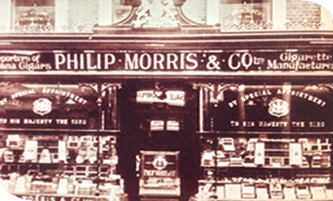 American stockholders bought the firm in 1919, and the image created by Philip Morris in that first shop on Bond Street was a major sale point. The company grew in the competitive tobacco industry.


 Happy October Birthday to some of our favorite actors, who took on roles in an Austen-inspired film.
 October 3 – Lena Headey
 October 4 – Alicia Silverstone







 October 27 – Joanna Scanlan
 October 28 – Matt Smith
 October 29 – Paul Daneman
 To this gifting tradition, we might add the legend of St. Nicholas, the bishop of Myra (beginning in the 4th Century). The St. Nicholas legend says the the priest bestowed gifts upon the poor throughout Asia Minor. The images of “Santa Claus” and of “Christmas stockings” can be traced to St. Nicholas’s life’s work. The anniversary of St. Nicholas’s death (December 6) was often marked during the Middle Ages with the bestowing of gifts on children.
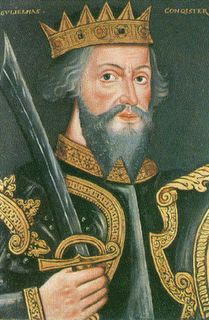 On December 25, 1067, William the Conqueror donated a large sum of money to the Pope. This act planted the seed for change in Eastern Europe and later England and America. In Germany, many chose to give gifts to friends and neighbors anonymously. The Dutch did something similar, but they made it into a “treasure hunt” with written clues to where the gifts were located. The Danes were the first to wrap presents. They would put a small box into a larger one and then another one, etc., etc.
 “Robert Southwell was born around 1561 at Horsham St. Faith, Norfolk, the youngest son and fifth child in a family of eight. The Southwells, a county family that had prospered from the dissolution of the monasteries, formed part of a network of wealthy, interrelated families that included the Wriothsleys, Howards, Bacons, and Cecils as well as recusants such as Vaux, Arden, and Copley. Southwell was a studious boy whose father liked to call him ‘Father Robert.’ In 1576 Southwell, like many other boys of his class, was sent overseas to be educated in the Jesuit school at Douai. He would not see England again for ten years. Between the ages of fifteen and seventeen he became convinced of his vocation to a religious life, and in 1578 he was admitted to the noviceship at Rome, where he embarked upon his formation as a Jesuit. In 1581 he transferred from the Roman to the English College, where he became tutor and perfect of studies. He was ordained in 1584 and was sent on the English mission in 1586, landing secretly with his fellow Jesuit Henry Garnet somewhere between Dover and Folkestone in early July. He was about twenty-five years old.
  “His earliest works, dating from his Roman years, are Latin poems preserved at Stonyhurst. Brian Oxley has shown that these youthful poems share the mature Southwell’s habits of thought as well as the verbal artistry found in his English work: “Southwell’s sense of the artifice of holy things, and indeed, of the holiness of artifice, is central to his life and work.” The Latin poems are evidence of a strong, probably irresistible vocation as a writer and poet.
  I love unusual words and phrases and often make note of them as I read. Today, we have a nice mix.
  There are suggestions that this expression derives from from ‘as nice as ninepins.’ In the game of Ninepins (Skittles) the pins are set out in a square. For the game to be fair this must be done neatly and accurately or, in the old parlance, nicely. There are no early records of ‘as nice as ninepins’ in print, which we might expect if the ‘ninepence’ version derived from it. The ‘ninepins’ form, in the guise of ‘as smart as ninepins’ isn’t found until the 20th century, so it is reasonable to assume that it is a simple mishearing of the earlier ‘as neat/clean/grand as ninepence’ versions.


 The Female Servants Home Society was located at 21 Nutford Place and 110 Hatton Garden. Lodging was available on Nutford Place for 1s. 9d. per week. At Hatton Garden, the cost was 1s. Medical attendants cared for those too ill to work. The society granted to servants who continued in the same employment rewards proportionate to their length of service. Those who were employed for two years received a copy of the Bible. Five years earned the servant a certificated testimonial and a suitable book. A silver medal was handed out for nine years service, and a good medal rewarded for fifteen years. The group founded homes to receive female servants who were displaced. Those in residence were given religious instruction, as well as advice on providing excellent service.


 Every Woman Dreams...
