Question from a Reader: Who ruled on the incompetence or insanity of a titled peer? What is the general procedure, and were there ways to keep preliminary hearings on it discreet?
Also, I am seeing from research that insanity could be grounds to invalidate a marriage (in the case of my story, by secret elopement). Am I understanding that correctly? Friends and family were already expressing their concerns at the time of the elopement and there were rumors of it among the locals around his estate, if that helps.
This is kind of tricky. Generally speaking, the family would try to keep him under control themselves or tuck him into a private hospital. Nobody actually did anything about Earl Ferrars until he murdered his valet, but I expect his family was relieved to see him hanged. But that information will not help you if you are attempting to have a marriage dissolved as part of the plot line. I think that before 1845 it was the Lord Chancellor who would have to appoint a commission to determine that the peer in question was too insane to marry, etc.
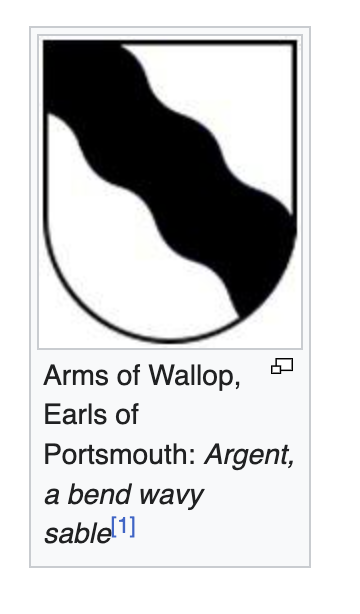
Lord Portsmouth was married to an older woman and did very well until she died. Then he was married to the daughter of his solicitor. The brother wanted the marriage annulled because the earl did not have the sense to know what marriage was.
The “madness” of the 3rd Earl of Portsmouth refers to a famous and scandalous 1823 insanity trial where his own family sought to have him declared legally insane. The trial became a sensation due to the Earl’s eccentric behavior, his high social standing, and the involvement of prominent figures like Lord Byron. While some considered him a harmless eccentric, others, including his family, presented evidence of bizarre and sadistic behavior, leading to a lengthy and expensive legal battle.
The 3rd Earl of Portsmouth, John Charles Wallop, was a wealthy aristocrat with connections to notable figures like Jane Austen and Lord Byron. While seemingly normal in some social settings, he engaged in bizarre and disturbing behavior behind closed doors, such as whipping servants, attending funerals obsessively, and even bleeding horses.
His family, particularly his nephew, Henry Wallop Fellowes, initiated the 1823 trial, alleging that his actions stemmed from a dangerous and immoral nature, not just eccentricity. The trial was a major public event, packed with spectators and covered by newspapers. It became the longest and most costly insanity trial in British history, lasting for weeks and costing a fortune.
At first the Lord Chancellor who deals with the insane, infants, and rich orphans–refused to consider the matter, but the brother kept pushing. First a commission was appointed to investigate his mental health. No health privacy laws so the investigation and witnesses were heard in a public room of a pub.
Despite Lord Byron’s defense of the Earl, the court ultimately declared him insane, backdated to 1809. This led to the annulment of his second marriage and the disinheritance of his children from that marriage. The Earl lived for many years after the trial, though he was confined to a section of his estate and believed himself to be a king.
It took more than 5 years for the commission to declare that the earl had no more idea of marriage than his dog did.
The church annulled the marriage. A commission was set up as guardian of the person. His wife and two children (she was living with her lover in their bed.) The earl was physically incapable of fathering children and a nephew cared for the property. The earl was allowed to live on his property with just a cadre of guards — he lived many years. His brother was earl for a year before he also died.
The wife was not a wife and the children were not legitimate. They went to Canada. She married the lover who was father of the children. She died in poverty, but that might be relative property. The nephew — second in line of succession for the earldom– took care of property, etc. Not an easy job.
The murder mentioned above for Lord Ferras would have required a coroner’s inquest and then a proper trial. Unless the person is raving at the time so that he/she could not be tried, it is the judge and jury that would have to declare him/her innocent by reason of insanity.
Then fees would be paid to a private asylum to take the person. The person would have to be guarded so most would have a house they owned turned into a prison/asylum with guards and attendants they paid and hired to care for the person.
The government did not really have a decent place for the criminally insane.
Sanitariums were a later development.
The person’s rank is not important. What the family can afford is the primary issue. An honsest man would not want his wife in Bedlam, for example, where the treatment was terrible.
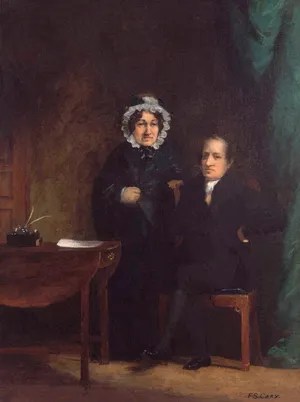
When Mary Lamb [an English writer, known for Tales from Shakespear, written with her brother Charles] killed her mother and wounded her father one hot September day, she was declared innocent by reason of insanity. Her father would not have her in the house so she was placed in a private asylum until he died and then she went to live with her brother. They lived together until he died. They wrote books together and fostered a child together. If she felt an attack of madness coming on, she would return to the asylum for a short stay.
Generally, a coroner’s inquest had to be held over all dead bodies that presented as other than normal — a man on his sick bed with doctor in attendance – even if it was an accident.
Most crimes had to be prosecuted by the individual victim or the family. Murder would be a Crown case. If a peer was dead and murder was suspected, all the government agencies would be urging investigation.
Hiding away because of rumors is a good way to feed the rumor mill.


