I confess. I knew little to nothing about a Georgian bedroom. I had seen the ones shown at Williamsburg, Virginia, but that is more to show visitors to the estate something of life in America in that time period, not what it was to live in a London town house or an estate. However, for Lyon in the Way, which will be released by Dragonblade Publishers on June 18, 2025, I had to write a brief scene where the heroine hid under a bed in an earl’s house. Could she fit under there? Was there a “valance” and was “valance” the the correct word to use during the Regency to describe the skirt on the bed? Below are tidbits of the research I did for that one little fact, only mentioned once in a story of 84,000+ words. Often I lament why I could not simply write contemporary. I intend no dissing any contemporary fans or writers in my statement, but I wonder, for my own sanity, if contemporary might not have been easier on my 70+ year-old-mind.
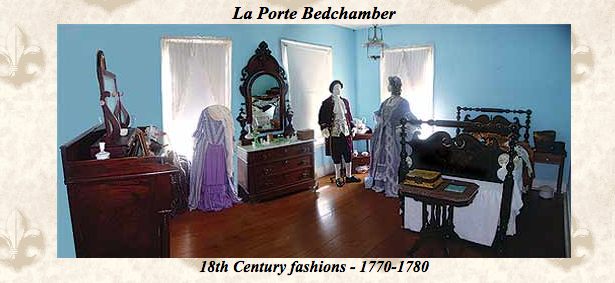
Musings of a Romance Writer tells us, “By the end of the eighteenth century, most beds used a woven mesh of ropes or leather to support a mattress. Unlike the previous solid wood base, ropes provided more yielding support and had to be tightened regularly to avoid sagging. If you were lucky enough to be able to afford a mahogany four-poster bed, you were more than well off. It was also important to ensure you had multiple layers of blankets and a counterpane to establish your status. The more work your servants had to do when making your bed the better. Bed hangings for the high-status bed were made from chintz and were stitched directly to the bed frame. Calico Glazers were employed to unstitch the fabric when it needed to be cleaned. They would wash and starch the fabric, then re-glaze the material using heated rollers. The hangings would then be re-attached to the bed frame.
“One source argued that feather mattresses were not used until later in the century, but I can confirm that they were introduced to England by John Harris Heal around 1810. Heal set up his feather dressing business, Heal & Sons Ltd., that year and then went on to produce furniture from 1818. They still have a shop in London today, although it is no longer run by that family. Feather mattresses were considered so luxurious, that they were even handed down through generations.”
Victoria Linen in the UK provides us a bit of terminology:
“For Beds: A valance, also known as a bed skirt, is used around the base of the bed to hide the box spring or storage underneath, giving the bed a neat and finished appearance. “Valance” is also a decorative drapery over the top part of a window.
“Historically speaking, valances were used to hide unattractive box springs and poorly shaped bed posts. Not unlike the bed skirts of today which often hide items stored beneath the bed as well as the occasionally annoying “dust bunny.”
“It was quickly discovered that bed skirts also served to stop chilly winter drafts which tended to cool the bed from the floor up. In addition, those who had valances on their beds found bed bugs and dust mites were less of an issue in their homes. This, of course, makes perfect sense because the skirt can deflect dust, which is somehow drawn underneath beds. And so, the valance came into its own!”
Meanwhile, Rival Beds speaks of what it was like in a Georgian bedroom. “The Georgian period spanned over 100 years, developing into several eras within this timeframe. There were subtle nuances between the earlier and later Georgian interior styles, but each was known for its elegance and lightness of touch, at least that’s according to the National Trust.
“The graceful architecture of Georgian buildings, with regal Roman temples and grand Greek villas included, made for grand, demanding spaces full of dark, rich furniture, usually made from natural materials such as mahogany.
“The symmetrical architecture of Georgian spaces, sometimes fit with adjacent columns, meant bedrooms were apt for show-stopping bed frames. A Georgian bedroom is really all about the bed and its awe-inspiring structure.
“The height and sheer scale of a Georgian structure also made space for ornate patterns to adorn walls and classic art to be hung.
“Georgian bedrooms remained soft and inviting with pastel colour schemes despite the drama and interest of these projects through their furniture and decorative features. At first, pea green was the preference before regency blue took the front seat where it has stayed ever since, now being reimagined by the best in industry from Farrow & Ball to Graham & Brown.
Other Sources:
https://www.georgianera.wordpress.com/tag/18th-century-beds-and-bedding/
https://www.regencyredingnote.wordpress.com
https://www.reg.com/2013/04/15/regency-furniture-matresses/
https://www.heals.com/heritage
https://www.bensonsforbeds.co.uk/history_of_the_bed
A short scene from Chapter 9 of Lyon in the Way:
Emma wrapped her arms about her middle and rocked herself in place. “Could what I feel be gratitude? Assuredly so. Attraction? His lordship is truly very handsome. Love? How might an accounted passionate advocate for the duty of men to the women they marry have fallen in love with a gentleman in a matter of a few days? Should I not worry regarding how Lord Orson will treat his wife? I know nothing of his lordship except his sense of honor.” She thought as a smile claimed her lips. “And the fact that he is a most excellent kisser.”
Hearing someone moving along the hall, Emma shoved the pillow and blanket under the bed and wedged herself beneath the furniture, dropping the bed’s valance in place just as a door opened. She held her breath as the person made his or her way about the room. The light danced across the floor, and, for a moment, she thought she might have been found, but the person moved, instead, towards the wardrobe, opening and closing the doors and moving the drapes aside before leaving the room. It also sounded as if he opened the door to the small balcony and looked out upon it. When he departed, the door to the room had been left open, for, from her position, Emma could view the muted lights along the wall, meaning she could not close the door again without someone taking note of her doing so. There was no means of straightening the blanket beneath her shoulders and lying flat; therefore, she worked it free so she might lie on the Persian rug covering the floor. By her estimation, it was close to eleven on the clock. Lord Duncan had told her Lord Beaufort would not come until near three in the morning.
Emma decided she would wait a bit longer before she attempted to make her way from her hiding place. Instead, she had closed her eyes and brought forth Lord Orson’s image—one in which he was looking upon her with a smile she hoped was meant only for her.
Book Blurb: One man wants her dead. Another may love her forever.
For over a year, Lord Richard Orson has been quietly captivated by the unconventional Lady Emma Donoghue. Headstrong, brilliant, and unapologetically involved in causes that rattle Society’s comfort, Emma is nothing like the debutantes he’s expected to court.
But when he finds her bruised, confused, and alone in Covent Garden after midnight, Richard is thrust into a far more dangerous game.
Someone wants Emma silenced. And now, Richard has only moments to uncover the truth, protect her from harm, and keep her out of scandal’s reach. But staying focused is harder than he imagined—especially when every glance, every accidental touch, reminds him how perfectly she fits in his arms.
Tropes you’ll love: Protective hero / damsel in distress (with a twist) Bluestocking heroine Rescue & recovery romance Unlikely match / opposites attract Slow burn with rising suspense One bed (forced proximity) Hero falls first
As danger closes in and secrets are revealed, Richard must decide whether he’s willing to risk his life—and his heart—for a woman who’s always been worth the fight.
A suspenseful, slow-burn Regency romance where danger ignites desire, and love must outpace the clock.
Read in Kindle Unlimited!
Enjoy book one in a new series within The Lyon’s Den Connected world by Regina Jeffers.
Book 1 – Lyon in the Way
Book 2 – Lyon’s Obsession
Book 3 – Lyon in Disguise
Book 4 – Lost in the Lyon’s Garden
Book 5 – Lyon on the Inside



 Every Woman Dreams...