In the singular form the lexicon of a particular subject is all the terms associated with it. The lexicon of a person or group is all the words they commonly use. As a plural noun, a lexicon is an alphabetical list of the words in a language or the words associated with a particular subject. To distinguish lexicon from a dictionary, it is an alphabetical list of the words in a language or the words associated with a particular subject.
These examples are a mix of what one might hear upon the lips of the aristocracy, as well as examples of Cant used upon London’s streets and those terms used by farmers and like in the country.
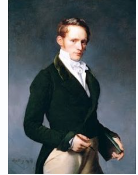
tailcoat – everyday wear for a fashionable gentleman; worn over shirts and waistcoat; it was square cut around the waist for formal attire and sloped for more less formal situation, as well as for riding

take orders – becoming a clergyman in the Church of England

wiki/Queen’s_Counsel
#/media/File:QC_Court_
robes_crop.jpg
take silks – a barrister would wear a silk gown once he became the King’s Counsel (or the Queen’s Counsel)
taking the waters – spa towns such as Bath or Tunbridge Wells were thought to be places of healing; to “take the waters” meant to drink the mineral waters available there or to bathe in them
tallow – fat from oxen or sheep, which was used to make soap and candles
tambour – a hoop filled with material; used for embroidery work
tandem – a team of two horses harnessed one behind the other, rather than side by side
tanner – slang for a sixpence
taproom – an inn’s room where ordinary laborers were served (as opposed to a private parlor for the genteel sect)
Tattersall’s – near Hyde Park Corner; established specifically for the sale by auction of horses, carriages, harnesses, etc., though one could purchase a hunting dog there, as well; held accommodation for 120 horses, a large number of carriages, and a spacious kennel for hounds; held a sporting lounge for gentlemen when horse auctions (around 100 horses were for sale each week) were not happening; home of the Jockey Club; subscribers paid one guinea per year and all sporting bets were settled there, regardless of where the sporting event took place
tea caddy – a box that held tea
teapoy – a 3-legged stand used for serving tea
Tea Room – located in the Bath assembly rooms; one could take tea in the room, but it was also used for concerts
tea service – in contrast to the suppers served at private balls, at assemblies or public balls, teas was served halfway through the evening; gentlemen sat with the ladies with whom they had danced prior to the tea service
Temple – the site for two of the four Inns of Court (the Inner Temple and the Middle Temple); was once occupied by the Knights Templar
Temple Bar – a gate that marked the formal entrance to the City of London; the sovereign had to request permission of the Lord Mayor to enter the city; north of the Temple at the eastern end of the Strand
tenants – prosperous farmers who rent land; not necessarily the poor
tenner – slang for a ten-pound note
Test Act – legislation that forbid Catholics from holding public office, including Parliament; was repealed in 1828
Thirty-nine Articles – the basis of the Church of England; a clergyman “read himself in” to a new parish congregation by reading the articles aloud to the congregation from the pulpit

com/2011/11/triple-headed-monster.html
three-decker novel – a common occurrence in novels of the 18th and 19th Centuries; the novel is divided into three volumes within one book; the volumes were published as separates (only Austen’s Northanger Abbey and Persuasion are two volumes; all other Austen works were 3 volumes)
tick – was the Regency version of buy now and pay later; also referred to as “run upon a tick”
ticket-of-leave – an early release from jail (similar to parole)
ticket porter – a member of the official group licensed to carry goods, parcels, etc.; a ticket porter carried a badge which identified him as a member of this occupation; like a guild member
ticket to a public ball – anyone who could afford a ticket to a public ball or assembly was admitted; a season of tickets would cost between one pound and ten guineas (depending on the country or in London)
tidewaiter – a customs official for incoming boats/ships
tiffany – a transparent silk gauze
tiger – usually a young boy who served as a groom; the term comes from the orange and black-striped waistcoat he worn; he was responsible for holding the horses reins when the master disembarked from his carriage; he would also exercise the horse while his master was making business or social calls; he road on a seat at the back of the carriage, so situated as not to throw off the balance of the carriage while in motion; a very fashionable thing to employ a tiger; not a popular term until about 1817
tights – thin, skintight pants worn by gentlemen in the early part of the century; were so tight that men resorted to carrying a purse for their money

~cmtilbury/ttm/ttm_
tilbury_gig.html
tilbury – the cloth covering part of a wagon; A tilbury is a light, open, two-wheeled carriage, with or without a top, developed in the early 19th century by the London firm of Tilbury, coachbuilders in Mount Street. A tilbury rig is little more than a single “tilbury seat”—the firm’s characteristic spindle-backed seat with a curved padded backrest— mounted over a raked luggage boot, and fitted with a dashboard and mounting peg, all on an elaborate suspension system of curved leaf springs above the single axle. The tilbury has large wheels for moving fast over rough roads. A tilbury is fast, light, sporty and dangerous.
Times – the most important newspaper of the day; one could find the entire text of parliamentary debates in the Times
tinderbox – used to start a fire before matches became common; one struck the flint from the box against a piece of metal in hopes that a spark would light the rags inside the box; candles, etc., were lit from the tinderbox
tippet – a fur scarf that hung about the neck and down either side of the chest; many times the tippet was a dead animal (think Fox furs, a boa, a stole, etc.) In the latter part of the 1700s, they were long and thin, more like a boa might be nowadays. However, by the Regency, they took on the look of a caplet.

tithes – the amount paid in kind to the local parish clergyman; equal to 1/10 of the farmer’s or tradesman’s annual produce
toad eater – a flatterer; one giving false praise
ton – the word is always in Italics for it comes from the French word bon ton, which can be translated to mean “good form,” i.e., good breeding, good manners, well spoken, etc.; fashionable society; those of the peerage or the gentry class
too high in the instep – snobbish; someone who is very proud, or haughty
top – the place in a ballroom or assembly from which the orchestra played; the “top” couple in a line of dance was the one closest to the orchestra; to be at the top of the line was a place of honor, usually afforded to the highest ranking aristocrat in the room
top boots – high boots used for riding
topsy turvy – utter confusion; Derived from the obsolete 1528 English word terve to turn upside
toque – became popular towards the end of the Regency period; close-fitting hat with no brim; turban-like; could be worn both for daytime and evening wear

Tory – the conservative party in English politics
Town – meaning London; therefore, it would be capitalized; people went “up to Town”
Town bronze or Town polish – fashionable manners expected of those in Town (London)
training college – a college that trained teachers for the national schools
Transatlantic Trade Triangle – goods were shipped from British ports to the west coast of Africa, where they were exchanged for slaves; the slaves were taken by The Middle Passage to the Americas; slaves were traded for agricultural goods (cotton and sugar) and returned to England
transportation – sending English criminals overseas as punishment; until 1776, the American colonies were the destination; afterwards, the criminal was sent to Australia
traveling post – a hired driver, chaise, and horses for a journey

treacle – a sweet medicine (similar to molasses); Treacle is any uncrystallised syrup made during the refining of sugar. The most common forms of treacle are golden syrup, a pale variety, and a darker variety known as black treacle. Black treacle has a distinctively strong, slightly bitter flavour, and a richer colour than golden syrup, yet not as dark as molasses. Treacle is a common sweetener and condiment in British cookery, found in such dishes as treacle tart and treacle sponge pudding.
trousers – a looser-fitting pants than were breeches or pantaloons; worn to the ankles; customarily had a foot strap that fit around the arch of the foot to hold them in place
truck system – paying one’s employees in goods, food, etc., rather than money
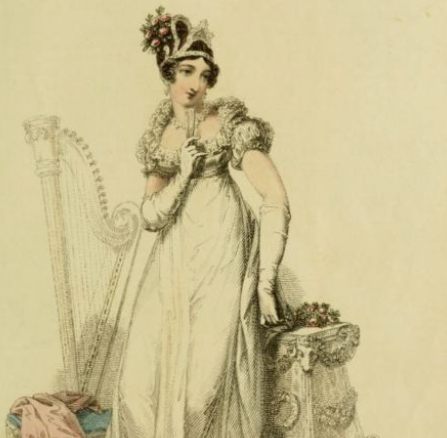
tucker – a piece of lace to cover a woman’s chest in lady’s garments
tulip – a very fashionable man (think Beau Brummell)
turbans – a popular ladies’ fashion in the early part of the century; an imitation of a Middle Eastern headdress
turnkey – a jailer
turnpike – a toll road; the average toll was 2-3 pence per mile
twelfth cakes – cakes made for Twelfth Night; those who found the coin or bean inside became the “king” or “queen” of the celebration
Twelfth Night – January 5; the night before the 12th day after Christmas; when Christmastide officially ended; January 6 is the Epiphany
two-dance rule – a couple was expected not to dance more than twice; dancing more often with a partner was a symbol of serious matrimonial interest
two-penny post – London’s local mail delivery system, which was run as a separate entity from the national mail system; similar local mail delivery systems rose up within other large metropolitan areas
tucker – often worn for modesty purposes on both daytime apparel and low-cut gowns for evening wear; it was an edging of white lace, muslin, or lawn, that was usually frilled and added to disguise a low neckline; if it hung down over the front of the bodice, it was called a “falling tucker”
turnpike – The 1663 Turnpike Act set up tolls/fees to be paid to travel certain roads; a gate across the road prevented people from crossing until they paid the necessary fee; in 1706 the government created the Turnpike Trusts, which were private companies who collected the tolls and were also responsible for maintaining the roads
twelvemonth – the term covers a typical 12-calendar month
Other Resources:


 Every Woman Dreams...
Eileen, I remember when I was growing up in the 1950s, the sixpence was often referred to as a tanner. I still love treacle tart.
Treacle, hey? A Harry Potter fan?
Sorry for the name slip, Regina! I had a late night last night and my brain isn’t functioning properly.
No problem. I understand. If that is the worse to happen to me today, I shall be blessed.
Reblogged this on Ace Britain & History News.