In the singular form the lexicon of a particular subject is all the terms associated with it. The lexicon of a person or group is all the words they commonly use. As a plural noun, a lexicon is an alphabetical list of the words in a language or the words associated with a particular subject. To distinguish lexicon from a dictionary, it is an alphabetical list of the words in a language or the words associated with a particular subject.
These examples are a mix of what one might hear upon the lips of the aristocracy, as well as examples of Cant used upon London’s streets and those terms used by farmers and like in the country.
Haberdasher – a man who dealt with small items for sewing, such as thread, needles, buttons, ribbons, etc.
Haberdasher of Pronouns – a schoolmaster or bookseller
Hack – a general-purpose riding horse; not used for hunting or military purposes
Hackney coach – one for hire; the taxicabs of the early 1800s
Ha-Ha – a landscaping technique; a dug trench or sunken fence, not easily seen unless one was close to it
Hair Ring – a ring made from the hair of one’s sweetheart
Half a Hog – (slang) sixpence
Half Crown – an English coin worth two shillings and sixpence
Half Pay – a payment which kept military men on the active list; a step toward retirement
Hams (or) Hamcases – breeches
Hand-Basket Portion – a woman whose husband receives frequent presents from her father or family is said to have a hand-basket portion
Hand and Pocket Shop – an eating shop, where ready money is paid for what is ordered
Handsome – a term used during the period to describe women, buildings, dresses, etc. (but not so much when it came to men, though it is possible to find it used thusly); Generally meaning agreeable to the eye or to a distinctive taste.
Hanger On – a dependent
Hangman’s Wages – was thirteen pence halfpenny, which according to the “vulgar” tradition was supposedly the amount allotted for an execution (one shilling for the executioner and three halfpence for the rope): The true stare of this matter is, that a Scottish mark was the fee allowed for an execution, and the value of that piece was settled by proclamation of James I at thirteen pence halfpenny.
Hanker – to long for something
Ha’Penny – a halfpenny
Hardtack – biscuits for sailors
Harridan – a strict, bossy, or belligerent old woman
Harrow – a frame with iron teeth which broke up the earth after the plowing was completed
Harvest – the cutting of the corn crop (Note: hay was “made” rather than cut)
Hatchment – a shield bearing the coat of arms of recently deceased person; was displayed on the front of the house and then in the church

Hedgerow – a row of hedge which served as a barrier to keep cattle/sheep from moving about too freely upon the land
Hell – A gambling establishment. Typically not an elegant establishment, but rather a more disreputable, often secret, den of gaming. A young “pigeon” was more likely to fall victim to a dishonorable “shark” at a hell than at an elite gentleman’s club.
Heir Apparent – the heir to property, regardless of any contingencies that might occur
Heir Presumptive – the heir who would inherit if certain contingencies did not occur
Hempen Fever – a man who was hanged is said to have died of hempen fever; in Dorsetshire, however, it is said the man was stabbed with a “Bridport dagger,” for Bridport is a place famous for manufacturing hemp into cords
Hessian boots – long boots worn by German mercenaries who fought the colonists during the American War of Independence; were popular in the early part of the 1800s
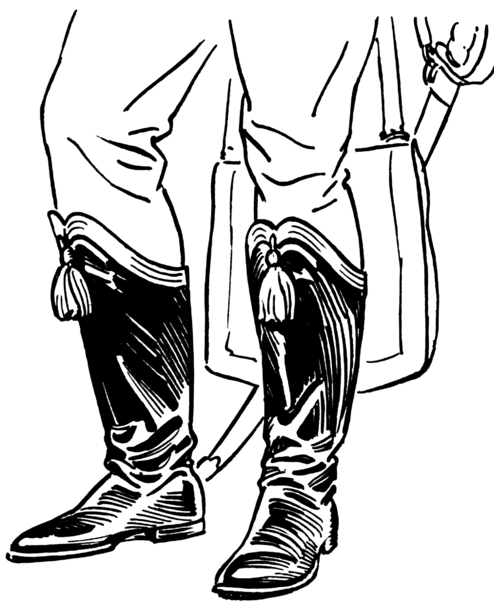
High-Lows – a type of lace up boots
High Ropes – to be on the high ropes is to be in a passion
Hob – beside the grate; a place to put kettles to keep them warm
Hob or Nob – “Will you have hob or nob with me?” was a question in fashion at polite tables. This was a question asking if one would drink a glass of wine with the person who proposed the question. If the person being challenged answered, “Nod,” he would choose wether the wine was red or white. This custom is said to have originated in the time of Queen Elizabeth I, when great chimneys were in fashion. You see, there was a corner of the hearth or grate where a small elevated projection could be found. It was known as a “hob.” Behind it was a seat. In the winter, the beer was placed on the “hob” to be warmed, The cold beer was set on a small table, said to called the “nob.” Thus the question, “Will you have hob or nob?”
Hobson’s Choice – Hobson was a famous carrier who let horses to the gentlemen at Cambridge, but the students had no choice of their mount. Hobson allotted each man the horse he thought best suited the young man’s manner of riding and the treatment of the animal.
Honeymoon – the honeymoon actually meant the first time a couple had marital relations (not necessarily the journey celebrating their marriage); frequently, the bride’s sister or a close friend accompanied the couple
Honourable – a title used for all members of Parliament; also a “courtesy title,” one not accompanied by any legal rights (bestowed on viscounts and barons and the younger sons of earls)
Horse Guards – the cavalry who guarded the monarch; nicknamed the “Blues”; had barracks at Whitehall

Hosteler – originally a name for an innkeeper, with inns being an Old English word called ‘hostels’
Hostler (or Ostler) – tended to the horses of travelers at inns
Hot Flannel – Beer, gin, eggs, sugar and nutmeg mixed together and served as a warm drink
Housekeeper – the top ranking female servant in a household
Housewife – a small case for carrying around items such as needles and thread to mend clothing (pronounced “huzzif”)
Hoyden – an uncontrollable girl
Hubbub – a noise, riot, or disturrbance
Hulks – old ships pressed into use in 1776 as “temporary” floating prisons; not abolished until 1858
Hundred – an ancient English unit of government, being the unit next down from a shire
Hunter – a horse bred specifically for fox hunts
Hunting the Squirrel – an amusement practiced by postboys and stage-coachmen, which consists in following a one-horse chaise and driving it before them, passing close to it, so as to brush the wheel, and by other means terrifying any woman or person that may be in it.
Huntsman – the man at a hunt who kept the dogs under control and on the scent
Hussars – a cavalryman who wore a flamboyant uniform

Hyde Park – a 388-acre park in London’s West End; was the most fashionable park of the time
Other Sources:


 Every Woman Dreams...

Do you have any idea about this? Housewife – a small case for carrying around items such as needles and thread to mend clothing (pronounced “huzzif”) Just wondering. Kind of jumped out at me.
Stick my bib in once again Regina, Hessian boots were worn by the men of the Hesse an old German State ruled by the House of Hesse from the mid 13th century to the 19th I think, the Battenbergs were I believe the rulers, as you probably aware, Prince Louis of Battenberg became the First Sea Lord of the Royal Navy and when WWI he very prudently changed the name to Mountbatten, now that name will ring a bell with your readers.
One of the Battenbergs married Queen Victorias youngest daughter who in turn had a daughter who became Queen of Spain on her marriage.
So now the heir apparent and the heir presumptive to the throne of England and the United Kingdoms all have some blood from the House of Hesse and undoubtably will wear hessian boots on ceremonial occasions.
😀 🙄
