
Thinking Russia was considering an alliance with England, Napoleon Bonaparte attempted to invade Russia, but the bitter cold and Russia’s own efforts was more than he could accomplish. “A military campaign, known in Russia as the Patriotic War of 1812 and in France as the Russian Campaign, that began in June 1812 when Napoleon’s Grande Armée crossed the Niemen River to engage and defeat the Russian army. Napoleon hoped to compel Tsar Alexander I of Russia to cease trading with British merchants through proxies in an effort to pressure the United Kingdom to sue for peace. The official political aim of the campaign was to liberate Poland from the threat of Russia.
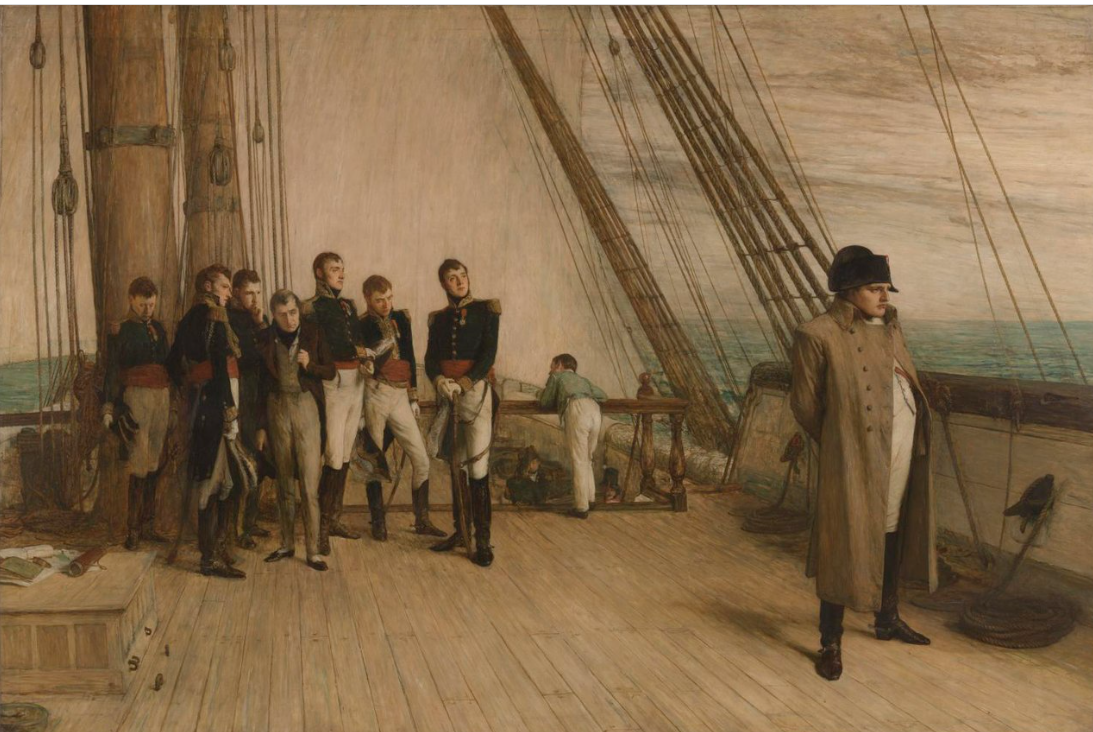
“The invasion of Russia demonstrates the importance of logistics in military planning. Napoleon and the Grande Armée developed a proclivity for living off the land that served them well in the densely populated and agriculturally rich central Europe with its network of roads. Rapid forced marches dazed and confused old order Austrian and Prussian armies and made foraging difficult. In Russia, many of the Grande Armée’s methods of operation did not work and they were handicapped by the lack of winter horse shoes, which made it impossible for the horses to obtain traction on snow and ice. Forced marches often left troops without supplies as the wagons struggled to keep up. Lack of food and water in thinly populated, agriculturally sparse regions led to the death of troops by exposing them to waterborne diseases through drinking from mud puddles and eating rotten food and forage. The front of the army received whatever could be provided while the formations behind starved. In fact, starvation, desertion, typhus, and suicide would cost the French Army more men than all the battles of the Russian invasion combined. Following the campaign, a saying arose that the Generals Janvier and Février (January and February) defeated Napoleon, alluding to the Russian Winter. While the harsh weather was an important factor in the final defeat of the French Army, historians point out that most French losses took place before the winter and the common narrative that identified the extremely cold weather as the main reason behind the French loss is a myth (perpetuated also by Napoleon’s advisers).” [Invasion of Russia]
Much of Europe united against Napoleon, and in 1814, Bonaparte offered to step down and leave his son in his place. The European forced rejected the idea, and he abdicated and was sent to Elba.
Less than a year following his abdication (April 6, 1814) and the Bourbon Restoration, Napoleon left his island exile in the Tyrrhenian Sea and landed at Cannes on March 1, leading 1,500 men, and marched at once upon Paris. Louis XVIII fled to Ghent on March 13, and Napoleon entered Paris one week later. To broaden his support, Napoleon made liberal changes to the Imperial Constitution, which led a number of former opponents, most notably Benjamin Constant, to rally to his cause. On March 25 Austria, Britain, Prussia, and Russia concluded an alliance against Napoleon and forced a series of military engagements leading up to the fatal Battle of Waterloo (June 18).

In early March 1815, he easily escaped from Elba and made his way across France to return to Paris, where he regained supporters and reclaimed the title of Napoleon I, Emperor of France. The day he marched into France was 20 March1815. The next Hundred Days would prove his final hurrah.
The Hundred Days is also known as the War of the Seventh Coalition. Napoleon had been on Elba for a mere 11 months before he attempted to take control of France and Europe once more. The War of the Seventh Coalition includes such important battles as the Neapolitan War [also known as the Austro-Neapolitan War, was a conflict between the Napoleonic Kingdom of Naples and the Austrian Empire. It started on 15 March 1815, when King Joachim Murat declared war on Austria, and ended on 20 May 1815, with the signing of the Treaty of Casalanza.], the Battle of Quatre Bras, the Battle of Ligny (both Napoleon victories), and the Battle of Waterloo (where Napoleon was soundly defeated).
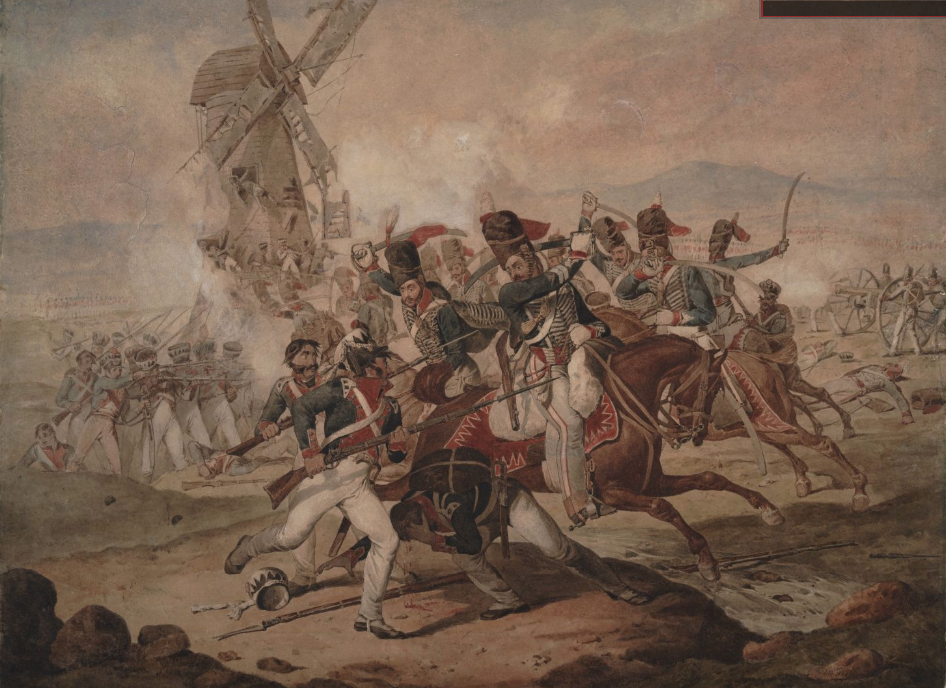
The phrase les Cent Jours (the hundred days) was first used by the perfect of Paris, Gaspard, comte de Chabrol, in his speech welcoming King Louis XVIII back to the throne.
Napoleon’s defeat ultimately signaled the end of France’s domination of Europe. He abdicated for a second time and was exiled to the remote island of Saint Helena, in the southern Atlantic Ocean, where he lived out the rest of his days. He died at age 52 on May 5, 1821.
Other Resources:


 Every Woman Dreams...
I always enjoy your articles, and this one is no exception. Thanks for sharing with us!
I love my bits of history, Jean. I am working on a new JAFF to release Mother’s Day weekend.
Looking forward to it! Thanks for the update! I swear, I don’t know ow how you do it all! My husband and I will be in Greenville, S.C. in mid-April. how far away are you? That is, if I am not too intrusive.
It would be around 2 hour drive from Greenville to the Charlotte area. I am east of Charlotte, in the next county over.
Charlotte is beautiful area. My husband is a Shriner, and we have a four day event in Greenville. occasionally, I am able to get away, but 2 hours to Charlotte and two hours back, might be a stretch. What a bummer: so close and so far away. Thank you for responding. I had thought I might be able to buy you lunch and get to meet one of m favorite authors. Maybe, sometime when we make a trip into Charlotte. Take care, and keep writing!
I would enjoy that very much. But we must factor in the gossip session time ago. LOL!
I love this history lesson! Thank you so much for your research.
It plays a part in two of the stories I am writing right now.