In the singular form the lexicon of a particular subject is all the terms associated with it. The lexicon of a person or group is all the words they commonly use. As a plural noun, a lexicon is an alphabetical list of the words in a language or the words associated with a particular subject. To distinguish lexicon from a dictionary, it is an alphabetical list of the words in a language or the words associated with a particular subject.
These examples are a mix of what one might hear upon the lips of the aristocracy, as well as examples of Cant used upon London’s streets and those terms used by farmers and like in the country.
cinder garbler – a servant maid whose job is to shift through the ashes for cinders
circulating libraries – “Circulating libraries were private businesses that loaned books to subscribing members. They were popularised in the late 18th and early 19th centuries, when books were expensive luxury items and public libraries were not yet in existence. Instead, subscriptions to circulating libraries could be obtained at various price tiers, allowing patrons across social classes different levels of access to a wide range of books at a fraction of the price of purchase. Higher tiers of subscription were given access to newer books and allowed for more books to be borrowed at a time. They are particularly associated with the growth of a female readership in the period. Some circulating libraries were operated by book publishers themselves, such as William Lane’s Minerva Press. Others were set up as separate commercial enterprises in resort centers like Bath, Brighton or Margate, or in smaller provincial towns. Circulating libraries sometimes combined the rental of books with the sale of other tempting merchandise, such as stationery, cosmetics, fashion accessories, art supplies and patent medicines. Although the industrialization of book printing, resulting in lower prices, and the rise of public libraries spelled an end to these enterprises, their impact on the publishing industry and reading culture still resonates today.” [University of Windsor]
circumbendibus – a roundabout way or story
cit – a citizen of London
clack – a gossip, chiefly applied to women; a simile drawn from the clack of a water mill
clack-loft – a pulpit, so called by John Henley, English clergyman, commonly known as ‘Orator Henley’, a preacher known for showmanship and eccentricity.

clammed – starved
clan – a family’s tribe or brotherhood; a word much used in Scotland
clanker – a great lie
clap on the shoulder – an arrest for debt
clapper claw – to scold or abuse, or claw off with the tongue
clapperdogeon – a beggar born (Cant.)
claret – French red wine; also, figuratively for “blood,” as in “I tapped his claret” meaning made the blood run

cleaver – one that will cleave; used to describe a forward or a wanton woman
cleymes – artificial sores, made by beggars to excite charity
clicker – a salesman’s servant
to climb three trees with a ladder – going to the gallows
clinch – a pun or quibble, an improbable story told by another, deriving from the story of a man who claimed to have driven a tenpenny nail through the moon, and a bystander said he was on the other side and “clinched it”
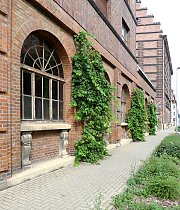
clinkers – Clinker (also known as ‘Dutch’) bricks are so named due to the metallic sound they make when struck together. They are produced from clay that is fired at extremely high temperatures, sintering the surface to form its characteristically shiny coating, whether in deep red, black, purple, or yellow. They were often used only on the outer layer of the facade as a facing. A good quality clinker is weather-resistant for centuries, even without plaster. [Clinker Brick History]
to clip – to hug or embrace
clod hopper – a country farmer or ploughman
clod pate – a dull-brained person or someone who acts foolishly
clogs – shoes with wooden or metal rims on the bottom; used to walk in bad weather
close – Generically such an alleyway is termed a close /ˈkloʊs/, a Scots term for alleyway, although it may be individually named close, entry, court, or wynd. A close is private property, hence gated and closed to the public, whereas a wynd is an open thoroughfare, usually wide enough for a horse and cart.
“The tenements were three or four storey stone buildings entered by a ‘close’ which gave access to the common stair and the back court. Off the stair were the apartments, and beneath them the cellars, in which the working class lived. Very few of these tenements had internal sanitation or water supplies; a privy in the back court and a hand pump for water in the street would often supply hundreds of occupants.” [The Old Closes and Streets of Glasgow]

close-fisted – covetous or stingy
clyster pipe – if you any inclination as to the meaning of this phrase, you probably had a “weird” English teacher in high school (pointing the finger at myself) who explained this line from Shakespeare’s Othello, Act 2, Scene 1: “Yet again your fingers to your lips. Would they were clyster pipes for your sake!” A clyster pipe, for those of you not in the medical profession, is the anal-tube of an enema syringe or used to deliver medication. You have no idea how easily such a phrase can interest a high school boy in something he thought was B-O-R-I-N-G!
Other Sources:


 Every Woman Dreams...