When I was still teaching, mythology was a part of the World Literature course taught at grade 10. Sometimes I had students who “complained” regarding the need for such studies. It was always my pleasure to point out how mythology was a part of their lives, whether they recognized it or not.
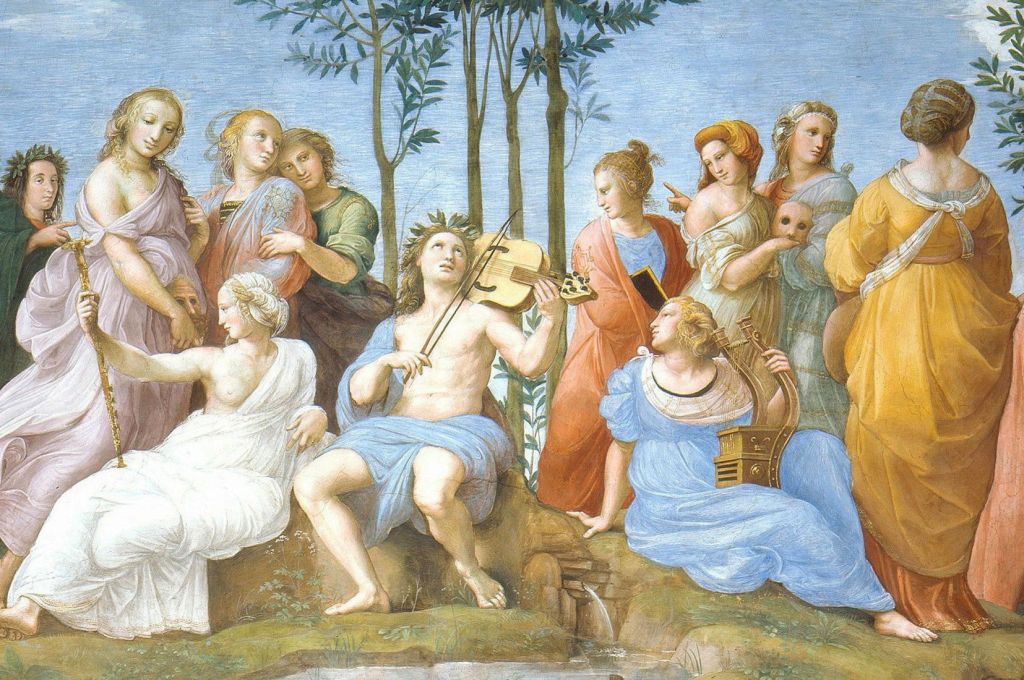
Mythology has influenced MUSIC. In fact the word “music” is in reference to the Muses and many myths speak of how instruments were made. [Try: The Divine Origin of Music and Flute in Greek Mythology for examples.] The story of Orpheus and Eurydice was the subject of the first opera ever written. Tales of Medea and Jason and Iphigenia are also popular. Richard Wagner enjoyed adding myths of his native land, particularly the story of Siegfried. If you wish examples of the myths in more modern music, look no further than “A Whiter Shade of Pale” from Procol Harem; “Althea” from Grateful Dead; “Europa” from Santana; “Halls of Valhalla” from Judas Priest; “Isis” from Bob Dylan; “Orpheus” from Sara Bareilles; “Stonehenge” from Spinal Tap; “The Chimera” from Smashing Pumpkins; “Venus” from Lady Gaga, etc. [Songfacts: Song That Refer to Mythology]
Artsy.net tells us there are six myths one must know in order to understand art. “Greek myths have captivated the imaginations of artists since ancient sculptors created gods and goddesses out of marble. The trials of ancient Greek heroes and monsters have served as inspiration for Renaissance masters, Surrealists, and conceptual artists alike.” They suggest people know: Pandora’s Box, Perseus and Andromeda, The Minotaur, Icarus, Leda and the Swan, and Achilles.
Naturally, the stories themselves are both beautiful and entertaining. Often, within them, we discuss a kernel of truth or an allegorical truth. Each contains a striking plot and remarkable characters.
Myths also serve as an important link to the past. They offer us knowledge of how certain civilizations regarded the world in which they lived. They explain innumerable phenomena. Moreover, they created the vocabulary we still use today to name the “remarkable” in nature.
As most of you suspect, I am bringing the post back to the early 19th Century. William Wordsworth, in his poem, The Excursion, endeavors to explain how myths arose in ancient Greece. Within the poem, a shepherd hears a distant strain of music and creates a story, of sorts regarding a beardless god playing a lute, a hunter turning the moon into a goddess, etc. He adds nymphs, the stars, a traveler, a fountain deity. He explains the origin of the oreads, the nymphs of the mountains; the zephyrs, rulers of the west wind; the satyrs, gods half goat and half man, with their ruler Pan himself. Etc.
Enjoy this excerpt:
Once more to distant ages of the world
Let us revert, and place before our thoughts
The face which rural solitude might wear
To the unenlightened swains of pagan Greece
—In that fair clime, the lonely herdsman, stretched
On the soft grass through half a summer’s day,
With music lulled his indolent repose:
And, in some fit of weariness, if he,
When his own breath was silent, chanced to hear
A distant strain, far sweeter than the sounds
Which his poor skill could make, his fancy fetched
Even from the blazing chariot of the sun,
A beardless youth, who touched a golden lute,
And filled the illuminated groves with ravishment,
The nightly hunter, lifting a bright eye
Up towards the crescent moon, with grateful heart
Called on the lovely wanderer who bestowed
The timely light, to share his joyous sport:
And hence, a beaming goddess with her nymphs,
Across the lawn and through the darksome grove,
Not unaccompanied with tuneful notes
By echo multiplied from rock to cave,
Swept in the storm of chase; as moon and stars
Glance rapidly along the clouded heaven,
When winds are blowing strong.
The traveler slaked
His thirst from rill or gushing fount, and thanked
The naiad. Sunbeams, upon distant hills
Gliding apace, with shadows in their train,
Might, with small help from fancy, he transformed
Into fleet oreads sporting visibly.
The zephyrs fanning, as they passed, their wings,
Lacked not, for love, fair objects whom they wooed
With gentle whisper.
Withered boughs grotesque
Stripped of their leaves and twigs by hoary age,
From depth of shaggy covert peeping forth
In the low vale, or on steep mountain side;
And, sometimes, intermixed with stirring horns
Of the live deer, or goat’s depending beard—
These were the lurking satyrs, a wild brood
Of gamesome deities; or Pan himself,
The simple Shepherds awe-inspiring god!


It really is part of our lives. Thanks for the write up!