The Genius of Jane Austen’s Dialogue, a Lovely Guest Post from Diana J Oaks

This post originally appeared on the Austen Authors’ blog on 31 May 2020. Enjoy!

Let’s talk about talking. Not just any kind of talking but talking in Jane Austen’s novels to be precise. There are numerous ways authors use dialogue. The most obvious way is to drive the plot forward. Darcy’s overheard insult to Elizabeth at the Assembly Ball in Pride and Prejudice is an easy example of this. Dialogue can also be used to establish the tone of a particular scene; revealing the mood of the speakers, and their current mindset. In the same novel, the restlessness and despondency of Kitty and Lydia after the militia has left Meryton is reflected in their words.

“Good Heaven! What is to become of us? What are we to do?”

We also recognize in these exclamations the immaturity and shallow nature of the characters. When their sentiments are echoed by Mrs. Bennet we recognize that their behavior is learned from and reinforced by their mother. Austen’s dialogue very neatly exposes the personalities, traits, and backstory of her characters in both overt and subliminal ways.

Another great example of this is from Chapter twenty of Emma. The following exchange between Emma and Jane Fairfax is one of my favorites:

“Was he handsome?” — “She believed he was reckoned a very fine young man.” “Was he agreeable?” — “He was generally thought so.” “Did he appear a sensible young man; a young man of information?” — “At a watering-place, or in a common London acquaintance, it was difficult to decide on such points. Manners were all that could be safely judged of, under a much longer knowledge than they had yet had of Mr. Churchill. She believed every body found his manners pleasing.”

On the surface we see Emma’s curiosity being blocked at every turn by Jane Fairfax’s non-answers. Up to this point in the book, Jane’s reserve seems to be just that, but this bit of evasive dialogue hints that something more is going on, that perhaps Jane is harboring a secret or two. Even Emma is suspicious. It is also so illustrative of the personalities and dynamic between Emma and Jane that it is repeatedly included in the screenplays of Emma adaptations. https://youtu.be/x67oM3JRhAca

In Persuasion, the eldest daughter, Elizabeth, exposes herself as exceedingly judgemental, self-centered, selfish, and convinced that her perspective is infallible. A perceptive reader may even pick up the disastrous blind spot Austen reveals in Elizabeth Elliot’s character.

“Mrs. Clay,” said she warmly, “never forgets who she is; and as I am rather better acquainted with her sentiments than you can be, I can assure you, that upon the subject of marriage they are particularly nice; and that she reprobates all inequality of condition and rank more strongly than most people. And as to my father, I really should not have thought that he, who has kept himself single so long for our sakes, need be suspected now. If Mrs. Clay were a very beautiful woman, I grant you, it might be wrong to have her so much with me; not that any thing in the world, I am sure, would induce my father to make a degrading match; but he might be rendered unhappy. But poor Mrs. Clay, who, with all her merits, can never have been reckoned tolerably pretty! I really think poor Mrs. Clay may be staying here in perfect safety. One would imagine you had never heard my father speak of her personal misfortunes, though I know you must fifty times. That tooth of her’s! and those freckles! Freckles do not disgust me so very much as they do him: I have known a face not materially disfigured by a few, but he abominates them. You must have heard him notice Mrs. Clay’s freckles.”

“There is hardly any personal defect,” replied Anne, “which an agreeable manner might not gradually reconcile one to.”

“I think very differently,” answered Elizabeth, shortly; “an agreeable manner may set off handsome features, but can never alter plain ones. However, at any rate, as I have a great deal more at stake on this point than any body else can have, I think it rather unnecessary in you to be advising me.”

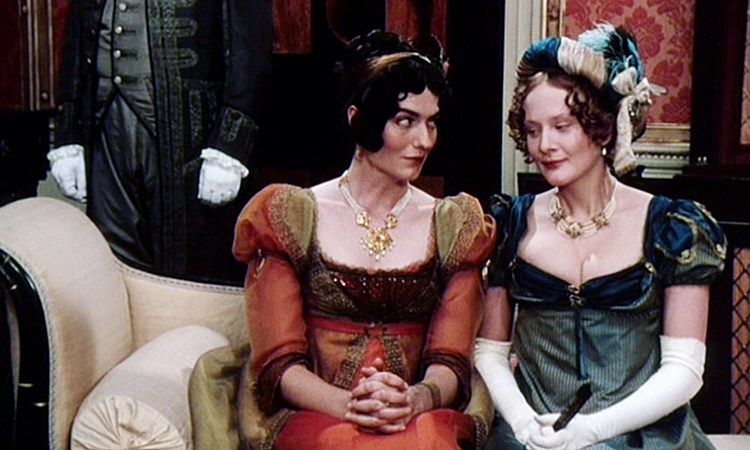
The true genius of Austen’s dialogue can be seen in those rare instances of a back-and-forth conversation between characters. This passage from chapter eight of Sense and Sensibility, where Marianne Dashwood objects to Colonel Brandon’s marriageability on account of his age provides substantial insight into the turn of her mind. The contrast of Elinor’s practical rebuttals to Marianne’s youthful (and rather extreme) notions is pure gold.

   “Mama, you are not doing me justice. I know very well that Colonel Brandon is not old enough to make his friends yet apprehensive of losing him in the course of nature. He may live twenty years longer. But thirty-five has nothing to do with matrimony.”

“Perhaps,” said Elinor, “thirty-five and seventeen had better not have anything to do with matrimony together. But if there should by any chance happen to be a woman who is single at seven-and-twenty, I should not think Colonel Brandon’s being thirty-five any objection to his marrying her .”

“A woman of seven-and-twenty,” said Marianne, after pausing a moment, “can never hope to feel or inspire affection again; and if her home be uncomfortable, or her fortune small, I can suppose that she might bring herself to submit to the offices of a nurse, for the sake of the provision and security of a wife. In his marrying such a woman, therefore, there would be nothing unsuitable. It would be a compact of convenience, and the world would be satisfied. In my eyes it would be no marriage at all, but that would be nothing. To me it would seem only a commercial exchange, in which each wished to be benefited at the expense of the other.”

“It would be impossible, I know,” replied Elinor, “to convince you that a woman of seven-and-twenty could feel for a man of thirty-five anything near enough to love to make him a desirable companion to her. But I must object to your dooming Colonel Brandon and his wife to the constant confinement of a sick chamber, merely because he chanced to complain yesterday (a very cold damp day) of a slight rheumatic feel in one of his shoulders.”

“But he talked of flannel waistcoats,” said Marianne; “and with me a flannel waistcoat is invariably connected with the aches, cramps, rheumatisms, and every species of ailment that can afflict the old and the feeble.”

There are certainly many examples of how beautifully Austen taught us about her characters in dialogue, these are just a few. What examples of Jane’s dialogue come to your mind as revelatory of her characters? Your input is welcome!

Posted in Austen Authors, Guest Post, Jane Austen | Tagged , , , , , | Comments Off on The Genius of Jane Austen’s Dialogue, a Lovely Guest Post from Diana J Oaks

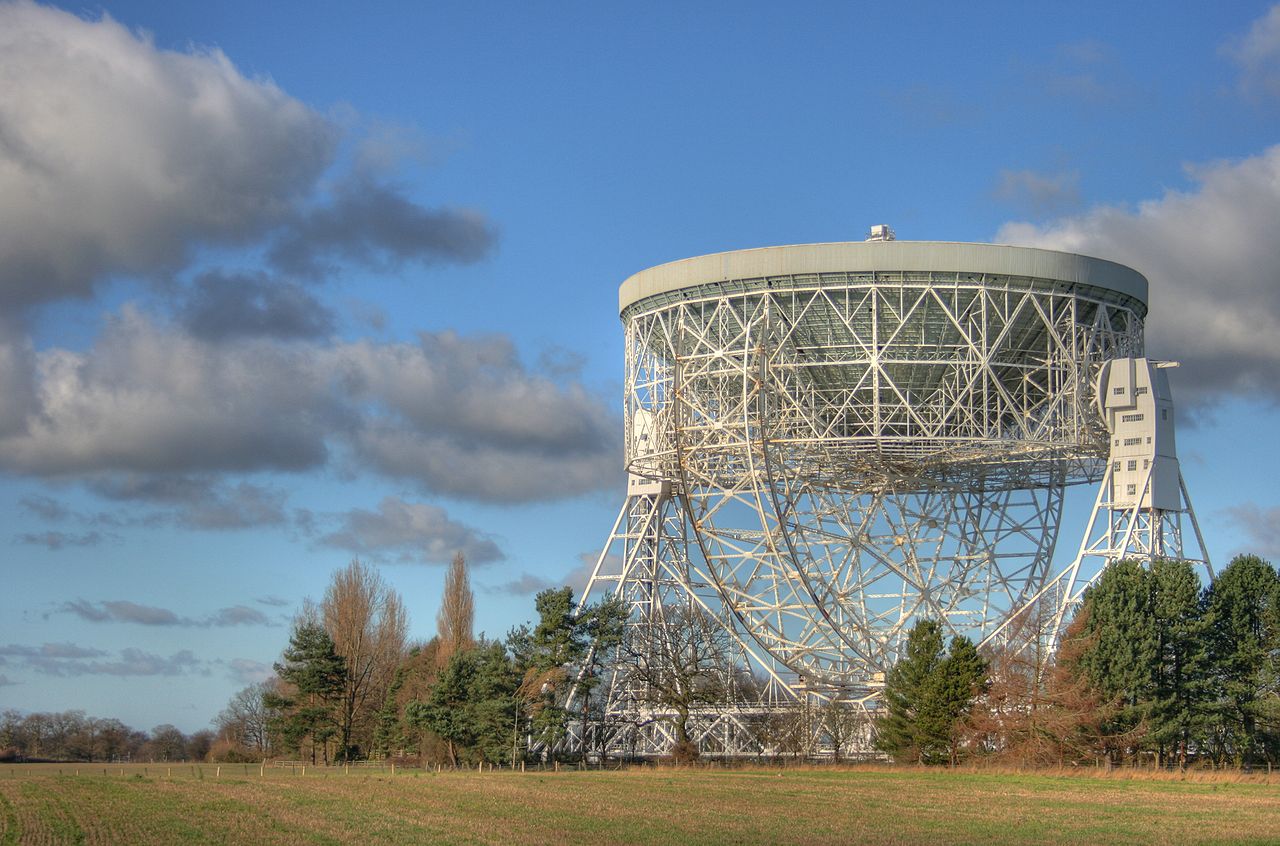
Jodrell Bank Observatory, England’s First “Proper” Space Observatory

Lovell TelescopeJodrell Bank Observatory
Mike Peel; Jodrell Bank Centre for Astrophysics, University of Manchester. ~ https://en.wikipedia.org/wiki/Jodrell_Bank_Observatory#/media/File:Lovell_Telescope.jpg

With all the recent news stories on UFOs and aliens, I thought it might be interesting to explore one of the early observatories. — that of Jodrell Bank.

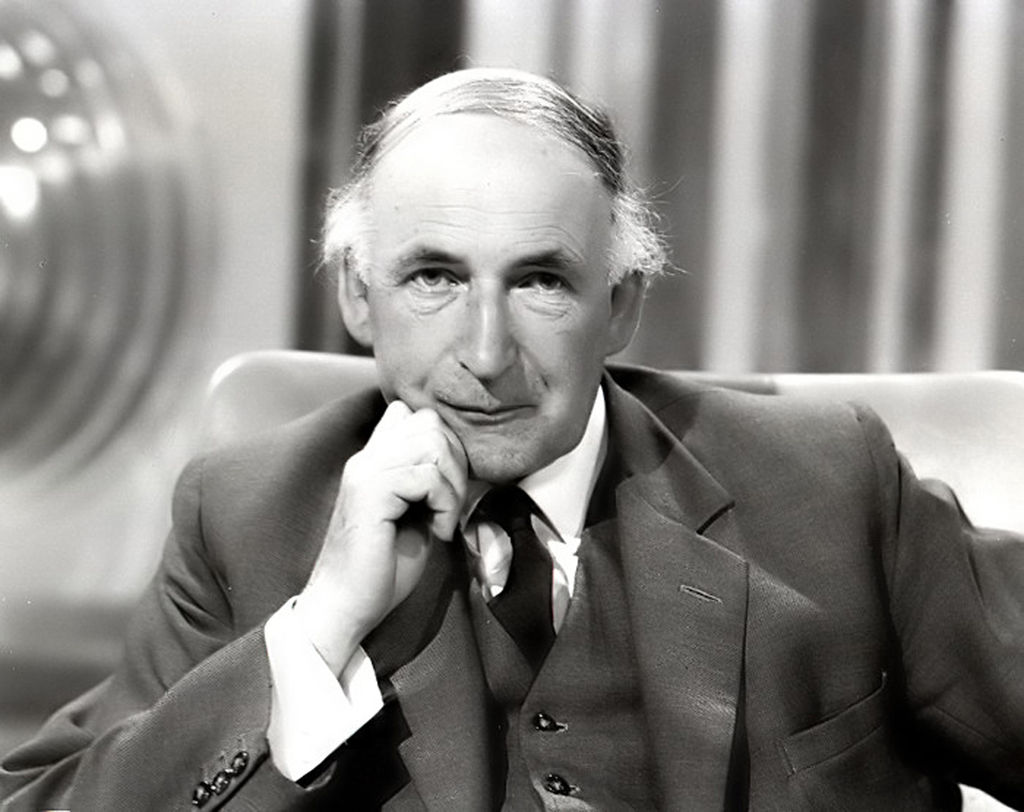
The observatory was originally called the Jodrell Bank Experimental Station. It is situated west of Manchester and was England’s first “proper” space observatory. Begun shortly after World War II, in 1947, by Dr. Bernard Lovell of Manchester University, Jodrell Bank was designed to study cosmic rays. Coming in at 218 feet (66 m), Jodrell Bank was the largest radio telescope in the world, at that time.

Bernard, who was a radio astronomer, thought the study of cosmic rays was a natural jump after he had spent time during WWII working on radar project.

The Lovell Telescope is the main one for the observatory. Coming in at 250 feet (76 m), it is the third largest steerable radio telescope in the world. Research involving quasars, pulsars, gravitational rays, meteoroids, etc., aided the probes throughout the Space Age. Jodrell Bank serves as the base for MERLIN, the Multi-Element Radio Linked Interferometer Network.

Before working with radar during World War II, Lovell was employed in the Physics Department at Manchester University. He was using a Wilson Cloud Chamber to study cosmic rays.

Sir Bernard Lovell ~ Jodrell Bank, University of Manchester ~ https://en.wikipedia.org/wiki/Bernard_Lovell#/media/File:BernardLovell.jpg

“Whilst working on the development of radar systems during the war he became aware of sporadic echoes that were being detected by our early warning radar systems. He wondered if these might be caused by the passage of a cosmic ray particle through the atmosphere and so, when the war ended, he acquired some army radar equipment which he set up in the quadrangle outside the Schuster Laboratory in Manchester. Interference from the trams along Oxford Road made him seek a site well away from the centre of Manchester. He found that the Botany Department had some land in Cheshire at a place called Jodrell Bank – a bank being a small river valley cutting across the Cheshire Plain, this one being named after the Jaudrell family.” [The History of Jodrell Bank]

There was some disappointment with the first observations made, for, instead of cosmic ray particles entering the atmosphere, Lovell and his students heard echoes from the plasma trail of a meteor as it burned up in the atmosphere. Imagine hearing a “shooting star”? That is something that would interest me. This early experiment demonstrated that many meteors are part of the “dust tail” of a comet.

In 1947, Lovell’s team built a 218 foot parabolic reflecting aerial (a radio telescope) in the adjoining field to the Jodrell Bank Experimental Station. “The wire mesh that reflected the radio signals to a focal pint 150ft above the ground was suspended from a ring of scaffold poles. You can just make out the telescope to the left of the large building in the centre right that housed the diesel generators which provided power for the site. By tilting the position of the mast the beam could be swung to allow different parts of the sky to be scanned as the earth’s rotation brought it overhead.

“The telescope made many important discoveries, particular among them being the detection of radio noise from the Great Nebula in Andromeda – the first time that a known extragalactic radio source had been detected – and the detection of the remains of the supernova of 1572, usually known as Tycho’s supernova, which does not have any obvious visual remnant.” [The History of Jodrell Bank] Nearly 64 years ago, the rocket that sent Sputnik into space was the first intercontinental ballistic missile ever launched. The (barely finished) Lovell radio telescope at Jodrell Bank Observatory in Cheshire was the only instrument with the scale and power to potentially track it. [Check out the video on BBC News that explains what happened and how the British played a key part in the Cold War.]

Other Sources:

Bernard Lovell

Jodrell Bank – Anatomy of a Radio Telescope

Jodrell Bank to play key part in creating world’s largest radio telescope

The Team that Tracked Sputnik

Posted in British history, buildings and structures, exploration, history, inventions, real life tales, science | Tagged , , , , , , , , , , | Comments Off on Jodrell Bank Observatory, England’s First “Proper” Space Observatory

The Yorkshire Giant

William Bradley (1787 – 1820) was commonly known as “The Yorkshire Giant” He was born on 10 February 1787 in Market Weighton in Yorkshire’s East Riding. He was the fourth of thirteen children. Weighing in at 14 pounds (6.35 kg) at birth, Bradley grew to his full height of 7 feet 9 inches (2.36 m) by the time he was 20 years of age. At the age of 11 he weighed eleven stones (154 pounds). He is considered the tallest ever recorded Englishman.

Bradley’s father, who was only 5 ft. 9 in. (1.75 m) tall, was a master tailor in the town. As he grew older, William worked on a local farm near Pocklington. Ironically, tools designed especially for his grip and his height, had to made.

To earn a bit of money on the side, Bradley would make wagers with others on whether he could complete certain tasks set up as an “I dare you” style event. Once, he was challenged to carry a huge stone a quarter mile into the centre of Market Weighton. That particular stone can still be found on the corner of Londesborough Road, opposite the church.

Initially, Bradley traveled about the country charging people a shilling to come to his hotel room and shake his hand. Later, William Bradley made appearances at fairs all over England. Included along with his appearances were an extremely large pig, bred in nearby Sancton and a local dwarf by the name of Edward Clavet, who was from Shiptonthorpe. However, he left this arrangement because of a steady lack of pay and the cramped conditions in which was to stay. A man of William Bradley’s size could not remain in small spaces long without it causing him pain.

Bradley’s notoriety presented another claim to fame. He was summoned to meet King George III, who presented William with a large gold watch on a chain, which Bradley wore with pride for the remainder of his days.

The I’m From Yorkshire website tells us, “The problem with this new lifestyle was that he lacked exercise and his insatiable appetite meant his weight further increased. Moreover throughout much of his adult life Bradley had to walk with the aid of a stick, which itself was 5ft 10in in height. He moved back to his specially designed house on York Road, Market Weighton, which still stands today. The property was converted with high ceilings and doorways to accommodate his extra height. Its structure is higher than the other buildings around it meaning that it is definitely recognisable as being the home of a Giant!”

Bradley was just 33 years old when he died on 30 May 1820, reportedly from tuberculosis. He was buried inside All Saints Church in Market Weighton, for it was assumed grave robbers would attempt to make money off Bradley’s demise. The coffin was 9 feet long and 3 feet wide. His former home on Market Hill is now a shop.

Beginning in May 1996 and continued since, Market Weighton has celebrated “Giant Bradley Day.” It is a fair of sorts with rides, steam organs, stalls, music, and such. “Through its early years it was opened by the current tallest man in Britain, Chris Greener, who is 7ft 6in tall.”

Other Sources:

William Bradley

Yorkshire Post

The Yorkshire Society


Posted in British history, Georgian England, Georgian Era, Living in the Regency, Living in the UK | Tagged , , , , | Comments Off on The Yorkshire Giant

The Mysterious Mrs. Long, a Textual Study – a Guest Post from Lelia Eye

This post originally appeared on the Austen Authors’ blog on 7 May 2021. Enjoy!

I suppose this cannot be called a character study so much as a textual study. I’m here to assist in taking a look at the text of Pride and Prejudice as it pertains to Mrs. Long.

Her name occurs 14 times in the novel, and though we do not truly see her as a character since she is instead simply referred to rather than shown, she works well as a device for gossip . . . and for showing off the amusing contradictions of Mrs. Bennet.


We get our start with gossip concerning Netherfield at the beginning of the book when Mrs. Bennet reports on the bits of news Mrs. Long has given her:

  • “But it is,” returned she; “for Mrs. Long has just been here, and she told me all about it.”
  • “Why, my dear, you must know, Mrs. Long says that Netherfield is taken by a young man of large fortune from the north of England; that he came down on Monday in a chaise and four to see the place, and was so much delighted with it, that he agreed with Mr. Morris immediately; that he is to take possession before Michaelmas, and some of his servants are to be in the house by the end of next week.”

Mrs. Long also apparently had something to say about Mr. Darcy to Mrs. Bennet:

  • “I beg you would not put it into Lizzy’s head to be vexed by his ill-treatment, for he is such a disagreeable man, that it would be quite a misfortune to be liked by him. Mrs. Long told me last night that he sat close to her for half-an-hour without once opening his lips.”
    “Are you quite sure, ma’am?—is not there a little mistake?” said Jane. “I certainly saw Mr. Darcy speaking to her.”
    “Aye—because she asked him at last how he liked Netherfield, and he could not help answering her; but she said he seemed quite angry at being spoke to.”
    “Miss Bingley told me,” said Jane, “that he never speaks much, unless among his intimate acquaintances. With them he is remarkably agreeable.”
    “I do not believe a word of it, my dear. If he had been so very agreeable, he would have talked to Mrs. Long. But I can guess how it was; everybody says that he is eat up with pride, and I dare say he had heard somehow that Mrs. Long does not keep a carriage, and had come to the ball in a hack chaise.”
    “I do not mind his not talking to Mrs. Long,” said Miss Lucas, “but I wish he had danced with Eliza.”

And of course, closer to the end of the book, Mrs. Bennet cannot wait to share her own news with Mrs. Long:

  • “I will go to Meryton,” said she, “as soon as I am dressed, and tell the good, good news to my sister Philips. And as I come back, I can call on Lady Lucas and Mrs. Long. Kitty, run down and order the carriage. An airing would do me a great deal of good, I am sure. Girls, can I do anything for you in Meryton? Oh! Here comes Hill! My dear Hill, have you heard the good news? Miss Lydia is going to be married; and you shall all have a bowl of punch to make merry at her wedding.”

Mrs. Long seems to be a fixture in the neighborhood with regard to dining according to Mrs. Bennet’s thinking:

  • “Well, all I know is, that it will be abominably rude if you do not wait on him. But, however, that shan’t prevent my asking him to dine here, I am determined. We must have Mrs. Long and the Gouldings soon. That will make thirteen with ourselves, so there will be just room at table for him.”

And finally – for we do not see much of Mrs. Long – Mrs. Bennet’s opinion of Mrs. Long seems to vary based on her perception of the possibility of Mrs. Long’s nieces (or daughters – I believe Austen made an error here) in making a match with a gentleman whom Mrs. Bennet has her eye on:

  • “But you forget, mamma,” said Elizabeth, “that we shall meet him at the assemblies, and that Mrs. Long promised to introduce him.”
    “I do not believe Mrs. Long will do any such thing. She has two nieces of her own. She is a selfish, hypocritical woman, and I have no opinion of her.”
    “No more have I,” said Mr. Bennet; “and I am glad to find that you do not depend on her serving you.”
  • “When is your next ball to be, Lizzy?”
    “To-morrow fortnight.”
    “Aye, so it is,” cried her mother, “and Mrs. Long does not come back till the day before; so it will be impossible for her to introduce him, for she will not know him herself.”
    “Then, my dear, you may have the advantage of your friend, and introduce Mr. Bingley to her.”
    “Impossible, Mr. Bennet, impossible, when I am not acquainted with him myself; how can you be so teasing?”
    “I honour your circumspection. A fortnight’s acquaintance is certainly very little. One cannot know what a man really is by the end of a fortnight. But if we do not venture somebody else will; and after all, Mrs. Long and her daughters must stand their chance; and, therefore, as she will think it an act of kindness, if you decline the office, I will take it on myself.”
  • “Well girls,” said she, as soon as they were left to themselves, “What say you to the day? I think everything has passed off uncommonly well, I assure you. The dinner was as well dressed as any I ever saw. The venison was roasted to a turn—and everybody said they never saw so fat a haunch. The soup was fifty times better than what we had at the Lucases’ last week; and even Mr. Darcy acknowledged, that the partridges were remarkably well done; and I suppose he has two or three French cooks at least. And, my dear Jane, I never saw you look in greater beauty. Mrs. Long said so too, for I asked her whether you did not. And what do you think she said besides? ‘Ah! Mrs. Bennet, we shall have her at Netherfield at last.’ She did indeed. I do think Mrs. Long is as good a creature as ever lived—and her nieces are very pretty behaved girls, and not at all handsome: I like them prodigiously.”

And there you have all the text with regard to Mrs. Long!

I am curious – do you believe Austen made an error when she had Mr. Bennet reference Mrs. Long’s daughters, or do you have a headcanon of sorts where you think it works out? (I will do that myself on occasion with things!) Do you think that the Gouldings might be her brother’s family based on how Mrs. Bennet groups them together, or is there no good way to speculate?

Furthermore, has anyone read any stories where Mrs. Long plays an actual role? I suspect most writers of Pride and Prejudice variations never even mention her. I’m not sure whether I have!

We receive a rather incomplete picture of her character from Mrs. Bennet, who, as we all know, focuses heavily on marrying her daughters off and disparaging those who get in her way. I rather picture her as being quite like Mrs. Bennet, which may be why Austen doesn’t truly show her to us. Based on how quickly Mrs. Long has come upon some news, it seems unlikely that she is the meek type.

I would love to hear any of your thoughts in the comments below.

Posted in Austen Authors, Guest Post, Jane Austen, Pride and Prejudice, reading, writing | Tagged , , , , , , , | Comments Off on The Mysterious Mrs. Long, a Textual Study – a Guest Post from Lelia Eye

Appleby-in-Westmorland, a Market Town and Home of the Biggest Horse Fair in the World

The cloisters by Sir Robert Smirke.~ Visit Cumbria

Appleby-in-Westmorland, the smallest county town in England with a population of 2600, lies to the east of what is referred to as “the Lake District.” Its history goes back to the 9th Century when the Vikings settled in the area. The first Viking dwelling appears to have been built near what is now Bongate. They called the new settlement Appleby, from the Norse words for “place of the apples.” Appleby was once the capital of the county of Westmorland, but that changed in 1974 when Westmorland no longer existed under the government reorganisation. In that year, Westmorland merged with Cumberland to become the modern “Cumbria.” The name “Westmorland” was added to Appleby to preserve its former position in the county.

The Normans realized the strategic position of the ford across the River Ede at Appleby. Therefore, Appleby Castle was constructed. “The first castle was a simple motte and bailey, probably defended by a simple timber palisade. In the 12th century a stone keep was built atop the motte. The keep was enlarged after it was captured by William the Lion of Scotland in 1174. The defences were dismantled by Parliament in 1648, but restored by Lady Anne Clifford from 1651. The castle consists of a 12th century keep known as Caesar’s Tower, linked to a much later mansion house, home of the powerful Clifford family from the 13th century. The entire complex of buildings is surrounded by a high curtain wall and stands at the upper end of Boroughgate.” [Britain Express]

The area’s most prominent benefactor was Lady Anne Clifford, the daughter of the Earl of Cumberland, who staged her own private three decades-long battle to inherit her father’s estates. Appleby Castle served as her home, but she also assisted in restoring other properties in Cumbria and Yorkshire. After her death, Appleby Castle passed to the earls of Thanet and then on to Lord Hothfield.

Appleby has produced two of England’s Prime Ministers: William Pitt the Younger and Viscount Howick, who became Earl Grey.

St Lawrence church was built shortly after the castle. It was damaged by raiding Scots in 1388, but rebuilt by Lady Anne Clifford.

Appleby’s uncommonly wide main street, Boroughgate, has been described as one of the finest in England. It runs from the north end, by the cloisters which were designed by Sir Robert Smirke in 1811, to the south end, by the Castle entrance. At the north end is the Moot Hall, with a plaque above the door dated 1596, and now used as the Tourist Information Centre. The beginning and end of Boroughgate is marked by the ‘Low Cross’ and the ‘High Cross’.

Appleby Grammar School dates back to two chantry bequests in 1286. It was incorporated by Letters Patent of Queen Elizabeth in 1574. George Washington’s father and two half-brothers, born in Virginia, were educated at Appleby Grammar School. He would have followed, but in 1743, when he reached the age at which the two older boys had made the voyage, his father died suddenly. [Appleby-in-Westmorland]

Appleby and surrounding villages host long-established events such as Warcop rushbearing, which dates back to at least 1716.

The four-day Appleby Horse Fair is customarily held on the first weekend of June. It is considered the biggest traditional Gypsy Fair in Europe. The earliest known record of the fair appears in a 12th-century. Some ten thousand Gypsies and Travellers arrive in Appleby for the celebration. This year because of COVID and various lock downs, the fair will start tomorrow, 12 August. It was postponed from the traditional June dates due to the COVID restrictions, although a small group still gathered in the area, in fear that the fair would be cancelled permanently. The fair was cancelled in 2020 at the height of the pandemic and once previously in the early 2000s for a foot-and-mouth disease outbreak. Generally, 1000 caravans and 30,000 visitors arrive for the event. Attendees include British Romanichal, Irish Travellers, Scottish Gypsy and Traveller groups, Kale (Welsh Romanies), and more.

The event occurs outside the town where the Roman Road crosses Long Marton Road at Fair Hill, which was originally called Gallows Hill for the obvious reason. The fair was established by a royal charter from King James II in 1685. However, recent research has shown that the 1685 charter, which was cancelled before it was enrolled, is of no relevance. “Appleby’s medieval borough fair, held at Whitsuntide, ceased in 1885. The ‘New Fair,’ held in early June on Gallows Hill, what was then enclosed land outside the borough boundary, began in 1775 for sheep and cattle drovers and horse dealers to sell their stock; by the 1900s, it had evolved into a major Gypsy/Traveller occasion.” [Andrew Connell (2015). “Appleby Gypsy Horse Fair: Mythology, Origins, Evolution and Evaluation”. Cumberland & Westmorland Antiquarian & Archaeological Society.]

The legal status of the Fair does not depend on a charter, therefore, but on the legal concept of ‘prescriptive right’, that is to say easement by prescription or custom. Praescriptio est titulus ex usu et tempore substantiam capiens ab auctoritate legis. ‘Prescription is a title by authority of law, deriving its force from use and time.’ [Andrew Connell]

The horses are washed and trotted up and down the flashing lane most main days. There is a market on Jimmy Winter’s Field selling a variety of goods – some traditional to the Gypsy travelling community – and a range other horse-related products.

The legal status of the Fair does not depend on a charter, therefore, but on the legal concept of ‘prescriptive right’, that is to say easement by prescription or custom. Praescriptio est titulus ex usu et tempore substantiam capiens ab auctoritate legis. ‘Prescription is a title by authority of law, deriving its force from use and time.’ [Andrew Connell]

Washing the horses at Appleby Horse Fair, Cumbria. ~ Public Domain

Posted in British history, tradtions, travel | Tagged , , , , | Comments Off on Appleby-in-Westmorland, a Market Town and Home of the Biggest Horse Fair in the World

Uffington Castle, Dragon Hill, and Wayland’s Smithy

To go along with my post on Friday on the preservation efforts of the White Horse, I thought I might mention other sites along the way in the Berkshire Downs.

First and foremost, one must address the road that traverses the area. Known as “the Ridgeway,” it is considered the oldest road in England. The Ridgeway covers some 87 miles (140 km beginning at the circle at Avebury to Ivinghoe Beacon in the Chilterns. The Ridgeway was likely first traveled by foot some 4000 years ago. In recent years, “crop circles” have been discovered along the Ridgeway.

Uffington Castle – https://www.visitfaringdon.co.uk/uffington-castle-dragon-hill.html
Trig point on Whitehorse Hill The trig point on Whtiehorse Hill is located beside the earthworks of Uffington Castle, at 261m this is the highest point in Oxfordshire. ~ https://en.wikipedia.org/wiki/Uffington_Castle#/media/File:Trig_point_on_Whitehorse_Hill_-geograph.org.uk-_1370581.jpg ~ CC BY-SA 2.0

Uffington Castle is an Iron Act hillfort on the summit of Whitehorse Hill. It measures about 220 metres by 160 metres and has a white chalk-stone bank/inner rampart, which measures 12 metres wide and about 2.5 metres high. It covers 8 acres (3.2 ha) At one time, it had been lined with sandstone stones, known as “sarsen.” It is one of a chain of hill forts along the Ridgeway. “It is a univalate hillfort, ie of single ditch, single rampart design, with an interior area of approximately 8 acres. Originally there were two entrances, the western (remaining) one and an eastern one filled in during the Roman period. NE and SE entrances are probably Roman.

“Built approximately around 500 BC, it had ramparts topped with a wooden palisade, replaced by a sarsen stone wall around 300 BC. The ditch , originally 10 ft deeper than at present, has been partly filled with stones from the wall which was pushed down during the Roman period. The fort was only used temporarily or seasonally, and probably a meeting place, animal corral, ritual centre, or Ridgeway travellers’ stop. Artefacts discovered during archaeological digs in the 1990s suggest that usage increased during the Roman period. There is no water on the hill, although it is possible that clay lined ponds were constructed, but have all been ploughed out.

“The white 4ft obelisk on the eastern outer bank of the fort is a trig point, which marks the highest point in Oxfordshire, – 858 ft. It is one of 25,000 used before the advent of satellite surveying, to map the country. This trig point is one of a small number still in use by the Ordnance Survey, and is a known trig point from which GPS can be tracked. The distance between this trig point and the one at Liddington Castle formed the standard distance from which imperial Ordnance Survey maps were scaled.” [Places to Visit in Faringdon

Large Iron Age hillforts are rare. Most are located on the high chalklands of the southern counties of England, and Uffington Castle is regarded as an outstanding example.

Dragon Hill – Third Eye Traveller ~ https://thirdeyetraveller.com/legends-dragon-hill-england-st-george-dragon/

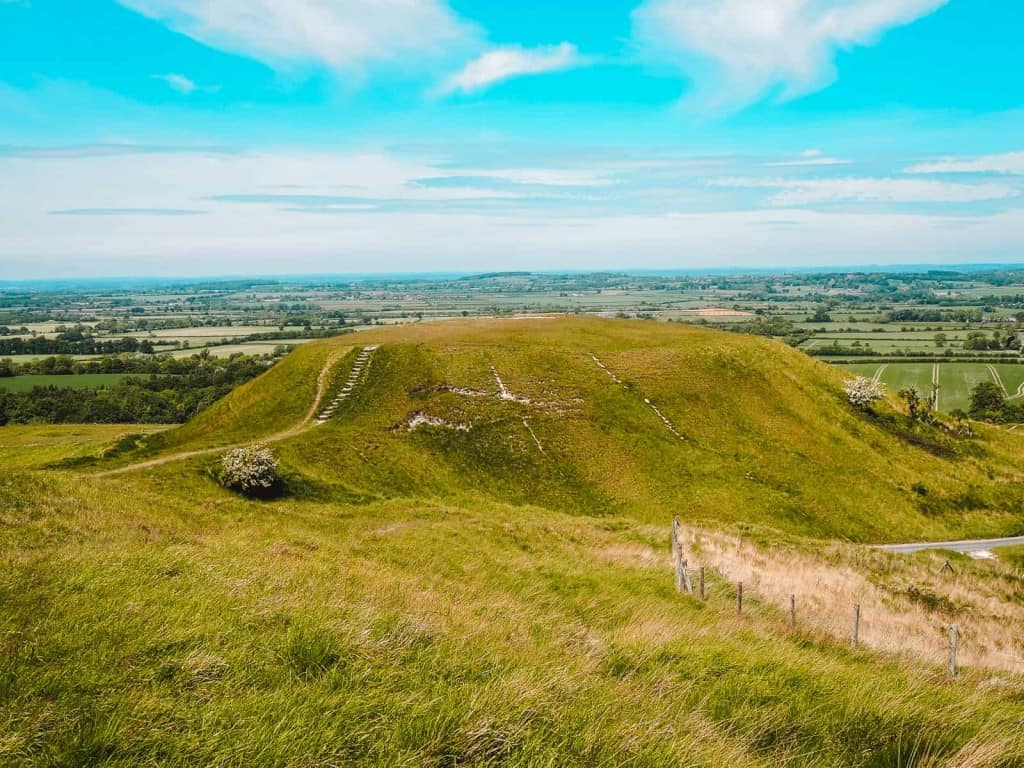
The mysterious Dragon Hill sits above The Manger and directly below Uffington White Horse in Oxfordshire (transferred from Berkshire in 1974). It is a small flat-topped hill sporting a bare patch, where no grass will grow. It is a natural chalk hill that was flattened by man instead of being so naturally. What makes this hill so special, you may ask? According to the local legend, Dragon Hill is so named for this was the spot where St George killed the fire-breathing dragon plaguing the land. Where the dragon’s blood fell is the spot where no grass will grow. Is that not a wonderful tale???

Dragon Hill was also mentioned in the Arthurian Tales and is even thought to have been the inspiration for Weathertop in Tolkien’s Lord of the Rings

Some people go so far as to say the White Horse (See Friday’s post) is not a horse, at all. Rather it represents the dragon killed by St George.

One of Britains best examples of a neolithic long barrow, located on the Ridgeway, close to the Uffington white horse in Oxfordshire. ~ https://en.wikipedia.org/wiki/Wayland%27s_Smithy#/media/File:Wayland_Smithy_Long_barrow.jpg ~ CC BY-SA 3.0

Wayland’s Smithy is west of Uffington Castle. It is a neolithic burial chamber surrounded by beech trees. It is a chambered long barrow and can be found near the village of Ashbury in Oxfordshire. It was likely built in the 36th Century B.C. It has been partially reconstructed over the years.

Believed to have been built by one or more pastoralist communities in early Britain, Wayland Smithy is unique in that it differs from the long barrow building common in Neolithic Europe. It has a more localized version of the barrows, generally found in southwest Britain, now known as the Severn-Cotswold Group. It is a prime example of this structures.

It is some 185 feet (56 m) in length and 43 feet (13 m) wide. Restoration efforts have assisted in establishing how it must have looked. An oval barrow timber-chamber is estimated to have been built around 3590 to 3550 B.C. Later, a stone-chambered long barrow was added, likely between 3460 and 3400 B.C. [“Archaeological history and research”. English Heritage.]

The Middle Ages saw the site being associated with the Saxon god of smiths, Wayland. Wayland is said to be able to forge armor with the magical abilities of give the wearer wings like an eagle. He was also known to create invincible swords. In fact, it was Wayland the Smith who supposed forged Excalibur for King Arthur.

Posted in British history, buildings and structures, Great Britain, history, legends, legends and myths | Tagged , , , , , , | Comments Off on Uffington Castle, Dragon Hill, and Wayland’s Smithy

The Uffington White Horse

Near the village of Uffington in Oxfordshire, England, one can find a most miraculous symbol, the oldest of the English hill figures. Some 3000 years old, the Uffington White Horse is a stick figure-style horse nearly the size of a football field and visible from 20 miles away.

It is roughly 365 feet (111 m) long and 120 feet (37 m) high. It was created in the late Bronze Age, when horses were revered. “Chalking Day” is conducted by the National Trust. The event is also referred to as “Scouring of the White Horse.” It is a cleaning ritual that has been written about since 1736 when Francis Wise described it, but it has occurred since around 1200 B.C.

The practice has been called the “world’s largest coloring between the lines.” The vegetation around the “horse” is weeded and edged to keep the shape’s distinct lines. Then, chalk is smashed into a paste and painstakingly added by hand to keep the shape true to the original. Inch by inch, the stony pathways in the grass are whitened.

In the past, thousands of people would have come for the scouring, holding a fair in the circle of a prehistoric fort nearby. It occurred every seven years and was a time of great celebration and merrymaking. Feasts occurred, and the hill itself hosted games of all kinds, as did the Manger, a deep valley scooped out of the hillside beneath the horse. The fair is no longer part of the ritual, but it is no less a grand experience. Without the scouring, the area would have long ago become overgrown, and a bit of history would have been lost.

These days it’s a quieter event.

“National Trust ranger Andy Foley hands out hammers. ‘It must have happened in this way since it was put on the hillside,” he says. “If people didn’t look after it the horse would be gone within 20 to 30 years; overgrown and eroded. We’re following in the footsteps of the ancients, doing exactly what they did 3,000 years ago.’ The trenches would have been dug out using antler picks and wooden spades: tough, labor-intensive work. How the builders planned and executed such a large figure when the full effect can only be taken in from several miles away is still a mystery.”  (Smithsonian Magazine)

Posted in British history, buildings and structures, history, medieval | Tagged , , , , | Comments Off on The Uffington White Horse

Esperanto, the Language of Peace

What do you know about the universal language Esperanto? Some of you may have come across it in a low-budget horror movie staring a 33-year-old actor by the name of William Shatner, who later became Captain James T. Kirk of Star Trek fame. The film, Incubus was filmed in Esperanto, not to support the idea of a language of peace, as the language was originally designed, but to provide the film an eerie overtone. The idea bombed.

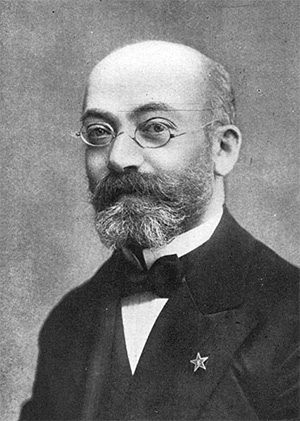
Developed by one Lazarus Ludwig (Ludwik) Zamenhof, Esperanto was to become a common language, one which permit nations at war to trust each other. Zamenhof was an ophthalmologist by trade, but, more importantly, he was a linguist. His father and his grandfather had been foreign language teachers.

His family lived in Warsaw. He loved languages and spoke many of them. He even wrote a five-act tragedy based on the tale of the Tower of Babel. It was called The Tower of Babel, or the Białystok Tragedy in Five Acts. Zamenhof envisioned a world without either linguistic barriers and the hatred of one religion for another. He wished to present the world with an international language that would be easy to learn and accessible to all.

The first version of Esperanto arrived in 1873. However, the original copybook containing the first version of the language was burned by Ludwik’s father. According to the family legend, he wanted his son to pay more attention to his studies.

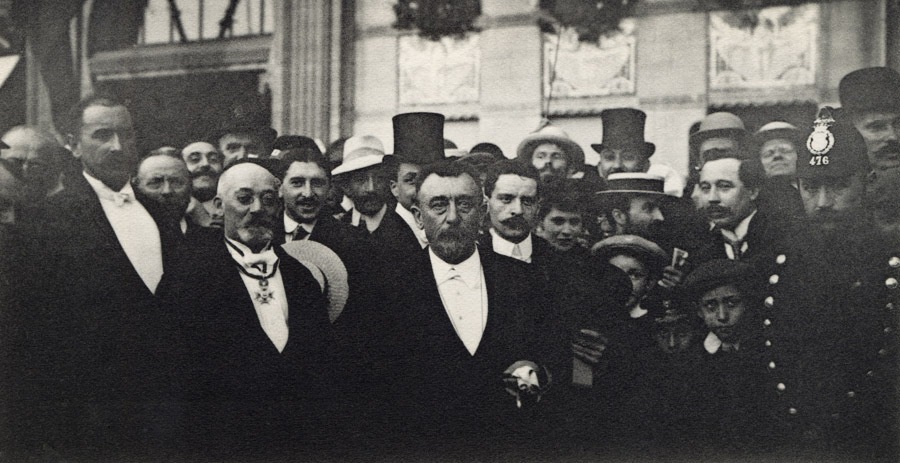
Ludwik Zamenhof at the Esperanto congress in Antwerp, 1911, source: Forum ~ https://culture.pl/en/article/9-things-you-need-to-know-about-esperanto-its-creator

In 1879, Zamenhof went to Moscow to study medicine. He became a Zionist as he faced more and more antisemitism during his Russian stay. His thoughts on Zionism had a change when he returned to Warsaw to establish his residency as an ophthomologist.

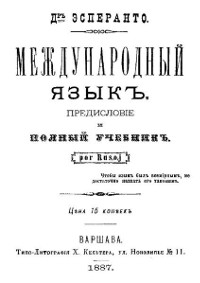
He published the book Lingvo internacia under the pseudonym Dr. Esperanto (Dr. One Who Hopes) on July 14, 1887. His “hope” was that the language would lead to international peace. Unfortunately, his “hope” was an expensive endeavor, and Zamenhof suffered many financial setbacks. “The book contained the 16 cardinal grammatical rules of Esperanto as well as 917 word roots taken mostly from existing European languages: Romance, Germanic and Slavic languages. Leo Tolstoy reportedly learned Esperanto in 3-4 hours. The language spread massively in the early 20th century and the first International Esperanto Congress was organized in 1905. Following WWI, Esperanto was often conceived as a quasi-revolutionary instrument of the emancipation of the proletariat, endorsed by Socialists and called by them ‘Latin of the workers’.” (9 Things You Need to Know About Esperanto and Its Creator) The idea was to create the easiest possible language which could be learned in a shortest possible time-span.

The First Esperanto Textbook ~ https://zamenhof.info/en/biografio

Eventually, he moved toward Grodno, where he revisited the idea of Zionism. He also began working on the foundations of a new religion, called Hillelism. Rabbi Hillel was known for his gentleness and tolerance, and Zamenhof used him as the basis for the religion. He wished to connect people religiously as well as having a common language. “He later modified Hellelism, renaming it Homaranism (the meaning of which in Esperanto referred to humanity more generally), so that it might serve as the basis for a new, universal, linguistically neutral human culture. However the new religious found few adherents. In 1888, Zamenhof published two new books, Dua libro de lingvo internacia (The Second Book of the International Language) and Aldono al la Dua libro (Supplement to the Second Book). The following year he produced Russian–Esperanto and German–Esperanto dictionaries.

“Returning to Warsaw in 1898, he opened a private medical practice. From 1889, he edited the monthly La Esperantisto, which was published in Nuremberg; he also founded the Universala Esperanto-Asocio (World Society of Esperantists). In the programmatic declaration of its first congress, held in 1905 in the French city of Boulogne-sur-Mer, Zamenhof abjured all the benefits of authorship of the new language, turning it over to the entire world. He translated many works into Esperanto, including the Torah, which he finished shortly before his death.” (Zamenhof, Ludwik)

World War I and his declining health saw an end to his hopes of bringing people together under one language and one religion. His daughter Lidia took up his cause and widely lectured on the merits of Esperanto throughout Europe and the United States, but she was arrested by the Germans and confined to the Warsaw ghetto during Hitler’s reign over Europe. Adolf Hitler considered Esperanto an instrument of an international Jewish conspiracy. Eventually, along with her sister Zofia, she was transported to Treblinka, where she was murdered by the Nazis. Their brother Adam was murdered in the mass executions in Palmiry forest in 1940.

Other Sources:

9 Things You Need to Know About Esperanto and Its Creator

Birth of Ludwig Zamenhof, Creator of Esperanto

A Short Biography of Zamenhof

The Yivo Encyclopedia of Jews in Eastern Europe

Posted in etymology, history, language choices, word choices | Tagged , , , , | Comments Off on Esperanto, the Language of Peace

What Exactly Did It Mean for A Clergyman to Have a “Living” Bestowed Upon Him During the Regency Period?

Henry Singleton: “The Curate of the Parish Returned From Duty.” London, circa 1800. Engraved by T. Burke.

We often read in a Regency era book something to the effect of the master of the estate bestowing a “living” upon a clergyman. Exactly, what did that entail? Once the living was bestowed, could the owner of the estate take it away if he thought someone else would serve him better? Was the living considered a for-life appointment? 

First, let’s have a look at the differences between those stations available for a living. 

The way someone quite some time ago explained it to me, a rector did not necessarily have to be ordained. He did receive the greater tithes, meaning 10% of the cereal crops grown in the parish in compensation for the freehold land set aside for church use. He served not only the church but also some administrative duties for the parish: registration of births, marriages, deaths and serving on the magistrate bench.

Vicar is the title given to certain parish priests in the Church of England. It has played a significant role in Anglican Church organisation in ways that are different from other Christian denominations. The title is very old and arises from the medieval situation where priests were appointed either by a secular lord, by a bishop or by a religious foundation. Wherever there is a vicar he shares the benefice with a rector (usually non-resident) to whom the great tithes were paid. Vicar derives from the Latin “vicarius” meaning a substitute. Historically, Anglican parish priests were divided into rectors, vicars and (rarely) perpetual curates. These were distinguished according to the way in which they were appointed and remunerated. The church was supported by tithes: taxes (traditionally of ten percent) levied on the personal and agricultural output of the parish.

A vicar was the most common title used for those overseeing a parish. Unfortunately, not all vicars were men of faith. We customarily think of the third son of an aristocratic family joining the clergy. All it took to be ordained was the right connections and enough money.

During the Regency, a living was established for the leader of the parish church. This was customarily a rector or vicar. Once installed into a living, those chosen were there for life. Only a bishop could remove the fellow and the cause had to be of public notice. If a holder of a living thought himself too old or too feeble to continue, he could hire a curate to take over his parish duties, that is, assuming he could afford to do so. In Jane Austen’s Persuasion, Charles Hayter serves as a curate. 

“And, pray, who is Charles Hayter? Nothing but a country curate. A most improper match for Miss Musgrove of Uppercross.”—Mary Musgrove, Persuasion

Random Bits of Fascination tells us: “Whether or not a vicar had the resources for hiring a curate depended on the parish itself. His portion would be the lesser tithes, 10% of the parish’s produce and livestock. In some vicarages this might be as little as £50 a year. (For reference, this is roughly the equivalent of a minimum wage job.) In other parishes, the lesser tithes could amount to a considerable sum. Some hints in Pride and Prejudice suggest the Kympton living might have amounted to £500 -£600 a year. A vicar could resign his duties to a curate once he obtained the permission of his bishop. Many hired a curate, who would be paid out of the vicar’s own pocket, from the beginning of their incumbency. Others only did so when they had to retire. A vicar did not have to give up the parsonage house to the curate. He might continue to live in it himself and leave the curate to find his own living quarters somewhere within an easy distance of the church.”  

Meanwhile, author Brenda S. Cox reveals: “A rector, like Mr. Collins in Pride and Prejudice, received all the tithes. This included the ‘great tithes,’ about three-fourths of the total: usually the tithes of grain, hay, etc. The rector also got the ‘small tithes’: tithes of animals, eggs, poultry, etc. Austen’s rector characters received between 200 and 1000 pounds from their parishes (200 for Edward Ferrars in Sense and Sensibility, close to 1000 for the Grants in Mansfield Park).

“A vicar only got the ‘small tithes.’ In a parish with a vicar rather than a rector, the local squire or someone else got the great tithes. Mr. Elton of Emma was a vicar, so he needed a wealthy wife. We know his living was not a large one, since Mrs. Bates, the widow of the former vicar, lived in poverty. (Emma, of course, was clueless about Mr. Elton’s financial needs.) Mr. Elton’s income was probably about a quarter of what a rector’s income would have been for the parish.”

A curate is a person who is invested with the care or cure (cura) of souls of a parish.  In this sense, “curate” correctly means a parish priest; but in English-speaking countries the term curate is commonly used to describe clergy who are assistants to the parish priest. The duties or office of a curate are called a curacy. Again, from Random Bits of Fascination, we learn, “A curate was usually a young man just recently ordained, who assisted or sometimes performed the duties of a clergyman. Though they might do all the work of the parish, their salaries were often meager, perhaps as little as £50 per year, not enough to afford a maid. Even at trifling wages, a curacy was not easy to obtain. In the early 1800’s curates made up close to half of the clergymen. Even with a position, their future was not secure. The death of the incumbent did not imply the curate would ascend to the living. Moreover, there was no guarantee that the successor would even continue to employ the curate.  A curate did not retire unless he had private means of support because the church offered no pensions. As members of the clergy, curates were regarded as gentlemen. Despite their official standing, the subservient nature of their position and their paltry incomes caused some of the gentry and peers to hold them in disregard.”

“The curate was far down the financial and social scale from both the rector and the vicar.  He got a salary, which was generally half (or less) of what a vicar might receive. In 1813, the median income of a curate was only £55 per year. Some received as little as £4 a year!  A few received over £200, though.  £55 was Henry Austen’s income (Jane Austen’s brother) when he took his first curacy, at Chawton, in 1816.” (Brenda S. Cox)

“Most parishes in England and Wales retain the historical title for their parish priest—rector or vicar—with vicar being more common in the urban areas, because of an expansion of new Parishes being created in the Victorian years, and the incumbents being styled ‘vicar’ after 1868. The distinction between the titles is now only historical. In the late 20th century, a shortage of clergy and the disparity of workload between parish clergy led to the development of a number of new forms of parish ministry. In Wales prior to Disestablishment most parishes in the southern dioceses (St. Davids and Llandaff) were vicarages subject to lay patronage, whereas in the north rectors predominated largely nominated by the bishops of Bangor and St. Asaph.” (Vicar)

Okay, back to my original question. 

If the man was read in as a vicar or rector, as mentioned above, he could only be removed by death or by the bishop for crimes or when he was translated to another position. However, if the man who had the advowson wanted it for his son or nephew or cousin or anyone else, he could hire a man as a curate to hold the position for how many years it was until his relation could assume the position.

However, a curate who was given a living to hold it until a man’s relation turns 24 and was  ordained could be dismissed. Also, if a rector had several churches and so appointed one to be curate at  of them, he could be dismissed by the one who appointed him.

So the one who hired a curate to cover a second or third parish  or one hired to hold the position until a child was old enough to take the living could be dismissed by the man who gave him the job. Otherwise, the man was in there for life. 

Now, taking all that is listed above, please note that when I first learned about the difference between rectors and vicars, I accepted the definition as rectors received the great tithes, vicars received the small tithes and curates received wages.
However, I recently read an essay in Persuasion 16 of Jane Austen Society of North America that says often the documents setting up each living set out who received what.

“The tenth part of all profits or fruits, both praedial, personal, and mixed, allotted to the clergy for their maintenance. Of tithes there are three kinds, viz., personal, predial, and mixed. Personal tithes are those duo or accruing from the profits of labour, art, trade, navigation, and industry of man. Pradial tithes, those which arise either from the fruits of the ground, as corn, hay, underwood, flax, hemp, &c.; or from the fruits of trees, as apples, pears, plums, cherries ; or from the produce of the garden. Mixed tithes arc such as arise from beasts, and other animals fed with the fruits of the earth, as cheese, milk, wool, lambs, calves, fowls, &c . Preadial tithes, again, are either great or small. Great tithes are those of corn, hay, and wood. Small tithes are those of flax, &c., which are prsedial; and those of wool, milk, cheese, lambs, ferrets, &c., which are mixed . The tithes of grounds newly broken up and cultivated are called decimce novates, and always belong to the vicar, as well as the small tithes. ”  Dictionary of the English Church Ancient and Modern.

“A Companion to the English Parish Church says of tithes: There are three types of tithes : praedial tithes (calculated on income produce), mixed tithes (calculated on income from stock and labour), and personal tithes (based on income derived entirely from labour).
Where a rector wasn’t the incumbent, the tithes were divided between the rector and the vicar. They were the Great or Rectorial and small or Vicarial tithes. Vicarial tithes were generally those raised from labour and minor produce and as such were most difficult to raise.”

“Nothing about the tithe system, however, was simple. There were many exemptions, and customary usage could change the interpretation of the laws. Generally, products which were part of the ground itself were exempt from tithe: coal, minerals, limestone, etc. But in some areas it was customary to pay tithes on these materials, tin in Devon and Cornwall, for instance, and lead in Derbyshire. In the early years of the Industrial Revolution, new agricultural and industrial products changed the picture. Tithe owners stood to gain large amounts when new methods of husbandry resulted in improved yields or new crops if they could collect ten per cent of the produce. Vegetable gardens had been usually exempt from tithe, but with the tremendous growth of cities in the seventeenth and eighteenth centuries, large market gardens were developed on their outskirts, and the parish clergy naturally wanted to collect tithes on them. Some crops considered particularly important to the trade and industry of the country were given special consideration: the cloth industry employed thousands of people-hemp and flax were accordingly tithed at a maximum of five shillings an acre in perpetuity; madder, an essential ingredient in dyeing and calico printing, was given similar protection (Thirske 403). Wild animals – feroe naturae – were traditionally exempt from tithes. The courts helped the rich by deciding that deer, even if kept in parks, were wild animals. Crown forests and waste lands were traditionally exempt. Jane Austen would have become acutely aware of the problems which could be caused by the Enclosure Acts, when the Austen ladies visited her cousin, Edward Cooper, at his rectory at Hamstall Ridware in Staffordshire in 1806. Edward was in the process of petitioning the Exchequer Court against the enclosure of Needwood Forest. The proposal was that the forest lands be enclosed and divided among the three adjacent parishes, Hamstall Ridware, Rolleston and Scropton. According to law, these new lands would be exempt from tithe for the first seven years of cultivation (to help defray the capital costs involved), and Edward Cooper and the other tithe owners were concerned that the farmers would sow them with wheat or cereal crops (usually subject to a high rate of tithe) and leave their original lands to grass (paying little or no tithe) (Salt Library).” (Sutherland)

Other sources: 

Collins, Irene. (1998)  Jane Austen, The Parson’s DaughterHambledon Press.

Collins,Irene. (2002)  Jane Austen & the Clergy.  Hambledon Press.

Cox, Brenda S. “Nothing But a Country Curate.” 

Day, Malcom. (2006) Voices from the World of Jane. Austen David & Charles.

Knight, Jude. “Serving God, the Parish, or possible Mammon in late Georgian England.”

Savage, William. “The Georgian Clergy.”

Sullivan, Margaret C. (2007) The Jane Austen Handbook. Quirk Books.

Sutherland, Eileen.“Tithes and the Rural Clergyman in Jane Austen’s England.” Persuasion 16, 1994. 

“Vicar vs Curate? What’s the Difference?” 

Posted in British history, Church of England, Georgian England, Georgian Era, Jane Austen, Living in the Regency, Mansfield Park, Persuasion, Pride and Prejudice, Regency era, religion, research | Tagged , , , , , , | 6 Comments

When Bad Things Come in Pairs: Siblings Who Wreaked Havoc in Austen’s Novels, a Guest Post from Amanda Kai

This post originally appeared on the Austen Authors’ blog on 28 May 2021. Enjoy!

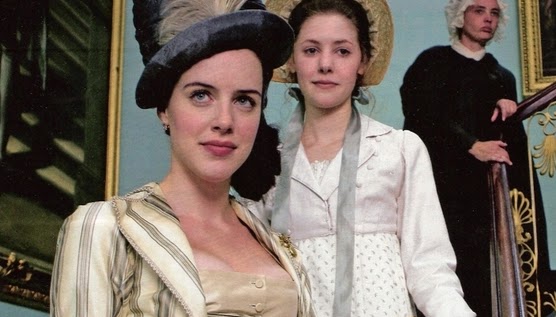
“Prepare for trouble. And make it double!”  While fans of the Pokemon cartoon show might associate this famous line with Team Rocket’s most inept members Jessie and James, this line could easily apply to several of the sibling pairs in Austen’s novels.  The world of Jane Austen seems rife with difficult duos that make life harder for the heroines and heroes.  Let’s take a look at some of the most notorious pairs that gave our heroines a dose of double-trouble.

Isabella and John Thorpe

It’s hard to picture a more loathsome brother and sister.  They are both name-droppers and gold-diggers.  Isabella is as inconstant a friend as the weather, and her actions seldom line up with the words from her mouth. John swears like a sailor and is about as selfish as can be.  Both siblings are rude, inconsiderate, and care more about their own interests than in respecting others.  The pinnacle of their bad behavior is in Isabella’s dumping her engagement to James Moreland in favor of Frederick Tilney, only to beg Catherine’s help to win James back when she herself gets thrown over by Frederick. Good job, Catherine, for turning her down!

Henry and Mary Crawford

They are both openly selfish and make no apologies for it.  Mary clearly has an agenda to land the richest husband she can, and though she likes Edmund better, she makes no secret of her disdain for his choice of profession and even rejoices when his elder brother falls ill, thinking that now her preferred man might inherit!  Henry is no better; a known player, he admits to his sister that he wants to make Fanny fall in love with him for the fun of it.  Meanwhile, he flirts with both of the Bertram sisters, eventually wrecking Maria’s marriage.  Mary shows no remorse for his bad behaviour, even trying to pin the blame on Fanny for not having accepted his proposal.  Lucky for Fanny and Edmund, they both escaped the charm of these terrible siblings.

Caroline Bingley and Louisa Hurst

If you thought these two reminded you of the ugly stepsisters from Cinderella, you wouldn’t be too far off. These ladies have no scruples about abusing their so-called friends behind their back and gossiping about others at every turn.  They even go so far as to assist Darcy in separating their brother from the woman he loves.  How Charles Bingley turned out so nice with sisters such as these is a mystery to me.

Maria and Julia Bertram

They may have older brothers who are kinder, but these two sisters were anything but nice to their cousin Fanny when she arrived. They constantly made fun of her for her lack of education and finery, and they only deigned to play with her when they needed an extra playmate.  As adults, they shunned her the majority of the time, neither one of them really coming to appreciate Fanny in the way that her aunt and uncle Bertram and cousin Edmund did. 

Lucy and Anne Steele

Okay, so Lucy definitely gave the most trouble between these two.  Her nastiness seems to know no bounds!  From forcing Elinor to be her confidante in order to stake a claim on Edward, making veiled threats, maneuvering to be Mrs. Ferrars’ favorite, and even throwing a last-minute barb at Elinor by letting the Dashwoods’ servant assume she had married Edward instead of Robert, Lucy is a real piece of work!  But her sister Anne (also called Nancy) doesn’t get off the hook so easily.  She is a Grade A eavesdropper whose loose lips got Edward disowned and he almost had to go through with marrying Lucy thanks to her.  Besides being fairly stupid, she does nothing to help Elinor or Marianne or be a friend to them, either.

Who would you rank as the worst among these nasty siblings?  Are there any other pairs you would categorize as a difficult duo?

To Learn More of Amanda Kai, visit her website.

Posted in Austen Authors, British history, family, Regency era, writing | Tagged , , , , , , , | 1 Comment