Description 101

Below, is my post from Savvy Authors from their “craft” series.

Description 101

Trained as a journalist and a grant writer, I have over the last three years assumed a quasi-methodical way of addressing description in my fictional writing. As a mode of discourse, description does not come naturally to me. My stories play in my head as I write, and it would be easy for me to ignore the fact that my reader does not see what I do. Of course, it is my responsibility to assure that he does.

Many writers saturate their pieces with long descriptive passages, while others provide only bare bone details. Finding a balance is the answer. Allowing the reader to see, hear, smell, taste, and touch what the author does is a testimony to the senses. The point is to create an image that closely mirrors an observer’s experience. Description should provide the same information that the reader might get directly if he was involved in the situation.

Objective description, the type one finds in technical or scientific descriptive writing, is unbiased and purposeful. In it, one does not convey an emotional response. Subjective description, on the other hand, is personal, but imprecise. Writing subjectively intrudes on the reader’s feelings. Description enlivens the narration. The writer becomes the means by which the reader experiences the situation. He assumes several roles:
• As the reader’s eyes, the writer must thoroughly describe what he sees. The relationship of items to one another. The light. The shadows. The distance. The texture. All of it must be described.
• As the reader’s ears, the writer must tend to the sounds. Loudness. Staccato. Rhythmic pattern.
• As the reader’s other senses, the writer must assure that he describes every detail. Feelings. Touch. Taste. Smell. Kinesthetic-Tactile experiences.
• As the reader’s conscious, the writer will enforce the mood he wishes to convey. Each detail layers the tone created. A mystery writer describing a deserted building will choose different details from that of an architectural slant. Choose the details, which reinforce the mood.

Yet, for description not to drown the narration, the writer must first keep the intended audience ever present in his mind. What must one absolutely know about the subject or the place? What may one omit? Each descriptive passage should convey one dominant impression. Details must be carefully selected. Do not create tediousness by including every discernible detail.

A consistent point of view aids in the piece’s organization. Where is the writer when he describes the scene? The reader must be aware of where the writer places himself spatially. Order of location – presenting the details in a manner, which reflects their location in the scene – clarifies the nature of the details. Good description depends on the writer’s ability to convey his observations. Begin by describing the whole scene briefly and then focus on one specific part.

Remember to write unforgettable description, one must use vivid, reminiscent details. Use concrete sensory images and figurative language. Effective description conveys the experience exactly as one planned it. Use specific details, which are associated with actual items, and concrete language, which is coupled with the senses. Do not forget to cut the “deadwood,” especially vague words, such as handsome, tall, soft, etc., which offer multiple meanings/impressions. Also avoid the fancy (florid, ostentatious, embellished, lavish, etc.) choices. Use words that pin down the exact meaning. For example, using puissance instead of manliness serves no purpose if the reader must consult a dictionary to understand the passage. Impressionistic details are those, which an observer would see first? What would the observer see second? Third? And so forth? Present the details in the order in which someone would notice them.

As description acquaints the reader with the physical nature of things, certain standards are observed:
• Use “definition” when describing the unfamiliar.
• Use division/analysis, separating a whole, singular subject into its elements – slicing it into parts. This helps the reader follow the detailed description.
• Whether the previous two steps are necessary depends upon the familiarity the writer’s audience has with the subject.
• Use concrete words to describe material, color, weights, sizes, distance, etc.
• Limit the number of details to fit the purpose.
• Observe contiguity in moving from part to part.
• Use words that indicate relative postion. (i.e, to indicate space relationships, use words such as above, adjoining, abutting, alongside, below, beneath, beside, inside, left, outside, north, over, right, etc.; to indicate likeness/continuation, use words such as again, also, as…so, in the same way, likewise, similarly, thus, etc.)
• End with a brief description of the movements, behaviors, or habits of animate things.
• Include uses for inanimate things.
• Follow a thematic pattern by dividing the scene into mental categories, and regardless of their actual relationship to one another in space, describe elements that support one theme and then another theme, etc.

Overall, good description gives concrete details in a strategic sequence, which creates the piece’s mood/tone. The reader should have a strong sense of the whole scene, but should also be able to invoke specific details effortlessly.

About the Author
Regina Jeffers is the author of several Jane Austen adaptations including Darcy’s Passions, Darcy’s Temptation,Vampire Darcy’s Desire, The Phantom of Pemberley and Captain Wentworth’s Persuasion and the upcoming Christmas at Pemberley. In addition, Publisher’s Weekly called her Regency romance series about the Realm a “knockout.” The first book, The Scandal of Lady Eleanor, is currently available. Jeffers considers herself a Janeite and spends her free time with the Jane Austen Society of North America and AustenAuthors.com. A teacher for nearly 40 years in the public school systems of three different states, Jeffers is a Time Warner Star Teacher Award winner, a Martha Holden Jennings Scholar, a Columbus Educator Award winner, and a guest panelist for the Smithsonian. She’s served on various national educational committees and is often sought out as a media literacy consultant. Visit her at her website http://www.rjeffers.com for information on releases, excerpts, book signings, etc.

The Phantom of Pemberley
A Pride and Prejudice Murder Mystery
By Regina Jeffers
HAPPILY MARRIED for over a year and more in love than ever, Darcy and Elizabeth can’t imagine any thing interrupting their bliss-filled days. Then an intense snowstorm strands a group of travelers at Pemberley, and terrifying accidents and mysterious deaths begin to plague the manor. Everyone seems convinced that it is the work of a phantom—a Shadow Man who is haunting the Darcy family’s grand estate.
Darcy and Elizabeth believe the truth is much more menacing and that someone is trying to murder them. But Pemberley is filled with family guests as well as the unexpected travelers—any one of whom could be the culprit—so unraveling the mystery of the murderer’s identity forces the newlyweds to trust each other’s strengths and work together.
Written in the style of the era and including Austen’s romantic playfulness and sardonic humor, this suspense-packed sequel to Pride and Prejudice recasts Darcy and Elizabeth as a husband-and-wife detective team who must solve the mystery at Pemberley and catch the murderer—before it’s too late.

The Scandal of Lady Eleanor
A Regency Romance
By Regina Jeffers
A sweep-the-reader-away story of romance, adventure, and intrigue set in the Jane Austen era.
A master at capturing the elegance, grandeur, and literary style of the Regency era, Regina Jeffers has developed a loyal following with her many popular Jane Austen spin-off novels. In The Scandal of Lady Eleanor, Jeffers offers a completely original Regency romance featuring highly engaging characters and exciting—even shocking—plot twists. James Kerrington, a future Earl and a key member of the British government’s secret unit, the Realm, never expected to find love again after the loss of his beloved wife. Kerrington’s world shifts on its axis when Eleanor Fowler stumbles into his arms. Eleanor, however, is hiding a deep secret: she had hoped the death of her father, the Duke William Fowler, would give her family a chance at redemption from the dark past, but when Sir Louis Levering proves her father’s debauchery, Eleanor is thrown into a web of immorality and blackmail. Kerrington and his friends must free Eleanor from Levering’s diabolical hold.

Christmas at Pemberley
A Pride and Prejudice Holiday Sequel
By Regina Jeffers

A festive holiday novel in which personal rivalries are resolved, generosity rediscovered and family bonds renewed

It’s Christmastime at Pemberley and the Darcys and Bennets have gathered to celebrate. With such a mix of eclectic characters under one roof, bitter feuds, old jealousies, and intimate secrets come to the surface. Stubborn Lady Catherine seeks forgiveness, shallow Caroline Bingley finds love, and immature Kitty pursues a vicar. Forced into playing hostess, Georgiana tries desperately to manage the chaos while wishing Darcy and Elizabeth would return from their trip.
Enroute home, Darcy and Elizabeth are waylaid by a blizzard that forces them to take shelter in a nearby inn. Elizabeth is tormented that they will spend Christmas away from their families, but when a young couple arrives at the inn in need of a place for the night, Elizabeth’s concern turns to the pregnant girl. As Elizabeth and Darcy comfort and soothe her through a long and painful labor, they’re reminded of the love, family spirit, and generosity that lie at the heart of Christmas.

Posted in Uncategorized | Comments Off on Description 101

BBC Magazine on “Why We Love the Tale of King Arthur”

A new television series is the latest dramatisation of the Camelot myth. But why is the legend of King Arthur such a compelling one in culture?

For a man who may or may not have wandered Britain some 1,500 years ago, King Arthur retains the enviable knack of making his regal presence felt.

Merlin, Excalibur, Guinevere, Lancelot, the Lady in the Lake – all the components of his story are instantly familiar both in his erstwhile homeland and in much of the world.

Modern historians might query whether there is any real evidence for his existence, but none doubt his lasting hold over the popular imagination.

His, after all, is a tale that takes in romance, heroism, chivalry, honour and, of course, the promise that its hero will one day return to rescue his people.

Channel 4’s adaptation is the latest in a very, very long line.
Little wonder, then, that the entertainment industry continues to cheerfully plunder it.

Camelot, a Channel 4 drama starring Eva Green and Joseph Fiennes, is only the latest in a series of big-budget takes on Arthurian legend. Recent years have witnessed the 2008 BBC series Merlin, 2007’s Colin Firth blockbuster The Last Legion and 2004’s King Arthur, starring Keira Knightley and Clive Owen.
I admit to being hooked on the new “Camelot” series on Starz.
To read the complete article go to
http://www.bbc.co.uk/news/magazine-13696160

Posted in Uncategorized | Comments Off on BBC Magazine on “Why We Love the Tale of King Arthur”

D-Day Remembered

The Denver Post has 56 magnificent images to commemorate the D-Day Invasion at Normandy. Check it out at http://blogs.denverpost.com/captured/2009/06/05/the-65th-anniversary-of-d-day-on-the-normandy-beaches/306/

Posted in Uncategorized | Comments Off on D-Day Remembered

“Jane (Austen) in June”

Join the “Jane in June” read along of the timeless classic Pride and Prejudice on The Book Rat website. Go to
http://www.thebookrat.com/2011/06/jane-in-june-ii-main-page.html for more information.

Posted in Uncategorized | Comments Off on “Jane (Austen) in June”

Jane(Austen) in June

The Book Rat Blog is celebrating “Jane (Austen) in June” throughout the month. I will be adding an interview and giveaway during the last week of the month, as well as contributing to several summary posts with friends from Austen Authors. Check out the items already on the site. There’s a whole list of giveaways. Join in the Read Along discussions of Pride and Prejudice. Go to http://www.thebookrat.com/2011/06/jane-in-june-ii-main-page.html for more details.

Posted in Uncategorized | Comments Off on Jane(Austen) in June

Extra Mile Race


Symphony Park in Charlotte, NC, hosted the Extra Mile Road Race as part of its Memorial Day celebration. I was up at 6 A.M. – not to run, but to watch my son run the 7:30 race. It’s hot here today, and the course was a demanding one, with lots of rolling hills. That’s my son in the orange Try Sports jersey. He finished 11th overall and 3rd in his age group, but more importantly, he set a base for his return to running. He’s been too busy coaching cross country, indoor track, and outdoor track to tend to his own running history. Congratulations, Son. As always, I’m proud of you.

Posted in Uncategorized | Comments Off on Extra Mile Race

Pride 47 – Prejudice 5

5/27/2011

Pride 47 – Prejudice 5
Pride and Prejudice was originally entitled First Impressions, which is a much better title when one considers how Jane Austen bombards her readers with the theme of “impressions”: first, flawed, and founded. However, that is material for a future post.

What I would like to consider today is why did the publishers deem it necessary to change the title to Pride and Prejudice? There are several of us on this site who have had title changes at our publishers’ suggestions. For example, I have seen Wayward Love changed to Captain Wentworth’s Persuasion; Darcy’s Dreams to Darcy’s Temptation; Darcy’s Hunger to Vampire Darcy’s Desire, and most recently, A Touch of Gold to The Scandal of Lady Eleanor. Changing titles is a common practice among publishing companies.

Can one imagine the conversation between Thomas Egerton Publishers and Jane Austen?

Egerton: Miss Austen, we believe the reading public would respond to a title change.
Austen: Are you implying that I must add the word Darcy or Pemberley to the title to sell books?
Egerton: No, that will not be necessary for another 200 years.
Austen: (in awe) Do you expect my works to survive and become part of the British literary canon?
Egerton: Of course, not. You are a female. We will be fortunate to sell a few hundred copies, Miss Austen.
Austen: (a bit disconcerted by his condescending tone) But my book is about misconstruing others – of the weakness of making judgments based on first impressions.
Egerton: (ignoring her objection) We will follow the pattern of your first publication. Sense and Sensibility will be followed by Pride and Prejudice. It will give you a “hook” to capture your readers. Now, if you will sign the contract, we can begin publication.

But why did Austen’s publishers choose those two words: pride and prejudice? Was it to stimulate a debate among those who wonder whether it was Darcy or Elizabeth who was prideful? who acted with prejudice? College professors base entire semesters on just that concept. Or, perhaps, it was how often those two words are found in Austen’s text: The publishers’ belief that such repetition would create resonance and “connectiveness.”

The word “pride” appears seven and forty times in the text. One of my favorite uses of the word occurs in, “Vanity and pride are different things, though the words are often used synonymously.” I am also found of, “With what delightful pride she afterward visited Mrs. Bingley, and talked of Mrs. Darcy, may be guessed.”

“Prided” is used but once, as is “proudly” and “proudest.” Meanwhile, “proud” is used one and twenty times. “Some may call him proud, but I am sure I never saw anything of it,” is spoken by Mrs. Reynolds. Later in the story, Elizabeth considers Darcy’s actions in dealing with Wickham. “For herself, she was humbled; but she was proud of him – proud that in a cause of compassion and honor he had been able to get the better of himself.”

“Prejudiced” is found once in the text; “prejudices” is used twice, and “prejudice” appears five times. “The general prejudice against Mr. Darcy is so violent, that it would be the death of half the good people in Meryton to attempt to place him in an amiable light.”

When I originally entitled my second book Darcy’s Dreams, I did so because I mimicked Austen’s repetition. I used the word “dream” seven and fifty times in the book. When Ulysses Press added the word “temptation” to attract readers, I made a mad scramble to add temptation to the manuscript. The process made me wonder if Austen did the same thing with pride and prejudice. Although I know it’s an illogical assumption, I like to imagine our dear Jane adding those two words as motifs within her text and also imagine her grumbling, just as I did with temptation.

Posted in Uncategorized | Tagged , , , , , , , , | 1 Comment

Emphasis on Elizabeth Bennet

In a previous post, we discussed how Andrew Davies “created” the image of a very masculine and virile Darcy by adding scenes to the 1995 Pride and Prejudice adaptation. Some of us probably participated in “Darcy Loving Parties” at the time of this mini-series’ release.

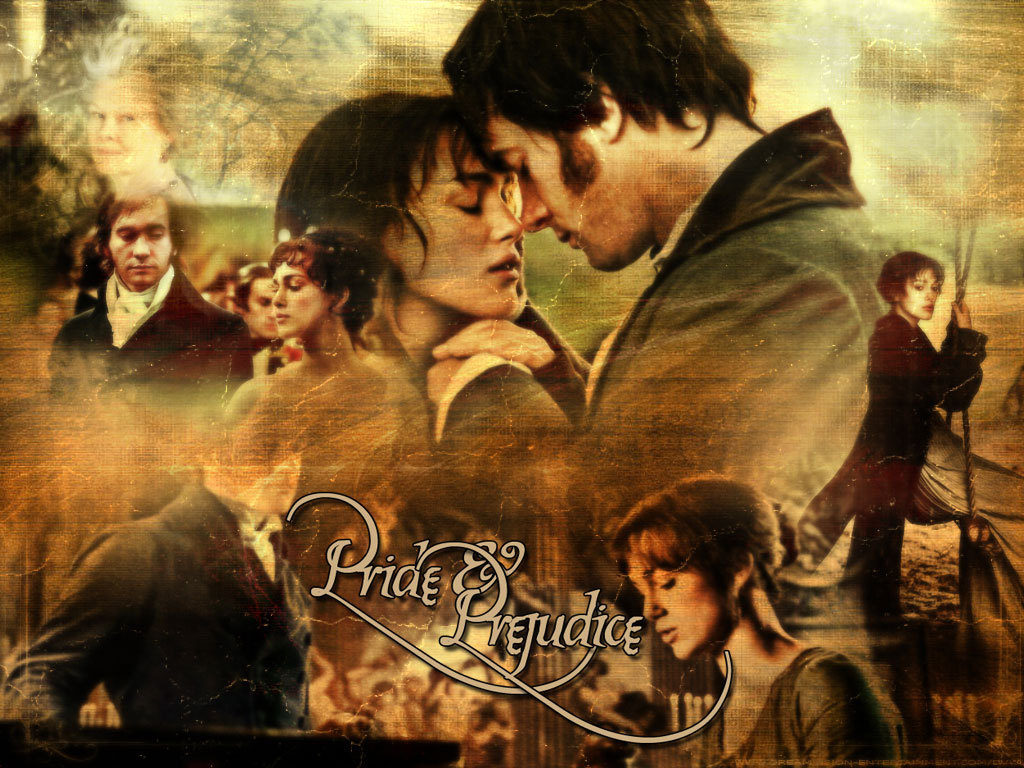
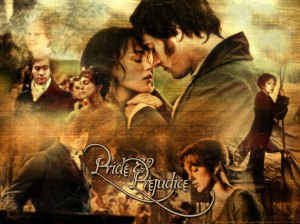
Today, I would like to examine the visual shift of “desire” to Elizabeth Bennet in the 2005 film. Casting the beautiful Keira Knightley in the lead role changed the focus. Choosing Ms. Knightley, who had established herself in Bend It Like Beckham, King Arthur, Love Actually, and The Pirates of the Caribbean, was designed to appeal to a younger and wider audience. Add Joe Wright’s emphasis on social realism to Knightley’s casting, and we have a film that grossed over $125 million worldwide.

Knightley’s casting could have backfired. Remember that Austen describes the character as, “She (Elizabeth) is tolerable, but not handsome enough to tempt me.” and “But no sooner had he made it clear to himself and his friends that she had hardly a good feature in her face ….” and “Though he had detected with a critical eye more than one failure of perfect symmetry in her form ….” Obviously, the casting of the equally lovely Rosamund Pike as Jane helped to “sell” the idea that Elizabeth’s fair face was less than her elder sister’s.

In the 2005 film, Elizabeth (Knightley) is found in EVERY scene, from the opening shot of her walking home while reading her book to the final kiss in the American version. The camera follows Elizabeth through the house. We see her world through Elizabeth’s eyes. When she walks away from Darcy at the Meryton assembly, everyone else pales, but our focus remains constant on Elizabeth. She is framed by the retreating camera lens.

When Elizabeth and Jane share secrets under the blankets, the audience is invited to join them. When she sensually traces Darcy’s belongings with her fingertips, we feel Elizabeth’s longing for a man she has allowed to slip through her fingers.

Through the camera, the viewer is always at Elizabeth’s side. We read over her shoulder in the opening scene. We enjoy the interplay between Elizabeth and Mr. Bennet regarding Mr. Collins’s pomposity. We hide behind a Netherfield column with her when her family’s actions bring humiliation. We observe Darcy’s approach through the morning mist as Elizabeth would, and we peek through the open door as she watches Darcy spin his sister around in circles.

Even when we have the occasional film seconds when Knightley is not in the framing, the scene pans to Elizabeth’s presence. It’s as if the camera leads us back to her. The maid carries items through the Bennet household and ends up in Elizabeth and Jane’s shared room. The intimate scene of Mr. and Mrs. Bennet’s bedroom guides us to another meeting between Jane and Elizabeth. Darcy’s appreciation of Georgiana’s pianoforte skills lead the viewer to Elizabeth’s accepting his invitation to Pemberley.

Knightley’s star power is “lessened” by her appearance in dingy, drab dresses and having her surrounded by a “working” home: animals, a barnyard swing, the kitchen, clothes lines, disarray. These techniques “muffle” Knightley’s beauty and allow the viewer to accept her as Austen’s most famous character. In contrast to the 1995 film, Matthew Macfadyen’s Darcy is often shot from a distance and always fully clothed (minus the American ending again). Even his open-shirt appearance in the pre-dawn hours is viewed from Elizabeth’s point of view. He’s coming to her. She waits for him. Therefore, she remains the center of attention.

Wright’s “extra” scenes direct the desire to Elizabeth. Davies’s film showed Darcy in his bath and diving into a pond to increase Colin Firth’s role. Wright uses the near kiss from Darcy’s first proposal, the caress as Darcy helps Elizabeth to the carriage, and the seductive circling of Darcy and Elizabeth at the Netherfield Ball as part of the film’s sexual subtext. These and several other scenes amplify the desire for Elizabeth.

One part of the film that has received much criticism is the way this adaptation minimizes the relationship between Elizabeth and Wickham and between Elizabeth and Colonel Fitzwilliam. Wright chose to omit Austen’s diversions because Elizabeth is the one to be desired, and Elizabeth desires Darcy. In this version, we do not consider her flirtation with either man as serious possibilities. In the 2005 film, Wickham spends more time with Lydia than he does with Elizabeth.

Okay, it is your turn. Where else in the film is Elizabeth the point of desire? How has her character been created? I have other ideas, but I am waiting for our Austen Authors’ loyal fans to add their own opinions.

Holden, Stephen. “Marrying off Those Bennet Sisters Again, but This Time Elizabeth is a Looker.” Review of Pride and Prejudice. The New York Times. 11 Nov. 2005. {http://movies2.nytimes.com/2005/11/11/movies/11prid.html?ex=1176782400&en=97912be821dd7738&ei=5070}

Posted in Uncategorized | Comments Off on Emphasis on Elizabeth Bennet

Latest Interview

Check out my latest interview at http://www.sellingbooks.com/regina-jeffers-the-scandal-of-lady-eleanor.

If, dear reader, you are also an author, you may receive information about also being included on this site by sending a blank email to interview@sellingbooks.com.

Posted in Uncategorized | Comments Off on Latest Interview

BAFTA Awards – Television

NOMINATIONS

LEADING ACTOR
Programme Channel
Jim Broadbent Any Human Heart Channel 4
Benedict Cumberbatch Sherlock BBC One
***Daniel Rigby Eric and Ernie BBC Two
Matt Smith Doctor Who BBC One

LEADING ACTRESS
Programme Channel
Anna Maxwell Martin South Riding BBC One
***Vicky McClure This Is England ’86 Channel 4
Natalie Press Five Daughters BBC One
Juliet Stevenson Accused BBC One

SUPPORTING ACTOR
Programme Channel
Brendan Coyle Downton Abbey ITV1
***Martin Freeman Sherlock BBC One
Johnny Harris This Is England ’86 Channel 4
Robert Sheehan Misfits E4

SUPPORTING ACTRESS
Programme Channel
Gillian Anderson Any Human Heart Channel 4
Lynda Baron The Road to Coronation Street BBC Four
***Lauren Socha Misfits E4
Jessie Wallace The Road to Coronation Street BBC Four

ENTERTAINMENT PERFORMANCE
Programme Channel
Rob Brydon The Rob Brydon Show BBC Two
Stephen Fry QI BBC One
Harry Hill Harry Hill’s TV Burp ITV1
***Graham Norton The Graham Norton Show BBC One

FEMALE PERFORMANCE IN A COMEDY PROGRAMME
Programme Channel
***Jo Brand Getting On BBC Four
Dawn French Roger and Val Have Just Got In BBC Two
Miranda Hart Miranda BBC Two
Katherine Parkinson The IT Crowd Channel 4

MALE PERFORMANCE IN A COMEDY PROGRAMME
Programme Channel
James Buckley The Inbetweeners E4
***Steve Coogan The Trip BBC Two
Tom Hollander Rev BBC Two
David Mitchell Peep Show Channel 4

SINGLE DRAMA
Eric and Ernie
Victoria Wood, Peter Bowker, Tim Bricknell, Jonny Campbell
BBC Two /BBC Wales /Blue Door Adventures
I Am Slave
Andrea Calderwood, Gabriel Range, Jeremy Brock
Channel 4/A Slate Films and Altered Image Production for UKFC, Channel 4, Limelight, JAC Rights Management LLP and the Film Agency for Wales
***The Road to Coronation Street
Production Team
BBC Four/ITV Studios
The Special Relationship
Production Team
BBC Two/Rainmark Films and HBO Films

DRAMA SERIES
Being Human
Rob Pursey, Philip Trethowan, Toby Whithouse, Colin Teague
BBC Three/Touchpaper Television
Downton Abbey
Julian Fellowes, Gareth Neame, Liz Trubridge, Nigel Marchant
ITV1/Carnival Films
Misfits
Murray Ferguson, Petra Fried, Howard Overman, Kate Crowe
E4/Clerkenwell Films
*** Sherlock
Steven Moffat, Mark Gatiss, Sue Vertue, Beryl Vertue
BBC One/Hartswood Films

DRAMA SERIAL
***Any Human Heart
Lynn Horsford, Lee Morris, Sally Woodward Gentle, Michael Samuels
Channel 4/Carnival Films
Mad Dogs
Cris Cole, Andy Harries, Suzanne Mackie, Adrian Shergold
SKY 1/Left Bank Pictures
The Sinking of the Laconia
Alan Bleasdale, Jonathan Young, Uwe Janson, Hilary Norrish
BBC Two/BBC Productions
The Promise
Peter Kosminsky, David Aukin, Hal Vogel
Channel 4/Daybreak Pictures

CONTINUING DRAMA
Casualty
Production Team
BBC One/BBC Productions
Coronation Street
Production Team
ITV1/ITV Studios
***EastEnders
Production Team
BBC One/BBC Productions
Waterloo Road
Sharon Hughff, Sharon Channer, Fraser MacDonald, Lis Steele
BBC One/Shed Productions

INTERNATIONAL
Boardwalk Empire
Martin Scorsese, Terence Winter, Tim Van Patten, Howard Korder
SKY Atlantic/HBO
Glee
Ian Brennan, Ryan Murphy, Brad Falchuk
E4/Twentieth Century Fox
***The Killing
Soren Sveistrup, Piv Bernth, Birger Larsen, Sophie Grabol
BBC Four/DR/ZDF Enterprises
Mad Men
Matthew Weiner, Scott Hornbacher, Jennifer Getzinger
BBC Four/Lionsgate Television

FACTUAL SERIES
Coppers
Production Team
Channel 4/Blast!
One Born Every Minute
Production Team
Channel 4/Dragonfly Film and Television
***Welcome to Lagos
Will Anderson, Gavin Searle, Chris King, Andrew Palmer
BBC Two/Keo North
The Young Ones
Leanne Klein, Tom McDonald, Michael Jochnowitz
BBC One/Wall To Wall Television

SPECIALIST FACTUAL *
Alan Bennett and the Habit of Art (The Making Of)
Martin Rosenbaum, David Sabel, Toby Coffey
More 4/Lone Star Productions
***Flying Monsters 3D
David Attenborough, Anthony Geffen, Celia Taylor, Sias Wilson
Sky 3D/Atlantic Productions
Human Planet
Brian Leith, Dale Templar, Nitin Sawhney
BBC One/BBC Productions
Pompeii: Life and Death in a Roman Town
Paul Elston, Daisy Scalchi, Richard Bradley
BBC Two/Lion Television

SINGLE DOCUMENTARY **
***Between Life and Death
Nick Holt, Meredith Chambers, Marina Parker, Ben Brown
BBC One/BBC Factual Wales
The Dancing Boys of Afghanistan
Jamie Doran, Najibullah Quraishi, John Moffat, Mike Healy
More 4/Clover Films
Pink Saris
Production Team
More 4/Ginger Productions
Scenes From a Teenage Killing
Morgan Matthews, Ruth Kelly, Steve Hewlett, Michael Harrowes
BBC Four/Minnow Films

FEATURES
Come Dine With Me
Production Team
Channel 4/ITV Studios
***Hugh’s Fish Fight
Andrew Palmer, Will Anderson, Hugh Fearnley-Whittingstall, Frankie Fathers
Channel 4/Keo Films
Mary Queen of Shops
Production Team
BBC Two/Optomen Television
Pineapple Dance Studios
Jonathan Stadlen, Pat Doyle, Hannah Springham
Sky 1/Pulse Films

CURRENT AFFAIRS
Kids in Care (Panorama)
Simon Gilchrist, Roger Graef, Tom Giles, Clare Johns
BBC One/Films of Record
Lost Girls of South Africa (Dispatches)
Deborah Shipley, Brian Woods, Xoliswa Sithole
Channel 4/True Vision Productions
Secret Iraq
Eamonn Matthews, Sam Collyns, James Jones, Philippa Lacey
BBC Two/Quicksilver Media
***Zimbabwe’s Forgotten Children
Jezza Neumann, Zoliswa Sithole, Brian Woods, Deborah Shipley
BBC Four/True Vision Productions

NEWS COVERAGE
BBC One: Ten O’Clock News: Handover of Power
Production Team
BBC One/BBC News 24/BBC News
Channel 4 News: From Chile’s Ecstasy to Congo’s Agony
Production Team
Channel 4/ITN Productions
***ITV News at Ten: The Cumbria Murders
Production Team
ITV1/ITN Productions
Sky News: Egypt Crisis
Production Team
Sky News/Sky News

SPORT
6 Nations – England v Wales
Production Team
BBC One/BBC Sport
FA Cup Final: Chelsea v Portsmouth
Tony Pastor, Paul McNamara, Jamie Oakford, Rob Hollier
ITV1/ITV Sport
***Formula 1 – The Abu Dhabi Grand Prix
Production Team
BBC One/BBC Sport
Wimbledon 2010
Production Team
BBC One/BBC Sport

NEW MEDIA
LabUK/Brain Test Britain
Richard Cable, Zoe Heron, Kathy Neil, Peter Harvey
http://www.bbc.co.uk/ BBC Multiplatform
Misfits
Matt Jarvis, Chloe Moss, Owen Priestly, Carl Hodler
E4.com/ Clerkenwell Productions & Kerb Digital
Malcolm Tucker: The Missing Phone
Dave Addey, Armando Iannucci, Henry Cooke, Henry Volans
iTunes App Store/Agant Ltd & Faber and Faber
***Wallace and Gromit’s World of Invention
Production Team
http://www.bbc.co.uk/ Aardman Digital/BBC

ENTERTAINMENT PROGRAMME ***
***The Cube
Adam Adler, Nathan Eastwood, Andrew Newman, Andrew O’Connor
ITV1/Objective Productions
The Graham Norton Show
Graham Norton, Jon Magnusson, Graham Stuart, Steve Smith
BBC One/So Television
Have I Got News For You
Richard Wilson, Jo Bunting, Nick Martin, Mark Barrett
BBC One/Hattrick Productions
The X Factor
Andrew Llinares, Mark Sidaway, Nigel Hall, Richard Holloway
ITV1/TalkbackTHAMES and Syco

COMEDY PROGRAMME
Catherine Tate’s Little Cracker
Catherine Tate, Sophie Clarke-Jervoise, Izzy Mant
Sky 1/Tiger Aspect
Come Fly With Me
Adam Tandy, Paul King, Matt Lucas, David Walliams
BBC One/A Little Britain Production/BBC Productions
Facejacker
Kayvan Novak, Ed Tracy, Mario Stylianides, Tom Thostrup
Channel 4/Hat Trick Productions
***Harry and Paul
Harry Enfield, Paul Whitehouse, Sandy Johnston, Izzy Mant
BBC Two/Tiger Aspect Productions

SITUATION COMEDY
Mrs Brown’s Boys
Stephen McCrum, Martin Delany, Ben Kellett, Brendan O’Carroll
BBC One/BOCPix and BBC Productions, in association with RTE
Peep Show
Phil Clarke, Becky Martin, Sam Bain, Jesse Armstrong
Channel 4/Objective Productions
***Rev
Kenton Allen, James Wood, Peter Cattaneo, Hannah Pescod
BBC Two/Big Talk Productions
The Trip
Steve Coogan, Rob Brydon, Michael Winterbottom
BBC Two/Revolution Films
* Specialist Factual is given in honour of Huw Wheldon
** Single Documentary is given in honour of Robert Flaherty
*** Entertainment Programme is given in honour of Lew Grade

Posted in Uncategorized | 2 Comments