One of my fellow Austen Authors recently posted her top ten “love” quotes from movies. I have chosen some of my favorites (in no particular order). I had a great time doing this, but I ran out of space. I think I will revisit the idea again soon. (P.S. Tell me some of your favorites. Perhaps we can start a trend and post them on imbd.)
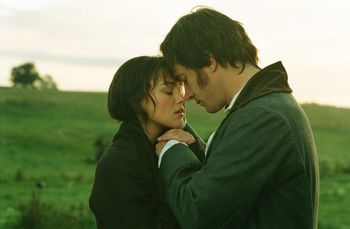 Pride & Prejudice (2005)
“…If, however, your feelings have changed, I will have to tell you: you have bewitched me, body and soul, and I love … I love … I love you. I never wish to be parted from you from this day on.”
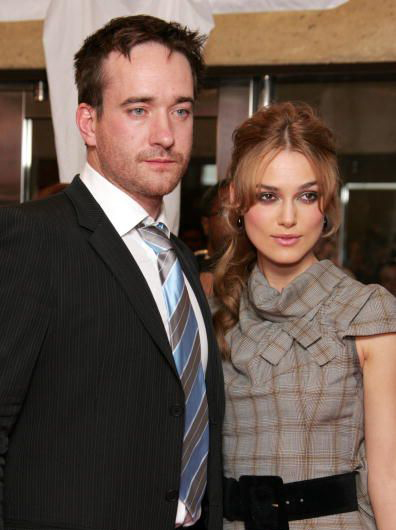
—Darcy (Matthew MacFadyen) to Elizabeth (Keira Knightley)
Dirty Dancing (1987)
“Me? I’m scared of everything. I’m scared of what I saw, I’m scared of what I did, of who I am, and most of all I’m scared of walking out of this room and never feeling the rest of my whole life the way I feel when I’m with you.” Baby (Jennifer Grey) to Johnny (Patrick Swayze).
Love Actually (2003)
“But for now, let me say — without hope or agenda, just because it’s Christmas and at Christmas you tell the truth — to me, you are perfect. And my wasted heart will love you. Until you look like this [picture of a mummy]. Merry Christmas.” Mark (Andrew Lincoln) to Juliet (Keira Knightley)
Notting Hill (1999)
“Don’t forget I’m just a girl, standing in front of a boy, asking him to love her.”
— Anna (Julia Roberts) to William (Hugh Grant)
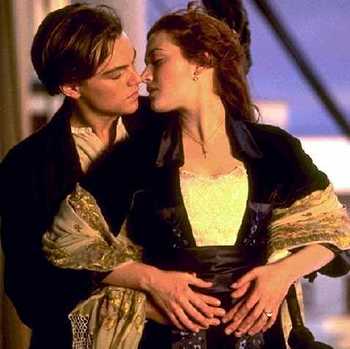
Titanic (1997)
“Winning that ticket, Rose, was the best thing that ever happened to me… it brought me to you … You must do me this honor, Rose. Promise me you’ll survive. That you won’t give up, no matter what happens, no matter how hopeless. Promise me now, Rose, and never let go of that promise.”
— Jack (Leonardo DiCaprio) to Rose (Kate Winslet)
The Last of the Mohicans (1992)
“…You stay alive, no matter what occurs! I will find you. No matter how long it takes, no matter how far, I will find you.”
— Hawkeye (Daniel Day-Lewis) to Cora (Madeleine Stowe)
When Harry Met Sally (1989)
“I love that you get cold when it’s 71 degrees out. I love that it takes you an hour and a half to order a sandwich. I love that you get a little crinkle in your nose when you’re looking at me like I’m nuts. I love that after I spend day with you, I can still smell your perfume on my clothes. And I love that you are the last person I want to talk to before I go to sleep at night. And it’s not because I’m lonely, and it’s not because it’s New Year’s Eve. I came here tonight because when you realize you want to spend the rest of your life with somebody, you want the rest of your life to start as soon as possible.”
— Harry (Billy Crystal) to Sally (Meg Ryan)
The Notebook (2004)
“So it’s not gonna be easy. It’s gonna be really hard. We’re gonna have to work at this every day, but I want to do that because I want you. I want all of you, forever, you and me, every day. Will you do something for me, please? Just picture your life for me? 30 years from now, 40 years from now? What’s it look like? If it’s with him, go. Go! I lost you once, I think I can do it again. If I thought that’s what you really wanted. But don’t you take the easy way out.”
— Noah (Ryan Gosling) to Allie (Rachel McAdams)
Sleepless in Seattle (1993)
“It was a million tiny little things that, when you added them all up, they meant we were supposed to be together … and I knew it. I knew it the very first time I touched her. It was like coming home. .. only to no home I’d ever known … I was just taking her hand to help her out of a car and I knew. It was like … magic.”
— Sam (Tom Hanks) speaking of his deceased wife to the radio show
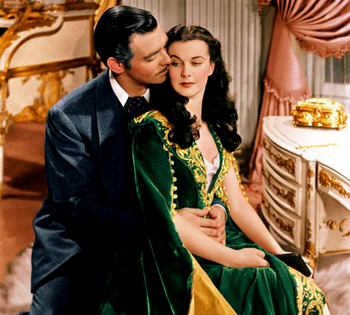 Gone with the Wind (1939)
“No, I don’t think I will kiss you, although you need kissing, badly. That’s what’s wrong with you. You should be kissed and often, and by someone who knows how.”
— Rhett (Clark Gable) to Scarlett (Vivien Leigh)
Casablanca (1942)
“Here’s looking at you, kid.”
—Rick (Humphrey Bogart) to Ilsa (Ingrid Bergman)
Love Story (1970)
“Love means never having to say you’re sorry.”
—Jennifer (Ali MacGraw) to Oliver (Ryan O’Neal)
Jerry Maguire (1996)
“You had me at hello.”
— Dorothy (Renée Zellweger) to Jerry (Tom Cruise)
Sense and Sensibility (1995)
But wait, there’s more!
“My heart is, and always will be, yours.” — Edward Ferrars (Hugh Grant) to Elinor Dashwood (Emma Thompson)
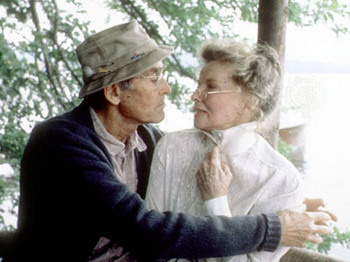
On Golden Pond (1981)
“Listen to me, mister. You’re my knight in shining armor. Don’t forget it.”
— Ethel (Katharine Hepburn) to Norman (Henry Fonda)
An Affair to Remember (1957)
“Oh, it’s nobody’s fault but my own! I was looking up… it was the nearest thing to heaven! You were there…” — Terry McKay (Deborah Kerr) to Nick Ferrante (Cary Grant)
Doctor Zhivago (1965)
Lara (Julie Christie): “Wouldn’t it have been lovely if we had met before?”
Zhivago (Omar Sharif): “Before we did? Yes.”
Lara: “We’d have got married, had a house and children. If we’d had children, Yuri, would you like a boy or girl?”
Zhivago: “I think we may go mad if we think about all that.”
Lara: “I shall always think about it.”
Some Kind of Wonderful (1987)
Watts (Mary Stuart Masterson): [putting on Keith’s diamond earrings] “What do you think?”
Keith (Eric Stoltz): “You look good wearing my future.”
Wuthering Heights (1939)
“Catherine Earnshaw, may you not rest so long as I live on! I killed you. Haunt me, then! Haunt your murderer! I know that ghosts have wandered on the Earth. Be with me always. Take any form, drive me mad, only do not leave me in this dark alone where I cannot find you. I cannot live without my life! I cannot die without my soul.” — Heathcliff (Laurence Olivier)
A Room with a View (1985)
“He’s the sort who can’t know anyone intimately, least of all a woman. He doesn’t know what a woman is. He wants you for a possession, something to look at, like a painting or an ivory box. Something to own and to display. He doesn’t want you to be real, and to think and to live. He doesn’t love you. But I love you. I want you to have your own thoughts and ideas and feelings, even when I hold you in my arms. It’s our last chance.” — George Emerson (Julian Sands)
The Way We Were (1973)
Katie (Barbra Streisand): “Wouldn’t it be lovely if we were old? We’d have survived all this. Everything thing would be easy and uncomplicated; the way it was when we were young.”
Hubbell (Robert Redford): “Katie, it was never uncomplicated.”
The Time Traveler’s Wife (2009)
I want to tell you, again, I love you. Our love has been the thread through the labyrinth, the net under the high-wire walker, the only real thing in this strange life of mine that I could ever trust. Tonight I feel that my love for you has more density in this world than I do, myself: as though it could linger on after me and surround you, keep you, hold you. Henry DeTamble (Eric Bana) to Claire Abshire (Rachel McAdams)
Ten Things I Hate About You(19966)
I hate the way you talk to me, and the way you cut your hair. I hate the way you drive my car. I hate it when you stare. I hate your big dumb combat boots, and the way you read my mind. I hate you so much it makes me sick; it even makes me rhyme. I hate it, I hate the way you’re always right. I hate it when you lie. I hate it when you make me laugh, even worse when you make me cry. I hate it that you’re not around, and the fact that you didn’t call. But mostly I hate the way I don’t hate you. Not even close, not even a little bit, not even at all. Kat Stratford (Julia Stiles) speaking of Patrick Verona (Heath Ledger)
The Bridges of Madison County (1995)
Francesca (Meryl Streep): Robert, please. You don’t understand, no-one does. When a woman makes the choice to marry, to have children; in one way her life begins but in another way it stops. You build a life of details. You become a mother, a wife and you stop and stay steady so that your children can move. And when they leave they take your life of details with them. And then you’re expected move again only you don’t remember what moves you because no-one has asked in so long. Not even yourself. You never in your life think that love like this can happen to you.
Robert Kincaid (Clint Eastwood): But now that you have it…
Francesca: I want to keep it forever. I want to love you the way I do now the rest of my life. Don’t you understand… we’ll lose it if we leave. I can’t make an entire life disappear to start a new one. All I can do is try to hold onto to both. Help me. Help me not lose loving you.
The Bridges of Madison County (1995)
Robert Kincaid: This kind of certainty comes but once in a lifetime.
The Bridges of Madison County (1995)
Francesca: And in that moment, everything I knew to be true about myself up until then was gone. I was acting like another woman, yet I was more myself than ever before.
Under the Tuscan Sun (2003)
Frances (Diane Lane): Do you know the most surprising thing about divorce? It doesn’t actually kill you. Like a bullet to the heart or a head-on car wreck. It should. When someone you’ve promised to cherish till death do you part says “I never loved you,” it should kill you instantly. You shouldn’t have to wake up day after day after that, trying to understand how in the world you didn’t know. The light just never went on, you know. I must have known, of course, but I was too scared to see the truth. Then fear just makes you so stupid.
Martini(Vincent Riotta): No, it’s not stupid, Signora Mayes. L’amore e cieco.
Frances: Oh, love is blind. Yeah, we have that saying too.
Martini: Everybody has that saying because it’s true everywhere.
It Happened One Night (1934)
Ellie Andrews (Claudetter Colbert): Have you ever been in love, Peter?
Peter Warne (Clark Gable): Me?
Ellie Andrews: Yes. Haven’t you ever thought about it at all? It seems to me you, you could make some girl wonderfully happy.
Peter Warne: Sure I’ve thought about it. Who hasn’t? If I could ever meet the right sort of girl. Aw, where you gonna find her? Somebody that’s real. Somebody that’s alive. They don’t come that way anymore. Have I ever thought about it? I’ve even been sucker enough to make plans. You know, I saw an island in the Pacific once. I’ve never been able to forget it. That’s where I’d like to take her. She’d have to be the sort of a girl who’d… well, who’d jump in the surf with me and love it as much as I did. You know, nights when you and the moon and the water all become one. You feel you’re part of something big and marvelous. That’s the only place to live… where the stars are so close over your head you feel you could reach up and stir them around. Certainly, I’ve been thinking about it. Boy, if I could ever find a girl who was hungry for those things…
[she comes around the blanket “Walls of Jericho” and kneels by his bed]
Ellie Andrews: Take me with you, Peter. Take me to your island. I want to do all those things you talked about.
Peter Warne: You’d better go back to your bed.
Ellie Andrews: I love you. Nothing else matters. We can run away. Everything will take care of itself. Please, Peter, I can’t let you out of my life now. I couldn’t live without you.
[she cries in his arms]
Peter Warne: [firmly] You’d better go back to your bed.
Ellie Andrews: I’m sorry.
[she returns to her bed still crying]
Up Close & Personal (1996)
Tally Atwater (Michelle Pfeiffer): Do you want to be with me?
Warren Justice (Robert Redford): So much it hurts.
Charade (1963)
Adam Canfield (Cary Grant) Well, what did you expect me to say? That a pretty girl with an outrageous manner means more to an old pro like me than a quarter of a million dollars?
Reggie Lampert (Audrey Hepburn): I don’t suppose so.
Adam Canfield: Well, it’s a toss-up, I can tell you that.
Reggie Lampert: What did you say?
Adam Canfield: Hasn’t it occurred to you that I’m having a tough time keeping my hands off you?
[Regina is stunned]
Adam Canfield: Oh, you should see your face.
Reggie Lampert: What’s the matter with it?
Adam Canfield: It’s lovely.
[Regina drops her knife and fork]
Adam Canfield: What’s the matter now?
Reggie Lampert: I’m not hungry anymore; isn’t it glorious?
Two Weeks’ Notice (2003)
George Wade (Hugh Grant): I need your advice on one last thing, then I promise you will never hear from me again. You see, I’ve just delivered the first speech I’ve written entirely by myself since we met, and I think I may have blown it. I want to ask your thoughts. Okay? Then I will read it to you. I’d like to welcome everyone on this special day. Island Towers will bring glamour and prestige to the neighborhood and become part of Brooklyn’s renaissance. And I’m very pleased and proud to be here. Unfortunately, there is one fly in the ointment. You see, I gave my word to someone that we wouldn’t knock down this building behind me. And normally, and those of you who know me or were married to me can attest to this, my word wouldn’t mean very much. So why does it this time? Well, partly because this building is an architectural gem and deserves to be landmarked and partly because people really do need a place to do senior’s water ballet and CPR. Preferably not together. But mainly because this person, despite being unusually stubborn and unwilling to compromise and a very poor dresser, is… she’s rather like the building she loves so much. A little rough around the edges but, when you look closely, absolutely beautiful. And the only one of her kind. And even though I’ve said cruel things and driven her away, she’s become the voice in my head. And I can’t seem to drown her out. And I don’t want to drown her out. So, we are going to keep the community center. Because I gave my word to her and because we gave our word to the community. And I didn’t sleep with June. That’s not in the speech, that’s just me letting you know that important fact. What do you think?
Lucy Kelson (Sandra Bullock): I have to get back to work.
George Wade: Right. Right, yes. Sorry to disturb you. Congratulations, again, Polly.
[leaves]
Lucy Kelson: Aside from the split infinitive that was somewhere in the middle, that speech was actually quite perfect, wasn’t it?
Polly St. Clair: Yeah. I don’t know what the hell you’re still doing sitting here. And I don’t even like him.
Lucy Kelson: [runs after George]
Notting Hill (1999)
P.R. Chief (John Shrapnel): Next question? Yes. You in the pink shirt.
William (Hugh Grant): Uh, right. Miss Scott, are there any circumstances that you and he might be more than just friends.
Anna Scott (Julia Roberts): I hoped that there would be but I’ve been assured that there’s not.
William: Yes, but what if…
P.R. Chief: I’m sorry. Just the one question.
Anna Scott: No. It’s all right. You were saying?
William: I was just wondering what if this person…
Journalist: Thacker. His name is Thacker.
William: Right. Thanks. What if, uh, Mr. Thacker realized that he had been a daft prick and got down on his knees and begged you to reconsider if you would… indeed… reconsider.
Anna Scott: [pause] Yes. I believe I would.
William: That’s wonderful news. The readers of Horse and Hound will be relieved.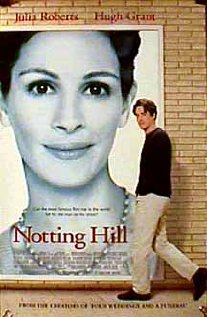





 Every Woman Dreams...