On the 4th Day of Christmas (Jane Austen Style)

I have posted this rhyme previously, but many have asked for it again.

images-6

(Sung to the tune of “The Twelve Days of Christmas”)

On the fourth day of Christmas, Jane Austen gave to me,
Four Abbey Tilneys
Three Sailing Captains
Two Dashing Colonels
And a love for Mr. Dar…cy.

Posted in holidays, Jane Austen | Tagged , | 2 Comments

UK Regions: Penrith, Cumbria

In my upcoming release, A Touch of Honor (Book 7 in the Realm Series), John Swenton travels to Penrith to meet with John Loudon McAdam (see December 19, 2013 post). I have discovered many interesting details of the area, and I thought to share them with you.

Penrith Castle 1772

Penrith Castle 1772

Penrith is a market town and in the county of Cumbria, England. Penrith lies less than 3 miles (5 km) outside the boundaries of the Lake District National Park. Historically a part of Cumberland, the local authority is Eden District Council, which is based in the town. Penrith was formerly the seat of both Penrith Urban and Rural District Councils. Penrith has no town council of its own, and is an unparished area.

It is in the Eden Valley, just north of the River Eamont. Other local rivers bounding the town are the River Lowther and the River Petteril. A partially man-made watercourse, known as Thacka Beck, flowing through the centre of the town, connects the Rivers Petteril and Eamont. For many centuries, the Beck provided the town with its main water supply. Thacka Beck nature reserve provides flood storage which protects homes and businesses in Penrith.

History
Toponymy
It is generally accepted that the name Penrith is of Cumbric origin, though the exact etymology of the name has been debated.

Several toponymists favour a derivation from the local equivalents to the Welsh or Cumbric pen ‘head, chief’ (both noun and adjective) + Cumbric ‘rid’, Welsh rhyd ‘ford’. On this basis, the name would therefore mean ‘chief ford,’ ‘hill ford’ or Whaley’s suggestion: ‘the head of the ford’ or ‘headland by the ford.’

Objections to this theory have been raised on the grounds that the present town of Penrith lies around 1 mile from the nearest crossing point on the River Eamont at Eamont Bridge. An alternative has been suggested consisting of the same pen element meaning ‘hill’ + the equivalent of Welsh rhudd ‘red.’ The name ‘red hill’ may refer to the large Beacon Hill to the north east of the current town. There is also a place called ‘Redhills’ to the south west near the M6 motorway.

Archaeology
Excavation of a section of the Roman road from Manchester to Carlisle in advance of an extension to Penrith Cemetery showed that the road survived better at the edges of the field. The cobble and gravel surfaces appeared to have been entirely ploughed out at the centre. The road was constructed by excavating a wide, shallow trench below the level of subsoil. Large cobbles were probably obtained from nearby, as they did not appear frequently within the subsoil in the excavated area. The cobbles were added to the excavated subsoil, and this was dumped back into the cut to form a stable foundation, which was raised in the centre of the road to form a camber.

Divisions and Suburbs
Castletown

Castletown is the area to the west of the railway line and includes the Gilwilly Industrial Estate and part of the Penrith or Myers Industrial Estate. The area – which was originally built to house workers on the railway line – mostly consists of late 19th and early 20th century housing (mainly terraced) including some council housing but in recent years modern housing developments such as Greystoke Park, Castletown Drive and Castle Park have sprung up.

There was until March 2010 a pub in the suburb, The Castle Inn and in previous years there was a sub-postoffice, Co-op store and other shops all now closed. Until the 1970s Castletown had its own church, St Saviour’s in Brougham Street which acted as a chapel of ease to Penrith’s parish church of St Andrew.

The suburb has a community centre on the recreation ground at Gilwilly and did until recently hold an annual gala day and parade throughout Penrith. At one time in the mid 20th century elections were held amongst regulars at the Castle pub to find a Mayor of Castletown. There is a long standing rivalry between the Castletown and Townhead districts.

Townhead
Townhead is the general name for the northern area of the town, which also includes the Fair Hill district and the Voreda Park or Anchor housing estate.

The main part of area is built along both sides of the A6 road heading up the hill in the direction of Carlisle. The road is streetnamed as Stricklandgate and Scotland Road but on maps dating before the mid 19th century was just marked as Town Head.

Town Head was one of the 7 townships or constablewicks that the ancient parish of Penrith was divided into the others were Middlegate, Burrowgate, Dockray and Netherend within the town proper and Plumpton Head and Carleton outside the town.

New Streets
The New Streets is a name for the area between Townhead and Scaws on the side of the Beacon Hill (or Fell) which consists of steep streets of some terraced housing but mainly large detached and semi detached houses mostly laid out in the late 19th century going up the hill. The streets are – from north to south – Graham Street, Wordsworth Street, Lowther Street, and Arthur Street. The term is sometimes extended to include Fell Lane (which is actually the ancient east road from Penrith town centre leading to Langwathby), and Croft Avenue and Croft Terrace (dating from c.1930). However, the late date of the development of the latter streets place them outwith the traditional definition of the term. At the foot of the streets is Drovers Lane which is sub-divided along its entire length into Wordsworth Terrace, Lowther Terrace, Bath Terrace, Arthur Terrace, Lonsdale Terrace and finally Meeting House Lane. Running along the top of the streets is Beacon Edge from which spectacular views can be seen over the town and towards the Lake District. Until about the turn of the 20th century, Beacon Edge was known as Beacon Road. As well as the streets going up the fellside there are some that connect the streets such as Beacon Street and smaller housing developments in the gaps between the individual streets. The fellside is known to have been used as a burial ground for victims of the many attacks of plague which struck Penrith down the centuries, and there are also areas which still bear the names of the farming which took place in the area. For example, a now wooded enclosed area on Fell Lane is still known as ‘the Pinfold’ (or Pinny) and was used to house stray animals until their owner paid a fine to release them. Also, a lane off Beacon Edge is still known as ‘Intack Lane’ (that is, the lane to farmed land). Most of the land that formed the “intack” itself was used to form Penrith Cemetery.

Scaws
The Scaws Estate was first built by Penrith Urban District Council almost immediately after World War II on land previously known as The Flatt Field and Scaws Farm which formed part of the Lowther Estates. Scaws Farm is now known as Coldsprings Farm. The name was changed following a murder which took place at the farm.

In later years some private housing was built on the higher parts of the estate.
Beaconside Infants and Junior Schools are located in the centre of the estate and there were at one time 3 corner shops and a launderette in the area.

Adjoining Scaws are the privately owned Barcohill and Meadow Croft housing estates.

Carleton
Carleton, once a separate settlement, is the area of Penrith that has seen the most growth of housing in the past 30 years.

Carleton Village itself is a small line of houses along one side of the A686 road that forms part of the boundary of the town’s built up area; at the junction of the A686 and Carleton Road (formerly the A66 road) is the Cross Keys Inn.

On the other side of the road and to the east of Carleton Road is the large High Carleton housing estate which was started in the 1960s and is still growing. The estate is subdivided into the Frenchfield Way/Gardens area, the original High Carleton area, Carleton Park or Parklands, Carleton Meadows and Carleton Heights most of the streets in this area are named after trees or other plants e.g.: Oak Road, Sycamore Drive, Juniper Way. A small stream runs through the estate. Oak Road connects Carleton with Meadow Croft and Scaws. To the west of High Carleton is Winters Park where Penrith Rugby Union Football Club has its ground and the Carleton Hall Gardens estate.

Carleton Hall is the headquarters of the Cumbria Constabulary.

At Frenchfield just south of Carleton Village towards Brougham Castle is the Hunter Hall Preparatory School and new Eden District Council-owned sports pitches.

Pategill
Adjoining Carleton is the Pategill Housing Estate which started as a council estate on land that once formed part of the Carleton Hall estate in the 1960s and is still mostly owned by housing associations. Two streets on the estate namely Prince Charles Close and Jubilee Close were opened by HRH The Prince of Wales in 1977.

The centre of the estate is accessible by foot only and there was until 2012 a small convenience store here.

Several properties are run as sheltered accommodation for the elderly.

Wetheriggs
The Wetheriggs, Skirsgill and Castle Hill or Tyne Close areas were first developed in the 1920s by the Penrith UDC on land formerly known as Scumscaw and the first private housing to be developed was Holme Riggs Avenue and Skirsgill Gardens just prior to World War II.

Further development did not start until the 1960s and 1970s when land between Wetheriggs Lane and Ullswater Road was built on though it was not until the late 1980s that the two roads were connected after the building of the Clifford Road extension which saw the Skirsgill area developed.

Within the area are three schools: Ullswater Community College. North Lakes Junior and Queen Elizabeth Grammar School (QEGS). The Crescent on Clifford Road is a block of elderly sheltered accommodation. There was formerly a shop at the junction of Huntley Avenue and Clifford Road next to North Lakes School.

The large North Lakes Hotel and Spa stands at the junction of Clifford and Ullswater Roads overlooking the Skirsgill Junction 40 Interchange of the M6 motorway, A66 and A592 roads.

Landmarks

The Giant's Grave in 8135

The Giant’s Grave in 8135

The main church is St. Andrew’s, built from 1720 to 1722 in an imposing Grecian style, abutting an earlier 13th-century tower. The churchyard has some ancient crosses and hogback tombstones in it known now as “Giant’s Grave,” and “Giant’s Thumb” which is the remains of a Norse cross dated to 920 AD.

The ruins of Penrith Castle (14th-16th centuries) can be seen from the adjacent railway station. The castle is run as a visitor attraction by English Heritage. To the south-east of the town are the more substantial ruins of Brougham Castle, also under the protection of English Heritage.

The ruins of Penrith Castle in 2008

The ruins of Penrith Castle in 2008

To the south of the town are the ancient henge sites known as Mayburgh Henge and King Arthur’s Round Table. Both are under the protection of English Heritage.

In the centre of the town is the Clock Tower, erected in 1861 to commemorate Philip Musgrave of Edenhall. Hutton Hall, on Folly Lane, preserves a 14th-century pele tower at the rear, attached to an 18th-century building. The Gloucester Arms public house, formerly known as Dockray Hall, is said to date from c1470 and may incorporate the remains of another pele tower.

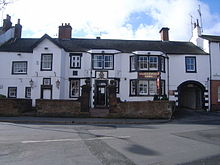
Dockray Hall

Dockray Hall

Penrith has been noted for the number of wells in and around the town, and well-dressing ceremonies were commonplace on certain days in the month of May. Three miles south-east of the town, on the River Eamont are the “Giants’ caves,” where the well was dedicated to St. Ninian. The caves are enlarged out of Lower Permian sandstones and their associated breccias and purple shales.

Just to the north of the town is the wooded signal-beacon hill, naturally named Beacon Hill, but originally called Penrith Fell. It last use was probably in 1804 in the war against Napoleon. Traditionally, the Beacon Pike was used to warn of approaching danger from Scotland. Today, although surrounded by a commercial woodland owned by Lowther Estates, the hill still contains some natural woodlands and is a popular local and tourist attraction. On a clear day the majority of the Eden Valley, the local fells, Pennines and parts of the North Lakes can be seen. It is almost certain that the Beacon Hill gave Penrith its name – in Celtic – of “red hill.”

A fibreglass 550 cm (18 ft)-tall statue of King Kongonce stood in the market, it is now at the market place on the outskirts of Penrith.

Notable People
Penrith was the home town of William Wordsworth’s mother, and the poet spent some of his childhood in the town, attending the local school with Mary Hutchinson his later wife.

George Leo Haydock (1774–1849), noted for his annotated edition of the Catholic Douay Bible, served as pastor of the Catholic Church here from 1839 until his death in 1849.

The MP and social reformer Samuel Plimsoll spent part of his childhood living at Page Hall in Foster Street. The row of houses at Townhead called Plimsoll Close is named after him.

Mary, the wife of Prime Minister Harold Wilson, lived in Penrith for part of her life whilst her father was minister at the Congregational Church in Duke Street.

The Victorian writer Frances Trollope, (Anthony Trollope’s mother) lived for a while at a house called Carleton Hill (not be confused with Carleton Hall) just outside the town on the Alston road.

The Scottish road-builder and engineer John Loudon Macadam the inventor of “Macadamized” roads (not Tarmacadam as that came later) lived for a while at Cockell House in Townhead. Close by Cockell House today are the streets Macadam Way and Macadam Gardens.

The feature film Withnail and I features the real Penrith very briefly, but most of the filming locations were actually in and around nearby Shap. The “Penrith Tea Rooms” scene was filmed in Stony Stratford (Milton Keynes).

Charlie Hunnam, British actor, attended Queen Elizabeth Grammar School, Penrith (QEGS) and lived locally in the area during his teenage years. He is known for his roles as Nathan Maloney in the Channel 4 drama Queer as Folk, Lloyd Haythe in the Fox comedy series Undeclared, Pete Dunham in the film Green Street, Jackson “Jax” Teller in the FX series Sons of Anarchy, and Raleigh Becket in the film Pacific Rim. 220px-Charlie_Hunnam_by_Gage_Skidmore_3

Oliver Turvey, Racing Driver, attended Queen Elizabeth Grammar School, Penrith(QEGS) and lives locally.

Angela Lonsdale was born in Penrith. She is perhaps best known for playing policewoman Emma Taylor in Coronation Street and is currently starring as DI Eva Moore in the BBC soap, Doctors.

Paul Nixon, Leicestershire wicket keeper and current England cricket international was born in Carlisle but grew up in the Penrith area.

Penrith is the birthplace of the footballer Stephen Hindmarch.

Will Addison, professional rugby union player currently representing Sale Sharks rugby union club attended Queen Elizabeth Grammar School, Penrith, making his début in the Aviva Premiership on 8 April 2011 against Gloucester Rugby union club at only 18 years of age.

Lewis Brett Guy (born 22 August 1985 in Penrith, Cumbria) is an English footballer who plays as a forward. He is currently playing for Milton Keynes Dons.

John Taylor (1 November 1808 – 25 July 1887), third President of the Church of Jesus Christ of Latter-day Saints, lived in Penrith as a young man, until he emigrated to Canada in the early 1830s.

Posted in acting, British history, buildings and structures, castles, Great Britain, Living in the Regency, Regency era, Regency personalities | Tagged , , , | Comments Off on UK Regions: Penrith, Cumbria

On the 3rd Day of Christmas (Jane Austen Style)

I have added this post previously, but it’s making a return appearance for the holidays.

images-6

(Sung to the tune of “The Twelve Days of Christmas”)

On the third day of Christmas, Jane Austen gave to me,
Three sailing Captains
Two dashing Colonels
And a love for Mr. Dar…cy.

Posted in holidays, Jane Austen | Tagged , | Comments Off on On the 3rd Day of Christmas (Jane Austen Style)

On the 2nd Day of Christmas (Jane Austen Style)

I have posted this rhyme previously, but it’s back for a return appearance.

images-6

(Sung to the tune of “The Twelve Days of Christmas”)

On the second day of Christmas, Jane Austen gave to me
Two dashing colonels
And a love for Mr. Dar…cy.

(Come back tomorrow for Day 3.)

Posted in holidays, Jane Austen | Tagged , | Comments Off on On the 2nd Day of Christmas (Jane Austen Style)

On the 1st Day of Christmas (Jane Austen Style)

This has been posted previously, but it’s back by popular demand.

images-6

The “twelve days” of Christmas comes after the celebration of the religious holiday and leads to the Epiphany on January 6.

(Sung to the tune of “The Twelve Days of Christmas”)

On the first day of Christmas, Jane Austen gave to me
A love for Mr. Dar…cy.

(Come back tomorrow for Day 2.)

Posted in holidays, Jane Austen | Tagged , | Comments Off on On the 1st Day of Christmas (Jane Austen Style)

Origins of the Tradition of Christmas Gift Giving

“Then they opened their treasures and presented him the gifts of gold and of incense and of myrrh.”

In Biblical times, the gift of gold indicated the receiver stood in high standing, but giving gold to a child would have been unheard of during those times – that is unless the child was of royal blood.

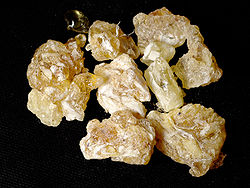
Frankincense has been traded on the Arabian Peninsula and in North Africa for more than 5000 years. A mural depicting sacks of frankincense traded from the Land of Punt adorns the walls of the temple of ancient Egyptian Queen Hatshepsut, who died circa 1458 BC. The charred remains of frankincense, called kohl, was crushed and used to make the distinctive eyeliner seen on ancient Egyptians.

250px-Frankincense_2005-12-31 Frankincense was one of the consecrated incenses (HaKetoret) described in the Hebrew Bible and Talmud used in Ketoret ceremonies. The frankincense of the Jews, as well as of the Greeks and Romans, is also called Olibanum (from the Arabic al-lubbān). Old Testament references report it in trade from Sheba (Isaiah 60:6 ; Jeremiah 6:20). Frankincense is mentioned in the Song of Solomon (Song of Solomon 4:14).

It was offered on a specialized incense altar in the time when the Tabernacle was located in the First and Second Jerusalem Temples. The ketoret was an important component of the Temple service in Jerusalem. It is mentioned in the Hebrew Bible book of Exodus 30:34, where it is named levonah (lebonah in the Biblical Hebrew), meaning “white” in Hebrew. It was one of the ingredients in the perfume of the sanctuary (Exodus 30:34), and was used as an accompaniment of the meal-offering (Leviticus 2:1, 2:16, 6:15, 24:7). When burnt it emitted a fragrant odour, and the incense was a symbol of the Divine name (Malachi 1:11 ; Song of Solomon 1:3) and an emblem of prayer (Psalm 141:2 ; Luke 1:10 ; Revelation 5:8, 8:3). It was often associated with myrrh (Song of Solomon 3:6, 4:6) and with it was made an offering to the infant Jesus (Matthew 2:11). A specially “pure” kind, lebhonah zakkah, was presented with the shewbread (Leviticus 24:7).

Myrrh was used by the ancient Egyptians, along with natron, for the embalming of mummies.

According to the Encyclopedia of Islamic Herbal Medicine, “The Messenger of Allah stated, ‘Fumigate your houses with al-shih, murr, and sa’tar.'” The author claims that this use of the word “murr” refers specifically to Commiphora myrrha.

Myrrh was an ingredient of Ketoret, the consecrated incense used in the First and Second Temples at Jerusalem, as described in the Hebrew Bible and Talmud. An offering was made of the Ketoret on a special incense altar, and was an important component of the Temple service. Myrrh is also listed as an ingredient in the holy anointing oil used to anoint the Tabernacle, high priests and kings.

Myrrh was traded by camel caravans overland from areas of production in southern Arabia by the Nabataeans to their capital city of Petra, from which it was distributed throughout the Mediterranean region.

According to the book of Matthew 2:11, gold, frankincense and myrrh were among the gifts to Jesus by the Biblical Magi “from the East.”Because of its mention in New Testament, myrrh is an incense offered during Christian liturgical celebrations. Liquid myrrh is sometimes added to egg tempera in the making of ikons.

Myrrh is mixed with frankincense and sometimes more scents and is used in almost every service of the Eastern Orthodox, Oriental Orthodox, traditional Roman Catholic and Anglican/Episcopal Churches.

Most people today think of these three gifts as being the original “Christmas presents.” However, we must recall that during the Roman ritual, known as Saturnalia, gifts were exchanged. The pagan rituals said “generosity would be rewarded with good fortune in the coming year.” During the early stages of Christianity, most Christian convert still celebrated their old Roman holidays. When Christmas became an official date on the calendar (approximately the 4th Century A.D.), it was natural to carry over the tradition of giving presents, especially as “Christmas” and “Saturnalia” were celebrated at about the same time of the year. However, that being said, gift giving and the Christmas spirit did not come so easily to each other.

Unknown-1Gift giving on New Year’s Day was a common practice during the Roman rule. This tradition began in the Dark Ages and continued in Britain through Queen Victoria’s reign. To this gifting tradition, we might add the legend of St. Nicholas, the bishop of Myra (beginning in the 4th Century). This St. Nicholas legend says the the priest bestowed gifts upon the poor throughout Asia Minor. The images of “Santa Claus” and of “Christmas stockings” can be traced to St. Nicholas’s life’s work. The anniversary of St. Nicholas’s death (December 6) was often marked during the Middle Ages with the bestowing of gifts on children.

Unknown Unfortunately, not all who knew of St. Nicholas kept his teaching sacred. Some European rulers demanded gifts of their subjects rather than to spread their wealth around. In the 10th Century, King Wenceslas (a Bohemian duke) began the practice of gift giving in the nature of St. Nicholas. He distributed firewood, food, and clothing to his subjects.

On December 25, 1067, William the Conqueror donated a large sum of money to the pope. This act planted the seed for change in Eastern Europe and later England and America. In Germany, many chose to give gifts to friends and neighbors anonymously. The Dutch did something similar, but they made it into a “treasure hunt” with written clues to where the gifts were located. The Danes were the first to wrap presents. They would put a small box into a larger one and then another one, etc., etc.

England at this time was under Puritan rule, and gift giving and all things Christmas were banned. The Puritans thought God did not want Jesus’s birthday to be a time of giving to others. Christmas was a day of solemn reflection. That being said, the upper class still gave gifts at New Year’s (a leftover tradition from Roman times). Some families also presented gifts to children on January 6 (old calendar January 17), which is “Twelfth Night” – a symbol of the day when the wise men gave gifts to the baby Jesus, twelve days after the Christ child’s birth.

Clement Moore’s poem “The Night Before Christmas” was an 1820s sensation, and the idea of Christmas gifts became more accepted. Charles Dickens’s A Christmas Carol emphasized the idea of gift giving, especially giving to the needy. Merchants took the idea to the next level. After the American Civil War, America was the center of “gift giving.” In the 1880s, Christmas gifts became commonplace in England, and by the early 1900s, Christmas had replaced the New Year’s tradition for gifts.

Catlogs, large department stores, dependable mail service, etc., all contributed to the gift giving frenzy known as Christmas. In the U.S., the average person spends $750-1000 on Christmas gifts. images


Posted in holidays | 2 Comments

The Treasure of “Myrrh”

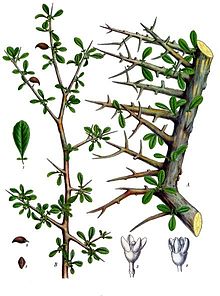
220px-Commiphora_myrrha_-_Köhler–s_Medizinal-Pflanzen-019 Myrrh /ˈmɜr/ is the aromatic resin of a number of small, thorny tree species of the genus Commiphora, which is an essential oil termed an oleoresin. Myrrh resin is a natural gum. It can also be ingested by mixing it with wine.

When a tree wound penetrates through the bark and into the sapwood, the tree bleeds a resin. Myrrh gum, like frankincense, is such a resin. When people harvest myrrh, they wound the trees repeatedly to bleed them of the gum. Myrrh gum is waxy, and coagulates quickly. After the harvest, the gum becomes hard and glossy. The gum is yellowish, and may be either clear or opaque. It darkens deeply as it ages, and white streaks emerge.

Myrrh gum is commonly harvested from the species Commiphora myrrha, which is native to Yemen, Somalia, Eritrea and eastern Ethiopia. Another farmed species is Commiphora molmol. The related Commiphora gileadensis, native to Eastern Mediterranean and particularly the Arabian Peninsula, is the biblically referenced Balm of Gilead, also known as Balsam of Mecca. Several other species yield bdellium and Indian myrrh.

The oleo gum resins of a number of other Commiphora species are also used as perfumes, medicines (such as aromatic wound dressings), and incense ingredients. A lesser quality myrrh is bled from the tree Commiphora erythraea. Commiphora gileadensis oleo gum resin is known as opobalsamum, a name it shares with the gum resin bled from a species of parsnip, Opopanax opopanax.

Fragrant “myrrh beads” are made from the crushed seeds of Detarium microcarpum, an unrelated West African tree. These beads are traditionally worn by married women in Mali as multiple strands around the hips.

The name “myrrh” is also applied to the potherb Myrrhis odorata, otherwise known as “cicely” or “sweet cicely.”

Myrrh is also found in the Christian Bible as one of the three gifts the wise men presented to baby Jesus.

Etymology
The word “myrrh” derives from the Aramaic (murr), meaning “was bitter.” Its name entered the English language from the Hebrew Bible, where it is called mor, מור, and later as a Semitic loanword was used in the Greek myth of Myrrha, and later in the Septuagint; in the Greek language, the related word μύρον became a general term for perfume.

So valuable has it been at times in ancient history that it has been equal in weight value to gold. During times of scarcity, its value rose even higher than that. It has been used throughout history as a perfume, incense and medicine.

Attributed Medicinal Properties
Traditional Chinese Medicine
In traditional Chinese medicine, myrrh is classified as bitter and spicy, with a neutral temperature. It is said to have special efficacy on the heart, liver, and spleen meridians, as well as “blood-moving” powers to purge stagnant blood from the uterus. It is therefore recommended for rheumatic, arthritic, and circulatory problems, and for amenorrhea, dysmenorrhea, menopause, and uterine tumors.

Myrrh’s uses are similar to those of frankincense, with which it is often combined in decoctions, liniments and incense. When used in concert, myrrh is “blood-moving” while frankincense moves the Qi, making it more useful for arthritic conditions.

It is combined with such herbs as notoginseng, safflower petals, angelica sinensis, cinnamon, and salvia miltiorrhiza, usually in alcohol, and used both internally and externally.

Ayurvedic Medicine
Myrrh is used more frequently in Ayurveda and Unani medicine, which ascribe tonic and rejuvenative properties to the resin. It (daindhava) is utilized in many specially processed rasayana formulas in Ayurveda. However, non-rasayana myrrh is contraindicated when kidney dysfunction or stomach pain is apparent, or for women who are pregnant or have excessive uterine bleeding.

A related species, called guggul in Ayurvedic medicine, is considered one of the best substances for the treatment of circulatory problems, nervous system disorders and rheumatic complaints.

Western Medicine
In pharmacy, myrrh is used as an antiseptic in mouthwashes, gargles, and toothpastes for prevention and treatment of gum disease. Myrrh is currently used in some liniments and healing salves that may be applied to abrasions and other minor skin ailments. Myrrh has also been recommended as an analgesic for toothaches, and can be used in liniment for bruises, aches, and sprains.

Myrrh is a common ingredient of tooth powders. Myrrh and borax in tincture can be used as a mouth-wash. A compound tincture, or horse tincture, using myrrh is used in veterinary practice for healing wounds. Meetiga, the trade-name of Arabian Myrrh, is more brittle and gummy than that of the Somalian variety and does not have the latter’s white markings.

Liquid Myrrh, or Stacte, spoken of by Pliny, also an ingredient of Jewish holy incense, was formerly obtainable and greatly valued but cannot now be identified in today markets. Myrrh gum is used for indigestion, ulcers, colds, cough, asthma, lung congestion, arthritis pain, and cancer.

“As part of a larger search for anticancer compounds from plants, the researchers obtained extracts from a particular species of myrrh plant (Commiphora myrrha) and tested it against a human breast tumor cell line (MCF-7) known to be resistant to anticancer drugs. Research data indicated that the extract killed all of the cancer cells in laboratory dishes.”

Mechanisms of Action
In an attempt to determine the cause of its effectiveness, researchers examined the individual ingredients of a herbal formula used traditionally by Kuwaiti diabetics to lower blood glucose. Myrrh and aloe gums effectively improved glucose tolerance in both normal and diabetic rats.

Myrrh was shown to produce analgesic effects on mice which were subjected to pain. Researchers at the University of Florence showed that furanoeudesma-1,3-diene and another terpene in the myrrh affect opioid receptors in the mouse’s brain which influence pain perception.

Mirazid, an Egyptian drug made from myrrh, has been investigated as an oral treatment of parasitic ailments, including fascioliasis and schistosomiasis.

Myrrh has been shown to lower cholesterol LDL (bad cholesterol) levels, as well as to increase the HDL (good cholesterol) in various tests on humans done in the past few decades. One recent (2009) documented laboratory test showed this same effect on albino rats.

In studies done on mice, Myrrh has been shown to have significant inhibiting effects on certain types of cancer. The active constituents of Myrrh being accredited with this property are Sesquiterpenes. These tests were done using the Myrrh species Commiphora molmol, and were also found to inhibit tumor growth.

Religious Ritual
Myrrh was used by the ancient Egyptians, along with natron, for the embalming of mummies.

According to the Encyclopedia of Islamic Herbal Medicine, “The Messenger of Allah stated, ‘Fumigate your houses with al-shih, murr, and sa’tar.'” The author claims that this use of the word “murr” refers specifically to Commiphora myrrha.

Myrrh was an ingredient of Ketoret, the consecrated incense used in the First and Second Temples at Jerusalem, as described in the Hebrew Bible and Talmud. An offering was made of the Ketoret on a special incense altar, and was an important component of the Temple service. Myrrh is also listed as an ingredient in the holy anointing oil used to anoint the Tabernacle, high priests and kings.

Myrrh was traded by camel caravans overland from areas of production in southern Arabia by the Nabataeans to their capital city of Petra, from which it was distributed throughout the Mediterranean region.

According to the book of Matthew 2:11, gold, frankincense and myrrh were among the gifts to Jesus by the Biblical Magi “from the East.”Because of its mention in New Testament, myrrh is an incense offered during Christian liturgical celebrations. Liquid myrrh is sometimes added to egg tempera in the making of ikons.

Myrrh is mixed with frankincense and sometimes more scents and is used in almost every service of the Eastern Orthodox, Oriental Orthodox, traditional Roman Catholic and Anglican/Episcopal Churches.

Myrrh is also used to prepare the sacramental chrism used by many churches of both Eastern and Western rites. In the Middle East, the Eastern Orthodox Church traditionally uses myrrh-scented oil to perform the sacraments of chrismation and unction, both of which are commonly referred to as “receiving the Chrism.”

Myrrh is also used in Neo-paganism and ritual magick.

Oil of myrrh is used in The Book of Esther 2:12 in a purification ritual for the new queen to King Ahasuerus:

“Now when every maid’s turn was come to go in to king Ahasuerus, after that she had been twelve months, according to the manner of the women, (for so were the days of their purifications accomplished, to wit, six months with oil of myrrh, and six months with sweet odors, and with other things for the purifying of the women;)

Ancient Myrrh
Modern myrrh has long been commented on as coming from a different source to that held in high regard by the ancients, having been superior in some way. Pedanius Dioscorides described the myrrh of the first century AD as most likely to refer to a “species of mimosa”, describing it “like the Egyptian thorn”. His description of its appearance and leaf structure as “pinnate-winged”. The ancient type of myrrh conjectured was noted for possessing a far more delightful odor than the modern. It was noted in 1837 that “The time, perhaps, is not far distant, when, through the spirit of research, the true myrrh-tree will be found.”

Posted in food and drink, holidays | Tagged | 2 Comments

Celebrating Christmas Movies

220px-SCICTT_coverSince the onset of film, a little over a century prior, Christmas has been employed as plot device for some of our most endearing films, as well as those not so engaging. Today, we have channels, such as the Hallmark Channel, on television which run countless made-for-TV films “celebrating” Christmas.

Ironically, none of the traditional Christmas classics tell the story of Jesus’s birth. Instead, they speak to the values taught by the Christian faith. As with the morality plays of the Medieval and early Tudor times, these “interludes” are a type of allegory in which the protagonist is met by personifications of various moral attributes, who try to prompt him to choose a Godly life (most noble of human qualities) over one of evil or of dispensation.

UnknownOne of the most popular of holiday films are those based on Charles Dickens’s A Christmas CarolThere have been more than 20 film versions of the Victorian classic, and this does not take into consideration play productions, television, etc. Dickens’ story was first brought to film in 1938 with Reginald Owen playing Scrooge; however, most critics believe the 1957 version told a truer tale. Dickens’ tale has even seen the 1970 musical with Albert Finney and Kermit the Frog in The Muppet’s Christmas Carol. The value of family and of giving is the nucleus of most retellings.

51VGaDTIwVL._SY300_Miracle on 34th Street remains one of my favorites. The 1947 version of the film starred Edmund Gwen, Maureen O’Hara, Natalie Wood, and Gene Lockhart. (Note! Lockhart was also notably in the 1938 version of A Christmas Carol.) The film’s story line teaches us there is no place for negativity in the midst of joy and “miracles.” Ironically, the movie was not released during the winter months, but rather during July. Six months later, crowds still filled theatres, and Hollywood had learned the lesson of “Christmas” as a money-making draw.

Another of my favorites is White Christmas. What can I say? I am a sucker for a movie musical. Needless to say, the film was designed to highlight Bing Crosby’s release of the Irving Berlin classic “White Christmas.” The song made its debut in the 1942 film Holiday InnWhite Christmas (1954) brought a group of WWII veterans together to honor the man had led them through the trials of battle and is a spectacular lesson on respect and responsibility.

xmas1An old Hollywood screwball comedy, Christmas in Connecticut speaks to us of the ways to nourish love with honesty. The film starred Barbara Stanwyck and Dennis Morgan and displays the typical “Happily Ever After” so sought by those who love the romance genre.

Likely the most popular of the Christmas films is Donna Reed’s and Jimmy Stewart’s It’s a Wonderful Life (1946)In reality, the film was not received well by film critics, saying the film was “too perfect” – sugary sweet to the point of being “sickening.” However, the advent of television brought new life to the film. The lesson of how one life can have a domino effect on the rest of the world rang true for those children of the Cold War era.

This is a list from Wikipedia of Holdiay-based films. I do not totally agree with some of the choices, but here they are just the same…

Christmas Classics
These are Christmas films released in the 1930s, 1940s and 1950s.

Babes in Toyland – 1961 – Disney adaptation of the Herbert operetta.
Beyond Tomorrow (Beyond Christmas) – 1940 -The first half of this fantasy film takes place on Christmas Eve as three old men befriend two strangers, a young man and woman, who return their wallets.
The Bishop’s Wife – 1947 – An angel helps a bishop rearrange his priorities during the Christmas season.
A Christmas Carol – 1938 – MGM’s adaptation of Charles Dickens’ classic story.
A Christmas Carol – 1951 – American title of British film Scrooge (see below).
Christmas Holiday – 1944 -A stranded soldier listens as a cabaret singer recounts a doomed marriage to a killer.
Christmas in Connecticut – 1945 – A columnist must entertain her boss and a returning war hero for the holidays. Remade for television in 1992.
Holiday Affair – 1949 – Romance blooms between a young widow and a sales clerk at Christmastime.
Holiday Inn – 1942 – Musicians prepare for a white Christmas at a cozy lodge.
I’ll Be Seeing You – 1944 – A war veteran finds romance with furloughed prisoner during the holidays.
It’s a Wonderful Life – 1946 – After attempting to commit suicide on Christmas Eve, a man is rescued by a guardian angel and shown what his hometown would be like had he never lived.
Scrooge – 1935 – Early film adaptation of Charles Dickens’ A Christmas Carol starring Sir Seymour Hicks.
Scrooge – 1951 – Dickens’ ghostly meditation on Christmas. This version of the story, with Alastair Sim as Ebenezer Scrooge, is universally regarded as the very best.
Miracle on 34th Street – 1947 – Macy’s Santa, with help from the U.S. Postal Service, restores a little girl’s faith. Remade for television in 1955, 1959, 1973.
The Shop Around the Corner – 1940 – Unbeknownst to each other, coworkers become romantic pen pals at Christmastime.
White Christmas – 1954 – As in Holiday Inn, musicians bring Irving Berlin’s lyrics to Vermont lodge. (The story is not a remake, however.)

Contemporary Christmas Classics
These are Christmas films released in the 1970s, 1980s, and 1990s.

A Christmas Story – 1983 – All Ralphie wants for Christmas is a Red Ryder BB gun.
All I Want for Christmas – 1991 – Two kids plot to reunite their estranged parents at Christmas.
Home Alone – 1990 – Kevin McCallister, an eight-year-old boy, is mistakenly left behind when his family flies to Paris for their Christmas vacation.
Home Alone 2: Lost in New York – 1992 – Kevin McCallister, now ten-years-old, mistakenly travels to New York City without his family on Christmas.
Jingle All the Way – 1996 – A Dad competes with others to find sold out hot toy for his son.
Mickey’s Christmas Carol – 1983 – Disney’s animated adaptation of Charles Dickens’ classic story.
Miracle on 34th Street – 1994 – Theatrical remake.
The Muppet Christmas Carol – 1992 – Jim Henson’s creations tackle Charles Dickens’ festive favorite.
National Lampoon’s Christmas Vacation – 1989 – The Griswold family plans turn to disaster, this time at Christmas. Followed by a made-for-TV sequel.
One Magic Christmas – 1985 – At Christmas time an angel shows a young mother the true meaning of the holiday.
The Nightmare Before Christmas – 1993 – Jack, a Halloween skeleton, discovers Christmas and attempts to hijack it.
The Santa Clause – 1994 – An ordinary man who accidentally causes Santa Claus to fall to his death from his roof on Christmas Eve must replace the “Jolly Old Elf”
Scrooge – 1970 – A musical adaptation of Dickens’ tale, starring Albert Finney in the title role.
Scrooged – 1988 – Modern, dark-humored interpretation of Dickens’ story, with Christmas spirits visiting a cynical, selfish TV exec, played by Bill Murray.

Modern Christmas Classics
These are Christmas films released in the 2000s and 2010s.

Angels Sing – 2013 – A man who as a child loved Christmas, but after a tragic accident, his holiday spirit was crushed. He needs to find his holiday spirit again, and meets a man named Nick, who gives him a gift that helps him find the joy of Christmas again.
Arthur Christmas – 2011 – Santa’s youngest son must deliver a bicycle to an overlooked girl before Christmas morning dawns. 3-D/CGI animated film.
A Christmas Carol – 2009 – Walt Disney Pictures/ImageMovers Digital performance capture film starring Jim Carrey.
Christmas with the Kranks – 2004 – When a suburban couple decide to forgo Christmas festivities, preferring to take a cruise to the Caribbean instead, their neighbours refuse to allow such Scrooge-like behaviour.
Deck the Halls – 2006 – Rival neighbors duke it out when one of them decides to light his house up so it can be seen from outer space
Elf – 2003 – A human who thinks he is an elf searches for his family in New York.
The Polar Express – 2004 – A magical train takes a boy and other children up to the north pole to meet Santa Claus.
The Santa Clause 2: The Mrs Clause – 2002 -Sequel to The Santa Clause; Santa must find a Mrs. Claus.
The Santa Clause 3: The Escape Clause – 2006 -Santa battles Jack Frost to keep his title.
Unaccompanied Minors – 2006 – Bored kids make up their own holidays while stuck in an airport after Christmas.

So, what are some of your favorite holiday-based films? Comment below. 


Posted in film, holidays, Uncategorized | Tagged , | 4 Comments

What is a “Cracker”?

Tom Smith invented the cracker in 1847. One hundred and sixty-three years later, it is an integral part of many holiday celebrations, and it has become a traditional part of British events.

The cracker is a small cardboard tube covered in a brightly colored twist of paper. At this time of year, one may find the paper has a “holiday” theme, but crackers are used in a variety of ways: Valentine’s Day, Mother’s Day, invitations, wedding favors, promotional gifts, advertising gimmick, etc.

The cracker is held by two people. When they pull on it, it creates a “popping” sound. Smith originally wanted the product to recreate the sound one hears when placing a long on a fire. The pop comes from the friction of the opposing pressure. It is a small explosive sound, produced by a narrow strip of chemically impregnated paper. The unique part of a Tom Smith cracker is the “gift” hidden inside. Those gifts might be something as simple as a motto or slogan or joke, or they might be something a bit larger, such as a paper party hat, a game, tiny treasures, puzzles, masks, promotional gift, etc. “Today, Tom Smith Group Limited manufactures up to 50 million crackers every year.”

Posted in Uncategorized | Tagged , | 1 Comment

“Here We Come A-Wassailing” ~ Plus the Release of Susana Ellis’s A Twelfth Night Tale + Giveaway + Excerpt

Today, I am so pleased to have Susana Ellis join me on my blog to speak of one of a Christmastide’s long-lasting traditions. To celebrate her appearance, Ms. Ellis has generously offered a special giveaway to accompany her post. Enjoy the post and do not forget to comment below to be in the running for the giveaway.

P1smsq Wassailing by Susana Ellis

Wassail, a hot mulled cider, originated in southern England (apple growing country) in pagan times, as a ritual to ensure a good apple harvest. Traditionally, wassail was made with sugar, cinnamon, ginger, and nutmeg added to cider, often served with toast on top. As time went on, wine became the base, often with brandy or sherry added, as well as apples and/or oranges. Wassail would be served in a bowl, with slices of toast to sop it up.

The word “wassail” means “be you healthy.”

Although the traditional day to serve wassail was Twelfth Night (the evening of January 5th)*, it was not uncommon for hosts to have a bowl of wassail on the sideboard for holiday entertaining during the entire twelve days of Christmastide.

Originally, wassailing was a ceremony intended to wake up the apple trees and scare away evil spirits. A Wassail King and Queen would head a procession of revelers from orchard to orchard, where they would sing and chant, and the Queen would be lifted up into the tree to offer wassail-soaked toast as a gift to the tree spirits. Then the group will recite an incantation such as:13-wassail copy

“Here’s to thee, old apple tree, That blooms well, bears well. Hats full, caps full, Three bushel bags full, An’ all under one tree. Hurrah! Hurrah!”

In the Middle Ages, peasants would come to the estate of the lord of the manor singing “Here We Come A-Wassailing” and the lord of the manor would reward them with food and drink in exchange for their goodwill.

“Love and joy come to you,
And to you your wassail too;
And God bless you and send you
a Happy New Year”

The Christmas carol “We Wish You a Merry Christmas” refers to the tradition of wealthy neighbors treating the carolers with such things as “figgy pudding.” It was not uncommon for liberal drinking to cause the crowd to turn rowdy, resulting in vandalism, if their efforts were not rewarded. “We won’t go until we get some, so bring some out here.”

twelfthnighttale_4inch In A Twelfth Night Tale, Lucy Barlow and her sisters take part in the village wassailing procession, but Lucy has to leave early for Livingston Manor to dress for her part as Lady of the Manor. When the wassailers arrive there for their last stop of the evening, she and Andrew Livingston greet them with a sumptuous spread of food and drink, including wassail. When the revelers return to their home, the Livingstons and the Barlows share a private party, with a King Cake (See December 16th post) and charades. And perhaps another surprise or two.

bracelet2 A random commenter on this post will win A Twelfth Night Tale Christmas charm bracelet.

*Most of those who still practice orchard wassailing insist that January 17th (old Twelfth Night) is the proper date.  giant_treasure

Susana is going all out to celebrate the release of A Twelfth Night Tale!

Besides the Grand Prize—a Giant Treasure Box—she is giving away a Twelfth Night Tale Christmas charm bracelet (silver-plated) for one random commenter on each of the twelve stops of the tour. Click here for the Rafflecopter for the Giant Treasure Box!

A Twelfth Night Tale Giant Treasure Box*

  • lovely gift box
  • A Twelfth Night Tale Christmas charm bracelet (silver-plated)
  • Father Christmas figurine
  • Three Wise Men figurine
  • Thomas Kinkade photo collage
  • Treasuring Theresa mug
  • Treasuring Theresa necklace
  • Treasuring Theresa keychain
  • two Christmas ornaments from Scotland (Mary Queen of Scots and fleur-de-lys)
  • two decks of Ellora’s Cave playing cards
  • two perfumed soaps from Scotland
  • fizzing bath salts from Scotland
  • Celtic pen from Scotland
  • “jeweled” soap
  • nail clipper keychain from London
  • stuffed toy bear

*In lieu of the treasure box, a winner from outside the U.S. will receive a gift card from the book retailer of their choice.

About A Twelfth Night Tale

A wounded soldier and the girl next door find peace and love amidst a backdrop of rural Christmas traditions. 

Without dowries and the opportunity to meet eligible gentlemen, the five Barlow sisters stand little chance of making advantageous marriages. But when the eldest attracts the attention of a wealthy viscount, suddenly it seems as though Fate is smiling upon them.

Lucy knows that she owes it to her younger sisters to encourage Lord Bexley’s attentions, since marriage to a peer will secure their futures as well as hers. The man of her dreams has always looked like Andrew Livingston, her best friend’s brother. But he’s always treated her like a child, and, in any case, is betrothed to another. Perhaps the time has come to put away childhood dreams and accept reality…and Lord Bexley.

Andrew has returned from the Peninsula with more emotional scars to deal with than just the lame arm. Surprisingly, it’s his sister’s friend “Little Lucy” who shows him the way out of his melancholy. He can’t help noticing that Lucy’s grown up into a lovely young woman, but with an eligible viscount courting her, he’ll need a little Christmas magic to win her for himself.

Available

Ellora’s CaveAmazonBarnes & NobleKobo

Excerpt

All Rights Reserved, Ellora’s Cave Publishing, Inc.

A Blush® Regency romance from Ellora’s Cave

Chapter One

The Barlow Home

near Charlbury, Oxfordshire

23 December 1813

“It’s so kind of you to call, Lord Bexley. The flowers you sent are simply lovely, are they not, Lucy?”

Unable to miss the warning tone in her mother’s voice, Lucy sat up straight in her chair and smiled sweetly at their caller.

“Oh yes indeed. They are undoubtedly the most beautiful I’ve ever received, my lord.”

Of course, she did not mention that they were the first flowers she’d ever been sent by a gentleman. And considering that there were few opportunities to meet eligible gentlemen in the quiet little neck of the woods where the Barlows resided, the arrangement was quite likely to remain the only floral tribute to come her way.

Her caller beamed with pleasure. “They were the best I could find at the florist, but of course they cannot hold a candle to your beauty and sweetness, Miss Barlow.”

Lucy swallowed and forced herself to reply. “You embarrass me with your flattery, my lord.”

“Not at all,” he insisted. “You were quite the belle of the Christmas Ball last evening, Miss Barlow. I was much envied to be allowed the honor of two dances with you when so many gentlemen had to be turned away.”

The “Christmas Ball” was merely a small celebration at the local assembly rooms. Her mother had encouraged her to favor Lord Bexley, but in truth, Lucy herself had not found him objectionable. He was an accomplished dancer and quite distinguished-looking, in spite of the fact that he had at least twenty years over her.

At eighteen, she was of an age to be out in society, and Lord Bexley, a wealthy widower from Warwickshire, was undoubtedly the most eligible gentleman in the county. Recently out of mourning, he was seeking a new wife and a mother to his three children, and as Mrs. Barlow kept telling her, Lucy should be flattered that he seemed to be favoring her for the role.

Well, she was flattered. Wasn’t she? The number of young ladies far exceeded that of eligible gentlemen, and she didn’t wish to be left on the shelf. With her family in financial difficulties and four younger sisters to be married off, Lucy knew she owed it to them to marry well and do what she could to find her sisters suitable matches as well.

She was prepared to do her duty and make the best of it, but somehow, when she thought of marriage and children, it was not the kindly Lord Bexley who came to mind. It was the face of the strapping, dark-haired Adonis with laughing gray eyes who lived on an adjoining estate with his younger sister—her bosom friend Jane—who had teased her unmercifully from the time she learned to walk. She couldn’t remember a time when she hadn’t been in love with Andrew Livingston—she’d even asked him to marry her at the age of five when he’d been twelve and about to leave for Eton. He’d laughed and quipped that it would be like marrying his sister, and she’d nursed a broken heart ever since.

She sighed as she frequently did when she thought of Andrew and his affianced wife, and her mother glared at her. Fortunately, Phillips wheeled in the tea cart and Mrs. Barlow’s attention was mercifully diverted.

“Please do the honors, Lucy. An excellent opportunity to practice your housewifely skills.”

Lucy flushed. Could her mother’s intentions be more obvious? But Lord Bexley did not seem to notice. He smiled kindly at her somewhat shaky inquiry as to his preferences, and thanked her graciously when she brought him his tea and a plate of cherry tarts.

“Quite charming,” he commented as he regarded her with obvious approval. It was unclear whether he was speaking to her or to her mother, and Lucy wasn’t sure how to respond.

Fortunately, there was a shriek followed by the sound of fierce arguing from the back rooms of the house. Lucy turned instinctively to the door, which was promptly thrust open and filled by the figure of her sister Lydia, who was breathing hard and wringing her hands in agitation.

“Do come, Lucy! Lila and Louisa are having one of their rows again, in the kitchen of all places. Lila broke one of Cook’s mixing bowls, and Cook swears she’ll leave if someone doesn’t stop them and you know you’re the only one who can, Lucy!” She flushed when she saw Lord Bexley and her mother’s angry face. “Oh…pardon me, I didn’t realize we had a guest.” She backed out into the hall, shooting Lucy a pleading look as she did so.

Relieved for an excuse to terminate the social call, Lucy muttered her excuses and scrambled out of the room. But not before she heard her mother’s mortified apology and Lord Bexley’s soothing reply that he found it quite agreeable to discover a young lady so accomplished in the maternal skills.

Goodness, he really was intent on courting her! She should be flattered. She was a sensible girl, and it was pointless to set her cap at Andrew Livingston, in any case. Lord Bexley would be an excellent match for her. His three daughters could not possibly be as troublesome as her two youngest sisters, after all.

She gritted her teeth and hurried to the kitchen, the ineffectual Lydia as usual trailing behind her. The second eldest Barlow daughter was as helpless as their mother at controlling the two youngest children. When Lucy married and left the house, as she would in time, her bookish middle sister Laura was going to have to take up the reins.

About the Author

A former teacher, Susana is finally living her dream of being a full-time writer. She loves all genres of romance, but historical—Regency in particular—is her favorite. There’s just something about dashing heroes and spunky heroines waltzing in ballrooms and driving through Hyde Park that appeals to her imagination.

In real life, Susana is a lifelong resident of northwest Ohio, although she has lived in Ecuador and studied in Spain, France and Mexico. More recently, she was able to travel around the UK and visit many of the places she’s read about for years, and it was awesome! She is a member of the Maumee Valley and Beau Monde chapters of Romance Writers of America.

Wassail Recipes

Alton Brown’s Recipe

Spiked Wassail

Wassail Punch

Traditional Wassail

Cider Wassail (non alcoholic)

Wassail Punch 

Posted in British history, food and drink, Great Britain, holidays, real life tales, Regency era, Uncategorized | Tagged , , , , | 35 Comments