The “French” Influence on the Regency Period

With George III’s first bit of madness in 1788 to the death of George IV in 1830, the world experienced the French Revolution, the Napoleonic Wars, the Congress of Vienna, and the Age of Reform.

England found itself inundated with French refugees during the French Revolution. Thousands of French aristocrats arrived on English shores in the wake of the Terror. Estimates are set at 40,000 + French aristocrats coming through ports such as Brighton. Many arrived with nothing more than the clothes on their backs.

French émigrés left behind many of their valuables, but they brought tales of the Terror to English shores. There were, for example, stories of Victims’ Balls. These were parties given by the survivors of the Terror, those whose relatives had been executed. To be admitted one had to present a certificate to prove that one of the person’s relatives had been guillotined. When a male entered the party, he would bow his head as if presenting it to the guillotine. Women would wear a red ribbon about their necks as a symbol of the spilled blood.

The stories of horror turned many good Englishmen against the idea of Reform. Any steps toward thinking of changing the status of the working poor through governmental reform took on the language of treason. Add to the reality of the French Revolution the one taking place in America, and the idea of change in the electoral system took a GIGANTIC step backward.

In 1793, England declared war on France. It would be 1815 before peace would be declared. The war was very unpopular with the English public. The English educated class had held a long love affair with everything French. They spoke French with ease and adored French fashion and art. The great majority of the public, however, were very much anti-French. Part of this dislike of the French came from the lower classes’ dislike of the English upper classes’ fascination with the French.

history-of-fashion_picture31Francophiles spoke French, indulged in French food and wine, and filled their houses with French furniture. Even George IV, the Prince Regent, decorated his houses in the French style. English Society had no intention of letting a little thing such as a war to interfere with their French obsession. Smugglers thrived, especially smugglers of French brandy and art, as well as luxury food stuffs.

A temporary peace arrived on English shores with the Treaty of Amiens in 1802. English high society kept the Channel busy as they streamed into Paris to scarf up all things French. Whig leader, Charles James Fox, was one of the first to arrive on French shore, along with the Duchess of Devonshire as part of his entourage. George IV’s future mistress, Lady Conyngham, was deemed the most beautiful woman in Paris at the time. It was quite fashionable to be presented to Napoleon. Fraternizing with the enemy was very much in vogue.

Madame Recamier was the most famous hostess of the English influx, but the peace held for barely fourteen months. The peace may not have lasted, but the English fascination with the French remained entrenched throughout the Regency. It was quite ironic to hear the English conducting business in the language of their enemy.

The Regency is noted for its elegance and achievements in the fine arts and architecture. This era encompassed a time of great social, political, and even economic change. War was waged with Napoleon and on other fronts, affecting commerce both at home and internationally as well as politics. Despite the bloodshed and warfare the Regency was also a period of great refinement and cultural achievement, shaping and altering the societal structure of Britain as a whole.

Posted in British history, customs and tradiitons, fashion, George IV, Great Britain, Living in the Regency, Living in the UK, Napoleonic Wars, political stance, Regency era, Regency personalities | Tagged , , , , | 1 Comment

Determining Order of Succession

An order of succession is the sequence of those entitled to hold a high office such as head of state or an honour such as a title of nobility in the order in which they stand in line to it when it becomes vacated. This sequence may be regulated through descent or by statute.

An established order of succession is the normal way of passing on hereditary positions, and also provides immediate continuity after an unexpected vacancy in cases where office-holders are chosen by election: the office does not have to remain vacant until a successor is elected. In some cases the successor takes up the full role of the previous office-holder, as in the case of the presidency of many countries; in other non-hereditary cases there is not a full succession, but a caretaker chosen by succession criteria assumes some or all of the responsibilities, but not the formal office, of the position. For example, when the position of Catholic Pope becomes vacant, the College of Cardinals collectively carries out the essential functions of the papacy until a successor is elected.

Monarchies and Nobility
In hereditary monarchies the order of succession determines who becomes the new monarch when the incumbent sovereign dies or otherwise vacates the throne. Such orders of succession usually specify a selection process, by law or tradition, which is applied to indicate which relative of the previous monarch, or other person, has the strongest claim to assume the throne when the vacancy occurs.

Often, the line of succession is restricted to persons of the blood royal, that is, to those legally recognized as born into or descended from the reigning dynasty or a previous sovereign. The persons in line to succeed to the throne are called “dynasts.” Constitutions, statutes, house laws, and norms may regulate the sequence and eligibility of potential successors to the throne.

Prince_Charles_2012 In the past, the order of succession was sometimes superseded or reinforced by the coronation of a selected heir as co-monarch during the life of the reigning monarch. Examples include Henry the Young King and the heirs of elective monarchies, such as the use of the title King of the Romans for the Habsburg emperors. In the partially elective system of tanistry, the heir or tanist was elected from the qualified males of the royal family. Different monarchies use different algorithms or formulas to determine the line of succession.

Hereditary monarchies have used a variety of methods and algorithms to calculate the order of succession among possible candidates related by blood or marriage. An advantage of employing such formulae is that dynasts may, from early youth, receive grooming, education, protection, resources and retainers suitable for the future dignity and responsibilities associated with the crown of a particular nation or people. Such systems may also enhance political stability by establishing clear, public expectations about the sequence of rulers, potentially reducing competition and channeling cadets into other roles or endeavors.

Some hereditary monarchies have had unique selection processes, particularly upon the accession of a new dynasty. Imperial France established male primogeniture within the descent of Napoleon I, but failing male issue the constitution allowed the emperors to choose who among their brothers or nephews would follow them upon the throne. The Kingdom of Italy was designated a secundogeniture for the second surviving son of Napoleon I Bonaparte but, failing such, provided for the emperor’s stepson, Eugène de Beauharnais, to succeed, even though the latter had no blood relationship to the House of Bonaparte. XIR183069 Serbia’s monarchy was hereditary by primogeniture for male descendants in the male line of Prince Alexander I, but upon extinction of that line, the reigning king could choose any among his male relatives of the House of Karađorđević. In Romania, on the other hand, upon extinction of the male line descended from Carol I of Romania, the constitution stipulated that the male-line of his brother, Leopold, Prince of Hohenzollern, would inherit the throne and, failing other male line issue of that family, a prince of a “Western European” dynasty was to be chosen by the Romanian king and parliament. By contrast, older European monarchies tended to rely upon succession criteria that only called to the throne descendants of past monarchs according to fixed rules rooted in one or another pattern of laws or traditions.

Primogeniture
In primogeniture (or more precisely male primogeniture), the monarch’s eldest son and his descendants take precedence over his siblings and their descendants. Elder sons take precedence over younger sons, but all sons take precedence over all daughters. Children represent their deceased ancestors, and the senior line of descent always takes precedence over the junior line, within each gender. The right of succession belongs to the eldest son of the reigning sovereign (see heir apparent), and then to the eldest son of the eldest son. This is the system in the Commonwealth realms, Spain, and Monaco.

Fiefs or titles granted “in tail general” or to “heirs general” follow this system for sons, but daughters are considered equal co-heirs, at least in modern British practice. This can result in the condition known as abeyance. In the medieval period, actual practice varied with local custom. While women could inherit manors, power was usually exercised by their husbands (jure uxoris) or their sons (jure matris).

Absolute Primogeniture
Absolute primogeniture is a law in which the eldest child of the sovereign succeeds to the throne, regardless of gender, and where females (and their descendants) enjoy the same right of succession as males. This is currently the system in Sweden (since 1980), the Netherlands (since 1983), Norway (since 1990), Belgium (since 1991), Denmark (since 2009) and Luxembourg (since 2011). In October 2011 it was agreed that absolute primogeniture will be introduced in the Commonwealth realms at a future date.

Agnatic Succession
Main article: Patrilineality § Agnatic succession
Agnatic (or semi-Salic) succession, prevalent in much of Europe since ancient times, is the restriction of succession to those descended from or related to a past or current monarch exclusively through the male line of descent: descendants through females were ineligible to inherit unless no males of the patrilineage remained alive.

In this form of succession, the succession is reserved firstly to all the male dynastic descendants of all the eligible branches by order of primogeniture, then upon total extinction of these male descendants to a female member of the dynasty. The only current monarchy that operated under semi-Salic law until recently is Luxembourg, which changed to absolute primogeniture in 2011. Former monarchies that operated under semi-Salic law included Austria (later Austria-Hungary), Bavaria, Hanover, Württemberg, Russia, Saxony, Tuscany, and the Kingdom of the Two Sicilies.

If a female descendant should take the throne, she will not necessarily be the senior heiress by primogeniture, but usually the nearest relative to the last male monarch of the dynasty by proximity of blood. Examples include Christian I of Denmark’s succession to Schleswig-Holstein, Maria Theresa of Austria (although her right ultimately was confirmed in consequence of her victory in the War of the Austrian Succession launched over her accession), Marie-Adelaide and Charlotte of Luxembourg, Anne of Brittany, and Maria Vladimirovna, Grand Duchess of Russia, as well as Christian IX of Denmark’s succession in the right of his wife, Louise of Hesse.

Salic Law
The Salic law, a form of agnatic succession, restricted the pool of potential heirs to males of the patrilineage, altogether excluding females of the dynasty and their descendants from the succession. The Salic law applied to the former royal or imperial houses of Albania, France, Italy, Romania, Yugoslavia, and Prussia/German Empire. It currently applies to the house of Liechtenstein.

Unknown In 1830 in Spain the question whether or not the Salic law applied – and therefore, should Ferdinand VII be followed by his daughter Isabella or by his brother Charles – led to a series of civil wars and the formation of a pretender rival dynasty which exists up to the present.

Generally, hereditary monarchies that operate under the Salic law also use primogeniture among male descendants in the male line to determine the rightful successor, although in earlier history agnatic seniority was more usual than primogeniture. Fiefs and titles granted “in tail male” or to “heirs male” follow this primogenitural form of succession. (Those granted to “heirs male of the body” are limited to the male-line descendants of the grantee; those to “heirs male general” may be inherited, after the extinction of the grantee’s male-line descendants, by the male-line descendants of his father, paternal grandfather, etc.)

Rota System
The rota system, from the Old Church Slavic word for “ladder” or “staircase,” was a system of collateral succession practiced (though imperfectly) in Kievan Rus’ and later Appanage and early Muscovite Russia.

In this system the throne passed not linearly from father to son, but laterally from brother to brother (usually to the fourth brother) and then to the eldest son of the eldest brother who had held the throne. The system was begun by Yaroslav the Wise, who assigned each of his sons a principality based on seniority. When the Grand Prince died, the next most senior prince moved to Kiev and all others moved to the principality next up the ladder.

Appointment, Election, Tanistry, and Rotation
Order of succession can be arranged by appointment: either the incumbent monarch or some electoral body appoints an heir or a list of heirs before vacancy occurs. A monarchy may be generally elective, although in a way that the next holder will be elected only after it becomes vacant.

In history, quite often, but not always, appointments and elections favored, or were limited to, members of a certain dynasty or extended family. There may have been genealogical rules to determine who all are entitled to succeed, and who will be favored. This has led sometimes to an order of succession that balances branches of a dynasty by rotation.

It currently applies, with variations, to the Holy See, Malaysia, Cambodia, Kuwait, the UAE, Andorra, Swaziland, and Samoa.

Seniority
Main article: Agnatic seniority
In seniority successions, a monarch’s or fiefholder’s next sibling (almost always brother), succeeds; not his children. And, if the royal house is more extensive, (male) cousins and so forth succeed, in order of seniority, which may depend upon actual age or upon the seniority between their fathers.

Partible Inheritance
In some societies, a monarchy or a fief was inherited in a way that all entitled heirs had a right to a share of it. The most prominent examples of this practice are the multiple divisions of the Frankish Empire under the Merovingian and Carolingian dynasties or similarly Gavelkind in the British Isles.

Proximity of Blood
Proximity of blood is a system wherein the person closest in degree of kinship to the sovereign succeeds, preferring males over females and elder over younger siblings. This is sometimes used as a gloss for “pragmatic” successions in Europe; it had somewhat more standing during the Middle Ages everywhere in Europe. In Outremer it was often used to choose regents, and it figured in some of the succession disputes over the Kingdom of Jerusalem. It was also recognized in that kingdom for the succession of fiefs, under special circumstances: if a fief was lost to the Saracens and subsequently re-conquered, it was to be assigned to the heir in proximity of blood of the last fief-holder.

Ultimogeniture
Ultimogeniture is an order of succession where the subject is succeeded by the youngest son (or youngest child). This serves the circumstances where the youngest is “keeping the hearth”, taking care of the parents and continuing at home, whereas elder children have had time to succeed “out in the world” and provide for themselves.

Lateral Succession
Lateral or fraternal system of succession mandates principles of seniority among members of a dynasty or dynastic clan, with a purpose of election a best qualified candidate for the leadership. The leaders are elected as being the most mature elders of the clan, already in possession of military power and competence. Fraternal succession is preferred to ensure that mature leaders are in charge, removing a need for regents. The lateral system of succession may or may not exclude male descendants in the female line from succession. In practice, when no male heir is mature enough, a female heir is usually determined “pragmatically,” by proximity to the last monarch, like Boariks of the Caucasian Huns or Tamiris of Massagetes in Middle Asia. The lateral monarch is generally elected after the leadership throne becomes vacant. In the early years of the Mongol empire, the death of the ruling monarchs, Genghis Khan and Ögedei Khan, immediately stopped the Mongol western campaigns because of the upcoming elections.

In East Asia, the Lateral succession system is first recorded in the pre-historical period starting with the late Shang Dynasty’s Wai Bing succeeding his brother Da Ding, and then in connection with a conquest by the Zhou of the Yin Shang, when Wu Ding was succeeded by his brother Zu Geng in 1189 BC and then by another brother Zu Jia in 1178 BC.

A drawback of the lateral succession is that, while ensuring a most competent leadership for the moment, the system inherently created derelict prince lines not eligible for succession. Any scion of an eligible heir that did not live long enough to ascend to the throne was cast aside as not eligible, creating a pool of discontented pretenders called Tegin in Turkic and Izgoi in Rus dynastic lines. The unsettled pool of derelict princes was eventually bringing havoc to the succession order, and dismemberment to the state.

Matrilinear Succession
In matrilinear succession (also known as Marumakathayam), practiced in Kerala by the Nair nobility and royal families, a man’s wealth and title is inherited by his sister’s children, and his own children receive their inheritance from their own maternal uncles. The Maharajah of Travancore is therefore succeeded by his sister’s son, and his own son receives a courtesy title but has no place in the line of succession. Since Indian Independence and the passing of several acts such as the Hindu Succession Act (1956), this form of inheritance is no longer recognised by law. Regardless, the pretender to the Travancore throne is still determined by matrilinear succession.

Succession Crises
When a monarch dies without a clear successor, a succession crisis often results. For example, when King Charles IV of France died, the Hundred Years War erupted between Charles’ cousin, Philip VI of France, and Charles’ nephew, Edward III of England, to determine who would succeed Charles as the King of France. Where the line of succession is clear, it has sometimes happened that a pretender with a weak or spurious claim but military or political power usurps the throne.

Religion
In Tibetan Buddhism it is believed that the holders of some high offices such as the Dalai Lama are reincarnations of the incumbent: the order of succession is simply that an incumbent is followed by a reincarnation of himself. When an incumbent dies, his successor is sought in the general population by certain criteria considered to indicate that the reincarnated Dalai Lama has been found, a process which typically takes two to four years to find the infant boy.

In the Catholic Church there are prescribed procedures to be followed in the case of vacancy of the papacy or a bishopric.

Republics
In republics, the requirement to ensure continuity of operations at all times has resulted in most offices having some formalized order of succession. In a country with fixed-term elections, the head of state (president) is sometimes succeeded following death or resignation by the vice president or prime minister, in turn followed by various office holders of the legislative assembly or other government ministers. For example, if the President of the United States is unable to serve, the Vice President takes over if able to serve. If not, the order of succession is Speaker of the House, President pro tempore of the Senate, Secretary of State, and other cabinet officials as listed in the article United States presidential line of succession. In many republics, however, a new election takes place some time after the presidency becomes unexpectedly vacant. In Finland, the president’s temporary successor is the prime minister and then the ministers in the order of days spent in office, instead of in order of ministry. There is no vice president, and a new president has to be elected if the president dies or resigns.

In states or provinces within a country, frequently a lieutenant governor or deputy governor is elected to fill a vacancy in the office of the governor.

Posted in Inheritance, political stance | Tagged , | Comments Off on Determining Order of Succession

The Great Storm of 1703 ~ A Blow to the British Navy!

20090619211132_duck-cloud The Great Storm of 1703 was one of the most severe storms or natural disasters ever recorded in the southern part of Great Britain. The storm came in from the southwest on 26 November 1703 (Julian calendar) or 7 December 1703 in the current calendar.

Observers at the time recorded barometric readings as low as 973 millibars (measured by William Derham in south Essex), but it has been suggested the storm may have deepened to 950 millibars over the Midlands.

Damage
In London, approximately 2,000 massive chimney stacks were blown down. The lead roofing was blown off Westminster Abbey and Queen Anne had to shelter in a cellar at St James’s Palace to avoid collapsing chimneys and part of the roof. On the Thames, around 700 ships were heaped together in the Pool of London, the section downstream from London Bridge. HMS Vanguard was wrecked at Chatham. Admiral Sir Cloudesley Shovell’s HMS Association was blown from Harwich to Gothenburg in Sweden before way could be made back to England. Pinnacles were blown from the top of King’s College Chapel, in Cambridge.

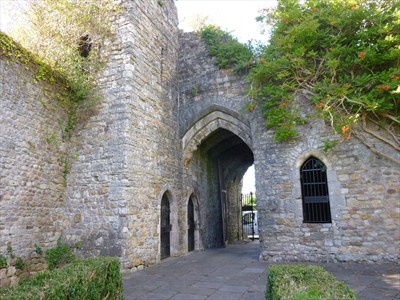
There was extensive and prolonged flooding in the West Country, particularly around Bristol. Hundreds of people drowned in flooding on the Somerset Levels, along with thousands of sheep and cattle, and one ship was found 15 miles inland. At Wells, Bishop Richard Kidder was killed when two chimneystacks in the palace fell on him and his wife, asleep in bed. This same storm blew in part of the great west window in Wells Cathedral. Major damage occurred to the south-west tower of Llandaff Cathedral at Cardiff. 2984b114-b46f-4eca-b7cf-b3b8fe5b3bb5

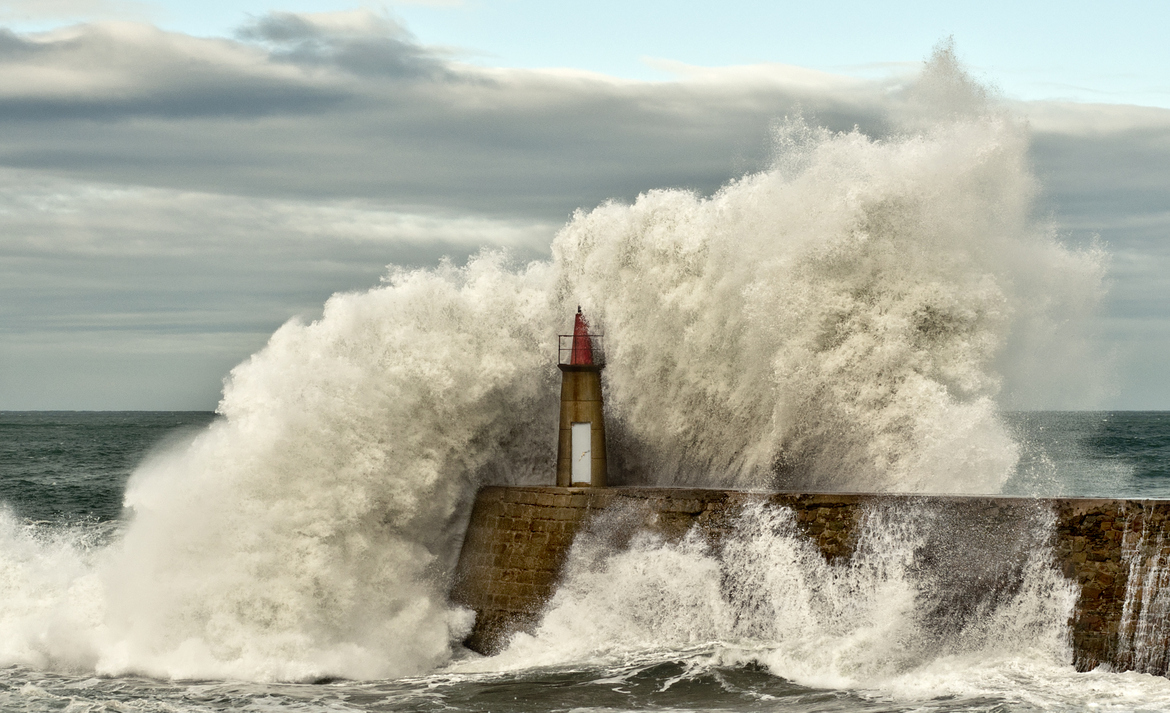
At sea, many ships (some of which were returning from helping Archduke Charles, the claimed King of Spain, fight the French in the War of the Spanish Succession) were wrecked, including on the Goodwin Sands, HMS Stirling Castle, HMS Northumberland, HMS Mary, and HMS Restoration, with about 1,500 seamen killed particularly on the Goodwins. Between 8,000 and 15,000 lives were lost overall. The first Eddystone Lighthouse off Plymouth was destroyed on 27 November 1703 (Old Style), killing six occupants, including its builder Henry Winstanley (John Rudyard was later contracted to build the second lighthouse on the site). 5 A ship torn from its moorings in the Helford River in Cornwall was blown for 200 miles before grounding eight hours later on the Isle of Wight. The number of oak trees lost in the New Forest alone was 4,000.

The storm of 1703 caught a convoy of 130 merchant ships and their Man of War escorts, the Dolphin, the Cumberland, the Coventry, the Looe, the Hastings and the Hector sheltering at Milford Haven. By 3 P.M. the next afternoon losses included 30 vessels.

Reaction
The storm, unprecedented in ferocity and duration, was generally reckoned by witnesses to represent the anger of God – in recognition of the “crying sins of this nation.” The government declared 19 January 1704 a day of fasting, saying it “loudly calls for the deepest and most solemn humiliation of our people.” It remained a frequent topic of moralizing in sermons well into the nineteenth century.

Literary
The Great Storm also coincided with the increase in English journalism, and was the first weather event to be a news story on a national scale. Special issue broadsheets were produced detailing damage to property and stories of people who had been killed.

Daniel Defoe produced his full-length book, The Storm, published in July 1704, in response to the calamity, calling it “the tempest that destroyed woods and forests all over England.” He wrote: “No pen could describe it, nor tongue express it, nor thought conceive it unless by one in the extremity of it.” Coastal towns such as Portsmouth “looked as if the enemy had sackt them and were most miserably torn to pieces.” Winds of up to 80 MPH destroyed more than 400 windmills. Defoe reported in some the sails turned so fast that the friction caused the wooden wheels to overheat and catch fire. He thought the destruction of the sovereign fleet was a punishment for their poor performance against the Catholic armies of France and Spain during the first year of the War of the Spanish Succession.

Thirteen Ships Lost in the Royal Navy
In the English Channel, fierce winds and high seas swamped some vessels outright and drove others onto the Goodwin Sands, an extensive sand bank situated along the southeast coast of England and the traditional anchorage for ships waiting either for passage up the Thames estuary to London or for favourable winds to take them out into the Channel and the Atlantic Ocean. The Royal Navy was badly affected, losing thirteen ships, including the entire Channel Squadron, and upwards of fifteen hundred seamen drowned.

**The third rate Restoration was wrecked on the Goodwin Sands; of the ship’s company of 387 not one was saved.
**The third rate Northumberland was lost on the Goodwin Sands; all 220 men, including 24 marines were killed.
**The third rate (battleship) Stirling Castle was wrecked on the Goodwin Sands. Seventy men, including four marine officers, were saved, but 206 men were drowned.
**The fourth rate Mary was wrecked on the Goodwin Sands. The captain and the purser were ashore, but Rear Admiral Beaumont and 268 other men were drowned. Only one man, Thomas Atkins, was saved. His escape was remarkable – having first seen the rear admiral get onto a piece of her quarter-deck when the ship was breaking up, and then get washed off again, Atkins was tossed by a wave into the Stirling Castle, which sank soon after. From the Stirling Castle he was swept into a boat by a wave, and was rescued.
**The fifth rate Mortar-bomb was wrecked on the Goodwin Sands and her entire company of 65 were lost.
**The sixth rate advice boat Eagle was lost on the coast of Sussex, but her ship’s company of 45 were all saved.
**The third rate Resolution was lost at Pevensey on the coast of Sussex; all her ship’s company of 221 were saved.
**The fifth rate Litchfield Prize was wrecked on the coast of Sussex; all 108 on board were saved.
**The fourth rate Newcastle was lost at Spithead. The carpenter and 39 men were saved, and the other 193 were drowned.
**The fifth rate fire-ship Vesuvius was lost at Spithead; all 48 of her ship’s company were saved.
**The fourth rate Reserve was lost by foundering off Yarmouth. The captain, the surgeon, the clerk, and 44 men were saved; the other 175 members of the crew were drowned.
**The second rate Vanguard was sunk in Chatham harbour. She was not manned and had no armament fitted; the following year she was raised for rebuilding.
**The fourth rate York was lost at Harwich; all but four of her men were saved.

Lamb (1991) claimed 10,000 seamen were lost in one night, a far higher figure, about 1/3 of all the seamen in the British Navy. Shrewsbury narrowly escaped a similar fate. Over 40 merchant ships were lost.

Posted in British history, buildings and structures, Great Britain, Living in the UK, weather | Tagged , | Comments Off on The Great Storm of 1703 ~ A Blow to the British Navy!

Do You Remember: “Little Boy” and “Fat Man”?

300px-Tibbets-wave On 6 August 1945 at 8:15 A.M., the Enola Gay released a uranium-charged bomb, nicknamed “Little Boy” over Hiroshima, an act which killed over 100,000 people. Three days later, another plane dropped a plutonium-charged atomic bomb, dubbed “Fat Man” upon Nagasaki. Another 40,000 lost their lives. On 15 August, Japan surrendered, bringing about an end to World War II.

The Enola Gay is a Boeing B-29 Superfortress bomber, named for Enola Gay Tibbets, the mother of the pilot, Colonel Paul Tibbets, who selected the aircraft while it was still on the assembly line. On 6 August 1945, during the final stages of World War II, it became the first aircraft to drop an atomic bomb. The bomb, code-named “Little Boy,” was targeted at the city of Hiroshima, Japan, and caused unprecedented destruction. Enola Gay participated in the second atomic attack as the weather reconnaissance aircraft for the primary target of Kokura. Clouds and drifting smoke resulted in Nagasaki being bombed instead.

After the war, the Enola Gay returned to the United States, where it was operated from Roswell Army Air Field, New Mexico. It was flown to Kwajalein for the Operation Crossroads nuclear tests in the Pacific, but was not chosen to make the test drop at Bikini Atoll. Later that year it was transferred to the Smithsonian Institution, and spent many years parked at air bases exposed to the weather and souvenir hunters, before being disassembled and transported to the Smithsonian’s storage facility at Suitland, Maryland, in 1961.

In the 1980s, veterans groups began agitating for the Smithsonian to put the aircraft on display. The cockpit and nose section of the aircraft were exhibited at the National Air and Space Museum (NASM) in downtown Washington, D.C., for the bombing’s 50th anniversary in 1995, amid a storm of controversy. Since 2003, the entire restored B-29 has been on display at NASM’s Steven F. Udvar-Hazy Center.

Enola Gay was personally selected by Colonel Paul W. Tibbets, Jr., the commander of the 509th Composite Group, on 9 May 1945, while still on the assembly line. The aircraft was accepted by the United States Army Air Forces (USAAF) on 18 May 1945 and assigned to the 393d Bombardment Squadron, Heavy, 509th Composite Group. Crew B-9, commanded by Captain Robert A. Lewis, took delivery of the bomber and flew it from Omaha to the 509th’s base at Wendover Army Air Field, Utah, on 14 June 1945.

Thirteen days later, the aircraft left Wendover for Guam, where it received a bomb-bay modification, and flew to North Field, Tinian, on 6 July. It was initially given the Victor (squadron-assigned identification) number 12, but on 1 August, was given the circle R tail markings of the 6th Bombardment Group as a security measure and had its Victor number changed to 82 to avoid misidentification with actual 6th Bombardment Group aircraft. During July, the bomber made eight practice or training flights, and flew two missions, on 24 and 26 July, to drop pumpkin bombs on industrial targets at Kobe and Nagoya. Enola Gay was used on 31 July on a rehearsal flight for the actual mission.

The partially assembled Little Boy gun-type nuclear weapon L-11 was contained inside a 41-inch (100 cm) x 47-inch (120 cm) x 138-inch (350 cm) wooden crate weighing 10,000 pounds (4,500 kg) that was secured to the deck of the USS Indianapolis. Unlike the six Uranium-235 target discs, which were later flown to Tinian on three separate aircraft arriving 28 and 29 July, the assembled projectile with the nine Uranium-235 rings installed was shipped in a single lead-lined steel container weighing 300 pounds (140 kg) that was securely locked to brackets welded to the deck of Captain Charles B. McVay III’s quarters. Both the L-11 and projectile were dropped off at Tinian on 26 July 1945.

200_Van-Kirk In an interview in 1995, Captain Theodore Van Kirk, the Enola Gay’s navigator, spoke of the moments following the release of the 10,000 pounds Little Boy. The plane lurched upward and picked up speed. “Almost everyone was mentally calculating to themselves how long it had been from the release. Some were thinking it might be a dud.” A brilliant light, “like a photographer’s flash,” finally came, followed closely by two intense shock waves. “The first one was like sheet metal cracking. We saw a large white cloud almost up to our altitude. Some people saw various colors in it near the base.” (Singer, Karen. Remember, June/July 1995, pp 14)

550_crew_6 Enola Gay‘s crew on 6 August 1945, consisted of 12 men. The crew was:
Colonel Paul W. Tibbets, Jr. – pilot and aircraft commander
Captain Robert A. Lewis – co-pilot; Enola Gay’s regularly assigned aircraft commander*
Major Thomas Ferebee – bombardier
Captain Theodore “Dutch” Van Kirk – navigator
Captain William S. Parsons, USN – weaponeer and mission commander.
First Lieutenant Jacob Beser – radar countermeasures (also the only man to fly on both of the nuclear bombing aircraft)
Second Lieutenant Morris R. Jeppson – assistant weaponeer
Technical Sergeant George R. “Bob” Caron – tail gunner*
Technical Sergeant Wyatt E. Duzenbury – flight engineer*
Sergeant Joe S. Stiborik – radar operator*
Sergeant Robert H. Shumard – assistant flight engineer*
Private First Class Richard H. Nelson – VHF radio operator*
Source: Campbell, Richard H. (2005). The Silverplate Bombers. Jefferson, North Carolina: McFarland & Company, Inc. ISBN 0-7864-2139-8. p. 30. Asterisks denote regular crewmen of the Enola Gay.

Nagasaki mission
For the Nagasaki mission, Enola Gay was flown by Crew B-10, normally assigned to Up An’ Atom:

Captain George W. Marquardt – aircraft commander
Second Lieutenant James M. Anderson – co-pilot
Second Lieutenant Russell Gackenbach – navigator
Captain James W. Strudwick – bombardier
Technical Sergeant James R. Corliss – flight engineer
Sergeant Warren L. Coble – radio operator
Sergeant Joseph M. DiJulio – radar operator
Sergeant Melvin H. Bierman – tail gunner
Sergeant Anthony D. Capua, Jr. – assistant engineer/scanner
Source: Campbell, 2005, p. 134.

Posted in Do You Remember? | Tagged , , , , | Comments Off on Do You Remember: “Little Boy” and “Fat Man”?

The Devil’s Footprints, a Devon Area Victorian Mystery

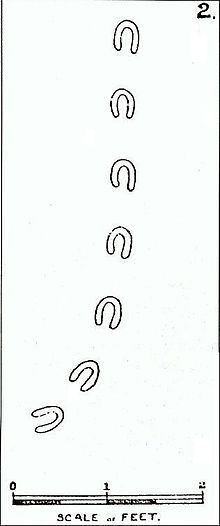
220px-Devonshire_Devil_Prints_1855 The Devil’s Footprints is a name given to a phenomenon that occurred in February 1855 around the Exe Estuary in East Devon and South Devon, England. After a heavy snowfall, trails of hoof-like marks appeared overnight in the snow covering a total distance of some 40 to 100 miles. The footprints were so called because some people believed they were the tracks of Satan, as they were allegedly made by a cloven hoof. Many theories have been put forward to explain the incident, and some aspects of its veracity have also been called into question.

Incident
On the night of 8–9 February 1855 and one or two later nights, after a heavy snowfall, a series of hoof-like marks appeared in the snow. These footprints, most of which measured around four inches long, three inches across, between eight and sixteen inches apart and mostly in a single file, were reported from over thirty locations across Devon and a couple in Dorset. It was estimated the total distance of the tracks amounted to between 40 and 100 miles. Houses, rivers, haystacks and other obstacles were travelled straight over, and footprints appeared on the tops of snow-covered roofs and high walls, which lay in the footprints’ path, as well as leading up to and exiting various drain pipes as small as four inches in diameter. From a news report:

“It appears on Thursday night last, there was a very heavy snowfall in the neighbourhood of Exeter and the South of Devon. On the following morning the inhabitants of the above towns were surprised at discovering the footmarks of some strange and mysterious animal endowed with the power of ubiquity, as the footprints were to be seen in all kinds of unaccountable places – on the tops of houses and narrow walls, in gardens and court-yards, enclosed by high walls and pailings, as well in open fields.”

The area in which the prints appeared extended from Exmouth, up to Topsham, and across the Exe Estuary to Dawlish and Teignmouth. R.H. Busk, in an article published in Notes and Queries in 1890, stated that footprints also appeared further afield, as far south as Totnes and Torquay, and there were other reports of the prints as far away as Weymouth (Dorset) and even Lincolnshire.

Evidence
There is little first-hand evidence of the phenomenon. The only known documents came to light after the publication in 1950 of an article in the Transactions of the Devonshire Association asking for further information about the event. This resulted in the discovery of a collection of papers belonging to Reverend H. T. Ellacombe, the vicar of Clyst St George in the 1850s. These papers included letters addressed to the vicar from his friends, among them the Reverend G. M. Musgrove, the vicar of Withycombe Raleigh; the draft of a letter to The Illustrated London News marked ‘not for publication’; and several apparent tracings of the footprints.

Over many years the noted researcher Mike Dash collated all the available primary and secondary source material into a paper entitled The Devil’s Hoofmarks: Source Material on the Great Devon Mystery of 1855 which was published in Fortean Studies in 1994.

Theories
Many explanations have been put forward for the incident. Some investigators are sceptical that the tracks really extended for over a hundred miles, arguing that no-one would have been able to follow their entire course in a single day. Another reason for scepticism, as Joe Nickell points out, is that the eye-witness descriptions of the footprints varied from person to person.[9]

In his Fortean Studies article, Mike Dash concluded there was no one source for the “hoofmarks”: some of the tracks were probably hoaxes, some were made by “common quadrupeds” such as donkeys and ponies, and some by wood mice. He admitted, though, that these cannot explain all the reported marks and “the mystery remains.”

Balloon
Author Geoffrey Household suggested “an experimental balloon” released by mistake from Devonport Dockyard had left the mysterious tracks by trailing two shackles on the end of its mooring ropes. His source was a local man, Major Carter, whose grandfather had worked at Devonport at the time. Carter claimed the incident had been hushed up because the balloon also wrecked a number of conservatories, greenhouses, and windows before finally descending to earth in Honiton.

While this could explain the shape of the prints, sceptics have disagreed about whether the balloon could have travelled such a random zigzag course without its trailing ropes and shackles becoming caught in a tree or similar obstruction.

Hopping Mice
Mike Dash suggested at least some of the prints, including some of those found on rooftops, could have been made by hopping rodents, such as wood mice. The print left behind after a mouse leaps resembles that of a cloven animal, due to the motions of its limbs when it jumps. Dash stated the theory that the Devon prints were made by rodents was originally proposed as long ago as March 1855, in The Illustrated London News.

Hysteria
It is also often suggested the footprints were merely a case of mass hysteria, caused by the sighting of various animal tracks and lumping them together as one.

Kangaroo
In a letter to the Illustrated London News in 1855, Rev. G. M. Musgrave wrote: “In the course of a few days a report was circulated that a couple of kangaroos escaped from a private menagerie (Mr. Fische’s, I believe) at Sidmouth.” It seems, though, nobody ascertained whether the kangaroos had escaped, nor how they could have crossed the Exe estuary, and Musgrave himself said he only came up with the story to distract his parishioners’ concerns about a visit from the devil:

I found a very apt opportunity to mention the name of kangaroo, in allusion to the report then current. I certainly did not pin my faith to that version of the mystery … but the state of the public mind of the villagers … dreading to go out after sunset … under the conviction that this was the Devil’s work … rendered it very desirable that a turn should be given to such a degraded and vitiated notion … and I was thankful that a kangaroo … [served] to disperse ideas so derogatory…
—Rev G. M. Musgrove: letter to The Illustrated London News
, 3 March 1855.

Badgers
In July 1855, a ‘Professor Owen’ put forward the theory that the footprints were from a badger, arguing the animal was ‘the only plantigrade quadruped we have in this island’ and it ‘leaves a footprint larger than would be supposed from its size’. The number of footprints, he suggested, were because ‘it is improbable that one badger only should have been awake and hungry’ and added that the animal was ‘a stealthy prowler and most active and enduring in search of food.’

Posted in British history, gothic and paranormal, legends and myths, Living in the UK, mystery, Victorian era | Tagged , | Comments Off on The Devil’s Footprints, a Devon Area Victorian Mystery

UK “Real” Estate: Tower Hill

The traditional East End of London plays a role in my latest Work in Progress, a cozy mystery with lots of twists and turns. Tower Hill is important to the story’s climax. Tower Hill is an elevated spot northwest of the Tower of London, in the London Borough of Tower Hamlets, just outside the City of London boundary.

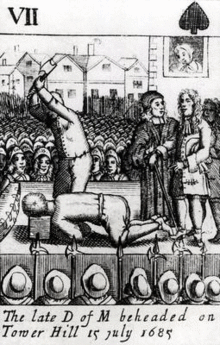
Depiction of the 1685 execution of Sir James Scott at Tower Hill in a popular print.

Depiction of the 1685 execution of Sir James Scott at Tower Hill in a popular print.

It was formerly an extra-parochial area known as Great Tower Hill. Historically it was the site of countless public executions and today it is notable for being the site of the Tower Hill Memorial.

The area is served by Tower Gateway DLR station and Tower Hill tube station. A road named Tower Hill forms a short stretch of the A3211 route between Byward Street in the west and a junction with Minories and Tower Hill Terrace in the east.

History
Settlement
One of the oldest parts of London, archaeological evidence shows that there was a settlement on the hill in the Bronze Age and much later a Roman village that was burnt down during the Boudica uprising. A nearby church, All Hallows-by-the-Tower, is known for fragments of Romanesque architecture dating back to AD 680; the church itself dates from 675.

Local Government
Great Tower Hill was an extra-parochial area within the Tower Liberty, under the direct administrative control of the Tower of London and outside the jurisdiction of the City of London and the county of Middlesex. In 1855 the area became part of the district of the Metropolitan Board of Works. The “District of Tower” became part of the Whitechapel District, under the authority of the Whitechapel District Board of Works. This was ambiguous and The Great Tower Hill Act 1869 was required to explicitly interpret it as Old Tower Without, including within it Great Tower Hill. The Tower Liberty was abolished in 1894 and incorporated into the County of London.

Executions
Public executions of high-profile traitors and criminals were often carried out on Tower Hill, including:

1381 – Simon Sudbury, Archbishop of Canterbury (beheaded by an angry mob)
1381 – Sir Robert Hales
1388 – Sir Simon de Burley
1388 – John de Beauchamp, 1st Baron Beauchamp
1397 – Richard Fitzalan, 11th Earl of Arundel
1440 – Rev. Richard Wyche, Vicar of Deptford
1462 – John de Vere, 12th Earl of Oxford
1462 – Aubrey de Vere, eldest son and heir of John de Vere, 12th Earl of Oxford
1462 – Sir Thomas Tuddenham
1462 – William Tyrrell
1462 – John Montgomery
1470 – John Tiptoft, 1st Earl of Worcester
1495 – Sir William Stanley
1497 – James Tuchet,a commander of the Cornish Rebellion of 1497
1499 – Edward Plantagenet, 17th Earl of Warwick
1502 – James Tyrrell
1510 – Edmund Dudley
1510 – Sir Richard Empson
1521 – Edward Stafford, 3rd Duke of Buckingham
1535 – John Fisher, Bishop of Rochester
1535 – Sir Thomas More, ex-Lord Chancellor
1536 – George Boleyn, brother of Anne Boleyn
1537 – Thomas Darcy, 1st Baron Darcy de Darcy
1538 – Henry Courtenay, Earl of Devon
1540 – Thomas Cromwell, Earl of Essex
1547 – Henry Howard, Earl of Surrey
1552 – Sir Ralph Vane
1552 – Sir Thomas Arundell of Wardour Castle
1552 – Edward Seymour, 1st Duke of Somerset
1554 – Sir Thomas Wyatt
1554 – Lord Guildford Dudley
1572 – Thomas Howard, 4th Duke of Norfolk
1601 – Sir Christopher Blount
1615 – Sir Gervase Helwys
1631 – Mervyn Tuchet, 2nd Earl of Castlehaven
1641 – Thomas Wentworth, 1st Earl of Strafford
1645 – William Laud, Archbishop of Canterbury
1651 – Christopher Love, Presbyterian minister
1662 – Sir Henry Vane
1683 – Col. Algernon Sidney
1685 – James Scott, 1st Duke of Monmouth
1716 – James Radclyffe, 3rd Earl of Derwentwater
1746 – William Boyd, 4th Earl of Kilmarnock
1746 – Robert Boyd (of Clan Boyd)
1747 – Simon Fraser, 11th Lord Lovat

Posted in British history, buildings and structures, Great Britain, Living in the UK, real life tales | Tagged , , | Comments Off on UK “Real” Estate: Tower Hill

UK Real Estate: Greenland Dock

In my current WIP (Work in Progress) one of the characters works in the timber business at Greenland Dock. Here is some interesting facts about Greenland Dock: Greenland Dock is the oldest of London’s riverside wet docks, located in Rotherhithe in the area of the city now known as Docklands. It used to be part of the Surrey Commercial Docks, most of which have by now been filled in. Greenland Dock is now used purely for recreational purposes; it is one of only two functioning enclosed docks on the south bank of the River Thames.

History
Howland Great Wet Dock

The dock was originally laid out between 1695-99 on land owned by the aristocratic Russell family of the 1st Duke of Bedford. The Russells had been given a portion of land in lower Rotherhithe by a wealthy Streatham landowner, John Howland, as part of a wedding dowry for his daughter Elizabeth, granddaughter of Sir Josiah Child – the dictatorial chairman of the East India Company, who married Wrothesley Russell, the Marquis of Tavistock. They immediately set about “improving” the rural property, obtaining parliamentary permission in 1695 to construct a rectangular dock with an area of about 10 acres (4.0 ha), capable of accommodating around 120 ships. It was named Howland Great Wet Dock in honour of John Howland. Designed by local shipwright, John Wells, the dock was intended to refit East India ships.

In a picture of about 1717, it can be seen in a rural setting some miles outside the (much smaller) city of London, lined with trees on three sides (to act as windbreaks) and with the Russell family’s mansion situated at the western end. Unlike the later docks, it was not built with cargo traffic in mind; it did not have walls, warehouses or other commercial facilities. Instead, it was promoted as being capable of accommodating ships” without the trouble of shifting, mooring or unmooring any in the dock for taking in or out any other.” It was essentially a re-fitting base where ships could be repaired and berthed in a sheltered anchorage. It was aided in this regard by its proximity to the dockyards at Deptford.

Whaling and Timber Trades

Manuscript plan of the Greenland Dock, 1763

Manuscript plan of the Greenland Dock, 1763

From the 1720s, Greenland whalers also used the dock and substantial blubber boiling houses were built to produce oil on the south side. Howland Great Wet Dock was sold by the fourth Duke of Bedford in 1763. Extensive usage by the Greenland whaling ships prompted the dock to be renamed Greenland Dock. However, this trade declined sharply by the start of the 19th century.

In 1806 the dock was sold to William Richie, a Greenwich timber merchant and founder of the Commercial Dock Company (1807). The Company built a series of additional docks and two new timber ponds to the north while rival companies built additional docks, leading to the jumble of harbours, canals and timber ponds. In 1865, the company merged with the neighbouring Surrey Docks to form the Surrey Commercial Docks, controlling some 80% of London’s timber trade.

Greenland Dock remained at the centre of London’s timber trade for well over a century to come. It was lined with warehouses and immense piles of timber or “deal wood”, which were maintained by the athletic deal porters. Much of the timber arrived aboard small sailing vessels from the Baltic region, although these were eventually displaced by large steamers.

Expansion and Decline
Between 1895-1904 Greenland Dock was greatly expanded by being extended at a cost of £940.000 to the west in a project carried out under Sir John Wolfe-Barry, the engineer who built Tower Bridge. More than doubling in length and nearly doubling in depth, in its final form, it covered an area of 22.5 acres (9.1 ha), with a depth of 31 feet (9.4 m) and a length of 2,250 feet (690 m), which cut straight across the old Grand Surrey Canal. It was also given a large lock, 550 feet (170 m) long, 80 feet (24 m) wide and 35 feet (11 m) deep. This renovation enabled the dock to take large cargo ships and even ocean-going liners. Cunard Line A-class vessels of as much as 14,000 tons, driven by large steam engines and carrying passengers and cargos in both directions, sailed regularly from Greenland Dock to the St. Lawrence River in Canada. They were considered huge ships for so far upstream and they had to be swung round in the river to enter the lock.

Unloading Timber at Greenland Dock, 1927

Unloading Timber at Greenland Dock, 1927

In 1909 the dock, along with all of the other London docks, was amalgamated into the Port of London under the management of the Port of London Authority.

In the same era as the big steamships there were, by contrast, the barques and barquentines of less than a tenth the size that brought timber from Finland: survivors of the age of sail with three or more masts and representatives of the Baltic side of the timber trade. Finland Quay, Swedish Quay, Norway Dock and Russia Dock were some of the names arising from what had been the original part of Rotherhithe’s timber trade.

Greenland Dock suffered greatly during World War II, when many of the warehouses were razed by German bombing and the great lock was rendered unusable due to bomb damage. It soon recovered after the war and enjoyed a brief resurgence of prosperity. However, technological changes in the shipping industry soon pushed the dock into a spiral of decline. The deal porters’ jobs were abolished from 1958 when timber started to be packaged. Not long afterwards, the shipping industry moved en masse to the system of containerization, which required bulk carriers far too large to be accommodated in the London docks. In 1970, the Surrey Commercial Docks were closed. Greenland Dock was sold to Southwark council.

Redevelopment

The Surrey Docks remained derelict for over a decade, with much of the warehousing demolished and over 90% of the docks filled in. Greenland Dock, which now belonged to the local authority, escaped this fate and in 1981 was handed over to the London Docklands Development Corporation. During this period the Inner London Education Authority ran a Surrey Docks Watersports Centre on the dock from a series of portable cabins at the Redriff Road end of the dock. It was at this centre many young people who would not have been exposed to sailing or canoeing were trained.

A masterplan was produced that advocated evicting the remaining industrial occupiers of the quaysides and transforming the dock into a residential area. This went ahead in the late 1980s despite some controversy, with seven residential developments being constructed on the site of the former warehouse complexes (and named after them; hence Swedish Yard became Swedish Quay, Brunswick Yard became Brunswick Quay, Baltic Yard became Baltic Quay and so on). Today the area is dominated by luxury residential developments, such as the Greenland Passage development and the gated New Caledonian Wharf. Additionally, a new watersports centre was constructed on the site of the former entrance to the now infilled Grand Surrey Canal. This has maintained the dock as a popular site for sailing, windsurfing, canoeing and even Chinese Dragon Boat racing.

The dock itself is still substantially intact, other than its former entrances and exits, all but one of which have been filled in or blocked. It still has a working connection to South Dock, which is now a marina, and it has a small marina of its own at its eastern end. There are no traces of the former warehouses, although many of the old capstans and some of the hydraulic machines on the quayside have been preserved.

The alternative comedian Malcolm Hardee drowned in the dock in 2005 while rowing to his houseboat, Sea Sovereign, from the floating pub he owned, the Wibbley Wobbley, which is moored at the Thames end of Greenland Dock.


Posted in British history, buildings and structures, Great Britain, Living in the UK | Tagged , | Comments Off on UK Real Estate: Greenland Dock

Georgian Era Thief Taker General, Jonathan Wild

imagesBetween 1674 and 1829, a British citizen witnessing a crime was legally obliged to apprehend the perpetrator if possible. At a minimum, one was expected to report the crime to a magistrate or other law official. The witness was also expected to join the “Hue and Cry” in pursuit of the felon. However, as the crimes became increasingly more violent and invasive, the general public of the 1700s turned to private “police officers.” Pardons were offered to accomplices for snitching on their former gang members. Rewards were offered for repeat offenders. Generally, half the value of the stolen goods was offered to those who caught the attackers. “Thief takers” were often thieves themselves. They organized gangs of robbers, fenced the stolen goods, returned parts of the goods to prove their worth as thief takers, and even turned in members of their own gangs to the authorities. Such men ignored parish boundaries to claim the bounty on the heads of offenders. (Jonathan Wild – Thief Taker General)

The authorities set a fee for burglary, highwaymen, and coiners at forty pounds per head plus a bonus of one hundred pounds “if the crime was committed within 5 miles of Charing Cross. A single capture in London would earn the thief taker the equivalent of 5 years earnings in average employment.” In addition, “any crime committed by the thief taker during his apprehension, was also pardoned.” (Jonathan Wild – Thief Taker Generalquote-i-only-came-to-serve-you-and-if-you-think-otherwise-i-must-let-you-know-that-you-are-mistaken-jonathan-wild-197896

The most famous of London’s thief takers was Jonathan Wild. Born in 1682, Wild began his early employment as a buckle maker. He abandoned his wife and child in the early 1700s to travel to London, only to be tossed into debtor’s prison. While in the prison, Wild courted those who could help him when he was released, including thieves and tradesmen. A few months before he was released, Wild took up with a prostitute named Mary Milliner. When they left prison, Mary became his mistress. Milliner held many contacts within London’s underbelly, contacts Wild would exploit.

While Mary entertained clients in dark alleys, Wild would rob her companions. They earned enough to purchase a public house known as the King’s Head, a place often frequented by other criminals. Wild would often buy his customers stolen goods and resale the items for a profit.hogarthcallthieftakers

Wild eventually set up an office in Newtoner’s Lane, where he took upon himself to recover the stolen goods for victims. Ironically, when a person hired Wild to recover his missing items, Wild either already had the items in his possession or he knew who did. He enjoyed stealing specific items and then returning them to their owners for a hefty reward. The thieves were paid by Wild for the stolen items, and Wild was paid by the victims for the items return. If one of his thieves was foolish enough to raise his voice against Wild, Wild would turn the man over to public officials, customarily conducted at Tyburn Tree. (Jonathan Wild – London’s First Organised Crime Lord)

As a London magistrate, Wild operated under the guise of an upstanding citizen. “Wild controlled an enormous syndicate of organized thieves. Those which had returned from the colonies for prior crimes were in a difficult position, work-wise. Jonathan Wild would recruit them and once they’d dabbled in criminal activity, he had them over a barrel. As former convicts they would be unable to give evidence against him in court, leaving him free to openly blackmail them. His protection racket operated under the legitimate umbrella of his social standing in the community – the upright citizen, the businessman, the magistrate. Wild attempted to become a freeman of the City of London (but failed) and was often seen patrolling the streets carrying a short silver staff as a badge of authority.” (Jonathan Wild – Thief Taker General)

wild3Wild effectively expanded his empire by dividing London into districts, each covered by one his gangs. He also created mobile gangs, which followed country fairs. Some of his employees specialized in highway robberies, while others dealt with small items of sentimental value for their owners, as well as prostitution. Wild dealt in “information.” He learned who to target and when to target his victims. Because he had built the persona of an upstanding citizen, his men could not speak out against him without knowing both Wild’s wrath and that of the general public. He kept his gangs in line with blackmail. He employed craftsmen to alter jewelry and artwork, as well as having warehouses where he stored stolen goods. Wild ran a sloop across the channel to transport stolen property to Europe and to import smuggled brand and lace. From the public, Wild was given the unofficial title of “Thief Taker General of Great Britain and Ireland.” (Jonathan Wild – Thief Taker General)

The authorities eventually passed the “Jonathan Wild Act,” but because Wild did not employ anyone directly, it was difficult to pin crimes upon him. He worked through a network of middlemen. The Act forced him to close his office, but he later petitioned the authorities for “freeman” status. Wild had “returned” stolen goods to many influential people, and they spoke in his defense. There was no denying the streets were less dangerous with Wild in control.

a ticket to Wild's hanging

a ticket to Wild’s hanging

“In 1724, Wild’s empire began to collapse. The captain of his sloop docked the value of a shipmate’s share of smuggled lace, and so began a tenuous link between Jonathan Wild and his criminal activities. Wild later sent a couple to Seven Dials to steal some lace, and then attempted to collect the reward from the shop owner. His further involvement in a riot to spring his former captain from Newgate Gaol, led to the authorities beating a path to his door. He was convicted under his own act and sentenced to execution at Tyburn.

The mob jeers Wild

The mob jeers Wild

“He attempted suicide the night before his handing by ingesting laudanum, but failed, and was taken to Tyburn Tree (where present day Marble Arch is) in a delirious state. En route he was jeered, booed, and pelted with faeces and dead cats & rats from some accounts and cheered like a hero from others (Daniel Defoe). Perhaps the largest crowd ever seen at Tyburn turned up, but there was no final speech from the heavily drugged Wild. He was the last to die from his group of four and cut down to prevent surgeons taking his body. He was buried in St Pancras churchyard, however, days later his body was exhumed, and the empty coffin was discovered in Kentish Town.

“A body washed up on the shore of the Thames near Whitehall, which due to its extremely hairy chest, many believed belonged to the missing Jonathan Wild. Many, however, alternatively suspected that body-snatchers, acting on behalf of experimental surgeons had successfully claimed the body from the coffin in Kentish Town. Whichever route it took, the skeleton of Jonathan Wild arrived at, and is still on display in the Hunterian Museum in Lincoln’s Inn, The City of London. “ (Jonathan Wild – Thief Taker General)

the-history-of-the-life-of-the-late-mr-jonathan-wild-the-greatThe name of Jonathan Wild has been immortalised in a book written 20 years after his death. The History of the Life of the Late Mr Jonathan Wild the Great by Henry Fielding is still available to buy. It can be downloaded from Project Gutenberg, as it is not covered by copyright. Mainly read by English Literature students, it should not be read as a biography, but as a political satire. jwild


About the Author:

Regina Jeffers is the author of Austen-inspired novels, including Darcy’s Passions, Darcy’s Temptation, Vampire Darcy’s Desire, Captain Wentworth’s Persuasion, The Phantom of Pemberley, Christmas at Pemberley, The Disappearance of Georgiana Darcy, Honor and Hope and The Mysterious Death of Mr. Darcy. She also writes Regency romances: The Scandal of Lady Eleanor, A Touch of Velvet, A Touch of Cashémere, A Touch of Grace, and The First Wives’ Club. A Time Warner Star Teacher and Martha Holden Jennings Scholar, Jeffers serves as a consultant in media literacy. Currently living outside Charlotte, North Carolina, she spends her time with her writing, gardening, and her adorable grandson.


Posted in British history, Georgian Era, holidays, Living in the UK, real life tales | Tagged , , , | Comments Off on Georgian Era Thief Taker General, Jonathan Wild

What is the Difference Between Heir Apparent and Heir Presumptive?

In my latest WIP (Work in Progress), one of the important characters is the “heir presumptive” to his brother. What does that mean, and how does it differ from “heir apparent”? In my story, Horace Lovelace is the third son of the Earl of Sandahl. The oldest son has passed in a freak accident. The second brother has succeeded to the title, but he has not produced a male heir; therefore, Horace, the third son, is the second son’s heir presumptive.

An heir apparent or heiress apparent is a person who is first in line of succession and cannot be displaced from inheriting, except by death or a change in the rules of succession.

An heir presumptive or heiress presumptive, by contrast, is someone who is first in line to inherit a title but whose claim can be displaced at any time (in legal terms, is “subject to divestiture”) upon the occurrence of one or more events or sets of events for which the system of inheritance allows, such as the birth of a more eligible heir.

Today these terms most commonly describe heirs to hereditary titles, particularly monarchies. They are also used metaphorically to indicate an “anointed” successor to any position of power, e.g., a political or corporate leader.

The phrase is only occasionally found used as a title, where it usually is capitalized (“Heir Apparent”). Most monarchies give (or gave) the heir apparent the title of Crown Prince or a more specific title, such as Prince of Orange in the Netherlands, Prince of Asturias in Spain, or Prince of Wales in the United Kingdom.

This article primarily describes the term heir apparent in a hereditary system regulated by laws of primogeniture—as opposed to cases where a monarch has a say in naming the heir.

Heir Apparent versus Heir Presumptive

In a hereditary system governed by some form of primogeniture, an heir apparent is easily identifiable as the person whose position as first in the line of succession is secure, regardless of future births. An heir presumptive, by contrast, can always be “bumped down” in the succession by the birth of somebody more closely related in a legal sense (according to that form of primogeniture) to the current title-holder.

Primogeniture is the right, by law or custom, of the firstborn male child to inherit the family estate, in preference to siblings (compare to ultimogeniture). In the absence of children, inheritance passed to collateral relatives, usually males, in order of seniority of their lines of descent. The eligible descendants of deceased elder siblings take precedence over living younger siblings, such that inheritance is settled in the manner of a depth-first search.

The principle has applied in history to inheritance of real property (land) as well as inherited titles and offices, most notably monarchies, continuing until modified or abolished.

Variations on primogeniture modify the right of the firstborn son to the entirety of a family’s inheritance or, in the West since World War II with the wider promotion of feminism, eliminate the preference for males over females. Most monarchies in Europe have eliminated male preference in succession: Belgium, Denmark, Luxembourg, Netherlands, Norway and Sweden. The United Kingdom passed legislation to establish gender-blind succession in 2013, but delayed implementation until the 15 other countries which share the same monarch affect similar changes in their succession laws.

The clearest example occurs in the case of a title-holder with no children. If at any time he produce children, they (the offspring of the title-holder) rank ahead of whatever more “distant” relative (the title-holder’s sibling, perhaps, or a nephew or cousin) previously was heir presumptive.

Many legal systems assume childbirth is always possible regardless of age or health. In such circumstances a person may be, in a practical sense, the heir apparent but still, legally speaking, heir presumptive. Indeed, when Queen Victoria succeeded her uncle King William IV, the wording of the proclamation even gave as a caveat:

“…saving the rights of any issue of his late Majesty King William IV, which may be born of his late Majesty’s consort.”

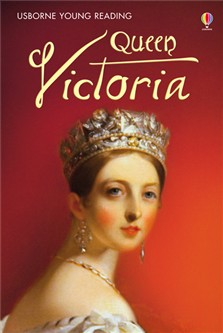
queen-victoriaThis provided for the possibility that William’s wife, Adelaide of Saxe-Meiningen, was pregnant at the moment of his death—since such a (so-named posthumous) child, if born and regardless of the gender of the child, would have displaced Victoria from the throne. Adelaide was 44 at the time, so pregnancy was possible even if unlikely.

Daughters in Male-Preference Primogeniture
Daughters (and their lines) may inherit titles that descend according to male-preference primogeniture, but only in default of sons (and their heirs). That is, both female and male offspring have the right to a place somewhere in the order of succession, but when it comes to what that place is, a female will rank behind her brothers regardless of their ages or hers.

Thus, normally, even an only daughter will not be her father’s (or mother’s) heiress apparent, since at any time a brother might be born who, though younger, would be heir apparent. Hence, she is an heiress presumptive.

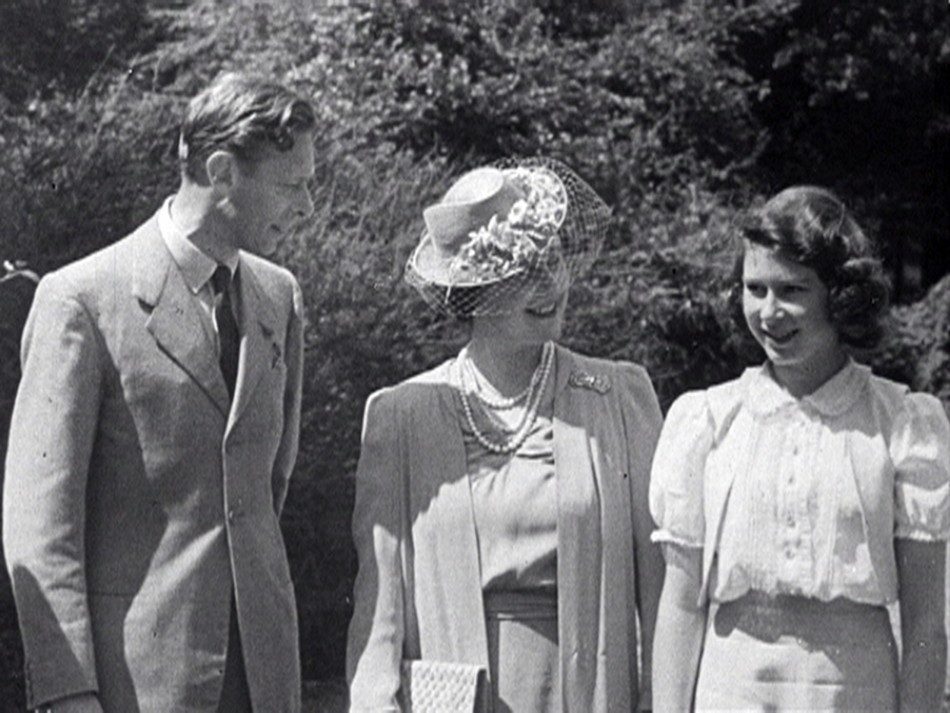
diamond-jubilee-weekend-queen-elizabeths-rare-pictures-releasedFor example, Queen Elizabeth II was heiress presumptive during the reign of her father, King George VI, because at any stage up to his death, George could have fathered a legitimate son.

Women as Heirs Apparent
In a system of absolute primogeniture that does not consider gender, female heirs apparent occur. Several European monarchies that have adopted such systems in the last few decades furnish practical examples. Crown Princess Victoria of Sweden, Princess Catharina-Amalia of the Netherlands, and Princess Elisabeth of Belgium are respectively the oldest children of Kings Carl XVI Gustaf, Willem-Alexander, and Philippe and are their heirs apparent.

Princess Ingrid Alexandra of Norway is heir apparent to her father (who is heir apparent to the Norwegian throne). Victoria was not heiress apparent from birth (in 1977), but gained the status in 1980 following a change in the Swedish Act of Succession. Her younger brother Carl Philip (born 1979) was thus heir apparent for a few months.

It was reported in October 2011 that discussions would take place between the heads of government of the Commonwealth realms aimed at changing the rules of succession to the 16 thrones of Elizabeth II to give equal rights to females. Following the CHOGM meeting, which took place in Perth, Australia, between 28–30 October 2011, it was announced that the rule change had the unanimous backing of all 16 member nations. However, the effects are not likely to be felt for many years; the first two heirs at the time of the agreement (Charles, Prince of Wales and his son Prince William, Duke of Cambridge) were already eldest born children, and in 2013, William’s first-born son Prince George of Cambridge became the next apparent successor.

But even in legal systems that apply male-preference primogeniture, female heirs apparent are by no means impossible: if a male heir apparent dies leaving no sons, but at least one daughter, then the eldest daughter would replace her father as heir apparent to whatever throne or title is concerned, but only when it has become clear that the widow of the deceased is not pregnant. Then, as the representative of her father’s line she would assume a place ahead of any more distant relatives. Such a situation has not to date occurred with the English or British throne; several times an heir apparent has died, but each example has either been childless or left a son or sons. However, there have been several female heirs apparent to British peerages (e.g. Frances Ward, 6th Baroness Dudley, and Henrietta Wentworth, 6th Baroness Wentworth).

In one special case, however, England and Scotland had a female heir apparent. The Revolution settlement that established William and Mary as joint monarchs in 1689 only gave the power to continue the succession through issue to Mary II, eldest daughter of the previous king, James II. William, by contrast, was to reign for life only, and his (hypothetical) children by a wife other than Mary would be placed in his original place (as Mary’s first cousin) in the line of succession – after Mary’s younger sister Anne. Thus, although after Mary’s death William continued to reign, he had no power to beget direct heirs, and Anne became the heir apparent for the remainder of William’s reign. She eventually succeeded him as Queen of England, Scotland and Ireland.

Displacement of Heirs Apparent
The position of an heir apparent is normally unshakable: it can be assumed they will inherit. Sometimes, however, extraordinary events—such as the death or the deposition of the parent—intervene.

People Who Lost Heir Apparent Status
Parliament deposed James Francis Edward Stuart, the infant son of King James II & VII (of England and Scotland respectively) whom James II was raising as a Catholic, as the King’s legal heir apparent—declaring that James had, de facto, abdicated— and offered the throne to James II’s oldest daughter, the young prince’s much older Protestant half-sister, Mary (along with her husband, Prince William of Orange). When the exiled King James died in 1701, his Jacobite supporters proclaimed the exiled Prince James Francis Edward as King James III of England and James VIII of Scotland; but neither he nor his descendents was ever successful in their bids for the throne.

220px-GustavSweden&VasaCrown Prince Gustav (later known as Gustav, Prince of Vasa), son of Gustav IV Adolf of Sweden, lost his place when his father was deposed and replaced by Gustav IV Adolf’s aged uncle, the Duke Carl, who became Charles XIII of Sweden in 1809. The aged King Charles XIII did not have surviving sons, and Prince Gustav was the only living male of the whole dynasty (besides his deposed father), but the prince was never regarded as heir of Charles XIII, although there were factions in the Riksdag and elsewhere in Sweden who desired to preserve him, and, in the subsequent constitutional elections, supported his election as his great-uncle’s successor. Instead, the government proceeded to have a new crown prince elected (which was the proper constitutional action, if no male heir was left in the dynasty), and the Riksdag elected first August, Prince of Augustenborg, and then, after his death, the Prince of Ponte Corvo (Marshal Jean-Baptiste Bernadotte).

Prince Carl Philip of Sweden, at his birth in 1979, was heir apparent to the throne of Sweden. A year later a change in that country’s succession laws instituted absolute primogeniture, and Carl Philip was supplanted as heir apparent by his elder sister Victoria.

Breaching Legal Qualification of Heirs Apparent
In some jurisdictions, an heir apparent can automatically lose that status by breaching certain constitutional rules. Today, for example:

**a British heir apparent would lose this status if he became a Catholic or married a Catholic. According to The Act of Settlement, the loss of any place in the succession would persist even if he later renounced Catholicism or if his Catholic spouse were to pre-decease him. This is the only religion-based restriction on the heir-apparent. However, as of October 2011, the governments of the 16 Commonwealth realms—of which Queen Elizabeth II is monarch—have agreed to remove the restriction on marriage to a Catholic.
**a Swedish Crown Prince or Crown Princess would lose heir apparent status, according to the Act of Succession, if they marry without approval of the monarch and the Government, abandoned the “pure Evangelical faith”, or accepted another throne without the approval of the Riksdag.
**a Dutch Prince or Princess of Orange would lose status as heir to the throne if he or she married without the approval of the States-General, or simply renounced the right.
**a Spanish Prince of Asturias would lose status if he married against the express prohibition of the monarch or the Cortes.
**a Belgian Crown Prince or Princess would lose heir apparent status if he or she married without the consent of the monarch, or became monarch of another country.
**a Danish Crown Prince or Princess would lose status if he or she married without the permission of the monarch. When the monarch grants permission for a dynast to enter marriage, he/she may set conditions that must be met for the dynast to gain/maintain a place in the line of succession; this also applies for Crown Princes/Princesses.

Posted in British history, customs and tradiitons, Great Britain, Living in the UK, political stance, real life tales | Tagged , | 6 Comments

The Hammersmith Ghost: Legal Precedent in the UK Regarding Self-Defence

220px-Hammersmith_GhostThe Hammersmith Ghost murder case of 1804 set a legal precedent in the UK regarding self-defence: whether someone could be held liable for their actions even if they were the consequence of a mistaken belief.

Near the end of 1803, a number of people claimed to have seen and even been attacked by a ghost in the Hammersmith area of London, a ghost believed by locals to be the spirit of a suicide victim. On 3 January 1804, a member of one of the armed patrols set up in the wake of the reports shot and killed a plasterer, Thomas Millwood, mistaking the white clothes of Millwood’s trade for a ghostly apparition. The culprit, a 29-year-old excise officer named Francis Smith, was found guilty of murder and sentenced to death, commuted to one year’s hard labour.

The issues surrounding the case were not settled for 180 years, until a Court of Appeal decision in 1984.

Death of Thomas Millwood
In late 1803 a number of people claimed to have seen, and some to have been attacked by, a ghost in the Hammersmith area. Local people said the ghost was of a man who had committed suicide the previous year, and had been buried in Hammersmith churchyard. The contemporary belief was that suicide victims should not be buried in consecrated ground, as their souls would not then be at rest.

On 3 January 1804 one of the armed citizens patrolling the area, 29-year-old excise officer Francis Smith, shot and killed a white figure in Black Lion Lane, plasterer Thomas Millwood, who was wearing the normal white clothing of his trade: “linen trowsers [sic] entirely white, washed very clean, a waistcoat of flannel, apparently new, very white, and an apron, which he wore round him.”

Trial of Francis Smith
Smith was tried for willful murder. One witness, a Mrs. Fulbrooke, stated she had warned the deceased to cover his white clothing with a greatcoat, as he had already been mistaken for the ghost on a previous occasion.

On Saturday evening, he and I were at home, for he lived with me; he said he had frightened two ladies and a gentleman who were coming along the terrace in a carriage, for that the man said, he dared to say there goes the ghost; that he said he was no more a ghost than he was, and asked him, using a bad word, did he want a punch of the head; I begged of him to change his dress; Thomas, says I, as there is a piece of work about the ghost, and your cloaths [sic] look white, pray do put on your great coat, that you may not run any danger;
—Mrs. Fulbrooke’s testimony at the Old Bailey trial

Millwood’s sister testified that although Smith had called on her brother to stop or he would shoot, Smith discharged the gun almost immediately. Despite a number of declarations of Smith’s good character, the chief judge, Lord Chief Baron Macdonald, advised the jury that malice was not required of murder, merely an intent to kill:

I should betray my duty, and injure the public security, if I did not persist in asserting that this is a clear case of murder, if the facts be proved to your satisfaction. All killing whatever amounts to murder, unless justified by the law, or in self-defence. In cases of some involuntary acts, or some sufficiently violent provocation, it becomes manslaughter. Not one of these circumstances occur here.
—Lord Chief Baron Macdonald

The accused had not been directly provoked, nor made any attempt to apprehend the supposed ghost, therefore Macdonald directed the jury to find the accused guilty of murder if they believed the facts presented by the witnesses. After considering for an hour, the jury returned a verdict of manslaughter. Macdonald informed the jury that “the Court could not receive such a verdict,” and that they must either find Smith guilty of murder, or acquit him: that Smith believed Millwood to be a ghost was irrelevant. The jury then returned with a verdict of guilty. After passing the customary sentence of death, Macdonald stated his intent to report the case to the king, who had the power to commute the sentence.

The initial sentence of hanging and dissection was commuted to a year’s hard labour. The huge publicity given to the case had meanwhile persuaded the true culprit to come forward—John Graham, an elderly shoemaker. He had been pretending to be a ghost by using a white sheet to frighten his apprentice, who had been scaring the Graham children with ghost stories.

Effect on UK Law
The question of whether acting on a mistaken belief was a sufficient defence to a criminal charge was debated for more than a century until it was clarified at the Court of Appeal in the case R. v Williams (Gladstone) (1984), concerning an appeal heard in November 1983. The appellant, Gladstone Williams, had seen a man dragging a younger man violently along the street whilst the latter shouted for help. Mistakenly believing an assault was taking place, he intervened and subsequently injured the purported assailant, who was actually attempting to apprehend a suspected thief. Williams was subsequently convicted of assault occasioning actual bodily harm. At the appeal, Lord Chief Justice Lane referred to the previous debate;

(the case) raised issues of law which have been the subject of debate for more years than one likes to think about and the subject of more learned academic articles than one would care to read in an evening.
—Lord Chief Justice Lane

Lane went on to clarify the problematic issue;

In a case of self-defence, where self-defence or the prevention of crime is concerned, if the jury came to the conclusion that the defendant believed, or may have believed, that he was being attacked or that a crime was being committed, and that force was necessary to protect himself or to prevent the crime, then the prosecution have not proved their case. If however the defendant’s alleged belief was mistaken and if the mistake was an unreasonable one, that may be a peaceful reason for coming to the conclusion that the belief was not honestly held and should be rejected. Even if the jury come to the conclusion that the mistake was an unreasonable one, if the defendant may genuinely have been labouring under it, he is entitled to rely upon it.
—Lord Chief Justice Lane

The appeal was allowed, and the conviction quashed. The decision was approved by the Privy Council in Beckford v The Queen (1988) and was later written into law in the Criminal Justice and Immigration Act 2008, Section 76.

Posted in British history, Great Britain, legends and myths, Living in the Regency, Living in the UK, mystery, real life tales, Regency era, Regency personalities | Tagged , , , , | Comments Off on The Hammersmith Ghost: Legal Precedent in the UK Regarding Self-Defence