Movie Discussion ~ 1995’s Pride and Prejudice

Actions Speak Louder Than Words: Movie Discussion of Pride and Prejudice 1995

In reading Jane Austen, one can easily imagine the Austen children acting out a play created by the boisterous Jane. Her novels have all the elements of drama: a small cast, limited settings, and no special effects. In this manner, Austen writes cinematic novels – those easily adapted to the screen. We find in Austen’s works very precise stage directions (“Darcy shook his head in silent acquiescence.”) and characters who disclose their inner lives through dramatic interactions with others. Translation: Austen writes telling dialogue. I spent many years in teaching theatre and acting, as well as being a major media literacy proponent. I love dissecting scenes and actions. Therefore…

Today, we discuss Andrew Davies 1995 adaptation of Pride and Prejudice and, specifically, Colin Firth’s portrayal of Fitzwilliam Darcy. I do not wish to debate who was “the best Darcy.” What I wish to discuss is how Davie created the image of Darcy. Firth once said, “What Darcy doesn’t say” is as important as what he does say. As viewers, we observe Darcy looking disapprovingly at all the Meryton residents. He puts distance between himself and others. We watch Firth observe Jennifer Ehle’s character, and we have no doubt that as Darcy, Elizabeth Bennet’s disregard for him piques his interest. In reality, Firth has few lines in the first half of the series; yet, he “speaks” to us. He must convey Darcy’s thoughts and attitude with a raise of an eyebrow or a tightening of a jaw line.

Davies creates scenes and emotions (not expressed in the novel) to “flush out” Darcy’s character. In truth, Darcy is a MAJOR  minor character. In the novel, he meets Elizabeth at Michaelmas (the end of September) and is at Netherfield until the ball (end of November). Darcy then does not see Elizabeth until Easter at Rosings Park. They are together a fortnight before the disastrous first proposal separates them once more, leaving the suspense to build to the fateful meeting at Pemberley during the first week of August. In other words, he has been in her company three months spread over a year before his second proposal. Yet, Davie was smart enough to know that the dominant female audience would want to see Darcy fall in love with Elizabeth Bennet.

In the first half (up to the first proposal), Firth is invariably shown leaning against a mantle (usually with a mirror above) or staring out a window. Both stances are done in profile, indicating he is shutting himself off from new experiences and new people – it is his distancing technique. Even at the Meryton assembly, Firth is shot in profile when he meets the Bennet sisters for the first time. Also, at the party at Lucas Lodge, Darcy remains in profile by a mirror. (Notice that he is seen reflected in an opposite mirror. I love those types of shots for they tell the story so well!) At Netherfield, Darcy remains in profile at the window as the Bingley sisters discuss Elizabeth.
We do not see Firth in full face until the scene about an “accomplished lady.” He stares at an unseen object/person, which we viewers assume is Elizabeth. This is a pivotal point in our definition of Darcy. He is watching Elizabeth, but we are watching him watch her. Immediately following this telling scene, Davies adds an unscripted Austen scene: Darcy is in his bath. When he steps to the window to observe Elizabeth with the dog, again we watch him observe her. Did you not develop an opinion of Darcy’s growing affections for Elizabeth without Davies telling you so in words? A simple visual effect told the story.

From the bath scene onward, Darcy spends a great deal of time observing Elizabeth. This provides the viewer with characterization, but it was also a manipulative film technique to hook the obvious female audience. It was a glamorized framing of Firth as Darcy – offering him up to the feminine belief in true love. Even when Darcy returns to profile while he watches Elizabeth and Jane leave Netherfield, we know he observes her with growing interest. We automatically interpret his gaze.

From Elizabeth’s departure from Netherfield and up to the first proposal, Darcy retreats to the profile, indicating he is fighting his attraction for Elizabeth. At the Netherfield ball, we first discover Darcy in profile before he turns to look upon Elizabeth. At the Hunsford parsonage, he sits in profile when he visits with her and the Collinses, along with Col. Fitzwilliam. In the first proposal, he is back standing before a mirror; he moves in profile after the rejection and then returns to the mirror. All of this staring out windows and standing before mirrors is the filmmaker’s way of telling the viewers that Darcy’s character has never looked at his true self nor at Elizabeth as a true choice for a partner.
Davies displays Darcy’s sexual attractiveness, revealing the character as a sensitive man, as well as a physically fit one. Sensitivity is shown when he embraces a distraught Georgiana after her aborted elopement and with his distress when he discovers at Lambton Elizabeth’s grief over Lydia’s actions. Physically, this Darcy rides, hunts, fences, fishes, and swims. Although Darcy disappears from the novel for some time after the first proposal, Davies keeps the sexual tension by showing us Darcy fencing to fight his growing need for Elizabeth and then cooling his desires in the lake. Note that the fencing scene comes right before we first see Pemberley. It tell us who Darcy is, not what he owns.

When Darcy writes Elizabeth the letter of explanation (the beginning of the second half of this series), his anger and mortification is conveyed to the viewers through a man in shirt sleeves, with disheveled hair, and a grim countenance. He labors over the writing. This second half of the series creates a “new” Darcy. Even the opening shot (his leaving the parsonage) shifts the focus from Elizabeth to Darcy. Davies’ adaptation follows Austen’s book faithfully in most respects, except with Darcy. Those visual images to which we are introduced emphasize Darcy’s emotional rollercoaster. We are teased with an image of Wickham’s debauchery followed by the section of the letter where we shift scenes from Darcy’s writing to Elizabeth’s reading, creating sexual attraction.
Davies created an image of a determined Darcy, seeking Wickham and Lydia in London. Darcy is kept in our mind’s eye with images of this calculated search. Darcy buys information on the street from a penniless waif. He nearly forces his way into Mrs. Younge’s home. Later, we see Darcy standing up with Wickham at the church. Davies keeps Darcy’s character in the viewers’ minds even without Austen telling us these things. Note how Davies alternates between Elizabeth’s staring at Darcy’s portrait and Darcy’s dip in the lake. This alternation builds tension for their meeting.
When Darcy returns to Longbourn, he reverts to that stiff, proud character. Again, he is seen in profile before he stares out the window. However, it is not just Darcy who reverts. Think how Elizabeth is once again embarrassed by her mother during Bingley’s proposal, during Lady Catherine’s visit, and with their first walk out together. Returning the characters to an earlier behavior builds suspense.
At the Netherfield ball (one of 15 different dances in this adaptation), there is a sense of challenge between Darcy and Elizabeth. Firth actually said of the scene, “We see an honesty and a playfulness in Elizabeth, while there’s something slightly comical about Darcy’s trying to maintain his formal manner while holding up his end of the repartee. She’ll say something that stings him, and he has an entire eight-step circle to do before he is permitted to respond.” (pg. 102 of The Making of Pride and Prejudice by Sue Birtwistle and Susie Conklin)
So, what did you think? Did you learn something new today? Are there similar secrets you might share with the rest of us? I could go on and on, and we will discuss other facets of this adaptation later because it is one of the most successful ones.  One thing you will find about me is that I love movie trivia!!!
Posted in film, Jane Austen | Tagged , , | 4 Comments

Universal Themes and Jane Austen: First Impressions

Universal Themes and Jane Austen: First Impressions

Have you ever met someone with whom you have corresponded several times (Facebook, Twitter, phone, or the old-fashioned way by a letter) only to be surprised by his/her appearance? He/She looks nothing like what you anticipated. First impressions are hard pressed upon our memory, and they are not easily abandoned. My vanity (Remember that Austen says there is a difference between pride and vanity. “Pride relates more to our opinion of ourselves; vanity to what we would have others think of us.”) leads me to hope that those I have not met previously will find me congenial, and that I will not be a disappointment (not of the nature they had first anticipated).

500fullAs we all know, “First Impressions” was the original title for Jane Austen’s “Pride and Prejudice.” First Impressions is also the theme of this classic novel. From the first line to the end, Austen reminds us over and over that First Impressions are often false ones. They are mistaken impressions. I often say that Austen hits her readers over the head with examples of false impressions. Miss Austen was a master of theme.

“It is a truth universally acknowledge, that a single man in possession of a good fortune, must be in want of a wife.” This famous first line in a tongue-in-cheek statement of potential theme, but the reader quickly learns that Mr. Darcy is not in want of a wife. In fact, he has likely come to Netherfield to “escape” the London Season. Obviously, with his wealth and family name, Darcy could have his choice of women. He certainly is not desperate enough to pursue a woman of poor connections and little dowry. This line sets the tone of irony for the novel. In reality, it is the mothers and single daughters of the community who are in “want” of a rich husband.

“I am sick of Mr. Bingley,” cried his wife. This line is a bit misleading. It is well matched with Mrs. Bennet’s later profession when her sister, Mrs. Philips, brings news of Bingleys return to Netherfield. The lady says, “Well, so much the better. Not that I care about it, though. He is nothing to us, you know, and I am sure I never want to see him again.” Mrs. Bennet’s obsession is finding her daughters husbands before the entail sends the family into penury. Of course, she is concerned with what happens to the richest man in the community.

Within her letter to Elizabeth regarding Darcy’s involvement in settling the scandal of Lydia’s elopement, Mrs. Gardiner says, “He generously imputed the whole of his mistaken pride, and confessed that he had before thought it beneath him, to lay his private actions open to the world. His character was to speak for itself.” Darcy’s character does speak for itself, but not in the way Elizabeth originally thought of him.

Of Mr. Darcy’s first appearance in Meryton, we learn, “…Mr. Darcy soon drew the attention of the room by his fine, tall person, handsome features, noble mien; and the report which was in general circulation within five minutes after his entrance, of his having ten thousand a year.” Later in the same paragraph, the reader’s first impression of Darcy is quickly altered. “The gentlemen pronounced him to be a fine figure of a man, the ladies declared he was much handsomer than Mr. Bingley, and he was looked at with great admiration for about half the evening, till his manners gave a disgust, which turned the tide of his popularity; for he was discovered to be proud, to be above his company, and above being pleased, and not all his large estate in Derbyshire could then save him from having a most forbidding, disagreeable countenance, and being unworthy to be compared with his friend.” Austen has manipulated her readers. Our Jane has assured that we will not see through Darcy’s façade. We are ready to believe Elizabeth’s false impressions of the man, who will eventually win her heart.

Elizabeth is the first daughter that is mentioned in the story line. She is also the first one to speak. That is Austen’s way to introduce her readers to the main character of the story. Mr. Bennet says of Elizabeth, “They have none of them much to recommend them,” replied he. “They are all silly and ignorant little girls; but Lizzy has something more of quickness than her sisters.” Mr. Bennet praises Elizabeth’s intelligence, and the reader believes what the man says. Yet, Elizabeth believes all the falsehoods about Darcy and sets upon them the disaster that could have ruined her family. In fact, it is the mild-mannered Jane Bennet who recognizes Darcy’s true worth long before her sister. However, even as Jane declares Darcy incapable of the deceit that Wickham has shared of his life at Darcy’s hand, neither the reader, nor Elizabeth believes her because “Lizzy has something more of quickness than her sisters.”

Mrs. Bennet says of her second daughter, “Lizzy is not a bit better than the others; and I am sure she is not half so handsome as Jane, nor half so good-humored as Lydia.” Again, this is our first impression of Elizabeth from her mother’s lips. Yet, we know that Elizabeth possesses so much more depth of character than either Jane or Lydia.

Darcy’s says of Elizabeth, “She is tolerable, but not handsome enough to tempt me.” Oh, poor delusional Darcy!!!

pride_and_prejudice_46231_mediumOur first impression of Mr. Wickham says, “This was exactly as it should be; for the young man wanted only regimentals to make him completely charming. His appearance was greatly in his favour; he had all the best part of beauty, a fine countenance, a good figure, and a very pleasing address.” Now, if we astute readers, we would have compared this description of Wickham with the earlier one of Darcy. If we were incorrect in our first impression of a man of Darcy’s consequence, how could we be correct about the put-upon Mr. Wickham? Oh, we are so gullible, and Austen used our gullibility to mislead us once again.

At the Netherfield Ball, Elizabeth says of Darcy, “Merely to the illustration of your character,” said she, endeavouring to shake off her gravity. “I am trying to make it out.” Although she claims to have taken an interest in Darcy’s character, Elizabeth, in reality, only wishes to confirm her earlier first impressions of the man. The exchange actually speaks more to Elizabeth’s negativity and impetuosity than it does of Darcy’s character.

So, Darcyholic visitors, where are there other examples of “Mistaken First Impressions” in Pride and Prejudice? Add a few below in your comments. (By the way, I’ll leave you with another enticing “first impression.” My next Austen release will be The Prosecution of Mr. Darcy’s Cousin. Did I earn your attention with that one?

Posted in excerpt, Great Britain, Jane Austen, Regency era, word play, writing | Tagged , , , | Comments Off on Universal Themes and Jane Austen: First Impressions

Maria Fagniani, Marchioness of Hertford and Regency Era Eccentric

Miniature Maria Fagnani, 3rd Marchioness of Hertford Richard Cosway (1742 - 1821) England 1791 Painted on ivory Image size: 7.6 x 6.3 cm Signature: 'R.d. Cosway / R.A. / Primarius Pictor /Serenissimi Walliae / Principis / Pinxit / 1791' In ink Inscription: 'Maria Fagniani by Cosway 1791.' Engraved Credit line: Presented by The Art Fund 2007.2 Boudoir Cabinet  http://wallacelive.wallacecollection.org/eMuseumPlus?service=ExternalInterface&module=collection&objectId=64536&viewType=detailView

Miniature
Maria Fagnani, 3rd Marchioness of Hertford
Richard Cosway (1742 – 1821)
England
1791
Painted on ivory
Image size: 7.6 x 6.3 cm
Signature: ‘R.d. Cosway / R.A. / Primarius Pictor /Serenissimi Walliae / Principis / Pinxit / 1791’ In ink
Inscription: ‘Maria Fagniani by Cosway 1791.’ Engraved
Credit line: Presented by The Art Fund
2007.2
Boudoir Cabinet http://wallacelive.wallacecollection.org/eMuseumPlus?service=ExternalInterface&module=collection&objectId=64536&viewType=detailView

The mistresses of the Prince Regent and his brothers were as well known. The Duke of Clarence, for example, sired ten children with Mrs Jordan, and the Duke of York’s relationship with Mary Anne Clarke caused a major scandal over army commissions. The Duke of Cumberland had rumors of incest, which followed him about. Most of the by-blows sired by upper class families were given the family surname and brought up in the same household as were the legitimate heirs. Occasionally, to avoid scandal, the child was born abroad and at an appropriate age reappeared in England to find a generous “Godfather.”

Maria Fagniani was one such child. She was the daughter of the Marchesa Fagniani, a woman known for bestowing her favors on a variety of gentlemen. Three men claimed Maria as his child. The first of those was the Marchese. The others included Lord March (later the Duke of Queensberry) and George Selwyn. Selwyn left Maria £20,000 pounds as an inheritance. The Duke left her £100,000. At age one and twenty, Mie-Mie married Lord Yarmouth, a man whose reputation was as rakish as her fathers.

Maria Emilia Fagnani (24 August 1771 – 2 March 1856) was the Marchioness of Hertford.

Maria was illegitimate. Born in the 1770s, most likely, she was the daughter of Costanza Brusati, the Italian Marchesa Fagnani, and of either –

William Douglas, 4th Duke of Queensberry(1724–1810), who was famously detested by Robert Burns.
George Selwyn (1719–1791), a prominent Tory and lover of Grace Elliott. He was also a member of the Satanic Hellfire Club.
George Selwyn’s butler.
Marchese Fagniani
Each of these men believed himself to be her father and left her very large legacies.

On 18 May 1798, Maria married Francis Seymour-Conway, Earl of Yarmouth (1777–1842), the son of the Second Marquess and Isabella Ingram-Shepheard. The Marchioness was the daughter of the Viscount Irvine, and the mistress of the Prince of Wales.

By 1802 they were estranged, and she lived in Paris for the rest of her life. Their children included:

Lady Francis Maria Seymour-Conway (d. 1822)
Captain Richard Seymour-Conway, 4th Marquess of Hertford (1800–1870)
Lord Henry Seymour-Conway (1805–1859)
When George III was insane, he announced that he was going to take Lady Yarmouth as his mistress.

Later, the Marquess inherited his title in 1822. He died in 1842. The dowager Marchioness died in 1856 in Paris.

Willaim Makepeace Thackery parodied her husband as the Marquess of Steyne in his masterpiece, Vanity Fair.

Posted in British history, George IV, Great Britain, Inheritance, Living in the Regency, Living in the UK, real life tales, Regency era, Regency personalities | Tagged , , , , , , , , , | 2 Comments

Henry ‘Orator’ Hunt, British Radical of the Industrial Age

NPG 956,Henry Hunt,by Adam Buck Henry “Orator” Hunt (6 November 1773–15 February 1835) was a British radical speaker and agitator, who advocated parliamentary reform and the repeal of the Corn Laws.

Because of his rousing speeches at mass meetings held in Spa Fields in London in 1816-17, he became known as the ‘Orator,’ a term of disparagement accorded by his enemies. He embraced a programme that included annual parliaments and universal suffrage, promoted openly and with none of the conspiratorial element of the old Jacobin clubs. The tactic he most favored was that of ‘mass pressure,’ which he felt, if given enough weight, could achieve reform without insurrection.

Although his efforts at mass politics had the effect of radicalizing large sections of the community unrepresented in Parliament, there were clear limits as to how far this could be taken. Invited by the Patriotic Union Society, formed by the Manchester Observer, to be one of the scheduled speakers at a rally in Manchester on 16 August 1819, it became the Peterloo Massacre. Arrested and convicted, the incident cost him more than two years in prison.

The debacle at Peterloo, caused by an overreaction of the local Manchester authorities, added greatly to his prestige, but it advanced the cause not one step. Moral force was not sufficient in itself, and physical force entailed too great a risk. Although urged to do so after Peterloo, Hunt refused to give his approval to schemes for a full-scale insurrection. Thereby all momentum was lost, as more desperate souls turned to worn out cloak-and-dagger schemes, which surfaced in the Cato Street Conspiracy.

While in prison for his part in Peterloo, Hunt turned to writing, to putting his message across through a variety of forms, including an autobiography. After his release he attempted to recover some of his lost fortune by beginning new business ventures in London, which included the production and marketing of a roasted corn Breakfast Powder, the “most salubrious and nourishing Beverage that can be substituted for the use of Tea and Coffee, which are always exciting, and frequently the most irritating to the Stomach and Bowels.” He also made shoe-blacking bottles, which carried the slogan “Equal Laws, Equal Rights, Annual Parliaments, Universal Suffrage, and the Ballot.” Synthetic coal, intended specifically for the French market, was another of his schemes. After the July Revolution in 1830 he sent samples to Gilbert du Motier, Marquis de La Fayette and other political heroes, along with fraternal greetings.

In his opposition to the Reform Bill Orator Hunt revived the Great Northern Union, a pressure group he set up some years before, intended to unite the northern industrial workers behind a platform of full democratic reform; and it is in this specifically that the germs of Chartism can be detected. Worn out by his struggles he died in 1835.

A monument to Hunt was erected in 1842 by “the working people,” in Every Street, Manchester, in Scholefield’s Chapel Yard. A “spiral” march was held on the anniversary of Peterloo, from Piccadilly around the town past the Peterloo site, down to Deansgate and through Ancoats to the monument. The monument’s stonework deteriorated and it was demolished in 1888.

HisCrop2 Note! The Peterloo Massacre plays a central role in my Regency era novella, “His Irish Eve,” which is paired with “His American Heartsong” in His: Two Regency Novellas (available from all major booksellers).

Posted in British history, George IV, Great Britain, Living in the Regency, Living in the UK, political stance, real life tales, Regency era, Regency personalities, Victorian era | Tagged , , , , , | Comments Off on Henry ‘Orator’ Hunt, British Radical of the Industrial Age

“Going Courting” Regency Style

“Going Courtin’” in the Regency Era

Society during the Regency era expected strict propriety from its young people. Sometimes the rules were strict and unreasonable, but somehow the youth of Jane Austen’s time managed to come together.

Young men of the time were often older than the women they courted. Men were expected to establish themselves before seeking a wife. They were expected to have sound financial prospects, especially if they were not the eldest son and expected to inherit the family property. Men often sought wives straight from the schoolroom, meaning ages 16 and 17 because childbirth was difficult for a woman of the era. It was thought that a younger wife could withstand those difficulties more easily than a “woman on the shelf” (women of 25+ years of age). An heir and a spare was expected of the marriage. In addition, the woman was expected to secure her financial future with her marriage.

pride-and-prejudiceAt age 16 a girl of the gentry made her Come Out, which was a formal introduction of the girl to Society. It was the “signal” that she was prepared to become a bride. New dresses and jewelry and riding habits and… were required for the young lady’s debut. She would be “on display” at all times, and people would be evaluating her elegance and manners. The Season in London involved balls, soirees, the theatre, assemblies, trips to the museum, etc. Finally, the young lady could participate in conversation with adults and her suitors.

In Jane Austen’s Pride and Prejudice, Lady Catherine De Bourgh is flabbergasted by the news that all five Bennet sisters are Out at the same time “The younger ones out before the elder are married!” Of course, Elizabeth Bennet defends her mother’s lax sense of propriety by saying, “I think it would be very hard upon younger sisters, that they shouldn’t have their share of society and amusement because the elder may not have the means or inclination to marry early.” When Charlotte Lucas finally marries at age 27, her sisters her happy because “hopes of coming out a year or two sooner than they might otherwise have done” arise.

A proper young lady was to have a chaperone in tow at all times. Often, a chaperone traveled with the husband and his new bride on their “honeymoon.” Eligible gentlemen were only to give their attentions to the young ladies who had made their Society debut. A young woman who was Out could engage in conversation with eligible gentlemen, could attend formal dances and social outings, and could walk out with a gentleman, if she was properly chaperoned. Girls, who were not Out, could not engage in conversation until a parent or other familial adult asked her a question. She could only walk out with a male relative (again with a chaperone). Many girls wore what is known as a “close bonnet.” This was a hat with a deep brim, which hid most of the girl’s countenance from view.

mansfield-oconnorTom Bertram in Austen’s Mansfield Park relates a story of a young lady who did not practice decorum. The girl approached Tom at a party, claiming him an acquaintance and “talked and laughed till [he] did not know which way to look.” In sharp contrast is the novel’s heroine, Fanny Price. At Fanny’s Come Out, the guests note that Fanny is “attractive…modest…Sir Thomas’s niece…and soon to be admired by Mr. Crawford. It was enough to give her general favour.”

Posted in British history, customs and tradiitons, dancing, Great Britain, Jane Austen, Living in the Regency, Regency era | Tagged , , , , | Comments Off on “Going Courting” Regency Style

The Face of Jack the Ripper Revealed

The Face of Jack the Ripper

Last Monday (September 8), I included a post on The Brutality of Jack the Ripper. This is one of my favorite sources on the crime. In 2006, BBC News brought us a look at “Jack the Ripper” by using modern day profiling techniques. Below is a short excerpt from the article, which is well worth the read.

Jack the Ripper’s face ‘revealed’

_42334426_jacktheripper_203i

The case has fascinated people for decades
An e-fit showing what detectives believe serial killer Jack the Ripper looked like has been revealed.Using new profiling techniques, investigators have created a picture of what they believe the 19th Century murderer would have looked like.

The man, who evaded police in the 1880s, is thought to have killed and mutilated five London prostitutes.

The Scotland Yard team describe him as “frighteningly normal” but someone capable of “extraordinary cruelty.”

And investigators have admitted that police at the time were probably searching for the wrong kind of man.

Head of analysis for Scotland Yard’s Violent Crime Command, Laura Richards, who has studied serial killer Fred West and Soham murderer Ian Huntley, revisited the case using modern police techniques.

To continue reading go to http://news.bbc.co.uk/2/hi/6164544.stm

Posted in British history, Living in the UK, mystery, Victorian era | Tagged , | 2 Comments

From Where Does That Phrase Come?

Catch Word is a word under the right-hand side of the last line on a book page that repeats the first word on the following page – circa 1736. It was commonly used in printing. The phrase has come into the language via the theatre. The last word of one actor’s speech is the cue for the next actor to speak. The second actor must “catch” the first’s to know when he is to speak.

mFTYv5pUdj8Fz2ColBnueYAA triangular plot of land is often referred to as a Heater Piece. The triangle looks like a flatiron, therefore, the name. Those who live in NYC likely have heard of the Flatiron Building, which sits upon a triangular piece of land at the intersection of Twenty-third Street and Fifth Avenue. (Dictionary of Word Origins)

A phrase often found in Regency romances is Carte Blanche, customarily referring to a gentleman of the time giving his mistress “carte blanche.” The meaning has come to refer to freedom of choice or full discretionary power. In French it is literally a “white card.” The first known use was 1751. It was the custom of the time for a man of wealth or importance to sign blank sheets of paper so a trusted subordinate might fill in the necessary order or letter of business upon his behalf.

Shiver My Timbers is an oath expressing annoyance or surprise. Most likely it is purely a literary invention rather than a piratical term. In 1834, Frederick Marryat used the oath in his Jacob Faithful: “I won’t thrash you, Tom. Shiver my timbers if I do.” Robert Louis Stevenson used the phrase three times in his 1883 Treasure Island: “Well, he [Old Pew] is dead now and under hatches; but for two years before that, shiver my timbers, the man was starving!” In 1949, in Mark My Words John B. Opdyke claimed “the expression ‘shiver my timbers’ belongs to cricket, referring to scattering or strewing wickets for which ‘timbers’ is a slang substitute.” (Heavens to Betsy pg. 105)

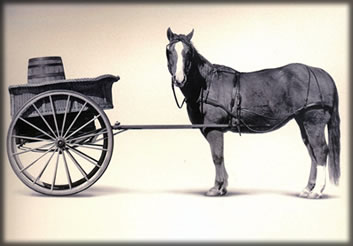
Placing the Cart Before the Horse means exactly what it says – not putting things in the correct order. From Phrase Finder we learn, “An early reference to ‘putting the cart before the horse’ comes in George Puttenham’s The Arte of English Poesie, 1589: Ye haue another manner of disordered speach, when ye misplace your words or clauses and set that before which should be behind. We call it in English prouerbe, the cart before the horse, the Greeks call it Histeron proteron, we name it the Preposterouscart-before-the-horse

He was probably referring back to, or possibly translating directly from, a work by Cicero (106 BC – 43 BC) – On Friendship: “We put the cart before the horse, and shut the stable door when the steed is stolen, in defiance of the old proverb.” A hysteron proteron is a figure of speech we inherited from the Greeks, in which the thing that should come second is put first; for example, ‘putting on one’s shoes and socks’. It isn’t surprising that, when needing an Anglicised proverb to express that notion, the English turned toward what they knew best, that is, agriculture, and in particular, horses. There are more ‘horse phrases’ in English than those referring to any other animal, including ‘man’s best friends’, dogs. The notion of things being the opposite of what they rightfully should be seems to have played on the minds of the English at the time when modern English began to be formed, that is, in the 16th century. It is a common theme in Shakespeare and The Tempest, Macbeth and A Midsummer Night’s Dream all contain ‘world turned upside down’ magical elements.”

Neither Hide Nor Hair is a cliché indicating no sign of a person or thing is to be had. The Phrase Finder says the current phrase is a corruption of one known in Chaucer’s time and meant “wholly or entirely.” Reportedly in the metrical Life of St. Cuthbert one finds: “Pai were destroyed, bath hare and hyde.” (Heavens to Betsy! Pg. 145) Josiah G. Holland used the phrase in his 1857’s The Bay-Path; a Tale of New England Colonial Life: “I haven’t seen hide nor hair of the piece ever since.” y.

To Grease a Person’s Palm means to act in kindness to another in hopes of future gains or favors. In present day vernacular the phrase means to give money to someone in authority in order to persuade him to do something for you, especially something wrong. According to A Hog on Ice (page 81), “The present expression has been in vogue since the beginning of the eighteenth century, changed since the early sixteenth century only in the substitution of ‘palm’ for ‘hand.’ Our present form, however, is a direct translation of a French phrase of the Middle Ages, ‘oindre la paume á quelqu’un.’ Littré, the French philologist, tells of an ancient story about an old woman whose two cows had been seized by the provost and who then received the advice that she would have saved herself from trouble had she first ‘greased his palm.’”

A Chain is Only as Strong as Its Weakest Link comes to us via the 18th Century and Thomas Reid’s Essays on the Intellectual Powers of Man (1786):”In every chain of reasoning, the evidence of the last conclusion can be no greater than that of the weakest link of the chain, whatever may be the strength of the rest.” (Phrase Finder)

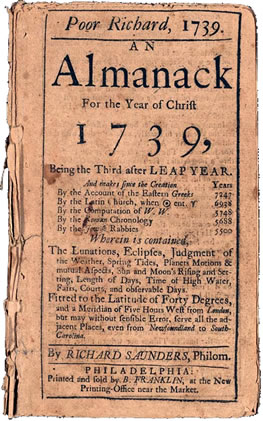
A Watched Pot Never Boils refers to how time feels longer when one is waiting for something to happen. According to Phrase Finder, the homely comes to the language via Poor Richard’s Almanac, written by the venerable Benjamin Franklin. In a report on Franz Mesmer’s controversial theory of ‘animal magnetism,’ Franklin (1785) wrote “Finally another Breakfast is ordered. One servant runs for fresh Water, another for Coals. The Bellows are plied with a will. I was very Hungry; it was so late; “a watched pot is slow to boil.” poor-richard

Preposterous means contrary to reason or common sense. Its first known use was 1542. “Pre” is a Latin prefix indicating something at the front. “Post” is a Latin root meaning at the back. So “preposterous” should mean the front is in the front and the back in the back, but it does not. It is the reverse.

He Who Laughs Last Laughs Longest is a proverb from the times of the Tudors, but not from Shakespeare. In a play entitled “Christmas Prince,” first performed at Cambridge in 1608, we find “Laugh on laugh on my freind/Hee laugheth best that laugheth to the end.”

Posted in customs and tradiitons, language choices, word play, writing | Tagged , , , | 8 Comments

England Thrives Under George III

England Changes Under George III’s Reign

George III

George III

In 1762, the year George III and his wife Queen Charlotte gave the English people the first heir born to a ruling monarch since the “Old Pretender,” James II’s son (1688), Britain was on the brink of the Industrial Revolution. What were the changes happening in the country?

Roads: Until the early 19th Century the pack horse ruled the road, or what was supposed to be a road. Even at the turn of the century, only a few major routes could be considered more than ruts, broken stones, and muddy sand. From London to Bath, one had an easy way to go, but the more rural roads often left villages cut off for months during the winter. The development of Tarmac by the Scottish surveyor, John McAdam, resolved some of those issues.

Canal System: This was the most efficient means to move goods. The Duke of Bridgewater, at a cost of £220,000, built the first canal in 1759. Bridgewater brought coal from his mines in Worsley to Manchester and reduced the cost of coal to half. By 1815, the cost of inland transportation was reduced by 75%.

George IV

George IV

Population: When George IV was born, the combined population of England and Wales was 6.5 million. However, with the development of new medical procedures and agriculture, the population became stable – fewer deaths with childbirth and a longer life expectancy. By the time of George IV’s death in 1831, the combined populations had climbed to 16.5 million. Urban development exploded. In the mid 1700s, only London (750,000) and Bristol (60,000) had large populations.

Trade: During the same time period, imports were £11 million and exports numbered £16 million. England imported wine, spirits, tea, sugar, and coffee. Exports included woolen goods, metal works, pottery, tin, and cured fish. The Atlantic triangle thrived: Merchants transported goods to West Africa, where they picked up slaves for the West Indies and southern colonies. From the “New World,” England received sugar, tobacco, and timber. England capitalized on the Industrial Revolution, especially in the areas of iron, steel, coal, and textiles. The first steam loom appeared in Manchester in 1806, which had a developed transportation model in place.

Agriculture: The agricultural world saw several improvements: Lord Townshend’s four-crop rotation (leaving one field fallow and rotating energy rich legumes with staple crops); use of marl to enrich soils; Jethro Tull’s drill seed. In livestock trade, similar advancements took hold: the development of sheep herds for meat and a shorter fleece being the most prominent improvement.

Posted in British history, buildings and structures, George IV, Georgian Era, Great Britain, Living in the Regency, Living in the UK, Napoleonic Wars, real life tales, War of 1812 | Tagged , , , | 4 Comments

Growing Up Female During the Regency and Victorian Eras

Regency and Victorian Eras: Growing Up Female in the Country

Young girls had little control over their lives during the Regency and Victorian eras. Their lives were strictly regulated by nurses and governesses. The girls were expected to practice correct moral and social standards. Responsibilities to family and name were numerous. Young girls learnt the necessity of benevolence. Charitable acts were taught by mothers and other female relatives.

1815

1815

Other than this “insistence” on their daughters showing condescension, parental involvement in their daughters’ educations was very limited. Remaining remote and indifferent was more the mode of the day. Mothers were traditionally active with their own social lives. Children remained at home with nurses/governesses while their mothers lived an active social life. Girls remained under the control of their nannies or governesses until they were old enough to make their debut into Society. Children often knew more affection from the house’s servants than did their parents.

Even when in residence, parents often preferred formal “daily visits” with their children rather than interacting with them informally. During the “children’s hour,” the young ones “performed” for their parents in carefully prepared exhibitions of what they had learned during their studies. The children, essentially, lived in a different world upstairs, and they were at the mercy of their caregivers. Sometimes, children resided in another of the family’s properties, or they were left in the country while their parents saw to their father’s developing political career in London. And Heaven Forbid, a marriage knew its troubles. Female children might be foisted off on other relatives or sent to live abroad under the care of a distant relative or governess. Male children were sent away to school and experienced a different type of isolation.

The segregation from the family extended to all parts of the child’s life: meals, sleeping quarters, and entertainment. Larger houses might have both day and night nurseries, as well as separate rooms for the older children. Food was often monotonous. Separate meals were prepared for the nursery. Furniture inside the nursery was often shabby. Girls often received a doll’s house, a rocking horse, and a painted screen as toys.

1840

1840

During the Victorian era, girls were dressed in numerous petticoats. During the winter, the petticoats were made of flannel. In the summer, they were starched stiff. Black-buttoned shoes, elaborate hats, and pelisses were worn out of doors. The same clothes were not worn for both morning and afternoon activities, and another change of clothes was required for the formal visits with their parents.

Posted in British history, customs and tradiitons, Great Britain, Living in the Regency, Living in the UK, Regency era, Victorian era | Tagged , , , , | 8 Comments

The Brutality of Jack the Ripper

Anyone who knows me, knows that I am a BIG Matthew Macfadyen fan, and so I was very pleased with Season 3 of “Ripper Street” was picked up. The show is a gritty, in-your-face depiction of crime in the Victorian period. And yes, I do realize “‘Ripper Street’ is a BBC mini-series set in Whitechapel in London’s East End in 1889, six months after the infamous Jack the Ripper murders.

jacktheripper1888That being said, I thought we could take a look at the definitive serial killer, Jack the Ripper. Many consider “Jack” the most terrifying of killers. The pure ferocity of Jack’s crimes continue to fascinate us over a century later.

The killer we know as Jack the Ripper made his first appearance on 31 August 1888 with the murder of a prostitute named Mary ‘Polly’ Nichols. Mary’s was the third killing of a prostitute in London’s East End, and despite its brutality, it did not initially attract attention. However, a week later, another prostitute, Annie Chapman, known as ‘Dark Annie,’ met a similar death. Mary’s throat and torso had been slit open, and there were stab wounds to the genitals. Polly also sported a slit throat, but with Polly, the Ripper had disemboweled the woman, even going so far as to drape her entrails over Polly’s shoulder and to cut her vagina and ovaries. The precision of the cuts immediately led investigators to believe that the killer had medical training and was familiar with dissecting bodies in a post-mortem room.

465px-wanted_posterOn September 30, the killer upped the ante when he killed twice in one night. Elizabeth Stride, a seamstress and part-time prostitute, was the first victim. ‘Long Liz’ was done away with by a knife wound to the throat. Unlike Mary and Polly, though, Elizabeth displayed no other markings. Most experts believe the Ripper was interrupted in his mutilation of Elizabeth’s body. Dissatisfied, Jack the Ripper struck a second time in the same evening. He killed prostitute Catherine Eddowes with characteristic brutality. For example, the killer had removed Catherine’s kidney. In addition, someone had written on the wall of the building behind which Catherine was found this cryptic message: ‘The Juwes are not the men that will be blamed for nothing.’ Uncertain what the message meant, an investigating officer had the message removed, claiming he wished to avoid anti-Jewish hysteria.

maryjanekelly_ripper_100Shortly before the double murder, the Central News Agency had received a letter reportedly from the killer. CNA ignored the first letter, but a second one arrived within hours of the first. In it, the note’s author signed the letter ‘Jack the Ripper.’ The moniker brought the expected sensationalism. Two weeks later, a third letter arrived. This one was directed to the attention of George Lusk, head of the Whitechapel Vigilance Committee. This third letter was, obviously, from a different author. The note showed the writer to be less literate than the first two and more disturbing. The return address simply said “From Hell,” and inside was a slice of human tissue, one the writer claimed to be part of Eddowes’ removed organ.

Another three weeks passed before the Ripper struck again. Mary Kelly, like the others, was a prostitute, but a different mode of operation occurred. Mary Kelly was killed indoors, in a room in Miller’s Court. Her body was the most brutalized. The killer had partially skinned Kelly, disemboweled her, and many of her organs, including her uterus and a fetus taken from it, were displayed like trophies about the room.

Victorian London held its breath and waited another murder, but none came. A knife murder of a prostitute occurred in 1890 and again in 1892, but neither displayed the characteristic savagery of the Ripper’s murders. As quickly as he appeared, Jack the Ripper was gone.

Many theories as to the Ripper’s identity have risen from time to time. Some of the suspects have included Queen Victoria’s grandson, Prince Eddy, who was thought to have taken his revenge on prostitutes because he had “earned” a case of syphilis from a prostitute. Then there is the idea that Sir William Gull, the Queen’s surgeon, had conspired to cover up an illegitimate child that Prince Eddy had conceived with a Whitechapel girl. Crime novelist Patricia Cornwell reportedly spent $8 million of her own money to prove the Victorian painter Walter Sickert was the murderer. We shall likely never know the true identity of the world’s most infamous murderer.


Posted in British history, Great Britain, Living in the UK, mystery, real life tales, Uncategorized, Victorian era | Tagged , , , | 5 Comments