“Going Courting” Regency Style

“Going Courtin’” in the Regency Era

Society during the Regency era expected strict propriety from its young people. Sometimes the rules were strict and unreasonable, but somehow the youth of Jane Austen’s time managed to come together.

Young men of the time were often older than the women they courted. Men were expected to establish themselves before seeking a wife. They were expected to have sound financial prospects, especially if they were not the eldest son and expected to inherit the family property. Men often sought wives straight from the schoolroom, meaning ages 16 and 17 because childbirth was difficult for a woman of the era. It was thought that a younger wife could withstand those difficulties more easily than a “woman on the shelf” (women of 25+ years of age). An heir and a spare was expected of the marriage. In addition, the woman was expected to secure her financial future with her marriage.

pride-and-prejudiceAt age 16 a girl of the gentry made her Come Out, which was a formal introduction of the girl to Society. It was the “signal” that she was prepared to become a bride. New dresses and jewelry and riding habits and… were required for the young lady’s debut. She would be “on display” at all times, and people would be evaluating her elegance and manners. The Season in London involved balls, soirees, the theatre, assemblies, trips to the museum, etc. Finally, the young lady could participate in conversation with adults and her suitors.

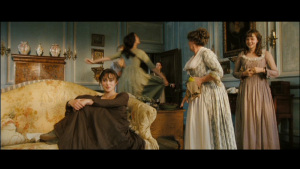
In Jane Austen’s Pride and Prejudice, Lady Catherine De Bourgh is flabbergasted by the news that all five Bennet sisters are Out at the same time “The younger ones out before the elder are married!” Of course, Elizabeth Bennet defends her mother’s lax sense of propriety by saying, “I think it would be very hard upon younger sisters, that they shouldn’t have their share of society and amusement because the elder may not have the means or inclination to marry early.” When Charlotte Lucas finally marries at age 27, her sisters her happy because “hopes of coming out a year or two sooner than they might otherwise have done” arise.

A proper young lady was to have a chaperone in tow at all times. Often, a chaperone traveled with the husband and his new bride on their “honeymoon.” Eligible gentlemen were only to give their attentions to the young ladies who had made their Society debut. A young woman who was Out could engage in conversation with eligible gentlemen, could attend formal dances and social outings, and could walk out with a gentleman, if she was properly chaperoned. Girls, who were not Out, could not engage in conversation until a parent or other familial adult asked her a question. She could only walk out with a male relative (again with a chaperone). Many girls wore what is known as a “close bonnet.” This was a hat with a deep brim, which hid most of the girl’s countenance from view.

mansfield-oconnorTom Bertram in Austen’s Mansfield Park relates a story of a young lady who did not practice decorum. The girl approached Tom at a party, claiming him an acquaintance and “talked and laughed till [he] did not know which way to look.” In sharp contrast is the novel’s heroine, Fanny Price. At Fanny’s Come Out, the guests note that Fanny is “attractive…modest…Sir Thomas’s niece…and soon to be admired by Mr. Crawford. It was enough to give her general favour.”

Posted in British history, customs and tradiitons, dancing, Great Britain, Jane Austen, Living in the Regency, Regency era | Tagged , , , , | Comments Off on “Going Courting” Regency Style

The Face of Jack the Ripper Revealed

The Face of Jack the Ripper

Last Monday (September 8), I included a post on The Brutality of Jack the Ripper. This is one of my favorite sources on the crime. In 2006, BBC News brought us a look at “Jack the Ripper” by using modern day profiling techniques. Below is a short excerpt from the article, which is well worth the read.

Jack the Ripper’s face ‘revealed’

_42334426_jacktheripper_203i

The case has fascinated people for decades
An e-fit showing what detectives believe serial killer Jack the Ripper looked like has been revealed.Using new profiling techniques, investigators have created a picture of what they believe the 19th Century murderer would have looked like.

The man, who evaded police in the 1880s, is thought to have killed and mutilated five London prostitutes.

The Scotland Yard team describe him as “frighteningly normal” but someone capable of “extraordinary cruelty.”

And investigators have admitted that police at the time were probably searching for the wrong kind of man.

Head of analysis for Scotland Yard’s Violent Crime Command, Laura Richards, who has studied serial killer Fred West and Soham murderer Ian Huntley, revisited the case using modern police techniques.

To continue reading go to http://news.bbc.co.uk/2/hi/6164544.stm

Posted in British history, Living in the UK, mystery, Victorian era | Tagged , | 2 Comments

From Where Does That Phrase Come?

Catch Word is a word under the right-hand side of the last line on a book page that repeats the first word on the following page – circa 1736. It was commonly used in printing. The phrase has come into the language via the theatre. The last word of one actor’s speech is the cue for the next actor to speak. The second actor must “catch” the first’s to know when he is to speak.

mFTYv5pUdj8Fz2ColBnueYAA triangular plot of land is often referred to as a Heater Piece. The triangle looks like a flatiron, therefore, the name. Those who live in NYC likely have heard of the Flatiron Building, which sits upon a triangular piece of land at the intersection of Twenty-third Street and Fifth Avenue. (Dictionary of Word Origins)

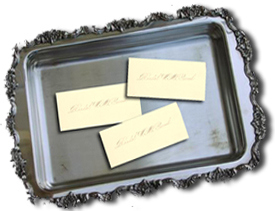
A phrase often found in Regency romances is Carte Blanche, customarily referring to a gentleman of the time giving his mistress “carte blanche.” The meaning has come to refer to freedom of choice or full discretionary power. In French it is literally a “white card.” The first known use was 1751. It was the custom of the time for a man of wealth or importance to sign blank sheets of paper so a trusted subordinate might fill in the necessary order or letter of business upon his behalf.

Shiver My Timbers is an oath expressing annoyance or surprise. Most likely it is purely a literary invention rather than a piratical term. In 1834, Frederick Marryat used the oath in his Jacob Faithful: “I won’t thrash you, Tom. Shiver my timbers if I do.” Robert Louis Stevenson used the phrase three times in his 1883 Treasure Island: “Well, he [Old Pew] is dead now and under hatches; but for two years before that, shiver my timbers, the man was starving!” In 1949, in Mark My Words John B. Opdyke claimed “the expression ‘shiver my timbers’ belongs to cricket, referring to scattering or strewing wickets for which ‘timbers’ is a slang substitute.” (Heavens to Betsy pg. 105)

Placing the Cart Before the Horse means exactly what it says – not putting things in the correct order. From Phrase Finder we learn, “An early reference to ‘putting the cart before the horse’ comes in George Puttenham’s The Arte of English Poesie, 1589: Ye haue another manner of disordered speach, when ye misplace your words or clauses and set that before which should be behind. We call it in English prouerbe, the cart before the horse, the Greeks call it Histeron proteron, we name it the Preposterouscart-before-the-horse

He was probably referring back to, or possibly translating directly from, a work by Cicero (106 BC – 43 BC) – On Friendship: “We put the cart before the horse, and shut the stable door when the steed is stolen, in defiance of the old proverb.” A hysteron proteron is a figure of speech we inherited from the Greeks, in which the thing that should come second is put first; for example, ‘putting on one’s shoes and socks’. It isn’t surprising that, when needing an Anglicised proverb to express that notion, the English turned toward what they knew best, that is, agriculture, and in particular, horses. There are more ‘horse phrases’ in English than those referring to any other animal, including ‘man’s best friends’, dogs. The notion of things being the opposite of what they rightfully should be seems to have played on the minds of the English at the time when modern English began to be formed, that is, in the 16th century. It is a common theme in Shakespeare and The Tempest, Macbeth and A Midsummer Night’s Dream all contain ‘world turned upside down’ magical elements.”

Neither Hide Nor Hair is a cliché indicating no sign of a person or thing is to be had. The Phrase Finder says the current phrase is a corruption of one known in Chaucer’s time and meant “wholly or entirely.” Reportedly in the metrical Life of St. Cuthbert one finds: “Pai were destroyed, bath hare and hyde.” (Heavens to Betsy! Pg. 145) Josiah G. Holland used the phrase in his 1857’s The Bay-Path; a Tale of New England Colonial Life: “I haven’t seen hide nor hair of the piece ever since.” y.

To Grease a Person’s Palm means to act in kindness to another in hopes of future gains or favors. In present day vernacular the phrase means to give money to someone in authority in order to persuade him to do something for you, especially something wrong. According to A Hog on Ice (page 81), “The present expression has been in vogue since the beginning of the eighteenth century, changed since the early sixteenth century only in the substitution of ‘palm’ for ‘hand.’ Our present form, however, is a direct translation of a French phrase of the Middle Ages, ‘oindre la paume á quelqu’un.’ Littré, the French philologist, tells of an ancient story about an old woman whose two cows had been seized by the provost and who then received the advice that she would have saved herself from trouble had she first ‘greased his palm.’”

A Chain is Only as Strong as Its Weakest Link comes to us via the 18th Century and Thomas Reid’s Essays on the Intellectual Powers of Man (1786):”In every chain of reasoning, the evidence of the last conclusion can be no greater than that of the weakest link of the chain, whatever may be the strength of the rest.” (Phrase Finder)

A Watched Pot Never Boils refers to how time feels longer when one is waiting for something to happen. According to Phrase Finder, the homely comes to the language via Poor Richard’s Almanac, written by the venerable Benjamin Franklin. In a report on Franz Mesmer’s controversial theory of ‘animal magnetism,’ Franklin (1785) wrote “Finally another Breakfast is ordered. One servant runs for fresh Water, another for Coals. The Bellows are plied with a will. I was very Hungry; it was so late; “a watched pot is slow to boil.” poor-richard

Preposterous means contrary to reason or common sense. Its first known use was 1542. “Pre” is a Latin prefix indicating something at the front. “Post” is a Latin root meaning at the back. So “preposterous” should mean the front is in the front and the back in the back, but it does not. It is the reverse.

He Who Laughs Last Laughs Longest is a proverb from the times of the Tudors, but not from Shakespeare. In a play entitled “Christmas Prince,” first performed at Cambridge in 1608, we find “Laugh on laugh on my freind/Hee laugheth best that laugheth to the end.”

Posted in customs and tradiitons, language choices, word play, writing | Tagged , , , | 8 Comments

England Thrives Under George III

England Changes Under George III’s Reign

George III

George III

In 1762, the year George III and his wife Queen Charlotte gave the English people the first heir born to a ruling monarch since the “Old Pretender,” James II’s son (1688), Britain was on the brink of the Industrial Revolution. What were the changes happening in the country?

Roads: Until the early 19th Century the pack horse ruled the road, or what was supposed to be a road. Even at the turn of the century, only a few major routes could be considered more than ruts, broken stones, and muddy sand. From London to Bath, one had an easy way to go, but the more rural roads often left villages cut off for months during the winter. The development of Tarmac by the Scottish surveyor, John McAdam, resolved some of those issues.

Canal System: This was the most efficient means to move goods. The Duke of Bridgewater, at a cost of £220,000, built the first canal in 1759. Bridgewater brought coal from his mines in Worsley to Manchester and reduced the cost of coal to half. By 1815, the cost of inland transportation was reduced by 75%.

George IV

George IV

Population: When George IV was born, the combined population of England and Wales was 6.5 million. However, with the development of new medical procedures and agriculture, the population became stable – fewer deaths with childbirth and a longer life expectancy. By the time of George IV’s death in 1831, the combined populations had climbed to 16.5 million. Urban development exploded. In the mid 1700s, only London (750,000) and Bristol (60,000) had large populations.

Trade: During the same time period, imports were £11 million and exports numbered £16 million. England imported wine, spirits, tea, sugar, and coffee. Exports included woolen goods, metal works, pottery, tin, and cured fish. The Atlantic triangle thrived: Merchants transported goods to West Africa, where they picked up slaves for the West Indies and southern colonies. From the “New World,” England received sugar, tobacco, and timber. England capitalized on the Industrial Revolution, especially in the areas of iron, steel, coal, and textiles. The first steam loom appeared in Manchester in 1806, which had a developed transportation model in place.

Agriculture: The agricultural world saw several improvements: Lord Townshend’s four-crop rotation (leaving one field fallow and rotating energy rich legumes with staple crops); use of marl to enrich soils; Jethro Tull’s drill seed. In livestock trade, similar advancements took hold: the development of sheep herds for meat and a shorter fleece being the most prominent improvement.

Posted in British history, buildings and structures, George IV, Georgian Era, Great Britain, Living in the Regency, Living in the UK, Napoleonic Wars, real life tales, War of 1812 | Tagged , , , | 4 Comments

Growing Up Female During the Regency and Victorian Eras

Regency and Victorian Eras: Growing Up Female in the Country

Young girls had little control over their lives during the Regency and Victorian eras. Their lives were strictly regulated by nurses and governesses. The girls were expected to practice correct moral and social standards. Responsibilities to family and name were numerous. Young girls learnt the necessity of benevolence. Charitable acts were taught by mothers and other female relatives.

1815

1815

Other than this “insistence” on their daughters showing condescension, parental involvement in their daughters’ educations was very limited. Remaining remote and indifferent was more the mode of the day. Mothers were traditionally active with their own social lives. Children remained at home with nurses/governesses while their mothers lived an active social life. Girls remained under the control of their nannies or governesses until they were old enough to make their debut into Society. Children often knew more affection from the house’s servants than did their parents.

Even when in residence, parents often preferred formal “daily visits” with their children rather than interacting with them informally. During the “children’s hour,” the young ones “performed” for their parents in carefully prepared exhibitions of what they had learned during their studies. The children, essentially, lived in a different world upstairs, and they were at the mercy of their caregivers. Sometimes, children resided in another of the family’s properties, or they were left in the country while their parents saw to their father’s developing political career in London. And Heaven Forbid, a marriage knew its troubles. Female children might be foisted off on other relatives or sent to live abroad under the care of a distant relative or governess. Male children were sent away to school and experienced a different type of isolation.

The segregation from the family extended to all parts of the child’s life: meals, sleeping quarters, and entertainment. Larger houses might have both day and night nurseries, as well as separate rooms for the older children. Food was often monotonous. Separate meals were prepared for the nursery. Furniture inside the nursery was often shabby. Girls often received a doll’s house, a rocking horse, and a painted screen as toys.

1840

1840

During the Victorian era, girls were dressed in numerous petticoats. During the winter, the petticoats were made of flannel. In the summer, they were starched stiff. Black-buttoned shoes, elaborate hats, and pelisses were worn out of doors. The same clothes were not worn for both morning and afternoon activities, and another change of clothes was required for the formal visits with their parents.

Posted in British history, customs and tradiitons, Great Britain, Living in the Regency, Living in the UK, Regency era, Victorian era | Tagged , , , , | 8 Comments

The Brutality of Jack the Ripper

Anyone who knows me, knows that I am a BIG Matthew Macfadyen fan, and so I was very pleased with Season 3 of “Ripper Street” was picked up. The show is a gritty, in-your-face depiction of crime in the Victorian period. And yes, I do realize “‘Ripper Street’ is a BBC mini-series set in Whitechapel in London’s East End in 1889, six months after the infamous Jack the Ripper murders.

jacktheripper1888That being said, I thought we could take a look at the definitive serial killer, Jack the Ripper. Many consider “Jack” the most terrifying of killers. The pure ferocity of Jack’s crimes continue to fascinate us over a century later.

The killer we know as Jack the Ripper made his first appearance on 31 August 1888 with the murder of a prostitute named Mary ‘Polly’ Nichols. Mary’s was the third killing of a prostitute in London’s East End, and despite its brutality, it did not initially attract attention. However, a week later, another prostitute, Annie Chapman, known as ‘Dark Annie,’ met a similar death. Mary’s throat and torso had been slit open, and there were stab wounds to the genitals. Polly also sported a slit throat, but with Polly, the Ripper had disemboweled the woman, even going so far as to drape her entrails over Polly’s shoulder and to cut her vagina and ovaries. The precision of the cuts immediately led investigators to believe that the killer had medical training and was familiar with dissecting bodies in a post-mortem room.

465px-wanted_posterOn September 30, the killer upped the ante when he killed twice in one night. Elizabeth Stride, a seamstress and part-time prostitute, was the first victim. ‘Long Liz’ was done away with by a knife wound to the throat. Unlike Mary and Polly, though, Elizabeth displayed no other markings. Most experts believe the Ripper was interrupted in his mutilation of Elizabeth’s body. Dissatisfied, Jack the Ripper struck a second time in the same evening. He killed prostitute Catherine Eddowes with characteristic brutality. For example, the killer had removed Catherine’s kidney. In addition, someone had written on the wall of the building behind which Catherine was found this cryptic message: ‘The Juwes are not the men that will be blamed for nothing.’ Uncertain what the message meant, an investigating officer had the message removed, claiming he wished to avoid anti-Jewish hysteria.

maryjanekelly_ripper_100Shortly before the double murder, the Central News Agency had received a letter reportedly from the killer. CNA ignored the first letter, but a second one arrived within hours of the first. In it, the note’s author signed the letter ‘Jack the Ripper.’ The moniker brought the expected sensationalism. Two weeks later, a third letter arrived. This one was directed to the attention of George Lusk, head of the Whitechapel Vigilance Committee. This third letter was, obviously, from a different author. The note showed the writer to be less literate than the first two and more disturbing. The return address simply said “From Hell,” and inside was a slice of human tissue, one the writer claimed to be part of Eddowes’ removed organ.

Another three weeks passed before the Ripper struck again. Mary Kelly, like the others, was a prostitute, but a different mode of operation occurred. Mary Kelly was killed indoors, in a room in Miller’s Court. Her body was the most brutalized. The killer had partially skinned Kelly, disemboweled her, and many of her organs, including her uterus and a fetus taken from it, were displayed like trophies about the room.

Victorian London held its breath and waited another murder, but none came. A knife murder of a prostitute occurred in 1890 and again in 1892, but neither displayed the characteristic savagery of the Ripper’s murders. As quickly as he appeared, Jack the Ripper was gone.

Many theories as to the Ripper’s identity have risen from time to time. Some of the suspects have included Queen Victoria’s grandson, Prince Eddy, who was thought to have taken his revenge on prostitutes because he had “earned” a case of syphilis from a prostitute. Then there is the idea that Sir William Gull, the Queen’s surgeon, had conspired to cover up an illegitimate child that Prince Eddy had conceived with a Whitechapel girl. Crime novelist Patricia Cornwell reportedly spent $8 million of her own money to prove the Victorian painter Walter Sickert was the murderer. We shall likely never know the true identity of the world’s most infamous murderer.


Posted in British history, Great Britain, Living in the UK, mystery, real life tales, Uncategorized, Victorian era | Tagged , , , | 5 Comments

Do You Remember the Yankee’s Farewell to the “Iron Horse”?

For the last few weeks in August, those of us in the States have been bombarded with images of common folks and celebrities pouring buckets of ice water over their heads in the name of fundraiser for ALS. But what exactly is ALS and why do some people refer to the condition as Lou Gehrig’s Disease?

Amyotrophic lateral sclerosis (ALS) is a progressive neurodegenerative disease that affects nerve cells in the brain and the spinal cord. Motor neurons reach from the brain to the spinal cord and from the spinal cord to the muscles throughout the body. The progressive degeneration of the motor neurons in ALS eventually leads to their death. When the motor neurons die, the ability of the brain to initiate and control muscle movement is lost. With voluntary muscle action progressively affected, patients in the later stages of the disease may become totally paralyzed.
200px-Gehrig_croppedHenry Louis “Lou” or “Buster” Gehrig (June 19, 1903 – June 2, 1941) was an American baseball first baseman who played 17 seasons in Major League Baseball (MLB) for the New York Yankees (1923–1939). Gehrig was renowned for his prowess as a hitter and for his durability, a trait which earned him his nickname “The Iron Horse.” He finished with a career batting average of .340, an on-base percentage of .447, and a slugging percentage of .632, and he tallied 493 home runs and 1,995 runs batted in (RBIs). A seven-time All-Star and six-time World Series champion, Gehrig won the Triple Crown in 1934 and was twice named the American League’s (AL) Most Valuable Player. Gehrig was the first MLB player to have his uniform number retired, and he was elected to the Baseball Hall of Fame in 1939. Gehrig played in 2,130 consecutive major league games [a record finally broken by Cal Ripken, Jr., in 1995] over a span of 15 Yankee seasons.

Lou Gehrig, the “Pride of the Yankees,” contracted the disease in 1938. He was dead by 2 June 1941. The fans wondered when Gehrig’s streaks would end. No one thought to see the Iron Horse brought low, but ALS did that to the baseball great. On 4 July 1939, a heartfelt farewell was given to Gehrig. The scene from The Pride of the Yankees, with Gary Cooper portraying the venerable Gehrig, leaves viewers clutching their handkerchiefs.

Gehrig first garnered national attention for his baseball ability while playing in a game at Cubs Park (now Wrigley Field) on June 26, 1920. Gehrig’s New York School of Commerce team was playing a team from Chicago’s Lane Tech High School, in front of a crowd of more than 10,000 spectators. With his team winning 8–6 in the top of the ninth inning, Gehrig hit a grand slam completely out of the major league park, an unheard-of feat for a 17-year old.

200px-GehrigCU Gehrig began his professional baseball career on a bit of a “fluke.” As a student at Columbia University and a member of the Columbia collegiate team, he moonlighted with the New York Giants Class A team in Hartford, Connecticut. He played under an assumed name [Henry Lewis]. When the ploy was discovered, he was made to choose between college and the pros. After only a dozen games played for the Hartford Senators in the Eastern League, he was banned from collegiate sports his freshman year. In 1922, Gehrig returned to the collegiate sport atmosphere where he was a talented fullback for the Lions football program. Later, in 1923, he would play first base and pitch for Columbia.

On April 18, 1923, the same day Yankee Stadium opened for the first time and Babe Ruth inaugurated the new stadium with a home run, Columbia pitcher Gehrig struck out seventeen Williams College batters to set a team record; however, Columbia lost the game. Only a handful of collegians were at South Field that day, but more significant was the presence of Yankee scout Paul Krichell, who had been trailing Gehrig for some time. It was not Gehrig’s pitching that particularly impressed him; rather, it was Gehrig’s powerful left-handed hitting. During the time Krichell had been observing the young Columbia ballplayer, Gehrig had hit some of the longest home runs ever seen on various Eastern campuses, including a 450-foot (137 m) home run on April 28 at Columbia’s South Field, which landed at 116th Street and Broadway. Within two months, Gehrig signed a Yankee contract. He returned to minor-league Hartford to play parts of two seasons, 1923 and 1924, batting .344 and hitting 61 home runs in 193 games. (It was the only time Gehrig ever played any level of ball—sandlot, high school, collegiate or pro—for a team based outside New York City.)

On 2 June 1925, Yankee’s long-time first baseman, Wally Pipp, complained of a headache. Pipp later said he had taken “the two most expensive aspirin in history.” Gehrig had replaced Pipp for the game and for the next fourteen years, he was a staple in the Yankee lineup, although he often played in Babe Ruth’s shadow.

There was a Yankee double-header with the Washington Senators on the day Gehrig was to bid a permanent farewell to his baseball career. It was Gehrig’s final day in a Yankee uniform and two months after his last game. A weakened Gehrig tucked his Yankee hat under his arm and stared dejectedly at home plate. Tears streamed down his cheeks at the heart-felt sympathy from the fans.

Ed Barrow, president of the Yankees, draped an arm around Gehrig’s shoulders to provide the baseball hero his support. Members of the 1927 legendary Yankee team, including Babe Ruth, Bob Meusel, Herb Pennock, Joe Dugan, George Pipgras, and Waite Hoyt, stood nearby in tribute to Gehrig, as Gehrig had been part of the World Series-winning team. Gehrig leaned on Barrow as he was presented gifts from his Yankee teammates and stadium employees.

Joe McCarthy, the Yankee’s manager, embraced Gehrig after saying over the microphone, “Lou, it is a sad day in the life of everyone who knew you when you told me you were quitting because you felt you were a hindrance to the team. My God, Man, you were never that.”

Initially, Sid Mercer (the master of ceremonies) told the crowd he would not ask Gehrig to speak, but as the grounds keepers removed the microphones, Gehrig motioned to the spectators that he would answer their cries of “We want Lou!” Gehrig raised his hand and offered those in attendance a weak smile. He stepped to the one remaining microphone and delivered the greatest farewell speech ever. “For weeks, I have reading in the newspapers that I am a fellow who got a tough break. I don’t believe it. Today I consider myself the luckiest man alive. For 16 years, in every ball park into which I ever walked, I received kindness and encouragement. Mine has been a full life.” Gehrig then thanked everyone with whom he had ever worked, including players, the team owner, etc., as well as those who worked at the ball park. He thanked Bill Dickey, who was his roommate when on the road, his German immigrant parents [Heinrich and Christina Gehrig], and his wife Eleanor.

He died at age 37, sixteen years to the day after Gehrig replaced Pipp in the Yankee lineup.

Posted in Do You Remember?, film, Pop Culture, real life tales | Tagged , , , | 2 Comments

Regency Era Fashion for Women

Regency Fashion for Women

The graceful style for women of the early 19th Century is known as the Empire style. Tightly laced corsets were overthrown for the more natural flowing gown. By the end of the 1790s, the Empire cut, which had begun as a chemise shift that was gathered under the breasts, was the accepted form of dress for ladies. Originally, the bustline was drawn together with a girdle. By 1800, the gown had a very low square neckline, which exposed the woman’s décolleté. The barely-there puff sleeve was pulled back by the short narrow backed bodice, which greatly restricted a woman’s arm movement. (The image is of a dress of 1799 from Le Journal Des Dames et Des Modes.)1800chair-ladys-monthly-museum

The dress was regularly made of fine white muslin or batiste. Different colored clothing were used for riding, morning calls, and evening suppers. Pale colors were prevalent. It would be rare to find a pattern in the gown. Muslin gathered with less puckering and was the material of choice, but it was difficult to keep clean. Therefore, pastels were used for day gowns. During the winter, heavier cloths, such as velvet or wool or even cotton was used. It was not uncommon for a woman to wear flannel petticoats during the colder months.

Mrs. Bennet in 1995’s “Pride and Prejudice” sports a mob cap.

Mrs. Bennet in 1995’s “Pride and Prejudice” sports a mob cap.

Women on longer wore wigs or powdered their hair; yet, very conservative women still sported a mob cap at home. No respectable woman would leave home without a bonnet. Gloves were always worn outdoors, but they were also required for a lady during a ball or a social call. One removed her gloves for dining. As dresses had no pockets, reticules, a small material bag that closed with a pull string, were worn about one’s wrist. A lady would carry a parasol with riding with her gentleman friend to protect her skin from the sun. Decorative fans were also seen as an important accessory for the well dressed female.

Early on in the 1800s, female garments were decorated with Greek symbols and patterns at the hem, around the neckline, or as a trim for the sleeve. More ornate trims were exported from France. The Empress Josephine remained a fashion icon through the early 1800s. Egyptian symbols and marking replaced those of the Greek line. With the onset of the Napoleonic Wars, frogging, braids, and cording were seen on both the male and female form.fan

Gothic Style 1816

Gothic Style 1816

By the later years of the Regency Period, the bodice of the dress had more support and gave the female form a broader shoulder line. Flounces and padded rolls were added to the line. Some influences from the Elizabethan and the Tudor periods crept into the trim and pleated forms. By 1820, the Empire line had disappeared, instead taking on a more Gothic line, which lasted until Queen Victoria’s accession to the throne.

redspencer-fashionThe Spencer was worn both indoors and out. It was made of silk or wool (kerseymere). As an indoor garment, the Spencer was called a canezou. As with the Regency gown, the Spencer knew its share of trimming and decorative touches. From 1800 to 1810, to keep warm, women wore pelisses over their gowns. It was an empire lien coat that reached the woman’s hip or knee. After 1810, the pelisse was longer and heavier, with full sleeves. High-waisted like the Empire gown, the pelisse frequently sported a fur collar for additional warmth. Normally, the pelisse was brown or dark blue.

1812 Pelisse

1812 Pelisse

A woman’s underwear lacked the touches of “Victoria’s Secret.” A chemisette, which was a side opening half blouse, filled in the woman’s bare neckline by day. Because the gowns were so thin, stays were avoided unless the figure demanded it. One may remember that the Empire line allowed the woman’s gown to cling to all her curves. That could be a good thing if she were svelte, but not so good if she had a bit of “pudge.” For warmth, women resorted to flesh tone pantaloons, which came to their knees. Pantaloons were the first “slimmers.” Since women wore white satin slips over the stays to give the gown a smoother line. Drawers tied around the waist became a staple during the Regency Era, as well as stockings held up by garters.

1810 Corsette

1810 Corsette

Posted in fashion, Great Britain, Living in the Regency, Living in the UK, Regency era | Tagged , | 10 Comments

The Governess: Qualified to Teach the Usual Branches of a Good English Education

Jane-Eyre-poster-007A governess’s job was to teach the children of middle and upper class households in 19th Century England. By 1850, there were 21,000 governesses registered in England. In Charlotte Bronte’s Jane Eyre, our heroine places the following advertisement, which eventually lands her the position at Thornhill Hall: A young lady accustomed to tuition is desirous of meeting with a situation in a private home where the children are under fourteen. She is qualified to teach the usual branches of a good English education, together with French, Drawing, and Music. The governess would remain in the household until the children departed for school or, in the case of young ladies, made her Come Out.

Being a governess was one of the few occupations considered suitable for middle-class girls to earn her a living. A governess was expected to have the education and manners of a genteel lady, but in the household, she held a tenuous situation. She was considered a servant by the master and mistress, but NOT one of their own to those below stairs. In Jane Austen’s Emma, Jane Fairfax bemoans her having to become a governess. She says, “…offices, where inquiry would soon procure something–offices for the sale not quite of human flesh, but of human intellect.”

jeBeing neither family nor servant, the governess spent a lonely lifestyle. Unfortunately, a large number of governesses had no family of their own to visit when given a rare holiday or from whom to receive a letter to ease the hours of isolation. Of course, in romance novels, the governess often attracts the attentions of the younger sons, or in Jane Eyre’s case, the master’s eye. For every “Jane Eyre,” there were likely many governesses who succumbed to the attentions of the households’ most seductive gentlemen. Affairs were more commonplace than we would like to think.

Posted in British history, customs and tradiitons, Great Britain, Jane Austen, Living in the Regency, Living in the UK, Regency era, Victorian era | Tagged , , | 6 Comments

Oh, Give Me Land, Lots of Land (or) the 19th Century Entail

Oh, Give Me Land Lots of Land (or) the 19th Century Entail

As it had been for centuries, a man’s status in 19th Century British Society rested in the land he held. Land was a symbol of wealth and social rank. Therefore, the need to pass one’s “wealth” to future generations increased with the amount of land owned. Land was “influence,” as well as affluence. To ensure one’s descendants received what had been incurred, a system known as primogeniture was put in place. Primogeniture meant that all the land in each generation’s possession was left to the eldest son in the family rather than being divided equally among off the offspring. Secondly, an entail assured that said “eldest son” could not mortgage or divide or sell said inheritance. It was to be held for his eldest son, etc., etc., etc.

Primogenture developed during Norman times. The concept was by leaving the land to the eldest son, the estate would remain intact for future generations. It would also be economically capable of supporting a military force, which could assist the king. By the 19th Century, the King/Queen had other means to field a military presence, and social status became the basis of the practice. Customarily, primogenture was part of a gentleman’s will or deeds of settlement. This practice remained intact until 1925, when it was changed by law.

The entail prevented a wastrel from selling off the family estate to pay his debts. Do you recall Sir Walter Eliot in Jane Austen’s Persuasion. “There was only a small part of his estate that Sir Walter could dispose of; but had every acre been alienable, it would have made no difference. He had condescended to mortgage as far as he had the power, but he would never condescend to sell. No; he would never disgrace his name so far. The Kellynch estate should be transmitted whole and entire, as he had received it.” An entail was defined by a deed of settlement (or) a strict settlement. The heir normally received the land for his use ONLY in his lifetime. His rights ceased to exist upon his death.

Originally, many attempted to entail their properties until the end of the world, so to speak. However, the law would not permit “infinity” to stand. In practice, an entailed property only remained so until the grandson of the land owner making the settlement became of age at 21 years. Then, the heir could sell or give away the property. So, theoretically, the entail only held the land through the first and second generation of land owners. However, a little coercion often secured the land for future generations.

Most land owners (and their sons) held no other financial employment. If the property owner’s son wished to keep his “allowance,” he agreed to sign a new deed of settlement, which would assure the property remained in the family for another two generations, etc., etc. However, what if no males were born to inherit? A family line could end if a female remained single or even if she married. Single females had no children to inherit, and through married females, the property passed to someone outside the family.

Such a “disaster” was part of the plot of Jane Austen’s Pride and Prejudice.

“‘Oh! my dear,’ cried his wife, ‘I cannot bear to hear that mentioned. Pray do not talk of that odious man. I do think it is the hardest thing in the world that your estate should be entailed away from your own children; and I am sure if I had been you, I should have tried long ago to do something or other about it.’ Jane and Elizabeth attempted to explain to her the nature of an entail. They had often attempted it before, but it was a subject on which Mrs. Bennet was beyond the reach of reason; and she continued to rail bitterly against the cruelty of settling an estate away from a family of five daughters, in favour of a man whom nobody cared anything about.”

The females, however, often found another means of “retaining” the property. Propriety permitted cousins to marry. A girl could remain in her childhood home when no males were available to inherit by marrying the “heir presumptive.” It was Elizabeth Eliot’s hope to marry William Walter Eliot, Esq., her father’s heir. “She had, while a very young girl, as soon as she had known him to be, in the event of her having no brother, the future baronet, meant to marry him.” And Mrs. Bennet wishes Elizabeth to marry the odious Mr. Collins in order to save Longbourn. In his proposal, Mr. Collins explains why he assumes one of the Bennet sisters would accept him. “Thus much for my general intention in favour of matrimony; it remains to be told why my views were directed to Longbourn instead of my own neighbourhood, where I assure you there are many amiable young women. But the fact is, that being, as I am, to inherit this estate after the death of your honoured father (who, however, may live many years longer), I could not satisfy myself without resolving to chuse a wife from among his daughters, that the loss to them might be as little as possible, when the melancholy event takes place—which, however, as I have already said, may not be for several years. This has been my motive, my fair cousin, and I flatter myself it will not sink me in your esteem. “

Primogenture also created the concept of second and third sons searching for an heiress to marry so they might establish their own properties. It also sent marriage mad mothers into fits. There were only a limited number of eldest sons for daughters to land. Colonel Fitzwilliam in Pride and Prejudice says “Younger sons cannot marry where they like.” The real irony of this madness was the eldest son also inherited the debt from the previous generation. Even being the heir was not an path to “easy street.”

In “Entailment and Property Law,” Joshua Weiner explains…
“Entailment, as defined by Webster’s Collegiate Dictionary, refers to the restriction of property by limiting the inheritance to the owner’s lineal descendants or to a particular class thereof. Although it was feudal in origin, an entail was legal device still used in Austen’s time to prevent a landed property from being broken up, and from descending in a female line. The law was simply an extension of the practice of leaving the bulk, if not all, of one’s wealth to one’s heir, the eldest son.

“Thus, entailed property was usually inherited by male primogeniture (by the nearest male-line descendant of the original owner). For example, Mr. Elliot is the heir to Sir Walter in Persuasion. The law also prevented a father from disinheriting his eldest son, as the law prescribed that the son was his rightful heir. Furthermore, women only inherited if there were no male heirs left, and if there was more than one daughter, then they were all equal co-heiresses, and the land was subdivided evenly amongst them all. This subdivision is the cause of Mrs. Bennet’s worry in Pride and Prejudice. She realizes that if her husband, Mr. Bennet dies, then she and her five daughters’ would have to all live off the family’s one estate that generated little income and their standard of living would fall considerably. Mrs. Bennet, therefore, urges her daughters to marry wealthy husbands before their father dies. In addition, if an heiress married, then she would be inherited by her sons, and the land would be transmitted along her husband’s male-line. Austen expected her readers from her time to understand and sympathize in the Bennet daughters’, and women’s in general, pitiful predicament.

“The basis for the law of entailment was that ownership of land was not simply an ornament to the family. Rather, it was the foundation of its aristocratic position; it is what made the family noble and enabled it to live the way it did. The land produced a steady income that freed the family from the need to labor and allowed it to live a refined and potentially idle life. Hence, real estate ownership was much more meaningful than the regular possession of other assets or even cash. The estate lent status to the entire family as long as it lasted.

“Landowners, like Sir Walter, were therefore very intent on keeping their estate whole. As in Persuasion, they recognized the threats of subdivision amongst females or the dissipation of the land by sale, if the owner had to sell the land to raise funds and then continue to lose the proceeds. The whole family would then lose social status.

“Another detail of the law was that entails were periodically renewable and even breakable with the consent of an heir who had come of age. Similarly, “instead of pushing his fortune in the line marked out for the heir of the house of Elliot, [Sir Elliot] had purchased independence by uniting himself to a rich woman of inferior birth” (Persuasion p. 28).”

Posted in British history, buildings and structures, customs and tradiitons, Great Britain, Inheritance, Living in the Regency, Living in the UK, political stance | Tagged , , , | 4 Comments