The Mysterious Death of Lord Darnley

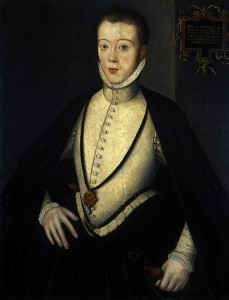
A contemporary portrait of Darnley ~ http://www.historicmysteries.com/murder-lord-darnley/

A contemporary portrait of Darnley ~ http://www.historicmysteries.com/murder-lord-darnley/

What do we know of Henry Stuart, Lord Darnley? He was the second husband of Mary, Queen of Scots. Darnley was tall enough to entice Mary, who was reportedly near six foot tall. He was a Catholic, but knew Anglicanism while attending the court of Elizabeth I. He was in line for the English throne though his mother, the Countess of Lennox. He and Mary married on 29 July 1565 in the Chapel at Holyrood Palace, Edinburgh, much to the dismay of many of Mary’s advisors. 

Supposedly, Darnley made enemies among the Scottish lords. He was arrogant and bad tempered. Even so, divorce was not possible for a Roman Catholic. 

Henry demanded the Crown Matrimonial from his wife, which would mean he would become King of Scotland if Mary died. She permitted him the title of King, but refused the legally binding Crown Matrimonial. Darnley blamed Mary’s refusal on David Rizzio, an Italian Catholic, who served as Mary’s  private secretary. Darnley, therefore, joined forced with several Protestant nobles to murder Rizzio. 

At a supper on 9 March 1566 at Holyroodhouse, Darnley and his coconspirators confronted Rizzio. Although Mary attempted to resolve the differences, Rizzio was stabbed 47 times. 

How did Darnley die? Darnley and Mary stayed at Kirk o’Field, a large church outside of Edinburgh on the evening of 9 February 1567. Conspirators secreted two barrels of gunpowder in the room below the one in which Darnley slept (the one assigned to Mary). Darnley was reportedly recovering from smallpox. [Many believe that Darnley suffered from syphilis.] At two of the morning, an explosion occurred, sending Darnley’s body hurtling some forty feet from the house. This find was part of the mystery. Should not Darnley’s body be found within the rubble of the explosion? Darnley’s body (and that of his servant found close by) displayed signs of strangulation.  (Historic Mysteries

Mary was away at a wedding upon the night of her husband’s death. 

Suspicion says Darnley learned of the plot beforehand and fled into the night and was killed then. Initially, the soldier who found the bodies was thought to be innocent, but was later arrested for the crimes, tried, and executed. Mary fled to England, only to be imprisoned by Elizabeth I and executed in 1587. 

One of the theories of the death comes to us from ScotlandsMary.com. “The man who had the most to gain from the death of Henry Stuart, was James Stuart, Earl of Moray, Mary’s half brother. He may not have physically committed the murder but he was the one behind the scenes pulling the strings and orchestrating the development of the plan.

Hugh R. Williamson wrote:
“Whoever the actual murderers were and however the crime was accomplished, and the mystery is never likely to be solved, there is no reasonable doubt that the man behind it all was Moray.

“After he was pardoned and recalled from England, he was never absent – except when it was dangerous to be present – from his sister’s side.

“He pretended to befriend both Darnley and Bothwell, playing on Darnley’s jealousy and on Bothwell’s growing affection for the queen.

“He had to accomplish an even more sensational coup before the end of that year 1567. In December, Mary would be twenty-five, and on her twenty-fifth birthday she would, by Scottish custom, have the right to annul or confirm all grants made during her minority.

“Moray knew well that at that moment his power and his wealth would be taken from him. But in any event, Mary on her twenty-fifth birthday was his prisoner in Lochleven Castle and he was Regent of Scotland, ruling in the name of the baby prince.”

Posted in British history, Great Britain, Uncategorized | Tagged , , , | Comments Off on The Mysterious Death of Lord Darnley

Cloutie Dumpling? A Recipe for Fun

I enjoyed an afternoon of tea yesterday with some friends, one of whom served what she termed to be a traditional Cloutie Dumpling from Scotland. I am all in for traditional foods, especially those so tasty. (Yes, I have tried Haggis.)

Chicken & Dumplings Recipe women.programming4.us

Chicken & Dumplings Recipe
women.programming4.us

Now, I live in the South. When we say “dumpling,” we customarily mean a doughy bread cooked in a broth. Chicken and dumplings is quite popular. 

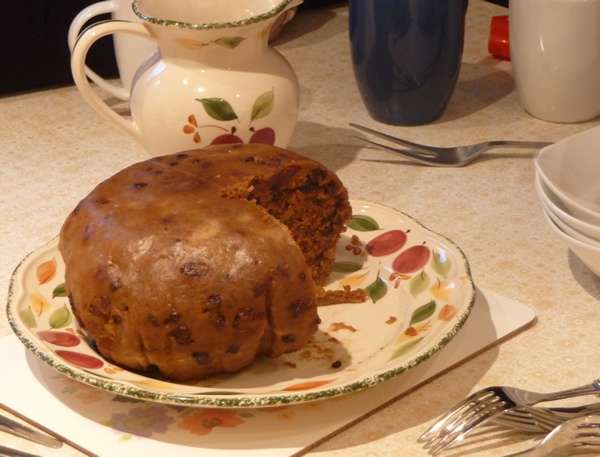
However, the Cloutie Dumpling is more of the nature of fruit cake. (I am one of those people who love fruit cake every Christmas [Yes, I am weird.], and I found this recipe is very much like my Christmas pudding one.)

As I understand it, Cloutie can also be seen as spelled as “Clootie,” which comes from the cloth in which the pudding is traditionally boiled. 

SiliconeMoulds.com Blog: Scottish Clootie Dumpling siliconemoulds.blogspot.com (Stupid Me! I should have taken a picture with my phone - borrowed this one from the internet.)

SiliconeMoulds.com Blog: Scottish Clootie Dumpling
siliconemoulds.blogspot.com (Stupid Me! I should have taken a picture with my phone – borrowed this one from the internet.)

Here is the recipe my friend shared:
125 g/4 oz. of suet (finely chopped)
1 tsp baking powder
200 g/ 4 oz. of currants and sultanas
1 tsp cinnamon
2 eggs
1 tsp ginger
250 g/ 8 oz of self-rising flour
75 g/ 3 oz brown sugar
1 tbsp golden syrup (maple syrup)
1 cup milk
1 tsp nutmeg
125 g/ 4 oz breadcrumbs
1 grated apple

Half fill a pot with water and bring it to a full boil.
Take a large piece of cheesecloth and scald it with boiling water.
Then dust the cloth with flour.
In a large bowl, first beat the eggs. Then mix in the syrup and about 1/4 of the milk. Gradually add in the dry ingredients and fruit – mixing well each time.
Place the mixture on the cheesecloth and secure. Allow enough room for the mixture to swell/rise.
Place an inverted plate on the bottom of the pan and put the pudding on it.
Boil for 3-4 hours.
Be careful not to let the water to drop below half the depth of the pudding.
Dip in cold water, remove the cloth and dry the pudding off in a medium oven.
Sprinkle with sugar and serve with cream or custard.

Here is a tip from Spark Recipes: *Clootie Dumpling traditionally used suet, which is raw beef or mutton fat, usually from around the loins and kidneys. Atora Suet is prepackaged and available in most supermarkets.
There is also a vegetarian version of Atora, called Atora Lite, which is obviously lowering fat. You can also ask for fresh suet from a butcher and then grate it yourself. Suggested substitutes are shortening, or very cold butter or margarine, as would be used for pastry making. However, the finished product will not hold together as well. 

Posted in British history, Scotland, tradtions | Tagged , , | 5 Comments

Readers’ Entertainment Magazine Interview with Regina Jeffers

Readers-Entertainment-Logo2This is an excerpt from an interview I did with Readers’ Entertainment News

1. First, tell us a bit about yourself. Where you’re from? Past jobs, awards, the usual bio stuff.

Born in Huntington, West Virginia, over the years, I held many positions: waitress, tax preparer, “Girl Friday” for a media mogul, Off-Broadway performer, media literacy consultant, and a public classroom teacher for forty years. I earned multiple advanced degrees from a variety of colleges and universities. I was a Martha Holden Jennings Scholar, a Time Warner Star Teacher, Columbus (OH) Educator of the Year, and a guest panelist for the Smithsonian. I have been a daughter, a wife, a mother, a grandmother, a teacher, and now an author.

2. What do you write? You’re welcome to include your latest title (shameless plug).

I began my career writing Jane Austen-inspired novels. My first, Darcy’s Passions, was a retelling of Austen’s Pride and Prejudice. That book was followed by…

Jane Austen-Inspired Novels:

Darcy’s Passions: Pride and Prejudice Retold Through His Eyes
Darcy’s Temptation: A Pride and Prejudice Sequel
Captain Wentworth’s Persuasion: Jane Austen’s Classic Retold Through His Eyes
Vampire Darcy’s Desire: A Pride and Prejudice Paranormal Adventure
The Phantom of Pemberley: A Pride and Prejudice Mystery
Christmas at Pemberley: A Pride and Prejudice Holiday Sequel
The Disappearance of Georgiana Darcy: A Pride and Prejudice Mystery                              The Mysterious Death of Mr. Darcy: A Pride and Prejudice Mystery                                      The Prosecution of Mr. Darcy’s Cousin: A Pride and Prejudice Mystery                               Elizabeth Bennet’s Deception: A Pride and Prejudice Vagary                                               Mr. Darcy’s Fault: A Pride and Prejudice Vagary Novella
“The Pemberley Ball” (a short story in The Road to Pemberley anthology)                      Honor and Hope: A Contemporary Pride and Prejudice

Regency and Contemporary Romances:

The Scandal of Lady Eleanor—Book 1 of the Realm Series (aka A Touch of Scandal)
A Touch of Velvet—Book 2 of the Realm Series
A Touch of Cashémere—Book 3 of the Realm Series                                                                      A Touch of Grace—Book 4 of the Realm Series                                                                               A Touch of Mercy—Book 5 of the Realm Series                                                                                A Touch of Love—Book 6 of the Realm Series                                                                                         A Touch of Honor—Book 7 of the Realm Series’                                                                                 His American Heartsong: A Companion Novel to the Realm Series                                           His Irish Eve                                                                                                                                            The First Wives’ Club—Book 1 of the First Wives’ Trilogy                                                      Second Chances: The Courtship Wars

Coming Soon…

Angel Comes to the Devil’s Keep
A Touch of Emeralds: The Conclusion of the Realm Series The Earl Finds His Comfort
The Earl Finds His Comfort 

Readers can preview each of my novels on my website (www.rjeffers.com).

3. Who has been the most difficult character for you to write?

In writing “extensions” of Austen’s classic tales, I am often called upon to bring to life one of her minor characters – creating a back story, a description, motivations, conflict, etc., for characters which Austen offered few details: Caroline Bingley, Colonel Fitzwilliam, Charlotte Collins, Sir Walter Elliot, Captain Harville. An audience of avid Austen fans who hold preconceived ideas of how the character looks and acts because of various film adaptations of Austen’s works compounds the problem. A writer must create Georgiana Darcy to resemble Emilia Fox from the 1995 adaptation of Pride and Prejudice, and Mr. Collins must hold a strong resemblance to Tom Hollander from the 2005 film.

Of all Austen’s minor characters, I want Anne De Bourgh to know a different life. I attempted three possible scenarios for Anne’s future, and although I am more comfortable with the rendering wrote in my Christmas at Pemberley, I am not totally satisfied with the depth of Anne’s characterization. I want to know more of Lady Catherine De Bourgh’s “sickly” daughter.

4. What characters are lying on your “office floor”? Why didn’t they come to life on the page and do you think they ever will? Or why not?

When I wrote A Touch of Velvet, I expected it to lead to two stories – one for each of Velvet Aldridge’s twin sisters, Cashémere and Satiné Aldridge. Needless to say, if I thought about it, I would know better. A Touch of Velvet was to be book one of the Realm series, but four chapters into writing the story of Brantley Fowler and Velvet Aldridge, I abandoned their story line. Brantley’s sister, Lady Eleanor Fowler, and Fowler’s commanding officer, James Kerrington, were “screaming” at me to tell their story first. Book 3 was to be the story of Marcus Wellston’s discovering Cashémere Aldridge was everything he never knew he needed.

Aidan Kimbolt and Satiné Aldridge were to come to a similar realization in Book 4. Yet, as I wrote A Touch of Cashémere, I found myself growing disillusioned by Satiné’s “woe is me” attitude. (Yes, I do realize that I gave the character those qualities I came to despise, but in my opinion, Satiné was not the appropriate match for Aidan Kimbolt, a character of whom I was quite fond.) Kimbolt deserved better. At the end of book 3, Satiné is in Europe.

Instead, book 4 became Gabriel Crowden’s and Grace Nelson’s joining. Kimbolt’s story is the center of Book 5, A Touch of Mercy. At length, I brought Satiné back into the series in book 7, Baron John Swenton’s story. Swenton developed an interest in Satiné in book 3, but I was still not so happy with her. You must read A Touch of Honor to discover her fate.

5. How much time does it take you to write a book?

I can finish a book in four months, but I would prefer a minimum of five. I hand write the first draft. I realize to many this appears counterproductive, but I find I am completing two steps at once. Because my cursive writing is slower than my typing, I have time to read aloud what I am writing. This provides me a good sense of how the story “sounds.” If I need a rewrite of a scene, I recognize it immediately and fix it, or I can make a notation to revisit it after the book is complete. Then I word process the piece. Again, I read the story aloud in my head. This serves as my second draft. Eventually, I correct one chapter per day the last month prior to my deadline. Although some revision does occur, this final check is more for editing. Surprisingly, my editorial changes are minimal because of the multiple checks prior to the final copy.

6. It seems there has always been an intense love of all things Jane Austen. I know many of your books are “Austen-related.” Why do you think there is this never-ending fascination with Austen, her writing, and the Regency period?

Austen’s appeal rests in the universality of her subject matter. She focuses on themes as old as time: marriage, the generation gap, and societal pressure. Jane Austen’s stories inspire self-reflection: what we never admit to ourselves, and what we will not permit others to know. In Austen, we discover the use of the family as the building block of society. Her stories take us back to a time “when things were simpler.” Her works are a mirror to our own society: as such, the reader is presented with a protagonist whose life and social standing is similar to his/her own. Austen’s heroines are women of sense, who exemplify rational love. Meanwhile, Austen transforms distant heroes into expressively communicative heroes. It is a magical combination.

7. Any funny “researching your book stories” to share with readers?

While writing, I regularly stop to research the use of a particular phase or a historic fact. Often, such research changes the original story line. For example, I have spoken previously of writing an exquisite scene for His American Heartsong, in which the main character, Arabella, is sprayed by a skunk. I was laughing aloud as I created a scene reminiscent of a friend’s encounter with a black and white intruder. Unfortunately, my instincts screamed with the realization that there are no skunks in England. A quick check proved my hunch true. I filed the scene in the trash and created a less enjoyable one.

8. What do you find is the hardest part of writing?

I do not write comic relief well. This statement would never surprise my family and friends. I am terrible at telling jokes – being one of those people who always anticipates the punch line. I rehearse a joke in private several times before I share it with others. It is not that I do not appreciate humor. In fact, I usually start an audience’s response during a film or live performance with my own laughter. I love juxtaposition, puns, malapropos, and reversals. I simply struggle in writing the ultimate comic mix. I hold a strong appreciation of those who master satire, parody, incongruity, and the double entendre.

Posted in Jane Austen, real life tales | Tagged , , , , , , | 5 Comments

The Anglo-Saxon World: King Alfred, William of Normandy, and the Doomsday Book

Alfred The Great Remains Found?  www.huffingtonpost.com

Alfred The Great Remains Found?
http://www.huffingtonpost.com

King Alfred is considered by many to be the wisest and greatest king.  As King of the West Saxons, Alfred (849 – 901) unified his people and constructed a victory against the Danes in 878 at Ethandum. Alfred led his people to civilization: founded schools, rebuilt cities, developed a code of laws, and set to right the justice system. Alfred was marked by his desire for learning. He commissioned the translation of the Latin works of Bede’s “Ecclesiastical History“; Orosius’s “History of the World“; Beothius’s “Consolations of Philosophy“; and Gregory’s “Pastoral Care” into the West Saxon dialect. He also directed the writing of “The Anglo-Saxon Chronicle.” 

The Anglo-Saxon Chronicle provides the reader with a history of Britain from the earliest times to 1154. The clerics who compiled the history chose the most important events of the years. The book is arranged chronologically. Most recorded events have connections to church affairs. The work records the life of the West Saxons, while speaking of personages of rank and the customs of the day. It is written in the West Saxon dialect. 

BBC - Your Paintings - William the Conqueror (1027/1028–1087) www.bbc.co.uk

BBC – Your Paintings – William the Conqueror (1027/1028–1087)
http://www.bbc.co.uk

According to History of English Literature: Part I – Early Saxon Through Milton ( page 23), “Harold II was the son of the powerful Earl Godwin, the real power in England during the preceding reign. Harold’s worthless brother Tosty leagued with King Harold of Norway (a descendant of Canute) to wrest England from its chosen ruler. At the time when William of Normandy was sailing for England. King Harold of England was forced to march into York to put down Tosty’s rebellion. At Stanfordbridge, he won a complete victory over Tosty and Harold of Norway.

“‘Meantime, Earl William (of Normandy came up from Normandy into Pevensey on the eve of St. Michael’s mass and soon constructed a castle at the port of Hastings. This was then told to King Harold; and he gathered a large force (marched two hundred miles in five days), and came to meet him at the estuary of Appledore. And there was a great slaughter made on either side.’ King Harold was slain…. William’s relationship to the House of Wessex and Edward’s promise that William should succeed him were less vlid claims than the strength of his army and his powerful position in European affairs. Edgar Atheling, the English claimant to the throne, promptly submitted: ‘On midwinter’s day Archbishop Alfred hallowed him to king at Westminster … and also swore him that he would so well govern this nation as any king before him did…. Nevertheless, he laid heavy tribute upon the men … wrought castles widely through this country, and harassed the miserable people.'”

The Domesday Book (1085) highlighted William the Conqueror’s thoroughness. It is the only survey of people of medieval England. It was another 800 years before the English people attempted another such survey. The Little Domesday book covers Norfolk, Suffolk, and Essex, while Great Domesday covers the remainder of England and Wales. No survey of London, Winchester and Durham was made for they were tax deferred areas. Cumberland and Westmoreland are not included for they had yet to be brought under control. 

The King’s men went into every shire to determine the number of units of hides (rural acreage) and what land belonged to the King. Also, the stock found upon the land was counted for tax purposes.


Posted in Anglo-Saxons, British history, Great Britain, real life tales, Uncategorized | Tagged , , , , | 2 Comments

Writing Craft: Description 101

Writing a Description of a Person |authorSTREAM www.authorstream.com

Writing a Description of a Person |authorSTREAM
http://www.authorstream.com

Trained as a journalist and a grant writer, over the last seven years, I assumed a quasi-methodical way of addressing description in my fictional writing. As a mode of discourse, description does not come naturally to me. I view my stories as they play in my head (much like a screenplay or a theatrical performance), and it would be easy for me to ignore the fact that my reader does not see what I do. Needless to say, it is my responsibility to assure that he does.

Many writers saturate their pieces with long descriptive passages, while others provide only bare bone details. Discovering a balance is the answer. Permitting the reader to see, hear, smell, taste, and touch what the author does is a testimony to the senses. The point is to create an image that closely mirrors an observer’s experience. Description should provide the same information that the reader might get directly if he was involved in the situation.

Objective description, the type one finds in technical or scientific descriptive writing, is unbiased and purposeful. In it, one does not convey an emotional response. Subjective description, on the other hand, is personal, but imprecise. Writing subjectively intrudes on the reader’s feelings. Description enlivens the narration. The writer becomes the means by which the reader experiences the situation. He assumes several roles:
• As the reader’s eyes, the writer must thoroughly describe what he sees. The relationship of items to one another. The light. The shadows. The distance. The texture. All of it must be described.
• As the reader’s ears, the writer must tend to the sounds. Loudness. Staccato. Rhythmic pattern.
• As the reader’s other senses, the writer must assure that he describes every detail. Feelings. Touch. Taste. Smell. Kinesthetic-Tactile experiences.
• As the reader’s conscious, the writer will enforce the mood he wishes to convey. Each detail layers the tone created. A mystery writer describing a deserted building will choose different details from that of an architectural slant. Choose the details, which reinforce the mood.

Descriptive Essay Writing www.slideshare.net

Descriptive Essay Writing
http://www.slideshare.net

Yet, for description not to drown the narration, the writer must first keep the intended audience ever present in his mind. What must one absolutely know about the subject or the place? What may one omit? Each descriptive passage should convey one dominant impression. Details must be carefully selected. Avoid creating tediousness by including every discernible detail.

A consistent point of view aids in the piece’s organization. Where is the writer when he describes the scene? The reader must be aware of where the writer places himself spatially. Order of location – presenting the details in a manner, which reflects their location in the scene – clarifies the nature of the details. Good description depends on the writer’s ability to convey his observations. Begin by describing the whole scene briefly and then focus on one specific part.

Remember to write unforgettable description, one must use vivid, reminiscent details. Use concrete sensory images and figurative language. Effective description conveys the experience exactly as one planned it. Use specific details, which are associated with actual items, and concrete language, which is coupled with the senses. Do not forget to cut the “deadwood,” especially vague words, such as handsome, tall, soft, etc., which offer multiple meanings/impressions. Also avoid the fancy (florid, ostentatious, embellished, lavish, etc.) choices. Use words that pin down the exact meaning. For example, using puissance instead of manliness serves no purpose if the reader must consult a dictionary to understand the passage. Impressionistic details are those, which an observer would see first? What would the observer see second? Third? And so forth? Present the details in the order in which someone would notice them.

As description acquaints the reader with the physical nature of things, certain standards are observed:
• Use “definition” when describing the unfamiliar.
• Use division/analysis, separating a whole, singular subject into its elements – slicing it into parts. This helps the reader follow the detailed description.
• Whether the previous two steps are necessary depends upon the familiarity the writer’s audience has with the subject.
• Use concrete words to describe material, color, weights, sizes, distance, etc.
• Limit the number of details to fit the purpose.
• Observe contiguity in moving from part to part.
• Use words that indicate relative postion. (i.e, to indicate space relationships, use words such as above, adjoining, abutting, alongside, below, beneath, beside, inside, left, outside, north, over, right, etc.; to indicate likeness/continuation, use words such as again, also, as…so, in the same way, likewise, similarly, thus, etc.)
• End with a brief description of the movements, behaviors, or habits of animate things.
• Include uses for inanimate things.
• Follow a thematic pattern by dividing the scene into mental categories, and regardless of their actual relationship to one another in space, describe elements that support one theme and then another theme, etc.

Overall, good description gives concrete details in a strategic sequence, which creates the piece’s mood/tone. The reader should have a strong sense of the whole scene, but should also be able to invoke specific details effortlessly.

Posted in writing | Tagged , , , | 2 Comments

Anglo-Saxon Christian Writings

Religion during the Anglo-Saxon period was more than church life; it was the cultural beat of Society. Needless to say, “literature” grew from the foundations of religion. Most of the literature of the time was written in Latin by the monks. 

Essex was the center of one of the two schools of Christianity that developed during the Anglo-Saxon period. This push by the Church produced no literature which survived into more modern times. It sprang from Augustine in Rome. 

The second surge came from Bishop Aidan and Ireland. The monks of Northumbria, including Bede, Caedmon, and Cynewulf, spread the Christian word. The literature, which survives from this period, comes to us from the Jarrow and Whitby monasteries. 

Lindisfarne.org tells us something of Saint Aidan. “The first person whose name we know who lived here on the island was St.Aidan. He was not the first human being to live here or hereabouts: Middle Stone Age Man was here from about 8000BC and New Stone Age Man from 3000BC and they left some of their unwanted rubbish behind. During the Roman Empire Britons probably had a village here. They had a name for the Island: Medcaut – a Celtic word of unknown meaning. But in 635AD, when Aidan chose the Island for the site of his monastery, we moved from prehistory into history.

“Aidan was an Irish monk from the monastery St. Columba had founded on the island of Iona. The Britons had been Christian before the Irish, since Britain, though not Ireland, was part of the Roman Empire. Some of the missionaries who first took the faith to Ireland were British: St.Patrick (the patron saint of Ireland) was the most famous but not the only one. But when the power of Rome declined the English (from North Germany) began to infiltrate into Britain and gradually turned it into England. These incoming English were pagans. Up here in the north the kingdom of Northumbria was largely created by the English warrior-leader Aethelfrith but when he was killed in battle (616AD) his children fled into exile and some of these children found their way to what is now South-West Scotland. Here they met the Irish monks of Iona and accepted the the Christian faith. Oswald, the second son of Aethelfrith, grew up determined to re-gain the throne of Northumbria and to let the pagans among his people hear about Christianity. In 633 he fought a successful battle and established himself as king, choosing Bamburgh, a natural outcrop of rock on the North-East coast, as his main fortress. He then invited the monks of Iona to send a mission and eventually Aidan arrived with 12 other monks and chose to settle on the island the English had renamed Lindisfarne.”

Optional Memorial of St. Bede the Venerable, priest and doctor www.catholicculture.org

Optional Memorial of St. Bede the Venerable, priest and doctor
http://www.catholicculture.org

Bede, the Venerable (673-735) – Bede was England’s first professional scholar. He served in the most learned spot in Western Europe at that time, the monastery of St. Paul in Jarrow in Northumbria. Bede was known to write extensively on many subjects. Two of his works remain. 

“Ecclesiastical History of the English Nation” covers the time from Caesar’s invasion to 671. Other monks continued the piece after Bede’s death. It serves as the source of information on the British Isles during ancient times. The Archives of the Roman Church served as the source for Bede’s work. Book 1 describes the topography and climate of England. The history covers the reign of Julius Caesar, the struggles against the Scots and Picts, the hardships suffered after the Roman withdrawal, and the Angles conquest. The book continues with the story of the Bishop of St. Germans and the miracles which brought him sainthood. “The Bishop of St Germans is an episcopal title which was formerly used by Anglo Saxon Bishops of Cornwall. It is one of the titles available for suffragan bishops in the Church of England, currently used by a suffragan bishop of the Diocese of Truro, in the Province of Canterbury, and is a Titular See of the Catholic Church.” (Wikipedia) The first book ends with the life of Hilda, Abbess of the monastery at Whitby, where Caedmon resided. 

(The Story of) Caedmon (690) was a laborer at the Whitby monastery. The legend has it that an angel bestowed the gift of verse writing upon him. He interpreted the scriptures. The Abbess Hilda instructed Caedmon to abandon his secular ways and join the monks at the monastery. 

In 625, Paulinus converted King Edwin and Northumbria. Paulinus was a bishop who was charged with furthering Augustine’s work. King Edwin of Northumbria married the Christian queen, Ethelberga. Although Paulinus plied Edwin for many years with the Christian doctrine, at length, Edwin accepted the teachings of Catholicism. 

Caedmon’s works were the Paraphrase, a retelling of Genesis, Exodus, and part of Daniel. Judith is a poetic retelling of a Biblical book, which is attributed to Caedmon. Caedmon’s Hymn is an erratic, short poem of praise for God. It is a nine-line alliterative poem. Exodus paraphrases Exodus 13-15, the tale of Moses and the Israelites. The confusing part of this piece is the insertion of Noah and Abraham’s sacrificing of Isaac at the parting of the Red Sea. 

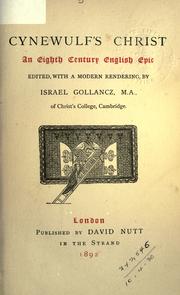
Cynewulf's Christ (Open Library) openlibrary.org

Cynewulf’s Christ (Open Library)
openlibrary.org

Cynewulf is also a writer of religious poetry in a Northumbrian dialect. Ironically, Cynewulf inserts his name into his poems in both Runie and Roman cryptograms. Helena chooses as its theme the finding of the true cross and “Krist.”  The Ascension tells of the disciples meeting Christ at Bethany. The poet speaks of the freewill of man to choose Heaven or Hell. Doomsday is the longest and most powerful section of The Christ. It deals with the destruction of the last judgment. The horror of the end of time is countered by God’s gift of eternal life to mankind. 

Posted in Anglo-Saxons, British history, Living in the Regency, real life tales | Tagged , , , , | 2 Comments

Celebrating the Release of “His American Heartsong” with an Excerpt + a Giveaway

HAHSDear Readers,

At your request, I created Lawrence Lowery’s story. In my Realm series, you first met Sir Carter’s older brother Lawrence in A Touch of Velvet when the future baron came to Linton Park at the request of Viscount Averette to question James Kerrington regarding the disappearance of Velvet Aldridge. Law played a key role in diverting Averette’s attentions long enough for the Realm members to save Velvet Aldridge and the child Sonali Fowler.

In A Touch of Grace, Lowery makes another brief appearance. He comes to London in search of the woman he loves. At Arabella Tilney’s Come Out Ball, Law makes a spectacle of himself by proposing marriage in the middle of the dance floor. That possibility set many of you wondering how the proposal came about. So, this is the story of Arabella Tilney and Lawrence Lowery. The hoydenish American is Lord Hellsman’s “Heartsong.” I hope you enjoy the tale.

As a special point of interest, one will see a reference to Jane Austen’s characters from Pride and Prejudice in this story line. The mentioning of Fitzwilliam Darcy and Elizabeth Bennet is not purely to reel in members of the JAFF community to this story. For those of you new to my works, I also write Austenesque sequels and adaptations for several traditional publishers. Occasionally, my stories crisscross. Adam Lawrence, for example, who is the subject of the tale, His Irish Eve, shows up in both my Regency romances and my Austen-inspired pieces. I love mixing the characters because it provides my readers points of reference to the time period and the social norms. 

Chapter One

“I think…if it is true that there are as many minds as there are heads, then there are as many kinds of love as there are hearts.”

– Leo Tolstoy

“What do you mean, you left them above Derwerth?” Lawrence Lowery demanded. “Please tell me you possess more sense than to leave three women alone on the mountain!”

“But two of them be Americans, Your Lordship.”

The coachman frantically worked his hat’s rim.

Lowery, who stiffened at the groundless denunciation, turned to his father Baron Blakehell.

“Did you hear his imbecilic excuse? It is acceptable to treat these women with no respect because two are Americans! What the bloody hell does that mean?” Law loomed over the hired driver.

Discovering a lack of sense among those gathered at his estate, Law angrily turned toward the stable.

“I require my horse and another for a coach immediately, Sack. I want ten men saddled and ready to ride within a quarter hour,” he barked out orders.

“Yes, Your Lordship.”

The head groomsman hustled to do his bidding.

Lowery spoke privately to the baron.

“I must go.”

“You might send Beauchamp and the men,” his father counseled. “There is no requirement for you to face the danger yourself, Lawrence.”

Lowery touched the baron’s arm gently. Although his father was still quite spry for a man of his age, Law realized the time for his succession drew nearer.

“You understand I must, Father. I would not count myself a gentleman if I left three women in danger.”

Law knew what it meant to be lost in the hills surrounding the estate. At age ten, he thought himself quite grown when he set off on a dare toward the summit of the nearness mountain. He did not make it more than a mile into the wilderness before becoming disoriented. It took his father some six hours to find him, and Law could still recall the fear bubbling in his throat. He could not imagine being both a woman and an outsider and to be lost in England’s famous Peak District.

“I understand.” Blakehell turned toward the manor house. “You will take care, Lawrence. Remember you are my heir.”

Law heard those words his whole life.

“You always have Carter.”

Law could not control his constant need to deflect his father’s demands on him.

“I love my youngest child,” the baron began, “but Carter is not the right person for this title.” Which only meant Carter defied their father on more than one front–something Law rarely did. “Moreover, Carter has his property now; he does not require this one.”

“Yes, Father.”

Law knew the baron meant well, but Lawrence could not spend his life locked in the house, afraid to risk the title. Such was the reason the Baroness Blakehell delivered forth Lawrence’s younger brother Carter, along with the three sisters, which separated the two brothers. An heir and a spare, as the old adage went.

* * *

“How long must we wait for that foolish man to return?” Abigail Tilney complained for the fifth time in an hour.

Arabella’s sister despised any form of discomfort. It was for her wellbeing they took the small coach when traveling on horseback would be more appropriate. Abigail did not ride well, and she refused anything, which did not come naturally to her; therefore, keeping her perfection in tact.

“I imagine at least a couple of hours,” Annalee Dryburgh, their cousin assured Abigail. “Walking the horse after it threw a shoe must slow Mr. Moss’s progress.”

Abigail pulled her cloak tighter about her.

“I hope it is soon. The air is much cooler in the uplands.”

“Lord, Abby, one would think a woman from Virginia’s mountainous region would appreciate the land’s beauty. I certainly prefer it to the coast lines.”

Arabella Tilney stood, feet shoulder width apart and hands on hips, admiring the craggy landscape.

“It is a bog!” Abby asserted.

Bella sighed deeply.

“But the purpose of this journey was to explore the sights. The plateau above from this angle is spectacular. Come look!”

Abby turned her body to rest her head on the coach’s soft cushions.

“The only view of which I wish to partake is the one from my room at the inn,” she grumbled. “Wake me when Mr. Moss returns.”

Bella sat good-naturedly on an uprooted tree trunk. Her party left Hayfield to visit the Kinder Plateau, but did not reach their destination. The horse threw a shoe, and now there was nothing to do but to wait and look out on the land’s beauty. If they traveled by horseback, as Arabella preferred, then they could double up and still make it back safely to the inn. Unfortunately, they foolishly took an open carriage to pacify Abigail, and now she, her sister, and her cousin were without options. Bella wished she persisted when Mr. Moss suggested they all walk the horse out, but again, they deferred to Abby’s insensibility. Now, Bella prayed for Mr. Moss’s early return. She would not wish to hear her younger sister’s tirade if the man did not come before nightfall. Abigail would not be happy, and Bella knew when Abby was not happy, her sister made everyone within earshot miserable.

* * *

“Storm comin’ in, Your Lordship!” Mr. Beauchamp pointed to the encroaching cloudbank. “We should call off the search until it passes. Too dangerous out in the open.”

“Lead the men to the Cliff Hole cottage and wait it out. I will take the extra horse into Brook Pass. If I discover nothing, I will follow you.”

The wind increased, and debris swirled about them.

“Are you certain, my lord? I could go.”

Law knew the baron would claim Beauchamp’s head if Law placed himself in real danger, but Law felt the need to see the situation to a satisfying end.

He shook his head in the negative.

“I must go, Beauchamp. I know it sounds unreasonable; yet, I cannot desert the search so soon.”

“Seek shelter, Sir, if it the conditions become worse.”

“I have it.”

Lawrence took the horse’s leading rope.

“See to the men.”

Law rode toward where the path split, taking the one rising to the plateau. He thought the women quite foolish to attempt such a trek in a carriage, but he understood the female mind as well as any man. He possessed three sisters, and Law could easily imagine one of the Lowery sisters doing the same.

The wind whipped his coat tails, and Law removed his hat so as not to lose it. He scanned the pathway, knowing it unlikely the women strayed from the worn road. His own fears kept him at the task: Law felt the urgency of finding the ladies. He knew the rain line spread across the valley below. He and the women would require immediate shelter; therefore, he nudged the horse forward, picking up the pace.

* * *

“Abby, we must find shelter,” Bella tugged on her sister’s hand. “A storm is coming!”

“I am going nowhere,” the girl asserted. “I am not afraid of lightning.”

Bella looked to where the storm clouds rolled over a nearby ridge. Thunder and lightning preceded nature’s drenching.

“Well, I am! Please, Abby!”

Bella managed to coax her sister to a standing position just as the man approached on a coal black stallion. Despite the insensibility of the idea, Bella thought he resembled a dark angel riding toward them. The stranger whipped the horse’s reins, barreling down on them, but Bella experienced no fear, at least, not from the rider. As dark and as foreboding as the man appeared, she felt her heart lurch in recognition.

Dismounting, the stranger offered them no British civilities. There was no time: Large droplets accompanied him, and they quickly soaked the open carriage seat.

“This way!” he yelled over the tumult, catching Bella’s hand and taking off on a run. By design, her sister and cousin followed.

* * *

Without forethought, Law tugged the girl’s hand again, but she stumbled, unable to match his long strides. Feeling her go down, Law instinctively, grabbed the woman about the waist, lifting her petite form like a sack of flour. In the other hand, he kept a death grip on the horses’ reins. When he found the familiar cave, Law half shoved the woman he carried into the narrow opening, turning awkwardly to pull the other two along the trail.

The rain pelted them with a staccato of droplets, and Law felt the dampness soak his greatcoat, but before he entered the rock face’s slit, he tied the horses to a Spanish oak’s lowest branches. At length, Law squeezed his large form through the opening before shaking the water from his hair and coat.

In the shadowed light, he could barely make out the forms of the three women. They hugged one another tightly, cloaks wrapped around each other–unopened wings of a gigantic eagle.

“Is anyone injured?” he asked between thunderclaps.

From somewhere within the monstrous depths of cooing females, a melodic voice rang clearly,

“No, Sir. We are grateful for your finding us.”

The butterfly wings opened and closed and became three.

He sighed deeply and brushed at his coat sleeves again. Being hunched over in the low-ceilinged crevice reminded Law of his manners at last.

“I am Lord Hellsman.” He timed his introduction between God’s fireworks. “I apologize for my rude entrance on the trail.”

“That is quite acceptable under the circumstances, Your Lordship.” The woman straightened her clothing. “Without you, we could be miserable, suffering the storm’s worst. I am Miss Dryburgh. My father, Lord Dryburgh, is Lord Graham’s second son.”

“From Staffordshire?”

Law prided himself on knowing the British aristocracy’s countryseats.

“Yes, Sir.” The woman remained the group’s spokesperson. “And these are my cousins from America, Miss Tilney. And her sister Miss Abigail.”

Again, Law could not make out the ladies’ faces in the darkness. He could discern only their sizes–both small in stature–one downright petite. He could still feel the pressure of the smallest one along his side where he carried her with him to the cave. Surprisingly, Law found he missed that brief feeling of warmth.

“We are pleased for the acquaintance, Your Lordship,” the sweet voice came from the shadows.

Another lightning flash made the smaller one jump and clutch at her cousin’s arm.

“My sister does not like storms,” the taller one explained.

“Forgive me, Ladies. I must practice discourtesy again. I can barely make you out in the cave’s recess, and I remain a bit disoriented. I discerned that Miss Dryburgh is the tallest in height among the three of you, but between the Miss Tilneys, I claim confusion.”

The melodious voice continued.

“I am Abigail Tilney.”

Law turned his attention to the petite one, the one who trembled from the storm, and the one he carried.

“Then that must make you, Miss Tilney,” he half teased. A squeaky “Yes, Sir” brought a smile to his lips.

“How did you know the cave was here, Your Lordship?” Miss Dryburgh asked.

Law mocked himself.

“When I was ten, I quakingly proved my manliness by hiding in this cave until my father rescued me from my wild imagination. If I am riding in the area, I revisit this spot. It keeps me humble.”

The squeak became a screech with a powerful flash of nature’s worst.

“How…how long will the storm last?”

Lawrence glanced toward the downpour.

“The rain usually lasts several hours.”

“Hours?”

The woman’s voice betrayed her fear.

“Do not worry, Miss Tilney. The fireworks will end soon, even if the rain remains.”

“It will be dark before long,” Miss Dryburgh noted. “I mean darker than it is now.”

Law stared at the sheets of rain streaming along the opening. A waterfall rushing down the cliff face and splashing outside their refuge.

“When it eases a bit, I will gather some wood so we may have a fire.”

“You mean for us to spend the night in this cave, Lord Hellsman!”

The sweetness left Miss Abigail’s voice.

“That is not possible!”

“Miss Abigail, if there were no storm, we might maneuver the limited path down the mountain with some degree of safety. However, between the rain and the fog, which will blanket the woodlands with darkness, there is no prospect of us driving your carriage off this peak tonight. Nor would I consider walking out at this point or even riding the two horses I brought with me. The road is narrow, and one false step could send us plummeting into emptiness. Moreover, who knows what creatures the woods hold?”

“Are you attempting to frighten us, Your Lordship?”

Miss Tilney found her voice. His exaggerations caused her to momentarily forget the storm.

“Absolutely, not, Miss Tilney. Simply speaking the truth. I will not assume the responsibility of bringing danger to our door after rescuing you. No one is injured or requiring medical care; it would be foolhardy to risk our lives.”

Thinking on the conversation, Law could not help but to chuckle.

“What is so amusing, Lord Hellsman?”

The petite one took a confrontational stance.

Law wiped the grin from his lips, but something shifted in his chest.

“I suppose, Miss Tilney, I find it a bit bizarre to have this discussion hunched over from my surroundings and attempting to impress the three ladies of my most recent acquaintance with my ability to protect them through the night. It is somewhat surreal.”

“It is from the ordinary,” Miss Dryburgh took the sting from her cousin’s tone. “We Brits are practical that way, are we not, Your Lordship?”

Although the faces were still in shadows, he could recognize the timbre of their voices.

“Absolutely, Miss Dryburgh.”

“Well, I shall not sleep a wink. What if the walls collapse in on us? What if there are bugs or even snakes!” Miss Abigail declared.

“Then by all means, Abby, be unreasonable,” Miss Dryburgh asserted. “If you were reasonable, we would have ridden out of here hours ago. So, if you do not wish to accept His Lordship’s protection, then walk down the mountain at your own risk.”

“It is not necessary to snipe,” the girl retorted in an obvious pout.

Surprisingly, Miss Tilney took her cousin’s side.

“Yes, Annalee does. You pay no attention unless we snipe, Abby!”

Law felt as if he stepped into an alternate world, one where men finally heard how women really spoke to one another. Mayhap the cave held some sort of magical power: He believed so as a child.

Miss Dryburgh motioned Law to sit, and he was thankful for the lady’s kindness.

“When you wander out for the firewood, Your Lordship, there is a basket under the coach’s seat. The bread is likely ruined, but the other items should still be edible.”

“More British practicality, Miss Dryburgh?” he responded in bemusement.

“Someone must make decisions for our American counterparts. We Brits possess the impeccable manners,” the woman taunted.

“So, we do, Miss Dryburgh.”

Law began to silently count to ten, wondering how long it would be before one of the Tilney sisters reacted to their cousin’s assertion. He reached two.

“Annalee, we are not barbarians! We have culture also. America does not exist only as in the eleventh century with stampeding hordes!”

Miss Tilney closed the distance between them.

Miss Dryburgh laughed aloud.

“I am well aware Lady Althea raised you, Cousin. There is no need to convince me of your affability.” The lady straightened her cloak. “And…by the way, Bella…you have forgotten the storm.”

Arabella Tilney held her fists on her hips but the length of a breath before she joined her cousin in laughter. Hers was a laugh Law thought the most perfect one he ever heard. It held the timbre of soft tinkling bells.

Turning in Law’s direction, Miss Tilney asked, “How might we be of assistance, Your Lordship?”

“I would not have you exposed to the elements, Miss Tilney. My coat is heavier and my gloves thicker.” Lawrence peered through the opening. “The rain is not relenting, but it shall soon be dark. I must go while I may still make out shapes. I will bring the supplies to the opening and hand them to you? If my idea is acceptable?”

Miss Dryburgh shared conspiratorially.

“You discovered Arabella’s weakness, Lord Hellsman. My cousin lives to be of use to others.”

“There are worse vices, Miss Dryburgh.”

Law pulled up his coat’s collar. Then he squeezed through the opening and ran toward the carriage. He retrieved the basket from under the bench. There were two lap blankets stuffed behind the box; he quickly placed them under his coat and ran once again toward the cave.

“Here!” he called as he shoved the items into Miss Tilney’s waiting hands.

Immediately, he turned to where he tethered the horses. At least, under the trees’ thick canopy, the rain did not fall relentlessly. The thick foliage blocked the light, as well as the moisture. Law efficiently removed the saddle and blanket from Triton’s back and carried them to the cave. He dropped it in the opening, saying he would move it when he returned, but Law noticed as he reversed directions that Miss Tilney tugged the leather in from the rain.

After that, Law located as much dry wood from the nearby copse as he could muster. He found several broken limbs and some branches he could use for kindling. It took four trips to stock enough wood for them to maintain a fire during the night. Law knew his men would not come until the morning, and it would be his responsibility to protect the women until then. He found it exhilarating in many ways to fend for his needs. Occasionally, Law enjoyed being from the drawing room and into nature. He often made overnight hunting or fishing trips with some of the local gentry. As one of the highest-ranking men in his county, Law felt the responsibility of maintaining a sense of Society. Yet, having been raised essentially alone, always in training to replace his father, Law appreciated the communion of a group of men enjoying sport.

“That should serve us,” he announced as Law bent over to reenter the cave.

He placed the wood to one side of the opening. Forgetting about the low ceiling, Law banged his head when he instinctively straightened. In embarrassment, he laughed at his error.

“Surprisingly, this cave’s roof descended since I was age ten.”

“It is perfectly tall enough for me, Your Lordship,” Miss Tilney taunted as she spread one of the two blankets he retrieved from the carriage on the earthen floor.

Law studied the lady closely at the diminutive form moving freely about the dead end crevice in which they sought shelter. Miss Arabella Tilney was as busy as the mouse of which she reminded him. First the squeak and now darting everywhere. He shook his head in amusement.

He turned his attention to removing his drenched greatcoat. Law sat close to the cave’s opening.

“I will start a fire. We should place it close to the opening. That will serve for circulation, keeping the heat in and the smoke out. Moreover, I think it important to deter any animal, which might also seek shelter from the elements.”

Abigail half whined as she sat bundled up against the back wall of the enclosure.

“Is there no way we might leave here tonight?”

“In truth, Miss Abigail, I pray my men do not attempt to rescue us this evening. I want none of them to perish. The danger is eminent, and although we may be a bit uncomfortable, we shall not perish. However, the fire at the cave’s opening will serve as a signal if they do search against my orders.”

Law noticed how Miss Tilney and Miss Dryburgh busied themselves with preparing what food they available, as well as a space the ladies might share overnight, while Miss Abigail offered no assistance. His scowl announced Law’s disapproval of those who would not assist themselves.

He used a small spade he kept attached to the saddle to dig a shallow pit; then, Law stacked the wood he found, lacing the kindling between the logs. He removed the flint and a small tin tinderbox he stored in his saddlebag. He struck the steel striker and the flint module against each other to create the sparks to light the tinder, the remnants of a linen cloth scorched for this very purpose. The sparks ignited the tinder, and Law used the spunks to spread the fire to kindling wood he found in the copse. Soon Law had a small fire burning steadily. The heat radiated throughout the tiny enclosure, removing the damp chill and driving away the encroaching darkness.

“That is better,” Law declared as he turned toward the women.

“Come join us, Your Lordship,” Miss Dryburgh gestured to the spread.

Law moved forward on hands and knees.

“Thank you, Miss Dryburgh.”

“One end of the bread remained untouched. It appears you reached it in time, Lord Hellsman,” Miss Tilney revealed.

Lawrence reached for an apple, permitting the women to eat before he chose any of the scarce offerings the ladies placed before him. He took a small bite to make the fruit last longer.

The fire’s muted light provided him a better awareness of the three women.

Abigail Tilney appeared the youngest, likely seventeen or eighteen years of age. She had a head of golden locks that reflected the dancing flames’ brilliance, as well as a long, slender neck. Miss Abigail was likely very lithe in stature based on his peek of her thin arms when the girl reached for the bread. She had yet to remove her cloak so he had no true idea of her figure.

Annalee Dryburgh’s full figure showed well in the gown she chose for the day. Her corset-cinched waist made the woman appear small compared to her ample bust line and hips. Not plump, but judged against the excessively thin Miss Abigail, Miss Dryburgh would be termed well fed. Her chestnut hair framed a heart shaped face.

Then his eyes rested on the elder of the Tilney sisters: Arabella. She possessed nondescript–dull, brown hair–very wavy–small breasts–excessively petite–and always moving–foot tapping–fingers drumming. Amorphous. Yet, for some reason, Law’s eyes remained on her.

“Might we know more of your family, Your Lordship?” Miss Dryburgh asked as she wrapped some bread about hard cheese.

Law’s gaze scanned all three women, but he lingered on the elder of the two Americans.

“My home seat is Blake’s Run in Derbyshire, and I am the eldest son of Baron Blakehell, Niall Lowery. There are three sisters–Louisa, who is married to Ernest Hutton, Lord MacLauren; Marie, who recently married Viscount Sheffield; and, lastly, Delia, the Viscountess Duff. From them, I possess one nephew and two nieces. The youngest of the family is my brother Carter, upon whom the Prince Regent quite recently bestowed a baronetcy for Carter’s service during the war.”

“Two seats within one family? Quite unusual, my lord.”

“It is Miss Dryburgh, but my father is more than pleased to have both his sons holding a title. Sir Carter is renovating Huntingborne Abbey in Kent, under my father’s guidance. Actually, I believe my brother’s situation provides the baron new life; the baron thrives when he has the opportunity to instruct others in the way of the land.” Lawrence grinned knowingly. “The baron is a great one on duty and responsibility.” He took a small sip of the wine, which Miss Tilney poured for him. “And what of you, Ladies?”

“We are seeing some of the English countryside before we travel to London for the Season,” Miss Dryburgh shared. “This will be my second Season. Regrettably, we did not stay the entire Season last year because Grandmamma took ill. My cousins are being presented by our Aunt Sarah, the Marquessa of Fayarrd.”

“And you, Miss Tilney? What of you? Are you anxious for a London Season?” His tone took on a teasing tone.

* * *

Arabella studied the man who literally carried her into their shelter. She thought it amusing in some ways. If His Lordship manhandled either Abby or Annalee as he had her, her relatives would claim a case of the vapors. But Bella knew hard work’s value and was accustomed to being around men. Even so, Lord Hellsman held a mystique, which made Bella a bit uncomfortable. Gentle and aristocratic, the gentleman exemplified the English aristocracy; yet, raw masculinity exuded from him. He made decisions based on reason and followed them through, and Bella found those qualities very appealing.

“Our mother, Sir, was at one time a member of the court, but she left to the Americas with our father some two and twenty years prior. However, she always dreamed of sending her daughters to London to enjoy what she determined was real society.”

* * *

“You spoke of culture earlier, Miss Tilney. Is there no society in America?” he taunted.

She smiled at him, and Law felt something like desire shoot through him.

“The Appalachian Mountains possess their particular culture, but it is not society as you know it, Lord Hellsman.”

“The Appalachians?” he questioned, rolling the word around in his mouth. “I am not familiar with the area.”

“You are in error, Your Lordship,” Miss Tilney corrected. “They are the same mountain range the English celebrates in Scotland and Wales.”

Lawrence enjoyed being challenged. Miss Tilney’s audacity was quite beguiling.

“That is just your theory, Bella,” Miss Abigail asserted. “To think the mountains at home might be under the oceans and part of this land demonstrates your blue stocking education.”

To draw Law’s attention to her, the girl lightly touched his arm.

“I am certain His Lordship does not wish to discuss geography with a mere female.”

Law casually shifted his weight to permit the lady’s hand to fall away.

“Far be it from me to correct you, Miss Abigail, but I find any mental challenge invigorating. Lamentably, any woman who chooses to be successful during the Season must temper her words. Many men prefer their potential wives to simply be an excellent household manager.”

“See, Bella, even His Lordship agrees with me,” Miss Abigail preened. “You cannot be Papa’s hoyden if you expect to attract a husband.”

Miss Tilney shrugged her shoulders.

“Who says I wish a husband? I would be content to return home and to take care of Papa’s house.”

“Of course, you wish a husband,” her sister corrected. “Mama would be horrified to have you return to America unmarried.”

“Papa insists I meet my obligations this Season,”

Miss Dryburgh also did not guard her words.

“I possess two younger sisters who have yet to know a Come Out.”

The parallel world remained: Even his sisters never spoke so liberally before him. Mayhap the openness of the Americans led them all into an instant intimacy. The Tilneys exemplified the American spirit and the American primitiveness, especially Miss Tilney, but Lawrence thought he would not trade this moment in this cave for all the drawing rooms in England. It was freedom.

“Did you travel from Staffordshire?” He asked to change the subject.

“We came to Matlock with my parents,” Miss Dryburgh shared. “They traveled to Lincolnshire to share time with my paternal grandparents. My family thought the Miss Tilneys might enjoy the Peak District after leaving western Virginia. We departed Hayfield this morning.”

And so, the conversation continued over the next ninety minutes. Law told them of the areas’ history, of his estate, and of some of the other families in the area. Miss Dryburgh related like information regarding Staffordshire, and the Tilneys spoke of their lives, describing the land and the people. Ironically, Miss Abigail spoke of rolling hills and Southern manners and a genteel lifestyle at her mother’s feet, while Miss Tilney spoke of rugged mountains, poor tenants, and the use of slaves on the adjoining properties. A more diverse description of their home could not be had. It was as if the sisters described two different lands. Yet, as he thought on it, little difference existed with what he knew of England. Poor tenants and rich landowners subsisted side by side on English estates.

Outside, the rain continued, and Law added more wood to the fire. He could not imagine women of the ton adapting so quickly to their surroundings. Although he suspected Miss Abigail would easily matriculate into the ways of the beau monde, her cousin’s and her sister’s censure managed to quail the girl’s constant complaining.

“I will sleep near the fire to assure it does not go out overnight,” Law announced as the time on his pocket watch indicated sleep might be possible. His clothes remained damp, and a chill ran up and down his spine. If alone, he would remove his boots and his waistcoat, but a gentleman would never think of doing so before a lady. Moreover, if he removed the boots, Law was not certain he could get them on in the morning. The leather would likely shrink.

He permitted the women the blankets to use along with their cloaks, and they made a “group” bed near the enclosure’s back wall. Law used his saddle as a pillow and his damp greatcoat for a blanket. Miserable as he remembered being in a long while, he forced himself to settle on the floor of the rock face.

“Your Lordship,” a half sleepy voice he recognized as Arabella Tilney’s called out, “do you have a gun for protection?”

Law smiled at her practicality.

“Aye, Miss Tilney. Several.”

“That is exceedingly fine, Lord Hellsman,” she said huskily. “So do I.”

Law did not answer. He just widened his smile as he closed his eyes to welcome sleep.

* * *

Law did not know how long he slept–ten minutes or ten hours–but definitely not long enough. A sharp sound came from behind him and to the left, and Law forced his eyes open to permit the fire’s light in. A squeak told him immediately who and a sharp crack of thunder told him what, as he scrambled to his feet to reach her. This new storm, was, obviously, more violent than the previous one.

Arabella Tilney huddled, like a broken animal, against the cave’s sidewall, shivering and incoherent. A quick glance behind told him neither Miss Dryburgh nor Miss Abigail heard their traveling companion, and for a moment, Lawrence wondered if he should wake them. But Miss Tilney cringed and covered her head with her arms in a protective stance, and Law could do nothing less than to take her in his embrace. He draped an arm about her small form. On his knees before her, he gently encompassed her, hiding the woman’s face in his chest and pulling Miss Tilney to him.

“Easy, Sweetling,” he whispered close to her ear. “I have you.” Another thunderclap and an accompanying lightning bolt sent her clawing at his shirt and whimpering. “Come, Mouse.”

Law rocked the lady in place, stroking her back and caressing her arms.

“I will permit nothing to harm you.”

The woman clutched at him, attempting to, literally, crawl under his skin, seeking his body as her shield, Miss Tilney plastered herself to him.

“Do not leave me,” she begged.

“Never, Sweetling,” Law murmured.

Madness claimed his reason. He held the woman in an intimate embrace, and if either of her relatives awoke and observed them, Law would be honor bound to offer for the lady; however, he could not release Miss Tilney. More than Arabella Tilney’s obvious distress, Law enjoyed the feel of her along his body: her heat mingling with his. The blood rushed to his groin. She fit. Fit as if she were made for him alone.

“Come, Mouse.” Law nuzzled behind her ear. “Come with me.” Bent over, Law led the woman to his makeshift bed. “I will hold you until the storm passes.”

Miss Tilney came willingly, never doubting Law’s honorable treatment of her. She permitted Law to ease her down beside him on the rock face and then to spoon her body with his. Beyond the opening, the storm raged on, and so Arabella Tilney scooted her backside into him. Her back pasted to Law’s chest. Her hips to his groin. If she noticed the hardened bulge, Miss Tilney lodged no objections. Instead, she wriggled closer, massaging his body with hers.

Lawrence inched nearer to her, accepting the exquisite line of Miss Tilney’s form. He dropped an arm across her, holding the lady to him and stroking Miss Tilney’s hair from her cheek. When she wormed nearer, Lawrence permitted himself the pleasure of grinding his erection into her buttocks’ crevice. Alas, it did nothing to relieve the “itch” to possess the woman; the movement only stoked the flame. Beyond normal reason, Law wanted her more than any woman he ever knew.

The woman drew Law to her, catching his shoulder and draping his body over hers as Miss Tilney rested her head on his outstretched arm.

“Thank you,” she whispered as she closed her eyes.

“Any time, Mouse,” Law breathed as he lowered his head to hers. He found his breathing turning shallow. Law had not taken a woman for some time, but his instant attraction to this prosaic female made no sense. Arabella Tilney was definitely not his type. In fact, her cousin better fulfilled his usual attraction. Law preferred a woman whose breasts more than filled his palms and whose long legs wrapped easily about his body. Although he favored a local widow, Mrs. Winslow, when he required an evening of decadence, unlike other men of his rank, Law kept no mistress. Mayhap that was the source of his reaction to this woman: He needed to call on the widow. Need and release.

Yet, as the innocent Arabella Tilney finally went still and returned to sleep in his embrace, Lawrence felt a complete peace sweep over him. Yes, his erection still screamed for completion, and, yes, his eyes examined her body in minute detail, but Law’s heartbeat became steady, as if it knew the lady as its own. The thought of such lunacy caused Law to shiver from the unknown.

As if Miss Tilney understood, the woman caught the hand, which pressed her to him and brought it to her lips. She kissed his fingertips before sighing deeply; yet, never once, did she open her eyes.

Law’s erection jerked again, and he leaned forward to kiss her temple lightly.

“You are a corundum, Sweetling.”

Law knew himself deranged simply to lie beside the woman, as if taunting the others to catch them together, but he did not move away. Law’s heart sang a song of familiarity. He closed his eyes and breathed in the scent of Miss Tilney. Sweet lavender covered him as Law closed his eyes to welcome sleep.

_______________________

Leave a comment below to be entered in the giveaway for an eBook copy of His American Heartsong. 

Kobo

Kindle 

Nook 

CreateSpace

Amazon 

Posted in British history, Great Britain, Living in the Regency, Regency era, Uncategorized | Tagged , , , , | 17 Comments

A Happy “June” Birthday to Some of Our Favorite “Austen” Actors

birthday-cake-happy | Sizzle/Koi sizzlekoi.ca

birthday-cake-happy | Sizzle/Koi
sizzlekoi.ca


June 2 ~ Dominic Cooper (John Willoughby in 2007’s Sense and Sensibility)images


Unknown-3

June 2 ~ Liam Cunningham (General Tilney in 2007’s Northanger Abbey)Unknown-4

June 3 ~ James Purefoy (Tom Bertram in 1999’s Mansfield Park)


1ylkoaab4u3vlyimagesJune 3 ~ Celia Bannerman (Elizabeth Bennet in 1967’s Pride and Prejudice)

June 4 ~ James Callis (Colonel Andrews in Austenland, as well as Tom in Bridget Jones: The Edge of Reason)


Unknown-3imagesJune 9 ~ Sonam Kapoor (Aisha Kapoor in Bride and Prejudice)


June 12 ~ Frances O’Connor (Fanny Price in 1999’s Mansfield Park)


imagesUnknown-3June 14 ~ Blake Ritson (Edmund Bertram in 2007’s Mansfield Park, as well as Mr. Elton in 2009’s Emma)

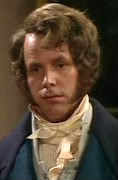
June 19 ~ Samuel West (Mr. Elliot in 1995’s Persuasion)


Unknown-3June 21 ~ David Morrissey (Colonel Brandon in 2008’s Sense and Sensibility)images

June 24 ~ Daniel Vincent Gordh (Mr. Darcy in The Lizzie Bennet Diaries)


sands1971_colbrandon1w1-1June 26 ~ Clive Francis (John Willoughby in 1971’s Sense and Unknown-3Sensibility

June 28 ~ Alic Krige (Lady Russell in 2007’s Persuasion)


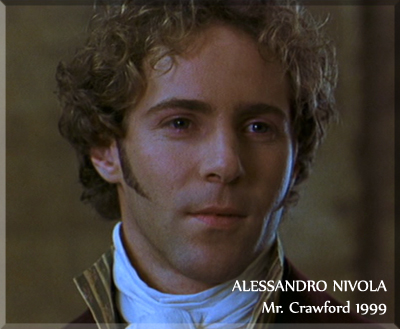
crawford_nivolaJune 28 ~ Alessandro Nivola (Henry Crawford in 1999’s imagesMansfield Park)

June 29 ~ Bret McKenzie (Martin in Austenland)


Posted in Uncategorized | 7 Comments

Precision in Language Choices

readmorewritemorethinkmorebemore: July 2010 www.readmorewritemorethinkmorebemore.com

readmorewritemorethinkmorebemore: July 2010
http://www.readmorewritemorethinkmorebemore.com

Precision in Language Choices

Choosing the precise word or phrase remains a challenge for all authors, whether they write professionally or for their own pleasure. The majority of those who make a living from writing have knowledge of words they never use in their creations. I write novels based in the Regency Period (1811-1820). Contemporary words/phrases such as Google, 3D, iPhone, and mouse are replaced by acquiesce, obeisance, imprudence, and forbearance. From this quick example, one can easily observe that the number of words of which a person uses in his writing falls short of the number of which he is familiar. Add to that fact, how quickly the English language changes, and an author/poet will find it difficult to keep up with the flexibility of the language. Yet, some basics persist. It is the writer’s responsibility to use the best word(s) for a particular situation. Instead of choosing a word, it is important to choose the word that expresses the exact meaning he intends. (For the examples below, I give credit to my college journalism professor. These examples remain in my spiral notebook even after all these years.)

That particular professor is known to send off detailed emails to authors to point out usage errors. His influence had me recently sending a quick message to the local news station which reported that two planes nearly collided (one in take off and one in landing). The news anchor called the incident a “near miss.” My email reminded the news group that a “near miss” means one hit something. A “near hit” means someone avoided the impact. 

Affect, Effect
Affect is a verb meaning to influence.
Effect is a noun meaning result.

Influence, Impact (two words often associated with affect/effect)
Influence refers to the ability to cause desired effects.
Impact means to strike or to collide; to wedge in.

Acute, Chronic
Acute indicates intenseness; that something has become immediately critical.
Chronic means recurring or continuing over a considerable time.

Adapt, Adopt, Adept
Adapt means to adjust to a changing situation.                                                                          Adopt means to accept something as one’s own.                                                                    Adept means having skills.

Adverse, Averse
Adverse means unfavorable.
Averse means having a distaste for something.

Aggravate, Annoy, Irritate
Aggravate means to make worse or more troublesome. It is used to refer to things.
Annoy means to make angry, usually through repetition. Use it to refer to people.
Irritate means to provoke to impatience or anger.

Agree To, Agree With
Agree to is used to refer to things.
Agree with is used to refer to people.

Character, Reputation
Character is the sum of a person’s behavior and his moral standards.
Reputation is other people’s perception of the person.

Each Other, One Another
Each other is used when two people, places or things are involved.
One another is used for three or more.

Cynic, Skeptic
Cynic refers to a person who doubts or denies the goodness of human nature and does so in a sarcastic manner.
Skeptic refers to a person who has a doubting, questioning attitude. He wants evidence to prove his ideas.

Allusion, Delusion, Illusion
Allusion is an indirect mention.
Delusion is to believe in something even when evidence shows otherwise.
Illusion is a false or misleading idea or image.

Expect, Anticipate
Expect is used when no preparation is made.
Anticipate is used when preparation has been made for something that will occur.

Smell, Odor, Aroma
Smell is a neutral word depending on the surrounding words.
Odor refers to something unpleasant.
Aroma refers to something pleasant.

Eager, Anxious
Eager shows impatient desire.
Anxious indicates worry or concern.

Appraise, Apprise
Appraise means to determine the value.
Apprise means to notify or inform.

Cement, Concrete
Cement is the powder used as an adhesive ingredient in concrete. (Note! Cement is not a verb.)

Doctor
Doctor is a title, not a profession. It should be used generically. Use physician, minister, professor, etc., for more specific descriptions.

Pretense, Pretext
Pretense refers to a false appearance or action used purposely for deception.
Pretext is a false or fabricated reason, developed to hide the truth.

Because, Since
Most writers make no distinction in use between these two words. However, there are certain differences that should be addressed.
Because is used to indicate a cause or a reason.
Since refers to time, meaning between then and now.

To be fair, English is full of such traps. After all, I can deposit my paycheck in a bank, I can sit on the riverbank to fish, or I can bank a basketball off the backboard. English is a language where one’s nose runs and his feet smell. It possesses a deceptively complex structure, but it is well worth knowing English’s subtleties.

Posted in Uncategorized | Tagged , , | 5 Comments

Primogenture and the 19th Century Entail

Chatsworth_BridgeAs it had been for centuries, a man’s status in 19th Century British Society rested in the land he held. Land was a symbol of wealth and social rank. Therefore, the need to pass one’s “wealth” to future generations increased with the amount of land owned. Land was “influence,” as well as affluence. To ensure one’s descendants received what had been incurred, a system known as primogeniture was put in place. Primogeniture meant that all the land in each generation’s possession was left to the eldest son in the family rather than being divided equally among off the offspring. Secondly, an entail assured that said “eldest son” could not mortgage or divide or sell said inheritance. It was to be held for his eldest son, etc., etc., etc.

Primogenture developed during Norman times. The concept was by leaving the land to the eldest son, the estate would remain intact for future generations. It would also be economically capable of supporting a military force, which could assist the king. By the 19th Century, the King/Queen had other means to field a military presence, and social status became the basis of the practice. Customarily, primogenture was part of a gentleman’s will or deeds of settlement. This practice remained intact until 1925, when it was changed by law.

The entail prevented a wastrel from selling off the family estate to pay his debts. Do you recall Sir Walter Eliot in Jane Austen’s Persuasion. “There was only a small part of his estate that Sir Walter could dispose of; but had every acre been alienable, it would have made no difference. He had condescended to mortgage as far as he had the power, but he would never condescend to sell. No; he would never disgrace his name so far. The Kellynch estate should be transmitted whole and entire, as he had received it.” An entail was defined by a deed of settlement (or) a strict settlement. The heir normally received the land for his use ONLY in his lifetime. His rights ceased to exist upon his death.

Originally, many attempted to entail their properties until the end of the world, so to speak. However, the law would not permit “infinity” to stand. In practice, an entailed property only remained so until the grandson of the land owner making the settlement became of age at 21 years. Then, the heir could sell or give away the property. So, theoretically, the entail only held the land through the first and second generation of land owners. However, a little coercion often secured the land for future generations.

Most land owners (and their sons) held no other financial employment. If the property owner’s son wished to keep his “allowance,” he agreed to sign a new deed of settlement, which would assure the property remained in the family for another two generations, etc., etc. However, what if no males were born to inherit? A family line could end if a female remained single or even if she married. Single females had no children to inherit, and through married females, the property passed to someone outside the family.

Such a “disaster” was part of the plot of Jane Austen’s Pride and Prejudice.

“‘Oh! my dear,’ cried his wife, ‘I cannot bear to hear that mentioned. Pray do not talk of that odious man. I do think it is the hardest thing in the world that your estate should be entailed away from your own children; and I am sure if I had been you, I should have tried long ago to do something or other about it.’ Jane and Elizabeth attempted to explain to her the nature of an entail. They had often attempted it before, but it was a subject on which Mrs. Bennet was beyond the reach of reason; and she continued to rail bitterly against the cruelty of settling an estate away from a family of five daughters, in favour of a man whom nobody cared anything about.”

Phoebe Nichols as Elizabeth Elliot

Phoebe Nichols as Elizabeth Elliot

The females, however, often found another means of “retaining” the property. Propriety permitted cousins to marry. A girl could remain in her childhood home when no males were available to inherit by marrying the “heir presumptive.” It was Elizabeth Eliot’s hope in Austen’s Persuasion to marry William Walter Eliot, Esq., her father’s heir. “She had, while a very young girl, as soon as she had known him to be, in the event of her having no brother, the future baronet, meant to marry him.”

And Mrs. Bennet wishes Elizabeth to marry the odious Mr. Collins in order to save Longbourn. In his proposal, Mr. Collins explains why he assumes one of the Bennet sisters would accept him.

Brenda Blethyn as Mrs. Benent

Brenda Blethyn as Mrs. Benent

“Thus much for my general intention in favour of matrimony; it remains to be told why my views were directed to Longbourn instead of my own neighbourhood, where I assure you there are many amiable young women. But the fact is, that being, as I am, to inherit this estate after the death of your honoured father (who, however, may live many years longer), I could not satisfy myself without resolving to chuse a wife from among his daughters, that the loss to them might be as little as possible, when the melancholy event takes place—which, however, as I have already said, may not be for several years. This has been my motive, my fair cousin, and I flatter myself it will not sink me in your esteem. ”

Primogenture also created the concept of second and third sons searching for an heiress to marry so they might establish their own properties. It also sent marriage mad mothers into fits. There were only a limited number of eldest sons for daughters to land. Colonel Fitzwilliam in Pride and Prejudice says “Younger sons cannot marry where they like.” The real irony of this madness was the eldest son also inherited the debt from the previous generation. Even being the heir was not an path to “easy street.”

Posted in British history, Great Britain, Jane Austen, Living in the Regency, primogenture, real life tales, Regency era, Victorian era | Tagged , , , , , , | 2 Comments