Lady Theodora Duncan, daughter and only child of Lord Macdonald Duncan, reluctantly embarks on a London season in hopes of making a suitable match. She had always thought she would marry Lord Alexander Dutton, 12th Earl Marksman. After all, they had been raised together in her father’s house since Duncan became Marksman’s guardian when his lordship was but twelve. Her father’s estate marches along with Marksman’s, and they had shared multiple words of devotion, as well as stolen moments and heated kisses. Yet…
Lord Alexander Dutton always planned to marry Lady Theodora Duncan, but not until he finds his family. His father, long before Robert Dutton became the heir to the Marksman’s peerage, had sold Alexander’s mother and younger sister to the captain of a sailing ship. Alexander has searched for them for some ten years, spending thousands of the Marksman fortune in his desire to reclaim them. He cannot think truly to know happiness until he can share his title and his wealth with them. Assuredly, Theodora understands why he has not made an offer of marriage. Yet, if she does, then why does he constantly find her on the arm of a Sardinian count? He never expected Theodora’s abandonment, but Alexander is finally so close to knowing his real family again.
JOIN ME TODAY ON FACEBOOK ON BOTH THE DRAGONBLADE READERS GROUP [9 A.M. – 4 P.M. EST] AND ON THE TEA ROOM [5-6 P.M. EST]. I WILL BE CELEBRATING THE RELEASE !!!!
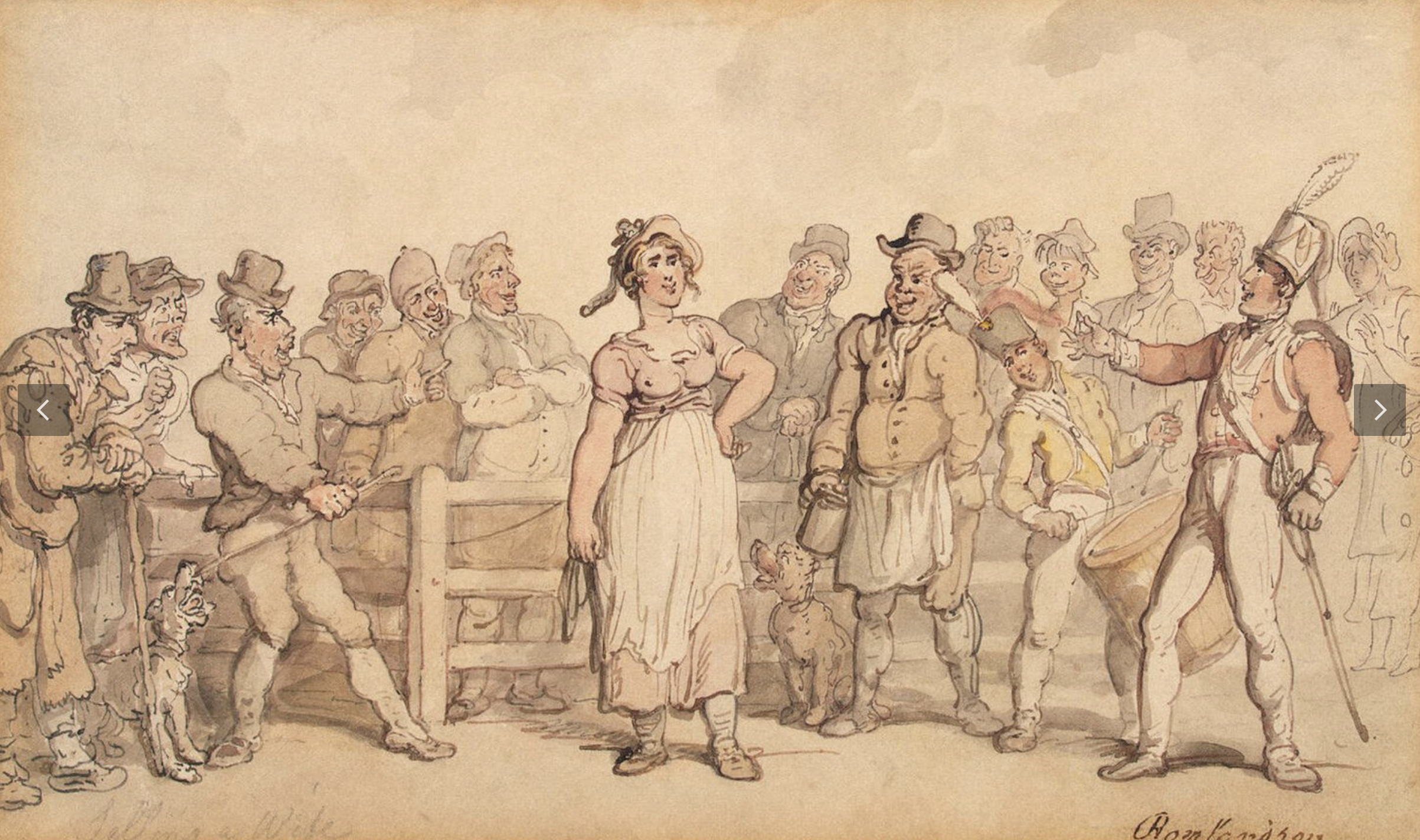
In this tale, the reader learns that Alexander Dutton’s father sold his mother and younger sister in what Robert Dutton claimed was a way to save them from the life in which Robert has sank, but was this legal in Regency England?
A man sitting in the House of Lords who wished a divorce could do so my bringing charges against his wife in a VERY PUBLIC proceeding. [Note: The wife did not have that option.] The local newsprints would publish the testimony against the woman. Legally, this was known as Criminal Conversation. I live in North Carolina where Crim Con is still the law on the books. There are seven U.S. states that still have criminal conversation laws on the books: Hawaii, Illinois, Mississippi, New Mexico, North Carolina, South Dakota, and Utah. Many states have abolished criminal conversation laws, along with similar “heartbalm” actions like alienation of affection.
Before she died, U. S. Senator Elizabeth Edwards considered suing Andrew Young, a former aide to her husband John Edwards, who was running for President in 2008, for Young’s alleged role in covering up John Edwards’ affair with Rielle Hunter, arguing “alienation of affection.” As I said above, North Carolina is one of the few states that allows a third party to be sued for contributing to the dissolution of a marriage.
Of course, none of that has to do with this new book, but it does reflect how such scandal can bring down an important public figure.
If you ever read Thomas Hardy’s 1866 novel, The Mayor of Casterbridge: The Life and Death of a Man of Character, you might know something of the custom practiced in England of wife selling. Wife selling dates back to the 17th Century as a means for the poor to earn a divorce. Hardy’s plot points add depth of reality to my own tale.
The “ritual” of wife selling likely originated around the end of the 1600s, though there is one account of a man deeding his wife to another that is dated 1302. [Bryce, James (1901), Studies in history and jurisprudence, Vol. II, Oxford University Press, pg. 820.]The practice was common enough in the 17th century for the English philosopher John Locke to write (apparently as a joke) in a letter to French scientist Nicolas Toinard [fr] that “Among other things I have ordered you a beautiful girl to be your wife … If you do not like her after you have experimented with her for a while you can sell her and I think at a better price than a man received for his wife last week in London where he sold her for four sous a pound; I think yours will bring 5 or 6s per pound because she is beautiful, young, and very tender and will fetch a good price in her condition.”[Locke, John (2002). John Locke : selected correspondence. Oxford: Oxford University Press. pp. 76–77.]
Pateman, Carol (1988), The Sexual Contract. Stanford University Press, pg. 21
Though it lacked a basis in law and one could be prosecuted if caught doing so, many magistrates looked the other way. After all, the local Poor Law Commissioners often forced the husband to sell his wife rather than having to maintain the whole family in the workhouse. I talking mid 1800s, Some form of wife selling persisted in England until the early 20th Century. In one of the last reported instances of a wife sale in England, a woman gave evidence in a 1913 Leeds police court where she claimed to have been for £1to a man with whom her husband worked.
Until the passing of the Marriage Act 1753, a formal ceremony of marriage before a clergyman was not a legal requirement in England, and marriages were unregistered. All that was required was for both parties to agree to the union, so long as each had reached the legal age of consent, [Bryce (1901), pp. 816–817] which was 12 for girls and 14 for boys. [The Scottish Case that Led to Hardwicke’s Marriage Act]. Women were completely subordinated to their husbands after marriage, the husband and wife becoming one legal entity, a legal status known as coverture. As the eminent English judge Sir William Blackstone wrote in 1753:”the very being, or legal existence of the woman, is suspended during the marriage, or at least is consolidated and incorporated into that of her husband: under whose wing, protection and cover, she performs everything”.
Married women could not own property in their own right, and were indeed themselves the property of their husbands. [Caine, Barbara; Sluga, Glenda (2002). “Gendering European History: 1780-1920, Continuum, pp. 12-13.] But Blackstone went on to observe that “even the disabilities the wife lies under are, for the most part, intended for her protection and benefit. So great a favourite is the female sex of the laws of England”.
Lyon’s Obsession: The Lyon’s Den Connected World
Short on temper. Long on pride. True to his word.
Lady Theodora Duncan, daughter and only child of Lord Macdonald Duncan, reluctantly embarks on a London season in hopes of making a suitable match. She had always thought she would marry Lord Alexander Dutton, 12th Earl Marksman. After all, they had been raised together in her father’s house since Duncan became Marksman’s guardian when his lordship was but twelve. Her father’s estate marches along with Marksman’s, and they had shared multiple words of devotion, as well as stolen moments and heated kisses. Yet…
Lord Alexander Dutton always planned to marry Lady Theodora Duncan, but not until he finds his family. His father, long before Robert Dutton became the heir to the Marksman’s peerage, had sold Alexander’s mother and younger sister to the captain of a sailing ship. Alexander has searched for them for some ten years, spending thousands of the Marksman fortune in his desire to reclaim them. He cannot think truly to know happiness until he can share his title and his wealth with them. Assuredly, Theodora understands why he has not made an offer of marriage. Yet, if she does, then why does he constantly find her on the arm of a Sardinian count? He never expected Theodora’s abandonment, but Alexander is finally so close to knowing his real family again.
Spencer Perceval, the British Prime Minister, was assassinated on May 11, 1812, about 5:15 P.M., by John Bellingham in the lobby of the House of Commons. Bellingham, a Liverpool merchant with grievances against the government for failing to compensate him for losses in Russia, shot Perceval at point-blank range in the chest. Perceval’s last words were reportedly “I am murdered!”. Bellingham made no attempt to flee and was quickly arrested. He was tried, convicted, and executed by hanging at Newgate Prison a week later.
The Assassin: John Bellingham, a merchant who felt wronged by the British government’s handling of his business affairs in Russia. He had previously petitioned for compensation for his losses, which were related to his imprisonment in Russia and his inability to manage his affairs upon his return.
The Motive: Bellingham believed that assassinating a high-ranking government official would draw attention to his grievances and force the government to address them, according to The History Press.
The Attack: On May 11, 1812, as Perceval entered the House of Commons lobby, Bellingham approached him and fired a single shot from a pistol, hitting Perceval in the chest.
The Aftermath: Perceval was carried into an adjoining room but was already unconscious and died shortly after. Bellingham made no attempt to escape and was quickly apprehended.
Trial and Execution: Bellingham’s trial took place at the Old Bailey, where his plea of insanity was rejected, and he was found guilty. He was hanged at Newgate Prison on May 18, one week after the assassination.
Consequences: Perceval remains the only British Prime Minister to have been assassinated. His death led to a change in government, with Lord Liverpool taking over as Prime Minister and some of Perceval’s policies being reversed.
Perceval was not the most well-liked Prime Minister, but his lack of popularity did not cause the attack by Bellingham. Said to be highly religious, Perceval aligned himself with evangelicalism. He trained at Lincoln’s Inn to be a barrister and was called to the bar in 1786. With the help of his wealthy family, he acquired a lucrative practice. He married Jane Wilson and 1790, and they had 12 children (6 boys and 6 girls).
Perceval’s extreme conservative policies had him the “enemy” of many. He served under Will Pitt’s government, speaking out again “radical” ideas. In 1796, he refused the post of Chief Secretary for Ireland. He was not popular with the Irish Catholics. Spencer Perceval, as Prime Minister of the United Kingdom and Ireland, generally opposed concessions to Catholics, particularly in Ireland, and his stance contributed to the political climate surrounding the issue. He was a strong opponent of Catholic emancipation and played a role in the fall of governments that attempted to introduce such measures. While he supported the Act of Union with Ireland, he didn’t view it as a solution to Catholic issues.
Lyon’s Obsession: The Lyon’s Den Connected World
Short on temper. Long on pride. True to his word.
Lady Theodora Duncan, daughter and only child of Lord Macdonald Duncan, reluctantly embarks on a London season in hopes of making a suitable match. She had always thought she would marry Lord Alexander Dutton, 12th Earl Marksman. After all, they had been raised together in her father’s house since Duncan became Marksman’s guardian when his lordship was but twelve. Her father’s estate marches along with Marksman’s, and they had shared multiple words of devotion, as well as stolen moments and heated kisses. Yet…
Lord Alexander Dutton always planned to marry Lady Theodora Duncan, but not until he finds his family. His father, long before Robert Dutton became the heir to the Marksman’s peerage, had sold Alexander’s mother and younger sister to the captain of a sailing ship. Alexander has searched for them for some ten years, spending thousands of the Marksman fortune in his desire to reclaim them. He cannot think truly to know happiness until he can share his title and his wealth with them. Assuredly, Theodora understands why he has not made an offer of marriage. Yet, if she does, then why does he constantly find her on the arm of a Sardinian count? He never expected Theodora’s abandonment, but Alexander is finally so close to knowing his real family again.
In this second book of my new Dragonblade romantic suspense/mystery series, the hero, Lord Alexander Marksman, has been searching for his family for some fifteen years. His mother and sister are supposedly somewhere in what was then called the British West Indies, but most of the leads he had known have been dead ends.
Alexander’s father was never meant to inherit the Marksman earldom, and Robert Dutton and Alexander had been living in the London slums for years. In fact, Alexander was born in those slums. One of Alexander’s motivations to become the 12th Earl Marksman was to have enough money to search for his mother and sister, who were supposed to be some where along the coasts of North and South America. But what was the British government’s interest in 1812 in what came to be known as the British West Indies?
The British Empire Series, Vol. III: British America. Kegan Paul, Trench, Trübner & Co. Ltd, London 1900. ~ Public DomainWikipedia ~ BWI in red and pink (blue islands are other territories with English as an official language) ~ CC BY-SA 4.0
In 1812, British interest in the West Indies was primarily driven by economic and strategic concerns related to the lucrative sugar trade and the need to protect its Caribbean possessions during the Napoleonic Wars. The islands were vital for revenue, especially to fund the war effort in Europe, and their defense was paramount to maintaining British power in the region.
Economic Importance: The West Indies were a major source of wealth for Britain, particularly due to sugar production and the associated trade. The profits and trade from these islands were crucial for the British economy and helped finance the war against Napoleon.
Strategic Significance: The islands were strategically important for maintaining Britain’s naval power in the Atlantic and for protecting British shipping routes. The British feared French and American incursions into the region, which could disrupt trade and challenge their dominance.
War of 1812: The outbreak of the War of 1812 between Britain and the United States added another layer of complexity. The British needed to defend the West Indies from potential American attacks while also maintaining their naval presence in the region.
Naval Strategy: The British naval strategy was influenced by the need to protect the West Indies, with a focus on maintaining control of sea lanes and intercepting enemy shipping.
West India Regiments: The West India Regiments, composed of local soldiers, played a key role in defending the islands and were formally part of the British Army. These regiments were crucial for maintaining order and defending against potential uprisings or attacks.
Privateering: Both the British and Americans engaged in privateering, using privately owned armed ships to attack enemy merchant vessels. This further complicated the situation in the West Indies, with privateers from both sides targeting shipping lanes in the region.
Lyon’s Obsession: The Lyon’s Den Connected World
Short on temper. Long on pride. True to his word.
Lady Theodora Duncan, daughter and only child of Lord Macdonald Duncan, reluctantly embarks on a London season in hopes of making a suitable match. She had always thought she would marry Lord Alexander Dutton, 12th Earl Marksman. After all, they had been raised together in her father’s house since Duncan became Marksman’s guardian when his lordship was but twelve. Her father’s estate marches along with Marksman’s, and they had shared multiple words of devotion, as well as stolen moments and heated kisses. Yet…
Lord Alexander Dutton always planned to marry Lady Theodora Duncan, but not until he finds his family. His father, long before Robert Dutton became the heir to the Marksman’s peerage, had sold Alexander’s mother and younger sister to the captain of a sailing ship. Alexander has searched for them for some ten years, spending thousands of the Marksman fortune in his desire to reclaim them. He cannot think truly to know happiness until he can share his title and his wealth with them. Assuredly, Theodora understands why he has not made an offer of marriage. Yet, if she does, then why does he constantly find her on the arm of a Sardinian count? He never expected Theodora’s abandonment, but Alexander is finally so close to knowing his real family again.
William Booth was an English farmer turned forger from the Birmingham area of England. My story is set in 1812, and this was called the “Restriction Period.” The quick growth of England’s population, but, more importantly, the many wars England was fighting during that time period, as well as social unrest at home, had the government issuing new, low denomination, and easily-reproducible bank notes. These slip-slap methods opened the door to forgers, some on a small basis and some of the nature of William Booth.
[For more information on the Restriction Period, visit my post today on Always Austen.]
Pencil Drawing of William Booth ~ Public Domain
Born near Beaudesert, Warwickshire in 1776, Booth was one of eight children to a farmer and church warden, John Booth. In 1799, he signed a 25-year lease for 200 acres of land that would eventually be known as “Booth’s Farm.” That land was part of the Perry Hall estate in Perry Barr, Staffordshire. Perry Barr is now known as Great Barr and is in the city of Birmingham.
In 1808, William Booth was accused of murdering his brother John, but he was acquitted due to a lack of evidence.
Back at the farm, Booth converted the top floor of the farmhouse into a fortified workshop where he produced forgeries of bank notes, but also of promissory notes, coins, tokens, etc., essentially anything of monetary value.
John Linwood, a constable from Birmingham, led the raid on Booth’s farm. With him were ten special constables and seven dragoons.
Booth was arrested, and charged with five counts:[
“forging a 1l. note, purporting to be a promissory note of the Bank of England”
“for making paper, and having in [his] possession and using a mould for making paper, with words ‘Bank of England’ therein”
“for using plates for making promissory notes in imitation of Bank of England notes, and for having blank bank notes in their possession without a written authority from the Governor and Company of the Bank of England, against Statute of 45th Geo. III.”
“for coining dollars, against the statute 44th Geo. III.—The indictment charged the prisoners with coining a piece of coin called a dollar, having an impression on the obverse side of his Majesty’s head, and the words ‘Georgius—III. Dei Gratia Rex,’ and on the reverse, a figure of Britannia, and the words ‘Five Shillings. Dollar. Bank of England, 1804.'”
“for coining 3s. Bank Tokens, against the Statute of 51st of his present Majesty”
Each was tried consecutively, with the same jury throughout, before Simon Le Blanc, at Stafford Assizes over two days. He was found guilty on all counts and sentenced to hang.
Booth’s public execution, outside Stafford jail, on 15 August 1812 was bungled, and he fell through the scaffold’s trap door to the floor. Within two hours, he was hanged again and died.
There is a song by Jon Raven entitled “Twice Tried, Twice Hung, Twice Buried.” [You can find the lyrics HERE.]
Lady Theodora Duncan, daughter and only child of Lord Macdonald Duncan, reluctantly embarks on a London season in hopes of making a suitable match. She had always thought she would marry Lord Alexander Dutton, 12th Earl Marksman. After all, they had been raised together in her father’s house since Duncan became Marksman’s guardian when his lordship was but twelve. Her father’s estate marches along with Marksman’s, and they had shared multiple words of devotion, as well as stolen moments and heated kisses. Yet…
Lord Alexander Dutton always planned to marry Lady Theodora Duncan, but not until he finds his family. His father, long before Robert Dutton became the heir to the Marksman’s peerage, had sold Alexander’s mother and younger sister to the captain of a sailing ship. Alexander has searched for them for some ten years, spending thousands of the Marksman fortune in his desire to reclaim them. He cannot think truly to know happiness until he can share his title and his wealth with them. Assuredly, Theodora understands why he has not made an offer of marriage. Yet, if she does, then why does he constantly find her on the arm of a Sardinian count? He never expected Theodora’s abandonment, but Alexander is finally so close to knowing his real family again.
The River Lea plays a major role in one of the most dramatic scenes in Lyon’s Obsession, but I imagine many readers of the tale may know nothing of it. For example, how close to London is it? As it flows into the Thames, it is likely closer than one would think.
For example, I am a big Ted Lasso fan. If you are also, you would know that Richmond, where the make believe football (soccer) team played, is some ten miles from London proper. Not a great distance nowadays, but it the Regency era that was, at least, an hour and a half drive for a well sprung coach.
Bow Locks near Bromley-by-Bow, London – which allow passage between the tidal Bow Creek section of the River Lea-Lee Navigation and the Limehouse Cut (part of a canal).The locks are administered by British Waterways. ~ Wikipedia ~ CC BY-SA 1.0
Same goes for the River Lea. It originates in Bedfordshire in the Chiltern Hills and flows southeast through Hertfordshire, along the Essex border and into Greater London. It meets the River Thames at Bow Creek. It is one of the largest rivers in London and the easternmost major tributaries of the Thames. It has been made more and more navigable for boats by the Lee Navigation.
The River Lea is a major tributary of the River Thames. It has a long association with navigation, as the marshes of Walthamstow have produced a dugout canoe from the Bronze Age and parts of a Saxon barge. According to the Anglo-Saxon Chronicle, the river was used by Viking raiders, and King Alfred changed the level of the river to strand Guthrum and his fleet. [ Boyes & Russell 1977, pp. 22–23.] In more peaceful times, it became important for the transport of grain from Hertfordshire, but navigation of its southernmost tidal reaches of Bow Creek were difficult due to its tortuous meanders. one can find an interesting chart regarding Lee Navigation HERE.
The point I am making here is to write good historical stories, a true writer does his/her research, even something that might be only a line or two in the mix of an 80,000 words+ tale. It is important to have it right and matched with the time period.
For example:
The man in black had directed Theodora along a narrow path through the woods surrounding the house. She had forgotten there was a tributary of the Thames in this area—the River Lea began in Bedfordshire, in the Chiltern Hills, and flowed southeast through Hertfordshire and into Greater London to meet the Thames at Bow Creek, though the man proudly told her so as he spoke of her death in the river. Although her captor called her a variety of derogatory names, Dora set herself a reasonable pace so she would not be so winded when she attempted to run away from the man. When the time came, it would be necessary for her to be in a position to fight.
Within a few minutes, they exited the woods, and the land sloped downward towards the river. The house had been closer to the stream than she had expected. A small pier reached out into the river, though it had missing boards and looked too flimsy to support both her weight and that of the man who still held a gun on her.
“The water is quite deep at this time of year,” her captor taunted. “Lots of rain, but you know London’s weather, likely better than do I, Lady Theodora. With your skirts and the pelisse and all, it might be difficult for you to stay afloat. Moreover, I hope you have noticed the current is quite swift?”
“You truly mean to do this?” she demanded.
“Naturally. I wish your father to suffer, and what better way than to kill the last of Lord Duncan’s family, just as he killed the last of mine. When the authorities discover you, perhaps they will think you knew a broken heart and either accidentally fell in or jumped.”
Lyon’s Obsession: The Lyon’s Den Connected World
Short on temper. Long on pride. True to his word.
Lady Theodora Duncan, daughter and only child of Lord Macdonald Duncan, reluctantly embarks on a London season in hopes of making a suitable match. She had always thought she would marry Lord Alexander Dutton, 12th Earl Marksman. After all, they had been raised together in her father’s house since Duncan became Marksman’s guardian when his lordship was but twelve. Her father’s estate marches along with Marksman’s, and they had shared multiple words of devotion, as well as stolen moments and heated kisses. Yet…
Lord Alexander Dutton always planned to marry Lady Theodora Duncan, but not until he finds his family. His father, long before Robert Dutton became the heir to the Marksman’s peerage, had sold Alexander’s mother and younger sister to the captain of a sailing ship. Alexander has searched for them for some ten years, spending thousands of the Marksman fortune in his desire to reclaim them. He cannot think truly to know happiness until he can share his title and his wealth with them. Assuredly, Theodora understands why he has not made an offer of marriage. Yet, if she does, then why does he constantly find her on the arm of a Sardinian count? He never expected Theodora’s abandonment, but Alexander is finally so close to knowing his real family again.
One of the things we learn of the antagonist in this tale is his former life as a pirate or privateer. What do we know of such men? My dear friend Lauren Gilbert has a most excellent piece on “pirates,” and so I am quoting her here: “The hey-day of piracy as we think of it was during the 1700’s in the Caribbean and was dominated by Blackbeard (Edward Teach), Henry Morgan, Jean Lafitte. It was largely suppressed by English and American navies by Jane Austen’s time.
“The Barbary pirates, also known as corsairs, were very active during the Georgian era. They were based in northern coast of Africa, in Morocco, Algiers, Tunis and Tripoli. These were separate nations but all were ruled by the Ottoman Empire. They plundered ships in Mediterranean, and frequented the Adriatic and the seas around Ireland and Iceland. They were known for holding people of means or status for ransom, and for taking slaves as well as merchandise. (They needed roughly 200 men per ship to man the oars of their galleys.) They favoured galleys which were fast and easy to manoeuver in shallow waters; they also liked to disguise themselves as merchant ships. The Barbary pirates were active during the Regency era (they were not completely suppressed until the Victorian era). Byron’s poem “The Corsair” was a romance inspired by them.
“Privateers were privately owned ships whose owners had letters of marque from their own government authorizing seizure of enemy ships, especially trade ships. There was a very thin line between privateers and pirates: many privateers exceeded their license, and one king’s privateer was another’s pirate. Privateers were still present during the Regency era and eers usually held no scruples about exceeding their letters of marque if profit ensued. An interesting side note: by the Regency era, pirates wore what normal gentlemen did: boots, trousers or breeches, shirts with stocks and coats.” (Piracy During the Late Georgian Era)
I have written several books of late where the hero or heroine or both must cross the Irish Sea. You will see this again in book 3 of this series when Lord Beaufort returns to Ireland for part of the book. There were several points in Wales and Scotland to cross, depending on where one was headed in Ireland. Crossing from those point, generally, meant the person was headed to Dublin or further north. One could also cross with some regularity out of Bristol, England, but those crossings were customarily headed to Cork City in County Cork. Those crossing to Cork were often plagued by pirates or privateers. What was the difference?
By the Regency era, the focus of piracy had shifted, with the Barbary Corsairs operating from North Africa being a primary concern in the Mediterranean, primarily targeting ships for slaves rather than plunder.
However, it is important to distinguish between pirates and privateers. Privateers, authorized by their governments through letters of marque, [Marque derives from the Old English mearc, which is from the Germanic *mark-, which means boundary, or boundary marker.]were essentially legal pirates, sanctioned to seize enemy ships during wartime. This blurry line between legality and outright piracy existed in the Irish Sea during this period, particularly during conflicts like the Napoleonic Wars and the War of 1812.
Beyond official privateering, smuggling was a pervasive form of maritime crime in the Irish Sea and along the British coast during the Regency era. Taxed goods like tea, brandy, and silks were commonly smuggled in and out of England, especially along the English Channel and areas near the Irish Sea. Smuggling operations were often elaborate and carried out by organized gangs, sometimes with the tacit complicity of local communities who benefited from the trade and feared retaliation from the smugglers. The British government struggled to effectively combat smuggling, particularly during wartime when naval resources were stretched thin.
Enjoy this short excerpt:
“Did you realize Theodora just left the house with a gentleman?” Alexander asked. Viewing Dora on the arm of another man had shaken Alexander more than he would care to admit. Seeing her with Justin Hartley was one thing, but with a man he knew only by name but one Alexander would make it his business to learn more of, had rattled him thoroughly. Since, as long as he could recall, the “dream” was to marry Theodora. They were to see Duncan into old age with grandchildren all about and adoring their grandfather.
When Duncan did not respond, meaning Theodora’s business was none of Alexander’s concern, Xander began again, “You sent for me? Hopefully, you have new information on Honfleur. I am exhausted from trailing him about town. Most days it appears he takes great pleasure in leading me from one tea party to the next. I believe the man possesses a hollow leg. I never knew anyone who could drink a good twenty cups of tea in a day without carrying a chamber pot about.”
Duncan ignored Alexander’s attempt at levity, a warning of what the earl meant to share was extremely important, and, so, Alexander sobered quickly.
“You best sit down,” Duncan advised without looking up from the paper his lordship held in his hands to meet Alexander’s worried expression—a fact which sent a shiver of dread down Alexander’s spine.
“That bad?” Alexander asked as he claimed a seat before Duncan’s desk. “Has the situation with Honfleur escalated? Has something occurred with Miss Moreau? I have not viewed even a glimpse of her since that night at the inn. Has Honfleur sent her away?”
Duncan eyed him with a peculiar look. “You have developed a strong interest in the lass,” he said sagely. “It is not wise to forget she is part of Honfleur’s family.”
Alexander shrugged his response. He knew his obsession with Miss Moreau was not appropriate, but he could not seem to keep the woman from his mind. “I believe she fears Honfleur,” he confessed.
“I would think anyone who does not fear Honfleur would be making a mistake,” Duncan stated plainly.
“I comprehend your warning,” Alexander responded in seriousness. “I assume you have additional information regarding the marquis, and you mean to remind me of our obligation to this investigation.”
“Aye, but not as you assume,” Duncan said gravely.
“Then perhaps we should skip the various warnings and come to the point,” Alexander suggested.
Duncan cleared his throat before retrieving another letter from his desk drawer. “I have heard from our agents in France, and it is as we expected: Honfleur is not a marquis.”
“I knew such was true,” Alexander declared with glee. “What else did we learn?”
“Honfleur is not French at all. He is British.”
“Such explains the combination of French and English he often uses,” Alexander observed. “I should have realized his use of French was odd, especially as Miss Moreau’s English has tones of the Lake District in it. Now that I think about it, when I asked the lady if Honfleur was English, all she said was her parents were English, and Honfleur was her mother’s half-brother, who came for her when she was in Honduras.”
“We have information saying Honfleur captained a ship in the West Indies and along the coast of America, making a living essentially as a privateer and running brandy and rum and other goods where there was a market.”
Lyon’s Obsession: The Lyon’s Den Connected World
Short on temper. Long on pride. True to his word.
Lady Theodora Duncan, daughter and only child of Lord Macdonald Duncan, reluctantly embarks on a London season in hopes of making a suitable match. She had always thought she would marry Lord Alexander Dutton, 12th Earl Marksman. After all, they had been raised together in her father’s house since Duncan became Marksman’s guardian when his lordship was but twelve. Her father’s estate marches along with Marksman’s, and they had shared multiple words of devotion, as well as stolen moments and heated kisses. Yet…
Lord Alexander Dutton always planned to marry Lady Theodora Duncan, but not until he finds his family. His father, long before Robert Dutton became the heir to the Marksman’s peerage, had sold Alexander’s mother and younger sister to the captain of a sailing ship. Alexander has searched for them for some ten years, spending thousands of the Marksman fortune in his desire to reclaim them. He cannot think truly to know happiness until he can share his title and his wealth with them. Assuredly, Theodora understands why he has not made an offer of marriage. Yet, if she does, then why does he constantly find her on the arm of a Sardinian count? He never expected Theodora’s abandonment, but Alexander is finally so close to knowing his real family again.
We have all heard tales of pots of gold buried at the ends of rainbows, but do you know from where many of those tales originate. Some believe the tales come from the Vikings’ invasion of Ireland in 795 A.D. As the Vikings were known for hiding gold and jewels in undisclosed locations, the idea of their burying a pot filled with gold was easy to imagine. And, as it often with the Irish (whose blood runs through my veins), the assumptions became familiar tales and soon those tales spread, leaving Ireland’s shores for new country and adventures.
In the legends, leprechauns were quick to trick the humans. One of my favorite cereals is Lucky Charms, and we all know the commercials. The most iconic line associated with the Lucky Charms leprechaun, voiced by Arthur Anderson for many years, is “They’re always after me Lucky Charms!”. Another memorable line is, “They’re magically delicious,”
The History and Science Behind Pots of Gold and Rainbows, tells us, “Folklore depicts leprechauns as mistrustful creatures who detest humans. According to legend, leprechauns found the abandoned gold and buried it again so no human could ever find it. The old folktales tell us that there is a pot of gold hidden where the end of any rainbow touches the earth. Unfortunately, science tells us that rainbows do not have an end since their arch shape is an illusion! Rainbows are actually full circles reflected from raindrops, which we can normally only see when we are up very high, in an airplane or on a mountain. Rainbows also seem to move farther away from us as we move toward them (also due to their illusory nature) making for some frustrated treasure seekers!”
Enjoy this short excerpt:
Of late, Alexander’s desire for her had grown, but Theodora was like searching for the illusive pot of gold at the end of a rainbow, and he assuredly was not worth anything near a pot of gold in either wealth or reputation. Yet, when around her, he wanted Dora with a desire so primitive Alexander could not put words to his feelings. The sum of the matter said he simply could not imagine his life without her.
Though she had bitten her bottom lip to keep from protesting, he tugged her into his embrace. Even so, she remained defiantly stiff. A will-’o-the-wisp tended to be difficult to catch, but when one had it in his grasp, a person should never let it go, and Alexander would not release Theodora now.
“Are you going to agree to marry me, Dora?” he asked as he leaned down to nibble on her ear.
“No,” she said again, but the sting had disappeared from her tone.
“Then who am I to marry?” he asked as he peppered her cheeks with kisses. “Do you wish to view me with another?”
“No,” she repeated, but it was more of a whimper.
“You still wish to marry me, and I still wish to marry you. I suggest we cease fighting and plan how we may move forward.”
“Is it not too late?” she asked, but even she must have heard hints of hope in her tone.
“Do you not know? It is never too late.” With that, he covered her mouth with his.
Lyon’s Obsession: The Lyon’s Den Connected World
Short on temper. Long on pride. True to his word.
Lady Theodora Duncan, daughter and only child of Lord Macdonald Duncan, reluctantly embarks on a London season in hopes of making a suitable match. She had always thought she would marry Lord Alexander Dutton, 12th Earl Marksman. After all, they had been raised together in her father’s house since Duncan became Marksman’s guardian when his lordship was but twelve. Her father’s estate marches along with Marksman’s, and they had shared multiple words of devotion, as well as stolen moments and heated kisses. Yet…
Lord Alexander Dutton always planned to marry Lady Theodora Duncan, but not until he finds his family. His father, long before Robert Dutton became the heir to the Marksman’s peerage, had sold Alexander’s mother and younger sister to the captain of a sailing ship. Alexander has searched for them for some ten years, spending thousands of the Marksman fortune in his desire to reclaim them. He cannot think truly to know happiness until he can share his title and his wealth with them. Assuredly, Theodora understands why he has not made an offer of marriage. Yet, if she does, then why does he constantly find her on the arm of a Sardinian count? He never expected Theodora’s abandonment, but Alexander is finally so close to knowing his real family again.
In 1800s England, milestones were crucial markers along turnpike roads, indicating distances to towns and facilitating travel. They were essential for navigation, helping travelers and coaches with distances and timings. Milestones also helped in calculating postal charges before the uniform postal system was introduced.
Milestones were primarily used to indicate distances along turnpike roads, aiding travelers, coaches, and postal services.
Location: They were placed at regular intervals along the roads, often on the right-hand side for convenient reference.
Material and Design: Milestones were typically made of stone, but cast iron was also used, especially for mileposts. The designs varied, with some being cylindrical and others rectangular.
Evolution: While initially simple markers, milestones became more standardized and uniform in design during the Victorian era.
Historical Significance: Despite their decline, milestones are now recognized as important historical artifacts, reflecting England’s transportation history.
There is even a Milestone Society in the UK. The Society’s purpose is to encourage people – Highways and Local Authorities, Parishes, civic societies, local history groups, individuals – to look after their local milestones, which are at risk from neglect, vandalism, vehicle impacts and road works. But to use the appropriate materials, with due regard to permissions and safety – do read through their guidance notes.
Short Excerpt from Lyon’s Obsession, Chapter Fourteen:
Duncan ignored the maid’s question. “Where did you and my daughter leave Lord Almano?” Duncan growled. His face was taut with worry.
“The young mistress swore me to secrecy, my lord,” the maid said nervously.
“You heard me,” Duncan hissed. “And if you value your position, you will not waste one more second of my time!”
Alexander interpreted, “The count has taken your mistress. We must find her.”
Winston nodded her understanding. “He said he would find a means to even their encounter.”
“I require a quick explanation, Winston,” Duncan ordered.
She turned to them. “Originally, my lady and the count were to view the Elgin Marbles, but he set his gig for a different destination. When Lady Theodora finally realized our traveling so far, she ordered him to return her to this house. We were in the country, my lord. About three miles just outside the city,” the maid explained while wringing her hands in obvious worry.
“What was his destination?” Duncan pressed for more information.
“I cannot say with assurance, my lord,” Winston said solemnly. “Lady Theodora demanded he stop the gig, and, when he would not, I convinced him with my Queen Anne pistol.”
“Which road?” Duncan asked as he led the way to his office to retrieve his guns.
“At the corner. To the right. No turns,” Winston described as she followed her master about the room. Meanwhile, Alexander also claimed several of the guns Duncan did not use, along with a box with the necessary ammunition. “No turns, sir,” the maid repeated. “Past the jeweler where Lord Orson’s telescope was engraved. Past the houses rimming the city. Finally, thinned out significantly.”
“Any milestones?” Duncan questioned.
“Charing Cross the opposite way. Two towards Newham,” the maid said.
Alexander was impressed with how well Winston kept her composure.
“Anything else you can recall?” Duncan asked as he headed towards the main door.
“When Lady Theodora demanded the count turn the gig around, the count said there was a lane up ahead where he could turn the gig about. Afterwards, I wondered how he knew of the lane if he had recently arrived from Italy.”
“And you were where?” Duncan implored.
“Past West Ham Marsh and on the left-hand side—my left as I was facing the back of the gig—there were three cottages close together, all a pinkish white,” the maid provided. “Lots of flowers before them, as if they had all been planted by the same person.”
“No one is to speak of this to anyone inside or outside this house,” Duncan ordered.
Lyon’s Obsession: The Lyon’s Den Connected World
Short on temper. Long on pride. True to his word.
Lady Theodora Duncan, daughter and only child of Lord Macdonald Duncan, reluctantly embarks on a London season in hopes of making a suitable match. She had always thought she would marry Lord Alexander Dutton, 12th Earl Marksman. After all, they had been raised together in her father’s house since Duncan became Marksman’s guardian when his lordship was but twelve. Her father’s estate marches along with Marksman’s, and they had shared multiple words of devotion, as well as stolen moments and heated kisses. Yet…
Lord Alexander Dutton always planned to marry Lady Theodora Duncan, but not until he finds his family. His father, long before Robert Dutton became the heir to the Marksman’s peerage, had sold Alexander’s mother and younger sister to the captain of a sailing ship. Alexander has searched for them for some ten years, spending thousands of the Marksman fortune in his desire to reclaim them. He cannot think truly to know happiness until he can share his title and his wealth with them. Assuredly, Theodora understands why he has not made an offer of marriage. Yet, if she does, then why does he constantly find her on the arm of a Sardinian count? He never expected Theodora’s abandonment, but Alexander is finally so close to knowing his real family again.
Okay, 82% of my DNA is made up of England, Scotland, Ireland, and Wales. Scotland is one of the biggest chunks of that. One of my great grandfathers was John MacComie (Iain Mor), 7th Chief of Clan MacThomas. The Clan MacThomas was described in a roll of the clans, in the Acts of Parliament of 1587 and 1595, and they were known to the government in Edinburgh as Macthomas. The seventh chief was John Mccomie (Iain Mòr) who has passed into the folklore of Perthshire. Tax collectors, particularly those of the Earl of Atholl seem to have been offensive to him. The Earl employed a champion swordsman from Italy to slay Mccomie but the swordsman was himself slain by Mccomie.
When I traveled to Disney World with my son and his family several years back, I was quite disappointed for I only saw my favorite Disney princess once. That is Merida from “Brave.” One of things I like about Merida is she chooses her own path to travel, and she does not require a prince to save her. Yada, Yada! The film was released in 2012, but no one then was complaining about the prince not saving Snow White. Yet, that is another story for current times, not the purpose of this post.
In the film, when the clans arrive to bring their suitors from which Merida is to choose, I automatically scream “Macintosh” along with the voice over from Craig Ferguson. My granddaughters always looked at me curiously, but only recently have I explained that my 9th Great-Grandfather on my father’s side is the 7th Chieftain of the clan, John Mccomie (Iain Mòr), who I have mentioned above. You see, the reason I screamed “Mackintosh,” was the fact that the progenitor of the Clan MacThomas was Thomas, who was a Scottish Gaelic speaking Highlander. He was known as Tomaidh Mòr and it is from him that the clan takes its name. He was a grandson of William Mackintosh, 7th chief of Clan Mackintosh and 8th chief of the Chattan Confederation. [Way, George and Squire, Romily. Collins Scottish Clan & Family Encyclopedia. (Foreword by The Rt Hon. The Earl of Elgin KT, Convenor, The Standing Council of Scottish Chiefs). Published in 1994. Pages 258–259.]
If you seen the film, Merida chases the Will-o’-the-Wisp to the cabin where she receives a secret potion. But what exactly is a Will-o’-the-Wisp and what does all this talk of Scotland have to do with “Lyon’s Obsession“?
In folklore, a will-o’-the-wisp, will-o’-wisp, or ignis fatuus (Latin for ‘foolish flame’), generally found over bogs, swamps or marshes. [Phipson, T. L. (October 1868). “Will-o’-the-wisp”. Belgravia. Vol. 6. London: Robson and Son. p. 392.]
The phenomenon is known in the United Kingdom by a variety of names, including jack-o’-lantern,friar’s lantern, and hinkypunk, and is said to mislead and/or guide travellers by resembling a flickering lamp or lantern. [Trevelyan, Marie (1909). Folk-Lore and Folk-Stories of Wales. London: Elliot Stock. p. 178.] Equivalents of the will-o’-the-wisps appear in European folklore by various names, e.g., ignis fatuus in Latin, feu follet in French, Irrlicht or Irrwisch in Germany. Equivalents occur in traditions of cultures worldwide. In North America the phenomenon is known as the Paulding Light in Upper Peninsula of Michigan, the Spooklight in Southwestern Missouri and Northeastern Oklahoma, and St. Louis Light in Saskatchewan. In Arab folklore it is known as Abu Fanous.
In folklore, will-o’-the-wisps are typically attributed as ghosts, fairies or elemental spirits meant to reveal a path or direction. These wisps are portrayed as dancing or flowing in a static form, until noticed or followed, in which case they visually fade or disappear. Modern science can explain how these images are formed, but that is not the purpose of this post.
The Will o’ the Wisp and the Snake by Hermann Hendrich ~ Public Domain
Short Excerpt from Lyon’s Obsession:
Alexander had always been a man who liked perfect order in his world. His childhood had been so chaotic that once he had come under Lord Duncan’s steady hand and had learned something of “order,” Xander had discovered he enjoyed the feeling of knowing what to expect. However, his attachment to Theodora was everything but “orderly.”
He instinctively moved closer to her. Beaufort occasionally called Dora c lúacán, meaning “a sprite.” According to his friend, the cluricaune is one of three different solitary fairies in Ireland, the other two being a “far darrig” and the other a leprechaun. In Scotland, some would call Theodora a will-o’-the-wisp because a wisp is often misleading or elusive.
Like the will-’o-the-wisp, Theodora had been dropped into Alexander’s life. He had once promised to find his mother and share her with Theodora, who had lost Lady Elsbeth when she was quite young.
Without his cognizance of the situation, Dora had been dropped into his life when he had been brought under her father’s roof, and she had changed Alexander forever. Hard to admit, but, sometimes, he desired her so much it hurt. Other times, she made him quite livid with anger.
Lyon’s Obsession: The Lyon’s Den Connected World
Short on temper. Long on pride. True to his word.
Lady Theodora Duncan, daughter and only child of Lord Macdonald Duncan, reluctantly embarks on a London season in hopes of making a suitable match. She had always thought she would marry Lord Alexander Dutton, 12th Earl Marksman. After all, they had been raised together in her father’s house since Duncan became Marksman’s guardian when his lordship was but twelve. Her father’s estate marches along with Marksman’s, and they had shared multiple words of devotion, as well as stolen moments and heated kisses. Yet…
Lord Alexander Dutton always planned to marry Lady Theodora Duncan, but not until he finds his family. His father, long before Robert Dutton became the heir to the Marksman’s peerage, had sold Alexander’s mother and younger sister to the captain of a sailing ship. Alexander has searched for them for some ten years, spending thousands of the Marksman fortune in his desire to reclaim them. He cannot think truly to know happiness until he can share his title and his wealth with them. Assuredly, Theodora understands why he has not made an offer of marriage. Yet, if she does, then why does he constantly find her on the arm of a Sardinian count? He never expected Theodora’s abandonment, but Alexander is finally so close to knowing his real family again.




 Every Woman Dreams...