
 Today, I am taking off my Austen hat to announce that my latest Regency series is making a pleasant noise: Angel Comes to the Devil’s Keep is the first book in a new romantic suspense trilogy: The Twins, and it has been named as a 2017 finalist in the Daphne Du Maurier Award for Excellence in Mystery/Suspense. (Last year, my Austen-inspired mystery, The Prosecution of Mr. Darcy’s Cousin, was also a finalist. You can see the complete list of those nominated HERE.) Needless to say, I have been doing my *Happy Dance* (which I must say is infinitely less entertaining than was Elaine’s in the “Seinfeld” series, for I did dance on Broadway in my youth, and I can keep a beat). The book comes from Black Opal Books. The second in the series, The Earl Claims His Comfort is tentatively scheduled for release in September, and I am currently writing book three: Lady Chandler’s Sister.
In “Angel” there are several sets of twins. The hero, Huntington McLaughlin, the Marquess of Malvern, is a twin. Malvern and his sister, Henrietta, Viscountess Stoke, are fraternal twins, as are Henrietta’s boys. She is in the family way a second time in the book and obviously expecting twins again. Her husband, Viscount Stoke, is also a twin. Malvern’s father, the Duke of Devilfoard, possesses a twin. Identical twins become part of the plot of second book, and I return to fraternal twins in book three.
One might think that the preponderance of twins in the first book is odd, but Vital Statics available on the possibility of twinning during the 1700s and 1800s can found in a variety of abstracts. For example in the U. S. at the same time, “Vital records of Saybrook and Plymouth in New England from the 17th century were investigated. Among 8,562 maternities 81 twin maternities were found, the twinning rate being 0.95%. Twinning rate was low at the 1st and 2nd births as compared with the 3rd or later births, and was highest at the 7th and 8th births (1.6%). Twin maternity seemed to be a strong risk factor to terminate reproduction, particularly after 6 or more children had been delivered. The rate of mothers who had any other child (“fertile” mothers) at the 7th or later birth order was significantly lower for twin (13%) than for singleton maternities (63%). Twinning rate also varied by the size of offspring of a mother, and those mothers who had 5 or 6 children showed the highest twinning rate (1.3%). Those fertile mothers who had 7 or more children showed the lowest twinning rate (0.74%), although an exceptionally higher twinning rate was seen at their last births. Elongation of the last birth interval was observed for each group of every family size, and higher twinning rates were generally observed at their last births. Reduction in fecundity and rise in twinning rate seem to have occurred simultaneously at the last stage of the reproductive period of mothers, regardless of their family size.” (U. S. National Library of Medicine)
 The birth experience during the Regency Era was very difficult for women. We often hear the reason that men chose a younger woman (and women were on “the shelf” at age five and twenty) was that the younger girls were thought better to survive child birth. And no wonder! Did you realize that during this period a woman would experience pregnancy some ten times. The women gave birth an average of six times during their lifetimes. Edward Shorter in Women’s Bodies: A Social History of Women’s Encounter with Health, Ill-Health and Medicine says, “The indifference of men to the physical welfare of women is most striking in regard to childbirth. …child bearing was a woman’s event, occurring with the women’s culture; a man’s primary concern was to see a living heir brought forth. I am not [Shorter] trying to cast the husbands of traditional society as fiends but want merely to show what an unbridgeable sentimental distance separated them from their wives. Under these circumstances it is unrealistic to think that men would abstain from intercourse in order to save women from the physical consequences of repeated childbearing.”
 In her book In the Family Way: Childbearing in the British Aristocracy, 1760-1860, Judith Schneid Lewis shares some interesting facts of the time period. Ms. Lewis studied 50 aristocratic women for the book. From these studies we learn that these 50 women averaged 8 children over an eighteen year period. The women in the group married typically at 21 and gave birth to her first child within 2.25 years. They continued to present their husbands with children until the age of 40.
Ms. Lewis tells us that 80% of the women gave birth within two years of marriage, with 50% presenting their husbands with a child within the first year of marriage. The Duchess of Leinster birthed 21 children over a 30 year span. She was 46 years of age when the last one was born.
Typical of the period, a male midwife would ask the woman if she were prepared to “take a pain,” meaning a vaginal examination. For this procedure, a pregnant woman would customarily lie on her left side upon a bed. She would be asked to draw her knees up to her abdomen. This was the position recommended by Doctor Thomas Denman, a prominent male midwife of the period. Denman also cautioned for discretion and tenderness during the examination.
From the examination, the midwife could determine how advanced was the pregnancy, whether the woman’s pelvis was deformed or not, and whether the baby had turned head down. If delivery occurred within 24 hours, it was considered natural. We see much of what happened to Princess Charlotte (daughter of the Prince Regent) as how it was for women during the Regency.
“About 7 o’clock on the evening of Monday, the 3rd of November, at 42 weeks and 3 days gestation, the membranes spontaneously ruptured and labor pains soon followed. The contractions were coming every 8 to 10 minutes and were very mild. Examination of the cervix at that time revealed the tip of the cervix to be about a half penny dilated. On Tuesday morning, around 3 a.m., the 4th of November, Princess Charlotte had a violent vomiting spell and Dr. Croft thinking that delivery was eminent, sent for the officers of the state and Dr. Matthew Baillie.
“The pains continued. They were weak and ineffectual but still sharp enough to be distressing, occurring about 8 minute intervals with little progress in the labor. Around 11:00 a.m. that morning after 16 hours of labor the cervix the size of a crown piece (probably 4 cm). At 6:00 p.m., Tuesday, she was noted to have just an anterior lip of cervix, and by 9:00 p.m., she was completely dilated. At this point, she had had about 26 hours of the first stage of labor.
“Labor advanced, but the progress was very slow. At noon, on Wednesday, the 5th of November after the second stage of labor had gone on for 15 hours, the uterine discharge became a dark green color, which made the medical attendants fear that the child might be dead. Between three and four p.m. after the second stage had gone on for 18 hours, the child’s head began to press on the external parts, and by 9:00 p.m., was born by the action of Charlotte’s pains only.
“The child, a 9 lb. boy, was dead and had evidently been dead for some hours. The umbilical cord was very small and was of a dark green or black color. About ten minutes after the delivery, Sir Richard Croft discovered that the uterus was contracted in the middle in an hourglass form. Approximately 20 minutes later, the princess began to hemorrhage. About 12:45 am. on the 6th of November she complained of great uneasiness in her chest and great difficulty in breathing. Her pulse became rapid, deep and irregular, and she extremely restless and was not able to remain still for a single moment.”(The Death of Princess Charlotte of Wales An Obstetric Tragedy, Charles R. Oberst, Spring 1984) Within hours, the Princess had passed. When we consider such, it is a wonder that any woman of the period would consider the “joys” of childbirth.

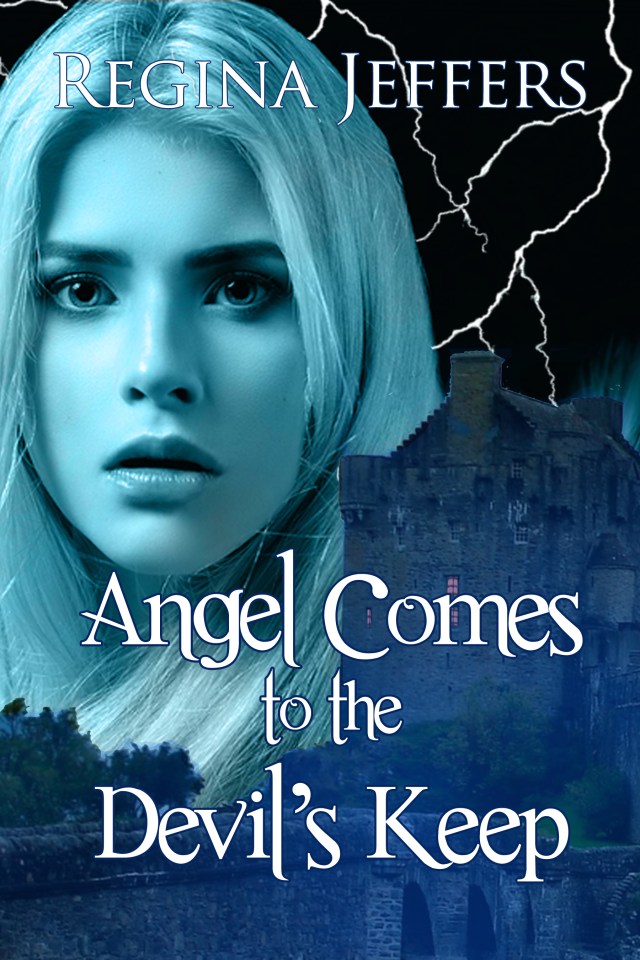
Angel Comes to the Devil’s Keep
Huntington McLaughlin, the Marquess of Malvern, wakes in a farmhouse, after a head injury, being tended by an ethereal “angel,” who claims to be his wife. However, reality is often deceptive, and Angelica Lovelace is far from innocent in Hunt’s difficulties. Yet, there is something about the woman that calls to him as no other ever has. When she attends his mother’s annual summer house party, their lives are intertwined in a series of mistaken identities, assaults, kidnappings, overlapping relations, and murders, which will either bring them together forever or tear them irretrievably apart. As Hunt attempts to right his world from problems caused by the head injury that has robbed him of parts of his memory, his best friend, the Earl of Remmington, makes it clear that he intends to claim Angelica as his wife. Hunt must decide whether to permit her to align herself with the earldom or claim the only woman who stirs his heart–and if he does the latter, can he still serve the dukedom with a hoydenish American heiress at his side?
Review: The story is charming, with interesting and realistic characters, a complex plot with plenty of surprises, and a sweet romance woven through it all. The author has a good command of what it was like to be a woman in nineteenth-century England–almost as if she had been there. She really did her research for this one.
Nook * Kobo * Smashwords * Black Opal Books * Amazon
Now for the “Sort of” Giveaway! My publisher, Black Opal Books, has provided me a block of free eBook copies available to readers in exchange for an honest review on Amazon, Nook, Kobo, or Goodreads. If you have accepted this offer previously, I thank you for your willingness to aid me in this matter. If you have not read Angel Comes to the Devil’s Keep and are willing to provide a review within a timely manner (by September 1), please contact me at jeffersregina@gmail.com, and I will make arrangements for you to receive the eBook. This will be a first-come basis. When the freebies are gone, that is the end of the promotion.


 “Scott’s original readers loved Ivanhoe, but they often did neither liked nor understood what the novel had to say about the creation of nationhood, the character of historical change and the human consequences of it. So they frequently rewrote the plot to satisfy their narrative desires for a happier ending. In Thackeray’s comic sequel, Rebecca and Rowena (1850), the marriage of Ivanhoe swiftly becomes a penitential one, as Rowena develops into a monumentally pious nag. Ivanhoe’s escape to join Richard I’s campaigns in France proves less than entirely successful, as the crusader king has become debauched and unappealing. Relentlessly engaged in the non-stop slaughter of all the enemies of England and Christendom (and these appear to be many, and remarkably poor at warfare), Ivanhoe works his way round Europe like a middle-aged backpacker in armour. In his absence, he is presumed dead, and Rowena marries her old suitor, the fat and jovial Athelstane. He keeps her firmly and affectionately in her place – until she eventually dies in prison, having tactlessly taken King John to task. This neatly emancipates the long-suffering Ivanhoe, whose tour of duty now takes him to Spain: here he again encounters Rebecca, who does now obligingly abandon her faith in favour of Christianity, facilitating their eventual union. One of the great Victorian realists, a still greater satirist, Thackeray was not entirely comfortable with his ‘improved’ ending to Ivanhoe: the couple have no children and are rather melancholy in their mirth. Perhaps Thackeray realised that Scott’s ending was, after all, a more meaningful one.” [Mitchell, Rosemary.






 Meet the Author: Antoine Vanner


 Meet Elaine Owen:



 Angel Comes to the Devil’s Keep: Book 1 of the Twins’ Trilogy


 I remember the moment in college when I realized that the novel was a relatively recent writing form. Novels are so dominant today—pushing all other writing formats to the side—that it’s hard to imagine a time when they didn’t exist. But in fact, the ancient Romans and Greeks had plays and poems (some very long epic poems that seem like novels)—as well as various nonfiction forms—but nothing resembling a novel. It wasn’t until the 1700s that we start seeing something that we would consider a novel today; in fact, the very name “novel” suggests that it is a new form of writing.
 There are, however, other contenders for the title of first novel. One is Japanese author Murasaki Shikibu’s Tale of Genji (1010) which demonstrates an interest in character development and psychological observation. Another claimant is Love-Letters Between a Nobleman and His Sister (1687), a collection of fictional letters by Aphra Behn, who was the first woman in England to earn her living as a writer (she was primarily a playwright). Cervantes’ Don Quixote (1605-15) is considered an important progenitor of the modern novel.



 Every Woman Dreams...
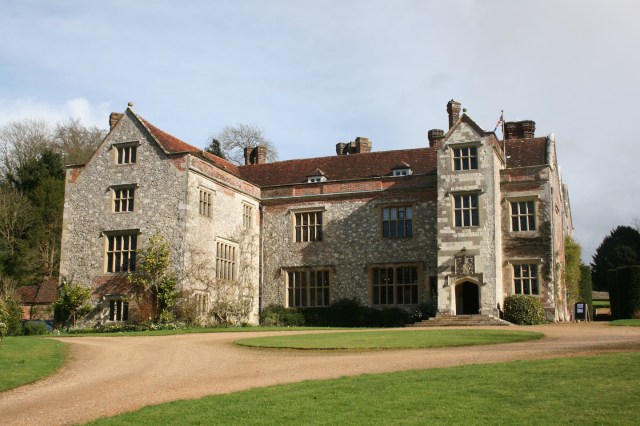
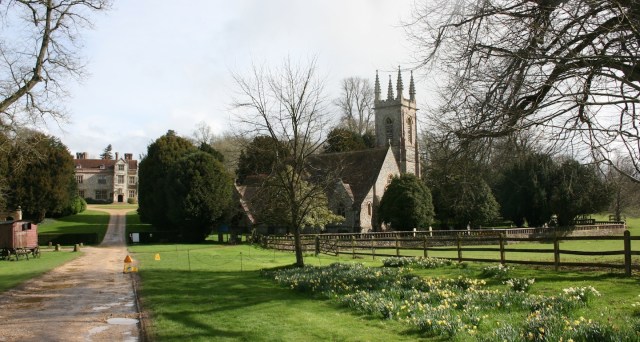
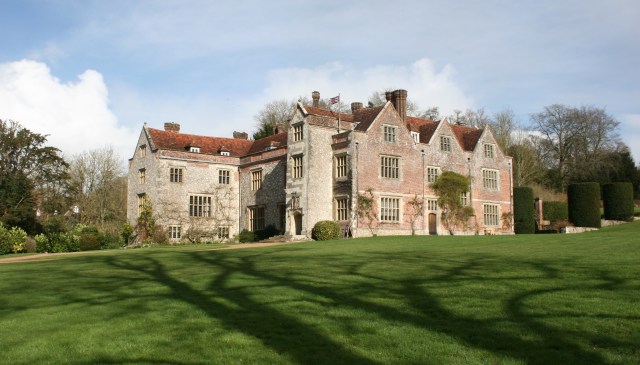
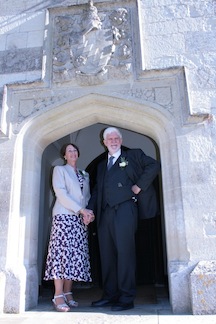
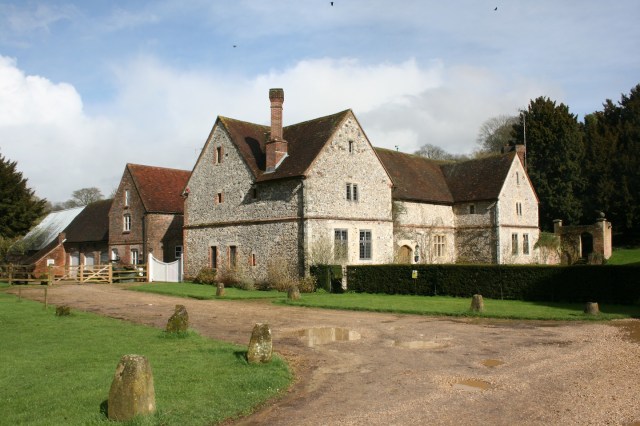
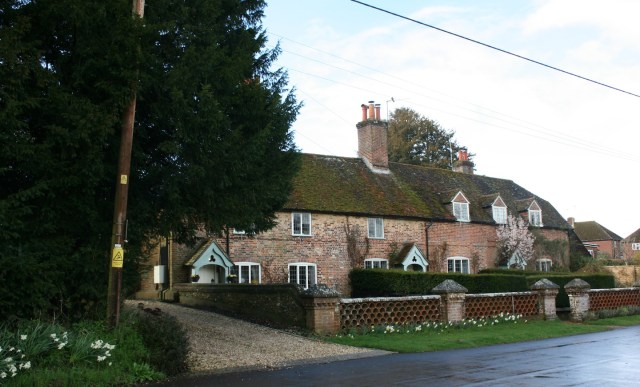
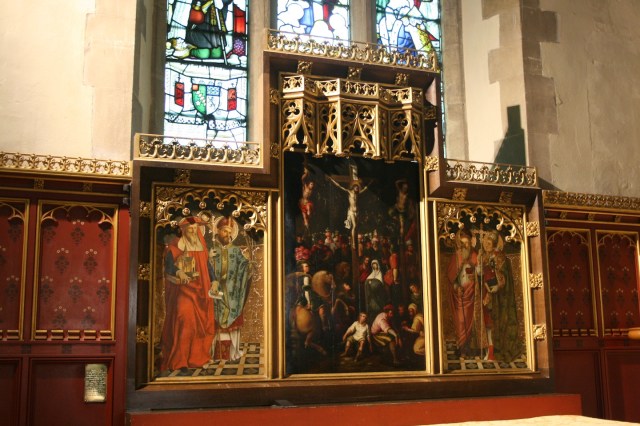
I’m glad you enjoyed Chawton, I am the last Austen descendant (Edward Austen Knight’s fourth great granddaughter) to be raised at Chawton House when it was our family home. It was a magical place to grow up, in the cocoon of 400 years of our history, and great Aunt Jane’s legacy. Granny ran a tearoom in the Great Hall and I earned my pocket money serving Jane Austen devotees who had come to see Jane Austen’s cottage in the village before following in Jane’s footsteps and taking the short walk to her brother’s manor for tea – happy days. I was 17 when my grandfather, Edward Knight (EAK great great grandson) died and his heir, Uncle Richard, inherited the depleted estate….Chawton was magnificent when I lived there, but in desperate need of repair. It is wonderful to see the house now, beautifully restored and being enjoyed.