The Ceremony of Quit Rents

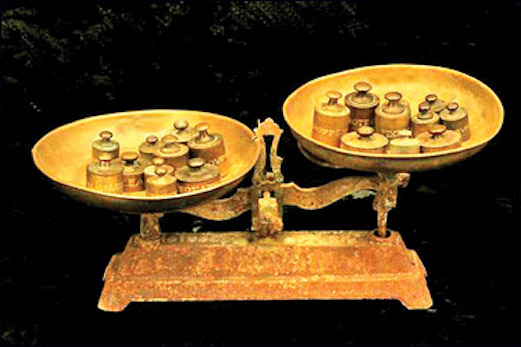
Have you ever heard of this tradition? The Ceremony of Quit Rents is the oldest legal ceremony in England (other than the coronation). It occurs between St Michael’s Day (October 11) and St Martin’s Day (November 11). On October 17, 2016, at a ceremony at the Royal Courts of Justice on the Strand, London paid its rent to the Queen. The ceremony has been a tradition since 1211 (four years before the Magna Carta). The city handed over a knife, an axe, six extra large horseshoes, and 61 nails to Barbara Janet Fontaine, the Queen’s Remembrancer, the oldest judicial position in England (created by Henry II in 1164 to keep track of all that was owed to the crown. In this case, the Remembrancer has presided over the rent owed on two pieces of property for a very long time—since 1235 in one case, and at least 1211 in the other. Every year, in this Ceremony of Quit Rents, the crown extracts its price from the city for a forge and a piece of moorland. The problem is no one knows for certain where the two properties are located. 

Royal_Courts_of_Justice_-_Wide_Angle_Front

The Royal Courts of Justice via Wikipedia CC BY-SA 4.0

image

Horseshoes, 61 nails, an axe and billhook are part of the rent London owes to the Queen. EPICS/HULTON ARCHIVE/GETTY IMAGES ~ http://www.atlasobscura.com/articles/london-is-still-paying-rent-to-the-queen-on-a-property-leased-in-1211

The first piece of land was known at “The Moors” is was located somewhere south of Bridgnorth in Shropshire. The tenant was one Nicholas de Morrs. He owned 180 acres of land and paid the rent of one sharp knife and one blunt knife. Eventually, the rights of tenancy passed to the City of London and so, the City pays the rent of a blunt billhook, which is a type of agricultural knife and a sharp axe to the Remembrancer, who tests the knives as part of the ceremony. The billhook is used to create a tally mark against a hazel stick or in some instances to hack away at a pile of sticks. This symbolizes making the “mark” representing the payment. The sharp axe splits the tally into two pieces. Each of the pieces serves as a receipt – one for each party in the transaction.  Traditionally, the Remembrancer then remarks “Good service”.

“The second quit rent is for the use of the forge in Tweezer’s (or Twizzer’s) Alley, somewhere near The Strand. It is believed that the first tenant, Walter Le Brun, was a blacksmith who had set up his business near the tilting ground of the Knights Templar sometime around 1235. Again the tenancy was taken over by the City of London sometime during the intervening centuries.” (Historic UK) 

According to Atlas Obscura, “The second rent is for a piece of land closer to home. In the neighborhood of what’s now the Royal Courts of Justice, back in the 13th century, the king held a tournament during which the knights needed help repairing their armor; the man who stepped up to do the work was then given a lease on the land to create a forge. (In a different version of the story, his job was to reshoe the horses of the Templar Knights. It’s possible both stories are true, since with the Temple Church just down the street, those knights would have been the farrier’s most obvious customers.)” The Remembrancer says “Good number” when the rents are paid. 

The giant horseshoes required for the second rents were designed to used during battle or during tournaments where horses were trained to “fight” by using their hooves (i.e., the horseshoes) as weapons against the opponent’s horse. Ironically, the shoes currently used date back to the late 1300s. Therefore, the shoes and nails are loaned back to the City of London to be used in the next year’s ceremony. 

“The Ceremony of Quit Rents is open to the public and includes an address by The Queen’s Remembrancer in his ceremonial robes, full-bottomed wig and tricorn hat. There is also usually a talk on some aspect of London History.” (Historic UK) 

Resources: 

Atlas Obscura 

Historic UK 


Posted in Age of Chaucer, British history, buildings and structures, customs and tradiitons, kings and queens, Living in the UK | Tagged , , , , , , | Comments Off on The Ceremony of Quit Rents

Mother’s Day Sale on Titles from Regina Jeffers! Fill Up Your eReader with These Regency and Contemporary Novels!

Sale_TagsAs of yesterday, twenty-five (25) of my titles are on sale. The sale will continue through Sunday, May 14, Mother’s Day.  Fill up your eReaders!!!! There are Austen-inspired titles, romantic suspense, a Regency series, and contemporary choices. ALL TITLES ARE $2.50 OR LESS. Here are the 13 Regency and Contemporary Titles Available. 

51Q64wIzdVL.jpg  A Touch of Scandal: Book 1 of the Realm Series [historical fiction; Regency romance; romantic suspense]

2011 Write Touch Readers’ Award, 2nd Place, Historical Romance

(Disclaimer: This book was originally published under the title The Scandal of Lady Eleanor.)

The men of the REALM have served their country, while ignoring their responsibilities to home and love, but now Bonaparte is defeated, they each mean to claim their portion of a new and prosperous England. However, their long-time enemy Shaheed Mir has other plans. The warlord believes one of the Realm has stolen a fist-sized emerald, and the Baloch intends to have its return or his revenge.

JAMES KERRINGTON, the future Earl of Linworth left his title and his infant son behind after the death of his beloved Elizabeth, but he has returned to England to tend his ailing father and to establish his roots. With Daniel as his heir, Kerrington has no need to marry, but when Eleanor Fowler stumbles and falls into his arms, Kerrington’s world is turned upon its head. He will do anything to claim her.

LADY ELEANOR FOWLER has hidden from Society, knowing her father’s notorious reputation for debauchery has tainted any hopes she might have of a happy marriage. And yet, despite her fears, her brother’s closest friend, James Kerrington, has rekindled her hopes, but when Sir Louis Levering appears with proof of Eleanor’s participation in her father’s wickedness, she is drawn into a world of depravity, and only Kerrington’s love can save her.

The first fully original series from Austen pastiche author Jeffers is a knockout. – Publishers Weekly

Jeffers’s characters stay in the reader’s heart and mind long after the last page has been turned. – Favored Elegance

Kindle        Kobo       Nook   

********************************************************************

51s8f5+1gtL._SX331_BO1,204,203,200_.jpg A Touch of Velvet: Book 2 of the Realm Series [historical fiction; Regency romance; romantic suspense; adventure; mystery]

After years away from England, members of the Realm return home to claim the titles and the lives they once abandoned. Each man holds on to the fleeting dream of finally knowing love. For now, all any of them can hope is the resolutions of their previous difficulties before Shaheed Mir, their old enemy, finds them and exacts his revenge. Mir seeks a mysterious emerald, and he believes one of the Realm has it.

No one finds his soul mate when she is twelve and he seventeen, but BRANTLEY FOWLER, the Duke of Thornhill, always thought he had found his. The memory of Velvet Aldridge’s face was the only thing that kept him alive all those years he remained estranged from his family. Now, he has returned to Kent to claim his title and the woman he loves, but first he must obliterate the memory of his infamous father, while staving off numerous attacks from Mir’s associates.

MISS VELVET ALDRIDGE always believed in “happily ever after.” Yet, when Brantley Fowler returns home, he has a daughter and his wife’s memory to accompany him. He promised her eight years prior that he would return to make her his wife, but Thornhill only offers her a Season and a dowry. How can she make him love her? Make him her “knight in shining armor”? Regency England has never been hotter or more dangerous.

Kindle        Kobo        Nook   

********************************************************************

 516yYuuIWKL.jpg  A Touch of Cashémere: Book 3 of the Realm Series  [historical fiction; Regency romance; romantic suspense/adventure/mystery]

MARCUS WELLSTON never expected to inherit his father’s title. After all, he is the youngest of three sons. However, his oldest brother Trevor is judged incapable of meeting the title’s responsibilities, and his second brother Myles has lost his life in an freak accident; therefore, Marcus has returned to Tweed Hall and the earldom. Having departed Northumberland years prior to escape his guilt in his sister’s death, Marcus has spent the previous six years with the Realm, a covert governmental group, in atonement. Now, all he requires is a biddable wife with a pleasing personality. Neither of those phrases describes Cashémere Aldridge.

MISS CASHEMERE ALDRIDGE thought her opinions were absolutes and her world perfectly ordered, but when her eldest sister Velvet is kidnapped, Cashé becomes a part of the intrigue. She quickly discovers nothing she knew before is etched in stone. Leading her through these changes is a man who considers her a “spoiled brat.” A man who prefers her twin Satiné to Cashémere. A man whose approval she desperately requires: Marcus Wellston, the Earl of Berwick. Toss in an irate Baloch warlord, a missing emerald, a double kidnapping, a blackmail attempt, and an explosion in a glass cone, and the Realm has its hands full. The Regency era has never been hotter, nor more dangerous.

Kindle       Kobo        Nook  

********************************************************************

51Fa-15aWfL._SX331_BO1,204,203,200_.jpg A Touch of Grace: Book 4 of the Realm Series [historical fiction; Regency romance; adventure; romantic suspense/mystery]

SOLA’s Seventh Annual Dixie Kane Memorial Awards, 3rd Place, Historical Romance

“Jeffers’s close look at the dark secrets of Regency society instills a sense of realism.” – Publishers Weekly

After years away from England, members of the Realm return home to claim the titles and the lives they had previously abandoned. Each man holds onto the fleeting dream of finally know love and home. For now, all any of them can hope is the resolution of his earlier difficulties before Shaheed Mir, their old enemy, finds them and exacts his revenge. Mir seeks a mysterious emerald, and he believes one of the Realm has it.

GABRIEL CROWDEN, the Marquis of Godown, can easily recall the night that he made a vow to know love before he met his Maker. Of course, that was before Lady Gardenia Templeton’s duplicity had driven Godown from his home and before his father’s will had changed everything. Godown requires a wife to meet the unusual demands of the former marquis’s stipulations. Preferably one either already carrying his child or one who would tolerate his constant attentions to secure the Crowden line before the deadline.

MISS GRACE NELSON dreams of family died with her brother’s ascension to the title. Yet, when she meets the injured Marquis of Godown at a Scottish inn, her dreams have a new name. However, hope never has an easy path. Grace is but a lowly governess with ordinary features. She believes she can never earn the regard of the “Adonis” known as Gabriel Crowden. Besides, the man has a well-earned skepticism when it comes to the women in his life. How can she prove that she is the one woman who will never betray him? The Regency era has never been hotter.

Kindle      Kobo       Nook   

********************************************************************

51YKc0AyULL.jpg A Touch of Mercy: Book 5 of the Realm Series [historical fiction; Regency romance; adventure; romantic suspense; mystery]

Members of the Realm have retuned to England to claim the titles they left behind. Each holds to the fleeting dream of finally knowing love, but first he must face his old enemy Shaheed Mir, a Baloch warlord, who believes one of the group has stolen a fist-sized emerald. Mir will have the emerald’s return or will exact his bloody revenge.

A devastating injury has robbed AIDAN KIMBOLT, Viscount Lexford, of part of his memory, but surely not of the reality that lovely Mercy Nelson is his father’s by-blow. Aidan is intrigued by his “sister’s” vivacity and how easily she ushers life into Lexington Arms, a house plagued by Death’s secrets–secrets of his wife’s ghost, of his brother’s untimely passing, and of his parents’ marriage: Secrets Aidan must banish to finally know happiness.

Fate has delivered Miss MERCY NELSON to Lord Lexford’s door, where she quickly discovers appearances are deceiving. Not only does Mercy practice a bit of her own duplicity, so do all within Lexington Arms. Yet, dangerous intrigue cannot squash the burgeoning passion consuming her and Viscount Lexford, as the boundaries of their relationship are sorely tested. How can they find true love if they must begin a life peppered with lies?

Kindle           Kobo         Nook   

********************************************************************

51wz7WK6k-L._SX331_BO1,204,203,200_.jpg  A Touch of Love: Book 6 of the Realm Series [historical fiction; Regency romance; adventure; romantic suspense; mystery]

The REALM has returned to England to claim the titles they left behind. Each man holds to the fleeting dream of finally knowing love and home, but first he must face his old enemy Shaheed Mir, a Baloch warlord, who believes one of the group has stolen a fist-sized emerald. Mir will have the emerald’s return or will exact his bloody revenge.. Aristotle Pennington has groomed

SIR CARTER LOWERY as his successor as the Realm’s leader, and Sir Carter has thought of little else for years. He has handcrafted his life, filled it with duties and responsibilities, and eventually, he will choose a marriage of convenience to bolster his career; yet, Lucinda Warren is a temptation he cannot resist. Every time he touches her, he recognizes his mistake because his desire for her is not easily quenched. To complicate matters, it was Mrs. Warren’s father, Colonel Roderick Rightnour, whom Sir Carter replaced at the Battle of Waterloo, an action which had named Sir Carter a national hero and her father a failure as a military strategist.

LUCINDA WARREN’s late husband has left her to tend to a child belonging to another woman and has drowned her in multiple scandals. Her only hope to discover the boy’s true parentage and to remove her name from the lips of the ton’s censors is Sir Carter Lowery, a man who causes her body to course with awareness, as if he had etched his name upon her soul. Cruel twists of Fate have thrown them together three times, and Lucinda prays to hold off her cry for completion long enough to deny her heart and to release Sir Carter to his future: A future to which she will never belong.

Kindle             Kobo          Nook 

********************************************************************

51iTwdJj5XL._SX331_BO1,204,203,200_.jpg  A Touch of Honor: Book 7 of the Realm Series [historical fiction; Regency romance; romantic suspense/adventure/mystery]

For two years, BARON JOHN SWENTON has thought of little else other than making Satiné Aldridge his wife; so when he discovers her reputation in tatters, Swenton acts honorably: He puts forward a marriage of convenience that will save her from ruination and provide him the one woman he believes will bring joy to his life. However, the moment he utters his proposal, Swenton’s instincts scream he has made a mistake: Unfortunately, a man of honor makes the best of even the most horrendous of situations.

MISS SATINE ALDRIDGE has fallen for a man she can never possess and has accepted a man she finds only mildly tolerable. What will she do to extricate herself from Baron Swenton’s life and claim the elusive Prince Henrí? Obviously, more than anyone would ever expect.

MISS ISOLDE NEVILLE has been hired to serve as Satiné Aldridge’s companion, but her loyalty rests purely with the lady’s husband. With regret, she watches the baron struggle against the impossible situation in which Miss Aldridge has placed him, while her heart desires to claim the man as her own. Yet, Isolde is as honorable as the baron. She means to see him happy, even if that requires her to aid him in his quest to earn Miss Satiné’s affections.

Sacrifice and honor, betrayal and redemption, all make for an exceptionally satisfying romance. A Touch of Honor is a mesmerizing story of extraordinary love realized against impossible odds. – Collette Cameron, Award-Winning Author

Kindle         Kobo        Nook    

********************************************************************

514yJvDdlbL._SX331_BO1,204,203,200_.jpg A Touch of Emerald: The Conclusion of the Realm Series  (Fiction/Historical; Historical Romance/Mystery/Adventure; Regency)

Four crazy Balochs. A Gypsy band. An Indian maiden. A cave with a maze of passages. A hero, not yet tested. And a missing emerald.

For nearly two decades, the Realm thwarted the efforts of all Shaheed Mir sent their way, but now the Baloch warlord is in England, and the tribal leader means to reclaim the fist-sized emerald he believes one of the Realm stole during their rescue of a girl upon whom Mir turned his men. Mir means to take his revenge on the Realm and the Indian girl’s child, LADY SONALI FOWLER.

DANIEL KERRINGTON, Viscount Worthing, has loved Lady Sonalí since they were but children. Yet, when his father, the Earl of Linworth, objects to Sonalí’s bloodlines, Worthing thinks never to claim her. However, when danger arrives in the form of the Realm’s old enemy, Kerrington ignores all caution for the woman he loves.

Kindle         Nook        Kobo    

********************************************************************

51y7cF2BsVL._SX322_BO1,204,203,200_.jpg  His American Heartsong: A Companion Novel of the Realm Series (Regency romance, Historical romance, Series, The Realm)

The Deepest Love is Always Unexpected.

LAWRENCE LOWERY, Lord Hellsman, has served as the dutiful son since childhood, but when his father Baron Blakehell arranges a marriage with the insipid Annalee Dryburgh, Lowery must choose between his responsibilities to his future title and the one woman who makes sense in his life.

Although her mother was once a lady in waiting to the Queen, by Society’s standards, MISS ARABELLA TILNEY is completely unfit to be the future baroness: Bella is an American hoyden who demands that Lowery do the impossible: Be the man he always dreamed of being.

Kindle       Nook        Kobo    

********************************************************************

41SlfufFlDL._SX322_BO1,204,203,200_.jpg  His Irish Eve (Fiction/Historical Fiction; Romance; Regency Romance/Adventure)

When the Earl of Greenwall demands his only son, ADAM LAWRENCE, Viscount Stafford, retrieve the viscount’s by-blow, everything in Lawrence’s life changes. Six years prior, Stafford released his mistress, Cathleen Donnell, from his protection; now, he discovers from Greenwall that Cathleen was with child when she returned to her family. Stafford arrives in Cheshire to discover not only the son of which Greenwall spoke, but also two daughters, as well as a strong-willed woman, in the form of AOIFE KENNICE, who fascinates Stafford from the moment of their first encounter.

Set against the backdrop of the early radicalism of the Industrial Revolution and the Peterloo Massacre, a battle begins: A fight Lawrence must win: a fight for a woman worth knowing, his Irish Eve.

Kindle        Nook        Kobo    

********************************************************************

51pTbYxbmpL._SX331_BO1,204,203,200_.jpg  The First Wives’ Club: Book 1 of the First Wives’ Trilogy (Regency romance, historical romance, trilogy, series, mystery, family relationships)

SOLA’s Seventh Annual Dixie Kane Memorial Awards, Honorable Mention, Historical Romance

NATHANIEL EPPERLY, the Earl of Eggleston, has married the woman his father has chosen for him, but the marriage has been everything but comfortable. Nathaniel’s wife, Lady Charlotte, came to the marriage bed with a wanton’s experience. She dutifully provides Eggleston his heir, but within a fortnight, she deserts father and son for Baron Remington Craddock. In the eyes of the ton, Lady Charlotte has cuckolded Epperly.

ROSELLEN WARREN, longs for love and adventure. Unfortunately, she’s likely to find neither. As a squire’s daughter, Rosellen holds no sway in Society; but she’s a true diamond in the rough. Yet, when she meets Epperly’s grandmother, the Dowager Countess Eggleston creates a “story” for the girl, claiming if Rosellen is presented to the ton as a war widow with a small dowry, that the girl will find a suitable match.

BARON REMINGTON CRADDOCK remains a thorn in Eggleston’s side, but when Craddock makes Mrs. Warren a pawn in his crazy game of control, Eggleston offers the woman his protection. However, the earl has never faced a man who holds no strength of title, but who wields great power; and he finds himself always a step behind the enigmatic baron. When someone frames Epperly for Lady Charlotte’s sudden disappearance, Nathaniel must quickly learn the baron’s secrets or face a death sentence.

Kindle         Kobo         Nook   

********************************************************************

51onglyxSeL._SX331_BO1,204,203,200_.jpg  Second Chances: The Courtship Wars (Contemporary Romance, Psychology, Sexology, Reality TV, Downs Syndrome, Eccentric Hermits)

Rushing through the concourse to make her way to the conference stage, GILLIAN CORNELL comes face-to-face with the one man she finds most contemptible, but suddenly her world tilts. His gaze tells stories she wants desperately to hear. As he undresses her with his eyes, Gillian finds all she can do is stumble through her opening remarks. The all-too-attractive cad challenges both her sensibility and her reputation as a competent sexologist. 

DR. LUCIAN DAMRON never allows any woman to capture his interest for long. He uses them to boost his career and for his pleasure. Yet, Lucian cannot resist Gillian’s stubborn independence, her startling intelligence, and her surprising sensuality. Sinfully handsome, Lucian hides a badly wounded heart and a life of personal rejection. 

Thrown together as the medical staff on “Second Chances,” a new reality TV show designed to reunite previously married couples, Lucian and Gillian soon pique the interest of the American viewing public, who tune in each week, fascinated by the passionate electricity coursing between them. Thus begins an all-consuming courtship war, plagued by potential relationship-ending secrets and misunderstandings and played out scandalously on a national stage. 

Kindle         Nook         Kobo    

********************************************************************

511JFhbIlTL._SX331_BO1,204,203,200_.jpg  One Minute Past Christmas: Tale of an Appalachian Christmas Miracle [short story, Appalachia, holidays, Christmas, family relationships, legends]

One Minute Past Christmas is the story of a Greenbrier County, West Virginia, family in which a grandfather and his granddaughter share a special ability — they call it a “gift”– that enables them to briefly witness each year a miraculous gathering in the sky. What they see begins at precisely one minute past Christmas and fills them with as much relief as it does wonder. But they worry that the “gift” — which they cannot reveal to anyone else — will die with them because it has been passed to no other relative for forty-four years.

Nook            Kindle         Kobo   

******************************************************************

I do not own the rights to this book, which means I do not control the price and sales, but Black Opal Books, the publisher, has placed a reasonable price on this eBook. Book 2 of the Twins’ Trilogy, The Earl Claims His Comfort, will have an Autumn arrival. Read Book 1 now! 

51Qc31W5ZSL._SX326_BO1,204,203,200_.jpg  Angel Comes to the Devil’s Keep: Book 1 of the Twins’ Trilogy [romantic suspense; Regency romance; historical fiction; mystery; twins]

SOLA’s Eighth Annual Dixie Kane Memorial Awards, 3rd Place, Historical Romance

Huntington McLaughlin, the Marquess of Malvern, wakes in a farmhouse, after a head injury, being tended by an ethereal “angel,” who claims to be his wife. However, reality is often deceptive, and Angelica Lovelace is far from innocent in Hunt’s difficulties. Yet, there is something about the woman that calls to him as no other ever has. When she attends his mother’s annual summer house party, their lives are intertwined in a series of mistaken identities, assaults, kidnappings, overlapping relations, and murders, which will either bring them together forever or tear them irretrievably apart. As Hunt attempts to right his world from problems caused by the head injury that has robbed him of parts of his memory, his best friend, the Earl of Remmington, makes it clear that he intends to claim Angelica as his wife. Hunt must decide whether to permit her to align herself with the earldom or claim the only woman who stirs his heart–and if he does the latter, can he still serve the dukedom with a hoydenish American heiress at his side?

The story is charming, with interesting and realistic characters, a complex plot with plenty of surprises, and a sweet romance woven through it all. The author has a good command of what it was like to be a woman in nineteenth-century England–almost as if she had been there. She really did her research for this one. – Taylor Jones 

Angel Comes to Devil’s Keep is a well-written tale of courage and sacrifice and what women went through in order to marry well in Regency England. The author did her homework and it shows in an authenticity that we don’t often see in Regency romances. – Regan Murphy

Nook         Kobo        Smashwords        Kindle

       iTunes          Regency Reader

Posted in book release, books, British history, Georgian Era, historical fiction, history, Living in the Regency, primogenture, Regency era, Regency romance, romance, suspense, Victorian era | Tagged , , , , | Comments Off on Mother’s Day Sale on Titles from Regina Jeffers! Fill Up Your eReader with These Regency and Contemporary Novels!

Mother’s Day Sale on Regina Jeffers’s Austen-Inspired Titles! Fill Up Your eReaders!

Sale_Tags.jpgBeginning today, twenty-five (25) of my titles are on sale. The sale will continue through Sunday, May 14, Mother’s Day.  Fill up your eReaders!!!! There are Austen-inspired titles, romantic suspense, a Regency series, and contemporary choices. ALL TITLES ARE $2.50 OR LESS. Here are the 12 Austen-inspired titles that are part of the sale. 

51NionnWclL._SY346_.jpg  Darcy’s Passions: Pride and Prejudice Retold Through His Eyes [Austenesque; classics; retelling; Regency era; historical fiction]

FITZWILLIAM DARCY loves three things: his sister Georgiana, his ancestral estate, and Elizabeth Bennet. The first two come easily to him. He is a man who recognizes his place in the world, but the third, Elizabeth Bennet, is a woman Society would censure if he chose her for his wife. Can he risk everything he has ever known to love an impossible woman, a woman who has declared him to be “the last man in the world (she) could ever be prevailed upon to marry”?

Revisit Jane Austen’s beloved novel, Pride and Prejudice, retold from Mr. Darcy’s point of view. Discover his soul-searching transformation from hopeless into the world’s most romantic hero. Experience what is missing from Elizabeth Bennet’s tale. Learn something of the truth of Fitzwilliam Darcy’s pride. Return to your favorite scenes from Austen’s classic: Darcy’s rejection of Miss Elizabeth at the Meryton assembly; the Netherfield Ball; the first proposal; his discovering Elizabeth at Pemberley; and Darcy’s desperate plan to save Lydia Bennet from his worst enemy, George Wickham, all retold through his eyes. Satisfy your craving for Austen’s timeless love story, while defining the turmoil and vulnerability in a man who possesses everything except the one thing that can make him happy.

Kindle      Kobo       Nook

***********************************************************************

517vBABpW6L._SY346_.jpg Captain Frederick Wentworth’s Persuasion: Austen’s Classic Retold Through His Eyes [historical fiction; Regency romance; retelling’ Austenesque; classics]

(Disclaimer: This is not a new title; it is a reworking of “Captain Wentworth’s Persuasion” from Ulysses Press.)

The love affair behind Jane Austen’s classic, Persuasion, rests at the heart of this retelling from Captain Frederick Wentworth’s point of view.

He loved her from the moment their eyes met some eight years prior, but Frederick Wentworth is determined to prove to Anne Elliot that she made a mistake by refusing him. Persuaded by her family and friends of his lack of a future, Anne had sent him away, but now he is back with a fortune earned in the war, and it is Anne, whose circumstances have brought her low. Frederick means to name another to replace her, but whenever he looks upon Anne’s perfect countenance, his resolve wavers, and he finds himself lost once again to his desire for her. Return to the Regency and Austen’s most compelling and mature love story. Jeffers turns the tale upon its head while maintaining Jane Austen’s tale of love and devotion.

Nook      Kobo      Kindle 

***********************************************************************

51amJGdxvML._SY346_.jpg Vampire Darcy’s Desire: A Pride and Prejudice Paranormal Adventure [Regency romance; paranormal; Scottish; Austenesque; classics}

[Disclaimer: This work was originally released by Ulysses Press. It has been reworked and self published by the author.]

Vampire Darcy’s Desire presents Jane Austen’s Pride and Prejudice as a heart-pounding vampire romance filled with passion and danger.

Tormented by a 200-year-old curse and his fate as a half human/half vampire dhampir, Fitzwilliam Darcy vows to live a solitary life rather than inflict the horrors of his life upon an innocent wife and his first born son. However, when he encounters the captivating Elizabeth Bennet, his will is sorely tested.

As a man, Darcy yearns for Elizabeth, but as a vampire, he is also driven to possess her. Uncontrollably drawn to each other, they are forced to confront a different kind of “pride” and his enemy’s “prejudice,” while wrestling with the seductive power of forbidden love. Evil forces, led by George Wickham, the purveyor of the curse, attack from all sides, and Darcy learns his only hope to survive is to align himself with Elizabeth, who is uncannily astute in how to defeat Wickham, a demon determined to destroy each generation of Darcys.

Vampire Darcy’s Desire retells Austen’s greatest love story in a hauntingly compelling tale. Can love be the only thing that can change him?

“An engaging and romantic paranormal surprise” ~ JustJane1813

“Jeffers ups the ante even more by basing the core of the plot line on the traditional Scottish ballad.” ~ The Royal Reviews

Kindle       Kobo      Nook  

***********************************************************************

51UhMSGTs0L._SX322_BO1,204,203,200_.jpg Mr. Darcy’s Fault: A Pride and Prejudice Vagary (Fiction/Historical Fiction; Romance; Austenesque; Variation; Regency)

What if an accident prevents Elizabeth Bennet from reading Mr. Darcy’s letter of apology? What if said letter goes missing and ends up in the hands of George Wickham? What if Mr. Wickham plans to use the evidence of both Georgiana Darcy’s ruination and Darcy’s disdain for the Bennets to his benefit? How will Darcy counter Wickham’s plans and claim happiness with the woman he loves?

When he notices his long-time enemy in the vicinity of Hunsford Cottage, FITZWILLIAM DARCY means to put an end to an assignation between ELIZABETH BENNET and Mr. Wickham, but Darcy is not prepared for the scene which greets him in Rosings Woods. Elizabeth lies injured and crumpled beneath the trees, and in order to save her, by Society’s standards, Darcy must compromise Elizabeth. Needless to say, Darcy does not mind being forced into claiming Elizabeth to wife, but what of the lady’s affections? Can Darcy tolerate Elizabeth’s regard being engaged elsewhere?

Kindle         Nook        Kobo   

***********************************************************************

51hCXC3Q41L._SX326_BO1,204,203,200_.jpg The Pemberley Ball: A Pride and Prejudice Vagary Novella [Austeneque; Regency romance; historical fiction; vagary; multiple endings]

Elizabeth Bennet’s acceptance of his hand in marriage presents FITZWILLIAM DARCY a hope of the world being different. Elizabeth offers warmth and naturalness and a bit of defiance; but there is vulnerability also. With characteristic daring, she boldly withstood Caroline Bingley’s barbs, while displaying undying devotion to her sister Jane. More unpredictably, she verbally fenced with the paragon of crudeness, his aunt, Lady Catherine, and walked away relatively unscathed. One often finds his betrothed self-mockingly entertaining her sisters and friends, and despite Darcy’s best efforts, the woman makes him laugh. She brings lightness to his spirit after so many years of grief.

Unfortunately for ELIZABETH BENNET, what begins gloriously turns to concern for their future. She recognizes her burgeoning fears as unreasonable; yet, she cannot displace them. She refuses to speculate on what Mr. Darcy will say when he learns she is not the brilliant choice he proclaims her to be. Moreover, she does not think she can submit to the gentleman’s staid lifestyle. Not even for love can Elizabeth accept capitulation.

Will Elizabeth set her qualms aside to claim ‘home’ in the form of the man she truly affects or will her courage fail her? Enjoy a bit of mayhem that we commonly call “Happily Ever After,” along with three alternate turning points to this tale of love and loss and love again from Austen-inspired author, Regina Jeffers.

Kindle      Nook      Kobo       

***********************************************************************

51ZFir7XyIL._SX331_BO1,204,203,200_.jpg Elizabeth Bennet’s Excellent Adventure: A Pride and Prejudice Vagary [Pride and Prejudice, Fiction, Jane Austen, Regency romance, Historical romance, classics, variation]

The Last Man in the World She Wishes to Marry is the One Man Who Owns Her Heart!

ELIZABETH BENNET adamantly refused Fitzwilliam Darcy’s proposal, but when Maria Lucas discovers the letter Darcy offers Elizabeth in explanation of his actions, Elizabeth must swallow her objections in order to save her reputation. She follows Darcy to London and pleads for the gentleman to renew his proposal. Yet, even as she does so, Elizabeth knows not what she fears most: being Mr. Darcy’s wife or the revenge he might consider for her earlier rebuke.

FITZWILLIAM DARCY would prefer that Elizabeth Bennet held him in affection, but he reasons that even if she does not, having Elizabeth at his side is far better than claiming another to wife. However, when a case of mistaken identity causes Darcy not to show at his wedding ceremony, he finds himself in a desperate search for his wayward bride-to-be.

Elizabeth, realizing Society will label her as “undesirable” after being abandoned at the altar, sets out on an adventure to mark her future days as the spinster aunt to her sisters’ children. However, Darcy means to locate her and to convince Elizabeth that his affections are true, and a second chance will prove him the “song that sets her heart strumming.”

Kobo        Kindle      Nook      

***********************************************************************

5150exgt9jl-_sx322_bo1204203200_ Elizabeth  Bennet’s Deception: A Pride and Prejudice Vagary (Fiction/Historical Fiction; Romance; Austenesque; Regency Romance; Vagary; Classics)

What if Fitzwilliam Darcy refused to approach Elizabeth Bennet when he observes her upon the grounds of Pemberley? What if Elizabeth permits Mr. Darcy to think her the one ruined by Mr. Wickham? What if love is not enough to bring two souls together?

FITZWILLIAM DARCY’S pride makes the natural lead to ELIZABETH BENNET’S ruination when the lady appears, without notice, upon Pemberley’s threshold to plead for Darcy’s assistance in locating his long-time enemy, George Wickham. Initially, Darcy cannot look beyond the pain of lost hopes, but when Charles Bingley demands that Darcy act with honor, Darcy assumes the task. Even so, the idea of delivering Miss Elizabeth into the hands of Mr. Wickham leaves Darcy raw with anguish. Yet, Darcy loves Elizabeth Bennet too much to see her brought low. He sets his heartbreak aside to save the woman he affects, but it is not long before Darcy realizes Elizabeth practices a deception, one Darcy permits so he might remain at her side long enough to convince the lady that only in each other can either find happiness.

Kindle      Nook       Kobo   

***********************************************************************

51lEzfOB1xL._SX326_BO1,204,203,200_.jpg Mr. Darcy’s Present: A Pride and Prejudice Vagary [Fiction; Romance; Regency; Austenesque; vagary; Christmas; holiday]

The Greatest Present He Would Ever Receive is the Gift of Her Love…

What if Mr. Darcy purchased a gift for Elizabeth Bennet to acknowledge the festive days even though he knows he will never present it to her? What if the gift is posted to the lady by his servants and without his knowledge? What if the enclosed card was meant for another and is more suggestive than a gentleman should share with an unmarried lady? Join Darcy and Elizabeth, for a holiday romp, loaded with delightful twists and turns no one expects, but one in which our favorite couple take a very different path in thwarting George Wickham and Lydia Bennet’s elopement. Can a simple book of poetry be Darcy’s means to win Elizabeth’s love? When we care more for another than ourselves, the seeds of love have an opportunity to blossom. 

Words of Praise for Mr. Darcy’s Present…     Jeffers takes a familiar story and reinvigorates it with humor, warmth, and wisdom. – Roses and Lilacs Reviews

Nook       Kobo      Kindle 

***********************************************************************

51S9Dyhz5ML._SX326_BO1,204,203,200_.jpg Mr. Darcy’s Bargain: A Pride and Prejudice Vagary [vagary; Austenesque; Regency romance; scams; Ponzi; historical fiction]

Darcy and Elizabeth are about to learn how “necessity” never makes a fair bargain.

When ELIZABETH BENNET appears on his doorstep some ten months after her refusal of his hand in marriage, FITZWILLIAM DARCY uses the opportunity to “bargain” for her acceptance of a renewal of his proposal in exchange for his assistance in bringing Mr. George Wickham to justice. In Darcy’s absence from Hertfordshire, Wickham has executed a scam to defraud the citizens of Meryton, including her father, of their hard-earned funds. All have invested in Wickham’s Ten Percent Annuity scheme. Her family and friends are in dire circumstances, and more importantly, Mr. Bennet’s heart has taken an ill turn. Elizabeth will risk everything to bring her father to health again and to save her friends from destitution; yet, is she willing to risk her heart? She places her trust in Darcy’s ability to thwart Wickham’s manipulations, but she is not aware that Darcy wishes more than her acquiescence. He desires her love. Neither considers what will happen if he does not succeed in bringing Mr. Wickham before a magistrate. Will his failure bring an end to their “bargain”? Or will true love prevail?

Kindle        Kobo      Nook  

***********************************************************************

61CiE70JPdL._SY346_.jpg A Dance with Mr. Darcy: A Pride and Prejudice Vagary [Pride and Prejudice; Regency romance; historical fiction vagary; JAFF]

The reason fairy tales end  with a wedding is no one wishes to view what happens next.

Five years earlier, Darcy had raced to Hertfordshire to soothe Elizabeth Bennet’s qualms after Lady Catherine’s venomous attack, but a devastating carriage accident left him near death for months and cost him his chance at happiness with the lady. Now, they meet again upon the Scottish side of the border, but can they forgive all that has transpired in those years? They are widow and widower; however, that does not mean they can take up where they left off. They are damaged people, and healing is not an easy path. To know happiness they must fall in love with the same person all over again.

Kobo      Kindle         Nook  

***********************************************************************

51dJIb7G0dL._SX331_BO1,204,203,200_.jpg The Road to Understanding: A Pride and Prejudice Vagary  [Pride and Prejudice; Inspirational Romance; vagary; historical fiction; Great Valley Road; Colonial romance]

DARIUS FITZWILLIAM’s life is planned down to who he will marry and where he will live, but life has a way of saying, “You don’t get to choose.” When his marriage to his long-time betrothed Caroline Bradford falls through, Darius is forced to take a step back and to look upon a woman who enflames his blood with desire, but also engenders disbelief. Eliza Harris is everything that Darius never realized he wanted.

ELIZA HARRIS is accustomed to doing as she pleases. Yet, despite being infuriated by his authoritative manner, when she meets the staunchly disciplined Captain Fitzwilliam, she wishes for more. She instinctively knows he is “home,” but Eliza possesses no skills in achieving her aspirations.

Plagued with misunderstandings, manipulations, and peril upon the Great Valley Road between eastern Virginia and western Tennessee in the years following the Revolutionary War, Darius and Eliza claim a strong allegiance before love finds its way into their hearts.

This is a faith-based tale based on Jane Austen’s Pride and Prejudice.

Kindle      Kobo         Nook     

***********************************************************************

41DEbC8a+vL._SX331_BO1,204,203,200_.jpg Honor and Hope: A Contemporary Pride and Prejudice [romance; contemporary romance; classics; Austenesque; football; winery]

Liz Bennet’s flirtatious nature acerbates Will Darcy’s controlling tendencies, sending him into despair when she fiercely demands her independence from him. How could she repeatedly turn him down? Darcy has it all: good looks, intelligence, a pro football career, and wealth. Attracted by a passionate desire, which neither time nor distance can quench, they are destined to love each other, while constantly misunderstanding one another until Fate deals them a blow from which their relationship may never recover. Set against the backdrop of professional sports and the North Carolina wine country, Honor and Hope offers a modern romance loosely based on Jane Austen’s Pride and Prejudice.

Kindle        Kobo        Nook   

*******************************************************************

Note! I do not yet have the rights back for this title, which means I do not control the price of the book, but the eBook version is reasonably priced by Pegasus Books. 

51zxCx1ka8L._SX331_BO1,204,203,200_.jpg The Prosecution of Mr. Darcy’s Cousin: A Pride and Prejudice Mystery (Mystery/Suspense/Thriller; Fiction/Historical Fiction)

2016 Finalist for the Frank Yerby Award for Fiction

2016 Finalist for the Daphne du Maurier Award for Excellence in Mystery/Suspense

2016 Finalist Chanticleer International Book Awards 

Fitzwilliam Darcy is enjoying his marital bliss. His wife, the former Elizabeth Bennet, presented him two sons and a world of contentment. All is well until Darcy receives a note of urgency from his sister Georgiana. In truth, Darcy never fully approved of Georgiana’s joining with their cousin. Major General Edward Fitzwilliam for Darcy assumed the major general held Georgiana at arm’s length, dooming Darcy’s sister to a life of unhappiness.

Forced to seek his cousin in the slews of London’s underbelly, at length, Darcy discovers the major general and returns Fitzwilliam to his family. Even so, the Darcy’s troubles are far from over. During the major general’s absence from home, witnesses note Fitzwilliam’s presence in the area of two horrific murders. When Edward Fitzwilliam is arrested for the crimes, Darcy must discover the real culprit before his cousin is hanged for the crimes and the Fitzwilliam name is marked by shame.

Kindle        Nook        Kobo    

Posted in Austen Authors, book release, books, Jane Austen, Persuasion, Pride and Prejudice, Regency romance, romance, suspense, Uncategorized, Vagary, vampires, writing | Tagged , , , , , , , | 8 Comments

17th Century Witch Hunter, Matthew Hopkins

10074815_110291958761.jpg Matthew Hopkins was born in Wenham Magna, Suffolk, England. He was a Folk Figure, becoming England’s notorious “Witchfinder General,” active during the English Civil War. He was said to have exploited the fear and unrest of the times for his personal gain. Little is known of his early life and his birthdate (1619) is only approximate. He was the son of a Puritan clergyman, James Hopkins, and had knowledge of the law, but there is no evidence to support the story that he was a failed attorney, practicing in Essex.

Matthewhopkins.png We know little of Hopkins until his reign of terror began in 1644. In March 1644, having read a book on witchcraft, he brought accusations against six people in Manningtree, calling them “witches” who had attempted to kill him. He thereupon became a “Witch Finder Generall,” going about Essex, Suffolk, Norfolk, and Huntingdon getting villagers and townspeople to hire him and his two assistants (for a fee) to search out witches, force their confessions, and have them hanged by the authorities. Throughout his reign of terror 1644-1647, Hopkins acquired a feared and evil reputation as a ‘fingerman’ (informer), paid by local authorities to commit perjury.  Together with his henchman and fellow ‘Witch-Pricker’ John Sterne, in just 14 months, Hopkins was responsible for the condemnations and executions of some 230 alleged witches, more than all the other witch-hunters that proliferated during the 160-year peak of the country’s witchcraft hysteria. The hapless victims even included a few Anglican clergymen.

His first victim was Elizabeth Clarke, a one-legged old woman whose mother had been executed as a witch. Clarke was held in a cell for several days, where she was interrogated nearly non-stop. Eventually, she confessed to being in league with the Devil and implicated 31 others as well. Hopkins’s allegations brought about the hanging of 19 individuals. Four others died in prison. Emboldened by his success, Hopkins hired four assistants and began hunting for witches all over Suffolk, Essex, and East Anglia. He claimed that the Puritan Parliament had appointed him “Witchfinder Generall.” He made a fortune charging the towns he visited exorbitant fees for his services.

witchpricking

Engraving of needles used to prick suspected witches and so to determine their guilt via Historic UK

 Many of his methods of inquisition were not far removed from actual  torture. Hopkins got confessions from his victims through sleep deprivation and other bloodless means of physical coercion. He pricked any skin deformity on the accused that was thought to be an extra pap for suckling imps; such parts, if insensible, were believed to prove that the accused was a witch. Another method was to force the accused to walk about all night, for only when at rest could a witch summon his or her familiars, who would terrify the accusers away. A further test was to fling the accused bound by a rope into water, because a witch, having denied his or her baptism, would in turn be repelled by the water. If the accused floated, they were found guilty of witchcraft. If they drowned, they were declared innocent.

 The Find a Grave site tells us, “Hopkins’s favorite targets were elderly widows (especially if they owned cats) and people who were unpopular with their neighbors (and thus vulnerable to malicious accusations). His best known victim, however, was a clergyman, John Lowe, the 70 year-old vicar of Brandeston. After Hopkins and his crew had nearly drowned him, kept him awake for three days and nights, and forced him to walk without rest until his feet blistered, Lowe wearily confessed to a host of supernatural crimes, including causing a shipwreck off the coast of Harwich. He later recanted his confession, but was condemned anyway. Denied benefit of clergy, Lowe recited his own burial service on the way to the gallows. (The Lowe case reveals just how bigoted the local justices could be: no one bothered to check if a ship had actually foundered off Harwich. It also helps explain how Hopkins could conduct his widespread ‘investigations’ with such impunity). During his 14-month reign of terror throughout the provinces of eastern England, Hopkins had between 230 and 400 people executed as witches, while scores more died under torture or imprisonment. Eventually, opposition rose against him. In the spring of 1646, the Reverend John Gaule of Great Staughton looked into Hopkins’ methods and published his findings in a scathing pamphlet, ‘Select Cases of Conscience towards Witches and Witchcraft.’ Gaule also denounced him from the pulpit, hinting that the ‘Witchfinder General’ was himself a witch. Hopkins replied with a pamphlet of his own, ‘The Discovery of Witches,’ but his reputation had been thoroughly debunked. Faced with mounting public resentment, and already in poor health, Hopkins disbanded his team in May 1646 and retired to the village of Mistley in Essex. He died of tuberculosis and was buried in the old churchyard (now destroyed) at Mistley Heath on August 12, 1647. The tale that he had been lynched by vengeful villagers probably stems from Samuel Butler’s poem “Hudibras” (1663), which satirized the witchhunter. Another legend asserts that his ghost wanders between Manningtree and Mistley, pointing an accusing finger at passersby. His brief, bloody career was the subject of a horror film, “Witchfinder General” (released in the United States as “The Conqueror Worm”, 1968), with Vincent Price playing Hopkins.”

vicentprice

There was an impact upon the American colonies following these events. Hopkins’s book was publishing in 1647. It outlined his witch-hunting methods. These practices were also recommended in the law books of the day. Trials and executions for witchcraft began in the New England colonies in 1648, with the hanging of Alse Young of Windsor, Connecticut, on May 26, 1647, followed by the conviction of Margaret Jones.  Governor John Winthrop’s journal describes the evidence against Jones. This was the beginning of witch hunts in America, running from 1648 to 1663. About eighty people throughout New England were accused of practising witchcraft during that period, of whom fifteen women and two men were executed. Some of Hopkins’ methods were once again employed during the Salem Witch Trials, taking place in Salem, Massachusetts in 1692-1693. Nineteen executions resulted from these trials, and another 150 were imprisoned.  

Resources 

“Matthew Hopkins,” Controversial.com 

“Matthew Hopkins,” Encyclopedia Britannica 

“Matthew Hopkins,” Find a Grave 

“Matthew Hopkins,” Wikipedia

“Matthew Hopkins, Witch Finder,” Historic UK 

Project Gutenberg: The Discovery of Witches: In Answer to severall QUERIES, LATELY Delivered to the Judges of Assize for the County of NORFOLK. And now published By MATTHEW HOPKINS, Witch-finder, FOR The Benefit of the whole KINGDOME. M. DC. XLVII.

Posted in British history, Church of England, gothic and paranormal, legends, medieval, mystery | Tagged , , , | 2 Comments

How Did Baker’s Chocolate® Get Its Name?

cocoa.jpg Edible Traditions tells us, “In North America English colonists loved chocolate too, and in the early 18th century it was an established beverage throughout the 13 colonies. Direct trade routes from theWest Indies and the absence of tariffs made cacao more affordable in the colonies than in Europe. Unencumbered by monopolies, guilds or patents, chocolate making in the colonies had relatively low barriers to entry. 

“For sure, attempts were made to manufacture chocolate. The Brown family of Providence, Rhode Island, had a chocolate mill, and other port cities such as New York, Philadelphia and Baltimore undoubtedly tried similar ventures. Yet by 1765 chocolate making in the colonies was still done in small batches for home consumption and sold within a few miles to nearby merchants and apothecaries.The Neponset River running between Dorchester and Milton proved to be a center for innovation in colonial Boston. Using the river’s water power, a network of factories supported essential industries such as grist mills, gunpowder and paper to luxury products such as playing cards, the pianoforte, a bass viol and chocolate.”

Nearly a quarter century before George Washington became the first President of the United States, a small factory was milling chocolate under the brand name of Baker’s® in Dorchester Massachusetts. In those days, John Hannon, Irish immigrant and chocolate maker by trade, captured the interest and the friendship of Dr. James Baker. Hannon often complained of the lack of a chocolate mill in America. Baker decided to finance a mill for Hannon. He leased a mill in the Lower Mills section on the banks of Neponset River, purchased a run of mill stones and a set of kettles, and put Hannon to work. 

51YSsXvNCxL.jpg The original brand name was “Hannon’s Best Chocolate.” The business prospered. In 1777, Hannon advertised his product with a money-back satisfaction guarantee. However, in 1779, Hannon set out for the West Indies to purchase cocoa beans. He never reached his destination. Although no one knows for certain, he was presumed to be lost at sea. The name of the product was changed in 1780 after Hannon’s wife, Elizabeth Gore Hannon, sold her husband’s share of the company to Baker in 1780, after Hannon never returned. At the time, it was rumored that Hannon intended to leave his wife, and thus deserted her. (Sammarco, A.M. (2011).  The Baker Chocolate Company: A Sweet History. History Press. pp. 9–11.) Original versions of the brand were not prepared for baking, and before 1865, the company purveyed three grades of drinking chocolate, which were “Best Chocolate”, “Common Chocolate” and “Inferior Chocolate”. The inferior grade was mostly sold to West Indian and American slaves. Dr. Baker kept the business going until his grandson could take over the helm. It was Walter Baker who gave the company its name in 1824. 

la-belle-chocolatiere-bakers-chocolate-dede-wilson-baking-178x300.jpg It was also Walter who gave the company its official trademark.  He chose La Belle Chocolatiere to represent his company. “The young lady named “La Belle Chocolatiere” that still appears on packages is a representation of the original painting that hangs in the Dresden Gallery in Germany. La Belle Chocolatiere has graced the Baker’s Chocolate package since 1877, making her the oldest product trademark in America. Her story dates back to 1745 when Prince Dietrichstein, an Austrian nobleman, went to a chocolate shop to try the new drink everyone was talking about – hot chocolate. His waitress was Anna Baltauf, and the prince was so taken by the young lady that he soon asked her to marry him, making her a princess. Prince Dietrichstein commissioned a portrait of his wife by the famous Swiss painter Jean Etienne Liotard as a wedding gift. The artist suggested that she pose in her chocolate server’s costume, commemorating what brought them together. Some time prior to 1883, when the image was registered as a U.S. trademark, Henry L. Pierce, then president of Walter Baker & Company, saw the painting and decided it would be the perfect image for his packaged  chocolate.” (Bakepedia: The Baker’s Resource)

From SWEET HISTORY: DORCHESTER AND THE CHOCOLATE FACTORY, we learn,”In 1765, John Hannon, with financier James Baker, began making one of the first chocolate products in America, in a saw mill powered by the Neponset River, just outside Boston in Milton, Massachusetts. A few years later Baker bought out Hannon’s share of the business and created the first products known as Baker’s Chocolate. James Baker, and later his son Edmund, expanded the business, and Edmund moved it across the river to Dorchester. But it was not until the late 19th century, under the leadership of Henry Pierce, that Baker’s Chocolate became the brand consumers and collectors still recognize today.

“Although the business that became Baker’s chocolate began with John Hannon in 1765, it was the Baker family that made that company into a household name. From 1780 to 1895, for 115 years Baker’s Chocolate remained, in one form or another, within the Baker family. The long company history began with James Baker in 1780. When James retired, he passed the business along to his son Edmund in 1804. After growing the company for over twenty years Edmund turned over chocolate making to his son Walter in 1823. For almost thirty years Walter Baker expanded production and made Baker’s Chocolate a recognizable name across the country. Walter did not have a son involved in the chocolate business, so when he died the company was passed along to his brother-in-law and long-time assistant, Sidney Williams. Unfortunately Sidney died suddenly after only two years. Walter Baker’s step-nephew, Henry Pierce, then took over the company. For over forty years Pierce grew the company and increased production capacity to make Baker’s Chocolate known world-wide. When Pierce decided to incorporate the company in 1895, Baker’s Chocolate ceased to be a family business.”

Resources: 

Edible Traditions 

History – Baker’s Chocolate

Sweet History: Dorchester and the Chocolate Factory 


Posted in American History, business, commerce | Tagged , , , , | 1 Comment

Announcing the Winners of the Re-Release of “Darcy’s Passions” Giveaway

Today, I am happy happy to announce the winners of an eBook copy of Darcy’s Passions: Pride and Prejudice Retold Through His Eyes are Barbara Alley Hoyle, LeslieW, and Katherinelschmitt. Ladies, please send an email to jeffersregina@gmail.com to claim your prize. Thanks to everyone who joined me to celebrate the re-release of my first book baby. 

DP Cover.jpg

Posted in Austen actors, giveaway, Jane Austen, Pride and Prejudice, Ulysses Press, Vagary | Tagged , , , | 2 Comments

The Children of the Empire Series Continues, Guest Post from Caroline Warfield + a Giveaway

Yesterday, Caroline Warfield released her latest book, The Reluctant Wife, book 2 in her Children of the Empire series. Today we are part of the Launch! Please welcome my friend, Caroline Warfield. 

First, I must say, that I am over the moon finally to be able to release The Reluctant Wife into the wild.

This sweeping story carries readers from the edge of Bengal to Calcutta to the Suez and across the desert, to rural England while two people stumble into love in spite of themselves. The hero, a clueless male with more honor than sense, never stops trying to do the right thing. Imagine his shock when he realizes people actually depend on him! The heroine is a courageous wounded duck with more love bottled up than she finds comfortable. Along the way it features a meteor shower, a tragic assassination, colonial officials, steamboats, narrow minded officers’ wives, herbal remedies, a desert bivouac, a court martial, interfering relatives, a horrific fire, and camels. The self important villain, rotten to the core, makes the hero miserable in both India and England, until the hero brings him down—with a little help from family—in the end. And last but not least, it features two charming children, one a precocious little girl who pushes the hero to do what is right even when he is confused about what that is.

On a more personal note, I have dedicated this story to my father, the constant soldier, who understood duty and loyalty as few people do.

I thank you for joining the celebration.  Tell me something of  your favorite story elements.

Caroline will give a kindle copy of The Renegade Wife, Book 1 in the series, to one person who comments. The giveaway will end at midnight EDST on May 1, 2017 (announced May 6). 

She is also sponsoring a grand prize in celebration of her release. You can enter it here: http://www.carolinewarfield.com/2017blogtourpackage/   The prequel to this series, A Dangerous Nativity, is always **FREE**. You can get a copy here: http://www.carolinewarfield.com/bookshelf/a-dangerous-nativity-1815/

TheReluctantWife_850.jpg The Reluctant Wife

Children of Empire, Book 2

Genre: Pre Victorian, Historical Romance  Heat rating: 3 of 5 (two brief -mild- sexual encounters)

ISBN: 978-1-61935-349-9 ASIN:  B06Y4BGMX1 Page count: 275 pages

Pub date: April 26, 2017

Children of Empire

Three cousins, torn apart by lies and deceit and driven to the far reaches of the empire, struggle to find their way home.

Book 2

When all else fails, love succeeds…

Captain Fred Wheatly’s comfortable life on the fringes of Bengal comes crashing down around him when his mistress dies, leaving him with two children he never expected to have to raise. When he chooses justice over army regulations, he’s forced to resign his position, leaving him with no way to support his unexpected family. He’s already had enough failures in his life. The last thing he needs is an attractive, interfering woman bedeviling his steps, reminding him of his duties.

All widowed Clare Armbruster needs is her brother’s signature on a legal document to be free of her past. After a failed marriage, and still mourning the loss of a child, she’s had it up to her ears with the assumptions she doesn’t know how to take care of herself, that what she needs is a husband. She certainly doesn’t need a great lout of a captain who can’t figure out what to do with his daughters. If only the frightened little girls didn’t need her help so badly.

Clare has made mistakes in the past. Can she trust Fred now? Can she trust herself? Captain Wheatly isn’t ashamed of his aristocratic heritage, but he doesn’t need his family and they’ve certainly never needed him. But with no more military career and two half-caste daughters to support, Fred must turn once more—as a failure—to the family he let down so often in the past. Can two hearts rise above past failures to forge a future together?

Find it here: https://smile.amazon.com/Reluctant-Wife-Children-Empire-Book-ebook/dp/B06XYRRR1R/

WarfieldProfile copy.jpg About Caroline Warfield

Traveler, poet, librarian, technology manager—Caroline Warfield has been many things (even a nun), but above all she is a romantic. Having retired to the urban wilds of eastern Pennsylvania, she reckons she is on at least her third act, happily working in an office surrounded by windows while she lets her characters lead her to adventures in England and the far-flung corners of the British Empire. She nudges them to explore the riskiest territory of all, the human heart.

Caroline is a RONE award winner with five star reviews from Readers’ Favorite, Night Owl Reviews, and InD’Tale and an Amazon best-seller. She is also a member of the writers’ co-operative, the Bluestocking Belles. With partners she manages and regularly writes for both The Teatime Tattler and History Imagined.

Website http://www.carolinewarfield.com/ 

Amazon Author http://www.amazon.com/Caroline-Warfield/e/B00N9PZZZS/

Good Reads http://bit.ly/1C5blTm

Facebook  https://www.facebook.com/carolinewarfield7

Twitter @CaroWarfield

Email warfieldcaro@gmail.com

Excerpt

The ballroom at Government House, Calcutta, 1835

Clare had stopped listening. A prickle of awareness drew her gaze to the entrance where another man entered. He stood well above average height, he radiated coiled strength, and her eyes found his auburn hair unerringly. Captain Wheatly had come. The rapid acceleration of her heart took her off guard. Why should I care that he’s here?

“Clare? The lieutenant asked you a question.”

Lieutenant? Clare blinked to clear her head, only to see Mrs. Davis’s icy glare turned on Captain Wheatly. “Is that your strange captain from the black neighborhood?” she demanded in a faux whisper.

The lieutenant’s avid curiosity added to Clare’s discomfort. “Is that Wheatly in a captain’s uniform? I thought they might demote him after the business with Cornell,” he volunteered.

Clare forced herself to turn to the lieutenant. “Cornell?” she asked to deflect Mrs. Davis’s questions.

“Collector at Dehrapur. Wheatly assaulted the man. Unprovoked, I heard,” the lieutenant answered.

She looked back, unable to stop herself. Merciful angels, he’s seen me. She watched the captain start toward them. At least Gleason could make introductions.

The lieutenant went on as though he had her full attention. “He was in line for promotion, the one that went to your brother instead. Philip posted over there right after it happened.”

Clare found it impossible to look away. The captain gave an ironic smile when he saw her watching. Mrs. Davis gave a sharp intake of breath when she realized Wheatly’s intent. “He’s coming here? Clare, I think I should warn you that a man who has been passed over as this one was—”

Before she could finish, Colonel Davis, who had been coming from the other direction, met the captain and greeted him with a smile. Clare couldn’t hear the words, but Captain Wheatly’s self-deprecating grin seemed to indicate at least a modicum of respect. The two men approached together.

“Captain Frederick Wheatly, may I present my wife, Mrs. Davis.” The captain bowed properly, and the colonel went on, “And our house guest, Miss Armbruster.”

This time the captain’s eyes held a distinct twinkle. “Miss Armbruster and I are acquainted. I met her when she visited her brother in Dehrapur.”

“Of course, of course! I should have remembered,” the colonel said jovially. He leaned toward Clare and winked. “He’s a catch, this one. Doesn’t like to boast of his connections, but earls and dukes lurk in his pedigree. His cousin stepped down from Under-Secretary for War and the Colonies just last year!”

Captain Wheatly looked discomfited by that revelation.

Gleason looked skeptical. “The Duke of Murnane?” he gasped.

Before anyone could answer, the small orchestra hired for the occasion began to play, and the captain cocked an eyebrow as if to ask a question.

“I think the captain wants a dance, Miss Armbruster. It’s your patriotic duty to see to the morale of the troops,” the colonel said coyly.

Captain Wheatly put out a gloved hand, and she put her equally gloved hand in his. Walking away from Gleason and the Davises, she admitted two things to herself. She was glad he came, and she planned to enjoy the dance.

Empirememe2.jpg

Posted in book excerpts, book release, books, British history, editing, excerpt, giveaway, historical fiction, history | Tagged , , , , , , , , | 6 Comments

Georgian Era Commerce ~ Part IV: The St Katherine Docks and the Custom House

If you are interested in reading the previous posts on the Early Nineteenth Century Commercial District in this series, please check out the links below: 

Part I: Introduction to Georgian Era Commerce

Part II: The West India Docks and the London Docks

Part III: The Surrey Docks and the East India Docks

The last of the docks bringing commerce to London’s doors was the St Katherine docks. They were located in the area known as Tower Hamlets on the north side of the Thames. It was higher up the river than the London, West India, East India, and Surrey Docks. Situated close to the Tower of London, the dock reported claimed the land of a Georgian slum of some 1200 houses for its construction. The name comes from a 12th Century hospital of St Katherine’s by the Tower, which once stood upon the site. The hospital was part of the demolition. 

An Act of Parliament in 1825 provided the permission to develop the area, and construction began in 1827. Thomas Telford served as the designer. The brown brick warehouses stood on Greek Doric columns mdd of cast iron. “The scheme was Telford’s  only major project in London. To create as much quayside as possible, the docks were designed in the form of two linked basins (East and West), both accessed via an entrance lock from the Thames. Steam engines designed by James Watt and Matthew Boulton kept the water level in the basins about four feet above that of the tidal river. Telford aimed to minimize the amount of quayside activity and specified that the docks’ warehouses be built right on the quayside so that goods could be unloaded directly into them.” (St Katharine Docks)

the 1828 opening of St. Katherine Docks http://www.skdocks.co.uk/ the-docks/our-heritage

the 1828 opening of St. Katherine Docks http://www.skdocks.co.uk/
the-docks/our-heritage

While Telford designed the docks themselves, architect Philip Hardwick designed the yellow brick, six storey warehouses, including cast iron window frames and large vaults to keep luxury goods such as wine and tobacco safe. Hardwick also utilized the Greek Doric columns on the dock’s offices. It was not unusual to find cargoes from around the world to be found docked before the warehouses, which provided “1.5 acres leading to two four-acre docks…that could provide storage for 1.25 million square feet items. While considerable in acreage, the post was not deep enough for large, steam-driven ships which would soon play a more dominant role in international commerce. St Katherine’s Docks was never a great financial success and was forced to merge with the nearby London Docks in 1864.” (Brief History During the Snow Era 1813-58) “Sugar, rum, tea, spices, perfumes, ivory, shells, marble, indigo, wine and brandy ~ the docks thrived with bustle and commerce.” (St Katherine Docks: Our Heritage)

“As late as the 1930s, St Katharine Docks enjoyed a roaring trade of these goods, and was described as a focal point for the World’s greatest concentration of portable wealth.

Source:  Davies BR. London 1843, Publisher: Chapman & Hall, 186 Strand, London, Nov. 1, 1843.  www.ph.ucla.edu/epi/ snow/1859map/ stkatherines_dock_a3. html

Source: Davies BR. London 1843, Publisher: Chapman & Hall, 186 Strand, London, Nov. 1, 1843. http://www.ph.ucla.edu/epi/
snow/1859map/
stkatherines_dock_a3.
html

“Between the two world wars, the World’s trade ships grew too large for St Katharine Docks and it was instead employed in war work. Although the site was a victim of The Blitz, Telford and Hardwick’s visions can still be seen today, as the modern office bloc ks such as International House and Commodity Quay, which house internationally renowned businesses, sympathetically mirror the architecture of the imposing warehouses that stood on the site before them.

“Ivory House, built in 1852, still stands with its distinctive clock tower and today it houses luxury warehouse apartments, smart restaurants and shops.” (St Katherine Docks: Our Heritage)

The Custom House was part of London’s dock system. It was rebuilt after the peace of 1814 at the expense of the central government. A committee solicited plans for the redesign. Son of a city tradesman and pupil of [John] Soane’s, the man who designed the Bank of England, David Laing was named Surveyor to the Customs and designed the customs house at Plymouth. Later, he was asked to submit designs for the proposed New Custom House in London. The old building by Ripley stood since 1718, but was found inadequate by 1812 and later accidentally destroyed by fire. 

The committee overseeing the project reject Laing’s initial plans, and so he created a simpler design, “a massive rectangular block. Laing estimated the cost at £209,000, but the contract was won by Miles and Peto, with a tender of only £165,000. During construction, costs escalated, and there were disputes between Laing and the contractors.” (David Laing)

The building sported a triple domed hall and a wall of windows. Praise for the structure was common at the time, and among the loudest touting the building was Laing himself. Confident in his abilities and his new place in the world, Laing published a book of designs, including farms and villas and forty-one plates showing the Custom House. In the book, Laing even describes the issues faced in laying the foundation for the building. 

Drawing showing the New Custom House ~ Public Domain en.wikipedia.org/ wiki/David_Laing_ (architect)

Drawing showing the New Custom House ~ Public Domain en.wikipedia.org/
wiki/David_Laing_ (architect)

The Fates were not so kind to Laing. Cracks in the central section of the block showed cracks as early as 1820. In 1824, a section of the river facade collapsed, as did the floor of the main hall. The beech piling was found to be badly executed, and Laing was accused of being negligent in overseeing a fraudulent contractor. Robert Smirke, from the Office of Works, took on the responsibility of repairing the damage. Smirke demolished Laing’s centre and rebuilt the inside with Ionic columns for supports. Needless to say, David Laing was removed from his post as Architect & Surveyor of the Board of Customs. His reputation and his business fell into ruin. 

st_katharine_docks_1828

Opening of St Katharine Docks, 25 October 1828 ~ Wikipedia


Posted in British history, commerce, Georgian, Great Britain, Living in the Regency, Regency era | Tagged , , , , , , | 3 Comments

Chief John Norton, Real-Life Model for a Character in “The Prosecution of Mr. Darcy’s Cousin,” a 2016 Finalist for the Chanticleer International Book Awards

www.encore-editions.com Mather Brown-Portrait of Major John Norton as Mohawk Chief Teyoninhokarawen Notecards

http://www.encore-editions.com Mather Brown-Portrait of Major John Norton as Mohawk Chief Teyoninhokarawen Notecards

One of the characters in my latest Austenesque novel, The Prosecution of Mr. Darcy’s Cousin, is modeled upon that of John Norton (Teyoninhokarawen), who was a Mohawk Indian chief of Scottish birth. Norton attended school in Scotland and was a force with which to be reckoned during the War of 1812. 

Norton was the son of a Cherokee Indian father and a Scottish mother. His father was taken prisoner as a boy by British soldiers when the British destroyed the Cherokee village of Kuwoki in South Carolina. Later, the youth was removed to England.

John Norton became a soldier in 1784, serving with the 65th Foot Regiment in Lower Canada. From 1787 to 1788, he served at Fort Niagara (Upper Canada). From 1791-1795, he found his “fortune” in the fur trade. During those years, he learned his skills in trade and negotiation from John Askin, an American trader who served as an interpreter for those in and around Fort Detroit. Norton and Askin also had dealings with the First Nations (Maumee, Wyandot, and Shawnee tribes), who resided south of the Great Lakes. When the Americans defeated the Maumee at the Battle of Fallen Timbers in August 1794, Norton returned to Canada.

In Canada, Norton became an interpreter for the Indian Department at Niagara. During this time, he met Joseph Brant (Mohawk chief), who convinced Norton to become a fellow tribesman of the Grand River Mohawks. Brant even adopted Norton as his nephew, and Norton became chief when Brant died in 1807. As “Peace Chief,” Norton assisted the Mohawks in negotiating land settlements with the British government. Under Indian law, Norton was considered a full-blooded Indian for his father was an Indian.

The British and Foreign Bible Society saw John Norton as an asset to their cause. They asked him to translate the Gospel of St. John into the Mohawk language. The translation was published in 1806, a first for the First Nations’ language.

Over the next few years, Norton traveled extensively through the Grand River area, even establishing a relationship with Tecumseh. During the War of 1812, Norton served as a captain in the British army. He led several of the Indian tribes at Detroit and at the Battle of Queenston Heights. With the death of Sir Isaac Brock (the British leader in Canada), Norton led the Mohawk tribes against the American troops. He participated in the burning of Buffalo (NY) in 1813, as well as fighting in the battles of Chippewa and Lundy’s Lane. His efforts provided the British time to successfully defeat the Americans in the encounters.

Norton also was instrumental in the British defense of Fort Niagara, Fort George, the Battle of Stoney Creek, and the Battle of Beaver Dams. After the war, Norton and his wife, a Lenape (Delaware Indian) traveled to England, where he received the higher rank of major in the British army for his gallantry and meritorious conduct. It was a brevet commission and held no authority, precedence, or rank pay.

During his years in England, Norton finished his journal, which became an accurate account of the War of 1812 from the Indian point of view.

Norton return to the Canadian front in 1816. In 1823, he was found guilty of manslaughter after a duel involving his wife’s infidelity. We know little of Norton after this point. He reportedly passed in October 1831 in northern Mexico.

Resources for the post:
Davis, D. S. “Norton, John (Teyoninhokarawen).” War of 1812. © RCGS/HDI/Parks Canada 2011, All rights reserved. http://www.eighteentwelve.ca/?q=eng/Topic/106

“Chief John (Teyoninhokarawen) Norton,” The Casebook: The War of 1812. http://casebook.thewarof1812.info/People_files/Norton/people_summary.html

Carl F. Klinck and James J. Talman, eds. The Journal of Major John Norton. Toronto: Champlain Society, 1970.
_________________________________

PoMDC Cover-3 copy.jpg The Prosecution of Mr. Darcy’s Cousin: A Pride and Prejudice Mystery

Fitzwilliam Darcy is enjoying his marital bliss. His wife, the former Elizabeth Bennet, presented him two sons and a world of contentment. All is well until “aggravation” rears its head when Darcy receives a note of urgency from his sister Georgiana. In truth, Darcy never fully approved of Georgiana’s joining with their cousin, Major General Edward Fitzwilliam, for Darcy assumed the major general held Georgiana at arm’s length, dooming Darcy’s sister to a life of unhappiness.

Dutifully, Darcy and Elizabeth rush to Georgiana’s side when the major general leaves his wife and daughter behind, with no word of his whereabouts and no hopes of Edward’s return. Forced to seek his cousin in the slews of London’s underbelly, at length, Darcy discovers the major general and returns Fitzwilliam to his family.

Even so, the Darcys’ troubles are far from over. During the major general’s absence from home, witnesses note Fitzwilliam’s presence in the area of two horrific murders. When Edward Fitzwilliam is arrested for the crimes, Darcy must discover the real culprit before the authorities hanged his cousin and the Fitzwilliam name knew a lifetime of shame.

Kindle 
Amazon 
Barnes and Noble 
Nook 
*****************************************************************
Excerpt from Chapter 2 of

The Prosecution of Mr. Darcy’s Cousin: A Pride and Prejudice Mystery

“I expect you to reexamine your records, Belker,” Darcy said with his best “Master of Pemberley” voice.

He favored the harbormaster with a quelling glare.

“I want to know unequivocally that no one impressed my cousin into service upon one of the ships recently setting sail from the Thames. If you ignore my request, you will know the wrath of the Earl of Matlock, Viscount Lindale, Lady Catherine de Bourgh, and even His Royal Highness Prince George, who favored the major general upon more than one occasion.”

Darcy took pleasure when his exaggeration caused Belker to flinch. The harbormaster was not happy to observe Cowan enter his office.

Without doubt, as a Bow Street Runner, Thomas Cowan hounded Belker’s existence, for the man held a reputation for the importation of illegal goods. When this investigation knew completion, Darcy would use his extensive influence to aid Cowan in replacing the man who used his position for personal benefit.

“As I said previously, Mr. Darcy,” Belker shot a furtive glance to a glaring Cowan, “the major general was here. Saturday last. But he never boarded any ship.”

“How can you be so certain?” Cowan growled.

Belker puffed out his chest in self-importance.

“Assisted the officer meself,” he declared. “Some men upon the Towson thought the major general an easy target for your cousin consumed more than his share of drink.”

Darcy did not like to think upon Edward imbibing so heavily. Whatever drove the major general from his home rested hard upon his cousin’s soul.

“Certainly, some can hold their drink better than others.”

Belker straightened some papers upon his desk while organizing his thoughts.

“Those from the Towson thought to claim the major general, but Lord Matlock’s son proved himself worthy of his position. With just his fists, the major general dispatched the four men from the Towson. More easily than what anyone might believe of a gentleman’s son, I might add.”

“Explain,” Cowan demanded.

Belker did not disguise his disgust, but he provided the information. The harbormaster would not cavil over a thing such as principle.

“Needless to say, none on the Towson realized the man they discovered passed out among the crates waiting to be loaded onboard was a gentleman. The major general’s clothes be finely cut, but they be filthy. On the night in question, my dockers escorted all five men to my office, and I summoned a surgeon. Your cousin had but a few bruises and cuts, Sir. Two from the Towson are still housed at the infirmary a few streets over.”

“Do you know the major general’s destination when he departed the docks?” Darcy asked.

“Said he meant to find himself an inn to wait for his next set of orders. I thought him a junior officer on one of the ships, for he wore no epaulets. Thought he expected to depart soon,” Belker disclosed.

Cowan stood to depart.

“Do you have a guess as to where the man took residence?”

Desiring their exit, Belker stood also.

“Can’t say for certain. Most sailors avoid the inns close to the river, preferring those inland for obvious reasons. I would image a King’s soldier would follow suit. If I wished to hide from those who would follow me, I would avoid the city inns.”

Weariness claimed Darcy’s stance.

“If you think of anything of import, please contact me at Darcy House. It would be well worth your time.”  

Posted in America, American History, Austen Authors, British history, Jane Austen, Living in the Regency, real life tales, Regency era | Tagged , , , , , , , , | Comments Off on Chief John Norton, Real-Life Model for a Character in “The Prosecution of Mr. Darcy’s Cousin,” a 2016 Finalist for the Chanticleer International Book Awards

Frigates, Treasure, Snobbery, and Jane Austen, Guest Post by Antoine Vanner

In October 2016 when Antoine Vanner posted this piece on his Dawlish Chronicles blog, I asked his permission to repost it here. At the time, he asked me to wait for a bit. Well, as they say, one thing led to another. At last, the post has made it over the social media pathways. Be amazed and enjoy! 

Prize Money – Frigates, Treasure and Jane Austen

HMS_Pomone_(retouched)

HMS Pomone, from a colour lithograph by T. G. Dutton, after a painting by G.F. St.John via Wikipedia

 The allocation of prize money followed a fixed formula, and some who benefitted from it might not be directly involved in the capture of the enemy vessel. The total value of the prize was divided into eight parts which were assigned as follows:In naval fiction set in the Age of Fighting Sail, prize money, accruing from the capture of enemy shipping which would subsequently be sold to third parties or bought by the Admiralty, is rightly shown as an important driver for Royal Navy officers and crew alike. For most on the lower deck it represented the only opportunity of their lives to earn a sum substantial enough to set themselves up in some comfort – typically by purchase of a tavern or other small business. For the officers it could mean the difference between an old age spent in respectable near-penury and acquisition of a fortune that would secure significant property for themselves and their families. The navy differed from the army in that an officer did not need to purchase his commission (a practice that continued up to the 1870s). Younger sons from wealthy families, who due to the law of primogeniture were likely to inherit little or nothing, or sons from poor but respectable backgrounds – such as Nelson – could however enter the navy at a young age and hope to rise through competence and luck.

Jack got safe into port with his prize, Robert Sayer

View of how the prize money was often spent!

One part to the admiral or commander-in-chief who signed the ship’s written orders (but if the orders came directly from the Admiralty in London, then this went to the captain);

Two parts (i.e. one quarter) went to the captain or commander;

One part was divided among the lieutenants, sailing master, and captain of marines;

One part was divided among the wardroom warrant officers (surgeon, purser, and chaplain), standing warrant officers (carpenter, boatswain, and gunner), the lieutenant of marines, and the master’s mates;

One part was divided among the junior warrant and petty officers, their mates, sergeants of marines, captain’s clerk, surgeon’s mates, and midshipmen;

Two parts (i.e. one quarter) were divided among the crew, with able and specialist seamen receiving larger shares than ordinary seamen, landsmen, and boys.

Frigate and sloop commands were much sought after for the opportunities they gave for capturing prizes but many crews were to find themselves dogged by bad luck for years. When fortune was favourable however, the rewards could be immense. In one such case, in 1799, the officers and crews of four British frigates were lucky enough to encounter two Spanish warships some 200 miles west of the northern Spanish coast. They were initially sighted on 15th October by HMS Naiad.  Her commander, Captain Pierrepoint, gave chase.  They subsequently proved to be the frigates Santa Brigida and Thetis, which were headed to Spain from Vera Cruz in Mexico.  

Sailor's Return boitard-1

The sailor’s return after Anson’s voyage. Note the wagons in the background carrying the prizes

The fact that the two frigates, which outgunned Naiad by two to one, should decide to run from her rather than to fight was indicative that whatever they carried was of great value. Pierrepoint followed them doggedly through the night and early in the following morning, another ship was seen in the south-west. It proved to be the British frigate HMS Ethalion and soon afterwards two more frigates, HMS Alcmène and HMS Triton, also appeared. In the hope of escape the Spanish vessels parted company and steered away on different courses, each were pursued by two British frigates. The odds had turned decisively against the Spanish. Overhauled, they chose to strike their colours rather than fight it out.

It is likely that much of the prize money was dissipated in wine, women and brief high-living ashore. Cartoonists of the time depicted seamen squandering money with wild abandon. Many of the officers were more likely however to set themselves up as land-owning country gentry. Although these men were in the front line of the nation’s defence or more than two decades in the Revolutionary and Napoleonic Wars, those whom they protected were often not just grossly ungrateful but resentful of such success. The novelist Jane Austen had two brothers in naval service in this period – both rose in their later careers to be admirals – and she makes a Royal Navy captain her hero in her last published novel, Persuasion, as well as portraying other officers sympathetically. With brilliant irony she describes the mean-minded prejudice endured by such officers – as her brothers may have experienced – from stay-at-homes resentful of their hard-earned prize money. The value of prizes was enormous since much of their cargoes proved to be specie – gold and silver coinage. The treasure was landed and Plymouth and loaded on sixty-three artillery wagons. Escorted by soldiers, armed seamen and marines, with bands playing and watched by a huge crowd, it began its journey to the vaults of the Bank of England in London. In the final distribution each British captain was awarded £40,000 (probably worth at least a million today, though such comparisons can only be very approximate). Each lieutenant received £5,000 pounds, each warrant officer more than £2000 pounds. The midshipmen – in many cases young boys the start of their careers, were each given £800. Those who received most of all, by the standards of their own expectations, were the seamen and marines, each being awarded £182 pounds. To put this into context it is worth noting that a domestic servant could be had for £10 per year while a private soldier in the army was paid a shilling a day, some £18 pounds a year, though deductions were to reduce this significantly in practice.

Cruikshank - pid off at Portsmouth

Paid-off seaman celebrating – cartoon by Cruikshank

Here is a snobbish landowner speaking in Persuasion – this passage deserves to be repeated in full:

Quote:

(Referring to the Navy) Sir Walter’s remark was, soon afterwards– “The profession has its utility, but I should be sorry to see any friend of mine belonging to it.”

“Indeed!” was the reply, and with a look of surprise.

Sir Walter Elliot.jpg“Yes; it is in two points offensive to me; I have two strong grounds of objection to it. First, as being the means of bringing persons of obscure birth into undue distinction, and raising men to honours which their fathers and grandfathers never dreamt of; and secondly, as it cuts up a man’s youth and vigour most horribly; a sailor grows old sooner than any other man. I have observed it all my life. A man is in greater danger in the navy of being insulted by the rise of one whose father, his father might have disdained to speak to, and of becoming prematurely an object of disgust himself, than in any other line. One day last spring, in town, I was in company with two men, striking instances of what I am talking of; Lord St. Ives, whose father we all know to have been a country curate, without bread to eat; I was to give place to Lord St. Ives, and a certain Admiral Baldwin, the most deplorable-looking personage you can imagine; his face the colour of mahogany, rough and rugged to the last degree; all lines and wrinkles, nine grey hairs of a side, and nothing but a dab of powder at top. ‘In the name of heaven, who is that old fellow?’ said I to a friend of mine who was standing near, (Sir Basil Morley). ‘Old fellow!’ cried Sir Basil, ‘it is Admiral Baldwin. What do you take his age to be?’ ‘Sixty,’ said I, ‘or perhaps sixty-two.’ ‘Forty,’ replied Sir Basil, ‘forty, and no more.’ Picture to yourselves my amazement; I shall not easily forget Admiral Baldwin. I never saw quite so wretched an example of what a sea-faring life can do; but to a degree, I know it is the same with them all: they are all knocked about, and exposed to every climate, and every weather, till they are not fit to be seen. It is a pity they are not knocked on the head at once, before they reach Admiral Baldwin’s age.”

So much for gratitude for deliverance from Bonaparte!

img-profile.jpg Meet Antoine Vanner 

Antoine Vanner found himself flattered when nautical novelist Joan Druett described him as the “The Tom Clancy of historic naval fiction”.

He says: “I find the late Victorian era, roughly 1870 to 1900, fascinating because for my baby-boomer generation it’s ‘the day before yesterday’. It’s history that you can almost touch. Our grandparents grew up in that period and you heard a lot from them about it. So much in that time was so similar to what we still have today that you feel you could live easily in it, and then you hit some aspects – especially those associated with social conventions and attitudes – that make it seem wholly alien. It was a time of change on every front – intellectual, scientific, medical, social, political and technological – and yet people seem to have accommodated to these rapid changes very well.”

51O3qD9+aKL.jpg Britannia’s Wolf: The Dawlish Chronicles: September 1877 – February 1878

This is the first volume of the Dawlish Chronicles naval fiction series – action and adventure set in the age of transition from sail to steam in the last decades of the 19th Century.

It’s late 1877 and the Russian and Ottoman-Turkish Empires are locked in a deadly as the war between them is reaching its climax.  A Russian victory will pose a threat to Britain’s strategic interests. To protect them an ambitious British naval officer, Nicholas Dawlish, is assigned to the Ottoman Navy to ravage Russian supply-lines in the Black Sea. In the depths of a savage winter, as Turkish

It’s November 1879 and on a broad river deep in the heart of South America, a flotilla of paddle steamers thrashes slowly upstream. It is laden with troops, horses and artillery, and intent on conquest and revenge. Ahead lies a commercial empire that was wrested from a British consortium in a bloody revolution. Now the investors are determined to recoup their losses and are funding a vicious war to do so. Nicholas Dawlish, on leave of absence from the Royal Navy, is playing a leading role in the expedition and though it could not be much further from the open sea he must face savage naval combat. forces face defeat on all fronts, Dawlish confronts enemy ironclads in naval combat and Cossack lances and merciless Kurdish irregulars in battles ashore. But more than warfare is involved, for Dawlish finds himself a pawn in the rivalry of the Sultan’s half-brothers for control of the collapsing empire. And in the midst of this chaos, unwillingly and unexpectedly, Dawlish finds himself drawn to a woman whom he believes he should not love.

51l5b3cnbGL._SY346_.jpg Brittania’s Reach: The Dawlish Chronicles: November 1879 – April-1880

It’s November 1879 and on a broad river deep in the heart of South America, a flotilla of paddle steamers thrashes slowly upstream. It is laden with troops, horses and artillery, and intent on conquest and revenge. Ahead lies a commercial empire that was wrested from a British consortium in a bloody revolution. Now the investors are determined to recoup their losses and are funding a vicious war to do so. Nicholas Dawlish, on leave of absence from the Royal Navy, is playing a leading role in the expedition and though it could not be much further from the open sea he must face savage naval combat.

51Aap7r-ihL Britannia’s Shark: The Dawlish Chronicles: April – September 1881

It’s 1881 and the British Empire’s power seems unchallengeable.

But now a group of revolutionaries threaten that power’s economic basis. Their weapon is the invention of a naïve genius, their sense of grievance is implacable and their leader is already proven in the crucible of war. Protected by powerful political and business interests, conventional British military or naval power cannot touch them.

51e4mgiAYaL.jpg Britannia’s Spartan: The Dawlish Chronicles: June 1859 and April – August 1882

1859: a terrified 13 year-old boy has survived the shredding of a flotilla by enemy gunfire, the first defeat suffered by the Royal Navy for four decades. Now he cowers in a muddy ditch, waiting for the signal that will launch a suicidal assault on Chinese fortifications. It is Nicholas Dawlish’s blooding in combat and its memory will stay with him throughout his future career as a naval officer.

1882: now a captain, Dawlish is returning to China command of Britain’s newest cruiser, HMS Leonidas. Her voyage to the Far East is to be a peaceful venture, a test of this innovative vessel’s engines and boilers. It should bear no relation to that nightmare of failure in China that Dawlish remembers since boyhood and so there is no forewarning of the whirlwind of land and naval combat ahead. But soon after arrival in Hong Kong Dawlish is required to undertake a diplomatic mission in Korea. It seems no more than a formality but he finds a country racked by riot, treachery and massacre and the focus of merciless international ambitions.

613TthH9lyL.jpg Britannia’s Amazon: The Dawlish Cronicles: 5 April – August 1882 

1882: Florence Dawlish stands at the quayside in Portsmouth and watches the Royal Navy’s newest cruiser, HMS Leonidas, departing under command of her husband Captain Nicholas Dawlish. Months of separation lie ahead, quiet months which she plans to fill with charitable works.

Witnessing of the abduction of a young girl shatters that quiet, bringing Florence into brutal contact with the squalid underside of complacent Victorian society. With her personal loyalties challenged to the limit, and conscious that her persistence in seeking justice may damage her ambitious husband’s career, not to mention the possibility of prison for herself, Florence is drawn ever deeper into a maelstrom of corruption and violence. The enemies she faces are merciless and vicious, their identities protected by guile, power and influence.

Posted in British currency, British history, British Navy, Victorian era | Tagged , , , , | 8 Comments