During the Regency era (1811–1820), “melodrama” was the most popular theatrical genre, characterized by heightened emotion, clear-cut morality, and spectacular special effects. Famous playwrights and authors from this time who wrote notable melodramas include:
Thomas Holcroft: He introduced the term “melo-drame” to the English stage with his 1802 hit, A Tale of Mystery, an adaptation of French melodrama by Guilbert de Pixérécourt.
Matthew Gregory “Monk” Lewis, who was best known for his Gothic horror, his 1797 play The Castle Spectre and his later work Rugantino (1805) helped spark the era’s mania for dramatic thrills. [Histories of the Melodrama]
Charles Robert Maturin: A friend of Lord Byron, he penned the massive 1816 Drury Lane hit Bertram, an intense poetic melodrama in the Byronic tradition.
“There was no generic audience for English melodrama. Audiences varied by theatre and changed as the nineteenth century progressed; their social background ranged from royalty to the working classes. Melodrama provided emotional and visceral thrills for its audiences, but also enabled them to negotiate with modernity and the many problems it engendered. Despite its entertainment value, it did not instil passivity among its spectators. In London it attracted audiences to the West End, East End and to theatres south of the Thames, while it was also very popular in the provinces. Certain theatres were particularly associated with melodrama, such as Drury Lane and the Adelphi theatres in London’s West End in the latter years of the nineteenth century. The Surrey in south London and the Pavilion in east London were particularly renowned for nautical drama, while the Adelphi Theatre was associated with Boucicault’s sensation melodramas in the early 1860s. Although contemporary journalists tended to describe melodrama audiences in very formulaic ways, we should be wary of their constructions. Melodrama audiences were diverse and reacted to the genre in very different ways.” [Theatres and Their Audiences]
You can explore primary texts and the history of these productions via the OpenCUNY Regency Playwrights page or read more about the genre at the Cambridge University Press Companion to English Melodrama.
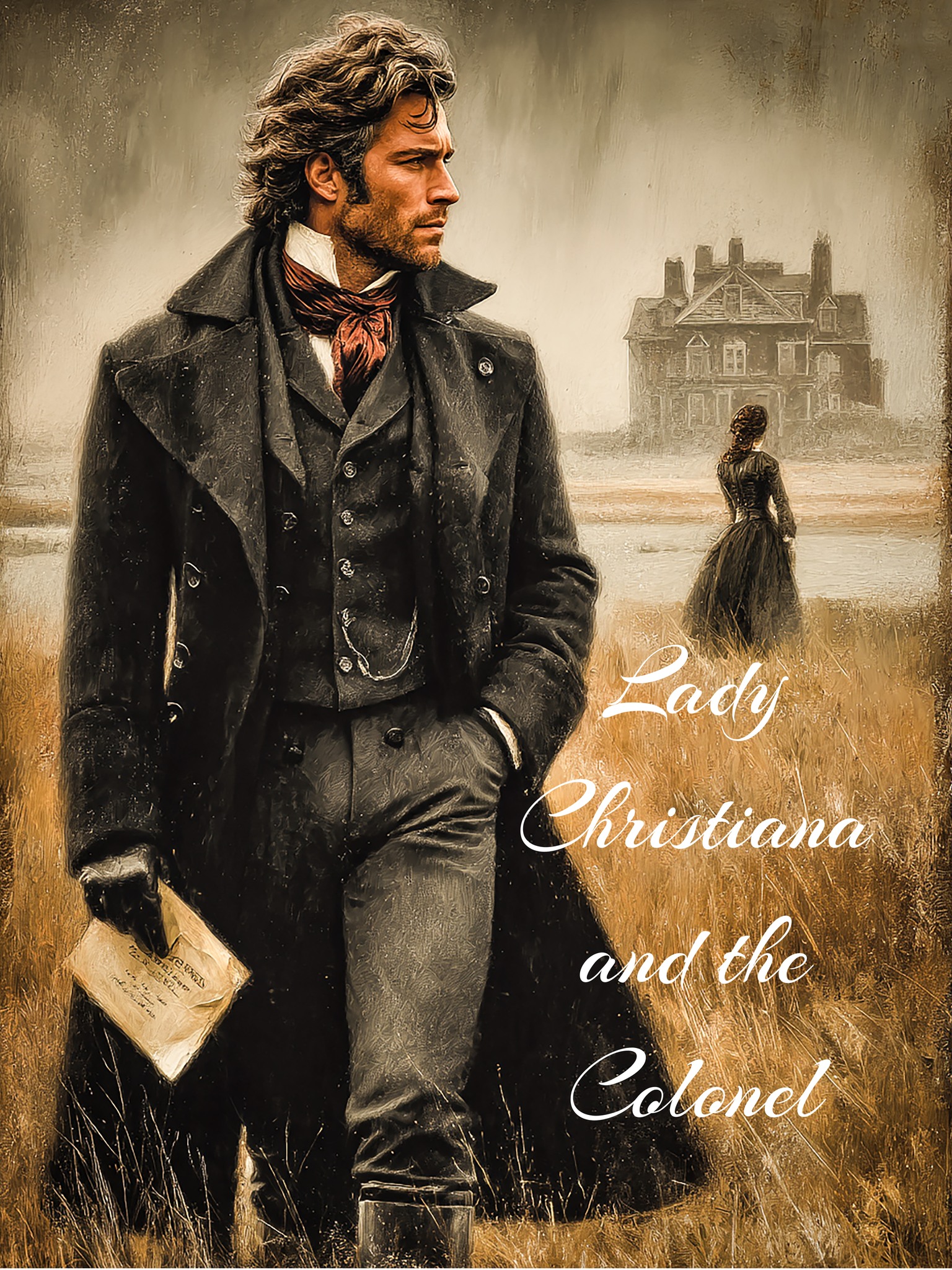
Excerpt from Chapter Nine:
“You did not defend his name,” she accused. “You permitted Whitmorris to return to England and his waiting accolades, while Frederick was labeled as a spy.”
She noted how the colonel swallowed hard. “Brightman,” he began and closed his eyes as if seeing the scene again. “Brightman and I were to meet, but I was being chased by three men, and I was late. I wish I could change what occurred. Brightman supposedly had proof of Whitmorris was being paid by both sides of this war. We must assume that Whitmorris stole that evidence. It was not on Brightman’s body when I found him. The evidence supposedly proved Whitmorris was a French spy working against the British government.”
“You are also a spy,” she stated firmly. “How do I know whom to trust?” she asked in apparent realization of her conundrum. “Were you or were you not serving the British government when you were in France?”
“I am a colonel in the British Army. As such, I have made a pledge to serve my country on the battlefield or wherever I am required. In this madness with France, I am often required to live by my wits, both on the battlefield or on a dark Paris street or even in the French countryside.”
“The difference,” Mr. Darcy’s said, “is my cousin serves his country. Whitmorris serves only himself.”
Christiana listened carefully to her host’s defense of his cousin. Both her heart and her mind was telling her that the colonel had truly been attempting to assist Frederick on that fateful evening. “By the time of his death, Frederick was meeting regularly with some sort of ‘courier,’ his word, not mine. Over a matter of several weeks, he had excused himself early from his visits with my family. When there was some sort of social that we all attended, he would excuse himself for an hour or so, and then return later to the festivities. Sometimes, his exits occurred mid-sentence. The clock would ding, and he would suddenly be on his feet and making his excuses. That fateful night was not the first time I had followed him.”
The colonel attempted to disguise his surprise, but she noticed it, nevertheless.
“I saw you two meeting together on several occasions. Such is the reason I believed you to be his killer,” she admitted.
“So I became the logical villain in this poorly played melodrama?” he asked with a lift of his brows.


