
The heroine in this tale becomes a seamstress out of necessity, though she is a lady of the gentry. That sent me on a search for more about needles. Adam and Eve reportedly sewed fig leafs together to cover their nakedness, but the Bible does not mention the type of needle or thread used by the pair. Genesis 3:7 is the only verse detailing this event, and it simply states, “they sewed fig leaves together and made themselves coverings.’ Many theologians focus on the symbolic nature of this passage rather than the physical details of the sewing process. Their handmade “coverings” represent a futile attempt by humanity to cover its own sin and shame through self-effort. This act is contrasted with God’s provision in the very next verses. In Genesis 3:21, God rejects their fig-leaf coverings and makes tunics of animal skin for Adam and Eve. This event introduces the concept of sacrifice and atonement, where blood must be shed to provide a proper covering for sin. But you did not come here for a Biblical lesson. You wanted to know something of needles in the Regency Era.
Sewing needles originated in the Paleolithic period, with the oldest examples made from bone found around 50,000 years ago in Siberia, used by Denisovans. Humans developed eyed needles for tasks like making insulated clothing by the Upper Paleolithic period, around 45,000 years ago in Eurasia. Later, needles were made from ivory, and eventually from copper, bronze, and steel. The invention of the sewing machine in the 19th century revolutionized sewing, though hand sewing and finishing remain important.
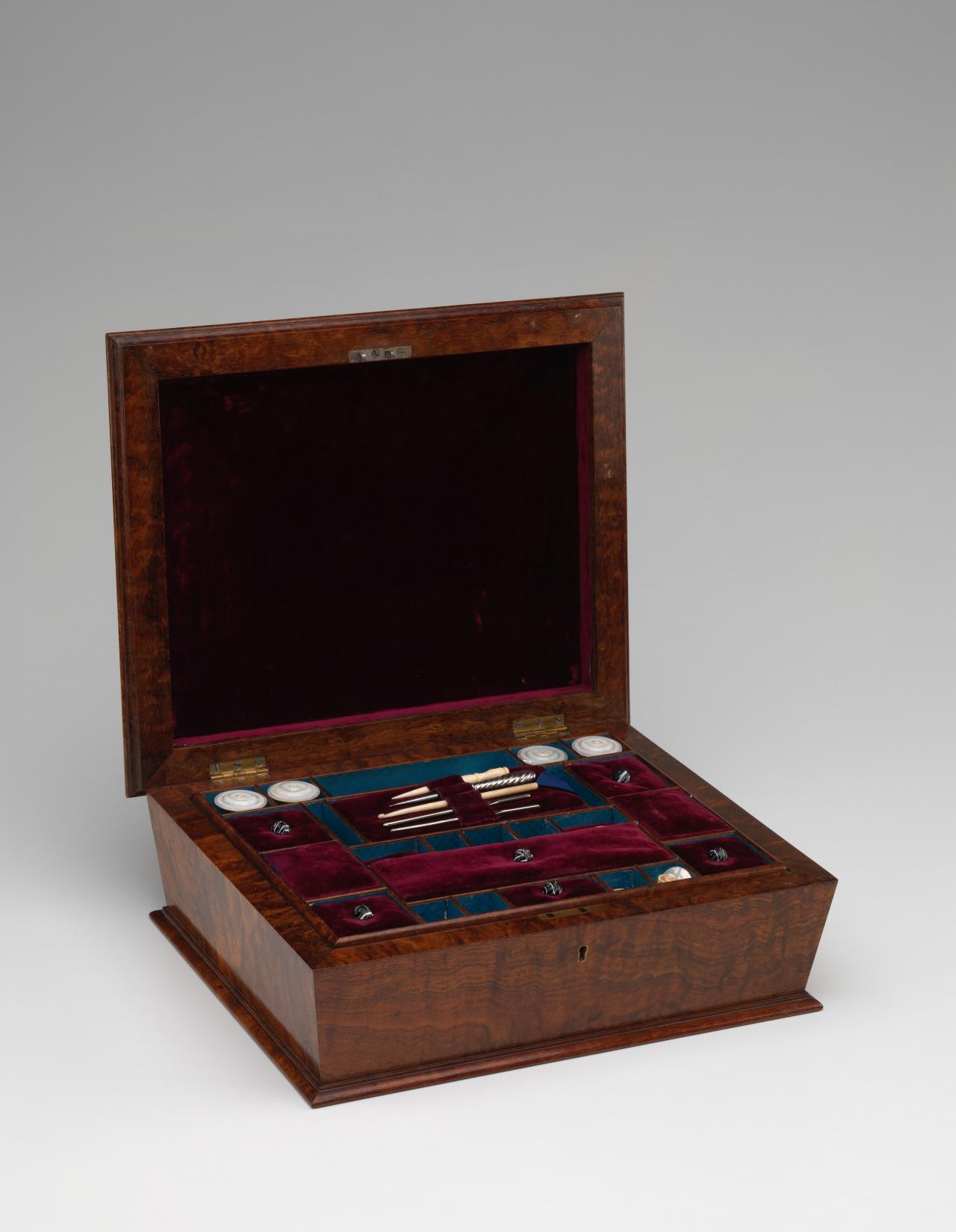
Early Needles (Pre-history)
- Denisovan Needles: The earliest known sewing needles, made from bird bone and dating back approximately 50,000 years, were discovered in Siberia’s Denisova Cave and were crafted by the Denisovans, an extinct human species.
- Materials: Early needles were crafted from animal bones, antlers, and tusks.
- Purpose: These tools allowed humans to create fitted clothing, extending their ability to settle in cooler climates after the Ice Age.
- “Needle Bones”: The naturally needle-like back bones of deer also served as early needles, requiring only minimal modification.
The Development of the Eye
- Need for an Eye: Creating a practical eyed needle was a significant innovation.
- First Eyed Needles: The earliest known needles with a defined eye date back to the Gravettian period, around 25,000 years ago in Russia.
- Independent Invention: Research suggests that the concept of eyed needles may have been developed independently in different regions, such as Siberia and China.
From Bone to Metal
- Bronze Age: The transition to metal needles began around 7000 BC during the Bronze Age, with copper being the first metal used.
- Iron Age: Later, iron and bronze needles were developed.
- Steel Needles: The invention of steel needles was a crucial development, leading to the mass production of the tools we use today.
Modern History
- Specialized Needle Making: By the 16th century, skilled Spanish and German artisans were known for their mastery in needle manufacturing.
- Sewing Machines: The 19th century saw the invention of the first practical sewing machine, which fundamentally changed how clothing was made.
- Contemporary Use: While most sewing is now done by machine, hand sewing continues to be used for fine work, detail, and finishing.
For more detailed information regarding the history of needles, please see The Sewing Needle: A History Through the 16th to 19th Century.


 Every Woman Dreams...