
Although the heroine in this tale is a gentleman’s daughter, she has taken a position in a draper’s shop while she attempts to assist her sister. What might that entail?
In England, a draper was a merchant or retailer who sold cloth, and sometimes clothing and other dry goods. They were an important part of the textile trade, buying cloth from manufacturers or importers and then reselling it by the yard to the public. Drapers operated shops and were often members of trade guilds, serving as a crucial link between cloth producers and consumers.
- Retailer of Cloth: Their primary business was selling fabric by the yard, which customers would then use to make clothes at home or with a local tailor.
- Dry Goods: In addition to cloth, drapers often sold other items, such as curtains and dry goods, in their shops.
This second choice of furnishing dry goods is how Miss Victoria Whitchurch is employed. She has convinced the shop owner that providing custom made drapes would bring him additional business.
By the beginning of the 19th Century, it is estimated that 200 different shops could be found in London. These shops kept long hours, generally, 12-hour days. The shopkeepers and their assistants often lived on the premises. Warehouses were located in Covent Garden. Mercers and linen drapers could be found in Cheapside. Shops lined the streets with shopkeepers living above. We know that ladies of Society shopped on Oxford Street an Bond Street in Mayfair. Men frequented the shops and gentlemen’s clubs in St. James. Newer styled shops sprung up along the Strand.
The idea that Cheapside served many was part of my inspiration to place the hero living in a home in Cheapside, not because he lacked the wealth of his fellow lords, but because he has a great desire to further the economic prospects of his fellow man. Both Lord Benjamin Thompson and Miss Victoria Whitchurch are children of vicars, and they take their pledge to assist their neighbors seriously. They write their own “life’s plan,” one they will travel together.
“Drapers, or linen drapers, used to be the supervisors of the makers of woollen and other types of cloth since only they were allowed to buy from the manufacturers or to import it. The wholesale draper (or dealer) would buy imported cloths from the merchants, and also British-produced goods from manufacturers in, say Manchester or Paisley. He acted as the middleman by reselling these to the retail linen drapers throughout his chosen territory in Britain, through his travellers (travelling salesmen). Hurley (The Book of Trades or Library of the Useful Arts. Vol III. Wiltshire Family History Society, 1994) lists the specialties of each of the manufacturing towns in 1818.
The retail linen draper actually draped selected fabrics across his doorway so they could be seen and felt (Bebb 2002). Since ready-to-wear clothes were not readily available until the mid-19th century drapers were in great demand by seamstresses and tailors. The London establishments were sometimes huge, with dozens of live-in staff called draper’s assistants, as can be seen from the census returns. Brownrigg (The Linen-Draper’s Assistant in Portraits of the English Vol V: Working Lives edited and published by COLLINS, Audrey. 1999-1. Original published by Robert Tyas, London, 1840) presents a fascinating glimpse into their world.
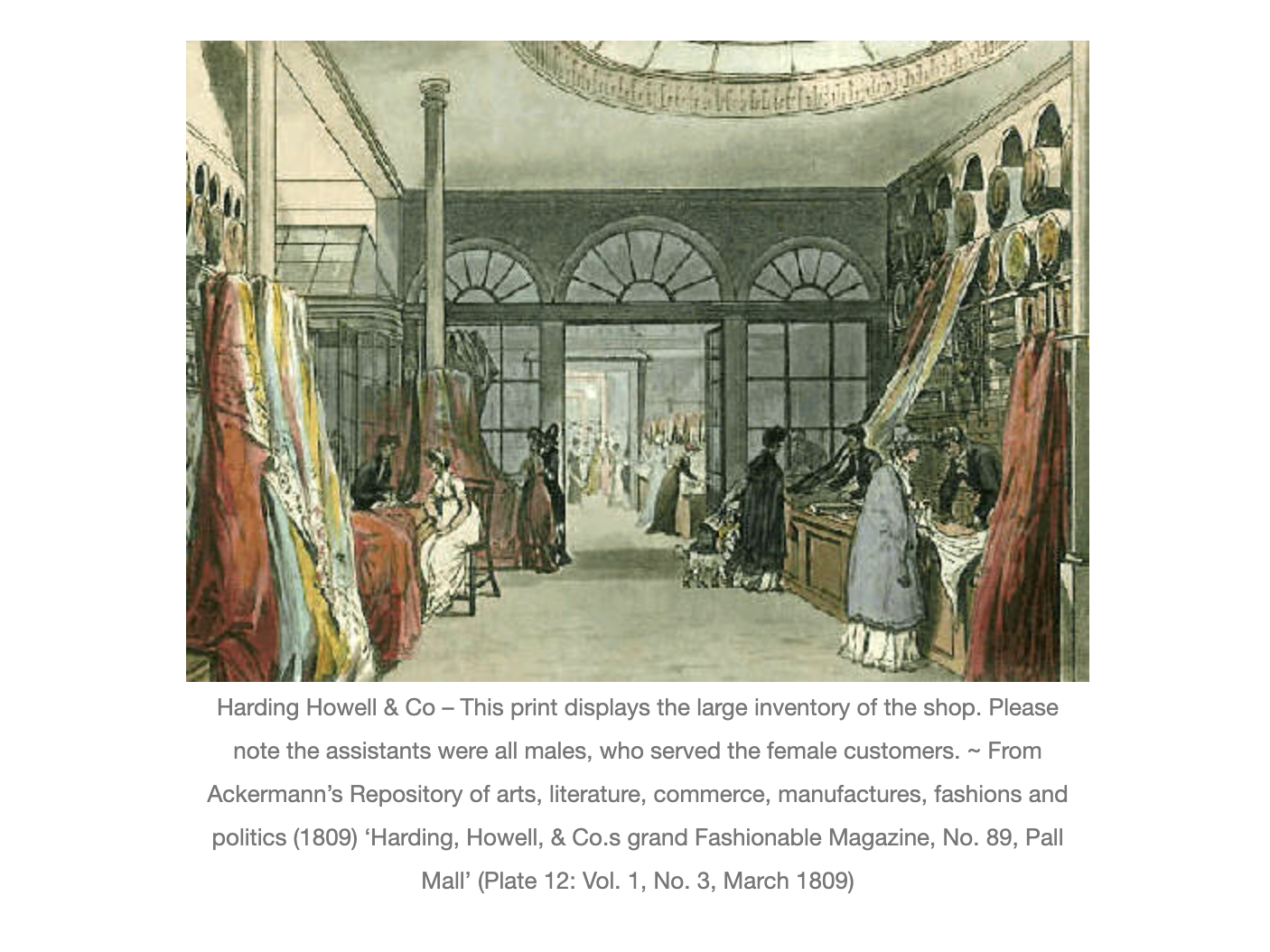
“Haberdashers dealt in the accoutrements needed for sewing, such as lace, buttons and ribbons, and as they imported the better quality items from Milan they were also known as Milaners, which later gave rise to the term milliner, one who decorated dresses and ladies’ hats. Pins were among the articles introduced by haberdashers and at first were expensive as they were individually hand made, giving rise to the term pin money, for that used to buy fashionable frippery.”[England Mercantile Occupations, Merchants, Retailers, Clothing Materials, Dress, Drapers, Haberdashers – International Institute]
Other sources:
Linen Drapers During the Regency Era


 Every Woman Dreams...