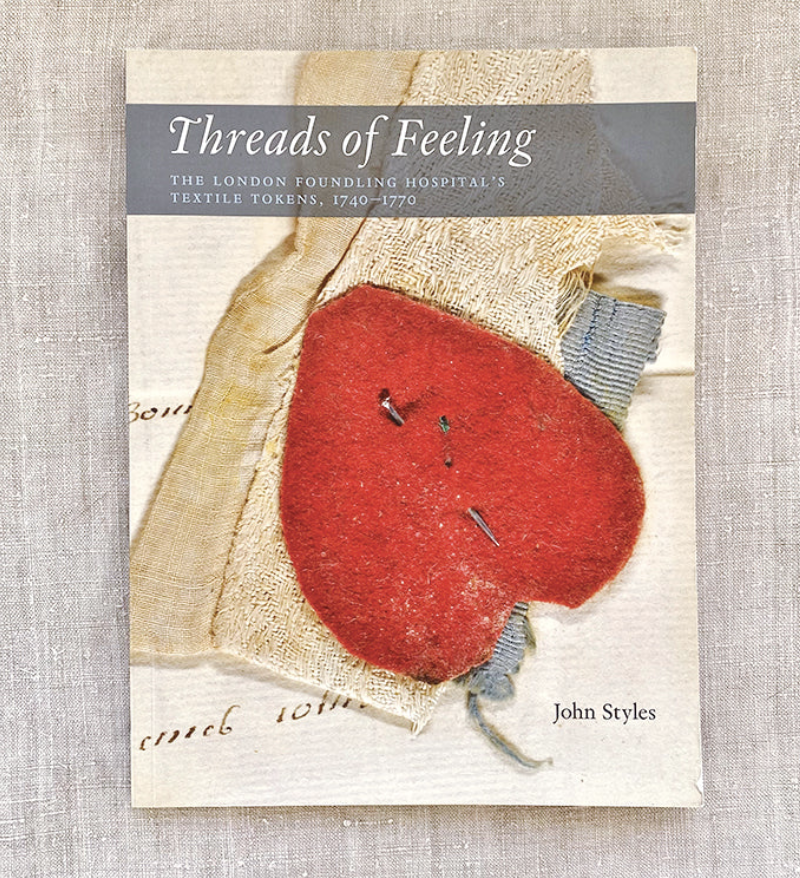
Back in 2011, London’s Foundling Hospital Museum had a somewhat tender and somewhat heartbreaking display of what was called “Threads of Feeling.” You see, beginning in the mid-18th Century, thousands of poor women who could no longer care for their children made the difficult decision to leave their babies with the London Foundling Home. Most likely thought it would be only a temporary decision. In fact, when writing Lost in the Lyon’s Garden, I thought, for a time, to have Miss Whitchurch search for her nephew there, but then I recalled “the threads of feeling” concept in place at the Foundling Hospital. Victoria would not know what her sister had chosen for the child.
Here is how the Threads of Feeling worked. Those distraught mothers were made to leave some kind of identifying piece pinned to the child in the event that sometime in the future the woman was in a position to return for the child. No name of the child was recorded. No name of the mother was recorded. It was essential that the token be distinctive. Be memorable. The hospital essentially erased the mother from the child’s life in order to give the child a chance to succeed in its world. A new name was presented to the child. It was provided with basic schooling, perhaps an apprenticeship, so it could make its way through the world.
If the mother’s circumstances changed, she would need to be able to identify in detail the object left as the child’s existence. The hospital made a vow to preserve the object.
The hospital, which was located Bloombury, soon took on many of the fashionable sect.
In describing the 2011 exhibition, The Guardian tells us, “Admission policy varied over time – at one point the hospital took only 200 babies a year, at another 4,000 – but from 1741 to 1760 16,282 babies entered the institution anonymously. The vast majority of mothers failed to heed the instruction to leave an identifying token, perhaps because they were too beaten down by rotten lives to imagine a time when they would be able to provide a warm, clean home for their baby. All the same, 5,000 of the infants deposited came with some kind of token attached. And by some lucky chance these tokens, mostly comprising bits of fabric carefully pinned to the baby’s admission billet, have survived. Over the past few decades they have been stored not at the museum itself but at London Metropolitan Archives where they have tended to languish, overlooked. Now, these slivers of everyday Georgian life are making a triumphant return to their original home where they will form the basis of the museum’s new exhibition, Threads of Feeling.
“The exhibition’s curator, Professor John Styles of Hertfordshire University, is emphatic about the significance of these 5,000 scraps of fabric, mundane and beautiful, lumpy and sheer. They comprise, he explains, nothing less than the biggest archive of 18th-century materials surviving in Britain, probably in the world. Historians who have tried to investigate the dress of the common people in the Georgian period – including Styles himself – have always fallen into a black hole where the evidence ought to be. The clothing of elite groups – fashionable merchants’ wives, duchesses with an eye for style – have survived in countless stately homes and museums. You can feast your eyes on silk and velvet, on silver buckles and pearl buttons, but you will search in vain for evidence of what ordinary working people wore to keep themselves dry and more-or-less warm.
“There are hints, of course, in paintings and cartoons, including those drawn by Hogarth (who was a governor of the hospital), but it is impossible to know whether these are strictly accurate. The prostitutes and fishwives who tumble through the satirist’s street scenes may well be based on close observation, but they are also exaggerations and fantasies, caricatures held up for the viewer’s pity, mirth and scorn. It is the Foundling tokens, snipped from either the mother’s or baby’s garments, that provide our only solid evidence of what ordinary clothing looked and felt like.
“To examine these samples is to enter a world of dizzying names and textures. Some are familiar – calico, flannel, gingham and satin – although the relationship between the 18th-century fabric and its modern equivalent often turns out to be stretched pretty thin. Other textiles boast names utterly mysterious to us, opening up a lost world of camblet and fustian, susy and cherryderry, calimanco and linsey-woolsey. What stands out is the high proportion – almost a third – of printed cottons and linens among the Foundling collection.”
Other Sources:
Threads of Feeling – Foundling Museum
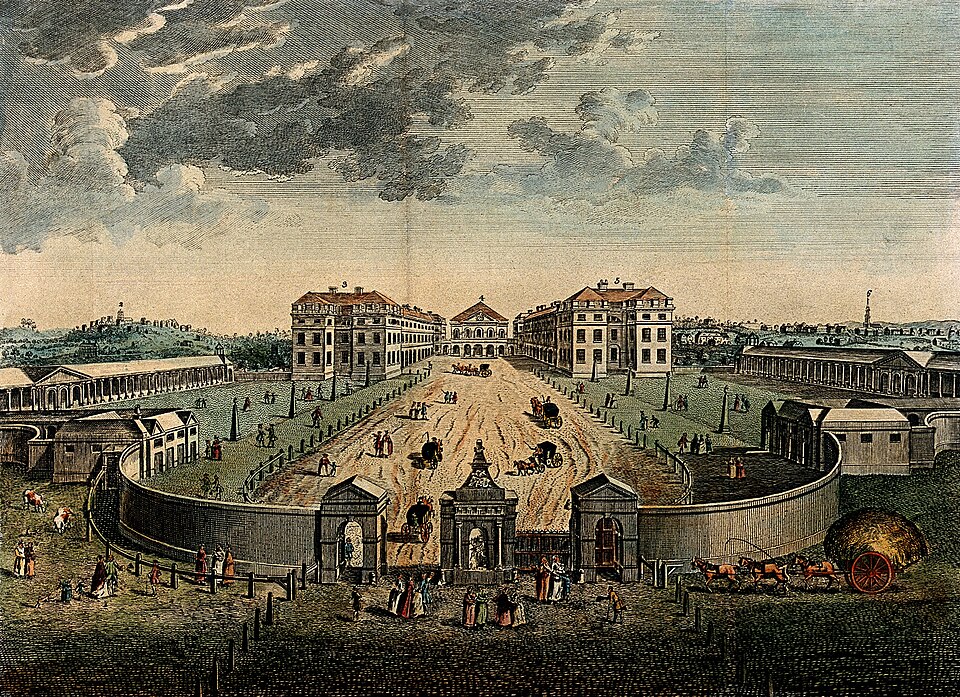
Just as a point of reference for those knowing me as a Regency writer, The Foundling Hospital (formally the Hospital for the Maintenance and Education of Exposed and Deserted Young Children) was a children’s home in London, England, founded in 1739 by the philanthropic sea captain, Thomas Coram.


 Every Woman Dreams...
It’s a very moving place to visit, but maybe a little early for most Regency readers. I first went there to better understand my husband’s book, CONCERTLIFE IN LONDON FROM MOZART TO HAYDN (Cambridge University Press), where the Foundling Hospital concerts feature.
The Foundling Hospital (formally the Hospital for the Maintenance and Education of Exposed and Deserted Young Children) was a children’s home in London, England, founded in 1739 by the philanthropic sea captain Thomas Coram. It was established for the “education and maintenance of exposed and deserted young children.”